A Quiet Revolution in Individuality: The Emma Chamberlain Effect

As I rummaged through my closet the other day, buried in the farthest reaches, my eyes fell upon an ancient relic: my brown, reversible teddy jacket. Instantaneously, I was back in 8th grade, when this comfy item was the ultimate must-have. What’s wild is that I can still remember exactly why I bought it—I was obsessed, like every other girl my age, with Emma Chamberlain.

It is undeniable that Emma Chamberlain has become more than just an influencer. Her rise to fame, sparked by candid and quirky YouTube videos, struck a chord with young girls in a way few others could. Whether ranking fast food items or showcasing thrifted finds, Emma exuded an undeniable authenticity that made even the most mundane content feel magnetic. It’s no stretch to say that Emma wasn’t just relatable—she was revolutionary

Looking back at that teddy jacket now, it feels like a symbol of an era. In 2017-2019, Emma’s style was the blueprint for a generation. White platform Doc Martens, mom jeans, scrunchies, and, of course, the teddy jacket were all the rage, having me and teenage girls everywhere in a chokehold. Emma’s fashion choices weren’t just admired, they were accessible. She made fashion feel fun and achievable, separating herself from the intimidating status-driven influencers of the past and serving as an entry point into the world of fashion for much of her audience.

Fast forward to today, Emma’s fashion influence prevails. Enter the “eclectic grandpa” aesthetic: a careful mix of vintage-inspired and modern pieces that feel both preppy and casual, polished yet eccentric. Think loafers, a pair of Adidas sneakers (Sambas, Campuses, Spezials, etc.) oversized sweaters, and button-ups. Emma was originally championing this look 1-2 years ago, but since then, it has completely taken over in late 2023 and a large part of 2024. The rise of “old money” fashion—a blend of understated luxury and timeless staples—owes much to her ahead-of-the-curve sensibilities.


As 2024 draws to a close, Emma gave us one more iconic moment: a wardrobe tour video. In it, she showcased her closet after getting rid of all unwanted and unused clothes, highlighting her process of curating timeless, high-quality pieces. Her current aesthetic revolves around neutral colors—primarily black and white—and a seamless blend of elegance and comfort.

As always, Emma’s style ignited conversation on social media. Some people criticized her new looks as boring or unrecognizable, but to those critics, I say: you’re missing the point.

In the video, Emma emphasized prioritizing individuality over conformity. Her wardrobe was never meant to impress but rather express.

Emma’s focus on personal style over trend-chasing feels like a hopeful glimpse into the future. I believe 2025 could be the year of the death of microtrends, with Emma leading the charge toward a fashion landscape where unique, personal style reigns supreme.

In a recent New York Times article, Emma spoke about stepping back from social media to focus on her other passions and businesses. This transition feels almost symbolic—like a sign that Gen-Z is moving away from fast-paced, performative content toward something far more intentional and deeply personal.

Her legacy is clear: Emma Chamberlain has shown us that authenticity is timeless. She taught us to embrace our quirks, mix and match with confidence, and most importantly, to be unapologetically ourselves. So as I place my once-beloved teddy jacket into a goodwill bin, I feel an odd sense of gratitude. I’m reminded that trends fade, but true style—like Emma’s influence–is forever.


Featured image via

Source: https://www.instyle.com/thmb/fjzRzSr1LrOX_...

An Honest Review of Don't Worry Darling

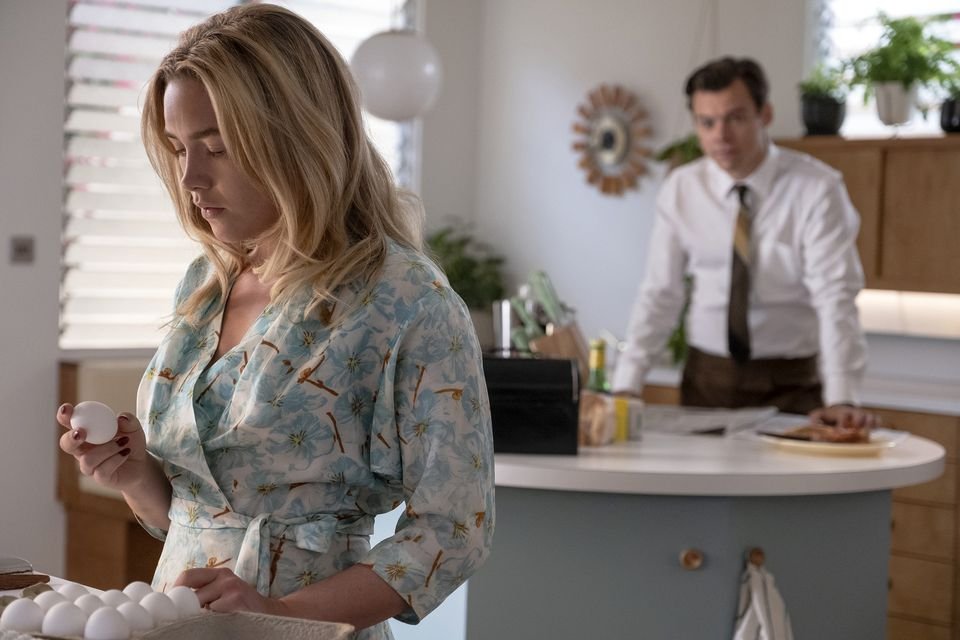
If you’ve been keeping up with pop culture moments in the past couple of weeks, you may have heard the drama surrounding the movie Don’t Worry Darling. There have been rumors of lead actress Florence Pugh falling out with director Olivia Wilde, not to mention Harry Styles spitting on Chris Pine? (Read a recap here). After much anticipation leading up to the movie, I can unfortunately say that the movie does not live up to the hype. It’s an aesthetic movie, but nothing more.

The film follows two lovebirds, Alice (Florence Pugh) and Jack (Harry Styles), living in an idyllic 1950s oasis called Victory. But Victory is no ordinary town – it is an experimental project led by grandiose businessman Frank (Chris Pine). While Alice and the other women in the town spend their days lounging by the pool and having the typical duties of a housewife, the men of the town are off working on Frank’s secret project. But what is his secret project, exactly? And why will no one dare to question him? As Alice begins to prod at her utopian life, she unearths cracks in her reality that she will never be able to repair.

Now, let me start off by saying that I’m a big psychological thriller fan. If it’s anything like The Sixth Sense, Black Mirror, or Us, count me in. But this movie left me more confused than thrilled. And really, it’s not a bad movie. But it’s not great, either.

My biggest criticism of the movie is that it left too many loose ends. Unfortunately, I think this is a product of Wilde, who is a relatively novice director, being a little too ambitious with the script. There were several obvious plot holes throughout the movie, and the ending was lazy. Wilde opted for one of those, “leave the audience thinking,” endings – sure, I was thinking. I was thinking of how bad of an ending that was. Those types of endings can be done well if they give the audience a fair understanding of where each character lands within the plot of the movie. Don’t Worry Darling’s ending did not do that at all. In fact, there was no understanding of what happened to most of the characters, and no understanding of where the plotline would have ended. Instead of pondering the film’s themes of technology and feminism, I was left wondering what in the world was up with the eggs in the movie? Are they supposed to be a metaphor for something? If so, what do they represent? Looking back on it, I’m not sure they were meant to mean anything.

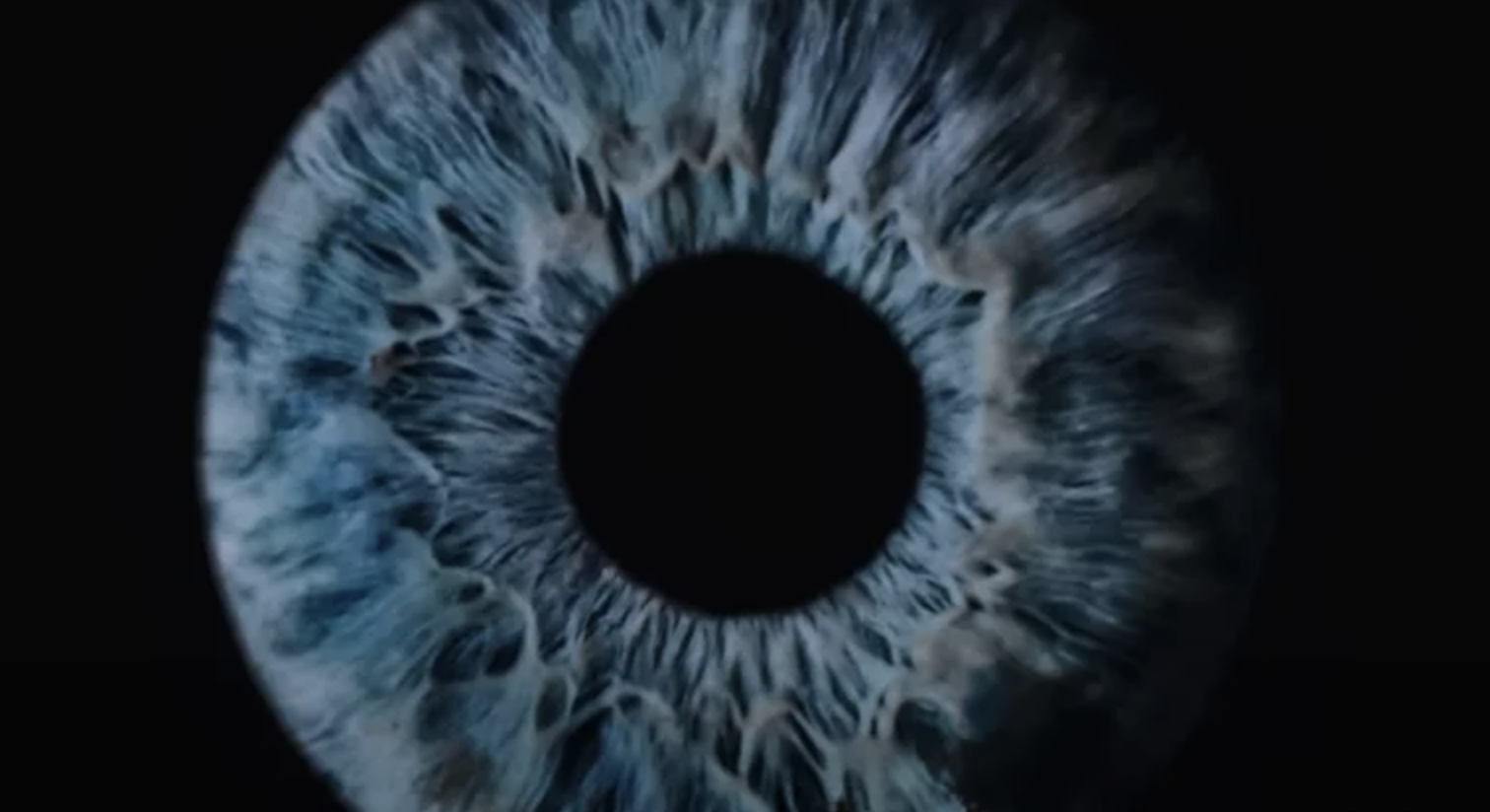
Generally, it felt like Wilde was trying a little too hard to be a Jordan Peele movie. Dispersed throughout the film are aesthetic images and clips of women dancing and a close-up of the human iris, which is meant to evoke the mystery behind Alice’s subconscious and give the audience clues as to what is really going on in the town. The first few times it happened, it was great. I felt entranced, in awe, and excited to see how such images were going to connect with the overall story. However, the third, fourth, and fifth times these clips were shown, it lost its magic. It went from being an aesthetic and important device for the film to an annoyance, a motif that lost its touch. Cinematography should be about making every shot a conscious decision – every angle should be well thought-out, every focus on an object should be discussed and contemplated. Instead, this movie’s cinematography was the epitome of “no thoughts, just vibes.”

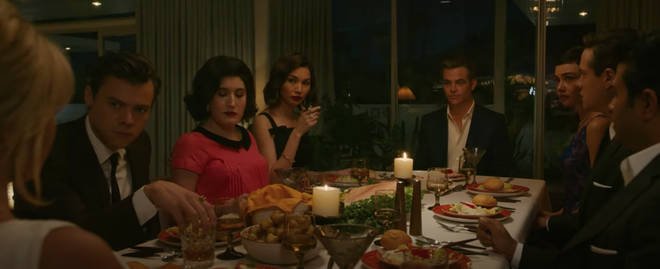
In terms of the acting, Harry Styles is fine. The issue is, he is opposite the wonderful Ms. Flo, who is a powerhouse in her field. The best scene is when she and Chris Pine’s character have a suspenseful verbal, psychological war at the dinner table. The actors themselves are able to keep up with each other and play off each other’s astounding interpretation of the script. I wish there had been more of this dynamic in the film.

Additionally, this movie did not add anything new to the psychological thriller repertoire. The setup is a classic: a woman lives in a beautiful town, but not everything is as it seems – you can see where the movie is heading. While initially intriguing and enthralling, the themes of the movie quickly become old, as you wish for the movie to get to the point (which, it never does, or at least the point itself is shallow and predictable).

For all its talk on being a progressive film, Don’t Worry Darling does not push the envelope. On certain topics, it is actually regressive. Wilde has advertised the movie as one about feminism, but all it communicated to me was that misogyny exists. Well, duh. Misogyny exists, and what else? While it felt like Wilde was trying to make a profound, thoughtful take on feminism, she added nothing novel to the conversation. The entire theme was surface-level and one-dimensional at best.

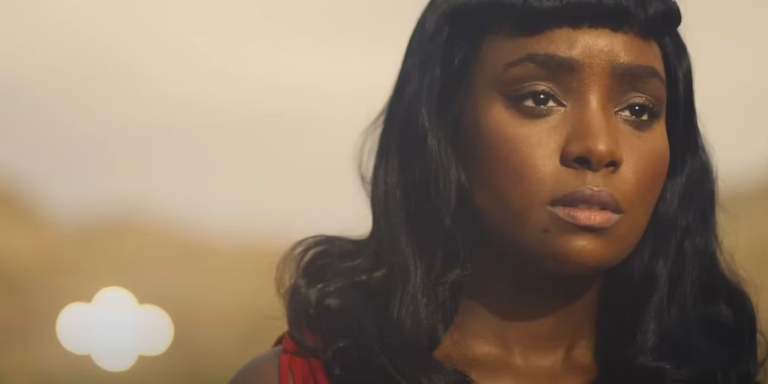
One of the dimensions it lacked was race. Race and feminism are inextricably linked, yet Wilde seemed to completely ignore this element in her film. In fact, she noticeably uses the Black martyr trope with Kiki Layne’s character, Margaret. Margaret, the only Black character (with dialogue and screen time, at least) in a very white town, is arguably the most important character in the film, as she introduces Alice to the idea that Victory is not what it seems. If not for her, the entire plotline is null. Kiki Layne even mentioned that many of her scenes were cut from the movie. Wilde merely uses Margaret as a plot device for Alice to begin her own white feminist journey, and then tosses her aside once she serves her purpose. The same was done to Gemma Chan’s character, Shelley, who is Frank’s wife. We witness a major plot twist about her at the end that is jarring given that the audience had almost zero understanding of her character. Instead of building out Margaret’s and Shelley’s characters, the vain Wilde decides to include more of her own character’s scenes, who is entirely irrelevant to the plot.

Overall, I was disappointed because this movie had the potential to be much better. Instead, it got drowned out by Olivia Wilde’s drama and directing mistakes. If you’re bored, go see it. If not, don’t worry darling.

RATING: 3/5


Featured image via


What (Taylor's Version) Can Mean For the Future of Pop Music

By now, the whole world has caught on to Taylor Swift’s plan to re-record her masters. Announced in August 2019, the plan to re-record her first six albums after their sale to Scooter Braun’s Ithaca Holdings (and their consequent re-sale to Shamrock Holdings) is now in full swing, with Ms. Swift having successfully released two of her six stolen masters—April 2021’s Fearless (Taylor’s Version) and November’s Red (Taylor’s Version). These albums have topped the charts, starkly contradicting claims that re-recorded albums were doomed to flop and delighting people everywhere in the process. The remaining four albums are consistently being teased across social media platforms, and are widely anticipated. In short—re-recording her albums has worked. 

But more than being a brilliant and gutsy retaliation to a dirty legal move, the re-recording of Swift’s well-known old songs also represents a fundamental shift in pop music and modern mass-produced media as a whole. It’s no surprise to anyone that the modern music industry as well as modern media in general has become incredibly product-oriented— most dialogue centers around what will be released and when, and fans have become eager for “content” above anything else. This is not necessarily bad in and of itself, but it is incredibly interesting to see what Swift’s re-recorded music has begun to do. 

It’s given pop music permission to grow.  

Even the casual listener will notice that while many tracks on the re-recorded albums remain faithful to their counterparts on the original albums, many others don’t. There are “from the vault” tracks, which were previously unreleased songs from the time period of the original album, as well as remakes of old fan favorites. Fitting into both categories is perhaps the most famous example—the legendary ten-minute version of the cult favorite “All Too Well”. Originally a four-minute wistful track about lost love, the ten-minute version of “All Too Well” retains every word of the 2012 version, fitted neatly into a complicated, varied, tumultuous narrative of a relationship that grew and twisted and failed. The ten-minute version retains the wistful core of the original, but the darker elements that were subtly hinted at originally are fully fleshed out in the newer version, in long paragraph-like lyrical phrases like the ones explored in her folklore and evermore albums. It’s markedly different from Red’s original polished 2012 country-pop release. And, of course, it’s sung in Swift’s current voice. 

Most importantly, though, the whole world loves it. There were SNL performances, a full short film starring two very well-known actors with an in-person premiere, acoustic performances and Long Pond remixes. This is striking because, before the re-records began, no one expected that they would achieve more than a tiny fraction of the original records’ popularity, and yet people adore this. Some of this can be attributed to Taylor Swift’s star power, and more to clever marketing. But underlying all of that is a willingness by the audience to revisit previous creations and fully appreciate the changes that have been made, and that’s striking. 

Because in a fast-paced economic system that makes art for consumption, we often think of art as a final product and of artists as “content creators”. This isn’t evil in itself, of course, but a lot is lost when art is thought of as more of a product and less of a process. To an extent, thinking of creative arts as a linear process ending in a polished product is counterintuitive; anyone who has ever tried to create something knows that art is never truly finished. 

Swift’s success in re-recording her albums has shown that it’s entirely possible for both to be true. The commercial success of albums does not have to mean that they are never revisited; some of her best creations have come nearly a decade after their original release, and if she had stopped with the “final” version of RED in 2012, these startlingly masterful songs would not exist. Allowing her art to evolve has given a sharper and deeper meaning to what the songs originally were, and now that the public has received the re-recordings so well, perhaps it can signal a shift to this mindset in modern media as a whole. Hopefully, this will remind everyone of the magic that can happen when art is allowed to develop authentically, even after it’s passed its original deadline.

As I hit play on Red (Taylor’s Version) once again this weekend, I know it’s reminding me.


Thumbnail image via

From Way Downtown: Modern Fashion, Social Justice, and Basketball

Unlike many celebrities and athletes, Boston Celtics star Jaylen Brown does not just “talk the talk” — he “walks the walk” as well. When Brown first entered the NBA, he was deemed an offensive liability and “too smart” to play professional sports; he has since proved his detractors wrong, having tenaciously worked to become an athletic juggernaut who can drive to the rim, dunk, and shoot 3s at an impressive clip. Most people are content to post on social media vague platitudes about the various injustices that plague society; Brown, the youngest vice president of the National Basketball Players Association in history, has leveraged his influential platform to magnify activist voices, even once driving hours to Atlanta to organize protests against police brutality. Simply put, Brown’s game — on and off the court — speaks for itself.

Image via

Image via

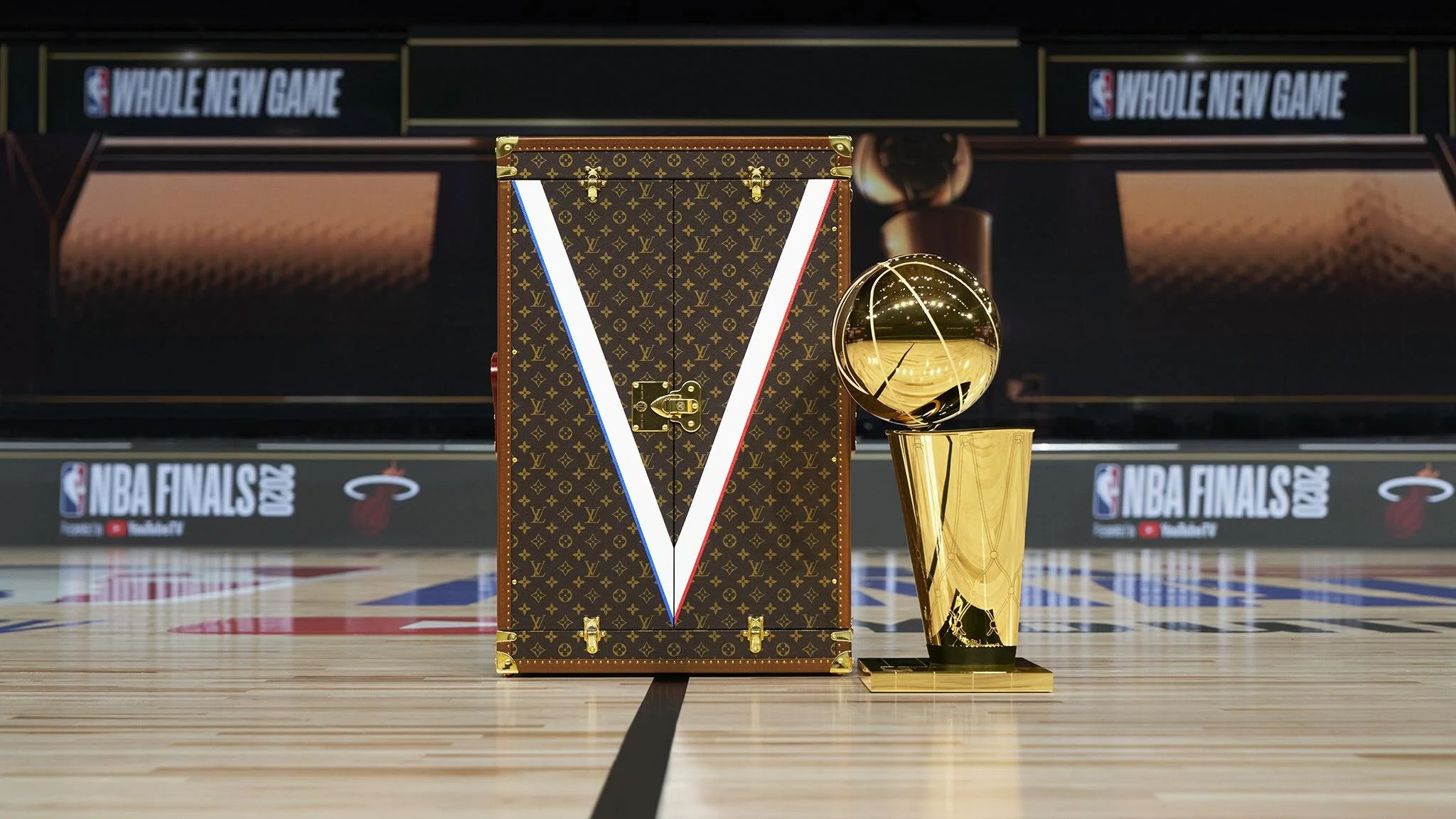
When Brown recently sat down with GQ for an interview, he spoke about these topics at length, but his play and his activism were not the only foci of the piece. Looking more like a model than a basketball player, Brown suited up in Virgil Abloh’s new Louis Vuitton x NBA collection, decadently decked out in glamorous accessories and fashion pieces. The GQ article showed off a different side to the cerebral wing, who had traded his normal green jersey for cashmere cardigans and Africa Houndstooth coats emblazoned with the NBA’s iconic logo. Yet, this departure also made perfect sense for Brown, as well as for the trajectory of the NBA and professional sports as a whole. Brown, as he is often wont to do, was making a statement. A different kind of statement than on-court play or social justice activism — a fashion statement. And ultimately, the LV x NBA collection’s marriage of two ostensibly disparate — yet deeply interconnected — elements exemplify, more than ever, the shift in the crossover between sports and culture; a crossover that activist-athletes and Renaissance men like Brown have helped usher in.

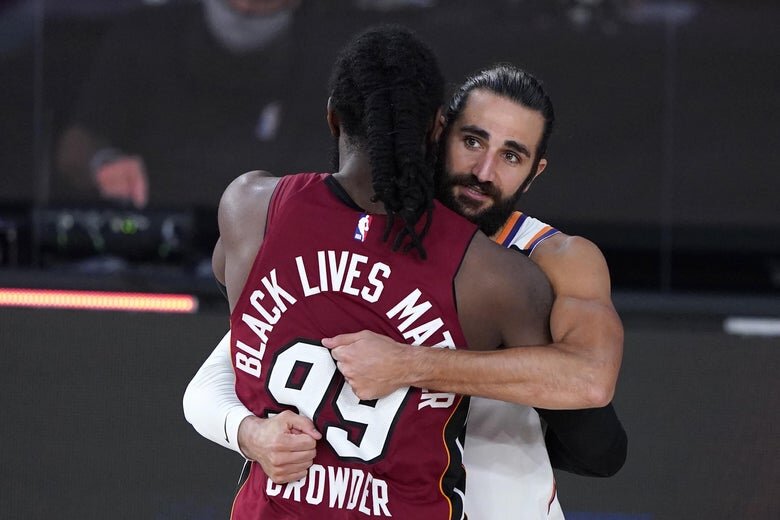
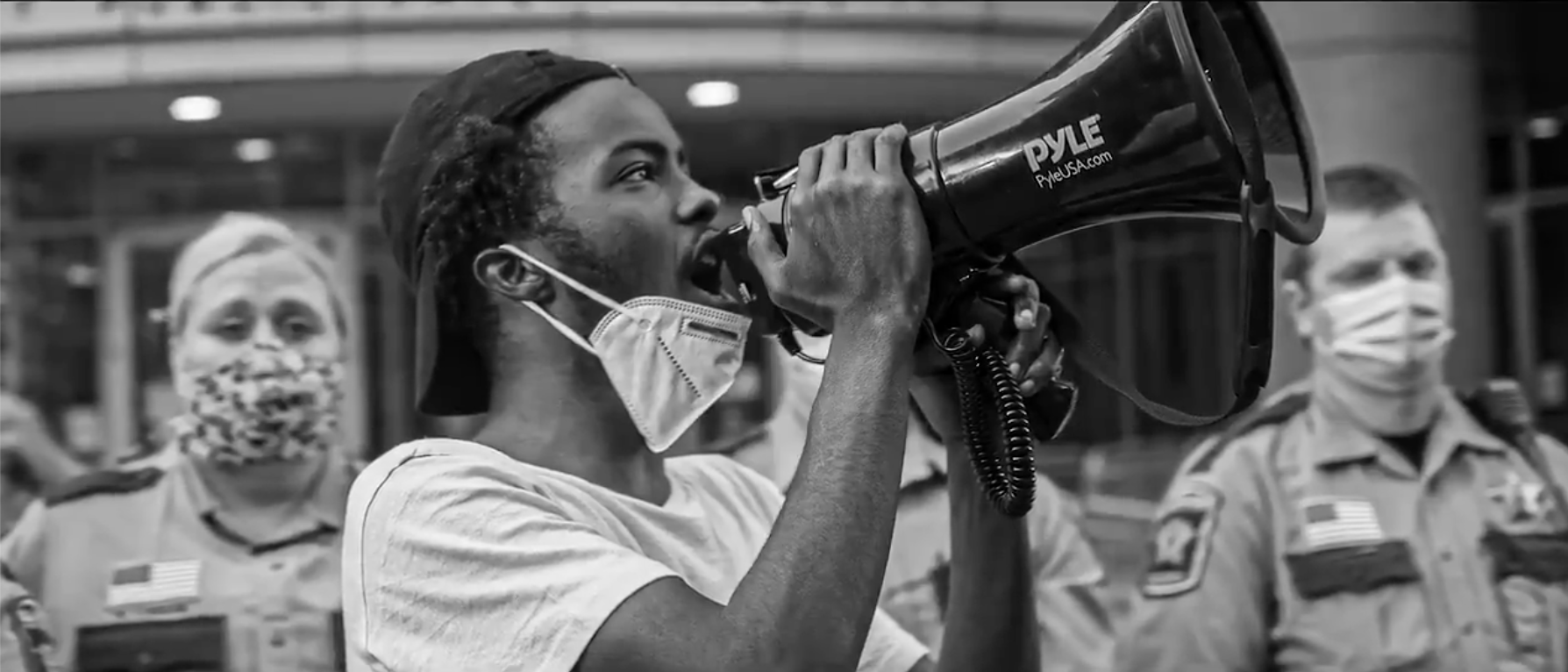
The NBA and its players have become much more politicized and activism-oriented in recent years. During the NBA season restart in the Orlando “Bubble,” which coincided with the prolific reemergence of protests against racial injustice and police brutality, players wore jerseys, shirts, and shoes displaying messages such as “Black Lives Matter” and “Say Her Name” (in reference to the murder of Breonna Taylor). Just four years after NFL quarterback Colin Kaepernick controversially began kneeling during the pre-game national anthem, all of the players, coaches, and staff in the NBA Bubble began doing the same before every game, locking arms in a display of unity and solidarity. After Jacob Blake was shot in Kenosha, Wisconsin on August 23, players organized a boycott of the NBA playoffs until the league would succumb to their demands and assume a more active role in organizing for social justice causes.

Image via

Image via

If the NBA season restart revealed anything, it was that basketball is not just a sport anymore — it is a cultural phenomenon that intrinsically affects and is affected by every crevice and component of society. And, in a roundabout way, it was fashion that precipitated this development. It was fashion that elevated athletes to the public eye for reasons unrelated to their on-court play. It was fashion that turned basketball players into status symbols, brand ambassadors, and social justice activists armed with the platform to both say and do something.

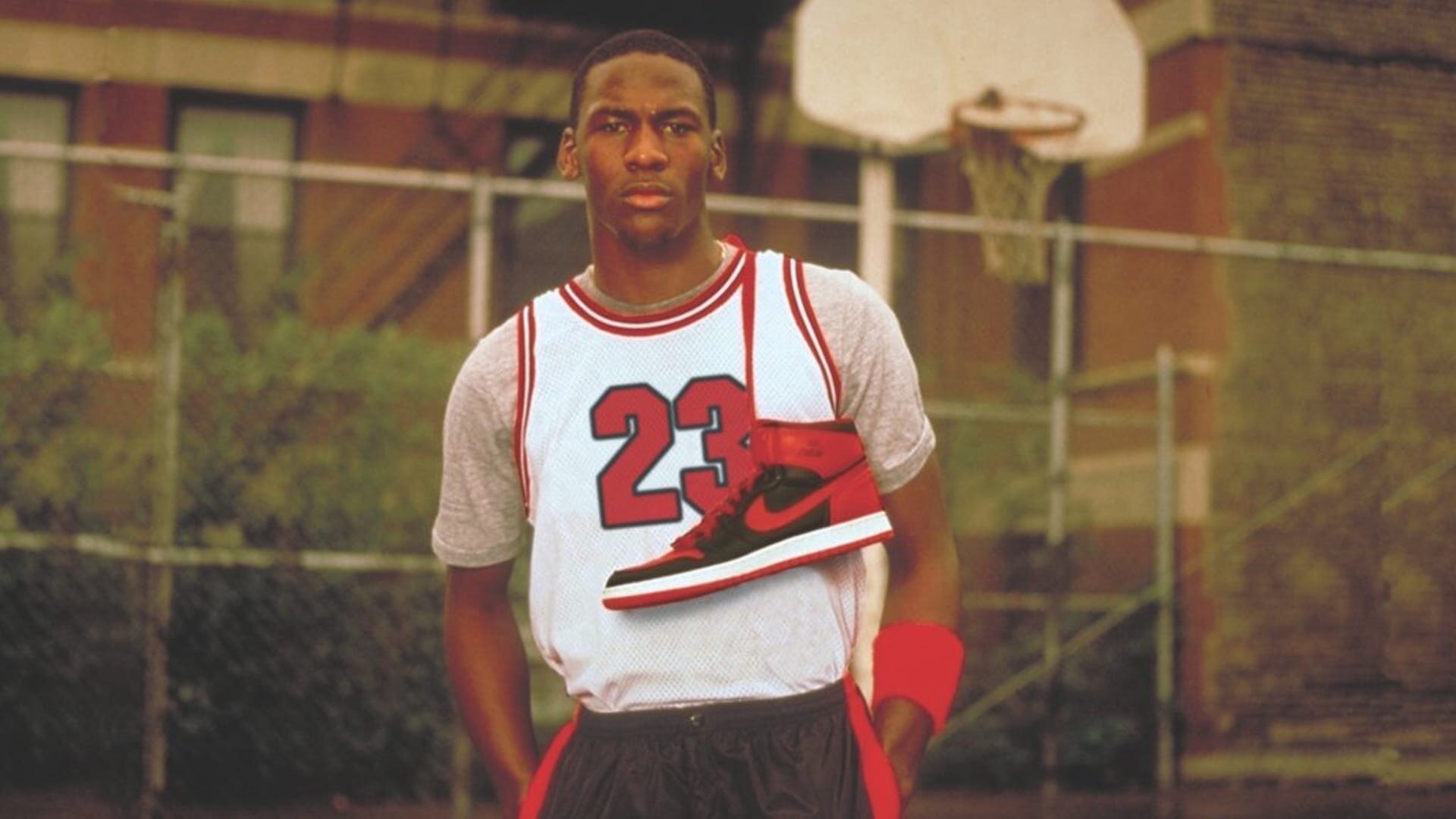
Like much of modern basketball, the cultural influence of basketball on fashion and society at large can be traced back to Michael Jordan. Jordan’s meteoric rise to superstardom gave him the opportunity to seek out endorsements and sponsorships early in his career. At the time, Converse was the shoe brand of choice for the NBA, as the company’s deals boasted established luminaries such as Larry Bird, Magic Johnson, and Julius Erving. When the young and sensational Jordan signed with Nike — which, at the time, was a relatively unknown track shoe company — heads turned at the fact that the trailblazing rookie was veering off the beaten path. Jordan, determined to carve out his own distinct presence, collaborated with designer Peter Moore on the Air Jordan I; his gamble paid off, as Air Jordans went flying off the shelves, hurdling expectations and notching $126 million in sales within their first year of production. MJ and his Jordans began to transcend the realm of basketball and ultimately crystallized into ubiquitous cultural phenomena — they were featured in song lyrics, Spike Lee films, cartoons, and fast food commercials. As the rapper Nas recounted in the ESPN documentary series The Last Dance, “It was more than a status symbol … You needed that shoe to be like him.” And everybody wanted to “be like Mike.”

Image via

Image via

With this increased influence, however, came an increased pressure for Jordan to maintain an active presence and image in the public sphere, particularly as it pertained to politics. These developments came to a head in 1990, during a 1990 Senate race in North Carolina between incumbent Republican and white segregationist Jesse Helms and Black Democrat challenger Harvey Gantt. When people urged Jordan, a prominent Black role model with astronomical influence, to campaign for and vocally support Gantt, however, Jordan refused. Wishing to maintain an apolitical image, Jordan shocked the world with the much-maligned assertion that “Republicans buy sneakers, too.” Gantt would go on to lose the election.

In response to the ensuing controversy, Jordan firmly contended, “I never thought of myself as an activist. I thought of myself as a basketball player.” However, Jordan’s desire to divorce himself completely from political and cultural issues was dissonant with his newfound inimitable influence on society — Jordan’s silhouette was on everybody’s shoes; his face on everybody’s TVs; his name on everybody’s mind. All of America looked to Jordan as a role model, and his word — or lack thereof — carried the utmost magnitude. Jordan’s declaration that “Republicans buy sneakers, too” most clearly exemplified the groundbreaking trajectory that the marriage of sports and fashion had set athletes on. Before Michael Jordan and his Nike deal, sneakers were just for athletics; now, they were status symbols, luxury fashion pieces, and pervasive cultural icons. And, as the mainstream popularity of sneakers and athletic streetwear flourished, so did the expectation that athletes also venture into the unfamiliar realm of culture and politics. Sneakers, and fashion as a whole, had bestowed upon basketball players the capacity to make a significant cultural impact off the court.

Image via

Image via

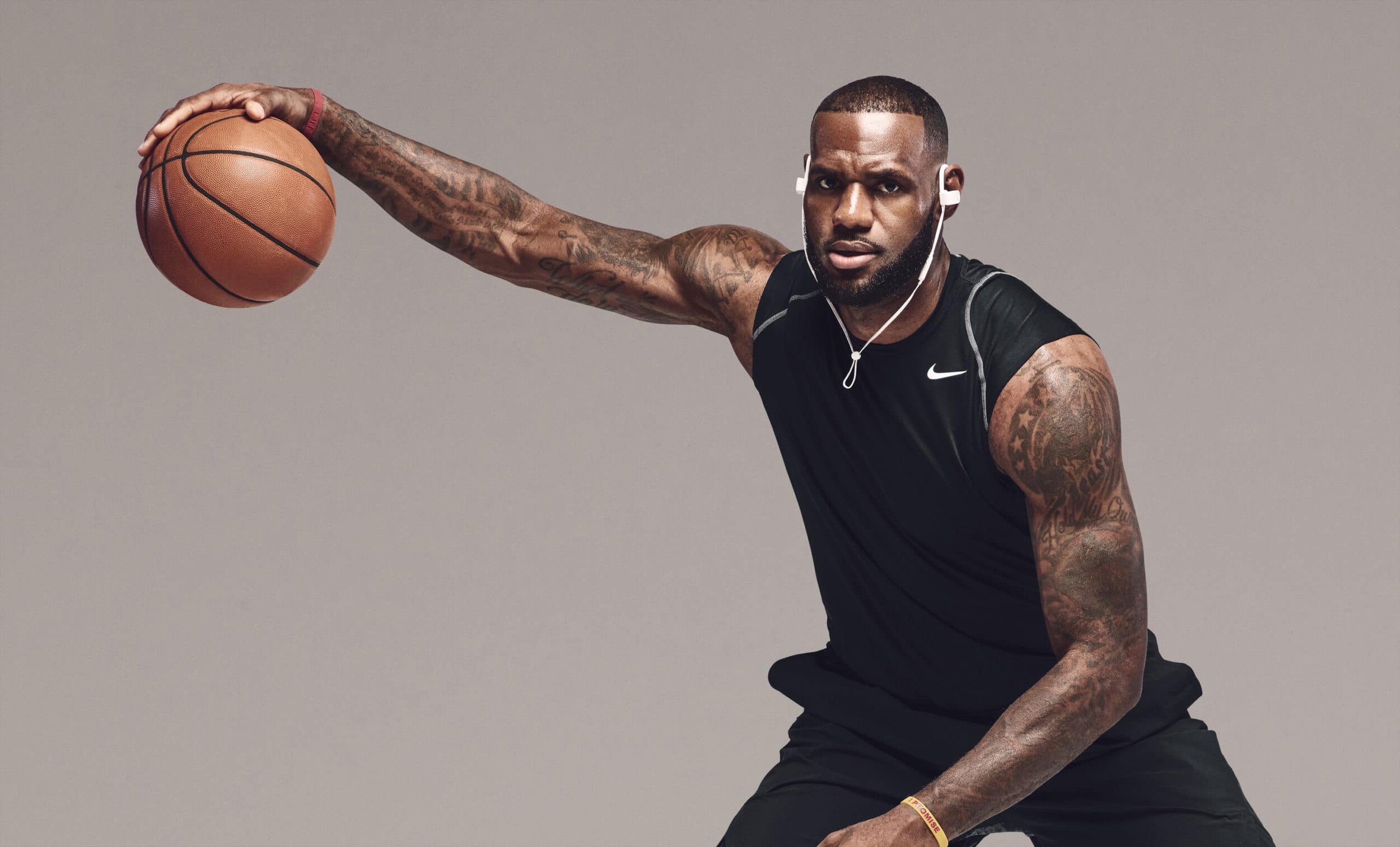
From the Jordan era onwards, basketball players increasingly took advantage of this transformation to curate their image and spearhead cultural shifts. The rebellious and ostentatious Allen Iverson, with his tattoos, gold chains, and baggy clothes, helped popularize the “bad boy” aesthetic both in and out of the league; so many players began adopting similarly “scandalous” styles that NBA commissioner David Stern enacted a “business casual” dress code for all league events, including games. However, the power of the players continued to grow: more and more players followed in Jordan’s footsteps, signing deals with shoe companies, fashion houses, and other major brands. Even headphones were sucked into the mix — LeBron James was photographed at the 2008 Olympics wearing the at-the-time unknown Beats headphones, and within a day, the company exploded in popularity. Ultimately, the league began to relent and discard its more draconian dress policies — in 2018, for the first time in league history, the NBA lifted the ban on players wearing sneakers without team-specific colors. Athletes were allowed to wear any sneaker of any color and style during games, and the players jumped at the opportunity to show off their kicks, especially those that were custom-made, yet to be released, or part of their own brand.

As such, today, basketball players have come to be strongly associated with the high life, both in the context of fashion and outside. Abloh, in reference to his LV x NBA collection, quipped that “ideas of luxury can be found in the sports world and its champions as much as in traditional forms of artistry,” and one need not look further than the “concrete runway” that athletes walk through on their way to the game for confirmation. In the last decade, NBA players have begun strutting through arena tunnels or FBOs adorned with Armani and Givenchy, seizing the chance to grow their brand as influencers — Houston Rockets point guard Russell Westbrook even published a 2017 book, Style Drivers, showcasing his clothing and style as well as his collaborations with fashion brands like Acne Studios. Fashion has paved an avenue for athletes to cultivate their identities and brands off the court, and with that increased visibility in non-basketball settings has come more cultural and social leverage.

Image via

Image via

While Jordan and Nike had made concerted efforts to remain apolitical back then, basketball stars now, armed with the benefit of hindsight and their newfound off-court confidence and influence, have opted to grit their teeth and plunge headfirst into the fight for social justice. Aside from Jaylen Brown, a myriad of NBA stars attended protests this past spring, including Marcus Smart, Karl-Anthony Towns, Malcolm Brogdon, Lonzo Ball, Tobias Harris, and many others; if they were not photographed at a rally, then they posted calls to action on their social media, urging people to donate, vote, and protest. Even the formally neutral Jordan — the putative catalyst for the propagation of athletes’ political power — broke his silence, pushing Nike and the Jordan Brand to release a statement proclaiming that “Black Lives Matter.” The man who unwittingly set basketball on a course towards cultural and political import was finally taking a resolute stand as an activist.

Abloh asseverated that the LV x NBA collection “celebrates the cultural contribution of basketball and its diverse characters.” The nature, purpose, and timing of the collaboration were felicitous: a high-profile recognition of the ascension of athletes’ platforms and voices — a trend set in motion by basketball-inspired fashion — coinciding with players’ fastidious work on addressing salient sociocultural issues on a nationally-visible scale. Strutting down the “concrete runway” in designer clothes and modeling for luxury brands has allowed for players’ cultural influence to propagate, and activist-athletes like Jaylen Brown have subsequently since become the norm, rather than the exception. Perhaps it was indeed fitting for GQ to have Brown model the LV x NBA collection for the article, as few have come to epitomize the intersection of basketball, fashion, and social justice as much as Brown has.

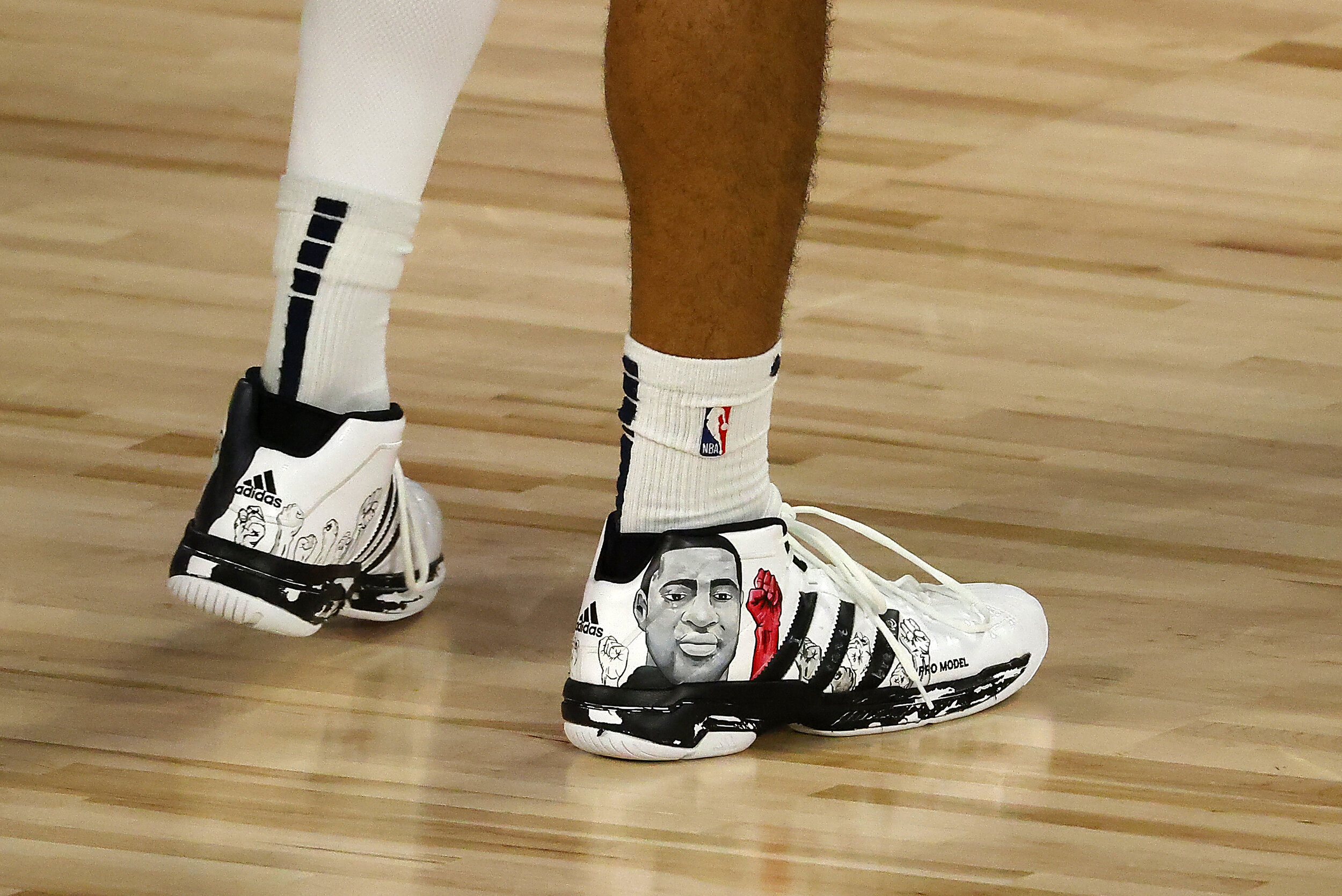
During the NBA restart, social justice activism was not the only breakout presence — the Bubble also unleashed new star players, including Denver Nuggets point guard Jamal Murray, who was shooting from 3 like Steph Curry and making acrobatic layups that commentators described as “Jordan-esque.” Murray, however, also attracted attention for other reasons — he walked onto the court for Game 6 of their first-round playoff series against the Utah Jazz wearing custom Adidas shoes furnished with the images of George Floyd and Breonna Taylor to honor the fight between police brutality and racial injustice. Murray, who would erupt for 50 points en route to a decisive victory, emotionally professed after the game that he drew his strength from his shoes and what they symbolized. No quote from the Bubble encapsulated the cultural impact of basketball — and its consanguinity with modern fashion and social justice — than Murray’s closing words:

“In life, you find things that hold value to you and things to fight for. And we found something we’re fighting for as the NBA, as a collective unit. I use these shoes as a symbol to me to keep fighting all around the world.”

Image via

Image via

Featured image via

Why I'm Obsessed with Beabadoobee

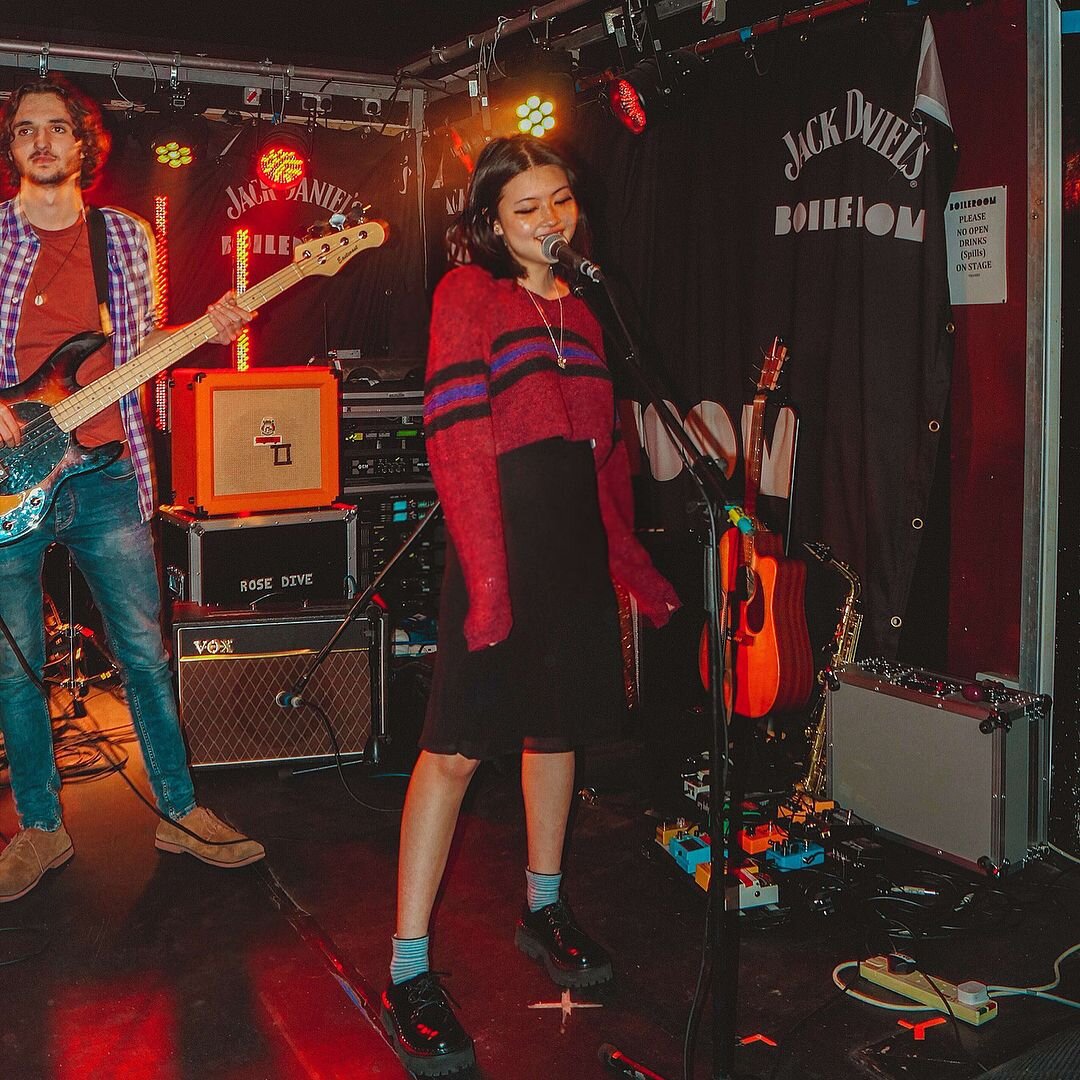
Sitting at my desk, staring at Canvas as my three papers due next week hang over my head, while election-induced anxiety still hasn’t faded away and I’m perpetually on 6 hours of sleep, all I want to do is jump around my room and scream in unbridled, raging teenage angst. That’s where Bea Kristi comes in — or better known as beabadoobee, her stage name now but, once upon a time, merely her finsta handle — singing about everything I feel, but can never describe. She wrote her first ever song “Coffee” in 2017 which went viral in practically a few days, despite the fact that she only posted it online for her boyfriend to hear, and that she only learned to play the guitar in that same year. Now signed with Dirty Hit since 2018 alongside the likes of Pale Waves, she has been recognised by nearly every major magazine brand and publication, and is on billboards all across London; Matt Healy himself called her “the most exciting thing in rock music” while presenting her an NME Radar Award. Here are some of the reasons why I’m utterly obsessed with her, and why you will be too:

Her music

211f697750068dabadc82d69d2dad4dc.jpg

Image via

There are too many songs to fawn over. Her first EP “Patched Up” feels like falling in love at 17, and the next one “Loveworm” is a hazy, bedroom pop tribute to her boyfriend Soren (with many great songs to feel emo to as you stare out of the window at a windy, bleak Hyde Park). “Space Cadet” shows her transition towards indie rock, breaking out of her bedroom walls and into the studio. To me, “Fake It Flowers”, her debut album, is by far the most alluring of her releases; appealing to every angle of adolescence, it truly is the closest thing I have heard to a soundtrack to growing up. Beabadoobee dances along a really beautiful line between bitter, I-don’t-give-a-flying-f*** energy (in “Care” and “Dye It Red”) and resigned disappointment and hurt (“Sorry” and “Further Away”) before accepting a peaceful forfeit to her feelings, still learning to not be scared of loving and trusting (“Horen Sarrison” and “How Was Your Day”). The album ends in a triumphant celebration of how, despite how being young is horrendously painful, it’s also the best time she will ever have; she looks forward with the rose-coloured glasses of being in love in “Together” and “Yoshimi, Forest, Magdalene”. With Bea, you’ll scream and dance, and you’ll break down and cry, but you have each other every step of the way.

Her fashion

I didn’t know that Bea made music back in 2017, but I was a fan of her social media presence and style. Those of you who are fans of Unif might remember this photo from their Instagram account way back when:

Image via

Image via

When she isn’t wearing Unif (or the occasional Brandy Melville hoodie: even she can’t stay away!!!), Bea wears outfits comprised almost entirely of vintage pieces, mostly from Depop, it seems. She collaborates extremely often with Depop user @notjusttrash, who provides her with what she calls “fairy” and “manic pixie” tops that are to be paired with baggy combat trousers or a mini skirt with argyle tights underneath that are more torn up than they are not. Finally, don’t forget the bubblegum pink grommet belt and trainers that I can only describe as either “hiking grandfather” or “10-year-old in a skatepark in the 90s” style: there is no in-between. Her blend of textures is amazing, like pairing a sequinned Aftershock camisole layered over a long-sleeved knit jumper with a silk midi skirt, black socks and black Buffaloes… yeah, just trust me, she makes it look good. She is also very much on board with the beaded necklace trend, sporting her favourite @ugly_accessories pieces, another Depop brand, on the daily.

Let’s not forget that she also starred in the campaign for Marc Jacobs’ Heaven collection, alongside Iris Law, Eileen Kelly and other “misfit creatives”. To top it all off… in her “Sorry” music video (directed by Soren and his team, Bedroom, who direct all of Bea’s music videos and also directed the video for “Me and You Together Song”) she wore a vintage Jean Paul Gaultier dress with gigantic black platform boots (seen below). Iconic, if you ask me.

Image via

Image via

Her look

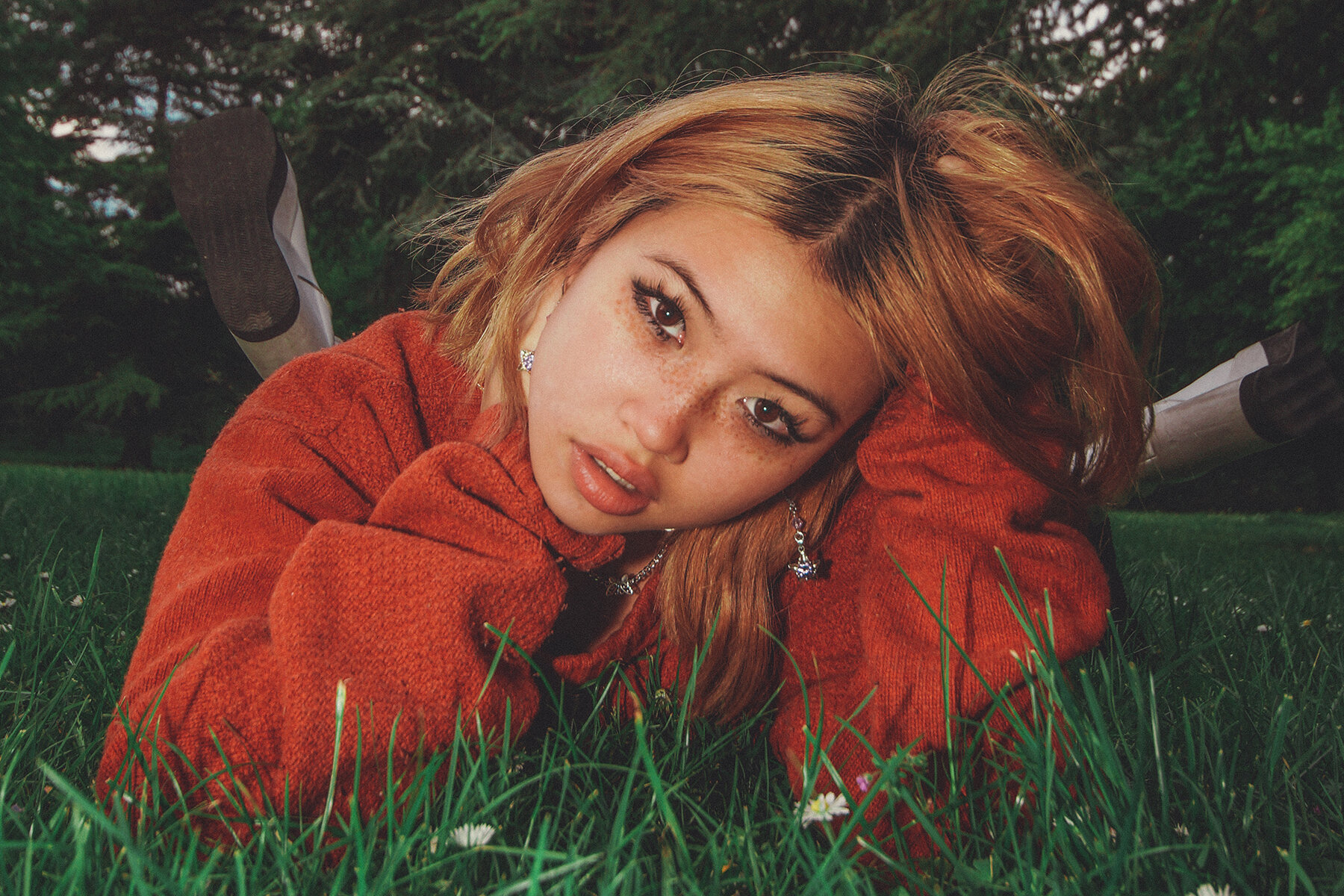
Perhaps the most noticeable feature of Bea’s look (other than her hair, which was once red and blue, but now is a more subtle bleach-blonde) is her signature heavily-winged and heavy-handed, smoked out black eyeliner, which she pairs with extreme fluttery eyelash extensions, or flared-out falsies. She also wears the most bottom-lash mascara I have ever seen someone wear. Additionally, she has multiple tattoos, spread far apart in a doodling-style, the way Pinterest and Tik Tok are currently drawn to. One, an “ugly face” on her forearm, was a stick-and-poke by Mac DeMarco in a karaoke bar in Dublin. Another set of two is above her kneecaps, “ELIJAH ROCKS”, written by her younger brother Elijah. She has many others, but perhaps the most cool of them all is a 4-frame Peanuts comic down the inside of her forearm. Looking at her tattoos, you’re bound to want one as unapologetic and unique.

Image via

Image via

Her relatability

What really stands out about Beabadoobee, and explains her appeal well, is that she is really not so different to you and me. Born in the Philippines, her parents moved to London when she was 3 and raised her in North London. She has talked about how she felt like an outsider, not fitting in to the “rich, white” demographic of her all-girls school. Expelled from that institution, she learned to play the guitar, and focussed on her career in her final year of high school, to the point of receiving A Level grades she called “terrible”. The notion of a celebrity is changing, probably due to the popularity and variety of social media, and the appeal of a “perfect” celebrity is dwindling away (in the Western world, at least). She became a sensation from her bedroom! Bea’s story is a comforting one, especially for UChicago overachievers, since it has made me redefine the idea of “success” as someone who, like her, was pressured to excel academically at all times.

She may be friends with Matt Healy now but, only a few years ago, she had his face as her phone background. Dreams do come true!

Image via

Image via

Featured image via

Ladies Night: The Best Female Collabs


Through the disease, disaster, and scandal cocktail that is 2020, the brightest silver lining has been the onslaught of phenomenal women teaming up and storming the charts. Especially exciting was the history made in May, with four black women occupying Billboard’s top two spots for the first time.

Contrary to what Lana Del Rey might think, women have been singing about taboo topics since the dawn of American popular music in the form of jazz in the 1920’s (see: Bessie Smith, Billie Holiday, etc.). They’ve been scorned and slandered for their expression long before Ms. Del Rey was a twinkle in the industry’s eye. In genres from soul to rap, women have utilized the medium of music to reflect on their femininity, sex, and complicated relationships. And for a heaping dose of f-you, sometimes they bring their friends. Here are some of my favorite female collaborations, pre-2012:

No More Tears (Enough Is Enough) - Donna Summer & Barbra Streisand (1979)

If you like disco, this is perhaps the apex of musical achievement. If you think you don’t like disco but you like pop, you should at the very least appreciate this song—modern pop derives much of its energy from disco, as well as its fusion of bombastic instrumentals with techno sounds. Donna Summer and Barbra Streisand on the same track is nothing short of legendary, as they set the stage for all the pop girls that followed. The late 70’s had a breadth of genres flourishing, while subsequent decades saw mass trend consolidation on the charts. Popstar collaborations like this became scarce until the 90’s.

Whatta Man - Salt-N-Pepa & En Vogue (1993)

The success of En Vogue’s first album in 1992 kicked off the black female vocal group genre in the 90’s (see: Destiny’s Child, Blaque, SWV, Xscape, Total, 702) and they remain one of the world’s best selling girl groups. Teaming up with the premier female rappers of their day may seem like a natural move for stars today, but Whatta Man was one of the first of its kind. The song set the standard for rap songs featuring an R&B/pop star on the chorus, à la Eve and Gwen Stefani’s Let Me Blow Ya Mind or Cardi B and SZA’s I Do. So whenever Beyoncé teams up with Nicki or Meg for a superstar collab, you know who to thank.

Not Tonight (Ladies Night Remix) - Lil’ Kim, Lisa “Left Eye” Lopes, Da Brat, Angie Martinez, and Missy Elliott (1996)

This is verifiably the biggest and best female posse cut. In a desert starved of big rap collaborations between women, Ladies Night was the oasis. Five (5!) female rappers disrupted the Death Row/Bad Boy Records monopoly on collab tracks. Lil’ Kim was finally able to stop being that one woman rapper in the Junior M.A.F.I.A. crew and lead one of her own. It also had the most celeb-stacked video this side of Bad Blood, featuring a ton of the previously mentioned 90’s vocal groups, Queen Latifah, T-Boz, and Mary J. Blige.

When You Believe - Whitney Houston & Mariah Carey (1998)

The Definitive Diva Duet. An unbelievable match up of vocal titans. Whether you think this track from the Prince of Egypt soundtrack is transcendent or pure sap, the power of two of the world’s most esteemed vocalists at the height of their respective careers is undeniable.

I Used To Love Him - Lauryn Hill & Mary J. Blige (1998)

The pain of these two women has created more timeless classics than almost any other artists. The Miseducation of Lauryn Hill is an all around near perfect album, and this is one of the most touching falling-out-of-love songs. Raw, metaphorical, and beautifully harmonized, it’s essential listening for anyone bleeding out the poison of heartbreak.

The Boy Is Mine - Brandy & Monica (1998)

The greatest musical catfight of all time. While our 2020 sensibilities scoff at pitting women against each other over a man, Brandy and Monica did it in a positively irresistible way. This song is filled to the brim with battling vocal runs that elevated the standard for the vocal quality of “teen” music.

Same Script, Different Cast - Whitney Houston & Deborah Cox (2000)

Essentially the big girl version of The Boy Is Mine, this track features Whitney as the scorned woman and Deborah as her man’s new girl. Whitney warns Deborah that the man is a scrub, Deborah is blinded by love, rinse and repeat. It’s severely underrated given the amazing vocals and depth of the material, particularly notable to me for how it reads as a Broadway musical-esque verbal battle between the two.

Lady Marmalade - Lil’ Kim, Christina Aguilera, P!nk, and Mya (2001)

The most predictable song on a list of this kind, this lineup is the only way a Patti Labelle track should ever dare to be touched. Made for the Moulin Rouge soundtrack, the video was all bombastic production and burlesque aesthetics, featuring opulence and glamour and garter belts galore. It also made Lil’ Kim the first female rapper to reach #1 on the Billboard Hot 100. 13 years later, Bang Bang used the same key ingredients for success—the Loud, Soulful One (Christina/P!nk v. Jessie J), The Reigning Queen of Rap (Lil’ Kim v. Nicki Minaj), and the Sweet Soprano (Mya v. Ariana). Its mini-sequel Can’t Hold Us Down from Kim and Christina in 2002 was also a spectacular call out of gendered double standards.

VMA Tribute to Madonna - Britney Spears, Christina Aguilera, Missy Elliott, and Madonna (2003)

Fun fact: the audio from this performance is actually on Spotify! And rightfully so, as one of the most infamous performances in pop culture history. Former Mouseketeers Britney and Christina had already broken out of their virginal teen queen molds and told the world they, respectively, “weren’t that innocent” and “dirrty.” Honoring Madonna, they emulate the sexual girlishness of Like A Virgin, poking fun at their own images as media Lolitas in a scene mimicking Madonna’s own 1984 VMA debut. Miss Blond Ambition herself then comes out in a tuxedo to match, a reflection of her career-long exploration of gender and sex. Madonna French kisses the successors to her pop throne. The cameraman goes down in history as extremely ruthless by cutting to Britney’s ex-boyfriend, Justin Timberlake, immediately after she is kissed. Missy Elliott comes out and the world parties. Legendary.

Beautiful Liar - Beyoncé & Shakira (2006)

In the anti-The Boy Is Mine, Beyoncé, Shakira, and their supernatural hips join forces to vanquish a two-timer over the perfect storm of R&B/Latin/Middle Eastern inspired beats and instrumentation. Challenging the abundance of songs in the early 2000’s featuring scorned women getting revenge on cheaters (Hit ‘Em Up Style, Bust Your Windows, Before He Cheats), they decide to “go high” and move on, declaring “it's not worth the drama / for a beautiful liar.” The video’s dance break is also a feat of cinematic achievement:

Telephone - Lady Gaga & Beyoncé (2010)

Often (rightfully) acclaimed for the star vocals and pulpy video, the best part about Telephone was its musical positioning: it met the R&B inspired pop of the 00’s with the electronic pop that would dominate the 2010’s. Telephone was the Switzerland of pop ideology. But the power of the cinematic, campy video can’t be understated. It’s a fascinating ode to pop culture, complete with sex, murder, and product placements. What more can I say that the stuffed-to-the-brim video doesn’t already?

Bonus: Your Crowning Glory - Julie Andrews & Raven Symoné (2004)

From one of the greatest films ever made, The Princess Diaries 2: Royal Engagement, this duet crossed generations and genres to definitively become the number one most empowering song of all time.


Featured image via
 

Digital Get Down: Music that Anticipated Social Distance


An unanticipated oracle of our times, Soulja Boy has been equipped to make the isolation required of the current public health situation work since 2008. Kiss Me Thru The Phone is a responsible, self-quarantining anthem—he wants to get with his girl but acknowledges that he can’t right now, even though he misses her! He then offers some fantastic alternatives to physical interaction like calling and texting. (America, take notes.)

Music has long been used to chronicle the uncertainties of changing world orders, and in the latter half of the 20th century artists zeroed in on the modern-day industrial revolution: the rapidly changing nature of technology, and its growing presence in our everyday existence.

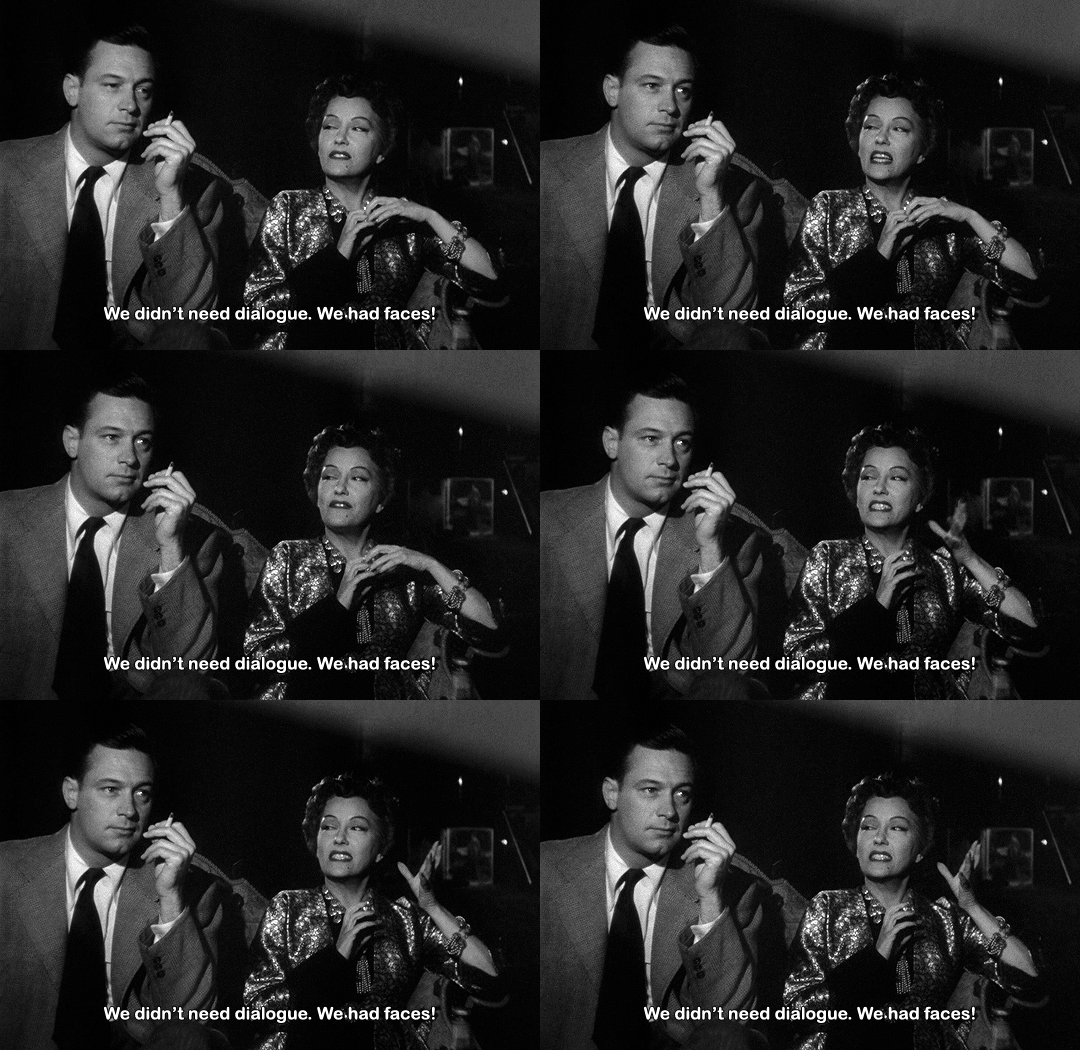
Aging silent film actress Norma Desmond resents the moviemaking technology that left her behind in Sunset Boulevard (1950). Image via.

Aging silent film actress Norma Desmond resents the moviemaking technology that left her behind in Sunset Boulevard (1950). Image via.

One of the first pop hits to retrospectively examine the growth of media technology was British band The Buggles’ Video Killed The Radio Star (1979). It told the familiar tale of cultural obsolescence made possible by an unforeseen advancement in artistic production. After video, the next seismic shift in media saw the “talkies” (film + sound) kill the career of many a silent film star (see: the plots of Singin’ in the Rain and Sunset Boulevard). Actress Clara Bow famously couldn’t stop looking up at the microphones when making her first film with sound, and essentially retired at 25 after suffering a nervous breakdown due to the drastic shift required for her craft. Video Killed The Radio Star was, in a stroke of the most Shakespearian irony, the first music video featured on the innovative new Music Television channel when it launched in 1981. MTV dominated the next few decades, shaping a musical monoculture for two generations of teens until the Internet killed the Music Television star. 

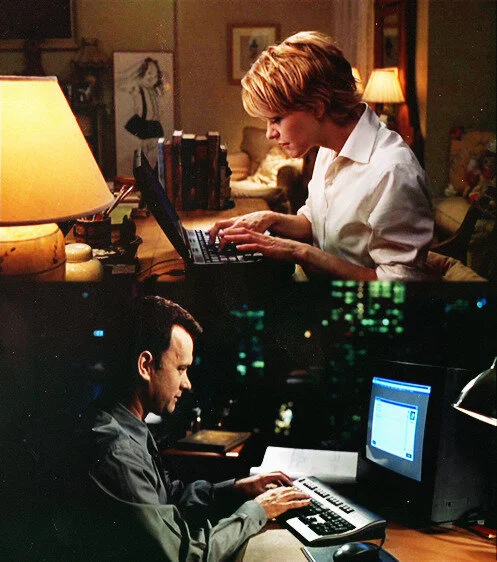
Meg Ryan and Tom Hanks fell in love over AOL in You’ve Got Mail (1998). Image via.

Meg Ryan and Tom Hanks fell in love over AOL in You’ve Got Mail (1998). Image via.

The last few decades have seen music reckon with the omnipresence of technology with varying degrees of excitement. In 1985 (!), Zapp crooned about the vast opportunities to find true love online, claiming “I no longer need astrology / Thanks to modern technology” on Computer Love almost 30 years before the launch of Tinder. Britney Spears transplanted typical post-breakup woes onto the Web with Email My Heart (1999). *NSYNC’s Digital Get Down (2000) was the first song about sexting, with the band more than excited to “get together on the digital screen.” In concert performances, they would burst from a flow of code onto the stage. Lead singer and co-songwriter JC Chasez told Billboard “…it's essentially putting away your inhibitions and sharing something through the digital stream.” There was a pervasive sense of hope that the information highway would simply string the world together, creating an overarching sense of connectivity regardless of physical space.

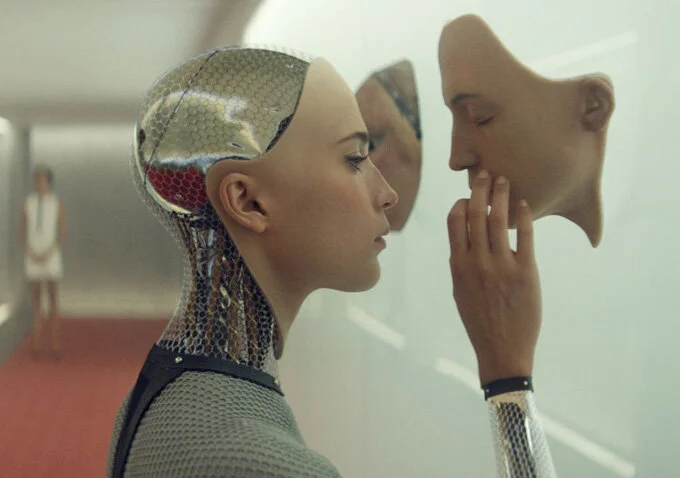
Alongside this strain of techno-optimism ran artists with a deep-seated fear of the consequences of a drastically altered world. Electric Light Orchestra’s Time (1981) is a concept album that tells the story of a man who travels to 2095, a future plagued with widespread isolation. ELO’s perception of a future governed by alternative modes of communication was one in which softness and connection couldn’t survive. In the analog era, a social life conducted by technology seemed like an emotional death sentence. The third track, Yours Truly, 2095 presents a stark contrast to songs like Computer Love in its view of connection (or lack thereof) in the digital age as the narrator speaks of his 2095 girlfriend:

ELO’s futuristic girlfriend sounds an awful lot like Ava from Ex Machina (2014). Image via.

ELO’s futuristic girlfriend sounds an awful lot like Ava from Ex Machina (2014). Image via.

I met someone who looks a lot like you,
She does the things you do, but she is an IBM
She's only programmed to be very nice,
But she's as cold as ice, whenever I get too near,
She tells me that she likes me very much,
But when I try to touch, she makes it all too clear.
She is the latest in technology,
Almost mythology, but she has a heart of stone

One decade and zillions of technological advancements later, Prince explored similar themes with My Computer (1996). Firmly ensconced in the MTV era, Prince’s musings on a future governed by the Web were less apocalyptic and more reflective. Ever the pioneer, his philosophy was prescient of the current discourse on technology: machines simply reflect and amplify what we behind the screen are already prone to (à la Black Mirror). In the song he describes a loneliness that isn’t satisfied by any medium—neither paper letters nor phone calls provide a magical fix to social alienation. The Internet is merely another tool with which we can attempt or approximate connection:“I scan my computer looking for a site / Make believe it's a better world, a better life.”

The most comprehensively damning indictment of a digitized future came the next year with Radiohead’s third album OK Computer (1997). Thom Yorke’s signature brand of angst made for a frighteningly recognizable spectre of a socially atomized world. Fitter Happier, a song entirely spoken by early Apple computer voice “Fred” (a sort of proto-Siri), tears into the tension between striving for perfection with what we lose along the way. The song describes seemingly positive goals of modern society in a detached and robotic voice that demonstrates the cold byproducts of said goals:

No longer afraid of the dark or midday shadows, nothing so ridiculously teenage and desperate
Nothing so childish
At a better pace, slower and more calculated
No chance of escape
Now self-employed
Concerned, but powerless

The next few months will surely reveal the possibilities and limitations of online spaces as stay at home orders are extended and our screen time skyrockets. How vast is the capacity for compassion and humanity in online spaces? What do we give up to survive? Which parts of us are translated through the screen and what do we leave behind? We have a pervasive desire to form narratives around history, and living in such a rapidly changing cultural moment makes that frustratingly impossible. I suppose it’ll be up to the artists, bloggers, and academics of the future to see if we become Radiohead-esque Paranoid Androids or if it's possible to live off of Zapp’s proposed Computer Love.


Featured image via


Potentially Unpopular Opinions About Girl Scout Cookies

More than just a controversial cookie ranking, this is a special article because we have two writers teaming up for a new-to-MODA collab. That’s right: pop music-maven Joseph Wiltzer and KonMari consultant Katherine Maschka Hitchcock have curated a list that will knock both your socks AND taste buds right off. Cookies are rated according to various qualifiers on scale out of 10.

J: Both Katherine and I actually have interesting histories with Girl Scout cookies. I’m from Montreal so I’d never actually tasted any until coming to college. Before you shout “child abuse,” I promise that Canadian childhood is wonderful, even without the moist, coconut-y goodness of the Samoa.

K: This true blue American, on the other hand, had a fairly traumatizing experience with The Girl Scouts of America in which I was bullied by my middle school friends (and their moms!?!?). The campy, do-good, girl-power spirit that the GSA cultivates thus eluded me. I have therefore allied with Joseph to produce a Girl Scout cookie review wholly absent of the patriotic and empathetic attitude of the American public.

Screen Shot 2019-03-01 at 11.13.50 AM.png

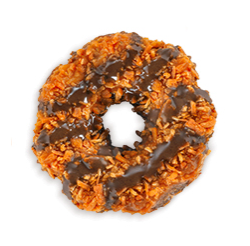
Samoas

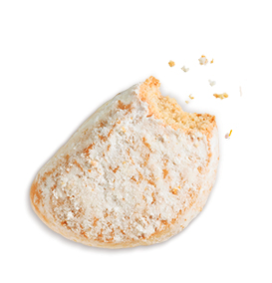
K: Crunchy caramel goodness. I was initially skeptical, but Samoas soundly defeated my previously unmatched love of Tagalongs. This is the sophisticated man/woman’s Girl Scout cookie.

J: This is the gold standard for pre-packaged cookies. Miss me with literally anything else if there is a box of Samoas on the table, I will absolutely ravish them.

Taste: 10

Texture:10

Cookie to filling ratio: 10

Would buy: 10

Would eat if in front of me: 10

Screen Shot 2019-03-01 at 11.13.57 AM.png

Tagalongs

K: Tagalongs are classic, timeless, and completely addictive. I would think twice about eating the entire box in one sitting just because of how filling they are, but if I did I would not be mad.

J: These were actually the first Girl Scout cookies I ever tasted and I was not disappointed. Tagalongs serve a gorgeous mix of chocolate and peanut-butter smoother than my best pick-up line [Editor’s note: *rolls eyes*].

Taste: 9

Texture: 8

Cookie to filling ratio: 9

Would I buy: 10

Would I eat if in front of me: 9

Screen Shot 2019-03-01 at 11.17.23 AM.png

Trefoils

K: Grandma’s classic shortbread made in a factory. I’m pretty sure the first ingredient in Trefoils is butter and the second is heart attack, but you just can’t be mad at them.

J: I literally started brewing a pot of tea when I looked at this picture. Name a more iconic duo than Trefoils and black tea. I’ll wait…

Taste: 9

Texture: 8

Cookie to filling ratio: N/A

Would buy: 9

Would eat if in front of me: 8

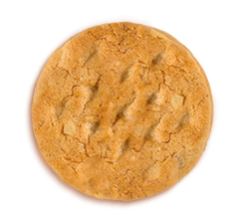
Screen Shot 2019-03-01 at 11.17.34 AM.png

Do-si-dos

K: The off-brand nutter butter. Unfortunately Do-si-dos are competing with Tagalongs for peanut butter supremacy, which is just not a battle they are going to win. I did, however, involuntarily eat 5 of them in one sitting. These feel like a snack where Tagalongs feel like dessert.

J: Imagine being the pretty younger sister of one of the most glamorous cookies. It’s good, but if I had to chose a cookie with peanuts, it’s always going to be Tagalongs.

Taste: 7

Texture: 6

Cookie to filling ratio: 7

Would buy: 7

Would eat if in front of me: 7

Screen Shot 2019-03-01 at 11.17.44 AM.png

Savannah Smiles

K: Not my favorite flavor for a cookie, but the taste-testers for this article swayed me. Savannah Smiles hit you with a lemon frosting flavor that diminishes as you continue to eat them, leaving a slightly salty aftertaste. I wish they were less dense and sickly-sweet because the powdered sugar and lemon have the potential to make a light and refreshing bite similar to a Russian tea cookie.

J: I’ve literally never tasted this but it has the word smile in the name so I’m on board. 2019 is all about happiness and positivity so this is a yes from me.

Taste: 5

Texture: 4

Cookie to filling ratio: N/A

Would buy: 5

Would eat if in front of me: 5

Screen Shot 2019-03-02 at 4.32.44 PM.png

Toffee-tastic

K: The gluten-free newcomer to the Girl Scout cookie scene is surprisingly tasty. These are essentially Trefoils with some pretty decent toffee in them. The only reason they are rated so low is because of the texture: painfully dry. If you are gluten-free these are a good option because of the taste, but be sure to dunk them in milk or you may die of thirst.

J: The Sahara Desert recently called this cookie to congratulate it on being the new driest thing on the planet. I’ve literally been told I “taste good, but a little dry” so I can honestly relate [Editor’s note: what?? Also, the Atacama Desert is supposedly the driest, non-polar place on the planet].

Taste: 7

Texture: 0

Cookie to filling ratio: 6

Would buy: 4

Would eat if in front of me: 4

Screen+Shot+2019-03-01+at+11.13.42+AM.jpg

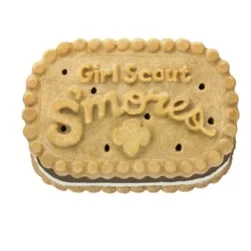
S’mores

K: I don't know how Girl Scouts could have ruined S’mores but they have. These taste like chemicals; an amalgamation of artificial chocolate, marshmallow, and even graham cracker flavoring. “Literal trash” says taste-tester Audra Berg, and I agree.

J: Never has a cookie looked so cute, but tasted so bad. We can all agree that S’mores have the look down, but the flavour needs a lot of work.

Taste: 2

Texture: 6

Cookie to filling ratio: 7

Would buy: 1

Would eat if in front of me: 2 (and only if I really hated myself)

Screen Shot 2019-03-01 at 11.13.31 AM.png

Thin Mints

K: #sorrynotsorry. Thin Mints are dry and uninspired. The mint flavor is overpowering and it feels like you’re eating chocolate toothpaste. At least you can acceptably spit out toothpaste.

J: Thank u, next.

Taste: 2

Texture: 1

Cookie to filling ratio: N/A

Would buy: 0

Would eat if in front of me: 0

J: Are you upset? Shook? Don’t be. This is empirically studied, theoretically-backed research conducted by Katherine and I. We are dessert experts with PhDs in cookie mechanics, and if you can’t respect that, work on yourself. Anger is a disease sweetie, get better soon!

K: True. I bought five boxes of Girl Scout cookies and conducted taste tests to refresh myself on the more unpleasant ones in the bunch. Joseph and I both knew where Thin Mints were going to end up on our list before the taste tests, though. Time to take out the trash!


Feature image via. Girl Scout Cookie images via.

Source: https://timedotcom.files.wordpress.com/201...

Look for Less: Viktor and Rolf Spring 2019 Couture

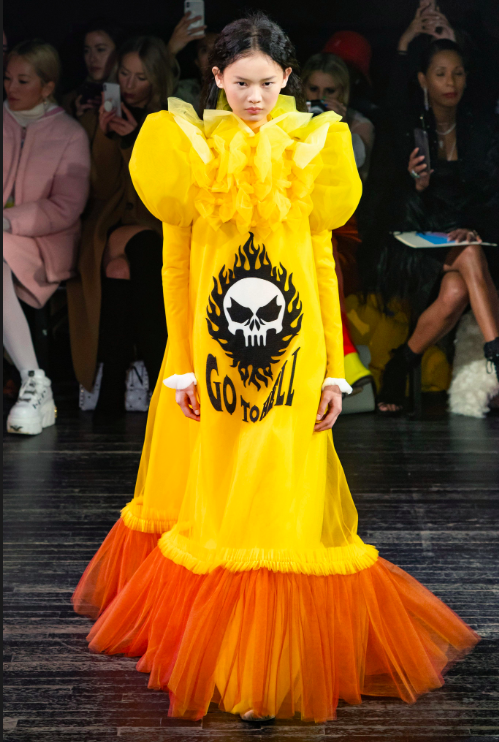
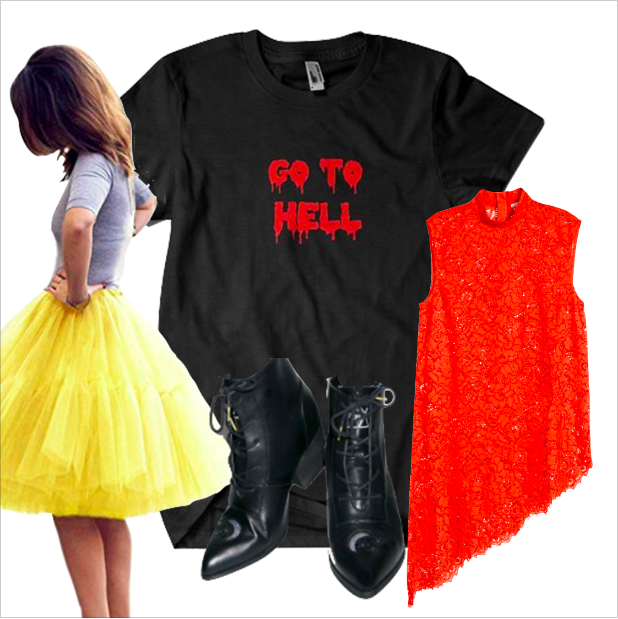
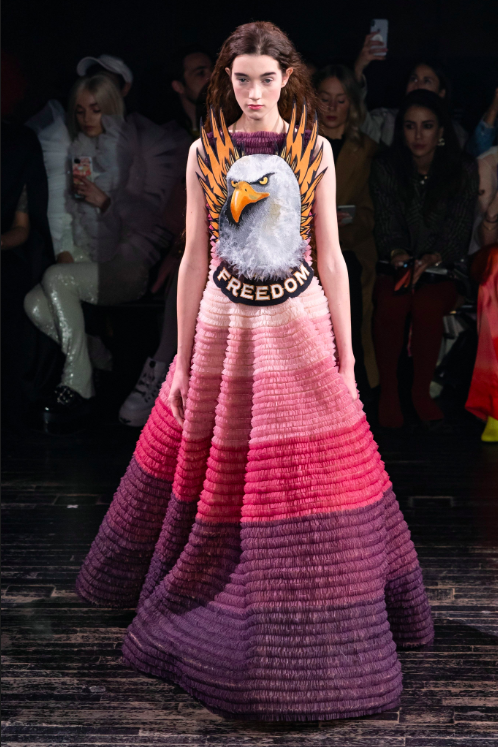
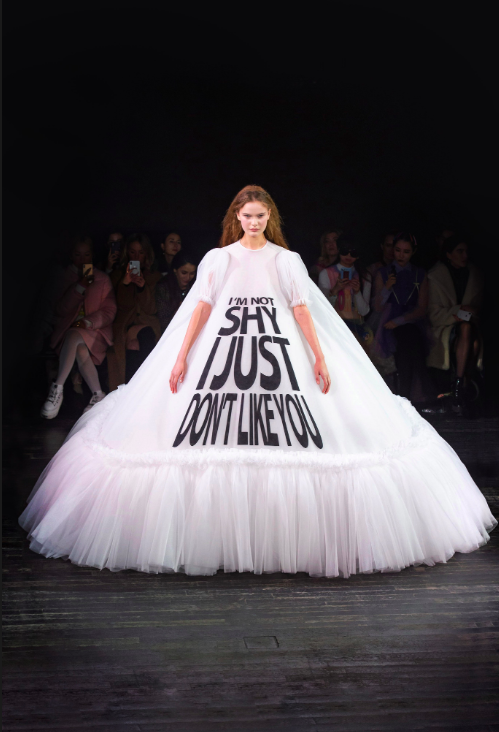
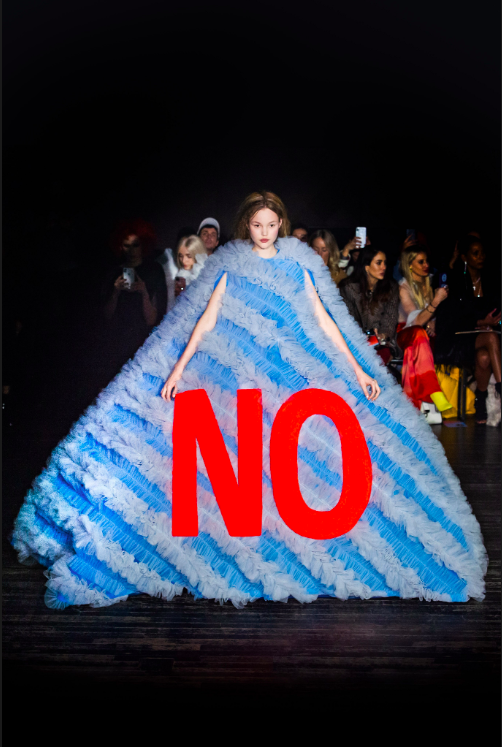
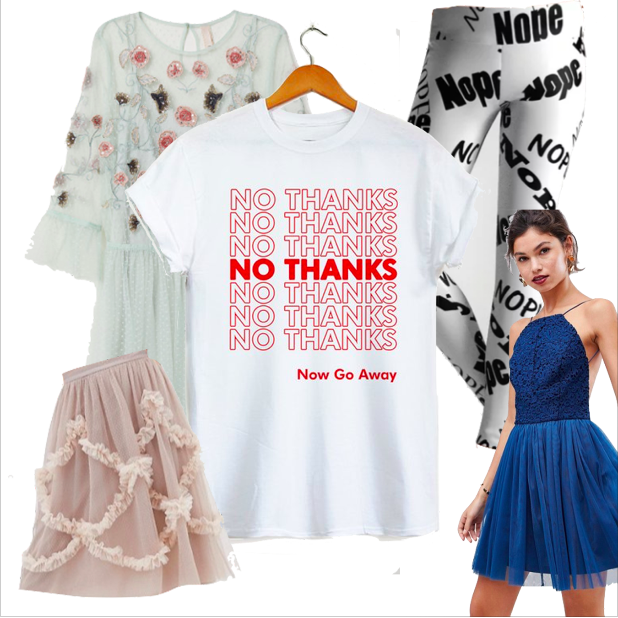
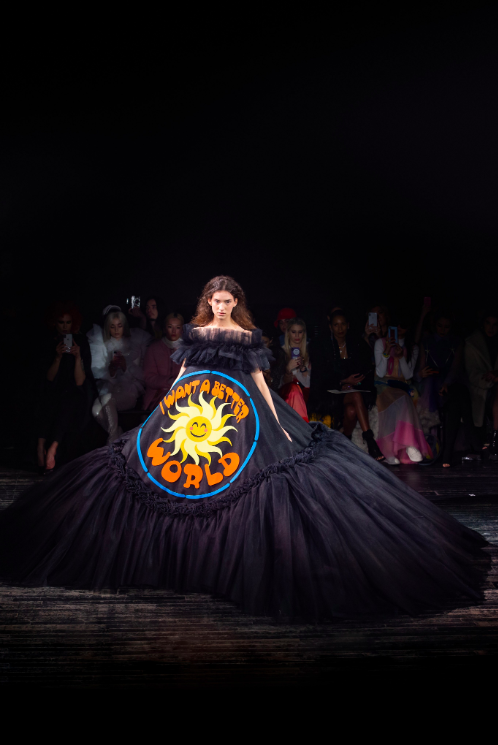
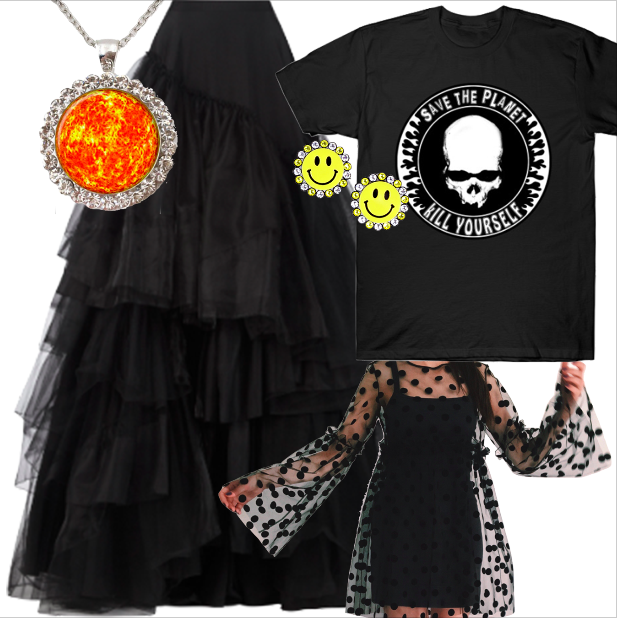
If you’re anything like me then for the past week your Instagram has been swamped with photos and commentary on the Viktor and Rolf Spring 2019 Couture Collection. The plethora of passive-aggressive statements pasted defiantly on swathes of multicolored tulle mirror our internal monologue when a man tells us we’d be prettier if we smiled, a parent cautions us against the destructive force of “the marijuanas,” or we see yet another depressing statistic about the effects of climate change.

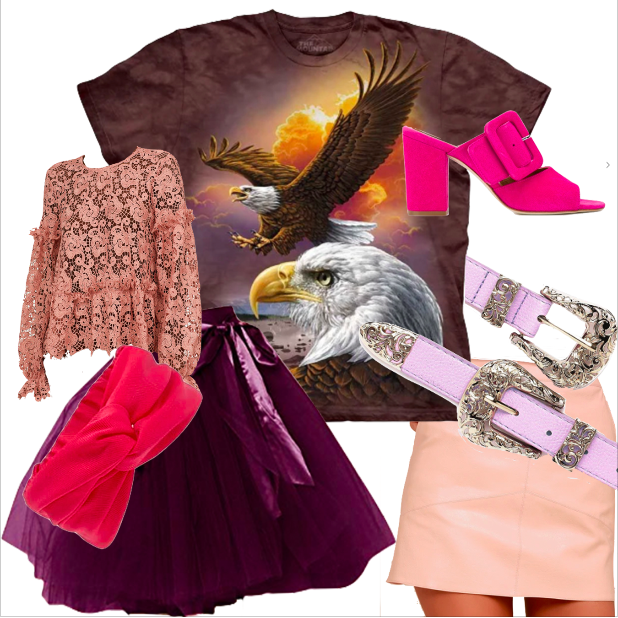
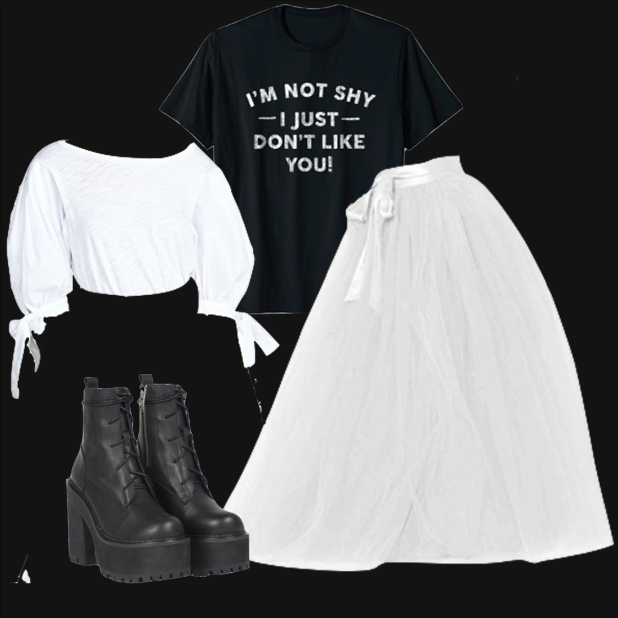
Everything might suck, we might be harboring an immense amount of pent up rage, but damnit we will deal with it in a ruffled hot pink gown. Here’s how to express your ironic rage for way less than a haute couture piece straight off the Paris runway.


Feature image via

Will Vine Ever Make a Comeback?

Think back to 2012. Things were simple back then. Instead of Instagram videos and stories, we were watching a small Shawn Mendes singing six-second covers, King Bach accusing literally everyone of stealing, and watching the best content to be created over the century… All thanks to Vine. This short-lived app immortalized the peak of meme culture for my generation with its ability to cater to our short attention spans and deadpan sense of humor.

It was only when Twitter purchased the app and led it to its demise when I truly realized that Vine was there for me when I needed it, but quickly forgotten when I came to college. Of course, the unending sense of nostalgia has me eternally subscribed to the billions of Vine compilations on Youtube.

Image Via

Image Via

Naturally I was happy back in 2016 when I heard the rumors of Vine 2.0, which was supposed to be a self-funded reboot for the app of the generation. I’ve been waiting patiently for this comeback. So almost two years after this tease on Twitter, I’m still wondering: where is Vine?

A little bit of research showed me the worst of my fears. One of the original co-creators of Vine, Dom Hoffman tweeted earlier this year that Vine 2.0 would be postponed indefinitely. His reasoning was due to the difficulty of self-funding. Hoffman predicts that the high interest in rebooting Vine has skyrocketed the estimated costs, and that the scale for launching would be unrealistic for its current funds.

Vine probably won’t come back, but maybe it’s for the best? Social media environments have changed so much, and maybe the market for this kind of app simply isn’t appropriate anymore.

One of the biggest issues with the original Vine was its quick turnaround for content creators. The most popular creators such as Logan Paul, Lele Pons, Shawn Mendes, and Tori Kelly have taken on their own brands, label contracts, and other influencer-type careers now. Vine’s highly commercial transition made the content less authentic and favorable for many, leaving Vine empty with the downfall of second-rate comedians or those posting with sponsorships in all their content.

It’s hard to say when Vine 2.0 will actually launch or whether it will be burdened by the same problems of its predecessor. I’m not sure, but I’ll stick to these compilations for now:

Feature Image Via

Look of a Mind: Tavi Gevinson

It's difficult to patrol some corners of the internet without running into Tavi Gevinson. Gevinson, a blogger-editor-essayist-actress-fashionista wonderkind, has been in the public eye in some way since age eleven, when she burst onto the high-fashion scene rapping about Comme de Garcones' Rei Kawakubo, opining on Rodarte, and taking photos of her own wacky outfits in her backyard. She's moved on since then, trading Fashion Week for leading roles on Broadway, her own magazine, Rookie, and frequent caucuses with other young, prominent feminists (including but not limited to Amandla Stenberg, Tyler Ford, Kiernan Shipka, Malala Yousafzi, and Roan Blanchard). 

Some have deemed Gevinson a voice of today's young people who want to be taken seriously in their abilities and their art (to which her magazine, Rookie, caters entirely). She's certainly crystallized a certain teenage experience—the cluttered bedrooms, the tiny moments of beauty and pain, the wondering if this will really last forever. Rookie is a primer on intersectional feminism, from causes to know about to your next role models to what to wear for all of it.

Image via Pinterest.

Image via Pinterest.

But if you're interested in the editor-in-chief's style, go for a witty, ironic Americana with more than a dash of suburbia. Throw in a few pom-pom accessories, plenty of sinister pastels (her obsession with Rodarte never quite went away...), and you're good to go. Now, off to put your late-adolescent experience into the most beautiful words you can muster!

Image via IMDb.

Image via IMDb.

Feature image via

June Playlist

Here are some songs I've been jamming to lately. My favorites are Your Shirt by Chelsea Cutler, Quit (feat. Ariana Grande) by Cashmere Cat, Feel Good (feat. Data), and Chunks by Phlake. Coldplay's Hypnotized is a great study song, and Tritonal's remix of Something Just Like This is awesome too - head to Soundcloud here!

Feature image via Olivia Jia

All Hail the Queen

If you haven't had a chance to watch Beyoncé's Grammy performance, stop what you're doing right now and watch it here. Share with friends to save a life.

gif via

gif via

Dripping in jewels with her hair enshrined by a golden halo, Beyoncé's performance of Love Drought and Sandcastles (off her last album Lemonade) were the perfect homage to motherhood, redemption and self-love.

image via

image via

image via

image via

Introduced by her mother, Tina Knowles, before taking the stage, Beyoncé's performance was simultaneously a nod to traditional African dress, Mother Mary imagery, Buddhist deities and Alvin Ailey's choreographic style, invoking all manners of beauty and the divine. Holographic body doubles of herself, her dancers, her mother and Blue Ivy also played with the audiences' perceptions of reality and underscored the dream-like effect of her performance.

image via

image via

The artistic direction she's taken with this performance is a fitting continuation of the pregnancy photos she released several weeks ago. Accompanied by evocative lines penned by poet Warsan Shire (who also made her debut on the Lemonade album), view all of the photos from the Grammy performance and her internet-breaking pregnancy photoshoot here

image via

image via

All I can say is, long live the Queen.

gif via

gif via

Feature image via

Worth a Watch: Barry

For those of you lamenting the current state and fearful future of American politics, don't expect to stop worrying anytime soon. In the mean time, however, take a peak at the trailer for Barry, Netflix's latest venture into film.  

Directed by Vikram Gandhi and starring Devon Terrell, Barry received rave reviews at the Toronto Film Festival and explores a young Barack Obama's experiences in New York City as an undergraduate at Columbia University in the early 1980s. The film tracks the trials and tribulations of a young man on the cusp of adulthood, grappling with issues of race and identity that are still relevant to our fractured society today. 

Featured image via

The Fashion World Hits the Campaign Trail

Considering this election season has been one like no other, it comes as no surprise that authorities and average voices from all aspects of society have taken it upon themselves to advocate for a candidate or cause they feel passionate about. In particular, the fashion industry has become a vocal and influential political force, with major publications like Vogue to designers and models encouraging people to register to vote and endorsing candidates through their creative sensibilities and social media clout. 

image via

image via

From Instagram feeds to the DNC stage, fashion industry leaders have embraced incredibly diverse platforms as a means of getting their messages across. On the publication side, the release of US Vogue's latest cover was accompanied by an explicit message for readers to literally get out there and "Vote." In the following days the magazine also announced its formal endorsement of Hillary Clinton, noting: "Vogue has no history of political endorsements... Given the profound stakes of this [election], and the history that stands to be made, we feel that should change" (Vogue.com).

This comes as little surprise to those who have kept pace with this election largely through pop culture and fashion industry outlets. During New York Fashion Week, Anna Wintour amassed a handful of designers for an "I'm With Her" inspired runway show, with everyone from Marc Jacobs to Diane von Furstenberg contributing their talents to the cause.

image via

image via

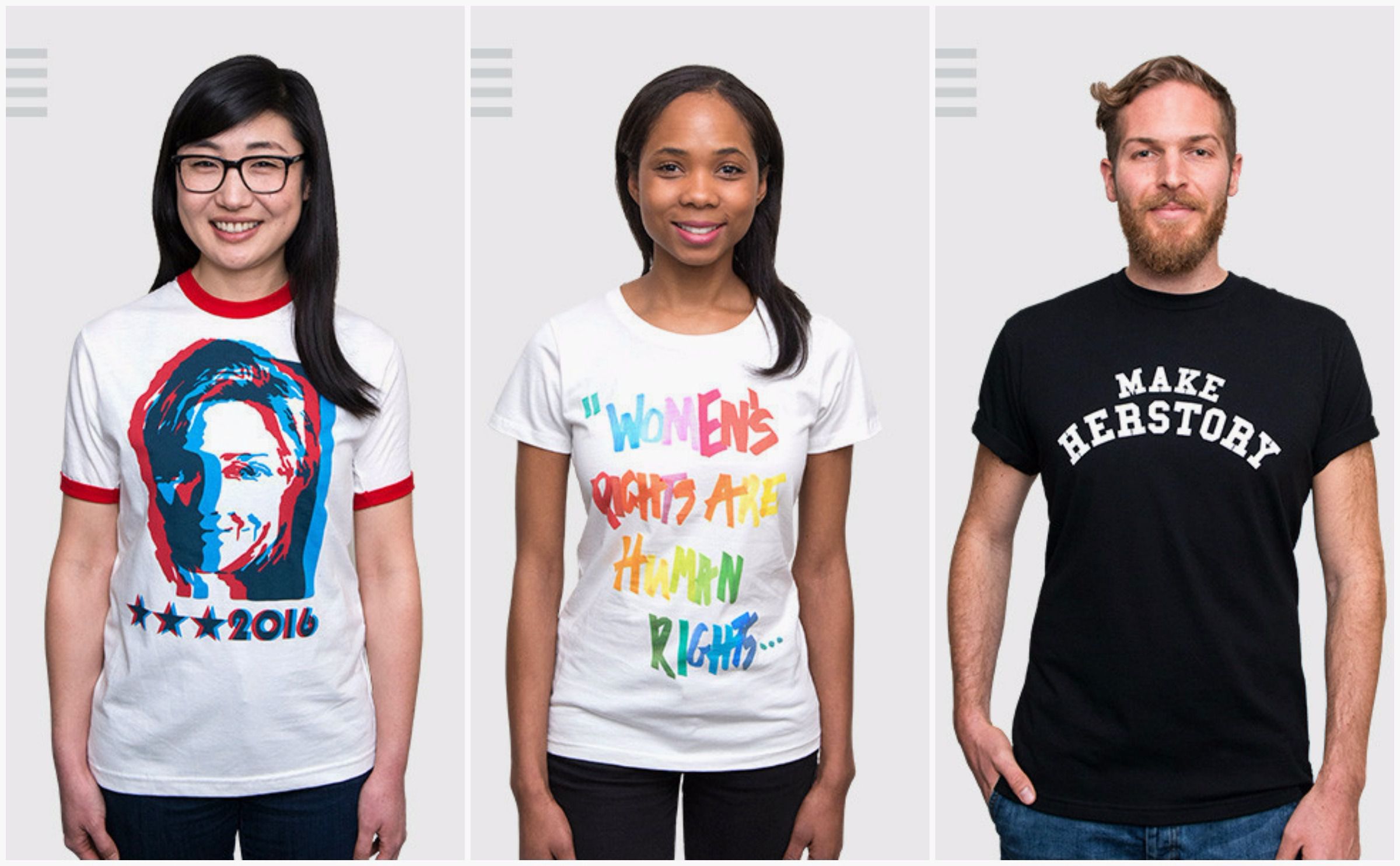
Fashion designers have long supported Clinton's campaign, however. The limited edition Made for History collection features a handful of catchy slogans and artful manipulations of HRC insignia on T-shirts designed by Jason Wu, Tory Burch, Joseph Altuzarra and Prabal Gurung, among others.

On a more informal level, curious social media users can infer industry leader's political leanings from a quick glance at their social media feeds. A quick search for #badgalriri on Instagram reveals a constant stream of photos depicting the musician snapped by paparazzi in a pro-Hillary tee. While it remains to be seen whether or not celebrity endorsements hold any sway over voters, it has been interesting to observe the confluence of political and artistic forces throughout the course of this election. Indeed, the efforts of everyone from Vogue magazine, to high profile designers, models and media stars have transformed the role of fashion in the broader schema of American politics. 

What are your opinions about the role of fashion and pop culture in this nation's political discourse? Let us know in the comments below and remember to vote this November!

Featured image via
Take a Break: Juliet Lee
With this new series, MODA Blog invites you to take a break from school and work and into the world of procrastination. Browsing through blogs or even playlists can be a bore, and sometimes you need that tiny bit of inspiration. Each week, one blogger will share their current arts and culture obsession. Whether it be a Netflix show, Youtube series, or even an online gallery, we hope that you guys can become just as obsessed as we are, and sorry not sorry for extending your procrastination time. But let's be honest, since you're here on the blog, it's completely worth it.

This week, I am sharing my current obsession: James Corden's Carpool Karaoke.

First, let me give you a little background. James Corden is an English actor, writer, producer, comedian, singer and television host. He currently is the host of the talk show The Late Late Show with James Corden on CBS. Though many audiences, especially from the United States, are familiar with him in this capacity, James Corden is actually a very talented singer. He starred in Disney's film adaption of the musical Into the Woods playing the Baker, and even won the 2012 Tony Award for Best Actor in a Play for his lead performance in One Man, Two Guvnors. And Corden does not forget his musical roots by adding the segment, Carpool Karaoke, to The Late Late Show.

Now what is Carpool Karaoke you may ask? Well, it's a mini segment of the Late Late Show that will shatter your preconceived stereotypes of the singers you know today and continuously surprise you with each guest. James Corden gets famous musical artists like Justin Bieber and Adele and even some who aren't singers to sing like Michelle Obama and George Clooney with him in a car as they drive around Los Angeles! In this segment with Selena Gomez, they even try belting out on a roller coaster. During Carpool Karaoke, you'll see Corden joke around and get to know his guest(s) in a more natural setting and still hear them sing their iconic songs. It's light and airy and will definitely draw out some laughs.

Here are MODA Blog's top 5 Carpool Karaoke picks!

If you liked what you watched, check out this link for a more comprehensive list!

Let us know in the comment section down below anything you want us to check out, and stay tuned for most posts in this series in the future!

Featured image via