Fernweh~10: Romania

fernweh

/ˈfɛʁnveː/

farsickness or longing for far-off places

This next installment of the Fernweh discussions on the Blog was conducted with a friend of mine from Romania during last year’s spring quarter. It was—and is still—surprising to see how close our cultures to each other yet also so different. On top of sharing her personal opinions and knowledge on traditional Romanian clothing and the history that accompanies that, Sara also presented very recent fashion events in Romanian style.

I hope you can experience the same joy I did when I was first learning about Romanian culture. This will be my last Fernweh, but I hope to see you all in a completely different series. Bye!

What does it mean to you when I say “Romanian clothing”?

As cliché as it sounds, traditional clothing reconnects me with my home country and my culture. Moving around, I have struggled to find a sense of belonging, and traditional clothing has always represented a refuge for me. However, it is interesting to notice that it was not until I left home and objectively detached from my country that my traditional clothes disclosed unique information about my identity as a Romanian.

How would you describe the traditional clothing in Romania?

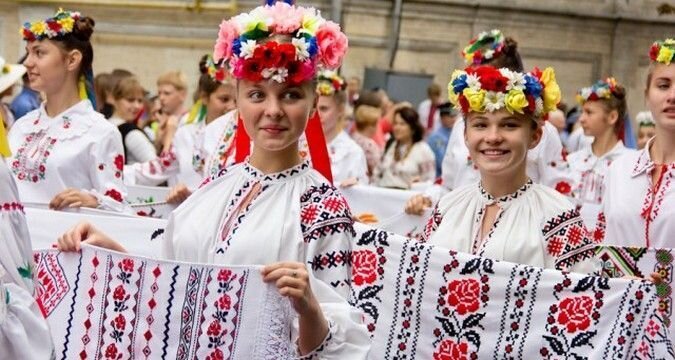
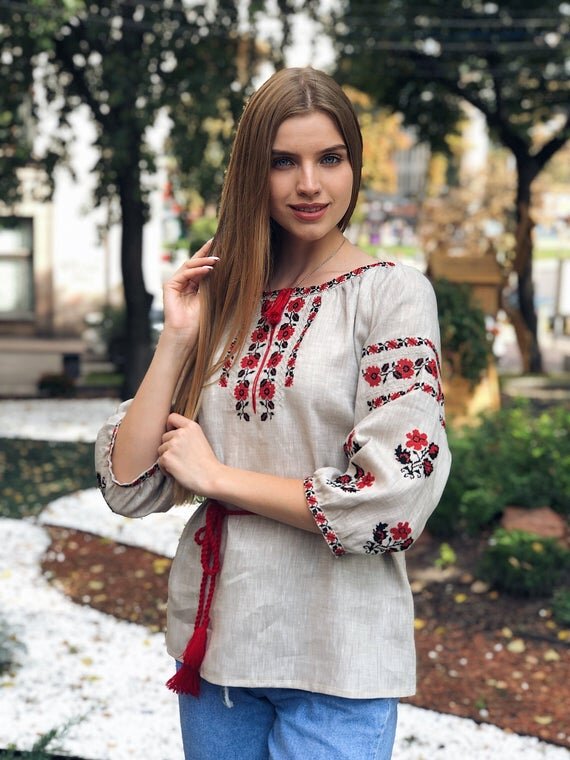
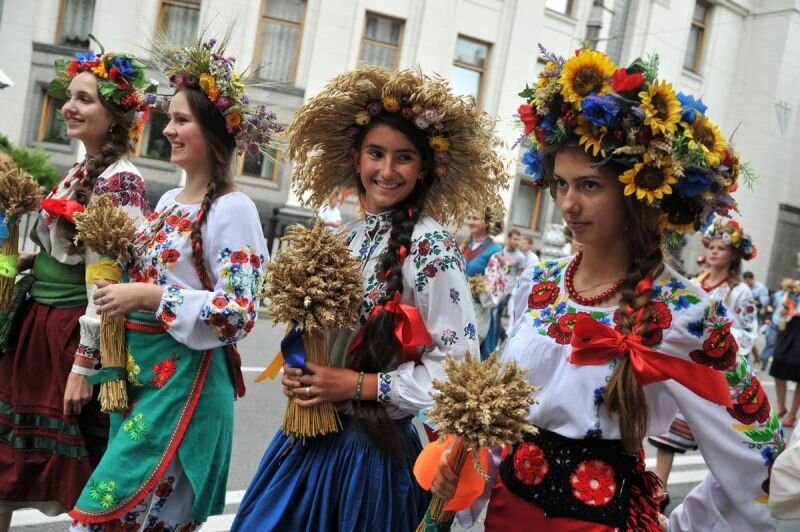
Handmade. Their origins go a long way back to the ancient Dacian civilization. A white shirt or blouse made from linen or wool is the basic garment for both men and women in Romania. Traditionally, men wear white pants, a white shirt, a hat, belt and overcoat. Women also wear a blouse similar to the men's shirts but longer. Skirts are woven with a pattern and often have embroidery and often are topped with a black vest. Women wear scarves or head coverings.
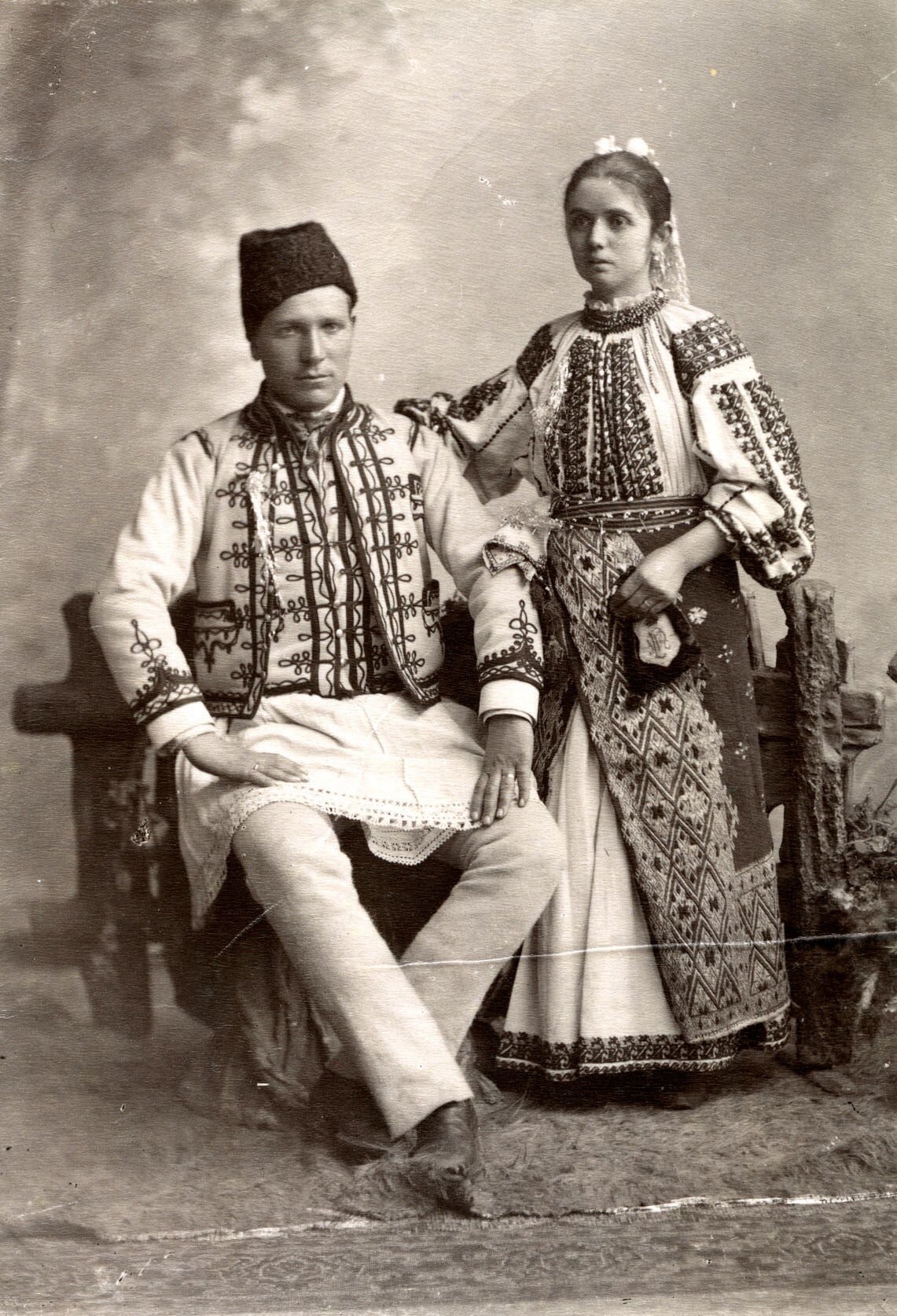
Image via

What today we know as the Romanian IA or “La Blouse Roumaine” represents the most representative clothing piece of the Romanian traditional ethnic costume. The first type of Romanian blouse is considered to have been born in Cucuteni Culture starting as early as the 6th century BC.  The detailed and colourful hand-made embroidery always bore the weight of numerous popular Romanian motifs, patterns, sacred geometry elements and mystic symbols. No element was left to chance. Each one of them was embroidered for a very good reason as by itself or all together they were telling a story. A story of the women who wore the Romanian IA. They were directly linked with the traditions and specificity of the region the IAs were made. The cut, the embroidery and even the colours on the IAs had a direct connection with the region of Romanian where they were made. One might say the IA comprises the life and history of the people living in that region. 
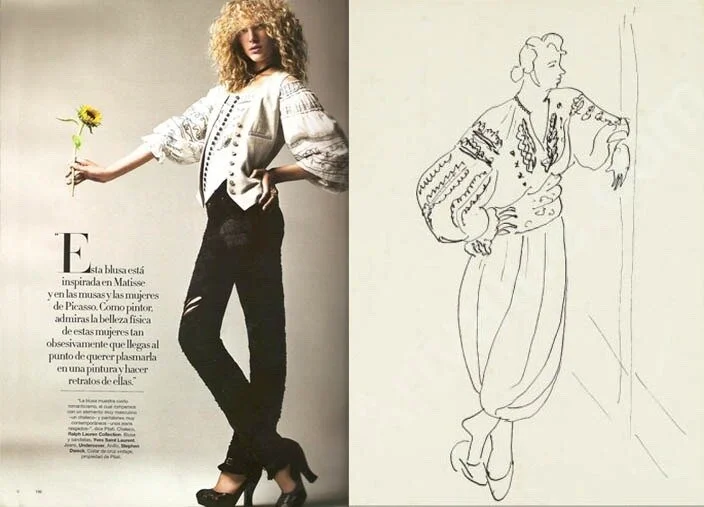
 

Image via

How would you describe today’s clothing? Are there any major contributions to fashion, such as designers, trends, labels, weeks…?

Yes, in fact it was Yves Saint Laurent, the world’s first famous designer, to officially introduce the Romanian IA into his fashion collection back in 1981 in Paris. Almost 50 years later after Henri Matisse finished his painting “La blouse Roumaine”, Yves Saint Laurent launched his autumn-winter haute couture collection. It was a homage to Matisse’s famous painting and as you can see below the resemblance is astonishing, yet you can easily spot the designer’s personal touch. 
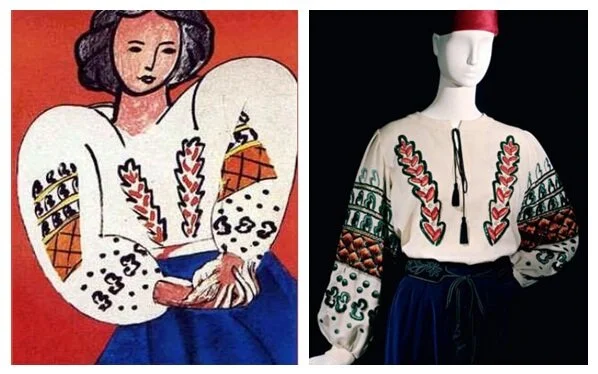
Image via
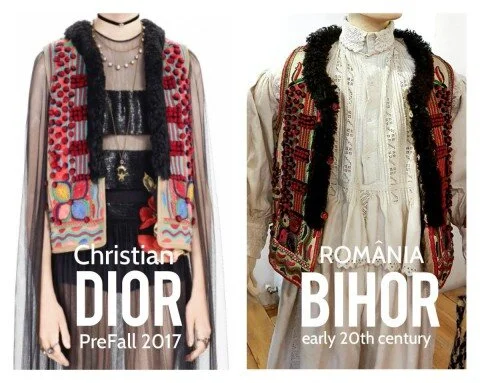
Image via

(Writer’s side note: It is worth mentioning Dior’s Romanian cultural appropriation discussion. In 2017, Romanian designers accused Dior for plagiarizing their traditional clothes and patterns to showcase on their fashion show—read more on this here)


Feature image via

Fernweh~8: Myanmar

fernweh

/ˈfɛʁnveː/

farsickness or longing for far-off places


Most of my fernweh conversations revolved around the distinction of home and house. I believed, and still believe, that travelling is a pursuit of temporary houses that we can settle the sense of home we carry within us in. 

Recently, in a psychology class of mine, I came across strong arguments claiming that the feeling of happiness is something we teach ourselves by training our cognition to experience pleasure. We motivate ourselves to be happy in consideration of our past. So, similar to this idea, we may be novice to feeling at home, but as long as we reminisce about the memory of the past, as long as we long to find a house that also will be a home to our singularity, we may allow ourselves to root for the new. 

This fernweh travel is with Elaine, who currently resides in the same “house” that I live in. As strange as living in a place that is arbitrarily called a house, coincidentally, the time I decided to interview Elaine was when we went to watch the film Nomadland, a film that discusses the idea of carrying a home with us. Initially, Elaine was going to talk about her Taiwanese roots. However, she decided to “draw on her other culture- Myanmar,” as the Chinese clothing history was covered in another interview of the Fernweh series. Before diving into the interview, I would like to add the side note of Elaine, as I believe it is important to include how people associate themselves with the culture they are talking about. Elaine wanted to preface that “She is not as in touch with her Burmese side as she is with her Taiwanese side, but she does know a bit.” 

I truly enjoyed your perspective Elaine, thank you!

SK: What does it mean to you when I say “Burmese clothing”?

Elaine: I imagine sarongs (which on Google is called longyi). As a little girl, I remember my dad prancing around the house in the few sarongs he managed to keep from Myanmar. Here are a few pictures of this on men and women:

Normally for women, the sarongs have more pretty patterns and flowers on them, while the men tend to have more muted, plaid colors. Also notice that most of them wear sandals- it’s really hot and humid in Myanmar, so sandals are definitely preferred over sneakers or other types of shoes.

SK: How would you describe the traditional clothing in Myanmar?

Elaine: It suits the hot, humid climate very well! They definitely favored practicality and adaptability to the environment.

SK: Considering there may be a positive correlation between the history and the clothing, are there any specific historical challenges that the clothing was exposed to? 

Elaine: Sarongs are apparently an adaptation of Indian/Malay clothing after the British colonization of Myanmar. They are much easier to wear than the older traditional clothing of Myanmar (namely, paso and htamein) so it eventually caught on with everyone.

Image via

Image via

SK: How would you describe today’s clothing? Are there any major contributions to fashion, such as designers, trends, labels, weeks…?

Elaine: People still wear it daily on the streets today in the suburban/rural areas, whereas in big cities like Yangon and Mandalay more Westernized clothing is favored. However, for important ceremonies like weddings, dinner banquets, etc., everyone wears a more glamorous version of the traditional clothing.

SK: Some of the people have preconceived notions about other nations’ clothings. Have you experienced such a thing? How do people perceive your nation?

Elaine: Definitely! But these preconceived notions are not necessarily negative- they are for the most part correct. But not everyone wears this everyday. They also favor Westernized clothing because it’s trendy and rather practical too. 

I’m not exactly sure how people perceive Myanmar. It is a country that is battling for democracy right now against the military regimen, so the common sentiment I get right now is sympathy for their fight.

Thumbnail image via

Fernweh~6: Turkey

fernweh

/ˈfɛʁnveː/

farsickness or longing for far-off places


So far, the fernweh series has focused on the far-off places that I have been longing for and have never been to. In these times where we have limited access to travel, the series was an involuntary attempt to answer the question “which one broadens your perspective more: reading or traveling?” As I only had the option of reading, reading it was. Yet, now, a first-year who’s been to the campus for the first time, my longing for the far-off places expanded to my country of departure. Farsickness intertwined with homesickness in a foreign place where I should supposedly call home. And my once so familiar home is a distant place that I now miss. As dramatic as it sounds, I wanted to be a foreigner. Now, I am. And, no, it is not what I was hoping. It is just me, glancing, with a rusty sense of settlement. 

I have quickly discovered that I am not the only one with a faraway home, with a need to get used to this ~situation~, with a sense of disconnectedness (from home or from where we are now as a society). That’s why I decided to change the series's structure into a journal format, where I will be interviewing people who identify themselves as those belonging somewhere else. I hope Fernweh can become a voice to the quotidian narrations of the people we see on campus every day. 

Today’s Fernweh visit will be to Turkey, where I miss the most right now...

Su: What does it mean to you when I say “Turkish Clothing”?

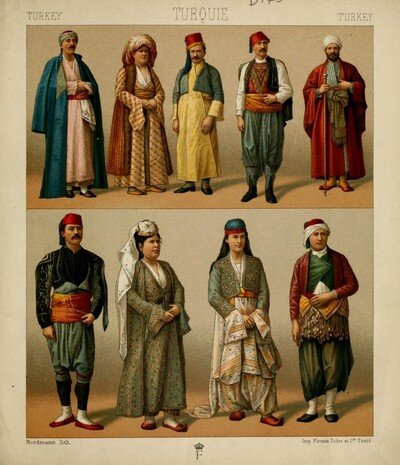
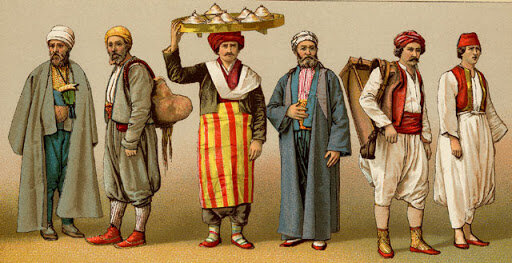
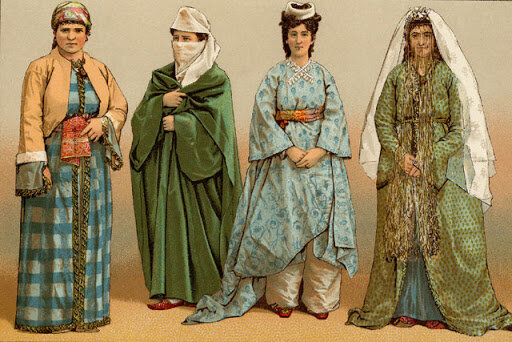
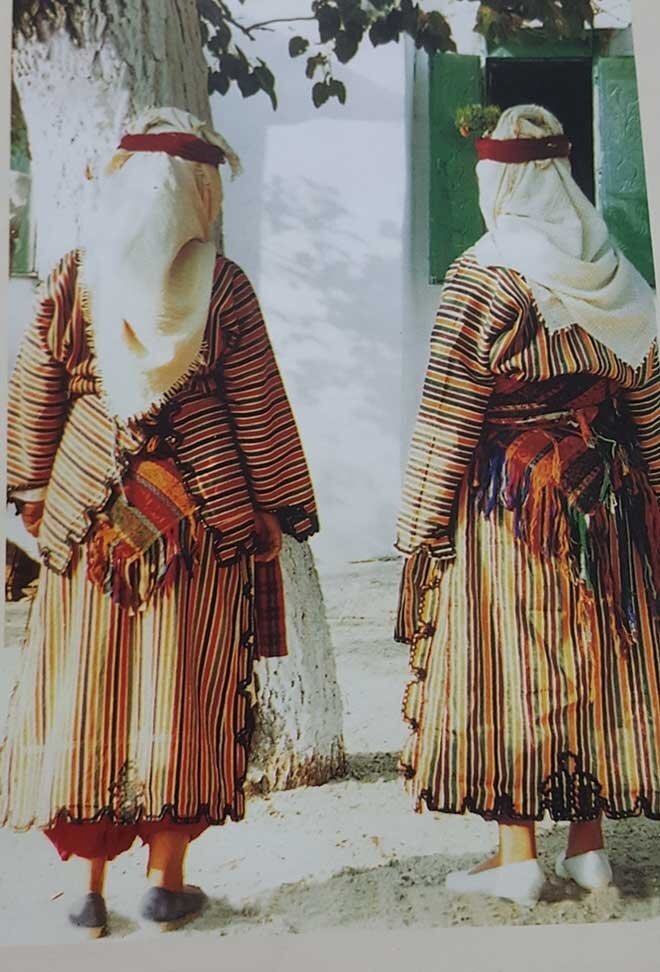
Anonymous Student: I believe, not so weirdly, that it reminds me of the traditional Turkish clothing that we currently wear only on special occasions. However, I won’t be able to give you a very specific example as there are probably more than hundreds of traditional clothing spread across Turkey. As you may know, there is a great ethnic and geographic diversity in Turkey. There are not only traces of early Asian civilizations but also of Mesopotamian and European civilizations. Also, the geographic position of Turkey was on the path of multiple migrations and trade roads. So, I believe that is reflected in the great cultural variation in the current borders. When you say Turkish clothing, that is why I don’t think of modern, monic clothes but more of the traditional and diversified clothes.

S: How would you describe the traditional clothing in Turkey, then?

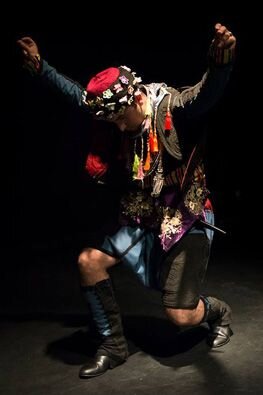
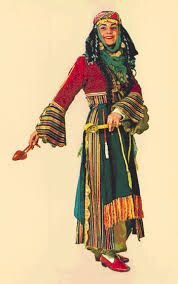
AS: My previous answer is also applicable to this question. However, I can talk about the modern-day integrations of traditional clothing. Today, there are not many people who wear traditional clothing for everyday purposes. They are usually worn in folk events, such as dance and music competitions. Like in East Asia, it is not common to wear those clothes on national holidays. However, that is probably due to most of the “Turkish” traditional clothes being either a form of old, local military costumes or having a connection to those times. The “historical” clothes that the wealthy or the nobleman wore are not considered “traditional clothes” to my knowledge. For example, instead of the padishah and harem garments that are highly represented in the media, the clothes that we, as the folk, consider traditional are simpler and have the marks of the local geography. On the Aegean side, there are Efes who wear more Mediterranean-motivated clothes. On the other hand, in central Anatolia, you can see the historical marks of the Turkic tribes. 

S: Actually, it is definitely not surprising to come across this differentiation between folk and noble clothing, considering my old entries. It has also become something typical to see the traces of national history in the evolution of fashion. How would you reflect on this?

AS: I definitely agree with that. Turkey's geography has gone through very distinct historical periods, ranging from nomadic life to the Ottoman empire. Also, in between these periods, there were time intervals where the influences of people shifted from Asia to Europe on a constant loop. There were times marked by what Turkish people call “modernization,” “westernization,” “East influence,” etc. Besides, even though Turkey is considered mostly an Islamic country, it was not like this for a long time. Even when you label the “Islamic” times as a period of historical focus, there was, and still is, a great majority of other religions and cultures present in Turkey. That is why our geography is considered multicultural. With each pivotal change in history, the region gained one additional dimension to its culture. 

S: How would you describe today’s clothing?

AS: It is...pretty average *laughs*. On the street, you will mostly see casual or business clothing that you can find pretty much everywhere on Earth. However, I noticed here in the US that there is this preconception of Turkish people wearing hijabs, fezzes, and shalwars. I can understand the hijab and shalwar misconception to an extent as the hijab is worn as a personal choice by women who believe in Islam, and the shalwar has its modern rearrangement as sportswear, but the fez? It is a garment that left when the Ottoman Empire fell. And I don’t know if I should feel this way, but when somebody comes to me and asks me why I don’t wear a hijab or veil, I feel weird. It is a personal choice at the end of the day. 

In terms of the fashion industry, I am not that knowledgeable. However, today, there is this new movement focused on embracing traditional Turkish motifs. I also see this in art. It is always pleasant to see such aesthetic combinations. 

Thumbnail image via

Fernweh~5: Bulgaria

fernweh

/ˈfɛʁnveː/

farsickness or longing for far-off places

In this entry of Fernweh, we are going to explore the Bulgarian culture. As I have lived, and am currently living, in a geographical place pretty close to Bulgaria, I can count the many instances I was lucky enough to experience the Balkan traditions. In this region, the folk tales are still narrated by the elders to the next generations in crowded family dinners as if they happened--or fantasized to have happened--in the recent past, and the traditional clothes are worn not because they belong to history but because they are a part of daily life.

The traditions are so integrated into the present that when I was visiting Macedonia for the Balkan Youth Folk Dances Festival--yes, that is a thing here-- dancers like me wore traditional garments because they were a part of the required getup, but most surprisingly, some of the audience members also wore other traditional outfits.

Last quarter in my humanities class (reading cultures, if you are wondering), when a friend of mine from the Balkans made a presentation about the importance of a traditional shirt transferred from generation to generation in his family, once again, I was filled with admiration. So, what’s so different about this entry of the series is that the culture I will discuss is not preserved like amber within the modern designs, but it continues to breathe life every day.

Image via

Image via

Traditional Clothing

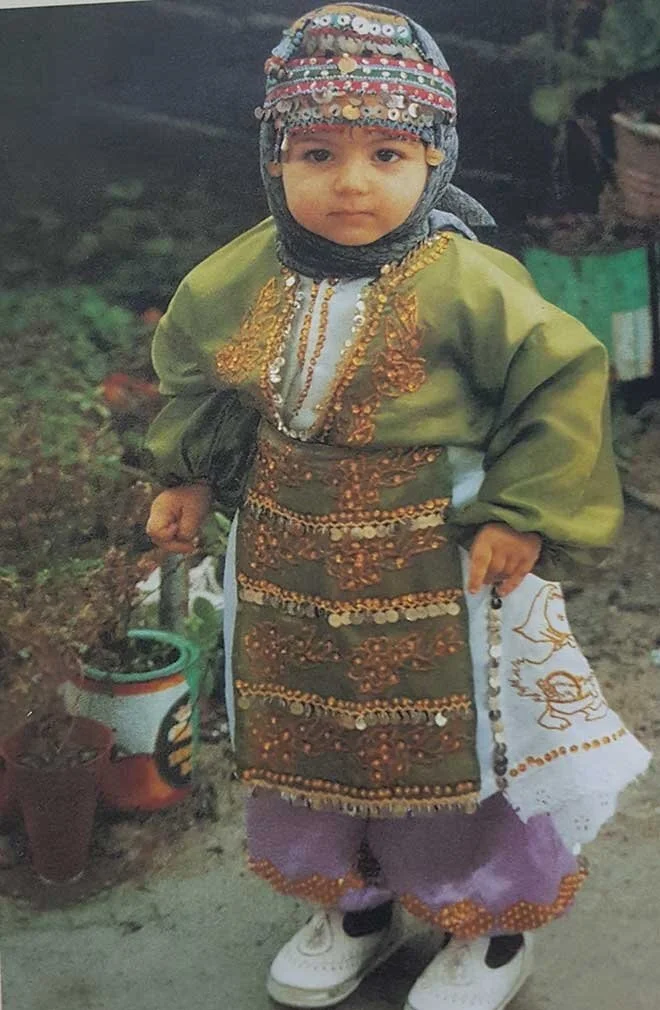
Many civilizations left their traces in the Bulgarian culture throughout history, including, but not limited to, Ancient Greeks, Romans, Slavs, and Turks. These interactions resulted in different ethnic articles of clothing that are spread across the borders of Bulgaria. It is not unlikely to see a diverse spectrum of ethnic costumes with lots of common-ground elements. That also represents how the Bulgarian territory is a host to many different communities. The traditional garments, narodna nosia/nosija, therefore are an expression of the identities of these communities.

Image via

Image via

The traditional clothes were hand-made by the Bulgarian females in the villages up until the beginning of the twentieth century. Learning to embroider was an essential skill, as the motifs in the costumes were used to identify the region and the village. The motifs were heavily influenced by the Pagan beliefs, such as bad luck of symmetrical shapes. Therefore, most of the costumes included intentional removals of symbols and cuts on the fabric. Each costume with its own design conveyed a message or a pleasant wish from the costume's embroiderer to the owner or a bystander. 

Female costumes consisted of dresses and aprons. The number of aprons in a female costume was an indicator of the region of the maker. Also, different head garments and accessories were designed in consideration of the family and the village. Moreover, on top of the costume, women wore an overcoat called saya. Most of the identification of the embroidery was understood by looking at this part of the costume. 

Image via

Image via

Male costumes consisted of pants, shirts, and vests. The differences between male outfits were due to the color of the upper coat. As the male costumes were much simpler than the female ones, the garments' shades varied between black and white, each indicating a different region of Bulgaria. 

Present Day

As I mentioned earlier, the traditional costumes of Bulgaria are still in-use by the current Bulgarians. During Festivals, other important dates, family events, and more, it is possible to encounter people who wear their ethnic outfits. 

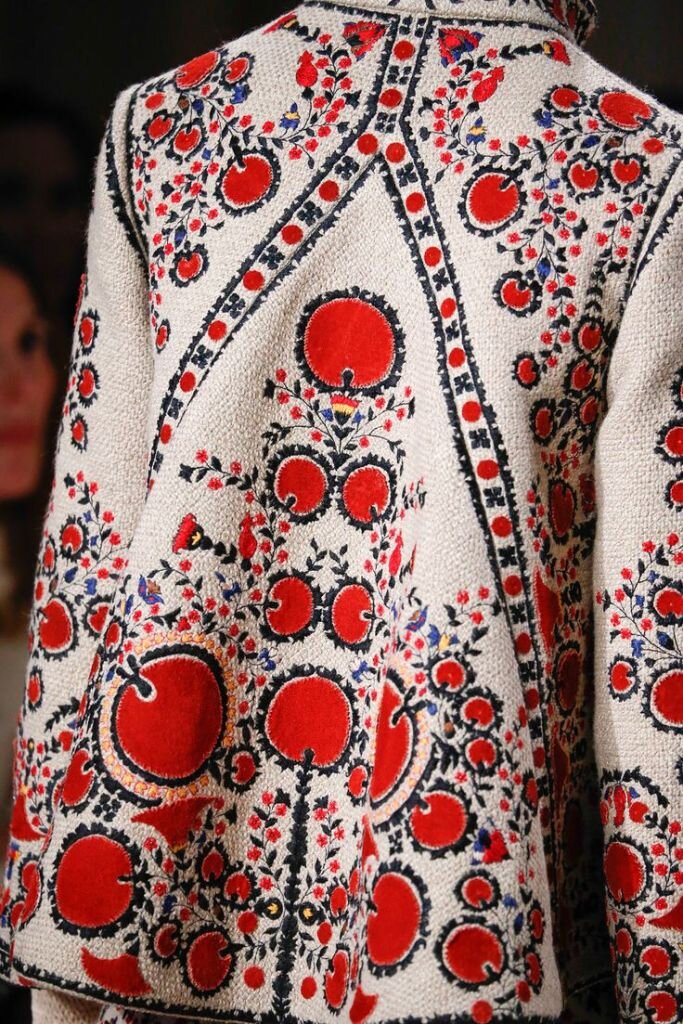
However, one thing that is worth mentioning is that the traditional motifs of the Bulgarian costumes are in great demand by the fashion industry. Even though there are not many well-known Bulgarian fashion brands, Valentino’s 2015 collection displays the influential power of Bulgarian traditional styles on current fashion trends. 


Thumbnail image via 

A Look into Graffiti


While admiring art and looking at what we associate with its historical evolution, our thoughts about expressive mediums may range from European Renaissance paintings to the acrylic project you had to turn in for your high school art class. But often times we may forget to go back and explore counterculture artworks that have significant influences and can be spotted in modern creative projects. This mistake of overlooking certain mediums is indeed a common one, so something to remember when we are deciding to interpret a piece, whether that be a fresco or the cheapest canvas you can find at BLICK, is that with art there is a story.

There is a drawing method that falls within the revolution of art history we ironically tend to oversee: graffiti.

This type of art contains historical significance like no other. It can be seen as a political message or as an act of boredom, yet its spread across major cities deserves to be praised.

Personal Experience

As most of you have probably experienced, graffiti can very easily feel like it is only vandalism. It is, in fact, the criminal act of defacing property, and having public infrastructure as a drawing space can make it seem destructive to the original architectural vision intended. Nonetheless, it has earned its title as an ever-evolving medium. Even graffiti artists themselves see the evolution within their lifetime.

I took it upon myself to engage in graffiti throughout Chicago and Miami in hopes to understand the history and meaning of it. One thing I quickly realized in my journey is that it is everywhere because there is no limit to what can be spray painted, but that’s what makes it so accessible and relatable. Cities with a large presence of graffiti artists have transformed a private skill for a niche audience into free art exhibits that are available for millions of people to interact with on a daily basis.

 
DSC00629.jpeg
 

I grew up in Miami, Florida, and although it is a fairly new city compared to Philadelphia or New York City where there is a lot to unload in terms of this artistic style, there is still a concentrated community of street artists in the neighborhood Wynwood. My first time visiting was purely accidental. I realized that my unintentional drive-through-tour of the city was keeping the meter on my car running. With every mile, I continued to get led deeper and deeper into Miami’s graffiti district. While circulating back streets and alleys, I was taken aback by the political messages and colorful murals that lay embedded on every wall and street corner. There was even art on the sidewalk, extending for what seemed like forever. From that moment forward these impressive creations remained cemented in my brain as one of the most unique art forms to interact with. I kept going back to watch the progression of this district filled with artists using small, metal, spray cans to add life and meaning out of thin air.

Today, as I walk around downtown Chicago it is not a rare occurrence to see an array of messages, different fonts, and mind-churning masteries spewed in hidden crevices between buildings. After a few years of being surrounded by street art, I have gathered that this medium must be applauded. Just because the art is rebellious does not make it meaningless. Rather, there is so much passion and many personal stories that have to be unlocked in the visual exploration of graffiti within a city. 

 
DSC00605.jpeg
 

History

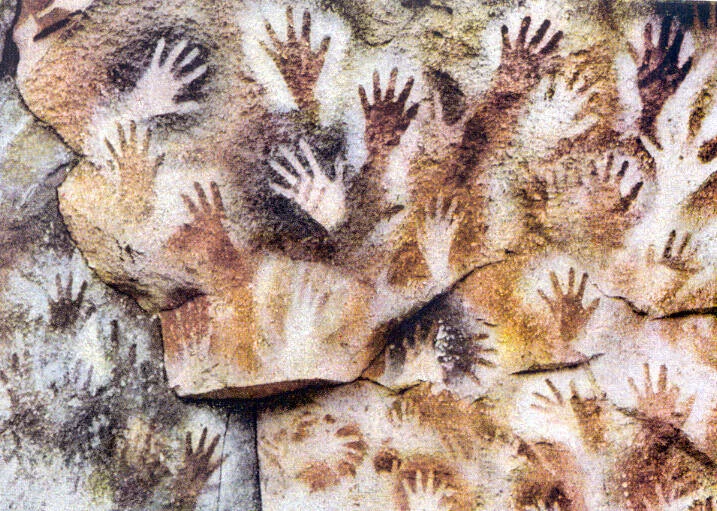
Graffiti has so much history because it is an umbrella term for any drawing outside of a dedicated space. So, finding the origin of this art form makes it extremely difficult since even cave paintings are considered graffiti. One of the earliest examples goes back 10,000 years, in a cave called La Cueva de las Manos.

This natural landmark in the Argentine Patagonia contains repeated imprints of hands like stencils, in bright hues blending from red, to black, and yellow. There are even scenes of prehistoric life, including stories of hunting and symbols of sacred animals. Looking back this art concept has been around for as long as we have.


 Even though nearly anything can be “street art,” we tend to concentrate on its history within the last six decades when graffiti in urban spaces flourished. This happened in congruence to the rise of spray cans which completely changed the game. A spray can company known as Big Spray became popularized and began surpassing millions of sales of aerosol paint to the U.S. in the 1970s. Its intended purpose was to apply aluminum paint coatings to radiators, but its lightweight, portable, and inexpensive qualities caught the attention of street artists who found them practical for a speedy ejection of compressed color and its permanent application onto surfaces, leaving time to flee the crime scene without a trace.

(Well, except for one).

With a large population in states like Philadelphia and New York, the utilitarian origins of aerosol art became embedded in the visual appearance of the metropolis. The imperfect ensemble of colors by unidentified artists also started tying this idea of rebellion into the process of graffiti. Projecting ideals such as anti-capitalist and counterculture views could be controversial, but what better way to express political opinions than having works displayed across crowded streets and no one knowing who to blame? Even the fact that graffiti itself is imperfect backs its existence as an expressive form of revolt. 

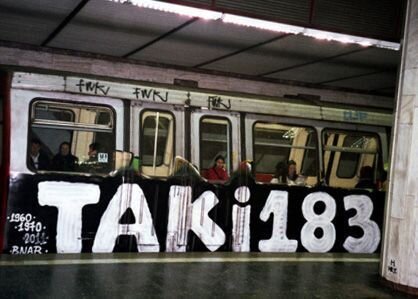
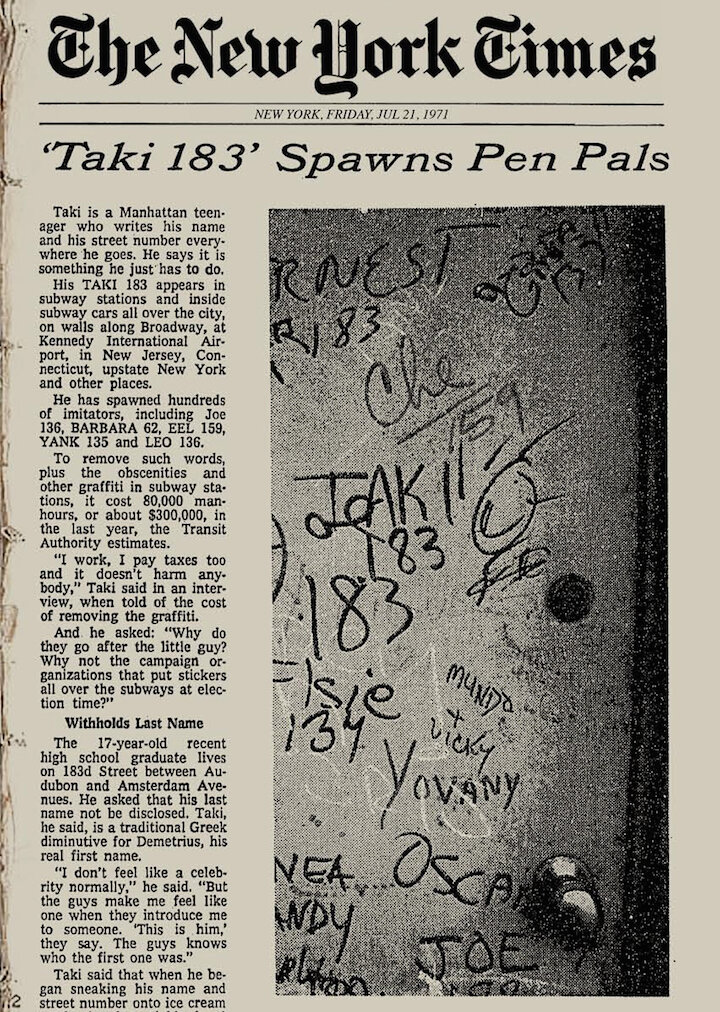
The late 1960s and early 1970s started to see a growth in a form of graffiti called tags: where one writes their name tag (hence, the name) over and over. Tags from local artists started to be noted for their repetitive appearances; some recognized ones were Cornbread from Philadelphia and Julio 204 along with Taki 183 from New York. It’s interesting to break down the meaning of these artists’ tags because they are a lot more innocent than they appear. Taki 183 got inspired by Julio 204, using Taki from his name Demetrius and 183 for the street number where he lived.

Although tags can appear very simple, it is important to understand that just as graffiti itself evolves, the artist during his lifetime does too! It starts with these tags, which soon inspire people to move to bigger pieces. Considering that we are looking at art only a few decades back, it makes sense that the greatest street artists today only developed their craft, and the boundaries of street art, within their lifetime.


As I explored Wynwood Walls for tags I came across the artist by the name of Hec One who gave me a brief recap of his journey into the graffiti world. He told me he began tagging random neighborhood walls in Philadelphia with some friends for fun (as most artists involved in this field do). Then in the ‘80s he moved to Miami and continued to tag: with each growing victory of a mark left behind he would dedicate a little more time to developing interesting looking fonts and prints. From tags to pieces, what was once a hobby started to become his passion. The mix of adrenaline and attention he was gathering was enough to inspire the desire and dedication to continue, and years of adding more visible works led to it becoming his job.

He laughed at the irony. “I got arrested many times in Miami when I was younger for defacing public property, now the city of Miami pays me to create murals on their walls.”

Controversy and Meaning

The controversial aspect of graffiti does not only lie in its vandalism. Its taboo nature is related to the fact that a lot of street art was and is still used to communicate among gangs. Graffiti is a tool that serves to intimidate for territorial dominance. Areas that have been marked by gangs are likely to be under attack, serving as a warning to others not to interfere with activity. After the Los Angeles gang wars in the ’90s, there was an implementation of Graffiti Tracker, an online system that would track gang activities and new additions of graffiti near them. This gang association caused people to rank graffiti as low rather than high art.

However, because these low-income, gang-infested neighborhoods were mainly underfunded, black neighborhoods, the rise of hip-hop and street art were intertwined. Many emerging hip-hop performers located in New York created tags, “throw ups” or “throwies” (quick artistic tags), and “wildstyles” (very elaborate letterings), of their artist names which simultaneously promoted the art style and their music. Some common names in hip hop graffiti were Fab 5 Freddy and Grandmaster Flowers.

An instance of graffiti in pop is Blondie’s single “Rapture,” where the music video features Jean-Michel Basquiat, a famous graffiti artist from the ’70s that influenced the public to respect the art style. Released in 1980, it was one of the first songs introducing street art into mainstream pop culture that made the medium even more appealing. New York, Chicago, Atlanta, Philadelphia, Los Angeles, and Miami all started to see an influx of those who were passionate about adding color into the busy and dull cities just like the artist I met, Hec One.


Whether it was for aesthetic purposes, to bring light to important political subjects, or for social movement, it was working. Pieces were popping up from day to night and the public began noticing and having conversations that needed to be had.

The best part is that no one could do anything about it: if graffiti was covered it would reappear the next day. It was nightmare for police officers but an inspiration for younger artists that just wanted to be heard.

The strict ban of street art rather than the encouragement to redistribute art and add to the cityscape also makes the illegal aspect of it unattainable for those who have talent but don’t want to challenge authority. The line between what was seen as good or bad was blurry, and slowly it became understood that it just had to be accepted. I mean, look at Wynwood Walls. Rather than having government officials spend the rest of their lives painting over walls, they decided to hire the best artists and promote the district as a tourist attraction. The artists ruled and will continue to do so.

The cultural and artistic nature of graffiti shows that more can be said with images than with words. Social and political themes are very commonly portrayed. For instance, a Wynwood art piece showcases Black culture and empowering messages for young Black folks: in it you see the sight of a jazz player, a woman flexing her muscles, and young smiling Black faces followed by emotions of love and community.

Graffitied messages of gun violence or presidential candidates being mocked the size of a three-story building is an efficient way of voicing an opinion. When the Black Lives Matter movement gained momentum, I saw a significant increase of political pieces by artists who speak with their spray cans. I recently noticed a block-sized mural while walking under the train from Trader Joe’s to my apartment in Hyde Park. These sightings make me appreciate current events and street art more than ever before and I always notice a more accepted view of graffiti by those around me, too.

 
DSC00776.jpeg
 

 I am very glad I decided to tackle this article because I have a newfound appreciation for graffiti, the history of it, and what it means today. As someone who is still fully invested in admiring these eighth wonders of the world, all I can say to those reading this article is this.

Make sure you look up and take in the pieces you see around you. It can be a simple tag or the biggest mural you have ever seen; appreciate what it means and its history in order to become the spectator that the artist hoped you would be.

 
DSC00679 2.jpeg

Photographer: Nicole Helou

Model: Laura Sandino

Fernweh~3: South Korea

fernweh

/ˈfɛʁnveː/

farsickness or longing for far-off places

Welcome to the third destination, fernweh travelers! During today's visit, South Korea will be greeting us. Notwithstanding South Korea’s high esteem in today’s entertainment industry (K-Pop Army!), it was my special interest in East Asia, South Korea in particular, that made me search through the pages of history to find out how and from where did its fashion culture arise. To someone who is an enthusiast of preserved aesthetics like me, East Asian cultures present a very close-knit community of arts and crafts that is pricelessly valuable. Either due to their history, which enabled them to intertwine with the rest of the world, or due to their highly characteristic cultural elements and essence (probably from an orientalist perspective), or most likely due to both, the far Eastern cultures appear to present a more sheltered memory as a reflection of their ancestry. No matter what, modern Eastern Asian people glorify all the elements that make up their cultural whole and sow their present from the strands of the past. South Korea is no exception.

Joseon Era

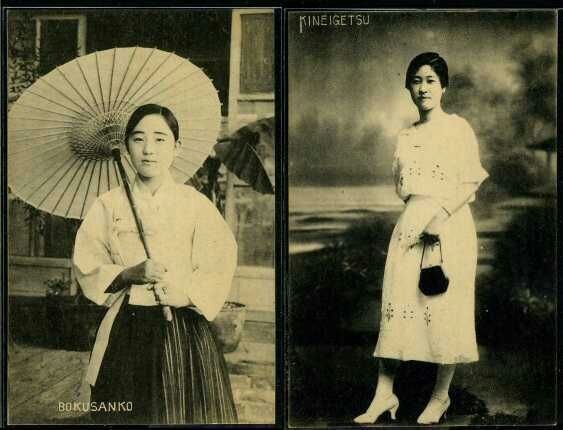
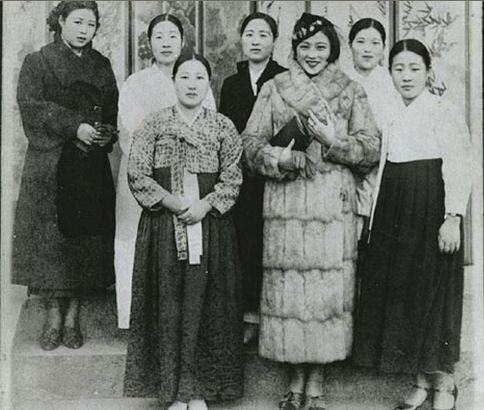
As you may have understood from the previous entries, the question of “what did happen at that time of history?” is of great significance in our mission to keep track of why change is a constant in a culture’s order. Very similar to Japan, or more precisely from Japan’s exact opposite perspective, Korea’s fashion (before the North and South split) shifted according to their recurrent political and economic fluctuations. The first memorable element of Korea’s fashion history was the Joseon Hanbok, a loose combination of a top and a bottom worn during the Joseon period. It consisted of a jeongi, the top, and chima, the skirt, for females, and a jeongi and a baji, the pants, for males. The tradition of wearing a Hanbok extended its limit beyond Joseon’s roughly 505 years (from 1392 to 1897), but in between the period of 1875 and 1910, the garments, the accompanying hair and makeup, and the rest of this “luxury” look (which was an ideal dream, not a luxury; more like a way of expression, but let’s keep that talk for another blog) was toned down due to Japan’s political constraints and the West. The colors of hanbok went from vivid to dull; the hairstyles kept clean and simple.

Japanese Effect

In between the years 1910 and 1945, the Japanese colonial government banned the Hanbok, reasoning that it influenced and encouraged Koreans to be proud of their culture, which was apparently what they wanted to minimize at the time. The Korean people started to adopt a more Japanese style, which was influenced by the Western culture at the time, as you may recall from the Japan fernweh. People began wearing suits, hats, dresses that resembled the ones worn by Americans and Europeans. In the years following the Second World War, poverty struck the Korean culture again. Due to production limitations, the fabrics used were the simplest and cheapest; accessories and makeup were as light as possible.

Korean War

During the Korean War, people could barely survive. Yet, among all the poverty and distress, a lack of Japan’s direct oppression meant people could wear the Hanbok again. Because men mostly wore their military clothes, women adopted the garment back into Korean society.

1950s - 2000s

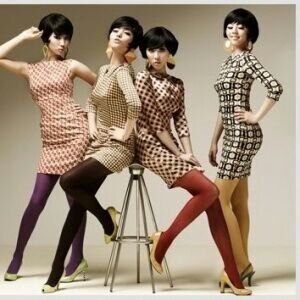
The 1950s gifted the newly formed South Korea Nora Noh, the founder of the country’s fashion scene and its first clothing brand. Influenced by the fashion schools and methods brought in by Americans, Nora Noh held South Korea’s first fashion show. Whatever they wore in Myeongdong, Seoul’s chic shopping district, became popular on the rest of the country’s cosmopolitan streets (probably miniskirts and high heels in the 50s). Then came the colorful hippie aesthetic of the 60s and the 70s. South Korean teens wore their clothing as a resistance to the time's conservative government. Until the 90s came and hip-hop culture took center stage. And that led to the rise of the South Korean (Hallyu) Wave of the 2000s and 2010s.

Image via

Image via

Modern Times

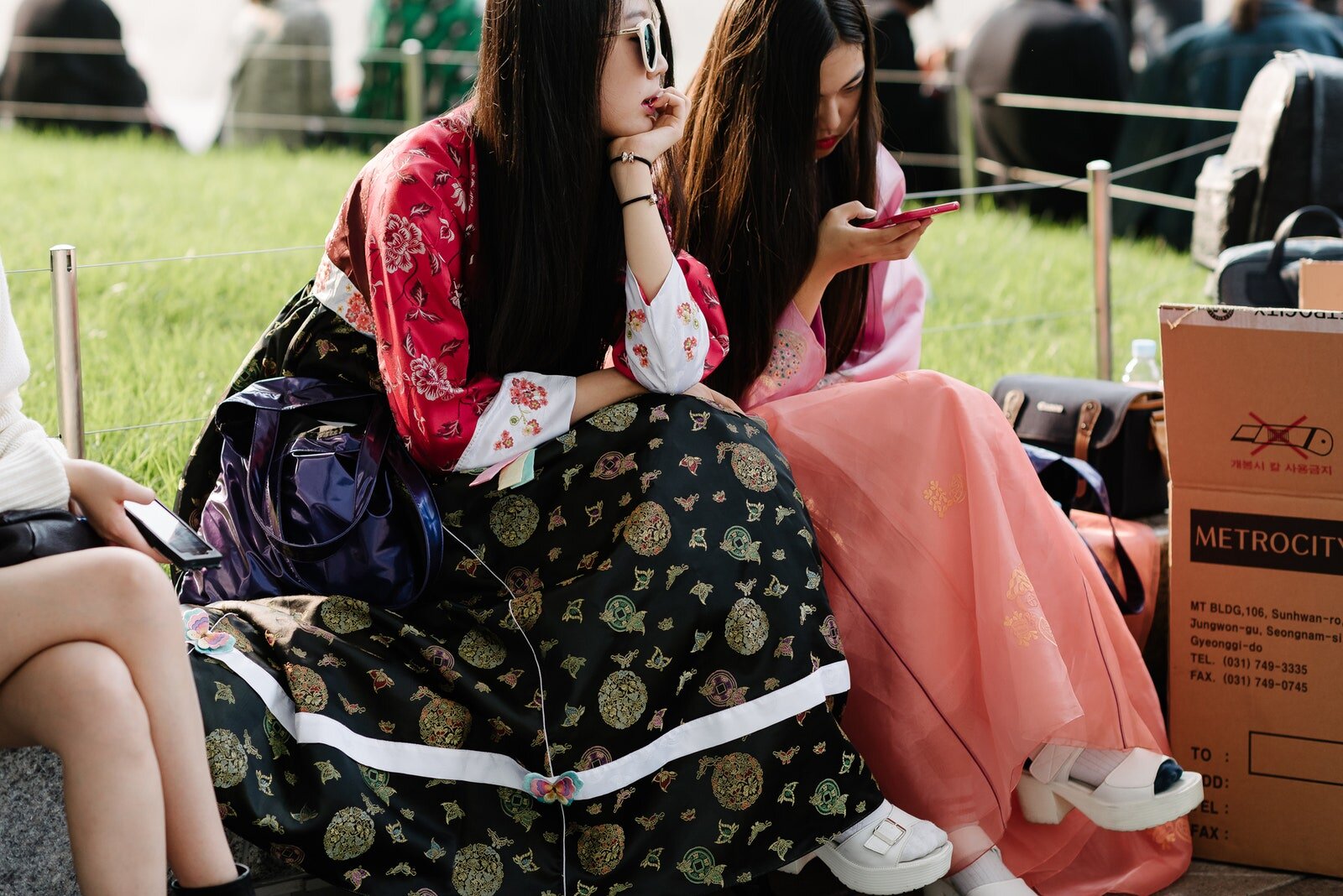
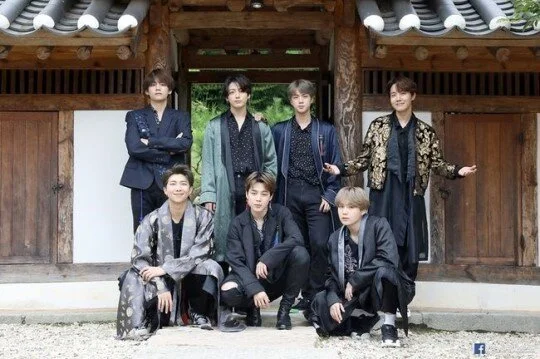
Currently, designers like Andre Kim and Kim Mi Hee are known to the world. These names keep influencing South Korea’s modern fashion and fortunately have preserved the history of Hanbok, which was once under the thread of non-existence. South Korean musicians and actors that are highly popular showcase their support for South Korean brands by consistently using and advertising them. Due to all these investments, the fashion industry was even included in Seoul's 2020 travel video. As it can be seen, the threats South Korean culture had to endure somehow concluded in a fashion culture that is rich and inclusive. Now, more than ever, the South Korean industry encompasses a diversity of sectors at the forefront of innovation: from fashion, to movies, to music, to technology… 

Fernweh~2: Sweden

fernweh

/ˈfɛʁnveː/

farsickness or longing for far-off places

In today’s fernweh blog, I will inform you about the past, present, and future of fashion in Sweden. Do not get fooled by my reassuring “I will tell you everything, my dear readers!” type of introduction since, well, I believe you clicked on this article because you are curious, and so was I a short time ago when I began to write it. I had zero clue about what I was dragging myself into. As Sweden has been distanced from the chaos of the rest of the world since who-knows-when, as it is far from the Ecuador-centric locations of the Western and Eastern cultures, I realized it is also away from the extensions of my curiosity. Well, correction, it “was.” With the help of this series, I am taking Sweden to the scope of my interests. 

When I say secluded, I was not exaggerating. Instead of giving a history lecture, I will share with you a quote that explains the situation pretty aptly: 

“More than a thousand years of continuous existence as a sovereign state allowed for the gradual development of strong national institutions. During the medieval period, the practice of serfdom was never established, and the preponderance of independent farmers helped minimize social class differences and nurture an ethic of equality. Relative ethnic, religious, and linguistic homogeneity facilitated the establishment of a national community.” (read more).

Swedish culture is the living definition of stability. No economic fluctuations, no warfare sacrifices, and a constant mantra of Sweden folkhemmet, "the people's home." While discussing Japan, it was noticeable that the clothing preferences of the Japanese people were highly influenced by the political, economic, and social atmosphere of the country. From many sources, however, I’ve seen that Sweden was a stable country in the financial and military areas of life, meaning, if I am up to compare Japan’s always-changing style to that of Sweden, I am doomed to find only a couple of sentences written on the topic and, if I am lucky enough, an article written by a profound Swedish scholar. I wish I could have found more information on Sweden's clothing culture, at least as much as and as accessible as Japan’s informative sources. Yet, slowly, I believed that the reason I was not knowledgeable about Swedish culture was not out of uninterest, but instead, it was due to the secluded nature of Sweden up in the chilly weather of the Nordic countries, living just out of sight. Here I present you with what I could cherry-pick from a blind bit of sources on Sweden's fashion history. Instead of observing eras, I will focus on the country’s tradition and modernity.

image via

Early times

The traces I could dig up from the Swedish roots led to the indigenous folk called “Sami” (or Lapps). These people are assumed to be the first inhabitants of Scandinavia. Often referred to as reindeer people, under the Scandinavian climate, the Sami established their own traditions, which have lived on into the current times. Sami people wear traditional clothing called gákti. This clothing was made from reindeer leather, serving as a way to stay warm in the icy regions. Today, the same gákti are made from more modern fabrics known for their warming abilities, such as wool or cotton. Both men and women wear shawls, boots, and handmade accessories, mainly in vivid red, blue, and white colors. These accessories the gákti people wore in their lives mostly informed a person’s marital status and family name. The more common white, red dresses of Swedish people worn in the festivals today are a type of gákti, with only lighter fabrics, still sharing the common ancestry.

“Economic Draining”

Not surprisingly, one of the most recognizable changes in Swedish clothing was made right after an era called “economic draining.” For the noble class, to restrict the usage and the unstoppable consumption of imported luxury, in 1778, a costume called Nationella Drakten was designed. This costume's pure purpose was to last for a very long time, so people did not need to buy new ones. One of the early steps of sustainability, we can say. Both female and male versions were designed. With the exception of formal occasions, people could choose the colors of their liking, yet only resigning themselves to the two-color code. Surprisingly, I had problems finding female examples to the costume.

Modern Times

The idea of “utility” stayed with the Swedish people for a very long time and, eventually, became the signature of modern Swedish fashion. Swedish designs today are known for their practicality, simplicity, and minimalism. They are mostly monochromatic, without the aim of being attention-grabbing as opposed to most of the current trends. Acne Studios and, wait for it, H&M (I did not know that it was a Swedish brand) are the most well-known Swedish clothing brands. However, as you may have noticed, both brands aim to present ready-to-wear style products. For H&M, a quick consumption brand, this may not sound so weird. However, Acne Studios is the country's quintessential luxury brand, and that shows how the mindset placed in 1778 is still active in today’s fashion. Finally, something Swedish that is not the complicated, tangled mazes of the IKEA.

thumbnail image via

Blackness and Authenticity in Punk

It’s incredibly telling that rock critic and historian Greil Marcus was able to pronounce what punk rock was in 1979 – just two years after Nevermind the Bollocks, Here’s the Sex Pistols was released, the only album by the band he calls the “formal (though not historical) conclusion” of punk. Punk was a brief flash of brilliance, an explosion whose shrapnel we are still feeling today as the genres that splintered off: post-punk, hardcore, new wave, noise rock, pop-punk, whatever term the editors of No Depression finally settled on, and ultimately all of “alternative” rock. One way or another, punk is the year zero for all rock music that came after; its effects are hard to overstate, and go far beyond the music. 

Marcus argues the Sex Pistols took punk’s first-wave to a vitriolic conclusion by redefining it in their image, away from the avant-garde punks of New York. Self-appointed dean of rock critics Robert Chistgau describes the work of “avant-punk” as:

harness[ing] late industrial capitalism in a love-hate relationship whose difficulties are acknowledged, and sometimes disarmed, by means of ironic aesthetic strategies: formal rigidity, role-playing, humor. In fact, ironies will pervade and, in a way, define this project: the lock-step drumming will make liberation compulsive, pain-threshold feedback will stimulate the body while it deadens the ears… 

The Pistols dropped the “avant-” and with it the irony and self-conscious artistry of Patti Smith, Tom Verlaine, Lou Reed, and other seminal avant-punks. In its place they put – or at least Rotten and Vicious put – unadulterated, ugly nihilism. This is why Marcus places Sex Pistols at the formal conclusion of punk: they were committed to the destruction of everything, including (paradoxically) rock itself. Unlike the Clash, who were careful to be on the right side politically, the politics of the Pistols was pure negation in its most gleefully manic form. This is what makes listening to Nevermind the Bollocks exhilarating, to this day: the guitars assault the senses while the drums clamor away oppressively, and Rotten – what hasn’t been said about him already? His snarls, his rolled-R’s, half-sung half-growled, that devious cackle; he’s the most convincingly nasty singer rock’s ever seen. When Rotten says he is the Antichrist, you almost believe him. 

Rotten’s lyrics are loathing-filled tirades, the product of unfocused dissatisfaction channeled into hate and aimed at anything in sight. Listening to the Pistols is less an experience of having your dissatisfactions reflected back to you than magnified, made metaphysical in scope, and as Christgau writes, aimed at – for the time in rock – those in power. He is a lightning rod for the inchoate rage and dissatisfaction in the listener. He gives the intoxicating feeling of having the freedom to take things too far, of hearing your worst impulses acted out, of glimpsing something beyond the claustrophobia of ordinary life, of, as Elvis Costello sang, biting the hand that feeds you. It can be childish, but also often brilliant and beautiful. The Pistols showed the pure joy of hate.

Still, the Sex Pistols were doomed to fail from the beginning, in both their broader goal of tearing down the institutions they railed against, and in merely surviving as a band. Denial of everything can never make a coherent philosophical position – much less a viable political one. They tried to destroy rock by making it; to deny the past and the future alike while drawing on the former and influencing the latter; to remove themselves from the game of images while astutely managing theirs; to be outcasts signed to a major label. Working under the thought that what we’re offended can show us our true beliefs and expose our hypocrisies, the Pistols railed against the tyranny they saw in English society. But by the same logic they also gave voice to, and thereby legitimized the pointlessly cruel behavior of Sid Vicious. Their contradictions vitalized their music while destroying them as individuals and a band. Marcus is right that the noblest thing Rotten could have done was to leave, to become as anonymous as he could.

Image via

Image via

In contrast to the high-minded vitriol (and below-the-belt punches) of the Pistols, there is my favorite of the first-wave English punks, the Buzzcocks. Their EP Spiral Scratch was the first independently released punk album in the UK, beginning the proudly independent trend in punk rock. Rightly grouped among the progenitors of pop-punk, Buzzcocks used the discordance and cacophony of punk on their masterpiece, Singles Going Steady, to give musical expression to the anguish, excitement, humor, and longing of love, infusing the bombast with an ear for pop craftsmanship.

Buzzcocks proved to their peers and the masses alike that the musical language of punk could be used to express something other than hate and boredom; punk, to them, was personal. Their best songs refused to participate in the lyrical refrains of prior punk, from the avant-punk Christgau described to Rotten’s nihilism. “Orgasm Addict,” a charming song about masturbation, would go on to help inspire future generations of self-love themed punk songs (a natural development, perhaps, of punk’s DIY attitude). Pete Shelley sounds exasperated in “What Do I Get” from a lack of love, while on “Everybody’s Happy Nowadays” the band sounds like a cynical reflection of the Beach Boys. They expressed classic punk themes on the bratty “Oh Shit” and “Autonomy.” These were no one chord wonders. 

Their most effective statement of purpose is found on the single “Ever Fallen In Love (With Someone You Shouldn’t’ve).” Guitars rip and clash, then momentarily hold back, before repeating the cycle in the neverending game of exhaustion and ecstasy, heartbreak and rapture of doomed love. While the guitars give sonic articulation to the tsunami of emotion which threatens to crush Shelley under its weight, the drums start and stop in turn; rarely has a drum mimicked a nervously flitting heartbeat so well. Shelley’s pointed use of gender neutral pronouns – he was the first openly bisexual musician in English punk – makes the song welcoming of love of all types, a rarity in many punk songs. His boyish yelp is more pained than angry, contrasted all the more by Howard Devoto’s sneering affect on Spiral Scratch. Shelley asks more questions than punk’s usual list of demands, voices a rare vulnerability in a genre seemingly dominated by machismo visions of male invulnerability. 

They were decried by many in the punk community as phonies. They weren’t political enough; they were too poppy; they didn’t sound tough. Punk wasn’t always overtly political, of course: the first UK punk single, the Damned’s “New Rose,” was dismissed by Steve Jones of the Sex Pistols as just being about a bird. Nonetheless, in a world where his mere existence as a queer man was made political, Shelley weaponized his vulnerability against the heteronormative culture around him. As he said, expressing a theme Riot Grrrls would later pick up: “Well, I never knew there was a law against sounding vulnerable. And anyway, personal politics are part of the human condition, so what could be more political than human relationships?” 

Image via

Image via

As for the accusation of appealing to pop: Who cares? Punk isn’t, and never could have been, a total break from the past. The Buzzcocks, though influenced by the Pistols, owe far more to the faux-dumbness of the Ramones, who never had the political pretensions of the English punks nor their unironic straightforwardness. The Ramones flaunted their bubblegum pop influences from the famous first words of their debut: “Hey ho, let’s go!” Their punk wasn’t about denying the past but transforming it: democratizing it to anyone who can manage three cords and reinvigorating it from the bloatedness and naked commercialism of the ‘70s. But where the Ramones interrogation of the past was often ironic, masked by a studied naïvete, Buzzcocks played it straight. They openly revel in Beatlesque melodies, while Shelley admitted to admiring the music of the Supremes and Kinks (a cardinal sin in punk at the time). Punk wasn’t a break with the past or a denial of it; it was a method of interpreting it, a way of making music and of living. They distorted their influences through the lens of punk, and in so doing made pop, but made it more immediate than anyone before them. They may have just been talking about birds (and blokes), but that didn’t make their music any less affecting or radical, nor did it make them inauthentic

*****

In an analysis of Nirvana frontman Kurt Cobain, Chuck Klosterman reflects on the media cycle surrounding the follow-up to the incredibly popular Nevermind. In Utero was purported, prior to release, to be “unlistenable,” and Cobain himself claimed it was going to sell “a quarter as much” as Nevermind. Legendary, and legendarily acerbic, producer and Big Black frontman Steve Albini was producing. Newsweek reported their label, Geffen, wouldn’t release the record as is. To Cobain, though, this was intentional. The album had to be bad – that is, bad in the eyes of the general listening public – to be good in Cobain’s eyes. He was unable to reconcile the sales figures of Nevermind with his own credibility as an artist; the caustic elements of In Utero were atonement for his sins on Nevermind. The feeling Klosterman ascribes to Cobain is guilt: for success, artistic and commercial, for “selling out,” for not being punk enough. 

Cobain was struggling with what will be the focus of the remainder of this essay: punk’s fraught notion of authenticity and its implications. Punks rejected the (what they saw as) white middle-class values of respectability and conformity for a “realer,” more “authentic” lifestyle, and to achieve the autonomy they felt had been denied them by those values. Thus, in order to subvert the dominant culture, punk fetishized the ugly over the beautiful, the depressed over the happy, the detestable over the morally sanctioned, and the urban over the suburban. Punks created their counterculture through what Daniel Traber in Cultural Critique terms self-marginalization: they repudiated the privileges afforded them by their race (mostly white), and class (mostly middle-class) and rejected that culture’s values. This reasoning is what led, for example, The Clash to implore “respectable” whites to riot: “Black man got lotta problems/ But they don’t mind throwin’ a brick… While we walk the streets/ Too chicken to even try it.” This rejection of their inherited privileges was in some sense done out of a feeling of moral imperative, which Joel Olston would later elegize in Profane Existence as constituting a rejection of “the white supremacist, patriarchal, capitalist world order.” But it was also a means of acting out the alienation many punks felt and creating a culture for themselves – whoever “them” was defined as. 

Differentiating real from fake was crucial to the project of punk. But since punk was defined by the negation of dominant cultural values, the continued hegemony of those values was necessary to sustain its uniqueness and authenticity. Subversion, that is, requires a dominant culture to undermine in order to have meaning. (The power of subversion is therefore limited, as it is defined equally as much by the dominant culture as mainstream forms of expression are – its meaning is always parasitic upon the mainstream.) Thus despite the acute need individual punks felt to distinguish themselves, punk came to be defined by a certain look (think: Richard Hell, lean and hungry, torn clothes manicured to look ragged) and set of behaviors (think: self-destruction). The notion of “authenticity” operating during the first-wave of punk is memorably summarized by one scenester in the L.A. punk documentary The Decline of Western Civilization: "Everyone got called a poseur, but you could tell the difference: Did you live in a rat-hole and dye your hair pink and wreck every towel you owned and live hand-to-mouth on Olde English 800 and potato chips? Or did you live at home and do everything your mom told you and then sneak out?" 

Image via

Image via

Of course, notions of authenticity varied across and even within scenes; the L.A. punk scene, for example, was criticized as not being political enough by British punks and Greil Marcus, just as the Singles Going Steady era Buzzcocks had been. But the general trends – poverty, rejection of authority, etc. – are enough to see the problematic implications of the notion. Their self-marginalization was based on a constructed vision of the marginalized other inherited from their – typically – white, suburban middle-class upbringing. Thus in attempting to duplicate the experiences and position of the marginalized, they implicitly acknowledged their conception of the other.

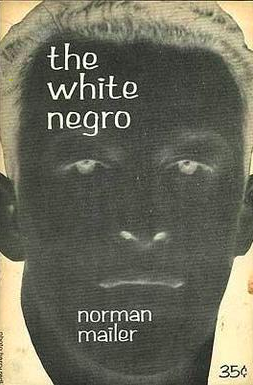
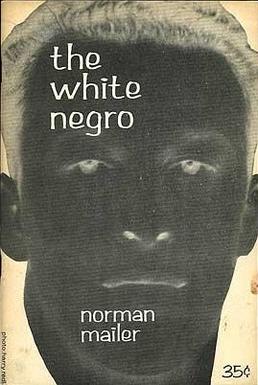
Punk’s articulation of marginalization can be likened to that espoused in Norman Mailer’s essay The White Negro, in which he wrote that free from the restraints of white morality, the black underclass lives a more creative, spontaneous, sexual, and hip life. “The Negro,” Mailer wrote, “kept for his survival the art of the primitive, he lived in the enormous present… relinquishing the pleasures of the mind for the more obligatory pleasures of the body.” In a world marred by the twin horrors of concentration camps and the atom bomb, we [white Americans] must all face the same choice African-Americans did, which is to repress oneself, or to “encourage the psychopath in oneself”: “to explore that domain of experience where security is boredom and therefore sickness, and one exists in the present… the life where a man must go until he is beat… where he must be with it or doomed not to swing.” Punk adopted this dichotomy with a desperate zeal.

The suburbs, seen as the home of the white middle-class, was a slow death-by-boredom, oppression through conformity, and above all, mundane. Only by rejecting that life could authentically be found. (The source of Mailer and punk’s shared notion that the marginalized are more “authentic” can be traced back to a Romantic line of thought where the peasant, “untouched” by civilization, is closer to natural man, and thus more “authentic.” Punk inverted the formula – the urban was romanticized, not the rural, and the life of the underclass was exciting, not simple – but kept the essence the same.)

Image via

Image via

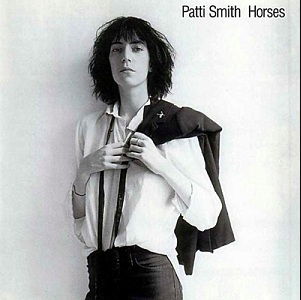
Like Mailer, punk found the authenticity lacking in white culture in Black culture. Patti Smith succinctly restates Mailer’s themes in “Rock N Roll N•••••”: “Jimi Hendrix was a n••••• / Jesus Christ and Grandma, too / Jackson Pollock was a n•••••.” Blackness is identified with coolness and art. Smith also identifies, as a punk, with the Black outsider: “Outside of society, they’re waitin’ for me / Outside of society, that’s where I want to be.”

Through her identification as a punk in the song, Smith recasts her whiteness by aligning herself with a racial other. As Dick Hebdige famously argued, first-wave punk was an attempt to forge a new racial identity, what Stephen Duncombe and Maxwell Tremblay call an “oppositional whiteness” – a whiteness which understands that it cannot be the assumed universal, a raceless race, and which sometimes attempts to stand in solidarity with minorities. Punk’s project of self-marginalization and their creation of this oppositional whiteness was deliberately modeled on their identification with Black culture, particularly the modes of resistance established by reggae. Punks such as Rotten, The Clash, Slits and Ruts worked reggae and its rhetoric directly into their music and fashion, sometimes as literally as The Clash’s cover of “Police and Thieves'' (at punk shows reggae was the only other music allowed to be played between sets). But reggae was more than just musical inspiration: it provided the structure of punk’s rebellion. Its image as “rebel music,” its countercultural hero stars, its lyrical themes and its DIY approach were all directly appropriated by punk. The events of the 1976 Notting Hill Carnival riots in particular, which showed how the cultural expression of reggae could be interwoven with an effective politics, would become an important source of inspiration for punk. 

But if in reggae, punk found a language with which to express its outsider status and a model for how to create an oppositional politics through music, fundamental asymmetries remained, and the boundaries between the two were firmly maintained. Punk was, despite its best efforts, rock music, and was therefore given massive exposure by rock critics and scandalized reporting from the newspapers. The biggest first-wave punk acts were also signed to major labels, granting them far greater monetary resources than even the biggest reggae acts had access to. Most importantly, though, punk was, by and large, a white genre, sung in the standard English of England and America; reggae was a Black art form, often sung in Jamaican patois. Both were, of course, deliberately exclusionary, often in similar ways, but the crucial differences between them meant that punk could capture the attention of the powerful in ways reggae never could. The self-marginalization of punks could never eliminate their privileges entirely; a white punk can shave off a mohawk, but a Black reggae listener cannot change their skin color. Punk’s appropriation of reggae tropes and assumption of outsider status can thus begin to look much more sinister.

The scholarship on the punk-reggae connection traces out many important results of the asymmetries spelled out here, but most important here is that punk derived its authenticity by pilfering the form and tropes of reggae. This led to the essentialization of the racial make-up of the two forms, to the subsequent exclusion of reggae artists and those who looked like them in punk. Punk came to think of itself as a white response to reggae, a “White Riot” in The Clash’s famous formulation. This both erased the history of minority punk and proto-punk artists and dissuaded future generations of minorities from participating in post first-wave punk scenes. Their appropriation of outsider status also led to some ugly false equivalences between the oppression faced by punks and minorities, which cross the line from solidarity into talking over and a lack of understanding (as in Smith’s song and The Avengers’ “White N•••••”), and pointing anger at oppression in the wrong direction (as in Minor Threat’s “Guilty of Being White” and the NF-aligned Oi! bands). Their self-marginalization comes to look less like solidarity or a moral stance than poverty tourism, wherein punks sought excitement and an exoticized notion of “authenticity” in the hardships shouldered out of necessity by the oppressed. 

The inevitable short-comings of self-marginalization led to punk recreating the blindspots and biases of the dominant culture, to its political detriment. Daniel Traber argues, for example, that punk’s denial of society’s values aimed first at individual autonomy over creating an inclusive counterculture, in effect recreating the individualism of the late-capitalist culture they despised:

The late capitalist alienation these subjects feel is due to their investment in a version of autonomy that perpetuates that sense of isolation by privileging an insular individuation over a collectivity that will allow the inclusion of non-punks.

This precluded larger political change by making the focus iconoclasm, not collective action. Rather than challenging the dominant culture, it merely created an alternative, one which was incapable of threatening its hegemony and in fact relied on that hegemony for its meaning. (And by the ‘80s this was understood –  a loss, but a noble one, which is, according to Michael Azzerad, very punk indeed.) The individualist system remained the same because of their focus on atomized autonomy. Richard Rorty sums up the sentiment in assessing Nietzsche’s reverence of Becoming over Being: the inversion was “fruitless – fruitless because it retained the overall form of ontotheological systems, merely changing God’s name to that of the Devil.” Punk, at best, merely flipped the system on its head. At worst, it recreated it in all its ugliness. 

*****

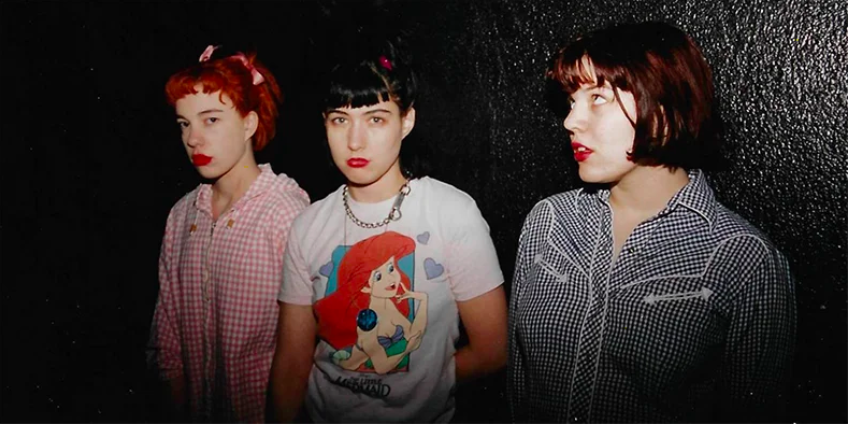
Punk authenticity continues to capture our attention, from the torrent of insider histories lionizing punks’ lifestyles to 40 year anniversary reviews proclaiming this album to be the verified real thing. Even those claiming to be above it can’t help themselves from appealing to it, as Pitchfork did in a review of Nick Lowe’s Jesus of Cool when they remark that, rather than scrap it in the “all-too-familiar dialogue of authenticity and reactionism, Lowe cut the crap and made a clever, fierce, and far-reaching record.” And part of the appeal of indie rock (which owes its existence to punk) remains the “authenticity” of its stars, who – unlike all those other, very relevant rock stars – are just like you. Authenticity thus seems impossible to escape, despite the seemingly massive changes that took place in punk since its first wave: the emergence of Riot Grrrl, Queercore and the explosion of zine writing critiquing punk for its racism, sexism and homophobia. They pointed to the flaws in the search for authenticity which they were also liable to, yet again exposing the limits of self-marginalization.

Bikini Kill via

Bikini Kill via

For at the heart of the discussion of authenticity there lies yet another contradiction that punk has wrestled with from its inception. It is exemplified on the one hand by the play of groups like the New York Dolls and the desire for an oppositional whiteness Tremblay and Duncombe identified. It is also reflected in the destruction of meaning intended in the widespread experimentation with Nazi imagery at the time. On the other hand there is the need to “be yourself” by regaining the autonomy denied you by society, to allow for “real” individual expression à la Mailer. Drew Daniels analogizes the latter notion to Russel’s correspondence theory of truth: a performer is being authentic when their private identity matches their performance. But punk has been fighting such straightforward epistemologies from the beginning, playing around the concept of fixed and essential identities. The contradictions of punk’s notion of authenticity carried into the project of self-marginalization, which posits that, to some extent at least, identities are fluid and can be remade at will, but was almost always conceived in terms of finding some hidden authentic self denied actualization by the rigid demands of society. 

This is why punks sought to separate themselves from society, and to create new systems of meaning where they could express their true inner selves. This is the great irony and failure of punk – it was only through critical engagement with, not detachment from, their native culture that they could have avoided the failures detailed above. What is needed is a new form of authenticity, one which is not vulnerable to the mistakes of the atomistic individuality and cultural pillaging of punk. What that might look like is the subject for another time, but one can see hints of it in the work of philosophers like Charles Taylor and Michael Sandel, cultural theorists like Daniel Traber, and, I believe, in the music of the Buzzcocks.

In “Oh, What Avails” Alice Munro writes of Joan, a woman who is in the first generation freed from their husbands and able to pursue their desires. “Not self-denial, the exaltation of balked desires, no kind of high-down helplessness. She is not to be so satisfied.” She leaves her husband for a lover, then another, her kids grow up and she stays skinny. But her foundation is slipping, a menace bubbles up which she tries to keep away:

Rubble. You can look down the street, and you can see the shadows, the light, the brick walls, the truck parked under a tree, the dog lying on the sidewalk, the dark summer awning, or the grayed snowdrift – you can see all these things in their temporary separateness, all connected underneath in such a troubling, satisfying, necessary, indescribable way. Or you can see rubble. Passing states, a useless variety of passing states. Rubble.

Joan misses something, however. Rubble is both ruin and promise; all that’s left is to clear it away. If only we could.

Featured image via

The Ethics and Representation of Post-Soviet Fashion

Post-Soviet fashion: a catchall term used to describe the trend that takes inspiration from Cold War and Eastern Bloc fashion by incorporating Cyrillic lettering, vintage styles, textures, and aesthetics. 

Via


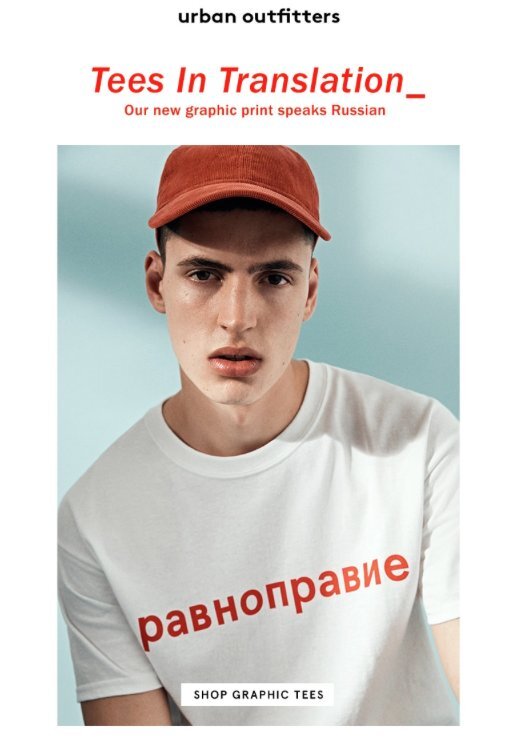
Post-Soviet fashion experienced an uptick in its usage, specifically in alternative or indie clothing brands, in the past 3 or so years. Most famously (or infamously, depends on how you look at it), a couple years ago, Urban Outfitters released a t-shirt with the Russian word for “equality” on it. While their translation was correct, there are many designers that unfortunately did not have the foresight to check their Google Translator app with a native speaker, resulting in mass produced grammatically incorrect sweatshirts. 

My question is where did this trend come from? And more specifically, is it ethically sound to retroactively uplift a sense of style for the general consumer that is associated with so much historically? 

In answer to the first question, I have several theories (Disclaimer: I am by no means an expert, this is simply something I took interest in for a hot second). Two of the theories are a little more critical of the origins of post-Soviet fashion, the last is a more positive understanding of the fashion movement. More likely than not, it is some combination of all three. 

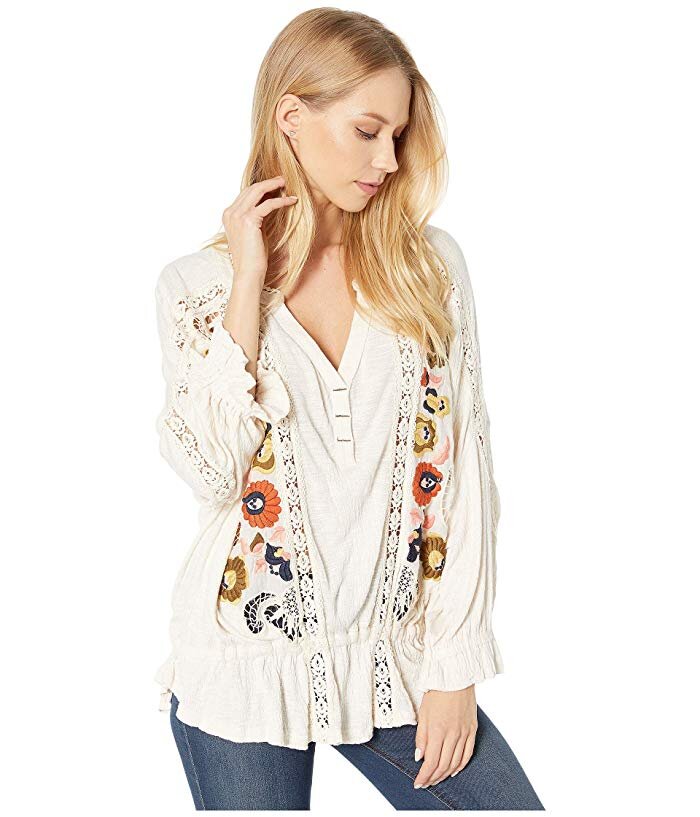
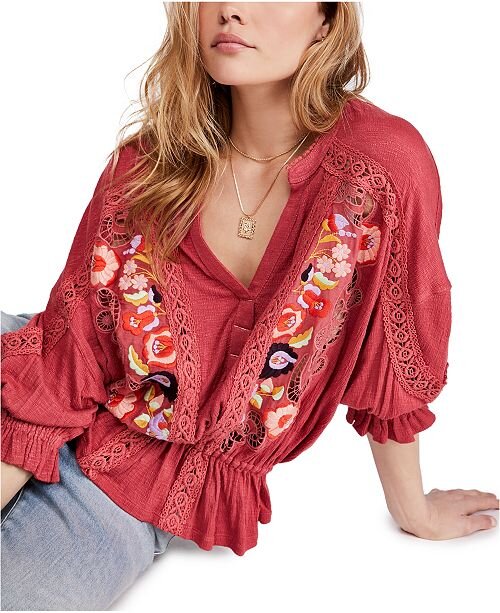
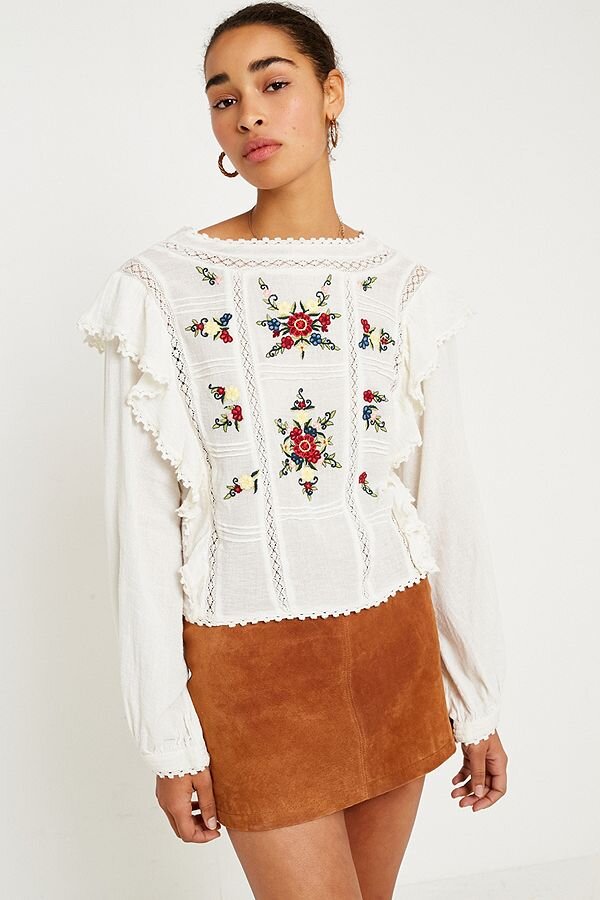
One way to understand where this came from is by recognizing that Western fashion has always had a problematic obsession with “exotic” fashion. What started out as blatant appropriation of East Asian, African, and Native American cultures is now unacceptable and has thankfully gone out of vogue. Yet even since there has been a notable shift in fashion to reach for the next best thing. As someone from Eastern Europe, I was actually a little surprised and somewhat irritated to see that about 2 or 3 years ago flower embroidery became a really big trend. Now normally, embroidery isn’t particularly associated with any one culture and flower motifs are pretty common everywhere in the world. However, it was striking how much of a resemblance there was between some flowery embroidered tops sold by the likes of Free People and the traditional Eastern European vyshyvanka. For context, a vyshyvanka is a type of traditional shirt worn in Eastern Europe commonly before the Russian Revolution in 1917 and since mostly only appears in traditional celebrations and holidays such as Orthodox Christmas or Ivan Kupala. On surface level, there does not seem to be any malintent in using these designs, yet it is irritating to see companies reproducing these for the average consumer who is buying an iteration of this design in ignorance of its cultural significance. 

Images of vyshyvankas via here, here, here. Mass produced reproductions via here, here, and here.

Okay, so Western fashion has had a flirtationship with “adopting” designs from other cultures, but what does this have to do with post-Soviet fashion?

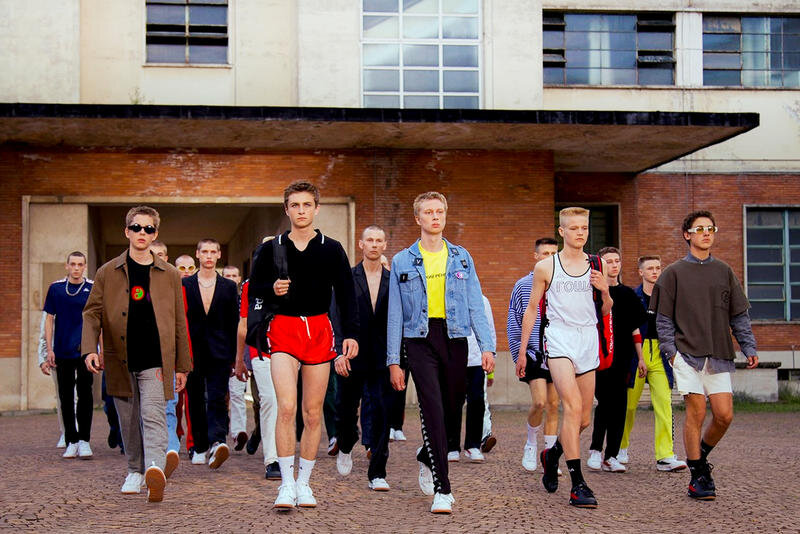
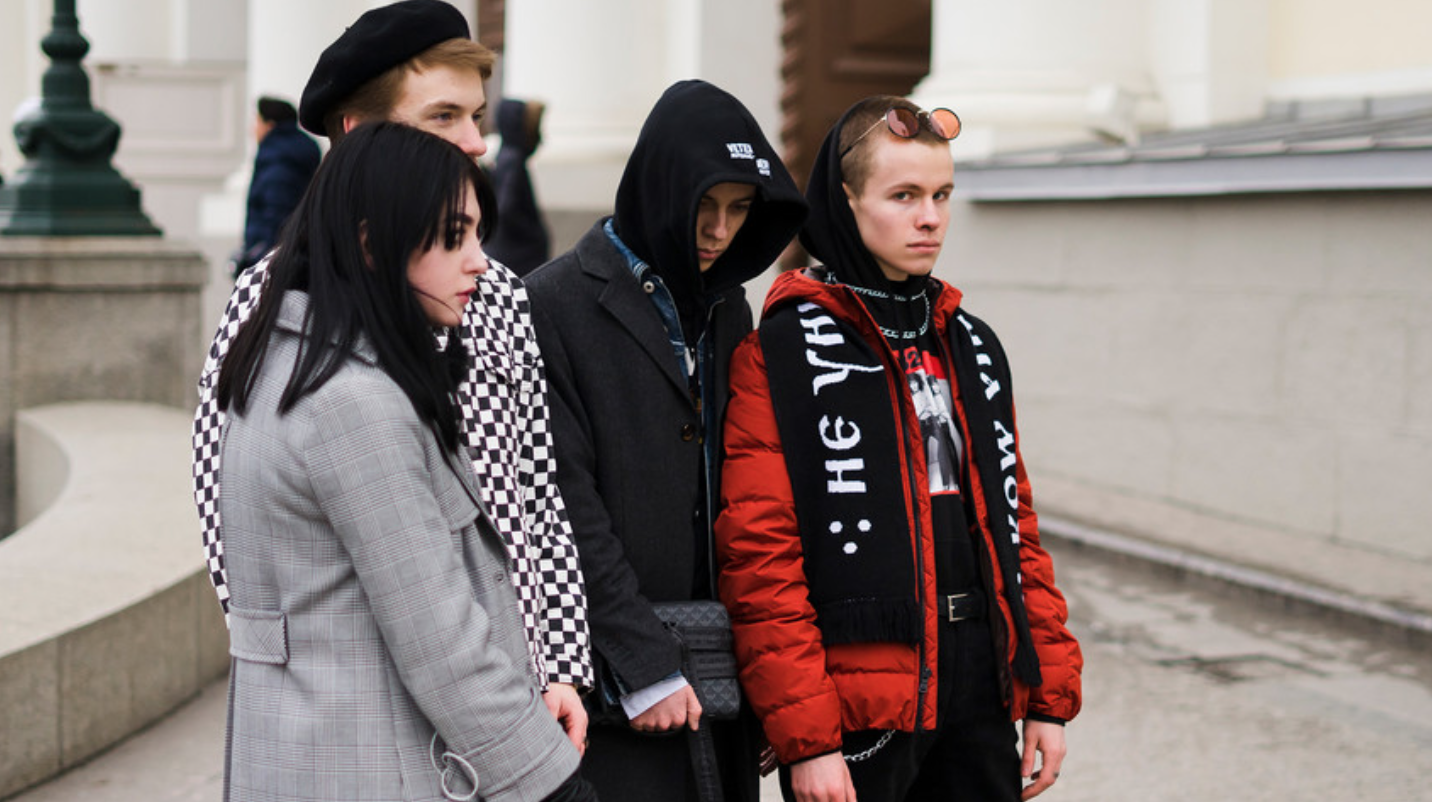
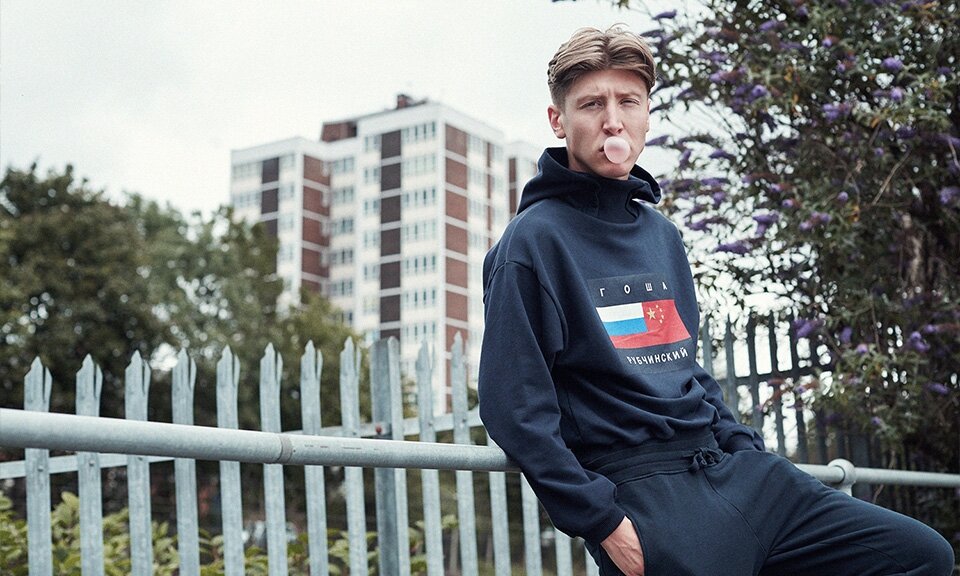
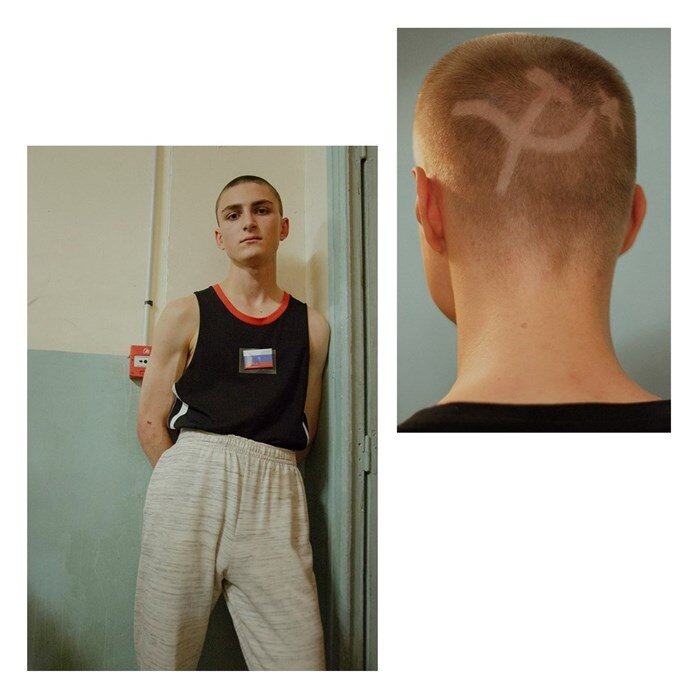
This exoticization of traditional designs was really only the beginning. Post-Soviet fashion is also often associated with color blocking, windbreakers, and tracksuits. More specifically, it emulates 90s gopnik style tracksuits. Arguably, this unholy union of fashion and culture came out of the current unending trend of athleisure. Designers like Gosha Rubchinskiy and Andrei Artyomov, to name a few, certainly contributed to creating a hypebeast vibe around their takes on post-Soviet inspired streetwear. Through large blocky hoodies and FILA-like shoes their Cyrillic branding took over the streets of London, Paris, and New York for at least a season in 2017-2018. Today, while the trend may have died down a little bit, it still raises associations with rising crime and the repercussions of a fallout of an entire structure of life in those of Eastern European descent. For us, looking like a gopnik is not really a desirable or fashionable thing. Instead, it carries the connotation of alcoholism, joblessness, and criminal activity that increased shortly after the official collapse of the Soviet Union in 1991. The tracksuits carry with them a memory of economic failures rather than something that was considered a distinct style. The iconic three stripes was an outfit of desperation rather than a conscious fashion choice. 

Images via here, here, here, and here.

This brings me to my next point, which is slightly more positive. 90s fashion in Post-USSR emerged out of a state of deep social and cultural confusion. For decades, the USSR cultural identity was state created. Upon the fall of the Soviet regime, the social fabric of many countries in the post-Soviet world was simply torn down. Entire nations were struggling to find a sense of identity in the shambles of what was left behind after the regime collapse. This was reflected in fashion choices as well, with the youth of Eastern European cities wearing a strange blend of clothing produced by the extinct Soviet Union and Levi’s. 

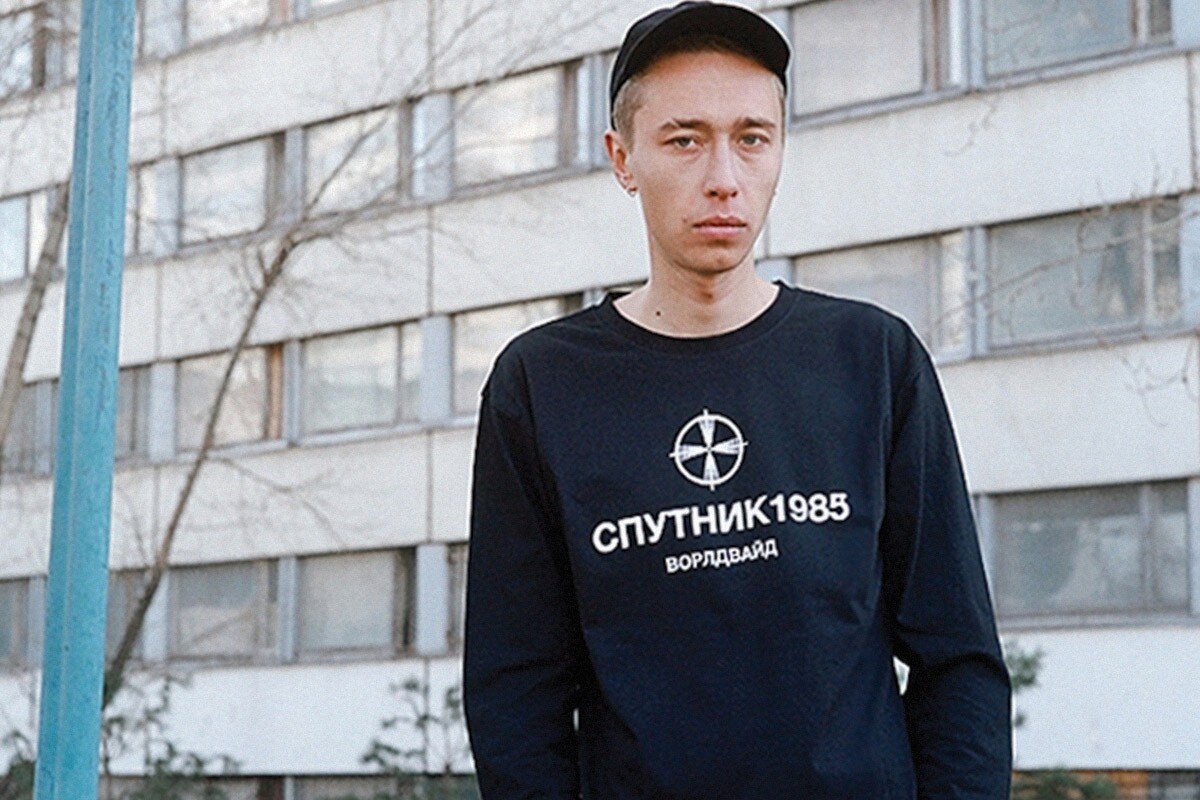
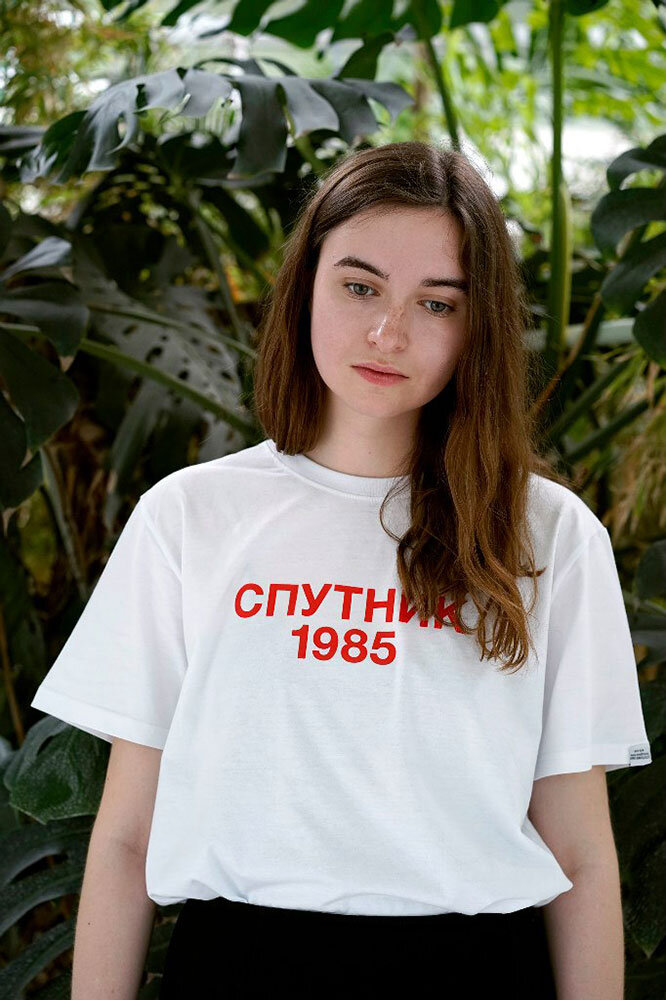
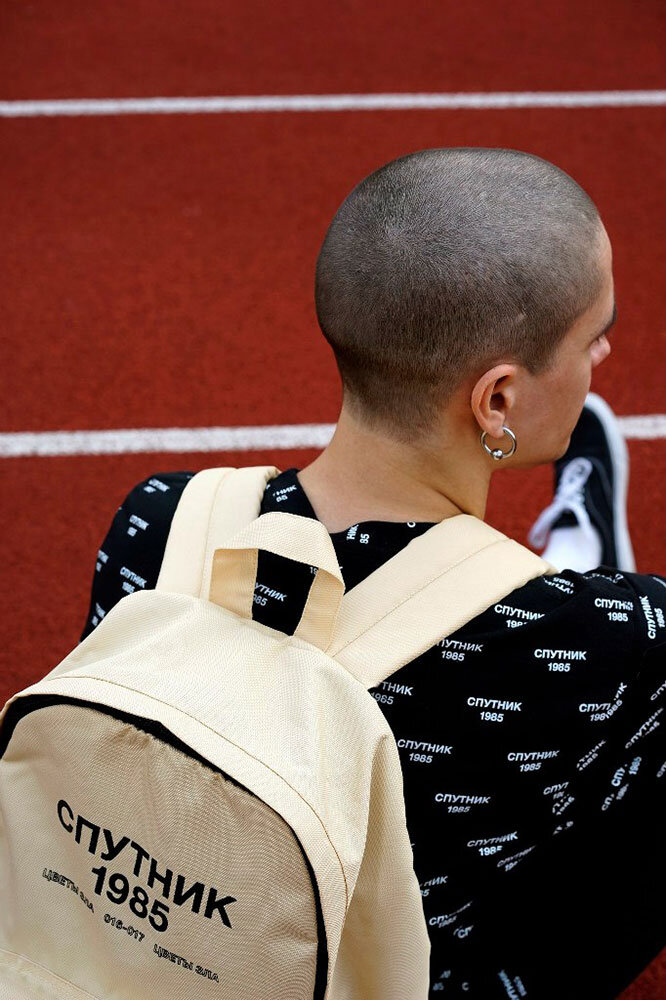
The resurgence of post-Soviet fashion is something that has been appearing increasingly frequently on the streets of Moscow and St. Petersburg in recent years. For today’s youth, which ironically never saw the era that produced the clothing styles that they choose to wear, wearing Cyrillic sweatshirts or vaguely Soviet vintage clothing is a way of reclaiming some part of that broken national identity that we were born into. 

Images via.

Image via.

Image via.

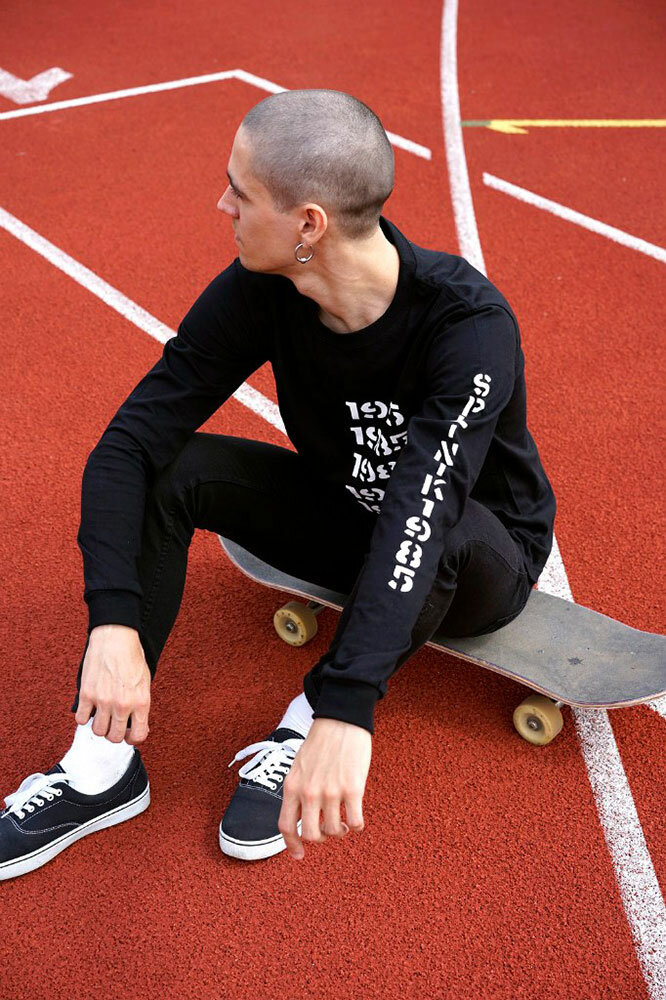
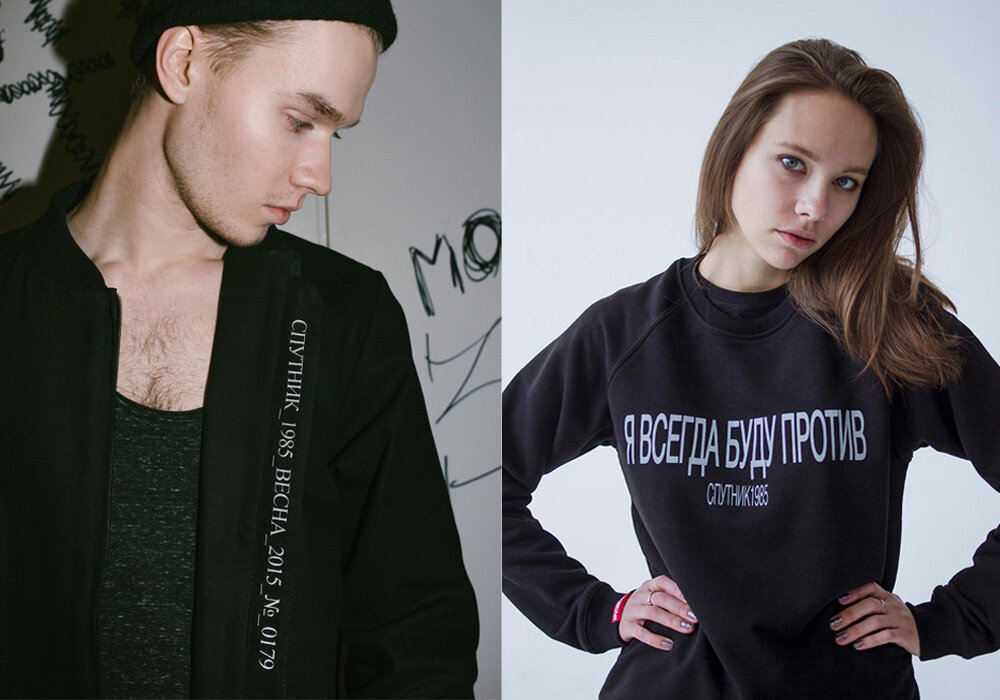
It also presents an interesting subculture with its own subtle political messages. Many of these shirts are not mass produced, but either individually printed or created in small batches in an almost samizdat-like production. The result is a slew of messages such as Sputnik1985’s “I Will Always Be Against” and Volchok’s famous “No Tsars No Gods” merchandise. 


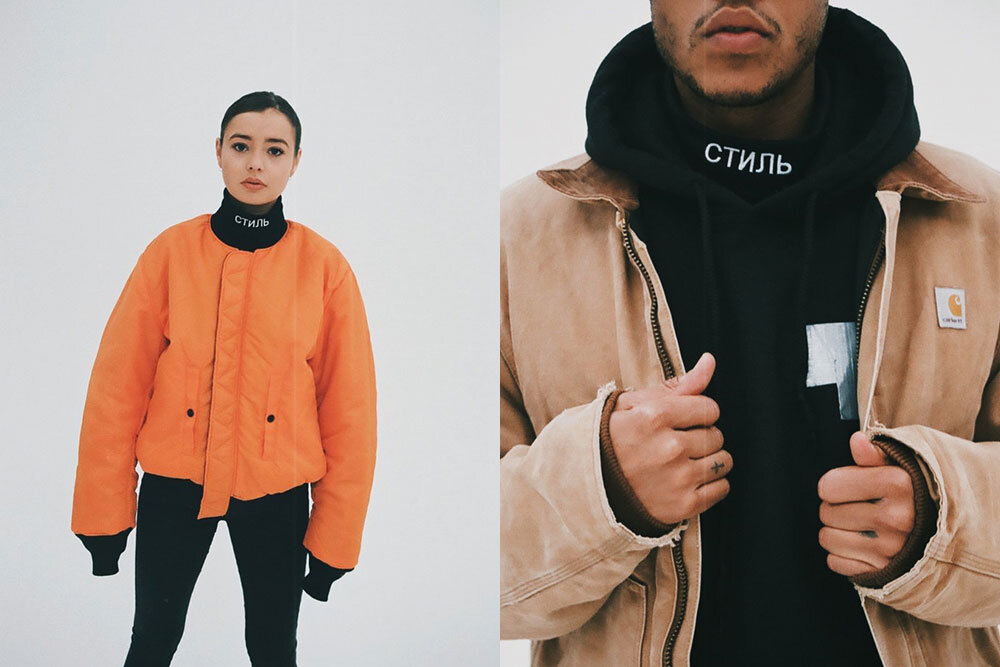
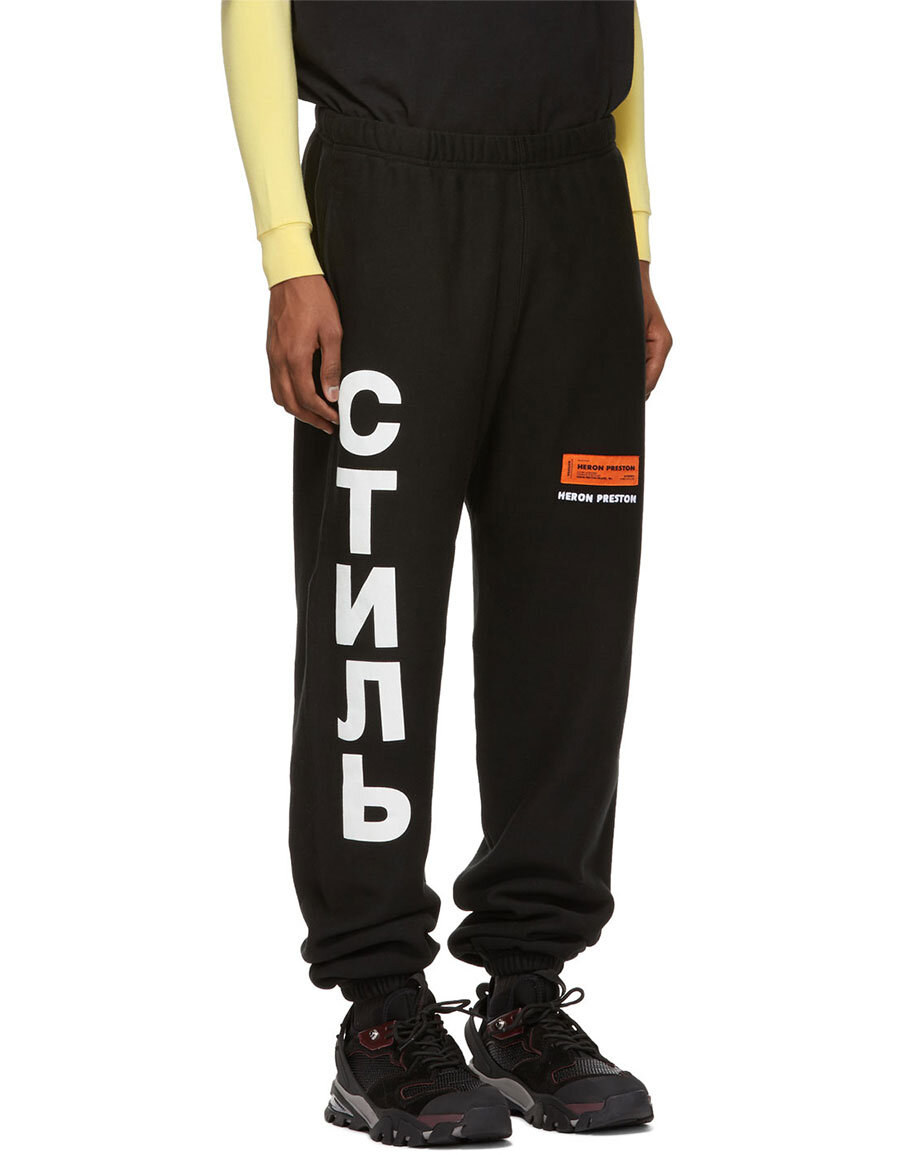
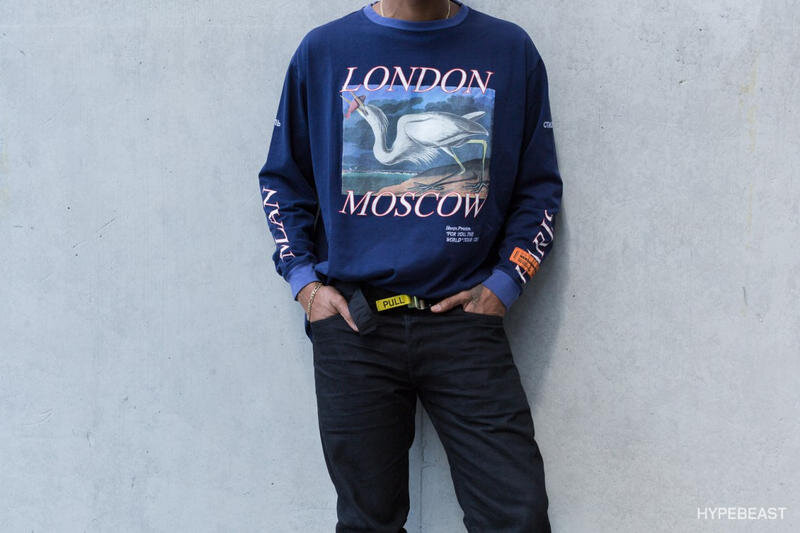
But what happens when these distinctly post-Soviet identities begin cropping up in mainstream Western fashion? Most notably, Heron Preston, a designer in the vein of Off White’s Virgil Abloh, has made an entire brand name on the premise of stamping his goods with the Russian word for style: Стиль. But why “Стиль”? What relevance does it have for his brand or his message? What’s the connection?

Images of Heron Preston collection staples via here, here, and here.

Well, apparently for Preston, none in particular. In a revealing GQ interview the designer said:

“I've used Russia a lot as a theme. It also carried over to be sort of my sub-logo [written as Стиль which translates to "style"]. My partners, New Guards Group, they also rep Off-White, said, "Yo, for your brand, you should launch in Russia because no one is doing that. You have this Russian logo so we should kick off in Moscow and go on a retail tour." I loved it. I normally would have taken a more traditional approach with the launch, and launched in New York. I was just into the idea of being different from a typical launch and it just made sense.”

If this interview revealed anything, it’s that Heron Preston himself seems to have no idea as to why he’s capitalizing on the word Стиль, other than it looking cool and being different from other brands. In all honesty, to a Russian-speaker the branding of the word “style” on turtleneck collars kind of looks ridiculous (not to mention that it doesn’t actually translate entirely as style in the fashion sense; that would be the word Мода). Although I won’t pretend that this anywhere close to the most accurate comparison, branding Стиль on backpacks and shirts does make me recall the early 2000s fad of non-Chinese-speakers getting tattoos of the Chinese characters for “water” without bothering to verify the translation first. 

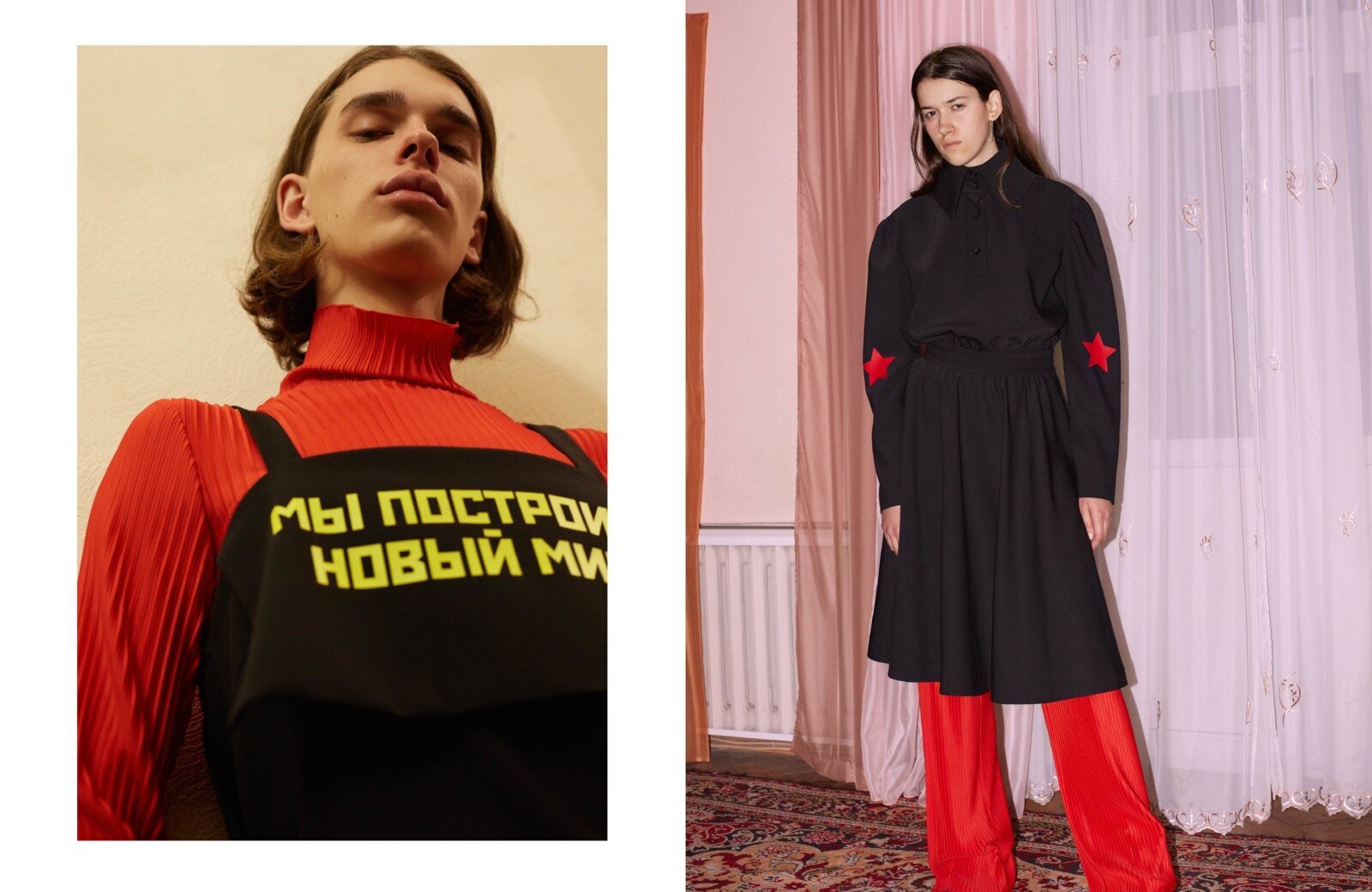
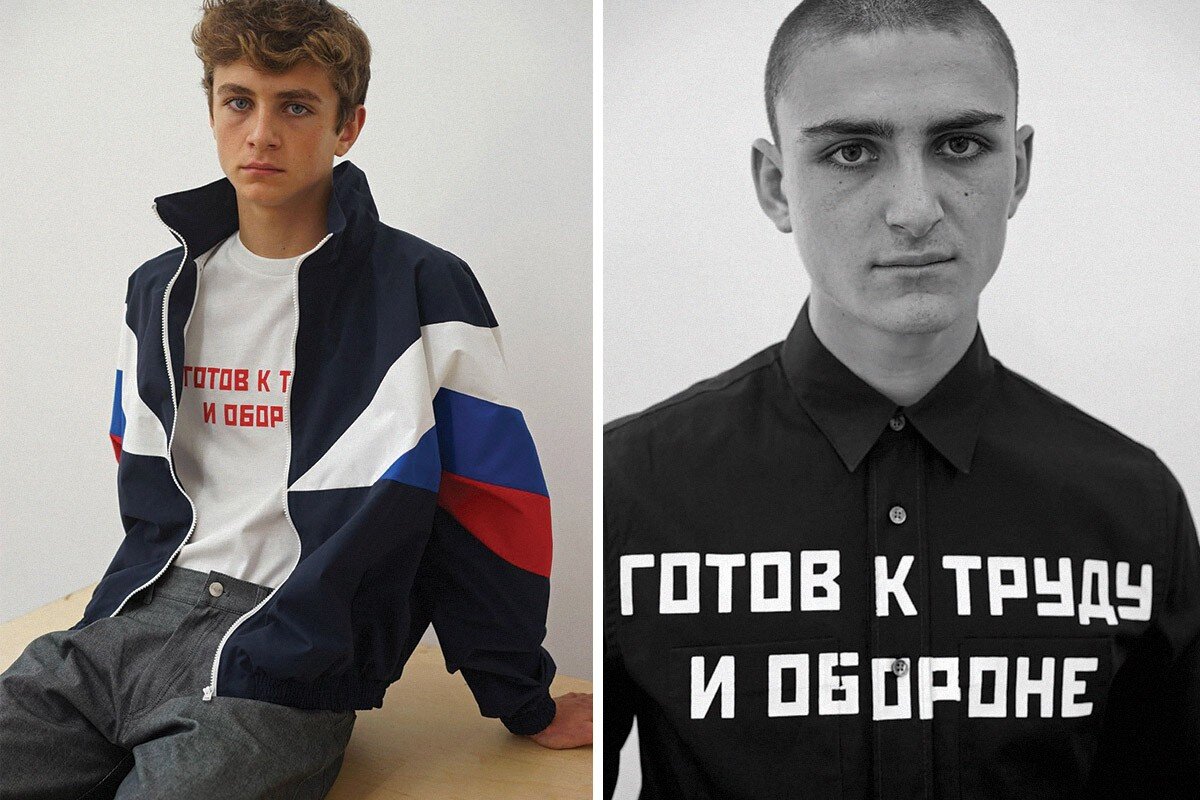
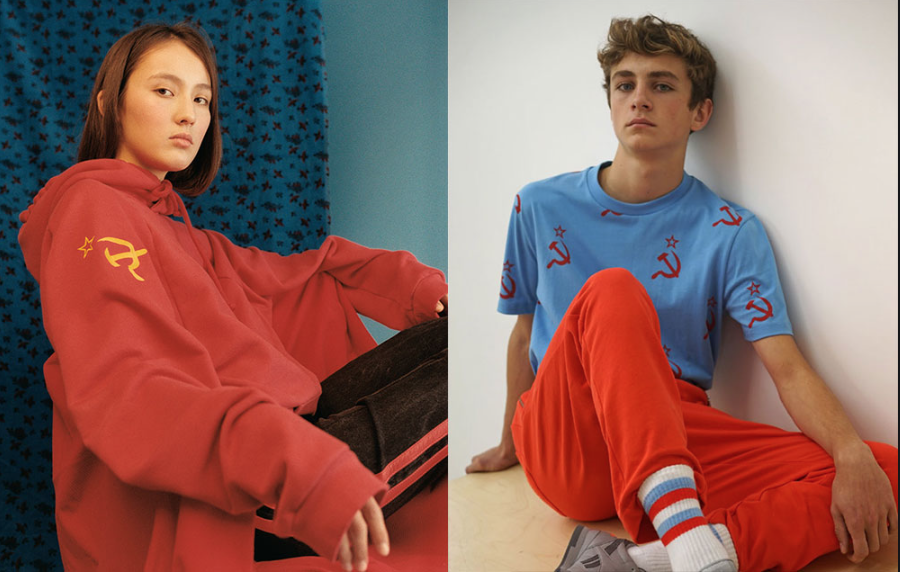
And then there’s the question of whether or not the replication of certain distinctly Soviet symbols for mass consumption is ethical. While most brands stick to post-Soviet nostalgia, there are quite a few who are beginning to hedge into the territory of Soviet nostalgia. One such Ukrainian designer, Yulia Yefimtchuk, releases jumpsuits with red stars as patches and the distinctly brutalist Soviet yellow lettering spelling “Мы построим новый мир” (translation: we will build a new world). Gosha Rubchinskiy makes sweatshirts with the Soviet propaganda slogan “готов к труду и обороне” (translation: always ready to work and to serve [in the military]). Not to mention the designers who have decided that a sickle and hammer is a cute new pattern, without taking a pause to think about the suffering, oppression, and human rights abuses it is associated with.

Images via here, here, and here.


While I obviously cannot speak for the designer’s choices to release these particular collections, nor can I speak for the entire post-Soviet Eastern Bloc community, I do believe that I’m probably not alone in saying that the carelessness of reproducing clothing with Soviet slogans and symbols is insensitive to the millions of people whose families were directly affected by the Soviet regime. Though the intent is probably not to glorify the USSR regime, the clothing does appear to facilitate an active unawareness of the meanings behind these motifs. And so do, for that matter, gopnik-style clothing brands that mass produce post-Soviet trends for the average Western consumer. 

This is not to discount the work of Gosha Rubchinskiy and the like. They have significantly influenced the rise of street style and have done so by creating their own interesting commentary on glamour and focusing it on reproductions of intentionally “poor” images (which is problematic in its own way). The fact of the matter is that all this, in tandem with articles that call the Gosha phenomenon “ugly is the new beautiful” and marketing images of shaved heads with sickle and hammers designs, is difficult to process for those that have been born in and inherited the post-Soviet culture and must now struggle to understand their identity in light of a heavy national history. 

Image via

Image via

Featured image via

The Tyranny of Free Products

High school Science Team; Manus Dental; 21Minus at the MCA. Memories, condensed into bags of unwanted T-shirts and water bottles stashed in my closet. I neither like nor want most of the free things I’ve gotten. Even free meals, welcome as they are to save me money and preparation, don’t strike it quite right: the pizza makes me worry about sodium levels, and dairy-based sweets upset my stomach. And yet, like the image of the glutton, I eagerly help myself to anything that is offered for free.

The urge to take things that are free is a strange combination of a nonchalant “hey, might-as-well and a deeper-level obligation to make use of the resources around me. Why not take something if it costs nothing? But on another level, there’s the knowledge that in this moment, I am being given access to a resource that might not always be there. It’s a fear the privilege I have now will disappear. There are times, people, and places that will demand payment I won’t be able to give. With free bottles, bags, and T-shirts, nostalgia and the desire to fit in with everyone else who is sporting that logo make it hard to let go, even when the item is redundant or useless.

gif via

gif via

So I pick up a pen from the conference, I jostle for a complimentary cupcake.

The trick, of course, is that nothing is free. Everything has a logo slapped on that some other soul will subconsciously incorporate into their stash of mere-exposure effects (the psychological phenomenon by which people develop preferences for things purely based on familiarity).

The food is there to bring more people to some event. The tote bags or tees or hats are to encourage repeat customers. Free items are compelling, but they drain your time and your energy. The driving force behind the compulsion to accumulate free items is the need to insure. It’s the fear of losing wealth and of having nothing. Not everyone can make it, but anyone can also lose it all. The pile accumulating in my closet, bag by bag, is a wall to stave off loss.

I plan on turning my bag of unworn T-shirts into a quilt … one day. I don’t look forward to all that cutting and sewing, even if I do own a sewing machine. Until then, I’ll watch that pile in my closet grow and grow, straddling the border between unneeded and potentially wanted in the future.

Featured image via

Source: http://megcox.com/2013/07/the-t-shirt-quil...

What We can Learn From Roxane Gay's Bad Feminist

In her novel Bad Feminist, author Roxane Gay breaks down the many complicated, nuanced and honest sides of feminism, as well as her own experiences and life lessons on what being a feminist has meant to her. She takes on many voices— vulnerable, assertive, powerful, etc and through them, she delivers fresh, insightful ideas on gender, sexuality, race and more. One of my favorite chapters Gay writes on is titled "How we All Lose," which comments on sexual violence, an especially relevant and crucial topic we must talk about.

The chapter, "How We All Lose," interested me for its thorough analysis of several other texts and novels that attempt to highlight the meaning and future of feminism but neglect to address the issue at heart. In one part, Gay speaks on the subject of sexual violence in response to Hanna Rosin’s novel The End of Men. Rosin writes that “women today are far less likely to get murdered, raped, assaulted, or robbed than at any time in recent history” and a “2010 White House report on women and girls laid out the latest statistics straightforwardly, to the great irritation of many feminists.” To this, Gay comments that it is “hard to accept at face value that feminists would be irritated that there’s a decline in violence against women,” and notes the number of abuse and sexual violence cases that go unreported. Gay also writes that “Rosin is not wrong that life has improved in measurable ways for women, but she is wrong in suggesting that better is good enough. Better is not good enough… I cannot think of clearer evidence of how alive and well the patriarchy remains."

Especially today, it is important to consider Gay’s responses. With recent events concerning sexual abuse allegations against influential, powerful figures like Harvey Weinstein and Kevin Spacey and movements like #metoo, sparked by online protests, Gay’s argument against that of Rosin’s is significant in actually addressing sexual violence. With some news outlets finally detailing the abuse females in the entertainment and STEM industries face, it is important we leverage this information to show the change that needs to be done— to restore justice against higher ups like Weinstein and Spacey and shift the narrative about what women can or can’t do. 

It is important for men and women to understand the issue of sexual violence; to understand how its salience negatively affects our culture and society; to understand how by just ignoring this issue we feed into its toxicity and continuity. 

Find your Famous Portrait Doppelgänger with Google's Latest App

Ever wanted to know your famous counterpart in the world of portraiture and fine art? With the Google Arts and Culture app, you can take a selfie and get matched with a famous portrait. Whether you're a modern day Mona Lisa or could've been one Michelangelo's contemporary muses, the app will even tell you the percentage to which the two photos look alike. Read more about the app here and don't forget to share your new likeness with friends!

image via

image via

Feature image via

Look of a Mind: Tavi Gevinson

It's difficult to patrol some corners of the internet without running into Tavi Gevinson. Gevinson, a blogger-editor-essayist-actress-fashionista wonderkind, has been in the public eye in some way since age eleven, when she burst onto the high-fashion scene rapping about Comme de Garcones' Rei Kawakubo, opining on Rodarte, and taking photos of her own wacky outfits in her backyard. She's moved on since then, trading Fashion Week for leading roles on Broadway, her own magazine, Rookie, and frequent caucuses with other young, prominent feminists (including but not limited to Amandla Stenberg, Tyler Ford, Kiernan Shipka, Malala Yousafzi, and Roan Blanchard). 

Some have deemed Gevinson a voice of today's young people who want to be taken seriously in their abilities and their art (to which her magazine, Rookie, caters entirely). She's certainly crystallized a certain teenage experience—the cluttered bedrooms, the tiny moments of beauty and pain, the wondering if this will really last forever. Rookie is a primer on intersectional feminism, from causes to know about to your next role models to what to wear for all of it.

Image via Pinterest.

Image via Pinterest.

But if you're interested in the editor-in-chief's style, go for a witty, ironic Americana with more than a dash of suburbia. Throw in a few pom-pom accessories, plenty of sinister pastels (her obsession with Rodarte never quite went away...), and you're good to go. Now, off to put your late-adolescent experience into the most beautiful words you can muster!

Image via IMDb.

Image via IMDb.

Feature image via

Look of a Mind: Joan Didion

I was fifteen when I first heard of Joan Didion. An older friend of mine, who was a comparative literature major, told me that if I was a young woman and wanted to write, I had to read Didion and handed me a copy of her first novel, Run River. Didion's writing is spare, its tone flat on the surface but hiding a roiling current just beneath. It's iridescent, almost painfully so—the reservedness of her words highlights the gleaming reflections in the scenes she writes. 

Didion in her office.  Image via Bust.

Didion in her office.  Image via Bust.

Didion is one of the most stylish writers of the contemporary era (did you catch her in Celine's SS '15 ad campaign?). Her essay collection The White Album sums up her louche, functional, and intellectual brand of cool in the list that Didion kept taped to her closet door so that she could pack at a moment's notice. 

Didion today. Image via New York Magazine.

Didion today. Image via New York Magazine.

Let Didion's functional, chic 60's style or her more minimalist style of today guide your own sartorial choices for your next reporting gig in the Golden Land—or just take it for a spin along the endless California highways. 

Thumbnail image via Jill Krementz.

How Podcasts are Reshaping our Culture

Nowadays, podcasts do more than relay news and updates; through broadcasting personal accounts and stories about real, relatable people, they have become a popular medium used to combat stigma and shame on mental health and debunk assumptions about gender, race and sexuality.

Recently, two of my favorites include “Sincerely X”, hosted by June Cohen, one of the curators for the popular Tedx Radio podcast and “Girlboss Radio,” hosted by Sophia Amoruso, who is also the founder of clothing line, Nasty Gal.

The aim of Sincerely, X works to openly share ideas and stories while concealing the identities of its speakers. This podcast gives “victims, perpetrators, investigators, activists, empaths and more” an outlet to share their experiences without the worry of public judgement following them. Two of my favorite episodes from season one of this podcast were ‘Sad in Silicon Valley’ (episode four) and ‘Pepper Spray’ (episode 2). In both, the subject of mental health is put into perspective and is put in relation to technology and everyday life. We hear the anonymous stories of a CEO and an average working woman, one affected by sudden depression and another, by anxiety and post traumatic stress disorder.

By interviewing different, successful women who come from equally humbling beginnings, ‘Girlboss Radio’ brings forth a platform that initiates conversations and discusses issues specific to women, people of color and other marginalized groups. Two episodes worth checking out are interviews with authors and activists, Roxane Gay and Janet Mock. Gay openly shares her experiences on sexual assault and body image while Mock unpacks her journey as a transgender black woman. The two dive into deep rooted issues, showing their vulnerable but empowering selves. Throughout 'Girlboss Radio,' Sophia Amoruso and her guest speakers gradually change the narrative about how we view and attain success. As a whole, this podcast constantly motivates its listeners to be better, more genuine forms of themselves.

These podcasts have become cultural catalysts and a vehicle to propel new ideas and social reform. As noted, they are more than just entertainment— they are stepping stones for learning new lessons and reshaping our culture.

Feature image via

For the Best Festival Fashion, Look No Further Than AFROPUNK

The AFROPUNK Fest held in Brooklyn last weekend was a joyful, stunning and politically charged celebration of black beauty, fashion, music and heritage. An official statement from the festival's website claims "AFROPUNK is defining culture by the collective creative actions of the individual and the group. It is a safe place, a blank space to freak out in, to construct a new reality, to live your life as you see fit, while making sense of the world around you." 

All above images via NBCNews


A desire to express and pay homage to the diverse ethnic and cultural backgrounds of those in attendance was on full display, from kaleidoscopic Kenté cloth tunics, to elaborate body art, looks no doubt inspired by the Lemonade visual album, and natural hair peppered with flower crowns, daisy chains and more.

An article on Teen Vogue notes the meteoric rise of the festival in just twelve short years, and its corresponding social and political relevance over time; "[AFROPUNK] started as a gathering for black people with a love for punk music, and it still remains a safe space where we can sing, dance, revel in our heritage, and celebrate our culture." This years' festival fashions felt particularly on par with the current political and racial climate, showcasing T-shirts with slogans such as "F--- Alt Right" and Colin Kaepernick jerseys. 

All above gallery images via Man Repeller


The festival has grown to encompass much more than an initial celebration of alternative black music, becoming an important collective representation of black culture, empowerment and defiance, as well as the social and political movements concert-goers care most about. In an interview with NBCNews, one attendee explains "we're literally wearing our movements on our chest." From the magnificent array of artistic and sartorial statements made both on and off the stage, it's safe to say the festival and those in attendance have fully embodied this mission. 

All above gallery images via GQ


Feature image via Man Repeller
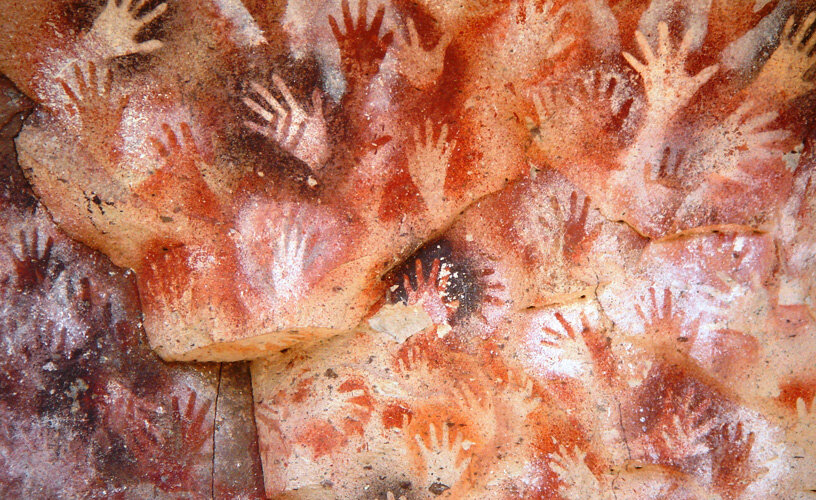
All Hail the Queen

If you haven't had a chance to watch Beyoncé's Grammy performance, stop what you're doing right now and watch it here. Share with friends to save a life.

gif via

gif via

Dripping in jewels with her hair enshrined by a golden halo, Beyoncé's performance of Love Drought and Sandcastles (off her last album Lemonade) were the perfect homage to motherhood, redemption and self-love.

image via

image via

image via

image via

Introduced by her mother, Tina Knowles, before taking the stage, Beyoncé's performance was simultaneously a nod to traditional African dress, Mother Mary imagery, Buddhist deities and Alvin Ailey's choreographic style, invoking all manners of beauty and the divine. Holographic body doubles of herself, her dancers, her mother and Blue Ivy also played with the audiences' perceptions of reality and underscored the dream-like effect of her performance.

image via

image via

The artistic direction she's taken with this performance is a fitting continuation of the pregnancy photos she released several weeks ago. Accompanied by evocative lines penned by poet Warsan Shire (who also made her debut on the Lemonade album), view all of the photos from the Grammy performance and her internet-breaking pregnancy photoshoot here

image via

image via

All I can say is, long live the Queen.

gif via

gif via

Feature image via
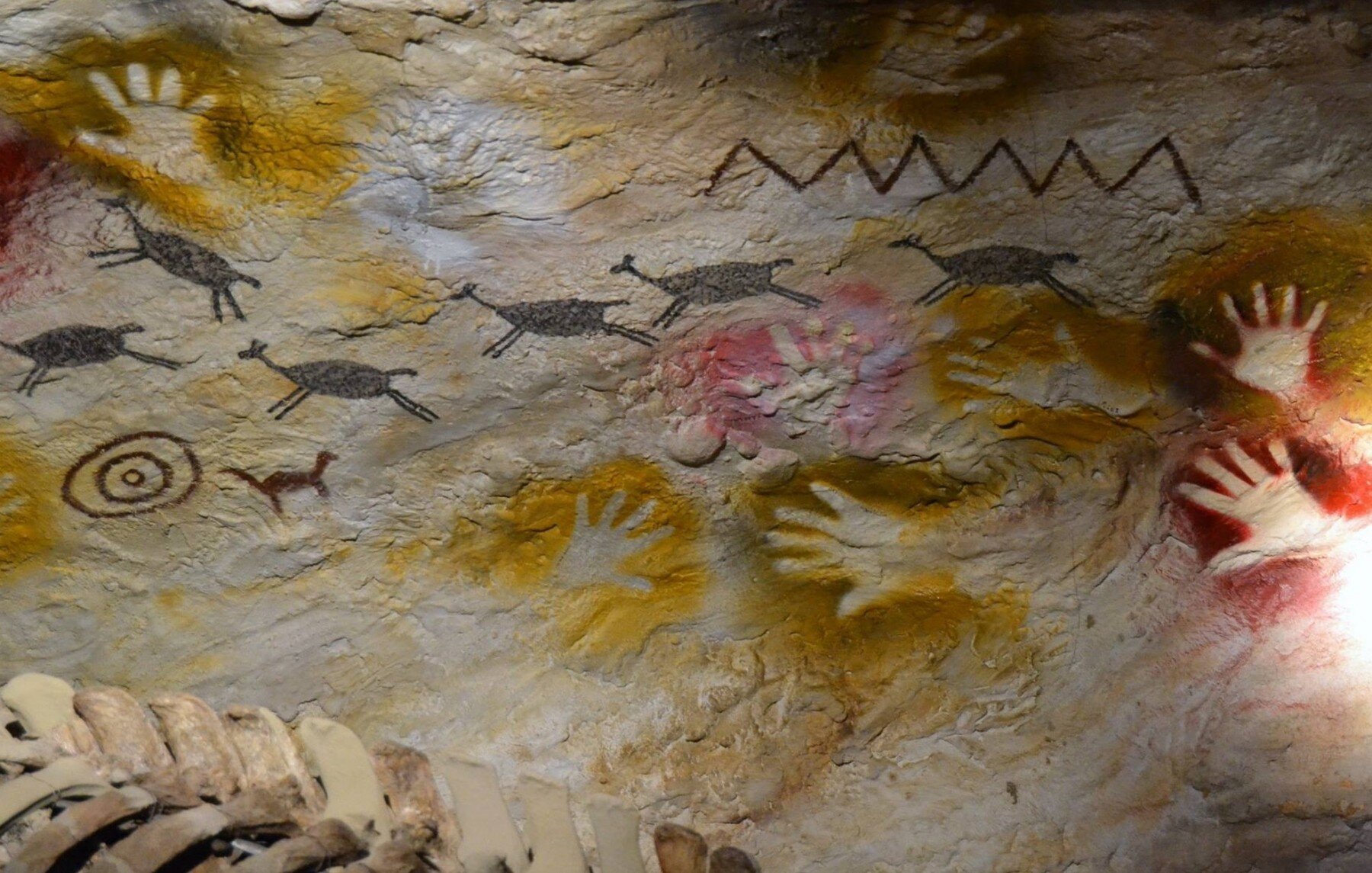
CoverGirl's Newest Brand Ambassador: Nura Afia

Cosmetics brand CoverGirl made headlines again weeks after naming YouTube star James Charles as the brand's first CoverBoy with the announcement that 24-year-old Nura Afia will be the company's first Hijab-wearing brand ambassador. 

Like James, Nura is a YouTube and social media star who boasts thousands of online followers. The 24-year-old Colorado native first took up makeup as a form of self expression after noticing a gap in the beauty market for Muslim women. “While there was a lot of content focused around fashion and how to dress, there were still very few videos out there for the massive audience of observant Muslim girls who love beauty and are constantly on the hunt for cosmetics... I just felt there was a real void — especially in videos produced by Muslims living in the United States" (New York Times).

image via

image via

Nura's contract with CoverGirl reflects the rise of social media famous personalities over traditional celebrity in the fashion and beauty industries as well as the growing influence of the Muslim community and consumer base. "According to Ogilvy Noor, the Islamic branding agency, the Muslim personal cosmetics and care market is now worth more than $54 billion, a figure that is expected to reach $80 billion by 2020" (New York Times). 

Nura's role as a brand ambassador will hopefully serve as an important signifier of change and greater diversity in a industry saturated by traditional notions of Western beauty. We look forward to seeing her work with CoverGirl!

image via
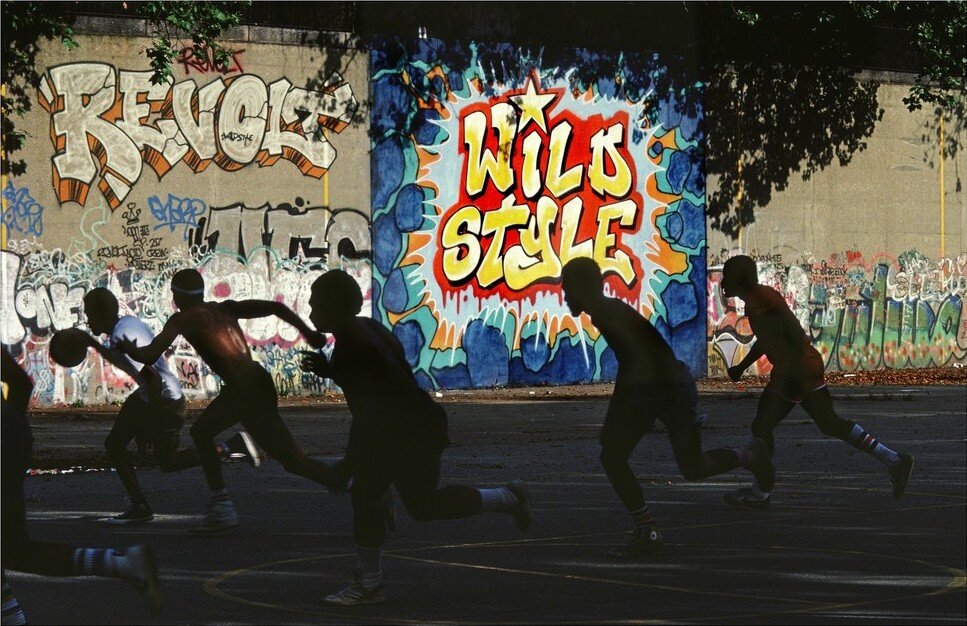
image via
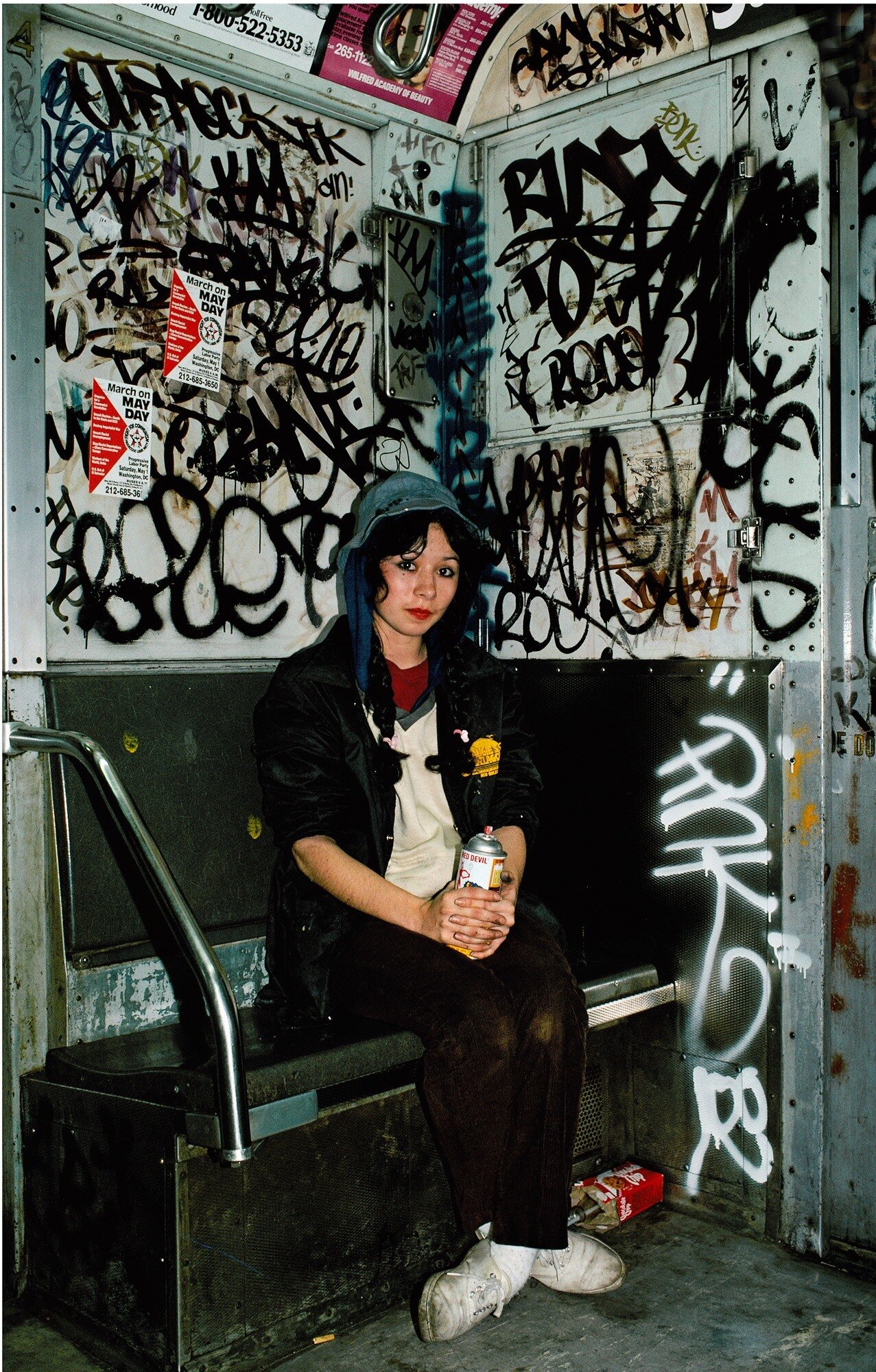
image via

image via

Follow Nura on Instagram and check out her YouTube account for more beauty inspiration! 

Featured image via

The Fashion World Hits the Campaign Trail

Considering this election season has been one like no other, it comes as no surprise that authorities and average voices from all aspects of society have taken it upon themselves to advocate for a candidate or cause they feel passionate about. In particular, the fashion industry has become a vocal and influential political force, with major publications like Vogue to designers and models encouraging people to register to vote and endorsing candidates through their creative sensibilities and social media clout. 

image via
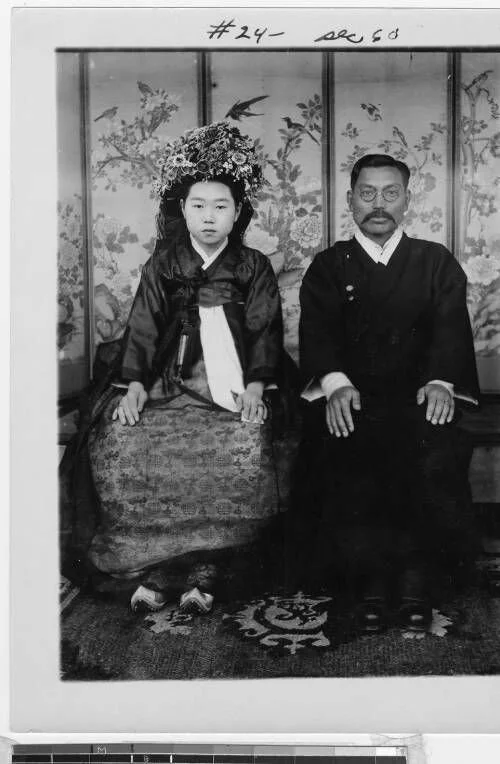
image via

From Instagram feeds to the DNC stage, fashion industry leaders have embraced incredibly diverse platforms as a means of getting their messages across. On the publication side, the release of US Vogue's latest cover was accompanied by an explicit message for readers to literally get out there and "Vote." In the following days the magazine also announced its formal endorsement of Hillary Clinton, noting: "Vogue has no history of political endorsements... Given the profound stakes of this [election], and the history that stands to be made, we feel that should change" (Vogue.com).
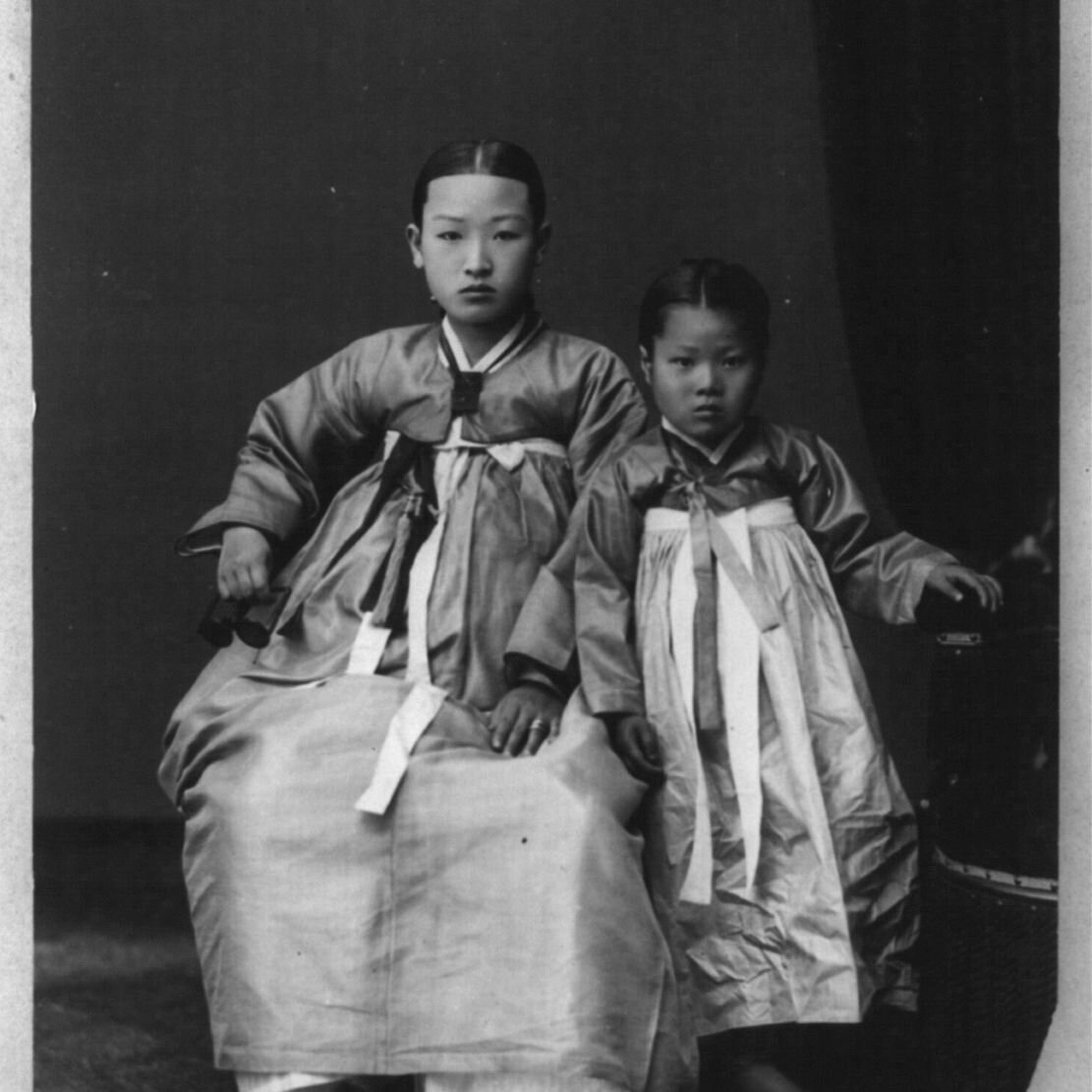
This comes as little surprise to those who have kept pace with this election largely through pop culture and fashion industry outlets. During New York Fashion Week, Anna Wintour amassed a handful of designers for an "I'm With Her" inspired runway show, with everyone from Marc Jacobs to Diane von Furstenberg contributing their talents to the cause.

image via
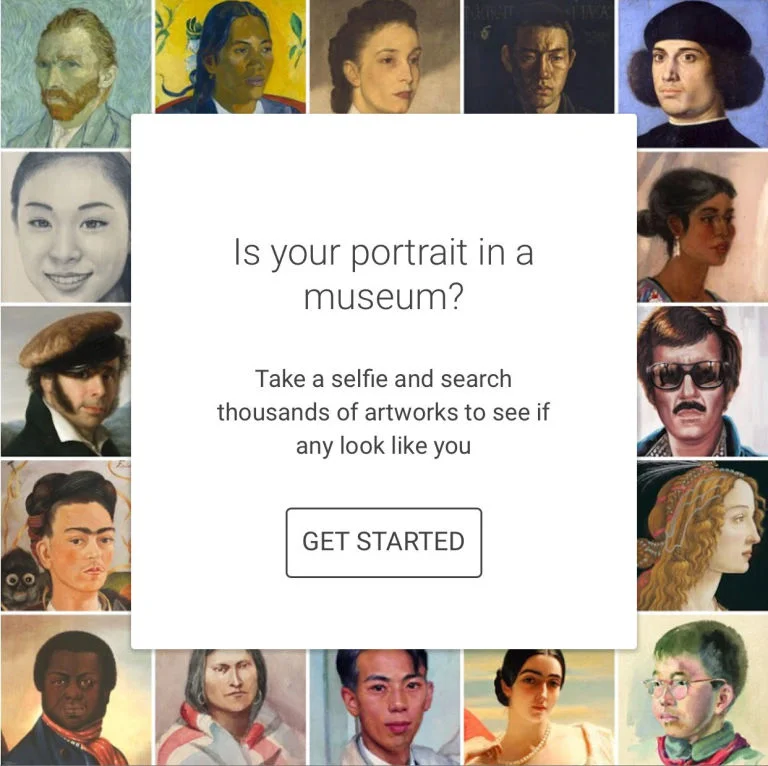
image via
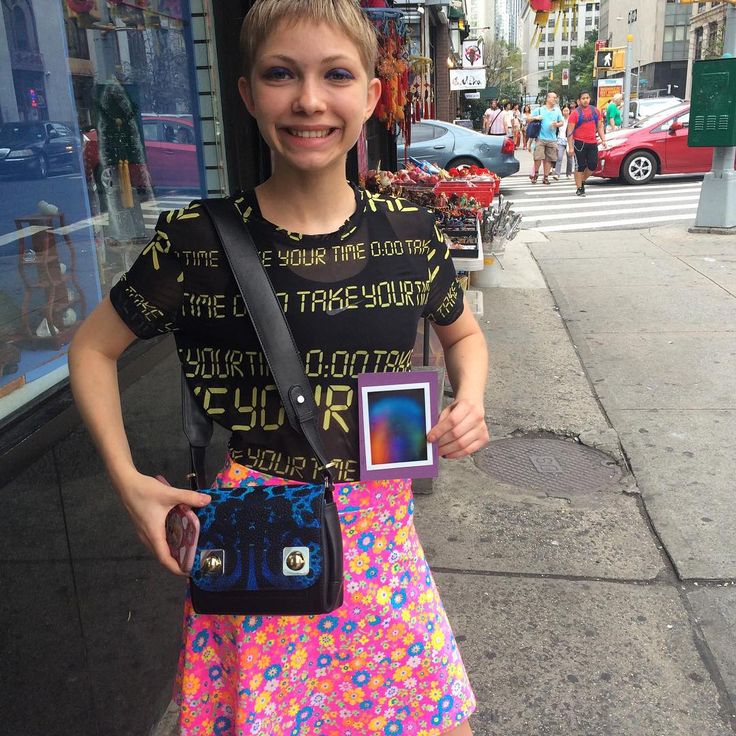
Fashion designers have long supported Clinton's campaign, however. The limited edition Made for History collection features a handful of catchy slogans and artful manipulations of HRC insignia on T-shirts designed by Jason Wu, Tory Burch, Joseph Altuzarra and Prabal Gurung, among others.

On a more informal level, curious social media users can infer industry leader's political leanings from a quick glance at their social media feeds. A quick search for #badgalriri on Instagram reveals a constant stream of photos depicting the musician snapped by paparazzi in a pro-Hillary tee. While it remains to be seen whether or not celebrity endorsements hold any sway over voters, it has been interesting to observe the confluence of political and artistic forces throughout the course of this election. Indeed, the efforts of everyone from Vogue magazine, to high profile designers, models and media stars have transformed the role of fashion in the broader schema of American politics. 

What are your opinions about the role of fashion and pop culture in this nation's political discourse? Let us know in the comments below and remember to vote this November!

Featured image via

Take a Break: Juliet Lee
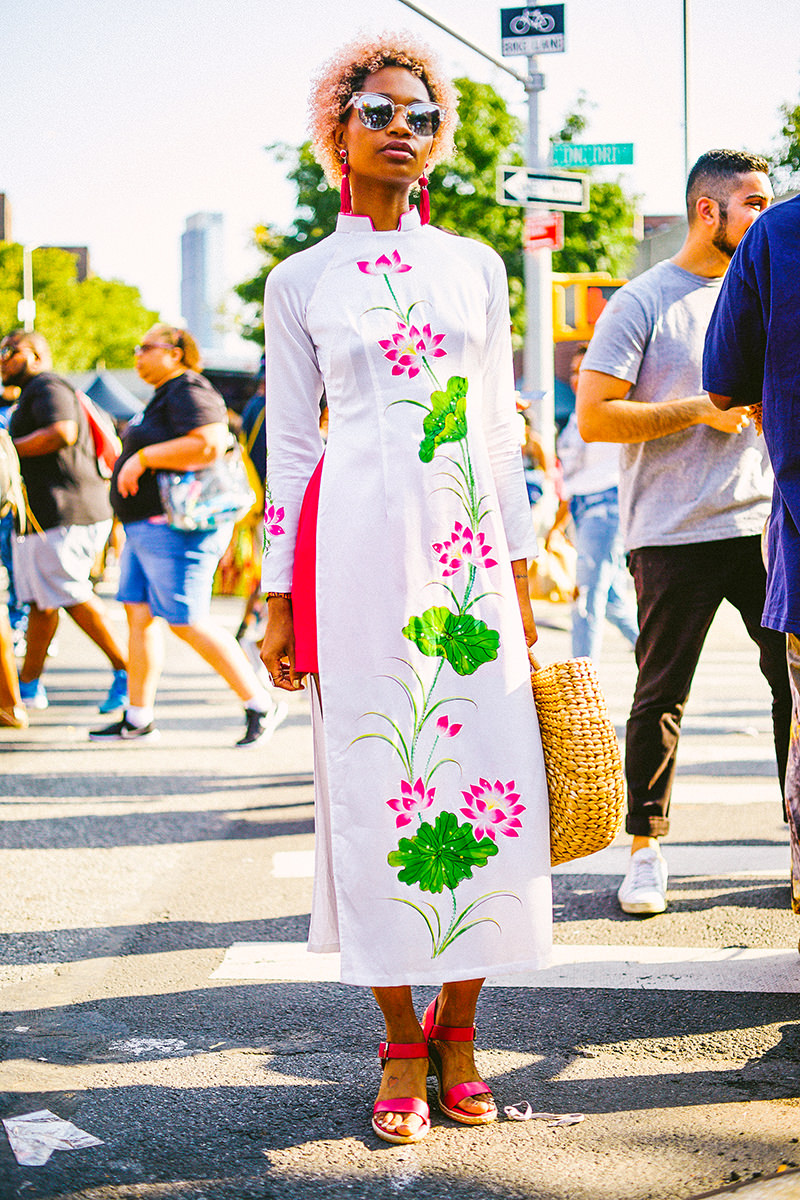
With this new series, MODA Blog invites you to take a break from school and work and into the world of procrastination. Browsing through blogs or even playlists can be a bore, and sometimes you need that tiny bit of inspiration. Each week, one blogger will share their current arts and culture obsession. Whether it be a Netflix show, Youtube series, or even an online gallery, we hope that you guys can become just as obsessed as we are, and sorry not sorry for extending your procrastination time. But let's be honest, since you're here on the blog, it's completely worth it.

This week, I am sharing my current obsession: James Corden's Carpool Karaoke.

First, let me give you a little background. James Corden is an English actor, writer, producer, comedian, singer and television host. He currently is the host of the talk show The Late Late Show with James Corden on CBS. Though many audiences, especially from the United States, are familiar with him in this capacity, James Corden is actually a very talented singer. He starred in Disney's film adaption of the musical Into the Woods playing the Baker, and even won the 2012 Tony Award for Best Actor in a Play for his lead performance in One Man, Two Guvnors. And Corden does not forget his musical roots by adding the segment, Carpool Karaoke, to The Late Late Show.

Now what is Carpool Karaoke you may ask? Well, it's a mini segment of the Late Late Show that will shatter your preconceived stereotypes of the singers you know today and continuously surprise you with each guest. James Corden gets famous musical artists like Justin Bieber and Adele and even some who aren't singers to sing like Michelle Obama and George Clooney with him in a car as they drive around Los Angeles! In this segment with Selena Gomez, they even try belting out on a roller coaster. During Carpool Karaoke, you'll see Corden joke around and get to know his guest(s) in a more natural setting and still hear them sing their iconic songs. It's light and airy and will definitely draw out some laughs.

Here are MODA Blog's top 5 Carpool Karaoke picks!

If you liked what you watched, check out this link for a more comprehensive list!

Let us know in the comment section down below anything you want us to check out, and stay tuned for most posts in this series in the future!

Featured image via