From Italy to Harlem, the pain and rebirth of life comes forth once more in the art of the 2020s.
Read MoreReviewing Taylor Swift’s Sleepless Nights
Even if Midnights can’t always stick the landing, Taylor Swift continues to navigate her talent with hard-fought confidence.
Read MoreAlbum Review: <COPING MECHANISM>
Since the iconic era that was her 2010 release of ‘Whip My Hair’, Willow Smith, now musically known as WILLOW, has been making massive waves in the music industry. From her first formal album release of ARDIPITHECUS, to the release of the popular hit ‘Meet me at Our Spot’ in collaboration with artist Tyler Cole, Willow never seems to miss.
Her most recent project, <COPING MECHANISM>, was released on October 7, 2022, and I have listened to it approximately (or not so approximately) 21 times. If you are looking for an alternative-rock-punk-slightly-indie-lyrically-beautiful-innovative-upbeat-but-still-chill-subtly-emotional-rollercoaster-y album, this is the one for you. Willow’s notoriety for genre-mixing is apparent in this release, and her execution is exceptional.
The album begins with the banger that is “<maybe> it’s my fault” (racking up the most streams on the album by 3 million); ruminating over a bitter, romantic falling out, Willow contemplates whether or not she played an active role in its demise. Something we can all relate to, I think– overthinking to the point where we can’t recall whether we’re placing the blame in the right place. This song gives the listener a winding-up for the rest of the album, and rightfully so, with “Falling Endlessly” and “curious/furious” in succession as the second and third tracks. These two carry the angst of the beginning of the album beautifully, further illustrating what it feels like to be young and lost and feeling angry that you feel that way (looking at you, fellow Undeclared’s).
The next tracks, “WHY?” and “<Coping Mechanism>”, move us forward in our story past melancholy self-rumination and into a brief, apprehensive, angry revenge era before swiftly switching to a regretful wallowing with “Split”. This is easily one of my favorite songs on the album - not only is it catchy, but it brings us back into the window of self-pity, which unironically happens to be one of my favorite musical subjects.
“hover like a GODDESS”, the next track, is definitely high up there for me lyrically. Opening up with a potential reference to the song “Meet Me in the Bathroom” by the Strokes (another one of my favorites!), the song continues:
You're like the ocean, comin' and goin'
I wanna surf your waves to the shore
And find what lies real deep inside
I'll be the moon to your high tide
You're addictive, so indicative of my inhibitions
So clear, you couldn't miss them
“<ur> a stranger” and “Perfectly Not Close to Me” featuring Yves Tumor are the perfect examples of Willow’s affinity for genre experimentation; with a mix of heavy bass and producer Chris Greatti’s underscoring riffs, both songs give insight to what I hope the future of music looks like– unrestrained, the artist free from the confines of traditional expectations dictating what genre-specific songs should sound like. We see this a lot with artists that have genre-hopped, such as Taylor Swift and Fleetwood Mac, where criticism from an early fanbase can inhibit the endeavors of artists looking to branch out; of course, these examples don’t exemplify failure in any sense, but I don’t think that the animosity that they met when they were first experimenting is justified or motivating either. That’s part of the reason I love Willow - she has been unapologetically experimental from the beginning.
The album closes out with the pensive “No Control” and the, well, batshit “BATSHIT!”, touching on substance dependency as a coping mechanism (*cough* *cough*).
This album receives a solid, and slightly reluctant 4.5 / 5 stars; although I am more than tempted to bestow a perfect score on this masterpiece, I do think that some of the tracks are repetitive to the extent that upon first listen they can blend together. I don’t find this unpleasant, but it is the one and only criticism I have, so out of objectivity I feel as though it’s fair to include it.
Although I haven’t been listening to Willow for all that long, she has quickly become one of my favorite artists: dynamic, trailblazing, and with a talent for catchy beats and lyrics, I think everyone should give her work a chance. Go listen to <COPING MECHANISM>!!!
Album Review: Voyage
We all know ABBA in some form. If you don’t… you do. Trust me on this one.

Image Via
Since their conception in 1972, ABBA has found a way to permeate pop culture and media through their distinct, almost irreplicable music—a vibrant mix of pop, pop-rock, and disco. Unafraid to tackle odd subjects, such as kissing your teacher or happy vacations to Honolulu, their music spans far beyond chart numbers. Their song “Waterloo” having won the Eurovision song contest in 1974, and band members and songwriters Benny Andersson and Björn Ulvaeus having written the successful Broadway musical Mamma Mia! using their own discography as the basis for the soundtrack. And currently, the band is developing a stage performance in London that employs VR performance-capture technology to display the band in their prime via digital avatars, de-aging them back to 1979.
So let’s just say, ABBA found a way to culturally persist.
Now, nearly forty years following their last album The Visitors released in 1981, the quartet has returned from a four-decade hiatus with new music. Ready to embark on another musical journey with their latest album Voyage released November 5, 2021.
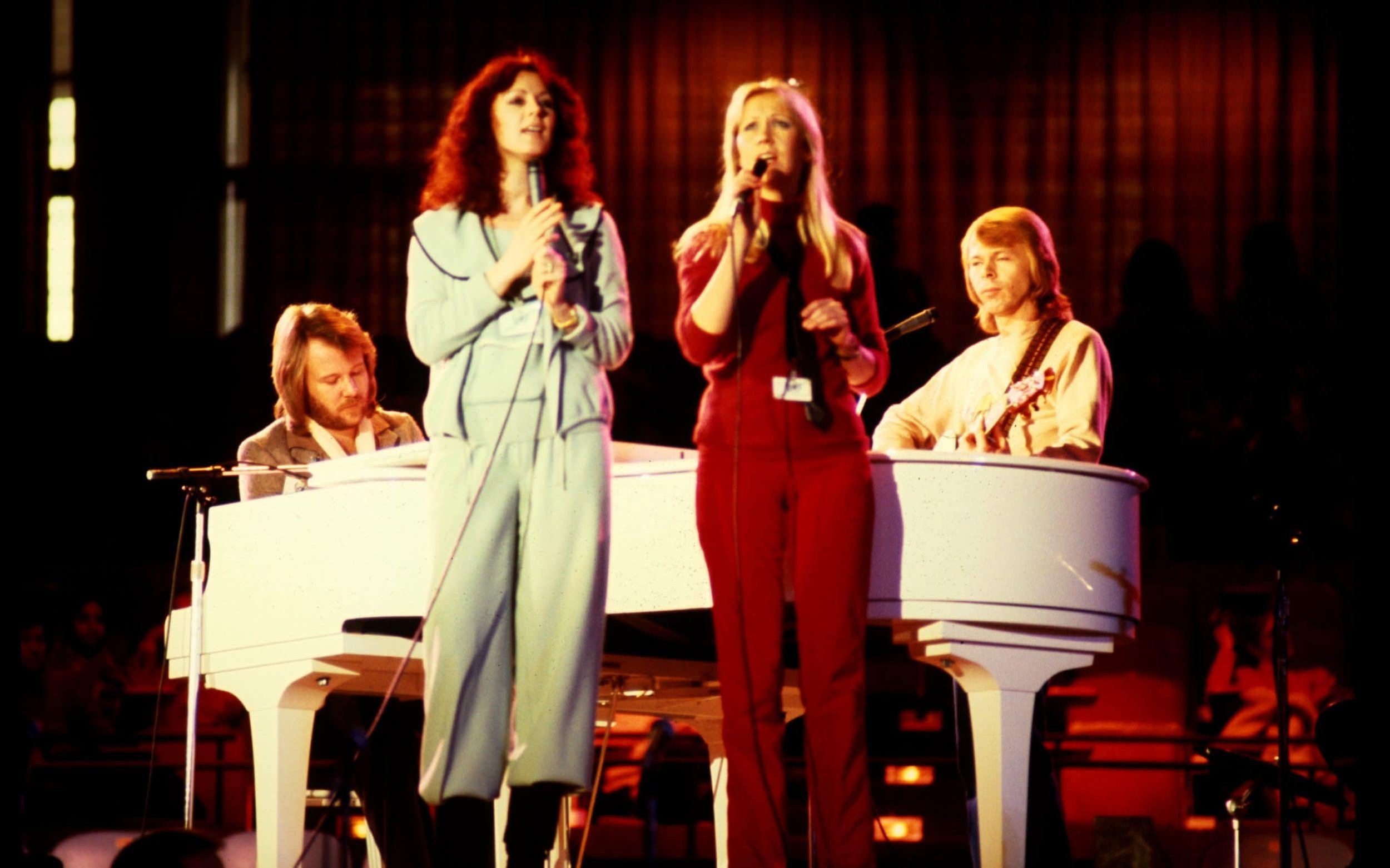
Image Via
For a long-time superfan of the Swedish sensation like myself, the release of Voyage was and still is my most anticipated release of the year. After marinating in this new music for a bit, it’s time I pull up my musical bootstraps and take a journey into this new release from my favorite artist, digging in and giving my review of the long-anticipated return of ABBA.
The first track and one of two promotional singles for the album, “I Still Have Faith in You” commences the band’s return to music with a ballad. The introspective lyrics, written by band member Benny Andersson, focus on the current of time and how faith and trust remain despite the separation of time or shared animosity, reflecting the trajectory of the band’s relationship since the 1970s. This connection to the band is alluded to in the chorus with the lyrics: “We have a story/And it survived/And we need one another/ Like fighters in a ring/ We’re in this together.” With a beautiful piano track, this anthemic song commences their return with the reminder that ABBA will remain together despite distance or separation. Also, this song makes history as the first ABBA song nominated for a Grammy award, nominated for Record of the Year.
ABBA detours from their typical sound with “When You Danced With Me” leaning into Nordic folksong for inspiration. The reminiscent song details someone speaking to a long-gone lover, asking if they miss the times they danced together at the Village Fair. However, the Nordic folk sound gives this reminiscence an optimistic swing, making their curiosity about their lover almost supportive. This contrast is what I find makes this song an ABBA song. The focus on heartbreak and longing underscored by optimistic drums and synth presents the downfalls of love, such as losing a lover, as a moment of profound affection.
Suddenly, it’s Christmas time. The album shifts tonally at this point with the third track, a Christmas song of all things. I can understand why there is a Christmas song, as the album was released just before the holiday season, but the song itself is lackluster. On their first voyage into the Christmas music market, the song “Little Things” sings of Christmas mornings and the bursting sounds of ecstatic children as they giggle and yell of gifts from Santa. A simple piano track with an outro sung by a children’s choir, the hymnal song is considerably run-of-the-mill by comparison to other Christmas songs of the same nature. There is nothing original to it, riddled with holiday clichés and a simple melody that fails to do anything musically authentic compared to other songs by ABBA and other Christmas songs. This song is also tonally inept compared to the rest of the album, pandering to a new holiday audience without considering its own originality beforehand.
In the same vein as “So Long” and “All Is Said and Done” the fourth, fifth, and ninth tracks on Voyage can all be summarized as rock-piano stylings that reel you with addictive melodies laced with catchy lyrics. “Don’t Shut Me Down” and “Just a Notion” and “No Doubt About It” all follow what I consider—the ABBA musical formula. Using a set of exciting narratives or ideas to write fun lyrics underscored by well-styled piano, drums, and synth. The result is a catchy song that anyone can enjoy. This formulaic but authentic means of creating music is uncanny in its ability to make chart-topping sounds.
Voyage thus far has introduced new outlets of ABBA unexplored in past albums: new genres, sounds, and even subject matter. However, the album’s latter half returns to the introspective realm with the sixth track, “I Can Be That Woman.” The ballad is the story of a woman returning home, viewing her life through the contemplative lens of her failures with sobriety and the changes to her life in her struggle to overcome addiction. In a commentary for Apple Music, band member Björn Ulvaeus said this about the song: “Only we know what is fact and what is fiction about our life experiences together. It’s a kind of freedom that you get. With 70, you get that freedom.” This song, while musically simple, packs a narrative punch much harder than the typical focus of ABBA.
From this point, the following two tracks maintain this somber subject matter established with “I Can Be That Woman.” Almost tangential to “I Can Be That Woman” the seventh track “Keep An Eye On Dan” deals with familial change, marital issues, and personal struggle. In contrast, “Bumblebee” reflects on catastrophes of climate change. Both songs present a new maturity to ABBA not seen in the past, upheaving the process of traumatic personal struggle and even treading into the waters of social commentary with “Bumblebee.”
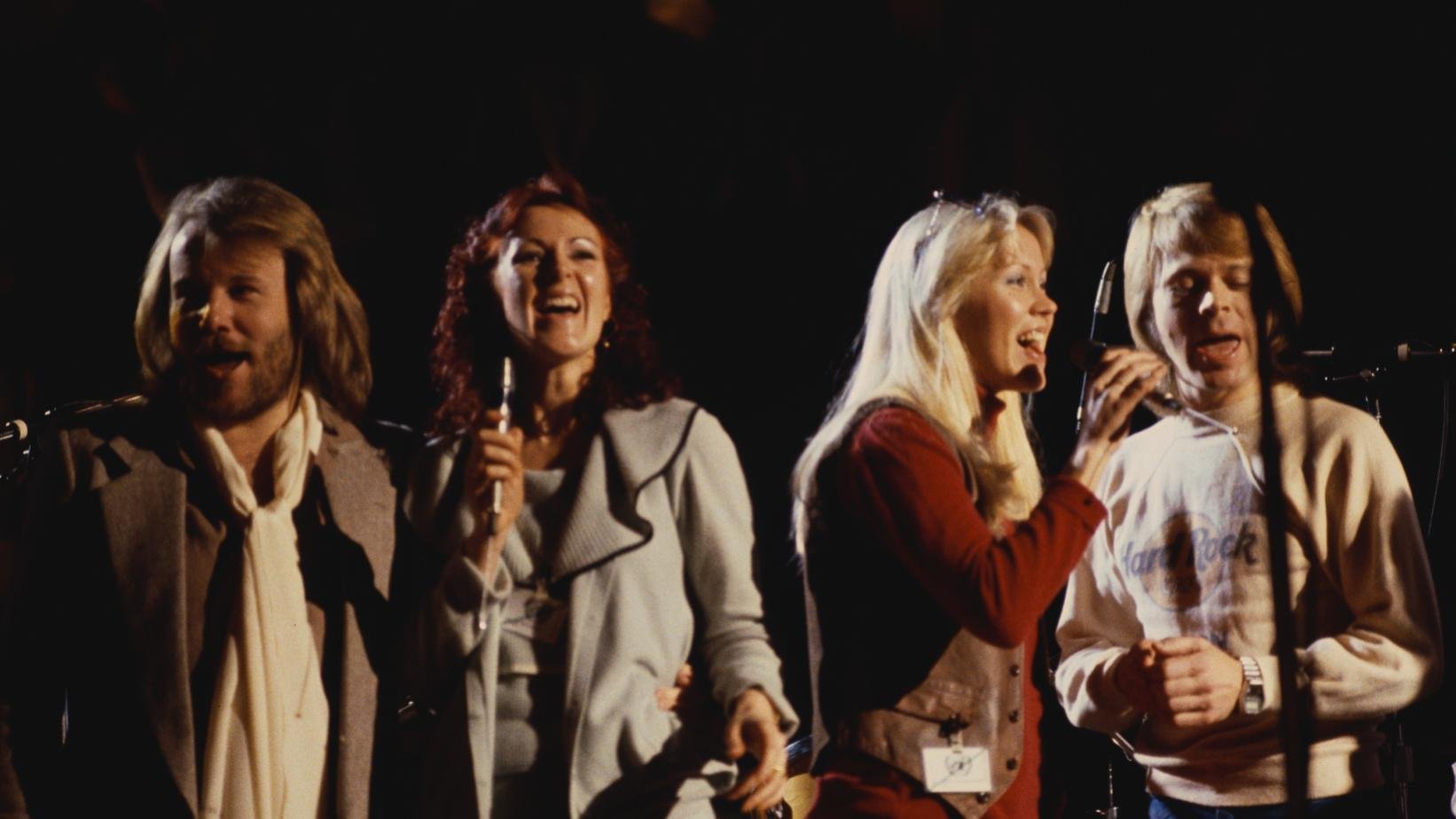
Image Via
Voyage by ABBA consists of the old and the new. Nostalgia is peppered throughout the album, encouraging fans to reminisce in the sounds of ABBA we’ve come to recognize. Yet, the album welcomes a new maturity, revealing an ABBA redefined by the time separated from the spotlight and each other. Voyage at its core is the story of ABBA’s 40-year long journey after The Visitors. We, as the listener, are brought in to hear what changed and remained the same, to take a voyage through the experiences, the hardships, love, and loss of these four individuals after one of the most successful careers in music history, and to see where this career led them after that. While this album is far from perfect, it is the journey of the artistic transformation of ABBA as a band parallel to the personal developments of Agnetha, Benny, Björn, and Anna-Frid, as people.
Thumbnail image via
What (Taylor's Version) Can Mean For the Future of Pop Music
By now, the whole world has caught on to Taylor Swift’s plan to re-record her masters. Announced in August 2019, the plan to re-record her first six albums after their sale to Scooter Braun’s Ithaca Holdings (and their consequent re-sale to Shamrock Holdings) is now in full swing, with Ms. Swift having successfully released two of her six stolen masters—April 2021’s Fearless (Taylor’s Version) and November’s Red (Taylor’s Version). These albums have topped the charts, starkly contradicting claims that re-recorded albums were doomed to flop and delighting people everywhere in the process. The remaining four albums are consistently being teased across social media platforms, and are widely anticipated. In short—re-recording her albums has worked.
But more than being a brilliant and gutsy retaliation to a dirty legal move, the re-recording of Swift’s well-known old songs also represents a fundamental shift in pop music and modern mass-produced media as a whole. It’s no surprise to anyone that the modern music industry as well as modern media in general has become incredibly product-oriented— most dialogue centers around what will be released and when, and fans have become eager for “content” above anything else. This is not necessarily bad in and of itself, but it is incredibly interesting to see what Swift’s re-recorded music has begun to do.
It’s given pop music permission to grow.
Even the casual listener will notice that while many tracks on the re-recorded albums remain faithful to their counterparts on the original albums, many others don’t. There are “from the vault” tracks, which were previously unreleased songs from the time period of the original album, as well as remakes of old fan favorites. Fitting into both categories is perhaps the most famous example—the legendary ten-minute version of the cult favorite “All Too Well”. Originally a four-minute wistful track about lost love, the ten-minute version of “All Too Well” retains every word of the 2012 version, fitted neatly into a complicated, varied, tumultuous narrative of a relationship that grew and twisted and failed. The ten-minute version retains the wistful core of the original, but the darker elements that were subtly hinted at originally are fully fleshed out in the newer version, in long paragraph-like lyrical phrases like the ones explored in her folklore and evermore albums. It’s markedly different from Red’s original polished 2012 country-pop release. And, of course, it’s sung in Swift’s current voice.
Most importantly, though, the whole world loves it. There were SNL performances, a full short film starring two very well-known actors with an in-person premiere, acoustic performances and Long Pond remixes. This is striking because, before the re-records began, no one expected that they would achieve more than a tiny fraction of the original records’ popularity, and yet people adore this. Some of this can be attributed to Taylor Swift’s star power, and more to clever marketing. But underlying all of that is a willingness by the audience to revisit previous creations and fully appreciate the changes that have been made, and that’s striking.
Because in a fast-paced economic system that makes art for consumption, we often think of art as a final product and of artists as “content creators”. This isn’t evil in itself, of course, but a lot is lost when art is thought of as more of a product and less of a process. To an extent, thinking of creative arts as a linear process ending in a polished product is counterintuitive; anyone who has ever tried to create something knows that art is never truly finished.
Swift’s success in re-recording her albums has shown that it’s entirely possible for both to be true. The commercial success of albums does not have to mean that they are never revisited; some of her best creations have come nearly a decade after their original release, and if she had stopped with the “final” version of RED in 2012, these startlingly masterful songs would not exist. Allowing her art to evolve has given a sharper and deeper meaning to what the songs originally were, and now that the public has received the re-recordings so well, perhaps it can signal a shift to this mindset in modern media as a whole. Hopefully, this will remind everyone of the magic that can happen when art is allowed to develop authentically, even after it’s passed its original deadline.
As I hit play on Red (Taylor’s Version) once again this weekend, I know it’s reminding me.
Thumbnail image via
Album Review: Ancient Dreams in a Modern Land
Ancient Dreams in a Modern Land is a return to form for Marina, filled with the oddball melodies and sass that propelled her to become Tumblr’s sweetheart circa 2012. Where it may fall short on lyrical ingenuity, it makes up for in sentiment—an ode to the deepest of heartbreaks.
Read MoreContemplating Lana Del Rey: Chemtrails Over the Country Club and Beyond
In May 2012, five months after Lana Del Rey’s breakout debut Born To Die, a 2006 demo album Sirens by May Jailer leaked online. With no known album cover, seldom-known track titles, and a still-uncertain release status, the fifteen-song compilation made as little splash six years after its inception. One thing was clear, however—May Jailer was Elizabeth Grant’s first stage name before landing on the now infamous Del Rey. Even more striking is how recognizable Grant’s artistic vision is in both projects, so many years and an entire career apart.
In contrast to the luxurious and cinematic soundscape of Born to Die, the exclusively acoustic Sirens sees Lana playing with the six cords she taught herself on guitar. She remains in her high and feathery vocal range throughout, only adding her future-signature reverb on one song. While in 2012 few would associate such an acoustic sound with Del Rey, if you were presented with only the lyrics of Sirens, it would be hard to place whether they were new or old songs.
Indeed, this first project plants the seeds to the themes and imagery that Lana would build her discography on: relationships with those on the wrong side of the track (“Is this what you wished? / To commit a crime?”); recognition of her darkest demons (“I’ve got a bad disease / will no one help me, please?”); her adventurous, American spirit (“Have a big degree in philosophy / But I don't know what I want to be / So I'm going into aviation”); and putting herself in the shoes of the married men she was seducing (“I have a great wife / And I'm tired of making / Decisions without thinking”). While later discussions of Del Rey’s narrative revolve around her submission to toxic men, May Jailer often argues for her own ambitions and desires, singing “My dreams are bigger than your junky pride.” Finally, in one of alternative music’s greatest premonitions, then twenty-year-old she declares, “Well, you know it and I know it, I'm gonna be a star.”

Elizabeth Grant would eventually find her way to the moniker Lana Del Rey, and even in the 2011 single “Video Games” that made her known to the world, Lana notes that she’s, “Livin’ for the fame.” But how has that worked out for her? Being the most successful alternative female artist of the 2010s and having Bruce Springsteen call you “one of the best songwriters” must certainly feel nice. But right off the heels of Born to Die, there were already inclinations that fame’s glamour was chipping away.
“I’ve been trying too hard with one pretty song,” Del Rey sings on “Ride” about the massive hit “Summertime Sadness” (albeit in its remixed form). By her sophomore record, Lana seemed to try and retake control of her narrative by sarcasticly singing, “I f**ked my way up to the top.” From there, however, the road continues to toughen for Hollywood’s “saddest, baddest diva”. In 2015’s Honeymoon, she admits, “I’ve got nothing much to live for ever since I found my fame.” By 2017, she was driving up and down the West Coast looking for a paparazzi-free shore to relax, eventually going through “13 Beaches.” In 2019’s critically-acclaimed Norman F**cking Rockwell, we find Lana buying a truck so the same paparazzi can stay away from her and her “Bartender” lover.
It is hard to talk about Lana and fame without bringing up her various... interesting moments that have drawn as much public attention as her music. From her hard-to-watch SNL performance, cultural appropriation accusations, to her (according to her) out of context, “I wish I was dead” interview, as well as her more recent tone-deaf “Question for the culture” and mesh-mask outings. She cannot let the music speak for itself, as the music is essentially the diary of Elizabeth Grant. It’s no wonder that lines like “he hit me and it felt like a kiss” have drummed up a frenzy from listeners.
Time and time again, however, she has refused to back down. There is no mystery as to why she covered Nina Simone’s “Don’t Let Me Be Misunderstood,” but it’s fair to say that people actually understood Lana Del Rey quite well. Regardless of how well-intentioned she may be, the spotlight continues to burn Del Rey again and again. Either way, fifteen years after putting herself on a path to stardom, on Chemtrails Over The Country Club, Lana Del Rey continues to wonder if she can handle the firestorm of fame.


Straight from the opener, Lana places herself thinking about the good ol’ days of being a waitress at nineteen: “I wasn't famous / Just listening to Kings of Leon to the beat.” While Del Rey is often characterized for her nostalgia for bygone eras, here the nostalgia is vivid and grounded. Her strained, high-register and whispery vocals struggle to fit some syllables into the melody. The instrumentation is sparse but builds into a stunning bridge. Despite its oddity, you get exactly what Lana means when she sings, “Somehow it made me feel / Made me feel like a god.”
From there on, the album’s title track is similarly nostalgic—though it is present-day Lana with her jewels on and under the chemtrails. There is a tinge of self-awareness about her privilege, and Lana continues to battle popular conceptions as she proclaims, “I'm not unhinged or unhappy, I'm just wild.” I don’t think anyone knocks her for being a free spirit, but the track serves as a dreamy encapsulation of the bubble Del Rey inhabits.
Lana then rides her “little red sports car” to new frontiers. The sultry “Tulsa Jesus Freak” continues the album’s growing sense of uneasiness with an interesting use of autotune and heavier instrumentation. The track’s layers of vocals and giggles are a sweet contrast to the oddness, quite fitting as Lana reassures her lover to not “be afraid of our love.” Although the next track, “Let Me Love You Like a Woman,” was the album’s first single, its piano-driven simplicity best fits within the context of the record. Lana is clear in her desire to leave LA and “talk about the good ol’ days.”
And so the record continues its trek across the Midwest with “Wild At Heart.” More than looking for new scenery, it’s clear Lana is running from fame’s exposure, as she croons, “The cameras have flashes, they cause the car crashes / But I'm not a star.” Lana’s versatile voice shines over the track’s country-tinged guitars. The chorus sums up her polarizing career aptly: “If they love me, they'll love me / 'Cause I'm wild, wild at heart.”
Jack Antonoff’s touch is best demonstrated in “Dark But Just A Game” with lovely percussion and synths. Lana battles with the “price of fame”, promising that, “I'm not gonna change/ I'll stay the same.” It's up to you to decide if that is a positive statement. The beat switches up into the more folky chorus is a stunning continuation of the album’s sonic themes, and from there Antonoff and Del Rey continue with the fragile “Not All Who Wander Are Lost.” Despite its bumper-sticker title, Lana manages to stray from too-cliche lyrics (though “'Cause every time I said no / It wasn't quite what I meant /If you know what I mean” certainly requires a doubletake).
The album continues to slow (stall?) with “Yosemite.” There is certainly a beauty to the track’s simplicity, as Lana manages to boil down love to its most tender sentiments. Even so, lyrics like, “We did it for fun / We did it for free / I did it for you / You did it for me” would not pass if it were not for Del Rey’s phenomenal melodies. However, sometimes such raw feelings don’t need the most complex lyricism to capture. To this end, “Breaking Up Slowly” is a simple country ballad that cuts straight to the point: “It's hard to bе lonely, but it's the right thing to do.” Nikki Lane and Lana sound beautiful together in the chorus, which makes the track’s short length a bit of a letdown.
On the other hand, “Dance Til We Die” goes on for long enough, particularly for being so far down the tracklist. Still, on its own, the track offers some of the album’s most beautiful moments. The chorus’ sax and optimism is fantastic. Carrying on the album’s themes, Lana is clear about feeling “burdened by the weight of fame.” Finally, the track’s bridge picks up with the best country twang, so good in fact that you wish the entire track had been that tempo.
Throughout the record, Lana namedrops many of her inspirations (Joan Baez, The White Stripes, Stevie Nicks, Tammy Wynette, etc.) so there is no surprise that Lana chooses to end an album about fame with a cover of Joni Mitchell’s “For Free.” Lana hands the mic over to Zella Day and Weyes Blood for most of the track, with the latter having the last word of the entire record. While the track is by no means a standout cover, the original’s classic beauty is undeniable and both Zella and Weyes outshine Lana (though it seems that is Lana’s intention). Certainly, for an artist seemingly at one of the most bright moments of her artistic journey, Lana is happy to share the spotlight with rising female singers. It’s a nice gesture given that she was not afforded the same in her early career.
I began this piece with an overview of Sirens not just to show off my Stan-level knowledge of Lana Del Rey, but in large part to demonstrate the full-circle moment that Chemtrails Over The Country Club is for her career. While it is easy to say that Chemtrails is artistically richer and more complex than Sirens, at its core is an artist that has promised to never change. To her point, I really don’t think she has. For an artist that has often been labeled inauthentic and lyrically shallow, the past two records that have been thematically not that different from her earliest work have nevertheless garnered her best critical reception.
Aside from the autobiographical nature of her work, it’s hard to separate the art from the artist with Lana Del Rey. I don’t mean to minimize the artistic merit of her past two records, given that I agree that they are stunning pieces of work. At the same time, however, Lana Del Rey received lashings from both the broader culture and critics for a significant part of her career simply because of who they perceived her to be. Still the same blonde, privileged girl at heart, it is puzzling to see the confusion around her statements and music. The theatrics of Born to Die now seems like a projection of her desires to be seen within the music industry that had cast her out for so many years. Seeing how much it backfired, Lana’s feelings that “maybe I was better off” make more sense and why her sound has naturally swung back around to the folkiness Sirens.
Chemtrails Over The Country Club finds Lana rejecting the fame that has enveloped her life, yet she is at once proving her songwriting and melodic talent, fifteen years into an unimaginably grand career. What Rock Candy Sweet, tentatively due out this summer, may dish out is probably already mirrored somewhere in Lana’s past work, but this does not make the future of Del Rey’s discography any less captivating.
Unedited featured photos all sourced from here.



Album Review: Whole Lotta Red

Image via
There is perhaps no musical artist in today’s cultural scene who can deftly shapeshift with more volatility than Playboi Carti. His ability to sprint in one direction, stop on a dime, and pivot to another in any number of wild, unforeseen ways, has contributed immensely to his mystique. Only a few months after releasing his 2018 album Die Lit, Carti began recording his next, which he proclaimed would be a more “alternative” and “psyched out” project that would propel his sound into uncharted territory. A few months later, in May 2019, fans leaked several songs he was looking to include on the album on YouTube, SoundCloud, and TikTok. Unreleased tracks such as “Pissy Pamper,” “Opium,” and “Taking My Swag” racked up millions of listens across myriad platforms, driving Carti to remake the album from scratch — yet another testament to his improvisational virtuosity as an artist. Then, in April 2020, Carti dropped “@ Meh,” which he purported to be his upcoming album’s lead single; in one more bewildering about-face, he would ultimately exclude the track on the final project.
Thus, it is only fitting that Carti’s relentless versatility is just as prominently displayed in Whole Lotta Red as it is in the whirlwind of events that culminated in its creation, and the opening track, “Rockstar Made,” functions as a potent overture to the album’s twisting turbulence. In the track, Carti’s vocal adeptly careens with cataract force from his signature “baby voice” — imparted within a lighter, higher register that is equal parts delicate and shrill — to a darker, more serrated tone laced with intentional straining and cracking. His chameleonic acrobatics are amplified tenfold in their visceral extravagance against a bold backdrop of clipping 808 instrumentals and menacing minor synth lines; the effect of Carti abrasively rasping out every last drop of sound from his being, as if his contorted vocal cords have been eviscerated from hours of screaming the song’s lyrics, transcends performance and comes to embody the artistic experience. “Rockstar Made” thus exemplifies the most enthralling aspect of Whole Lotta Red: it masterfully explores the multitudes of complex identities and sounds that Carti adroitly weaves his work with, paving the way for a musical masterpiece unlike any other.

Image via
The album’s first three tracks — “Rockstar Made,” the Kanye West feature “Go2DaMoon,” and the Gucci Mane-inspired “Stop Breathing” — showcase Carti at his rawest and roughest. He hisses, “I take my shirt off and all the h*es stop breathing,” yet he sounds as if he is the one who is on the cusp of losing his air, especially as he gasps out arresting lines like “Ever since my brother died / I been thinkin’ ‘bout homicide.” Carti’s trademark minimalistic writing — with choruses and hooks as repetitive as a Philip Glass string quartet — both contrasts with and complements this dramatic delivery style. Instead of unwittingly falling victim to meaningless tautology, Carti’s lyrics daringly lean into repetition with the conscious intent of instilling every single reiteration of every single syllable with an ineluctable dynamism. The risk pays off in spades, as the high-pressure tracks on Whole Lotta Red crackle indelibly with eclectic energy.

Image via
Just as Carti begins to lull the listener into his rhythm with the album’s opening trio of tracks, he abruptly yanks us into a different dimension — a grating outro filled with rasped repetitions of “whet” suddenly segues into “Beno!”, which opens with a cutesy and whimsical synth descant that would not sound out of place playing through the aisles of a candy store. He shifts his aggressive flow to a playful lilt, donning his idiosyncratic “baby voice” to maneuver through more metrically meticulous moments. Despite their lyrical complexity, lines like “All black 2-3, LeBron with the heat / I was just in Miami in the Rolls Royce geeked” begin to sound like simple playground chants and nursery rhymes because of the breadth of Carti’s sonic inventory. As the album progresses, we are plunged even deeper into this funhouse tour of musical madness. The sinister “Vamp Anthem” warps Johann Sebastian Bach’s “Toccata and Fugue in D Minor” into a harsh trap beat; the saccharine chord progression and pulsing instrumental of “Control” evoke the sound of early 2010s dance-pop; soft samples of Bon Iver lend a transcendental tranquility to the album’s closing track, the indie folk-influenced “F33l Lik3 Dyin.” Yet, as we are tossed asunder by the hurricane that is Whole Lotta Red, we never quite feel like we are losing sight of the album’s core meaning and sound — it is the perfect storm, an illusion of chaos orchestrated with scientific precision by our maestro.
Whole Lotta Red reaches its most immaculate heights when Carti acquiesces to the music’s hypnotic power, letting his innermost words and feelings spill out of him, unbridled and unchained. “Slay3r,” which features exquisite production by Juberlee and Roark Bailey, cradles Carti back and forth with its carefree and cartoonish ambiance, and he playfully responds with uncharacteristically jocular refrains of “Whole lotta mob sh*t / Whole lotta mob, whole lotta mob sh*t.” The juxtaposition of such a jaunty sound with the track’s devilishly dark subject matter and inspiration — the song pays homage to the thrash metal band Slayer — palpably demonstrates how twisted Carti’s sense of irony becomes when unleashed in full force. As listeners, we are even treated to an exploration of his vulnerable side; on the deceptively chill “ILoveUIHateU,” Carti pours out, “I mix all of my problems and Prometh’ until I roll on my death bed / Don’t get close, uh, baby, don’t get too close.” This riveting confession — of his potentially lethal drug use, of his fear of emotional intimacy and availability, of his awareness and deliberate ignorance of his self-destructive tendencies — paints a different picture of Carti than his “rockstar” songs do. We have peeled back the façade of Carti the artist to reveal Carti, the human.

Image via
The album reaches its zenith at the start of its final stretch with the track “Sky,” which is an ode to substance abuse and its escapist utility. After a disorienting intro that sounds vaguely like video game boss music, Carti comes in on the chorus with a mesmerizingly restrained sound that still sounds like it is on the verge of losing control. After tenuously riding the beat through the track’s opening, Carti hits its next section, which fittingly begins with an invocation to “Wake up!”, and he loosens up and begins to derail in the best way possible. Carti’s flow loses its smooth sheen and slowly becomes erratic and syncopated, navigating through intricate polyrhythms and oscillating between being behind the beat and being in front of it. He delivers lines like “Can’t f*ck with nobody, not even my shadow / I got on Ed Hardy, she got on stilettos” with a captivating fiendishness that puts the listener on edge in spite of the track’s relatively tame vocal and dreamy Travis Scott-like sound.
Whole Lotta Red garnered intensely polarizing reception upon release, with many diehard Carti fans proclaiming that the album is too splintered and possesses no particular unifying sound. While these traits may be undesirable in the rap mainstream, they are precisely the unique traits that give Whole Lotta Red its je ne sais quoi. The album is nothing short of manic and unhinged; it is a treacherous labyrinth, filled with everything, from Baroque polyphony to Atlanta hip-hop, and elevated by the incomparable temerity of Carti’s experimental performance. As he expresses in “Punk Monk” with the declarations, “I just worry ‘bout me” and “I don’t rap, I write poems,” Carti deeply values pure authenticity and innovative brazenness, and his new album reflects his commitment to keeping his head down, blocking out the noise, and carving out his own path in the rap industry. Whole Lotta Red stands by itself in today’s popular music landscape as a generational work of transcendent genius, unparalleled in its inventiveness, and listeners would do well to look past the smoke and mirrors of Carti’s carefully constructed madhouse to unearth the deeply emotional richness of his work.

Image via
Featured image via
Album Review: Copycat Killer by Phoebe Bridgers
The perfect EP to listen to while walking in the snow through campus, Copycat Killer by Phoebe Bridgers presents a distorted, winter version of some songs off of her album Punisher. This EP reworks some of Phoebe’s most iconic songs off of her last album, “Kyoto,” “Savior Complex,” “Chinese Satellite,” and “Punisher,” into almost ghastly versions of themselves. Stripped back and orchestrated, these songs turn Phoebe’s already depressing lyrics into an emotionally whimsical soundscape.

Image via.
The EP kicks off strongly by transforming Phoebe’s rock single “Kyoto,” into an encompassing ensemble with a slowed down tempo and a beautiful strings section that builds up throughout the song. The transition between the Copycat Killer version of this song and the Punisher version is one that resonates. This new version of “Kyoto” brings forth the ironically depressing lyrics that were being masked by the upbeat tempo in the Punisher version.
Transitioning into the next song off the EP, “Savior Complex,” reimagines another Phoebe Bridgers single into another magnetic and introspective song. The video for the original song, directed by no other than Phoebe Wallace-Bridge - in an ironic name play - shows Phoebe’s false sense of identity in helping, specifically a dog in the video. This song further plays on Halloween themes, which are present in many of Phoebe’s songs, as well as in her cover art and promo. Exploring death and the haunted seems to be a recurring theme in Phoebe’s music, which is made more apparent by the haunting resonance the Copycat Killer EP embraces.

Image via.
The Copycat Killer EP version of “Chinese Satellite,” on the other hand, seems to transform another solemn song into a more upbeat rhythmic ballad. Finally, “Punisher” closes the album with an intimate ode to Phoebe’s biggest influence, Elliot Smith. The lyric that inspires the EP’s title “A copycat killer with a chemical cut,” Phoebe references herself as a copycat killer, as most of her music is directly influenced by Smith’s. The “chemical cut“ part, Phoebe explains, ties to her bleached-to-no-return hair. This is something I, with my chemical burns on my scalp from bleaching so much, can sadly relate to. With Copycat Killer, Phoebe certainly brings us along an amorphous soundscape journey full of lust and longing. If you ever feel like crying, you now know what to listen to (or at least I do).
Featured image via.
Album Review: songs
There are few voices in the indie music sphere right now more captivating than Adrianne Lenker’s.
If the name doesn’t ring a bell, maybe you’ve heard of her band, Big Thief, the Brooklyn-based quartet who broke onto the scene in 2016 with their critically-acclaimed debut album Masterpiece. Since then, the group has released three full-length LPs— Capacity in 2017 and U.F.O.F and Two Hands in 2019— and Lenker has put out two solo albums of her own— abysskiss (2018) and songs (2020). (So it’s safe to say she’s been busy.)

Adrianne Lenker, photo by Genesis Báez
Lenker recorded songs in the spring of this year, in a one-room cabin in the woods of Western Massachusetts during the early days of the pandemic. She had escaped to the woods seeking a safe haven where she could recover from various disappointments that had recently arisen in her personal life, such as a canceled tour and a broken heart.
songs’s beauty lies in its ability to perfectly encapsulate the nuanced intricacies of human emotion in such a bare-bones, simple fashion. Lenker wrote nine of the eleven songs on the spot, and recorded the entire album using only her voice and an acoustic guitar. Most of the songs’ intros and outros are characterized by the soft strum of guitar strings and the occasional hollow pitter patter of rainfall or rustling of leaves in the background. The ambient nature sounds carefully layered over simple, almost austere melodies grant the listener a fully immersive auditory experience without drawing attention away from the rawness or intensity of Lenker’s lyricism. Its understated transitions make for a progression that feels remarkably fluid and natural yet unwaveringly intentional; each track seamlessly ties into and expands upon the themes of its predecessor without ever feeling repetitive or unnecessary.
The opening track, “two reverse,” is like a gut punch and a warm embrace all at once. Lenker manages to tackle sadness, longing, nostalgia, intimacy, isolation, introspection, and the search for beauty and purpose where there appears to be none— all in the span of a mere 64 words. The second track, “Ingydar,” feels more like a sort of patchwork quilt in song form— fragments of memories haphazardly stitched together to compose a singular cohesive whole. Lenker’s lyrical mastery truly shines in the verses & pre-chorus as she explores and reckons with the cyclical nature of life and death:
Fragilely, gradually and surrounding
The horse lies naked in the shed
Evergreen anodyne decompounding
Flies draw sugar from his head
—His eyes are blueberries, video screens
Minneapolis schemes and the dried flowers
From books half-read
The juice of dark cherries cover his chin
The dog walks in and the crow lies in his
Jaw like lead
The song comes to a head at the chorus, a couplet which echoes the overarching sentiment of its verses: “Everything eats and is eaten / Time is fed”. The ensuing track, “anything,” follows a similar lyrical trajectory as Lenker continues to flex her dexterity with turn of phrase via lines like, "Staring down the barrel of the hot sun / Shining with the sheen of a shotgun.” Despite being a breakup song, “anything” is actually one of the rarer more upbeat moments on the record. The track stands out due to its discernible pickup in tempo and uncharacteristic levity in tone:
I don’t wanna be the owner of your fantasy
I just wanna be a part of your family
—
And I don’t wanna talk about anything
I don’t wanna talk about anything
I wanna kiss kiss your eyes again
Wanna witness your eyes lookin
“anything” is Lenker’s personal recount of her recent breakup, followed by “forwards beckon rebound” and “heavy focus,” which reveal the emotional turmoil Lenker experienced in the aftermath of said breakup. The sixth track, “half return,” follows Lenker as she returns to her hometown only to discover that it no longer feels like home:
Minneapolis soft white snow
35 bridge, hometown
Half return, half return
-
Standing in the yard, dressed like a kid
The house is white and the lawn is dead
The lawn is dead, the lawn is dead
“half return” is a personal favorite of mine; I think it appeals to me because mourning the loss of youth, romanticizing the past, and longing to return to a place that no longer really even exists anymore— at least not in same the way that it once did— are all part of the universal experience of growing up, a process I’m currently undergoing right now.
The next track, “come,” is a poignant glimpse into Lenker’s mind as she seeks to reconcile herself to the concept of her own mortality. And if “come” is a reckoning with death, then “zombie girl,“ “not a lot, just forever,” and “dragon eyes” are all celebrations of life and love, with Lenker looking back fondly on past relationships and experiences and meditating over the ways in which they’ve shaped her. The closing track, “my angel,” is a decisively satisfying conclusion to the 39 minute rollercoaster that is songs; “my angel” is Lenker’s ode to hope and optimism and rebirth and nature and beauty and acceptance and divine justice and and finding purpose and finally coming into one’s self.
Ironically enough, songs doesn’t feel like a collection of eleven separate songs. Rather, the LP feels like one long song, almost a manifestation of Lenker’s stream of consciousness as she attempts to navigate through the trials and tribulations of life during unprecedented times— something pretty much everyone alive in 2020 can relate to. Songs is a tale of hardship and sorrow and grief and loss, yes, but it is also a testament to the human capacity for resilience and growth in the face of all possible odds, which is truly a beautiful thing.
Source: https://genius.com/20725064
Album Reflection: Clementine
Between the recent releases of albums such as Ariana Grande’s Positions and LANY’s Mama’s Boy, it feels as though I’ve been treated to a never-ending stream of new music from long-time favorite artists. However, my most anticipated release of the season was Grant Klein’s debut album Clementine. I discovered Klein through his band {Parentheses}, which fortuitously appeared in my Spotify recommendations in the spring. {Parentheses} quickly became one of my favorite bands due to their uniquely vibrant sound. Many of their songs, especially “It’s Always Sunny With You” and “Jackson Pollock,” have been on repeat the past six months. As such, I had high expectations for Klein’s first solo album, and Clementine did not disappoint.
Clementine, released October 30, features indie rock and pop influences. Given Klein’s piano expertise, it’s no surprise that the album relies heavily on instrumentals, with upbeat piano melodies being given center stage. While providing a unique musical sound of its own, Clementine also possesses a nostalgia-inducing familiarity. This is particularly evident in opener “Notes,” my personal favorite song from the album. While Clementine as a whole is quite energetic, “Notes” features a relaxing beat reminiscent of the background music featured in childhood favorite video games like Wii Sports Resort or Mario Kart. While Klein’s vocals certainly elevate the song from these classic video game soundtracks, this familiarity evokes cheerful memories of peaceful days long past.

Image via.
There is a uniquely youthful energy present in Clementine, which is conveyed through the songs’ high energy. Rock number “Melted” continually grows more and more fast-paced, conveying an appropriate sense of urgency as Klein worries that he is “melting through the cracks.” “Melted” is one of many songs on the album that demonstrates Klein’s skill in crafting an exquisite harmony between his vocals and the background instrumentals. Klein also proves a mastery of multiple genres of music. Slow-paced instrumental number “Hiding in Hydrangeas” is, in many ways, the opposite of “Melted.” Even so, it is just as well-educated, and despite a lack of lyrics, Klein is able to portray a youthful sense of wonder about the world. It’s a deeply beautiful piece, and Klein’s ability to navigate such a diverse range of music styles within his debut album is quite impressive.

Image via.
Ideas of nostalgia and youth are present not only in Clementine’s sound but also in its lyrics. “Annie” is a fun and lighthearted love song in which Klein declares “you make me stupid” to the titular Annie. He jokes about continually misplacing his belongings and forgetting important information because of the space that she occupies in his mind, noting that his “brain is filled with Annie.” This theme of youth is also present in “Cherry Tree,” the album’s lead single and most popular track. Accompanied by an incredibly addicting piano tune, Klein sings, “I’m stuck here without you, baby. And I’m learning that the truth will never change a thing.” Throughout the song, he muses on the lessons that heartbreak and the passage of time have brought him.
Clementine is a masterful debut album that signifies that beginning of an exciting and highly promising solo career for Grant Klein. Available on all streaming services, the album is highly worth the listen. Marked by a fresh and memorable sound, Clementine has a wide range of songs to suit all your musical needs, from study music to the perfect soundtrack for dancing alone in your room.
Cover image via.
Tchami's Long, Long, Long, Long-Awaited Debut: Year Zero
After Four Long Years, Blackpink Finally Releases a Full Album
Blinks rejoice.
Read MoreSuperstar Rina Sawayama’s Stunning Debut Album
No one is better at making songs you want than Rina Sawayama. A razor-sharp mastermind, Rina Sawayama is an explosive vision, a phoenix to behold. To say her work is meaningful is not enough; she cuts deeper and closer to the soul than any modern musical artist. She exposes the core of her Asian immigrant experience in the Western world, fixating unrelentingly on the psychological impacts of her identity and her unstoppable, authentic personality.

Image via
Rina Sawayama’s much-anticipated debut album SAWAYAMA blazed into existence on April 17 against a milieu of political clashes, the COVID-19 pandemic, and society’s rush to salvage 2020. For a precipitous age, SAWAYAMA is an iconic staple of pop music. Emanating from every corner are underlying tones of familial pain, struggle, and finding herself—from the self that studied at a historic, privileged institution like Cambridge to the musical, exploratory, creative, and rebellious self. The Japanese-born British artist’s incredible talent has grown since she began taking over the global music scene with her critically-lauded Rina (2017), one of the best debuts in recent pop history and the highest reviewed album of the year. On October 27, Rina Sawayama made her U.S. television debut with a performance of the smash single “XS” on the Tonight Show with Jimmy Fallon:
SAWAYAMA consists of 13 tracks full of her criminally deep and soulful voice and standout lyrics that take advantage of a bold rock-pop sound, with highlights like “Dynasty,” “Comme des Garçons (Like the Boys),” “Snakeskin,” “XS,” “Bad Friend,” and “Chosen Family.”
The emotional core in her lyrics makes her art different and more meaningfully complex than just pleasing hooks: “Dynasty,” “Bad Friend,” “Commes des Garçons,” “Chosen Family,” and “Fuck This World” all tell stories about her intergenerational trauma, a painful friend breakup she initiated, the double standards of female confidence, the joys of finding an LGBTQ+ family outside of her blood family, and the complications of the improvable but disappointing state of our world.
“Snakeskin” sounds like Rina is her own pop group, full of confidence, edge, and addicting beats—the composition sounds a lot like Blackpink’s, for example—and features her mother speaking in Japanese. Pixels, as Sawayama’s fans are known, embrace Sawayama’s tendency to “make decidedly uncool things cool,” including her visuals.



“When I was starting out, I remember looking around being like ‘There's not a single Asian pop artist that I can name.’ Hayley Kiyoko was sort of coming in a bit, but I was like "I can't name people who have pushed their Asian-ness to the fore and made art out of it." There's so many artists now. The first step was me talking about the fact that there's no representation, and then the second step was just being as successful as possible doing something that I would be proud of.” Quote via


Among many highly talented, driven Asian artists who are looking to impose their creativity upon the world and spread representation and their art, Rina Sawayama obviously feels pressure, but her results despite fear and anxiety are a testament to her distinct talent and passion. “Being east Asian and trying to be a pop singer in the UK where there is no precedent has sometimes been quite hard,” said the South London-based Niigata-born musician and model. “There aren’t many east Asian singers in the western pop world.” She emerges bruised but triumphant like a phoenix amidst a new generational set of difficulties that comes from one narrative of birth and origin in the East and growing up most of her life in the West.
You need to listen to the shiny joy that is SAWAYAMA. From personal experience, discovering her album six months after its release after waiting and many singles, listening will bless your Zoom fatigue away like it did mine. I love the pop rock ballads the most for their thoughtfulness, soothing sound, and the feeling that she is letting us into her consciousness, but there’s truly something in it for everyone.
Her work is so personal that it’s emblematic of a bright future where we can all be ourselves: not necessarily a standard canon of the Asian experience but simply art that is sourced from her, a Japanese-British woman. It conveys essential helpful truths lacking in global musical discourse, like her experience of her native Japanese culture with a Westernized gaze and her critique of the latter, how her confidence as a female is held to a double standard in my favorite track “Commes des Garçons,” as well as her fights with her mother. Sawayama’s greatest asset is that she is unafraid to be honest and faithful to herself; she lyrically, sonically, and visually embodies a necessary disregard for fear and irrelevant judgment, like in her luminous “Bad Friend.”
“[My music] is so fueled by thinking about what I and my mom would be proud of me doing because it was such a big risk to be a musician that I didn't want to sit around and do fluffy pop songs and hope it cut through. I knew that it took something like this to cut through, because there's just so much music out there now. Like so many things in life, it's driven by parental approval; so annoying.” Quote via

Image via
“STFU!” addresses Sawayama’s annoyance with microaggressions towards Asian women, yelling out her pain with grating nu-metal aggression. Her experience in the UK, which doesn’t have the American—albeit complex and confusing, à la model minority myth—narrative of the power of immigrants or as active of a national discussion around issues like racism, has helped her achieve new levels of race-related realizations that are groundbreaking. Sawayama studied psychology, sociology, and politics as a Philosophy, Politics, and Economics undergraduate and had to rationalize parts of her experience being othered by the Cambridge community despite living in the UK for 25 years. More recently, she’s challenged her citizenship-based disqualification from the BRITs and Mercury Music Awards, as she is British and has experienced most of her life in England though she has retained sole citizenship in Japan.
Such active xenophobia, stereotyping, and blatant racism prevalent in the music and fashion industry—plus the structurally ingrained sexism inflicted on young female artists—are challenging and inevitable but nevertheless could not stop Sawayama’s drive. Her music truly stands on its own as hyper-creative, visionary, and genuine in a way that speaks to the soul. Her endless chain of accomplishments like invitations to madebygoogle and Wimbledon, and her army of celebrity fans like RM, Jorja Smith and Charli XCX are mere testaments to her effort, skill, and success in achieving her goals.
“Ultimately, I want a young ‘me’ to be able to feel like they can be the next east Asian model and singer with red hair and tattoos,” she said in an interview with Dazed.

Image via
Sawayama was born in 1990 and started dropping music in 2013 at exactly the same time as many third-generation Asian artists like international sensation BTS. She shares a similar drive and unrelenting strength in the face of countless obstacles, and even wrote a currently unreleased song virtually with BTS leader RM, who is a professed fan of Sawayama.
These comparisons between Asian diaspora artists and artists in Asia are to disprove the childish illusion that artists of Asian descent are in any way the same. BTS, with its utter global dominance despite tremendous financial obstacles and universal industry doubts, in fact stands as a good contrast for the differences in being an Asian immigrant as opposed to living in Asia. Sawayama had to create a songwriting and fashion career against a completely different set of challenges than BTS because of her unique context, such as racist producers who stereotyped her work as an expression of just “a general Asian story,” as well as rampant sexism since the earliest days of her songwriting career.

Rina Sawayama and collaborator RM of BTS via
However, some commonalities BTS and Sawayama share despite much difference is a habit of firmly denouncing any prejudice in their professional lives and striving towards Grammy nominations.
Sawayama doesn’t just want to make people dance, and cannot simply produce pop that is inauthentic to her because of her personal stakes and standards. Her music grips you with its energetic sound to make you listen to a compelling and stunning narrative, teaching you about what it means to find your own on your own. Anyone is welcome, she sings in “Chosen Family.” It’s your duty to hear from such a legendary teacher. She has unique values, strong personal emotions, and a nostalgic yet cutting edge pop sound. She is Rina Sawayama, and she can’t stop blazing blindingly bright.

Image via
Feature image via.
Learning to Listen to Ambient Music
Brian Eno’s famous dictum that ambient music should “accommodate many levels of listening attention without forcing one in particular; it must be ignorable as it is interesting” leaves the music with a tightrope to walk: it must be interesting enough to sustain an attentive listener, but ignorable enough to serve as background noise. It also leaves a unique challenge to the listener, as the ambiguity inherent in the mission of Eno’s ambient leaves them to decide: how best to listen to the music?
While Eno’s formative experience with ambient – a friend left music too low to be fully heard while he was hospitalized after a car accident – wouldn’t come until later that year, and he wouldn’t consciously pursue something he called “ambient” until three years later, the beginning traces of his ambient work can be found in the 1975 album Another Green World. Typically lumped in with his early “vocal” albums, only 5 of the 14 tracks feature vocals; they are scattered throughout the album (unlike the Eno-assisted Low), as if to re-center the listening experience on something recognizably human in an otherwise alien landscape. A fixation with the inhuman would come to haunt Eno’s ambient works, but here his voice is there to ground us, and the album cover features humanoid figures, which, starting with Discreet Music, none of his ambient albums would. The vocal tracks are good as far as they go, if they sometimes seem a little de rigueur for Eno.

Image via
The instrumental tracks on Another, on the other hand, are as interesting as they are impossible to ignore. A melancholic synth fades in and out, backed by a hypnotic drum beat, as the music swells on “The Big Ship,” a track which seems to me an ode to the march of progress. It is one of the few hopeful instrumental songs on the album. “In Dark Trees” disturbs with its central riff, repeating, echoing xylophone and dark synth undercurrents, which defy the naturalness suggested in the title. “Sombre Reptiles” is similarly melancholic. But as the album progresses the songs lose their emotional clarity, prefiguring Eno’s later ambient works. “Little Fishes” is playful and small, a musical equivalent of a nursery rhyme. “Becalmed” and “Zawinul/Lava” build themselves up to no avail, ending as mysteriously as when they began.
Nonetheless Another Green World does seem to suggest a certain style of listening on the continuum of background noise and full attentiveness. The songs share a hypnotic repetition – reminiscent of the “Oblique Strategies” card (which Eno would develop with Peter Schmidt later that year) that reminds us that “repetition is a form of change” – that encourages a peculiar form of engagement. Especially in the first half of the album, where the tracks have a clear emotional tenor, the songs allow one to get lost in oneself, in one’s thoughts and dreams, while being unobtrusively guided by the music. The songs shape the experience without overpowering it, suggesting certain reactions without forcing them.
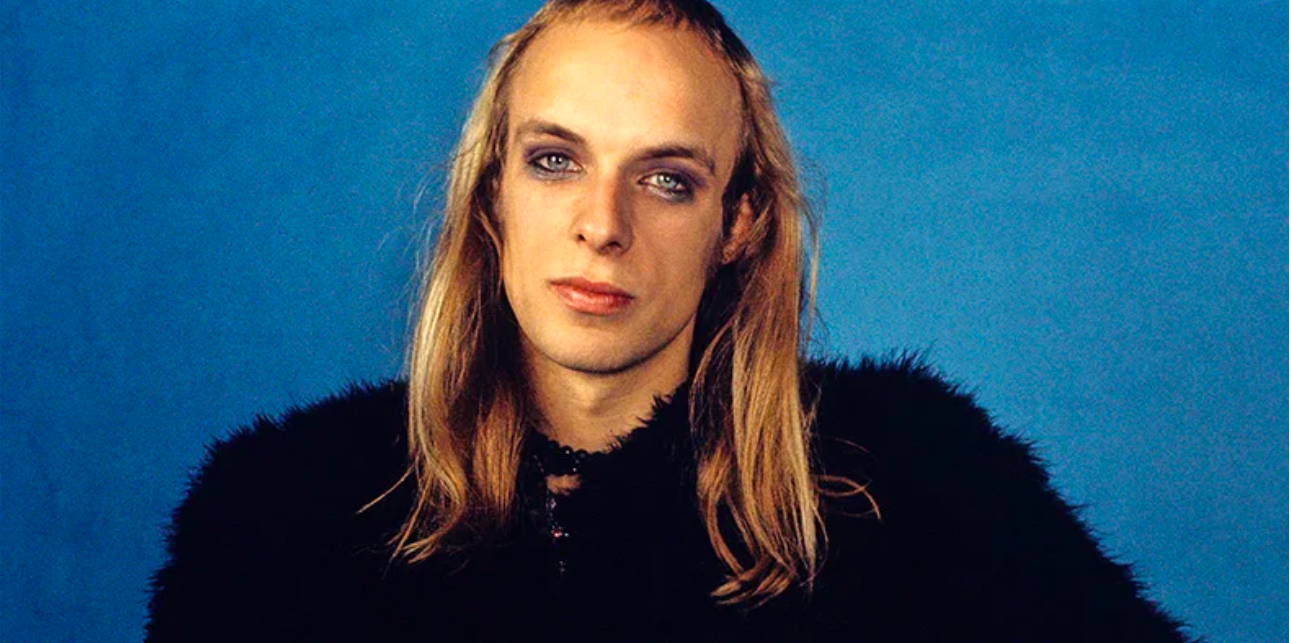
Image via
Discreet Music is where the vision of ambient first coalesced (though it still didn’t go by the name). The 32-minute title track is made up of a few synth notes gently floating in and out of consciousness, with minor variations throughout. The song seems to cyclically expand and contract, benignly peaceful – the experience can be transcendent. This would turn out to be at odds with the project of Ambient 1/ Music for Airports, whose liner notes are the source of the “ignorable as it is interesting” moniker. Where Ambient 1 defies the expectation that art be a self-contained entity, metaphysically higher than ordinary experience and utilitarian objects, Discreet Music exemplifies it. Ambient 1 becomes part of its environment, its sound mixing with it in ways Eno cannot control; Discreet Music is an all-encompassing aesthetic experience, despite its ignorability. Their disunity hints at the fundamental ambiguity in the promise of ambient, the alternative directions it can take; both live up to Eno’s phrase, but entirely differently. They demand to be listened to differently.
Ambient 1 shares a guiding premise with John Cage’s 4’33” (1952): to highlight the incidental sounds of the listening space – in Cage’s case, the conversation of those in the concert hall, seats shifting, coughs, staff moving in and out – thereby revealing the social construction of the concept of music. The idea that Cage’s piece is about silence seems to me a misinterpretation. The silence of the composer only serves to display the sounds of the audience, the ambient noise generated in the space. Once the composer has shifted one’s attention to it, the “non-musical” (i.e., ignorable) sounds of the audience can be heard for the first time, not as a distraction from the music but as constituting it. Like 4’33”, Ambient 1 gives its audience very little; even the titles have lost their descriptiveness (compare “1/1” and “2/1” to “The Big Ship” or “Unfamiliar Wind”). The sound, like that of 4’33”, is meant to be uncontrolled to some extent. Both thus share a central thought with the “Oblique Strategies” deck – to welcome randomness into not only the production but the product itself. Chance is not incidental but crucial to the art itself. But Eno’s ambient music after Music for Airports would lose this shared purpose with 4’33” as he pursued more of the aesthetic wholeness of Discreet Music.
These elements of ambient – and minimalist music generally – were roundly criticized by the music press of the time. It was uninteresting, unoriginal (mirroring the classic dig at modern art of “even I could do that”), in a sense hardly even music. Rolling Stone found Music for Airports boring, and a failure by its own terms. One critic compared a minimalist composer’s music to waves rolling on a shore: pretty, but meaningless. Meaninglessness was a common theme of the criticism, as ambient and minimalism lacked melody and progression, elements typically thought to impart meaning on a song. But these critics were listening for the wrong things; they hadn’t yet learned how to listen to ambient.

Image via
After his collaborations with Harold Budd and Laraaji on Ambient 2 and 3 (on the latter of which he is credited only as a producer), Eno produced his most haunting album of the ambient series in Ambient 4. Listening to On Land gives a disquieting sense of dislocation in time, a past sense of a future never come. It is the specter of the futures foretold in Blade Runner, Dune and Solaris, with their attendant mixture of futurism and dystopia, and confusion of the human and inhuman. What haunts us is a melancholy imposed retrospectively by an audience who knows that that future hasn’t come, that it won’t come. The music constantly shuttles us between this lost sense of the future and the past, the past of human vulnerability to the environment. The sounds of nature oppress on this album in a way nature rarely dominates us anymore.
The song titles typically suggest something natural, as though ambient here seems to mean simply capturing, rather than creating a soundscape. All human elements have been abstracted away, leaving only an eerie sense of the nature indicated in the titles. It’s as if Eno recorded a Jurassic swamp transplanted into the 70’s and early 80’s idea of the future, with its juxtaposition of the sounds of frogs and crickets (and are those monkeys on “A Clearing”?) and synths. On “Tal Coat,” for example, synths bubble up, as if from a swamp, in an odd mix of the protean and futuristic. “Lizard Point” and “Lantern Marsh” are oppressive and minimal, reminiscent of Burial. The sound opens up slightly on, fittingly, “A Clearing,” before the sun rises on “Dunwich Beach.”
I find Ambient 4 to be the best of Eno’s ambient series, but with it the fibers connecting the four albums of the series are definitively cut. No longer is the music ignorable. But if on 4 it becomes clear that Eno has moved beyond “ignorable as it is interesting” as a guide for the project, it still fulfills the promise of ambient in its own way. It shares Discreet Music’s desire to create a total musical experience, but lacks its trance-like function. Rather, ambient in On Land is, as noted above, about creating the illusion of having captured sound rather than having created it. One has a sense of having stumbled on a pre-existing environment. On Land, therefore, suggests its own pattern of activity and passivity, attention and distraction for listening, quite different from any of the other ambient works.
Despite the disunity of his projects, Eno’s ambient work instigated (and catalogued) a revolution in the uses of sound. He eroded how we thought to listen, like waves lapping on a shore.
Thumbnail via
Radiohead's Kid A, 20 Years On: A Sign of the Times Ahead
Album Review: Hollywood Park
The Airborne Toxic Event, a band named after a chapter from the novel White Noise, recently released their 6th album. The lead singer and founder of the band, Mikel Jollett, concurrently released his memoir, also titled “Hollywood Park.” Jollett was born in one of the most infamous American cults, Church of Synanon, and managed to escape with his mother and brother. Both the book and the album retell pieces of his difficult story and eventual life in the world of music. The album itself goes through a whirlwind of emotions, from intensity and joy to dramatic and painful songs; Jollett strives to capture the emotions of different moments of his life.
The first song of the album, Hollywood Park, focuses on an escape and the tragic loss of home, despite its upbeat and rock nature (with a mix of bagpipes.) With the drums beating throughout the song and a guitar solo, it’s a song you’d imagine people nodding their heads with, and you almost don’t notice the somber and desperate lyrics, unless you’re to the words carefully.
Brother, How Was the War diverges from Hollywood Park completely. Melancholy and nostalgic, the song recalls the turmoil of the Vietnam war from the perspective of a loved one at home. The second half of the song takes a turn with the addition of heavy guitar, adding to the tense undertones. Brother, How Was the War gives another glimpse at a possible moment from Jollett’s life.
The Common Touch has simple, light guitar in the background accompanied by the story of a young person trying to find the answer to how to get through life. Though the accompaniment is light, the lyrics challenge what seem to be the only available methods for someone to get through a hard life if they have said “common touch.” Jollett belts out “I swear I don’t feel a goddamn thing” describing his numbness to life.
The full album is worth the listen, even if it's not your genre, simply for the lyrics. Jollett, both a writer and musician with an intense life story, creates lyrics of poetry, leading to the album being words accompanied by complimentary music rather than the other way around. While the specifics of his stories may not always be relatable, the general emotions throughout the album are.
Featured Image via
Album Review: The 1975's Notes On A Conditional Form
We are right now in the beginning of a climate and ecological crisis
And we need to call it what it is
An emergency
These are the first lyrics in the 1975’s intro track on their new album, Notes on a Conditional Form, spoken by climate activist Greta Thunberg. The shift from this mindful and inspiring speech with an instrumental background to the punk, screamo-esque lead single ‘People’ is revolutionary. This contrast says more about our society and political climate than most modern media does, introducing the most intense head-banging and shrieking song The 1975 has ever produced. The beginning feels reminiscent of a 2000s film, feeling a cool as hell yet misunderstood vibe. Then, in a literal wake-up call, Matty Healy yells “Wake up! Wake up! Wake up!” into your ear with the intensity of a punk-rock singer, leading the song into a frenzy that soon becomes the antithesis of the first track, pouring out every bit of teen angst and misunderstanding into a cry for change and revolution.

Image via.
The rest of the album takes you on a frenzy of experimental sounds and varieties of influences from low-fi beats you can study to, in “Yeah I Know”, to the dancing pop beats of “If You’re Too Shy (Let Me Know)” which resonates completely with old The 1975 music. With beautiful backing vocals from FKA Twigs, this track mixes the classic pop-rock sound of The 1975 with an awesome saxophone solo and a catchy hook. Other featured artists include the wonderfully calming voice of Phoebe Bridgers in “Jesus Christ 2005 God Bless America”, one of the most vulnerable 1975 songs, which gives off an existential, intimate harmony with stripped back vocals. The irony with this song can be sensed in the fact that Matty Healy is a self-proclaimed raging atheist. Stating that this song is a Healy’s struggle between wanting to belong to a faith and striving for salvation, and his abiding atheism.

Image via.
I had the luck to experience this band live for the first time in my life last December at the Aragon Ballroom in Chicago and one of the songs that stood out to me the most was “Frail State of Mind”. Little did I, or even the band themselves, know how culturally defining the opening lyrics to this song would become in a few months, stating “Go outside?
Seems unlikely.” This statement screams social isolation even though it was written before the pandemic we are facing had even begun. It seems like this song is a shifting point in the album, although it is only the fourth song out of twenty-two bangers, the created sense of isolation and uncertainty continues to grow throughout the record.
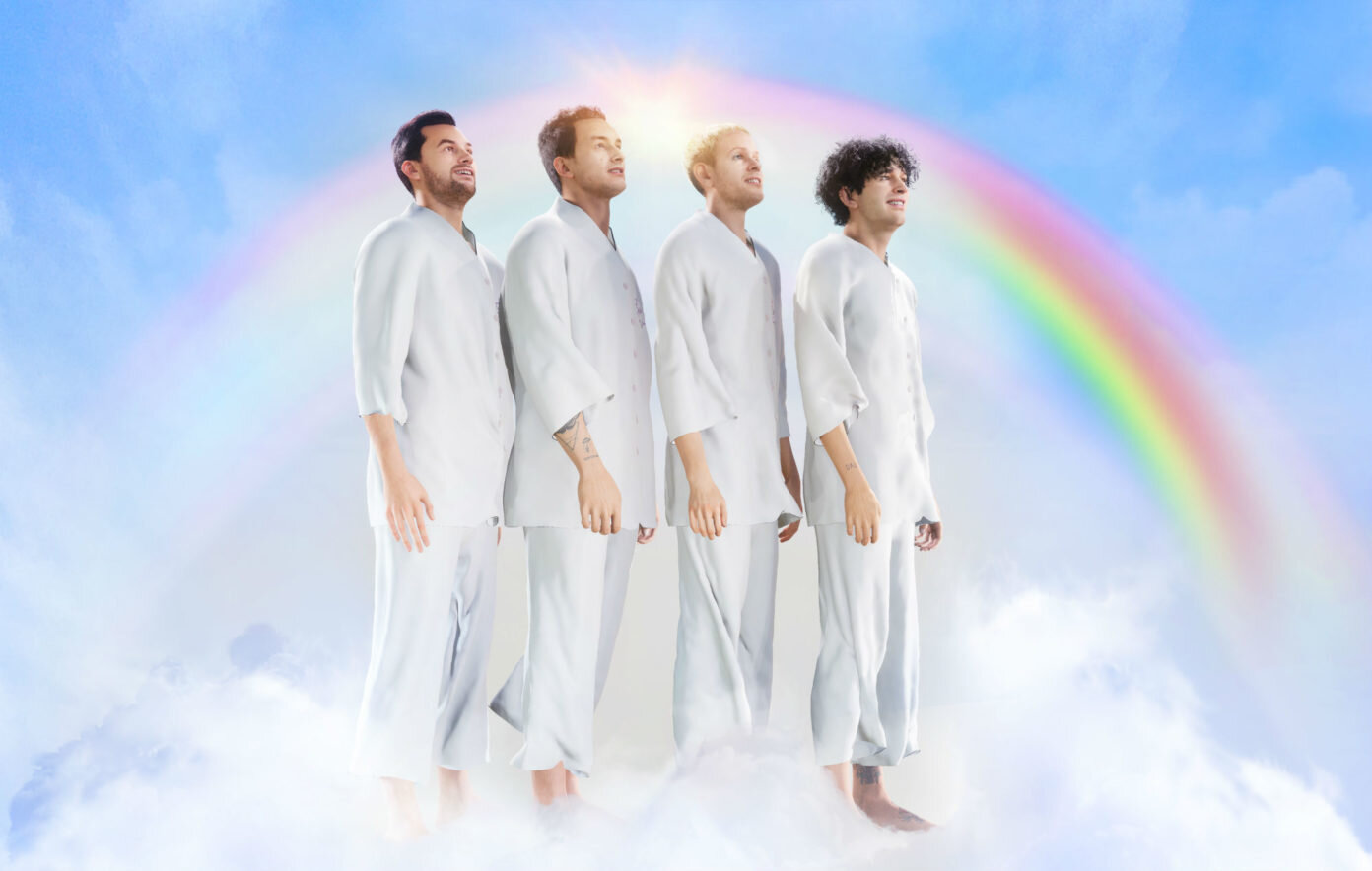
Image via.
The album finally comes to an end with their last single before the release of the record, “Guys”, the nostalgic and sentimental love song about best friends. In an interview for Apple Music, Healy states that “There’s not many love songs about some of the most beautiful, powerful relationships in your life,” that is, the relationship with your best friends. This song provides a wonderfully soft and pure romantic yet platonic reflection and end to a genre-bending experimental album that ultimately focuses on the current moment.

Image via.
Featured image via.
Album Review: Chromatica
If there is anything Lady Gaga has taught us it’s to never conform. At the start of the 2010s, she plunged pop culture into a new age with a form of flamboyance that was second to none. Her catchy hooks and punching production were nearly taken for granted until she left them behind for her pink cowboy hat and movie career. Joanne and A Star Is Born proved to give Gaga’s career a new wind following the lukewarm reception to 2013’s Artpop while also reinvigorating the hunger for her pop antics.
When “Stupid Love” leaked in January 2020, it was being played at runway shows before Gaga even got the chance to acknowledge its premature release. The hard hitting, joyous plea for love was masterfully designed to be an earworm, and it signaled the return of pop-glory Gaga. It is hard to separate the song from the hype of Gaga’s return, but when we do, the lead single’s lyricism leaves room for improvement, as the charm and tactfulness of previous efforts is missing (lest we ignore that “Stupid Love” sounds like a bad google translation of “Bad Romance”). Unknown to us at the time, the infectious but simultaneously underwhelming track would a faithful first taste to the record.
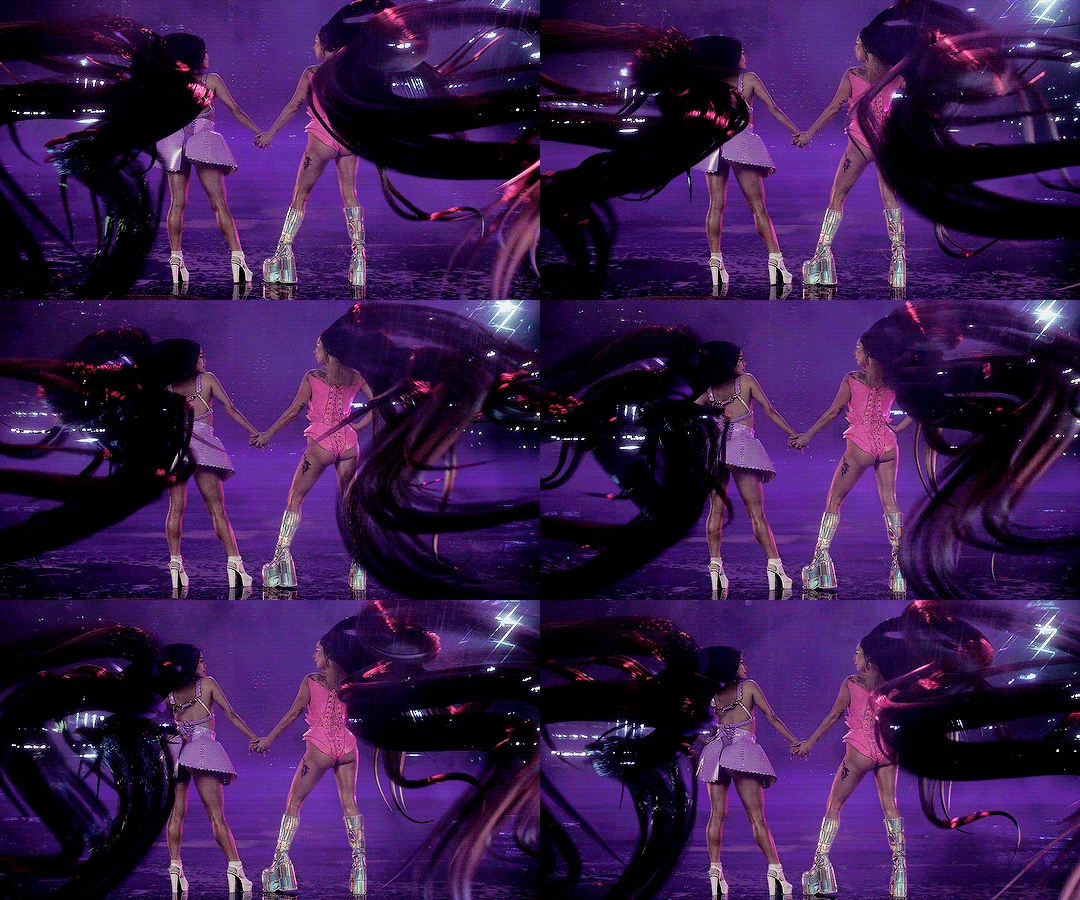
Image via
Once Chromatica was put back on course following its delay due to COVID-19, the next taste of Chromatica was one of pop’s most exciting collaborations since Gaga teamed up with Beyonce in 2011. The common denominator, Gaga, proves to hold her own on “Rain On Me” with her theatrical vocals that compliment Ariana’s more delicate contributions. The empowering anthem is fits perfectly with the carefree atmosphere that Ariana tried to emulate for 2018’s Sweetener. While the contrast between their vocals is neat, there is a sense that Ariana’s vocals are better suited for the production, whereas Gaga’s boldness seems to be seeking a bigger oomph. Rather than continuing with 80’s synth pop from “Stupid Love”, this second single introduced the most common influence of the forthcoming album—house music.

In an interesting fake-out, the album opens up with the first of three orchestral interludes. It is a stunning cinematic entrance into the world of Chromatica. The first official track, “Alice” is a fantastic 90’s banger and one of the best uses of said house influence. “Can you pull me out of this alive?” Gaga asks, the ambiguity of whether she is asking her lover or herself becomes a prominent theme of the record. Similar to “Rain on Me”s bridge, Gaga’s increasing use of talk-singing is prominent in the second verse and a good set up for the prevalence of this vocal technique. The two singles that follow set up the fast pace of the record, and without looking to carefully into the lyrics, the first half of the record is some of the best pop music in recent years.
However, Chromatica’s lack of ingenuity becomes most apparent during the back to back “Free Woman” and “Fun Tonight”. Both prove to be fine, mid-tempo house tracks, but neither go anywhere particularly exciting in the context of a Lady Gaga record. Gaga’s lyricism, “ I'm still something if I don't got a man” or “I'm not havin' fun tonight”, continues to pail in comparison to some of her best work, but there is a new sense of vulnerability and self-awareness that is admirable.
Luckily things begin to look up with the second interlude and tracks like “911” and “Paper Doll”. While the latter is not a career highlight, it holds its own among the best tracks of this album. The smooth transition between “Chromatica II” and “911” has rightfully gone viral on Twitter. The song’s robotic tonality and funky verses make it feel like it could belong on The Fame in the best way possible, and it proves that Gaga shines the more she leaves the standard pop bubble, perhaps that she built. “My biggest enemy is me” she repeats, and although it is as simplistic as the rest of the album, it’s one of the most impactful lyrical highlights of the album.
The highly anticipated collaboration with K-pop group BLACKPINK lands similarly to “Rain On Me” insofar as Gaga is able to create a pleasant contrast with her collaborators. BLACKPINK sound incredibly smooth and seductive on the verses.The lyrics are heavy on the candy metaphor (“Come come unwrap me”), but by this point in the record there is little need to wish for a lyrical masterpiece.
“Enigma”, like “Alice”, proves to be a more interesting incorporation of the house genre and keeps up the spirit of the record. The stabbing keyboard, sax, and Gaga’s soaring voice during the chorus are a perfect combo. It is clear that her voice has never sounded better. “Replay” is also another highlight, again hitting the best beats of house and vaporwave genres. Gaga’s voice fluctuates beautifully between her nasally register during the bridge and her theatrical vocals of the chorus.

The final interlude is once again an intriguing break from the anthems. “Sine From Above” continues the momentum that built during the second act of the record. Elton John’s contribution does mix as well as the other collaborations of the record, but he does no harm. The 2013-beat drop is euphoric, but it already feels dated. The lyrics are some of the more intriguing the record has to offer, and the theme of music’s saving grace is clear and beautifully stated. By the tail end of the song, Gaga begins to experiment more with an enigmatic outro that leads into “1000 Doves”. Like some other tracks on the album, this one does no harm but also leads us nowhere new or exciting.
Finally, in what may be one of Lady Gaga’s most standout tracks in years, “Babylon” ends the record on a high, joyous note. It is hard to look not notice the nod to Madonna’s “Vogue” (and that may be the point), but Gaga’s monotone delivery accented by a grand chorus, another smooth sax, and the record’s most energetic and creative lyrics lead to house-perfection. It makes you wonder where this type of eccentric songwriting and production was not given to Chromatica’s weakest links.

The toughest part of Chromatica is that it is clearly a foundation for Gaga’s best record. It is a fantastic 90’s throwback record, with clean and crisp production. Her vocals have never sounded more powerful, and there is no doubt that she had a vision and stuck with it. However, there is still a sense that the music can go farther. This may be due to a lack of Gaga’s own hands in the mix. While she is credited as a co-producer on nearly every track on both Born This Way, Artpop, and Joanne, Gaga is oddly missing from every track on this record outside of the interludes. The lows of the album lack the progression, or at least daring wackiness, of Gaga’s previous efforts. The album cover and visuals for the era have Gaga deep into the world of Chromatica—a visual sci-fi heaven—but the music itself feels very much like it is set in 90’s New York. Nevertheless, Gaga is right that she has fought for her dance floor, and her return to it is nothing but good news for pop music.

Image via
Images via
Earworms: The Unicorns
Pop music simultaneously has a bad rep and gets off too easy. It’s seen by many as vapid and simple, consumed and produced by mindless zombies; but at the same time, we’ll forgive anything for a good hook. Because of this we let our pop stars misbehave, and let their music bore us. Meanwhile, music’s critical apparatus sees itself as above pop, or, when it does deign to review it, fails to engage with it. We are left with a critical establishment, and a culture more generally, that sees pop as something to accept or reject wholesale, rather than something worthy of critical thought.
Recently, however, we’ve seen a surge of cultural criticism that takes pop seriously – and we’ve seen pop that deserves to be taken seriously, from Lemonade to Dua Lipa and Charli XCX and much, much more. (While the ice around pop culture began to thaw with the Frankfurt school, that trickle has transformed into an ocean in recent memory.) This influx of criticism suggests a blossoming awareness of the importance of pop. To that end, this is Earworms, where we think about pop in all its glory and, in this case, weirdness.

Image via
The Unicorns released their second album, Who Will Cut Our Hair When We’re Gone, during a strange time in indie rock. This was when Arcade Fire, The Decemberists, and the leaders of the Montreal scene (also home to The Unicorns) Godspeed You! Black Emperor, were taking over indie with their self-serious, capital-I Important albums. The Unicorns, equally as ambitious, went in precisely the other direction, crafting catchy, silly songs that belie their innovative structure.
Who Will Cut Our Hair follows a loose concept about the transition out of childhood that follows the acceptance of one’s inevitable death. The band use childlike themes (telling ghost stories around a campfire, contracting a case of the “jellybones”) to tell deceptively adult stories about the loss that accompanies the end of innocence. The album is book-ended by the outline of their story: “I Don’t Wanna Die” and “Ready to Die.” Their juxtaposition suggests the realization that an acceptance of death is the groundwork of really living – as Wilco put it, “You have to learn how to die/If you want to be alive.”
But a tight concept album this is not; the real story is their ambitious pop song-craft. They shatter any notion of traditional verse-chorus-verse pop. Take “Jellybones,” where they take a chorus catchy enough to sustain most bands for an entire song and immediately change directions from a puerile tale of nervousness around a crush to a wide-eyed admonition of the power of love. They apply this managed chaos to half-jokingly poking fun at making it big (“If we work real hard, we can buy matching clothes/for our live shows”), Magnolia-style washed-up child stars (FAN: “I hate you”/STAR: “I hate you too”), and the all-important difference between horses and unicorns (who happen to be people too).



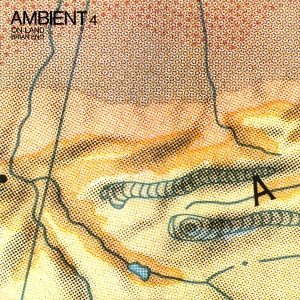


Image via

Their songs are wonderfully frayed around the edges, like in their frequent instrumental freak-outs at the beginning of songs, as if each band member felt the need to take turns making sure their instruments still work. But they can also show real virtuosity (not to mention versatility) when the interplay of drums, guitars and synths align; but it is never too long before entropy sets in again.
Centering the revelry is the by-turns productive and explosive tension between the two singers, Nick Diamonds and Alden Ginger. In their clashing sensibilities we find something like the locus of the band, where their push and pull – a balancing of noise and pop – results in the brilliant restlessness of their songs. They are neither in sync nor opposites which complete each other: too close and too far. Their relationship was also prone to devolving, as on “I Was Born (A Unicorn),” into petty squabbles. Perhaps they, too, were growing up on the album. Following a hectic tour promoting the album, the band quietly broke up. Nonetheless, Who Will Cut Our Hair When We’re Gone stands testament to a delicate process, and the great pop they made along the way.
Cover image via