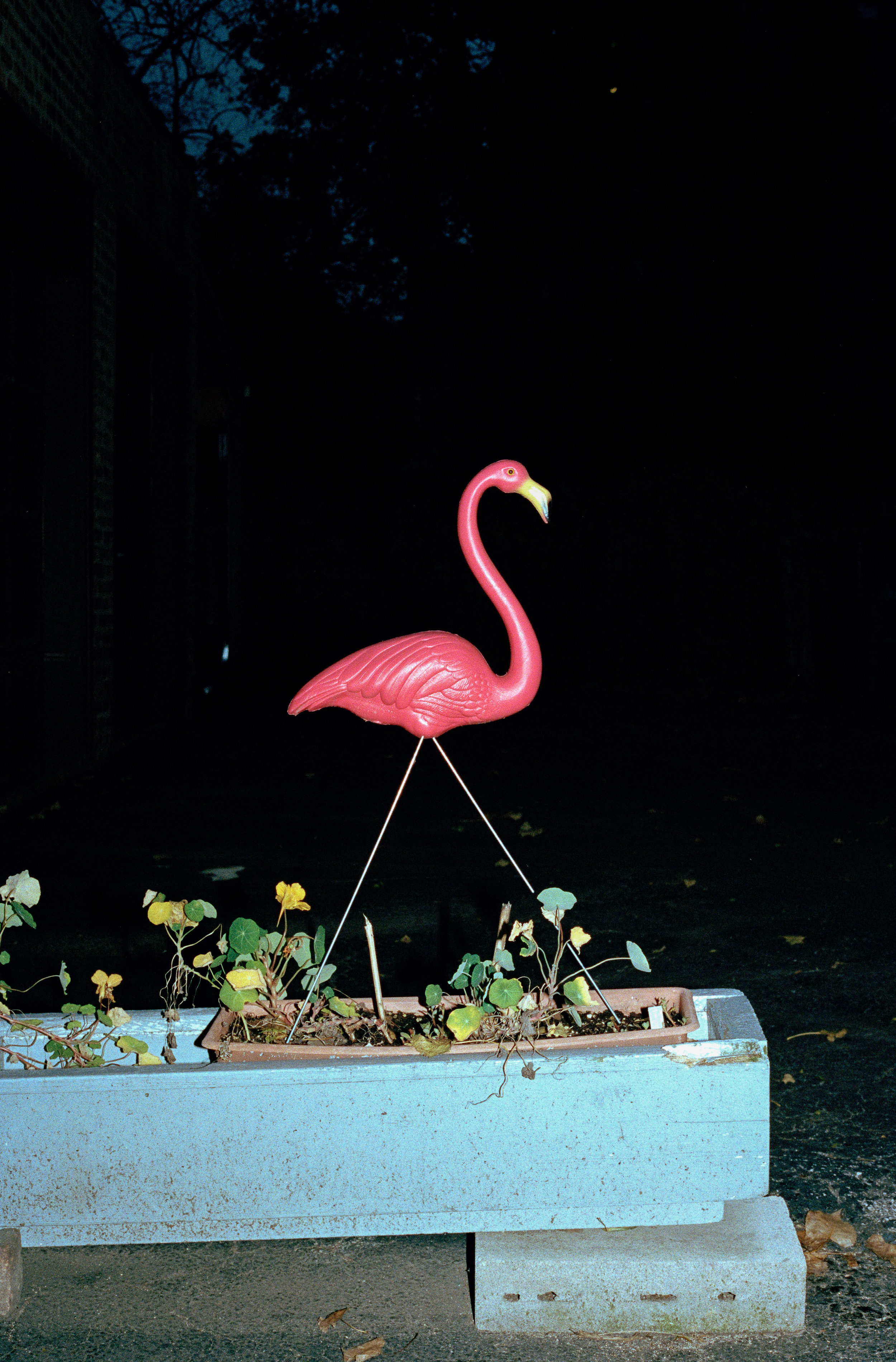
STICK TO THE CODE: “TAKE NOTHING BUT PHOTOS AND LEAVE NOTHING BUT FOOTPRINTS”
… and that’s exactly what I did.


STICK TO THE CODE: “TAKE NOTHING BUT PHOTOS AND LEAVE NOTHING BUT FOOTPRINTS”
… and that’s exactly what I did.
The entrance 0_0
I have no idea where to look at this from -_-
congrats! you’ve found the stairs
the dome (*_*) … but at night
the rest place of st. stephen’s organ
translation by kentaro: shibaraku —> “for a while”
final checkpoint :)
where are you? are you lost in your worries, anxieties, or frustrations? are you drowned in the tasks, assignments, and work of your mundane life? go out! observe the world! smile!
Read MoreOne of my favorite pass times growing up was flipping through my parents’ old photo albums and seeing pictures of them during their “prime.” Tangible documentations of unforgettable moments filled with pure joy and so much life as they navigated their teenage and young adult years. And though I’d always wished that there were more captured for me to see, what made the experience better was the added bonus of hearing the anecdotes that accompanied those memories. So despite having sat with this thought for years, I found that even more recently, all I could think about was how exciting it would be for me to start documenting my life in the same way.


Though, I don’t particularly consider myself to be one of those people who believe they were born in the wrong generation, as I like to think that others were much worse (to each their own I guess). There is simply nothing better than that nostalgic grainy 90s/ early 2000s digital picture quality or that of even older vintage film from the 60s/70s. What can I say? Photos like that simply make me happy and seeing them resurface has been one of (if not my favorite) throwback comebacks.

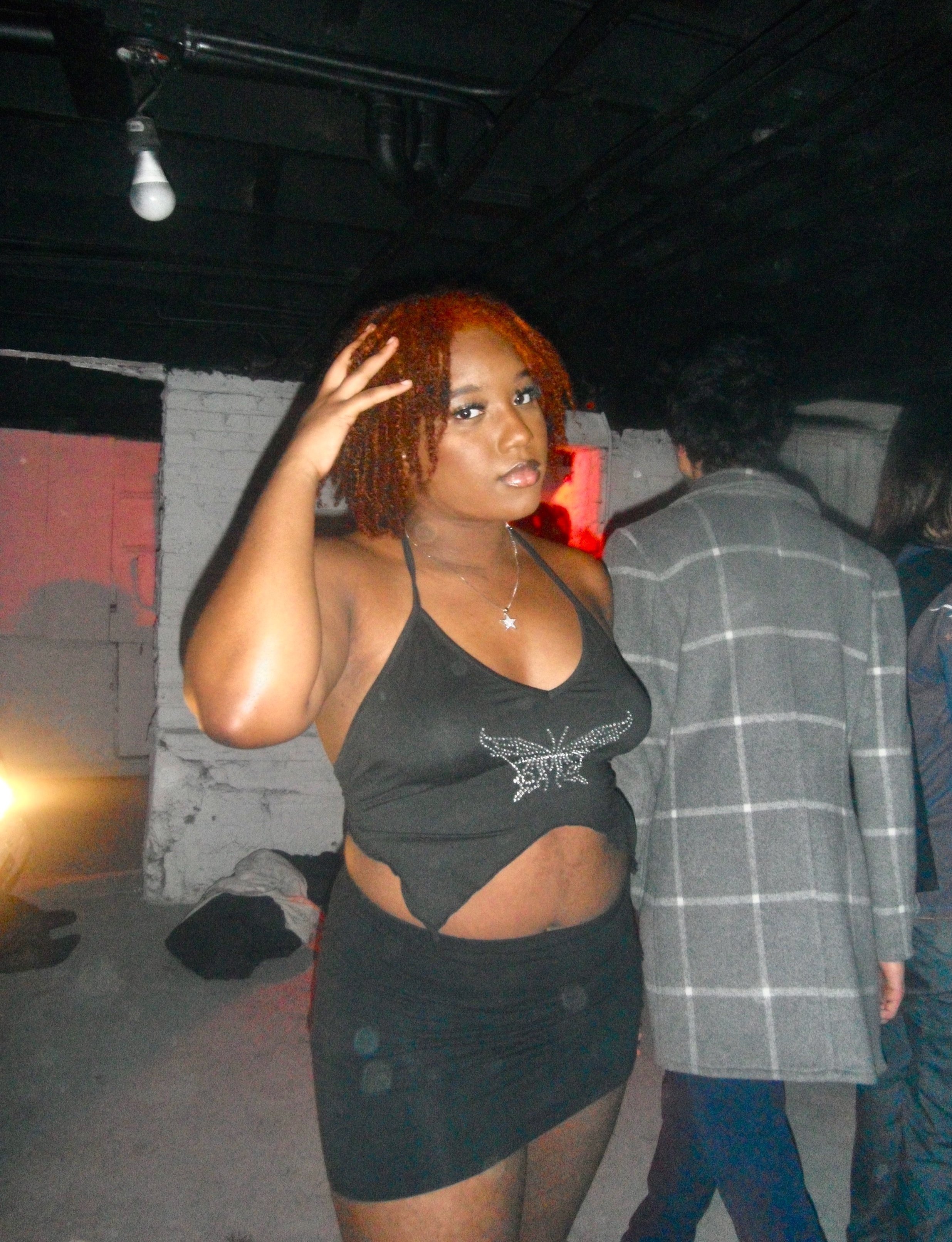

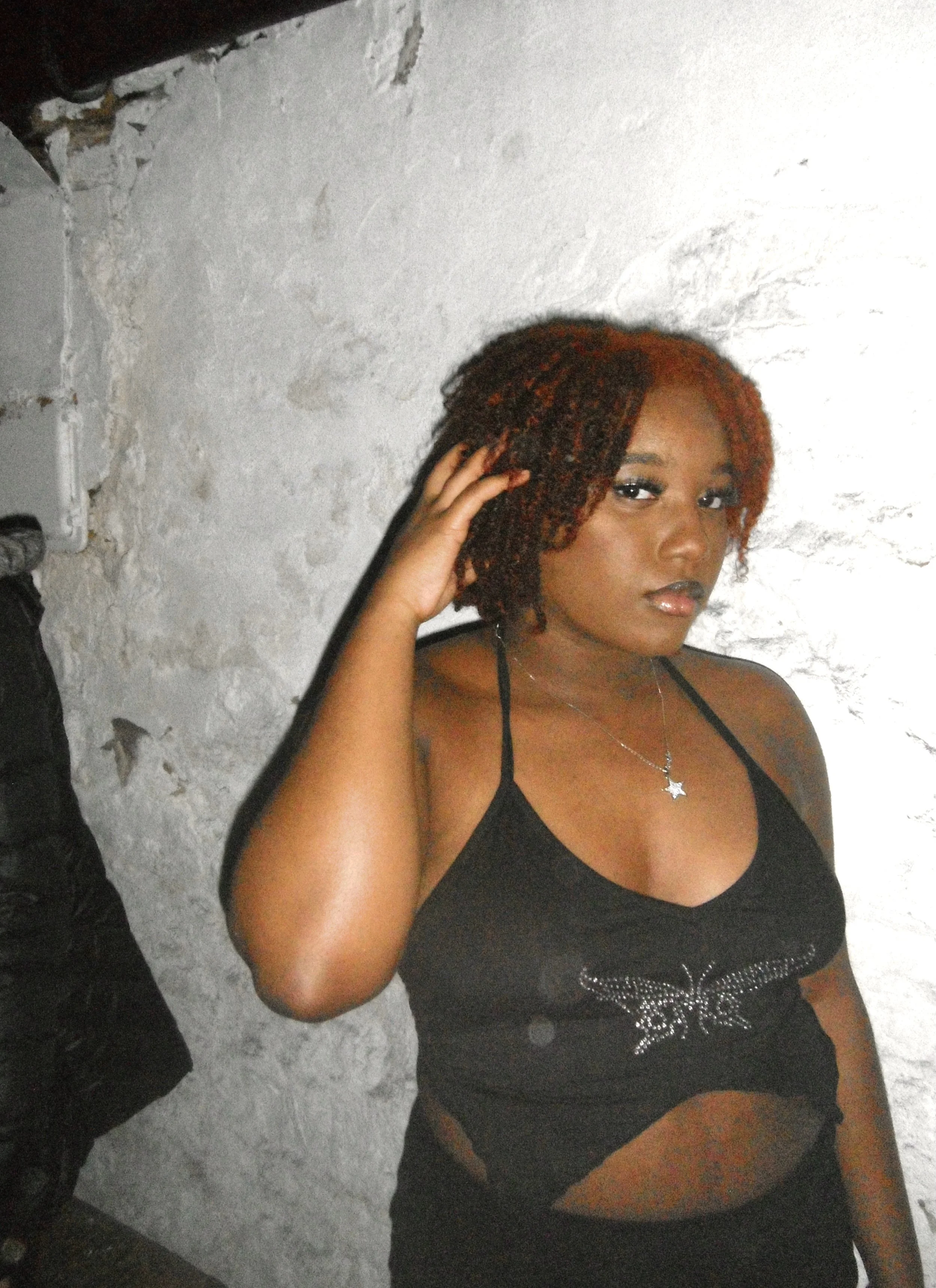
And call me basic, but I can’t lie, after seeing girls on my Pinterest boards and Bella Hadid thrive with their digis, I too needed to have one of my own. So over the summer, right before my birthday (that was the trigger lmao), I decided to bite the bullet and surf eBay, Depop, Etsy, and Poshmark, (you name it I was probably on it) until I finally came across one I loved. Quite literally my holy grail, my cherry-red Fujifilm FinePix digital touchscreen camera sold to me by a wonderful seller on Mercari. And not to be dramatic but I’ve never made a better decision in my life!


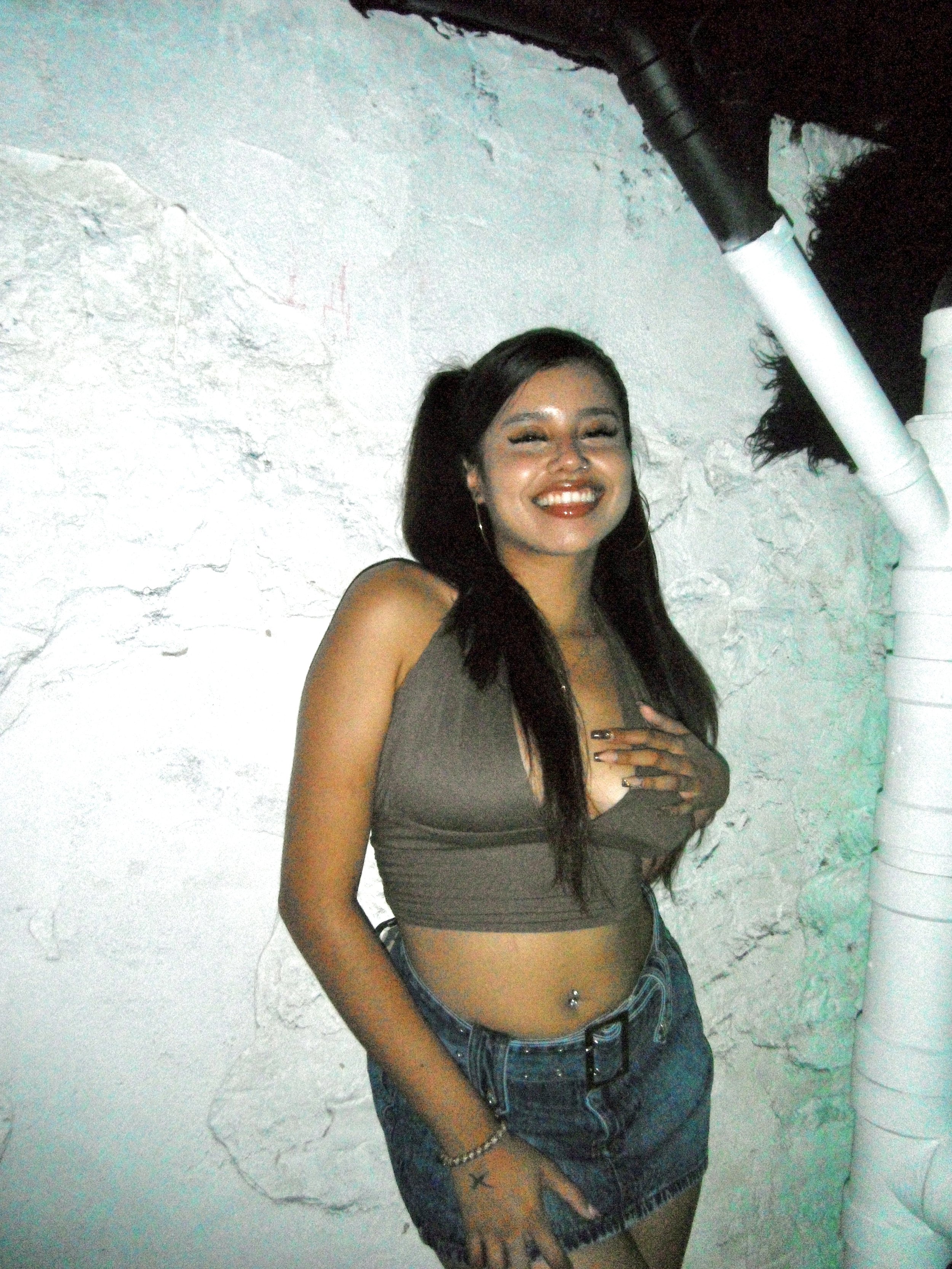
My digital camera has allowed me to capture some of the most amazing moments with friends and family in a way that my phone simply does not compare. That alone is why I’m obsessed. I often like to joke about being in my “photographer era,” but to be honest, I don’t think I’ll ever leave it. The older I get the quicker life goes by, and the faster it goes, the more I find myself wanting to record all of the moments that count.
Don’t get me wrong, I’m a strong believer of living in the moment. Yet, what I think is great about this idea of “ living in the moment” and having a digital camera (or film, or polaroid, or camera in general etc.) is that picture-taking becomes a part of said moment. Everyone is excited when the camera comes out, it’s like a mini photoshoot. Think: you’re at a y2k themed basement party, your friends are stunning, you’re meeting strangers and they jump in too. It’s exciting and lively, the music is amazing, and you’re overall just having a good time.


Like don’t these pictures just give you so much serotonin? Every single one gives main character energy!

That’s the magic. To put it simply, taking pictures on your digital camera doesn’t feel like a dent in the moment nor does it feel like this obligatory thing that you have to do in order to retain a memory in all of its glory. It feels natural and in the end, it is the fun!


So just in case, you were thinking about it already, I say make the one purchase that you definitely won’t regret (as long as it's from a trusted seller lmao, remember reviews are your best friend!).

Until then, I hope you enjoyed these pictures of my hot friends and I. Shout out to Hour.nine :).

Signing off with this sketchy alley photo — Liz
Have you ever been lounging around, wondering what your friends were up to but were too embarrassed to randomly text them what’s up? Well, I’ve got the app for you.
Be Real is a photo app that is very similar to Pic Your Moment and One Second a Day – it gives you a notification once a day to post what you are doing at that exact moment. The difference is, everyone with the app gets the notification at the same time. You then have two minutes to post a snap of that moment, and what’s cool is that it takes a picture on the front-facing camera and the back-facing camera simultaneously. The picture also disappears once the next notification pops up.
It’s not the type of social media app that you spend hours on. The posts are limited to your friends (although there is a different discovery feed of random people), as the idea is to “Be Real” by showing whatever you’re doing at that exact moment. Now of course my mother would say, “Well you’re not being real because you’re taking the realness out of the moment by feeling the need to post it on social media instead of just being in the present.” Okay, Milly. Maybe you’re right. But also, it’s indescribably fun to see what your friends are up to at that second.

Me being boring
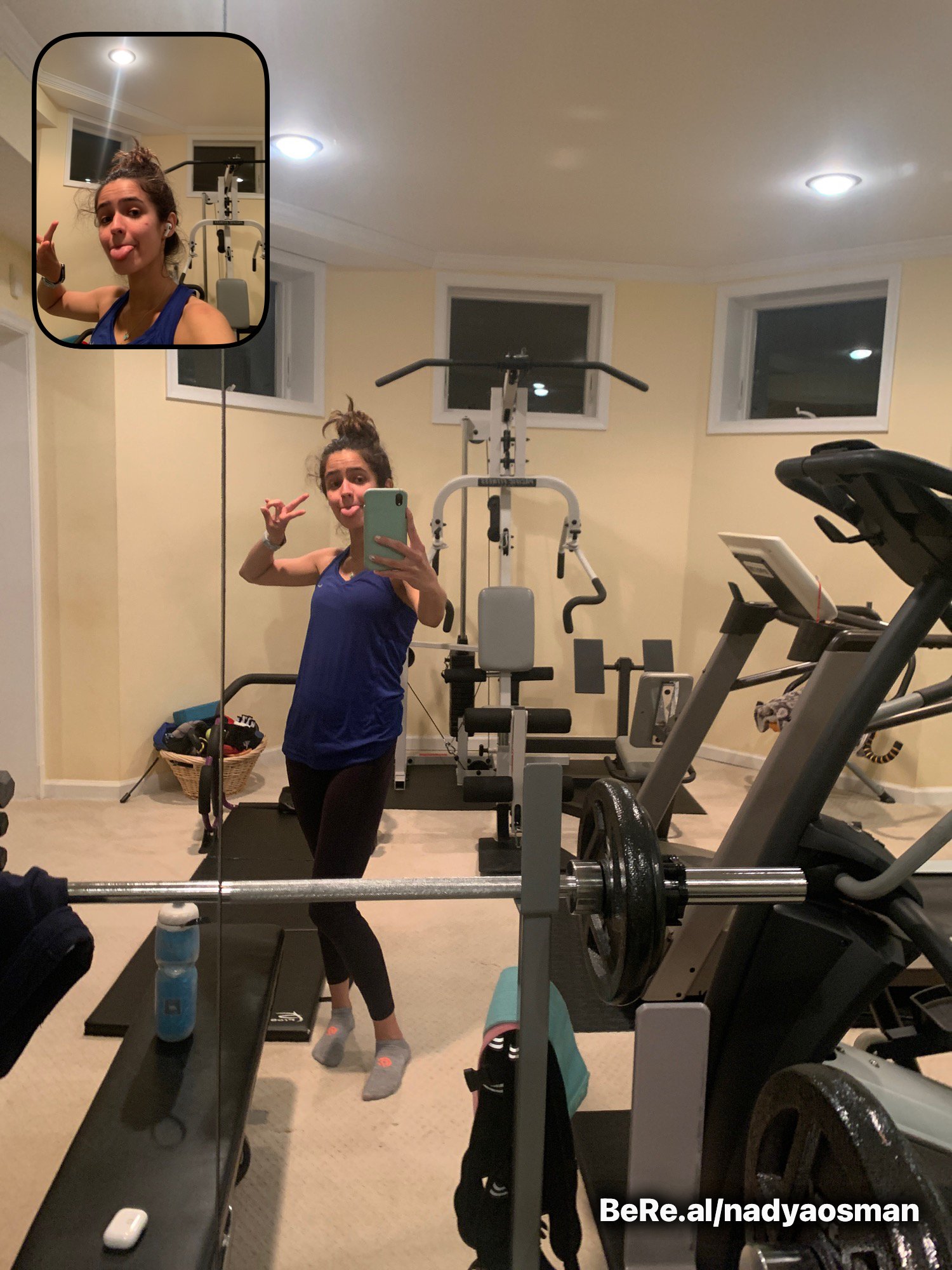
Me being slightly exciting
Additionally, Be Real breaks down some of the traditional expectations of social media. There is no way to edit the photo, and you can’t upload something from your camera roll as you can do with One Second a Day. This allows for raw moments that are not aimed at getting likes (although there is a like feature) but instead at engaging with your friends to see what they’re doing in real-time.
In all honesty, when I first got the app, I assumed that most of my friends would post themselves constantly having fun and doing exciting things. I was worried that I would feel left out or sad I had a “boring” life. In reality, when I scroll through my feed, all of the posts are similar - the common post is either studying or being in bed relaxing. It was refreshing and relieving to see that my life wasn’t “boring” or sad and that social media apps like Instagram only show the highlight reels of our lives. Be Real shows the everyday monotony that is both comforting and in itself exciting to share with those closest to you.
Other schools have already made Be Real popular across their campuses. Can we also get UChicago to Be Real?
Featured image via
No, no. I will not give advice on how to shoot the perfect Instagram post while you are chilling on your couch. Consider this as a gallery of what has been done for the last couple of months (the writer realizes that ‘the last couple of months’ is about to add up to a year. gasp.). Or at least a grasp of what I have seen on my feed, on the sites, on my gallery, etc.
I am not one who likes to share much on social media. Yet, I travel (was traveling. These in-parentheses writings are starting to make me sad.) a lot within the boundaries of my city. And as I discover a scene that is worthwhile to time-capsule into my memory card, I would just hit that button that makes my phone go “click.” Sometimes it was a silhouette of a friend, sometimes a pair of old Levi’s filled with soil and used as a wallflower. Yet, the thing to notice is that these moments were either aesthetic coincidences within friend meet-ups that I didn’t want to forget or things that I happened to see while wandering on the street that I would probably vaguely recall if I hadn’t shot. Now, that I don’t have the option to sail beyond an approximately 1 km radius of my apartment, having those discoveries got harder. That’s when I started to dig deep into my home.
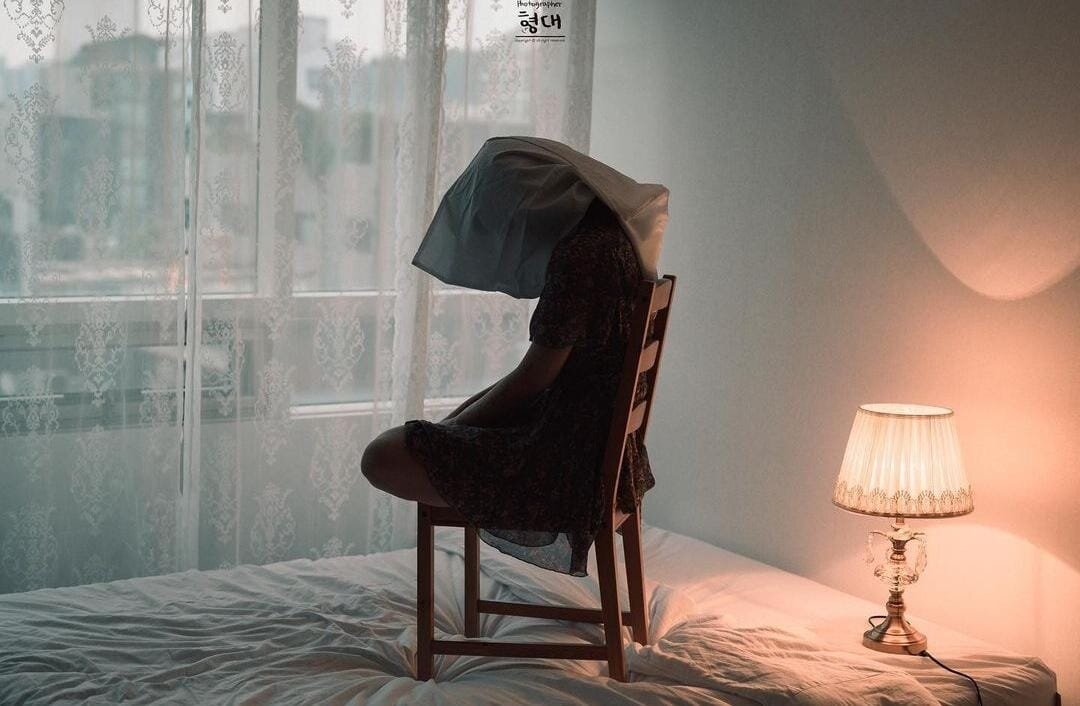
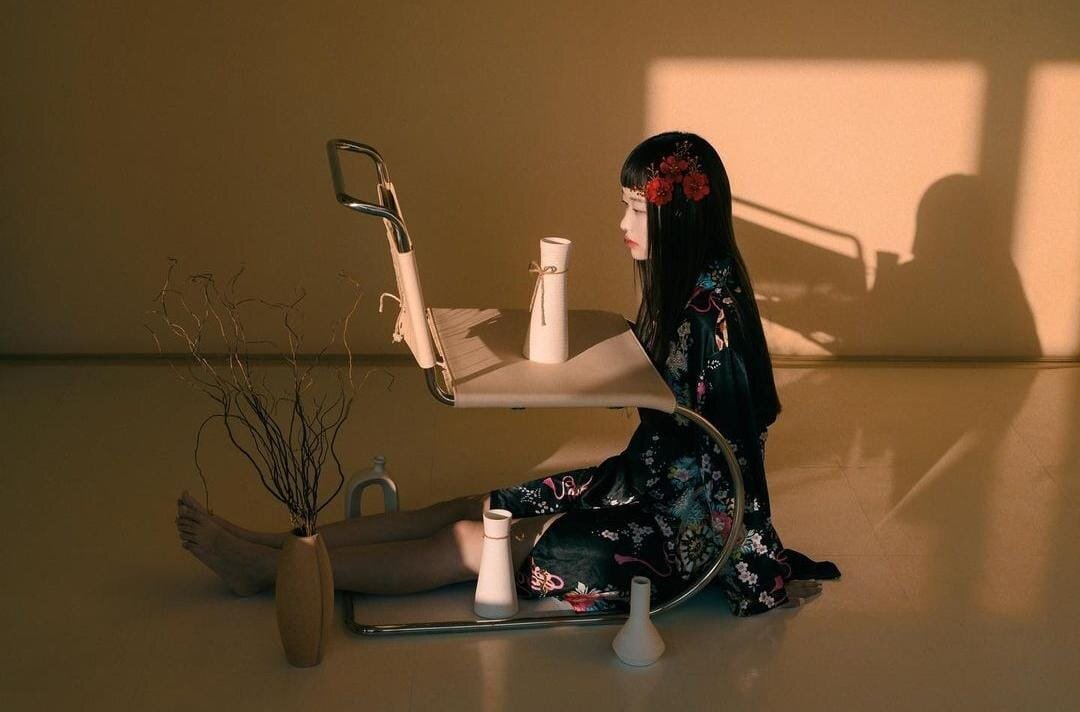
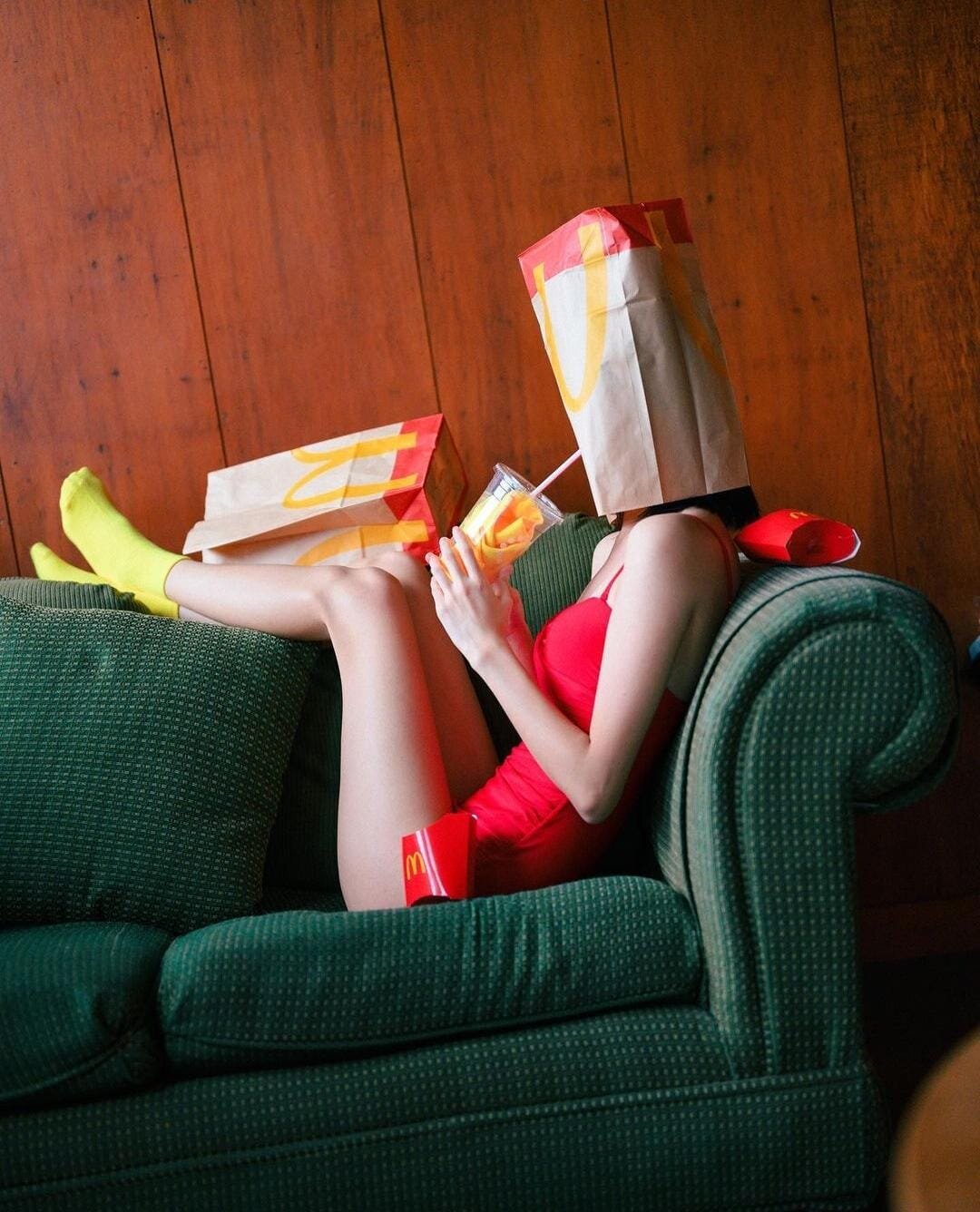
Apparently, it is not only me who turned her head inside the four walls. At-home photoshoots are getting increasingly popular -or, perhaps they were already popular. Whichever way you want to believe. Decreasing the number of crew members and allowing people to stay in-doors, it is definitely the safest choice of this virus-ruled era.
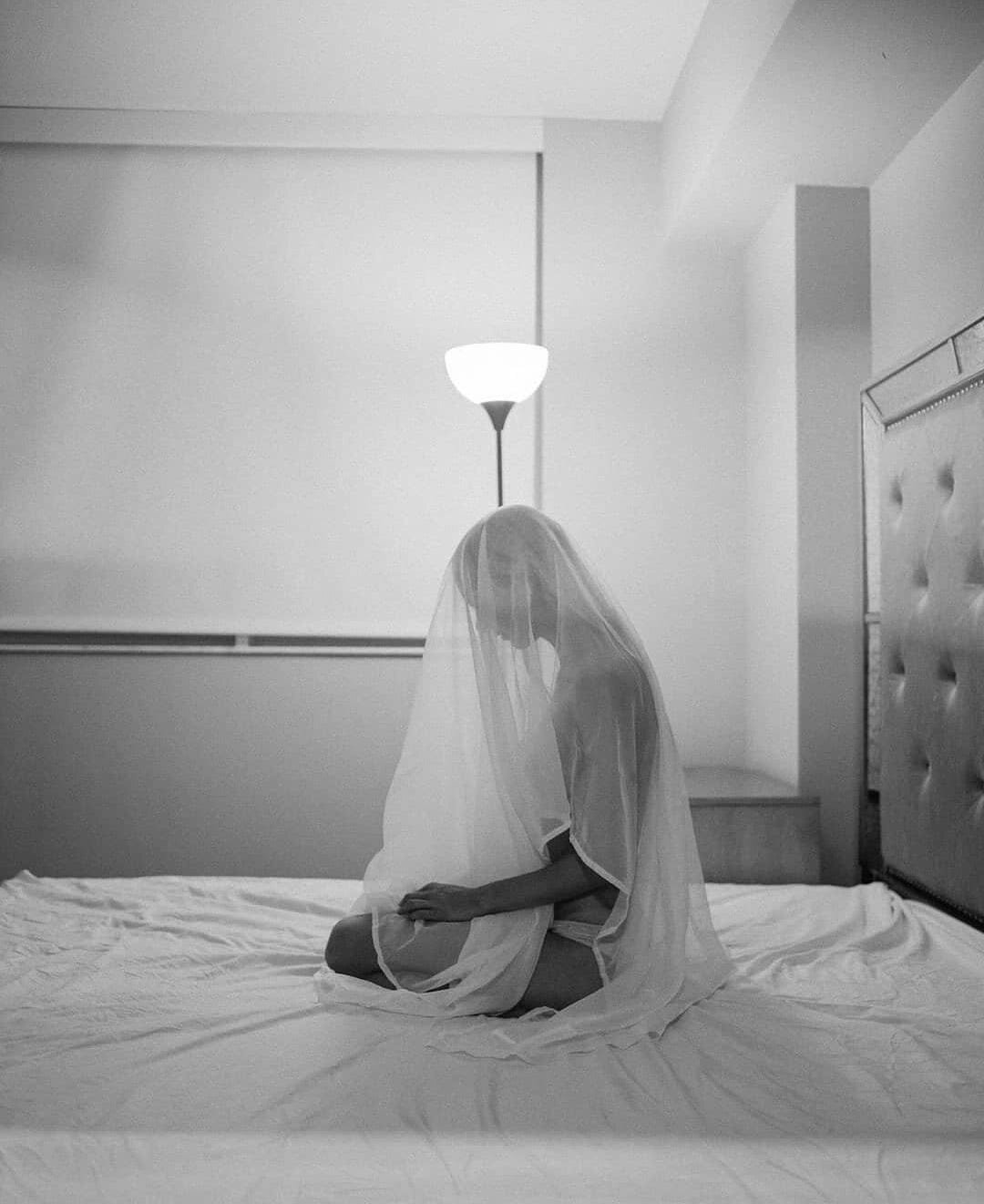
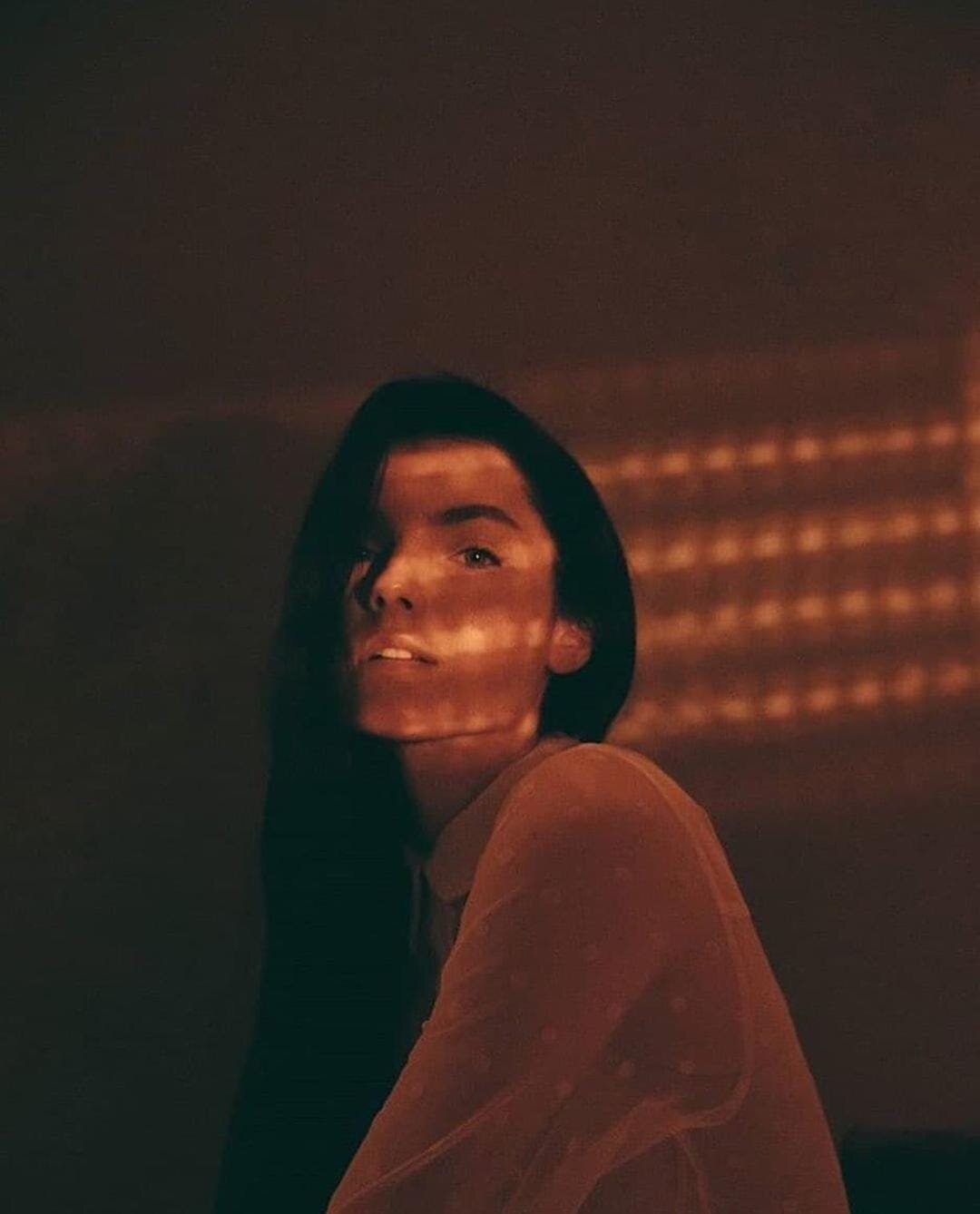
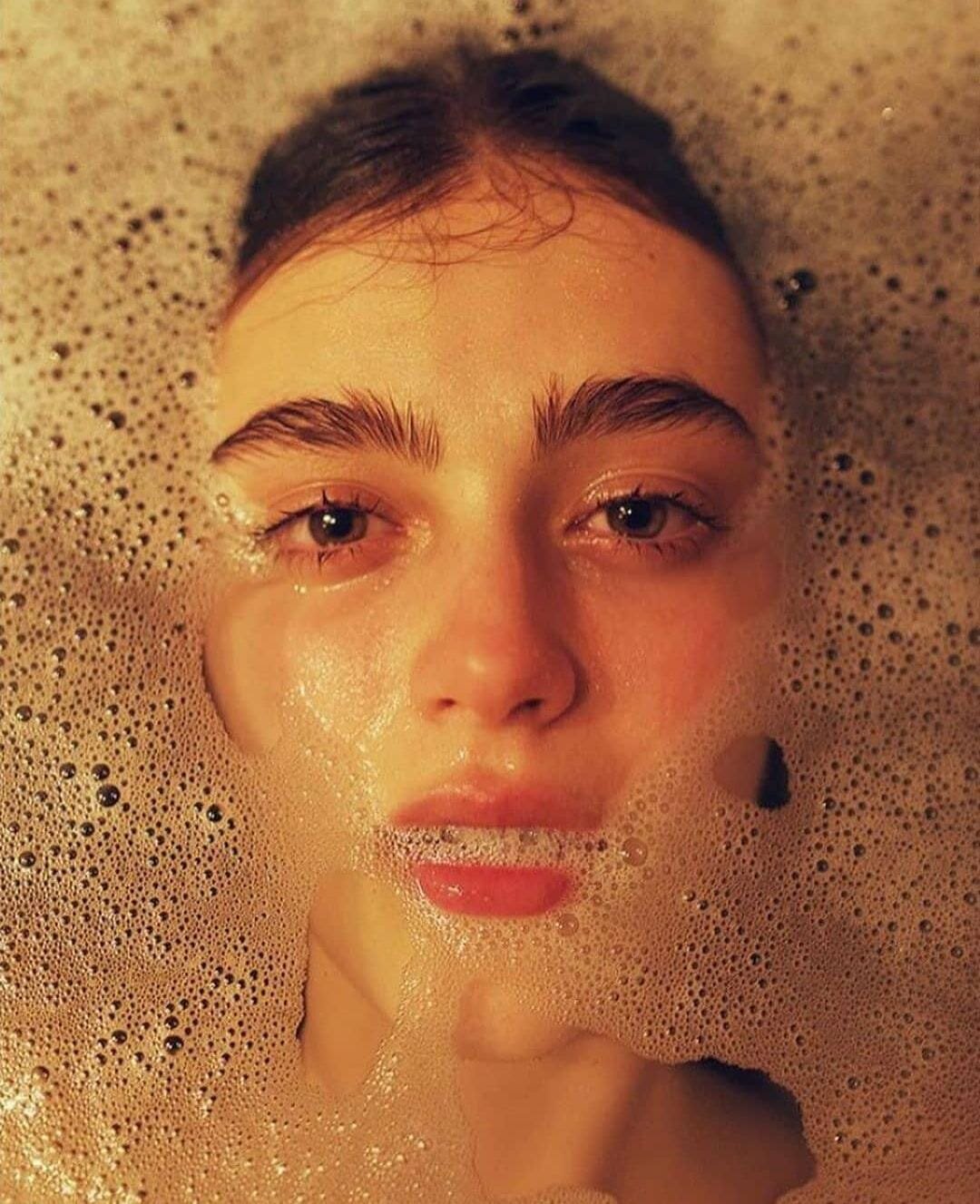
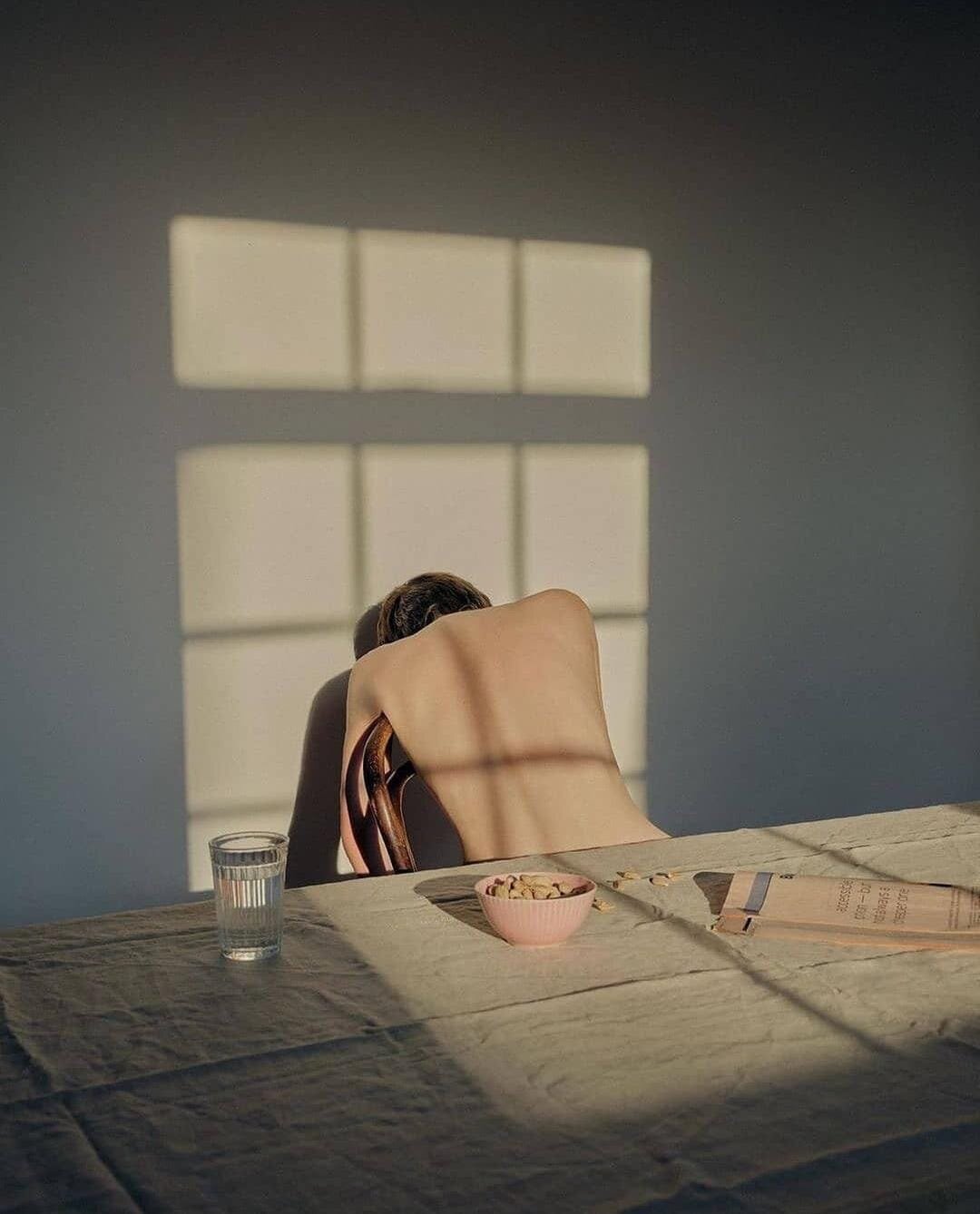
The shoots I’ve seen usually consist of one to two models and home-departed props. The majority of the compositions focus on the beauty of our homes, on how much more we can do at our homes, or on the basic chores of daily life, as most of the artists are currently revolving around these topics. The rest are again the appreciation of home life, yet in a more artistically composed way.
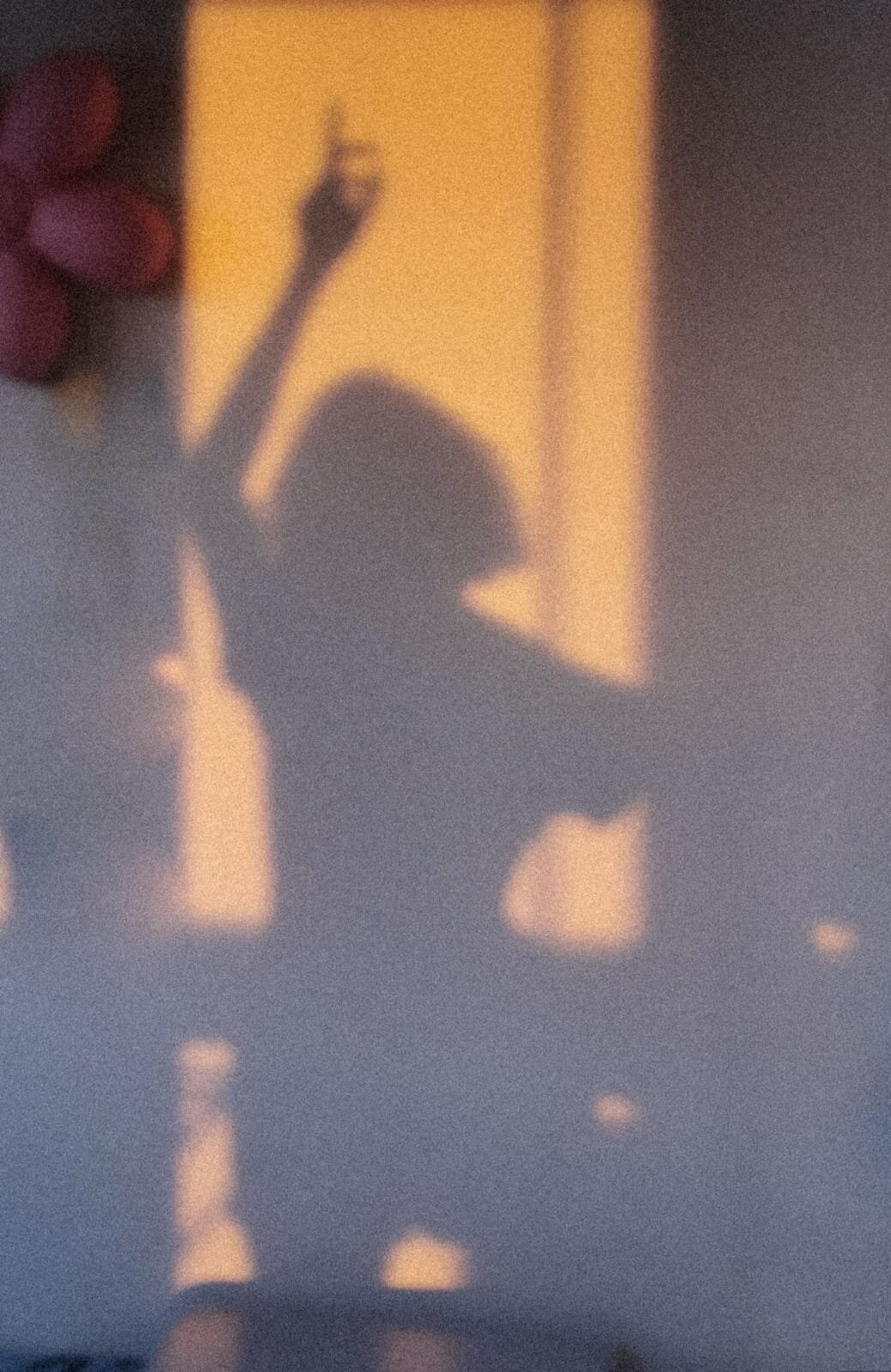
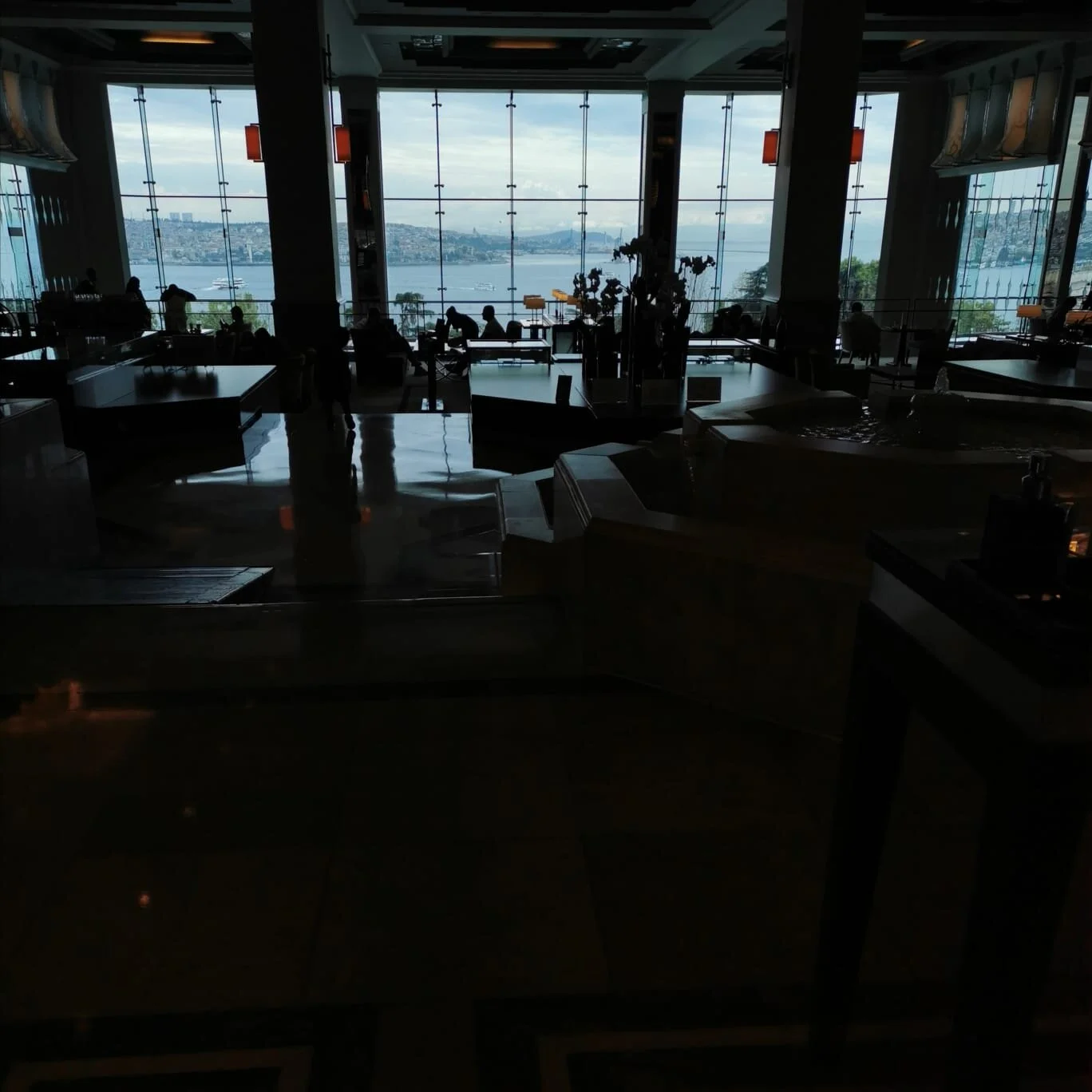
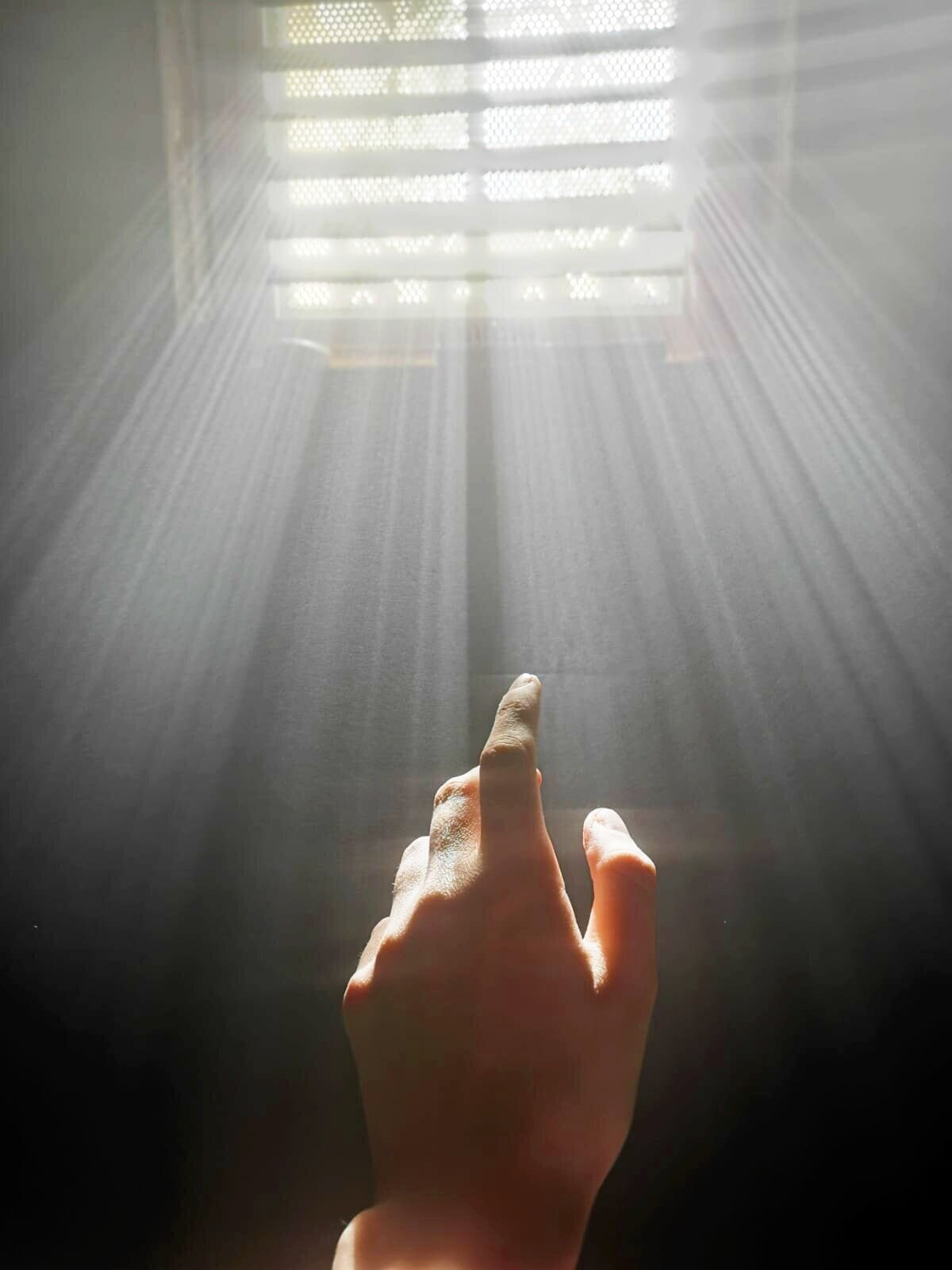
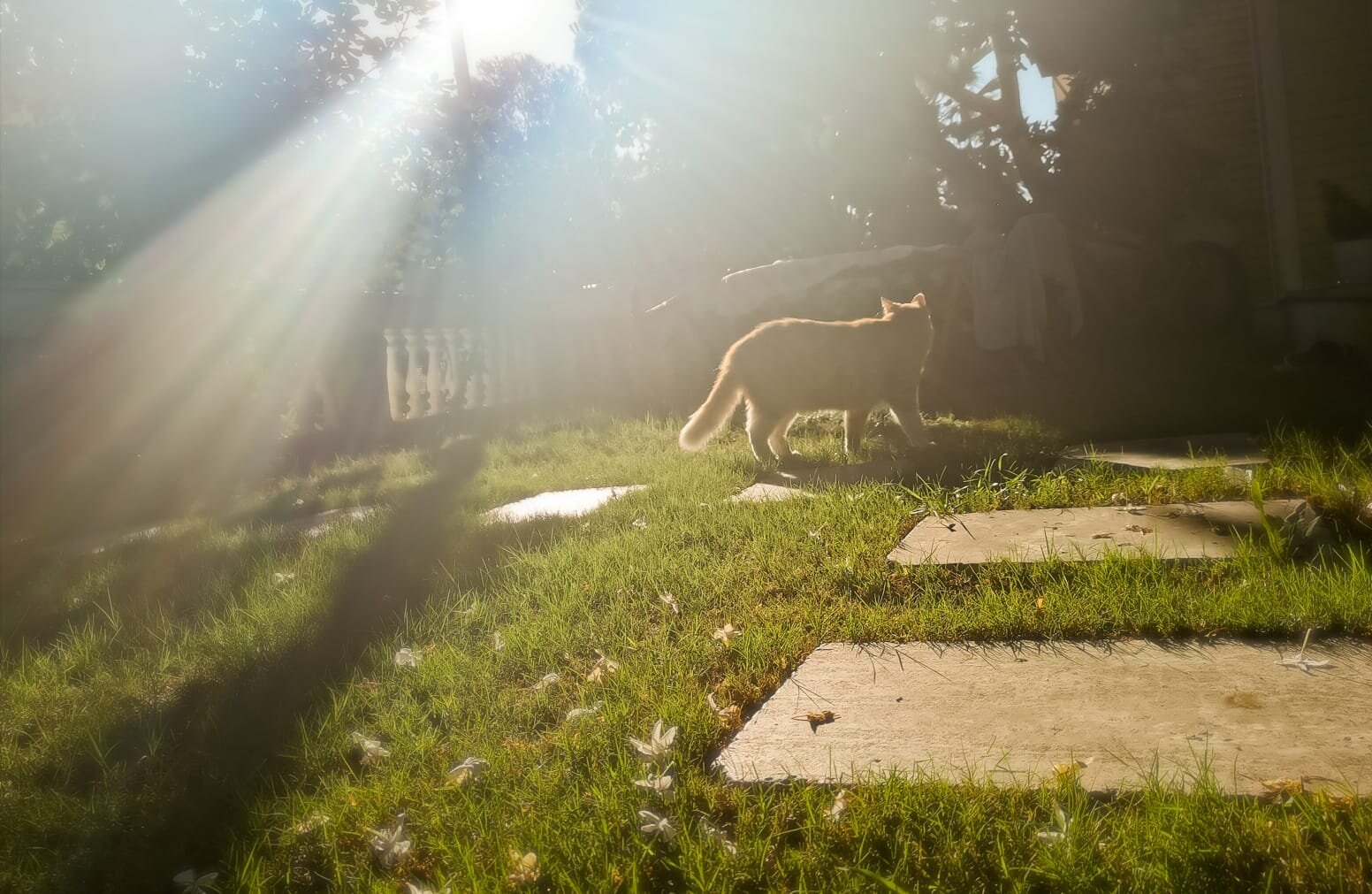
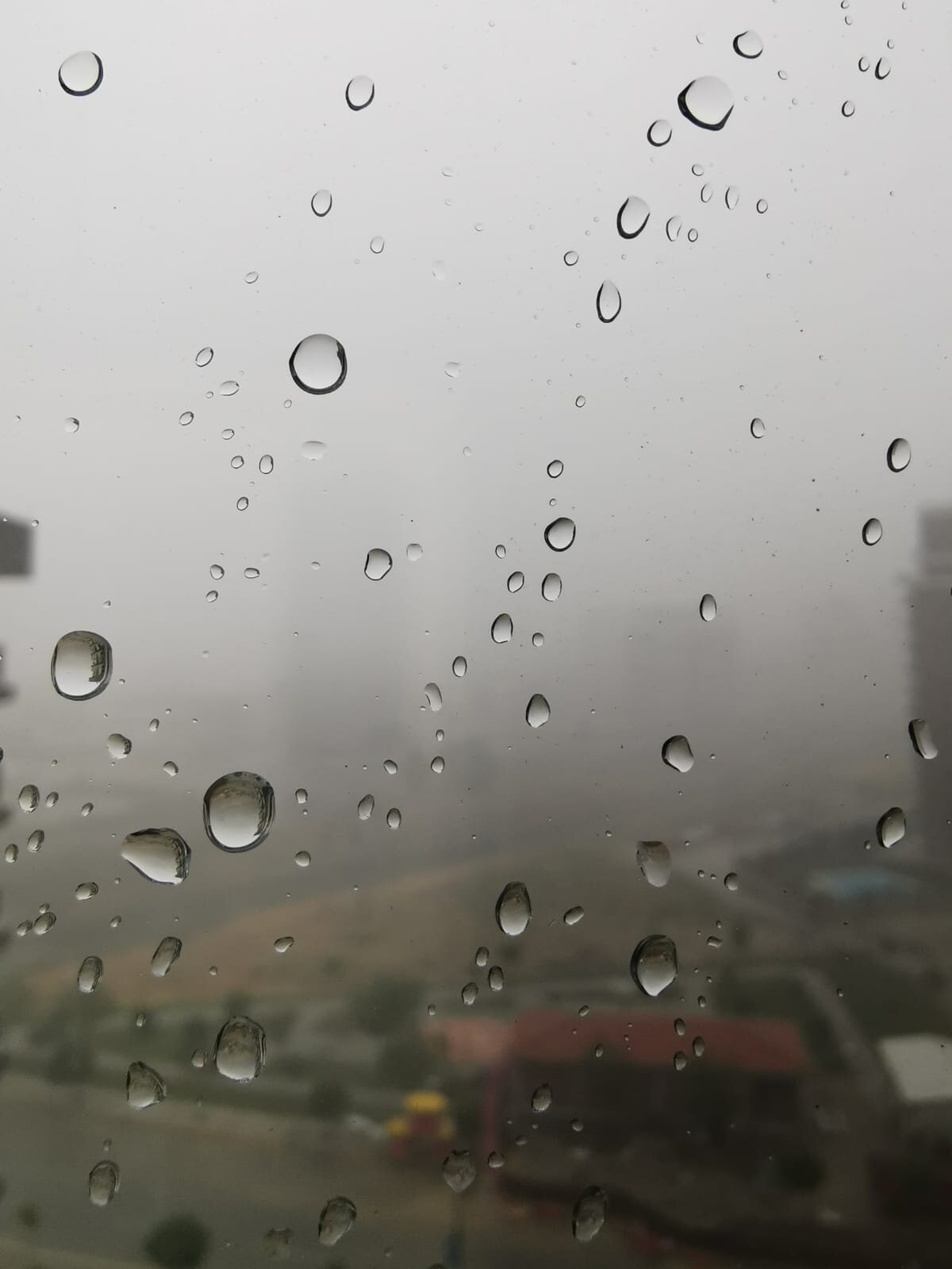
At first, it was hard for me to find things that were worth shooting. I played with shadows on empty, monochromatic walls. Then, I tried placing the aesthetic-enough objects that I discovered in the closed doors of wardrobes into a composition of cacophony. Later, I dressed up and used myself as the focus object. I tried shooting the sky. The people I see from my window. The park. The bird that nested on the balcony… The list goes on. I definitely kept myself busy, definitely trained my mind to find something worthwhile to look at in the borders of home. I am happy that I am somewhat developed in Photoshop.
However, would I trade the outdoor shooting? Nope.
nOPE.
Thumbnail image via Su Karaca
Hello! I am Sophia, I am a 1st year premed student. I have been baking at least one cake or banana bread loaf every week since quarantine started.

Why (and when) did you become interested in photography?
I started off in eighth grade by taking action shots, candid photos, and group photos for my high school’s yearbook. Then I really got into portrait photography my junior year when I learned how to take senior portraits. I love portrait photography because I like to explore a composition that sustains a balance between the model and their surroundings. So much can be expressed through the human body and face.

Where do you find inspiration?
At first, I found inspiration through professional photographers on Instagram, Pinterest, and Youtube when I was first learning because I wanted to know how to do certain effects with the camera. But now that it has been a few years, I like to listen to music and look at album covers as inspiration for the type of feeling I want to convey in my photos.
What cameras/equipment do you like using?
My main camera is a Nikon D750 and my favorite lens is my Nikon 50mm f/1.8. This lens is best for portrait photography because it can capture a lot of depth and do that cool bokeh light effect. Also, I recently got a Minolta X-700 film camera and started learning how to shoot and develop film.


What do you like to photograph?
I love photographing people mostly, but sometimes I also shoot street, urban, landscape and travel photography (although because of the pandemic I will not be doing the last one any time soon). Honestly, I want to try all types of photography when the opportunity presents itself. I still have a lot to learn!
What advice do you have for other photographers?
You do not need crazy camera equipment to begin shooting. Shooting photography is more about exploring the composition of a photo. Like in painting, where you decide what can be seen within the frame of your canvas, you decide what can be seen within the frame of your lens. Some of my favorite photos were from when I first started out and I did not have the equipment I have now. When you do decide to buy a camera for your photography, there are so many free online resources that can help you learn how to use it.
Street style, decoded.
Read MoreIt’s almost noon, and I’m finishing my black eyeliner - having only just woken up. And I realize that this might be a little silly. I’m getting ready for an online Russian grammar test. And I have no plans to interact with anyone other than my parents and little brother today. I’m still social-distancing, after all.
However, despite my realization that this might be a little silly, I still finish my makeup. And everyday since I began my quarantine, I have done so. I find it calming. The routine makes me feel productive. Even though I’m only preparing to sit in front of my laptop at my bedroom desk, I still want to feel prepared. I want to exercise some control over my life - no matter how small. And this helps me with that.
A few hours later, I read Anna Wintour’s April 23rd announcement, and I find myself equally calm. In her article, Anna shares the early launch of Vogue’s June/July Special Issue. (The official release is still scheduled for next month.) And even in a climate of utter uncertainty, it seems that Vogue has found a way to highlight what matters: community. As Anna writes herself, “we are all in this together.”
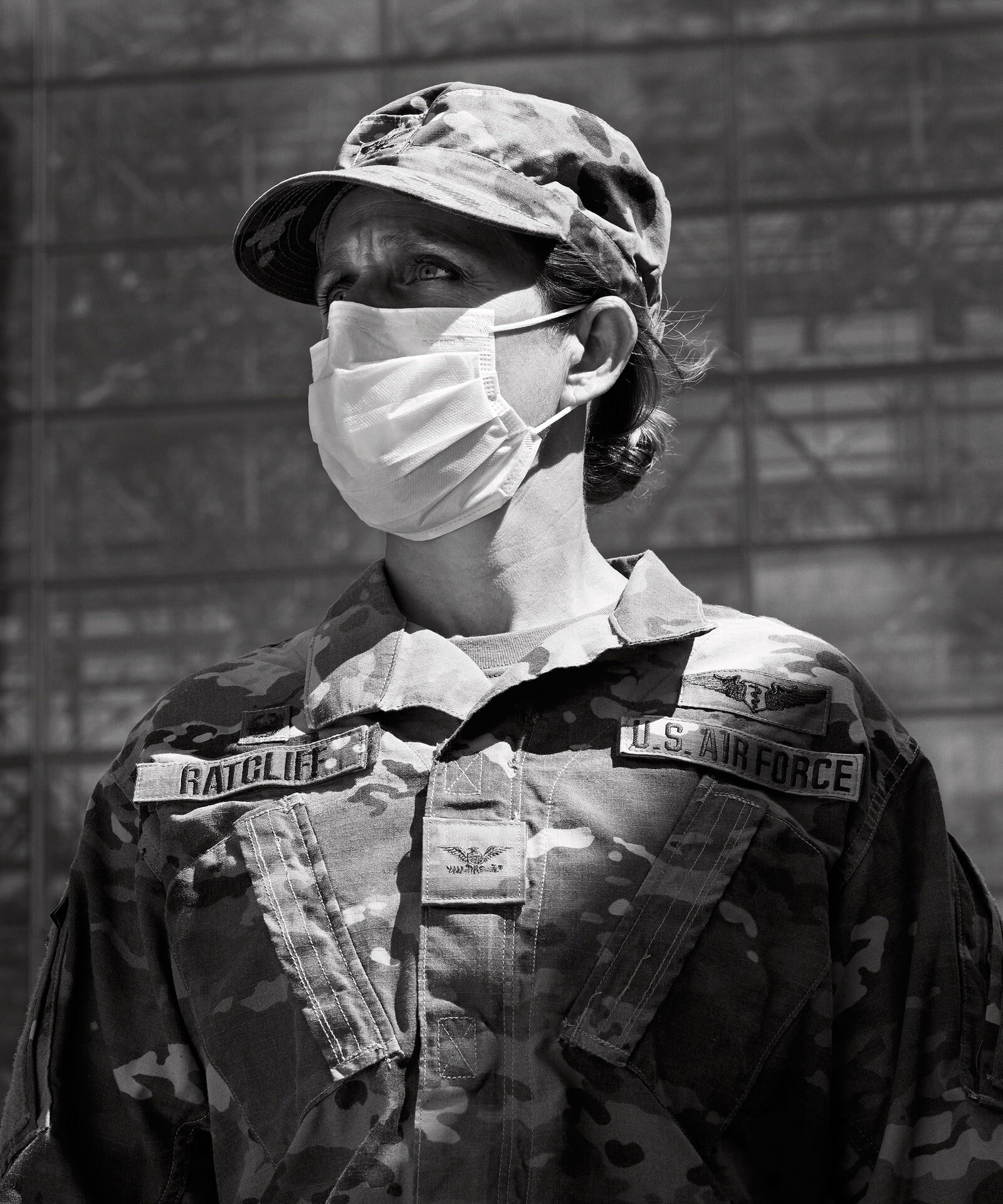
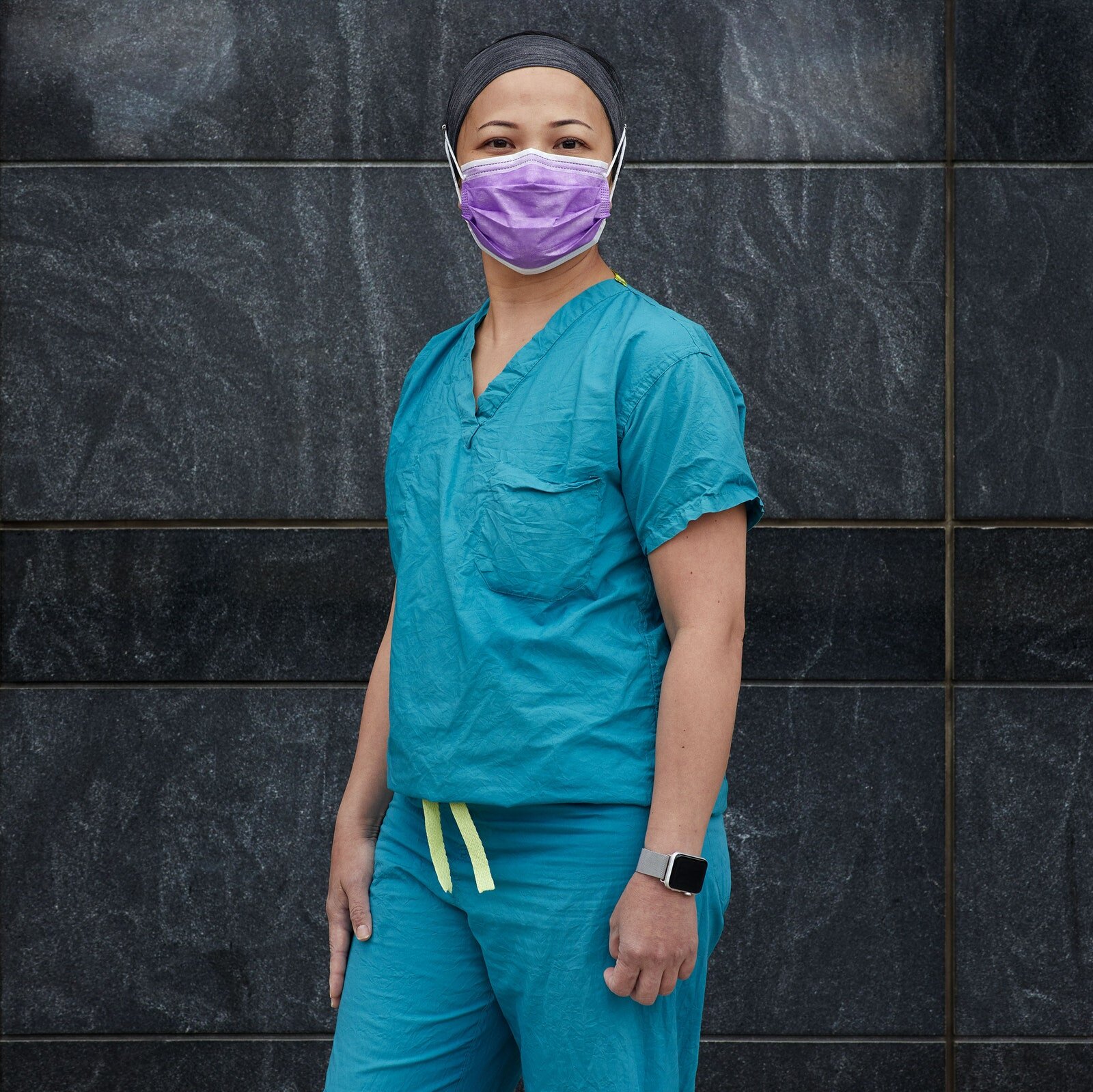
Anna begins her article by sending well wishes to her readers, before expressing her deep gratitude to the many first responders, who continue to bravely protect our communities. And she shares photographs from Ethan Green’s recent series, in which he provides an homage to these first-responders. Green’s photographs feature just a handful of health-care professionals, many of whom came from across the country, in order to help NY’s overwhelmed local healthcare system. The photographs were taken near the Javits Center’s temporary field hospital.
Furthermore, Anna also announces that Vogue’s June/July Issue will be special, in that it’ll be entirely self-photographed. And a portfolio of such self-photographs has already been released online. This is new territory for Vogue. Everything in the issue will be commissioned, designed, and produced remotely. And Anna hopes that the issue will serve as a historic and “poignant reminder of how we are all acutely missing the miracles of everyday life and the joy that they can bring.”

The cover of Vogue’s Special Issue features Irvine Penn’s formerly unpublished photograph, Rose ‘Colour Wonder’ (1970). It’s Vogue’s very first still-life cover in over 50 years.
And as I flip through Vogue’s portfolio of self-portraits, I immediately connect with the words of Daniel Arnold, a nomadic photographer from NY: “I feel like I’ve been on an airplane for six weeks. I cry without being sad or moved, all of my emotions are mutedly haywire; I snack psychotically and I stare out a window, unable to digest how high up I am, or how dangerous it would be to go outside.” While Arnold’s quotation is dramatic, he has a point. I do feel a little bit like I’ve been on an airplane for weeks.
However, the more I study Vogue’s portfolio, the more I realize that Anna might have overlooked something. After all, while I do acutely miss my life “pre-coronavirus,” I also know that the joys of everyday life do not end under quarantine. These are tough times. They are bleak. But they do not have to be wholly hopeless - and there are many ways in which we can still notice, and enjoy, the many small moments that compose our lives.
This is exemplified by Vogue’s own work. In Vogue’s portfolio of self-photography, Sienna Miller discusses baking, swinging, and doing makeup with her little girl. British photojournalist, David Hurd, discusses his morning coffee - and how much he enjoys watching the birds outside his cottage window. Florence Pugh discusses gardening and cooking. And Steven Klein shares an awesome photo of his four-year-old son, surrounded by his stuffed animals.

Steven Klein’s contribution to Vogue’s Issue features his son, Ace, as he plays with his toys in Long Island, NY.
For the first time in my life, my dad is home when I go to the kitchen for lunch. He helps me understand my biology homework. My mom brings me iced tea in the mornings, and we often sit on the patio together. She reads drafts of my writings - and we talk about them in person, rather than over the phone. In the evenings, I make salads while she cooks. And my parents have even started a garden - and my mom was excited this week, when the first plants began to sprout. Meanwhile, I converse with my brother between classes. And I realize just how much less time I’ve spent with them since I began college - and just how much time I suddenly have, to try to make up for what I’ve lost.
As Anna concludes her article, she writes that “[i]t’s a brave act to optimistically consider the future.” And she’s right. But, even more than that, it’s a brave act to optimistically consider the present. And if doing my makeup in the mornings (or afternoons) helps me do so, then so be it. In his contribution to Vogue’s Issue, Marc Jacobs may say it best:
“I never thought a dress was a solution to a problem, but I do believe that as long as people are human, they’ll want to dance and they’ll want to get dressed and they’ll want to eat good food and they’ll want to engage in things that give them pleasure. I guess we just have to find a balance, or maybe rethink what all those things mean. But we all should be thinking about how we can change—or what we learned from this experience.”
Click here, for thumbnail image source; Ethan Green’s photograph features Tanzania Johnson, a Navy hospital corpsman and respiratory-therapy technician, who actively works to address the coronavirus.
Carolyn Johansen is a First-Year undergraduate, who considers majoring in Economics or Chemistry - or both. In addition to designing outfits for this year’s MODA Fashion Show, Carolyn also enjoys playing flute in the wind ensemble.
In order to discuss Carolyn’s work for the upcoming MODA Fashion Show, we met over coffee to discuss her artistic style and inspiration.
What are some sources of inspiration for your collection?
A lot of my inspiration comes from things being comfortable and practical, which I know isn’t very exciting, but I really thought about things that were missing from my own wardrobe, that I wanted, and had just never gotten around to making. So for this show, I’ve been focusing on designs that people could wear to class or around Chicago - just because that’s where my head has been lately.

This @beautyspock image was another inspiration for Carolyn’s collection: “I really loved this image because of the bold print of the jacket. The silhouette is very classic, but the print makes it look modern and trendy, which is something I am trying to capture in my collection.”
“So for this show, I’ve been focusing on designs that people could wear to class or around Chicago - just because that’s where my head has been lately. ”
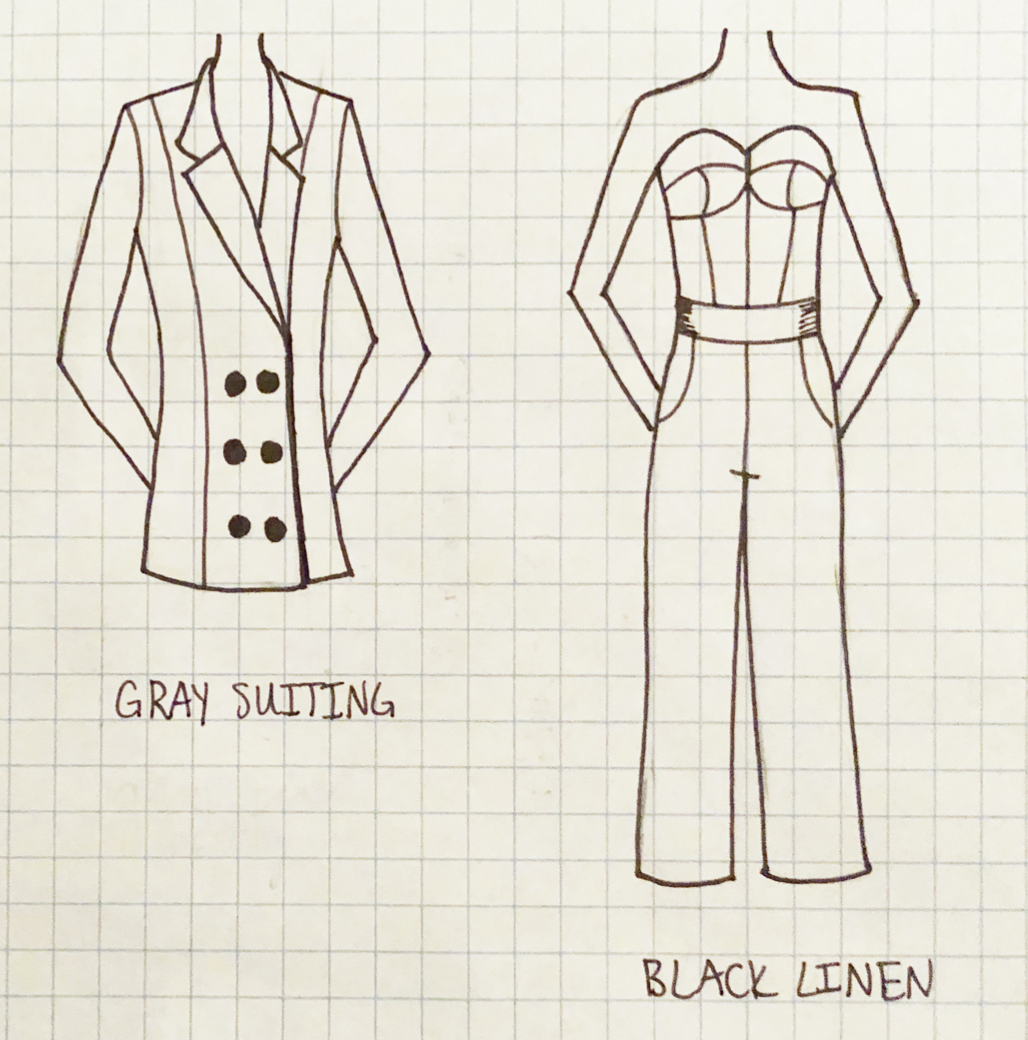
Original sketches of Carolyn’s collection.
Have you ever done fashion design work before?
I’ve loved to sew for years. I was seven when I first started (I was in second grade). And since then, I have sewn many projects, from my prom dress to my high school graduation dress.
I have also taken some courses at the Fashion Institute of Technology in New York. That was my introduction to formal fashion design. Before that, I just thought of items I wanted to make and I made them. So those courses taught me to make more mature fashion designs, as opposed to home sewing projects.

Carolyn (left) stands next to her friend Grace at their Senior Prom. Carolyn wears the dress she created for the occasion.
What are some of the most challenging and rewarding aspects of the process?
I have to say that the most challenging aspect has been designing things for me that aren’t actually for me. I’m used to making clothing adjustments for myself. But I can’t call my models up and have them try my outfits on within 20 minutes. It’s more of a process. But that has been a great learning experience, for me to better understand how the fashion industry really works.
“It’s more of a process. But that has been a great learning experience, for me to better understand how the fashion industry really works. ”
Something that I’ve really enjoyed so far is being able to connect with people across campus through MODA. I have a friend who is a model, and it’s been really fun to talk to her throughout the process and to get her opinion. She’ll be modeling one of my designs. I’m going to make her a jumpsuit, which will be trendy and cool. She can also put a jacket on with the jumpsuit, and wear it to dinner with her parents, so the look will be versatile. And just having that open communication with MODA participants isn’t something I’ve had in the past, because it was always just me.
What are you looking forward to most about the show?
I don’t know. I think I’m just excited for the whole thing. It’s going to be very different from anything I’ve ever done or experienced before, so it’s going to be really cool to see how it all comes together.
Who do you have in mind when you’re designing?
I’ll admit it’s usually me, because I focus on my experiences. I also think about my sister. We have always sewn together, and I reach out to her for guidance and advice. We once made First Communion dresses out of wedding dresses, for some family friends. It was a really fun project - and working together also alleviated the stress of cutting up people’s old wedding dresses. My sister and I have also made curtains for my mom. So we work together and give each other feedback. And she’s excited and curious to watch me go through this design process on campus.
“We once made First Communion dresses out of wedding dresses, for some family friends. It was a really fun project - and working together also alleviated the stress of cutting up people’s old wedding dresses. ”

In this high school graduation photo, Carolyn (left) stands next to her sister. Carolyn wears the dress that she made for graduation.
If you could give yourself any advice on the design process, what would you say to your younger self?
Advice I would give to myself in general is to challenge myself. There are things that I sometimes brush off as too challenging, but I’m trying to approach those challenges for MODA - which makes things more interesting.
What’s your favorite aspect of the design process?
I like it because it’s so custom and I have so much freedom to do what I want. When I was younger, I couldn’t always find the clothing I wanted. So, by creating pieces for myself, I can plan and actually make my ideas happen.
“So, by creating pieces for myself, I can plan and actually make my ideas happen. ”
David Schalop is a 2nd-Year undergraduate, double majoring in Business Economics and Art History. He is a film photographer, whose work influences his fashion designs and how how he sees the world. David is also part of the Smart Student Advisory Committee.
In order to discuss David’s work for the upcoming MODA Fashion Show, we met over coffee to discuss his artistic style and inspiration.
What are some sources of inspiration for your collection?
My first inspiration is definitely the weather and the seasons. That was my jumping off point for my fashion designs. I drew inspiration from how people’s dress changes, over the course of the year. In warmer seasons, people wear lighter colors and materials. And then, in colder seasons, people wear darker colors and heavier layers. Spring and summer are somewhere in between these two extremes. And these seasonal changes in attire are more defined at UChicago than at other schools, which is something I wanted to highlight in my designs.
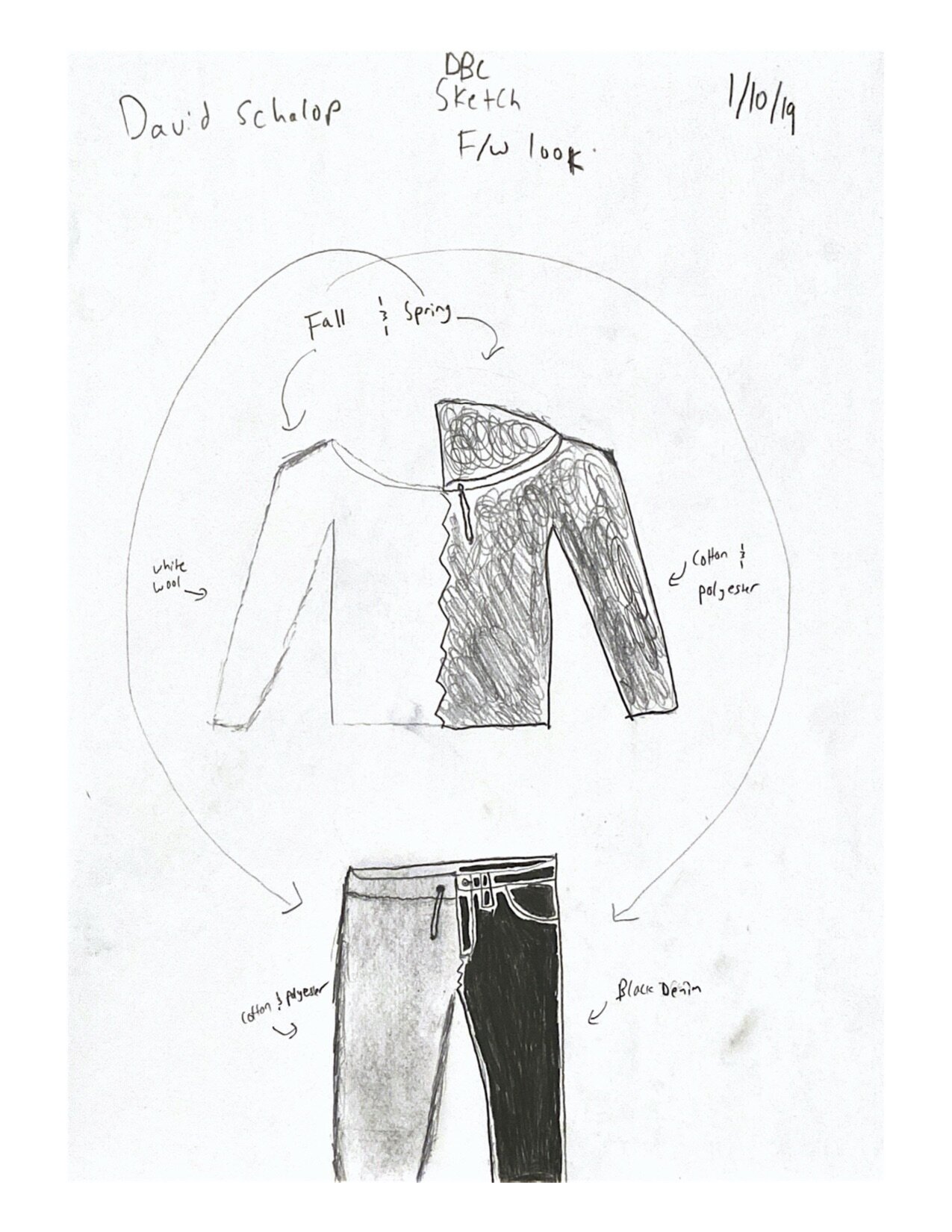
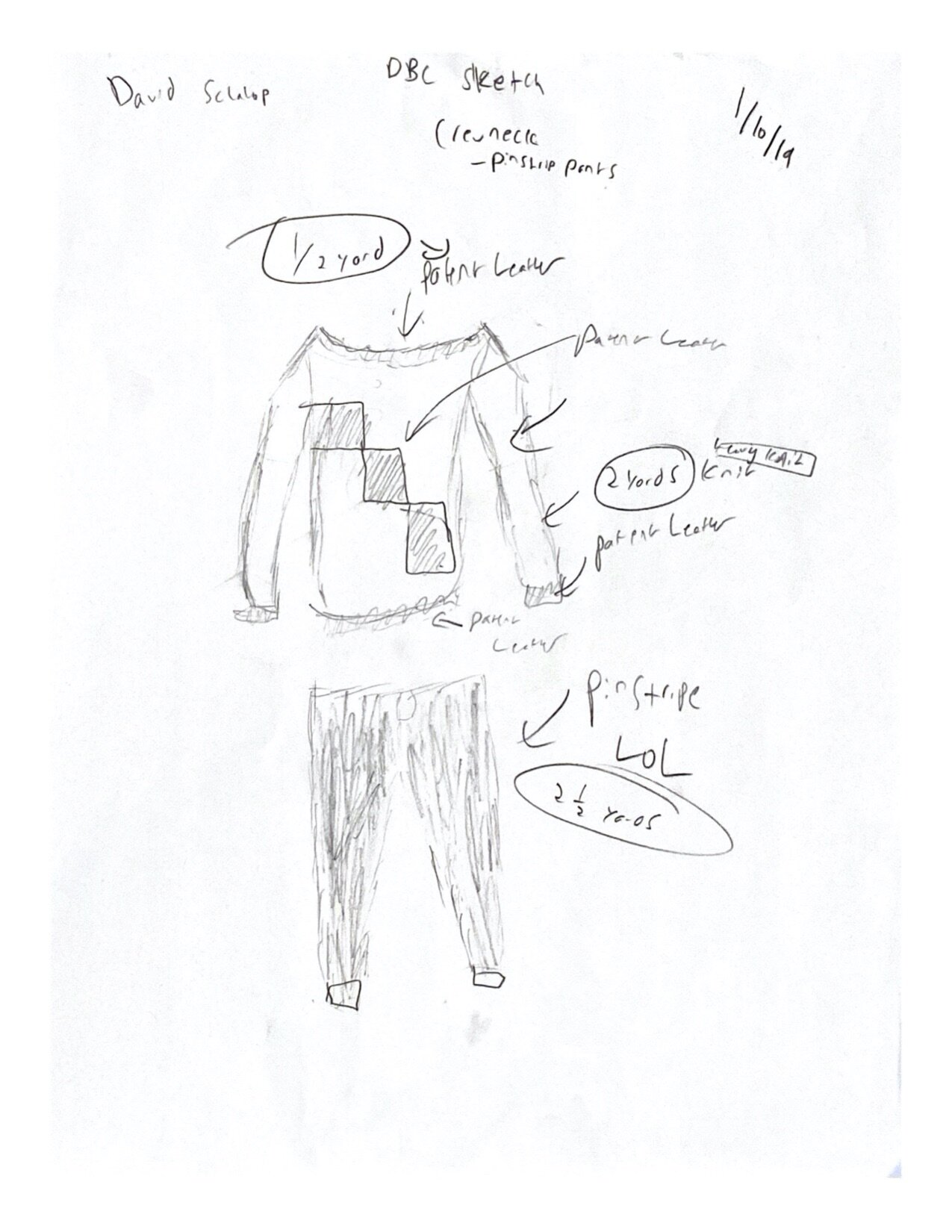
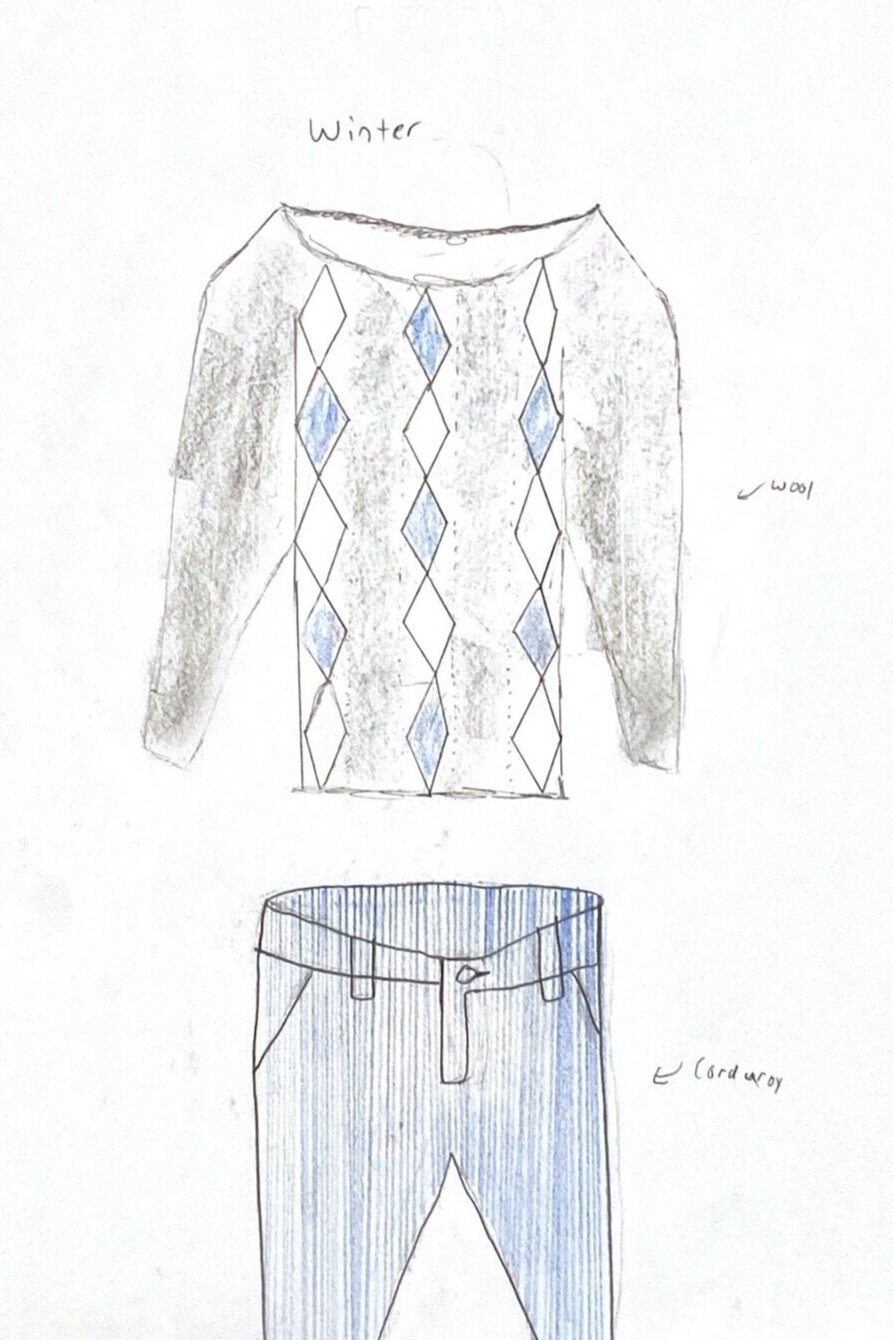
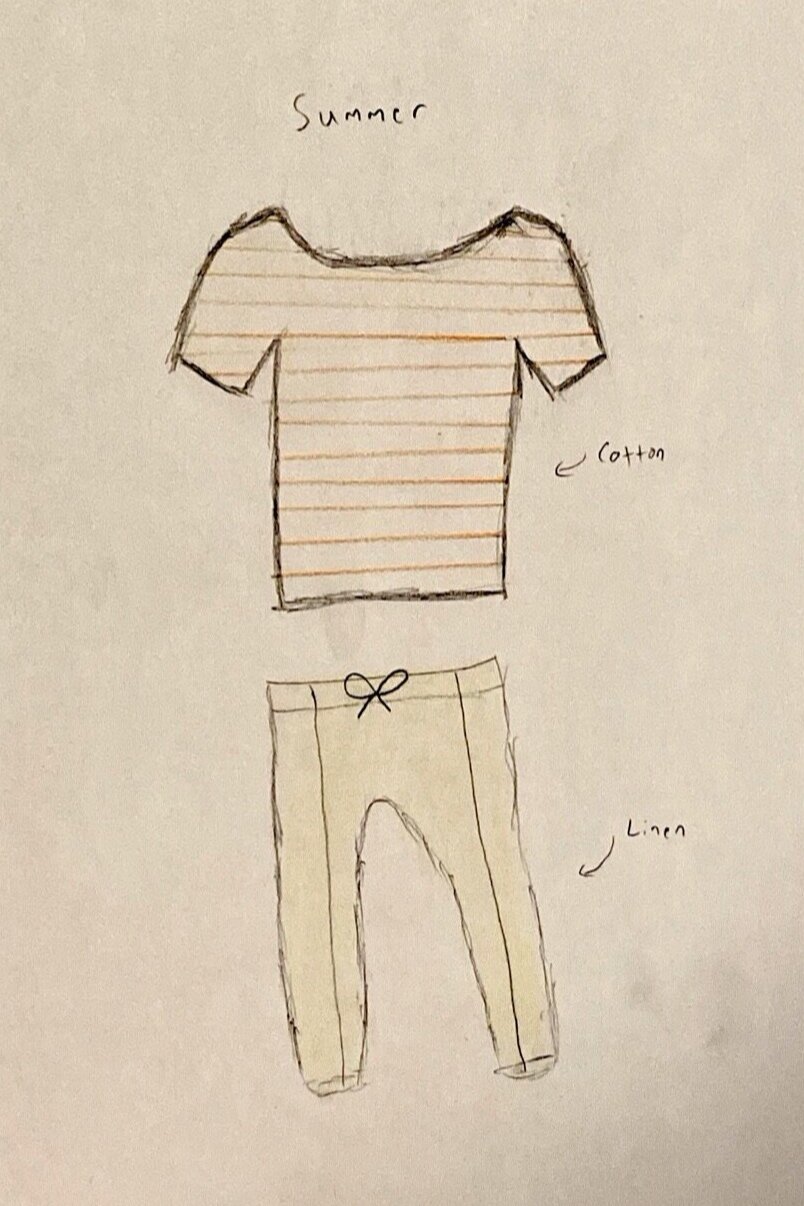
I’ve also been inspired by some of my favorite artists. Hiroshi Sugimoto is a photographer who I really like. He shoots black and white photography. And, like him, I shoot mainly black and white film, but I’m also really interested in color. So while my designs tend to be monochromatic, one of my designs has a pop of color. Geometric shapes and patterns are also important to me, and Josef Albers is an inspiration for that.
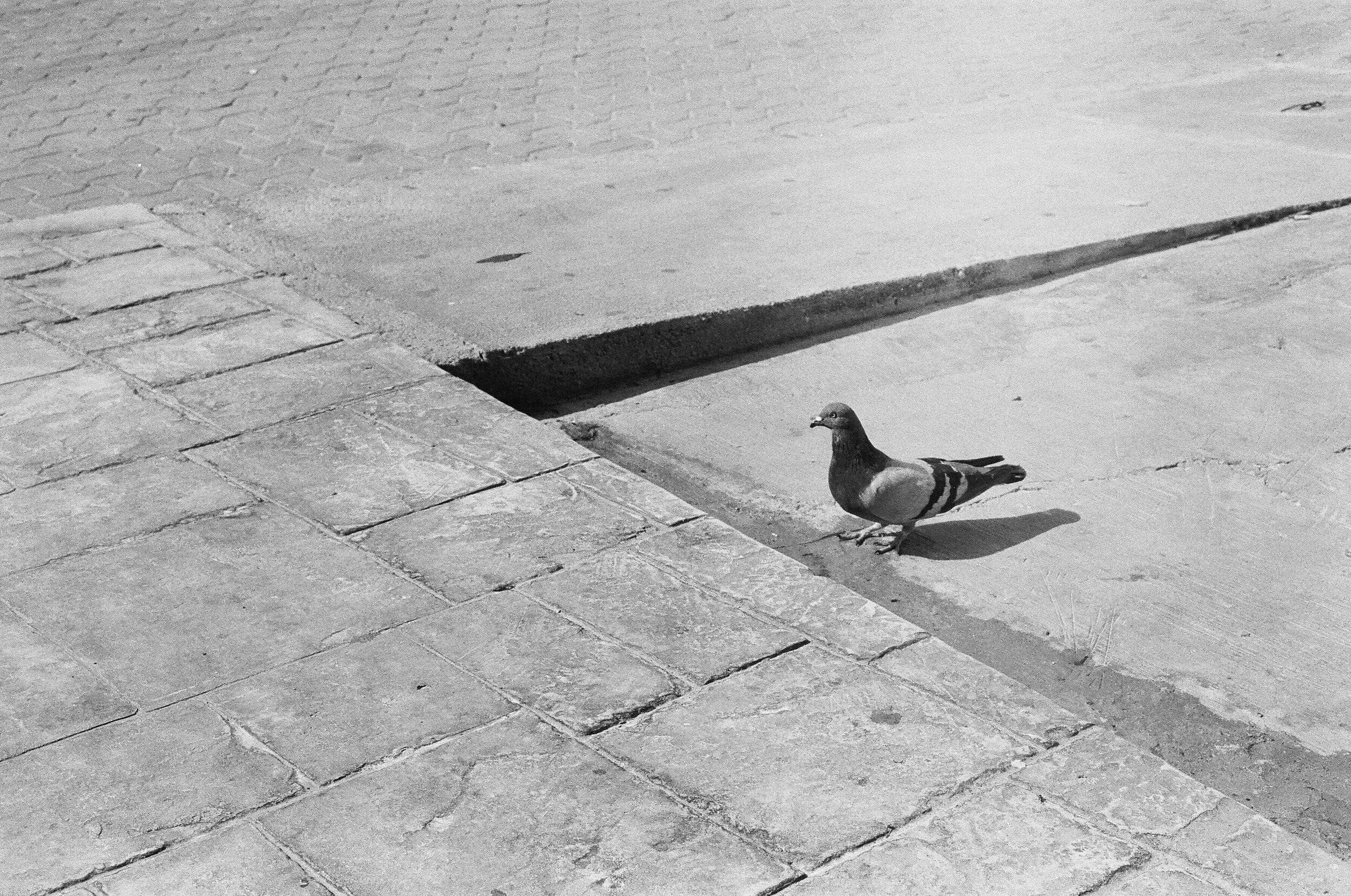
“Uneven Terrain.” An Original Photograph by David.
Have you ever done fashion design work before?
Never. Before participating in the MODA Fashion Show, I’d never made anything. So this is really the beginning. Before this experience, I’d only seen sewing machines as old decorations, which weren’t being used. So this is a new experience for me.
What are some of the most challenging and rewarding aspects of the process?
I think the most challenging thing about making clothing is that you have to visualize something in 3D, but when you’re putting fabric through the sewing machine, it’s 2D. And the space that you leave between the fabric is where the body goes. So it’s often difficult to imagine how to transition from 2D to 3D pieces. And while this process has been an interesting challenge, no mistake is unfixable. Sometimes you sew something and realize afterwards that the pieces don’t fit - but you can always take the stitches out.
“...no mistake is unfixable. Sometimes you sew something and realize afterwards that the pieces don’t fit - but you can always take the stitches out.”
I think we live in a world where people are very removed from the production of things. I’m in this art history class right now where people had to bring in objects of value to them. No one out of 25 people brought an item that they had personally created. We live in a disposable world. And so I want to create something with my own hands. And hopefully it will last for a long time. That’s an inspiration for my work.
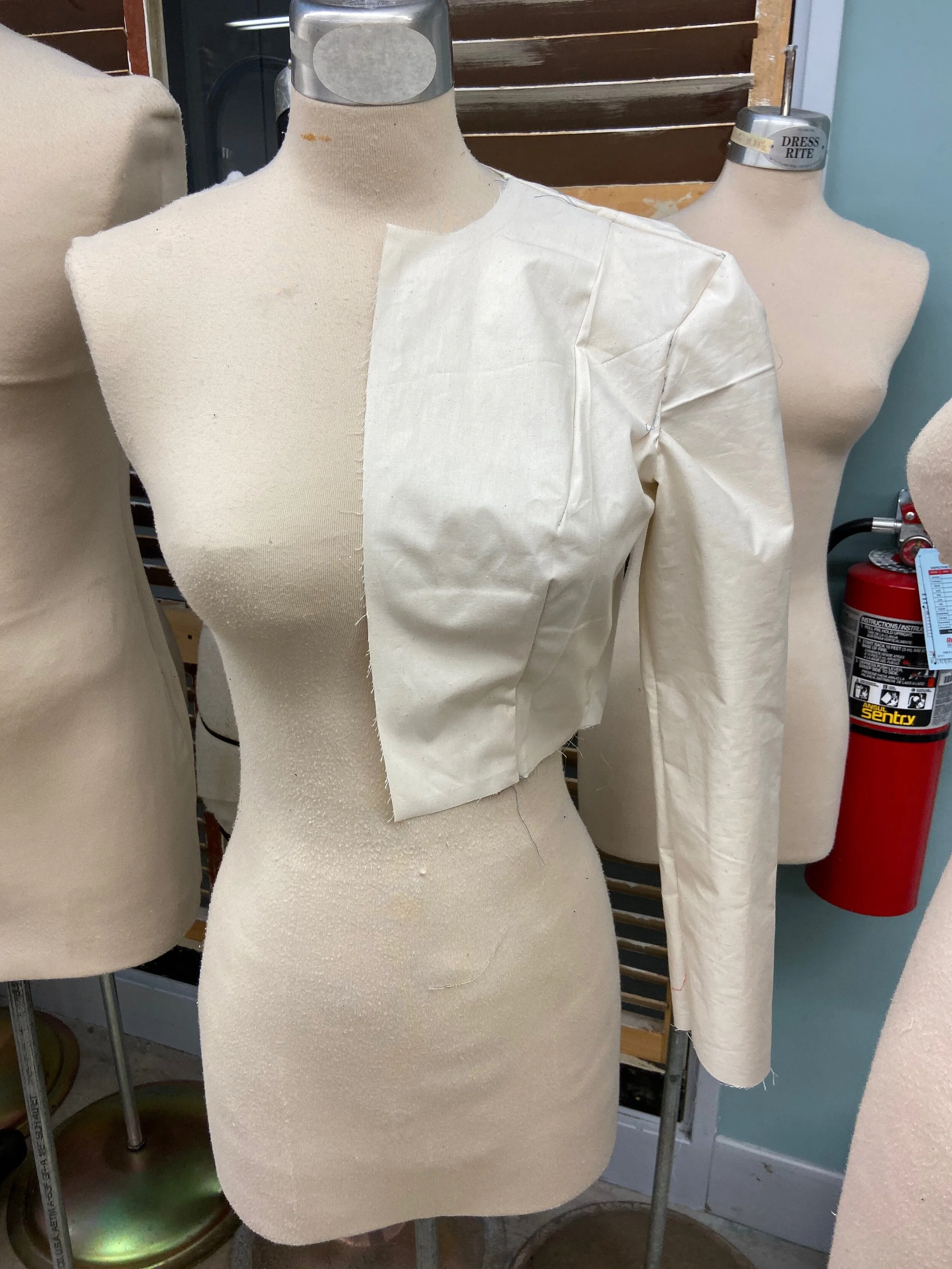
A Sneak Peek of one of David’s Creations for this year’s MODA Fashion Show…
“We live in a disposable world. And so I want to create something with my own hands. And hopefully it will last for a long time.”
What are you looking forward to most about the show?
Seeing my friends walk. The models that I picked are three of my good friends. I’m excited because none of them have ever walked before, and so I think it’ll be really exciting to see them walk down the runway, with so many people watching. And to see my friends’ reactions to that will be really cool.
I’m also really excited to see them wear my designs. I’m designing three complete outfits. So each of my friends will be wearing a complete design. Two of the designs will probably have the same basic forms (a sweater and a pair of pants), but these designs will have different accents to make each outfit unique.
Who do you have in mind when you’re designing?
I don’t have any single person in mind. I make minimalist menswear with vintage accents and elements, because that’s my personal style right now. And I call my style menswear, even though a woman will be modeling one of my designs. I don’t really care about the shape of the body wearing my pieces - just about the style of the clothing.
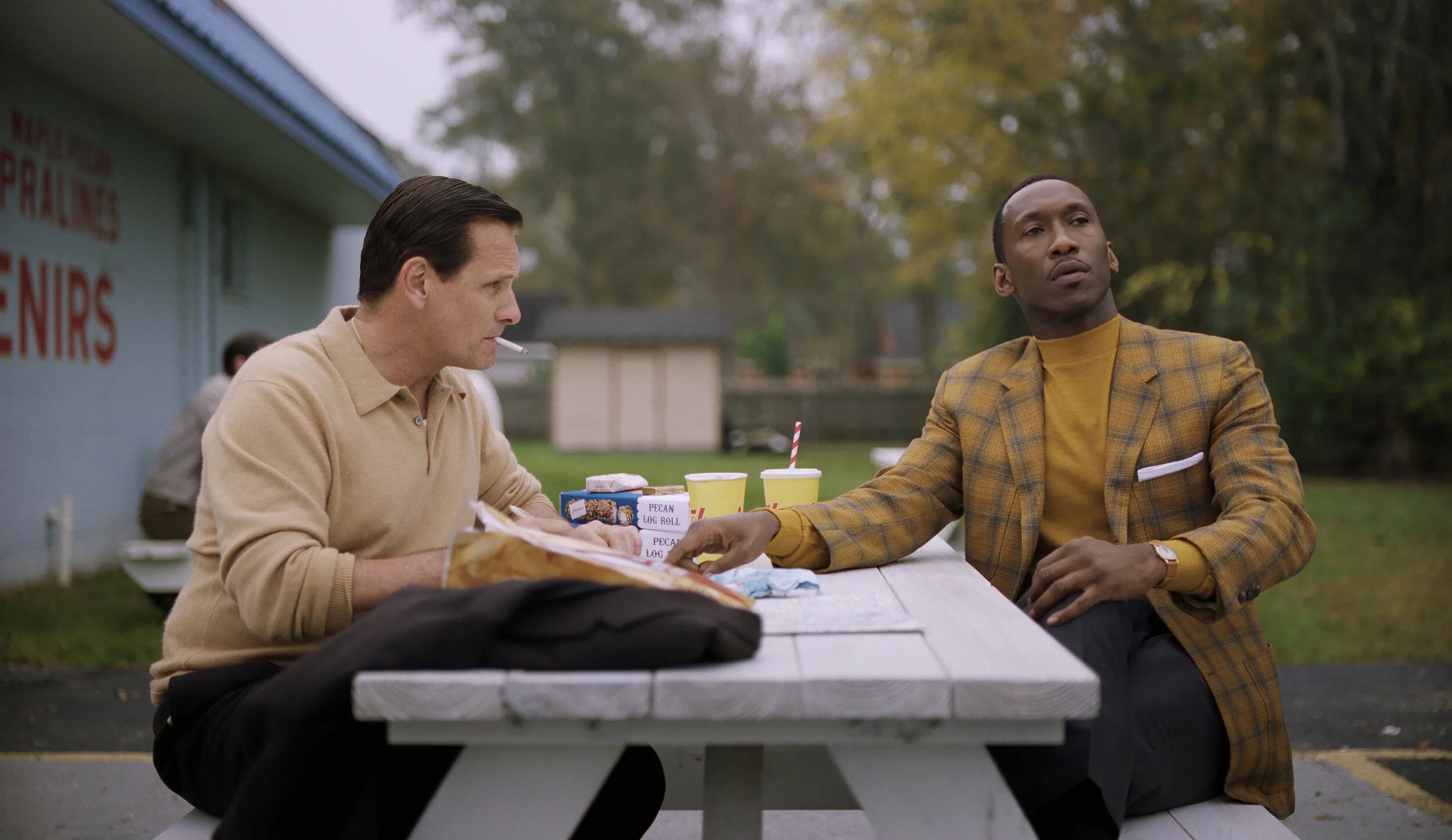
In The Green Book, Dr. Shirley’s outfit (right) serves as inspiration for David.
I’m also really interested in historical fashion. One of my favorite things in the world is watching movies with great outfits, and seeing how timeless many of these pieces are in the world today. One of my favorite movies is “The Green Book.” The Musician, Don Shirley, has really great style. His outfits are incredible. I also watch “The Marvelous Mrs. Maisel,” which is set in New York (where I’m from). And the show has great fashion looks.

In The Marvelous Mrs. Maisel, Midge’s outfits also inspire David.
If you could give yourself any advice on the design process, what would you say to your younger self?
I think in general I can be a perfectionist, so I’d remind myself that this is my first time doing this, that things are going to go wrong, and that what I envisioned in the beginning is not going to be exactly what I get. As a photographer, often times you imagine the perfect shot, and you go to the dark room and print that shot and it never looks as you imagine. And sometimes it’s not what you want it to be, but other times it’s even more incredible than you could have envisioned. So when you design something, it doesn’t always turn out exactly as intended, but sometimes you end up with something even better. And even if things don’t go according to plan, I need to be okay with things changing along the way.
“As a photographer, often times you imagine the perfect shot, and you go to the dark room and print that shot and it never looks as you imagine. And sometimes it’s not what you want it to be, but other times it’s even more incredible than you could have envisioned.”

“Color Warp.” An Original Photograph by David.
What’s your favorite aspect of the design process?
There are two things. The other people in my fashion design program are really cool, and I’m really interested in getting to know them. I also just love creating designs with my own hands. I haven’t created many things in the past. And, especially at UChicago, we spend a lot of time writing papers and thinking abstractly, but it’s really nice to actively create something tangible.
“And, especially at UChicago, we spend a lot of time writing papers and thinking abstractly, but it’s really nice to actively create something tangible.”

Purple Corporation was formed by University of Chicago students Matt Williams and Miles Donnelly. Self-described as “psychedelectric,” the band has three studio albums (Mind Phonics, Atomic Bionic Sonic Chronic, and Memos from Space) and two EPs (BeatPack and BeatPack: Season 2) available on all digital streaming services.
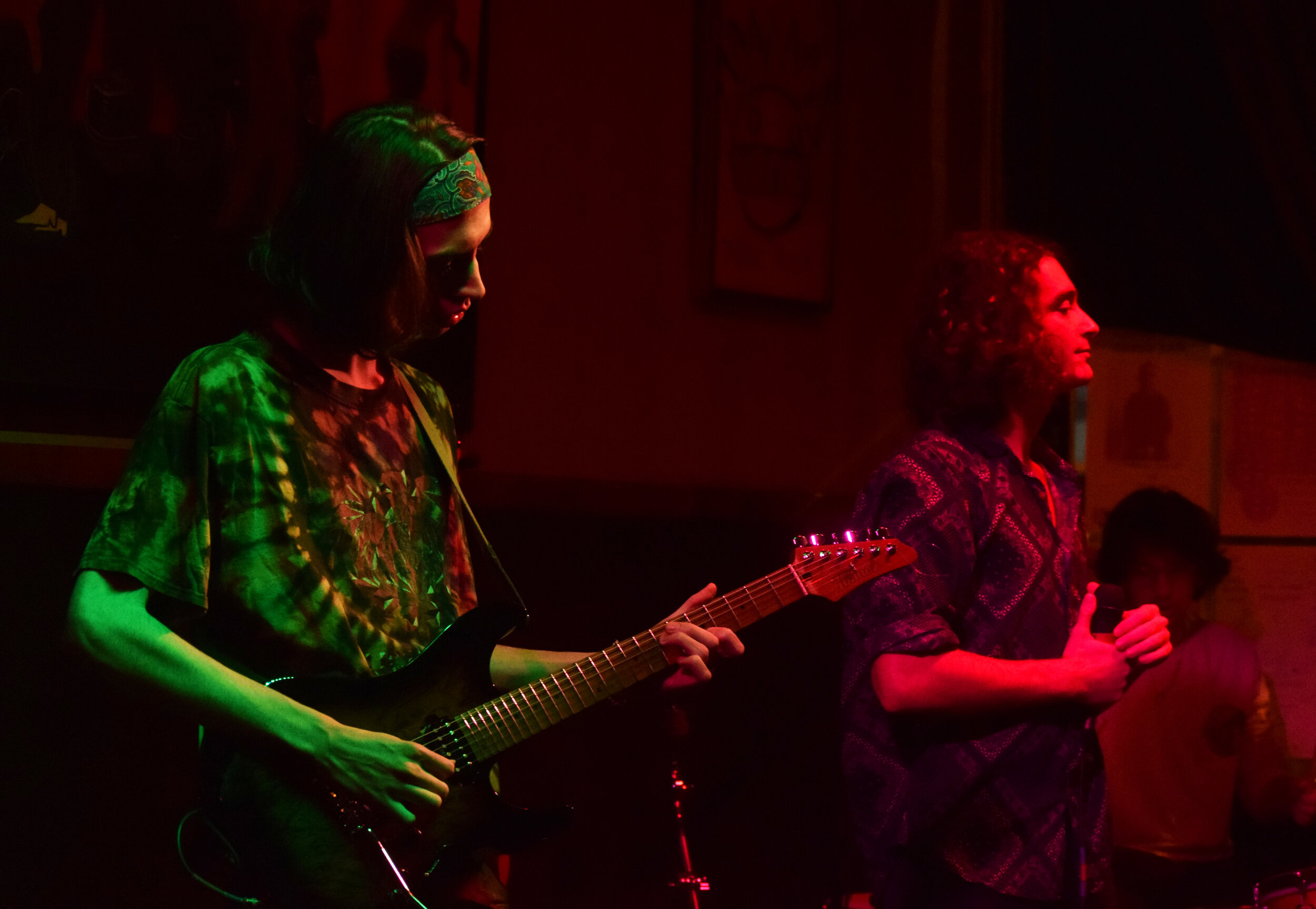
The band features Miles Donnelly on guitar, vocals, trumpet, and production, Matt Williams on bass and production, Nick Olosky on the guitar, Sam Jacobson on the drums, and Jacob Walter on the guitar. Their next album, Indigo Sesh, is dropping on Monday, November 18th, and their next gig is on November 19th at Martyrs’. The following pictures were taken at their most recent gig at Tonic Room in Lincoln Park on November 5th.

Jacob Walter on an Ibanez guitar

Nick Olosky on a Fender Longboard Stratocaster
Can you talk about the initial inspiration for the band? How did you meet?
Miles Donnelly: Matt and I met up through this RSO (Recognized Student Organization) called Blue Maroon on campus and we just decided to do our own thing and turn the studio into our instrument. We started about a year ago.
Matt Williams: Word, we just wanted to make songs. Blue Maroon was doing more covers and we wanted to do originals, so we started songwriting in the studio.

Sam Jacobson on drums
How would you describe your music to someone who has never heard it?
MD: It's eclectic. I would call it "psychedelectric" because I don't know if we could fit into any genre already. But it's got definitely rock and roll, a little bit of hip hop in there.
Nick Olosky: I think the produced versions lean a little bit more into hip hop and the live versions lean a little bit more into rock.
Sam Jacobson: It's a little bit proggy (progressive rock) at parts too.
MW: But it's definitely psychedelic overall.
SJ: Yeah, I would say so. It's pretty atmospheric, too.
MD: We definitely set out with the goal of making something that doesn't sound like anything that's been made before.

Do you have specific artists that you're influenced by?
MW: For me, Parliament Funkadelic. I'd love to be a little George Clinton but with less drugs. And I think Metro Boomin's a genius with the production. I'm inspired by him.
NO: Lately I've been inspired by Tame Impala with the guitar sounds, less shred-dy and more atmospheric and out there.
SJ: That kind of approach fits a lot of our sound better.
MW: When I make riffs for guitar, King Krule. All of the guitar shapes that I know are from King Krule songs.
What does your songwriting process look like?
MD: It depends a lot on what we're working with in terms of instrumentation. Sometimes I'll just start with the acoustic guitar, lay down some chords, and write lyrics. Then I'll bring it in to the rest of the band and we'll flesh it out.
SJ: I'd say there's a lot of fleshing out. Most of the tracks come from a chord progression or a melodic hook. A lot of those have come from Miles because he had written a lot before we met him and started playing with him. Matt, too. They started a while before I met them.
MD: They'll take something that Matt and I wrote in the studio, and it's very electronic, and they'll translate that into a live instrumentation.
NO: Jacob and I will try to figure out the chords -
SJ: That sometimes takes a while.
MD: When I learned the guitar, I kind of just made up chords. I never took lessons. I have no idea what I'm playing. It's kind of just like, "This sounds good, right?"
NO: And then Jacob and I are like, "Um, I think that's a G minor seven with an add 9?"
MW: We come in with ideas, they make it sound like music.
SJ: It's a two step process.


Matt Williams on an Ibanez Soundgear Bass
Do you have specific topics currently inspiring your music?
MD: A big thing that gets me going is climate change.
SJ: He's pissed.
MD: And then I write songs about that, like protest songs, calling back to the sixties when they were protesting Vietnam. I think a lot of musical movements are tied to some kind of protest.
SJ: We've got some of that sixties psychedelic rock sound too.
MD: And then love and shit. Also I like making up stories. I imagine I'm a little kid playing with action figures.

Can you talk about the visual component of the band and the album art?
MW: I’ve got Photoshop. I've been messing around with that.
MD: I have an art connect through my family. We've been collecting art for years, but it's always artists making art in the moment, it's never after the fact. And when you collect an artist's art, they become your homie, just because you're supporting them. So I have a lot of connections with young artists, for example Louis Granet. He's out of Paris. There's also Christian Schumann and Michael Bevilacqua. My mom also runs an art gallery where she represents all these artists. I call her up and am like "I need an album cover," and she'll be like "Alright, I'll see what I've got in the portfolio." And so I pair it up with these paintings that these artists are making.
MW: Shoutout Yara, she's on campus, she did our most recent album cover. It was a picture I took on vacation with palm trees.

How do you feel like your music has evolved since you started the band?
MW: Well, the production's gotten better.
MD: When we started, I'd never played the guitar before, and I'd never played synth or produced. So I've been learning all of that stuff as it's gone along.
MW: We were making beats and he was like "Yo, I wanna sing on this." And he'd never sung before, just started the summer before this past summer. So over the course of the year we've grown together.
MD: And then the biggest shift has definitely been when we brought the whole band together. That's the crucial shift. Now we're playing gigs and we've got this really energized sound that the guys are bringing to the group which is sick.

What's your dream gig in Chicago, or dream gig period?
MW: Madison Square Garden.
MD: Staples Center.
NO: The Aragon Ballroom in Chicago.
MW: That would be sick. Yo, Soldier Field though.
SJ: It'd be sweet to play Lolla. I think a festival would be cool.
NO: Yeah, then you can hangout with the other artists.
SJ: But also the whole outdoor aspect, everyone is just hanging out, everyone is clearly there just to experience music for the day.
MD: I mean, even Summer Breeze would be sick. Put that in the post.

What are you currently working on?
MW: We're trying to do a live album before the quarter's over.
NO: We've got the current versions of a lot of the songs we've recorded. But a lot of the live versions are rather different, so we want to get a session in the studio or something where we can crank out and record some of the live versions, which would be fun.
SJ: Something to mark the transition of when they brought us in. It's such a completely different feel and sound, but a lot of them are the same songs with the same ideas. It'll diversify the Spotify page a little.
MD: And it'll also give something for us to send to venues. And then we're also about to drop a studio album next week. So that's about to roll out, it's 12 songs called Indigo Sesh.

Do you improvise during live performances?
MW: We opened with a jam at our first gig we ever played.
NO: Oh yeah, the bar night gig.
MW: Yeah, so there's a lot of improvisation in our songs. We have pretty large solo sections on most tracks too.
SJ: We like a good solo. We've got a couple of virtuoso guitarists on tap.

To finish off the interview, who are your favorite artists?
SJ: That's a huge question. I'm going to throw Jimi Hendrix in there.
NO: John Mayer's my guitar hero. I really love a lot of his songs. That's not the direction I try to go towards, but I love his guitar playing and a lot of the stuff he does is really cool.
SJ: Yeah, that's a tough distinction to make. All of my favorite drummers aren't necessarily part of my favorite bands. Benny Greb is probably my favorite drummer, but purely as a drummer. I was also revisiting some Led Zeppelin last night.
NO: I listened to some Santana on our record player. Some of the percussion stuff that he does -
SJ: It's the Latin rock thing which is so cool.
NO: Yeah, right. And the way he plans it how you have one beat in your left ear and one beat in your right ear, it's just weird but it works.
MD: MF Doom is my favorite hip hop artist.
SJ: I think he's my favorite hip hop artist too.
MD: And then Freddie Hubbard is probably my favorite jazz musician, on the trumpet.
NO: I already threw Tame Impala out there.
MW: My favorite has got to be Parliament Funkadelic, George Clinton.
SJ: Yeah, P Funk's so sick.
MW: I love those guys. In terms of inspiring me to produce, Metro Boomin definitely. Pharrell has got to be in there. And let me throw SZA's name out there. She's a modern artists that makes albums, like complete works that are just phenomenal.
NO: Yeah, Ctrl is great.
MD: I mean like, The Beatles. You've gotta mention The Beatles. The thing I strive for is being The Beatles with the last fifty years of context, because they were making weird stuff for their time.
I was definitely reminded of Joy Division at your gig.
SJ: I was about to say - when we're hashing stuff out in the rehearsal room, I think of Joy Division and Radiohead a lot.
MD: But it's interesting because everyone who is like "Oh, you know who you sound like?" it’s always something different.
What else have you gotten?
MD: The Killers. Jim Morrison of The Doors.
SJ: I've gotten Jim Morrison before I had a haircut. Sometimes it gets really heavy and we kind of sound metal-y.
MW: Oh, King Crimson.
SJ: I mean, Metallica.
NO: Would you go that far?
SJ: Yeah, I don't know if I would go that far. Maybe more Black Sabbath.
MD: And we've got a lot of jazz and classical roots in there.
NO: These guys like to throw in a lot of Major Seventh chords, which is very jazzy.
SJ: Sometimes I swing the hi-hat rhythm. It's that jazz influence.
MD: Yeah, I started out of classical composition at pre-college at Juilliard in New York. I learned music theory and ear training, but now I just don't think about any of that. I've learned the rules in order to break them.

Any last words for the interview?
MD: We’ve got an album dropping Monday the 18th and then gig Tuesday the 19th at Martyrs'. And then we've got another gig on December 13th at Silvie's Lounge.
NO: That's the Friday of finals week so it will be a send off for winter break.
Check out Purple Corporation on Spotify and Apple Music, or on their Facebook and Instagram pages.

Grace Peguese is a third-year Public Policy major and, more importantly (sorry, UChicago), a photographer who drives a bright red 1997 Saab 900. It doesn’t have a name, but it’s so amazing it might not need one.
As we wandered 57th Street, Dorchester, Kenwood, 58th, we started chatting, and I asked her how she got into photography. “My mom gave me my first camera,” she said, smiling, “she was kind of the family photographer.” Grace is from Michigan, and when her extended family gathered at her grandmother’s house, as they often did, her mom would move from group to group with her camera. “She’s really incredible at capturing moments.
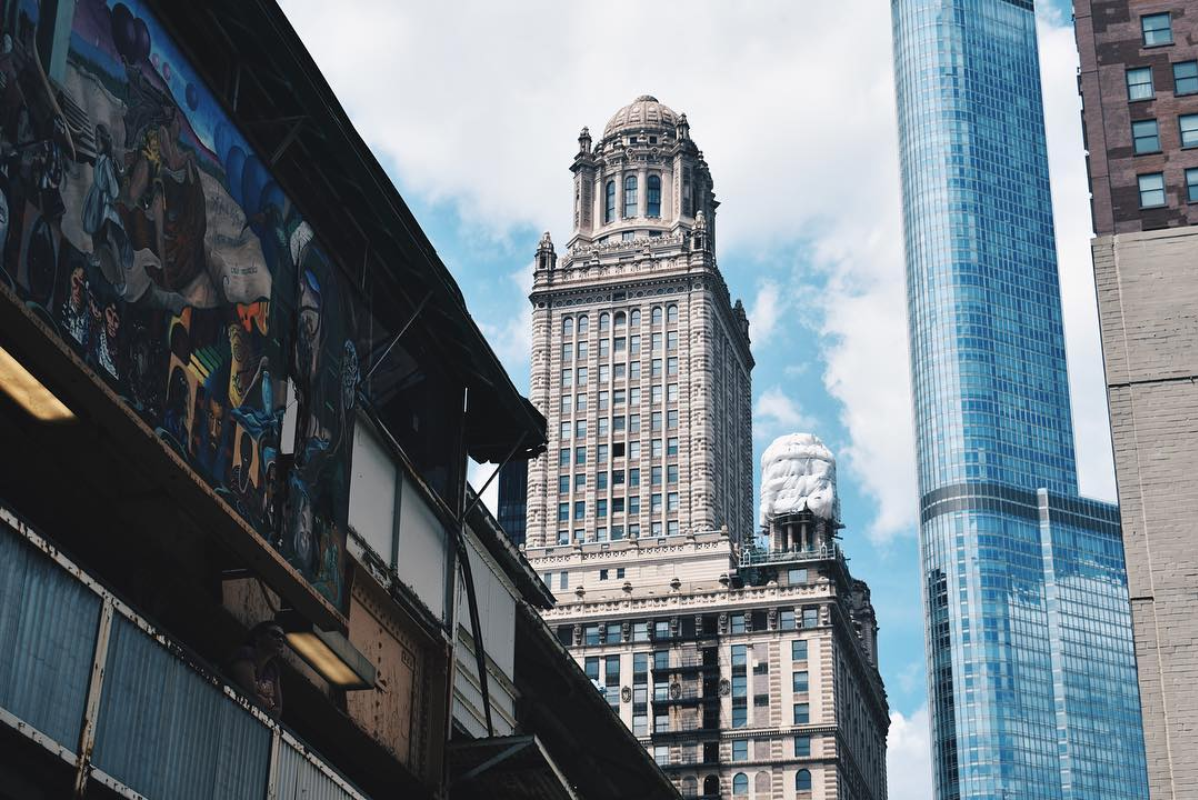
When she first started taking photos with a DSLR, Grace’s main focus was architecture. She still loves the beauty in buildings – as we passed a rounded, neutral-pink toned house, she couldn’t pass up the opportunity to take a few shots in front of it – and since her junior year of high school Grace has had a freelance photography business. Her true passion, though, lies in street photography. “I don’t usually include people’s faces,” she told me as we stood in line for coffee at the Med Bakery. She doesn’t feel comfortable sharing her subjects’ identities in that way, especially if the viewer has no way of getting to know them.
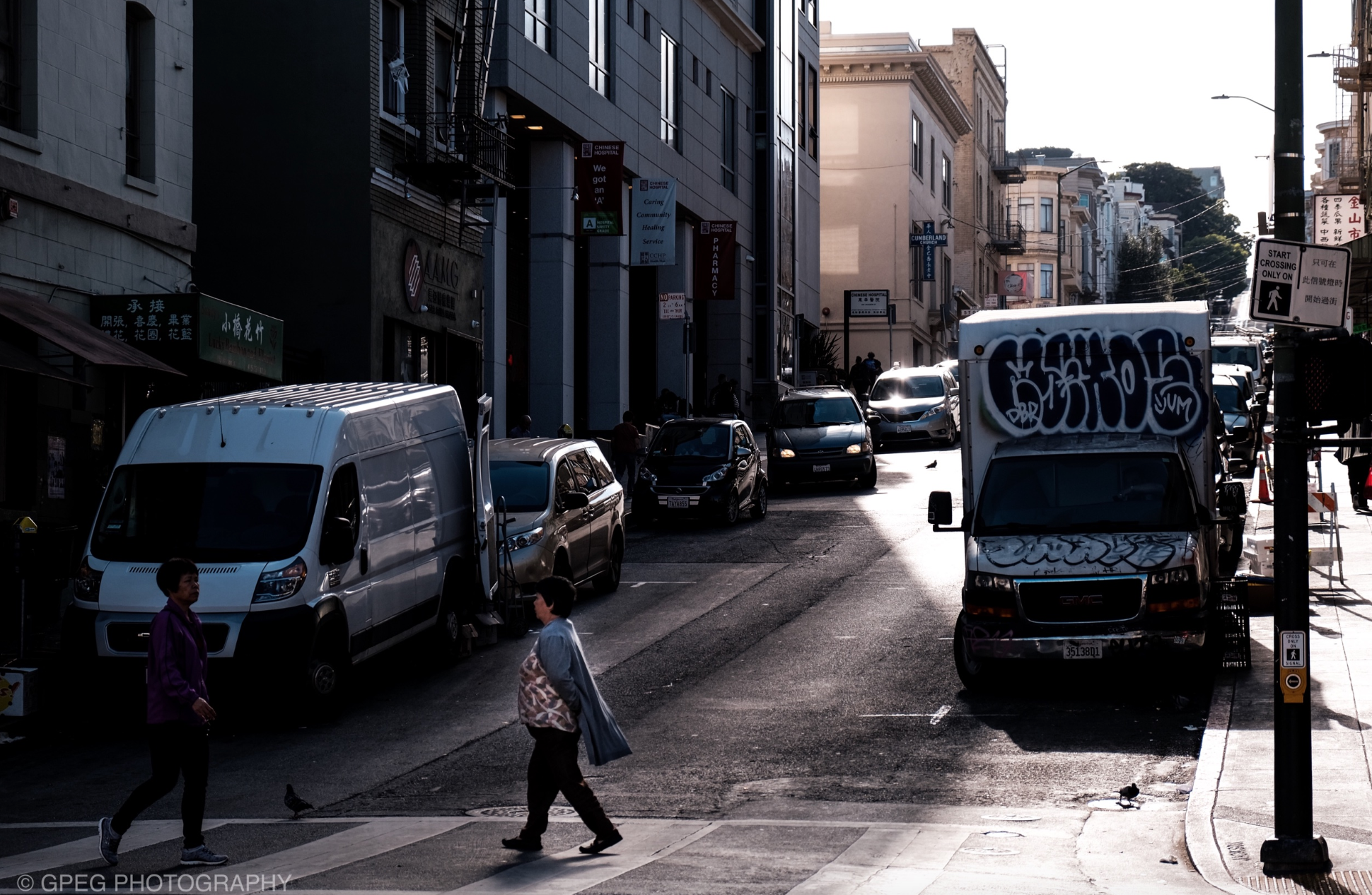
Every now and then we stopped in front of a house, fence, or set of stairs that caught Grace’s eye, and she gave me an idea of her vision for the location. We would shoot for a few moments, adjusting levels, poses, exposure, focus, and then she would click through the photos to see which had turned out well. When she was satisfied, we continued.

Working with her was effortless. She is easy to talk to and flexible, and she welcomed my input on shots, even when it was silly (case in point: I wanted to throw leaves up over my head, and she snapped some photos as they floated down around me).
On our way back to her car, we talked about the more technical aspects of her photography. She said that she doesn’t consciously think about the composition of her photos – the way she frames her subjects is instinctive. I told her that seemed like a pretty rare gift, but she brushed off the praise.

Grace has some advice for aspiring photographers, too:
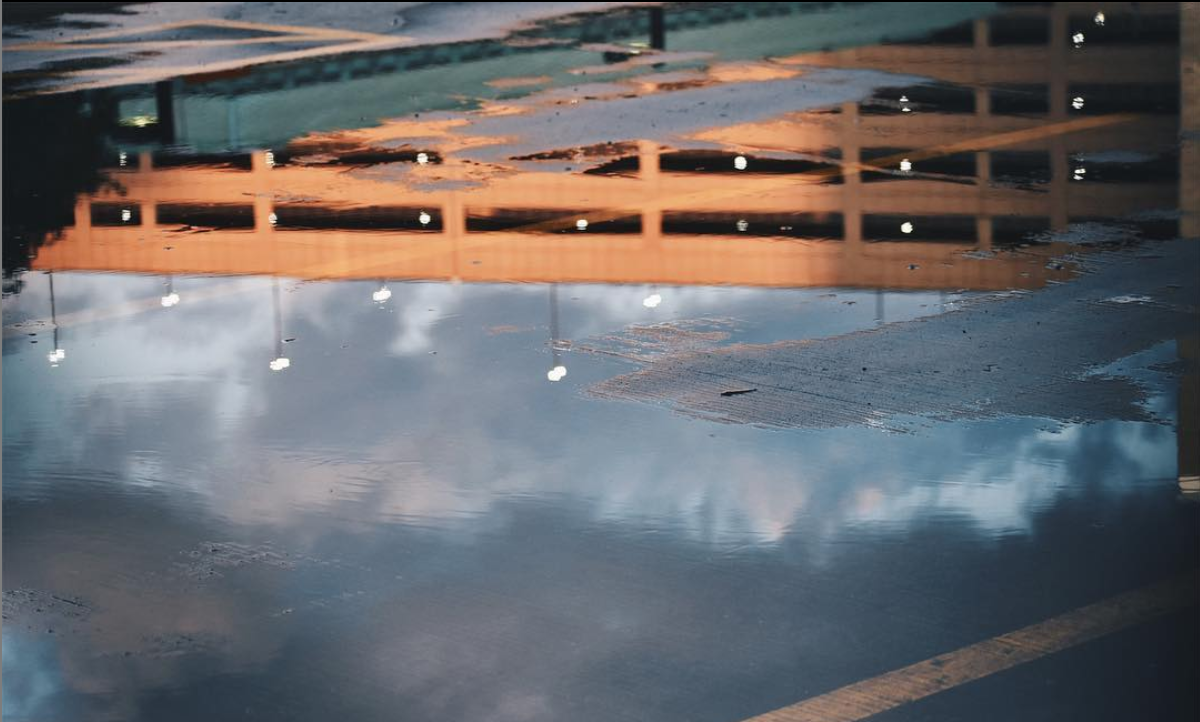
She says that though some aspects of photography come naturally to her, it’s important for new photographers to learn the basics “like composition, lighting, how to use manual functions.” If you don’t get a solid grounding in those, “it doesn’t really matter if you have the most expensive camera and the most expensive lenses, or if you have a starter camera.”
I had one final question as we rounded the corner back to her car. “Is your mom proud of your work?” She smiled, and I saw how much the woman who inspired her love of photography means to her. “Yes,” she replied. “She is.”
Want to see more of Grace’s work? Check out her website and Instagram (@gpeg_photography)!
My name is Aisha and I’m a first year originally from Barcelona, having spent the last five years living in London. I plan on pursuing an Econ major, and potentially exploring the Urban and Environmental Studies field. You can usually find me at the gym, or immersed in some sort of content-creating endeavor–mostly filmmaking, photography, and travel journals, as well as contributing as a writer and photographer for MODA on campus!
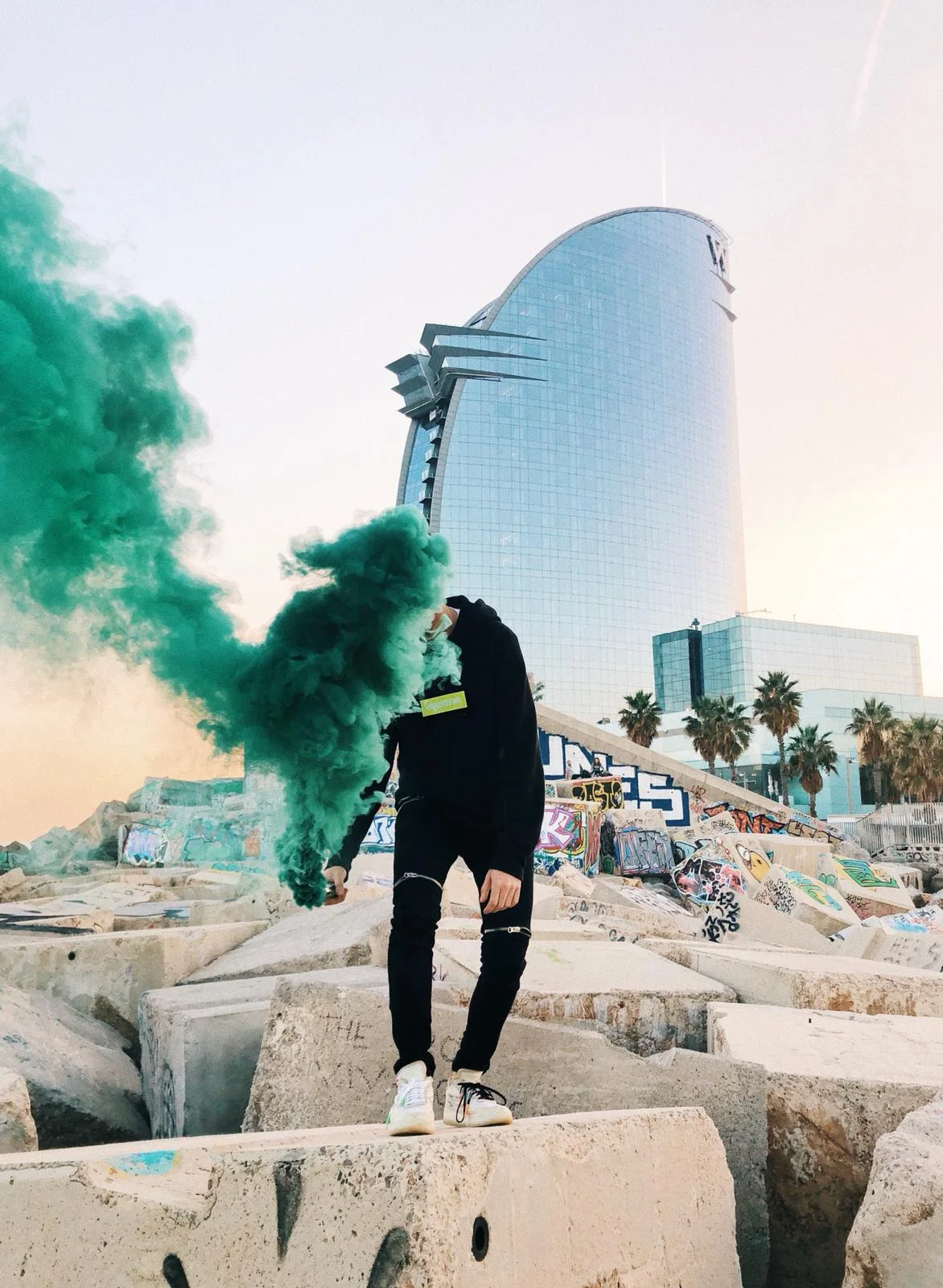
Why (and when) did you become interested in photography?
Over the years, I’ve become more and more aware of how ephemeral moments are. I discovered that photography serves as the perfect gateway to congeal these moments and create a sense of timelessness.
Ever since cameras became readily available, my family has been capturing memories for generations. In our households, you’ll find shelves upon shelves of albums, packed with moments that were shot to last into the years.
My grandfather was an avid photographer himself; in fact, he carefully took care of all of his cameras until my grandmother eventually passed them on to me. I believe this is also the reason why I prefer shooting film rather than digital; it seems to be an old-school family tradition! But most importantly, having a limited number of exposures makes you pause for a second and soak in the beauty of a moment before deciding to immortalize it.
Where do you find inspiration?
I’ve often been told that I have an eye for detail. Who knows, perhaps it’s the perfectionist in me. What most inspires me is probably the Sun and how it subtly works its way into different settings. I realize that this sounds extremely obtuse, so I should probably elaborate a little bit more... By ‘Sun’ I mean natural light, and how it sheds an air of beauty into practically any subject. My favorite example is an average city alley, and how the afternoon rays piercing through the side streets or buildings suddenly make it seem so dream-like. If you’re ever walking down from North or Ratner on your right, just before the Book Store (where the UPS trucks sometimes park) and are lucky enough to catch the sunset spilling through the alley, you’ll definitely understand what I mean!
In terms of other creatives in the field, I look up to Dennis Stock (in particular his 1950s rolls of James Dean), Robert Capa (a war photographer whose shots of the Spanish Civil War are very close to my heart) and Sebastião Salgado when it comes to all-time idols. Younger photographers whom I also admire are Cole Sprouse (@colesprouse) and Damon Baker (@damon_baker) for their take on tones and contrast. You should definitely have a look at their works if you have a minute!

Which cameras do you like to use?
On a day by day basis I always have my phone on me, so if anything catches my eye I will often use it to snap a shot. However, if I’m travelling or going urban exploring, I’ll take my grandfather’s 1981 Canon AE-1 Program and shoot 35mm rolls, alternating between B&W for portraits and colour for landscapes. I’d love to learn how to develop my own film this year! Every now and then I like to take advantage of living at the core of modernization and use my DSLR – Canon 100D – to experiment and get creative, especially with Lightroom during the post-production process.
What do you like to photograph?
Mostly people, be they family, friends or complete strangers going about their lives. There’s something about human emotion and movement that never fails to amaze me. I’ve also been very lucky to travel all around the world, which allows me to capture all sorts of cultural diversity, architecture and landscapes. I would really like shooting in deserts and underwater when I get the chance.
Do you have a favorite shoot you've done?
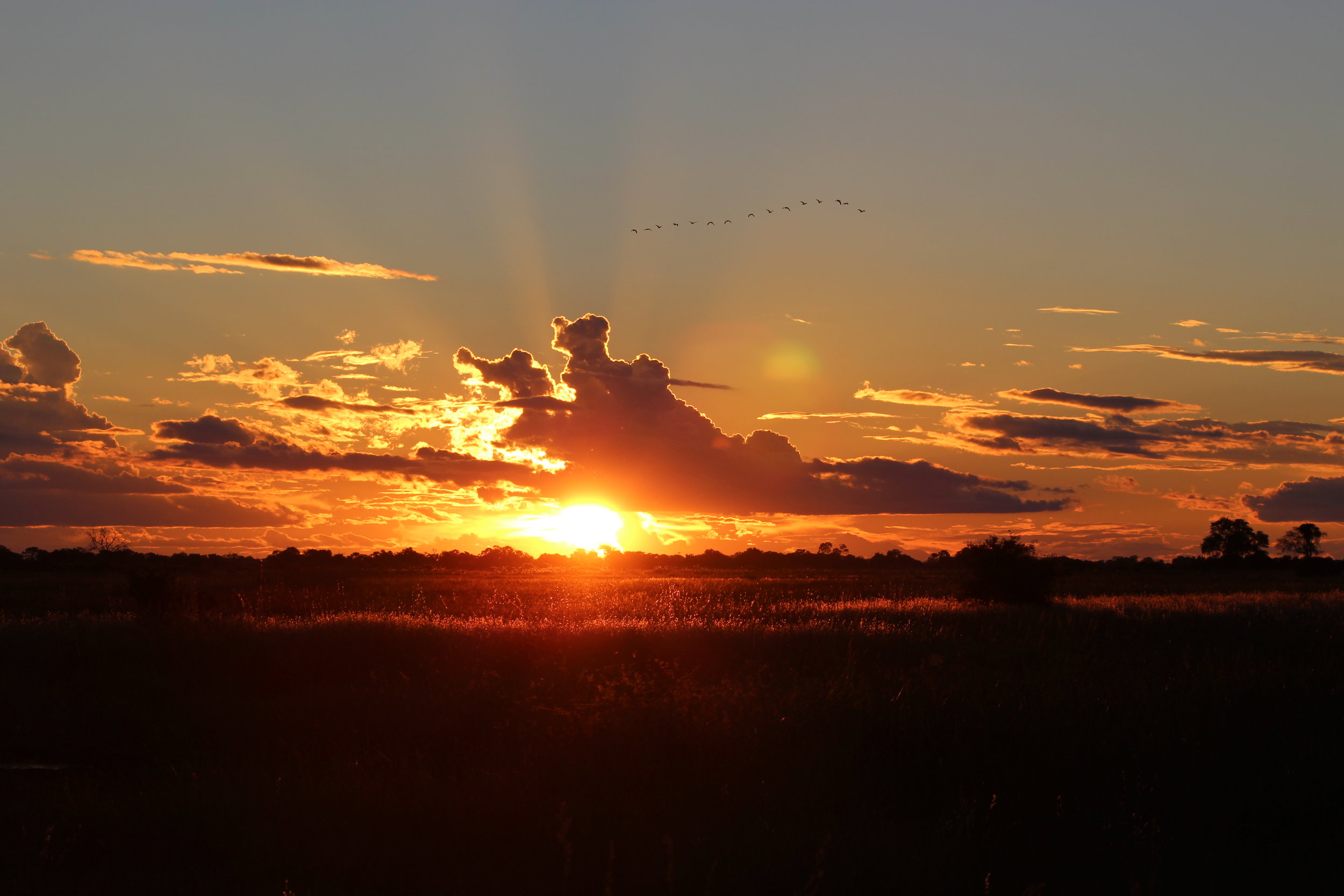
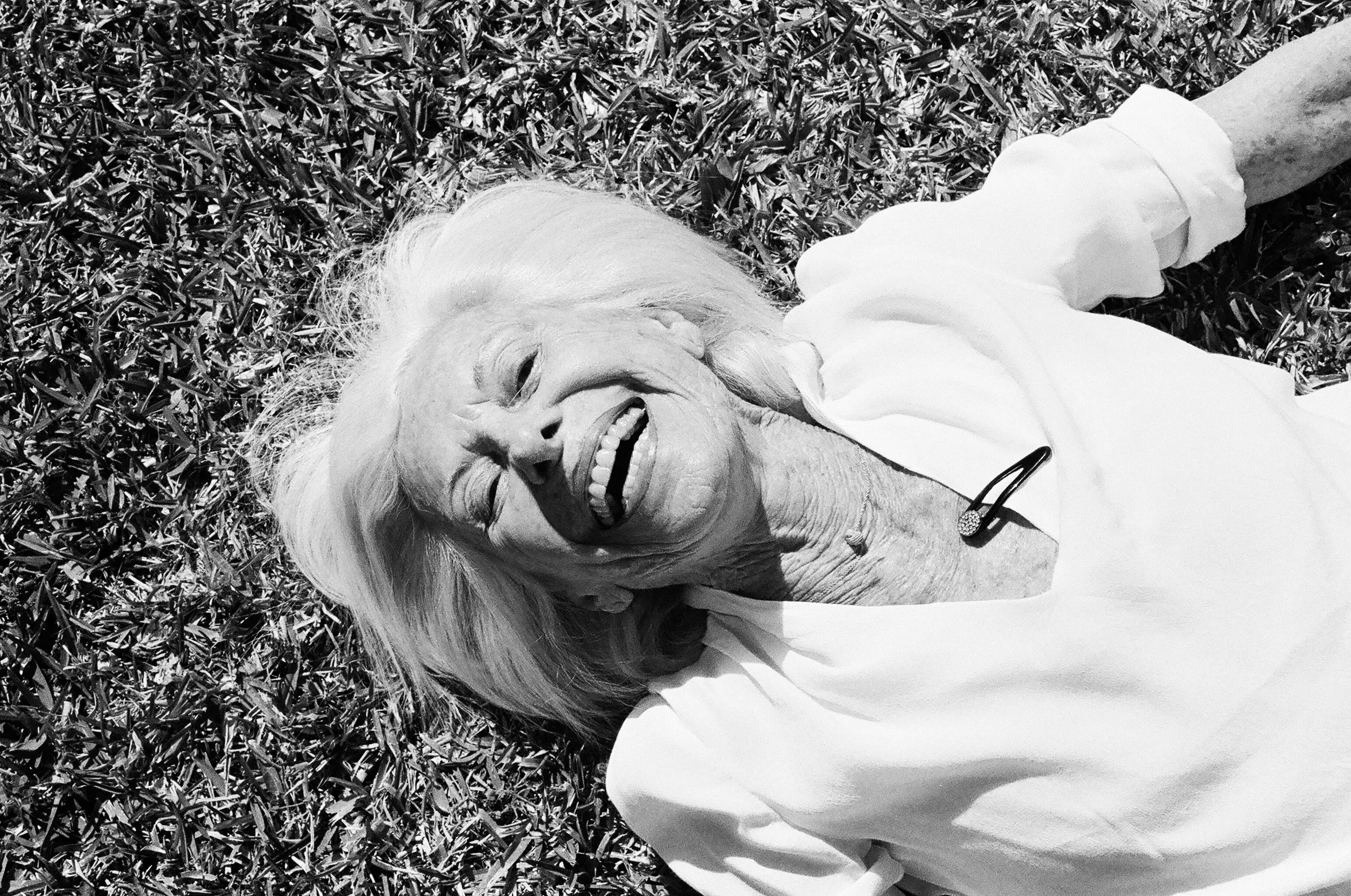
I’ve done a couple of shoots mainly with close friends and family, exploring the different features of each type of camera and I love to play with location and angles. My favourites are from Botswana (wildlife) and some B&W rolls that I shot of my grandmother on a sunny Spring afternoon. Both of these were just so raw and organic. I felt like they really embodied what drew me to photography in the first place.
How do you see photography working into your life here in Chicago and in the future?
Moving to a new city is definitely going to bring out my love for shooting in urban settings and capturing diversity. I look forward to exploring different neighborhoods and learning from other photographers on campus!
All images courtesy of Aisha Rubio.
Leave fall quarter behind you and destress with the latest and greatest MODA Magazine Winter 2019 issue! Check out the online version on Issuu here!

Photographed by Natalia Rodriguez
The MODA Mag team would like to thank all of the stores, businesses and individuals involved in creating, producing and printing this issue.
Cover image photographed by Daniel Chae.
Photo by Isaac Tannenbaum
Read MoreMy name is Isaac Tannenbaum, and I’m a third year double-majoring in Cinema and Media Studies and Environmental and Urban Studies, also with a minor in Architectural Studies. I’m involved with MODA, Fire Escape Films, and contribute every so often to the Maroon Arts section. Outside of classes and RSOs, I love watching movies at Doc, taking pictures (obviously, haha) developing film in the darkroom, cooking, and hanging out with my dogs when I’m home.

Why did you pick up photography?
I’ve always been interested in photography—I remember fighting with my siblings over our family’s DSLR on every vacation we would take until we started getting our own cameras. I guess what I’ve always been drawn to is that photography captures and makes permanent instantaneous moments; when everything is so temporary and fleeting, I feel like I just want to capture anything and everything. I fell out of photography for a while towards the end of high school and my first year here, but as I started to notice how I was photographing everything on my phone—and I really mean everything, as evident by the 15,000 pictures I have on my iPhone right now—I realized how much I missed it, and this led me back to the art and medium and I’ve stuck to it since.
Where do you draw inspiration?
My interests mainly lie in documentary photography, in capturing the stories in individual moments. I draw a lot of inspiration from photographers like Alec Soth and Rachel Boillot, Vivian Maier and Bill Cunningham, as well as Annie Leibovitz.

What do you like to shoot with?
I shoot mainly on 35mm film. I tend to use black-and-white film because I can develop it myself with the resources on campus here, and because I love how it forces me to play with shadow and grayscale contrast. I’m attracted to film as a medium because I really think it has a photographic quality that digital simply doesn’t achieve. It’s sort of like the grain itself creates a depth and texture by actually capturing the moment instead of trying to digitally reproduce it. There’s also something about the materiality and physicality of it, of being able to work with your hands on a photo from start to finish. And when you have something like a dusty negative or water marks, you’re reminded of that materiality and that it really is working with materials and a physical element that digital just doesn’t have, even if the blemish impairs the clearness of the image. It’s like the imperfections are part of the art itself… I just think that analog photography and film as a medium is just really cool and more interesting than digital.
“[With film photography] it’s sort of like the grain itself creates a depth and texture by actually capturing the moment instead of trying to digitally reproduce it.”

What are some of your favorite subject matter?
My first draw towards photography (and film production, for that matter) was to eventually work on crews for projects like Planet Earth, so wildlife photography is definitely one of my favorite subject matters. It’s great when I have the opportunity to travel and see the animals in person, but that’s a rarer, special occasion. I also enjoy portraiture, especially when I get to capture a really genuine, candid emotion. I like to talk with the people I’m photographing when shooting, hopefully getting them to laugh while I take the pictures, because I think that nothing posed comes close to that unaffected happiness that comes with laughing, and I love making a transient feeling like that permanent in photography.
What’s your favorite shoot you’ve ever done?
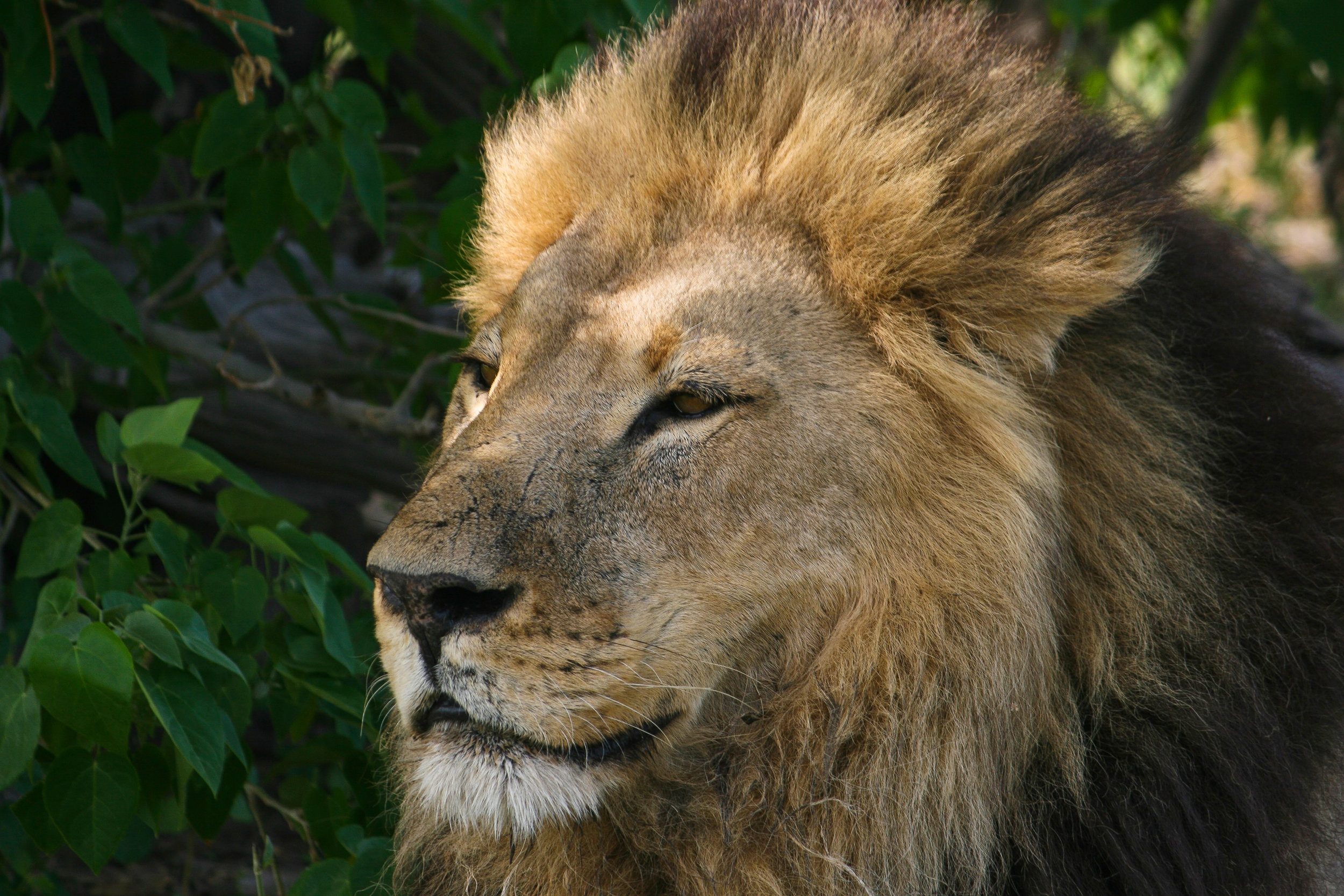
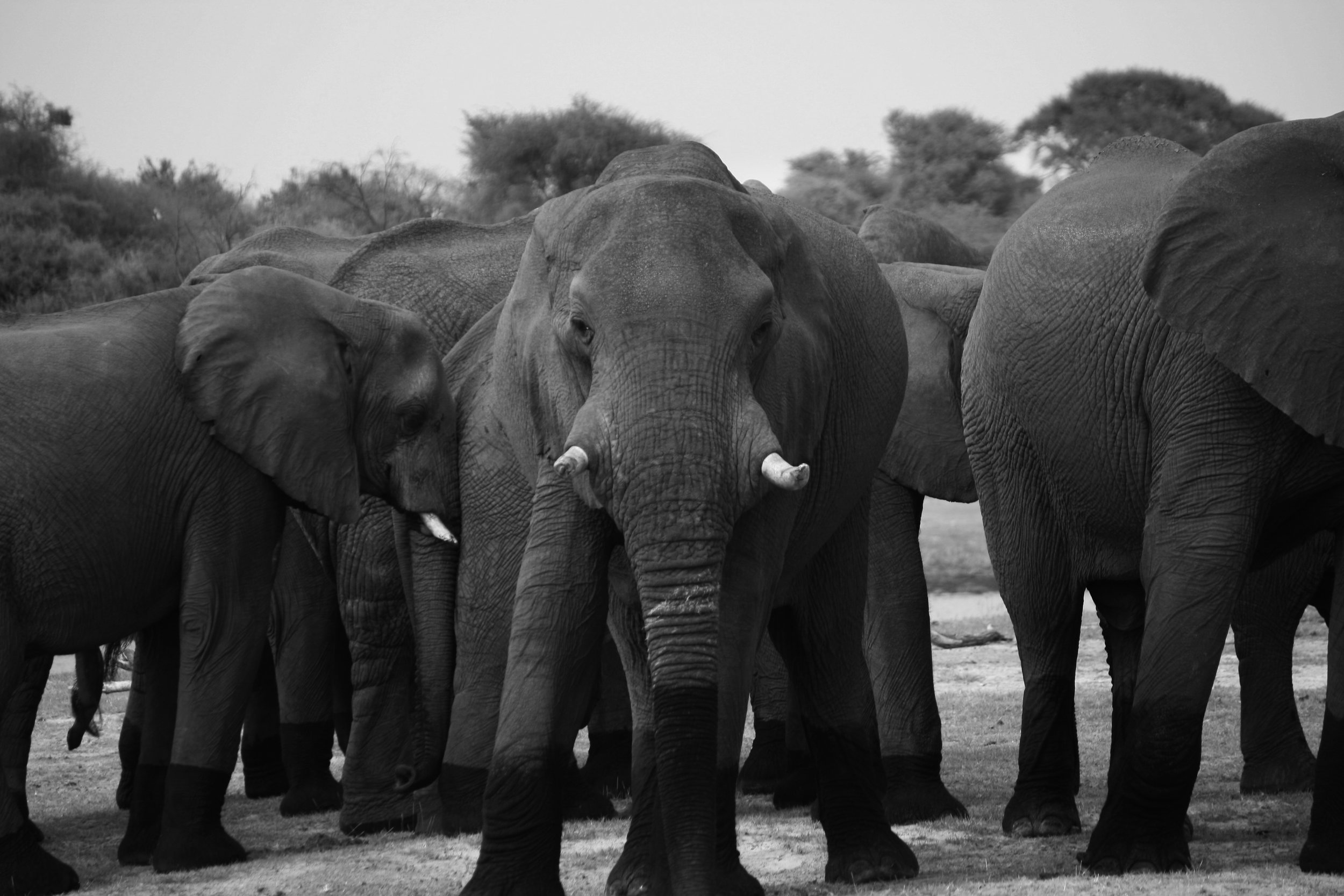
I think my favorite shoot so far was my entire trip to the Okavango Delta in Botswana because it gave me the chance to shoot wildlife photography like I’ve never done before. Like, you can’t compare the squirrels of Hyde Park (which I absolutely love shooting, and you can often see me running after squirrels with my camera) to lions on the plains and elephants by the watering holes.
Do you have a favorite location to shoot in Chicago?
I don’t really have a favorite location to shoot, but I do enjoy getting to use photography as a way of exploring different and unique areas of the city.
The novelty of an instant photo for kids who have grown up in a digital age has not lost its appeal. However, the instant camera marketplace is getting crowded and expensive, so here are my recommendations based on a variety of features.
Film: $13 for 10 prints
The price may be a shock factor, but let me explain. This camera shoots digital, meaning you can take as many pictures as you would like before deciding to print it. Additionally, you can print a photo as many times as you would like, meaning everyone in the group can leave with the same instant picture. Some may see this as defeating the purpose of an instant camera, but those looking to experiment photographically without the high stakes of using a print on every shot, this could be a really great option.

Image via here
Film: $14 for 20 prints
This camera offers creative features giving it a photographic edge. Double exposures, adjustable brightness, party mode, kids mode, landscape mode, and portrait mode, this camera provides room to adjust for the perfect image in any moment.

Image via here
Film: $14 for 20 Prints
Interchangeable lenses on an instant camera allow for true experimentation. The 27mm built in wide-angle lens can be manipulated with a fisheye lens attachment, portrait lens attachment (35mm equivalent), and close-up lens (10-15 cm closes focusing distance). It allows for infinitely long exposures to experiment with light streaking and other long exposure effects. Additionally it comes with blue, red, purple, and yellow color filters for the flash to add an artistic touch .

Image via here
Film: $19 for 8 prints
This camera's artistic flair comes less from the camera itself than from the classic, high quality Polaroid film it uses. Polaroid film quality is like no other and they offer creative options—black and white, blue, and pink. There is a reason everyone knows you're talking about an instant photo when you refer to it as a Polaroid, the really are the original instant photo company and the style their film brings to images is artistically distinct.

Image via here
Paris based fashion photographer Carin Olsson runs a fashion, travel and photography blog and Instagram account that documents her adventures around the world. Whether she's collaborating with brands like Dior on their latest beauty campaign, attending Paris Fashion Week or shooting in the most beautiful and remote locations, Carin has made a name for herself in the fashion industry for her dreamy, beautifully staged photographs.

image via
Carin's blog also doubles as a wonderful guidebook for some of the most beautiful cities in the world. Whether she's sharing with followers her favorite café in Paris, stopping by the best London boutiques or flying back home to Stockholm for the weekend, a quick scroll through Paris in Four Months provides readers with an incomparable glimpse into the best and brightest cities around the world have to offer!
12.2k Likes, 135 Comments - Carin Olsson (@parisinfourmonths) on Instagram: "Memories from last week in Antibes and Cannes for the film festival ✨"
8,157 Likes, 75 Comments - Carin Olsson (@parisinfourmonths) on Instagram: "So out of my comfort zone while filming together with @Diorparfums in the middle of a field (in..."
Carin's blog, Paris in Four Months, documents her most exciting adventures, taking readers everywhere from the Veuve Clicquot Polo Classic in New York City to the Chanel in Cuba show several seasons back. Her blog features a colorful collage detailing her outfits, behind-the-scenes footage of fashion shows, racks upon racks of couture at designer showings, and more! Check out Paris in Four Months to keep up with Carin's latest adventures!
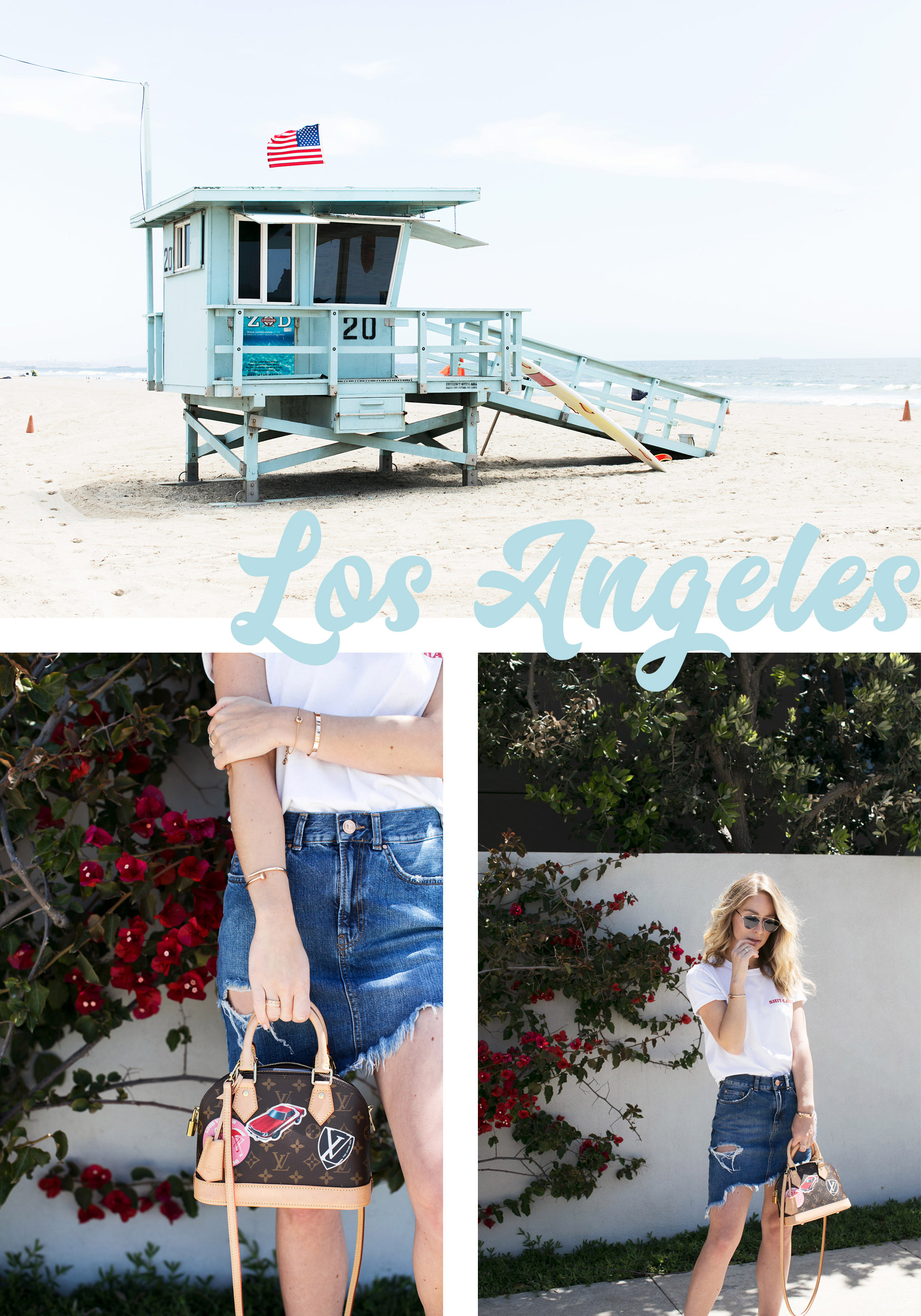
image via
Feature image via
Instant photography goes back to its roots.
Read More