Cruella's Devilishly Remarkable Costume Design

Disney live-action remakes of animation films have come under the scrutiny of a vocal number of fans of the originals. Either from their uncreative approach at almost precisely copying the source material while adding nothing more than a little sprinkle of overcooked CGI and a pinch of Uncanny Valley to many more abstract or object-based characters like the Genie from Aladdin and Lumiere and Cogsworth from Beauty and the Beast, or from the movie’s blind faith towards recreating the magic of the animation instead of what makes the original films great, these motion pictures have received a lot of hate regardless.

This criticism is not particularly part of my experience. (I appreciate a lot of aspects of 2019’s Aladdin, including the Bollywood-inspired dance sequences and Jasmine’s new song and her portrayal as a princess who cares about politics, Agrabah, and its citizens, earning the position of Sultana, and 2019’s Lion King is a visual and technological marvel regardless of the “emotionless” character facial expressions.) Moreover, even if such opinions thrive in places like Metacritic, Twitter, and sometimes YouTube, box office numbers provide a whole new worldview to the vocally unbeloved motion pictures. As two examples, Beauty and the Beast made $1.26 billion globally, while The Lion King made $1.56 billion worldwide.

Image Via

Image Via

This more optimistic perspective to the live-action remakes where, in the majority of times, people keep on coming back for more, not unlike the MCU movies with the amount of money both franchises make with their hits and misses, partially proves that not everybody who watches a movie and enjoys it goes on social media to defend it, so the unilateral view presented about them on social media is not the only reality of the situation (even film reviewers have disparate opinions). That is a factor, amongst many others, people should consider when reviewing a movie’s performance above only believing in the words of the vocal majority. If someone does not like how Disney treats their live-action remakes and finds a community of people who agree, they can and should have their opinions, and Disney can learn from some critiques, but to believe that their views are the truth of the matter and that everyone else stands with them is misguided. Still, if you have either liked or disliked the movies, you are very much entitled to do so.

Controversy (and a touch of audience alienation) aside, the most recent episode of this “love it or hate it” franchise, rather a quasi-installment to the list of Disney live-action remakes, is Cruella. Actually, in my opinion, my little rant above was totally unnecessary for this post because simply put, Cruella falls considerably far away from the wardrobe of remakes, both in content and tone, so I may have just borrowed your time a tiny bit more than I should have. Oopsie. Either way, this The Devil Wears Prada-esque feature-length is more akin to a prequel than a remake (especially if you consider the 1996’s 101 Dalmation to be one of the first Disney live-action spins and that Emma Stone’s character is a past version of Glenn Close’s) and more closely resembles Maleficent in its focus on making a villain the protagonist.
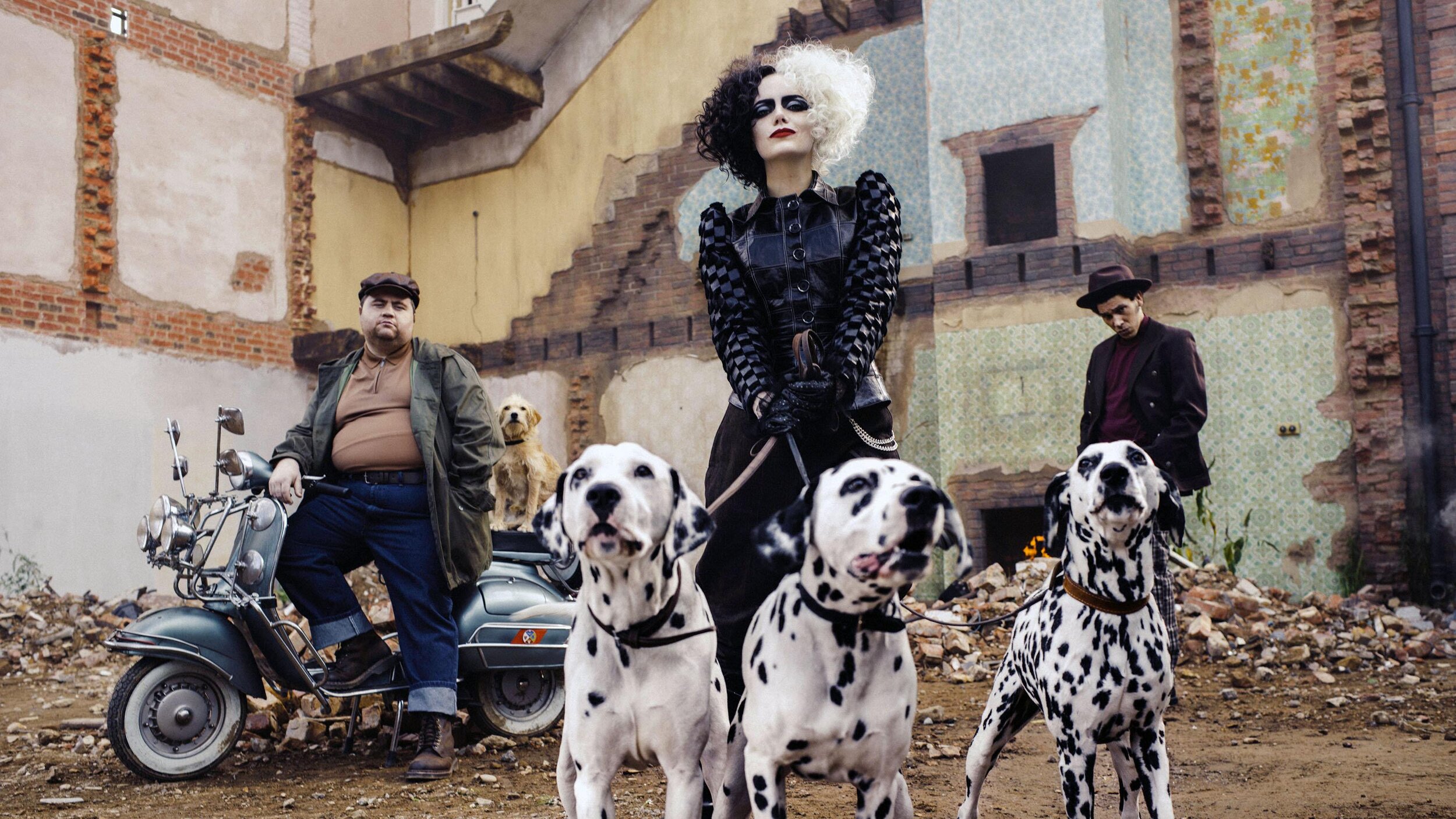
Image Via

Image Via

The only manner in which Cruella could be called a pure live-action remake would be if, for example, 2019’s The Lion King was about how Mufasa and Scar’s father was a segregationist and dictatorial king against the Hienas, and Mufasa was congruent to such policies while Scar was a rebellious opponent of the marginalization of the species. Or maybe if 2015’s Cinderella featured an intricate Regency or Victorian-era love triangle between Lady Tremaine and Cinderella’s Mother and Father and how Tremaine poisoned Mother because the antagonist got impregnated by a husband she did not want to have due to an arranged marriage (Father was going to be her original match) and began to be increasingly afraid that the horrible husband would send Drizella and Anastasia away due to certain congenital conditions that made them look different. Hence, the only way for her to conquer Father back was to poison her miserable husband, inherit his fortune, and then kill Mother to get her out of the picture. But none of the situations described above are true, and I am rather having fun stalling the audience from the post’s actual content. Yet, it appears that with Cruella, a movie that is being compared with DC’s Joker in its depiction of a protagonist’s downfall into badness/madness, her appeal comes from seeing what made Estella become Cruella, a wholly original interpretation of such a character. Are we supposed to morally like the villains they come to become? Of course not, but at least Disney is adding a little more PG-13 spice into what makes their iconic villains both likable and “bad” with this film, which does precisely that with literal style.

Cruella seems to have appeased some critics that are calling it “the best live-action Disney update yet,” update being the keyword here since “remake” entails the unquantified modification of a plot in structure, characterization, context, and production, while “update” has a more varied tone to the number of narratives one can tell inside an already existing story (the end of the movie creates a direct reference to the original). Nonetheless, for those who still believe Cruella is a remake, the fact that it exists as very much its own thing years apart from the story in 101 Dalmations without many special effects has offset most, if not all, the criticism the remake-haters have about this Disney franchise. If somebody is to criticize the movie, they will now focus on its inherited flaws (if or when they find it) rather than the fact that it is trying too hard and failing at reproducing the magic of the original. Now, I have my own opinions about Cruella, but I will keep them separate so I can divert my attention to breaking down the undeniably gorgeous and highly stylish costume designing of the movie, one of its undoubtful highlights. This may sound inconsiderate and rude, but if a person left the film thinking that its costume designs are “average” compared to other movies in general, I am astounded at that person’s blind moxie.


The Undertaking

Image Via

Image Via

Two-time Oscar-winner costume designer Jenny Beavan is a master in her craft, and Cruella solidified her status as such even more. Previously working on Mad Max: Furry Road, The King’s Speech, A Room with a View, and on both installments of Robert Downey Jr. and Jude Law’s Sherlock Holmes series, Beavan was contacted by Disney producer Kristin Burr to helm the project after helping her with 2018’s Christopher Robin, a movie that is in itself a unique spin on Winnie-the-Pooh. In an interview with Popsugar, Beavan mentions that after reading the script for the first time, the designer was doubtful is she would be able to take the movie on and that she started “everything — with complete terror, obviously, because it was so enormous.” Enormous such a creative undertaking was.

The main character and the antagonist had 80 costumes weaved for them combined: 47 for Estella/Cruella, played by Emma Stone, and 33 for the Baroness, played by Emma Thompson. For the rest of the principal cast, 197 garments were constructed. Even if these numbers don’t feel very magnificent, especially when you compare Daphne’s 104 dresses alone in Bridgerton (granted, it is a Netflix series with eight episodes in its first season), making almost 80 Haute-couture garments that are supposed to depict different levels of creative fashion designing, with varied shapes, colors, fabrics, cuts, and sewing skills, be unique in their own ways is sincerely astounding. The amount of variation found in the sketches sprinkled throughout Cruella alone is enough for a whole fashion show. But then, every time the Baroness appeared in it, she wore something different, highly fashionable, and sometimes even timeless, a result of her being, first, an aristocrat, and second, the head of her fashion label. To design 33 unique premium-looking garbs for one movie is to create and weave for a small portion of the celebrities from the Met Gala or an award show at once, and that is impressive. But then, the movie depicts around six major fashion events, and they all feature Haute-couture for both Cruella and the gala guests, perplexing me even more about how a group of fashionistas and seamstresses were able to come up with all the costumes for it.

Image Via

Image Via

Image Via

Image Via

I am going to skip over Estella’s garments (more subtle than her counterpart’s but still complex and fashion-forward) to highlight only Cruella’s and the Baroness’ in the following paragraphs, but I need first to stop and say that the work Jenny Beavan and her team put into crafting all of Cruella’s looks alone should be recorded in film history, preferably in a museum displaying all the original costumes. Now that I said it, let's talk about inspirations.


Rock & Vogue

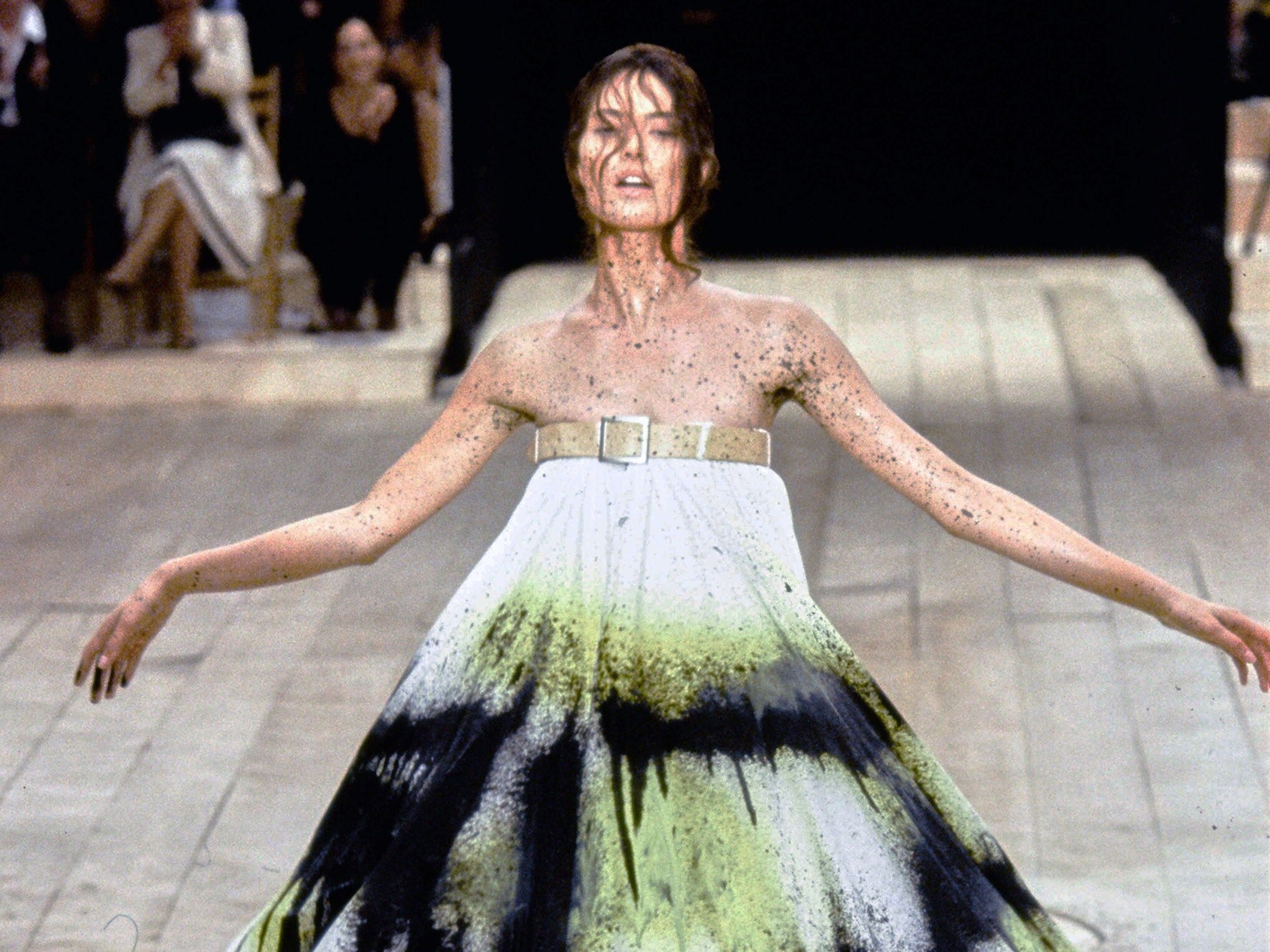
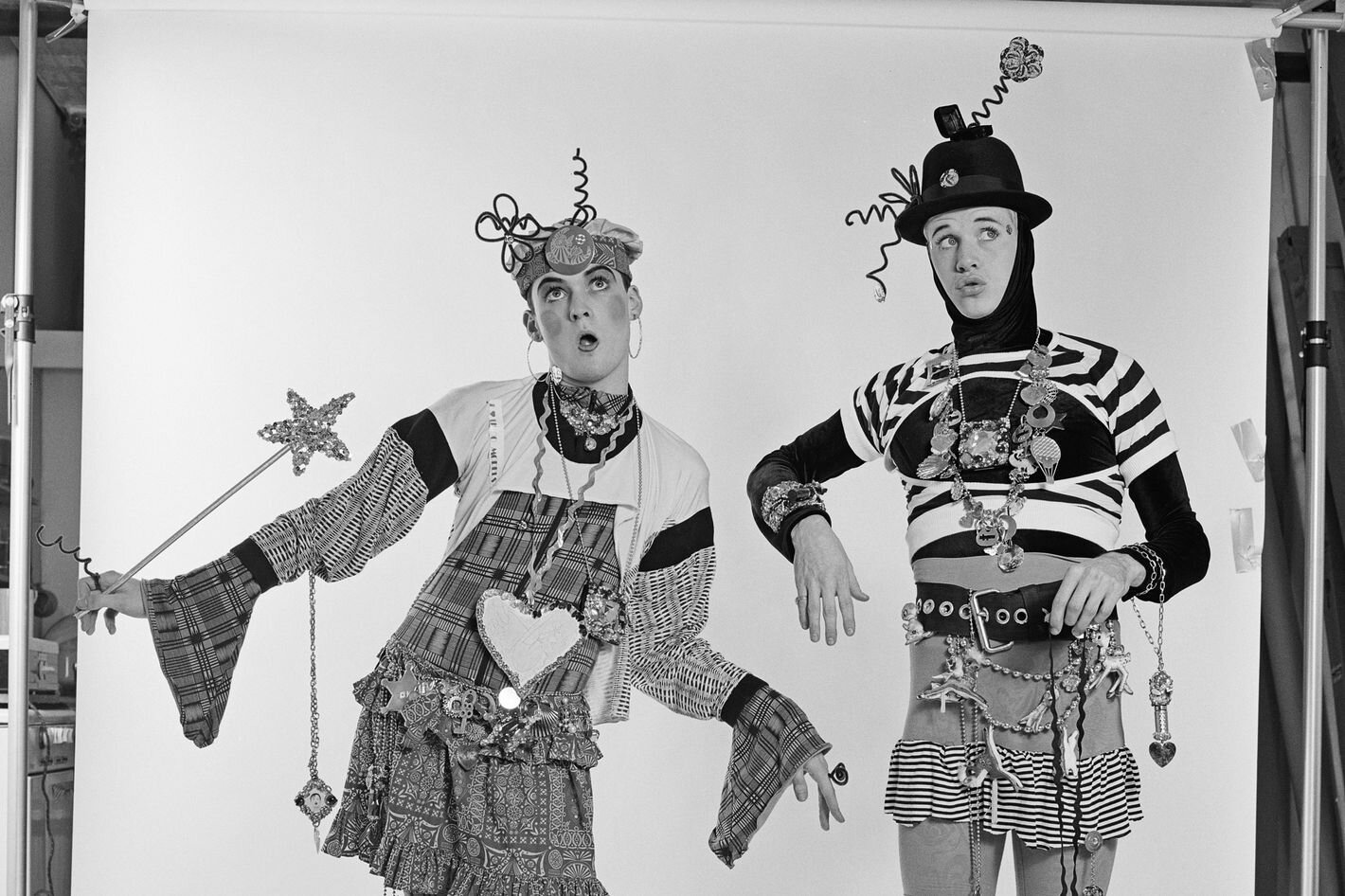
Cruella’s story transpires in the British ‘70s, a time of rebellious countercultural movements marked by underground musical genres like hardcore and punk rock (Sex Pistols and The Clash come to mind) and alternative designers such as Dame Vivienne Westwood, who brought modern punk and new wave fashion into the spotlight. In an interview with Vogue UK, Beavan explains that the designer was one of the inspirations for the rebellious personality Cruella imbues into her work, together with BodyMap, an early 80s fashion label marked by their peculiar fashion shows and clothing with lots of prints and layered shapes, and Nina Hagen, an internationally renowned German punk and new wave singer known for her subversive sense of style (a combo between Madonna, Kiss, and David Bowie). In a virtual press conference for the movie, she further mentions Galliano and Alexander McQueen as part of her “mood board” inspirations, and the latter’s aesthetic, which Cruella’s director Craig Gillespie praised while talking to the LA Times for the “shock value of his shows and the creative outrageousness of some of his work,” heavily influenced how Cruella was visually portrayed and the way she planned her pop-up shows, even if McQueen found his label in 1992.

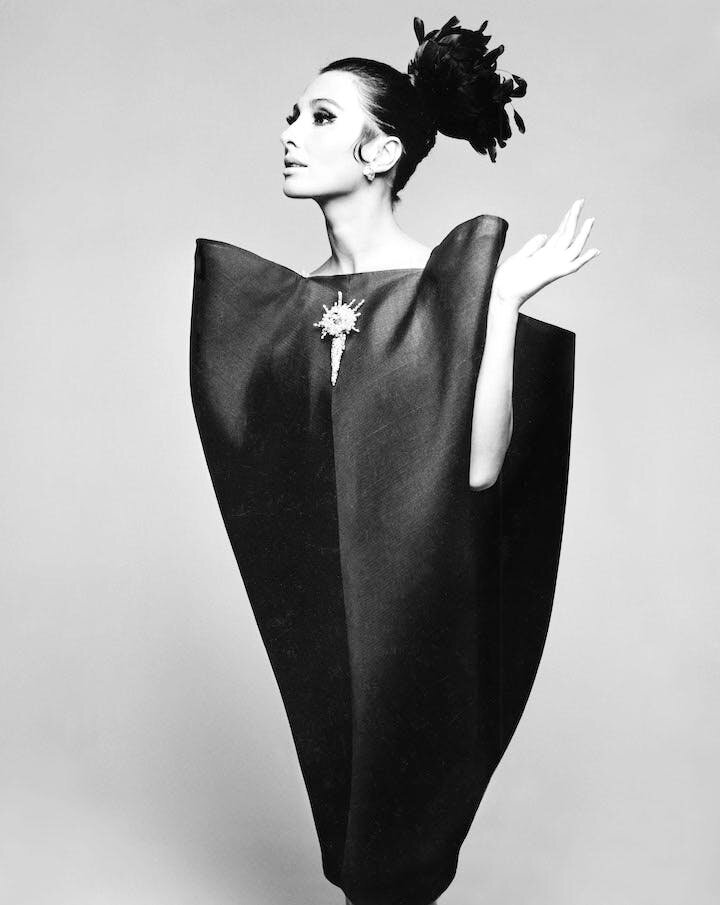
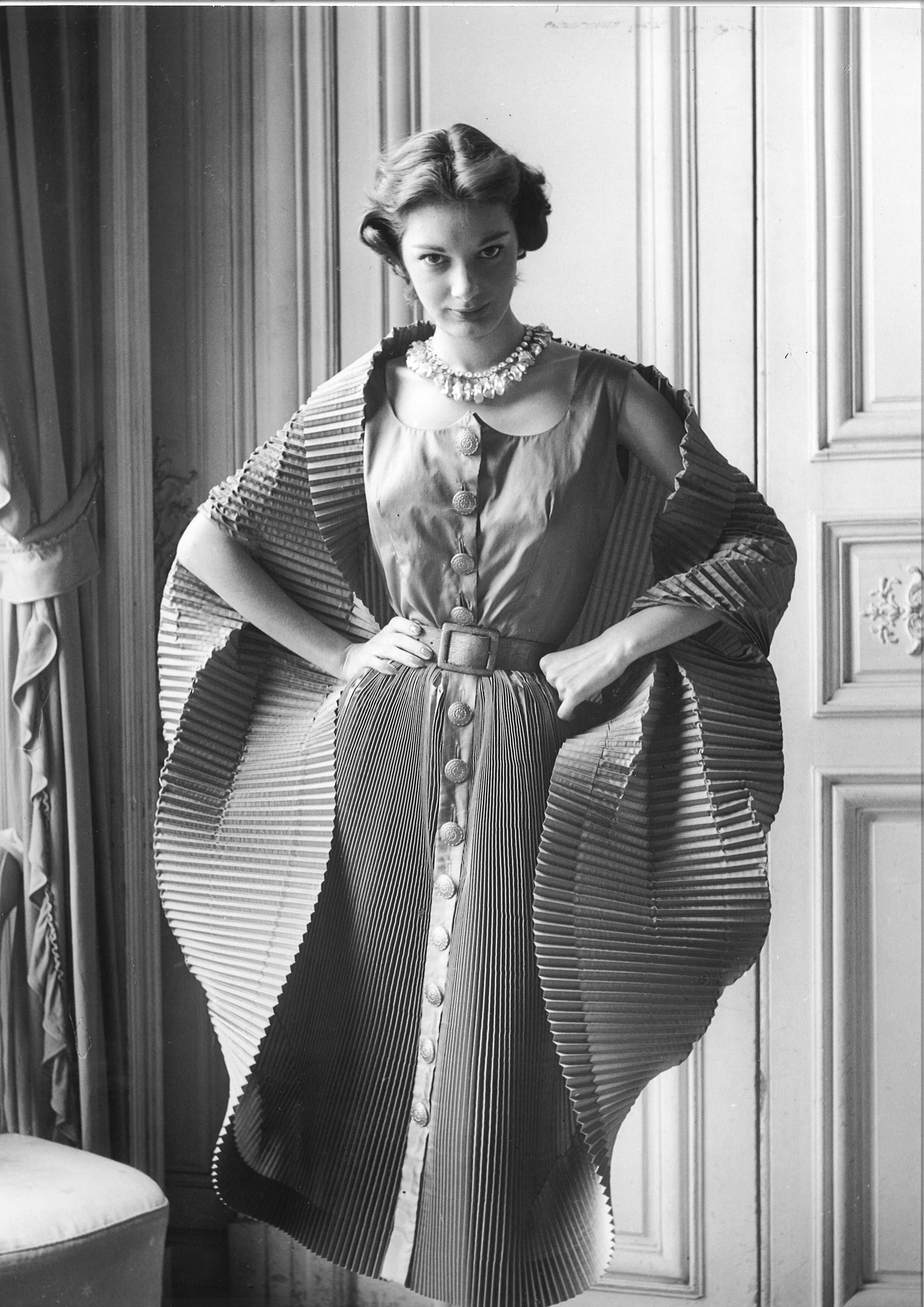
Moreover, the ‘70s were a time when what was in vogue expanded the expressive freedom of ‘60’s clothing, now featuring nipped, tight waists, exaggerated flared shapes, and more. Talking to Collider, Beavan spotlights Dior, Balenciaga, and other great ‘50s, ‘60s, and ‘70s fashion designers (like Elsa Schiaparelli) as primary inspirations for the Baroness’ evolving aesthetic, after she “looked at the really high fashion of the period, particularly [on] Vogue,” a resource that is “very available online.” In the movie, the Baroness appears as a character with a style that I would call chrono-fluid, meaning that her sense of fashion does not belong to only one decade but rather exists in a fluid state between years. For instance, her closet pulls from the ‘50s and ‘60s aesthetics while staying fashionable 5 or 15 years later. Basically, throughout the movie, the Baroness wears both past and present designs from her label, and as mentioned before, Beavan looked into previous years to build the antagonist’s look, and because she has been in the fashion business for a long time, the character’s sense of style both exists inside and transcends the borders of time.

The ‘70s were the stylistic soul of Cruella’s fashion, primarily due to the visual aesthetic of the time as explored above, but Beavan also imbued the decade into the process of preliminary dressing and fitting of Cruella’s movie costumes. In the Vogue UK interview, writer Radhika Seth asked her if her team had sourced vintage clothes from London and New York. The costume designer explained that, like she used to do in her past — getting her clothes on vintage shops, especially on Portobello Road because she could not afford more popular brands like Westwood or Biba — Beavan and her team found different garments from London’s Portobello Road Market and A Current Affair fair on Brooklyn, New York City, to build the preliminary fitting outfits for Emma Stone by combining different garbs in a myriad of combinations until they felt suitable for her and the portrayal of Estella and Cruella. One of Braven’s main goals was to not overdue the already excessive ‘70s style because then the movie’s clothing could look more like a party costume than actual garments. Moreover, she did not intend to be entirely faithful to the ‘70s, so Cruella could still feel like a contemporary piece based on the past. In the end, even though none of the garments in the film were part of this vintage mish-mash of elements, rather being remade following the overall shape and image created by the preliminary costumes, the whole idea of taking vintage clothing and reshaping them reverberated into the narrative in Estella’s approach to creating Cruella’s outfits, especially Baroness’ red dress she wears for the Black and White Gala.


Cruella- Red Ravage
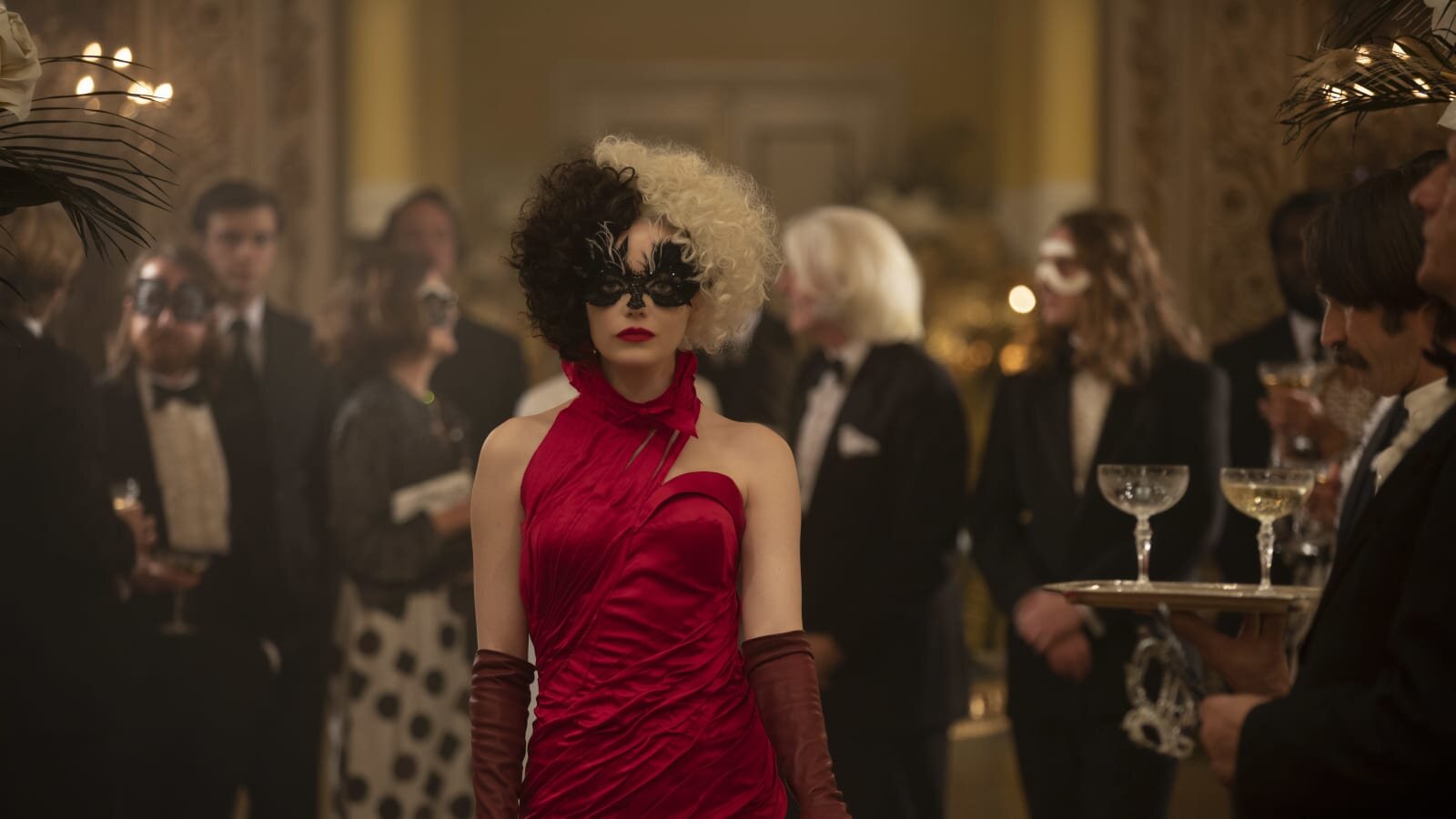
Image Via

Image Via

Image Via

Image Via

Now that the inspirations segment is done, onto the designs themselves. Approaching Cruella’s overall palette, Jenny Beavan mentions that the eponymous protagonist’s colors “were clear: black and white with some grey, plus the red for the signature moments” (and her lipstick). Such a scarlet moment arrives in the Baroness’ above-mentioned Black and White Gala, where the character of Cruella first steals both the movie and the fashion scene. Draped in a white silk robe (maybe charmeuse) with a black eye masquerade mask and her iconic black and white hair, Cruella makes her first fashion statement by setting it on fire (all special effects) to uncover her interpretation of the Baroness label vintage red dress in an event where people cannot wear color.

In the Collider interview, Beavan explains that she found a cheap red dress in a shop in Beverly Hills, and upon seeing it on Emma Stone’s body, she thought, “This could almost work, she looks so good.” However, because the fashion moments were dictated by the script, it already mentioned that the Baroness’s luxury fashion label once sold such a dress, so it could not look like an inexpensive gown. Thus, taking inspiration from Charles James 1955 Tree dress, an iconic 20th-century designer known for his fascination with exploring and conforming to body shapes and a highly structured aesthetic, the costume designer and her team decided to remake the gown they purchased before to match the story, where Estella would have deconstructed and reconstructed it with her imbued rebellious persona. In Beavan’s words, “The idea was that there was enough fabric in this dress, (...) that you could just about believe that she made it from this original work that she found.” The idea came from fashion artisan Ian Wallace, who also finalized its look.


Cruella-Unruly Highlights

Image Via

Image Via
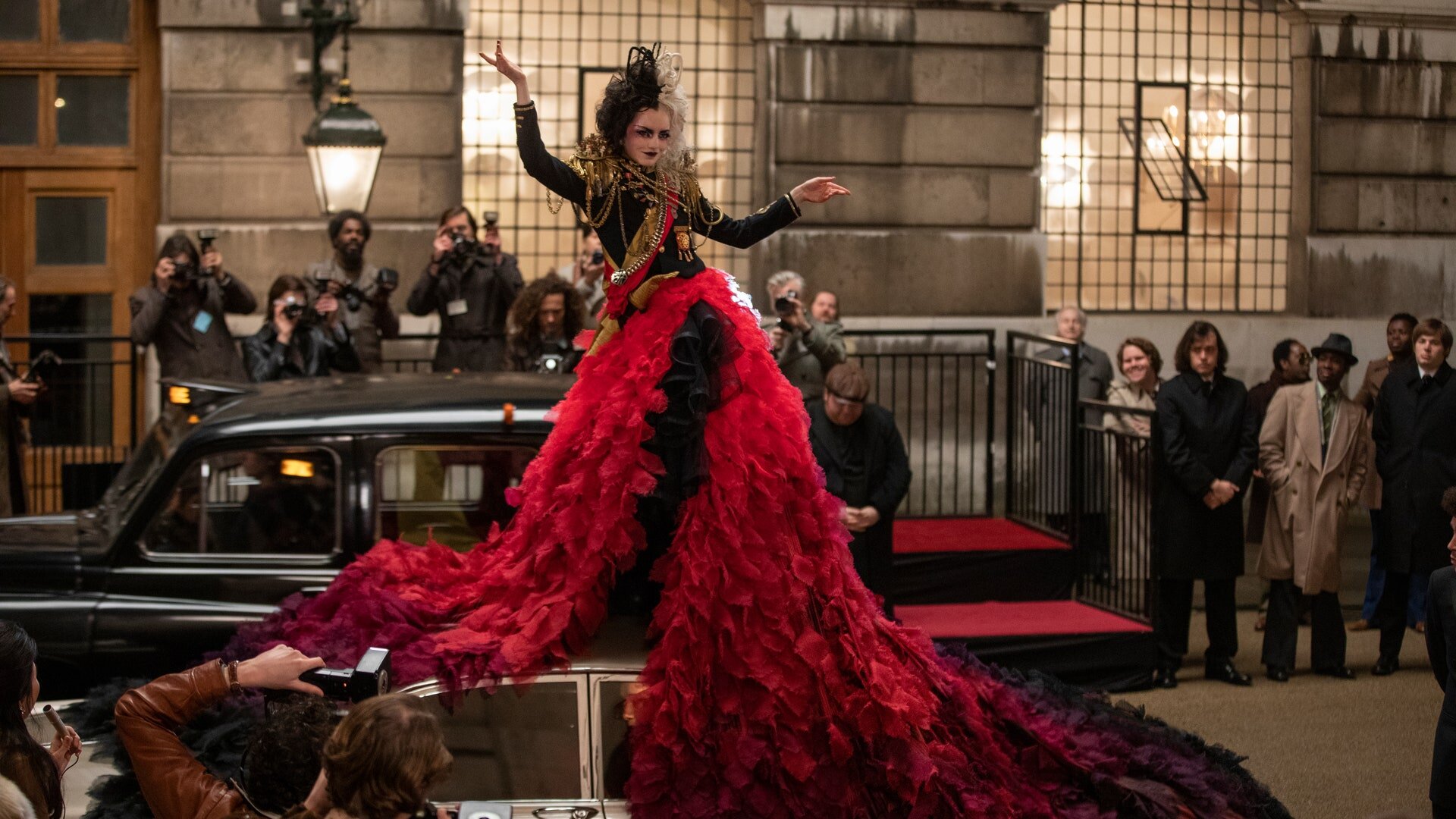
Image Via

Image Via
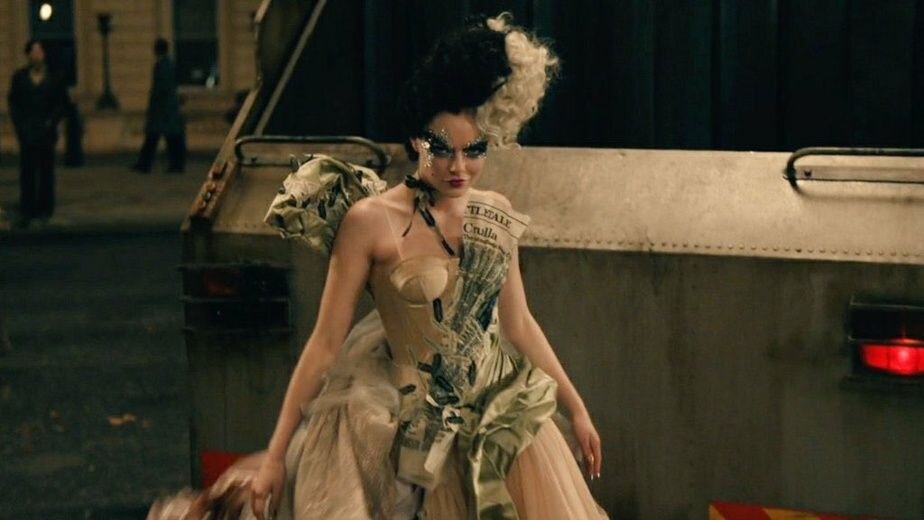
Image Via

Image Via

Image Via

Image Via

Image Via

Image Via

Image Via

Image Via

Throughout the film, Cruella also appears briefly with highly creative and majorly fashionable gowns in what Beavan calls photobomb moments since they feature the protagonist stealing the entrance buzz from the Baroness in front of a big fashion event. For a fan of fashion, these consecutive scenes that display Cruella in her high-collar leather biker jacket, orange sequin pants, and black makeup spelling “The Future;” in her British General uniform-inspired blue and red coat with adorned epaulets with golden miniature horses and carriages, black and white crown, and large frilly pink and black train skirt; and in her newspaper bodice and garbage-patterned skirt, are quick snippets of inspiring splendor. Those photobomb moments, coupled with the rock runaway show in the moth dress scene where the protagonist dons a fake Dalmatian coat and skirt outfit, were thought of by Beavan as the antithesis of an average fashion display. Therefore, their revolutionary, energetic, punk essence, the opposite of Baroness’ ordinary and stagnant approach to fashion shows representative of tradition, inspired how the costume designs would look like, be reused, and shift, from leaning towards a more defiant look (motorcycle outfit) to moving into a more militaristic side as satire (British army coat) to going into a more fantastical side (the newspaper/garbage dress).

Kirsten Fletcher, a designer who sculpts fashion into art, was the fashionista Beavan’s team worked with to construct the three photobomb designs and many other costumes. Working at Shepperton Studios in the U.K., where most of Cruella’s garments were weaved and put together, Fletcher had to undertake the challenge of, in Beavan’s words, making “a skirt that you can A) climb onto a car in and, and B) you can swish around to cover up [the car]” in regards to the military/skirt getup. The skirt had to be the perfect weight for it to be light enough for Stone to wear but heavy enough to be swished around the Baroness’ vehicle and stay there. Beavan also mentions that they “did an original version with a more frilly [look], which looked fabulous, but it was too heavy,” so Fletcher and Beavan’s team had to improvise, and after some trial and error, they came up with an idea of layering the skirt with petals. Around 5,060 petals were hand-sewn into the costume by the group, which made it an optimum weight. Fletcher also gave a lot of input into crafting the garbage truck dress, one-of-a-kind, which Beavan states loving making, and Stone mentions as her favorite.

Screenshot Via

Screenshot Via

I could continue writing about the ludicrous and beautiful garments Cruella wears in the rest of the movie, but the Baroness will be left out of this post for too long if I do so. However, if you would like to know, my favorite outfit is the Cruella DeVil look Stone wears with the half-black (latex?) jacket, half-white (satin?) shirt after (spoiler alert) the Baroness is arrested. It is peculiarly empowering (should I say this?), simple in execution yet succinctly creative with the coat/shirt knitted design, and the perfect balance of white tints and black shades where Cruella’s darker persona overshadows Estella’s brighter side. Moreover, I appreciate that Cruella’s attire when moving into the “Hell Hall” has similar pointed shoulder structures to the ones seen worn by Glen Close’s Cruella de Vil, a subtle reference to a past film and a possible future. So, let us not waste more time and onto Baroness Von Hellman.


The Baroness-The Splendor of the Callous

While Cruella lives in the duality of black and white (splashed with red and grey), the Baroness dwells mostly on browns, golds, and some shades of black. As previously mentioned, she is slightly old-fashioned, having a taste that conforms to the 1950s and ‘60s fashion scene while simultaneously updating them to the ‘70s style, and many times with her, the difference between the concept of a gala dress and a day-to-day garment relies on subtle, yet apparent nuances in color, shape, and texture. She is so fashionable that the clothing she wears to go out often looks as close to Haute-couture as the outfits she wears in her events and galas. The Baroness is the definition of dress to impress. Partnering with costume maker Jane Law, who had previously worked on 1996’s 101 Dalmations and Mad Max: Fury Road with Jenny Beavan, the costume designer took a different approach to creating the prototypes for Emma Thompson’s fitting.

Image Via
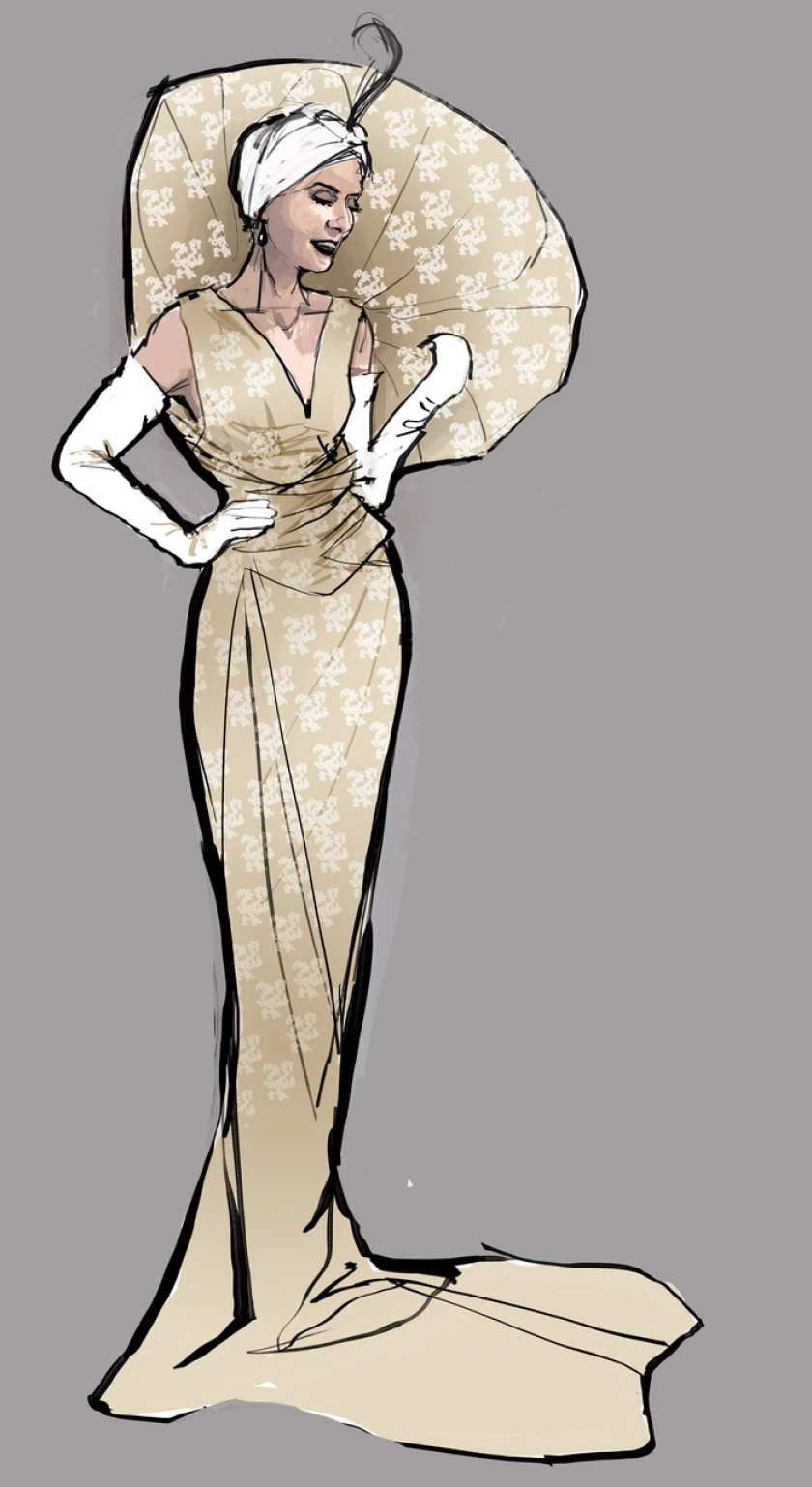
Image Via

Image Via

Image Via

Because Beavan already knew Thompson from Sense and Sensibility and other previous events, she understood the actress’s shape, framing, style, and general behavior towards wearing the clothes Beavan designed for her. In the Collider interview, she explains that “Emma Thompson has a stunningly good figure and loves wearing clothes like this (...), which also brings something to the whole costume. Some people just stand in it, but she embodies it.” From this previous knowledge, the costume designer bought various fabrics that could work well with both Thompson’s poise and body and the ‘50s, ‘60s, and ‘70s fashion aesthetic, giving preference to more sculptural textiles, “fabrics with a good stiffness and body to it.” Then, Beavan and Law would drape the fabrics directly in a mannequin to build the prototype. They would then decide if the prototypes were proper and which scene they would belong in and then call in Thompson to try it all. They aimed to achieve an “obviously asymmetric and very fitted, very snobbish” overall look, as Beavan mentioned in the movie’s virtual press conference.

At the same virtual event, Nadia Stacey, the film’s makeup and hairstylist who did a spectacular job with, in particular, Cruella’s different hairstyles and makeup touch-ups in every single new costume, explained that to conform to the sculpted look of the Baroness, Stacey ran with the idea “that she perfected her look, and everything is kind of variation on a theme.” That is why, throughout the film, the Baroness remains with the same general giant top knot bun hair (sometimes covered with a turban, other times loose, curled, or braided), and her makeup drives focus from her eyelids to her lipstick colors. While Cruella’s makeup and hairstyle constantly change to fit her costumes, where the audience sometimes sees her doing a Harley Quinn and painting her face white or playing with eye shapes and different lipstick colors and glossiness (my true lack of understanding of makeup artistry is showing here), the Baroness’ makeup and hairstyle are modeled to be constant to her personality; fashionable, yet rigid.
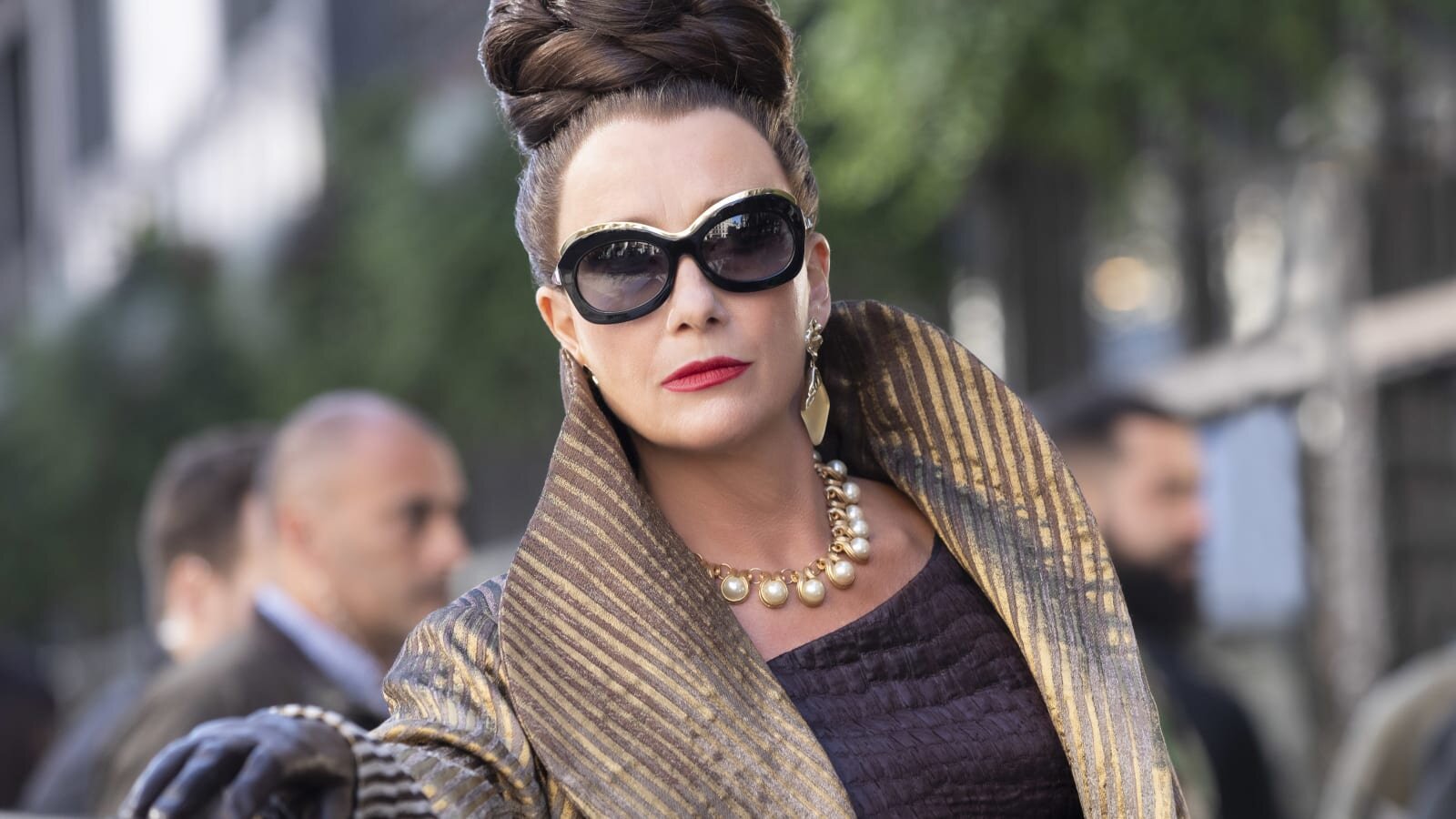
Image Via

Image Via

Finally, at the beginning of Cruella, the Baroness is hosting a ball for her 18th century inspired collection, a highly produced scene that feels more like a “blink and you miss it” moment more than anything. Such a mission to dress a whole room and the movie’s antagonist in highly tailored and fabric-heavy period clothing, especially ones influenced by Marie Antoinette’s outfits, should appear to be a massive undertaking. But it feels like, with today’s enormous interest in period pieces (Bridgerton, The Tudors, Outlander, Elizabeth, Marie Antoinette, The Other Boleyn Girl, Mary Queen of Scotts, The Favorite, Anna Karenina, Pride and Prejudice, anything related to royalty or Jane Austen, really), so many costume houses are specialized in period clothing from almost any century, especially those with the most amount of artistic evidence pointing to their fashion realities. Beavan mentions in the Collider interview that she was quickly able to find the right places that sell the period-accurate textiles and patterns and decided to combine them with “1960’s jewelry, hair, and makeup because people don’t normally do full 18th century [costumes].” Therefore, the costume designer felt it was both possible and doable to recreate the past and blend it with the present’s fashion aesthetic to form an opulent scene that, though brief, was still able to present to the audience that the Baroness was both a creative force and a highly wealthy woman.
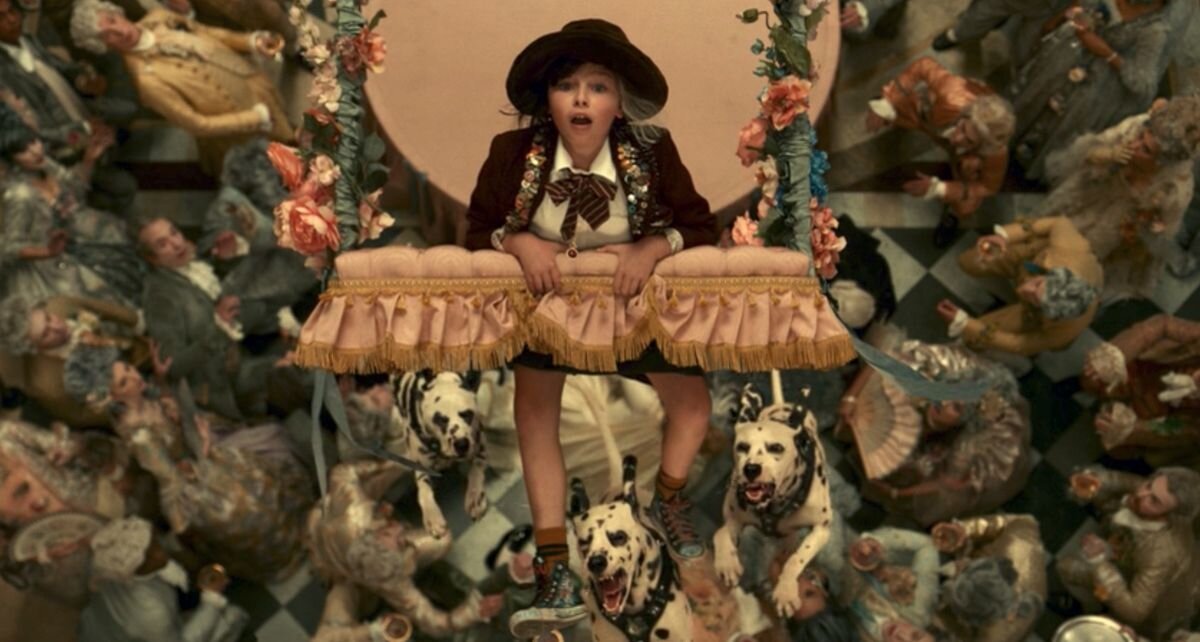
Image Via

Image Via

Fashion is Art

Altogether, Jenny Beavan’s costume designs in Cruella are artfully conceived of, to say the least. Her masterful job in bringing a second life to the 1970s aesthetic in tandem with a more contemporary approach to conceptualization, visual impact, and the crafting process is what the designer excels at in the movie, creating time-appropriate garments that feel timely in Cruella and the Baroness’ bodies. If the movie’s costumes are not given an iconic status in the future — being nominated and receiving several awards, being featured in a fashion exhibition, stirring up some creative trends on the internet based on its looks — I would be shocked and a little disappointed. (Update: Between many accolades, Cruella won Best Costume Design at the 94th Academy Awards and Excellence in Period Film at the 24th Costume Designers Guild Awards). The level of creative input and fashion knowledge applied in coming up with Haute-couture designs that would fit Cruella’s chic and fashionable, yet insanely whimsical rebellious nature was sky high, and adding onto it the Baroness’ luxury label outfits may have set the bar up and opened up new possibilities for future designers to apply their grasp of fashion history, industry, and techniques and combine them with the forever growing creative power of artists in a world where art and design are highly accessible through the internet.

Accordingly, I am not surprised a Cruella sequel got greenlit by Disney. Executives seemed satisfied, audiences flabbergasted by the costumes, and the numbers spoke for themselves (not necessarily the box office ones since the movie is also watchable on Disney + Premier Access). Even though Beavan may not work on this sequel (this is not confirmed, only my own speculation) due to her not been very thrilled with Disney licensing clothing lines from brands like Her Universe and Rag & Bone based on her designs without her direct knowledge nor input of some kind, something that, interestingly enough has happened many times in movies before like Harley Quinn: Birds of Prey, Clueless, and Enchanted, her impact has been felt with vigor. I hope that, if Cruella II actually happens, the costume design is as unique as what Beavan created and that Disney justly treats designers by letting them know beforehand about marketing opportunities and working with them to craft the marketable items. In the same virtual press conference I referenced so many times before, Beavan said, “In fact, in my real life, I have no interest in clothes. I just love telling stories with them. So for me, that was just brilliant,” so I hope she continues telling more stories and inspiring future costume designers to do so. I, for one, am inspired.
Source: https://www.ign.com/articles/disney-cruell...

Should There be an Alita: Battle Angel 2?

Hollywood has always tried to re-adapt anime a couple of times, in the endeavor to capitalize on their success. On the one hand, some trials were not very well received by viewers. Dragonball Evolution was, how can I say it, a turmoil that did not capture the epicness, mythology, and grandeur of the seven-series anime. Death Note was debatable, as it was a success with the numbers, and a second movie may be in the makings, but critics and fans were not very into it. Ghost In The Shell was controversial partially because some fans wanted an Asian actress to portray the protagonist Major and a less Western approach to storytelling for such a loved and famous story. Speed Racer was not well-received critically, but nowadays, it is seen as a cult classic, and I actually loved the psychedelic nature of the movie when I was a kid. On the other hand, some films were resounding successes. Audiences and critics enjoyed Tom Cruise and Emily Blunt’s Edge of Tomorrow for its acting and imaginative storytelling. And then there’s Alita: Battle Angel

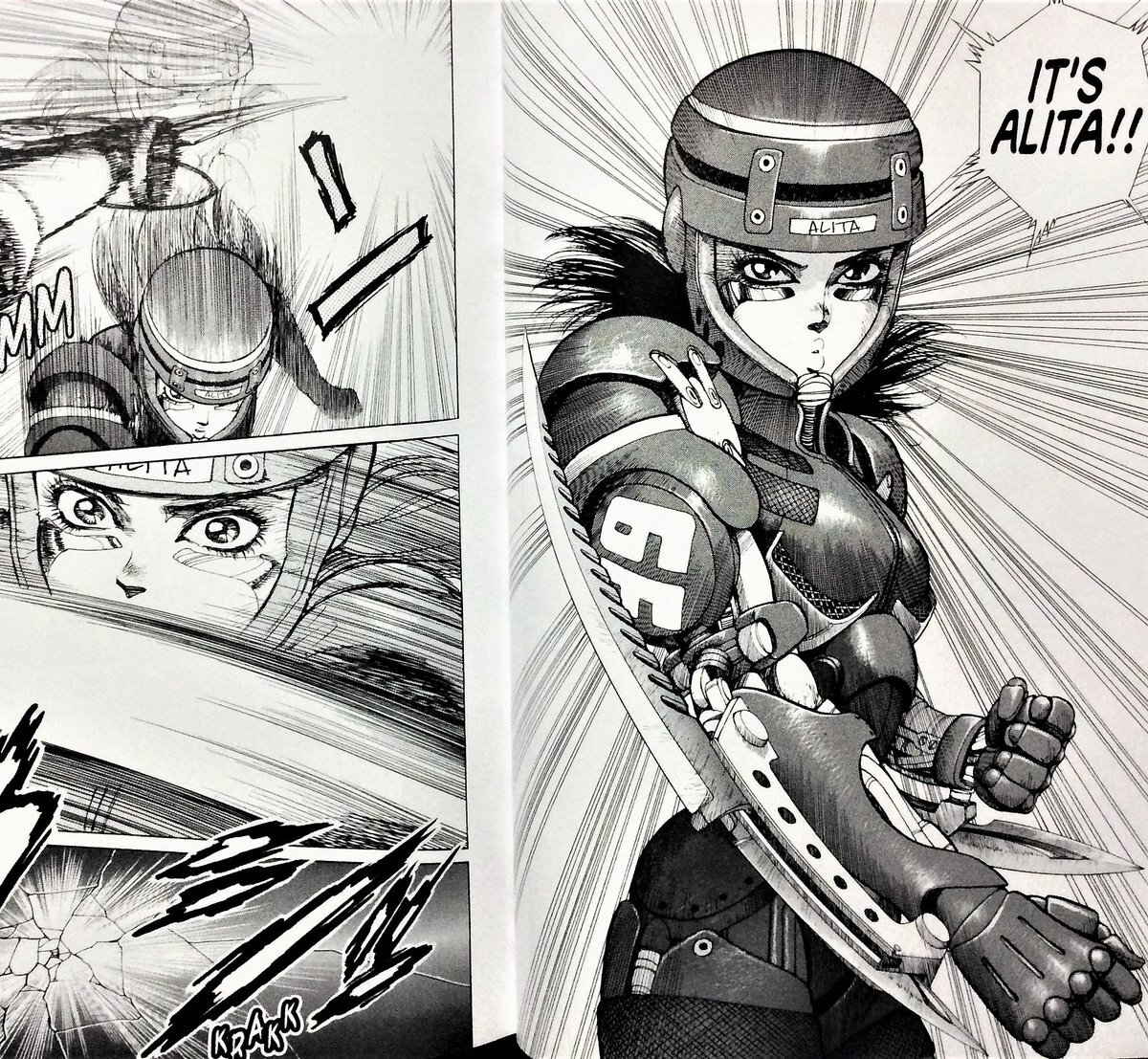
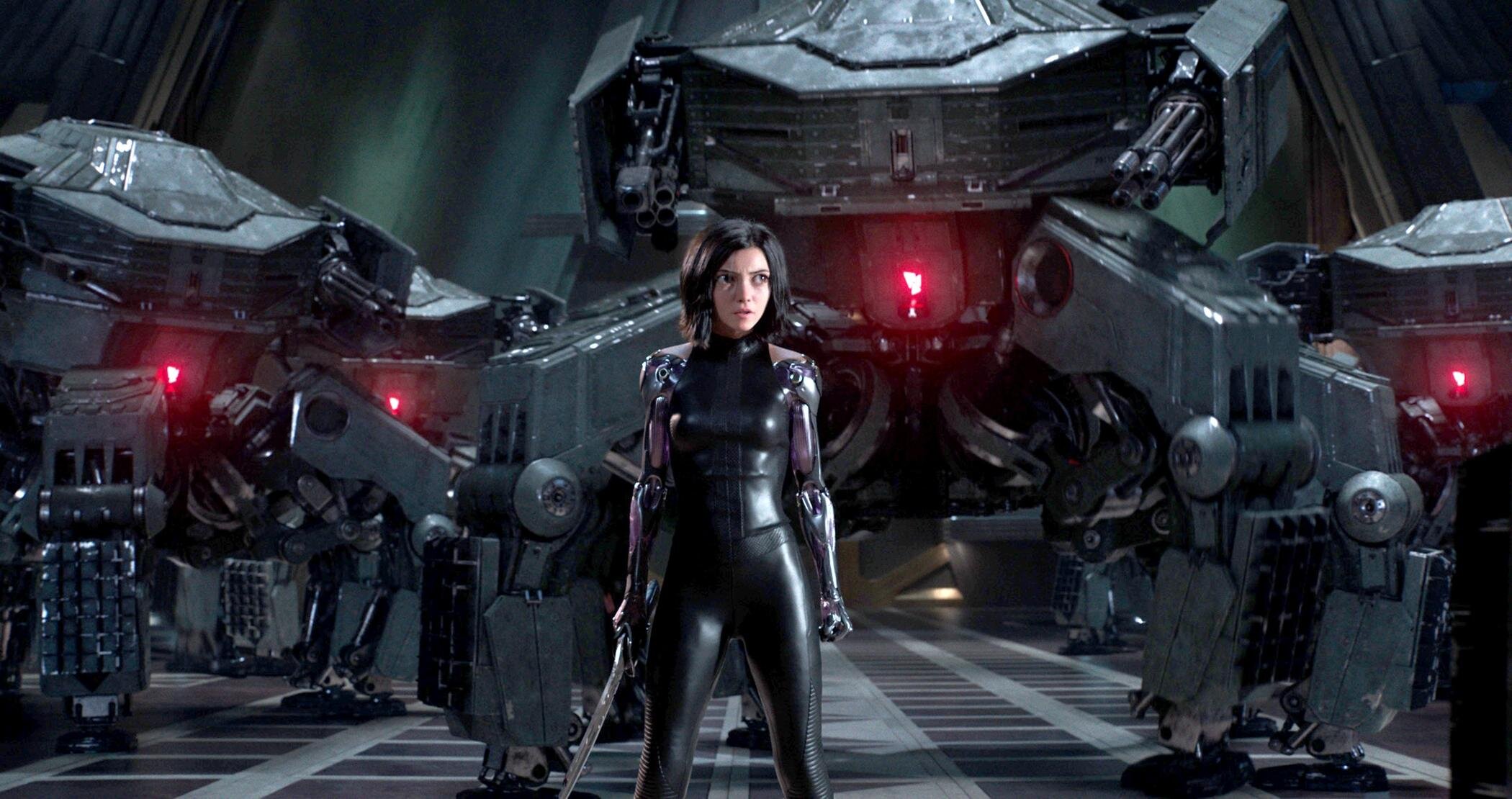
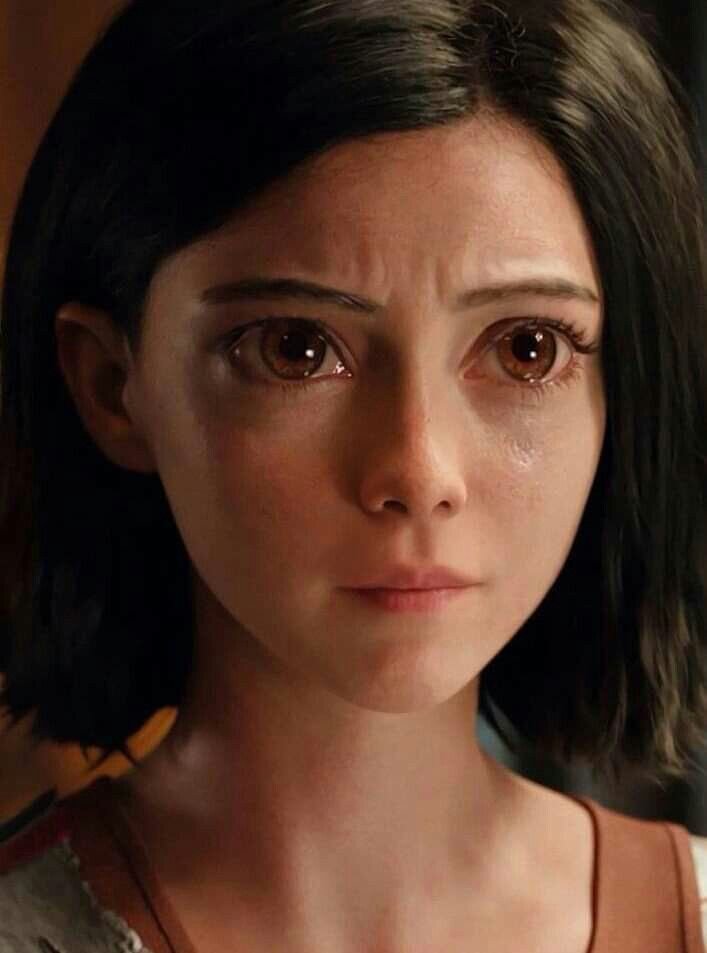
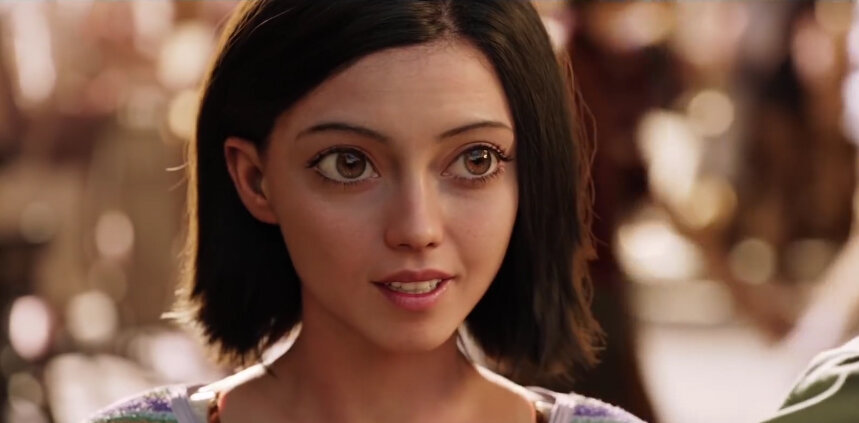
The boldness of this movie is astounding. Making the protagonist, Alita, out of CGI by motion capturing Rosa Salazar’s face to resemble her manga and anime counterpart (also called Gunnm and Battle Angel Alita) was courageous, and in my opinion, a fantastic stylistic choice. It looks super well made and believable, congruential to the rest of the film’s look, and it replicates the iconic “big eyes” anime style, staying faithful to the source material in a visual manner. In a world full of humans and cyborgs, Alita may look like the latter, but she represents the human struggle to find love and meaning and fight for freedom. There is so much humanity in her throughout the movie that watching a quasi-human CGI face viscerally feeling grief, anger, joy, and hope is an experience of its own that could alienate audiences, but it actually entices them to want more of it, especially as Alita ended with a big cliff hanger and a lot of potential for a second installment.

Alita’s fan base, The Alita Army, may be small (if you have heard of them before, kudos to you), but they demonstrate how the movie achieved a level of connection to its audience that not many have. The film made around $405 million in the global box office from a budget of around $150 million without marketing, but critics focused on its supposedly mild plot, over-reliance on CGU, and interestingly, on the fact that it was not the progressive, feminist movie people thought it was, but a man’s fantasy of powerful women that features robotic bodies with breasts. That was made worse by Captain Marvel trolls embracing Alita: Battle Angel as a response to Brie Larson being overly outspoken about gender and race matters. I don’t think there can be someone that is too outspoken about these pressing matters, so you can see how trolls can try to hurt one movie and end up hitting two. Still, the narrative that the film makes Alita a subservient doll of the male gaze, a misogynistic icon of today’s media instead of a truly strong female character, has hindered its reputation to a considerable level.

So, fans created the army to rejoice on the aspects that they loved about Alita and turn the negativity right side up. Even if many kept comparing the loyal fans to Captain Marvel trolls, the group made use of social media to campaign for people to buy the film’s DVDs and Blu-rays if they hadn’t watched it before (remember those?) to create a sort of renaissance for the movie, and for Disney to develop a sequel. The defunct 21st Century Fox released Alita: Battle Angel back in February 2019, but Disney officially acquired the studio later that year, so if a second movie of the franchise is to be produced, it will be under the guise of the Mouse. The army has also flown a banner over the 92nd Academy Awards and put a billboard up in LA advertising the sequel campaign. But like with #ReleasetheSnyderCut and suicide prevention, the Alita Army is not a movement that just focuses on raising awareness for Alita. On their website, they mention that they have raised enough money to give an amputee prosthetic arms from Open Bionics, known for their Hero Arm, “a stylish multi-grip bionic hand,” and that they have monetarily contributed to the research for a cure to diabetes type I. No help is ever small.

Image Via

Image Via

Therefore, with all these people sharing their love for Alita: Battle Angel, what makes the movie worthy of a sequel? Well, firstly, it was planned as a trilogy with Alita’s arc as a character evolving throughout each installment, so there is a lot of story yet to tell, but that is not enough to automatically make Disney interested in continuing the franchise. Secondly, the movie was well-liked by many, pretty accurate to its source material,  has a dedicated fan base, and made a considerable amount of money to call it a mild success. However, the producers need to pay attention to where the main criticism comes from, primarily that Alita can be interpreted as a sexy love robot in response to the needs of her love interest and male audience members, instead of a fierce and well-rounded character. After all, we are talking about Disney, and they have a brand image to uphold, even if the main critique may be more sensationalist than what it is depicted in the movie. Disney+ might be a solution, but it is still in its infancy days for the company to know for sure if streaming high budget blockbusters is a sound business venture. Thirdly, and in my opinion, the most important, Alita has one of the best cyberpunk aesthetics of any movie since Blade Runner and Matrix franchises.

Unlike critics pointing out the over-reliance on CGI, Alita Battle Angel is a movie inspired by manga and an anime with bonkers visuals. Imagine a fully robotic body with cables and metal parts that replicate the human anatomy or a mechanical suit with blades protruding from the arms and shoes that are also wheels. James Cameron, the movie’s producer, wanted to experiment with new technologies as he always does, so the film was bound to replicate the anime look and try to make it even more real, mainly since Cameron has wanted to make Alita since 2003. Moreover, when looking at recent cyberpunk movies like Matrix Revolutions, Blade Runner 2049, and Tron: Legacy, visual effects are necessary to create a more cohesive vision that ties the human body with cybernetics and also build a spectacle of environmental holograms and lights or of dirty clustered metallic buildings that point toward a technology-heavy future. How can a movie that belongs to a genre with the name “cyber” that uses cybernetics to depict a dystopian future for humanity not rely on technology as a visual style? And in my opinion, Alita applies technology as a way to define the character archetype of those who are cyborgs and those that are just humans, so CGI is not only used to set up cool action scenes.

Alita is an excellent example of how technology and fashion worked in tandem seamlessly in the movie to provide a visual exploration of her character arc and an overall aesthetic to the piece. In the beginning, she wears simple human clothes to make her blend with other people. Alita is a teenager in the body of an android. Her brain was found inside a broken husk in a scrapyard by her adopted father, Doctor Ido, played by Christoph Waltz, who repaired her body at the beginning of the movie. Because she has an adolescent brain and almost no memory of her previous life, the most natural and healthy thing to do is socialize with people her age. So, Ido gives Alita his deceased daughter’s clothing, establishing the relationship between both characters and helping her figure out who she is and how she wants to live her life. But when she prematurely decides to embrace her preprogrammed fighting abilities and become a hunter-warrior, a registered bounty hunter of wanted criminals, Alita’s body gets ripped off by Grewishka, one of the film’s villains. Her adoptive father decides to outfit her with the Berserker Armor, a nanotech military cybernetic suit for elite soldiers in the United Republic of Mars, which Alita had discovered and pleaded to be upgraded into but was denied by Ido before. He had identified the armor and was afraid of it since the URM had destroyed part of the movie’s world 300 years ago, but the dire circumstances and his trust in Alita’s goodness and will to overcome her nature as one of the elite soldiers spoke louder. She then wears it to complete her heroic journey in the film’s last act, modeling its silhouette to look more “adult-like” (maybe here is where the criticism of Alita being sexist sprang from, as certain areas of her body are more accentuated).

Image Via

Image Via

Image Via

Image Via

Image Via

Image Via

In short, Alita’s style shifts from plain, generic textile clothing as an accessory of her trying to fit in, to a full CGI technological weapon that suits her higher calling as a warrior for the people and matches her character development. (I guess most superhero origin movies and series do this thing where protagonists can only wear their iconic suits after discovering themselves, so maybe Alita: Battle Angel is also a superhero flick.) She went from resembling a teenager (because of Ido’s reparations and desire to see his child again) to a full-grown adult (out of her own engineering), representing the evolution of her maturity throughout the story.

Two more aspects of the movie that provide an engrossing cyberpunk aesthetic to the cinematic experience are its two main cities, Scrapyard and Zalem, and the Motorball scene. Iron City looks like WALL-E’s Earth, a place that feels compacted and small, made of metallic parts coated with a sandy-brown color. At night, neon lights accentuate the metallic elements of cables and facades to make the day’s dullness shine a little more, but the streets still linger in the darkness. Zalem, in contrast, is a floating city. Its metallic accents are not ugly and messy like Scrapyard’s, but regal and spiky, as if to simultaneously entice and deter the iron city’s citizens. It is a statue of power that loiters above Alita throughout the flick. As you may have caught on by now, only the rich and powerful live in Zalem, and at the end of Alita, the protagonist wins the Motorball conquest to be able to move to the floating city and stop Nova, a scientist that leads a crime ring that steals cybernetic body parts from people. But what is Motorball? Motorball is a high-tech roller derby racing sport where the person who passes the finish line with the game’s motorball wins. In Alita, the film’s last scene features the protagonist competing in a deadly version of the sport, and it is bonkers cool. Cyborg racers are trying to kill Alita, and they all use their cybernetic body extensions to manifest deadly weapons, but she ends up defeating all of them in a fast-paced epic techno-spectacle, the best ending this movie could get.

Image Via

Image Via

In the end, Alita: Battle Angel is a visual exploration of how today’s cinematic technology can create an immersive aesthetic experience and can seamlessly blend CGI with practical effects and human acting to build a coherent world of cyborgs and technological enhancements. This film’s main milestones are Alita’s digital eyes and facial expressions, developed with motion capture, but real and emotional nonetheless, and its cyberpunk aesthetic. So, is it time for Alita: Battle Angel 2? I would say yes! providing that Disney listens to the criticism that the protagonist is not the feminist icon she was thought out to be and creates a script that makes her feel even more badass and empowering without edging the border of objectification. There are rumors that a prequel series is in the makings for Disney +, so maybe there is still hope for the Alita Army, who have been fighting valiantly and philanthropically to see more of Alita’s world, and everybody else who enjoyed Alita (including me). And perhaps we can get another banger of a song from Dua Lipa or another pop/EDM artist as “Swan Song,” the movie’s theme, fits the cybernetic aesthetic and is an underrated gem by my favorite singer. 

You can watch Alita: Battle Angel on Amazon Prime Video, Hulu, Youtube, Vudu, Itunes, and Google Play.


Cover Image Via

Source: https://bleedingcool.com/movies/a-new-alit...

When Practice Exposes the Dangers of Theory: The Murder that Inspired Hitchcock's "Rope"

“That’s great in practice, but does it work in theory?”

And so might have begun the heinous plot of two UChicagos students in 1924. Nathan Freudenthal Leopold Jr. and Richard Albert Loeb became friends when they went to school together at the University of Chicago. As the child of a very wealthy Jewish family, Leopold had an IQ of 210 and spoke his first word when he was four months old. He graduated from UChicago with academic distinction, and he planned to attend Harvard Law. Similarly, Loeb was the son of the former president of Sears, Roebuck & Company. At the age of 17, he made history as the youngest graduate from the University of Michigan. As such, both men grew up in very wealthy, educated families on Chicago’s South Side. Both men were known for their “intelligence.” And both were obsessed with crime.

Loeb was typically lazy, but he spent an inordinate amount of his time reading crime novels. Meanwhile, Leopold dreamed of becoming one of Frederick Nietzsche’s “Übermensch.” Leopold honestly believed in, and internalized, Nietzsche’s theory that society possesses some “superior” men - or Ubermenschen - who are somehow above the dictates of society. In other words, Leopold believed that he was entitled to rebel against the normal constraints of morality. He believed that he could, and should, act “beyond good and evil.”

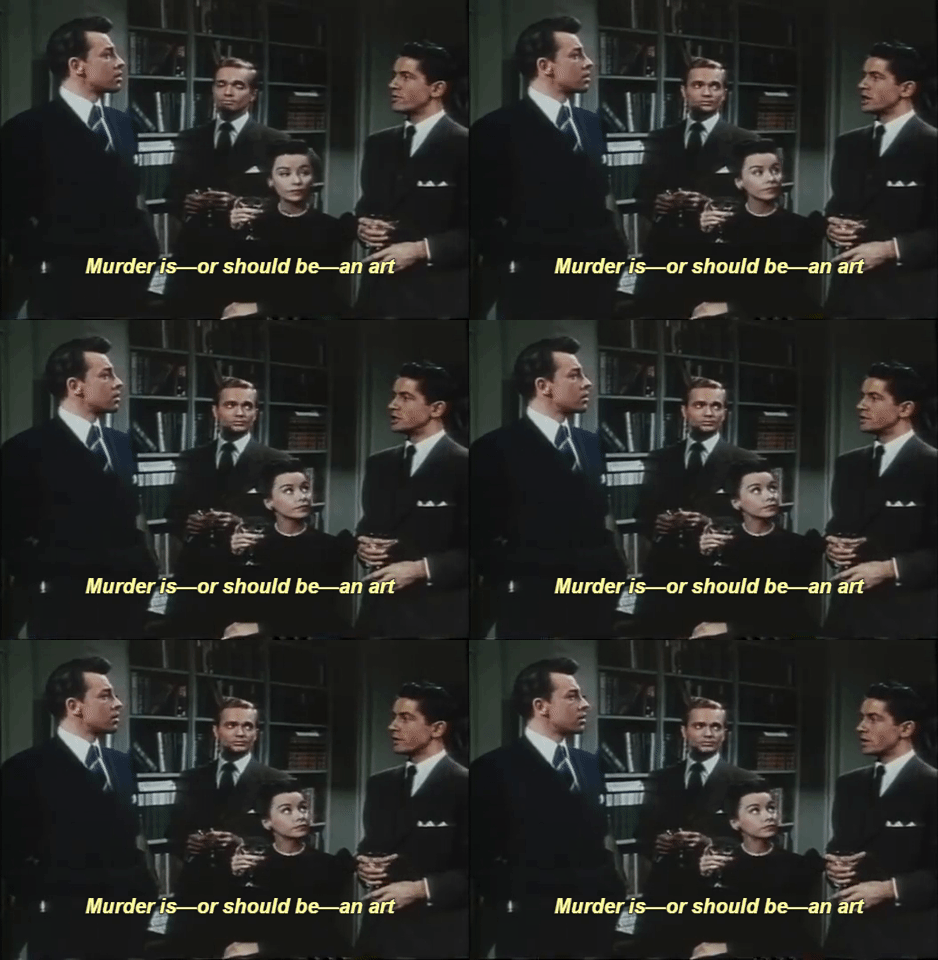
A quip from Alfred Hitchcock’s 1948 movie, “Rope.”

A quip from Alfred Hitchcock’s 1948 movie, “Rope.”

Leopold soon convinced Loeb that he too was an Ubermensch. They began committing vandalism and theft. But, they believed that they deserved more media attention than they were receiving. And so they decided to commit the “perfect crime” - as a trophy to their “superior” intellects. And in 1924, Leopold and Loeb kidnapped and murdered a 14-year-old boy, named Robert “Bobby” Franks. Leopold and Loeb convinced Franks to get in their car, as he was walking to school. And they murdered him with a chisel.

Eight days later, Leopold and Loeb were put into custody. They were sentenced to life in prison, plus 99 years for murder and kidnapping. And it turned out that they were neither supermen, nor were they infallible. They were not above the law, as they professed. They were not untouchable. And their heinous, unthinkable crime was not a trophy; instead, it became the representation of three lost lives. Leopold and Loeb atrociously ended the life of Franks, and they also threw their own lives away.

And I will not include pictures of Leopold and Loeb. Nor will I include graphic details of the crime they committed. Such details can be easily obtained from other sources, and that is not the purpose of this article. Nor is the purpose of this article to somehow glorify or romanticize Franks’ murder. On the contrary, I hesitated in writing this article, because I did not want to give Leopold and Loeb any satisfaction of media attention - even after their deaths.

Instead, I wrote this article because the story of Franks’ murder is important. While I’d argue that only a true sociopath could commit Leopold and Loeb’s crime, it is nonetheless worthwhile to emphasize the danger in believing - even momentarily - that any man is somehow above the constraints of morality or the law.

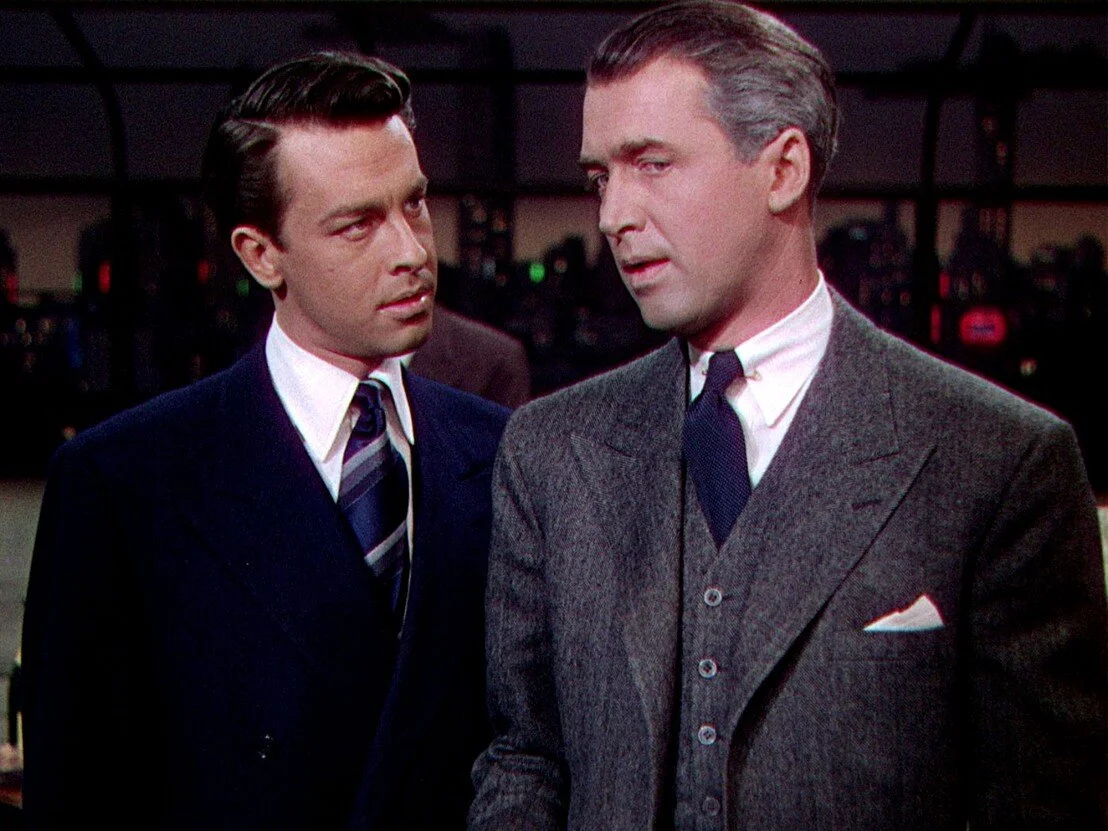
Harvard student and murderer, Brandon Shaw (played by John Dall), converses with his former headmaster (James Stewart).

Harvard student and murderer, Brandon Shaw (played by John Dall), converses with his former headmaster (James Stewart).

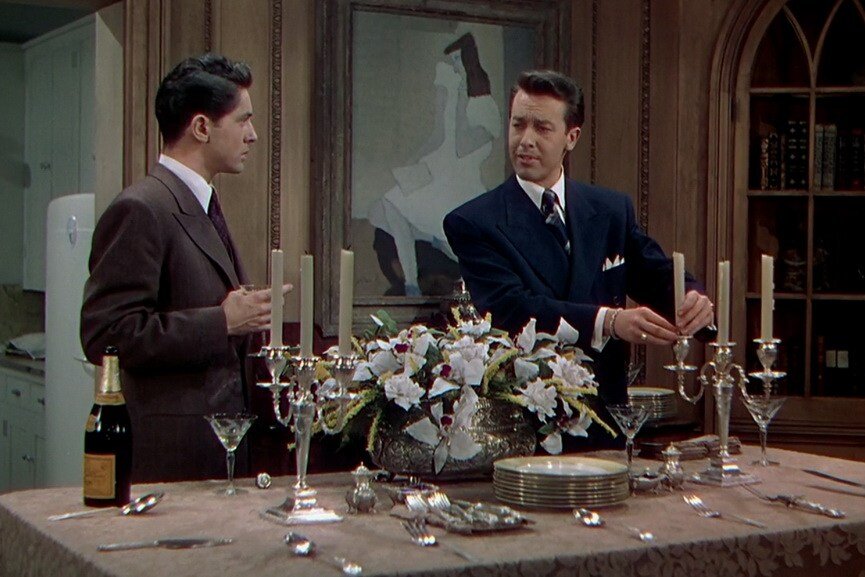
And Alfred Hitchcock likely shared an opinion similar to mine. 24 years after Leopold and Loeb’s crime, Hitchcock released the movie “Rope.” The movie tells the story of two Harvard students, who decide to kill a classmate and host a dinner party, literally over his dead body (the murder victim is placed in a trunk, upon which the innocent dinner guests dish their food). These Harvard students aim to prove that they are Ubermenschen. And they think that they’ve finally committed the perfect crime. However, as is characteristic of Hitchcock’s films, justice soon catches up with the murderers. And, just as in real life, it soon turns out that they are not nearly as untouchable as they once believed.

And while the movie is psychologically disturbing and sad, it is also highly intelligent. In just 80 minutes, Hitchcock powerfully indicts any man - murderer or otherwise - who thinks that he is somehow above morality or the law. And while Leopold and Loeb are luckily no longer present on the University of Chicago’s campus, their crime is a relevant reminder that the ideas of famed philosophers, even twisted and misinterpreted as they may be, matter. And they have consequences far beyond Harper or the Seminary Coop. After all, during Spring Quarter every year, UChicago students in Classics of Social and Political Thought read Nietzsche. And we are not the only college students to do so. And while it’s easy to sometimes get lost in the theory of a text, it’s worth noting that the abstract theories we discuss have consequences - far beyond campus’s quads. And sometimes it takes the memory of murder, to remind us.

Click here, for thumbnail image source.

"Miss Americana" : A Changed (& Very Political) Taylor Swift

It was spring when I landed in Midway Airport by myself, for the first time.

“Welcome to New York” blasted from my earbuds. Of course, Chicago isn’t New York. But, for the first time in my life, I was living alone in a big city. And Taylor Swift’s lyrics exemplified the pride and happiness that accompanied such a realization.

And while walking through the airport listening to 1989 is one of my most vivid memories of listening to her music, Taylor Swift has provided an important soundtrack to many events in my life. Whenever I came home from a difficult day of eighth grade or freshman year, I listened to “Mean,” to remind myself that someday I was going to be “living in a big’ol city.” Throughout high school, I listened to “Bad Blood” and “Look What you Made me Do” and “Mine.” I laughed with Taylor Swift as I listened to “This is Why We Can’t Have Nice Things.” And when I graduated from high school, I wrote my mom a thank you letter. I wanted to thank my mom for always treating me as both an equal and a friend; she always listened to me, from discussing my school day on the drive home, to reading every draft of my writing. And yet, the “right” phrasing of gratitude eluded me. And so, I turned to Taylor Swift’s lyrics, as I had done so many times before - because the lyrics of “The Best Day” just got it right. And I knew that, as I searched for the right words, Taylor Swift had them. And to this day, my Taylor Swift playlist is titled “Words,” because they have always been my favorite part of her music.

Taylor Swift performing, during her 1989 World Tour.

Taylor Swift performing, during her 1989 World Tour.

I have never been the type of person who follows the lives of celebrities closely. I don’t read People Magazine. I don’t follow the Kardashians on Instagram. I know absolutely nothing about the latest celebrity breakup. But, I always listen when the news is about Taylor Swift. I stay up until midnight for her album and music video releases. I celebrated my 16th birthday at her 1989 concert and I rushed to Target, to purchase both versions of her Reputation magazine. And I was always proud that I could support her work, even in my own small way. In short, Taylor Swift has been one of my strongest role models. She and her lyrics have been there, throughout my life - as an example of what it means to be strong without apology, of what it means to be eloquent and poised but also compassionate.

And so, when she shared her political beliefs for the first time, I supported her. I didn't agree with everything she said. I didn’t support the same candidates as her or vote for the same political party, but I respected and admired her voice. And I would never want to silence that voice.

She and her lyrics have been there, throughout my life - as an example of what it means to be strong without apology, of what it means to be eloquent and poised but also compassionate. And so, when she shared her political beliefs for the first time, I supported her.

However, I have become increasingly saddened by her failure to facilitate civility. I hoped that she would act as a much-needed voice of compassion in the political realm. And yet, there is nothing compassionate about Taylor Swift liking a Tumblr meme of herself kicking Republicans. And while Democratic fans will argue that it was one like, that single like is nonetheless significant. The Taylor Swift who I thought I knew - the one who sued for only $1, who stood with poise when Kanye took the microphone from her, and who always made time for her family and friends - was not the type of person who would ever, even jokingly, contribute to the vitriol and hatred of current American politics.

And Taylor Swift’s first political comments are especially timely and impactful, given the tension of the current American political system. No doubt, this is her point: as she discusses politics in Miss Americana, she clearly cares deeply about the beliefs she professes. She means what she says. And her efforts to support the gay community, to encourage strong women, and to spread inclusivity should be applauded. America needs more voices of unity and encouragement, right now. However, the problem is that the new, politically vocal Taylor Swift is inclusive and supportive, only insofar as her fans agree with her politics - i.e., only insofar as they too are card-carrying Democrats. 

However, the problem is that the new, politically vocal Taylor Swift is inclusive and supportive, only insofar as her fans agree with her politics - i.e., only insofar as they too are card-carrying Democrats. 

And by dismissing and critiquing all Republicans, Taylor Swift not only fails to recognize the many strong Republicans actively working to improve America, but she also encourages the current climate of hateful political rhetoric. After all, as politics become increasingly emotional for Americans, there’s a frightening tendency for individuals to view their political opponents, not just as people with different policy solutions, but as immoral, despicable enemies. We now live in a country where liberals are wrongly mocked as “pampered, latte-drinking snowflakes” and conservatives are erroneously dismissed and silenced as “uninformed, deplorable, bigots and racists.” And the problem is that both sides talk past one another. And there is no room for progress in a country so divided. If Americans can’t unite over their similarities and shared interests, then they have no hope of reaching solutions that work for the entire country. 

Taylor Swift speaks in the Miss Americana trailer.

Taylor Swift speaks in the Miss Americana trailer.

And angry political lamentations or spur-of-the-moment political tweets by celebrities don’t inspire thoughtful bills in Congress, nor do they facilitate introspection or encourage civility. On the contrary, American politics have become extraordinarily uncivil, while pop culture has increasingly become an echo chamber. 

As such, when Taylor Swift entered the world of politics, she possessed - and still possesses - an extraordinary opportunity to act as a voice of reason and nuance.  I hoped that she would acknowledge the complexities of modern American politics. And more than that, I hoped that she would learn from her own experiences, suffering from the critiques and whims of the masses. Her Reputation album, and her “Blank Space” music video, were both highly intelligent, humorous responses to the critiques of her naysayers. Rather than descend to hatred when she was mocked and dismissed, Taylor Swift has built a record-shattering career by rising above the animosity. And she of all people should know how painful it is to be dismissed beneath a label. 

I therefore hoped that she would work hard, not to dismiss all Republicans or all Trump Supporters, but to carefully highlight the policies she cares about, and to conscientiously advocate for the reforms she supports. In other words, I hoped and expected that she would be careful not to malign or dismiss an entire political party - especially when that population contains many of her most avid fans (just as the Democratic Party also contains many of her biggest supporters).

The point here is that people enjoy Taylor Swift’s music, regardless of their political beliefs. And she built a platform, undefined by political affiliations. By singing about mean girls and awful breakups and new beginnings, Taylor Swift has always appealed to the most vulnerable, human characteristics of her fans. Democrats and Republicans alike have shouted the lyrics to “You Belong with Me” in their cars. Fans from across the country have cried listening to “I Almost Do.” And during an election year when America is sure to be even more divided than during the midterms, we don’t need more anger. And so I found myself disappointed by her Miss Americana documentary. There are many positive aspects of the film; Taylor Swift bravely discusses her eating disorder, her family, and her need to escape the limelight. And she still speaks with her characteristic eloquence. The difference is that her enemies, and her inspiration for her latest song, “Only the Young,” are no longer ex-boyfriends. They are Republicans. And her critiques of Republicans are less rooted in policy analysis than they are in emotion. 

By singing about mean girls and awful breakups and new beginnings, Taylor Swift has always appealed to the most vulnerable, human characteristics of her fans. Democrats and Republicans alike have shouted the lyrics to “You Belong with Me”...

And I find this new, political rhetoric saddening. Taylor Swift absolutely has the right to speak freely, and she should. But, she should also remember that her words matter; they matter to fans like me, who have looked up to her, throughout their lives. Her words matter to Republicans and Democrats alike. And, she is right to acknowledge her platform; she possesses the ability to change things. But, as she continues to fight for what she believes, I hope that she remembers her Republican fans. I hope that she remembers that we too cheered for her, during her 1989 tour. I hope she remembers that we rushed to Target to buy her new releases, that we got in arguments defending her transition from country to pop, and that we too shout the lyrics to her Lover album.

And I hope she knows that we don’t need more anger from celebrities who possess the power to unite America. 

Click here, for thumbnail image source.