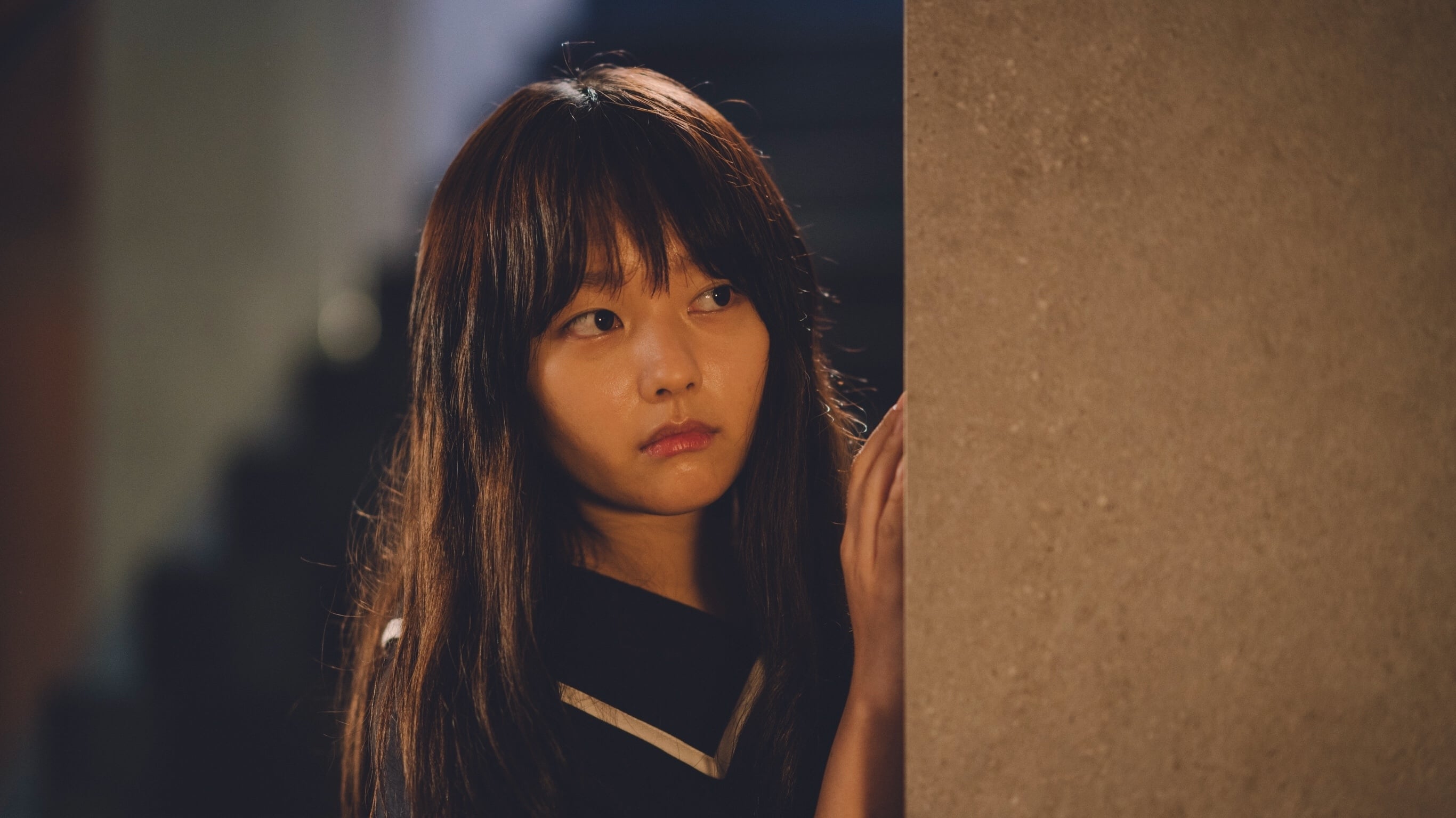
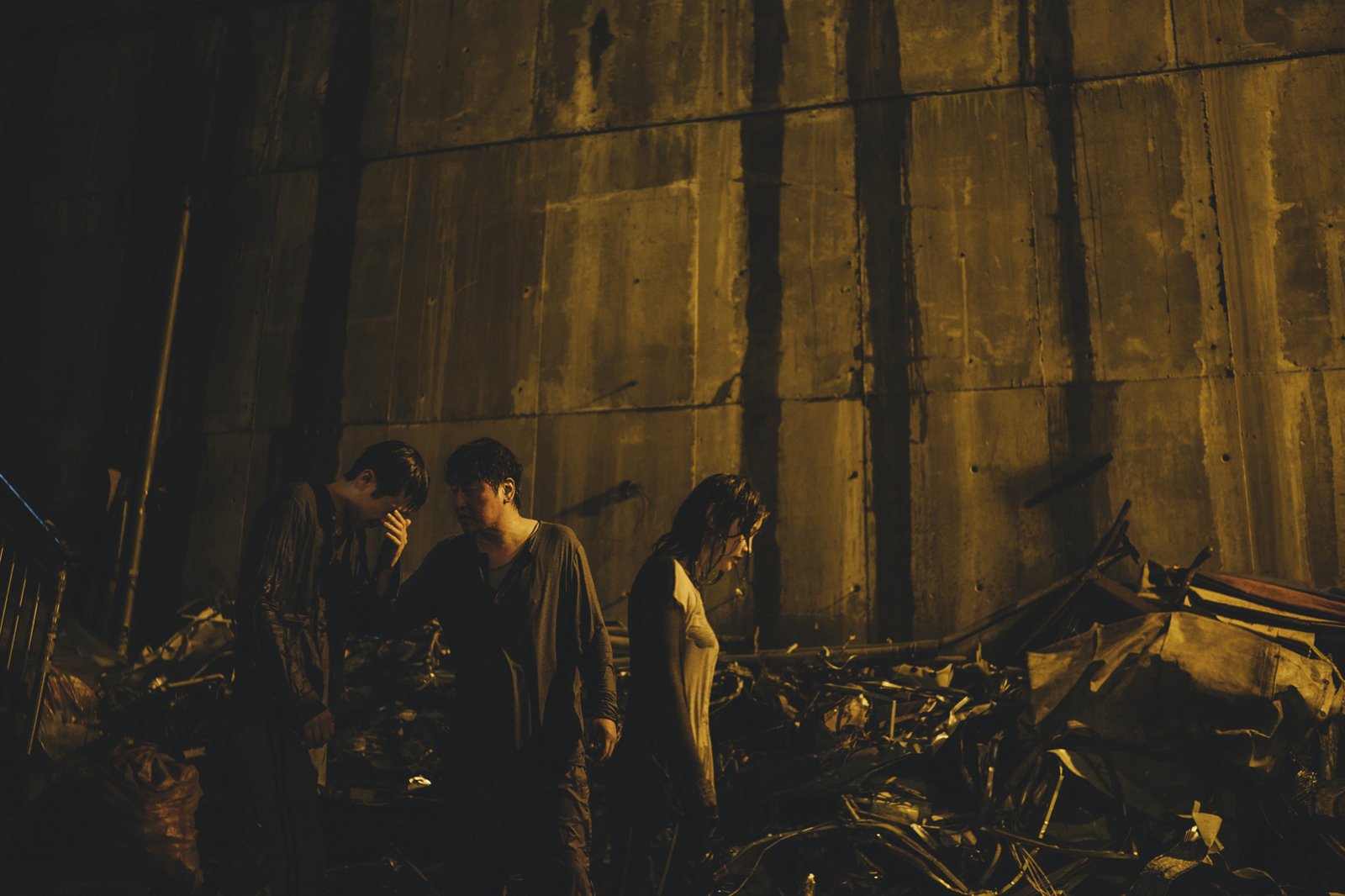
Man Made Horrors Beyond My Comprehension: The Apple Vision Pro

21.2 ounces, $3500, 256 gigabytes. Meet the Apple Vision Pro, a state of the art augmented reality device tailored to your every need. Seemingly straight from a sci-fi film, you simply don the headset and wave your hands to access immersive photos, play games, and escape within virtual landscapes. Its possibilities feel endless (much like the price tag)! In an age where technology has advanced to allow us such commodities, what isn’t there to love?

Image via

Well, the utopia-white goggles feel quite the opposite. The generous folks at Apple offer free in-store demonstrations of the device, and after taking a spin myself I must say it was the most beautiful nightmare I’ve ever had. Indubitably impeccable, I found myself far from the Chicago store on Michigan Avenue and on a 30 minute joyride through cyberspace. Following the experience I found myself within a state of reflection, squinting at the sunlight as I readjusted to the real world. I wonder, in the wake of perpetual threats made to creativity, AI creations, the looming dread of assured destruction in a world war through man-made weapons, and now the Apple Vision Pro— when is development in a field enough? While there are undoubtedly benefits to the product, I feel as though they were overshot in the interest of filling the space up with more features, and this presents a new future fear: that of film.

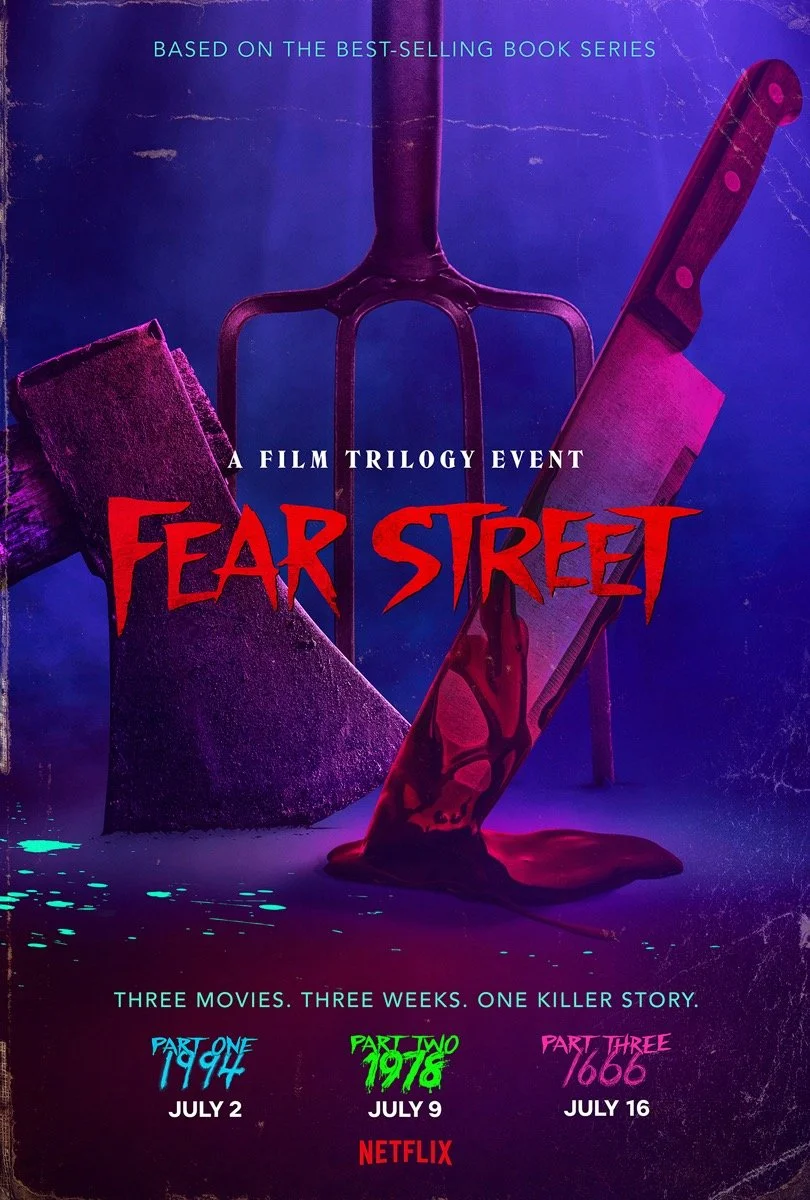
Towards the end of the demonstration I was shown a trailer for The Super Mario Bros. Movie. The characters danced across the screen of my personal theater, precisely where my cinephiliac dread broke through the immersion. Let’s take a step back to a time when movies primarily belonged to the big screen. There was something about the theatrical experience that beat an at-home watch, from the proper showcase of filmmaking to warm popcorn and a cold drink. Of course, COVID put a dent on things. With mass lockdowns movies faced delays, cancellations, and people began to switch to streaming. A prime example of this necessary adaptability came in the Summer of 2021 with the Fear Street trilogy: “after initially being intended for a unique three-month theatrical rollout, Fear Street’s release on Netflix essentially amounts to a three-week streaming event for a trio of feature-length films made on a major studio budget” (Surrey). A complex tradeoff was present, where the films still saw the light of day though on a smaller scale than originally intended in semi-isolation.

Image via

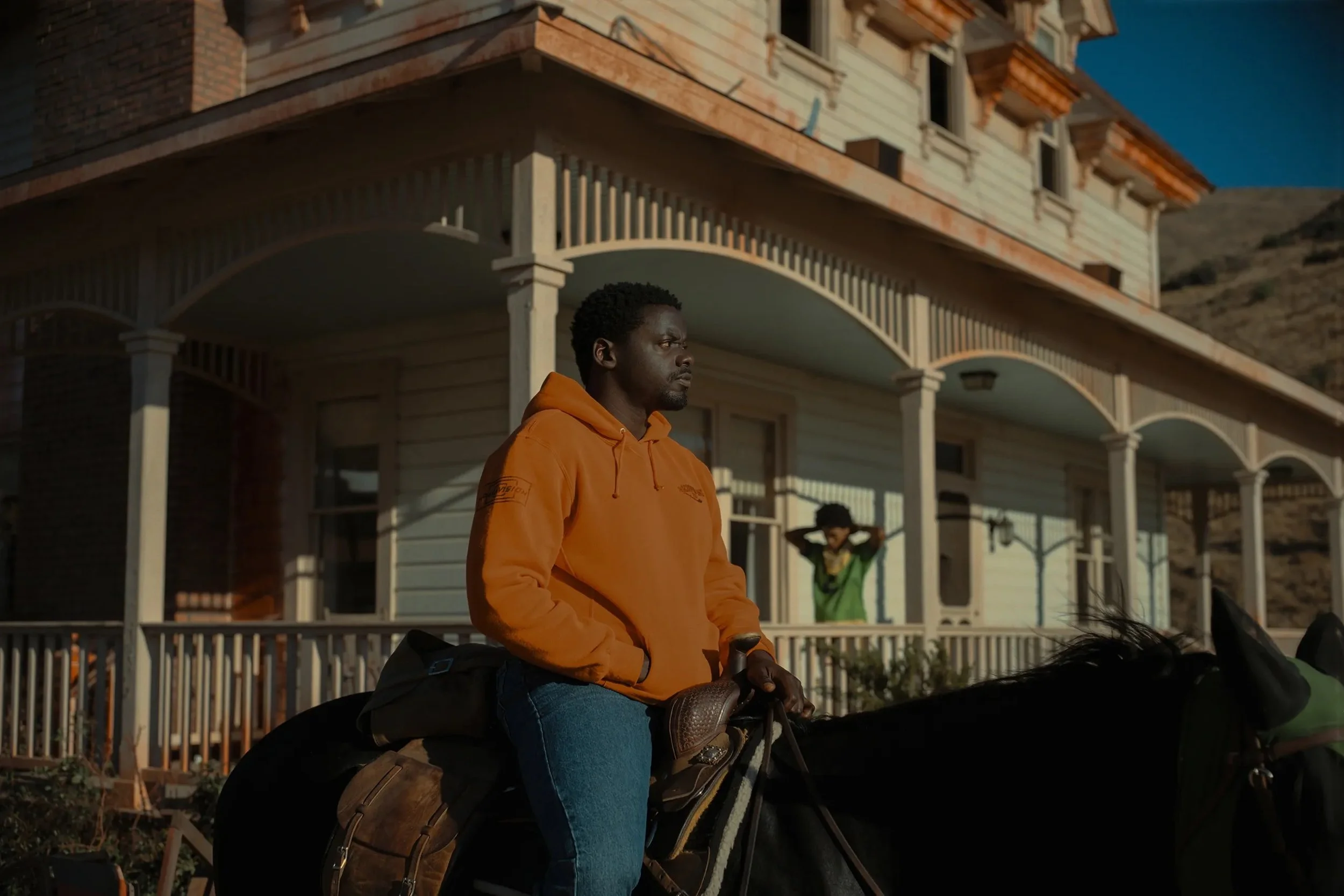
Following the decline of the pandemic and return to “normality,” Nope arrived in theaters with a technical twist: “Nope marked the first time the Imax format had been used for the horror genre, and Markoe says Peele understood how to use it creatively” (Tangcay). Here, development worked hand in hand with creative intent, resulting in the show stopping spectacle the film had intended to be for its audience. Yet 2 years later it seems as though the sentiment has regressed with the Apple Vision Pro. Impressive as it is, the film screening feature is a direct attack on the theatrical experience. Its convenience and experience render a trip to the cinema useless. The creativity involved in the Imax shooting of Nope would be for nothing if the theater didn’t have an audience. With that, what does the future of filmmaking and consumption look like?

Image via

Return to the dystopian nightmare. While nothing is for certain past the present and the product’s price tag may prevent it becoming a common commodity, the possibility for such a case is present. Would it result in another hit on the theater business? Could it sustain such a hit only a few years after COVID? Will the theatrical experience be lost to time? Is the future of filmmaking for a smaller screen than ever before?

Cover image via

Back to the Basics: Doing Horror RIGHT

I would not be offended if you told me I was entirely unqualified to be writing about this. I am NOT a cinema and media studies major, so please go easy on me. I am also RIDICULOUSLY squeamish, and I hate blood and gore. My kind of movie tends to be the kind that makes you cry at the end and laugh in the middle (About Time is my personal favorite). That being said, I am a recently converted fan of classic horror movies. I’m talking Halloween (1978), The Shining (1980), Scream (1996)... films like these comprise what I consider to be the golden age of scary movies. They are colorful, they are nostalgic, they are smart, they are multi-dimensional, and they are self-aware.

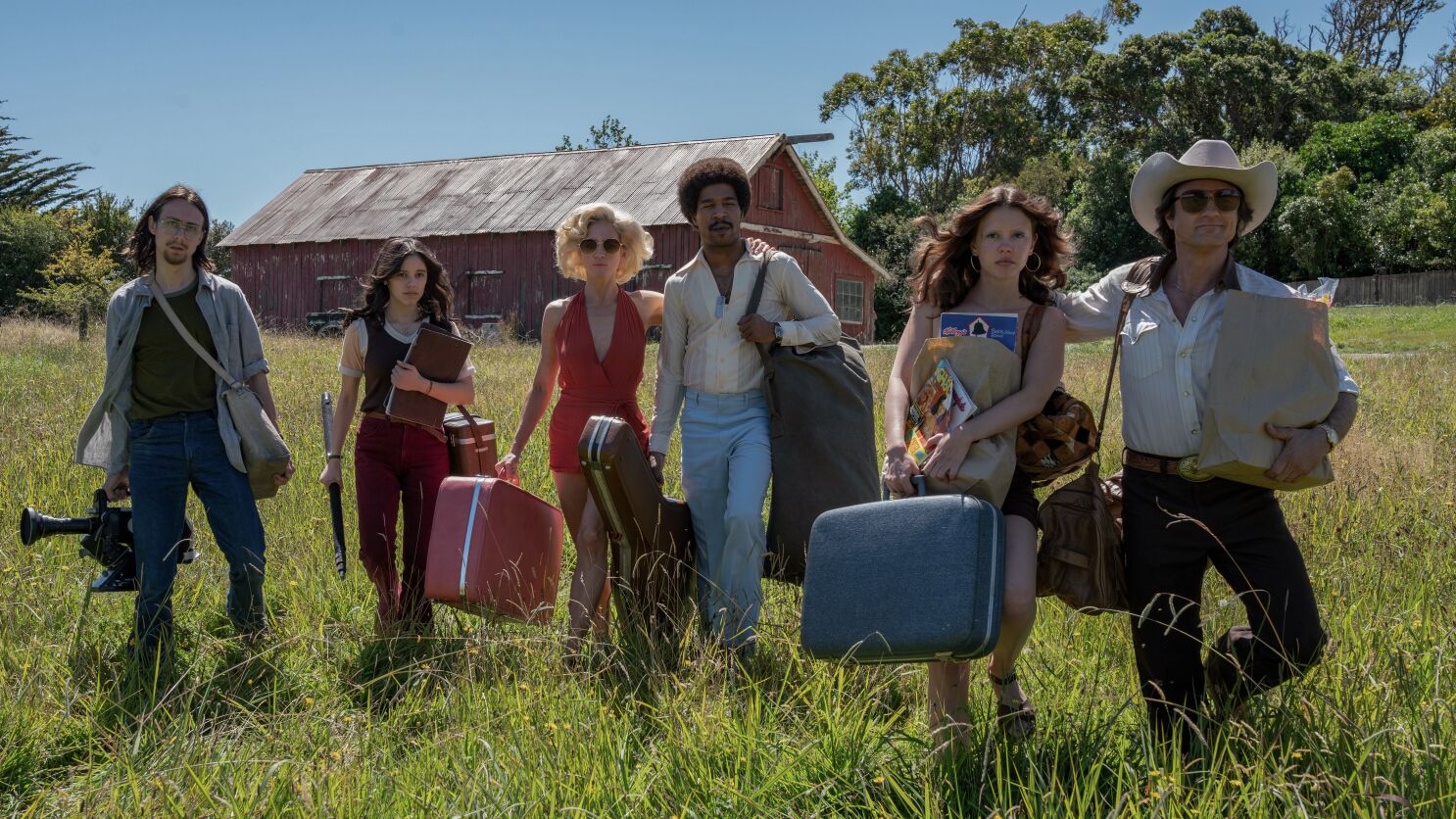
Horror from the last few decades of the twentieth century is unlike any other genre I have ever seen, contemporary or otherwise. They have the vibrant color palettes characteristic to film and fashion of the time period (the y2k that is ohhh so trendy now), paired with what one might find to be incompatible themes of death and evilllll. I feel like most horror movies these days tend to go for the ominous color palette we see in films like The Conjuring franchise. The only thing I’ve seen recently to parallel this classic color scheme is a24’s X, which actively emulates a vintage aesthetic and does so extremely successfully, I would say.

The Conjuring (2013)

Insidious (2010)

X (2022)

I love the kind of horror movies that don’t take themselves too seriously. Scream is exemplary of what I mean. It constantly makes fun of the genre it belongs to. It is corny but still manages to be scary.

Scream (1996)

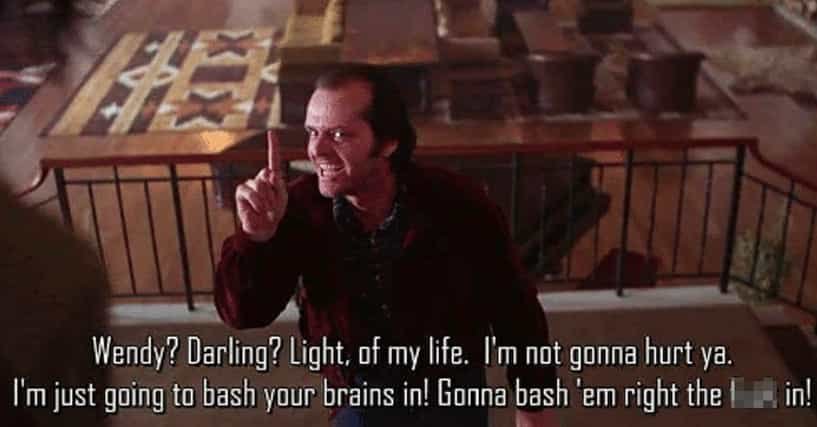
I don’t know if this is controversial, but I find The Shining to be SO funny. With Halloween, I guess what makes me laugh the most is the lore surrounding it. This article does a great deep dive into “horror’s quirkiest, most erratic horror franchise.”

The Shining (1980)

The thing I love most about these movies is that when you take away their horror elements, you still have a phenomenally interesting and entertaining film. They are character-driven, involve creative cinematography, and don’t rely on shock value for the sake of shock value. I have really only dipped my toes into the horror genre, but I have a feeling I’ll stick to the classics - they’re oldies but goodies!

Halloween (1978)

Source: https://s3.amazonaws.com/static.rogerebert...

A Reluctant Criticism of Spider-Man: No Way Home

It’s been five years now since Tom Holland’s first appearance in Captain America: Civil War as web-slinging teenager Peter Parker, a down-on-his-luck superpowered teenager idolizing the larger-than-life Avengers and trying to make a difference protecting his community. By now, Spider-Man’s most recent cinematic reincarnation is a worldwide sensation, a statement only made more true by the most recent blockbuster success of No Way Home. The success of the movie is deserved— the fast-paced action, gorgeous (if heavily computer-generated) cinematography, satisfyingly fleshed-out side characters, and the “surprise” appearance and instantly hilarious camaraderie of Tobey Macguire and Andrew Garfield as alternate universe Spider-Men make this an incredibly enjoyable film. Unfortunately, though, the movie falls short in one respect— Peter Parker himself. For even in the midst of the fun and the spectacle of the film, something rings false. The discrepancy is slight, but glaring, and gradually it becomes increasingly clear that the writers have abandoned the development of the protagonist they began to build five years ago. By the end of the film it is painfully obvious: Spider-Man: No Way Home has let its titular character down. 

To see how this happens, it is perhaps worth revisiting Peter’s first appearance in a solo movie— 2017’s Spider-Man: Homecoming. In this origin story, the protagonist was simply Peter Parker from Queens, a down-on-his-luck superpowered teenager returning home from an unexpected trip to Germany, idolizing the larger-than-life Avengers he had just brushed shoulders with and now bursting with a desire to make a real difference protecting the world, just as his heroes did. He was enthusiastic, but inexperienced and awkward, which led to ineffectiveness and sometimes to him doing more harm than good. By the end of that movie, he had learned through experience the indisputable importance of experience in the process of realizing good intentions. This newfound maturity was shown clearly when at the end of the film, he walked away from the offer to join the Avengers because he realized that at that point in his life, he wasn’t ready. 

This maturity carried over into the next film, when we saw Peter Parker dealing with grief. He journeyed to space to fight against Thanos with the other Avengers, lost five years of his life because of it, and in Far From Home, we saw him reeling after the death of his mentor, Tony Stark. This added a new layer of challenge to the maturity he has won; now, he found himself dealing with a new kind of vulnerability, and it was one that caused him to doubt himself and left him open to be manipulated by the movie’s central villain, con man Mysterio who used Peter’s feelings of guilt, regret, and inadequacy to convince him to hand over Tony Stark’s legacy. This one honest mistake nearly destroyed the world, and so Peter had to learn quickly to trust what he knew to be true in the face of skilled manipulation and gaslighting. This incredibly necessary self-assurance was hard-won as Peter realized through painful mistakes that he has to trust his own hard-earned abilities and his strongest relationships in the face of manipulation and gaslighting if he wants to succeed. It’s a powerful message, and he finally triumphed as he learned to utilize his intuition and be thoughtful, intentional, and selective about what— and who— he allows to sway his actions and beliefs. 

This brings us to the beginning of the most recent film, No Way Home. By now, the Peter Parker we see onscreen has come a long way from the first time we met him. He knows the world is infinitely more complicated than any one person can know, but he deeply respects its complexity. He knows that his best assets are the abilities and knowledge that he has fought hard to win, and he trusts these things thoroughly. He is no longer naive, overconfident, or easily misled, and he understands that actions can have incredibly heavy consequences. Peter Parker has grown immensely from the beginning of his storyline. He is more than competent now; he is cautious and aware, both of his surroundings and of the weight attached to any course of action he can choose. 

It is jarring, then, that the entirety of No Way Home is built around Peter Parker making a rash decision without attempting to understand the consequences. Barring the unlikeliness of Doctor Strange complying, it is inconsistent that Peter would request and condone the rewriting of the memory of the universe to correct his mistake. The excuse the movie offers is that he was desperate; he was the reason his best friends had not gotten into college, and the guilt pushed him to act rashly— an excuse that might work had the previous movie not been centered around Peter learning to act rationally despite the pressures of guilt. Furthermore, a student as logical, analytical, and intelligent as Peter is shown to be would likely have familiarized himself enough with the admissions process to realize that a person can, in fact, apply to college more than once, can transfer from one college to another, and can contact admissions officers about extenuating circumstances. Finally, and most importantly, the sequence of events we are presented with is fundamentally nonsensical. However poignant the effects of desperation may be, it is inherently out of character for Peter Parker to make an uninformed, selfish decision when the entirety of his character arc over the last five years has been carefully tailored to establish that he is neither uninformed nor selfish. Spider-Man is a deeply caring individual, and he possesses a hard-won maturity. It makes no sense for him to reach for a quick fix, and it makes even less sense for him to gamble the fate of the multiverse over a college acceptance letter. 

This sudden abandonment of a thoughtfully-crafted character arc reflects a growing trend in the MCU— the tendency to ignore what they have established, whether in their universe or in their characters, in order to usher the world forward into the next “phase”. We are now, according to Marvel’s outline, in the fourth phase, which includes WandaVision, Loki, Shang-Chi and the Legend of the Ten Rings, Eternals, and several other shows and movies yet to come. In almost all of these, Marvel reaches for the quick fix— in WandaVision, Wanda’s unethical actions are excused as the fault of a surprise villain who is then immediately disposed of; in Loki, an interesting attempt at expanding the rules of the universe ends up a nonsensical mess that was the fault of a villain who was, again, immediately disposed of; in Shang-Chi, the characters’ development is handled brilliantly, but this is allowed very little consequence in the grander scheme of things; in Eternals, not a single person is more than a caricature, and they act not as people but as plot devices fighting yet another computer-generated and oddly-named villain who conveniently disappears at the end of the movie. None of these films or series are inherently at fault for this— or rather, they wouldn’t be if they existed in a vacuum as standalone action movies. But the fact is that they don’t; each installment is meant to play into the larger story of the MCU. That can’t happen if every character’s development starts from ground zero whenever the plot requires it. No Way Home is an especially striking and worrying example, because so much effort was put into the development of the character’s motivations over the course of the previous films, and regardless, this development was so quickly abandoned. The lack of hesitation that Marvel displays when cracking the structure they have established in favor of momentary plot convenience shows an unsettling willingness to sacrifice the universe they have spent decades building in exchange for fleeting thrills. 

Not all of this, of course, is the fault of No Way Home. Overall, this film was well-made, artful and entertaining. It was full of brilliant choices— the subversion of the expected outcome when MJ fell and was caught by Andrew Garfield, and was more rattled by his tearful reaction than the fall itself, was artfully done. Peter’s loss of his friends and his selfless decision to let them forget him was a striking touch. The brotherhood, confusion, and mutual support offered between the three versions of Spider-Man was hilarious and incredibly gratifying, and the continuation of the twists on home as a theme was well-crafted. The movie certainly has strengths on its own and in relation to its audience, and it’s enjoyable to watch. But on a larger scale, a narrative universe that defies its own foundations isn’t one that lasts, and if the MCU is going to attack one of the fundamental pillars of storytelling— character development— they should form a pretty ironclad plan for what to replace it with. Spider-Man: No Way Home didn’t, and that’s why, as entertaining as it was, it ultimately fell flat. I hope that the writers and directors find a way to return to or substitute for this, or the future of Marvel’s storytelling runs the risk of becoming fragmented— or, in the worst-case scenario, directionless entirely. 

Source: https://static3.srcdn.com/wordpress/wp-con...

Diana Vreeland: The Eye Has to Travel

Have you ever watched fashion documentaries? The directors, through the best aesthetics, allow insiders in the fashion industry to tell their stories and share their insights.

Diana Vreeland: The Eye has to Travel, released in 2011, has always been in the top 10 must-watch fashion documentaries—and I finally watched it this week. The documentary includes interviews of Vreeland with George Plimpton for her memoirs, the models and photographer who worked with her, her celebrity friends, and her family members. Through these different angles, a Diana who is saucier than Devil Wears Prada and lived her life to the fullest is presented.

Interestingly, one of the directors, Lisa Immordino Vreeland, is Diana’s granddaughter-in-law. Though Lisa had never met Diana, she had all the access and connections needed to make this a successful documentary, making it a tribute in turn.

 The best thing about London is Paris.
— Diana Vreeland (Harper's Bazaar UK)

Born in 1903, Diana Dalziel was the eldest daughter of American socialite Emily Key Hoffman and Scottish stockbroker Frederick Young Dalziel. Her early childhood home in Paris was frequently visited by leading artists at the time. As they immigrated to the United States, Dalziel started attending Brealey School to study ballet. When she was 18, she married the love of her life—Thomas Reed Vreeland—and gave birth to Tim and Frederick. She started working at the age of 33 as Harper’s Bazaar’s editor, then became the editor-in-chief of Vogue 26 years later. At the age of 70, she became the special consultant to the Costume Institute of the Metropolitan Museum of Art.

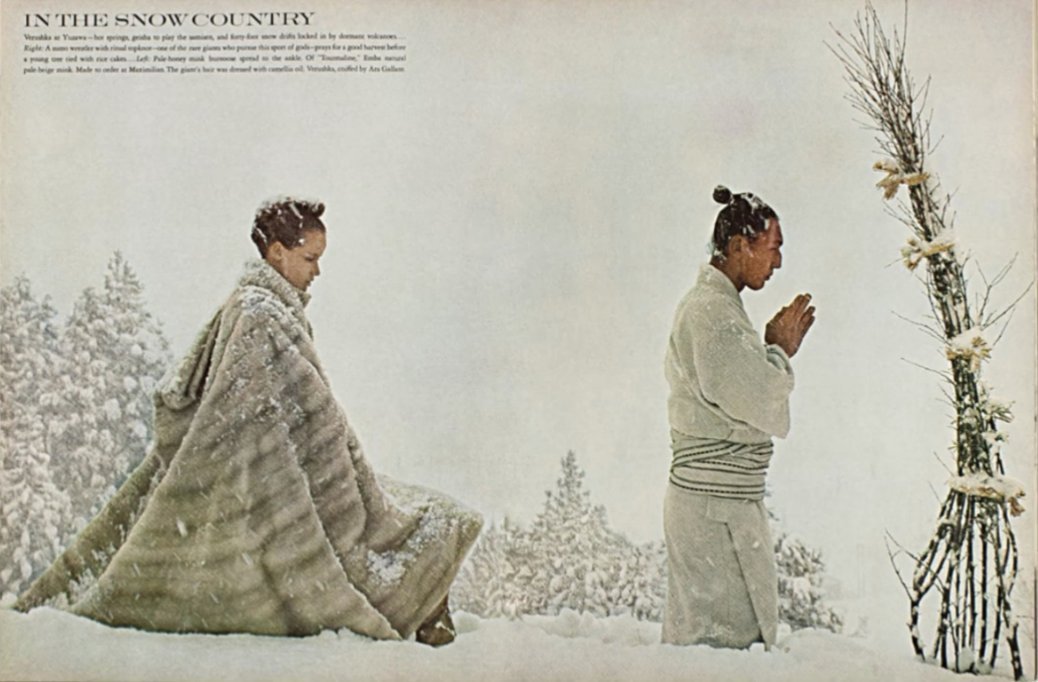
Her intuition towards fashion and her eyes for talent are impeccable. The Great Fur Caravan is one of the most breath-taking series I have seen in fashion magazines, and this 1966 series has proven its timeliness. The twenty-person crew from Vogue made an unprecedented journey to Japan with Richard Avedon, capturing a love story featuring supermodel Veruschka.

Two of the 26 page series

Featured image via

The narrative is about a girl who travels to a foreign country and falls in love with a Japanese giant (the male model is a 7ft sumo wrestler). The photos are truly breathtaking, a merging of art and fashion under an exotic and dreamy setting.

Rumour has said that this shooting cost one million dollars, which would be equal to modern day seven million dollars. It is definitely one of the most audacious projects that Vreeland has spearheaded, but I think the final result has proved its value.

Featured image via

Diana wasn’t pretty by society’s standards, and her mom would even call her ugly, but she has never tried to hide her imperfections. She created her own personal statement and style, which ensues in her work as well.

For Harper’s Magazine, she opened up a column called Why Don’t You? In this column, she wrote down eccentric style ideas that were best enjoyed as concepts as they were difficult to actually execute. Nonetheless, the ideas were playful and precious and could always put a smile on readers’ faces. She is not telling readers to do something a certain way, but shows them that there is another way of doing something. For 26 years, the column shouted freedom and invited the reader into her creative world.

WHY DON’T YOU…?

Paint a map of the world on all four walls of your boys’ nursery so they won’t grow up with a provincial point of view?

Cover a big cork bulletin board in bright pink felt banded with bamboo, and pin with colored thumb-tacks all your various enthusiasms as your life varies from week to week?
— Diana Vreeland (organized by Harper's Bazaar Staff)

Vreeland was not perfect. As a boss, she was strict; as an editor, she often went beyond the budget; as an individual, she over-romanticized things. However, she was special and not afraid to be quirky, and that’s good enough.

The 85 minutes documentary allows the audience to have a glimpse into a fashion pioneer’s life, and is just perfect for a chill night.


Before There Was Punk, There Was Death


Punk subculture is a coalescence of countless radical aesthetics and convictions. Irrepressibility. A do-it-yourself spirit. Anti-establishment and anti-authoritarian mindsets. Rebellious attire. 

Notorious whiteness. 

With the rise of bands and artists from the likes of the Ramones, Patti Smith, and the Sex Pistols in the mid-70’s, three black brothers from Detroit, unbeknownst to the rest of the world,  had already laid out the foundation.

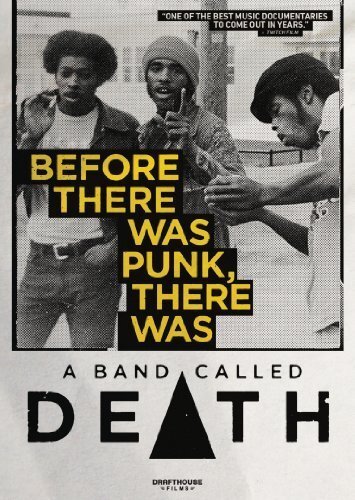
Film poster for A Band Called Death

Film poster for A Band Called Death

The story of the brothers was recalled in a 2012 documentary film titled A Band Called Death, directed by Mark Christopher Covino and Jeff Howlett, and follows two of the brothers as they tell the tale of Death and its new found glory decades after their disbandment.

The film begins, after a compilation of confessions from musicians like Kid Rock and Questlove, by giving us tracking shots of worn down houses, caved-in rooftops, and dilapidated arches that read 

MO OR CITY IN U T R  L PARK 

in Detroit, Michigan. “Welcome to my neighborhood,” Bobby Hackney Sr. boasts, “2240 Lillibridge. This is where Death was born.”

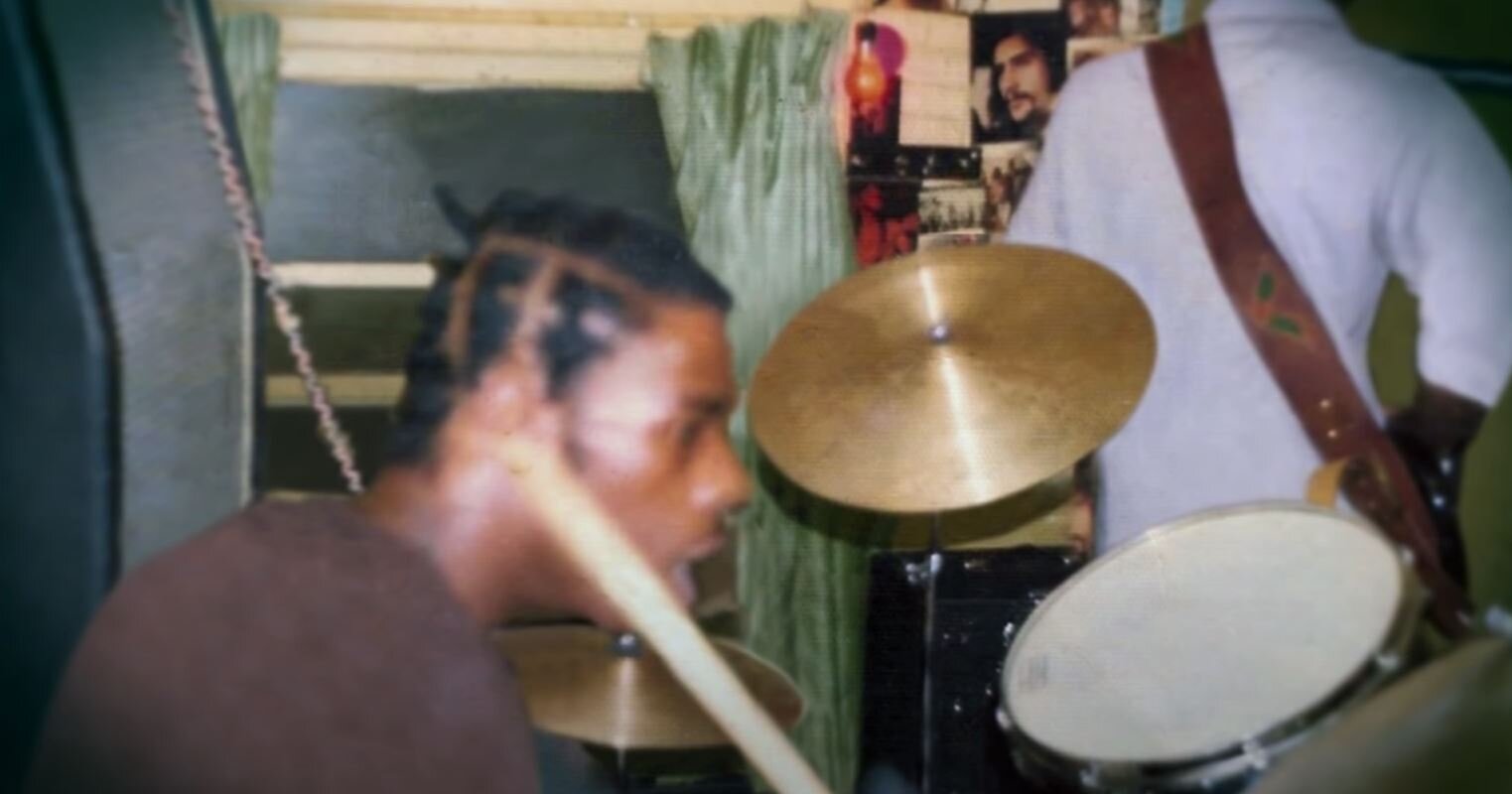
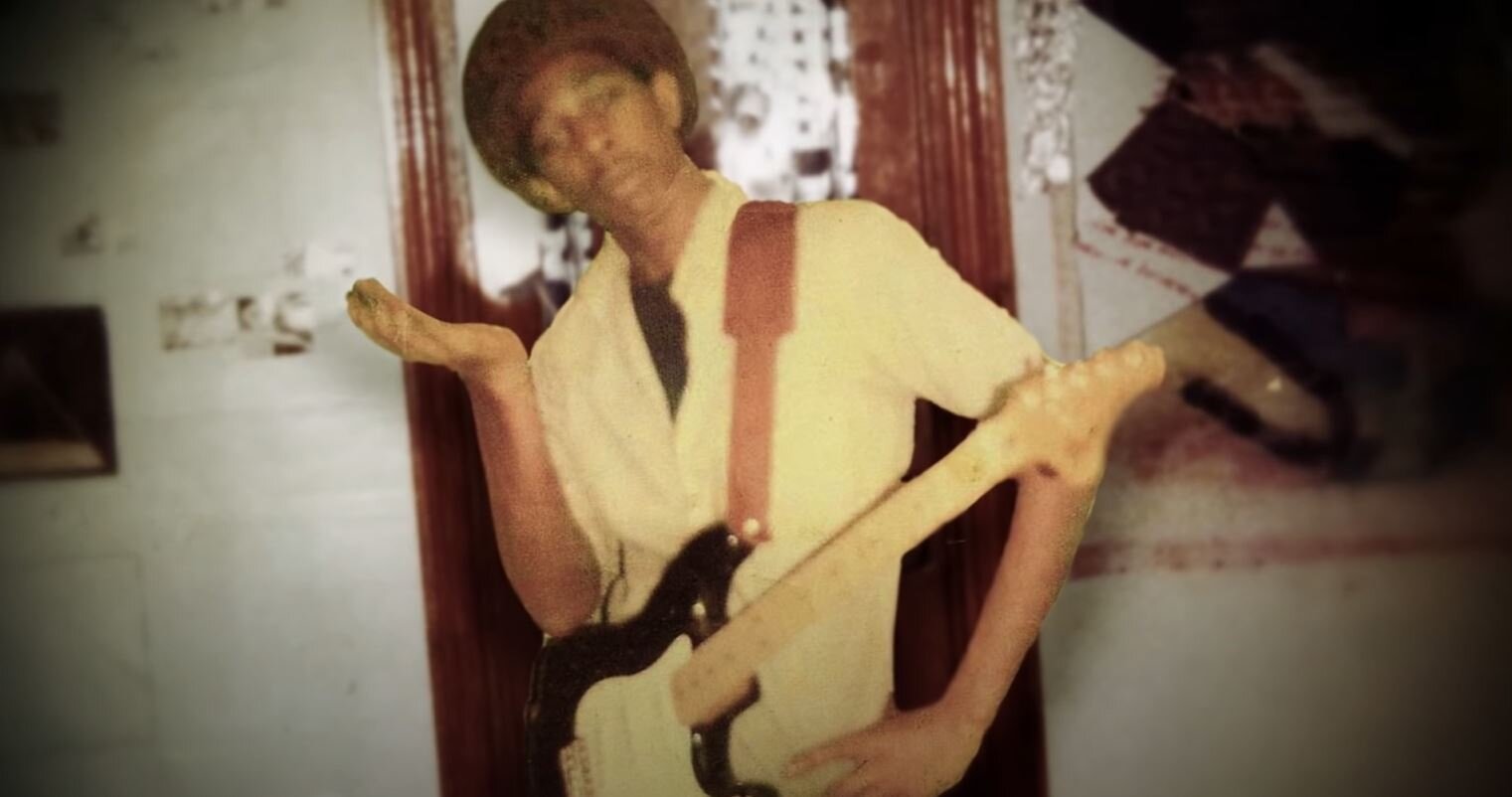
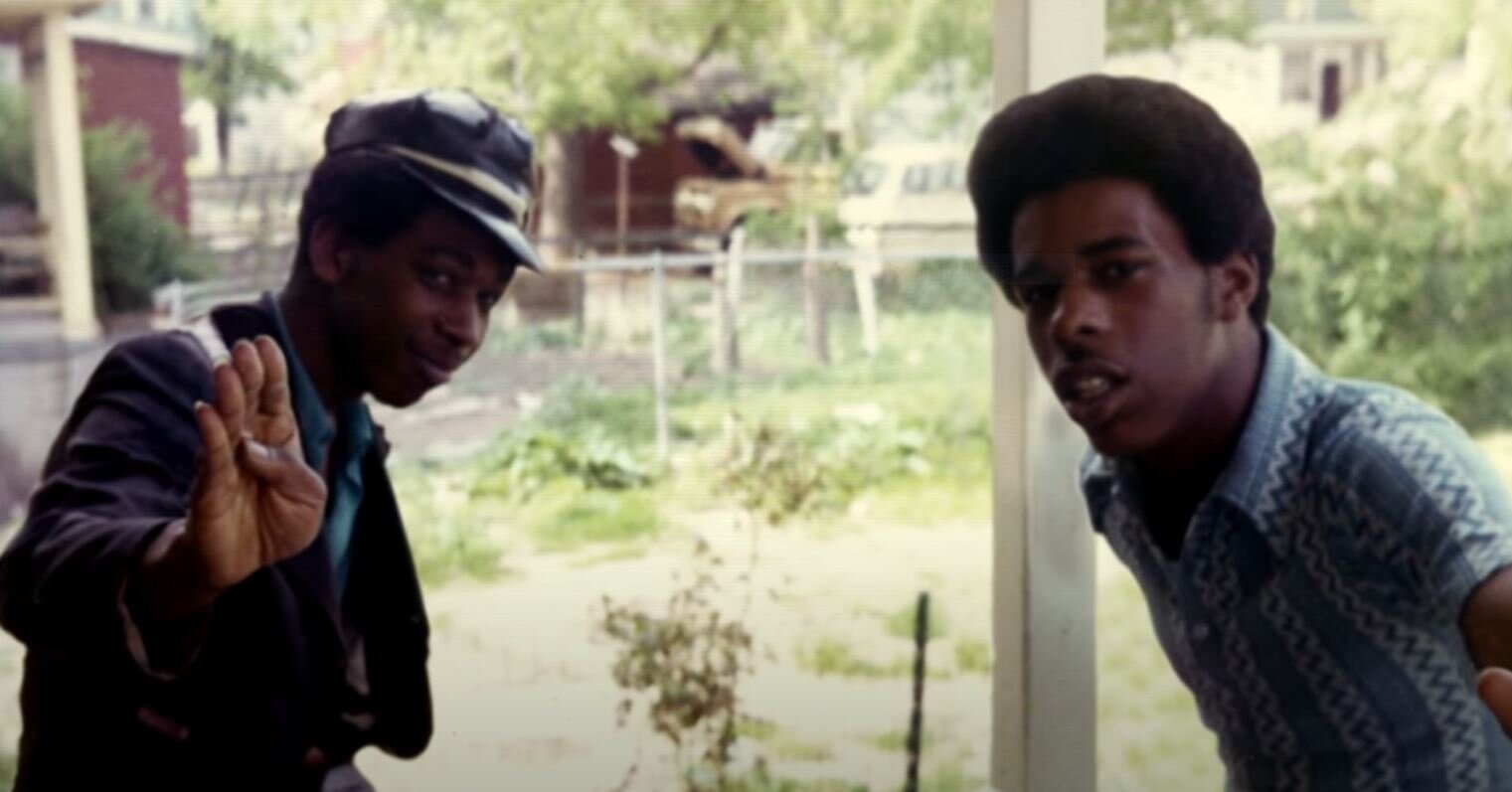
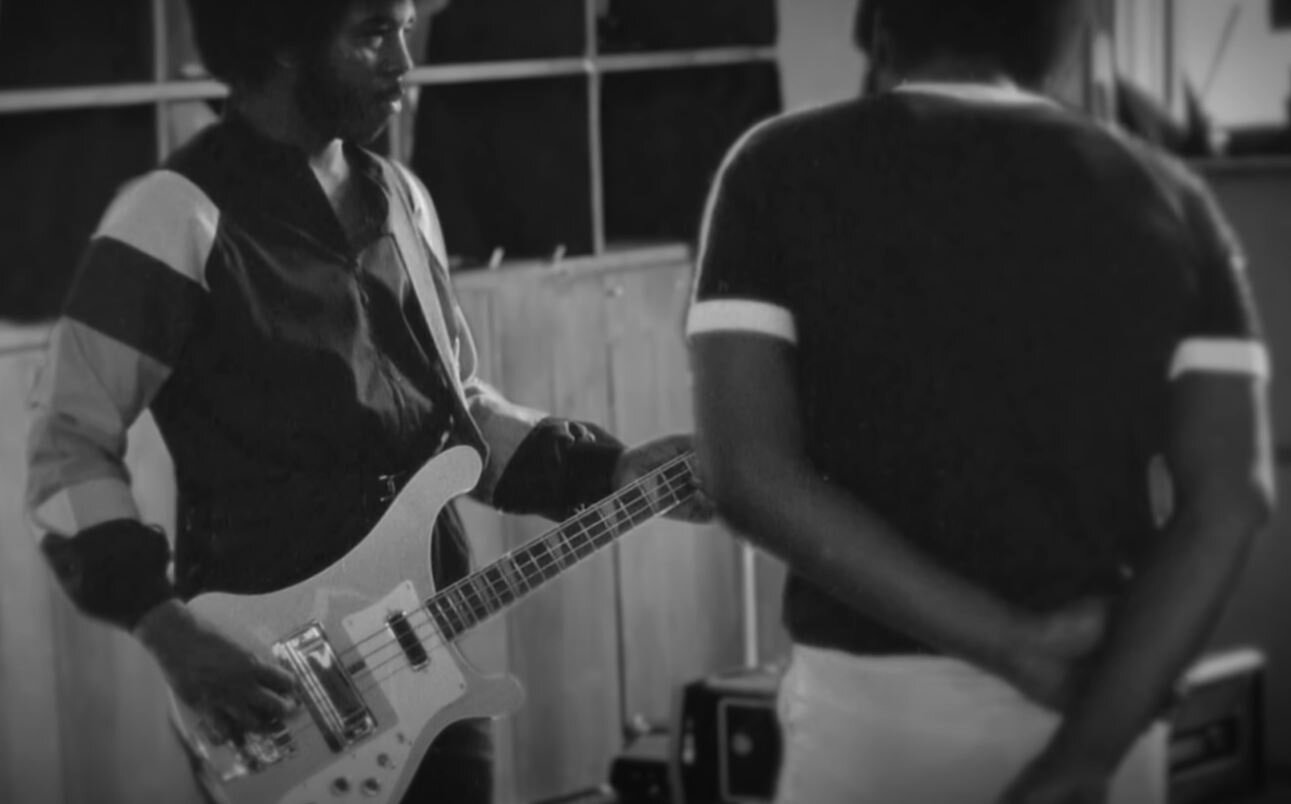
The band was composed of Bobby Hackney Sr. on vocals and bass, Dannis Hackney on drums, and David Hackney as guitarist, songwriter, and leader. 

The Death brothers grew up during Motown time in Detroit, preacher’s sons with spirituality rooted deep within them. It’s when their father sat them down to watch The Beatles play that they knew music is what they wanted to do. It was David that rallied them together to form the band. The brothers, unsure whether they wanted to be a rock or a funk band, were first called Rock Fire Funk Express. When David went down one day to see The Who, he knew rock and roll was the music they had to play. And when Dennis saw Alice Cooper, all bets were off.

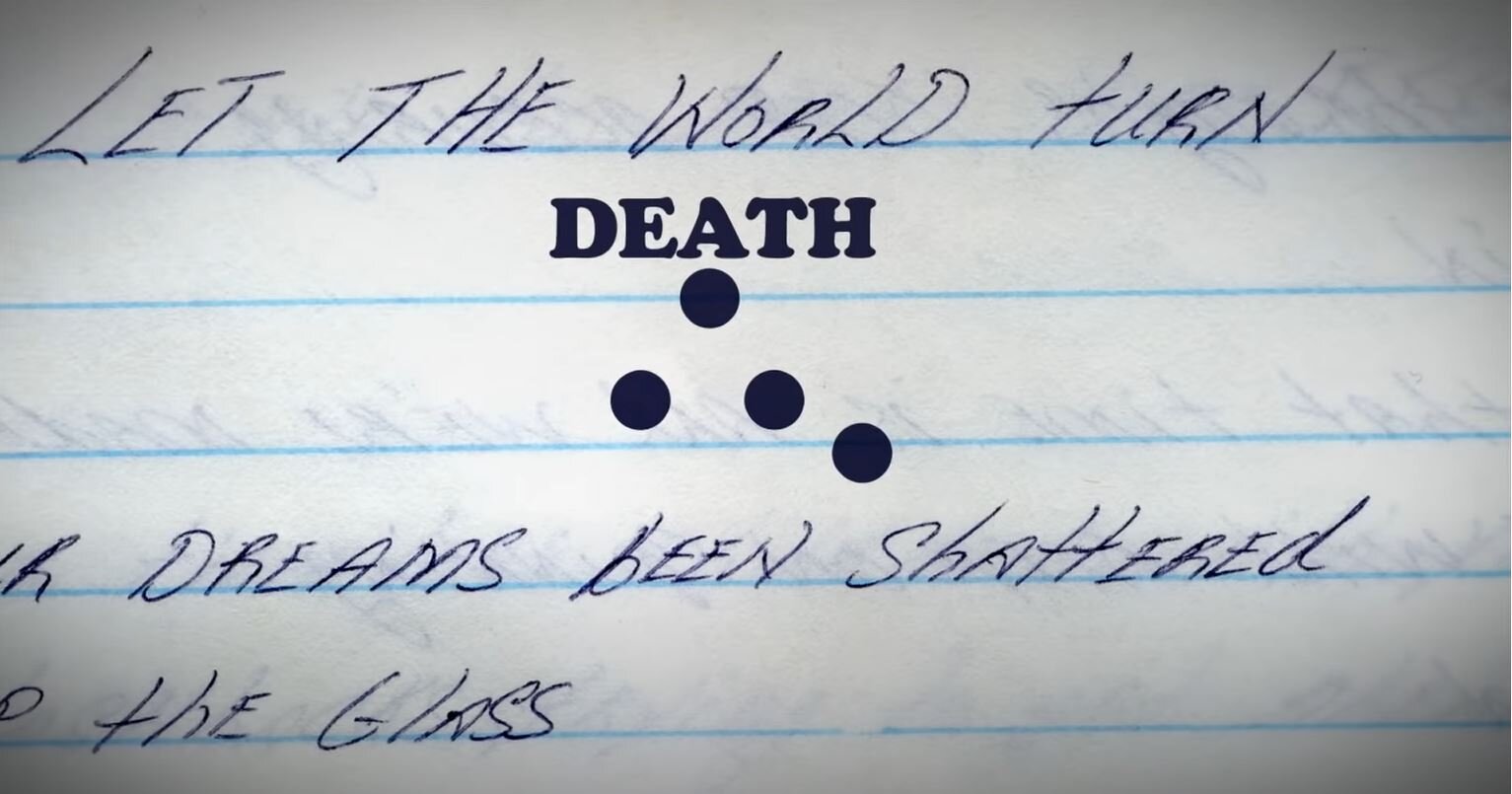
The Death Triangle

The Death Triangle

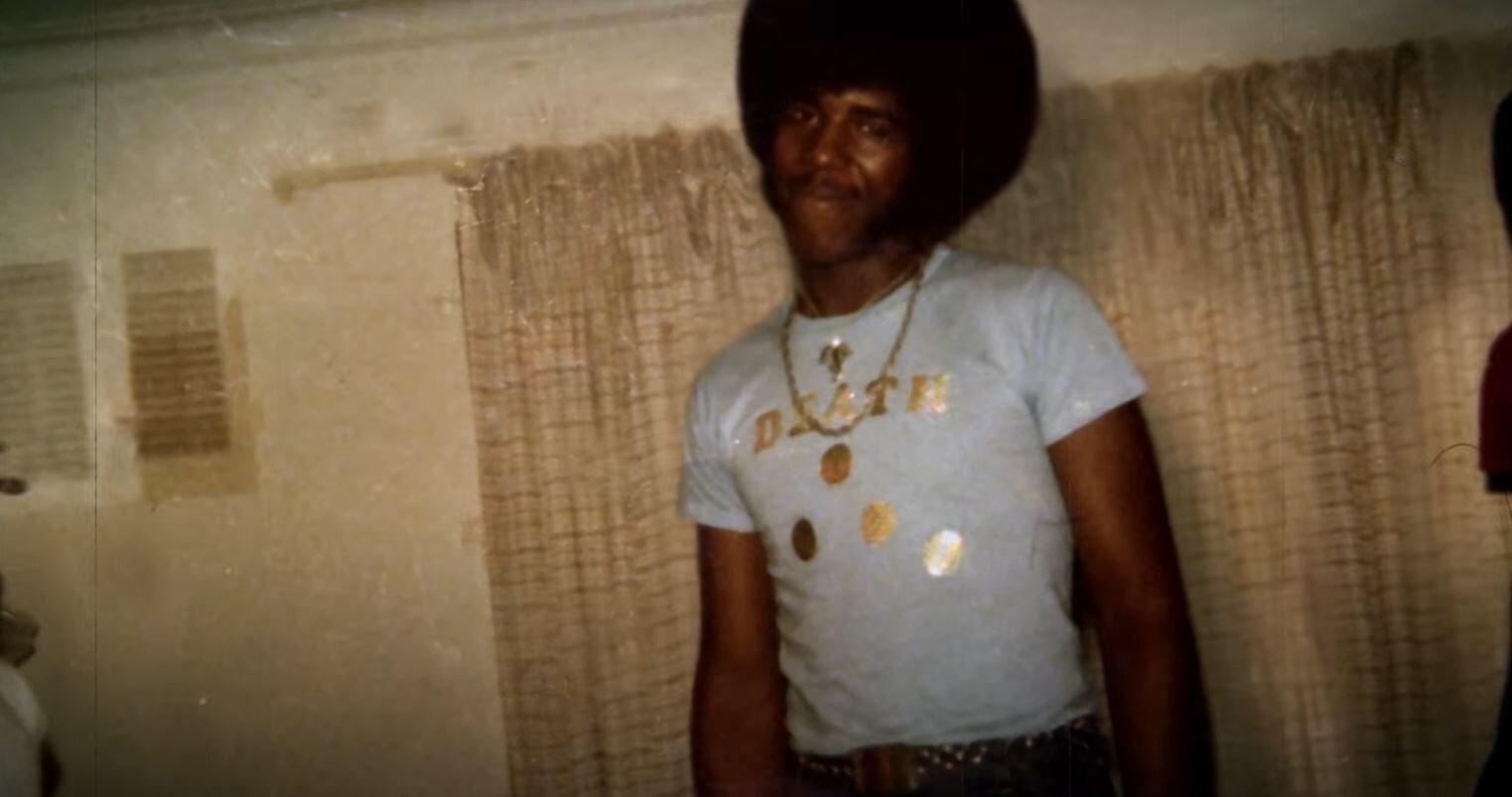
After the death of their father, in Spring of 1974 David came up with the name that changed it all: Death. Their name would always have shock value, because “death is real,” David claimed. The goal was to put a positive spin on death, the ultimate trip. The circles on the band’s logo, the Death triangle, represent the three elements of life: the spiritual, the mental, the physical. The latter circle is the guiding spirit of the universe. It’s God, really. 

Dannis and Bobby still ooze musician cool decades later, the brothers bringing the crew throughout their home while pointing out corners of memories and the ghosts of their instruments. This is where Dannis’ drums would be. This is where David would stand. 

The name was a roadblock, but wouldn’t change under any circumstances. “If we give him the title of our band,” David said on record producer Clive Davis, “we might as well give him everything else.”

And what’s more punk than resistance? Than persistent blackness? 

death recording.JPG
death recording 2.JPG

They don't care who they step on

As long as they get along

Politicians in my eyes

They could care less about you

They could care less about me

As long as they are to end

The place that they want to be

Politicians in My Eyes (1974/2009)

It’s in this discomfort that Death crafted itself as a band ahead of its time, proto-punk among an age of angsty whiteness. 

But is it really all in the name? I don’t bite. 

Black folks time after time are forced to deal with their invisibility and hypervisibility in popular culture. In the 70’s, the association with black musicians to the Motown sound, especially in its birthplace of Detroit, left artists like the Hackney brothers in the dust of a seemingly whitewashed sound: a sound that they pioneered. 

“We were ridiculed because at the time everybody in our community was listening to the Philadelphia sound, Earth, Wind & Fire, the Isley Brothers,” Bobby said to Red Bull Music Academy, “People thought we were doing some weird stuff. We were pretty aggressive about playing rock ’n’ roll because there were so many voices around us trying to get us to abandon it.”

Their inability to get radio play caused them to sell most of their equipment, and in 1977 Death disbanded. Dannis and Bobby closed the book on that chapter in their lives and formed reggae band Lambsbread in the 80’s. Before David’s eventual death in 2000, he told his brothers, “The world’s gonna come looking for the Death stuff.” And he was right. 

In the early 2000’s the resurrection began. The newfound discovery of Death was an anagmalation of things: Bobby Hackney’s sons’ interest in the punk rock scene, the influence of musician Don “Das” Schwenk, and the mysterious ways in which the universe can only discover a band of visionaries lying in wait decades later. Schwenk, a longtime friend of the Hackneys, was commissioned to create the album art for what would have been the Politicians In My Eyes LP back in the day: unable to pay him, the brothers gave him copies of the LP instead. Years later after Death’s demise, Schwenk began to hand them out to collectors. “It’s never too late,” he said.

Bobby and Dannis Hackney for The New York Times

Bobby and Dannis Hackney for The New York Times

The track list to Death’s original master tape from the 70’s

The track list to Death’s original master tape from the 70’s

As the record began to circulate among collectors circles, niche popularity grew. It made its way to Chunklet magazine and eventually began to spin at underground rock ‘n roll parties. It’s how Julian Hackney, son of Bobby, discovered that his father and two uncles were punk before punk was punk—since the brothers never felt the need to tell the kids about all the rejection they went through as rock stars. After a friend of Julian recommended him to listen to the band Death, his father’s voice on the record was unmistakable. The discovery led to Bobby’s sons forming their own band, Rough Francis, to cover Death’s music. 

And there is something quite beautiful about that. About the legacy of music passed down almost hereditarily, though unconsciously. It’s Bobby’s sons who made it their mission to get the music out, to let the world know that their father and uncles were the predecessors of what punk became. In 2009, Death was able to officially release their 1970s demos as the studio album  …For the Whole World to See: it was named decades before by their late brother, David.

In the opening of the film, the camera follows Dannis and Bobby haphazardly, panning back and forth between their conversation with old neighborhood friends. When Bobby tells one of them, “They’re telling the story about death,” the woman shrugs, “I’m still here!”

Sounds familiar. Sounds like a legacy. Sounds immortal.

Bobby and Dannis Hackney showing off their official 2009 studio album, …For the Whole World to See

Bobby and Dannis Hackney showing off their official 2009 studio album, …For the Whole World to See

A Band Called Death (2012) can be streamed on Prime Video, or Youtube.com

…For the Whole World to See can be found directly on Spotify, Apple Music, and other streaming platforms

Unlinked pictures, including the featured image, were stills taken directly from A Band Called Death (2012)


Film Movements: Nuevo Cine Mexicano

One winter night in mid-January, I was bedridden with the flu and scrolling through the TV channels. At this point, I had already missed two days of school and had no intention on finishing my make up work. With nothing but late night shows on, I turned off the TV and scrolled through my phone. One way or another, I ended up watching this Peruvian film called Milk of Sorrow, as I hid under my comforter not wanting to wake up my sister sleeping right beside me. Looking back on it, the film dealt with themes, that as an eleven year old, I was too young to comprehend; however, I was moved by it. Milk of Sorrow was my first introduction to foreign films and I loved everything about it.

As I write this, I am reminded of Bong Jong Ho’s acceptance speech at the Golden Globes for Parasite:

Once you overcome the 1-inch tall barrier of subtitles, you will be introduced to so many more amazing films.”

Many countries have experienced film movements that result in masterpieces that everyone should see at least once. They offer unique voices and artistry that is unparalleled. Here is one of my favorite film movements because it hits close to the heart as a Mexican immigrant: Nuevo Cine Mexicano.

Nuevo Cine Mexicano (New Mexican Cinema) refers to the renaissance of Mexican cinema that started in the early 1990s after decades of low budget productions that were mainly forgotten as audiences preferred the blockbusters coming from Hollywood. This rebirth of Mexican cinema is in reference to the The Golden Age of Mexican Cinema that occurred between the 1930s and 1960s.

This “new wave” catapulted Mexican filmmakers into international prominence like Alfonso Cuarón, Alejandro González Iñárritu, and Guillermo del Toro--sometimes referred to as “The Three Amigos” by US media and press.

Between 2013 and 2019, these three dominated the “Best Director” category at the Academy Awards, and produced some of the best films of the decade. As they continue to make waves alongside popular Mexican actors like Diego Luna and Gael Garcia Bernal in Hollywood, the Mexican film industry continues to produce powerful films that continue the legacy of these early 90s films that started it all. 

The movement brought refreshing change into the industry as it tackled contemporary issues by portraying both the political and societal issues in Mexico in a raw way that oftentimes uses satire, black humor and violence to construct its message. 

With a range of genres, the following films are sure to captivate you.

Después de Lucía (2012)

Directed by Michel Franco Image via

Directed by Michel Franco Image via

 After the death of her mother, Alejandra and her dad move to Mexico City to start anew. Soon, Alejandra starts being bullied at school; however, refuses to tell her dad, to not worry him. This film explores the relationship between father and daughter and the repercussions of bullying and teenage violence.

I watched this movie quite recently without any knowledge about it. The themes it dealt with and the execution of the film was very strong. It was controversial when it came out and at times I was unsure as to whether I liked it or not. I’m still not sure to this day if I do or not. If anything, it is the final scene of the film that made it so memorable and the reason why I felt the need to put it on this list.

Los Insólitos Peces Gato (2013)

Directed by Claudia Sainte-Luce.  Image via

Directed by Claudia Sainte-Luce. Image via

A heart warming film about two women, Martha and Claudia, who meet while recuperating in the same hospital. Martha allows Claudia to move in with her and her four kids. They soon take a trip as Martha’s health continues to deteriorate. I went into this film without any real expectations, but it quickly became one of my favorites. The performances by the two actresses are so powerful and captivating, that I regularly watch this movie from time to time.

Cronos (1993)

Directed by Guillermo del Toro. Image via

Directed by Guillermo del Toro. Image via

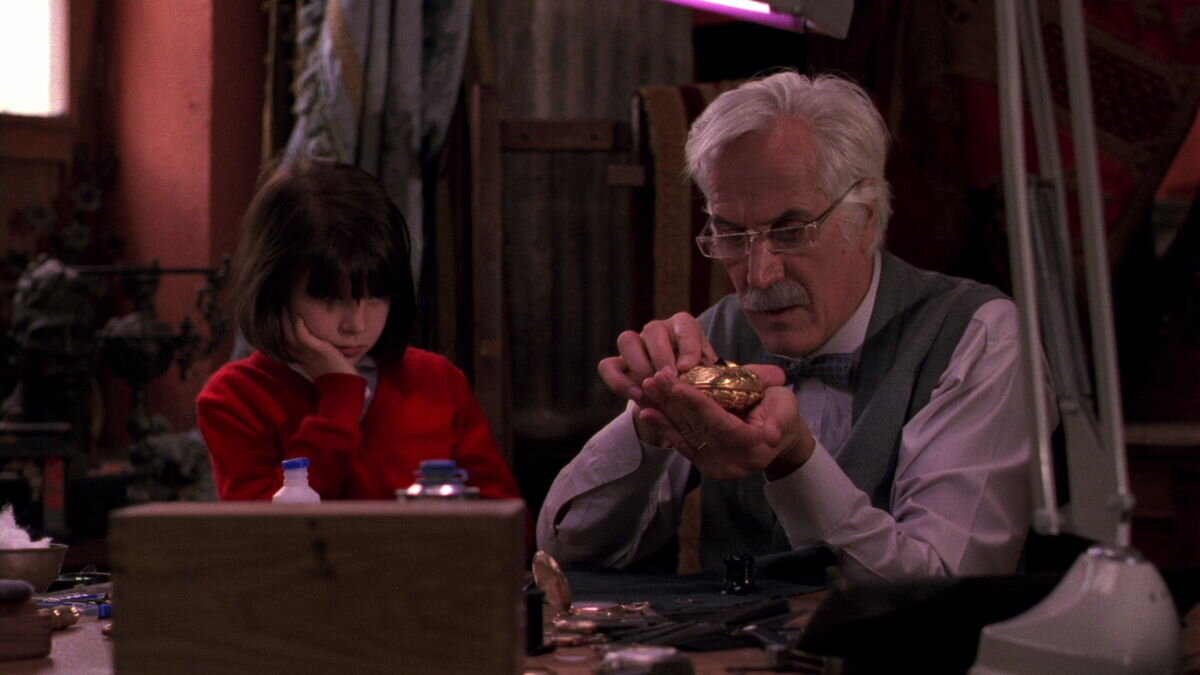
Cronos is Guillermo del Toro’s first film and one that presents the magical touch that only del Toro’s films have. Cronos is a horror film about an antique dealer who comes across an ancient scarab that gives him eternal youth. It is a dark and deep film that perfectly captures the creative and fantastical vision of del Toro, and a perfect film to watch for anyone who's a fan of his work. After watching Pan’s Labyrinth and Pacific Rim, I was captivated by del Toro’s work so much so that I felt the need to watch all his filmography. Cronos is by far in my top two (Pan’s Labyrinth will always be number one) and just shows the brilliancy of Guillermo del Toro as a filmmaker.

Y tu mamá también (2000)

Directed by Alfonso Cuarón. Image via

Directed by Alfonso Cuarón. Image via

This was the first foreign film I watched. Coming from a Mexican household, Arguably one of Alfonso Cuarón’s best films and one of the best Mexican films of all time, Y Tu Mama Tambien depicts the friendship between two teenage friends who meet a woman in her late 20s.The movie is a perfect blend of commentary about Mexico’s socio political realities while also maintaining a light hearted tone with lots of comedic fluff. Alfonso and Carlos Cuarón’s screenplay elevates this film past your standard coming of age film and make this a memorable film to enjoy.

A true masterpiece, Y Tu Mama Tambien is a must see film. After seeing Milk of Sorrow, the very next night I looked for a new film to watch. This was the very first one to pop up in my recommendations. I put it on without any hesitation. As an eleven year old, I quickly became bored and stopped a quarter into the film. It wouldn’t be until six years later that I would sit down and watch it in its entirety. I’m glad I came back and watched it properly because I would have done it a disservice if my only viewing of it was as an 11 year old. It still remains one of my favorites to this day and peaked my interest in screenwriting.

Featured image via

Source: https://oneroomwithaview.com/2018/12/12/in...

The Samurai of Brooklyn

The golden age of hip-hop, much to the chagrin of conservative periodicals and leagues of Concerned Moms, had something of a gangster obsession. Mafia movies were quoted and sampled, the lives of gang members were by turns valorized, eulogized and criticized, and street violence was gorily and glorily recounted. Men—boys conscripted into manhood, some of them—made sense of their lives according to these tales, which were realistic in the sense of giving birth to the reality which bears them out. The faces in the films were largely white, yet they held massive appeal to a generation of young black men. Raekwon’s Only Built for Cuban Linx, the Notorious B.I.G., Jay Z on Reasonable Doubt and American Gangster, Straight Outta Compton… 

The appeal of movies which depicted a world of crooked cops, of political (in the realest sense) maneuvering which, if done wrong, could cost your life, of violence, unwanted, but necessitated by the conditions of the world, which depicted the power fantasy of controlling this world, was perhaps obvious. Less obvious was the connection these artists had to another genre, kung-fu movies.

Image via

Image via

Imported for cheap from Hong Kong, played on a loop by the struggling theaters around Times Square, and marketed nearly exclusively to minorities, they would soon appear on television as well. Their influence would spread, from Grandmaster Flash to breakdancing moves to, most famously, the Wu-Tang Clan. Kendrick Lamar continues this tradition with his nickname Kung-fu Kenny and in his video for “DNA.” 

At the most basic level, kung-fu movies were used as an analogy for rapping itself. Enter the Wu-Tang (36 Chambers), the Wu-Tang Clan’s first album, is premised on this idea, as are many of their solo albums. In martial arts movies, an apprentice begins by mastering the form, often under the tutelage of an older master. A key element of their training will be sparring with other students and eventually the master (as in GZA’s “Duel of the Iron Mike”). They must create their own unique style in order to become a master (“En garde, I’ll let you try my Wu-Tang style” begins the first track, “Bring Da Ruckus.”) Learning martial arts allows the student to gain control over their situation, to leave behind or ameliorate their troubles. Rapping did the same for the members of Wu-Tang:

Started off on the island, AKA Shaolin /

N***** wildin’, gun shots thrown, the phone dialin’ /

Back in the days, I’m 8 now /

Makin’ a tape now, Rae got a plate now

(“Can It Be All So Simple/Intermission”)

Image via

Image via

But this fails to answer the question of why kung-fu movies? It doesn’t explain their appeal in the first place; for that we have to look at the movies themselves. Enter takes its name from a classic of kung-fu cinema, The 36th Chamber of Shaolin, which launched the careers of its director and stars, and secured the place of the Shaw Brothers studio as the leader in Hong Kong imports. The film follows San Te, a young man who becomes involved in a rebellion against the invading Manchus at the behest of his teacher. Upon uncovering the rebellion, the brutal general of the Manchus kills San Te’s family and classmates, leading him to flee the city and seek refuge in a Shaolin temple. There he masters the Shaolin style of martial arts, which, after six years of training to master all 35 “chambers,” he uses to defeat the general and free his hometown. The film ends as he returns to the temple and founds the 36th chamber, which will open the temple to the wider world and teach laymen the art of kung-fu so that they can defend themselves. 

The politics of the film are representative of the genre. The hero of a kung-fu movie is also persecuted and at a disadvantage, often by colonizers, sometimes white ones. The heroes of these films, unlike American action films, are also non-white (Bruce Lee’s Enter the Dragon even features a black star in Jim Kelley, unheard of in mainstream American cinema). Unable to sit down in the face of oppression, our protagonists engage in righteous violence against their persecutors, eventually freeing themselves and their community from the tartar.

The films have a philosophy of violence where it is at once necessary and unwanted. They present a ritualized form of violence—in kung-fu movies there are rules, codes of honor, ceremony in fighting for self-defense—thereby making sense out of what was senseless. The parallel to black liberation for a generation raised in the shadow of the Civil Rights movement hardly needs saying. Like their contemporaries, spaghetti Westerns, kung-fu movies sold the myth of individual liberation through self-cultivation. The messiness of collective action is removed: you can free yourself by training and self-discipline. Mastering yourself amounts to mastery of your situation.

Image via

Image via

Perhaps the most successful integration of kung-fu movies is found in GZA’s Liquid Swords, which intermittently samples the 1980 film Shogun Assassin. The film is crucial in creating the world of the album—a world of drug dealers and mules, muggers, shady federal agents and cartoonish violence. GZA is a magnetic presence, bending even the indomitable personalities of his fellow Clan members to his gravitas. His rapping is unrelenting but never rushed, determined and serious, inescapable. Like Rakim, he knows when to effortlessly glide over the beat and when to dig in. He never wrote a simile he didn’t like (on Liquid Swords, “dope sales drop/ like the crash in the Dow Jones stock,” troops are “spread out like crops on a farm,” “cops creep like caterpillars”). The album is nearly perfect in the totality of its mood and GZA’s intransigent flow (excluding Killah Priest’s bonus track “B.I.B.L.E.”, an interesting novelty track which breaks the thematic unity of the album). RZA’s production samples liberally both from Shogun Assassin’s dialogue and futuristic soundtrack to create an exceptionally dark setting, matching GZA’s lyricism.

The film, made from English-dubbed material cut from the first two Lone Wolf and Cub movies, follows father and son Ogami and Daigoro after they are forced to flee their home because Ogami decapitated the Shogun’s son and his wife was murdered by ninja. The Shogun sends various groups to kill the pair, but they are able to rebuff them all. It ends with Ogami killing the Shogun’s brother in the desert.

Shogun Assassin strips the martial arts movie back to its basic components: it is essentially just a series of fight scenes with the minimal plot there to string them along. So much has been cut as to border on incoherence (Why is Ogami’s wife murdered? for instance). Ogami and Daigoro are rarely shown doing anything other than fighting, and when they are resting the respite is brief before agents of the Shogun find them again. There is no safety in their world, no end to the violence; the ending is, likewise, a non-ending which implies that the violence will continue indefinitely. Ogami never kills the Shogun (which would end their persecution), only his brother. The film is pulpy and grotesque – the blood, bright red, erupts from the bodies – and pure camp. The fights, the film knows, are the main attraction. They are poetic and dreamy yet savage and visceral.

Liquid Swords begins and ends with samples from the beginning and end of Shogun Assassin—of Daigoro’s opening monologue and the final words of one of the Masters of Death as his throat is cut, respectively—setting up an analogy between the film and the album. Shogun Assassin sets the tone for GZA’s cold world, of isolation and weariness, where to survive one must become, like Ogami, a demon. The parallels between the songs on Liquid Swords and the samples that frequently begin them is sometimes tenuous, but the effect is quite intentional overall.

Both GZA and Shogun Assassin present hopeless situations; martial arts and rapping don’t help them escape. In this they were outliers. When San Te first confronts the general in The 36th Chamber, his uncle warns him that “One must submit to those who rule.” He asks in response: “Must we and our children yield and conform forever?” Kung-fu movies and the kids who internalized them answered him: “We won’t.”


Featured image via

Films to Make You Feel the Heat

Here in Chicago, the sweltering heat was a bit of a curve-ball. That’s the city for you, though—you always have to expect the unexpected. 

As maddening as the heat can be, I’m reminded of the past. There’s something charming about taking the fans out of storage and batting your hands against your face for just a bit of relief. The stickiness of skin, the dampness of hair—all those feelings (albeit gross and uncomfortable) are signs of what’s to come: summer. 

Of course, with some restrictions still in place, many of us still don’t feel comfortable seizing the day and taking the heat for what it is—going outside and feeling it tenfold, that is. And so, I’ve compiled a wildly–and I mean wildly–diverse list of films where you can feel it through the screen. 

City of God (2002)

Dir. Fernando Meirelles and Kátia Lund

Dir. Fernando Meirelles and Kátia Lund

This Brazilian crime film follows the lives of two boys from the favelas of Rio De Janeiro—one wants to become a photographer, and the other is led down a vicious path to gang violence. Set on location in a real favela, the heat is not obvious—moreso it’s always there, lingering on the characters’ skin for us to see. It’s the combination of the breathtakingly high saturation and cramped nature of the slums physically pushing people together that makes it feel so muggy—it’s stifling in a way that only exemplifies the characters’ inability to escape the cycle of crime in their home. 

Y tu mamá también (2001)

Dir. Alfonso Cuarón

Dir. Alfonso Cuarón

Set over the course of the summer, two teenage boys take a roadtrip with an older woman they are looking to impress. Throughout their escapade, the trio find solace in each other in unexpected ways. They laze on their sheets with the windows open, lounge by the pool, crack open ice cold beers, and make their way to an apparently fictitious beach called Boca del Cielo (Heaven’s Mouth). It’s hot in the way that rural Mexico can be, and as the tension grows between the three, there isn’t much left to cool them down.

Hot Summer Nights (2017)

Dir. Elijah Bynum

Dir. Elijah Bynum

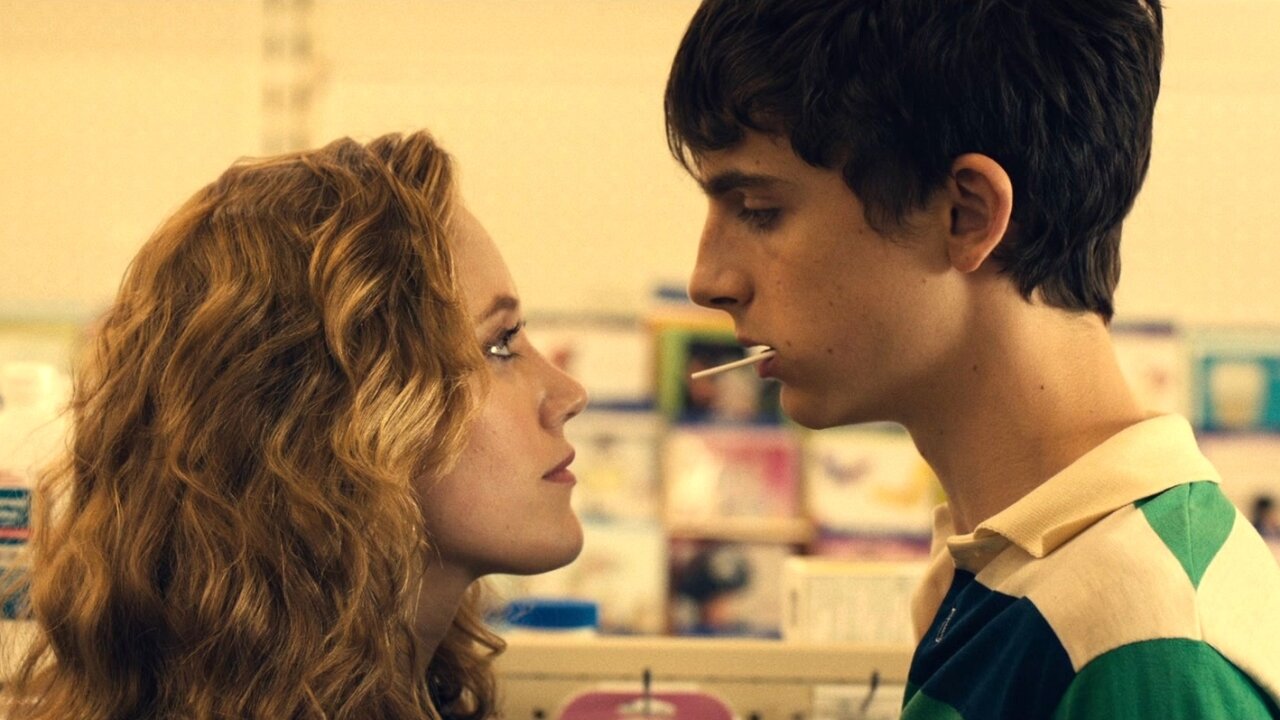
Changing gears for the lovers of teen film, Hot Summer Nights is what I would call an easy-on-the-eyes film: it’s simply fun to look at. Hotshot Timothée Chalamet plays an awkward city teen struggling to adapt to life in a small beach town. In over his head and looking to belong, he begins slinging drugs for his business partner—whose sister he’s slowly falling for. It’s nostalgic in a way I credit to the highly stylized nature of the film—a young boy is narrating the course of events in a way that makes it seem real, like something we should remember. Like the title suggests, the beach town of Cape Cod is absolutely scorching. I would be a bit delirious like the characters too, if I lived there. 

I Know What You Did Last Summer (1997)

Dir. Jim Gillespie

Dir. Jim Gillespie

I have no problem admitting I’m a sucker for slasher film: sure, it’s silly, but it’s entertaining. 90’s slasher films in particular hold a special place in my heart, and are a genre of their own. In this one, a group of teens are haunted by their past: after committing a crime the previous year, they are stalked by a vengeance-seeking killer who claims to have seen everything. I think the title speaks for itself, here. 

August: Osage County (2013)

Dir. John Wells

Dir. John Wells

Based off the play by Tracy Letts, this film follows the lives of a family–to describe them as dysfunctional would be an understatement–who come together after the death of the patriarch. The Weston sisters, in particular, bear the brunt of their mother’s venom. The title of the film tells us exactly when and where we are—it is August, an unusually hot August at that, in rural Oklahoma. The heat bears down in ways that only heighten the brutality of the family’s feelings toward each other, and as it gets hotter, hotter, hotter, all that’s left is for everything they’ve hidden to explode. 

Do The Right Thing (1989)

Dir. Spike Lee

Dir. Spike Lee

As one of Spike Lee’s most influential films, when I think of unbearable heat, this is the first that comes to mind. Unlike the other films on this list, Do The Right Thing takes place on one single, sweltering day—specifically, in a neighborhood in Brooklyn. It’s beautiful, hilarious, vibrant, frustrating, and most importantly, culturally significant. It’s a film everyone should watch at least once. If you’ve lived in a city, you know what it’s like to sit on the stoop and watch life go by: men and women sit and gossip, kids play in the water of the fire hydrant, and old friends catch up on what they’ve missed. The oppressive sun is nothing short of a catalyst to the conflict: as a heat wave bears down on the neighborhood all day, the racial tension that’s been simmering below the surface comes to a boil at night. 

Featured image via

(The Politics of) Movies About Teens Killing Each Other

You know, that genre?

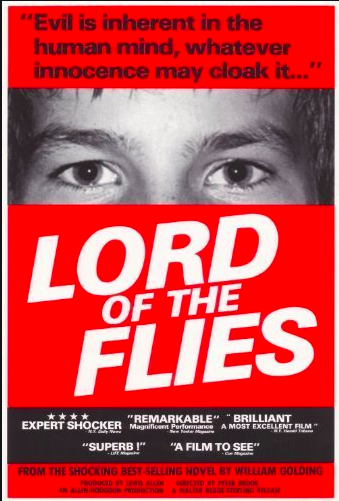
The formative influence is William Golding’s Lord of the Flies and the 1963 film adaptation, and  canonical examples are The Hunger Games and Battle Royale, while more fringe examples might include the first few episodes of the Netflix show The 100 and various YA books (many of which have been turned into films) such as Maze Runner

Lord of the Flies was written in 1954, and deeply informed by the destruction of the second World War. Is this the fundamental nature of humanity? the book asks, with a mind to a young audience freshly equipped with the word “allegory.” A group of British schoolboys (because if the English could be taken to barbarity, anyone could) are stranded on an island when their plane crashes, and they must govern themselves until help arrives. Two older boys, Jack and Ralph, take command: “if we’re sensible, if we do things properly, if we don’t lose our head, we’ll be alright,” Ralph tells the other boys at the beginning. “After all,” Jack adds, “we’re English, not savages!”

Image via

Image via

They pretty quickly lose touch with their initially civilized self-governance, as Jack plays on their fear of the “Beastie,” and eventually forms a new tribe. Even the conch, the symbol of civilization, loses its power. He and his boys, who eventually recruit all but Ralph and Piggy, Ralph’s intelligent and tormented second-in-command, cover themselves in paint and perform strange rituals in front of the fire, before killing Simon and later Piggy. Totally atavistic. 

Image via

Image via

The key difference is that the situation in Lord of the Flies – being stranded – is not contrived by their society. It can thus purport to be a representation of “man in his natural state”; hence why the term Hobbesian is thrown around so often. Not so for the later films, all of which feature a deliberate set-up for the killing. Hunger Games and Battle Royale indict the systems which created these children, not their inherent features. Lord of the Flies, thus, isn’t truly a film about teens killing each other, since they don’t have the explicit goal of actually killing each other, like in Hunger Games and Battle Royale

Hunger Games doesn’t need much introduction. In a dystopian society two competitors from each of the 12 districts are chosen to fight to the death in a televised spectacle, from which only one can survive. The film is often spoken of as, like Lord of the Flies, an allegory, in this case for the unfair conditions of our “meritocracy” and capitalism. In neither film is subtlety counted as a virtue. In one particularly ripe exchange, Haymitch, the tutor to our protagonists Katniss and Peeta, explains “careers” to them: children from the richer districts who have been trained from birth for the Games. Effie, another advisor to the District 12 kids, assures our heroes that, as a matter of fact, “they don’t receive any special treatment. In fact, they stay in the exact same apartment as you do. And I don’t think they let them have dessert.” 

An inspired decision was the inclusion of sponsors. The competitors have two weeks to prepare for the Games, and in that time they have several media appearances to win the support of the public and “sponsors,” who can send helpful items like medicine to you in the arena. This forces the contestants to be likeable to people they hate, to play their game how they intend it to be played, to be “good poors.” Only Katniss is able to find a way to escape their rules, briefly, but even then she only manages to game the system by putting on a show for the cameras. Until then the system they live in is inevitable; all everyone can do is live within it, whether by embracing it like Effie or by small acts of rebellion through kindness like Cinna.

Image via

Image via

If the characters in Lord of the Flies are almost purely allegorical – a fact which the movie downplays somewhat – at least in Hunger Games they are allowed to resemble human beings. But the film undermines the empathy we feel for them with poor choices in direction and by failing to build meaningful relationships between the characters. Director Gary Ross shoots even simple dialogue like the most nauseating scenes in The Blair Witch Project, and action is edited in the same way as slower moments: when everything is intense, nothing is. These failures coalesce in the death of Rue, where we see that Katniss cares but don’t particularly know why (they get all of three scenes together) and, as the camera flips wildly between the two as Katniss holds a dying Rue in her arms, we end up feeling more disoriented than sad. 

Why teens? This question hovered over me the whole time I was watching these films, and I haven’t been able to come up with a good answer yet. Other than Mel Gibson’s Mad Max, I can’t think of any battle royale-type movies starring and targeting adults (although I think it’s fair to say Mad Max’s demographic skews male and younger). One suggestion is all the fighting is kind of like high school, or somehow a representation of cutthroat teenage social dynamics. And while I don’t remember high school as particularly Thunderdomey, there is something to be said for the idea that these movies are just like any other teen movie, but with the melodrama turned way up. The plethora of YA novels left in the wake of Hunger Games also suggests that the genre (loosely defined) speaks to the desire to feel special and important, and even a little victimized. 

Battle Royale is political only insofar as human relationships are. There is no outside world depicted in it, no larger political struggle at work, like in Hunger Games. All we know is that some economic collapse happened and youth delinquency skyrocketed, so the government created a law which randomly selects one class of ninth graders each year to participate in a battle royale. But this is no world-halting spectacle: there are no cameras on the island, and the kids didn’t even know of the event until they were chosen. The violence is senseless, both for them and the audience. They have no two week period to come to terms with their fate, no public selection process where they can say goodbye to their friends and family. 

Image via

Image via

We find them on a bus, thinking they are headed to a school field trip, until they are knocked out and wake up in a classroom on a deserted island. Their old teacher, Kitano, surrounded by military guards, shows them an instructional video which tells them they will be given a pack with a random weapon (ranging from guns to a pot lid) and a necklace which tracks their movement and explodes when they stray too far or try to take it off. They are told if one person does not emerge after three days, all remaining will die. And it is here that we realize Battle Royale will not play by the polite rules of Lord of the Flies or Hunger Games.

Before the event even starts – during the presumed safety of the instructional video no less – Kitano kills one of the girls for talking. The best friend of the protagonist then has his necklace blown up, killing him as well. Before he dies, his necklace beeps menacingly, and he stumbles around the classroom looking for help; but the friendships are already over, and he’s pushed away by his classmates. He makes the protagonist, Nanahara, promise to protect Noriko, who the now dead friend had a crush on.

They are sent out one by one onto the island along with two dangerous-seeming outsiders (victors from previous years). Battle Royale then tells a series of vignettes, miniature tragedies and bleak comedies – stories of friendships tested by suspicion and paranoia, and forged through sympathy, of grisly deaths and an improbable number of gunshots survived – mainly following Nanahara and Noriko. These vignettes are masterpieces of condensed storytelling. In one, Nanahara is injured, but luckily gets rescued by five girls living in the island’s lighthouse. A shy girl, who doesn’t like the idea of a boy living with them, intends to poison Nanahara at lunch, but her friend grabs his meal instead and dies while they all watch. The suspicion over who killed her quickly destroys their idyll and they kill each other in a gun fight while old school rivalries and petty grudges are dug up. 

The film has a reputation for nihilism, which isn’t quite deserved. Ultimately, it is the love and trust between Nanahara and Noriko, and the friendship they come to feel for Kawada, one of the previous winners, that allows them all to escape. Nonetheless, it is true that those quickest to trust are the first to go: in a cruel world cruelty is rewarded. This says at least as much about the adults who created this world as it does the kids who inhabit it, however. The film suggests that asking whether the ability to kill was inside them all along is asking the wrong question. “There are some things you’re better off not knowing,” Kawada says. 

Image via

Image via

Towards the end of the movie only Nanahara, Noriko and Kawada remain, and Kawada has found a way to trick the government into thinking the other two are dead. Their old teacher Kitano figures this out, and stays behind on the island to confront them. When they meet him in the old government headquarters, he aims his gun at Noriko and tells her to shoot him before he shoots her. Noriko and Nanahara have thus far escaped relatively innocent: they have managed to avoid killing anyone. We now understand why Kitano is doing this. He needs Noriko, who he has always had a soft spot for, to understand him, to feel what he has felt and live with the consequences like he has.

Maybe this is the only messed up way he knows how. Nanahara eventually fires at him, but doesn’t kill him. The teacher pulls the trigger, causing both Nanahara and Noriko to shoot at him, finally causing fatal damage. Kitano was holding a water gun. Nanahara, at least, has found meaning in all this: he has fulfilled his promise to protect Noriko.

Perhaps this test showed him what he was truly capable of, good and bad.

Perhaps he would’ve been better off not knowing. 

Studio Ghibli Flims to Help You Escape Reality

What’s not to love about Studio Ghibli movies? They’re filled with breathtaking animations, delightful soundtracks, lovable and well-developed characters, and intriguing plots. The films don’t shy away from addressing serious issues, but they remain infused with a childlike sense of wonder and a glorification of everyday beauty, which we could certainly use right now. Even if you didn’t grow up watching them, they have the ability to instantaneously transport you back to your childhood. With diverse storylines covering themes of romance, coming-of-age, and war, there’s something for everybody to enjoy. While Studio Ghibli movies are enjoyable anytime, I would especially recommend them right now, as they can provide a much-needed sense of escapism and comfort during these uncertain times.
My Neighbor Totoro (1988), dir. Hayao Miyazaki

Image via.

Image via.

My Neighbor Totoro is perhaps the most universally beloved Studio Ghibli film. Its titular character, forest spirit Totoro, is not only one of the most popular and recognizable animated characters of all time, but has also come to represent Studio Ghibli as a whole. The film follows the lives of two young sisters, Satsuki and Mei, who move to the Japanese countryside with their father in order to be closer to the hospital where their ill mother resides.

The girls face great uncertainty due to their mother’s health, but they find comfort in the form of characters such as Totoro and the Catbus, a giant bus-shaped cat. Upon watching My Neighbor Totoro, it’s not difficult to understand the movie’s long-lasting popularity. The human characters are given a commendable degree of characterization, and the forest creatures are all lovably adorable. This film is a perfect whimsical delight and is certain to bring you great joy while watching.

Whisper of the Heart (1995), dir. Yoshifumi Kondo

Image via.

Image via.

This is, in my opinion, the most underrated Studio Ghibli film. It’s generally overlooked in favor of the other Studio Ghibli movies, perhaps due to its lack of fantastical elements. But, it has some of the best storytelling of any Studio Ghibli film and features truly stunning animated hilltop views of Tokyo. Whisper of the Heart stars junior high student Shizuku, who loves reading fantasy novels. She longs for an adventure of her own. A series of intriguing events help give her this adventure she so desires.

Shizuku discovers that most of her library books were all previously checked out by the same person, a boy named Seiji Amasawa. One day, on her way to the library, she follows a cat she meets on the subway into an antique store run by a kindly grandfather. Meanwhile, she must deal with her changing feelings toward a mysterious classmate. These occurrences all converge into a beautiful coming-of-age romance. Shizuku is an incredibly well-written character who is immensely relatable, and whose emotions are conveyed in a moving manner.

Kiki’s Delivery Service (1989) dir. Hayao Miyazaki

Image via.

Image via.

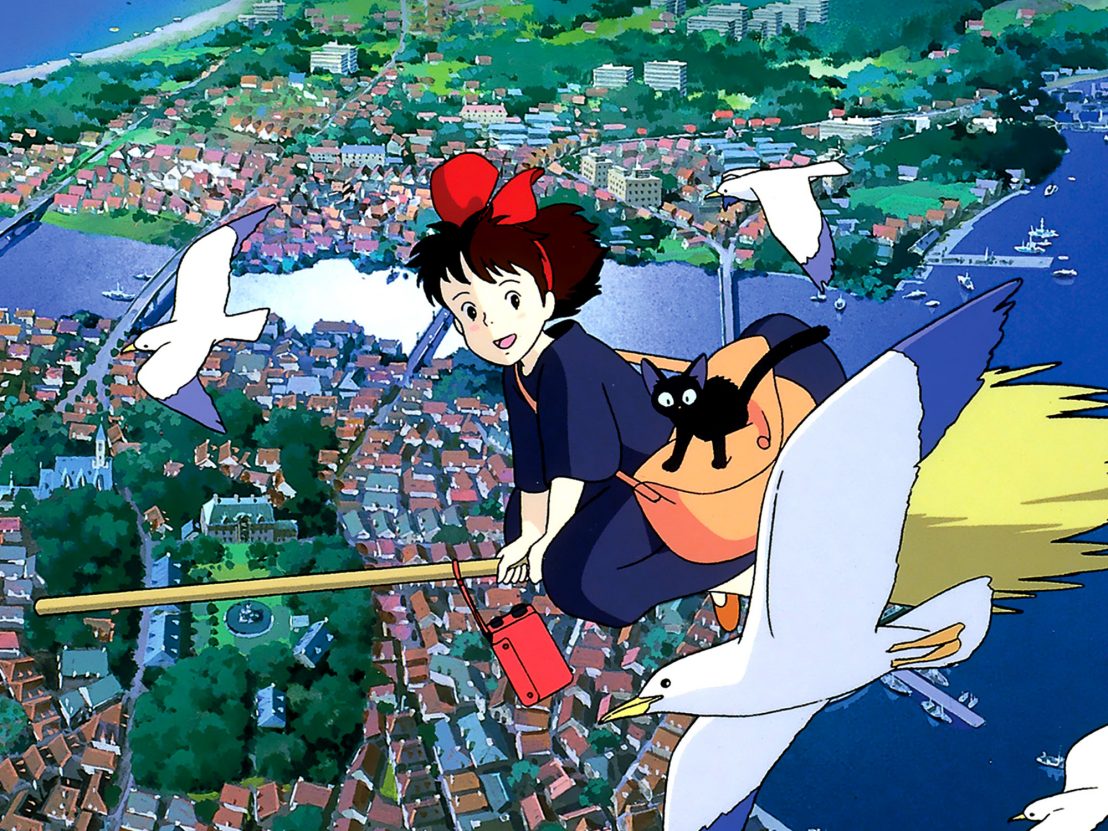
Like My Neighbor Totoro, Kiki’s Delivery Service is a Studio Ghibli classic. It’s the story of Kiki, a 13-year-old witch who, following tradition, leaves home to train as a witch. Her new home is a beautiful coastal town, where she moves in with a bakery owner and starts her own delivery service. As to be expected, Kiki initially has great difficulties settling into her new life and struggles with feelings of loneliness and inadequacy. As college students, we may be a bit older than Kiki, but her journey toward independence is a highly relatable and heartwarming one. Kiki’s Delivery Service is a fantastic movie about the struggles and joys of growing up.

Howl’s Moving Castle (2004) dir. Hayao Miyazaki

Image via.

Image via.

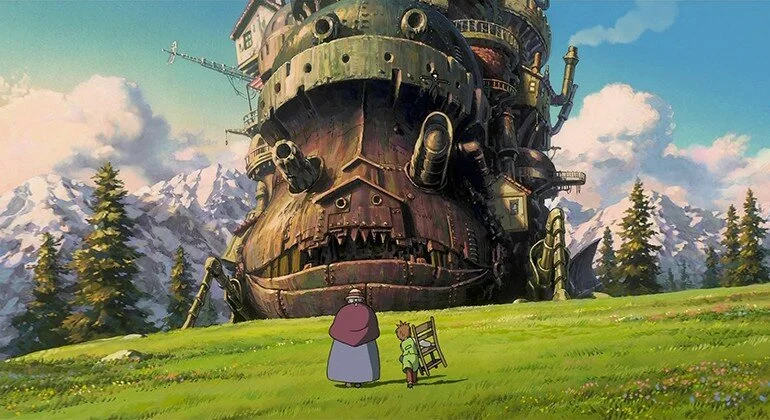
Howl’s Moving Castle deals with themes of war, age, and love in an incredibly vivid and imaginative manner. Protagonist Sophie, a young hatter, is transformed into a 90-year-old woman through a witches curse. While seeking a cure, she ends up living in the magical moving castle of Howl, a notorious wizard. Howl’s castle is also home to Markl, Howl’s apprentice, and Calcifer, a sarcastic fire demon. Howl’s Moving Castle features a colorful array of characters, whose relationships (as well as the stunning landscape animations) are what really allow the film to shine. These characters are voiced in the English dub by an all-star cast, including Christian Bale, Emily Mortimer, Billy Crystal, and Josh Hutcherson.

Spirited Away (2001) dir. Hayao Miyazaki

Image via.

Image via.

Spirited Away is one of Studio Ghibli’s best-received films. Elements of magic and fantasy are especially prevalent here, even when compared to the studio’s other movies. 10-year-old Chihiro finds her parents transformed into pigs after they stop by an abandoned amusement park on the way to their new home. To save her parents, Chihiro must work for a malicious witch who runs a bathhouse. Chihiro encounters a number of lively spirits, including the incredibly popular character No-Face. The soundtrack for Spirited Away is truly incredible and makes the movie worth the watch.

Cover image via.

Hausu: A Quarantine Fever Dream

The social conditions we have to adhere to during this pandemic are tricky. It’s a bit of a regression, a lapse into what it feels like being a teenager or a child again stuck in your childhood home. After spending months on campus in a tiny, cramped dorm, or in an apartment with your friends paying rent like a real adult, making your way back home (and so suddenly, at that) feels a bit like reliving your adolescence. 

I was never one to go outside that often. I found peace and solace in lazing around my house, watching the world go by with a window cracked open. Now, I’m sure I’m not the only one who feels a bit trapped, like your home is slowly swallowing you whole. 

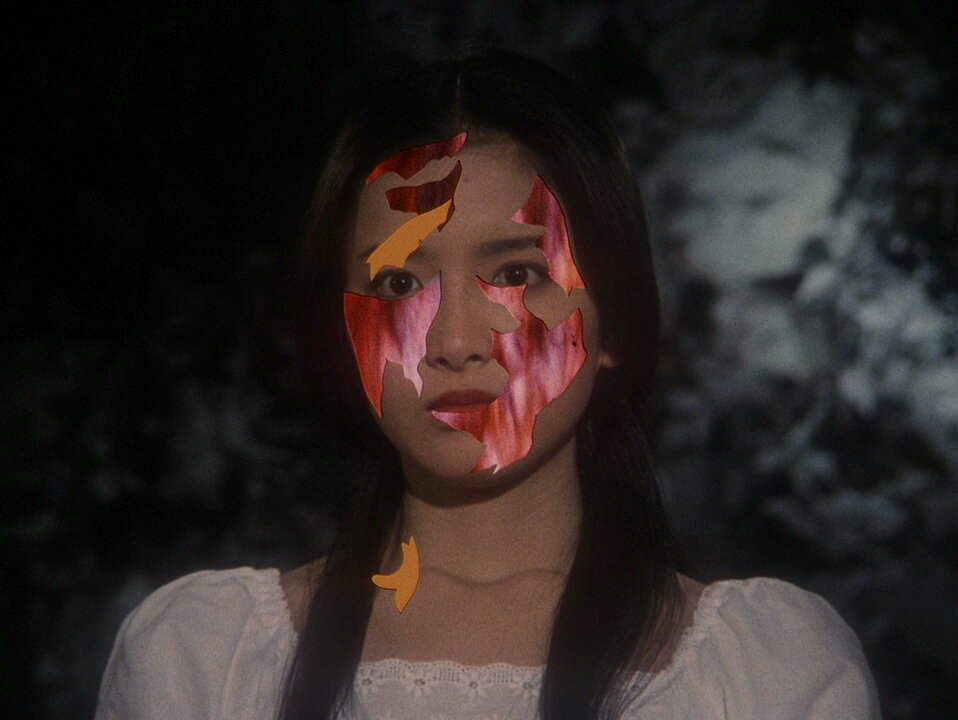
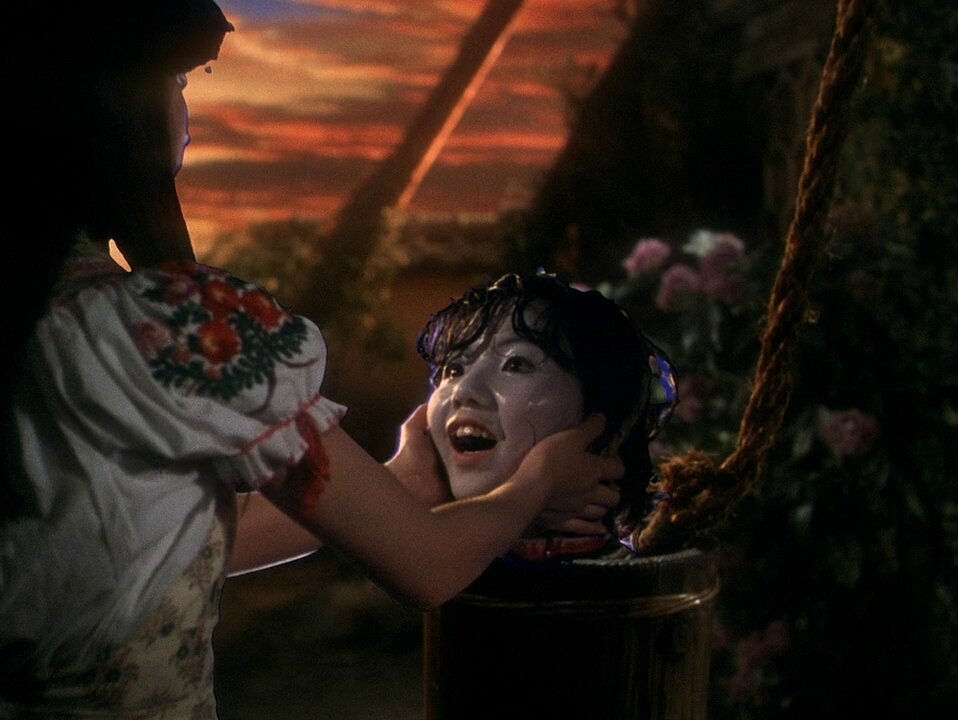
It wasn’t until I re-watched the girls in Nobuhiko Ôbayashi’s Japanese horror-comedy Hausu (1977) in honor of his recent passing, that I realized all my fears and quarantine fever-dreams were already put on film.

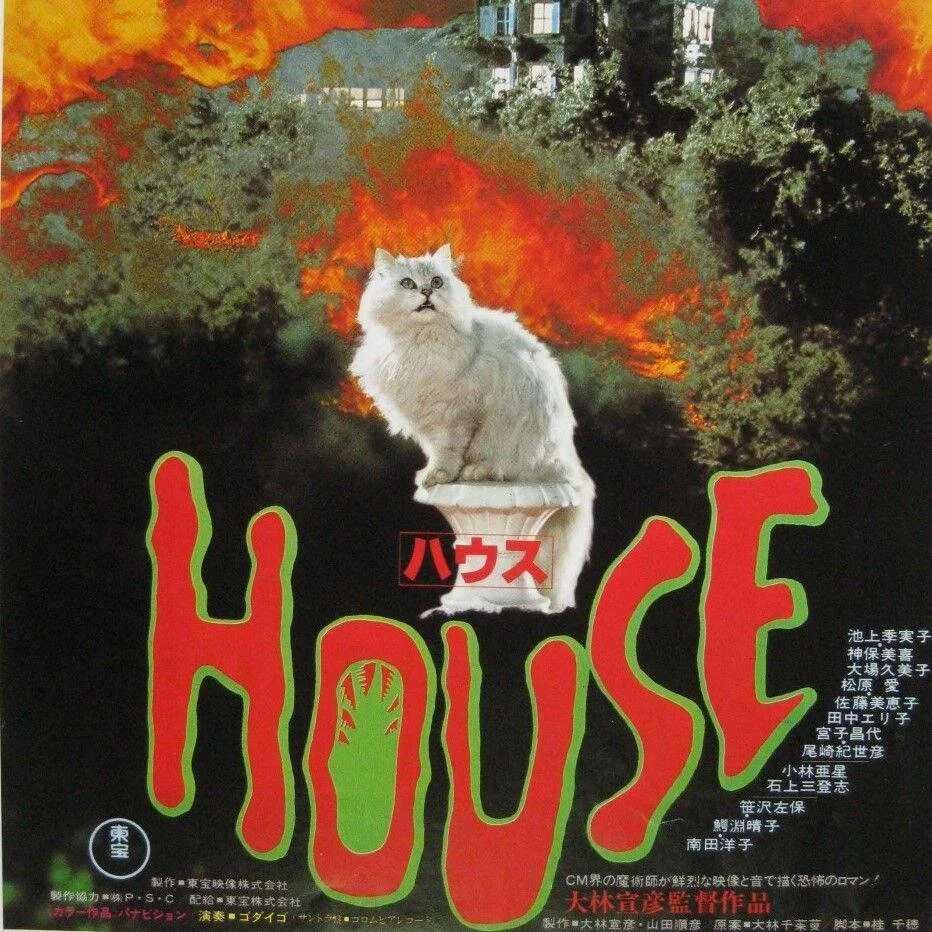
The vision was born when Toho Studios approached director Nobuhiko Ôbayashi to craft a film akin to Jaws—taking inspiration from the ideas, dreams, and fears of his pre-teen daughter, Ôbayashi composed the frenzy that is Hausu. Instead of a man-eating great white shark, Ôbayashi gave us a teen-girl-eating-house.

Poster for House (1977)

Poster for House (1977)

The film follows young teen girl Gorgeous–named for her exceptional beauty–and her six friends Prof, Melody, Fantasy, Kung Fu, Mac, and Sweet. Gorgeous, once excited for summer vacation plans with her father, soon finds them to be ruined when she’s told that her new stepmother would be tagging along with them.

She decides to write a letter to her late mother’s sister, Auntie, asking to come visit her in the countryside instead. Auntie readily responds, and Gorgeous extends the invitation to her six friends as well.

Not long after the girls arrive at Auntie’s manor, they begin to go missing one-by-one, and an initially idyllic vacation soon goes awry. 

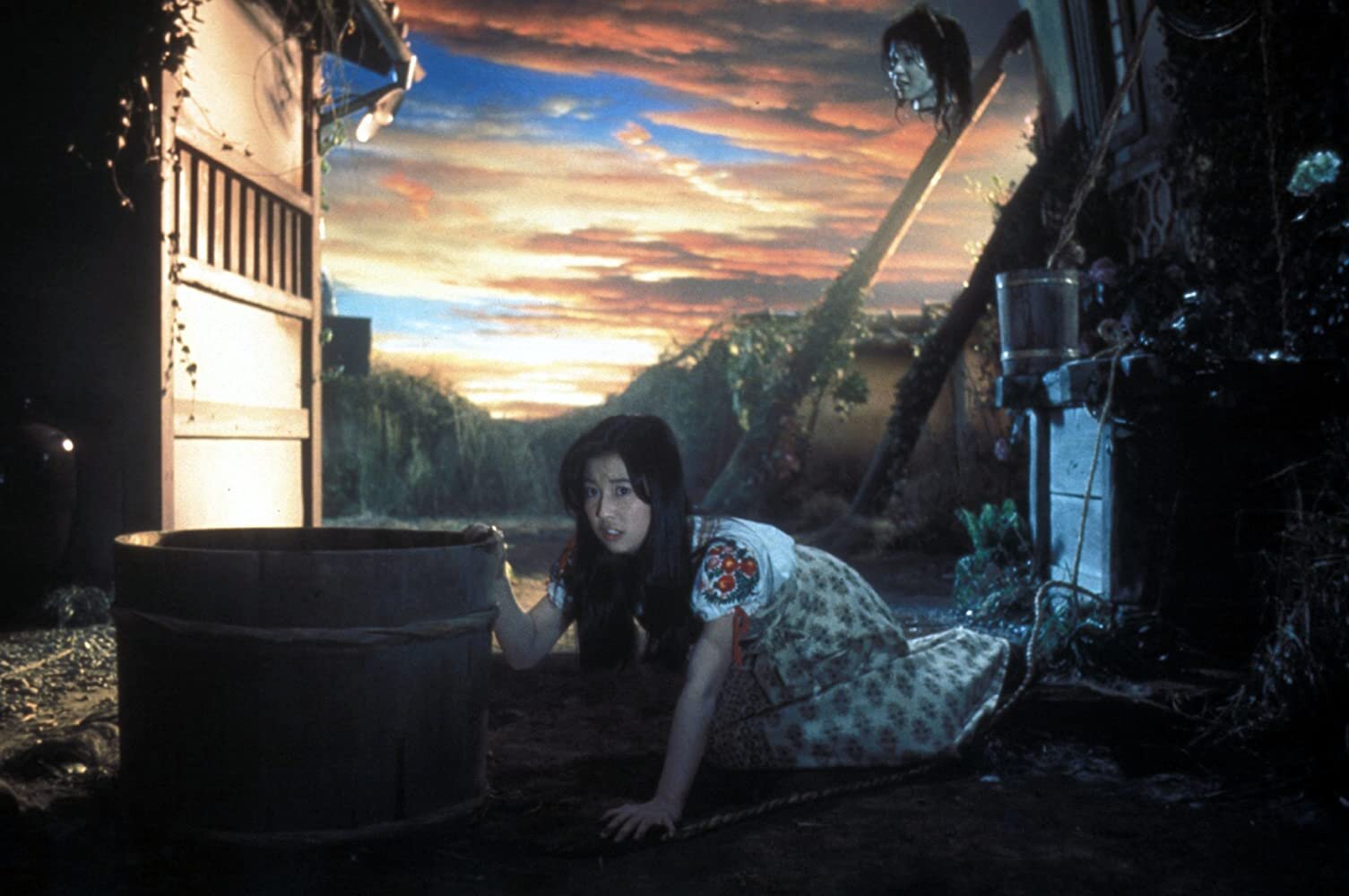
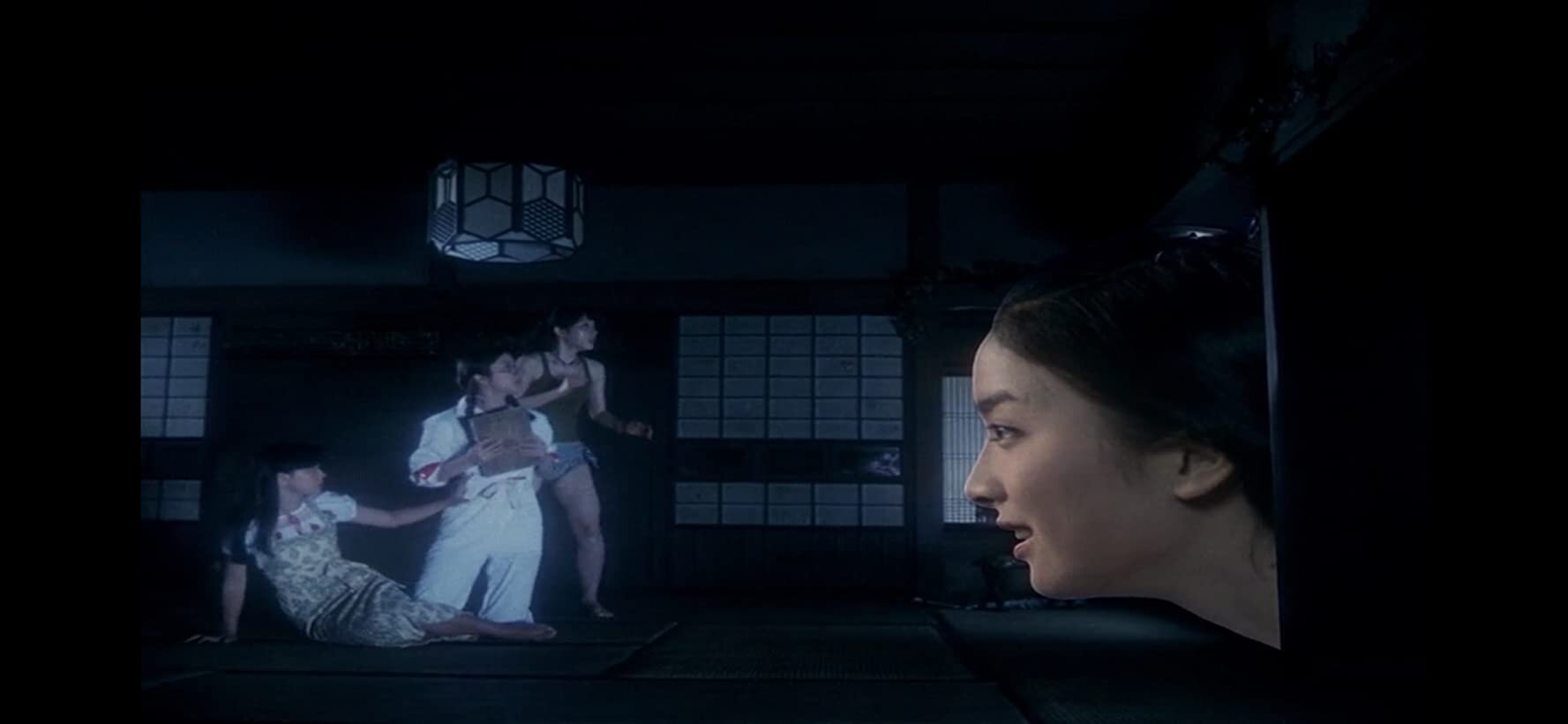
It’s not an exaggeration to claim that the eccentric comedy-horror feels nothing short of an acid trip. The syrupy-sweet sunset visuals and cartoonish, bubblegum gore is nearly hallucinogenic. The garish saturation, vibrant color palette, and surreal editing are eerily comical. Piano keys chop off playing fingers; mattresses, pillows, and sheets swallow them whole; and mirrors engulf them as they apply makeup at their vanities. It’s an amalgamation of the dream-like fears of young girls—and it absolutely makes sense that Ôbayashi recruited his daughter for inspiration. It’s much too specific. 

Cinema has a tendency to keep girls inside—from Disney classics like Tangled (2010) and Frozen (2013), to renowned films such as Room (2015), Portrait of a Lady on Fire (2019), and The Virgin Suicides (1999). Though Hausu can be read as a commentary about young girls’ fears of the transition from girlhood to womanhood, much of it has to do with, not what the girl fears, but what society fears about the girl. Make of that what you will.

I’m sure many of us, like the seven girls, would love nothing but to flee to the warm countryside, away from everything and everyone. As I watched them giggle and walk hand-in-hand through the forest to reach Auntie’s manor, I felt a yearning to do the same with my own friends. As I watched the doors swing shut to trap them inside, I wondered how they were going to escape. As I watched the house slowly eat them alive, I mused about whether or not I saw this in my own dreams.

Featured image via

A "Philadelphia" Retrospective

Philadelphia (1993) has rarely been judged as a movie in itself; it was judged as merely a step forward (perhaps too little too late for Hollywood) or a failed attempt at propaganda, depending on your political views. The closest we get to a judgement of it as a work of art, rather than as a social campaign, is exemplified in brief comments like Roger Ebert’s: “Philadelphia is quite a good film, on its own terms.” Mostly it was analyzed with the ongoing AIDS crisis starkly in focus, and oftentimes it was compared, usually favorably, with other Hollywood movies; Ebert likened it to Guess Who’s Coming to Dinner (1967), a film which dramatized a white family coming to accept a woman’s black boyfriend. He called Philadelphia a “righteous first step.”

Tom Hanks plays Andrew Beckett, a lawyer at a high power law firm, who has just been made partner and given a case with the firm’s most important client by Charles Wheeler, head of the firm. When one of the other partners notices a lesion on Beckett’s forehead and determines he has AIDS, an important document goes mysteriously missing. Andy is subsequently fired for the supposed oversight. When Andy – suspecting he’s actually been fired for his illness – decides to sue his old firm, the only lawyer in town who will take his case is the homophobic ambulance chaser Joe Miller (played by Denzel Washington). As the case progresses, we glimpse more of Andy’s personal and family life. The night that he learns he has won his case, Andy dies in the hospital. 

Perhaps a better comparison than Guess Who’s Coming to Dinner would be To Kill a Mockingbird (1962) – both are courtroom dramas that appeal to white liberal sympathies; both star charismatic white actors (Hanks and Peck) to make their messages more palatable to a presumably hostile segment of the audience; and both sideline the othering aspects of their story. Mockingbird denies both voice and agency to its black characters, instead choosing to center its story on the white lawyer. Philadelphia, while one of its two main characters is gay and has AIDS, takes great pains to normalize Andy; he is kind, charming, hardworking, and has a good relationship with his family. Scenes of intimacy between Andy and his boyfriend were also reportedly removed for the theatrical cut, to avoid “grossing out” audiences (one scene, of them lying in bed together, was added back to the DVD version). 

Image via

Image via

Still, the comparison feels unfair to Philadelphia, which makes the more deft use of its courtroom setting and has a more sensitive portrayal of the tragedy it depicts. Philadelphia has flashes of brilliance, even against the hackneyed backdrop that, as contemporary commentators were right to note, was likely responsible for the film’s existence in the first place. The film must then toggle between the comforting – to both audience and studio executives, no doubt – familiarity of the courtroom drama, and its far subtler, if still obligatory, human drama. 

A traditional courtroom drama forms the backbone of the story, for good reason: courtroom dramas are perfectly suited to arouse sympathy. The rigid conventions of the courtroom drama allow the filmmaking to deny any complexity to the villains of our story, a complexity which might edge sympathy away from Andy and towards them. In one scene, the partners of the firm walk down a dark hallway, shot from behind by director Jonathan Demme, their grandiose villainy made obvious solely by the filmmaking. They stop, and we turn to them, looking up at their faces as Wheeler bellows to a younger lawyer, “He brought AIDS into our offices – into our men’s room!” Demme and writer Ron Nyswaner even have them making vulgar jokes in comically on-the-nose supervillain cigar clubs, while they're at it. Andy is made our hero practically by default.

Image via

Image via

The courtroom, however, offers much more than just an opportunity for cheap characterization of our villains (which is, admittedly, par for the course for legal dramas – see Mockingbird and The Rainmaker for canonical examples). It offers an avenue for a literal debate of the ethical considerations in the AIDS crisis. Opinions which were widely circulating – Pat Buchanan was not far from public opinion in declaring that gays “have declared war upon nature, and now nature is exacting an awful retribution” – could be tackled head on, with the opposing counsel already at an emotional disadvantage. (For that is something all good courtroom dramas recognize; the film wins by the emotion it manages to impart.) The jury acts as an audience stand-in, allowing the film to make emotional appeals and present evidence to them directly. This is why so many of our morality tales take place in the guise of the courtroom drama.

The courtroom scenes nonetheless constitute the weaker parts of the film. They are paint-by-numbers filmmaking at times, despite Demme’s and Nyswaner’s attempts to insert traces of originality. By following the expectations of a courtroom drama exactly, the film makes its message seem trite. In reaching for a crass emotionality they only debase the issue. Realizing this, the film smartly shifts focus in the second half by forefronting Andy’s declining health and his moving relationship with his family. By the time his courtroom victory happens, the real jury is already won over. 

The content of these scenes are equally as expected as the courtroom element, but here the artfulness of the filmmaking gets room to breathe. For example, there is the inevitable conversion scene: Joe must learn to respect Andy and lose his prejudice, his legal battle for fame and money must become a genuine search for justice. But its execution is more sensitive than most and is easily the most arresting scene in the movie. Demme places the characters in intimate close-ups as they go over the case in Andy’s apartment after a party. They are separated both emotionally and by the framing; Joe resists Andy’s personal questions, trying to keep him on business. Andy’s favorite aria comes on. “La Mamma Morta.” He ambles around the apartment, IV drip in tow, eyes closed, while the camera glides above him. As the singer crescendos Andy is bathed in red, translating her lament for Joe while crying softly. It ends, and as Joe leaves, he hears the opera begin again. He considers knocking, but decides to walk away, smiling as he does. By the time he gets home and holds his baby and wife, it has already happened.

Image via

Image via

The film is often faulted for two facts about it: who made it and who it stars. For a virus which disproportionately affected gay and black men – which it still does, black men in particular – to be written and directed by two straight white men feels like a cynical marketing move at best, a cheat to those most impacted at worst. While this was not unusual for the time – Rent’s (1993) cast was also mostly white, and even Paris Is Burning (1990) had a white director – it does still feel wrong. What is at issue here is not just representation, but the very depiction of life with AIDS. In both Rent and Philadelphia, for example, those suffering from the virus have for the most part a distinctively upper-class and white experience with AIDS. Andy is never depicted as short on money, has a supportive relationship with his family and boyfriend, and until his infection is revealed he is able to pass comfortably as straight. The mostly black and latino subjects of Paris Is Burning clearly lead very different types of lives, and the depiction of AIDS changes for it. I don’t have to say which is more faithful in its depiction of most AIDS victims, or more tragic. 


But sacrifices had to be made for the film to even exist, and for the goal of the filmmakers to be achieved. “We wanted to reach the people who couldn’t care less about people with AIDS,” Demme recalled; Paris Is Burning didn’t make $206 million at the box office. And, small a gesture as it may be, 53 extras in the film were diagnosed AIDS victims. Philadelphia inhabits what Tarkovsky called “Cinema’s equivocal position between art and industry,” a balance which still exists, perhaps even more so now in the age of conglomeration, declining theater ticket sales, and relatively safe superhero blockbusters. If the films of today are braver than Philadelphia was, it is only because the line between profitability and art has shifted with us.

Little Women: Movie Review

Warning: The following review features major spoilers, but it’s a story that’s been out for 150 years, so I feel like this is fair.

Image via.

Image via.

2019 was a year of great cinema, and one of its most standout films was Greta Gerwig’s adaptation of Little Women.

This latest adaptation features a stellar cast, starring Saoirse Ronan as tomboyish and rebellious writer Jo, Emma Watson as responsible oldest sister Meg, Florence Pugh as ambitious and artistic youngest sister Amy, Eliza Scanlen as sweet and musically-inclined Beth, Timothée Chalamet as boy next door Laurie, Laura Dern as loving matriarch Marmee, and Meryl Streep as condescendingly wealthy Aunt March.

Each of the main cast, as well as the supporting actors, all step into their roles with grace, effectively bringing to life some of the most beloved characters of all time. I’ve always admired Laura Dern and Meryl Streep’s acting, so naturally, I loved their performances, and Saoirse Ronan shines as the protagonist of the story. However, the standout performance of the movie is definitely Florence Pugh as Amy. Throughout the course of 2 hours and 15 minutes, she grows from a bratty, self-absorbed child into an elegant and thoughtful young woman. It is a testament to Pugh’s talent that the historically least popular character from the story has quickly become one of the most adored following the release of the film.

Image via.

Image via.

There’s an idyllic charm in each of the film’s beautiful scenes, from the March sisters wearing pastel-colored dresses to go to the beach, to Laurie confessing his love for Jo against a backdrop of gorgeous New England foliage, to Amy painting in a Parisian park.

The March family by no means live an easy life: there are many references to the family’s financial hardship, their father is off at war, and Beth dies from scarlet fever. However, throughout its depiction of these hardships, the film continues to maintain its romanticized tone. The picturesque quality does not undermine the suffering of the characters but rather presents that life can still be beautiful in these circumstances if we work to romanticize it. The characters of the film, particularly the March sisters, spend a great deal of time using their vivid imaginations and artistic talents to cope. Meg pushes herself into acting, Jo writes stories of adventure as well as plays for her sisters to perform in, Beth relishes in her love for the piano, and Amy turns to her adoration for painting.

Image via.

Image via.

The film is generally a faithful adaptation of the novel but is more explicit in its social commentary. Both Jo and Amy deliver powerful monologues regarding the role of marriage in women’s lives. Amy is particularly concerned about marriage as an economic institution for women, who had few other options to achieve financial freedom. Jo is disheartened by the fact that women are merely limited to their role of wives, maintaining that women have so much more to offer. The film also does an excellent job at blurring the line between Jo March and Louisa May Alcott in a way that has never been done before in other adaptations.

Little Women is definitely a must-see film that is visually stunning, thoughtful, and full of phenomenal performances. Make sure to catch it while it’s still in theaters!

Cover image via.

Parasite: From Top to Bottom

The genius of director Bong Joonho’s work is in the fact that his films are so immensely human. With many notable pieces of work under his belt, from Okja (2017), to Snowpiercer (2014), to Mother (2009), and many more, there is an originality to his style, an ability to weave matters of dysfunction and ethicality with sincere performance and rich humor that is undeniably captivating.

It is through Parasite (Korean: Gisaengchung   기생충) that he cements himself as a major-league filmmaker, transcending the boundaries of “foreign” or “international.” Winner of the Palme d’Or at the 2019 Cannes Film Festival by unanimous vote, and most recently of Best Foreign Language Film at the 77th Golden Globes, Parasite is ruthless, and tells everyone to take a look in the mirror. 

(Discussion of the film ahead, but no huge spoilers or reveals present)

From left to right: Kim Kiwoo (Choi Wooshik), Kim Kitaek (Song Kangho), Kim Chungsook (Jang Hyejin), Kim Kijung (Park Sodam), in their semi-basement apartment. Image via

From left to right: Kim Kiwoo (Choi Wooshik), Kim Kitaek (Song Kangho), Kim Chungsook (Jang Hyejin), Kim Kijung (Park Sodam), in their semi-basement apartment. Image via

Most of the film takes place in the home of the Park family, which, much to my surprise, is not at all a real house: the set was built entirely from scratch, a tremendous feat by production designer Lee Hajun. 

Housekeeper Moongwang (Lee Jungeun) walks through the Park family’s home. Image via

Housekeeper Moongwang (Lee Jungeun) walks through the Park family’s home. Image via

Digital rendering of the Park family’s home by Lee Hajun. Image via

Digital rendering of the Park family’s home by Lee Hajun. Image via

Park Dahye (Jung Jiso) spies on Kijung. Image via

Park Dahye (Jung Jiso) spies on Kijung. Image via

Kitaek observes the sleeping Parks in their home. Image via

Kitaek observes the sleeping Parks in their home. Image via

It’s through the meticulous delineation of Bong, though, that the vision of Parasite as a whole could come to life. Not only did he create a full storyboard of the film himself (each scene sketched out one by one), he also outlined a detailed floor plan of the Park family’s house, taking into account the blocking elements presented in the script. The set acts as a psychological map, almost, the architecture and spatial connections between the characters suggestive of the secrets each one of them is hiding. 

Though the Park family home is luxurious, it’s anything but flashy: sleek, modern, and open, the jewel of the house lies in its beautiful front lawn, green and drenched with sunlight.

The Kims, on the other hand, reside in a dingy semi-basement, windows allowing the family to sneak just a peek above ground. It is with this established that the viewers begin to understand that the class warfare simmering beneath the surface of the film is not only metaphorical. It is physical, and not solely due to the jarring aesthetic differences between the two homes: it’s the spatial disparity, the substantiality of the “upstairs” family and the “downstairs” family that hones in on the Kim family’s desires and aspirations for more.

The use of sunlight and water as motifs in particular key us into this discrepancy. The Kim family’s semi-basement, dense and cluttered, gives them just a taste of what’s up above. Juxtaposed to the floor-to-ceiling windows and glimmering front lawn of the Park family’s home, the airy freedom that wealth yields, we see that there is hope here.

Park Yeonkyo (Cho Yeojeong) looks out the window of her home. Image via

Park Yeonkyo (Cho Yeojeong) looks out the window of her home. Image via

Kitaek looks out the window of his apartment. Image via

Kitaek looks out the window of his apartment. Image via

Water, usually a common symbol for purification and renewal, is a motif most devastating in this film. Acting as our line of continuity, the water from rainfall flows down, down, down, flooding into the poorer districts, and Kitaek, Kiwoo, and Kijung have no choice but to follow it home. Though it poses no threat to the Parks, it is the impact of something as familiar as water that transforms not only the motives of the Kim family, but their livelihood. 

Kiwoo, Kitaek, and Kijung in the rain. Image via

Kiwoo, Kitaek, and Kijung in the rain. Image via

“It’s important that the characters are moving down, but what’s more important is that water is moving with them: Water is flowing from top to bottom, from the rich neighborhoods to the poor ones, and these characters, they have no control over it.”

- Bong Joonho on Parasite. Via Indiewire

Bong claims that one of the greatest parts of cinema is the fact that you can make your audience feel exposed, stripped raw for all they are. The painfully vulnerable nature of the characters, in all of their delusion, selfishness, and naivety, remind us of ourselves. They instill in us an uncanny self-awareness, and yet, he is not preaching to us: he is showing us that the dreadful weight of reality on our shoulders is unshakeable. 

Featured image via

The Top 10 Films of the 2010's

With 2020 approaching, MODA Blog rounds up the best, worst, and most iconic phenoms of the 2010s.

The 2010s has seen a rise in media as an aspect of culture with ever-increasing impact. Now more than ever, movies and film dictate and reflect politics, fashion, and music of our time. With this cultural impact has come a new question for the age: is cinema entertainment or art with purpose? While film houses such as A24 usher in the era of the indie film, some entertainment companies are further monopolizing the industry (see: Disney buying Marvel). And as the Oscars continue to decline in popularity, it is evident that film critique is no longer an expert skill: social media has given the consumer a newfound platform to engage with the film industry. So in this spirit of conscious viewership, it’s time to round up the top ten of the 2010s: indie films, blockbusters, coming-of-age, and horror alike.

10. Scott Pilgrim vs. The World (2010)

Image via

Image via

Just barely released during this decade, Edgar Wright’s cult classic redefined the action film, right around the rise of Marvel’s formulaic approach to the genre. What makes “Scott Pilgrim” so enjoyable is not only the star-studded cast of indie darlings and baby film-stars who all give great performances (Michael Cera himself, Aubrey Plaza, Anna Kendrick, Chris Evans, Brie Larson), but Ramona Flowers’ characterization as the antithesis of the manic pixie dream girl singlehandedly destroys the archetype that popularized rom-coms of the previous decade. Bottomline, it’s a smart film, loaded with quotable dialogue, dedicated set design, a stellar soundtrack, and it pays homage to its comic book roots.

9. Hustlers (2019)

Image via

Image via

Coming in at the tail-end of the decade is Lorene Scafaria’s heist drama about strippers during the financial crash of 2008. Starring JLo and Constance Wu, with Keke Palmer, Lili Reinhart, Cardi B, and Lizzo in minor roles, the film made waves at the box office following its release in September. It also generated some controversy, calling into question JLo’s alleged mistreatment of actual strippers she studied for her role in the movie, and the temporary loss of income the film caused for strippers at Show Palace, the actual club where many of the scenes are shot. All things considering, the film does a great job of staying faithful to the real tale it adapts from, and crafts a believable and realistic narrative of workers in an industry often deemed too explicit for media representation.

8. I, Tonya (2017)

Image via

Image via

“I was loved for a minute. Then, I was hated. Then, I was a punch line.” Craig Gillespie’s drama film recounting Tonya Harding’s story of the 1994 attack on Nancy Kerrigan for which she is most known for, as well as other pivotal moments in her career and life, is a masterpiece of the biopic genre. Elements of comedy and docufilm combine to create an honest depiction of the controversial and prolific ice skater, given a new life by the talented rising star Margot Robbie. The best part of “I, Tonya” is its reliance on an unreliable narrator. Based on “irony-free, wildly contradictory, totally true” interviews, Gillespie puts the final judgment in the hands of the viewer by recreating interview clips of key figures in Harding’s life that act as character confessionals and incorporating dialogue interjections that break the fourth wall. All in all, this is a classic underdog tale.

7. Roma (2018)

Image via

Image via

Alfonso Cuarón’s autobiographical drama was awarded the Oscar for Best Picture at last year’s ceremony, and deservedly so. The film is a period piece that follows an indigenous maid in Mexico during the political turmoil of the 1970’s. Throughout its two-hour running time, every possible thing that could go wrong in protagonist Cleo’s life does go wrong, and we are given a clear sense of her character, desires, and worries. Somewhat based off of Cuarón’s own mother, Roma crafts the narrative with a characteristic intimacy and intention, which is only further enhanced by his choice to film in black and white. This greyscale coloring goes much deeper than aesthetics; it also implies a nuance that is representative of the student-led revolution that provides a backdrop to the film, and the racial dynamics at play in the white Hispanic household Cleo cares for. Overall, this is a gorgeous film with political undertones that hint at the upheaval of this decade.

6. Heaven Knows What (2014)

Image via

Image via

The Safdie Brothers made some waves at film festivals in recent years for their most recent projects “Good Time” starring Robert Pattinson and “Uncut Gems” starring Adam Sandler. But while “Heaven Knows What” follows the similar gritty New York City tone characteristic of the Safdies’ filmography, it stands alone in its timely and honest portrayal of the opioid crisis. The Safdie Brothers paid recovering addict Arielle Holmes through rehab, in order for her to finish the book for which the film is based on. Holmes stars as herself, along with a rotating cast of junkies and panhandlers who play minor roles in Holmes’ chaotic daily life. From its exposition, “Heaven Knows What” has you always on the edge of your seat, and is a feat of the street film genre.

5. Hereditary (2018)

Image via

Image via

Since it seems like Toni Collette won’t receive her dues at the Oscars anytime soon, I’ll say it here: Ms. Toni, you’re doing great. Ari Aster’s psychological thriller about grief and (without giving away too much) family secrets stars Collette as matriarch of the Graham family, alongside Nat Wolff and newcomer Milly Shapiro. And while some were disappointed with the conclusion of the film, I think Aster does a fine job of carefully foreshadowing future events without being predictable or relying on cheap jump scares. Instead of shaming the cheesy horror of the past decade, Aster pays thematic homage to that era, making “Hereditary” a sort of pastiche. In a post-Paranormal Activity era, Aster is bringing the thrill back to the thriller genre.

4. Eighth Grade (2018)

Image via

Image via

While the 2010s have seen many a breakout features, Bo Burnham’s “Eighth Grade” stands out among the rest as a candid portrayal of children growing up in the Internet age. The film follows Kayla, played by Elsie Fisher, navigating her last week of middle school. At times painful to watch, Kayla’s journey to self-confidence lands her in situations both comical and dangerous, but all true to the social media-dominated times in which we live. A triumph of the adult comedy genre, “Eighth Grade” stands out from its predecessors, because of its underlying seriousness: Burnham covers school shootings, social anxiety, and sexual assault, all while weaving in raunchy jokes and comforting monologues from Kayla’s single dad. It is guaranteed to leave you in tears from laughter or sadness for your middle school self, seen vicariously through this awkward protagonist.

3. Get Out (2017)

Image via

Image via

You’re all probably tired of hearing about it, but the cultural impact of “Get Out” is not to be understated. Coming out of a decade where black people were always the first to die, the butt of the joke, or just flat-out nonexistent in horror, Jordan Peele reclaims the genre and gives it depth with an obvious racial commentary. “Get Out” also truly exemplified the impact of social media on marketing and blockbuster success, and what’s even more impressive is that this was Peele’s breakout film. A first of its kind “social horror,” Daniel Kaluuya is an excellent leading actor, and Lil Rel Howery provides just the right amount of comic relief for the film to remain serious, while dealing with such heavy subject matter.

2. Sorry To Bother You (2018)

Image via

Image via

Let’s make one thing clear: “Sorry to Bother You” is not 2018’s “Get Out.” Where “Get Out” is horror, “Sorry to Bother You” is absurdist. Boots Riley takes all of Peele’s racial commentary and goes one step further to craft a daring and radical film experience that criticizes late-stage capitalism. Through his not-so-subtle metaphor of WorryFree alluding to Amazon and the idea of white-voice that drives the film, Riley makes clear his political agenda, only expounded upon through sci-fi elements. “Sorry to Bother You” has many moving parts that through its nearly two-hour running time, begin to muddy; it is not easy viewing. Still, in a time where labor exploitation is only ramping up, Riley is recalling early cinematic roots in propaganda and returning film to its earlier purposeful functionality. Also, Tessa Thompson’s and Lakeith Stanfield’s Cash are excellent as a modern-day, revolutionary Bonnie and Clyde.

  1. Moonlight (2016)

Image via

Image via

“This is not a joke. Moonlight has won best picture.” The mix-up between La La Land and Moonlight at the 2017 Oscars may have been an iconic moment in pop culture, but beyond the controversy stands a film that truly merits a Best Picture award, not only for 2017 but for the entire decade of the 2010s. With a black gay man as its protagonist, it is a love story never put to the big screen before. It is also a coming-of-age, offering representation to narratives too often stereotyped in film and TV: the black drug-dealer, in a low-income neighborhood, subject to the violence of poverty since childhood. Never before has this cliché of black men been given such visible nuance, and with such raw candor from young actors, namely Alex R. Hibbert and Ashton Sanders. Based on the unpublished screenplay In Moonlight Black Boys Look Blue, Barry Jenkins crafts this film in a stunning color palette that is a testament to his talent as a visual storyteller.


Header Image via