I don’t write poetry, but when it gets cold, I can.

I don’t write poetry, but sometimes I feel like I have some innate ability to place interesting words on a page. I am inspired by Claudia Rankine’s writing style, specifically in the way she dismantles and reconstructs sentences. I think poetry is like my deep thoughts, forced so deep down that there is no way to let them out, unless through broken and deconstructed words.

Walking

Wild women don’t get the blues but when they do they go walking walking in the type of weather that makes their legs burn like the stabbing of pins and needles walking with their headphones on to drown out the loud noise of everything else when everything else seems to burst with an overwhelming sense of crowdedness because everything else doesnt matter when they go on a walk for the only else that matters is the one foot in front of the other on and on and on.

Not usually 

Not usually this way, but I still and will blame you

Not I, the influence so bad 

A bad influence I am. I am told how I twist and manipulate and distort your actions your feelings your beliefs. You place a hand on my shoulder, a  comforting warmth radiates as you reproach me with your disgust. You tell  me how I drag drag you down down with my repulsive yearn to feel something. How shameful and mournful. I am a bad influence—the way I lie and leave  and lust, for I am one whom you cannot trust. Our eyes meet when our fingers clasp, intertwined, interweaved, interlocked, I lead you down with me. A path so dark so deep that I am forced to apologize for my influence so bad. 

Yellow

I like your eyes, those soft but wide brown eyes So wondrous  I like your hair, not brown not blonde, but Different So different, nothing I’ve ever quite seen before  I like your hips, how wide and inviting  They let me in when i stare  I like your body, your sinusoidal curves Up down up down… sway left sway right But oh how  I love the way you smile and mask darkness with day Your so bright—not a star  But the sun You're so very yellow, A lamp post at the end of a street cursed with no glow. I say— as I traverse the realm between the reflection and Me. 

Why do I wear Uggs in the winter?

I like the ease, the slip, the fit.  I glide my foot in with no struggle, no mmph

To run out out that door so very damn quick I don’t need to look back Make haste! For your time does not permit!

My soles slide from one end to the other In shoes too broken in  Too flimsy..  Just stuff her! 

I wear my Uggs in the winter

Slosh splosh slush slish

My bleeding brown skin sops  My white innards melt 

I wear my Uggs in the winter that poor outer shell The weather does not allow it  Why not? What else?

Why can't I wear my Uggs in the winter? For when i do, They wane they waste they wither
Not a Poet, Just a Woman Pt. 2

It’s always an experience to write about the nuances of womanhood. In part two of my series Not a Poet, Just a Woman, I hope that my fellow women and gender minorities find solace in these poems, or maybe it will be a catalyst to your own discoveries.

Larger Things

My mind is larger than my mouth, 

And my mouth is larger than the words

I breathe into the air.

I have nothing more profound to say, 

Only that maybe if my words were bigger than my mouth 

I would be a better poet.

I would write of color: 

The deep blue ripples of the lake behind my house,

The bright pink peonies growing in my garden, 

Light and airy things that would make a child chuckle,

But there isn’t a lake behind my house,

Or a garden, 

Or a word nearly colorful enough 

To escape the sadness on the tip of my pen. 

If my mouth was larger than my mind, 

Maybe I could think up enough kingdoms and worlds

To find my way back to the start,

Keep my love to myself, 

Maybe even round it all up 

And store it in a Pandora’s box of sorts,

let it sit in my closet and collect dust,

I wouldn’t let myself fall,

Or maybe I would,

Just to become wiser, cynical some say. 

I’d let my heart break over and over,

Just to prove to myself that I’m capable enough to rebuild it,

But only if my mind was bigger than my mouth. 

It’s all too bad, for the words “I love you”

Are forever on the tip of my tongue.

So I let my pen run out of ink,

I let the rivers of love in my eyes run dry,

I let go of my tongue,

For it’s defiance never did me well,

I let myself fly, 

Free from my mind my mouth and my words,

A free little thing,

A free bird.


Manic Pixie Dream Fuck

I’m an ideal to men. Something they can experience for a short while to make their boring 9 to 5 something of the past for a blissful moment or two. 

I seduce them with a joke or an existential question— not something they’re used to— so they pretend I’m someone they could be with past a few inebriated fucks and a text every few weeks to give me just enough to keep me full from the adrenaline… until I do something that breaks the glass image they held so close for those few nights. 

I go from being an ideal, to simply another problem they have to deal with. They realize that I’m just as fucked up as them. But what human being isn’t fucked up? That’s the thing though— I’m not a human to them. 

I resemble a rare creature being gawked at through the iron bars of a cage— except I’m not rare at all— and neither were the times they caressed my face and looked into my eyes like they could love me— like they could really love me… 

But that’s what I get for trying to strangle love out of lust.


Anatomy of a Hug

What does it feel like to be held?

To be truly held.

Not with an expectation for something more

Or a predestined goodbye.

I long for that feeling

To be so enveloped 

That two hearts become one.

In sync, syncopated.

As if their bodies were

Two tiny dancers

Twirling in circles around each other,

A pas de deux of souls,

But to be held as such

One has to be loved,

And to be loved, one

Has to be known,

And for myself—

I shouldn’t be held

For if I were to be held for too long

I would want to be swallowed

And I’m not that kind of woman.

Not the kind to hold,

Only to be intermittently

Feasted on, then eventually

Regurgitated.

My sheets shall suffice tonight.


Not A Poet, Just A Woman.

Much of the “poetry” I write deals with my general existence as a woman, the experiences defined by womanhood, and those of my family, friends, and fellow women. Within the below, I have compiled a few of these works into a poetry-esque series that confronts these very experiences and much more. As I nurture and grow in my writing, I hope to share more of these “poems.” But, for now I’ll use the word poetry flexibly as I don’t know if I’m yet a poet— just a woman telling stories about women.

A Woman’s Dream

As I traveled through the crevices of space and time, I saw myself, spread in between conscience and unconsciousness, playing with stars and pinching at the cellulite between my hip and upper thigh. Before the sky could open up into heaven, a consolation of breasts and bosoms manifested as the same stars once filling the sky. Faster than the speed of light that flashes in the eyes of a fresh infant, I fell through this anatomical sky to land right where I began,

Pinching at the fat

Between my hip and upper

Thigh— a rippling sea.


Mother Earth
If i hold her for too long i start to envision her as mother earth,
and not her breasts as hills

littered with wildflowers that follow the wind’s breath. 

Certainly not her face,

elongated with a sensual smile, as the sun on a still day, 

commanding me to 

stare myself into silent sobs.

No. that isn’t her at all.

she sits in the cusp of my hand, and bits of her

beauty fall through the spaces between my fingers,

releasing herself, falling and melting

into the ground below her.

Bent down, i taste her being,

 Resigning myself to the grain and crunch of dirt.


Mannequin

rip me apart piece by piece,

exchange my slow rising lungs for objective observation,

because i’m meant to be caressed (coerced)

am I not?

dump the remnants of my remaining flesh into the river and

allow me to swim among friendlier creatures.

they can sink their teeth into me

and ask forgiveness after they’ve tasted

the sweet rot of my damp flesh.

kinder than man,

they’ll consume all of me

and leave nothing to see.


slut

I had a friend that called herself a slut;

a self titled reclamation of sorts.

this always intrigued me because she’d

never felt the touch of another,

the cool warmth of gentle, guilded

sexual desire.

She’d been told abstinence

was the best form of birth

control—

didn’t deter the stranger

and his 

Control.

From then on a

freezing fire planted it’s home

in a reclaimed— rather

usurped edifice.

We sat in the silence

of shared experience 

while I discovered a new identity. 


Source: Picture from ...

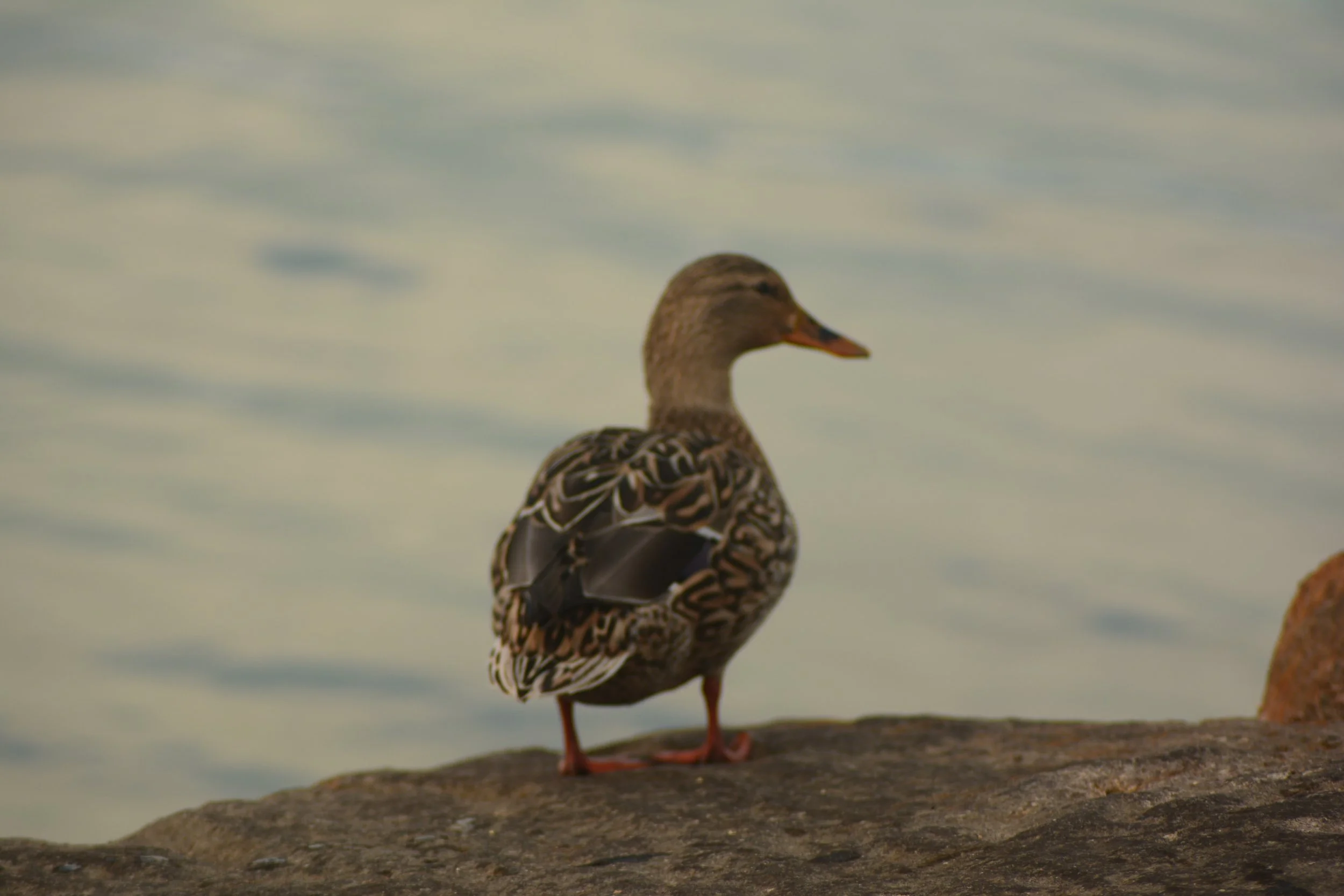
The Mallard and her Abacot Ranger: A poem for our duck pond displaced duo

Enjoy my short poem and photos I took of these beautiful ducks at Promontory Point!

Under a canopy of clouds ever so grey,

appears the sunshine with a heart shaped ray.


On a beach where wind-driven waves whisper to shore,
In one breath caressing, in the next, they roar.
At times gentle, like secrets shared in trust,
Then fierce, against the rocks, a relentless thrust.

There stood an Abacot, noble and rare,

His heart aflutter, in the salt-spray air.

Then, through the mist, a vision did appear
A Mallard, grace embodied, drawing near.
Her feathers, a mosaic of the earth and sky,
Caught the hidden sun, a spectacle for the eye.

The Abacot chased, his soul alight

Drawn by beauty in the dimming light.

In silence, he floated as time took flight
Admiring her form in the fading light.

Her beauty a beacon, on this cloudy day
A promise of spring, in the midst of gray.

Alas! he reaches close, dedicated, with no time to waste

Enveloped in aura, with the presence she’s graced.

In her orbit, the world seems to pause and embrace,
A harmony of hearts, in love's tender chase.

With a twinkle in his eye, he began to speak
Words smooth as silk, his heart on the peak.
"Among these waves and the whispers of the sea,
None shine as brightly or as wondrously as thee.

Your elegance, dear, outshines the morning dew,
A beauty so profound, it renews the world anew.

Might I be so bold, to walk by your side,
Through tides and times, with you as my guide?

In your presence, the cloudy skies turn clear,
With you, dear Mallard, I've nothing to fear.
Let's write our story, on the sands of this beach,
A love so vast, it stretches beyond reach."

Her gaze soft, from blur she emerged,
A smile in her eyes, two worlds converged.
"Your words, like ripples, reach my heart, so still,
In this dance of whispers, I find my will.

To walk with you, beneath the clouded dome,
By sea’s soft murmur, where wild spirits roam.
Your courage, dear Abacot, has shown me glim,
In this dive of faith, come quick! let’s swim"

The end.

Hope you liked it :)

'zona//zion

canyon moon always watches from

the horizon

an empty landscape beneath it; it

completes the painting

Consumption & Other Vices of the Flesh

I have experimented with various forms of hunger in the past several years— for love, for connection, for success, for fulfillment, for retribution, for flesh, for more. In my series of compositions, Consumption & Other Vices of The Flesh, I explore these themes of innate desire and the search for satisfaction, frequently returning to imagery of the body and its transformation by mutilation, decomposition, or other, to depict and dissect different kinds of hunger.

As a step to develop more confidence in my writing, I have shared some of my favorite pieces with you, here.

<3

Man Eater

My hunger is a fever, longing still

For that which no longer satiates.

Deprived of sight, touch, sound,

Only its fervent swarming remains.

Hair back, eyes blind, hands bound,

A wet, pungent scent engulfs me. 

My tongue inviting the pleasure in,

I chew, bite, swallow, choke, gag,

Savor the taste of another person,

The gaminess of still-warm, raw meat,

Of flesh and fodder becoming one

Slick, sanguine mess. 

In the emptiness of this need,

My body demands another to feed.


Realenga

Since then, I eat more hastily than before, as a starved animal devours its most recent kill, and yet I can never satiate this newfound hunger. Since then, I slither and stalk restlessly place to place in precise, calculated movements, with piercing eyes that never stray from your neck. Since then, my hands— cold, aching, claw-like— inflict furious welts on your skin from touch as gentle as I am capable.

Bright colors and poisonous words warned you of the danger I pose— a precaution you throw to the wind. You’re as vulnerable as you are stupidly brave, as passionate, as tender, and as human as I long to be. But you don’t feed a wild animal without eventually paying the price: it doesn’t leave. It won’t leave. I come back. My mouth salivates and my eyes water, fighting a losing battle against an unrelenting hunger you awoke in me. 

Your kindness is carelessness– do you know it’s what makes you my prey? 

I’m different now. Worse. Predatory. I crave viciously and desperately for something you naively let me taste. If I yearn, if I need, if I desire— if I crave!— for more than you can surrender, I’ll consume you whole. 

I’ll sink my sharpened teeth into the hand that feeds, and savor as it bleeds.

feral, viscous– sweet

a hunger akin to love

devouring you whole


Pragmatism

My fragile, immature bones could never withstand the cold

As prepubescent limbs in pain, desperate for soothing.

I found it in a visceral discomfort: the solace of knowing

Meaning is lost in a timeless euphemism for growing old. 

These lukewarm days I grieve for afflictions only foretold

An ache so dull and intrinsic – the hallmark of becoming.

The morning haze on an unkempt bed, hot tears encrusting

Hands itching for something to harm, someone to hold.


This perennial aching of mine — perpetual growing pains. 

An unkind maturity consumes me, gnaws at my insides,

But the sun still rises, my bitter heart still beats.

I wipe my eyes, wash my sheets, keep my anger restrained.

Mourning the loss of my childhood must suffice,

As my innocence, my escapism, become obsolete.


(interlude)

in the balmy meadow, 

the flowers will make a home 

of my putrefaction.

weeds will be the first to thrive,

sinking their stringy roots inside,

stripping any remnants of my agency.

blades of grass, snug between my toes,

dandelions shrouding my body in fuzz,

hiding the first signs of decay.

the bees will swarm my cadaver,

those nectar-hungry vultures,

and the rays of a dying sun will catch

in my honey-glazed eyes.

flor de maga tangled in my hair, 

helianthus turning to the sunlight on my face,

wisteria crawling through me, embracing my bones

thorned roses protecting my heart in the afterlife.

when you tiptoe between the blossoms,

sprouting through

the crevices of my corpse,

i ask you to be kind

to what remains of me.

and before you pluck the flowers,

hum my favorite melody,

inhale,

kiss my rotting hands.

buried in the pasture,

my flesh feeds the soil.

Living with MS

Living with MS

Trying to understand diagnosis and disease as a young adult

Approximately one week before the start of fourth year, the optic nerve in my left eye swelled to two times its size and if I dared to look at my own reflection I saw only half a cheekbone and the fading remnants of a face. A day after the introduction of this swelling, I was diagnosed with MS also known as Multiple Sclerosis. Multiple Sclerosis is, in short, a neurological disease where the immune system, for reasons unknown, begins to attack the myelin sheath, the protective covering around the nerves, causing misdirected or failed signals. Its symptoms are varied from depression and anxiety, bodily numbness, loss of vision, fatigue, and at its most severe, difficulties with movement and speech. As my neurologist said, “‘blacks’ are being diagnosed with it at an increasing rate.” 

I want my MS to be an academic project; an assertion of a body warped by the pressures of a hostile environment, an ode to a contagion of capitalistic consumption which at its most volatile form leads the body to consume its own self, a dissertation on disease and degradation as it pertains to the colonial subject, a declaration of the body as a geographical location akin to a nation state that has too been poisoned by the ecological devastation of microplastics, an analysis of the failure of bodily defenses as they destroy in place of protection. It is not. On an MRI, my MS looks like 5 enhancing white matter lesions, which I again struggle not to take advantage of the poetic potential of white expanding masses on a black body, my own body. My disease and the potential for deterioration it holds is not a divine call or statement of genius for me to exploit to appease my mind. I can wax poetic about it, analyze and examine it as I have been taught through this university but none of that alters the very real fact that my own body has made me a war zone.

Absent of academic connotation, I’m not quite sure what to make of it, where to place it, or how to understand it. In recognizing it as a thing of its own, I must admit to a lack of control. Someone out there has fought for the right for my body to belong solely to me, to be in my possession unpolluted by kin, to refuse experimentation, yet in having such a right I eventually forgot that my body too belongs to itself. I forgot that the somatosensory system does not enable me to feel the dispersal of blood, the diffusion of nutrients, the strangulation of viruses, bacteria, and nerve cells. I cannot feel that I am alive nor my looming death. I want to refuse fact for delusion and consider this as surmounatble as any other task of body and mind. The whole lifetime I gave myself to become someone of note, to make mistakes then succeed in the end as my own unlikely hero may be less of a lifetime than I imagined. What if I don't have enough time? 

This was not intended to be dismal, fearful perhaps, but the dismal is unavoidable in questions of morality. The doctor who diagnosed me advised me to not let the disease change my life, my day to day activities but I yearn for transformation. I want there to be distinguishable selves for my respective before and after. As for what that transformation is I don't quite know yet.


Source: https://www.researchgate.net/figure/MRI-sc...

I am from a town … in Ukraine.

Kobeliaky. Which is way different from here. We don’t have skyscrapers. Well, apart from the treetops scraping the sky. In our yards, we have large gardens. Flowers, fruit, and vegetables are sleeping there. Each early morning, the downtown turns into an open-air market. My grandma works there.

My town isn’t hiding anything. It’s not pretending. And, you know, with time, it taught me to be natural, too. This nakedness, eventually, made me grow into my town. Or.. the other way around.

Now, we travel holding hands wherever my feet bring us. My eyes recall my hometown memories when familiar things stumble over me. My body moves as if to the rhythm of the wind from where I grew up. I hear the melody of my town’s rivers in the Chicago rains. I carry the tan on my skin from the hometown sun.

“Wow”, you think. “But what’s so aesthetic and special there to miss?”

Show, don’t tell, - they say. Done. I hope you can make these photo puzzles into a holistic idea of what my town, and Ukraine, in general, is.

a soccer field near my grandma’s

which is home to so many kids’ childhood memories. 

a playground near my great-grandma’s

squeaking swings and a coming-off paint - this is the noise and the image of childhood

my school featuring the necessary attributes -

old school buses and the never-aging flag. 

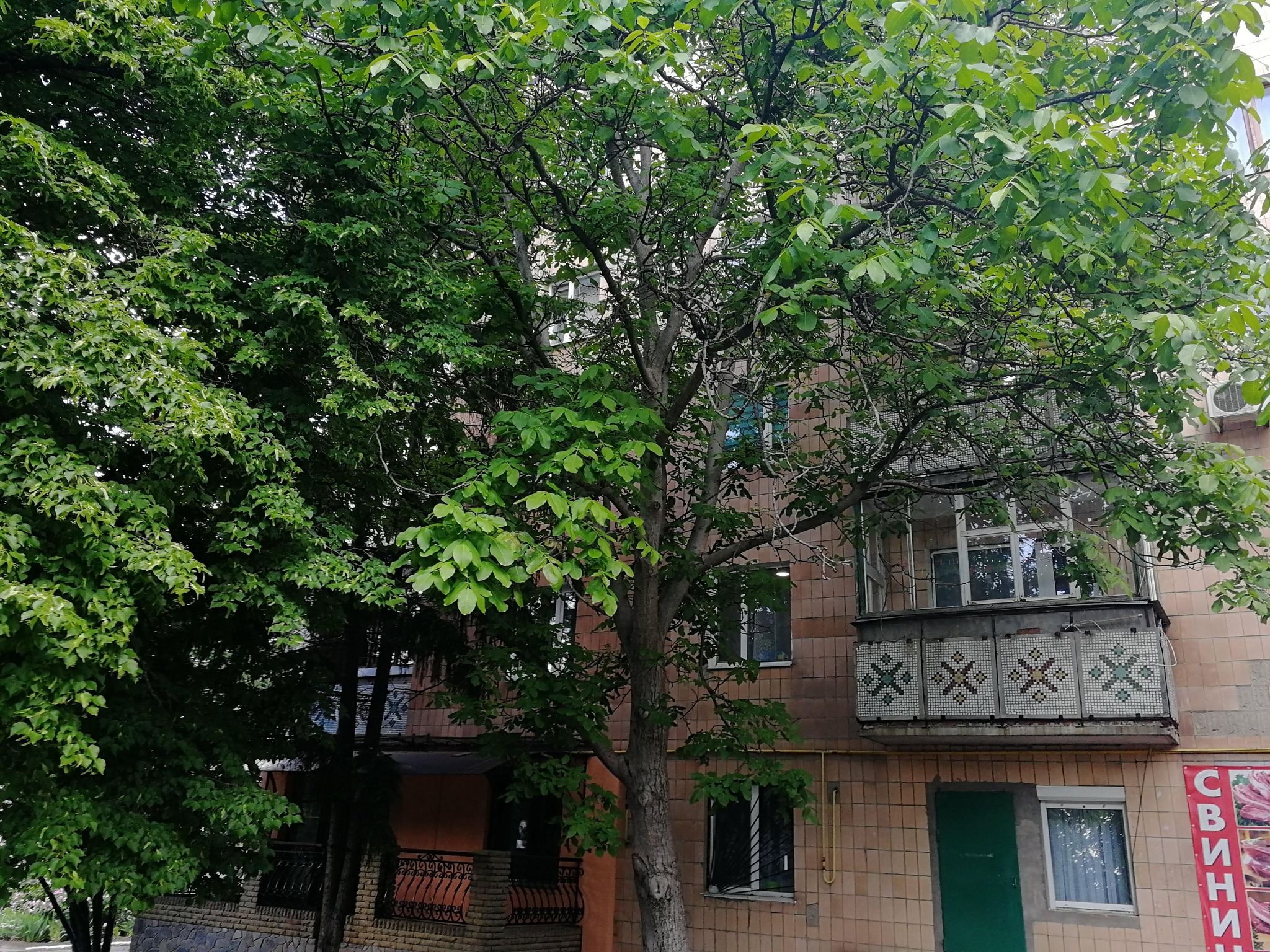
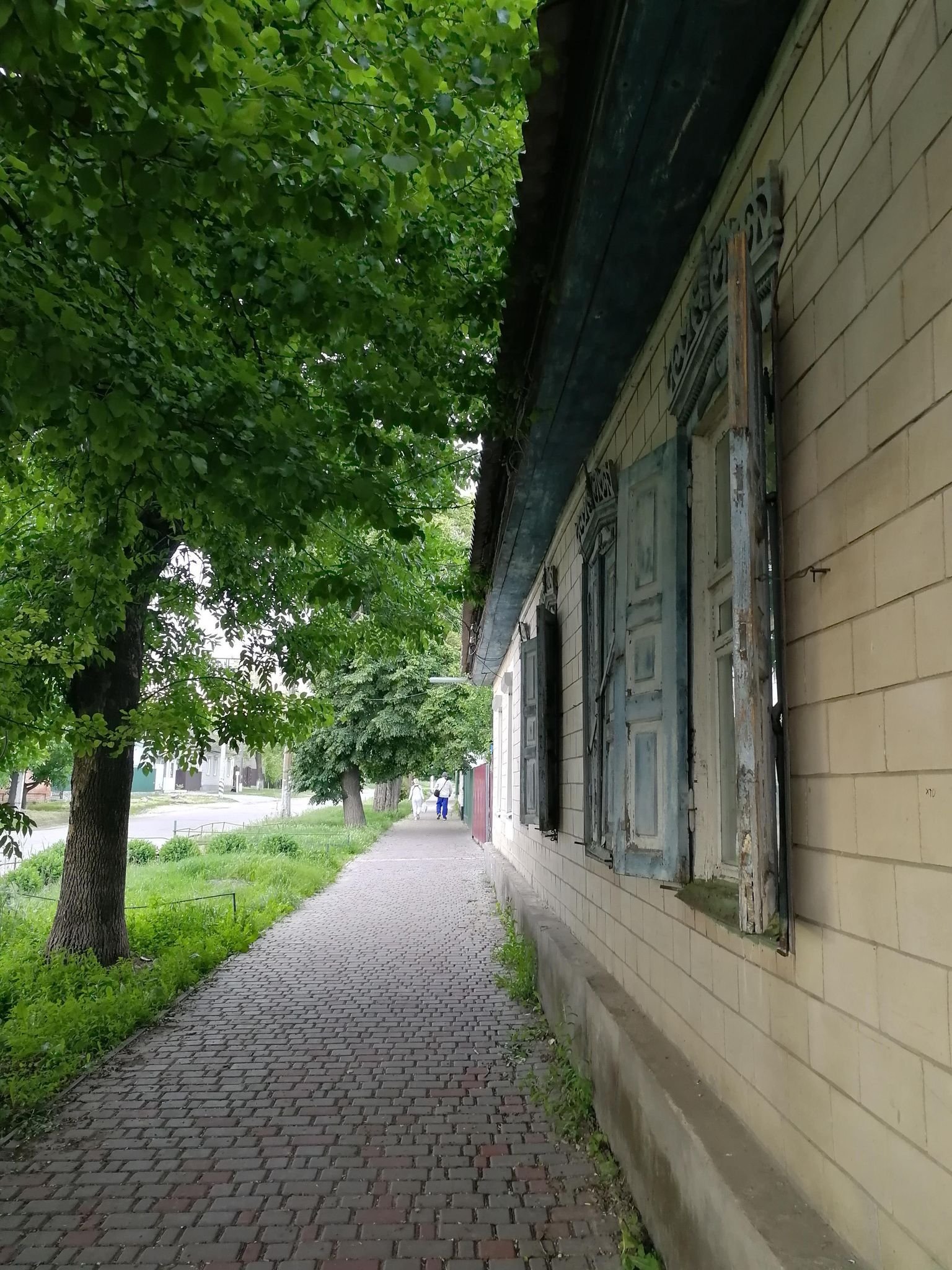
houses and apartments

left: barely glancing from behind the chestnut trees, the old-style apartment building, and a grocery shop on the first floor. it’s very common in Europe. 

right: a wayside with a typical old design of our houses, and trees are omnipresent at home, as you might have noticed already.  

about chestnut trees.

kinda a symbol of Kobeliaky :) there is a fair few of chestnut alleys throughout the whole town. 

in the tree shadows — a bus (or hitchhiking?) stop

Ukrainian flag has a blue top and a yellow bottom?

obvious. it’s because even in such a small town like mine, you would find a field with yellow wheat or sunflowers under the blue skies. 

a typical evening when i am going home

after hanging out with friends or getting some cookies from the nearby small store.

while kids are waiting outside,

the sun is trying to make its inside. it’s a grocery shop. the scene only turned out to be quiet, in fact, the shop is in between a busy road and two churches.

woo, getting more private.

just showing you the coziness and simplicity of my room at grandma’s. 

my town has got more than six beaches.

this one is called “Golden”, and we would usually get into the forest on the other side of the river with friends, and lose ourselves in the wonderland. 

the chocolate-colored fence on the right

is my grandma’s. this is my favorite road in the town, which makes me feel as if I am in a cute cartoon and have a carefree life. 

remember of the open-air market I told you about?

I also had a spot there. I used to sell our. home-grown fruit. 

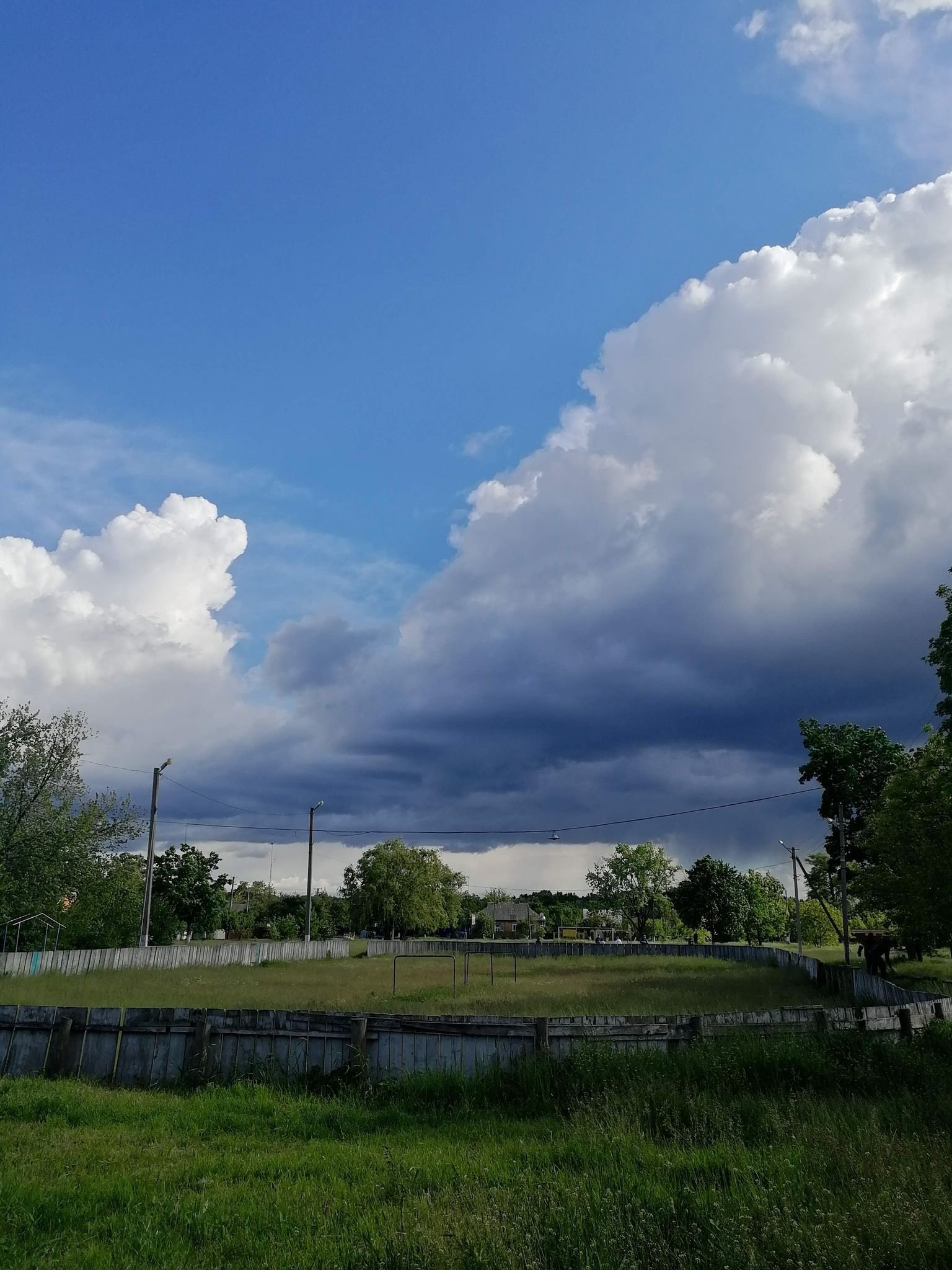
about the sky.

what I truly miss about my town is deep colors of a summer sky. occasionally, it would rain, bringing with itself this somewhat intimidating, but overall aesthetically-pleasing art above our heads. 

I bet you get an impression that i am living in a botanic garden. well. me too. You would encounter this flora anywhere in the country. Hope you enjoyed your digital journey, reader. Maybe you have a particular request for the next one?

P.S. Thought this article would be a political weep? We can get to that one day. For now, we are just having a light coffee-chat. Didn’t my last article on Ukrainian modern pop give you a coffee-like energy boost? :) 

sample(d) IV: the Holidays

the Holidays 

— my mother’s voice, cursive and contoured 

“come Christmas-time, 

everything’ll be just fine ” 

that somehow beneath 

prickly pine and hanging lights 

it’s warmer outside 

yeah right

the scent of a dying candle 

and printed wrapping paper 

line the ends of each

fickle finger

it doesn’t tuck as 

neat as it should 

“not tidy enough, 

start over” 

— my mother’s voice, cursive and contoured

… 

“I’m in my apartment

— with

     a solemn stare as snow falls over the place

     blistering the park in a bittering haze

     as if time —or this city— is to blame 

— with

     the begrudging half-truth we all have to face 

     that somehow and someway the holidays

     will never — could never— be the same 

“yeah, I’m in my apartment, 

but I’m about to head out 

I can’t call right now”

— my voice, all the same: cursive and contoured

Photograph of the Christmas tree back home in Jakarta taken by my mother

… Happy (?) Holidays, I guess. As an international student, the concept of Christmas made into a wonderfully winter wonderland has whirlwind-ed down to its true form: just cold. As I near 20, it is also deeply apparent how much I’ve taken this season for granted. There’s a lot that will never be the same. Besides that, I’m truly just missing my sunny home of Jakarta more than ever. I should probably call my mom back too — oopth.

Songs Sampled: “Split” by Nicole Zefanya, “Christmas Tree Farm” by T. Alison Swift, “Writer in the Dark” by Ella Yelich-O’Conner, “I’ll be home for Christmas” as performed by Kacey Musgraves & Lizzy Grant, amongst many others…

A Few Words on the Apple AirPods Max

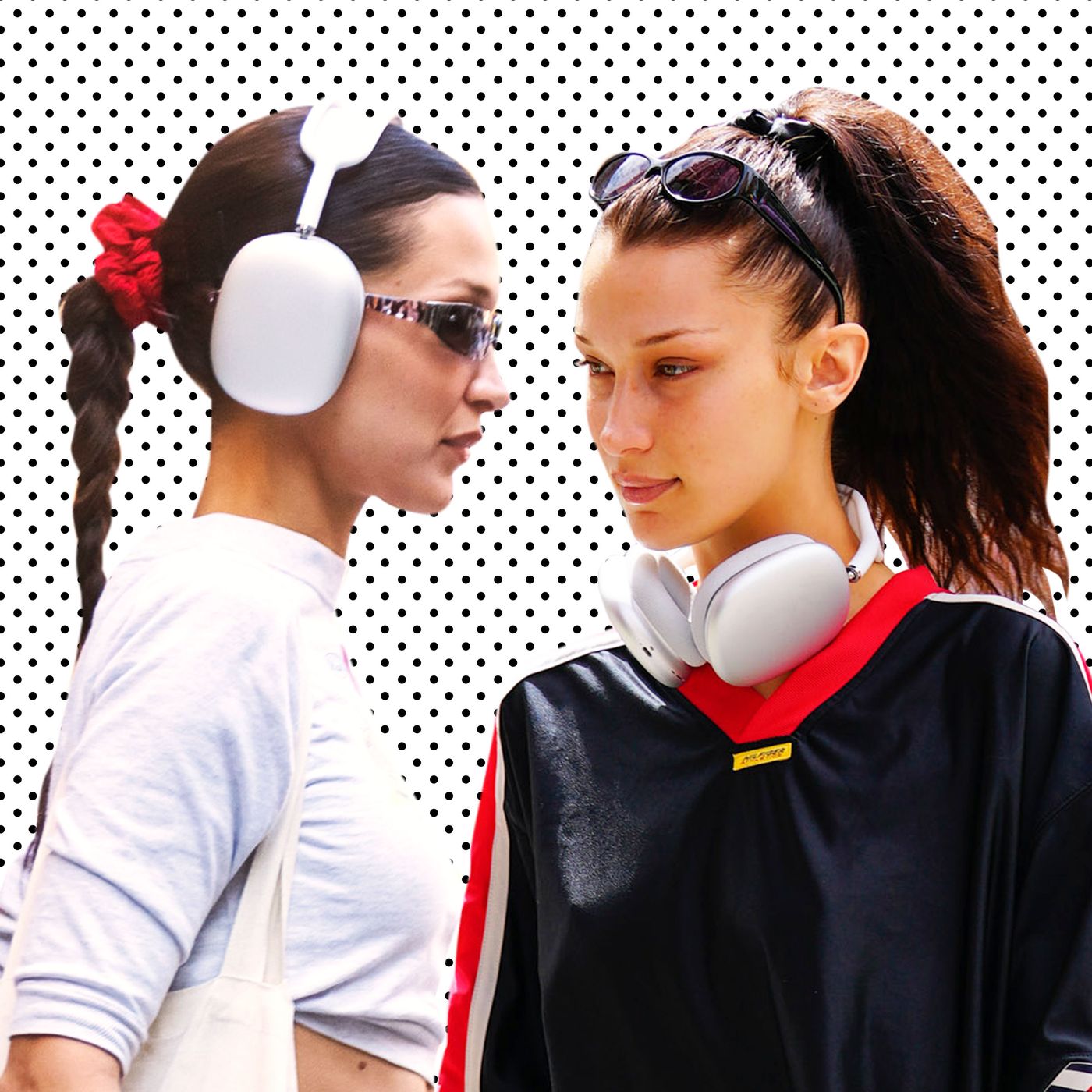
Months ago, I received a very generous gift: the Apple AirPods Max, aka the “Silly Girl Headphones” (I mean known by only me and my friends, really). These over-the-ear adaptations of the AirPods boast their sleek look and top-tier noise cancellation, two things I have thoroughly enjoyed about my navy blue versions. But, ever since then I feel like my choice to don these metal earmuffs has cast me into a particular social category (a philosophy major once asked me “and what do those say about you?”).

Let’s unpack that. 

Obviously, their biggest identifier is their price. They are NOT cheap, going for at least a hundred dollars more than their competitors at Sony and Bose. When I asked around for opinions on the matter, the responses were “they’re elitist” and “they represent class warfare!”

UChicago, we’re pretty unbearable, aren’t we?

Regardless of the tongue-in-cheek-ness of those responses, I think it’s obvious to us all that there are more budget-friendly ways to deliver sound to your ears. I get it. The price is laughable considering how many other audio options exist.

Next, like Adidas Samba and Mui Mui flats, these have been snatched by the manicured fingers of the influencing it-girls of today. Whether we like it or not, they’ve turned these headphones into a high-caliber accessory. Because of this, these headphones have more social value than others. Talk about commodity fetishism! And with capitalism comes critique—the other side of the coin that sees these as the epitome of economic excess. But, I won’t get too carried away with that.

“They don’t only use them, they wear them”

- Colin McNamara-Bordewick, class of ‘25

So, we’ve tackled their social conception. But what about their actual quality? Well, you could go find plenty of reviews by people who actually know what they’re talking about. Here, I present another review of the silliest headphones but this time from someone who hasn’t a clue about sound/audio mechanics. Humor me here, people.

Pros:

  • Sound cancellation O.M.G. These babies really remove you from reality. If you ever need a mystery-girl-in-the-movie moment these will provide it. Life is so romantic when you can’t hear all the sh*t! And even more, the transparency feature means you can switch between hearing people and not without taking them off. Though, you do look like an unfriendly goof talking to people with headphones on. Again, silly, silly headphones.

  • They are quite literally ear pillows. The padding is oh so luscious; I’ve even slept in them before. I know, what a silly thing to do. 

  • Some people are off-put by how heavy they are, but I don’t notice it at all. Maybe I’m passively getting a really strong neck. So, you’ll get a silly, sexy neck with these.

Cons:

  • They’re pretty big. And as a fashion-over-function person, they take up half of my cute little backpack. You could just wear them around your neck, but I think that’s quite possibly the silliest thing you could do.

  • The pillowy, bed-topper-Esque covers do make your ears heat up a bit. Especially if worn at the gym, it’s like an inferno in there. Also with working out, the insulation they give to your face makes the sweat pour. So not only are you wearing silly headphones but you are also a silly, sweaty mess.

I am no audiophile, just a silly girl who happily enjoys the two metal boxes sitting over her ears. But as a good friend of mine often says: everything is funny and nothing matters. Silliness is something to be embraced.

Thus, I will continue to wear my headphones and will enjoy doing so. Are they worth the exorbitant price? Maybe not. Anyways, knowing the trends of today, sometime soon they'll be cast out of style with the flick of Bella Hadid’s bony finger. And don’t even get me started on the resurgence of corded earbuds. God help our consumerist generation.

Featured Image via 

Art and the other: expression in the face of oppression

When I think back to how I first became interested in fashion, both in the sense of developing my own personal style and with regards to the broader world of design, I think back to the urgency that I have always felt to try and differentiate myself from other people. Fashion might be the easiest way to make this distinction known to others – it’s one of the first things people notice about you, consciously or subconsciously. In my initial attempts to explore my style, I found myself gravitating towards more masculine items and silhouettes. I don’t remember my exact line of thought, but I assume that I wanted to escape more traditional fashion expectations for females, be “not like other girls.”

I used to just wear regular men’s clothes, like baggy t-shirts and sweatpants, but as I continued to explore my style, my wardrobe shifted to include more masculine items of clothing that men typically don’t wear on an everyday basis either: printed ties, old belt buckles, dress shirts. As I became more comfortable with my more masculine visual identity, however, I also began re-incorporating feminine pieces into my style – like a reclamation, it felt like the subversion of the “rules of fashion” originally imposed on me through my gender assigned at birth.

Note: the author does not identify as a woman. Via

For me, fashion has become a form of escape, although at this point, I can’t say whether it represents an escape from societal norms or from being seen as “basic" or “normal,” to be “different.” I do think that these two feelings are inherently intertwined, though; if you are the type of person to feel restricted by societal norms and want to escape them, you would presumably also want to express your feeling of alienation and frustration to others.

This frustration probably explains why there is a longstanding association between queerness and a fascination with high forms of art, culture, and intellectualism. Queer people have historically been outcast by society, not being able to exist comfortably within societal norms and having to constantly challenge expectations of how to live authentically. The word queer, after all, originates not from a description of sexuality but from the status of social rejection; to really be queer is not only to be homosexual but to be a pariah. To channel the queer feeling of otherness into a positive and admirable venue like art, then, allows for a sense of empowerment in the face of isolation. It is no wonder that the community of artists and the queer community not only share a great overlap, but a great dependence on each other, although this is not to say that all queer people must be artistic or that all artists must be queer, but that many queer people may turn to some artistic medium as a hobby and many artists may be more inclined to experiment with their sexuality.

In a similar way, people of color have also always been on the forefront of art, culture, and fashion, and this comes both in spite of and as a result of their marginalization. In terms of fashion trends, a highly visible example of this phenomenon, queer people and people of color (especially queer people of color) have always been the pioneers of new trends and fashion concepts. The examples are endless – whenever androgyny is seen as attractive or fashionable, we draw on trends originating from the queer community, and a variety of other fashion subcultures, like e-girl fashion and sneaker culture, all come from black, Asian, or Latinx communities. The mainstream can only maintain status quo; the only way for it to change is to appropriate from outside subcultures and absorb those things into itself, and with this absorption, the heritage and meaning imbued from those subcultures is often lost. It is always left to people of color and queer people to dynamize and invigorate popular culture with new ideas and trends.

All these observations come somewhat anecdotally from what I see in my everyday life as well as subcultures and movements on the internet, but I also see similar ideas of insider-outsider dynamics in the more historically grounded world of art and literature. I was having a conversation with a friend the other day about how the vast majority of great writers were all known to suffer from extreme mental illness, and I asked her if she thought that the trope of the tortured artist is real, and that great art must draw on great pain. She disagreed with me, arguing that mental illness usually only counteracts productivity and creativity. Artists, she said, have to produce art in spite of their pain and not because of it. The catch is that to produce truly novel art, artists must rely on their ability to think in ways that most people cannot, and the most natural way this happens is when the artists themselves have been alienated, or at least feel alienated, from larger society. It is through their deviancy and otherness that artists can produce great work, but this otherness also forces them into a general rejection from society, which probably cannot benefit their mental health. It seems no coincidence, then, that so many of these artists were also queer, disabled, or physically ill throughout their lives.

Pursuing this connection between art and otherness, I turned to examining the essence of art itself: what about art is so inherently tied subversion and non-conformity? Nietzsche touches on the topic in The Genealogy of Morality with both his own opinion and the thoughts of other philosophers on the subject of beauty, aesthetics, and art. He writes that Schopenhauer, following Kant, believes that beauty consists of the qualities of “impersonality and universality” and “gives pleasure without interest”, meaning that even those with no knowledge or interest in art can still appreciate its beauty. Nietzsche takes issue with this definition of art, however, since it only addresses art in the perspective of its audience – a general, uninformed audience at that – and instead, he turns to defining art through the lens of the artist. He looks to the French writer Stendhal, who writes of beauty as “une promesse de bonheur”, or a promise of happiness. Here, the focus of happiness is shifted from the universal audience to the individual artist, once again directing our attention to the distinction between the artist and the wider society viewing the art.

Arendt’s The Human Condition also discusses the nature of art and happiness. Praising art as one of the greatest and noblest creations of humanity, Arendt writes that the greatness of art comes from its total lack of material necessity, since art is produced through passion, not to satisfy our animal need for survival and sustenance. By creating something outside of themselves, humans no longer exists as merely an animal laborans (laboring animal) but as a homo faber (man the maker), making themselves a near god through their enduring legacy. Especially in a capitalist world of never-ending consumption, to produce art is to defy the impulses of society and pursue a higher purpose.

Like Nietzsche, I find that Arendt focuses more on the experience and will of the artist rather than the art’s effect on an outside audience, separating the individual’s internal world from what they produce or change in the external world. The relationship between the internal and external thus becomes the key to understanding art. What separates our sense of self from the outside world? From other people, or from other living things? This space between the artist’s internal and external must be where the sphere of art lies: it is the exploration of the artist’s self in the midst of a world of both beauty and chaos.

This is a picture of me reading Nietzsche

All forms of art ultimately rely on some sort of communication or production to the outside world, regardless of medium. The art of dance, for instance, follows this rule – even though dance is limited to the individual body, it is still expressed outwards to the external world. Simply thinking of dance moves in your own head would not be considered art, but the act of dancing is. Likewise, thinking about a painting or a series of musical notes in your head is not art; art is only created when something is produced into the external world. This understanding of art, however, also allows us to view art as the tangible extension of the self to the space beyond the self, like a grand declaration of sorts to the external world.

At the same time, art is something that arises from the deeply internal world of the artist, something incredibly personal and intimate. Natural occurrences and phenomena can undeniably be considered beautiful, but I would not view them as works of art unless they were captured in some form of human interaction, like photography or painting. The closest thing I can think of to art created by a non-human is AI art, but even then (at least with our current level of technology where AI has no consciousness), humans still run the programs behind these algorithms to direct the final product. Thus, art necessitates deliberate human action and can only exist as the production of a human artist. As Arendt argues, however, this is what gives art its value - the act of creation and the instillation of meaning. Art is really something innately and profoundly human, the deliberate expression of the artist’s internal world to the external world.

Viewing art as the bridge between the internal and the external allows for a more intimate connection between art and the unique experience of the artist. This is also what makes art, and all things artistic like fashion, literature, and culture, so essential to marginalized communities. Being part of a group that experiences oppression not only compresses the individual externally but also represses the individual internally; outward acts of discrimination combine with a constriction of the sense of self to affect the entire identity and spirit. Art then becomes a method of resistance, of projecting outwards in spite of oppression. Within a society that naturally constricts and restrains and pushes back against the efforts of the oppressed to both develop their authentic selves and express themselves freely, art not only provides a form of therapeutic release but also can be weaponized against the forces of systemic oppression as a type of protest. To use Frye’s birdcage metaphor for systems of oppression, if the marginalized individual is a bird in a cage, art is the birdsong that can be heard from outside the cage, even if the bird itself cannot be freed.


References:

  • Arendt, Hannah, The Human Condition (1958)

  • Frye, Marilyn, The Politics of reality: Essays in feminist theory (1983)

  • Nietzsche, Friedrich, On the Genealogy of Morality (1887)

Further Reading:

sample(d) I: Moon Men pt. 2

… on the same note of an ethereal space aesthetic. I’ve made the unusual pairing in my mind between “moon river” and “rocketman” (by E. John which he himself even sampled for “Cold Heart” feat. Dua Lipa). On a more tragic note, the notion of space could mean something entirely unattainable. Here’s my version of rocketman…

“mars ain’t no place to raise your kids” , photo by Katarina Grozdanic

Rocket Man (I think it’s going to be a long time)

link

rocketman

Promise you’ll take me to the moon

fingers crossed over his chest 

and life was at its best 

back then 

when 

clouds were but kingdoms unexplored

and dreams were alive 

breathing

beckoning 

… 

Somehow he knew —even then— they were to die very soon 

that the path of the greatest dreams were those 

that led to a graveyard 

No one can see

but you 

and you’ll visit them frequently

You’ll see a time capsule of every petaled memory 

      encased in settled dust 

The greatest ones are buried in glass 

too precious to visit 

to think about 

But

The greatest ones are just that… …dreams

that have long died at 2:13 am 

When the moon was high 

And you could look at it every night

reminding your eyes

they’re not lying to you 

that you could go Anywhere; be Anything

But life has now buried your feet in the ground 

with one eye on the sky 

and the rocketman 

…once breathing 

…once beckoning 

has now died

Stay tuned for many more sample(d) installments to come.

‘til the next installment, I’m going to keep basking in the magic of lyrics and storytelling and I hope you do too.

All of my lyrical inspiration for this first installment (Moon Men): moon river by Audrey Hepburn and more, Rocket Man by Elton John, Halley’s Comet by Billie Eilish, illicit Affairs and this is me trying by Taylor Swift, When we were young by Adele Adkins, “Bing Bong” from Pixar’s Inside out, and many many more…

sample(d) I: Moon Men pt. 1

“The reader is the space on which all the quotations that make up a writing are inscribed without any of them being lost; a text's unity lies not in its origin but in its destination.” 

-Roland Barthes, The Death of the Author 


The beauty of music — to me — is within the lyrics. But would this mean that the magic of songs lie within the songwriter? I’d beg to differ. The true power of a song — of a chorus or a bridge or a hook— lies within the listener. More specifically, how listeners can actively take apart lyrics and interlace a chorus, a hook, or a bridge into a tapestry of their own creation. It is the way a listener weaves their own lived experiences, imagination, and imagery to songs that make it last; make it mean something. This poem-based series is my way of exemplifying how magical songs are to me. 

I’d like to invite you to bask in the magic too… 


Sample(d) I: Moon Men

“two drifters off to see the world”


In this first installment, I “sample” a myriad of artists but primarily the various artists that have covered the iconic song “moon river” (popularized by Audrey Hepburn’s version in “Breakfast at Tiffany’s).

moon river

from breakfast at tiffany’s and beyond

Moon river, wider than a mile

I'm crossing you in style someday

Oh, dream maker

You heartbreaker

Wherever you're going I'm going your way

Two drifters off to see the world

There's such a lot of world to see

We're after the same rainbow's end

Waiting round the bend

My huckleberry friend

Moon river and me” 

-Performed by Audrey Hepburn, and Frank Sinatra, and Frank Ocean… 

… my turn-ish


moon landing

A love on a lie

is a castle on a glass cloud 

but not this love 

for it is different 

As if here on worn-in sheets under dim motel lighting

On a cross-bred cocaine high  

Nothing else matters 


And as your body curves into mine 

you confess, “this love is made of something out of this world”                                                         

— something I already know

… 

Let the crashing comets collide against the earth

Let it catapult me into the clouds

   into space 

So far from earth

So far from matter

Where I can lay in moon dust

with you forever

Where I can lay here in moon dust 

with you forever

A future with you

is a future worth dreaming of

A love on a lie

is a love good enough

for me

… 

And as the stars in your eyes dim into a deep sleep 

I’m mesmerized that somehow I’ve landed you 

and

I solemnly swear 

a secret

“I promise you 

I’ll stay here forever

and whatever comes after 

doesn’t matter”


Check out part 2 to this series debut…

A Love Letter to Love Letters

My family impressed upon me the importance of letters. Once I could read, my grandparents would mail me cards for every holiday, writing updates on the weather in Wisconsin, what card games they had been playing, and how they looked forward to the next time we would see each other. I certainly took these for granted until I was well into my teens. I would oftentimes recruit the help of my mom to translate their loopy cursive handwriting, so she would read their messages aloud to me.

Every Christmas was also naturally full of letter writing and receiving. When I was still young, I would write a letter to Santa to list off what I wanted for Christmas. After Christmas had passed and my sisters and I returned home, my mom would sit us down and we would write thank-you notes to each person that gave us a gift. At the time, licking the envelopes, writing the address, and applying the stamps was mere drudgery.  

Image via Pinterest.

Once I was in middle school, I began collecting the numerous letters and notes I received every year. From the heartfelt holiday cards of my grandparents to funny letters from my friends on my birthday to notes with handmade drawings from my dad, it seemed unjust to throw them away. So, I stored them. As I aged, my shelf that contained the letters filled up, the envelopes sliding as the stacks of cards toppled over.

I caught on to the sentimentality of writing letters. For parents and friends, I began to make my own cards, drawing little images on the front, leading to a pun on the inside of the card. I became very partial to love letters, writing pages and pages for special occasions during my high school relationship. The giving and receiving of letters garnered a special place in my expression of care for those around me.

Image via Pinterest.

This year, I realized I had no pictures of friends or family as decorations in my room. Looking through my bedroom at home for pictures to take back to school, I stumbled upon my shelf of letters. This is better than pictures, I thought. I slid a thick stack of cards into my bag and brought them to school. Now spanning the wall in my room is an assortment of cards from various people in my life, addressing various occasions and milestones that I have experienced. The assortment of letters is expanding, growing in all directions as I still receive letters in the mail and the holidays go by every year.

A heartfelt letter is perhaps the greatest gift of all. No other gift will be as unique to you and the person giving or receiving the letter. Having the handwriting of a loved one is having a piece of them, their voice, their personality. With Valentine’s Day coming up, I encourage you to write an old-fashioned, hand-written letter for a loved one, friends, or family. Not only will it let them know how you care about them, but it may inspire them to do the same.

Image via Pinterest.

P.S., save the postal service!

Featured image via author.

In Defense of E-girls

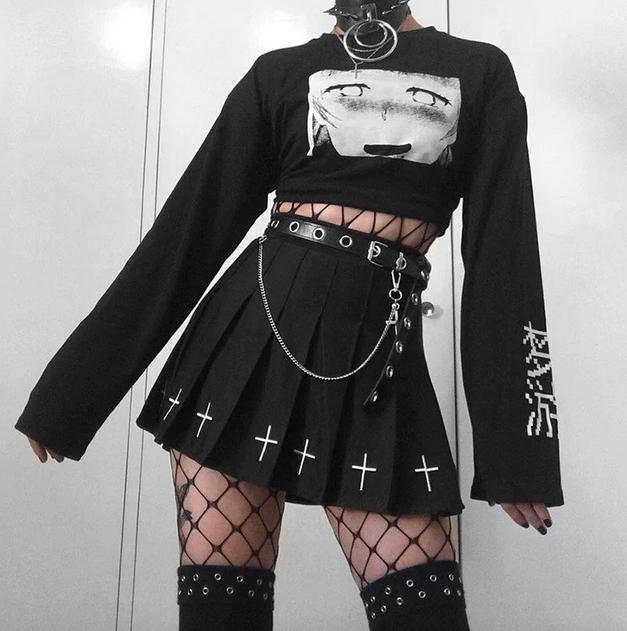
E-girls get a lot of hate. The word “e-girl” has come to symbolize something cringey, overdone, and frivolous, the epitome of the immature, internet-obsessed, angsty teenage girl. Sometimes, you’ll hear it when a girl wears a slightly more complex black eyeliner, or when she happens to wear a black choker – pretty much anything slightly alternative or less mainstream. Typically, we think of the e-girl as wearing tights, skirts, striped shirts, garters, and collars, typically in shades of baby pink or black, a mixture of light childlike aesthetics and the darkness of the sex industry.

An “e-girl”. Source Pinterest.

The thing about e-girls that probably gets them the most hate is the idea that by dressing in that style, e-girls sexualize and objectify themselves for male attention and validation. The word “e-girl” is derived from “electronic girl” and is heavily associated with amateur softcore pornstars on OnlyFans and Tik Tok – the word electronic referring to their purely online existence. E-girls were originally not girls at all, but online images reflecting pedophilic, fetishistic male fantasies. A good example is Belle Delphine, an internet celebrity who wore fake braces and childlike skirts and clothes while imitating sexual gestures and motions, most notably the “ahegao”, the exaggerated facial expression that girls make during sex in Japanese anime and manga. By playing into these sexual tropes, e-girls sought to fashion their online presence into sexy hentai characters.

Belle Delphine selling her (alleged) bathwater. Source image.

This was how e-girls became popularized. But in reality, people that adopted the e-girl aesthetic were not necessarily trying to become pornstars or even sexualize themselves. As e-girls became more popular and mainstream online, so did their aesthetic. While the origins of the e-girls may have been sexual, many people that began incorporating these dark and childlike designs into their own styles were probably just attracted to its separation from the mainstream, its underground origins, and its rejection of conventional understandings of propriety. And although the opinion that people fully have the right to sexualize themselves if they so choose is gaining more and more popularity, the e-girl aesthetic still received a lot of backlash for its erotic undertones and association with male weebs. In contrast to its twin Tik Tok aesthetic, the family friendly “VSCO girl”, who was typically wearing a baggy T-shirt and chilling on the beach with her Land Rover and her golden retriever, the e-girl was an outsider.

Similarly, to the scene and emo styles from the late 2000s, the e-girl called upon and mixed with previous alternative styles, even though it technically straddled the line between alternative and mainstream due to its popularity on Tik Tok. As more and more people began dressing like e-girls and creating e-girl related internet content, a subculture also grew to surround the e-girl, including themes of mental health and mental health awareness, anime, sexual deviance or promiscuity and homosexual behavior and angst. This new interpretation of the e-girl soon overtook the internet, superseding the original.

In fact, while the creation of the e-girl did come from male fantasies and catered to the male gaze, the new e-girl sought to create a sense of empowerment and solidarity for women within the confines of patriarchal expectations and beauty standards. One of the important things about the e-girl aesthetic, as well as most other alternative aesthetics, is that “natural beauty” is not necessarily a priority like it is in mainstream fashion. The VSCO girl, for instance, typically wears very little makeup and puts very little effort into her outfits, dressing simply and casually. This low effort look places far more emphasis on the natural features of the face and the body, thus benefitting thin white girls above all other demographics. (When’s the last time you saw a POC VSCO girl on Pinterest?)

A “VSCO girl”. Source image.

Meanwhile, alternative aesthetics like the e-girl feature heavy eye-makeup and complex and intricate outfits, focusing on the artistic choices of the wearer rather than their looks. (This is not to say that white girls do not also have a chokehold over the e-girl aesthetic, but rather that POC’s probably have a slightly better chance here.) In this way, the e-girl is in essence more inclusive than the majority of mainstream aesthetics.

The inclusion of queerness within the e-girl subculture also made it huge within the WLW (women-loving-women) community. It’s a pretty well-known and common assumption that all e-girls like girls, even if it’s not true 100% of the time. This association with queerness may have come for two reasons: first, that queer people have always been heavily involved in alternative communities, due to the marginalization that queer people experience within the mainstream. Many may turn to alternative subcultures due to the community values of inclusivity and rejection of conventional standards and beliefs.

The second leads back to the e-girl’s longstanding association with the male gaze. This may seem kind of unintuitive, since the male gaze is probably the last thing that queer women want to have to think about. The reality of the queer female experience, though, is that most probably have to reckon with the existence and pressure of the male gaze all the time.

Apart from a lot of queer women being literally attracted to men, even those who aren’t or those in relationships with other women are still subject to the confines of patriarchal expectations for what a woman should be and look like. For instance, lesbians and bisexual women are heavily fetishized by men, and those who don’t appease the male gaze, like butch lesbians, are heavily punished by society, often called “ugly feminazis” among other things. As a result, it is still incredibly difficult for queer women to escape the male gaze entirely.

Lesbians. Source image.

So although the e-girl evokes the aesthetic of appeasing the male gaze, it also represents a common struggle that the vast majority of women have gone through and can recognize and find solidarity among other women. Women and queer people are probably going to appreciate the effort and artistry of another person’s e-girl aesthetic far more than men who have less experience with makeup and feminine fashion. Thus, queer women subvert the e-girl from an object of male desire to a symbol of female solidarity against the male gaze. This total inversion of the e-girl transforms it into something entirely different from its pornstar predecessors.

So e-girls don’t just exist to appease the male gaze and also offer an introduction to a more inclusive, artistic expression of makeup, style, and fashion. That’s great! To be honest, I think all of these things are enough to defend its existence and support its values. But we also can’t take this all in the isolation of white feminism and ignore its blatant appropriation of East Asian culture. A lot of e-girl inspiration comes from anime and hentai, probably because e-girls seek to capture the cuteness and submissiveness surrounding the fetishization of Asian women in copying “Asian aesthetics”. In this way, the e-girl draws upon and reinforces the way Asian women are regarded as timid, exotic sexual objects. This is admittedly pretty problematic. It’s definitely possible to embody the e-girl aesthetic without actively playing into Asian stereotypes, but it is a little hard to ignore those racist roots. And, as with a lot of other trends in fashion, racial dynamics are an essential part of understanding the e-girl.

Source via Pinterest.

To be honest, this conversation isn’t really that relevant anymore because very few people actually say they’re an e-girl now. Plenty of other aesthetics have layered upon and replaced the once infamous e-girl, leaving it as a discarded remnant of late 2010s pop culture. But for all the controversy and viral trends that the e-girl aesthetic stirred up, its legacy endures in our views on the propriety of fashion, the sexualization of women, and what it means to be alternative, while its stylistic influences live on in current alternative fashion trends. Not to say that e-girls are some cultural behemoth like scene, grunge, or hippie styles, but at least in the scope of the past five years, understanding the e-girl is important in understanding everything that came after it.

Poetry for Peace in a Pandemic

There’s plenty of feeling that 2020 was a time for lost hope. While it’s true most people are undergoing very difficult circumstances, one thing UChicago has taught me is that self care and radical self love are fully necessary in the most difficult of times. Poetry is especially good for peace of mind. And writing is unquestionably calming. So let’s see how to bring a bit of peace into your daily life.

I

Image via Elliot Duprey

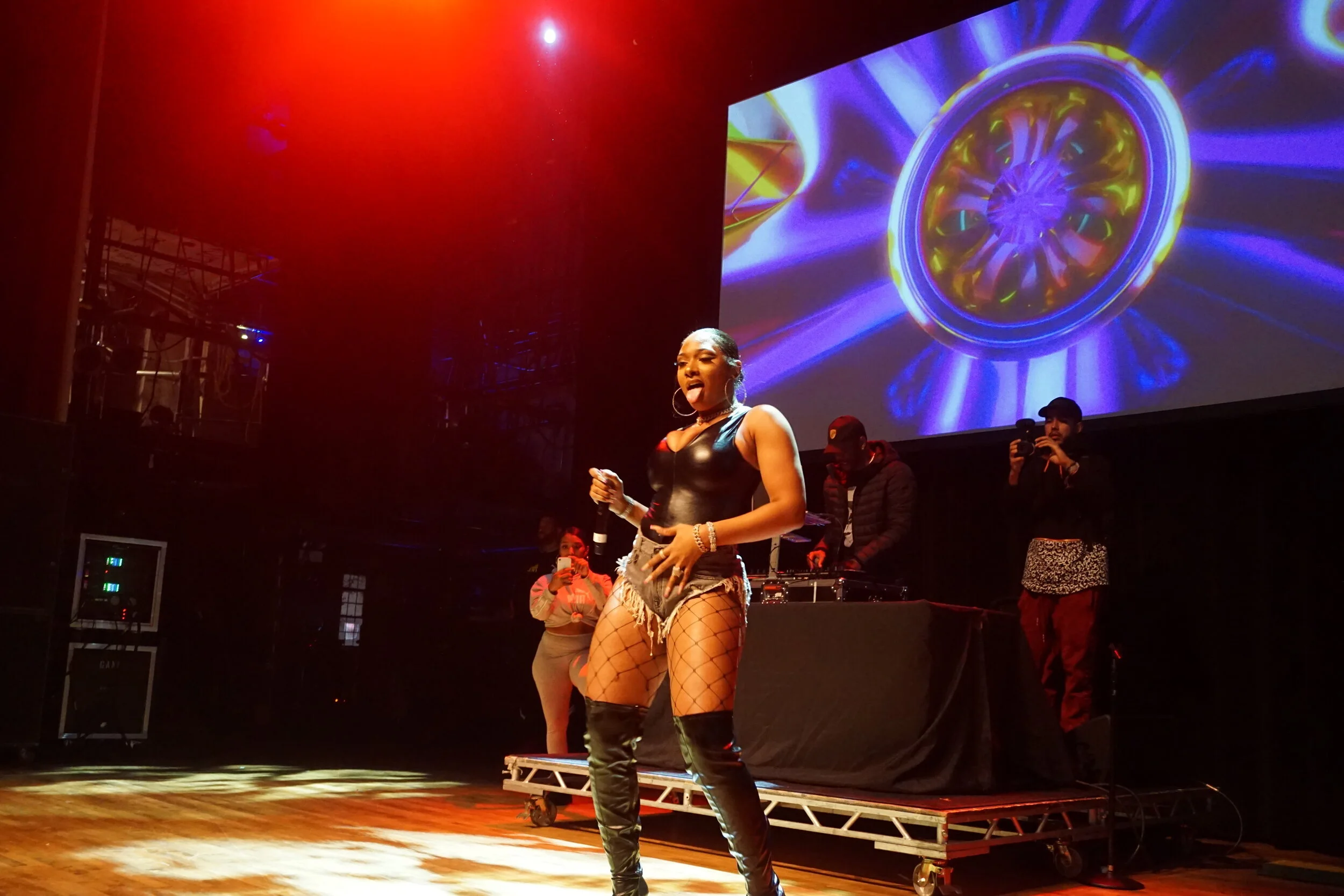
What is poetry even? Megan Thee Stallion has a breathtaking answer: Educational equity, feminist sex, and calling out the haters are all an everyday purpose for the hotshot. I listen to her during high energy unapologetic hours. Each time, she transcends musical norms and tropes with clarity and purpose, fiery passion fuelling her lyrics. She’s been able to ride the waves of fame with her larger than life personality and determination. UChicago lucked out by booking her before Hot Girl Summer was released, and now campus is forever blessed by seeing her in person last winter. She brought more color and better twerking to Reynolds Club than anytime else in its history, as demonstrated by its gallery of old white male presidents. 

Louise Gluck is blinding on exposure. One of my personal thought leaders (sounds religious even though it’s not? eh good poetry is that level) and greatest American poets alive, Gluck has achieved fame, respect, and distinction because of her cutting and clear voice. Her poems seem like they are separate from modern problems and outside of time and space as one critic put it, but of course the language is a curtain hiding her profundity. Gluck is accurate, in my head appearing as a longbow archer clad in white, using the tools she has to always nail the heart and essence of things. She unlocks part of your understanding of yourself, of your world, and of the order of society. It answers deep questions like poetry can. 

Ocean Vuong is my superstar. He came from humble writing beginnings but now is the most fearless, most genuine, and most sensitive person who brings his full feminine and Vietnamese self into his work. One of the defining poets in coming out of the rich Asian American diasporas, we have only his authenticity, intelligence, wit, talent, and persistence to thank for the luminous, enthralling masterpieces and kind mentorship he extends to a nation. The quality of his work is certainly the best you see around. I read Ocean Vuong for beauty, for inspiration, for a gentle hand to lead me into a home, a war, an education, a life of failure and extreme success. If there was one person I would have people read in a period of heightened racism against Asian Americans, it would be Ocean Vuong. At a school that worships the written word, Ocean creates our gospel.  

Suggestions: Trevor, Aubade of Burning City

At an open event with the School of the Art institute of Chicago in October Vuong was at his kindest and most introspective. Write, he told us, most of whom were under difficult circumstances. I took away one lesson. Write for happiness, for joy, for your best selves, for creation, for radical self care, for stoppering the dark spiral, to let things go, to push your comfort further, and pursue your happiness. Write to care for others and yourself. Write because you need every advantage to thrive. Writing is like breathing, to amend Scout Finch. In a year where it’s been extraordinarily hard to breathe well for multiple reasons, it’s best to take as many deep breaths as you can.

Featured image via Andrew Chang