sample(d) I: Moon Men pt. 1

“The reader is the space on which all the quotations that make up a writing are inscribed without any of them being lost; a text's unity lies not in its origin but in its destination.” 

-Roland Barthes, The Death of the Author 


The beauty of music — to me — is within the lyrics. But would this mean that the magic of songs lie within the songwriter? I’d beg to differ. The true power of a song — of a chorus or a bridge or a hook— lies within the listener. More specifically, how listeners can actively take apart lyrics and interlace a chorus, a hook, or a bridge into a tapestry of their own creation. It is the way a listener weaves their own lived experiences, imagination, and imagery to songs that make it last; make it mean something. This poem-based series is my way of exemplifying how magical songs are to me. 

I’d like to invite you to bask in the magic too… 


Sample(d) I: Moon Men
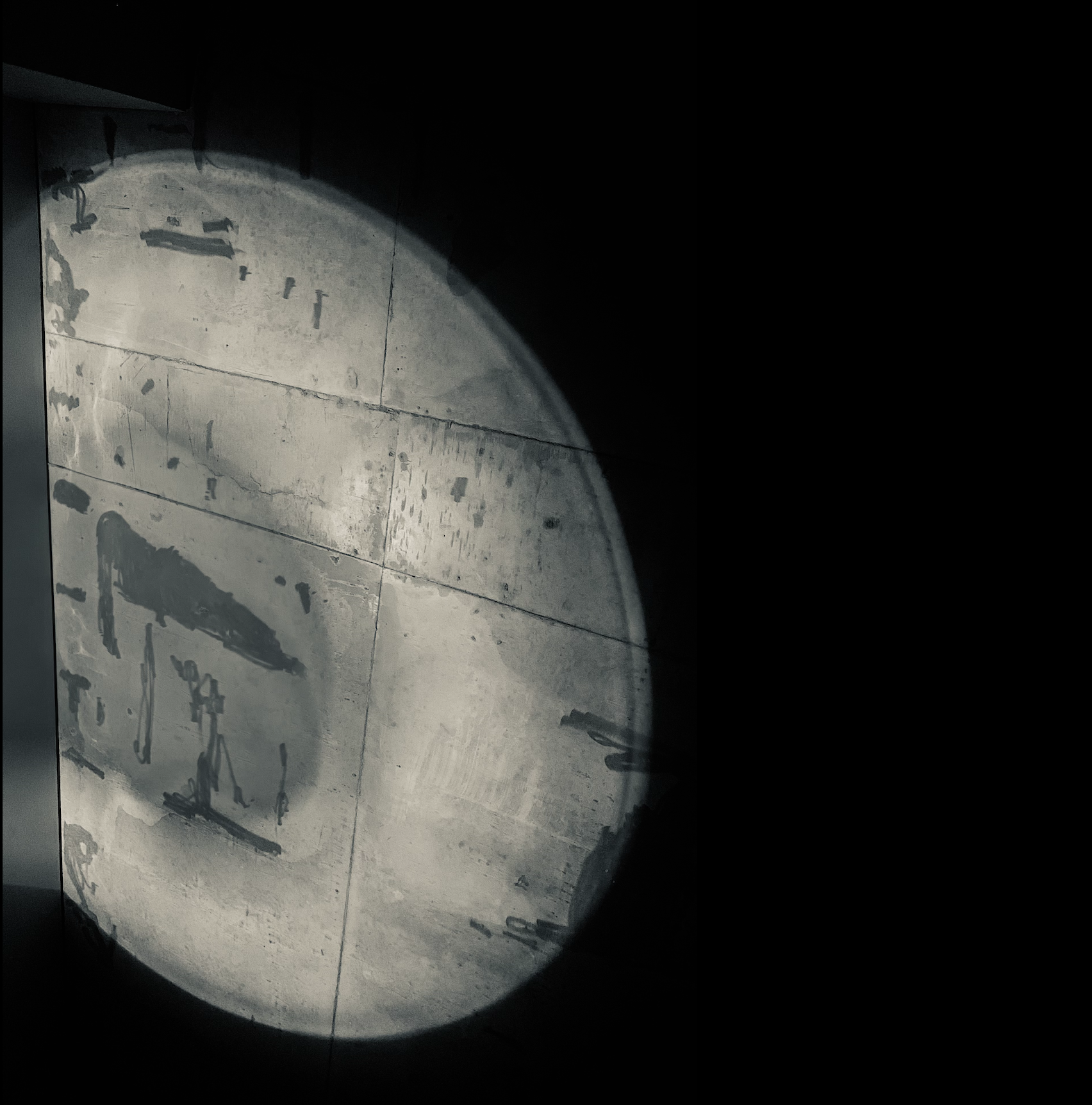
“two drifters off to see the world”


In this first installment, I “sample” a myriad of artists but primarily the various artists that have covered the iconic song “moon river” (popularized by Audrey Hepburn’s version in “Breakfast at Tiffany’s).

moon river

from breakfast at tiffany’s and beyond

Moon river, wider than a mile

I'm crossing you in style someday

Oh, dream maker

You heartbreaker

Wherever you're going I'm going your way

Two drifters off to see the world

There's such a lot of world to see

We're after the same rainbow's end

Waiting round the bend

My huckleberry friend

Moon river and me” 

-Performed by Audrey Hepburn, and Frank Sinatra, and Frank Ocean… 

… my turn-ish


moon landing

A love on a lie

is a castle on a glass cloud 

but not this love 

for it is different 

As if here on worn-in sheets under dim motel lighting

On a cross-bred cocaine high  

Nothing else matters 


And as your body curves into mine 

you confess, “this love is made of something out of this world”                                                         

— something I already know

… 

Let the crashing comets collide against the earth

Let it catapult me into the clouds

   into space 

So far from earth

So far from matter

Where I can lay in moon dust

with you forever

Where I can lay here in moon dust 

with you forever

A future with you

is a future worth dreaming of

A love on a lie

is a love good enough

for me

… 

And as the stars in your eyes dim into a deep sleep 

I’m mesmerized that somehow I’ve landed you 

and

I solemnly swear 

a secret

“I promise you 

I’ll stay here forever

and whatever comes after 

doesn’t matter”


Check out part 2 to this series debut…

ThisIsNotSpam: Exploring Collaging and its History


To: You

Cc: MODA

Subject: Collaging


Dear readers,

Today, we are going to explore collaging, the art style that has consumed me for the past few months. I could talk about the pieces that inspire me and spark interest for days, but for now, I’ll just give you an elaborate gist (is that an oxymoron?) in hopes that you can at least gather some useful information. This can be anything from inspiration for creating, as collaging encourages me to do, or just the ability to become more observant when viewing art.

I never paid any attention to collaging myself until the beginning of last quarter when a good friend of mine made me two collages for my birthday. This led me down a whimsical rabbit hole that irked me learn more, and lucky enough when I saw that a collage class was offered last quarter I enrolled, no questions asked. So, this article right here is a giant soup, combining what I learned in class with my own research.

You may be wondering what exactly collaging is considered and how we can define it. Well, collaging includes but is not limited to: cutting and pasting, editing, quoting, sampling, mixing, and pretty much any sort of combining, which doesn’t need to be physical— my answer: what isn’t collaging?

Pablo Picasso, Le joueur de guitarre (Guitar player), 1910

Pablo Picasso, Le joueur de guitarre (Guitar player), 1910

Collaging began as a subcategory of cubism, mainly influenced by Pablo Picasso (note: this has been my fun fact this week!) Through art, he combined and disassembled day-to-day, recognizable figures into ways that would play with how our eyes make out images. In so many pieces, we see his obsession with the figure of a guitar and how he carefully selects slivers of its parts to paint, all interacting with each other in unique and confusing ways. For instance, Pablo Picasso’s Guitar Player, as seen below, re-figures a guitar in a way that would be considered ambitious since you can barely even tell there is a guitar there. A sneaking suspicion that an instrument is visible builds up with clues like the color of the painting, the title, and some curves here and there, which gives us a sense of the guitar’s presence. 

In the early 1900s, strange arrangements of figures in paintings become popular. They are similar to collating but exist in a single medium, completely flat. It’s as if a smashed guitar was recreated in strokes of oil paint. It’s a method that shifted surrealism into a multi-media genre, and although it’s only slightly dipping its toes into the sea that is collaging, these skills being developed by venturing artists were essential for this category of art.

Picasso was already extremely comfortable with the art of masquerading, of transforming. It was around 1912 that he began adding texture to these pieces, slowly but surely incorporating items like wooden pieces that added texture to painted guitars, music sheets peeking through the background of otherwise flat paintings, and the usage of wallpaper instead of solely relying on painted base layers. Soon he would inspire other artists to enrich the surface of the canvas using three-dimensional elements.

It was the group of artists known as the Futurists, who were most active between 1909 and 1918, that stepped into the next level of uniting materials. They began collaging entire pages rather than considering pasted elements minor parts of their creations.

My favorite example is Carlo Carrá’s Interventionist demonstration, which is composed of phrases and radical ideas relating to civilians’ perspective of World War I. He used cutouts from newspapers and magazines, enclosing them all in a looping spiral: a mind churning and slightly haunting arrangement.

This led right into the Dadaist movement during the early 1930s, which was made up of artists who specifically wanted to target media’s effect on society. They thought that the images presented to the public were toxic to our behavior of constantly participating in capitalist movements. Creators like Hannah Höch, Hugo Ball, John Heartfield, and Tristan Tzara wanted to go against some generally accepted ideas that were more effective than the bourgeois, political nonsense, and were able to alter an image’s original destination to relay strong messages. One of the most known pieces of these anti-art movements is John Heartfield’s 1932 Adolf the superman: Swallows gold and spouts junk. This piece makes fun of Adolf Hitler, showing an x-ray image of a stomach full of gold and a swastika replacing his heart.

Then came the Surrealist movement, where the obsession with the subconscious and Freudian studies led artists to wander into the crazy world of dreams. Some of these artists include Salvador Dalí, Max Ernst, and Joan Miró. Pretty much all surrealists experimented with collaging—metamorphosing body parts and objects into strange creatures, including sexual fantasies. With every year, more combining of leaflets, posters, advertisements, and media gave way to a nonsensical world of art that caused viewers to be drawn to the madness embedded within collaging.

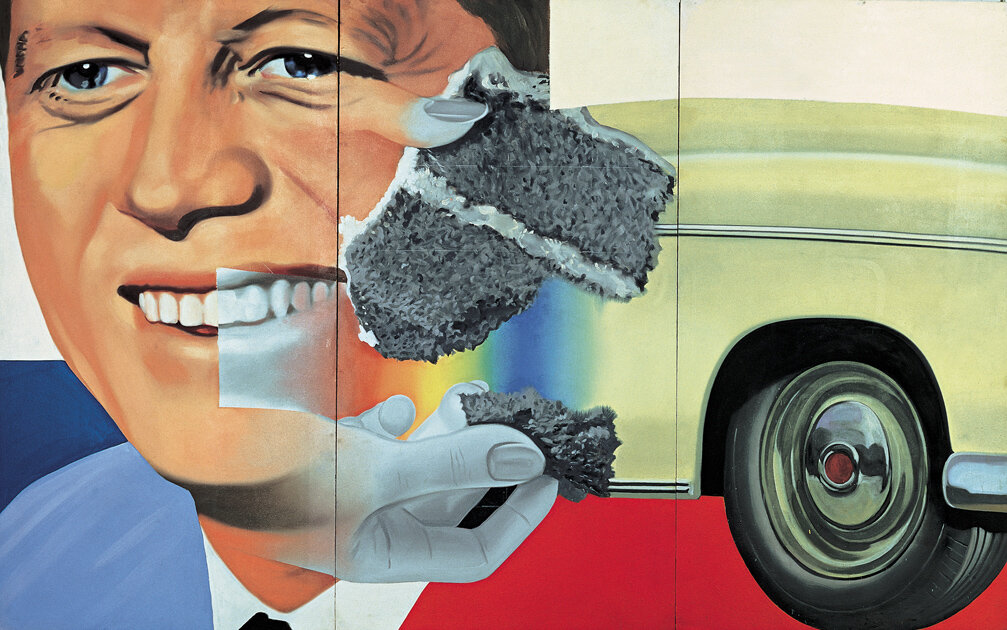
Pop Art is the movement that emerged in the mid to late 1950s, where its artists celebrated mass culture rather than revolting against it. These artists built a bridge between what was considered exclusive, professional art, and kitsch art, a push for a more inclusive system for anyone to participate in. Here, we see a jump from using somewhat identifiable images in portions of the creator’s work to famous icons and brands taking over entire pieces. In James Rosenquist’s work, the 35th president of the United States is depicted in an oil painting. Cinema, advertisement, newspaper, television, and comics were frequently reintegrated into creative projects.

Since media itself was utilized to be fed back into its creation, Pop Art was huge for emerging artists who demonstrated their ability to reinvent common images in refreshing ways, ways that popped. Jean-Michel Basquiat and Andy Warhol were extremely talented creators who played with collaging’s mediums and helped drive the next wave of artists to create more playful masterpieces. They even collaborated before Basquiat’s death, managing to push numerous boundaries in a short period of time and making people question what art is “supposed to look like” and who can make it—questions we continue to ask today.

Today it’s hard to distinguish between collaging that is purely for aesthetic value and art that communicates a message, especially since we have access to an infinite number of mediums and materials to combine together. Collage’s development continues to define political movements, as it is an ever-expanding genre that uses current events to relay an artistic vision. For viewers, this is a unique experience that can’t be found among other one-dimensional creations. This is precisely what fascinates me about collaging, and I hope it inspires you to continue to delve deep into the art you are passionate about. 

Best,

Nicole


Thumbnail image via

 
Source: https://giphy.com/gifs/W6RAaegP4DoaOk4hh8

Sunday Stories 1: A Vegan Take on Japanese Soufflé Pancakes

As I finally experience a suburban lockdown (read: a full-sized, fully-equipped American kitchen), I’ve been compelled to get back to the ~~experimental cooking I used to do in high school. Sweets were always my go-to because, well, I was a sleep-deprived teenager. And while my mom is a wonderful cook, the precision required for baking causes her more stress than anything else. So, in an attempt to make the most of this time at home, I’m spending each Sunday with a brand-new (to me) recipe and review. Just for you!

souffle1.jpg

I’ve been watching a lot of Midnight Diner: Tokyo Stories on Netflix, and while I won’t be making fish-sausage American dogs (similar to corn dogs), I was thrilled to see a different Japanese, American-esque recipe on my YouTube recommended page: soufflé pancakes スフレパンケーキ! We’re easing into the Sunday stories with this recipe, as pancakes (and their many varieties) are a typical weekend morning treat for many of us.

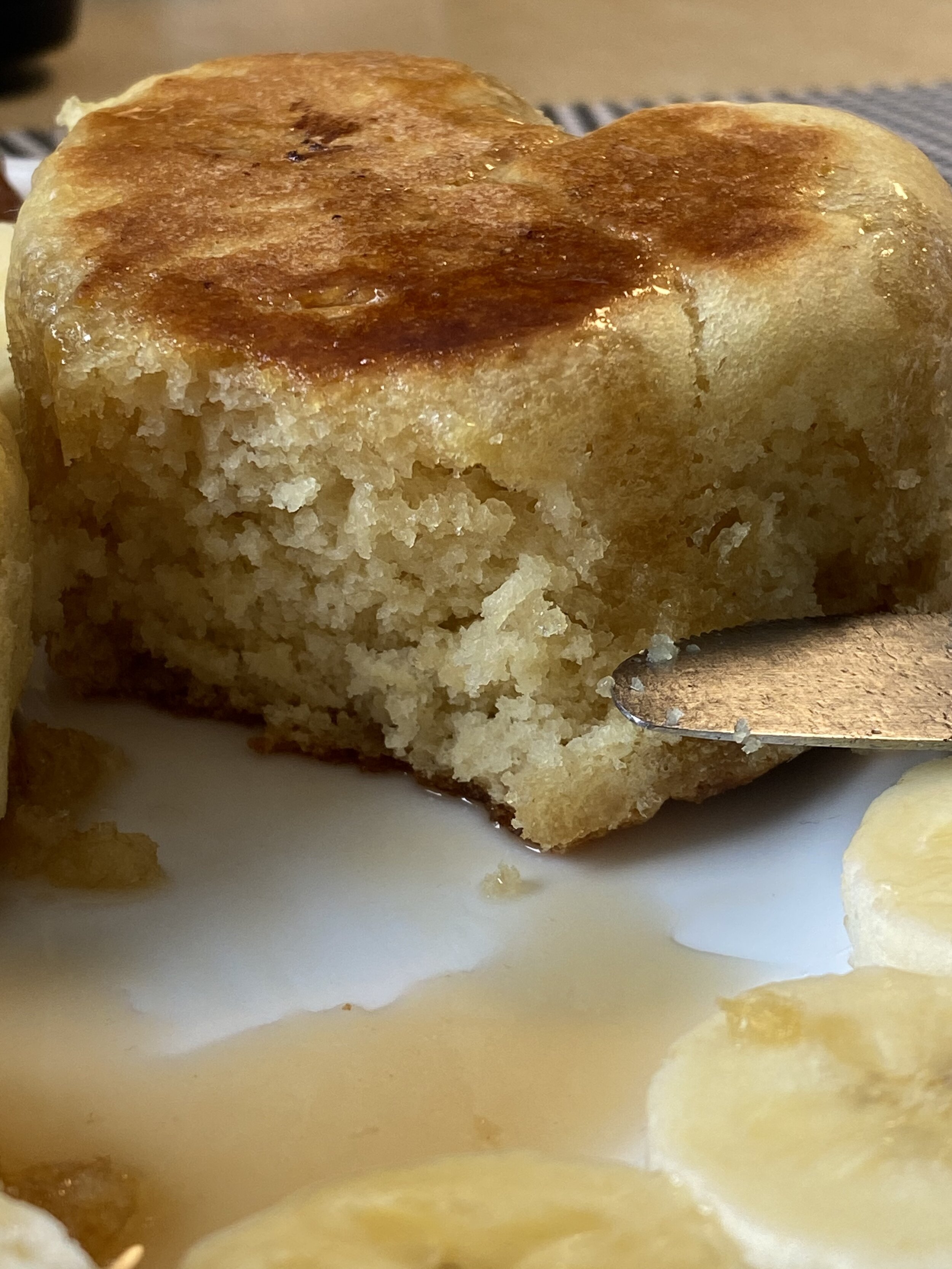
This Sunday (January 17th, 2020) was the perfect morning for this recipe as snow covered the Chicagoland area overnight, leaving me with no choice but to stay inside and indulge. The classic version of this recipe involves the whipping of a few egg whites (and yolks, separately), which are what make the actual soufflé. Of course, the vegan recipe doesn’t involve any eggs which makes for a different, cakier, but still fluffy texture. If you eat eggs, the classic recipe is definitely the one you should go for for the sake of authenticity. But I’d recommend the vegan recipe when you want to make these on a whim—they’re easier to make and so so tasty. This vegan recipe from Okonomi Kitchen seems to get even closer to the original, with the addition of pastry flour and potato starch.

This vegan souffle pancake recipe is inspired by the popular Japanese Souffle Pancakes which are super fluffy and thick. This version is egg-free, dairy-free...

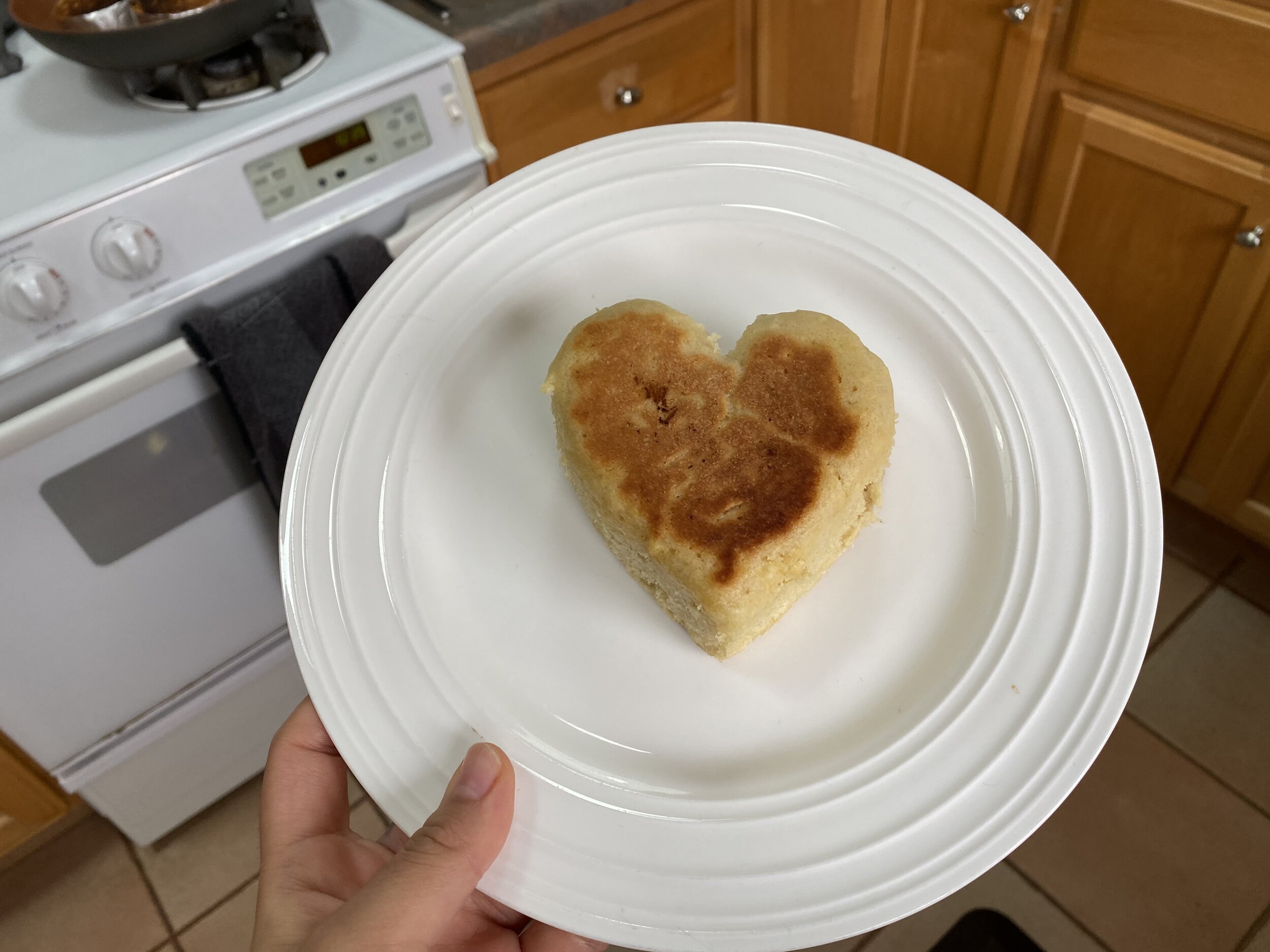
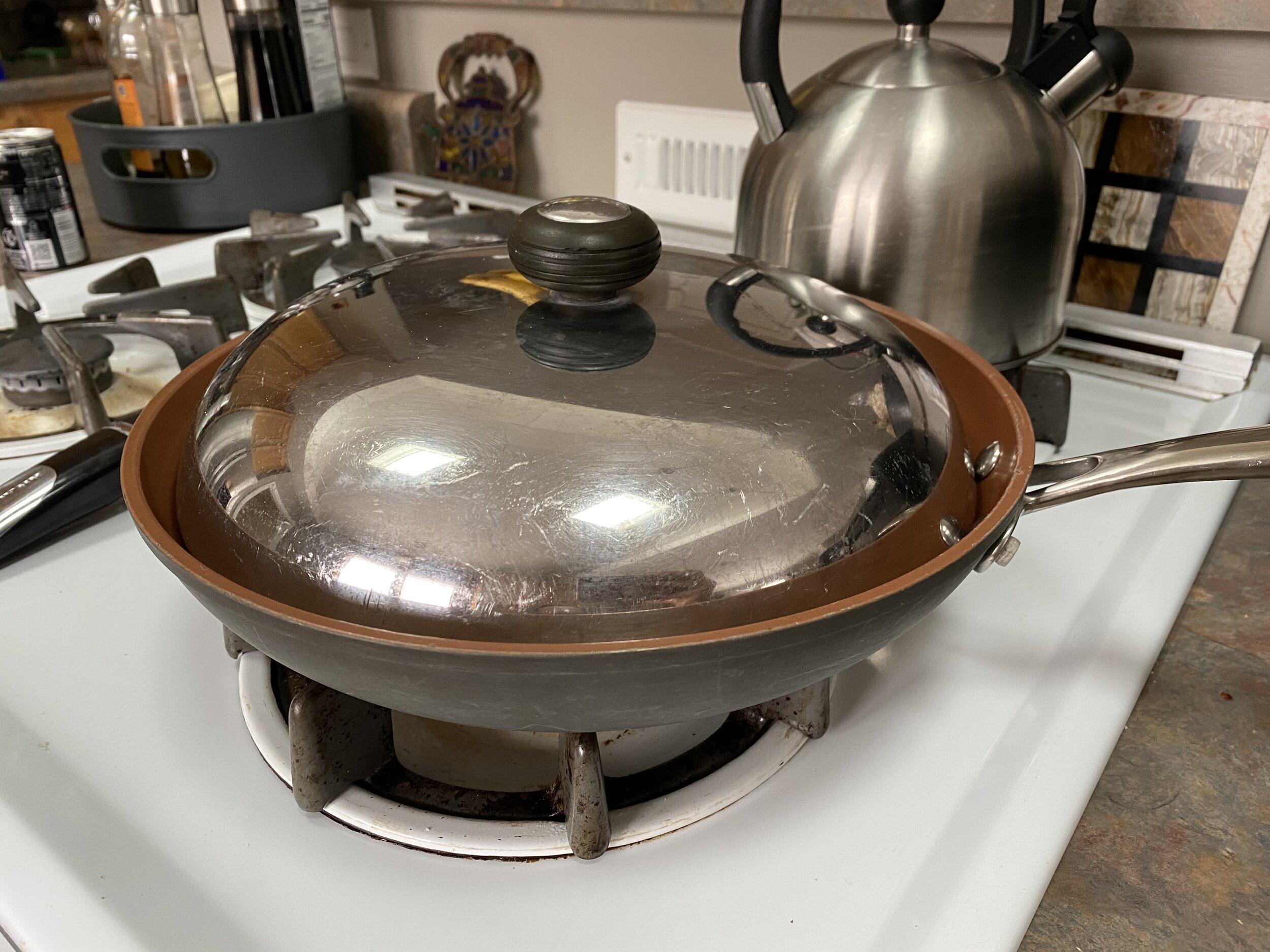
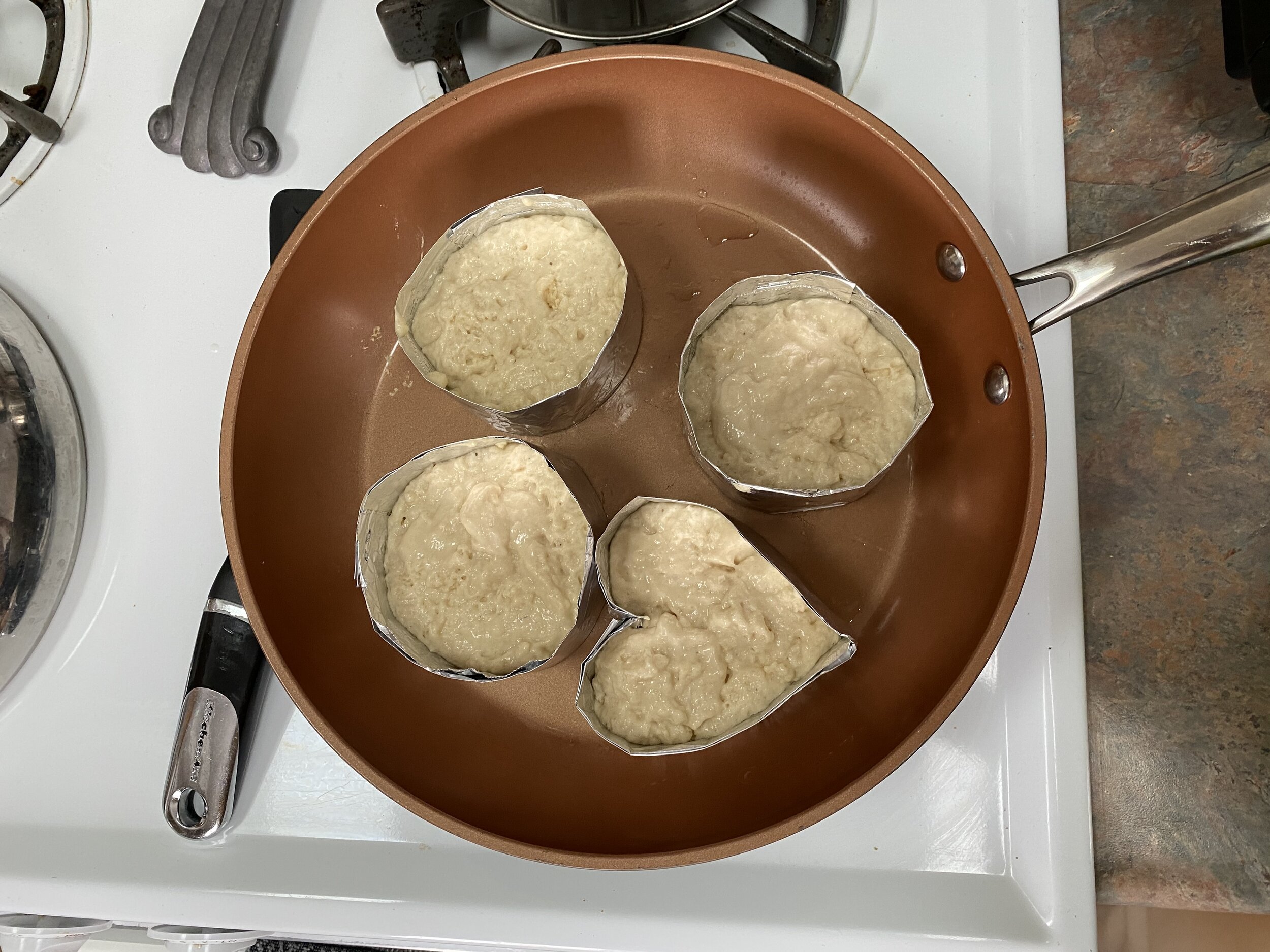
Mary will explain much better than I can, but I really liked making the molds for these (it took aluminum foil, a stapler, and two minutes!) and even got ~~crafty~~ by turning one into a heart shape. If that’s not your thing, the molds are optional and you can just pile the batter (which looks like biscuit dough to me!) onto the pan. This might even make them look more like the traditional, non-vegan pancakes. You essentially “bake” them on the stove, flip once, and you’re done!

What’s nice is that the only “weird” ingredient you need is apple cider vinegar, which can be replaced for lemon juice and (I think…) any other vinegar you have in your pantry. That, mixed with the baking powder and baking soda is what gives these, and any other vegan cake, their extreme fluffiness—in lieu of eggs.

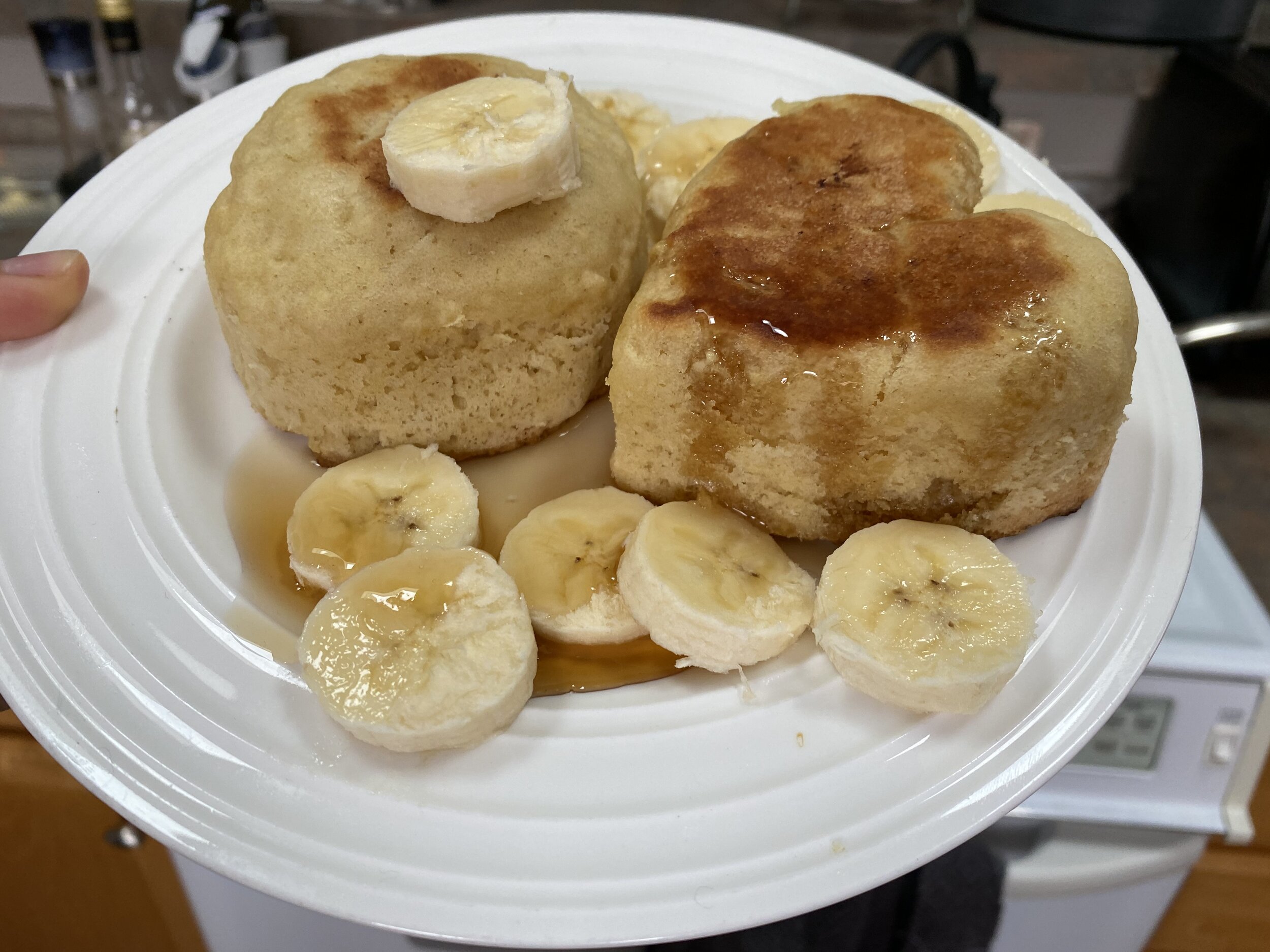
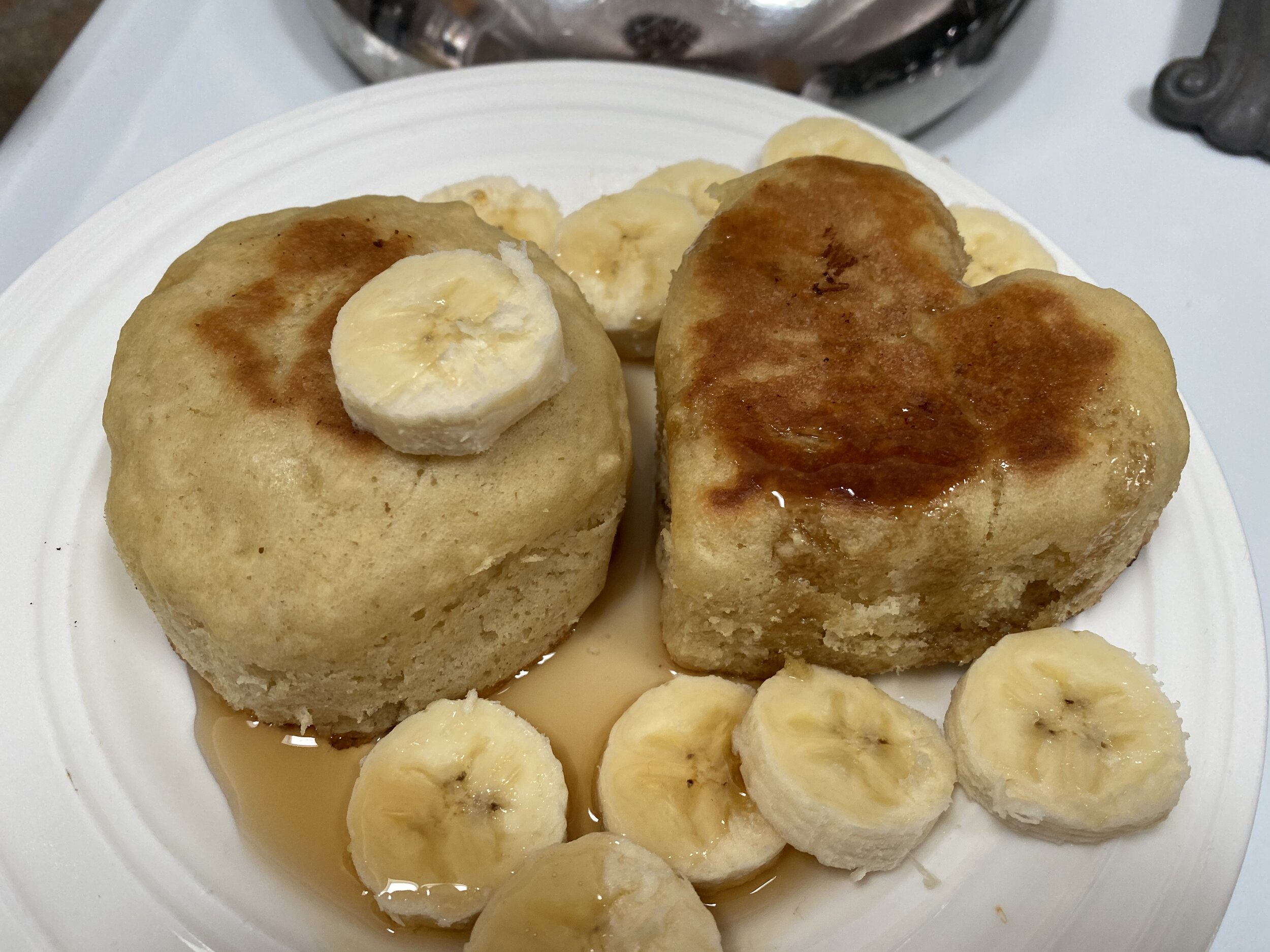
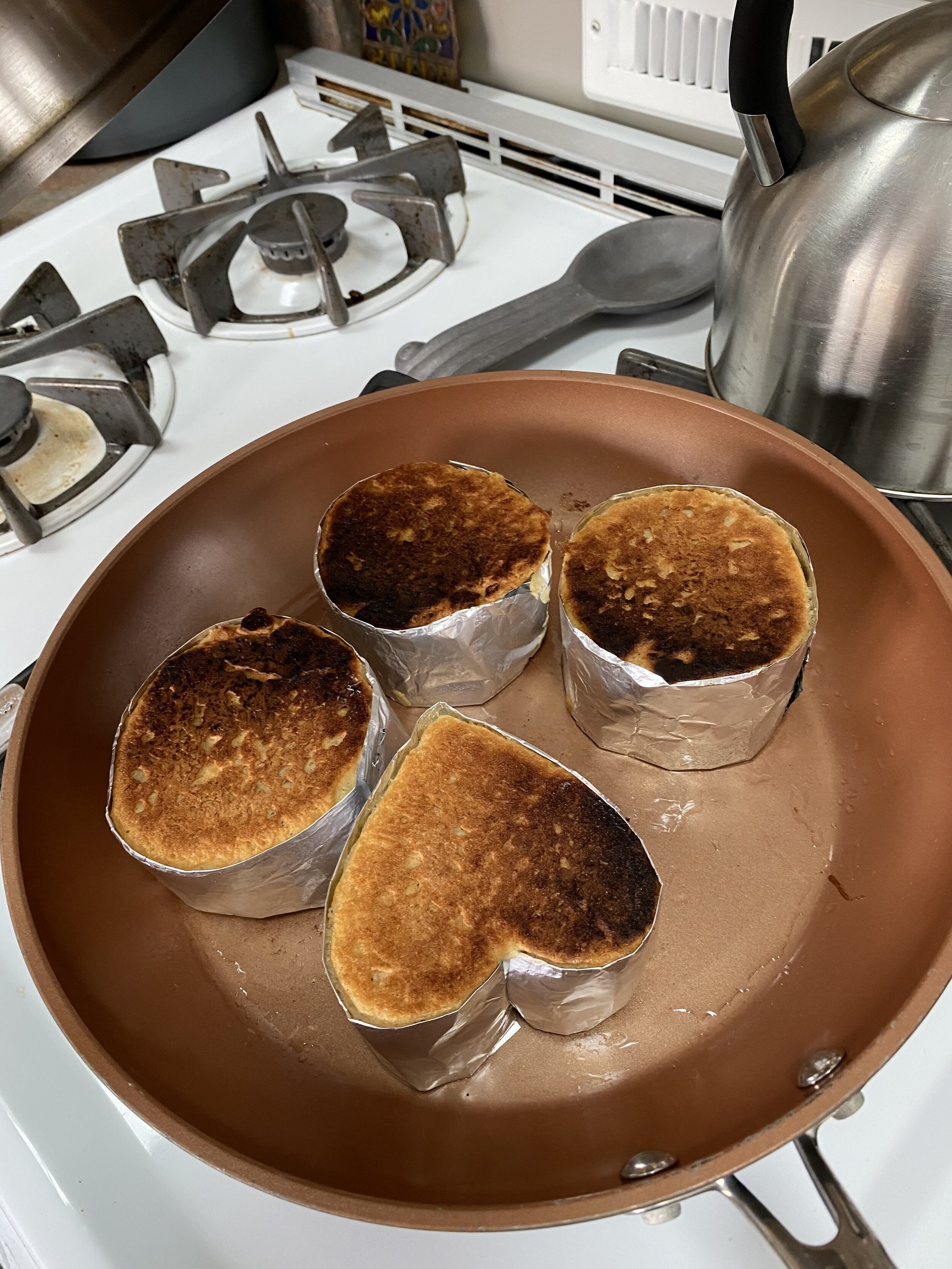
This little carousel shows the process, the texture, and the heart-shaped cake of which I’m especially proud. I made the bottoms a tad bit too crispy, but they tasted great to me (and my parents). We had them with maple syrup, bananas, berries, and a bit of crème de marrons. Make these the next time you want an extra special breakfast (or dessert). Till next time!

Images via Mary’s Test Kitchen, Okonomi Kitchen, and the author.