Fernweh~5: Bulgaria

fernweh

/ˈfɛʁnveː/

farsickness or longing for far-off places

In this entry of Fernweh, we are going to explore the Bulgarian culture. As I have lived, and am currently living, in a geographical place pretty close to Bulgaria, I can count the many instances I was lucky enough to experience the Balkan traditions. In this region, the folk tales are still narrated by the elders to the next generations in crowded family dinners as if they happened--or fantasized to have happened--in the recent past, and the traditional clothes are worn not because they belong to history but because they are a part of daily life.

The traditions are so integrated into the present that when I was visiting Macedonia for the Balkan Youth Folk Dances Festival--yes, that is a thing here-- dancers like me wore traditional garments because they were a part of the required getup, but most surprisingly, some of the audience members also wore other traditional outfits.

Last quarter in my humanities class (reading cultures, if you are wondering), when a friend of mine from the Balkans made a presentation about the importance of a traditional shirt transferred from generation to generation in his family, once again, I was filled with admiration. So, what’s so different about this entry of the series is that the culture I will discuss is not preserved like amber within the modern designs, but it continues to breathe life every day.

Image via

Image via

Traditional Clothing

Many civilizations left their traces in the Bulgarian culture throughout history, including, but not limited to, Ancient Greeks, Romans, Slavs, and Turks. These interactions resulted in different ethnic articles of clothing that are spread across the borders of Bulgaria. It is not unlikely to see a diverse spectrum of ethnic costumes with lots of common-ground elements. That also represents how the Bulgarian territory is a host to many different communities. The traditional garments, narodna nosia/nosija, therefore are an expression of the identities of these communities.

Image via

Image via

The traditional clothes were hand-made by the Bulgarian females in the villages up until the beginning of the twentieth century. Learning to embroider was an essential skill, as the motifs in the costumes were used to identify the region and the village. The motifs were heavily influenced by the Pagan beliefs, such as bad luck of symmetrical shapes. Therefore, most of the costumes included intentional removals of symbols and cuts on the fabric. Each costume with its own design conveyed a message or a pleasant wish from the costume's embroiderer to the owner or a bystander. 

Female costumes consisted of dresses and aprons. The number of aprons in a female costume was an indicator of the region of the maker. Also, different head garments and accessories were designed in consideration of the family and the village. Moreover, on top of the costume, women wore an overcoat called saya. Most of the identification of the embroidery was understood by looking at this part of the costume. 

Image via

Image via

Male costumes consisted of pants, shirts, and vests. The differences between male outfits were due to the color of the upper coat. As the male costumes were much simpler than the female ones, the garments' shades varied between black and white, each indicating a different region of Bulgaria. 

Present Day

As I mentioned earlier, the traditional costumes of Bulgaria are still in-use by the current Bulgarians. During Festivals, other important dates, family events, and more, it is possible to encounter people who wear their ethnic outfits. 

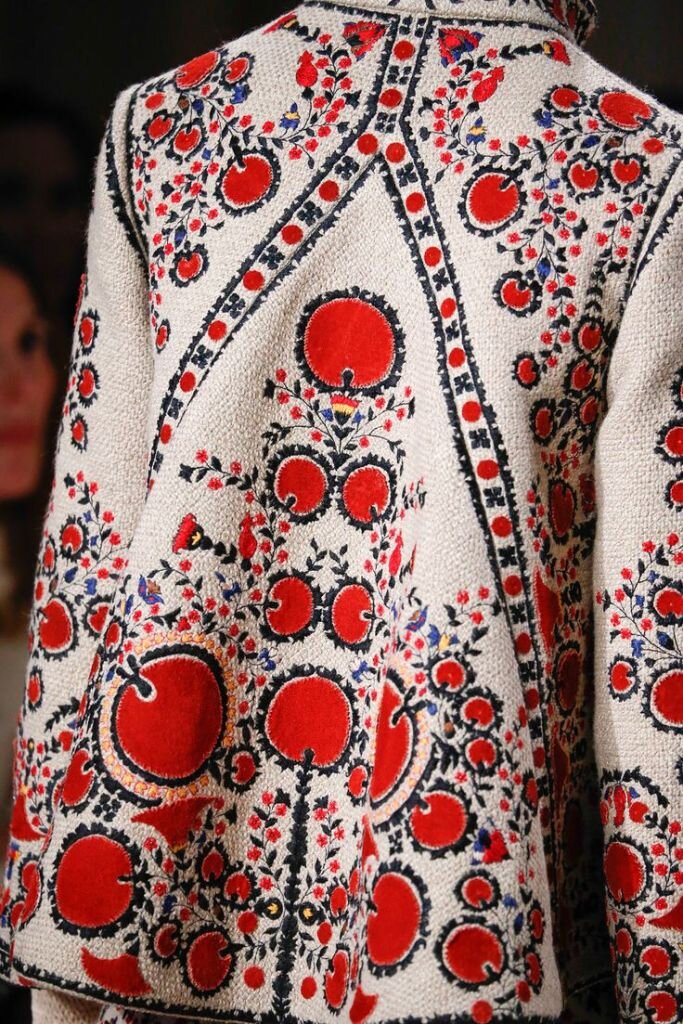
However, one thing that is worth mentioning is that the traditional motifs of the Bulgarian costumes are in great demand by the fashion industry. Even though there are not many well-known Bulgarian fashion brands, Valentino’s 2015 collection displays the influential power of Bulgarian traditional styles on current fashion trends. 


Thumbnail image via 

Fernweh~3: South Korea

fernweh

/ˈfɛʁnveː/

farsickness or longing for far-off places

Welcome to the third destination, fernweh travelers! During today's visit, South Korea will be greeting us. Notwithstanding South Korea’s high esteem in today’s entertainment industry (K-Pop Army!), it was my special interest in East Asia, South Korea in particular, that made me search through the pages of history to find out how and from where did its fashion culture arise. To someone who is an enthusiast of preserved aesthetics like me, East Asian cultures present a very close-knit community of arts and crafts that is pricelessly valuable. Either due to their history, which enabled them to intertwine with the rest of the world, or due to their highly characteristic cultural elements and essence (probably from an orientalist perspective), or most likely due to both, the far Eastern cultures appear to present a more sheltered memory as a reflection of their ancestry. No matter what, modern Eastern Asian people glorify all the elements that make up their cultural whole and sow their present from the strands of the past. South Korea is no exception.

Joseon Era

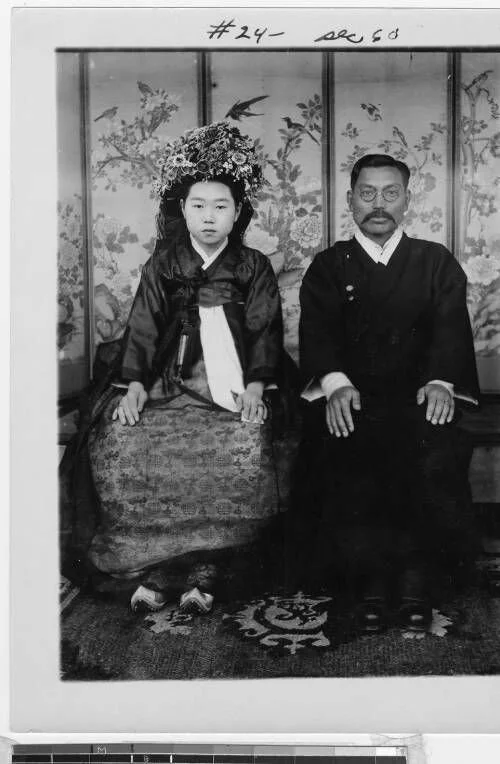
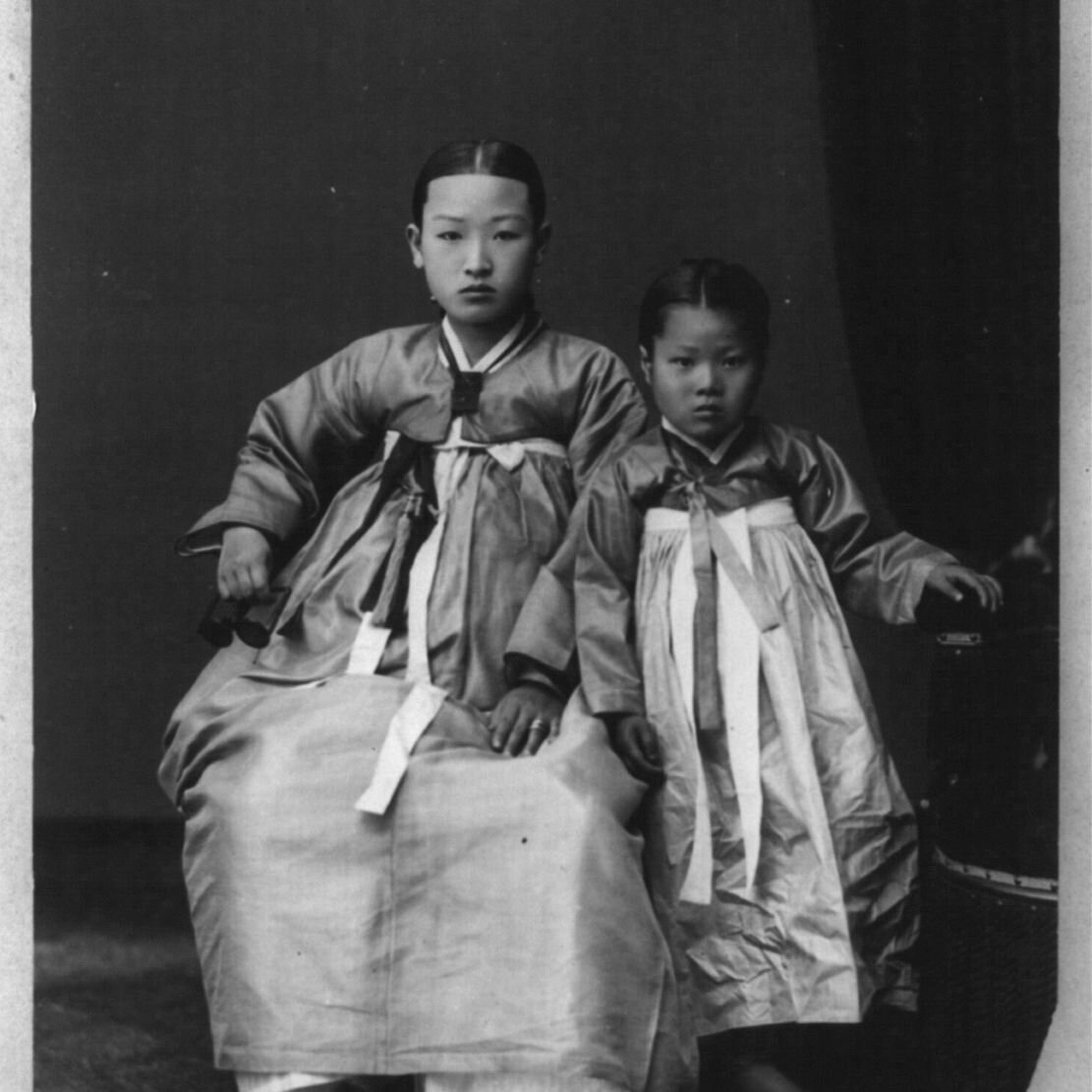
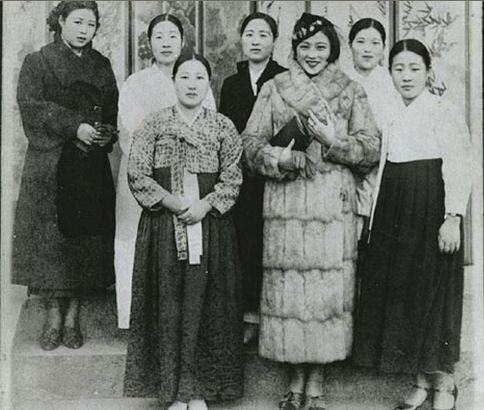
As you may have understood from the previous entries, the question of “what did happen at that time of history?” is of great significance in our mission to keep track of why change is a constant in a culture’s order. Very similar to Japan, or more precisely from Japan’s exact opposite perspective, Korea’s fashion (before the North and South split) shifted according to their recurrent political and economic fluctuations. The first memorable element of Korea’s fashion history was the Joseon Hanbok, a loose combination of a top and a bottom worn during the Joseon period. It consisted of a jeongi, the top, and chima, the skirt, for females, and a jeongi and a baji, the pants, for males. The tradition of wearing a Hanbok extended its limit beyond Joseon’s roughly 505 years (from 1392 to 1897), but in between the period of 1875 and 1910, the garments, the accompanying hair and makeup, and the rest of this “luxury” look (which was an ideal dream, not a luxury; more like a way of expression, but let’s keep that talk for another blog) was toned down due to Japan’s political constraints and the West. The colors of hanbok went from vivid to dull; the hairstyles kept clean and simple.

Japanese Effect

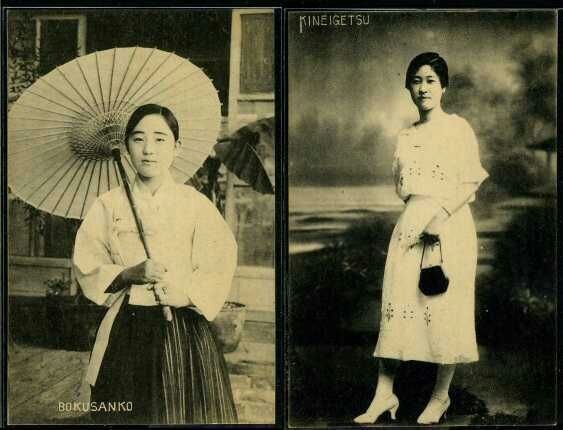
In between the years 1910 and 1945, the Japanese colonial government banned the Hanbok, reasoning that it influenced and encouraged Koreans to be proud of their culture, which was apparently what they wanted to minimize at the time. The Korean people started to adopt a more Japanese style, which was influenced by the Western culture at the time, as you may recall from the Japan fernweh. People began wearing suits, hats, dresses that resembled the ones worn by Americans and Europeans. In the years following the Second World War, poverty struck the Korean culture again. Due to production limitations, the fabrics used were the simplest and cheapest; accessories and makeup were as light as possible.

Korean War

During the Korean War, people could barely survive. Yet, among all the poverty and distress, a lack of Japan’s direct oppression meant people could wear the Hanbok again. Because men mostly wore their military clothes, women adopted the garment back into Korean society.

1950s - 2000s

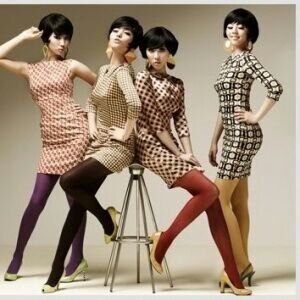
The 1950s gifted the newly formed South Korea Nora Noh, the founder of the country’s fashion scene and its first clothing brand. Influenced by the fashion schools and methods brought in by Americans, Nora Noh held South Korea’s first fashion show. Whatever they wore in Myeongdong, Seoul’s chic shopping district, became popular on the rest of the country’s cosmopolitan streets (probably miniskirts and high heels in the 50s). Then came the colorful hippie aesthetic of the 60s and the 70s. South Korean teens wore their clothing as a resistance to the time's conservative government. Until the 90s came and hip-hop culture took center stage. And that led to the rise of the South Korean (Hallyu) Wave of the 2000s and 2010s.

Image via
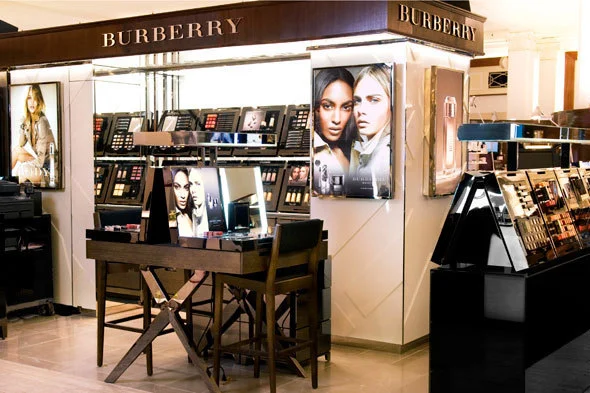
Image via
Modern Times

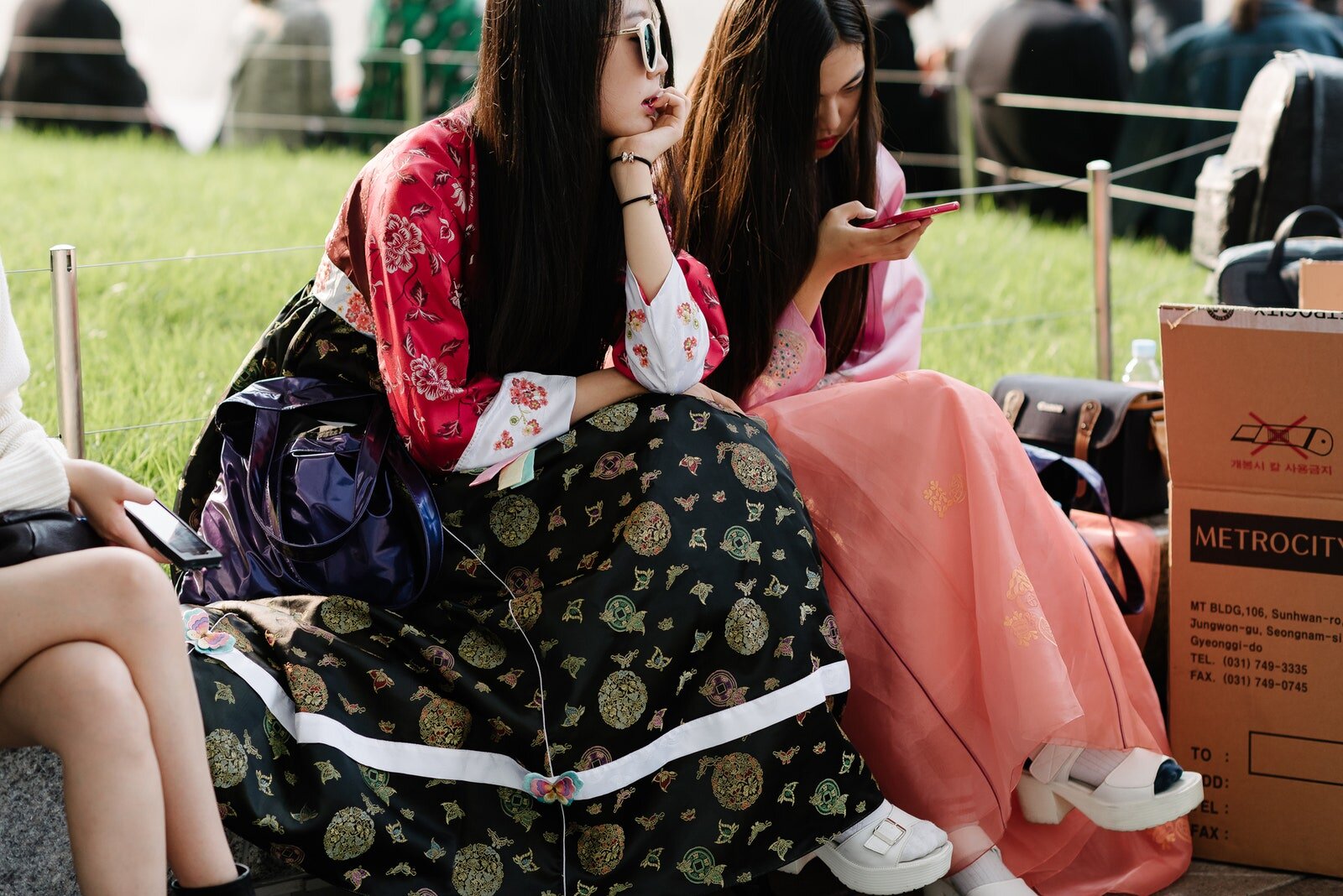
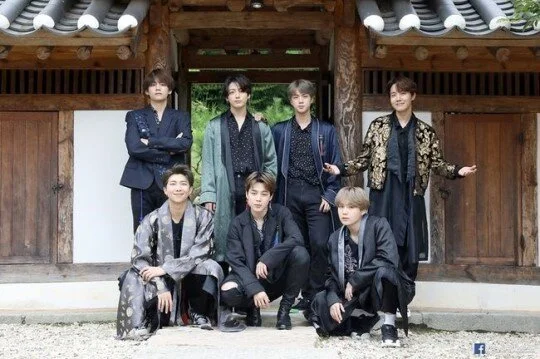
Currently, designers like Andre Kim and Kim Mi Hee are known to the world. These names keep influencing South Korea’s modern fashion and fortunately have preserved the history of Hanbok, which was once under the thread of non-existence. South Korean musicians and actors that are highly popular showcase their support for South Korean brands by consistently using and advertising them. Due to all these investments, the fashion industry was even included in Seoul's 2020 travel video. As it can be seen, the threats South Korean culture had to endure somehow concluded in a fashion culture that is rich and inclusive. Now, more than ever, the South Korean industry encompasses a diversity of sectors at the forefront of innovation: from fashion, to movies, to music, to technology… 

How Fashion is Shortchanging Global Garment Supply Chains During Covid-19

Covid-19 has obviously presented the world with challenges like never before. As industries, schools, businesses, and communities adapt to life during the pandemic, they prove to be a source of innovative ideas when it comes to coping with working remotely. Too often the news coverage we see is either focused on the crisis itself or the positive news of large brands making long-demanded changes to their company practices. The flip side of shiny rebranding initiatives, however, is the impact on the unprotected workers in the very bottom of global supply chains. 

I’m willing to bet that throughout your own social distancing experience you have noticed the sudden uptick in retailer’s large scale sales up to nearly 70% off. This is no coincidence. In a time when the demand for new clothing is relatively low, companies are having an increasingly difficult time to meet their predicted number of garment sales. The unprecedented combination of employment uncertainty and lack of places to physically go to during the pandemic has resulted in reduced clothing purchases. 

Multi-billion dollar corporations and global luxury fashion retailers can absorb many of these losses in sales, but many fast fashion brands that rely on a massive supply of inexpensive garments are lessening the strain on their companies at the expense of some of the most vulnerable people around the world. 

Garment workers in Bangladesh via

Garment workers in Bangladesh via

A research paper written by Dr Mark Anner published by the Center for Global Worker’s Rights found that more than half of clothing suppliers in Bangladesh had their orders canceled, many of which were already completed or in-process. Of those canceled orders, approximately 72% of buyer corporations refused to pay for the materials that were purchased in advance for these orders. Over 91% of buyers refused to pay for the production cost of these goods. Why is this so impactful? Let’s break it down. 

The global garment production industry food chain is composed of you (the consumer), the fashion retailer (store or brand you purchase clothing from), the garment supplier (factory), the raw materials supplier, and the factory workers. There are obviously other jobs and services involved in this process, such as shipping, marketing, etc, but for simplicity's sake we will use this rough schematic of how your clothing ends up in your closet. When clothing brands design a specific article of clothing, they send an order to their garment suppliers (factories), indicating the materials to be used, the amount of the particular item to be made, and the compensation for the materials and labor necessary to create the garment. The critical thing to understand in this process is that most companies pay for the goods only after they have been received. That is, factories must pay upfront for the raw materials necessary to create the clothing and get compensated for the expense only after the goods have been shipped to and received by the retailer. The factory must also pay its workers for their labor in creating the clothing you wear. The compensation for this is also settled after the clothing has been made and delivered. 

Via

At the beginning of the Covid-19 pandemic, Chinese factories were put under strain. As many cities and provinces in China shut down to prevent the spread of Covid, production lines were interrupted, causing the delay of raw materials delivery to other factories responsible for garment production. The disruption of the supply chain caused subsequent delays in garment production in places like Bangladesh and Cambodia. This disruption in the supply chain can be penalized by the buyer (fashion retailer or brand). In fact, over 50% of factories in Bangladesh reported that the buyer took a fine out of their payment for the delays caused in producing the goods. Furthermore, the majority of factories reported that the cost of raw materials during this time increased. At the same time, nearly 92% of factories reported that their buyer has not adjusted their payments in accordance with the increase in price of raw materials. In effect, garment suppliers are paying the extra cost of raw materials and are forced to pay for a fine due to the delay in production while the international fashion retailer refuses to cover the additional expenses incurred...in the middle of a pandemic. 

Via: https://www.workersrights.org/research-report/abandoned-the-impact-of-covid-19-on-workers-and-businesses-at-the-bottom-of-global-garment-supply-chains/

Via: https://www.workersrights.org/research-report/abandoned-the-impact-of-covid-19-on-workers-and-businesses-at-the-bottom-of-global-garment-supply-chains/

If that doesn’t sound harrowing enough, I’m sorry to say that it gets worse. As the economic impact of the pandemic began to set in, buyers began to cancel their orders, including those already in production. To put it in perspective, Bloomberg estimates that the cancellations of orders were worth over $1.5 billion by April alone. Naturally, this forced many factories to close because they often times operate on narrow margins. Having never received compensation for the raw materials or the labor involved in the manufacturing process, they subsequently are forced to put many people out of jobs and leave families without primary sources of income. This, among other actions, technically broke contractual obligations on the side of the buyer. But for many factories and their workers there were no means of recourse. 

Via: https://www.workersrights.org/research-report/abandoned-the-impact-of-covid-19-on-workers-and-businesses-at-the-bottom-of-global-garment-supply-chains/

Via: https://www.workersrights.org/research-report/abandoned-the-impact-of-covid-19-on-workers-and-businesses-at-the-bottom-of-global-garment-supply-chains/

As of October 2020, an estimated $16bn worth of goods have been unpaid for by retailers, forcing many overseas garment suppliers to permanently shut down and leaving millions of workers without compensation. The current garment supply industry heavily favors the buyer, leaving the suppliers to take on all the economic risk associated with producing clothing. Even so, many companies now are still trying to find loopholes in their contracts to avoid being responsible for their practices on both the economic and safety fronts. 


Popular fast fashion retailer ASOS has come under fire for insufficiently protecting the health of their factory workers. In factories that regularly employ approximately 4,000 people, ASOS is reported to have limited safety precautions in place and the supply of personal protective equipment is insufficient to prevent the spread of Covid-19. The company is not the only one with shady practices during Covid; as of October 1, 2020, JCPenny, Kohl’s, Walmart, Balmain, Oscar de la Renta, Anthropologie, Urban Outfitters, Topshop, and T.J. Maxx, among others, have failed to make commitments to pay for completed orders cancelled during production

While the tumultuous 2020 has caused many retailers to consider their social impact, collectively, the industry shows to be resistant to change. As Dr. Mark Anner at the Center for Global Workers Rights puts it, “All parties are feeling the extreme burden caused by Covid-19. However, not all parties are equally situated to find the liquidity needed to cover their expenses.” Specifically, it is the irresponsible and unethical practices of global retailers, fueled by the purchases of the unawares consumer, that causes damage and instability to communities the world over. The recent uptick in companies rebranding as sustainable and accountable should raise concern in consumers as company malpractice continues during Covid. It’s incredibly easy to proclaim that a company has taken a stance on racial justice or the environment, but it is a lot more difficult to follow through on those promises or to extend the same privileges to minimum wage workers overseas, who often pay the tremendous personal costs in times of crisis and remain largely unseen and uncompensated. 

For more information on tracking the accountability of major corporations, take a look at the Workers Rights Consortium’s project and Covid-19 responsibility tracker here.


Cover image via.


Brands to Watch: House of Sunny


House of Sunny first caught my eye during one of my shifts at Au Darling, a boutique in the New Orleans Metropolitan area. It was when I first saw the zebra pants from their 2019 spring/summer capsule that I first knew I had to have their clothes, but just like that when I came in for my next shift they were gone. That started my fascination with the brand that strangely produces collections only twice a year and with styles and quality I have never really seen before outside of higher end fashion.

Mid-Century Quilt Jacket from A/W ‘19 via

Mid-Century Quilt Jacket from A/W ‘19 via

The brand was founded in 2011 by Sunny Williams with a focus on sustainability, affordability, and creating year-round wardrobe staples. They are a small team of creatives with a passion for producing better fashion. The team produces two collections each year, spring/summer and winter/autumn, which gives them more time to research ethical and sustainable fabrics and materials. The collections are small, leading each collection to be limited edition and exclusive to that year.

“We pride ourselves on producing small sustainable runs of collections, acting against fast fashion.”
— House of Sunny

Just in the past week, House of Sunny has launched a pop-up shop in central London, that not only offers their customers, or as they like to call them “homies,” a chance to shop the latest drop, but also offers an interactive experience with the brand. Even though they never have had an actual physical location, House of Sunny has amassed a fanbase of over one hundred and sixty thousand on instagram with just one notable fan being Kendall Jenner.

The Pistachio Penny Vegan Coat from A/W ‘19 via

The Pistachio Penny Vegan Coat from A/W ‘19 via

The brand’s designs focus around muted colors and that retro 70’s feel. Their latest winter collection perfected this with pastel pink jumpsuits and muted green corduroy flare pants. And when they mean sustainable, they mean sustainable. Even their new patchwork fur jacket is made from recycled pieces. While it may be hard to obtain some of the more sought after pieces of this collection, I definitely encourage you to try to secure one of their other pieces before they all sell out for the season, or just miss out and wait until next season.


Featured Image: via

Saks Is Switching Things Up

Image via
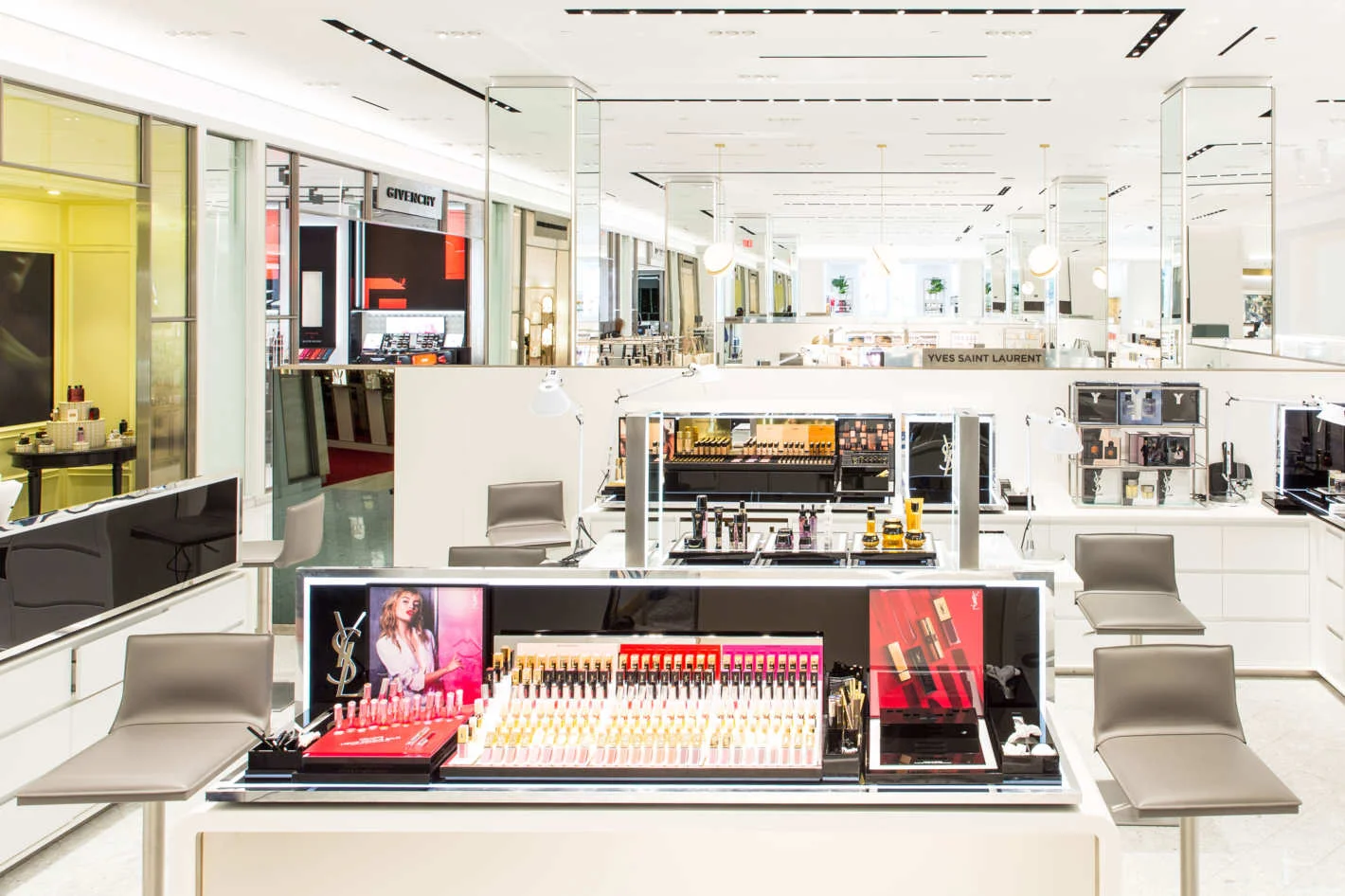
Image via
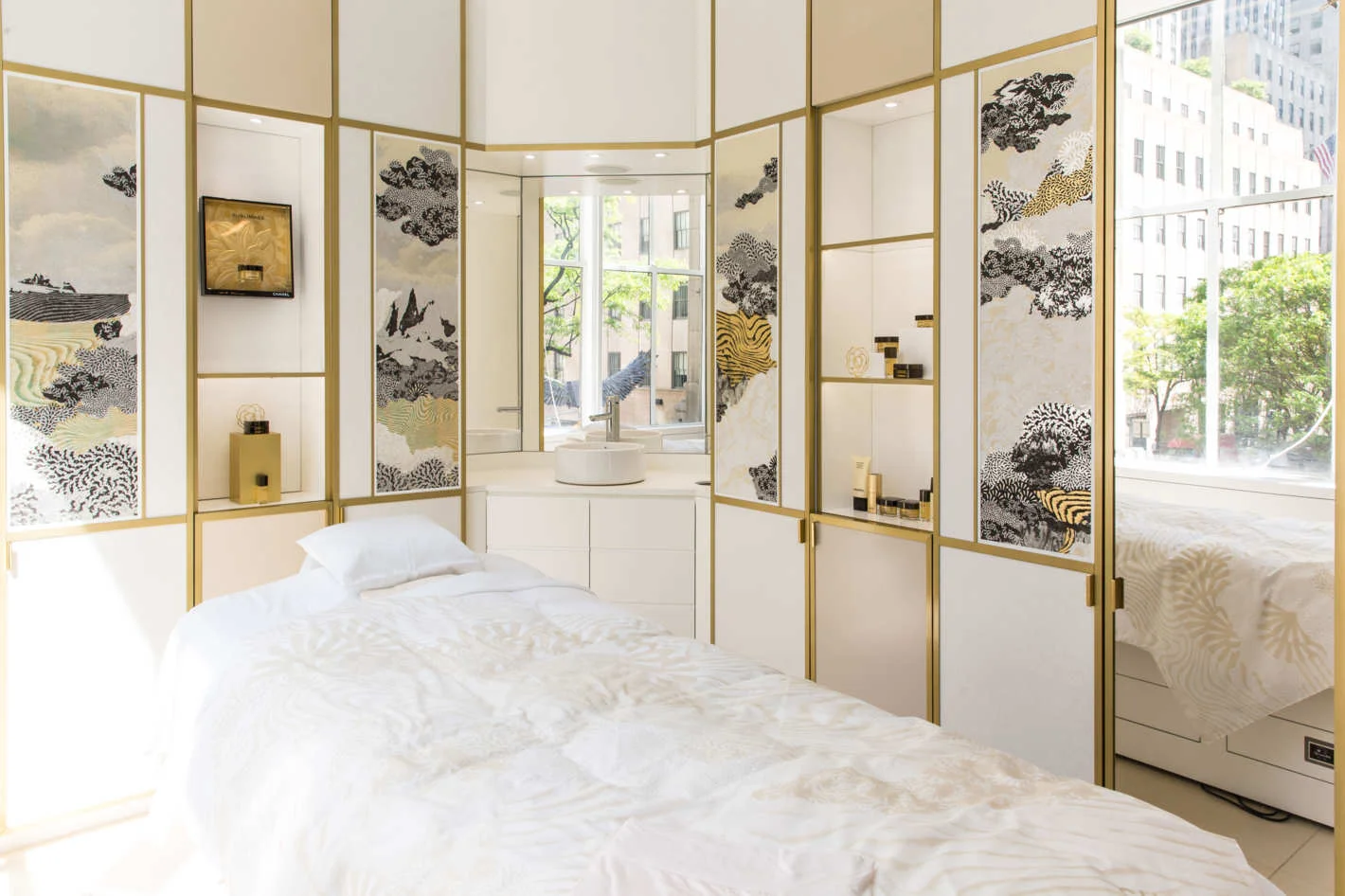
For years, walking into Saks Fifth Avenue has been a melting pot of various designer fragrances, the latest bags from my favorite brands, and the most coveted skincare in the game. It personally kept me glued to that first floor, an unbelievable source of impulse buys and occasional regrettable purchases. Turns out, though, that times are changing. It's time to say goodbye to the first floor.

Image Via

Image Via

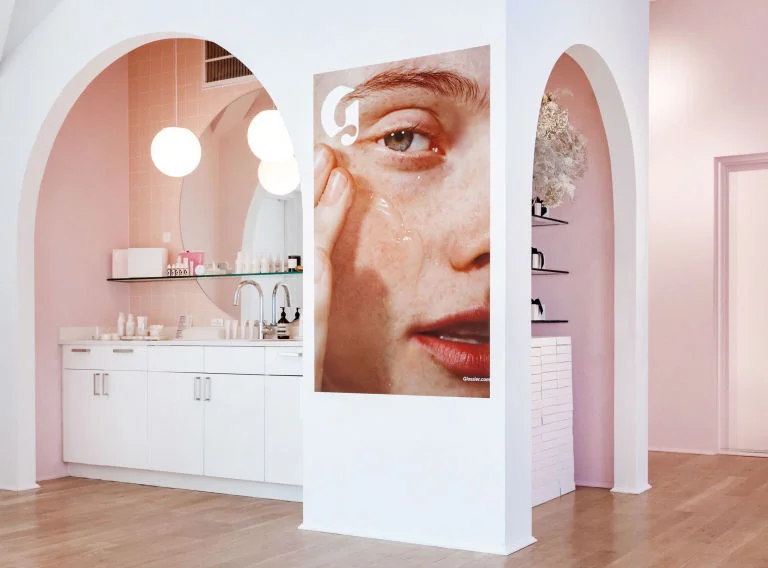
The growing industry of popular boutiques like Glossier's showroom, pop-up shops dedicated purely to Urban Decay and Benefit, as well as the increasing preference for online shopping through Ulta and Sephora have posed considerable competition to the classic department store cosmetic experience. The days of being sprayed by designer perfume in a labyrinth of beauty counters and lured into impulse buy because of those makeup advertisers are few and far between.

So Saks has moved its famous first floor dedicated to beauty to the second floor, with a gallery 40% larger than before to better compete with a modern industry. Boasting 32,000 square feet, the new beauty area holds services such as spa treatments, intensive skincare regimes, and eyebrow shaping. (Stealing Ulta's Brow Bar...?) Another exciting aspect to this area is an event space reserved for celebrity appearances and workshops. 

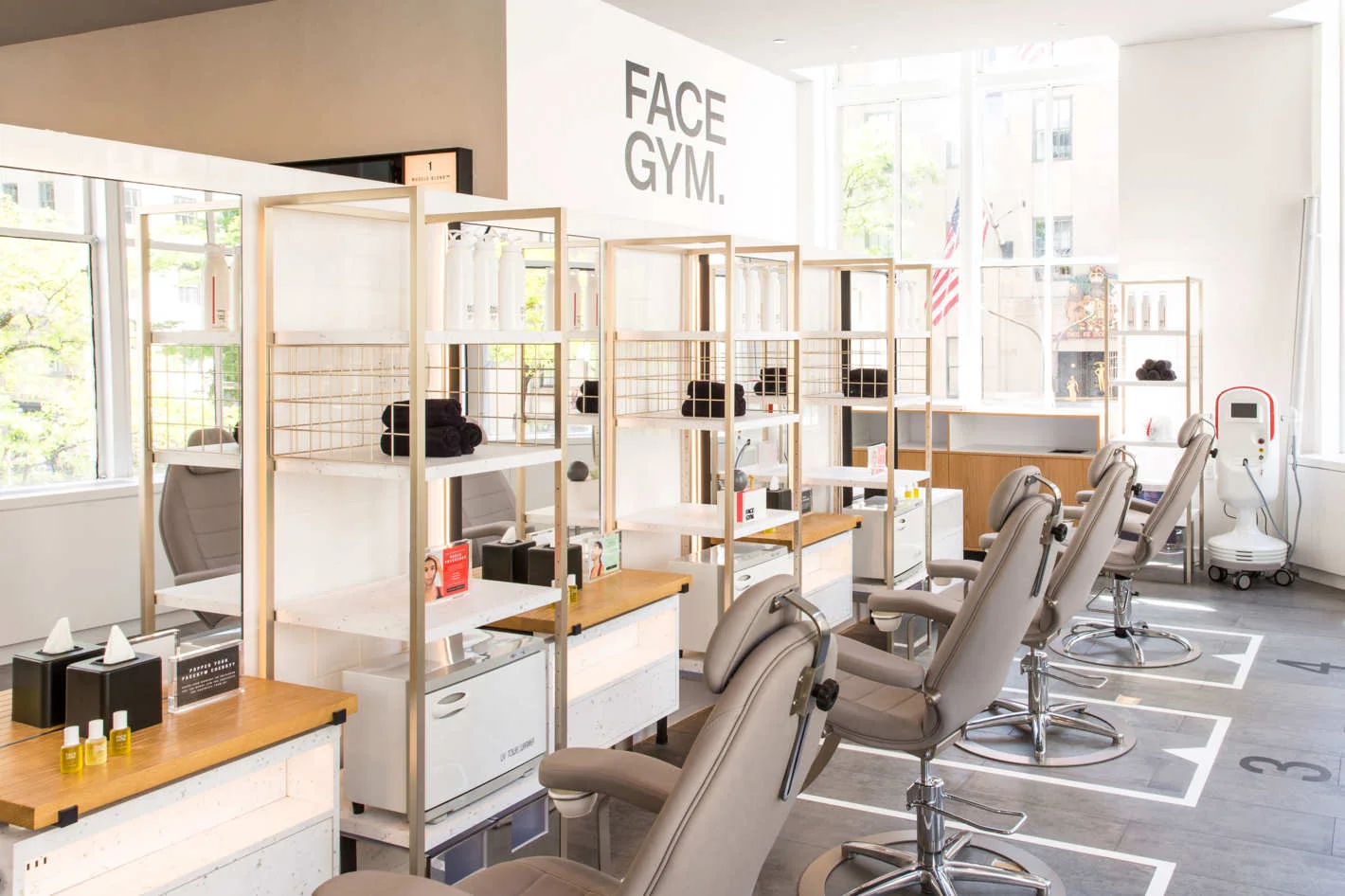
Here are just a few pictures of the new beauty section, loaded with spa options, a "face gym", and endless counters of the makeup you've been dreaming of.

Images ViaFeature Image Via

Brands to Know: Uniqlo (Unique Clothing)

Uniqlo is arguably the best clothing brand for basics on the market right now. It tends to be grouped together with fast fashion brands such as Zara, H&M and Forever 21 but Uniqlo occupies a completely different niche. The defining features of fast fashion are not its quality or even its affordability, it is the rate that the brand pumps out new designs to stay on top of trends. As a business model, this works very well and attracts the majority of the population who do not look too closely into what they are wearing. 

Uniqlo is completely different.

Uniqlo puts out new designs seasonally and provides products that are extremely affordable, made with high-quality material and work with any wardrobe. They do not buy into trends (overly distressed denim, oversized flannels, overly distressed everything, zipper pants to name a few recent ones that others, like H&M, have taken advantage of us) and are always consistent with their Japanese minimalist theme. Rather than changing styles, Uniqlo regularly adds new technologies to their clothes. Some of the most popular ones are the Heattech, Ultra Light Down and Easy Care Shirts. Most fast fashion brands sacrifice quality when trying to put out new designs all the time. Instead, in the battle between quality and quantity, Uniqlo picked quality. This is not to say that they do not have a variety of clothing. Uniqlo offers everything from jeans to t-shirts to peacoats. Nearly none of their clothes are branded but they do put out collaborations regularly. Some of the most notable ones were Uniqlo x KAWS, Uniqlo x J.W. Anderson, Uniqlo x Lemaire and the UT artist collaborations.

I buy nearly all of my blank T-Shirts from Uniqlo, specifically, the Supima® Cotton Crewneck T-Shirts which are spun from U.S. grown Pima cotton. This cotton gives the T-Shirt an amazing silky and soft texture (very different from Hanes, Fruit of the Loom, Champion etc.). A similar T-Shirt from competing brands would run you about $30 while Uniqlo offers it for only $9.90. Not only is Uniqlo already ultra-affordable, they regularly have sales. The denim jacket pictured was marked down from $39.90 to $19.90. 

FW17: Aritzia's Latest Brands

As a lifelong Aritzia fan and shopaholic, my wallet and bank account cry as I write this post and curate some of my recent favorites from Aritzia's latest brand releases. Recently making my way to their new Chicago Flagship Store on Rush Street, I have noticed a couple new tags for brands I have yet to discover. 

In the spirit of FW17 shopping sprees (and working extra shifts in the Reg to compensate for this), here are some of my favorite ~new releases~ from my favorite collective brand. 

Read More