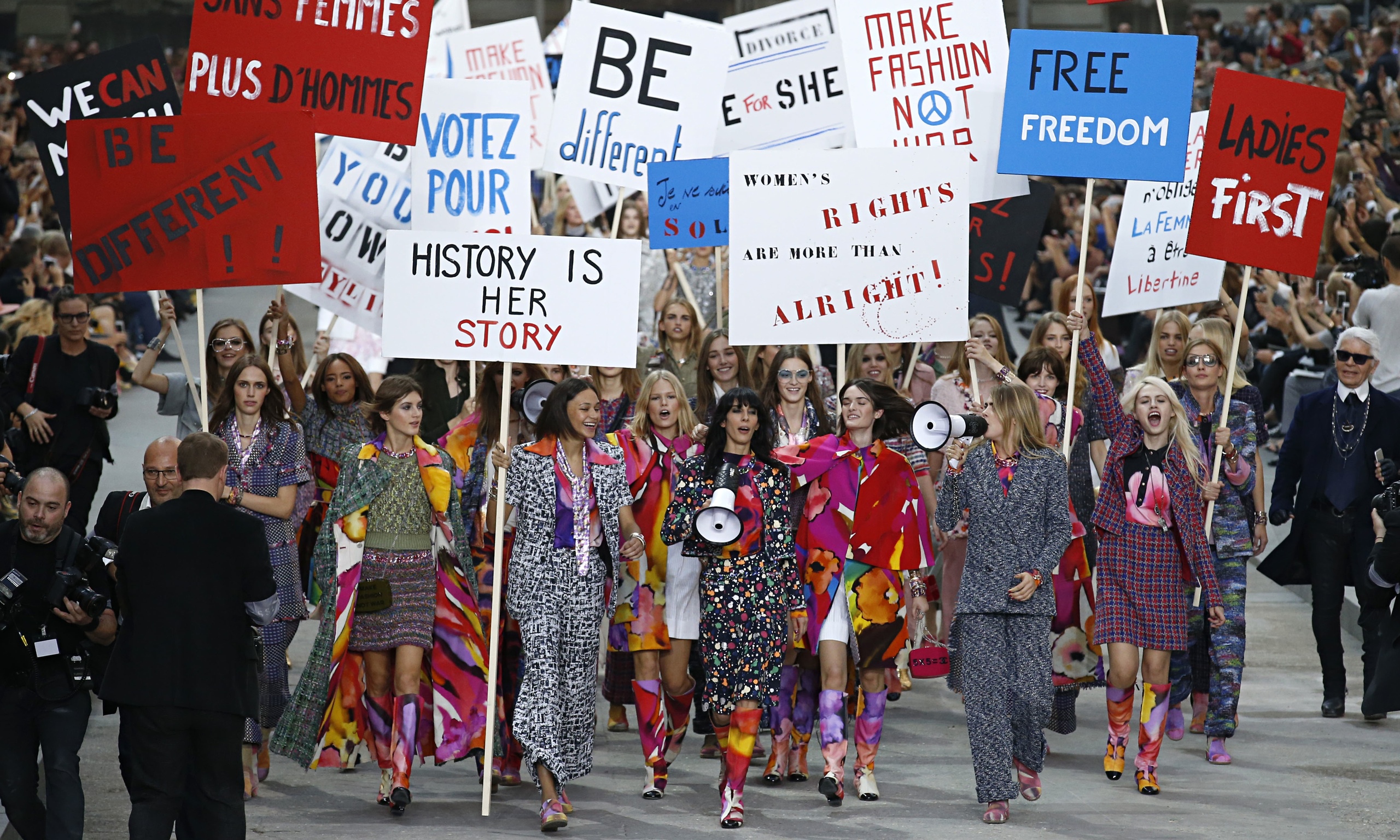
The Power and Potential of Symbolic Dressing

I watched Trump's State of the Union Address this year with a few of my close girl friends. We are a group of unapologetic feminists who regularly talk about politics and the strong women politicians we idolize. So when we watched the female members of our current congress assemble in front of Trump, wearing all white to represent the suffragette movement, we of course were all for it.

Watching these strong, kick ass Congresswomen–the most diverse and largest cohort of women in Congress to date–unite to recognize kick ass women from eras past felt unbelievably empowering in the moment.
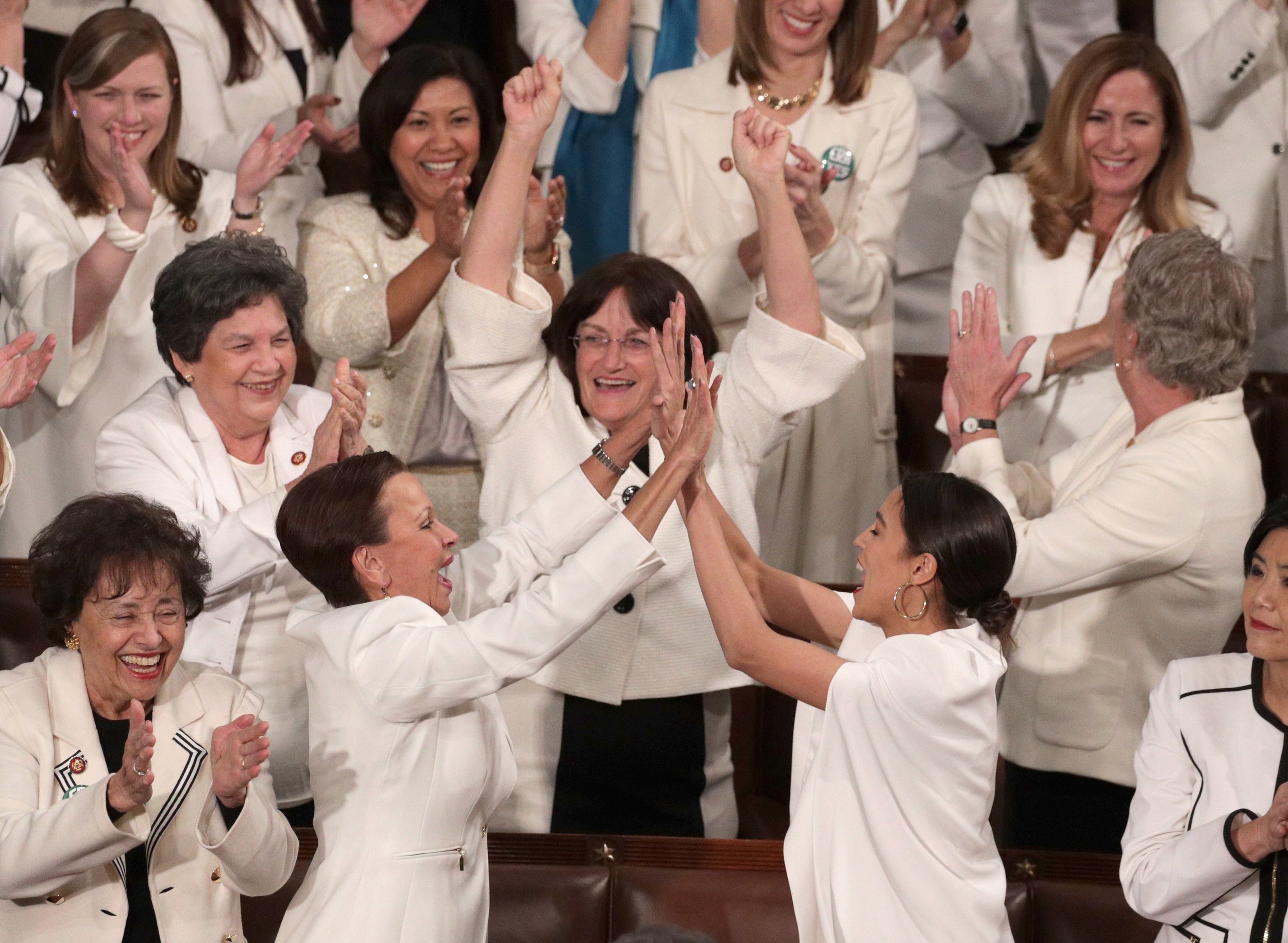
Image via

Image via

This year's State of the Union is obviously not the first time women, in particular, have come together to make a political statement through a collective fashion choice. In recent years, actresses and congresswomen alike have worn black in solidarity with the #MeToo movement, and the pink pussy hats that appeared in the first Women's March in 2017 are still seen as a symbolic middle finger to Trump and the pervasive culture of sexual harassment.
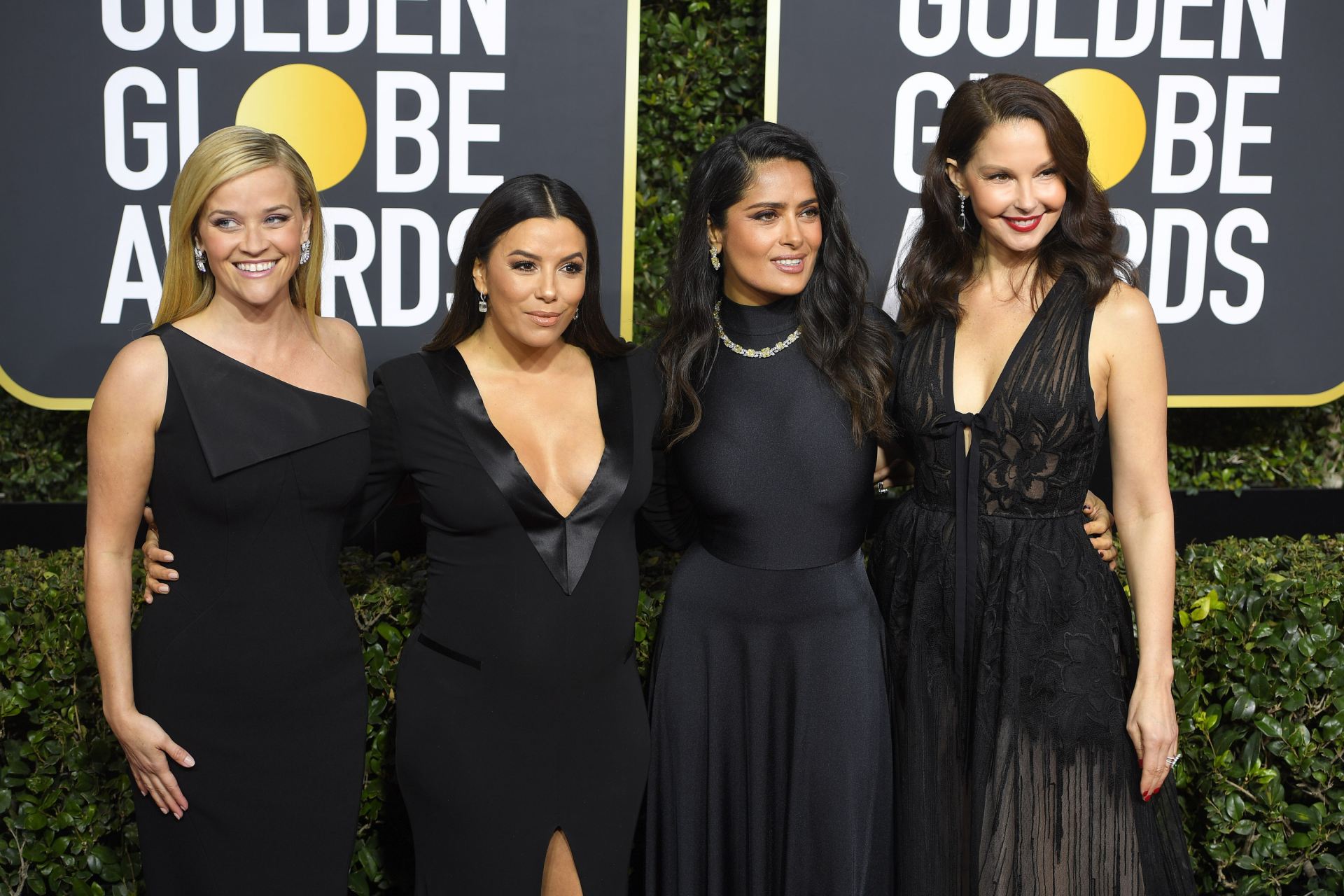
Image via

Image via

Symbolic dressing is hardly a new trend. Our congresswomen were of course referring to the original symbolic fashion choices made by the suffragettes, who famously wore all-white. However, one might argue that recent uses of fashion as a political statement coincide with a general uptick in progressive political movements in response to the Trump presidency.

In such a divisive climate, it can be easy to criticize symbolic fashion choices as a cop-out; as an action that fails to advance actual change. This, taken alongside criticisms of fashion labels and corporations slapping activist messaging on their clothes to turn a profit, can render symbolic or political fashion statements unpopular or ineffective choices in progressive activist circles.

Image via

Image via

Personally though, I am all for this kind of symbolic dressing. Even if our Congresswomen’s’ decisions to wear white to the State of the Union didn't actually create concrete change, their action stirred up emotions for my friends and I, gave us a sense of empowerment and unity, and reminded us of the unique and important place of strong women in the fight against Trump.

Symbolic fashion choices generate dialogue. The media did not ignore the Congresswomen’s’ decisions to wear white. It was talked and Tweeted about constantly following the address. They reminded us that the fight for women's equality is not over, and that alone is of incredible historical significance.

Feature image via
Feminist Memoirs to Read this Winter

Sometimes it can be easy to forget that reading is not just the act of last-minute cramming 400 pages of Hobbes or Marx. This winter break, find some time in your schedule to read books that will inspire you, make you laugh, teach you about life and politics in the present day (and not 300 years ago), and most importantly, give you something to be happy about! For me, this takes shape through memoirs written by some of my favorite feminists. Here are my suggestions:


Image via

Image via

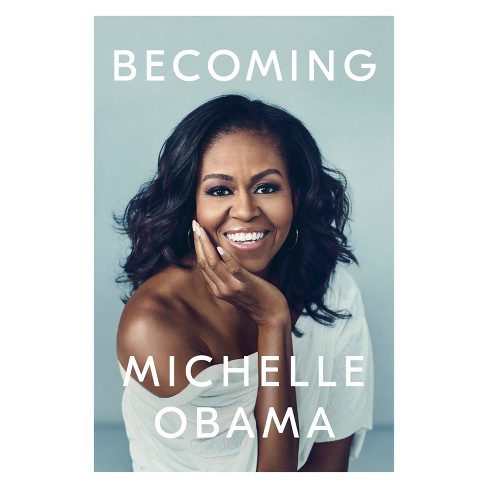
Michelle Obama's Becoming

Obviously. Becoming is one of the best books I have ever read. Michelle Obama's memoir follows her life from childhood in the South Side all the way through her life post-White House. Each sentence is filled with meaning and is beautifully composed, providing insight on growth and transformation, the state of American politics and community, race in Chicago, and what it means to be a woman. I cannot recommend this book more.


Image via

Image via

Mindy Kaling's Is Everyone Hanging Out Without Me?

Simultaneously hilarious and so relatable, reading Mindy Kaling's memoir feels like you're talking to your best friend or wise-but-funny sister. With chapters ranging from unfortunate anecdotes in middle school to discussions on developing her career, I re-read this book whenever I want to laugh, lift my mood, and remind myself that everything will be ok–given that Mindy was a self-proclaimed "terrible intern," endured countless, relatable, embarrassing moments, and still ended up as a successful writer and actor. All things considered, I feel like I can have hope for my future!


Image via

Image via

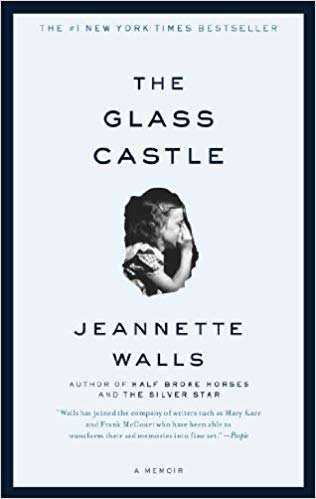
Jeannette Walls' The Glass Castle

The Glass Castle reads more like a novel, with incredibly beautiful, detailed descriptions of Jeannette moving through childhood and into adulthood. Growing up, she and her siblings learned to take care of themselves as they moved from state to state with their free-spirited, often unemployed parents. Jeanette goes on to receive an elite education and work as a journalist, while her parents remain homeless. A story filled with trauma, but also many moments of beauty, nostalgia, and resilience.


Image via

Image via

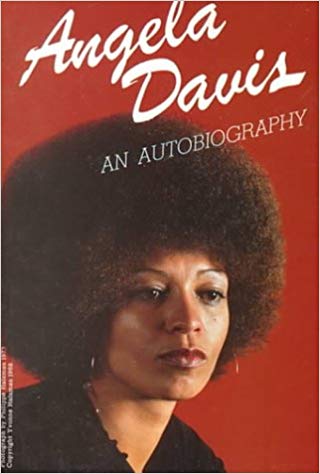
Angela Davis' An Autobiography

A funny and wise account of Davis' life, experiences and the important people that influenced her future as a political activist. In her autobiography, Davis shares an important account of race and politics in 1972, which stills feels necessary and relevant to read in today’s turbulent times.


Get reading! Whether you want to feel politically charged, inspired to overcome personal obstacles, or just want to laugh and relate with a badass woman, these are all great options to distract you from your post-finals lull.

Feature image via.

Interview Series: Skylar Yoo

Welcome to MODA Interview Series, where we feature influencers and leaders in the fashion industry in the Chicago area and beyond to discuss their design inspirations, their creative backgrounds and what it means to be a self-starter in the fashion world today. This edition brings you an interview with Alice Yoo - the powerhouse behind the newly released feminist fashion, art, and accessories brand, Skylar Yoo.

Read More

What We can Learn From Roxane Gay's Bad Feminist

In her novel Bad Feminist, author Roxane Gay breaks down the many complicated, nuanced and honest sides of feminism, as well as her own experiences and life lessons on what being a feminist has meant to her. She takes on many voices— vulnerable, assertive, powerful, etc and through them, she delivers fresh, insightful ideas on gender, sexuality, race and more. One of my favorite chapters Gay writes on is titled "How we All Lose," which comments on sexual violence, an especially relevant and crucial topic we must talk about.

The chapter, "How We All Lose," interested me for its thorough analysis of several other texts and novels that attempt to highlight the meaning and future of feminism but neglect to address the issue at heart. In one part, Gay speaks on the subject of sexual violence in response to Hanna Rosin’s novel The End of Men. Rosin writes that “women today are far less likely to get murdered, raped, assaulted, or robbed than at any time in recent history” and a “2010 White House report on women and girls laid out the latest statistics straightforwardly, to the great irritation of many feminists.” To this, Gay comments that it is “hard to accept at face value that feminists would be irritated that there’s a decline in violence against women,” and notes the number of abuse and sexual violence cases that go unreported. Gay also writes that “Rosin is not wrong that life has improved in measurable ways for women, but she is wrong in suggesting that better is good enough. Better is not good enough… I cannot think of clearer evidence of how alive and well the patriarchy remains."

Especially today, it is important to consider Gay’s responses. With recent events concerning sexual abuse allegations against influential, powerful figures like Harvey Weinstein and Kevin Spacey and movements like #metoo, sparked by online protests, Gay’s argument against that of Rosin’s is significant in actually addressing sexual violence. With some news outlets finally detailing the abuse females in the entertainment and STEM industries face, it is important we leverage this information to show the change that needs to be done— to restore justice against higher ups like Weinstein and Spacey and shift the narrative about what women can or can’t do. 

It is important for men and women to understand the issue of sexual violence; to understand how its salience negatively affects our culture and society; to understand how by just ignoring this issue we feed into its toxicity and continuity. 

Feminist Fashion

Women need to stand with women. And what better way is there to show your support than through what you wear? Here, MODA Blog shares some of our favorite feminist-themed tees.

Reformation

For part of their "The Action Tees" collection, Reformation will donate $30 to Planned Parenthood with the purchase of this shirt. Buy here!

Otherwild

25% of these T-shirt proceeds will also go to Planned Parenthood. "Otherwild believes in an inclusive, expanded and fluid notion of gender expression, identities and feminisms. We support liberation, embrace our trans sisters, and call for the end of patriarchal ideology, domination, oppression and violence. We believe that 'The Future is Female' is the past, the present and the future, and is language that resonates." Buy here.

WildFang

Show off your wild side! 10% of profits from this product goes to PP & ACLU. Buy here.


Featured image via

Laxmi: Bringing Courage to the Fashion World

Boldly facing the world after a truly traumatic event, Laxmi Agarwal has taken the fashion world by storm, not only by becoming the face of Indian fashion apparel company Viva N Diva, but also a spokesperson against acid attacks. At the age of 15, Laxmi was attacked with acid by a 32-year-old man for denying his marriage proposal. "It felt cold first. Then I felt an intense burning. Then the liquid melted my skin," she remembers from the attack.

Since that day, she has flourished and has become an advocate against the unregulated sale of acids and for enforcing stricter consequences for perpetrators of acid attacks. Viva N Diva, who chose Laxmi as a model, said that choosing her was to change the outlook of people towards fashion and spreading a diverse sense of what is considered "beautiful" in a campaign named "Face of Courage".

Image via

Image via

"The problem is not just in being a victim but also your victimisation by the society. We are treated as if we are good for nothing and as if our lives are a waste," she said.

The co-founder of Viva N Diva Rupesh Jhawar first got the idea after seeing a calendar featuring acid attack survivors. "For a moment I had seen beauty in a very different way and we wanted to capture it - remove any speck of being a victim from those eyes and give them a stage, an employment, a platform, a medium to flaunt it with style," he said about his decision.

Laxmi is also the director of Chhanv Foundation, which is a NGO dedicated to protecting acid attack suriviors in India. U.S. First Lady Michelle Obama awarded her the 2014 International Women of Courage Award for all her work. Laxmi Agarwal is a ray of hope signifying the changing scope of the fashion world's potential, and beacon of light inspiring acid attack victims to come forward and not lose their courage.

Watch the behind-the-scenes video from Laxmi's photoshoot. 

Feature image via
Source: http://www.modachicago.com/wp-content/uplo...

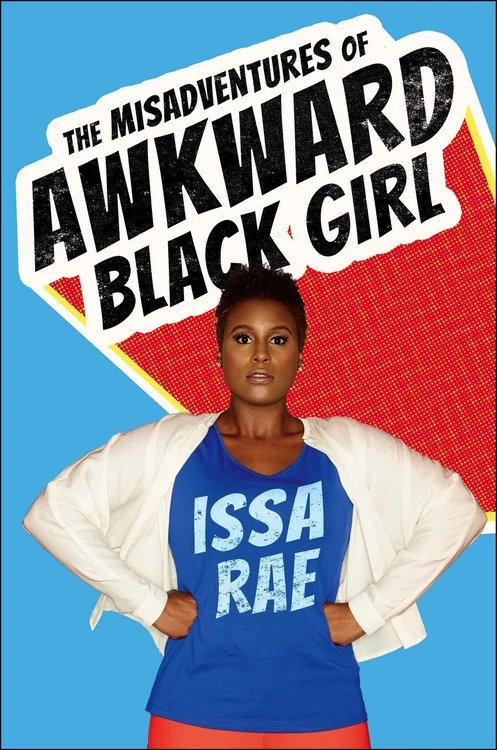
Meet Awkward Black Girl's Issa Rae

Awkward. Black. Girl. Three words that resonate with not only me, but millions of other people including writer, producer, and hilarious personality Issa Rae, who created the hit webshow Awkward Black Girl. This series follows J, an African-American woman, and her "awkward" antics with her friends and co-workers, including best friend CeCe, arch-nemesis Nina, and love interests White Jay and Fred. The witty and charismatic voiceover of J that carries the series, as well as the relatable uncomfortable situations she gets herself into, garnered over 20 million views and over 180,000 subscribers on YouTube, becoming an instant hit.

Just my luck that the genius that is Issa Rae visited the University of Chicago to have a panel discussion with Jacqueline Stewart, a UChicago Professor of Cinema and Media Studies. Not only this, but I was also fortunate enough to get the chance to have a casual discussion over lunch with her and 30 other lucky students about her upbringing, inspirations, and future projects. Rae, born from an African-American mother and Senegalese father, grew up in Potomac, Maryland, where, "things aren't considered 'black,' like the swim team and street hockey and Passover dinners with Jewish best friends." After moving to Los Angeles in the sixth grade, she was enrolled in a predominantly black middle school in which she was “berated for ‘acting white'" and initially found it difficult to "fit into this ‘blackness’ I was supposed to be."

Image via

Image via

She then attended Stanford University where she created music videos, wrote and directed plays, and created a mock reality series called Dorm Diaries for fun that soon began to spread not only throughout the Stanford campus, but throughout other campuses like Harvard University and Duke University. She worked with her good friend Tracy Oliver on Awkward Black Girl, which was created to question the stereotypes of Hollywood portrayals of black women, and starred as Nina in the series. Her other series, Ratchet Piece TheaterThe "F" WordRoomieloverfriends, and The Choir, focus on authentic relationships and portrays of black culture. In 2012, Rae made it to the Forbes 30 Under 30 Entertainment list, and Awkward Black Girl won the Shorty Award for Best Web Show. HBO is now working with Rae on her new television show Insecure, which Rae will be starring in and directing. This show follows the friendship of two modern-day black women, Issa (Rae) and Molly (Yvonne Orji), and all of their uncomfortable experiences and racy tribulations.

It was an honor to meet one of my role models and get an inside look into her perspective on issues that are prevalent to my life.

Rae's first book The Misadventures of Awkward Black Girl is available in stores now, and there has been no release date for Insecure (but keep a lookout)!

Featured image via

Source: http://www.modachicago.com/wp-content/uplo...