Concert Review: Out of Order

To round out my concert-going escapade of fall quarter 2022, the Saturday after finals week, I saw Dominic Fike’s Out of Order tour live at Radius. Whether you know him from his role of Elliot on HBO’s Euphoria or have been listening to him since his SoundCloud days, Fike’s music is an indie-pop lover’s gold mine, falling under the same genre and general vibe as Brockhampton’s Kevin Abstract (explaining their past collaborations) - a combination of soft rock and hip hop resulting in catchy, memorable melodies. One of his most famous songs is 3 Nights, which charted top 10 in multiple countries upon its release. My personal favorites of his are Acai Bowl, which has a very special place in my early high school self’s heart, and Wurli.

I want to preface this entire article by making it clear that this was not a typical concert-bound outing of mine: both the plan and the execution of the aforementioned plan were very chaotic and disorganized, and we ended up missing the entire opener while we were in the merch line. This is not to mention that the lighting at the venue altered the appearance of colors of said merch, and I didn’t realize my black hoodie was actually green until I left. Nevertheless, the venue, which I hadn’t heard of until this show, was actually really cool – it was all standing room, the entire space spanning across one level. It was broken up into a bar, a food area, a merch table, and the stage by tall dividing walls. The whole thing was blackboxed, with lighting coming from pink and orange LEDs on the ceilings. Based on the “coming soon” advertisements and the general feel of the area, this venue is typically home of electronic music/hyperpop and metal, the perfect set up for gigantic mosh pits. 

From what we heard of the opener, they were a hard rock/metal band that were successful in hyping up the crowd (we heard much screaming, presumably of enjoyment, from the merch line). Unfortunately I have no idea who they were. To be honest, we didn’t even know there was going to be an opener until we got there. There is nothing on the Internet about an opener, and I can’t seem to find any information on them (there is a possibility I am just bad at the Internet), but they were good. The genre wasn’t exactly my cup of tea, but I enjoyed listening from afar nonetheless.

Fike appeared on stage not so long after. The setlist is as follows:

Setlist:

1. Westcoast Collective 10. Come Here

2. Double Negative 11. She Wants My Money

3. The Kiss of Venus 12. Superstar Sh*t

4. Joe Blazey 13. Florida

5. 3 Nights 14. (Unreleased Song)

6. Rollerblades 15. Wurli

7. Acai Bowl 16. Vampire

8. Politics & Violence 17. Babydoll

9. Batshit 18. Why

Encore:

19. Phone Numbers

Fike’s voice was much better than I anticipated live– aside from being a fabulous performer, both his guitar and vocal performances were clear, interesting, and entertaining. His chemistry with the band was impeccable, and he bantered with the audience quite a bit, cracking jokes and providing personal anecdotes when it fit the natural flow of response from the audience. 
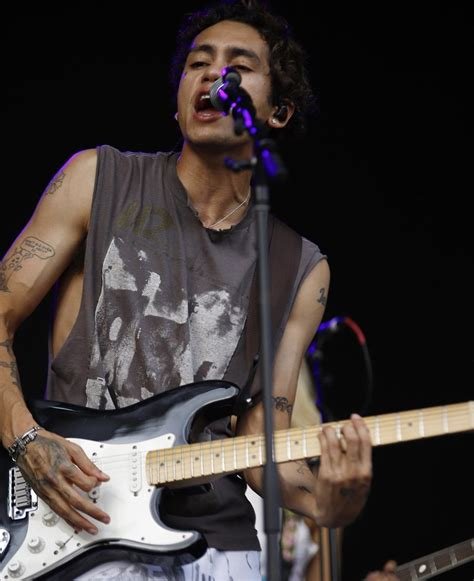
Image via

Image via

Fike sang variations for virtually all of his songs. This may be an unpopular opinion, but while I appreciate the artistry that goes into remakes and melodic variations, I do wish that he had kept a song or two the same as the recorded version; in my opinion, concerts are equally about an artist’s performance, as well as the audience’s ability to recognize and sing along (or simply enjoy) a song that they recognize and love. There were several songs I didn’t recognize until about halfway through because of these variations, which is fine if this was true for a handful of songs– but this was true for almost the entire setlist. Regardless, I thoroughly enjoyed Fike’s performance, and I would recommend it for anyone who likes his music, or simply enjoys live music in general. He is definitely one of those artists who can capture your attention regardless of your familiarity. 

Aside from the merch mishap and the poor time management on my own part, I would give my experience a 10/10.

Source: https://www.nzherald.co.nz/entertainment/c...

MONOCHROME MULTITUDES (Review)

Monochrome Multitudes at the Smart Museum of Art takes on the challenge of presenting largely abstract, monochromatic art to an ever-increasingly critical audience. Wide spaces are divided into thematic rooms of blue, white, yellow, gray, black, and red color schemes that delight the eye but demand a close reflection. Self-reflective, the exhibition also pairs pieces into groupings based on themes of the body, urban spaces, gender, and more. As you walk along, you are led to consider what the pieces share, or what cannot be shared even among mediums and colors.

The collection is the second of a three-part series the Smart calls “Expanding Narratives,” which aims to reevaluate exhibitions through fresh curatorial strategies. The Smart Museum calls on its presence within the University of Chicago to continually reimage how such a relationship can enrich new exhibits. In turn, University staff from across the divisions are the source for many of the lengthy exhibit labels for the 120 exhibited works. The reshifting of monochromatic narratives operates through this collaboration across disciplines and academic worlds.

Whether it's William Turnbull’s “Mango” (1963) or Josef Albers’s 1972 “Formulation” series, Monochrome Multitudes’s simplicity poses a significant challenge for the exhibition. Christine Mehring–a University of Chicago art history professor and co-curator–is well aware that abstract, single-color art is the hardest for audiences to digest. In an interview with WTTW News, she notes, “It’s the type of art that many people will say, including my students, either ‘I can do this’ or ‘Why is this art?’”

Nevertheless, Monochrome Multitudes groupings of pieces pull together a stunning exhibition that asks the eye to engage with it beyond appearances. Past Smart exhibitions have lent themselves to being Instagram-post fodder, but this collection's subdued spirit demands a sustained focus on the work–for better or worse for visitors. The conscious spotlighting of queerness, emotion, and shifting modes of representation hits quite well within monochromatic rooms.

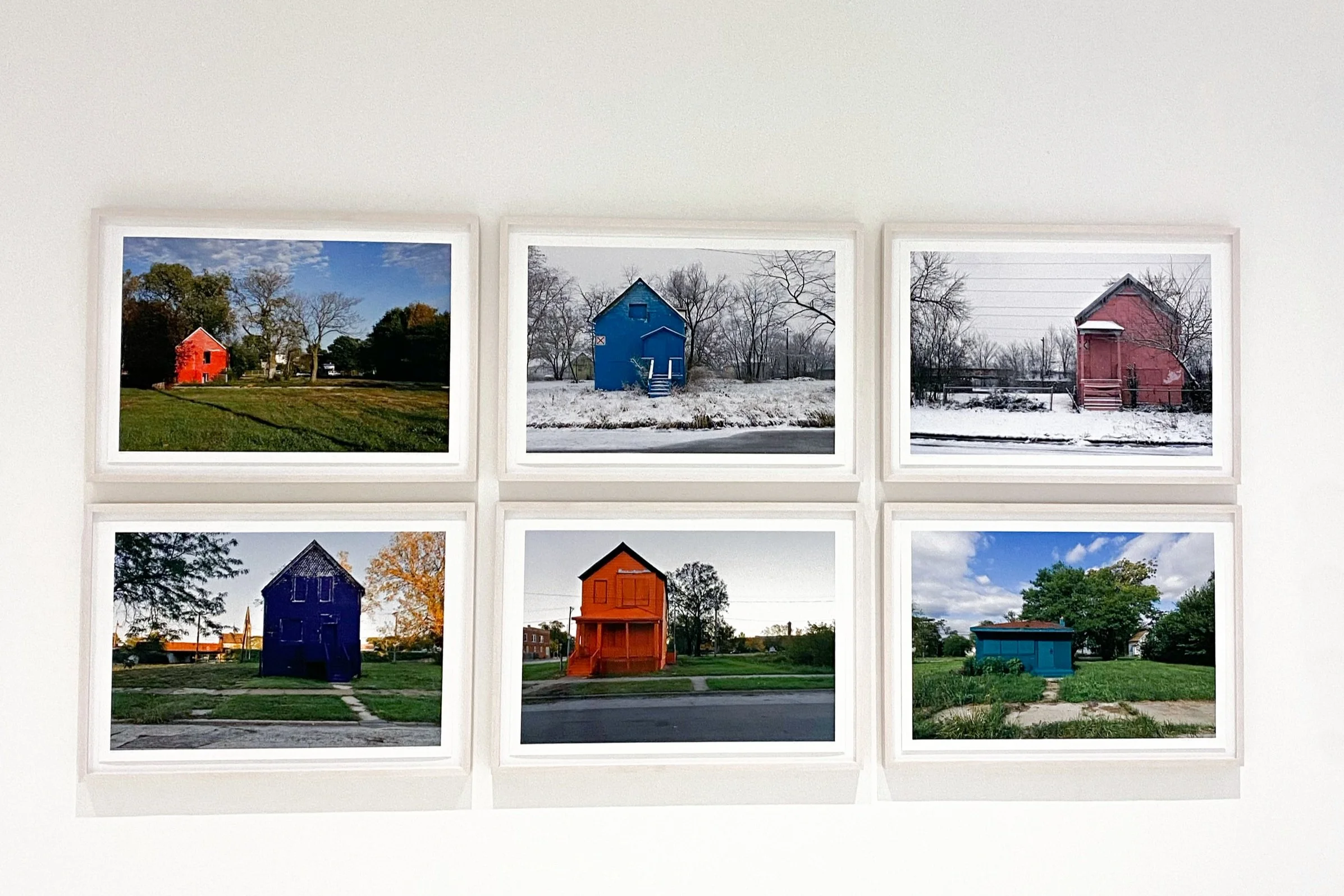
To mount its complexity, the exhibition features incredible textile work featuring weaving, sculptures, and clothing. Claire Zeisler’s work with wool in Triptych welcomes you to the exhibition, and Magdalena Abakanowicz’s “Structure Black” is one of the most unnerving and beautiful pieces I have ever experienced. Materiality is further explored through David Hartt’s photography of concrete or Lotte Jacobi’s glass. Finally, I couldn’t talk about this exhibition without the incredible monochromatic Chicago homes project of Amanda Williams.

Regardless of the depth of materiality used, the way Monochrome Multitudes pairs its pieces together demonstrates that it is not interested in engaging with audience questions of whether any given piece is actually art. The late Ellsworth Kelly anxiously wondered, “‘Can I make a painting with just five panels of color in a row?’ I loved it, but I didn’t think the world would. They’d think, ‘It’s not enough.’” In response, each space of the Smart’s exhibition poignantly represents the ability of art to go beyond the single medium of color, even when all the viewer can see is a single color. It asks us all to refrain from demanding more, and instead let in the spectrum of history and color before us.

Monochrome Multitudes is at the Smart Museum through January 8, 2023.

All photography featured is by Felix Gonzalez.

Concert Review: STICK SEASON

I originally went to this concert because my friend wanted company, and she was only going because Stephen Sanchez was supposed to be opening (spoiler alert: he did not end up opening). I had heard of Noah Kahan vaguely from TikTok– think the indie folk equivalent of Leith Ross, David Kushner, JVKE, etc. I hadn’t given much thought to him before, but it was cheap, an excuse for live music, and a way to get off campus on a Thursday, so I figured I would go with her. And I am SO glad that I did.

Noah Kahan’s debut album Stick Season was released on October 14th, 2022; less than a month before I was set to attend his concert. I’m the type of person to listen to an artists’ entire discography so I can confidently scream the lyrics right back at them, so this release date stressed me out– especially because I hadn’t realized he had released an entire album until about a week before I was going to see him live. Nevertheless, I persevered, allowing Kahan’s voice to unrelentingly blast through my headphones 24/7 for a week straight.

Upon first listen, I was floored. It appeared as though I had found the Lumineers equivalent I had searched so long and hard for– his lyrics are fantastic, and the amount of acoustic guitar (the entire album) is perfect. I was officially pumped for this concert.

The concert was at the Riviera Theater on the north side of Chicago. Kahan’s opener was Adam Melchor (if you recognize the name, it’s probably from his most popular 2018 release Real Estate). Melchor was fantastic, and I think the perfect opener for Kahan; they both love their riffs of all sorts, both acoustic and vocal. His set consisted of many tracks from his newest album, and concluded with a cover of Sufjan Stevens’ iconic Chicago. He was silly for that one.

Although Kahan’s entrance following this set was met by a slight disappointment by my friend (as he was most definitely not Stephen Sanchez), her sadness was quickly replaced by awe as Kahan jumped into his set.

Image via

SETLIST

-

SETLIST -

Image via author

Stick Season is based on life in a small town in Vermont; not quite relatable to us as students in Chicago, but it does inspire the nostalgia and coziness that fall brings to us anyways. As someone from the southern California coast, the vibrant colors of the fall leaves are enough for me to imagine I’m walking through a rustic town in New England, rather than one of the most urban regions of the Midwest. Kahan’s set did exactly this; he brought the audience with him as he sang about the unfortunate combination of longing and excitement and sadness that comes with leaving where you’re from.

Kahan also opened up to the audience about his mental health struggles, talking about the difficulties that come with reaching out for help: in his song Growing Sideways, he talks about experiencing therapy for the first time since childhood, attending with the intent of actually working on himself for the first time with the lyrics:

“But I ignore things, and I move sideways

‘Til I forget what I felt in the first place”

Kahan’s band also had some recognizable names, most notably Noah in the Open, who was on acoustic guitar. Something I really appreciated about this concert was Kahan’s introductions of the band at the beginning of the set; I always hated how the drummer was just a drummer until the end of the show. You could tell that the band really loved what they were doing, and their interactions with one another were at times more entertaining than Kahan himself. 

I love indie-folk concerts because the fans are always respectful, enthusiastic, and filled with so much love for the artist. Never, in all of my concert-going endeavors, have I ever heard an audience sing so loud through the entire set that the artist was almost not needed at all; and I have been to the likes of Taylor Swift, The Lumineers, and many more much more prominent artists. There is something really special about “smaller” (Kahan now has 8 million monthly listeners on Spotify, but this can still be considered small in the grand scheme of things) artists and their fanbases. It truly is a community, and seeing the genuine love the audience members had for this artist was truly inspiring.

Ultimately, although I don’t know Kahan’s music like the back of my hand quite yet, I thoroughly enjoyed this concert experience. If you enjoy indie-folk music and have the time, I highly encourage you to give Stick Season a try.

All That Glitters is Holo

It is hard to pass up shiny things, so last summer when I was considering painting my nails for the first time, I had to go big. More specifically, I wanted a nail polish that was both understated yet worth the plunge into a world new to me. I turned to the nail polish company Holo Taco in large part due to my history of watching the company’s creator, Cristine aka “Simply Nailogical”, on YouTube. Despite my lack of knowledge or first-hand experience (excuse the pun) with nail polish, I had been following her journey from nail polish-user to nail brand-owner over the past several years. In turn, I’d gained a lot of behind-the-scenes insight into the methodology of creating Holo Taco’s polishes and understanding their price range, despite both not being the norm to a first-time nail polish user.

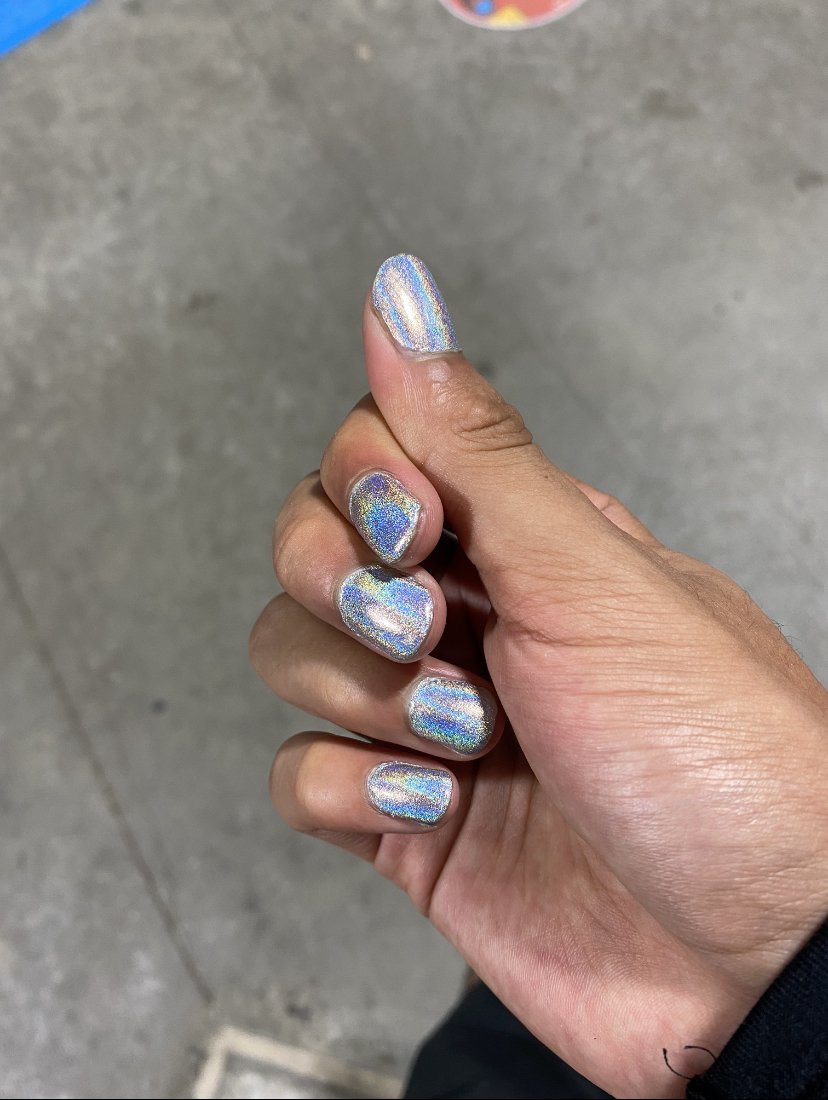
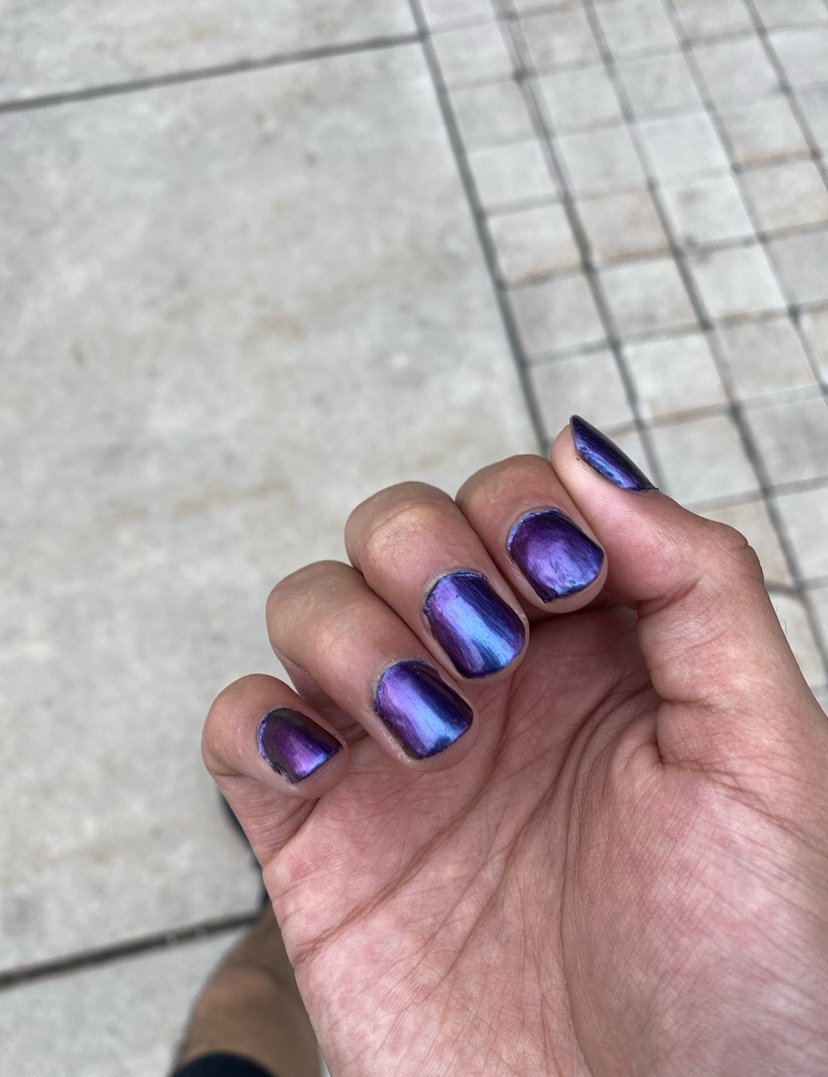
Since last summer, I’ve bought six shades, a top coat, base coat, and glass nail files—all of which I review below. I will note that although I provide photos of my nails in some of the shades at the very end, the photos on each review are from the Holo Taco website itself, as I find their photos best capture the holographic nature of the polish. Click on each photo to be redirected to each product on the Holo Taco website.

Circut Breaker

Let’s start off with my favorite of the bunch, as easily the most eye-catching polish I’ve tried yet. Due to how much linear holo glitter is packed into this cool silver shade, the rainbow effect shows up in most lightning. This gives you the most bang for your buck. So far the formula has also been quite opaque without becoming gloopy too quickly.

Naughty List

This is a second-hand review of my mother’s use of this beautiful red shade. The specific jelly-red shade is not my absolute favorite. Luckily the holo glitter provides a layer of richness that brings the shade together to be perfect for any time red polish is in season.

Purple With Envy

Multichrome polish has the added advantage of needing too much direct light to show off, so this shade is another one of my favorites. Any time I moved my hands, it would be a point of conversation. I also would never be able to have such an easy application of multichrome if it wasn’t for this one application formula. The shades of purple and blue (with features of magenta and a green-gold) are distinct enough that it does seem like two colors.

Gold Play Button

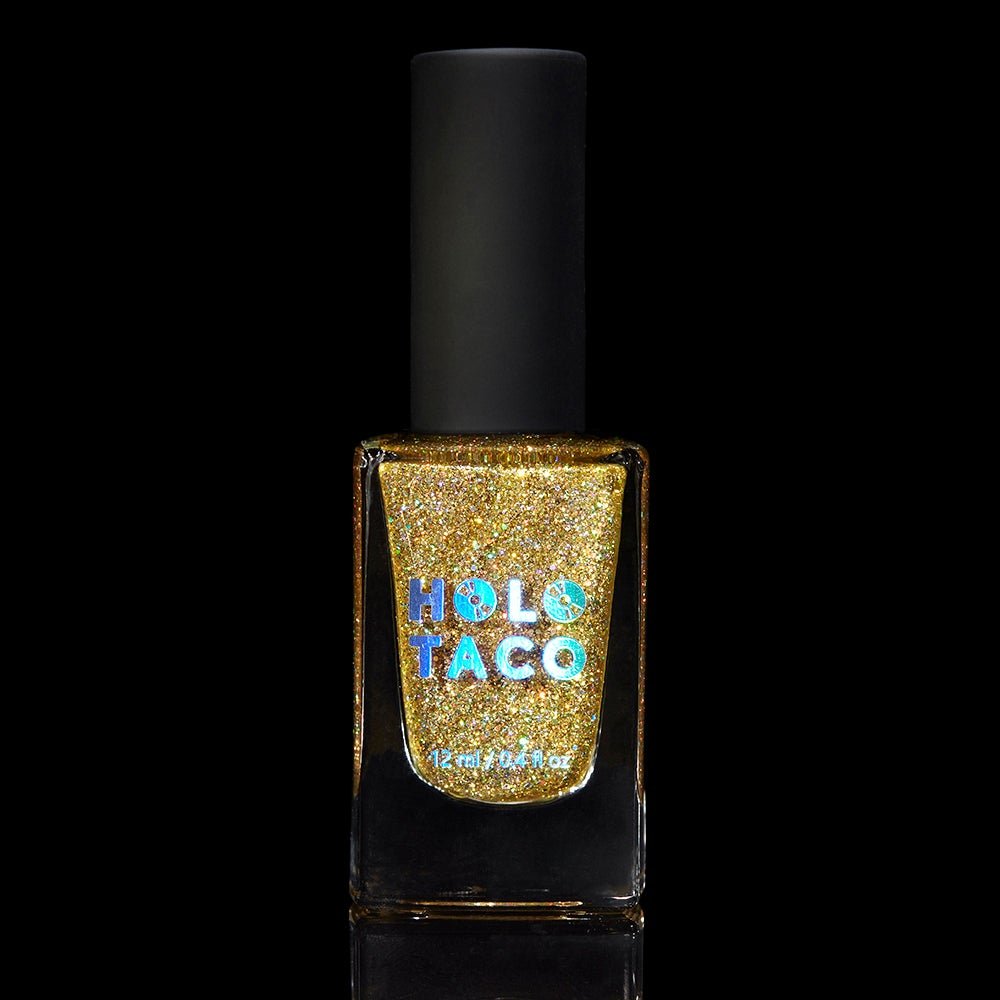
This gold shade was a little too flashy for my taste, but my mother loved it for the holidays. What I do love about this shade is that it is a true gold, as it doesn’t stray towards being a cool-toned yellow. I will say this seems to be one of the more sheer formulas of the bunch, but nothing an extra layer can’t fix.

Electrostatic

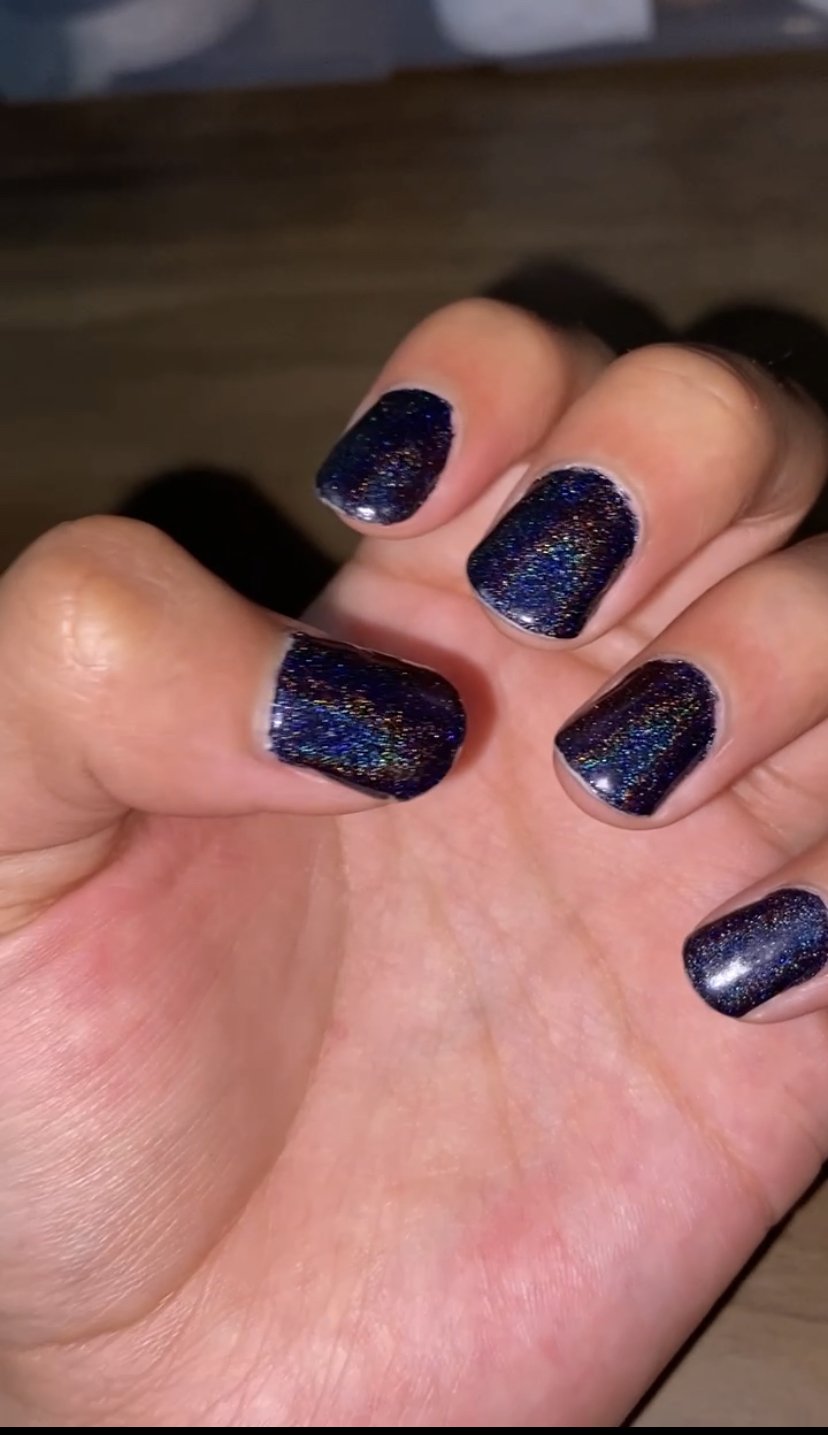
This is the shade that pushed me over the edge to buy Holo Taco, and it lived up to its expectations. Compared to putting on a black polish with a holo top coat, this is an all-in-one polish. In turn, it does have a slight purple tint, but in low light, it is near to a true black shade. Since black polish seems to be the standard for first-time masculine users of nail polish, this is the perfect twist on a classic. The only downside is that this requires some of the most direct light, so it best shows off on a bright summer day.

Super Gossy Taco (Top Coat)

Admittedly, I’ve yet to try the company’s matte top coats, but I think I am fine remaining a glossy top coat kind of guy. So far it’s done a great job of keeping my polish on towards the two-week mark with a great shine. With shades like Electrostatic, the brush does take on a slight tint, but this might be due to user error—TBD.

Midnight Spark

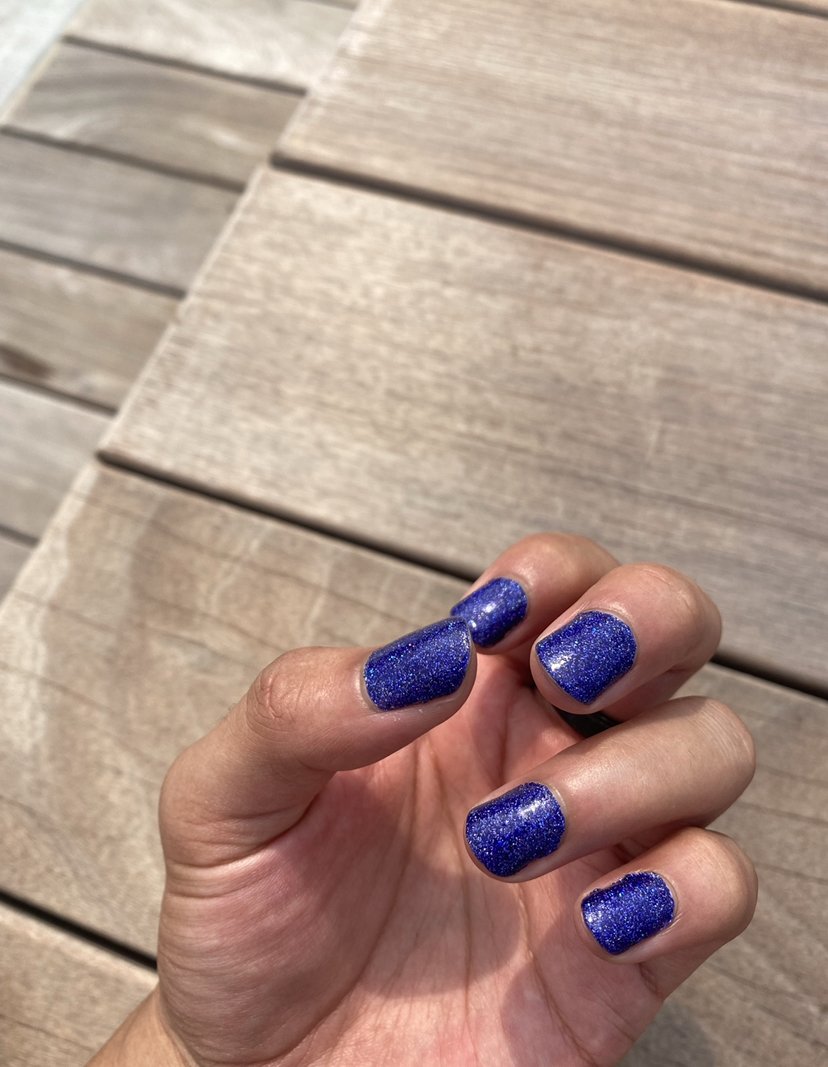
I bought this shade, as indigo is my absolute favorite color. The good news is that this is quite a beautiful vibrant shade of indigo, and the glitter is densely packed in. The downside is that I felt this shade did not agree with my skin tone, or it was simply not the exact vibe I enjoyed. Fortunately, my mother loves it!

Smoothing Base Coat

As someone that has natural ridges on his nails, I figured I’d try out this base over the others offered. So far it has not been a terrible experience, but the formula has been the trickiest to work with for a newcomer like me. Also, it is not sheer enough to wear on its own as advertised. However, when I do find myself getting a good application with it, that nail of polish does look extra nice.

Glass Nail File

I go through a lot of nail files, so turning to a glass one has been a game-changer so far. To be frank, I didn’t even know glass files existed! They do provide a much cleaner file, and the case they come with is a nice touch. The only slight warning I’d give is that for some reason the pictures don’t give the best sense of scale, and the files are probably smaller than in your head (or at least my own).

Overall, I am quite happy with my purchases of Holo Taco nail polish so far. Their prices and formula (sometimes) can feel a little iffy for a newcomer to nail polish, but the amount of time you spend shifting your nails around to look at the pretty rainbows makes it worth it, I’d say. Their maroon and yellow creme polishes and unicorn skin toppers are on my wishlist.

Tortured Geniuses and Starving Artists

Last month, I came across an article by Agnes Callard, professor at the university, where she criticized Beth’s character in The Queen's Gambit:

The myth is of the genius “tortured” by some internal struggle the rest of us are not smart enough to understand, so that the best we can do is step out of their way. The real torture is the one we enact by classifying people as geniuses, to serve our own fantasies of independence. Geniuses are the monsters we make.

Long story short, geniuses are admired but feared and isolated, and Beth is not alone. The BBC adaptation of Sherlock portrays a high-functioning sociopath who also deals with drug addiction, an inability to emotionally connect with other people, and loneliness. He often treats people with disrespect and total disdain, leaving Watson to smooth over awkward social situations.

The personality of the genius launches Callard’s criticism on real-life geniuses, recalling people’s tolerance of their rude behaviors — they are so talented in one aspect, mustn’t we excuse their ineptitude in other aspects?

image via

image via

image via

image via

In my own experience, tortured geniuses are accompanied by starving artists. Both are malicious stereotypes created to entertain our imagination of idealistic, intelligent people facing struggles. Picture a tired young man on the street of New York City, cigarette in hand, a dirty paintbrush propped up by his right ear. He had recently quit his job and become a full-time painter. He is a true creative genius, just a little held back by finances, but don’t worry — he might get noticed by a big gallery, blow up on social media, or he might give up completely!

Two years ago, I interviewed a 30-year-old painter who had quit her day job. We discussed the socioeconomic reality of being a full-time creative, and there was one sentence I could never forget:

Most people don't think that artists are serious. I don't wanna say that they're not thoughtful because I think a lot of people think that artists are very philosophical in a certain way, but not in a way that is serious or respectable. They are pot smokers or acid takers or wishy-washy lazy people who like to think about stuff and not work.

People only see the ends of the spectrum — the starving artist struggling to make a living, and the Jeff Koons making millions of dollars.

Why must we worship Andy Warhol while dismissing the new generation of young creatives? Why do we fit personalities into a box and call them starving artists, the same way we consume tortured geniuses for our own entertainment?

My discussion with the anonymous painter continued:

Once you've made it then they're like, oh yeah, it's awesome, I respect your rags to riches story, but it didn't have to be rags! If you had supported from the beginning, it didn't have to be so rough.

I don’t know why artists and geniuses must be tortured, and it intrigues me to see overlaps in their stereotypical makeup. Perhaps some of it comes from autobiographical truth.

Take the example of arguably the most famous “tortured” artist of the 20th century: during his lifetime, Vincent van Gogh was impoverished, isolated, institutionalized, and died from attempted suicide. People are intrigued by his personality, swarm to see his works at museum all over the world, and produce documentaries to showcase his hardships.

We love geniuses. We are impressed by how different they are from us, because we feel so ordinary. We place them under the spotlight and watch their struggles with morbid fascination…

That's it for my train of thought.

Image via

Image via


The Repackage: The Reup: The Moonlight Edition

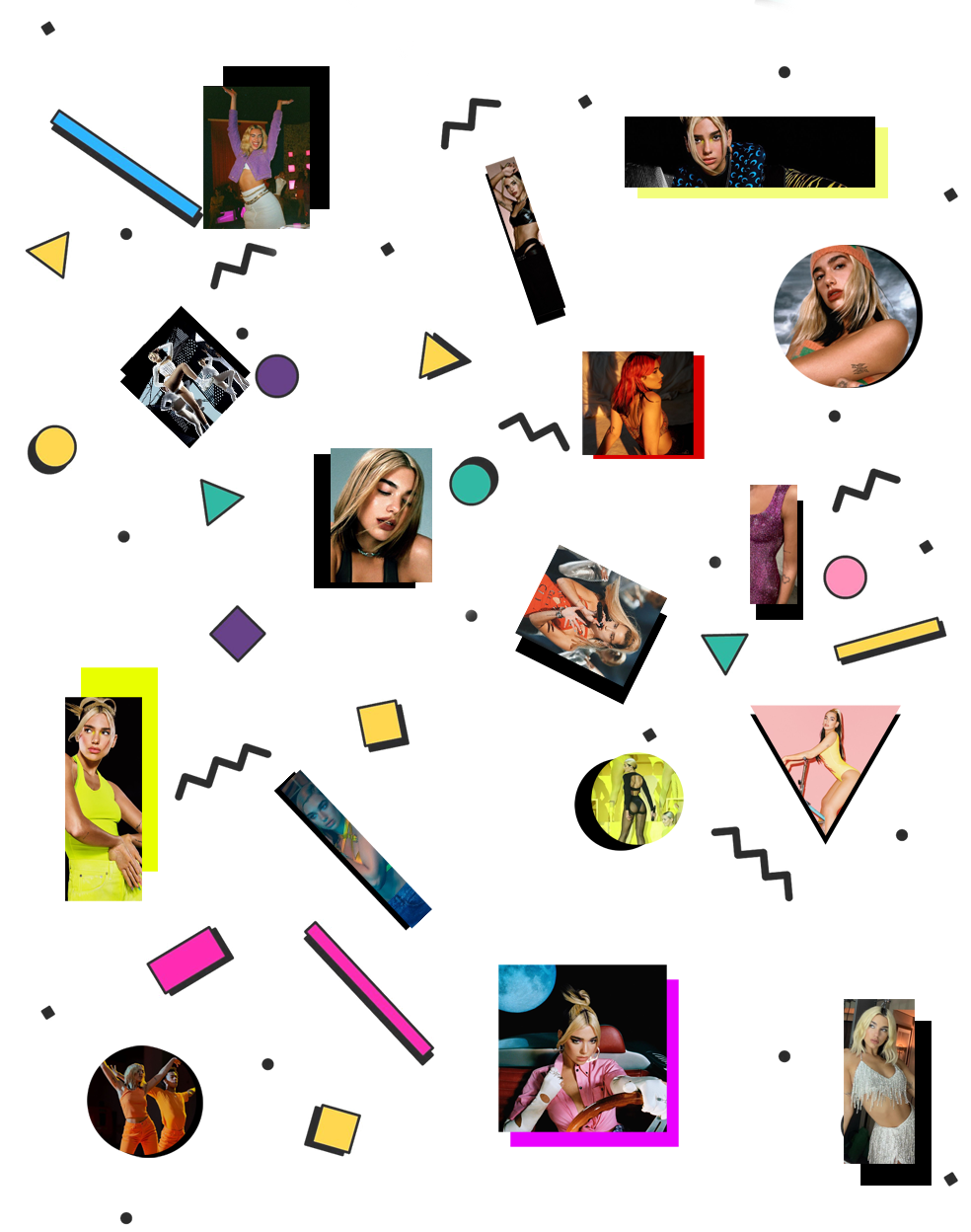
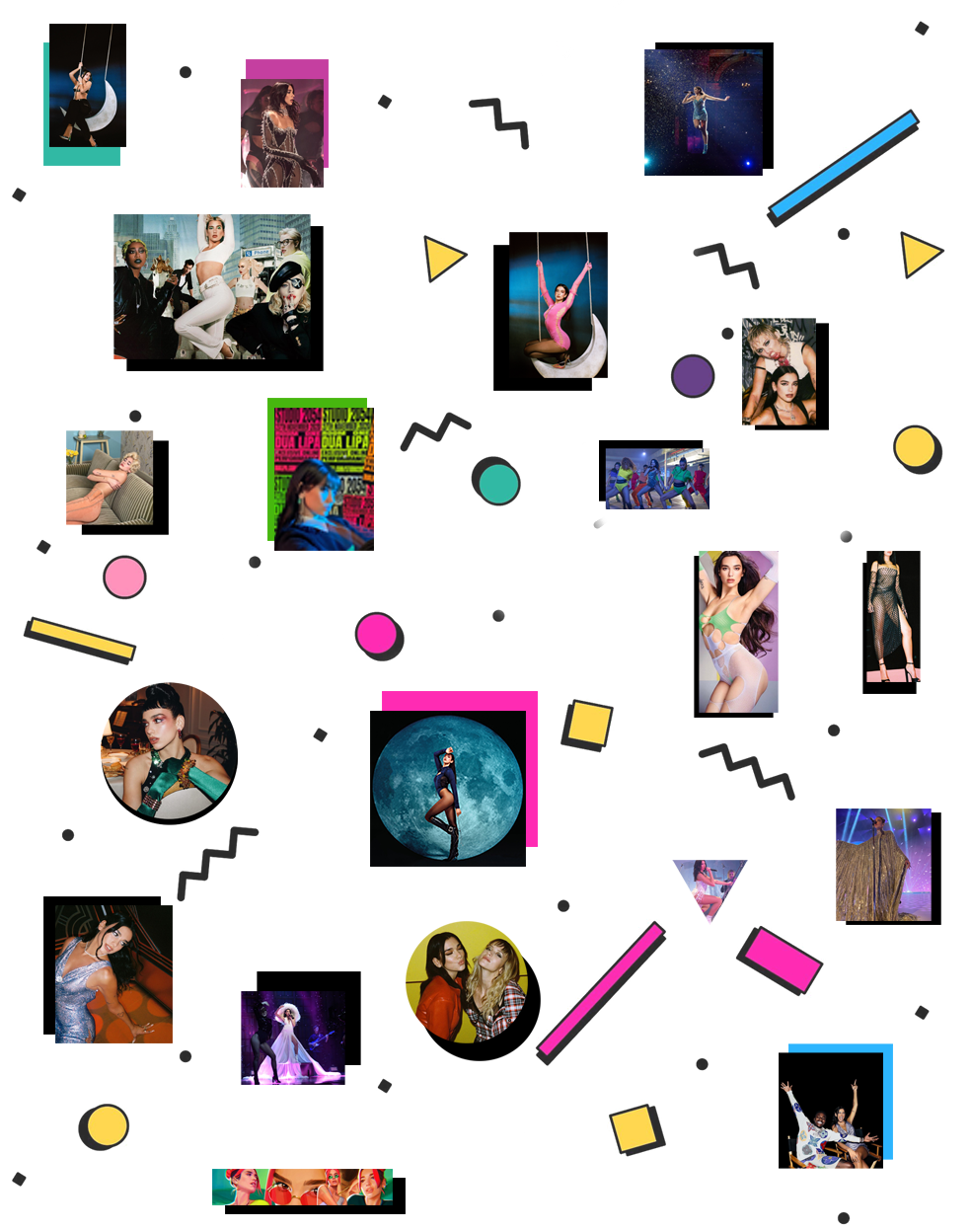
“We love to milk it,” Dua Lipa told Billboard late last year. Certainly, Dua has earned a reputation for dragging out her album eras for as long as possible. Her debut, self-titled album came with plenty of singles, remixes, and a “Complete Edition” with an additional three new songs coming at the end of the album’s cycle. Surprisingly, her sophomore album campaign has somehow put her first effort to shame. 

Within the past year, Dua has released a standard (12 track) album, a 17 track long remix album with The Blessed Madonna and various high-profile collaborations, five singles with music videos and distinct single album compilations, three high-profile collaborations (Un Dia, Fever, Prisoner), and a live-streamed concert. And it has all culminated into her latest release—Future Nostalgia: The Moonlight Edition.

In addition to a review of the new songs, it felt appropriate to also take a step back and understand why Dua and deluxe editions have become a polarizing topic.

The lead single for the Moonlight Edition is without a doubt not bad. However, “We’re Good” fails to move Dua in any particularly interesting direction. Much like her debut, the production is crisp and contemporary but doesn’t leave a mark. The trap beat and chill guitar contrast Dua’s husky vocals nicely, but it is neither futuristic nor nostalgic. Juding from interviews, it is clear that Dua was aware of this, comparing her anxiety about releasing it to the fear she felt before releasing the incredible “Don’t Start Now.” Whereas the latter was indeed a leap in sound for Dua, it was interesting and intricate enough to build into the hit that it is now. Will this new single do the same? It is possible that the laid-back, dare I say, basic trap undertones may propel it up the charts. Dua’s fears are unfortunately not entirely misplaced.

Back on track, “If It Ain’t Me” features a now-signature Dua bassline and catchy breakup hook as she sings, “I fill the floor with my sequin tears.” Less love-anxious and more in charge, “That Kind of Woman” is Dua at her retro best. The mid-tempo track features all the right synths and sporadic synths as Dua assures her future lover that she won’t be “one of many.” Things take an interesting turn for the final new track as rapper JID intros “Not My Problem”. Funky and crass, the track is quite the statement proclaiming, “if you’ve got issues, that’s your problem!” I am willing to defend the track on the ground that it has character and still feels like a throwback, although it is arguably not on the same quality standard as even the divisive “Good in Bed”. 

The four new tracks are interspersed with the collaborations Dua has released throughout the year. The seductive, European beat of “Fever” and Olivia Newton-John's sample on “Prisoner” do a good enough job to fit the theme of the original record. On the other hand, ending the new edition with the Latin American breakup track “Un Dia (One Day)” is a head-scratcher. This leads us to the bigger question--what was the point of this Moonlight Edition?

While Dua has been promising a “Side B” for months now, it is hard to argue that three new tracks fit the classifications for a “Side B” release. It seems clear that the standard version of the album was short and compact for a reason; Dua had a clear artistic vision for the record. Is this new edition simply a money-grabbing move, or does it still hold the artistic merit the original record holds?

I am going to have to do some assuming in terms of Dua’s motivations in order to defend the new edition, but it stands to reason that although it is not an entirely cohesive addition, The Moonlight Edition is a continuation of the Future Nostalgia Era in its magnitude of content and artistic exploration for Dua. 

We have certainly not seen such a thorough and detailed rollout from a pop artist since the breakouts of Lady Gaga and Katy Perry. The past year for Dua has demonstrated that she understands the value of having both a striking visual identity but likewise the confidence to switch it up. The sheer amount of releases and performances, particularly in the context of the pandemic, is second to none in the current pop music industry. It is no wonder that past icons like Kylie and Madonna have praised and collaborated with Dua. Thus, the new edition is simply a continuation of the past year, with more space-themed photoshoots and nostalgic music videos. Although “We’re Good” may sonically fit the record, the Titanic-themed music video seals the deal. 

Image via

Image via

If we are comparing Dua to past artists, it also stands that she is certainly not the first to reissue an album. Nearly two years after its release, Katy Perry repackaged Teenage Dream into The Complete Confection with three new songs and a few new collaborations. While Dua’s rise to prominence has often been compared to Katy, this latest release does parallel the glorious pop era that was Teenage Dream, even if winding down in a similarly confusing note. 

Original image via

Original image via

Although deluxe editions were standard among pop artists, they have slowly faded away, most likely since those editions were always pushed by the labels more than the artist. However, as labels continue to try and maintain profits in a new streaming world, these deluxe editions are cropping up as delayed reissued editions. Aside from Dua, both Selena Gomez and Ariana Grande have released deluxe versions of their latest albums months after their initial release.

In the case of Ariana’s Positions, a similar thread of disappointment from fans has cropped up, wondering why the songs are so short or not all that special compared to the standard tracks (and at least Gomez and Dua provided new covers for the new editions). Had the deluxe edition come at release, it is likely that most people would not have cared, simply understanding that they are extra songs. The same reasoning appears to apply to Dua; feeling letdown comes more from the hype that is created by waiting to release the songs, rather than from the actual quality of them.

Dua’s Future Nostalgia: The Moonlight Edition presents us with a special mixture of both pop excellence and the pitfalls of the music industry. For one, the reissue may seem unnecessary to many people, especially in an era where the experience of an album has decreased in favor of singles. It is, however, a callback to the icons of pop that understand the power of creating a fleshed-out and consistent era. There is great attention to giving fans a lot of content, of which even the meh quality is great. I will not say that adding some collaborations to the album is simply a grab for more streams, but at the same time, Dua is having to wade through a more unstable sea of streaming and charts. If having the most-streamed album by a female artist in Spotify history, and Future Nostalgia out streaming others in 2020 is any indication, we should let Dua milk her eras for as long as she wants. 

Cover image created via here, here, and here

dua80s-11.png
dua80s-22.png
dua80s-11.png
dua80s-22.png
Dua collage images via; Selena Gomez images via; Ariana Grande image via; Background pattern via

Dua collage images via; Selena Gomez images via; Ariana Grande image via; Background pattern via

I Want a Smarter Emily in Paris

By now, we’ve all been bombarded with ads for Netflix’s newest, indulgent, rom-com-esque series: Emily in Paris. The clichéd content, and many posts like it, are sent my way by any friend who’s had to save 4 different versions of my phone number in their contacts.

And I don’t blame them; it has all the makings to poke fun at your local Chicago-based French major who has seemingly been studying abroad for forever. The series has Darren Star behind it, famed creator of Sex and the City—and it shows. Emily in Paris is decidedly less risqué, but has the same level of maddeningly unrealistic cringe that young audiences no longer find tolerable.

I might be a bit envious of the ease with which Emily takes on Paris, but I think the time for a Darren Star-style show to hit the mainstream has passed. Sex and the City was a cultural phenomenon thanks to its sexually-liberated Samantha, its judgmental Charlotte, and the unapologetic Carrie and Miranda. The women of the show were flawed and while their lives in New York catered to a (very white) fantasy, the issues they dealt with still pushed the envelope for mainstream media at the time. Emily in Paris cannot say the same.

Emily beaming after telling the French they should really stop smoking. Image via.

Emily beaming after telling the French they should really stop smoking. Image via.

The show is cute, and I don’t hate it for being just that. Star’s intention behind it seems to be escapism, and many fans have defended its right to be as cheesy and dreamy as it wants to be. In a sense, it would be unreasonable to expect a cutesy plot about a 20-something marketing exec to give us a documentary-like image of Paris. But the problem with the series isn’t just its departure from reality. It’s just that this imaginary Paris is — quite simply — really freaking boring.

You don’t have to know the City of Lights to yawn at the prospect of an American girl prancing around a European city, bound to fall in love with a charming man whose language she’ll never learn. The American transplants I’ve met overseas, far from home and fiercely independent, have (usually) been so much more than that. What could Emily in Paris have been if we got a glimpse of real expat-struggles beyond the snooty French colleague?

What if Emily was constantly sweating on the metro, having to get a bank account before getting an apartment but needing an apartment before opening a bank account, or even left surviving on a bag of chips because she slept in past Sunday grocery closures? And what if she interacted with more than one black person? What if the clear lack of diversity in her office was addressed, or at the very least poked fun at? Paris is indeed one of the most diverse cities in Europe.

And what if Emily was, you know, not a wealthy white woman with a golden path to Paris laid out for her? The most interesting expats I’ve met are those who’ve moved abroad on their own accord. They’ve dealt firsthand with the discrimination and exclusivity that’s all too common in Parisian culture and still made strong communities for themselves in the city.

Judging you, Em. Image via.

Judging you, Em. Image via.

In a way, the casting of Lily Collins as Emily Cooper was perfect. Collins has long been compared to Audrey Hepburn, whose big brown eyes and delicate features made her the lead of Funny Face. Hepburn played that “all-American girl,” impishly working in a bookstore before being jetted off to Paris to live a life of luxury. Collins’s character represents much of the same as the 1950s (!) relic, which is exactly why it’s so underwhelming.

Sure, the series is a means for escape, conveniently unengaging for these times of high stress. But in a moment where many parts of our society are at a threshold, Emily in Paris could’ve taken steps to be as relevant, thought-provoking, and somehow-still-funny as shows like Insecure or I May Destroy You. Star had the chance to create, at the very least, a fresh version of the American in Paris storyline we know all too well. Regardless, the series is likely to be renewed by Netflix. Expats and dreamers alike can only hope that Darren Star will be bolder than ever in his second season, giving us the accessible Madame Cooper we truly need.

Cover image via.

HBO's We Are Who We Are: Coming of Age in Lasting Color

If we take a moment to think about what it means to be young, multitudes of overly-emotive buzz-words might come to mind. Angst. Ignorance. Chaos. Feeling everything, everything, everything. 

It’s the new HBO series, Luca Guadagnino’s We Are Who We Are (stylized as WRWWR) that reminded me of these very moments. The show follows the lives of a bundle of teens on an American military base stationed in Italy; the camera weaves throughout their lives oh-so slowly, languid and balmy in a way reminiscent of Guadagnino's Call Me By Your Name (2017). As I draft this from my back porch, fingers, nose, and toes chilled from the crisp Chicago air, I can only wish to be in this warmth. 

wrwwr first.JPG

It’s in an Italian airport that we meet Fraser (Jack Dylan Grazer), eclectic and blasé, from his painted nails and bleach dye-job to his short-temper and smart mouth. His mother (Chloë Sevigny) and her occupation drive him in and out of towns until they land, this time, on an American military base in Italy. He expresses his disinterest in the town to no end, and as we follow him roaming the base, we learn that wandering seems to be the best way to try and figure out who you are. It’s what much of the kids in this show do, since there really isn’t much else. There’s no room to get lost. 

He takes a peculiar interest in Caitlin (Jordan Kristine Seamón), shadowing her as she ventures throughout the town. She seems to be quite the simple girl; she’s decently popular, goes to class, and is in a relationship with a boy named Sam (Benjamin L. Taylor II). But we soon discover much more than meets the eye. Fraser’s interest magnifies when he trails her down to a local shop to find her dressed in her father’s clothes, cap sitting low, getting a woman’s number. Harper is what she calls herself, not Caitlin. From then on, the two stick together.

Jordan Kristine Seamón as Caitlin

Jordan Kristine Seamón as Caitlin

Jack Dylan Grazer as Fraser

Jack Dylan Grazer as Fraser

She’s the power of the body. She’s the disruption of the enigma of the body, which is typical of adulthood.

Francesca Manieri, writer for WRWWR, on Caitlin

Much like Fraser’s outlook on life, I’d like to think there’s no need to identify with a version of ourselves that feels false. There are no roles destined for us, no matter how alienated we might feel from the world. It’s falling prey to the alienation from ourselves that is truly harmful in the long run. Of course, these are simply words on a page. It’s not that easy, and I don’t think it ever will be. For the kids on the army base, things are straight to the point, no wiggle room. It’s Fraser who stirs things up, and for Caitlin, he’s opened up a completely new door and shows her that she can be somebody else. 

They test the boundaries of their small world through the act of self-discovery. In the first two episodes, gender presentation and identity aren’t explicitly talked about. It’s in the motions, subtle but strong. Blurred lines. Gift-giving. Vague words with strong implications.

That is, until episode three. It comes to fruition as the two lay side-by-side on Fraser’s bed, looking at pictures of people pre and post-transition. Caitlin’s fingers run across the computer screen in wonder and curiosity, and Fraser tells her that “you can cut that bullshit.” The binary, the gender roles, all of it. As the camera floats around them, Blood Orange croons, “Come into my bedroom, come into my bedroom…” 

wrwwr computer.jpg

Devonté Hynes, widely known under his alias Blood Orange, is the musical genius behind WRWWR’s score. From Palo Alto (2014) to Queen & Slim (2019), Hynes already has a bit of work under his belt; Guadagnino claimed Hynes was the only artist he wanted to make music for the show. It's what made me want to watch it in the first place. I’ve often caught myself wishing Hynes’ music could be the score of my own life; it’s nostalgic and familiar, stirring up a cosmic force inside of me that breathes, “burn bright and live.” 

A few of his songs under Blood Orange appear throughout the show. Time Will Tell, though, off his 2013 album Cupid Deluxe, is the anthem.  Diegetic, too, not just background music. Fraser plays it in his headphones often, winding it forward and back to hear the good parts, and when he shares an earbud with Caitlin… 

Time will tell if you can figure this and work it out

No one's waiting for you anyway, so don't be stressed now

Fraser runs it back, and when Caitlin questions, “Again?” Fraser simply responds, “I like the way he says that.” 

The lyrics are comforting in a way that’s adverse to the first three episodes’ set of titles, “right here right now.” Perhaps it’s a play on urgency. The way every moment of your teenage years feels so monumental. The way we have the innate desire to figure it all out. Fraser, though, seems to be in no rush.

wrwwr last.JPG

We Are Who We Are is currently streaming on HBO.

Photos courtesy of the official WRWWR Instagram

Thumbnail Via

Minorities in the Arts: The Review

Off-Off Campus, the country’s oldest collegiate improv and sketch comedy group, usually boasts a packed show. On the night of November 15th, the crowd was off the charts—even by their measure. By 7:00 PM, there was already a line outside the Revival Theater, where Off-Off presented Minorities in the Arts: The Musical. By 7:15, the show was sold out. Campus was abuzz with excitement for the 33rd Generation’s musical comedy, and judging by the length of the line, expectations were high.

The show started in an unassuming way. Six students sit in a classroom, accompanied by their guidance counselor, Ms. Squiggles (Liva Pierce). Though it’s obvious from the start that we’re looking at a group of oddball seniors, we don’t know just how bizarre they are until the plot line begins to unfold. Over the loudspeaker, Principal Mommy (voiced by Zavior Phillips/Andrew Olmstead) begins his morning announcements by monologuing about the fact that his last name is, in fact, Mommy. But then, bad news strikes: because of budget cuts, there will only be five letters of recommendation given out to the senior class. To figure out who will receive the letters, these six high school seniors have to compete in a talent show.

At the news, the characters break out into their first musical number: The Letter. Through this delightfully rhythmic opening number and the following dialogue, we begin to learn more about the characters. Dawn F. Kennedy (Anne Lim) is destined for Yale, Topaz Lee Miller (Sofia Nam) is half-penguin, Blade Wrunner (Alex Rosencrance) has serious daddy issues, Leo Sagittarius (Joelle Blankson) is secretly a teenage spy, Jazz Z. Hands (Joey Cipriano) is a musical theater geek, and Peter Sampson (AJ Kinstlick) is a champion squash player. Most importantly, none of them have any idea what they’re going to do for the talent show. Janitor Wishbone (Bradley Goldsmith) goes around the school trying to support the students, but most of his energy is spent pining after Ms. Squiggles.

Off-Off Campus’ 33rd Generation: Alex Rosencrance, Liva Pierce, Bradley Goldsmith, Joelle Blankson, AJ Kinstlick, Anne Lim, Sofia Nam, Joey Cipriano (from left to right); via https://offoffcampus.org/

Off-Off Campus’ 33rd Generation: Alex Rosencrance, Liva Pierce, Bradley Goldsmith, Joelle Blankson, AJ Kinstlick, Anne Lim, Sofia Nam, Joey Cipriano (from left to right); via https://offoffcampus.org/

We slowly learn that what’s more important than beating their classmates in the show is the friendships they form along the way. This is, of course, an excruciatingly cheesy message, and the script is filled with purposeful jabs at itself the whole way through. Despite the inherently self-deprecating nature of the show, the music is still engaging and surprisingly good—well, actually, rather unsurprisingly: the music and lyrics were written with the help of Greer Baxter, a member of Off-Off’s 31st generation and a Grammy Award-winning producer and singer. Though the quality of the music was expected, the execution is still potently funny, impressive, and all-around fantastic.

The hour-long musical is full of twists and turns, character bonding scenes, and a budding romance. It would be difficult to mention every hilarious moment in detail, but the two most notable ones are worth describing.

All the characters feel pretty helpless when it comes to competing in the musical, but Peter Sampson feels particularly so. As a champion squash player, he seemse to have no other talents. We see him attempting to play the piano (and epically failing), until Janitor Wishbone comes onto the scene and outs himself as a genie. He pretends to grant Peter his wish of being able to play the piano, but as it turns out, he didn’t grant him the wish at all, but instead instilled in Peter a sense of self-confidence.

Another fantastic scene in the show occurs in a Left High School bathroom. Topaz and Dawn are getting ready for the big show and begin to discover that their lives have a lot of similarities. They both carry around a piece of egg shell in their back pockets; they’re both half-penguin, half-human; and Topaz has a single dad, while Dawn has a single mom. In fact, they’re twins that were separated at birth! This delightful Parent Trap moment is one of the pinnacles of the show. From mentions of how the penguin gene is recessive, to the hilarious seriousness with which Topaz and Dawn smear red lipstick and eyeliner all of their faces in an attempt to get ready, the scene sent the crowd into continuous bouts of laughter.

Before the talent show begins, Principal Mommy announces that there is in fact only one recommendation letter for the entire class—only the winner gets it. In response, the students, Ms. Squiggles, and Janitor Wishbone revolt, belting the fantastic Recommendation Revolution. The future looks grim for the seniors at Left High School, but Janitor Wishbone—who, as we know, is a genie—saves the day. He turns Left High School into Left College, giving everyone a shot at a college degree.

Minorities in the Arts: The Musical is a fantastic show. It mixes catchy, clever music with the hilarious wit that Off-Off so masterfully embodies, to create a piece that left me excited more than ever for their next performance. Here’s to hoping that this isn’t the last musical comedy we see from them!