The Quarantine Hyperfixation that Stuck

Five months after move-in day and I have just about settled into my lovely IHouse single room. A kettle, microwave-fridge-freezer, wardrobe full of clothes, and semi-functioning radiator are now at my disposal. Yet my room is markedly different to my room back in Leeds, England (a 2 hour train ride from London, for those who need a reference); I have no sewing machine here.

Cycling through hobbies - rather, hyperfixations- was one of the things which kept me semi-sane during the various national lockdowns last year and the year before. Between riveting online classes, I started reading fiction for fun again, made some tacky jewellery, and then tried to learn Russian on Duolingo. (I may still have the Russian alphabet keyboard on my phone, but do not test me on anything other than “привет”). Each of these phases lasted for a couple of weeks before I needed to find something else to stop me doomscrolling on TikTok all day.

During my 5-hours-a-day doomscrolling era (don’t judge), my algorithm, which had worked out I was into fashion, kept feeding me thrift flips à la the videos in this compilation. I impulsively bought a sewing machine and decided to start altering and upcycling some of the clothes in the back of my wardrobe.

My first sewing machine. Featured image via (yes, sorry, it was from Amazon).

I bought this sewing machine and it served its purpose for a while, honestly. It even came with pre-wound bobbins. After a year almost daily use and abuse, RIP this sewing machine though (2020-2021).

My aim was to teach myself how to sew from scratch, and after allowing myself to watch one (1) YouTube tutorial on how to thread my machine, I began by hemming a pair of trousers which I would previously have to awkwardly roll up, and thus rarely wore. Lots of tedious stitch unpicking and re-sewing later, I had a now wearable pair of trousers.

After staying up for hours at a time wrestling with my machine, and upcycling the clothes I already had, I set myself a goal of making something from scratch. When my local charity shops reopened, I bought a baby pink bedsheet which would form the basis of the next stage of my sewing obsession. I started with a tote bag, then another tote bag, this time with better stitching, and then yet another tote bag for my little sister (my first client??) because she liked the ones I made myself. Then, I made my first pattern and constructed a corset top from that same cotton bedsheet. It was pretty rough but, after that, I was inspired to buy some fabric in a colour I would wear (those who know me know that I only wear dark pink, green, or purple monochrome outfits). After a few more hours, I now had a purple flower print corset top complete with bias binding and a lace up back!

You may be wondering why this hobby stuck and others didn’t. For someone who gets bored easily, I was also surprised. Some may think it is the sunk cost (hi econ majors) of the sewing machine, fabric, thread, et al., but it was more the sense of guilt I felt that I owned many clothes that I hardly wore because they didn’t fit me correctly. The coalescence of being an impulse purchaser (I’m working on it, don’t worry) and my intense reluctance to get rid of anything I have bought, left me with at least half of my wardrobe being almost unwearable.

Learning to sew was my first significant step towards slow fashion. Instead of buying a cheaply-made top that I kinda liked from a fast-fashion brand, I could now make the exact item I envisioned for myself by upcycling charity shop finds or from fabric I bought from a local craft store. When I wear an item I have made, I feel proud and confident- and the serotonin increase I get when someone asks me where it is from is unparalleled. I have started to curate my personal style, while still engaging with some current trends in a more sustainable way by upcycling and making clothes from scratch.

Sadly, the hotel sewing kit my mum brought me when my family came to visit Chicago recently is all I have for now, but I cannot wait to return home this summer to my new sewing machine- which actually has a warranty (but no pre-wound bobbins :/)- this summer.

Creativity in Quarantine: Glenys McGuire and Ruby Bromberg

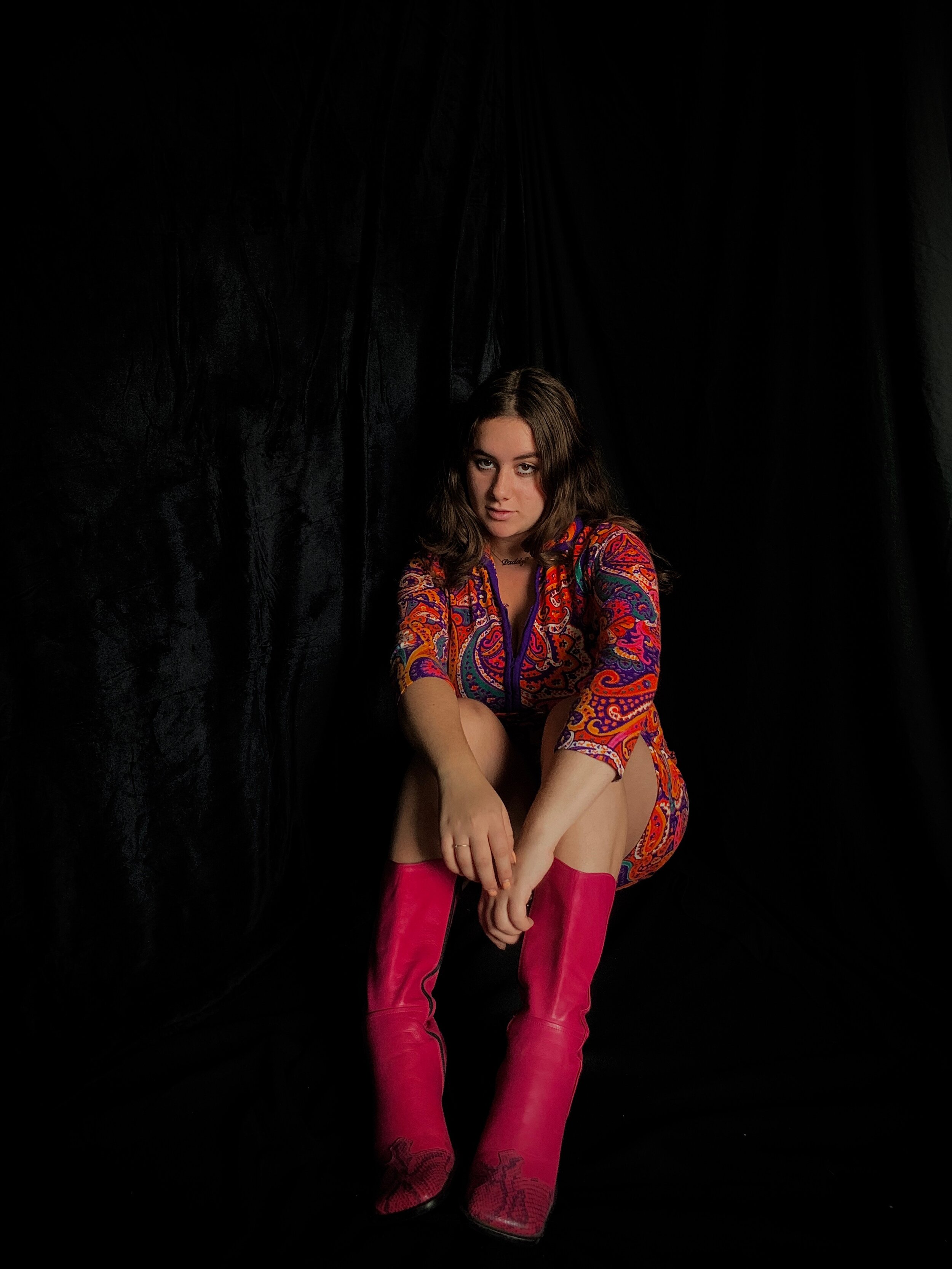
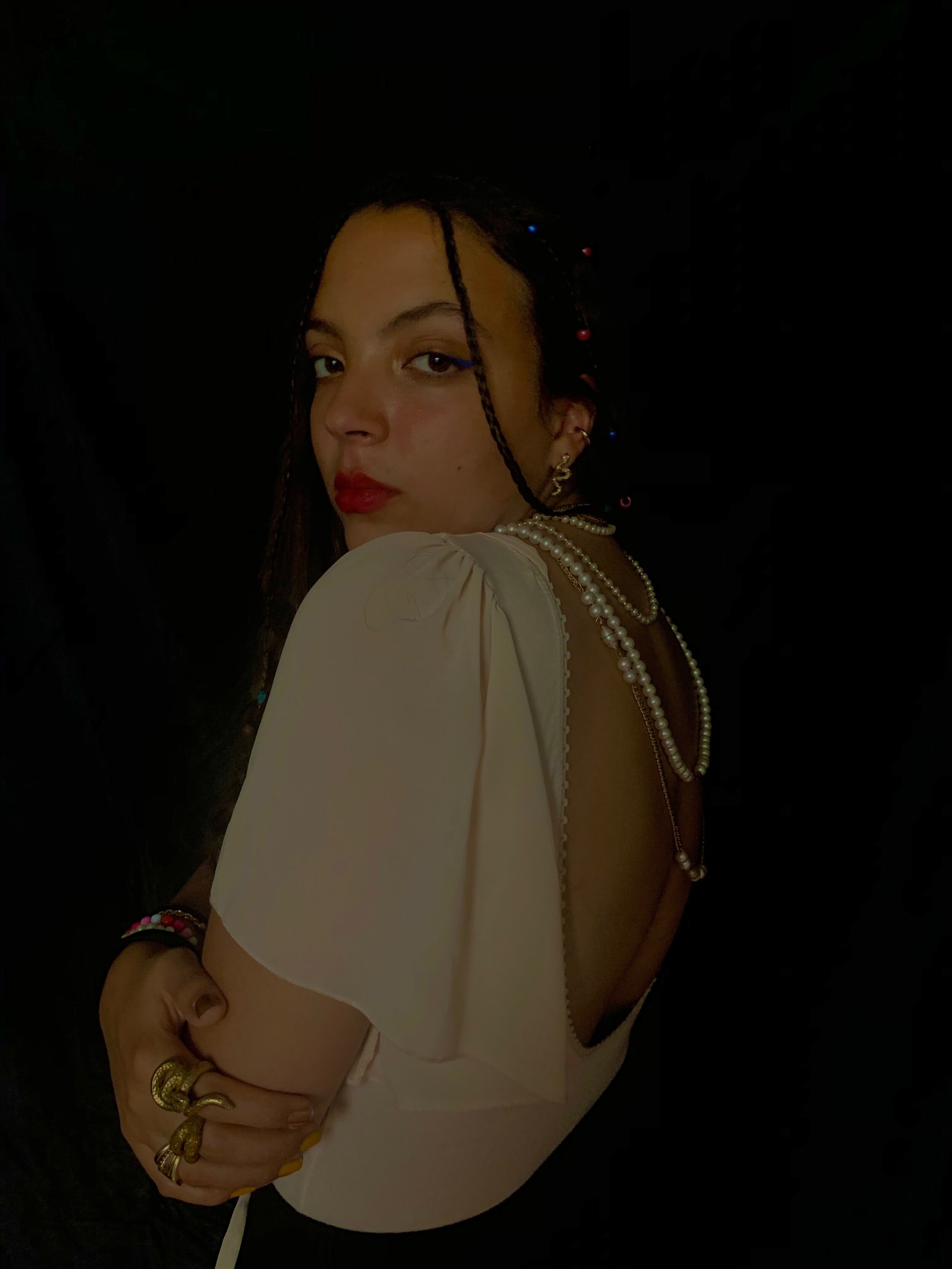
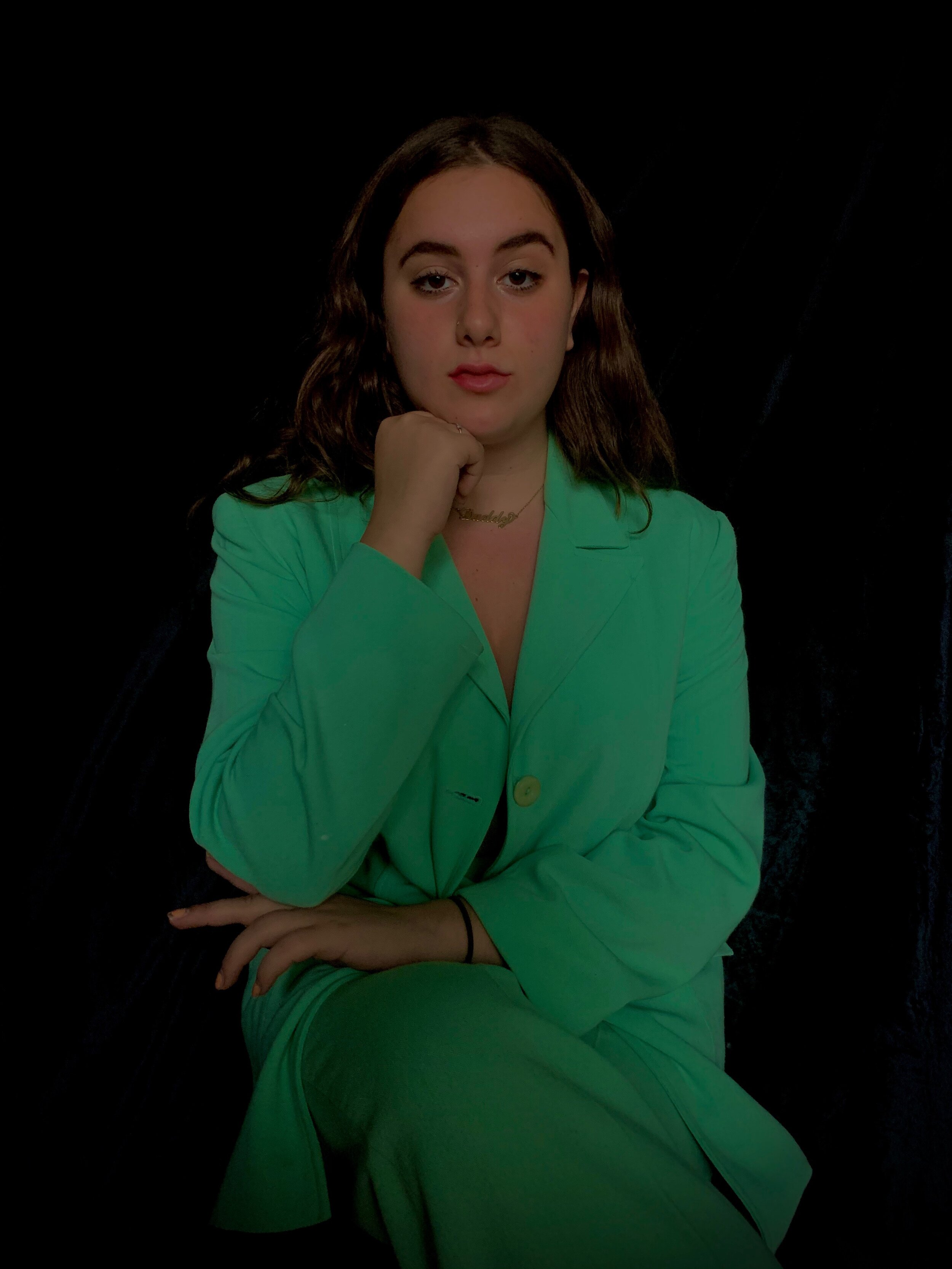
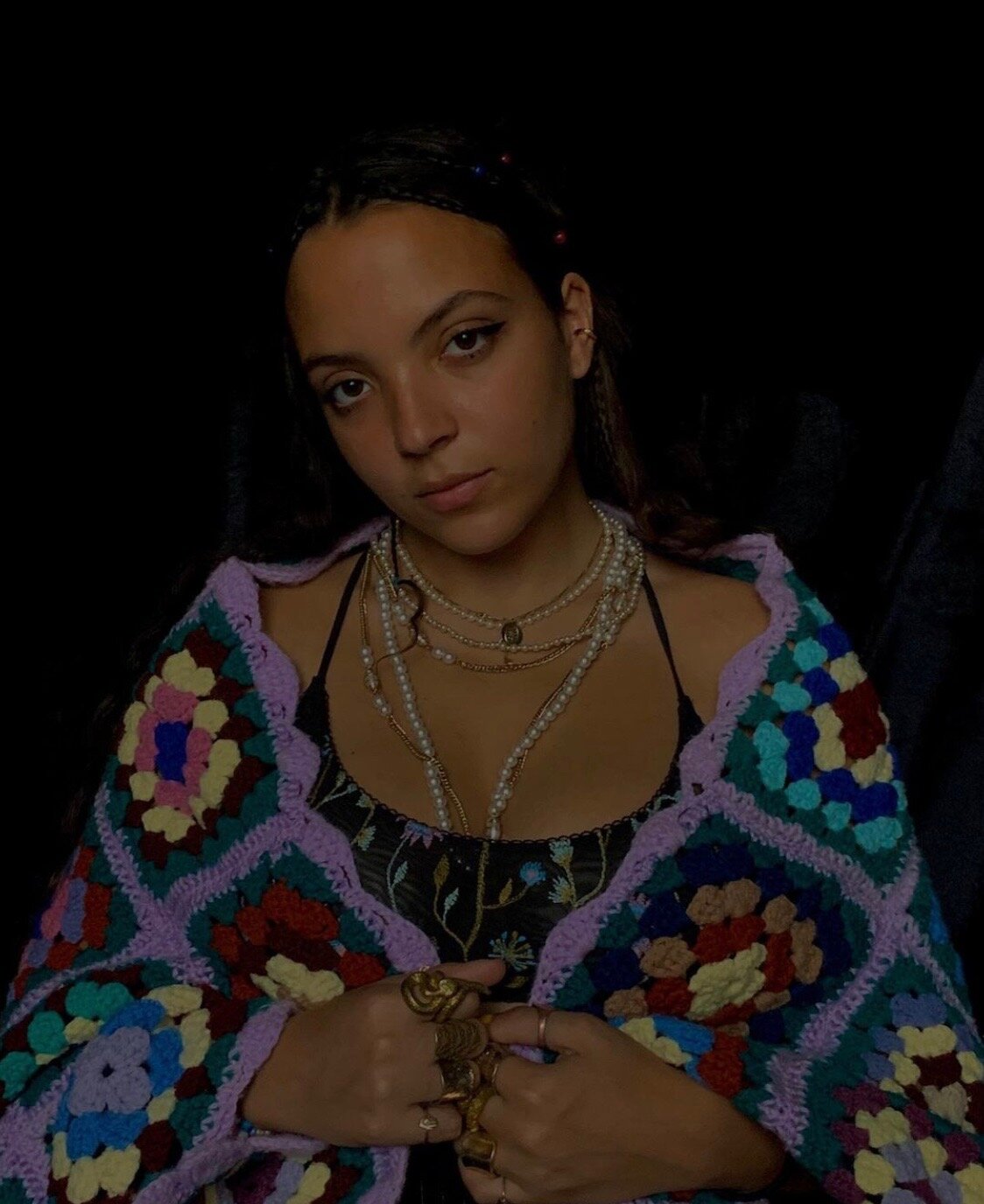
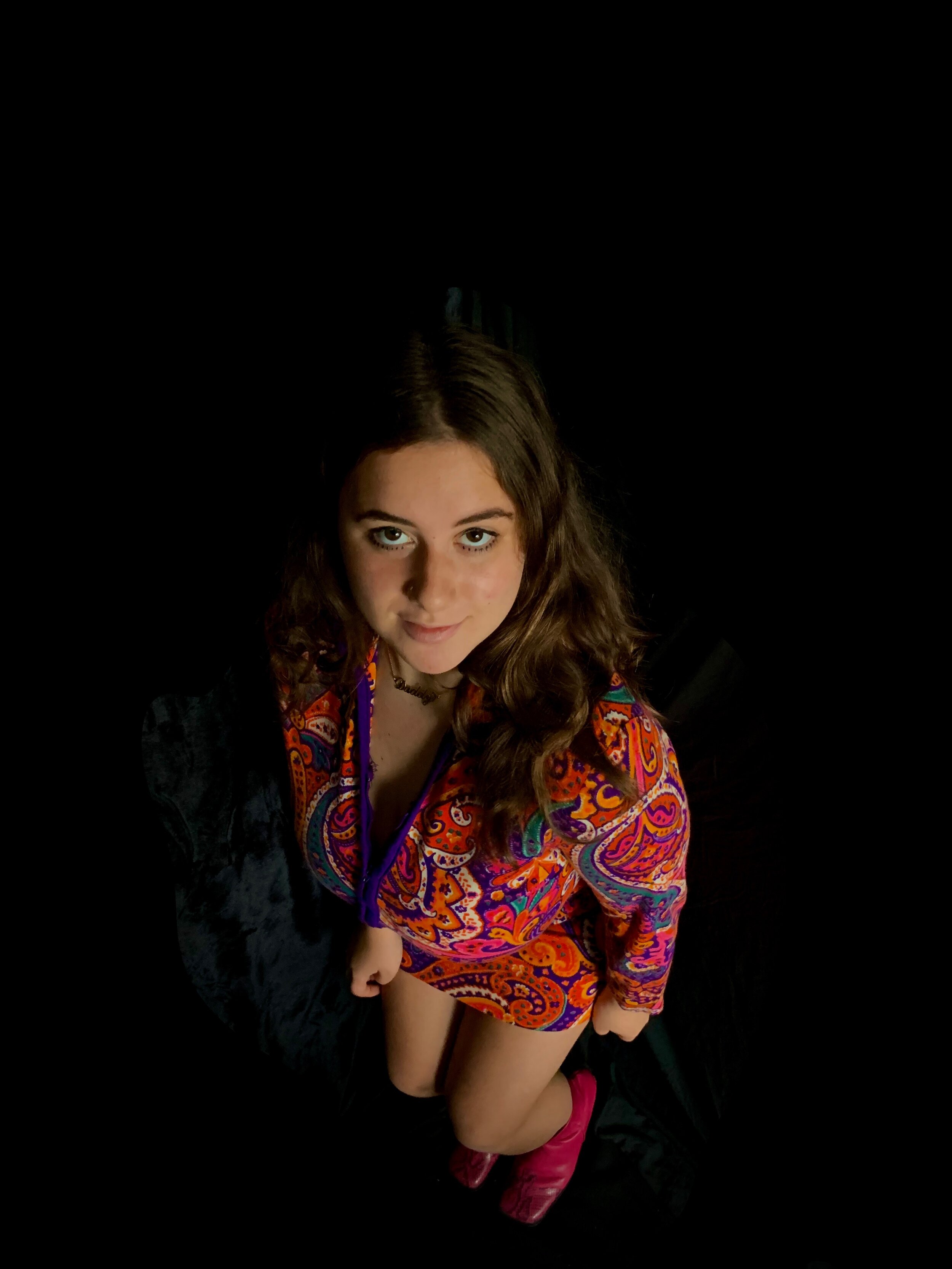
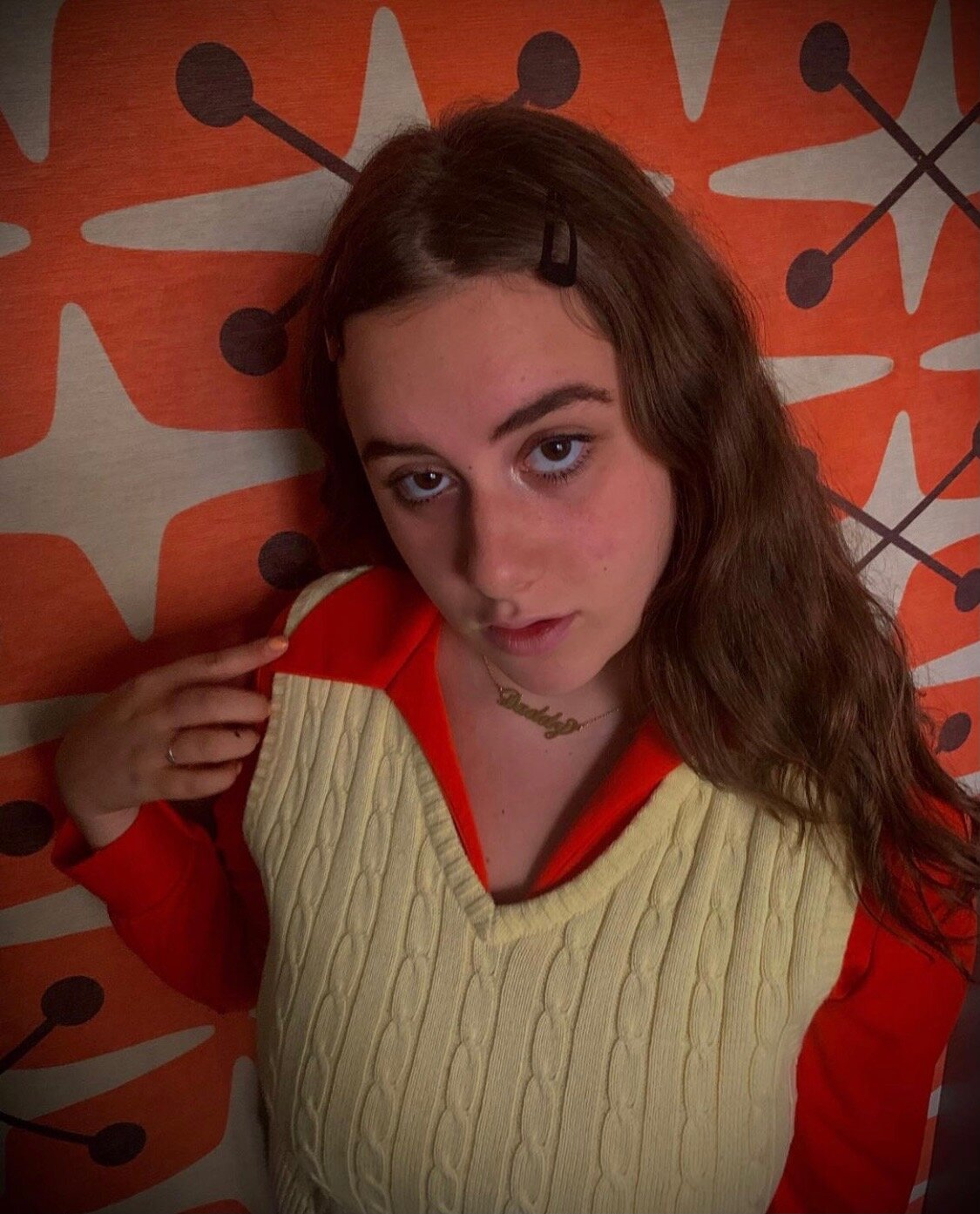
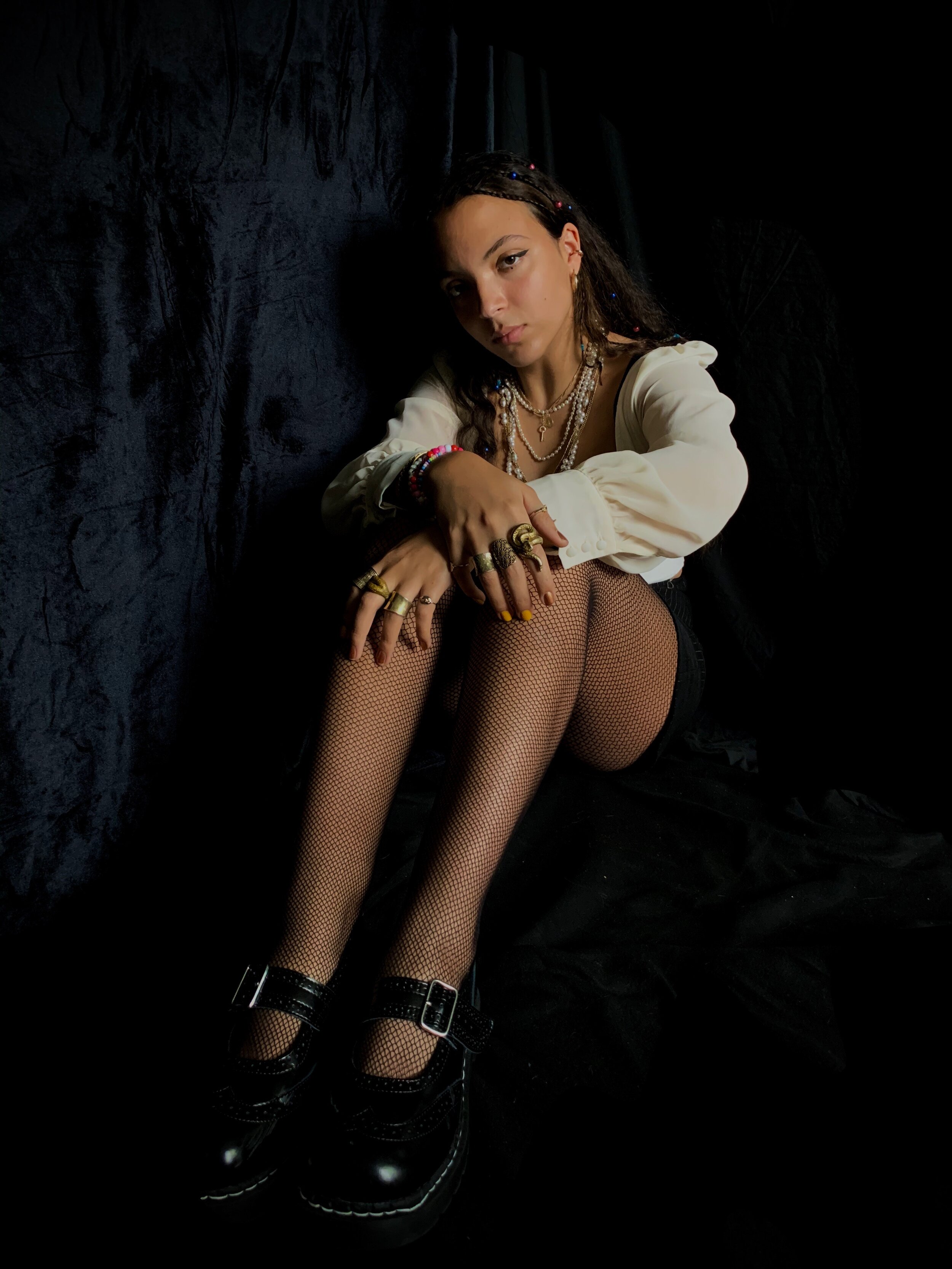
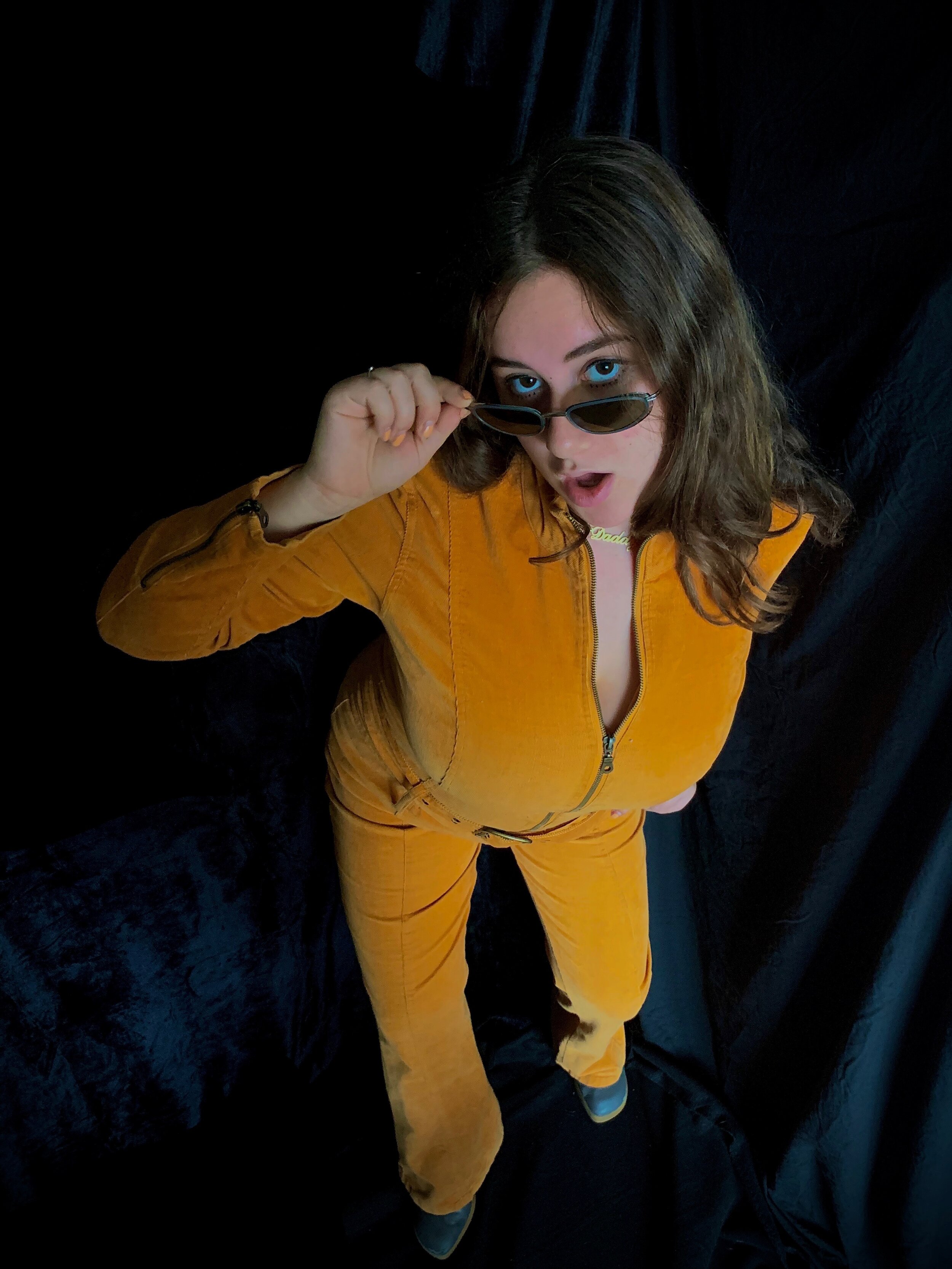
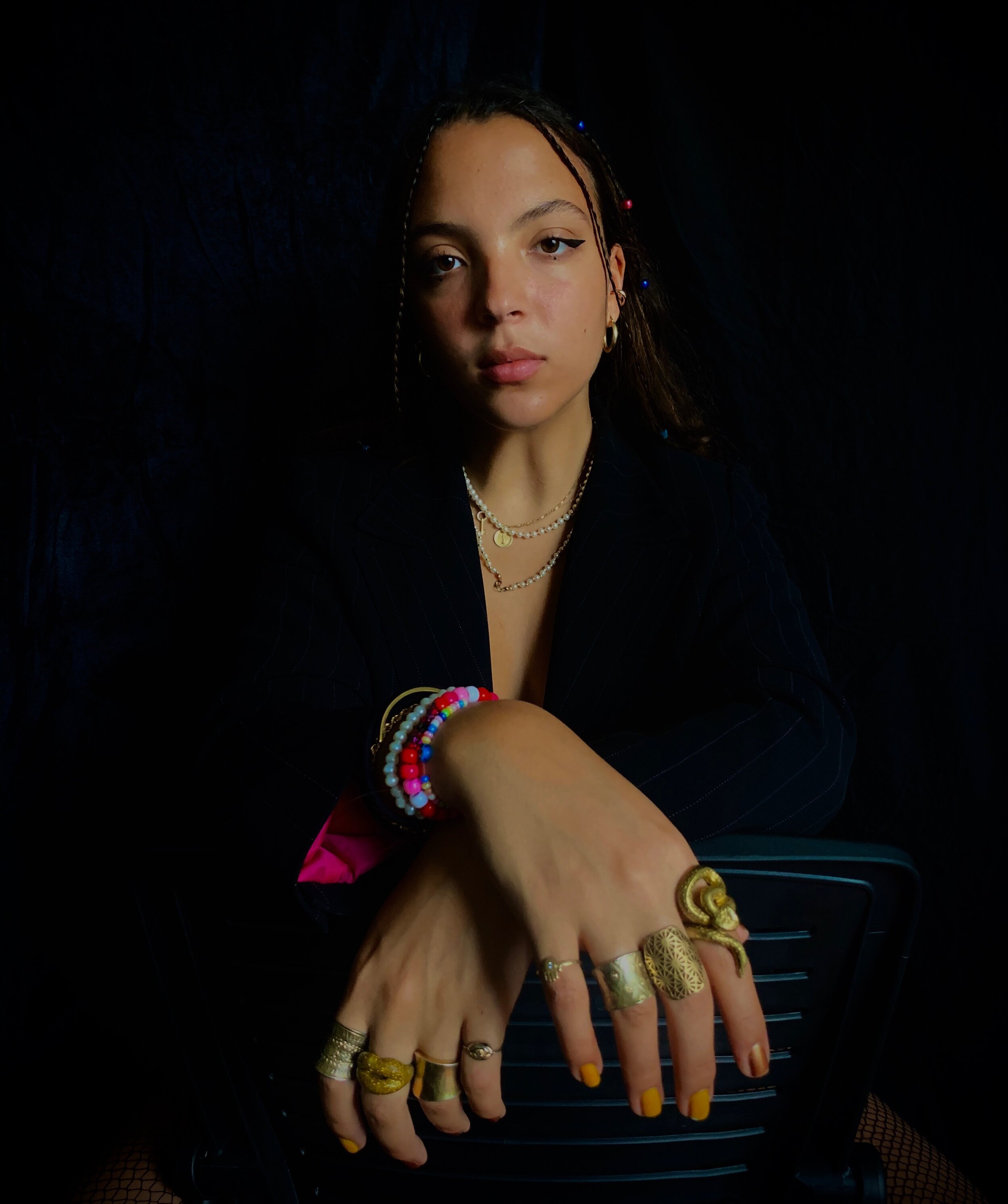
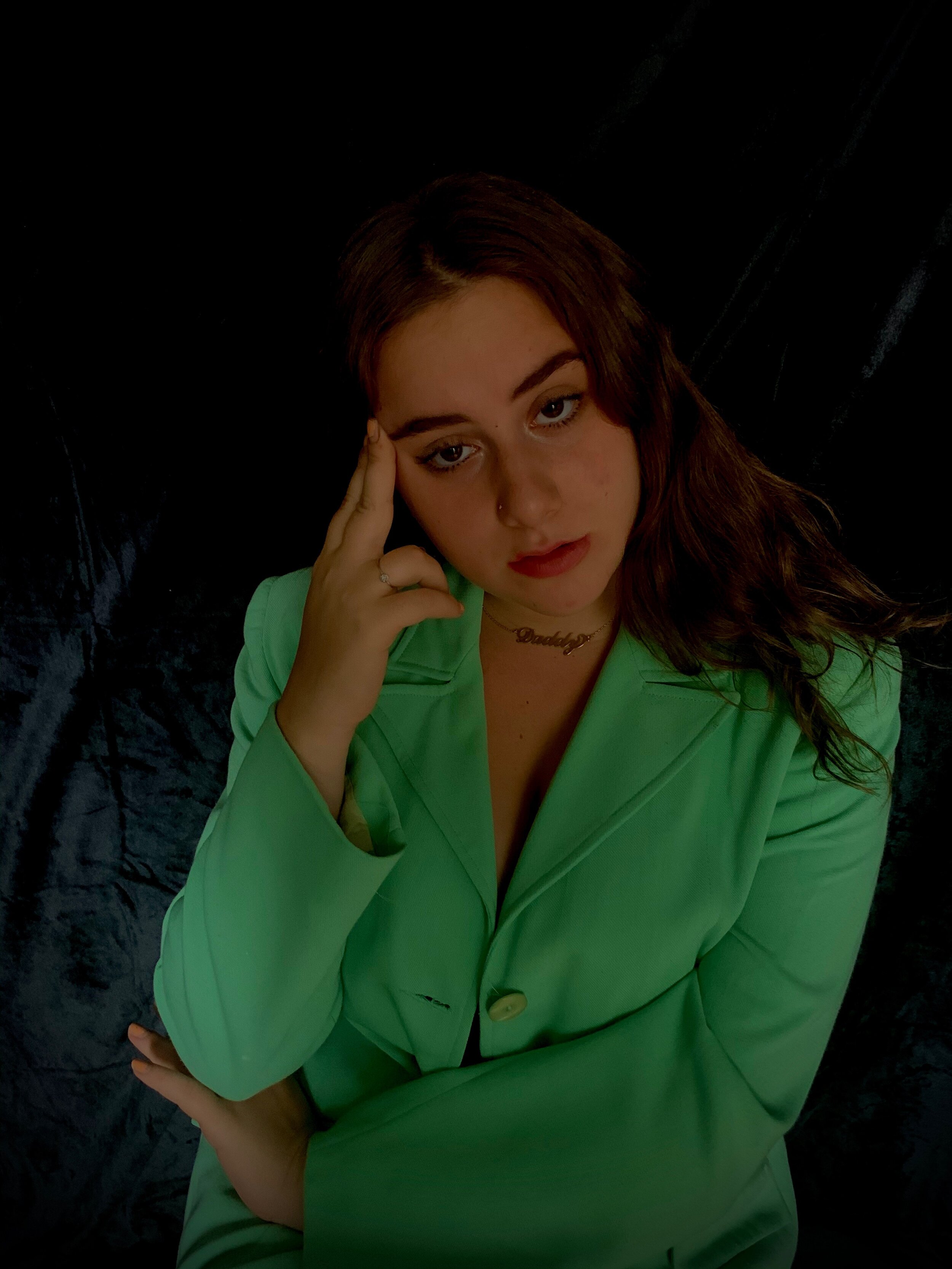
To remedy the feelings of isolation that manifest all too often in the time of COVID, University of Chicago first-years Glenys McGuire and Ruby Bromberg took matters into their own hands through a DIY creative project in their Woodlawn dorm rooms. The project? First, a meshing of wardrobes. Second, a photoshoot.

FullSizeRender-14.jpeg

Since arriving on campus this past September and forging an undeniably strong friendship, Ruby and Glenys have discussed sharing closets on multiple occasions. While they each maintain a distinct style aesthetic -- Ruby’s more of a 70’s chic and Glenys’ more of a general vintage/retro influenced by London street-style -- their closets speak to the same overall vibe while perhaps reflecting different eras. In other words, they maintain a similar aesthetic, but present that aesthetic rather differently, resulting in two distinctive styles. 

FullSizeRender-9.jpeg

While Ruby likes to rock tighter-fitting clothes with a statement piece or two, Glen’s outfits make a statement more through the cohesion of its different elements and thus through the entire outfit as a single entity. Such a contrast was the impetus behind the meshing of wardrobes -- to dress each other in items they wouldn’t normally wear, allowing themselves to push each other out of their comfort zones with respect to how they would normally present themselves. For example, Glen dressed Ruby in baggier clothes that Ruby would not have worn on a normal day.

Ruby found that she was able to love the way she felt in this entirely different cut; she still felt sexy, even without sporting a tight-fitting pair of pants. Glen, however, relies more on her face and hair (rather than her clothes) as manifestations of her femininity. Back in London, she typically wore darker, baggier clothes that some would characterize as “androgynous.” Yet through this meshing of wardrobes, she tried on more colorful, tighter-fitting pieces and too found success and joy in how she perceived herself.

FullSizeRender-13.jpeg

Such an intellectual and stylistic fusion could only be memorialized with a photoshoot. As they experimented with different outfit combinations, Ruby and Glen spoke at length about body image and the extent to which curating their own aesthetic makes them feel prouder and more confident in their bodies. While snapping solo pictures of each other, the conversation soon drifted into one about the juxtaposition of oneself with others in group pictures. The shots they captured below thus served to draw attention to the flattery inherent in individual, rather than collective beauty. 

This project, of creating remarkably well-composed images with just a dorm room and one other person available, was for Glenys and Ruby not only a means of creative expression, but also a morale booster amidst a time of emotional frustration and isolation.


Quarantine Skillshare: Arjun Kilaru’s Norm-Shifting, Logomania-Influenced Designs

Arjun Kilaru is a first-year probably majoring in some combination of economics, statistics, and sociology. He is involved with MODA Magazine and designed in the Winter 2020 Fashion Show and also produces for the UChicago Public Policy Podcasts. 

In the beginning of isolation, there was an incredible panic and shortage related to the distribution of masks. Now, as it has been mandated for people to wear masks while in public, increasingly more are teaching themselves to sew. Arjun Kilaru sits in a privileged place, amongst a family with a history of fashion design work, but advocates for learning how to sew by trial and error (he says that the seam ripper will be your best friend!). 

Arjun Kilaru chats with me about the inspiration behind his utilization of a mask in his MODA W’20 Collection, designing clothes for his girlfriend, and trends that originated on the runway that will hopefully be integrated into the mainstream. The conversation that follows has been edited for clarity and length. 


Ariana Garcia: When did you start designing and sewing?

Arjun Kilaru: So I first really started when I started [my collection] for the [MODA Fashion] Show. That was my first brush with it, but I knew a little bit before that because my mom used to make clothes as a designer and my grandma does too. It’s a really present thing in my family. So I kind of did the Show as a way to build that part of myself and I really learned a lot and I made something to be proud of.

Can you tell me more about the history of design in your family?

Yeah, so my grandma was a fashion designer and a tailor. She's been doing that for a super long time, from back when she was in India and Pakistan. My mom went to college for fashion design, which is what she did for her twenties before she came here. They both just have all this experience and gave me help and tips and showed me better ways to do things. The whole reason I [learned to sew and design] was to gain deeper connections with that aspect of my family that I hadn't really explored before. 

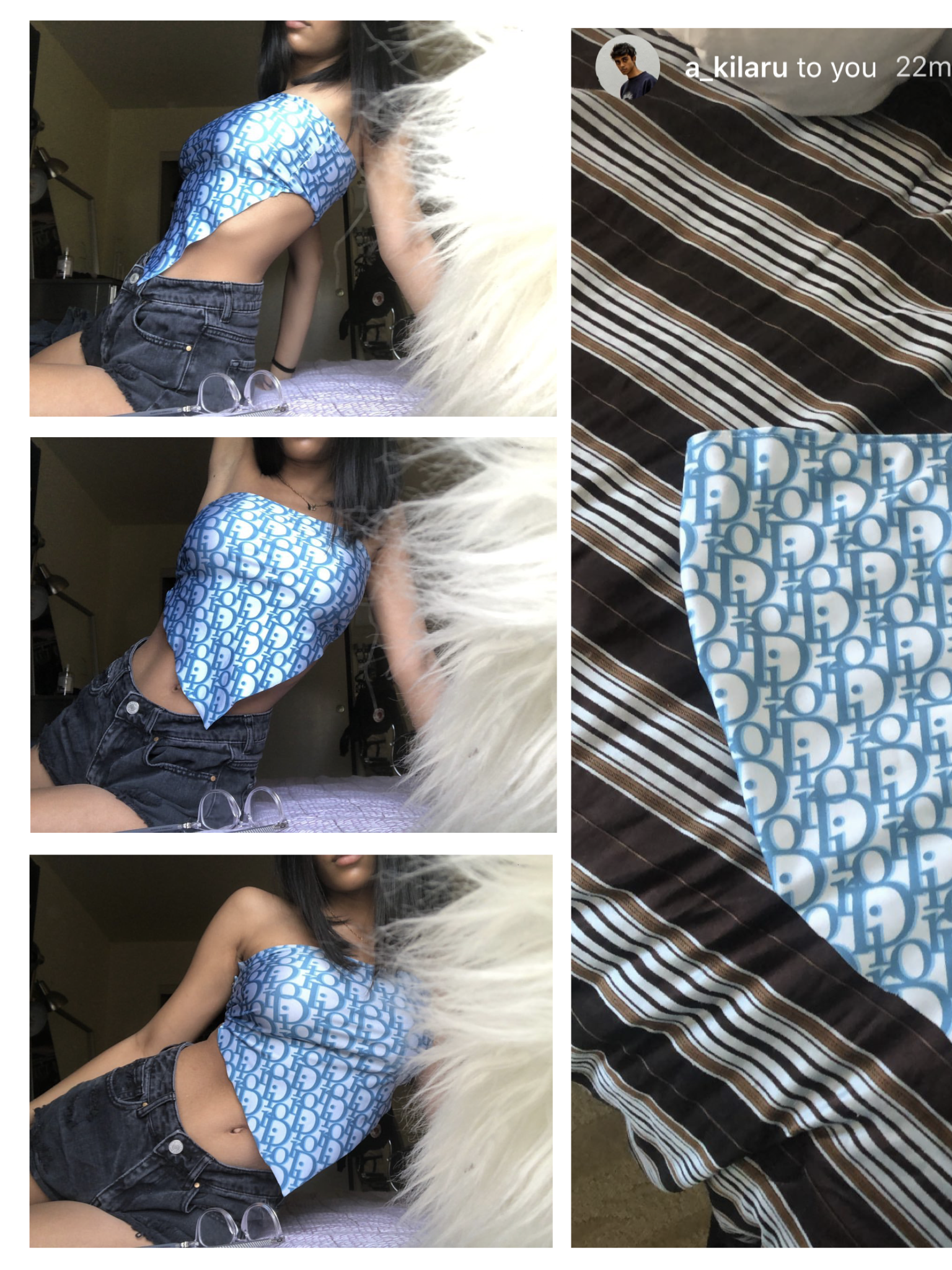
Bandeau Top Designed and Made By Arjun Kilaru, Modeled by @eshadkr

Bandeau Top Designed and Made By Arjun Kilaru, Modeled by @eshadkr

Have you noticed, from being taught by them, that there are specific habits that you have picked up?

They take a ton of measurements and to make it very specific for the person. I think that the clothes are more important than the person, which is one thing that we clash on. One reason why [they take a lot of measurements is because] they create formal wear, which is also why some of my pieces have a formal sense to them, like the collars and the dress.

Why do you think the clothes are more important than the person?

I've always made clothes for the purpose of them being shown at an exhibition. Whereas they make clothes to sell them to people and because people commission them, which is why they really focus on the person that they're making pieces for. I have never done it that way. But, I understand that [clothes are designed for different reasons]. 

Do you think that you usually tend to design towards either a person or towards a larger collection of work?

I usually make something to teach a technique to myself. [In terms of the two-piece set], I had never made a bikini top before and I wanted to learn by figuring it out through trial and error.


The best tool I have is not the [sewing]  machine, but the seam ripper. It takes apart the mistakes I made, so I can [go back and learn by redoing it]. This is important because I want to learn as many techniques as I can now so I can apply that to a collection later. Whenever I'm making something, the first thing I think is like, okay, what can I learn by making this?

Two-Piece Set Made During Quarantine, via Arjun Kilaru

Two-Piece Set Made During Quarantine, via Arjun Kilaru

As a follow-up to the picture you sent me of a two-piece set that you made for your girlfriend, what is the process like when you are designing something for a specific person versus when you are designing for a model or to explore some theme?

Before I start making something for someone, I already know what I want to make beforehand. I start with a sketch and then I pick a model. The way I [made the two-piece set in quarantine] is that I had an idea, took the measurements, and basically drafted a pattern using the little amount of fabric I had. It turned out really well! It’s really easy for me to alter it and make the design fit the person. 

Is there a difference between what you created for the Show and what you do outside of that?

For the Show, I had a theme that I really wanted to follow, which was using florals as a way to comment on gender. All of the measurements were exactly to fit the models. Whereas what I make on my own, I work with what materials I have and I'm not following any specific patterns; I'm doing whatever I want and eyeballing it. For example, right now I have just been buying some fabric online and picking out something in my closet and making something similar by cutting a template from it. It's a lot more freeing and I'm building my own skills. 

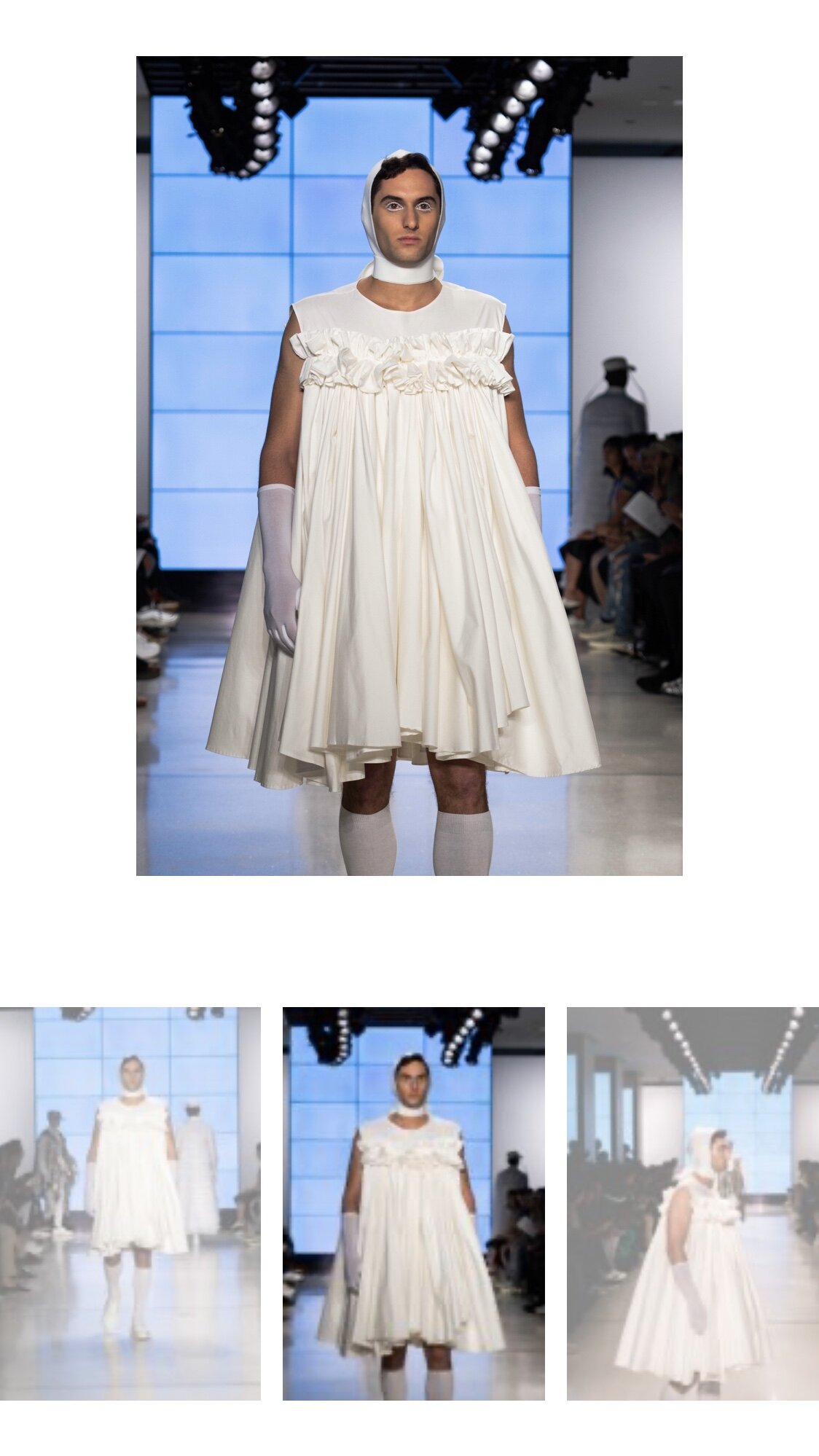
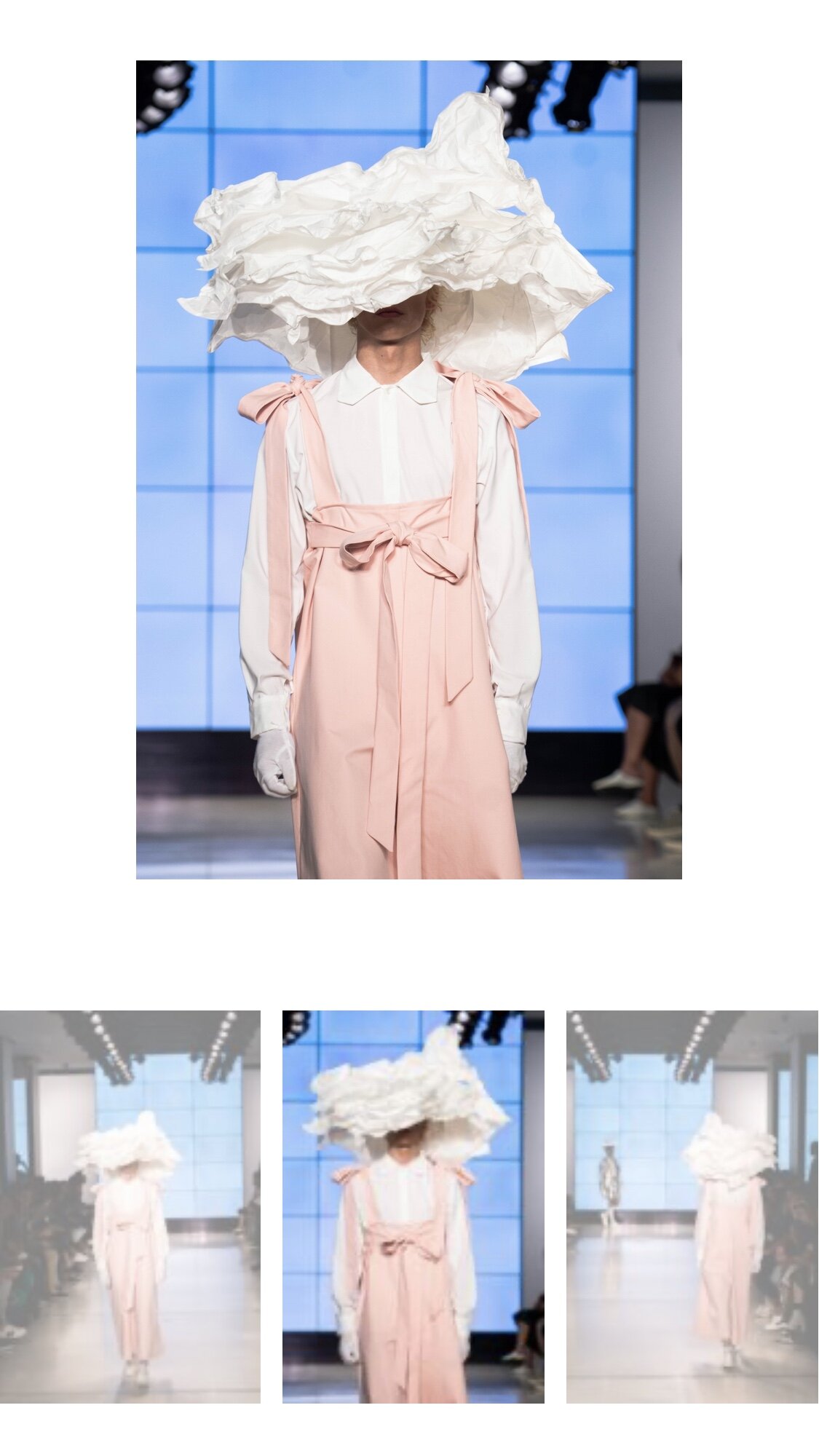
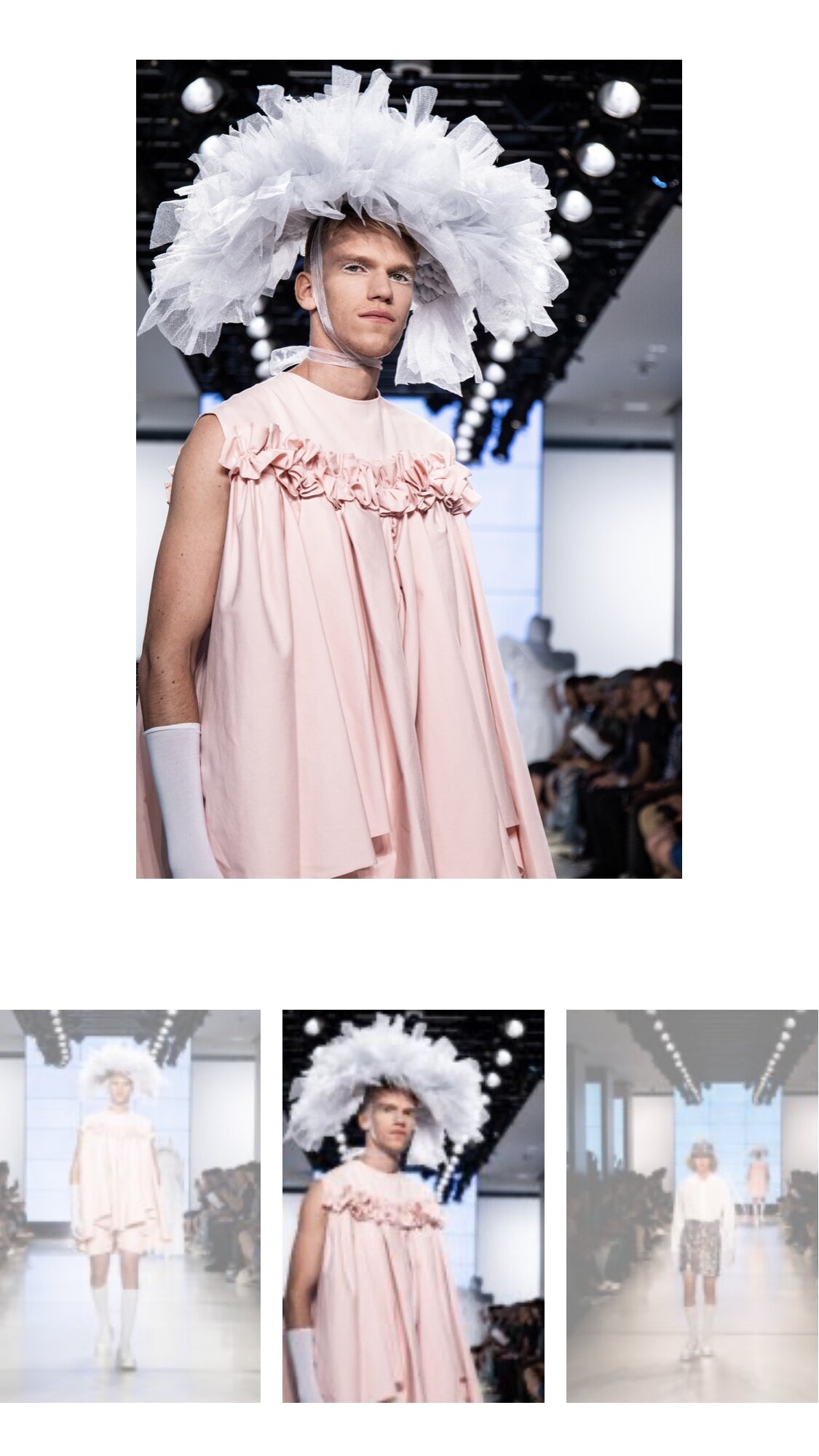
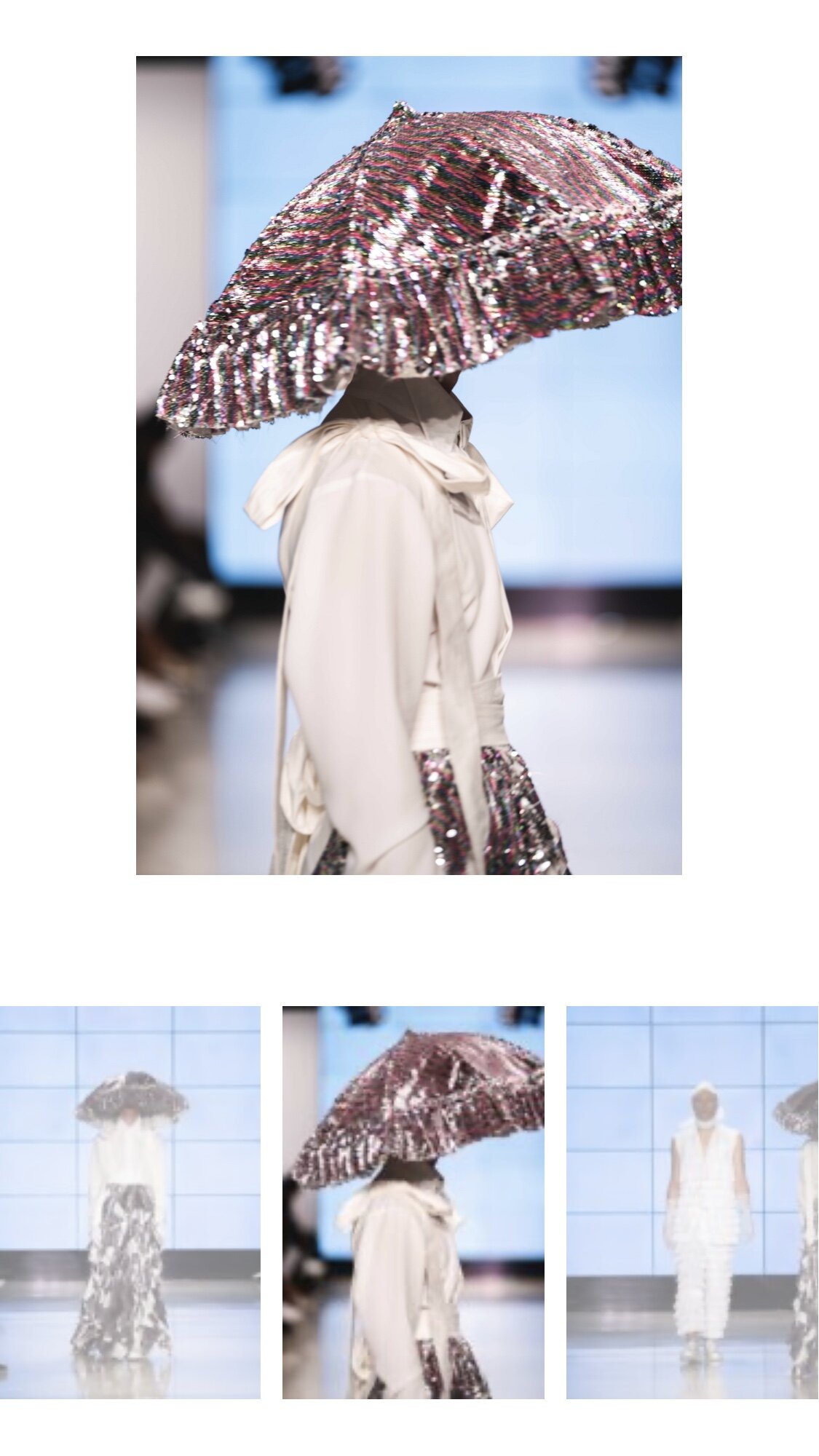
Alessandro Trincone’s Avvolgimi SS19 NYFW Show, pictures accessed via Trincone’s Website

Who or what inspired your MODA collection?

I really like the work of Alessandro Trincone (featured above). He put out this really amazing collection, which had a bunch of awesome dresses that I really admired, and all the models were male. I thought it was super, super cool and it definitely inspired me

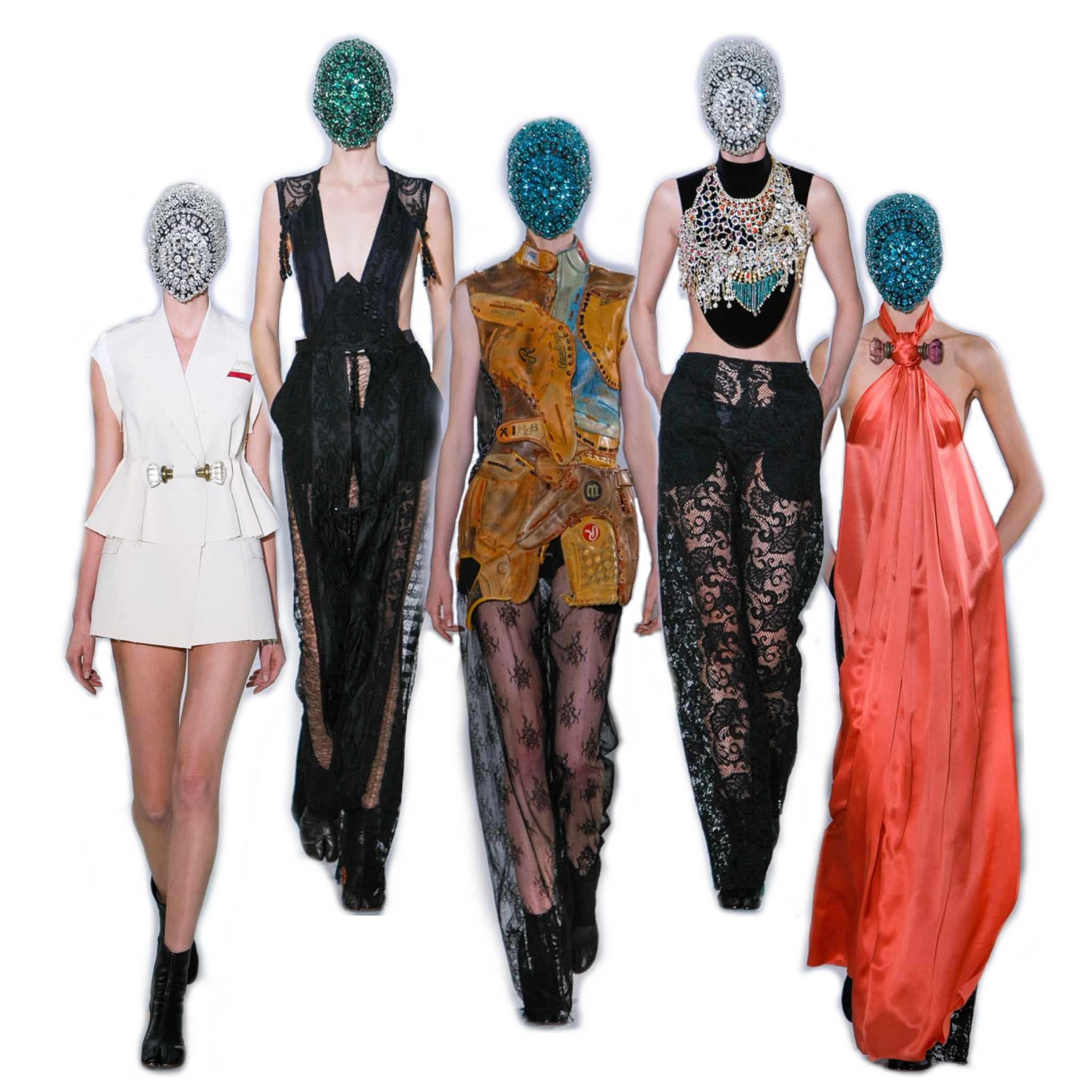
Another big inspiration is a Margiela collection, F/W’12, where they created these masks where you couldn’t see the face of the models at all. I thought that represented a lot and I definitely tried to build upon that theme of hiding your face. For MODA, I made a chainmail mask for my collection last year, but I think that that theme can go further.

Maison Margiela F’12 Couture Collection, pictures accessed via Vogue

Maison Margiela F’12 Couture Collection, pictures accessed via Vogue

I like the symbolism of masks because they make you think about disguising yourself and your face and maybe becoming more anonymous or even taking on a character. I feel like there is a weird contradiction in there, right? Because, in some regards, you are trying to hide yourself, but through embellishment. A viewer is meant to be looking at something that you are obstructing. Do you think that fashion does the same work of both hiding yourself and being eye-catching?

Yeah, I think that there's so much you can do with [certain pieces], so it really depends on what you want to get out of it. If you want to use fashion as a way to blend in or become more anonymous, you can do that. On the other side, if you want to stand out and draw that attention to yourself, you can do that as well. The style that I find interesting is the one where you don't know which objective they're going for, and that’s what the masks symbolize to me. I wanted the mask I made to hide the model and reflect the subconsciously desire to be seen, through that ornate design. 

Arjun Kilaru MODA W’20, runway photography by Elliot Duprey

Arjun Kilaru MODA W’20, runway photography by Elliot Duprey

Where do you think your designs are going forward from MODA ?

I definitely learned a lot from the other designers, in terms of techniques and themes. I was just super observant of everything that I saw. There were themes of combining men's and women's fashion in a very direct way. It's more subtle the way that I did. [But, I want to play off of that and put out my own version of that in the future].

How would you describe where your personal style is right now?

I tend to like stuff that I see on red carpets and much less that I just see people wearing on the street. I [try to integrate styles] that I find unconventional and have fun with how I decide to wear it. I really like kimonos and I have like four or five that I'll throw on and layer two at the same time. I don’t really care what the overall trends are. Sometimes what I wear are just random things that I really gravitate towards, like headscarves and masks. I just go with it and see what looks good.

Arjun Kilaru MODA W’20, runway photography by Elliot Duprey

Arjun Kilaru MODA W’20, runway photography by Elliot Duprey

How has being in quarantine affected your materials or techniques utilized in your designs?

It definitely makes the stuff that I make somewhat less risky because I know that if I mess up, I can ruin the fabric by cutting it the wrong size. [At that point, I can’t] fix it. [I don’t have access to fabric stores], like I did when I was designing for MODA. Then, I knew that the worst thing that would happen would be that I have to replace the fabric I had. I also was able to go to the fabric store multiple times for at least an hour each time. The main things that I looked for were colors that go together and the relative durability of the fabrics. It was cool to figure out how I can use their strengths. For example, velvets are a really formal fabric and I wanted to match that with denim because that's not something that you see very often. But what I didn't know is how hard velvet and denim are to sew. At the end of the day, I learned a lot from using them. Now, what I mainly look for in a fabric is how they convey the message or theme of the collection and their ease of use.

Now, in quarantine, I'd have to pay [for shipping] and wait another two weeks for it. It's a lot harder, which is why I've been making stuff that will still teach me and help me grow, but I know I can be safe with and use up fabric I already had.

A lot of people in quarantine have started picking up sewing just so they are able to make functional masks for themselves, their families, and to donate. Do you think this introduction of people wearing masks made from whatever materials and fabrics that they have on hand will eventually make it into the fashion mainstream? What advice would you give to someone finally introducing themselves to sewing?

Yeah, I mean for the Show I also made three or four of those types of masks, and almost went with that design instead. They are really easy to make. I hope that most people who are picking that skill up and will feel like they can make more items on their own. I'm really excited to see more people getting into sewing and designing and I definitely think that it'll build. 

People are teaching things to themselves right now. And like 90% of how I learned to make clothing was from YouTube and asking around. Anything is completely possible. If I was able to go from knowing nothing to creating [an entire collection in a few months], then anyone can, for sure. Especially right now, if you have spare fabric or whatever, you can even use old curtains or old clothing, to teach yourself how and have fun experimenting. I think like you'll learn a lot more than you think. 

IMG_1606.PNG

Arjun Kilaru’s Norm-Shifting, Logomania-Influenced Designs

Featured Images via Arjun Kilaru

All Included Collages Made By Ariana Garcia

"Quarantine Cuts" as Spectacle: Why My Boyfriend Got a Haircut over Zoom & We Recorded it

Every time I get a haircut, I’m nervous. I’ve had bangs for years, and I’m very, very particular about their length. Particular might even be an understatement. I want my bangs to cover my eyebrows, but not my eyes. This means that I need to trim my bangs frequently. And for this reason, I often drop into my favorite Hyde Park hair salon, on my way to class. I don’t even have to say anything; the kind woman at the front desk always knows that I’m there for a quick bang trim.

As such, I’ve had my mom trim my bangs under quarantine. And while she’s very good at cutting my hair, I always remind her - repeatedly - that I don’t want her to make my bangs too short. While Audrey Hepburn could pull off the super short bang look, that’s not the look that I’m going for. More than that, while I trust my mom to cut my bangs, there’s no way that I would let someone film one of my haircuts. I’m nervous enough as it is.

However, after weeks under quarantine, my boyfriend said he needed a haircut. Eli’s hair wasn’t even that long, but he’s like me, in that he’s particular about his hair. To be fair, he’s not nearly as intense as I am about hair length, but he likes having a military cut. And he was worried that his hair was getting out of control. As such, while his mom had never cut his hair before, he ordered a clipper online and asked her to cut it for him.

When Eli said he was going to have his mom cut his hair for the first time, I said that we should film it. I found myself needing a fun project to focus upon, and I joked with him that this might be it. However, I honestly didn’t expect him to agree. I knew that I wouldn’t want my first “quarantine cut” to be filmed, so I wasn’t going to push it. More than that, I knew that many of these home cuts don’t go as planned, and I wasn’t going to talk him into posting the video if he wasn’t fully supportive of the endeavor. But, to my surprise, Eli agreed.

A few days later, I called him over Zoom. He and his mom were both in high spirits, as we discussed where to begin. Eli even arranged the lighting in his room, to improve the video footage. And what follows is a video of this haircut - plus a (post-haircut) discussion of his decision to let me record it.

The Video:

The Interview (Post-Haircut)

Me: When did you first decide it was time to get a “quarantine cut,” and why?

Eli: I think there’s always a moment when I enter a panic and realize my hair is too long. And usually I resolve that by walking to the barber. But, this time I realized that obviously wasn’t going to happen.

I’m in a noticeably worse mood when my hair is long…I’m in a bad mood, because I spend all morning trying to get my hair right. And sometimes I don’t want to look in the mirror because I’ll look ridiculous. So I swore to myself that I would always try to keep my hair short. I wasn’t going to be stingy about this. And so I bought a clipper. And I realized that maybe I got the better end of the deal. Maybe, now that I have a clipper, I’ll never have to get a haircut again. Maybe I’ll make lemonade out of lemons.

Me: Awesome. And why did you let me record it? Because I really didn’t think you’d let me do it.

Eli: Cause I’m vain, probably. I just love the look of my face.

Me: Eli! You don’t really mean that.

Eli: I think it’s because I love watching my face in action. I like watching myself make expressions. So I said, well, why not immortalize this for narcissistic means?

Me: You’re not being serious now!

Eli: That’s not true. That’s not true! [He laughs.] Is that not a good answer?

Me: That’s not not a good answer, I just didn’t think that would be your answer.

Eli: Is that not allowed to be my answer?…Well, let me tell MODA this, I love videos of myself. I am not camera shy. So the idea that there would be memories of me immortalized in film, I like that idea…It’s like a blog with my face in it. It’s perfect, right? So I’m a vain cat. Right?

Me: Well, now I know. [I laugh. I’m still not fully convinced he’s being serious.] And were you nervous for the recording? Or how did you feel the day of?

Eli: Well, I was nervous for the haircut, but I rationalized it ahead of time that if there were any major [screw] ups, then we would just call it quits and I’d go bald. And I was okay with going bald. So, I accepted that fate and I wanted to be valiant for the video. So I was ready. I think what you can say fairly is that I was ready. Was I nervous? Maybe. Was I scared? Perhaps…were there butterflies in my stomach? It’s possible. But I was ready. I was as ready as I was ever gonna be for an experience like that. And let me tell you, it paid dividends.

Me: And worst-case scenario, what would have happened? You’ve already basically said this, but-

Eli: I would go bald. Now should I stay with bad hair, that would be worst-case. But I’d already decided that worst-case wouldn’t be acceptable. I said, if we get to that place, “he’s going bald.” (But the “he” is me there.) So that was the mindset I took.

Me: That’s awesome.

Eli: What else do you got? [He laughs. He loves being interviewed.]

Me: Do you now recommend the experience to others? You’ve already answered a bunch of my other questions, but-

Eli: Can I also say this? If you think that you’re going to get some totally cheese cake answer out of me, like, “man, was I scared,” nuh-uh. Right? These are the only answers I’m capable of giving. Alright? So sorry about that. This is all I can do.

Me: You’re on such a roll right now that I can’t tell if you’re serious about the answers you’re giving me.

Eli: Ok, well look. If you love the sound of your voice and the look of your face… and I’m not kidding…if you’re camera shy, then you’re going to be even more camera shy in terms of your hair. And let me tell you this, also, I was scared. Okay? When I looked at that first-

Me: But you said you weren’t scared!

Eli: But now I’m getting to when I was [scared]. When my mom drove that [clipper] through my hair the first bit, and it was like… what did we say on the phone? A reverse mohawk maybe. I was like, “oh no, this is going to be bad.” But then it was okay…And by “do you recommend this,” do you mean have it recorded or cut your hair at home?

Me: Both.

Eli: Well, if you just mean having a haircut at home, then there’s no promises… [But] my hair cuts really easily. So if you have a hair style that you really care about, then you should just let it grow out. I’d also say that most people who have a haircut that they care about, it’s not short. Because if it’s short, then how much do you care? Right? So, if you have a long haircut that can get a little longer, wait this pandemic out. But if you’re okay being bald and you like good risks, like speeding down the highway…if you’re that type of person, and you don’t mind going bald, then it’s for you.

Me: Okay. And then the last big question: are you happy with the cut?

Eli: Oh we can keep going for awhile, I promise. But, yeah, I was elated, actually. And I’ll say this-

Me: Ahh, Eli, I think recording you was a bad idea. Because now you’re just on such a roll. I don’t trust-

Eli: I’ll say this… if I had to graph my emotions, let’s say I was good, then I was a little scared, and then it went way up when I thought it was great. [He points to illustrate his “graph.”] And that [after] photo you took, that’s the height of it. Then I looked in the mirror later, and all down here [he points to the back of his head], it was too long. My mom hadn't seen it, because of my very good lighting. So I had to refine it, and once it was refined, the graph went back up.

And now, you noted that my hair has been a little uneven. But I will say, as a “vouching mechanism,” that I’m getting my mom to do this again. So if I really thought it was a bad idea, then I wouldn’t have her cut my hair again. But she’s going to. So that’s good evidence that I thought it was pretty good.

Needless to admit, Eli really enjoyed both the haircut itself and the spectacle of having it recorded (and of being interviewed).

Click here, for thumbnail image source. The video’s soundtrack is the Austin Powers theme song: “Soul Bossa Nova.”

Skills and Hobbies You Can Pick Up Online to Stay Sane

The combination of being stuck at home, not being able to see your friends, watching Legend of the Seeker on repeat, and taking virtual classes can really play tricks on your mental state. For UChicago students, far from feeling like a carefree summer break, this period of time can feel extremely tedious. Nevertheless, the quarantine can be a blessing in disguise. Apart from slowing the spread of the virus, it slows life down and grants us the gift of time. Here are seven skills and hobbies that you can pick up online in order to stay sane:

hero.fc7d9a414914570b26e7a8465242f28d.png

image via.

1) Learn a language - Learning a language opens a whole new world, and being able to communicate with someone in his or her language is an incredible gift. If you’re bored at home, take the opportunity during lockdown to learn to speak and write a new language. Even picking up a few phrases and using them on your parents can be amusing. For example, I learned from my roommate that “ndank ndank” means “slowly” in Wolof, which is a language most widely spoken in Senegal. This phrase is actually so deep and reflects an entire psyche of letting things follow their own progression and pace. This is especially relevant these days and a fitting reminder against the rushed productivity culture in general. Anyways, one useful free app is Duolingo. I’ve been using Duolingo to awaken my dormant Spanish skills and to maintain my Mandarin skills during the quarantine. If you are looking to learn Spanish, Señor Jordan has easy-to-follow lessons. Another useful app is Babbel. College students in the US have unlimited free access for the next three months. Babbel offers language lessons that you can curate to be relevant to your personal interests. Finally, Lingodeer is a fantastic choice for Asian languages like Vietnamese, Korean, and Japanese. Users have reported high satisfaction at understanding their favorite K-dramas. You can also practice the language online by starting conversations with friends who already speak the language you are trying to learn.

2) Games: 

Uncharted 4 scene via.

Uncharted 4 scene via.

  • The classic Settlers of Catan, online

  • Dominion - A deck-building card game, I like to play this whenever I feel like losing

  • League of Legends - An addicting online solo or multiplayer battle game, free to download

  • Type Racer - You may still get nightmares from Type2Learn keyboarding classes in elementary school, but Type Racer is a surprisingly fun short competition. Race your friends and see who has the fastest typing speed!

  • Town of Salem - Town of Salem is essentially the online version of the classic deception party games Mafia and Werewolf

  • Skribbl - A multiplayer online drawing and guessing game, akin to DrawMyThing

  • Uncharted: The Nathan Drake Collection - Uncharted used to be one of my favorite video game series of all time (mainly the multiplayer). As part of Playstation’s Play at Home initiative, you can download Uncharted (as well as Journey) for free from now through May 5, 2020. Join Nathan Drake and other iconic characters on some thrilling action adventures.

image via.

image via.

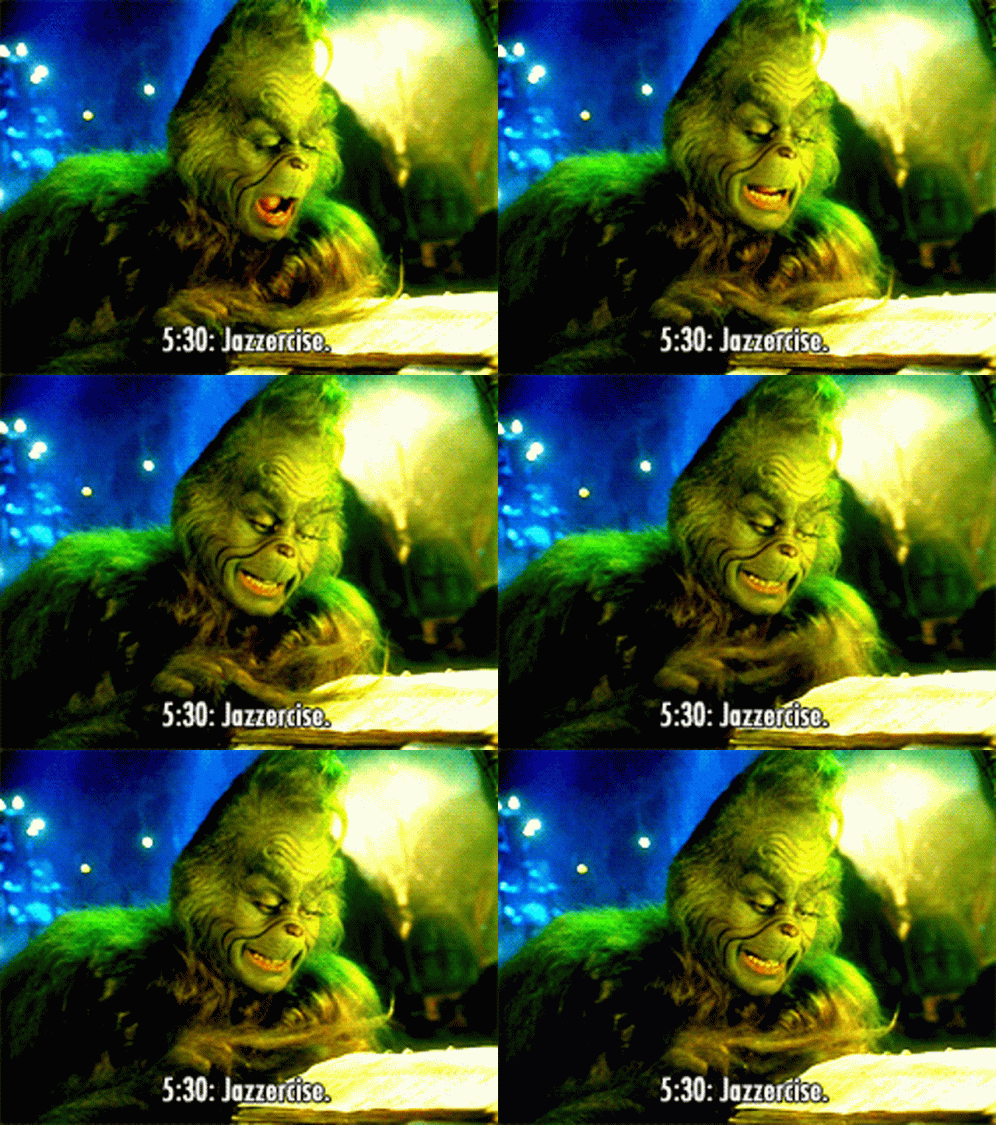
3) Jazzercise! - If jazzercise brings joy to the Grinch’s life and has a dedicated place in his schedule, it should for you as well. Working out at home can be such a drag. Maybe all that your workouts need these days is some flair. This fitness challenge is a fun, high-energy blast from the past.

4) Trivia - Trivia is an exciting pasttime. After that leisurely jazzercise workout, it’s time to take your brain to the gym (which complies with lockdown regulations). Here are several ideas to sharpen your skills and place you on the road towards MVP status for your trivia nights at the Pub when this is all over:

  • Read about subjects you are curious about, whether that is U.S. presidents, Best Picture winners, or Olympians. Start at “Toronto” and somehow fall through the Wikipedia wormhole to end up at “Pliny the Elder.” Absorb information about the New Deal through song parodies. Go through old quizzes at Sporcle.

  • Keep up with the news and pop culture! Even if you only spend a few minutes every day reading world news, you’re going to pick up on world leaders, geography, and important events simply because you see them over and over again. Bit of News is an easily digestible daily newsletter that summarizes the most important news of the day.

5) Learn to enjoy classical music with this free course.

Image via.

Image via.

6) Origami - Origami is the art of paper-folding, its name deriving from Japanese words ori (“folding”) and kami (“paper”). My first foray into origami was in second grade after reading Sadako and the Thousand Paper Cranes. There is a Japanese legend that says that if a sick person folds 1,000 paper cranes, then that person would soon get well. Hospitalized with leukemia, Sadako spent long hours in bed folding paper cranes and never losing hope. The story and the art of paper folding is fascinating, and you can learn to fold anything from a crane to a star to reindeer. Jo Nakashima’s Youtube channel and this blog are good resources to learn.

7) Reading - For me, there’s no such thing as reading too much. Reading literature is one of the great joys of life and does wonders for restoring my mental state. Luckily, it’s pretty easy to find entire libraries of books online. Whenever I feel depressed or just exhausted with life, reading becomes my escape. A couple of recommendations:

image via.

image via.

  • The Strong Shall Live, Louis L’Amour - In a collection of short stories, Louis L'Amour tells of the true heroes of the frontier, the survivors for whom remaining tough was as natural as drawing breath

  • Midnight’s Children, Salman Rushdie - An enigmatic, drawn-out story that deals with India’s transition from British colonialism to independence

  • Pale Fire, Vladimir Nabokov - A 999-line poem from murdered poet John Shade, followed by an unreliable commentary (and earlier intro) from his stalker Charles Kimbote

These are tough times, but hopefully some of these suggestions help. See you on the other side!

Featured image via

Source: https://www.makeuseof.com/tag/10-tumblr-ti...

Quarantine Skillshare: Charlie Kolodziej’s Fantastical Embroidery

Charlie Kolodziej is a second year student in the College considering a major in either sociology or psychology with a minor in creative writing, urban studies, or computer science. Outside of the classroom, they write for The Maroon, play the drums in the Percussion Ensemble, and work for the Neighborhood Schools Program. You can find more embroidery on Charlie’s Instagram: @charlie_stitched!


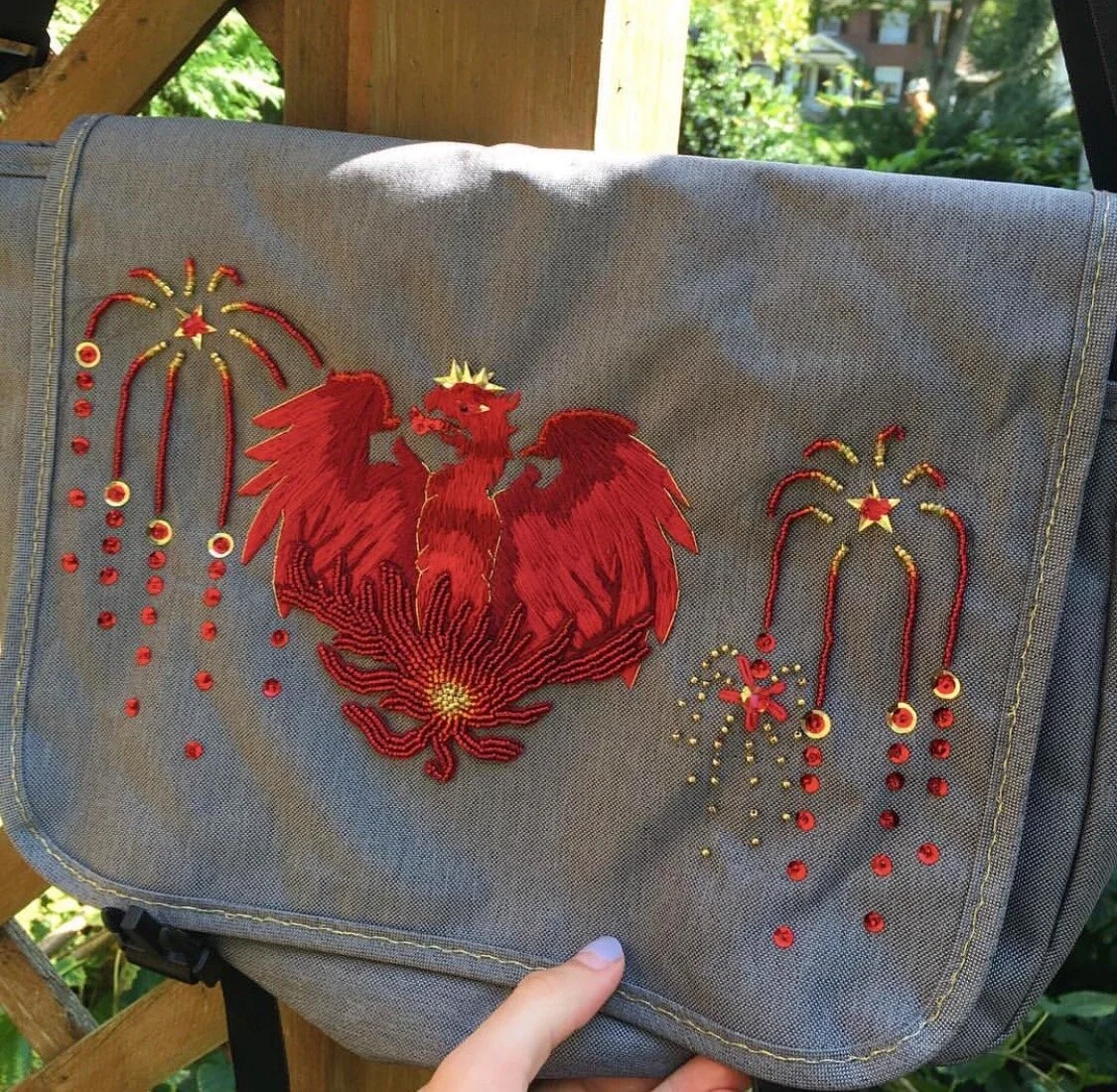
The first time I met Charlie, they were wearing their signature bag with the UChicago phoenix embroidered on it, in eye-catching shades and textures of reds. I knew that it was born out of love and many (many) hours of careful and tedious stitching. Since then, Charlie has been cemented as “That Embroidery Kid”, and that’s a hand-stitched patch they wear with style. 

I have been very closely following the recent resurgence of textile art, especially as “Circular Fashion” has become a more prevalent consideration of the average consumer. I have noticed more people knitting hats, crocheting two-piece sets, and learning to sew clothes and, more recently, masks. Embroidery has also emerged as a way to rescue clothes or fabrics that have become lifeless with new designs and as a rising de-stress practice for many.

Through this conversation with Charlie, we discuss their particular work, the embroidery community at large, the gendered history inherent to embroidery, and how anyone interested can begin to engage with the medium.


This interview has been edited and condensed for clarity.

When and why did you start embroidering?

I started embroidering at the beginning of my senior year of highschool following a breakup. Partially to distract myself. Partially because I saw my friend embroidering in the school’s art room and I was like “Oh, that’s really fucking cool”; over a break I bought the stuff and taught myself how to do it. I had a lot of anxiety. Embroidery definitely helps with that. I usually compare it to meditation because doing an action over and over again makes me zone out and breathe, which is really nice. 

Is that repetitive action part of what inspires you to embroider?

Yeah, sometimes I embroider just for the sole action of embroidering and I don’t have any vision of what I am creating. I post a lot of the things I make on my Instagram, but 99% of what I make I don’t because I’ve just decided to stitch a cool pattern. There’s nothing really to these pieces, just the motion, and I find that relaxing. 

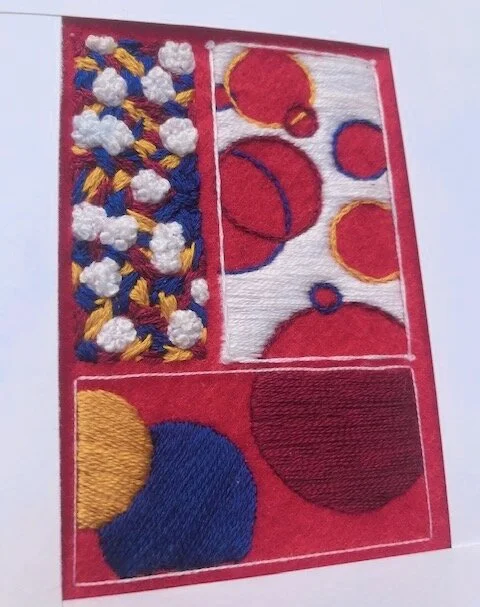
Image of “Pandemic” (2020) via Instagram

Image of “Pandemic” (2020) via Instagram

I saw your most recent project “Pandemic” on your Instagram (pictured) and it struck a chord for me. Can you tell me more about it

My other “Art Love” is graphic novels. I’ve made and written a number of comics and short stories in the past. The use of panels really appeals to me because they are nice and ordered. So that’s the inspiration behind that piece. It is part of a series that I’ve been working on. But, with that specific piece, I went back and forth on whether to name it “Pandemic”, because I did not want to make light of a serious situation. I intended to just reference the anxiousness that everyone is feeling right now, and the general zeitgeist, so I ended up seeing that theme in the piece. 

Why not show off the incredible detail of the work, by wearing it as a brooch or patch?

I do wish more people could see the intricate nature of the pieces because it is hard to discern through photographs, and a lot of time goes into each of them. In terms of wearables, I’ve been incorporating more beads into my stitching projects, instead of one or the other. I find this really hard to do without it appearing too kitschy or crafty-looking, not that that’s necessarily a bad thing. 
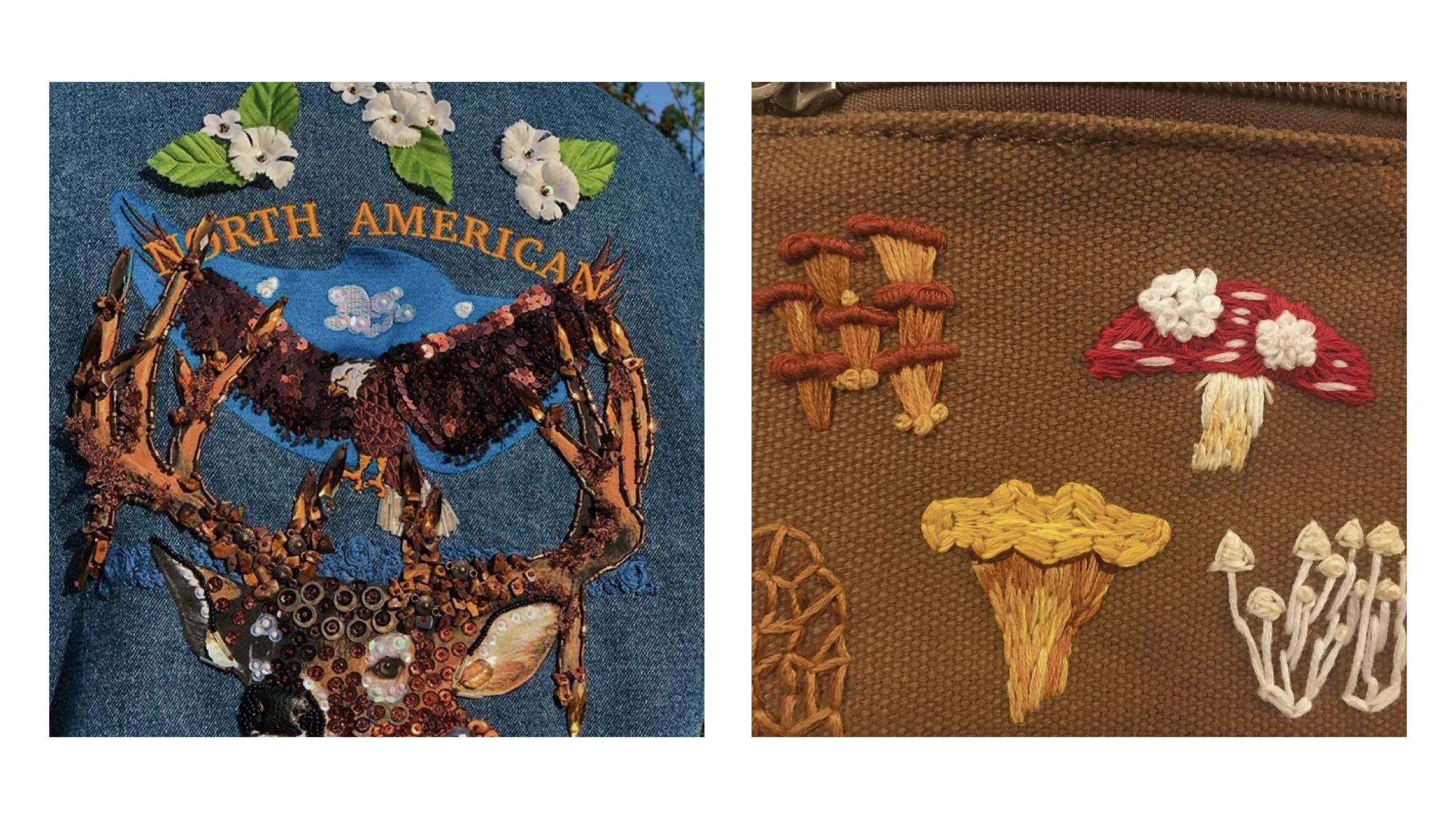
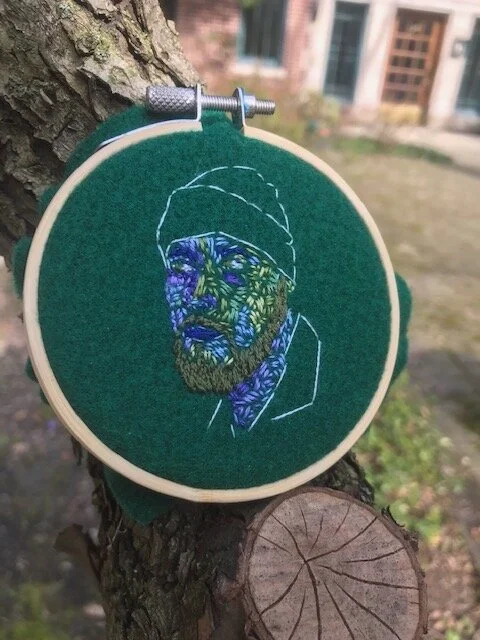
Image of “String Theory” (2020) via Instagram

Image of “String Theory” (2020) via Instagram

Is there a specific style that you tend to gravitate towards?

I think when I started I was very into hyperrealism and artists who make thread-based pieces look like paintings. Now, I’m totally the opposite. That style is still incredibly impressive, but, to me, it seems to take away the fun of embroidering. It is not painting. It does not need to imitate other opposing art forms. Why not create something new that is specific to this medium? Now, I use larger gestural stitches with chunky thread in combination with beading. It’s a little more camp… and there’s something inherently queer about camp. 

Why do you think the embroidery community is expanding? Why are people gravitating towards this medium?

Obviously social media is playing a part in the distribution of embroidery work. There’s also been a resurgence in non-traditional ways of consuming and producing garments. Upcycling and thrifting have become more popular because of their lower toll on environmental waste. The Romanticist in me, however, would argue that because we are so tied to our devices, and embroidery is just the complete opposite of that, that maybe we are trying to escape and unplug. It is also just a really accessible art medium because it accepts all skill levels and requires very few materials. 

Featured work from artists (from left to right): Jessica Gritton, Charlie_Stitched, Fistashka.Art, TheNudeNeedle, and Archcurate.

To follow up, in terms of the gendered history of embroidery work, which can be viewed as a functional technique of mending clothing and as embellishment, do you think those expectations of the medium have impacted your own work?

In short, yes. I think, partially because I see myself as more genderqueer, I do put a lot of thought [to how I situate myself in that discussion]. But, I do kind of like that it has this feminine side. In terms of the Instagram community, I am one of two or three other people I can think of who were assigned male at birth, which isn’t to say there aren’t a lot out of others out there, those are just the ones I know. It does feel like we are received differently although I can’t exactly pin down in what way. But, there is a community of queer and trans  embroidery artists, who are producing valuable work about gender and [exploring themes and techniques that are unexpected for the medium]. For example, Jessica Gritton is an embroidery artist and a trans-woman who is processing her transition through embroidering and she is amazing.

How has embroidering your own clothing impacted the way you view your style?

Whenever I see someone who has hand-embroidered on their clothes — and you can tell it is hand-embroidered rather than machine-embroidered because there is more love in the stitches — I get super excited. I actually don’t have that many embroidered pieces that I wear regularly. My hat, bag, and jackets are all exceptions. I think at first this was because embroidery felt feminized, but since coming to college, I have felt more comfortable displaying my own femininity. 

Image of Jacket and Bag via @charlie_stitched

Image of Jacket and Bag via @charlie_stitched

What is your opinion on upcycling clothing from thrift stores to embroider on?

I come at this discussion in two veins. On one hand, I admire that people are manipulating old things in new ways and reinterpreting their clothes. This is both stylistically forward and environmentally conscious. But the other side of me remembers “thrifting” because I needed clothes, and not because it was trendy. However, embroidery feels more benign [than upcycling clothes with just a “Vintage” tag and a higher price] because it is more about making something new and feels less problematic.

Image courtesy of Charlie

Image courtesy of Charlie

How has quarantine affected your embroidery?

I definitely have more time! I’ve been producing a lot more stuff. My sources of inspiration have changed because I can’t really go outside and see something that inspires me. This series of works based on comic books came from being inside and reading graphic novels and being bored. Looking around my tiny apartment, rather than out in the world. I never really buy new fabrics, instead I recycle fabric from garments. So, the materials I gravitate towards have changed slightly.

What advice would you give to someone who wants to give embroidery a go during quarantine?

Start. When I first started, I literally Googled “basic embroidery techniques” and then just used an old t-shirt as a canvas. You don’t need any fancy types of thread or needles—DMC thread and needles are the really nice stuff, but that doesn’t have to be the starting place for beginners. Don’t be afraid to fuck up.


Featured photo via @charlie_stitched