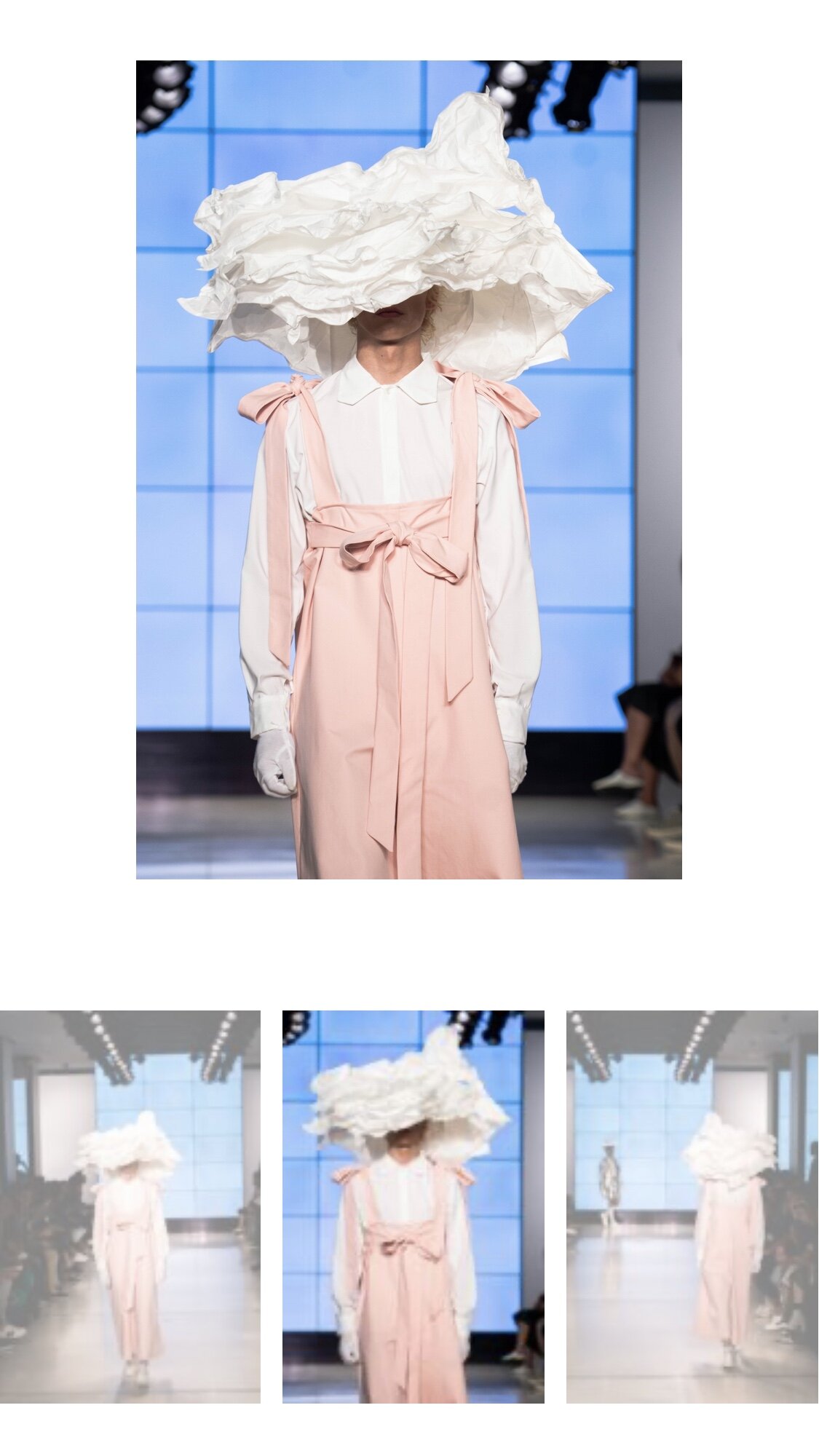
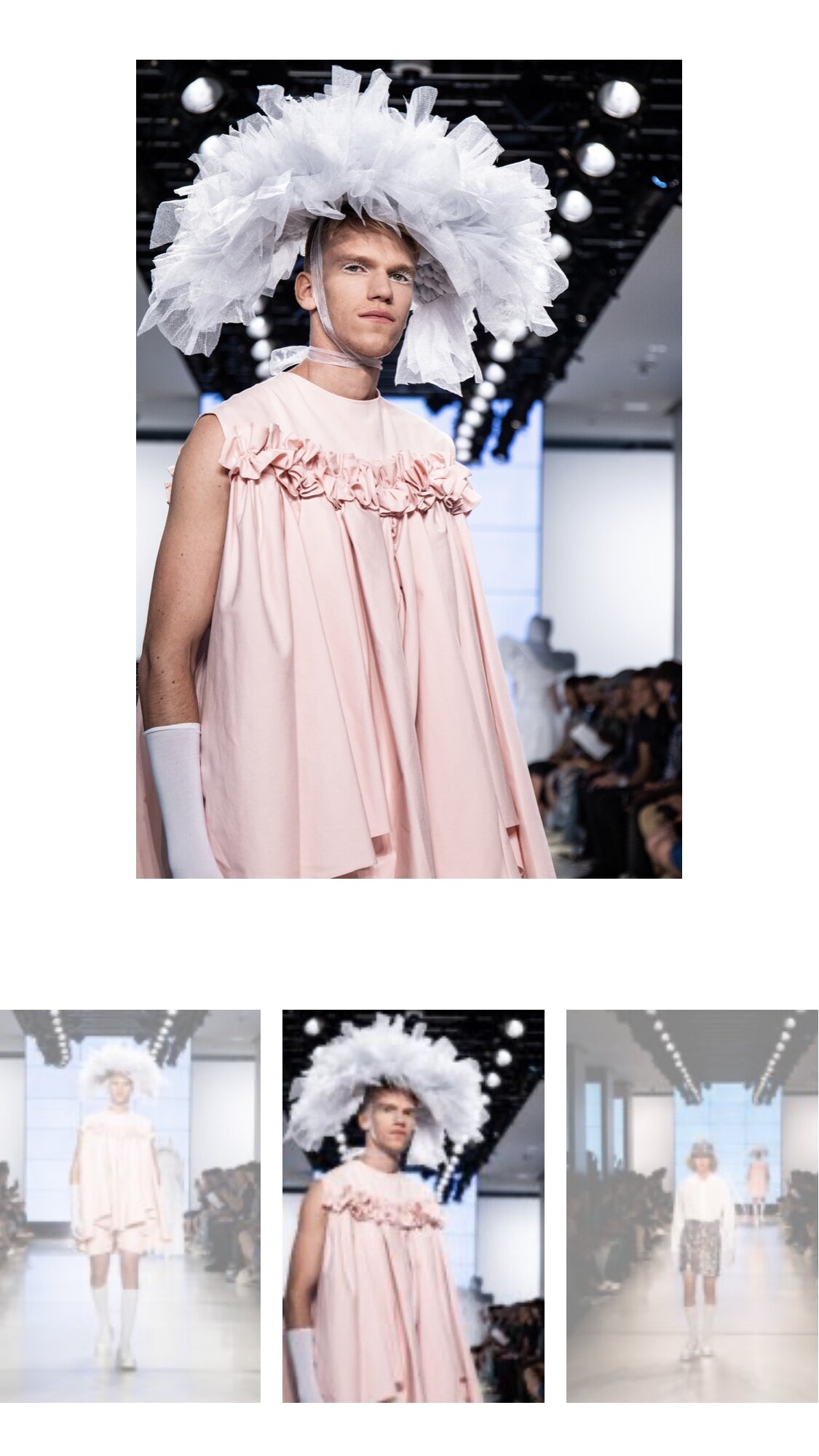
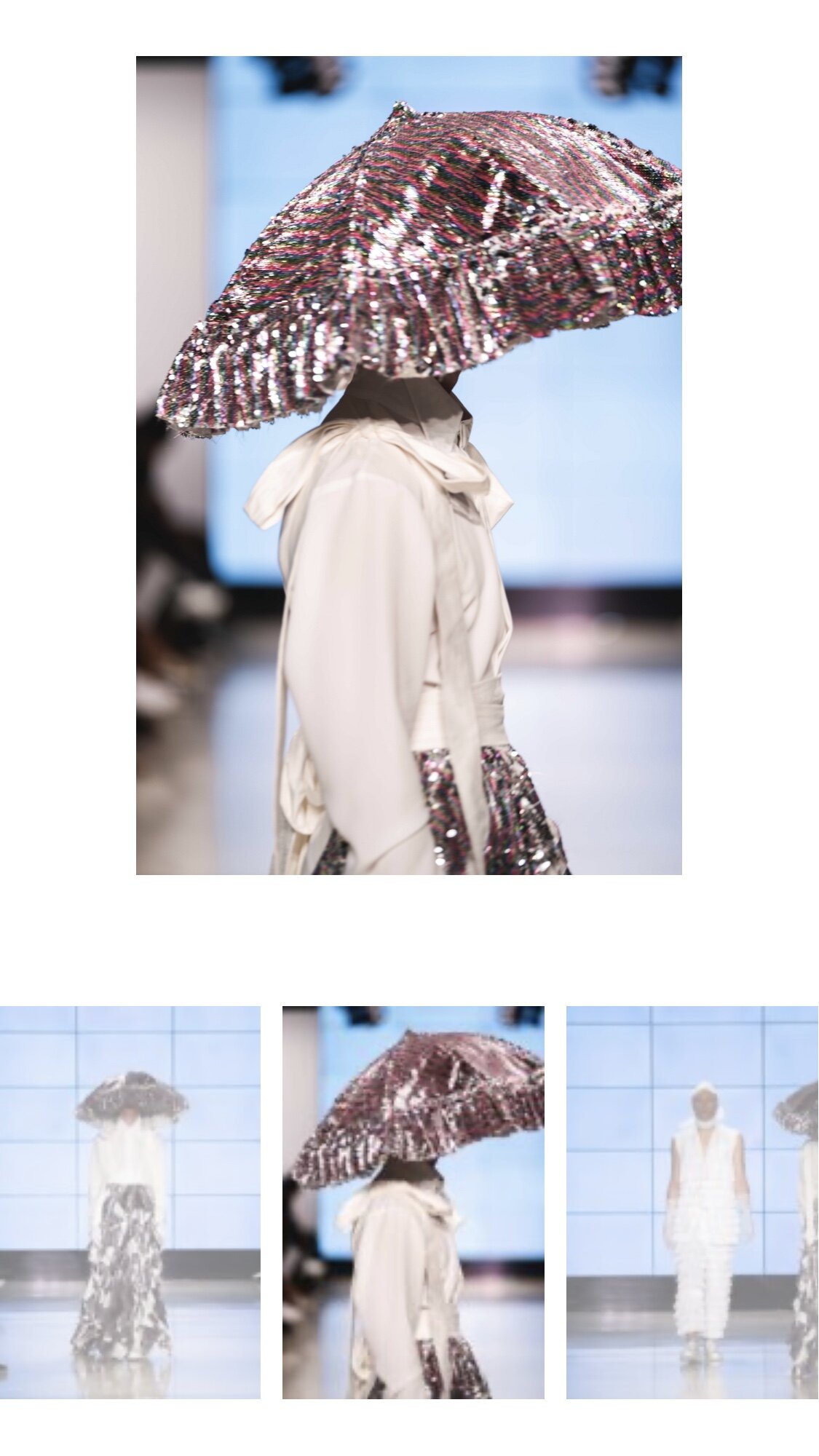
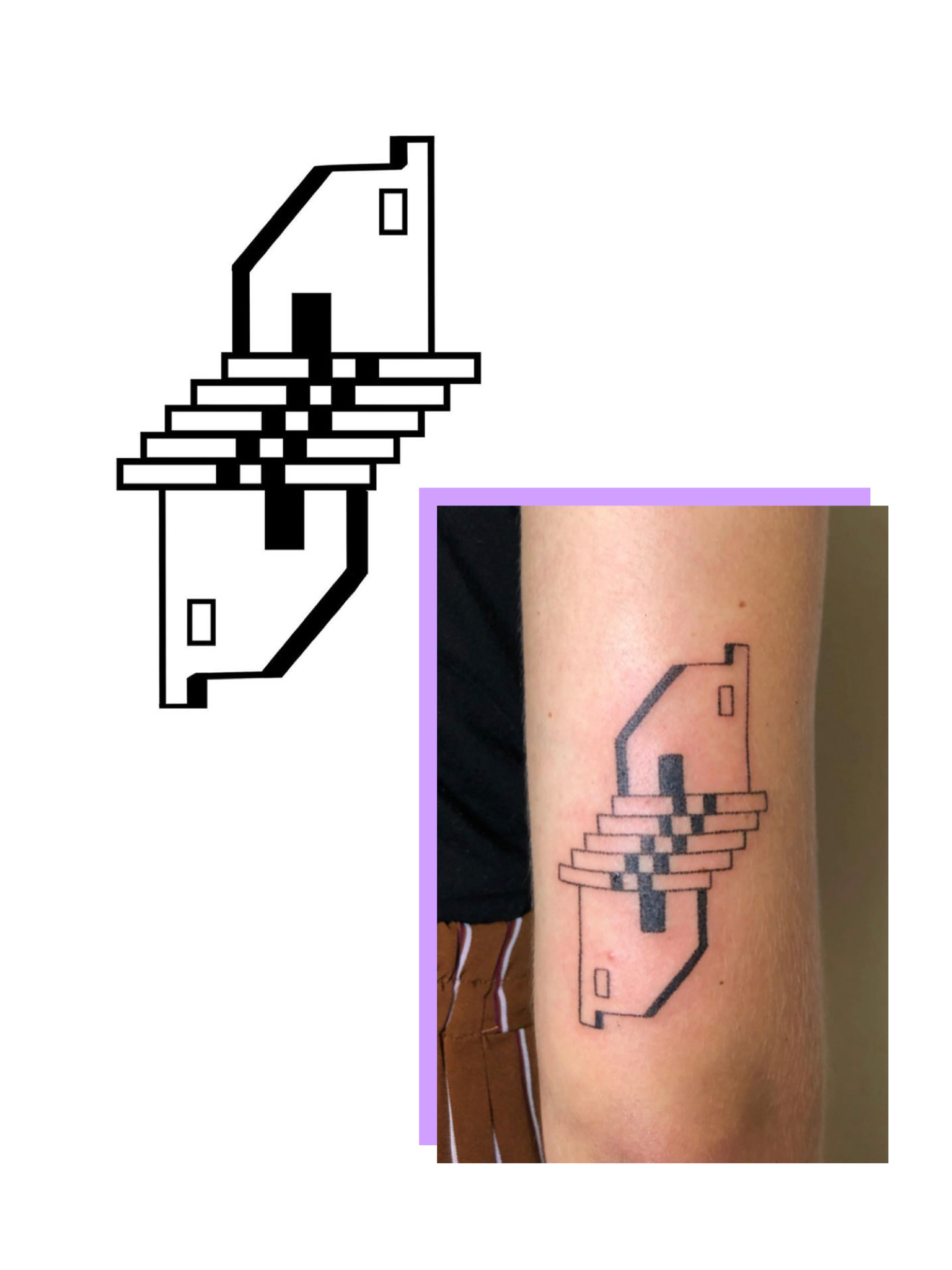
Quarantine Skillshare: Arjun Kilaru’s Norm-Shifting, Logomania-Influenced Designs

Arjun Kilaru is a first-year probably majoring in some combination of economics, statistics, and sociology. He is involved with MODA Magazine and designed in the Winter 2020 Fashion Show and also produces for the UChicago Public Policy Podcasts. 

In the beginning of isolation, there was an incredible panic and shortage related to the distribution of masks. Now, as it has been mandated for people to wear masks while in public, increasingly more are teaching themselves to sew. Arjun Kilaru sits in a privileged place, amongst a family with a history of fashion design work, but advocates for learning how to sew by trial and error (he says that the seam ripper will be your best friend!). 

Arjun Kilaru chats with me about the inspiration behind his utilization of a mask in his MODA W’20 Collection, designing clothes for his girlfriend, and trends that originated on the runway that will hopefully be integrated into the mainstream. The conversation that follows has been edited for clarity and length. 


Ariana Garcia: When did you start designing and sewing?

Arjun Kilaru: So I first really started when I started [my collection] for the [MODA Fashion] Show. That was my first brush with it, but I knew a little bit before that because my mom used to make clothes as a designer and my grandma does too. It’s a really present thing in my family. So I kind of did the Show as a way to build that part of myself and I really learned a lot and I made something to be proud of.

Can you tell me more about the history of design in your family?

Yeah, so my grandma was a fashion designer and a tailor. She's been doing that for a super long time, from back when she was in India and Pakistan. My mom went to college for fashion design, which is what she did for her twenties before she came here. They both just have all this experience and gave me help and tips and showed me better ways to do things. The whole reason I [learned to sew and design] was to gain deeper connections with that aspect of my family that I hadn't really explored before. 
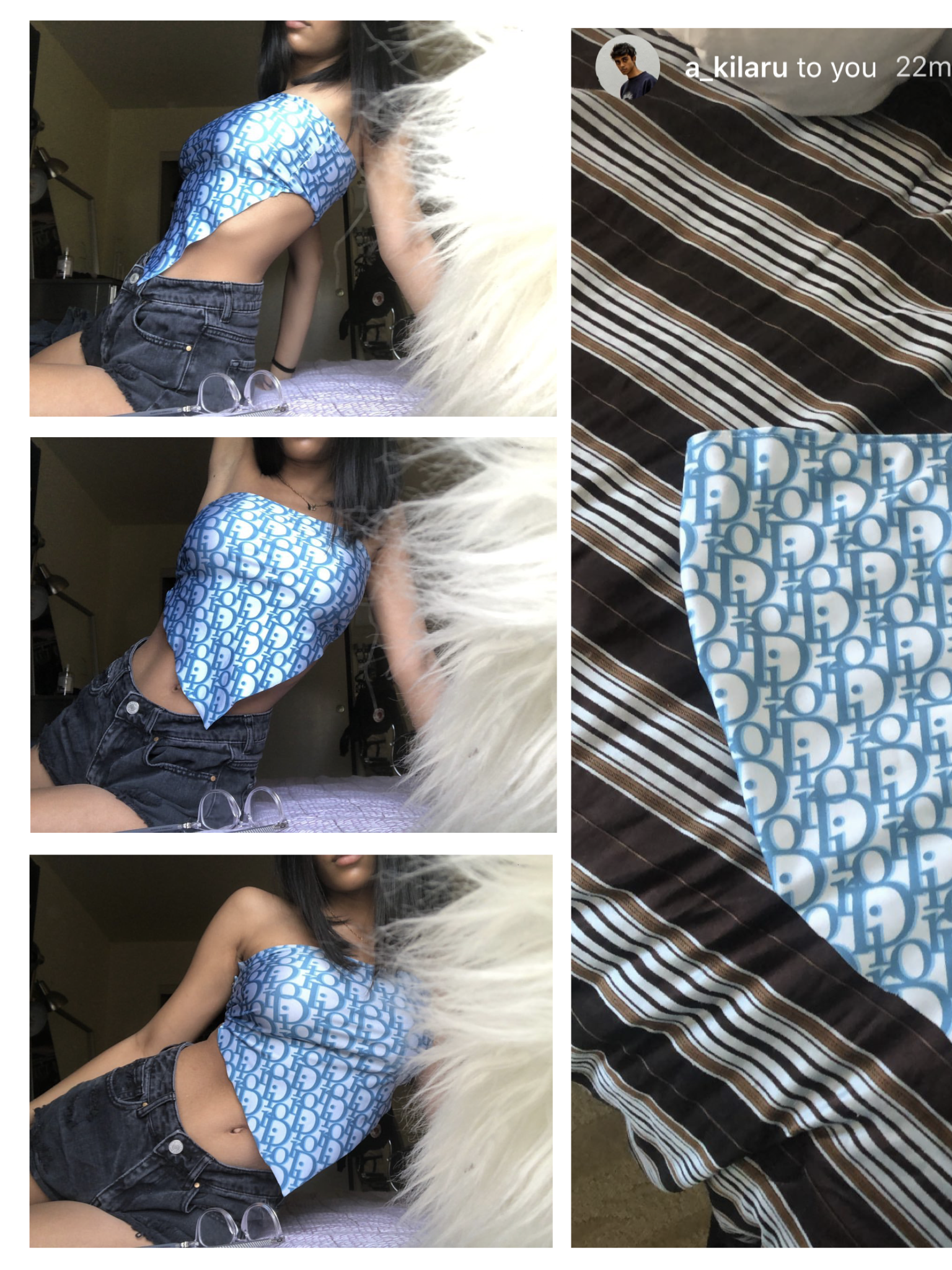
Bandeau Top Designed and Made By Arjun Kilaru, Modeled by @eshadkr

Bandeau Top Designed and Made By Arjun Kilaru, Modeled by @eshadkr

Have you noticed, from being taught by them, that there are specific habits that you have picked up?

They take a ton of measurements and to make it very specific for the person. I think that the clothes are more important than the person, which is one thing that we clash on. One reason why [they take a lot of measurements is because] they create formal wear, which is also why some of my pieces have a formal sense to them, like the collars and the dress.

Why do you think the clothes are more important than the person?

I've always made clothes for the purpose of them being shown at an exhibition. Whereas they make clothes to sell them to people and because people commission them, which is why they really focus on the person that they're making pieces for. I have never done it that way. But, I understand that [clothes are designed for different reasons]. 

Do you think that you usually tend to design towards either a person or towards a larger collection of work?

I usually make something to teach a technique to myself. [In terms of the two-piece set], I had never made a bikini top before and I wanted to learn by figuring it out through trial and error.


The best tool I have is not the [sewing]  machine, but the seam ripper. It takes apart the mistakes I made, so I can [go back and learn by redoing it]. This is important because I want to learn as many techniques as I can now so I can apply that to a collection later. Whenever I'm making something, the first thing I think is like, okay, what can I learn by making this?

Two-Piece Set Made During Quarantine, via Arjun Kilaru

Two-Piece Set Made During Quarantine, via Arjun Kilaru

As a follow-up to the picture you sent me of a two-piece set that you made for your girlfriend, what is the process like when you are designing something for a specific person versus when you are designing for a model or to explore some theme?

Before I start making something for someone, I already know what I want to make beforehand. I start with a sketch and then I pick a model. The way I [made the two-piece set in quarantine] is that I had an idea, took the measurements, and basically drafted a pattern using the little amount of fabric I had. It turned out really well! It’s really easy for me to alter it and make the design fit the person. 

Is there a difference between what you created for the Show and what you do outside of that?

For the Show, I had a theme that I really wanted to follow, which was using florals as a way to comment on gender. All of the measurements were exactly to fit the models. Whereas what I make on my own, I work with what materials I have and I'm not following any specific patterns; I'm doing whatever I want and eyeballing it. For example, right now I have just been buying some fabric online and picking out something in my closet and making something similar by cutting a template from it. It's a lot more freeing and I'm building my own skills. 
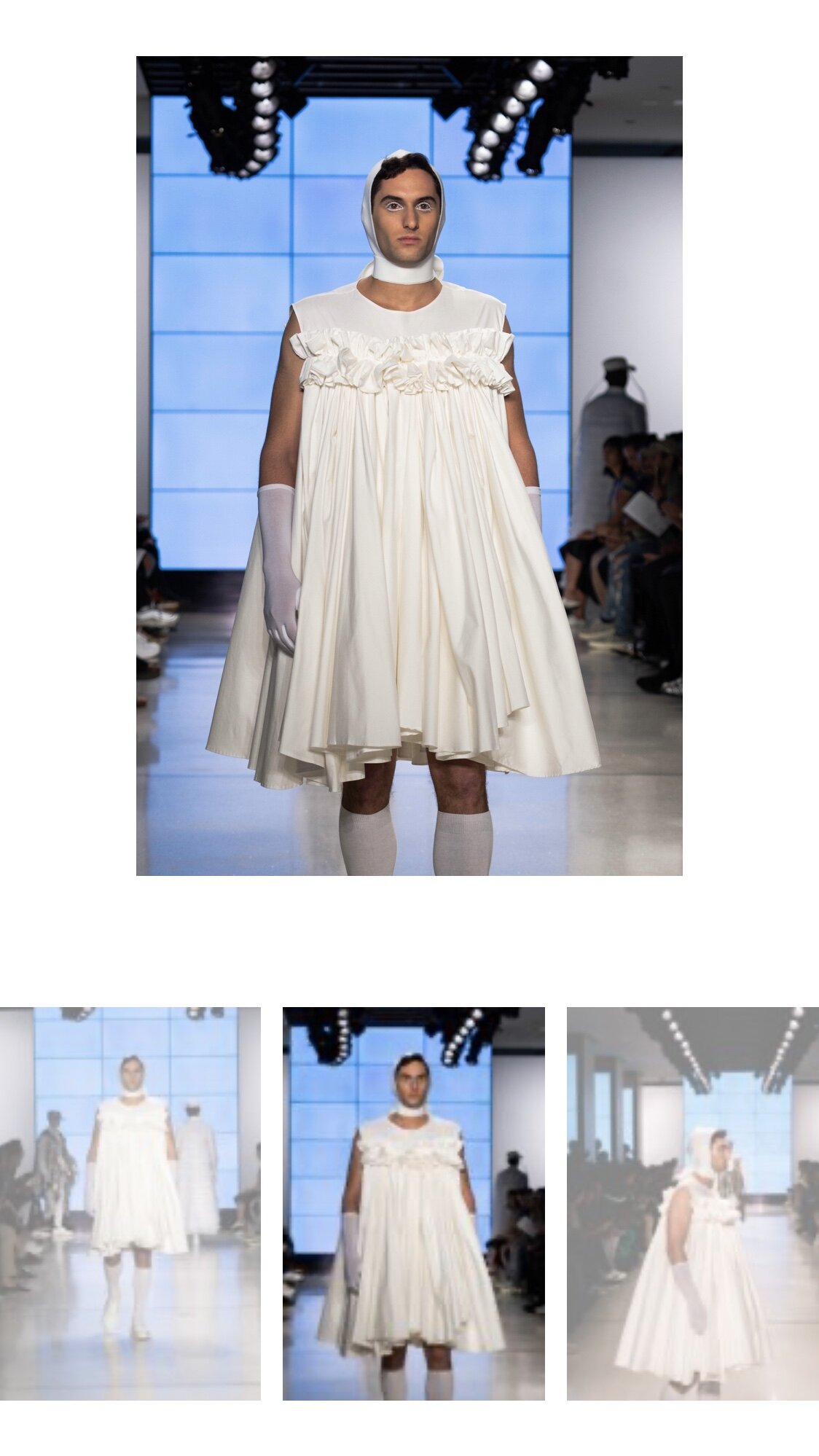
Alessandro Trincone’s Avvolgimi SS19 NYFW Show, pictures accessed via Trincone’s Website

Who or what inspired your MODA collection?

I really like the work of Alessandro Trincone (featured above). He put out this really amazing collection, which had a bunch of awesome dresses that I really admired, and all the models were male. I thought it was super, super cool and it definitely inspired me

Another big inspiration is a Margiela collection, F/W’12, where they created these masks where you couldn’t see the face of the models at all. I thought that represented a lot and I definitely tried to build upon that theme of hiding your face. For MODA, I made a chainmail mask for my collection last year, but I think that that theme can go further.
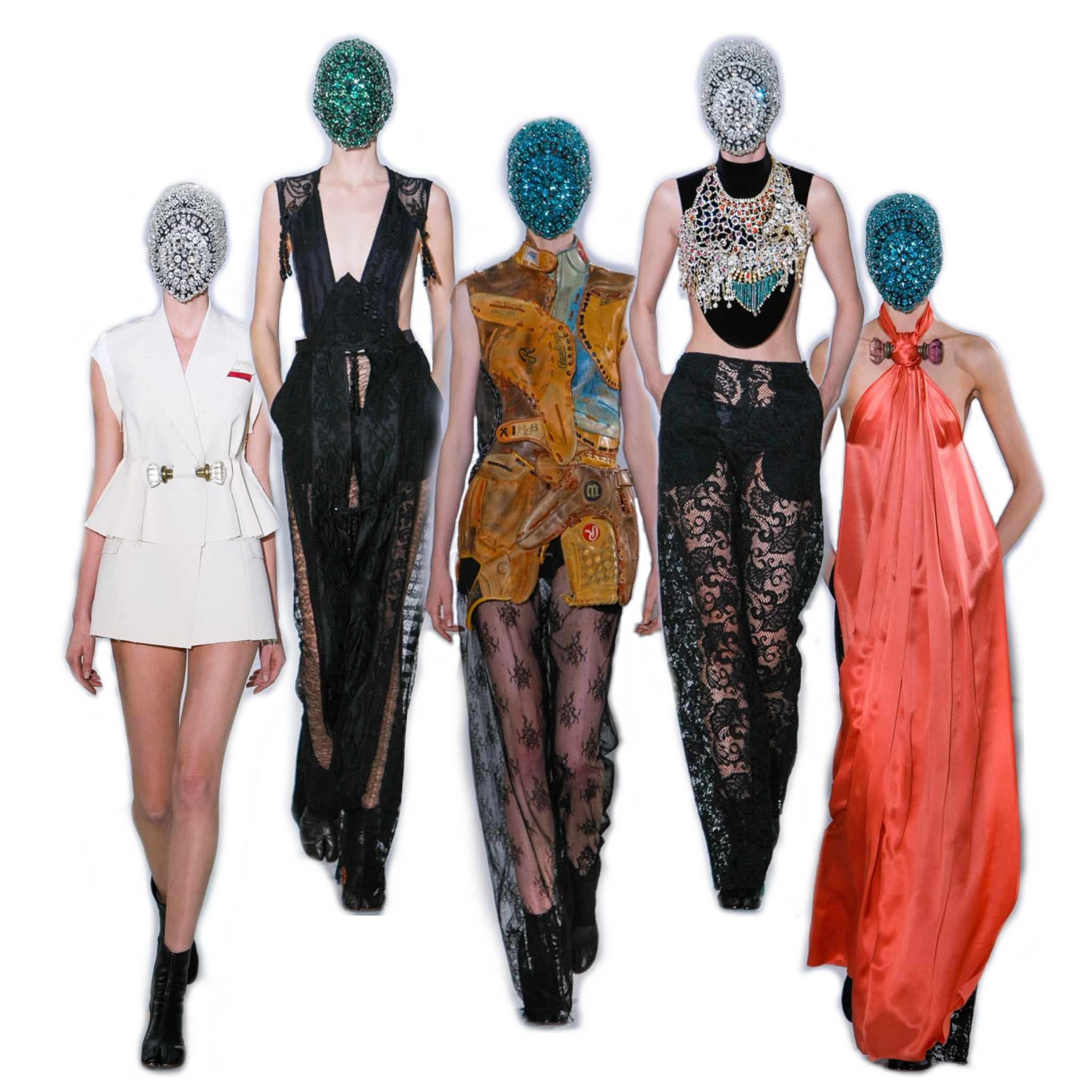
Maison Margiela F’12 Couture Collection, pictures accessed via Vogue

Maison Margiela F’12 Couture Collection, pictures accessed via Vogue

I like the symbolism of masks because they make you think about disguising yourself and your face and maybe becoming more anonymous or even taking on a character. I feel like there is a weird contradiction in there, right? Because, in some regards, you are trying to hide yourself, but through embellishment. A viewer is meant to be looking at something that you are obstructing. Do you think that fashion does the same work of both hiding yourself and being eye-catching?

Yeah, I think that there's so much you can do with [certain pieces], so it really depends on what you want to get out of it. If you want to use fashion as a way to blend in or become more anonymous, you can do that. On the other side, if you want to stand out and draw that attention to yourself, you can do that as well. The style that I find interesting is the one where you don't know which objective they're going for, and that’s what the masks symbolize to me. I wanted the mask I made to hide the model and reflect the subconsciously desire to be seen, through that ornate design. 

Arjun Kilaru MODA W’20, runway photography by Elliot Duprey

Arjun Kilaru MODA W’20, runway photography by Elliot Duprey

Where do you think your designs are going forward from MODA ?

I definitely learned a lot from the other designers, in terms of techniques and themes. I was just super observant of everything that I saw. There were themes of combining men's and women's fashion in a very direct way. It's more subtle the way that I did. [But, I want to play off of that and put out my own version of that in the future].

How would you describe where your personal style is right now?

I tend to like stuff that I see on red carpets and much less that I just see people wearing on the street. I [try to integrate styles] that I find unconventional and have fun with how I decide to wear it. I really like kimonos and I have like four or five that I'll throw on and layer two at the same time. I don’t really care what the overall trends are. Sometimes what I wear are just random things that I really gravitate towards, like headscarves and masks. I just go with it and see what looks good.

Arjun Kilaru MODA W’20, runway photography by Elliot Duprey

Arjun Kilaru MODA W’20, runway photography by Elliot Duprey

How has being in quarantine affected your materials or techniques utilized in your designs?

It definitely makes the stuff that I make somewhat less risky because I know that if I mess up, I can ruin the fabric by cutting it the wrong size. [At that point, I can’t] fix it. [I don’t have access to fabric stores], like I did when I was designing for MODA. Then, I knew that the worst thing that would happen would be that I have to replace the fabric I had. I also was able to go to the fabric store multiple times for at least an hour each time. The main things that I looked for were colors that go together and the relative durability of the fabrics. It was cool to figure out how I can use their strengths. For example, velvets are a really formal fabric and I wanted to match that with denim because that's not something that you see very often. But what I didn't know is how hard velvet and denim are to sew. At the end of the day, I learned a lot from using them. Now, what I mainly look for in a fabric is how they convey the message or theme of the collection and their ease of use.

Now, in quarantine, I'd have to pay [for shipping] and wait another two weeks for it. It's a lot harder, which is why I've been making stuff that will still teach me and help me grow, but I know I can be safe with and use up fabric I already had.

A lot of people in quarantine have started picking up sewing just so they are able to make functional masks for themselves, their families, and to donate. Do you think this introduction of people wearing masks made from whatever materials and fabrics that they have on hand will eventually make it into the fashion mainstream? What advice would you give to someone finally introducing themselves to sewing?

Yeah, I mean for the Show I also made three or four of those types of masks, and almost went with that design instead. They are really easy to make. I hope that most people who are picking that skill up and will feel like they can make more items on their own. I'm really excited to see more people getting into sewing and designing and I definitely think that it'll build. 

People are teaching things to themselves right now. And like 90% of how I learned to make clothing was from YouTube and asking around. Anything is completely possible. If I was able to go from knowing nothing to creating [an entire collection in a few months], then anyone can, for sure. Especially right now, if you have spare fabric or whatever, you can even use old curtains or old clothing, to teach yourself how and have fun experimenting. I think like you'll learn a lot more than you think. 

IMG_1606.PNG

Arjun Kilaru’s Norm-Shifting, Logomania-Influenced Designs

Featured Images via Arjun Kilaru

All Included Collages Made By Ariana Garcia

Quarantine Skillshare: Juliana Freschi’s Dreamy Pokes

Juliana Freschi is a graduating fourth year sociology major and tattoo artist. While at UChicago she sang in Dirt Red Brass Band and was both president and an active member of Motet Choir. You can find more pictures and up-to-date info about her tattoos on Instagram via @dreamypokes!

Hand poke tattoos are the most accessible, self-created form of magic available in quarantine, says graduating fourth-year Juliana Freschi. They are at once affirming, adornment, and a positive change. Her tattoo imagery draws from a range of styles, from art deco to traditional to bold geometry to delicate stippling, all while remaining distinctively hers. 

Working both within and outside of the broader Chicago tattoo community, Freschi enjoys the act of giving tattoos because of how they connect her to the individual. The edited conversation transcribed below covers Freschi’s start to tattooing, her thesis on sociological boundary work, and how stick and poking herself in quarantine has imparted the magical and transformational qualities of the medium. 


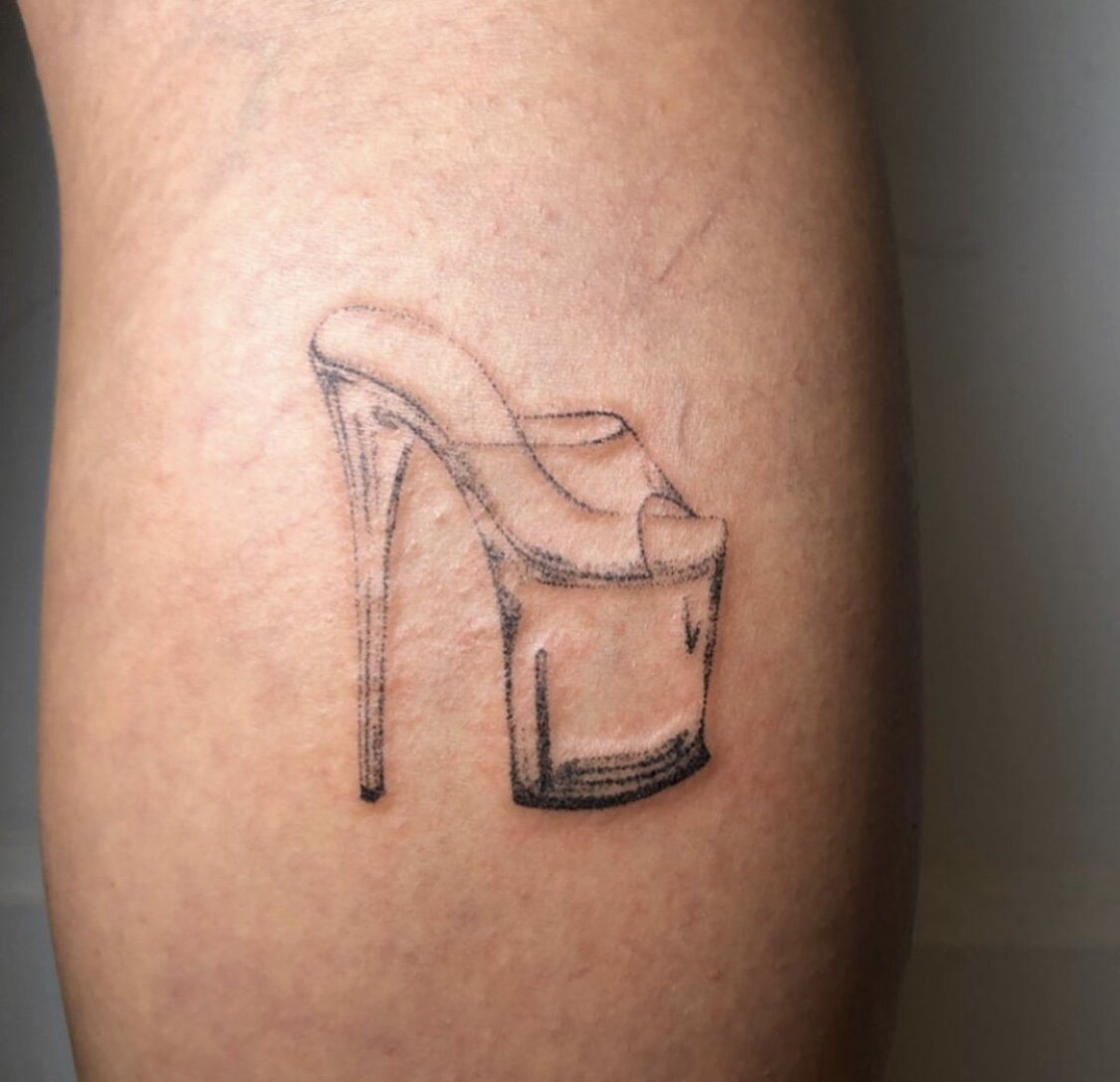
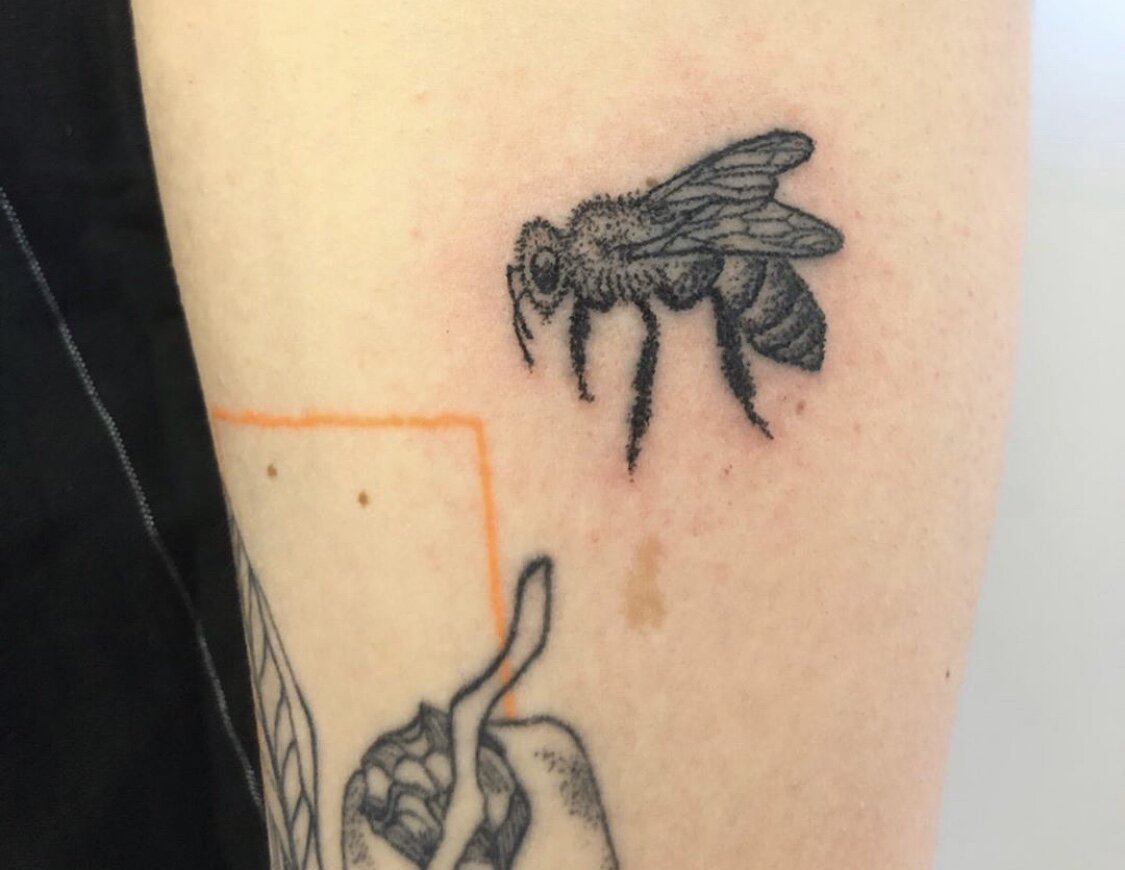
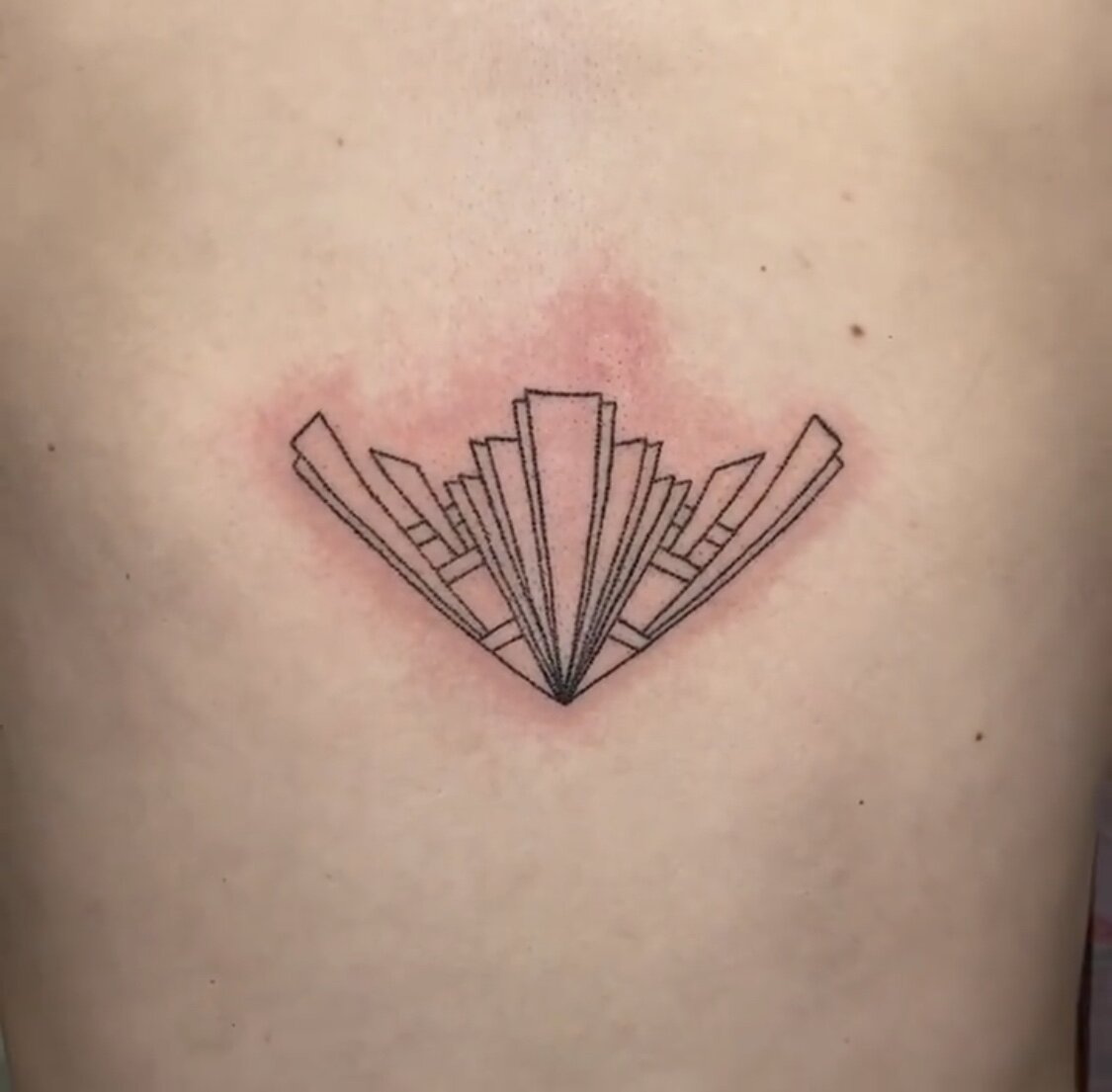
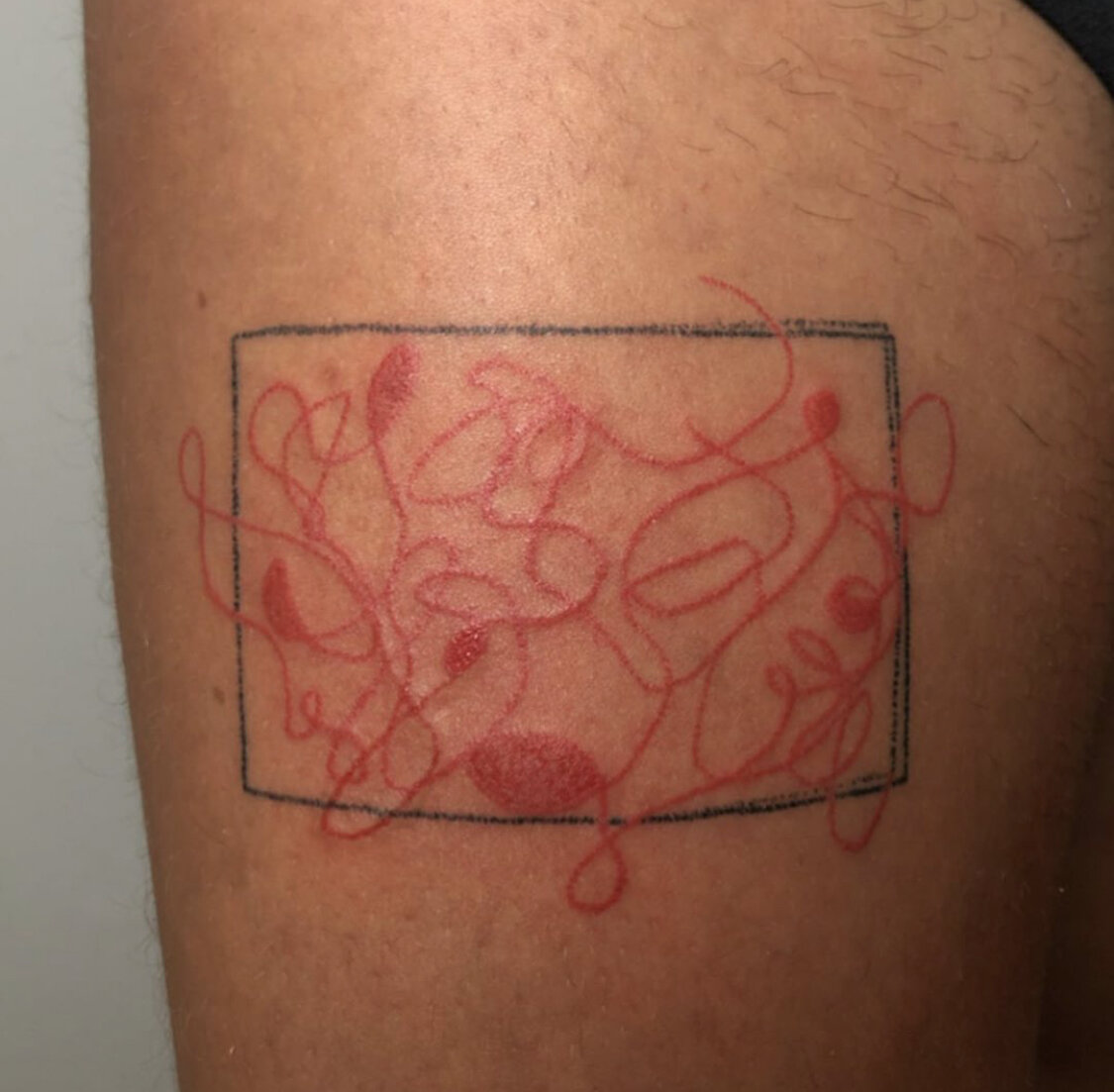
Examples of Freschi’s Work via @dreamypokes

Examples of Freschi’s Work via @dreamypokes


Ariana Garcia: How would you describe your style of tattooing?

Juliana Freschi: I don’t really have one. I like to stay open to all different styles. My artistic style and visual language stay kind of fluid. I’m definitely influenced by traditional tattoo imagery, which has been sort of a recent development. Probably in the last few months, hearts, cherries, and pinup girls have been coming up in my drawings more and more. I also have a strong affinity for geometry and clean lines and shapes. I’m trying to find a way to marry those two things. 

How and when did you start to get into tattooing? 

It was the summer before my third year and I had spent it drawing. I had just gotten my first tattoo in the April of my second year and it was by a former UChicago student who used to do stick and pokes out of their apartment. It was this homemade style and the DIY experience: in their living room, their roommates were drinking beer right next to us, and me draped over a chair. It was a really ideal first tattoo experience. I really liked it and I started following more and more tattoo artists and realized how accessible it is. It’s even more accessible now than it was two years ago. Now, everyday new stick and pokers are popping up with new Instagram accounts. A lot of people could get into it, find relative success, and just have fun with it. So I ordered some really basic materials off of Amazons (a 100 piece variety pack of needles and really shitty ink) and practiced on a banana first, then myself, and gave my roommate a tattoo on her ankle. 

Also, when I am getting a tattoo, I just ask the artist a ton of questions about what they’re doing and their experiences. That’s how I’ve learned a lot of techniques because, when it comes to DIY tattooing, there is not that much solid information available, other than some YouTube videos and old articles of just super basic information. So, if you want to learn the more advanced stuff you have to go out there in the field to talk to other artists. 

From Flash Drawing to Ink, accessed via @dreamypokes

From Flash Drawing to Ink, accessed via @dreamypokes

Do you think that your attitude towards receiving tattoos on yourself has changed since that first one?

Definitely. Especially considering how many tattoos I have now, I started getting them really late. I mean I got my first tattoo in April of 2018 and I was 20. But then after that I just really liked the way it became a part of my body and I got so used to looking at it. 

What drew you to stick and poke tattooing specifically?

That's sort of like a comfort thing. It's not like in a studio where it feels sort of sterile, but it's like kind of a hang out, right? Also, hand poking is really great for starting out because tattoo machines are really, really expensive. First of all, they're $300 to $600 and then you have to buy a power supply, which is like $200 and then all of the different cartridges and grips and everything. Stick and poking is way more economically feasible. It's not a huge investment if you're not really sure how seriously you want to take it. So that was pretty great for just wanting to dabble in it. When I first started I bought supplies off of Amazon.

As an art form in and of itself, hand poking is a much slower pace. A tattoo machine is like having a pen and drawing a line, whereas hand poking you have to make that line out of many tiny individual dots. So it probably takes four times as long. But that said, you have so much more control over the piece that you're making. I kind of feel more connected, a lot more present, and a personal connection with the pieces I make because I'm bringing them to life, one tiny dot at a time.

And then working from home is very chill, and I think it's just really welcoming for people. Not to say that shops can't be welcoming because a lot of people that I know have really beautiful and relaxing spaces that they've made, [like Time Being], which is a newer shop where the residents all have DIY backgrounds as artists.

What is the process from moving from a tattoo design to actually putting it on a person, especially when you’re making something specifically for them, and not for a flash sheet?

When people have an idea, it becomes a collaborative process. For example, sometimes people will already have a drawing that they've made that they want me to tattoo for them, which I really like doing. Any tattoo artist is going to say that making your own designs or your own flash is really gratifying because it is. But then I also enjoy making other people's art come to life as well because that's clearly so special for them, which I love. Then some people will bring an image they want, but ask me to put my personal spin on it. Like this one guy wanted some skis, but he wanted me to put a little geometric flair on them. This type of collaboration is definitely a challenge for me, but it's fun to stretch my creativity and think about how to conceptually apply my visual language. 

How does it feel for you to give a tattoo? What are you thinking about when you do this?

It's a lot of pressure, of course, because you don't want to mess up somebody's body. It's simultaneously really relaxing because the process of a hand poke tattoo is very meditative for me because of the type of brain that I have. I've always been able to focus on detail-oriented things for a long time. So I can just zone in on a tattoo for three hours and it feels like no time has passed. I love to get into that zone and make something happen. 

It's important not to take that all lightly because like you are permanently altering somebody's body, and there's a lot of different elements and facets [of technique] that you have to take into consideration. Not only is the final piece a thing that they're going to carry with them forever and you want it to be as good as possible, but I think that the experience of receiving the tattoo is just as much imprinted into that image.

Who or what inspires you?

On Instagram, I follow so many inspiring tattoo artists, so it’s hard for me to narrow it down because I like so many different styles. I am drawn to people who make bold, traditionally-inspired tattoos and know their style as artists. Recently because of quarantine, I have been seeing all of these tattoo artists translate their designs to canvas, paper, and clothing, which is an exciting experience because I feel like I'm getting to know a different side to all of these artists. For example, there's this one artist Emma Bagley over in [Santa Fe, New Mexico] who takes traditional imagery, but then makes them a little more psychedelic and warped.

I'm also inspired by people who know a lot about tattoo history. There are two Chicago artists who come to mind: Sema [Graham] Tattoo  and Kyle Butler. I love them. They just know everything there is to know about tattooing and they think it's the most amazing art form in the world. Like they are obsessed with it. And I think it really comes through in their practices and the art that they make because they are so invested. 

But, you don't have to be obsessed with tattoo history to be an amazing tattoo artist. There's a million and one ways to be a tattoo artist. I'm excited when people are clearly passionate about the art they're making or when they're doing something new, something inspired.

IMG_1379.PNG

Reworking

The Traditional

Featured Tattoos by:

@kybut

@emasesame

@sema.tattoo

How do you engage with tattoo history? Is there any sort of facet there that you identify with? 

For my thesis, I actually interviewed 17 tattoo artists. Before this, I didn't really have any appreciation for traditional tattoo imagery or culture, and I just kind of thought it was all sort of boring or too old school, et cetera. Through doing this research and seeing how passionate these different artists were about it, I also gained more appreciation for it. [Traditional imagery, as a result,] started to come up more in the things that I'm drawing and the things that I want to get on my own body. I wouldn't say that I know a ton of history, but I could name drop old school artists who were foundational. I think they're just so badass. There's absolutely a reason that [those designs] have lasted so long and yeah, it's made me want to incorporate it more into the art that I am making. 

What was your thesis about?

 It was using all of these tattoo artists as a case study in boundary work, which in sociological literature is basically like gatekeeping. So, I'm talking about how all of these tattoo artists construct their individual identity as artists by comparing themselves to others, and either validating or invalidating things that other people in the tattoo community do. I think that gathering all of that research was the most fun I've ever had. I made so many friends by just talking about tattoos. If I had to give some thesis advice, I’d recommend that you do it on something that you are actually really passionate about, so you can talk to people that you think are awesome.

Chicago has a really amazing, strong, tightly knit tattoo community. What’s it like being a part of that? Do you feel a part of that?

Being in Hyde Park makes it harder to feel included because all of the shops and most of the client base is on the North Side, but that's okay. Tattoo artists are the nicest people in the whole wide world and it's the most welcoming community ever. I don't even have to have met some of these people in person for them to be people I would consider friends. Everyone's just really supportive of everyone else's work . We're always commenting on each other's stuff and sharing it and just being like, yo, that's sick. Like the response that people had to my thesis research was heartwarming because everyone was really eager to participate and talk about tattoos. They were just so accommodating. I really love everybody who's a part of the community. I wouldn't say that I'm super in it, but the connections that I have made with people have been very important to me, and really pure and wholesome. That's what I would say. Tattoo artists are just wholesome.

How has quarantine affected your work or how you engage with it?

 I miss tattooing people, but it's also kind of been amazing because, to be honest, I didn't really know anything about art when I got into tattooing. I've never had formal training and I didn't know a lot of basic technical stuff, which I always felt was a disadvantage. Sometimes I look at other people and I'll be like, damn, like y'all just like, know how to shade something. And I'm over here being like, everything I make looks wonky, in my head. So quarantine has been this incredible opportunity for me to just learn. I've been experimenting with a lot of different media like oil pastels, soft pastels, colored pencils, charcoal, graphite, painting and it's been the most fun ever. Quarantine has been a great time for me to really figure out more deeply what truly inspires me and what the art is that I really want to be making. So, yeah, I've just been able to like think about that and engage with it a lot more. 

I have some t-shirts in the works. Um, I did this really dumb thing. I bought a pack of tee shirts and then I got home and realized that they were children's t-shirts. Yeah, they are boys large. But, you know, actually it's not that bad because the boy's large is kind of like an adult small, and they just sort of fit like baby tees...whatever. Hopefully somebody will wear this anyways. So, yeah. I've been painting t-shirts. 

1/2 Self-Poked Quarantine Tats via @dreamypokes

1/2 Self-Poked Quarantine Tats via @dreamypokes

Have you given yourself any tattoos during quarantine?

Yes I have tattooed myself twice in quarantine. Both of those pieces that I made were exciting for me because I was trying out a different technique. Especially the most recent one I made, which is lips with a cherry, was a bit of a challenge because it had a certain type of detail that I had never really attempted before. But I was really happy with the way it came out and I was like, yay, we're making progress. And I felt like it was a step forward in what I want my sort of look to be. 

For some reason, though, I am more afraid or more hesitant to tattoo myself than other people. I have some friends who tattoo themselves constantly and that's great because you're practicing so much. But I'm always afraid to mess up my own body. Doing it has been a good exercise in trusting myself. I also really like the power to customize my own body. I've tattooed myself one, two, three, four, like seven, no eight times. I started really small and I slowly got to doing bigger and bigger things and I'm really happy with the way they've turned out.

2/2 Self-Poked Quarantine Tats via @dreamypokes

2/2 Self-Poked Quarantine Tats via @dreamypokes

It's also made me feel more confident in my own ability and in my body. Tattoos are amazing for making you love your body and your skin, which is huge, especially during quarantine because it's been such a rough time for people who struggle with their bodies or have disordered eating.

It's just been a really brutal time for all of us out here. Tattooing myself has been a great way to check in with myself and take some time, zone into this work, and then make something that I'm really proud of, on my own skin. I also like tattooing myself because I can take however much time I want and I can always go back and make changes to it later, which is nice because I am a hyper perfectionist. 

What would you say to someone who is currently in quarantine and thinking about picking up hand poking?

I say like, definitely go for it. Like I said before, tattooing isn't something that you should take lightly because it's both a psychological and physical change in your body and other people's bodies. But I think in quarantine, if you want to poke yourself, it's your body, so like go off. It's really fun to have control of your body and make something that you're proud of and happy with. I would say, though, maybe practice on something that is not skin first. The first thing I ever tattooed was a banana. I think it's kind of important to get the basic feel of it without permanent repercussions. Now's a great time to start. 

Tattoos mean so many different things to everybody. I don't really think that the first thing that you get tattooed has to be super meaningful. Some people approach it that way and that's fine, but in my experience, I find that the meaning is going to change and go away. Whereas if you just get something that's really beautiful, you're less likely to hate it later. Definitely don't try to imbue some meaning into it cause you think that it has to have meaning. I've gotten some tattoos that were a snap decision. I just walked in, knew that I was going to get something from somebody’s flash, without seeing it, and then saw a piece that looked cool and they're some of my favorite tattoos.

I just think that tattoos are super, super magical and there's no [other art form as immediately transformative]. This quarantine has sent me to hell and back again a hundred times because I just have to be with myself and my brain and my body all day, every single day and it's made me feel crazy. But being able to customize and have control over your own body is the most special and important thing that tattooers offer the world, in my opinion. 

IMG_1401.GIF

“BEING ABLE TO CUSTOMIZE AND HAVE CONTROL OVER YOUR OWN BODY IS…”

dreamy, magical, empowering

Featured Image Provided by Juliana Freschi

GIF Collage & Featured Collages by Ariana Garcia
Quarantine Skillshare: The Kaleidoscopic Animation of Elizabeth Myles

Elizabeth Myles is a fourth year majoring in Cinema and Media Studies and minoring in Visual Art. She was a board member of Fire Escape Films and a FOTA Fellow. Off campus, she can be found on rollerskates. Her most recent documentary animation, Love Stories (linked below, in article), has been accepted to four film festivals. Find more of her animation on Instagram: @elizabethmylesart and @quaranzining and on Vimeo!


Elizabeth’s animation communicates in a variety of multimedia and multisensorial languages, constructed through collage, drawings, music, motion, and found poetry. The effect is a frenetic feast for the eyes lovingly assembled, frame by frame, by only her hands. 

Our conversation is driven by the classes at UChicago that were pivotal to Elizabeth in learning how to animate, the way that the visual component of animation can both supplement and subvert the content of the audio, and Oklahoma. At the center of this is a deep-dive into Love Stories (video password: lovestories19), which premiered at the Ivy Film Festival. Below is our edited transcript.  

Still From Love Stories

Still From Love Stories


Ariana Garcia: How would you describe the art that you do? What did you produce as a FOTA Fellow?

Gif From Oklahoma City

Gif From Oklahoma City

Elizabeth Myles: My main medium is animation. I started this last year in Winter Quarter when I took a two-part “Experimental Animation” sequence with Scott Wolniak. I learned both manual and digital animation, but I prefer manual. This includes hand drawn things, rotoscoping [when you trace and sketch things over and over], stop-motion, and collage. 

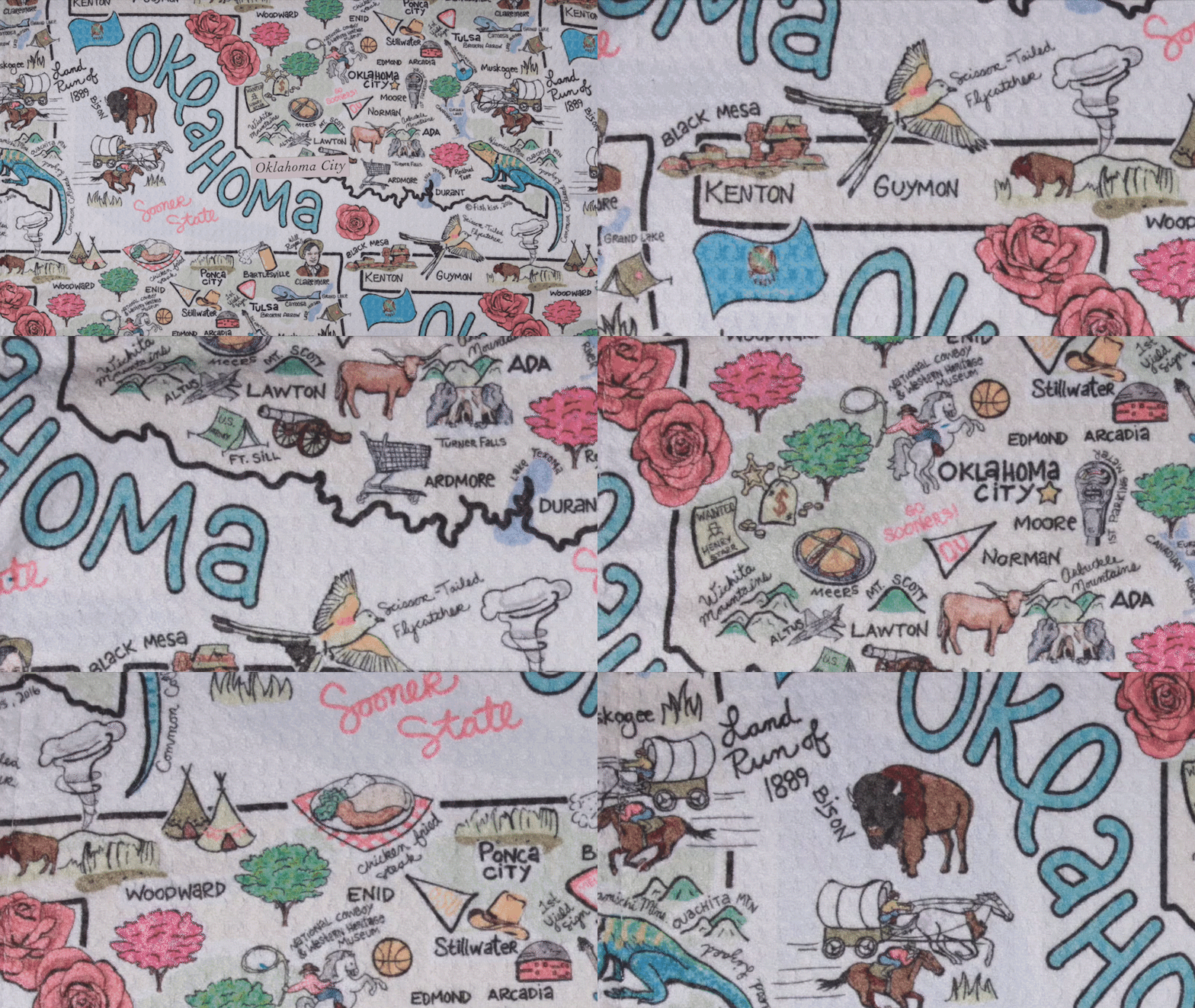
[I made an animation about Oklahoma.] No one ever thinks about Oklahoma! It is never on anyone’s mind! Maybe I talk a lot about it, but whatever! Oklahoma is my home! I lived there and I love it. People assume that there are just cows there (and there are cows!), but it means so much more to me. I made an animation called Oklahoma City , that’s still a work in progress, and [the items I chose to showcase are nostalgic for me]. I show receipts from my favorite burger place, Braum’s, this kitchen towel my mom gave me that has little icons of state attractions, and the movie Twister that I bought at Best Buy. It also includes a sound collage of my voice and I sort of give a tour of these symbols. I just wanted to make an homage to my home, in my own weird experimental way, I guess. 

What is your process? How do you start an animation?

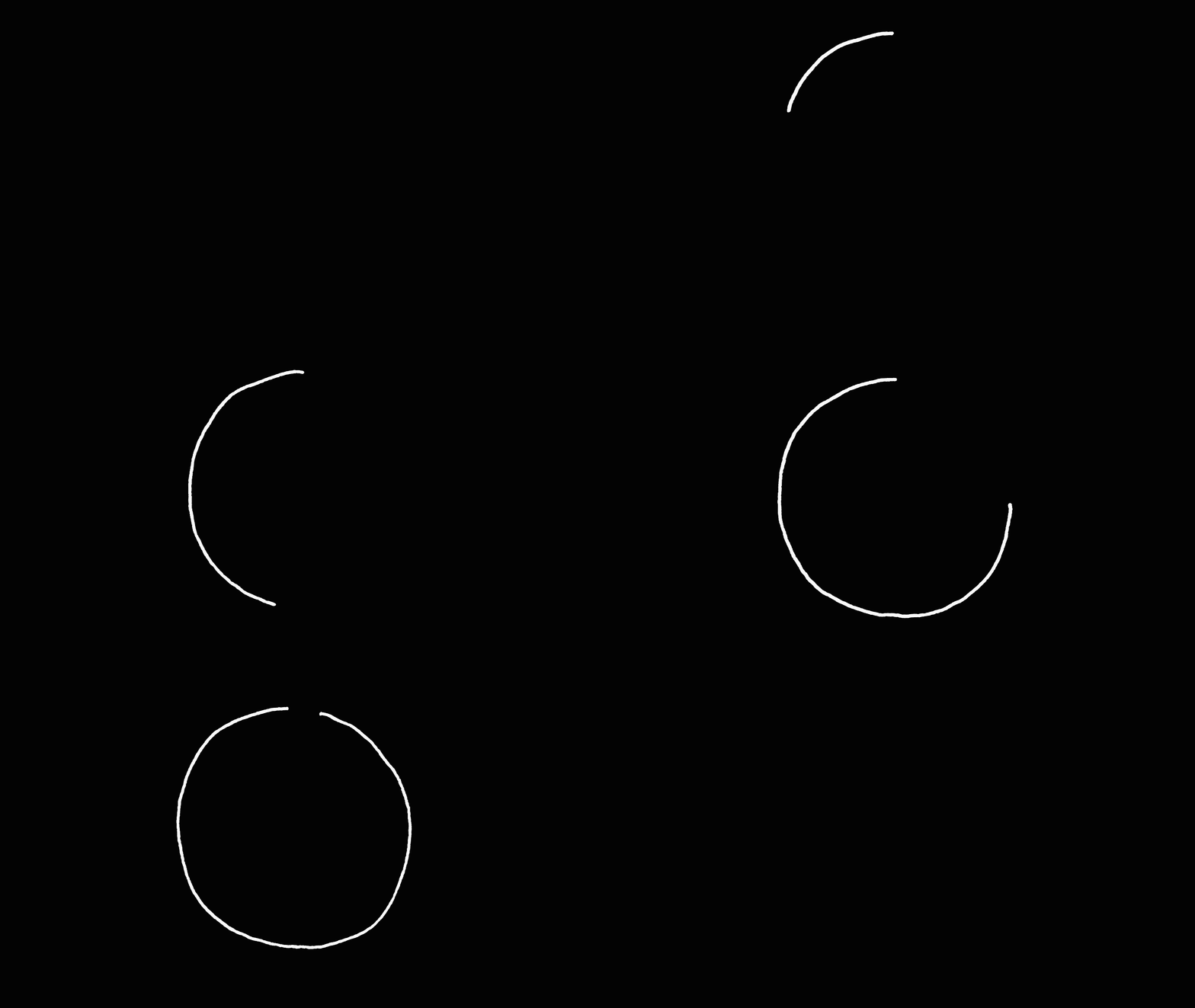
Sometimes I have an idea of the base materials. For example, I once had 39 drawings of a line that progressed from the top to bottom of the screen. In the editing room, I keyed out the background so I could only work with the line. Then I just copy-pasted it and could move it around. A lot of my animations are like that. I’ve done the same thing with a circle, but that was 120 drawings. It took 30 hours just to edit! Not even counting the hours it took just to draw the circle. My friend, Sam Basté, (@sam.baste.media), who graduated last year, does really great [multimedia art and sounds] and is in this group called Bad Optics Collective (@badopticsco). [Under the alias ‘Not Yet’], she released this cool track, “Eartha May” featuring interviews with Eartha Kitt and she let me animate to it. I wanted to start with a circle, and once I started editing, it lined up pretty well with the audio. The animation got crazier and crazier as the music turned more into house music. It was just a really fun project and amazing to collaborate with her. 

Gif From Eartha May Animation via Vimeo

Gif From Eartha May Animation via Vimeo

I think that collage is harder for me to plan because I have all of these different images. I like collage animation more than just collaging and glueing something down because I am really indecisive. With animation, I can continually change things. 

There aren’t many other disciplines where literally every single thing in the project is moved and molded by a single pair of hands. Who or what inspires you?

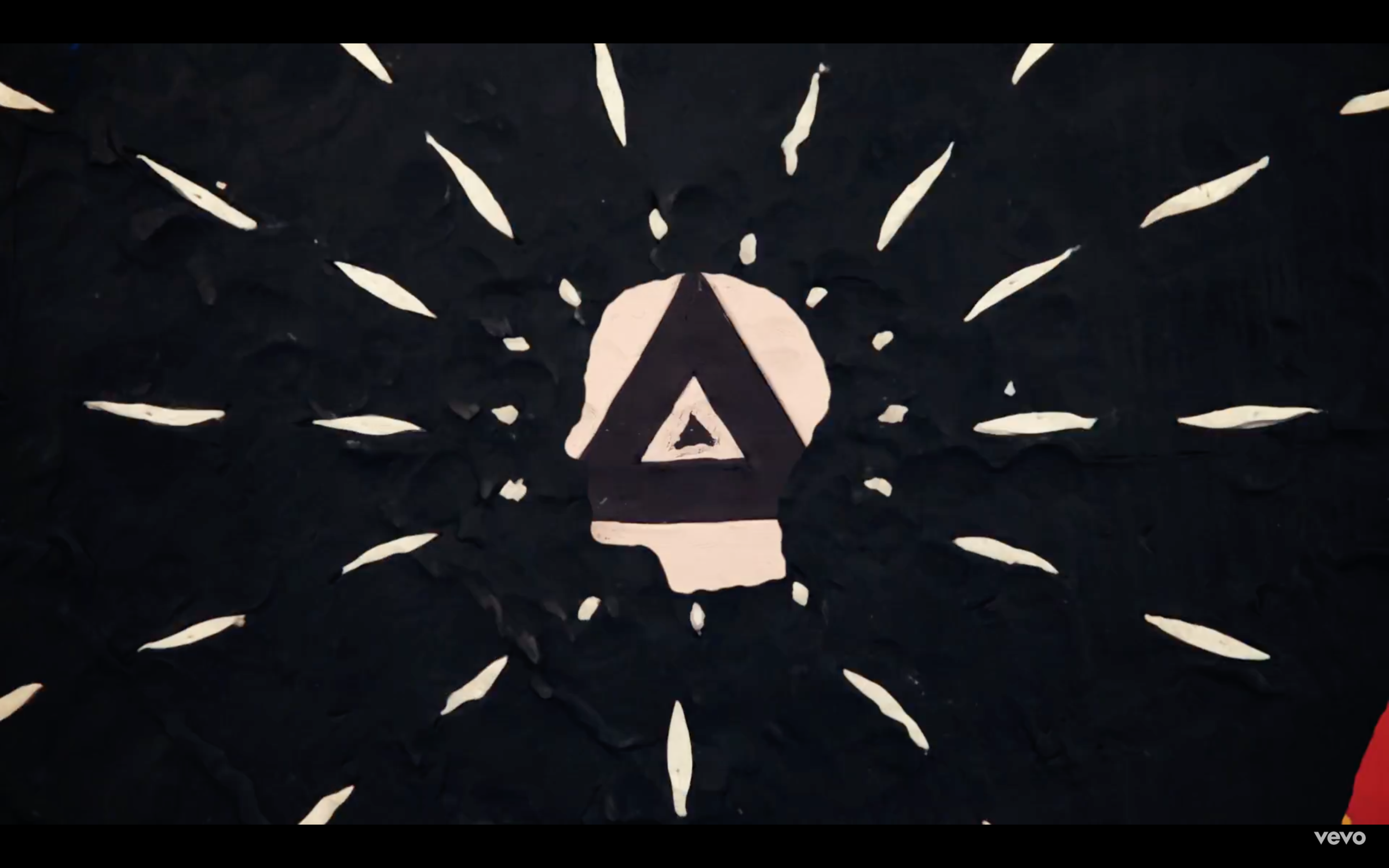
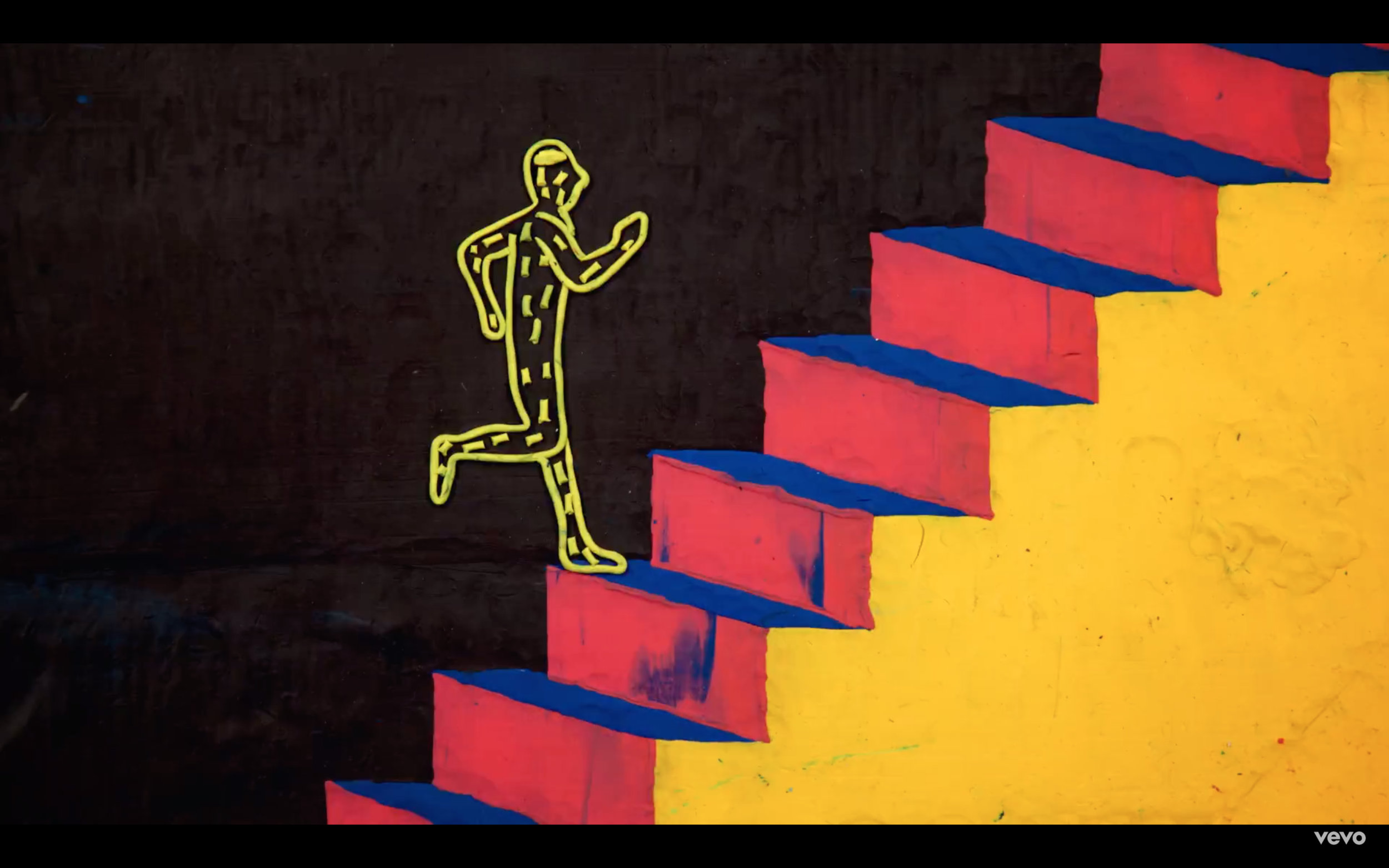
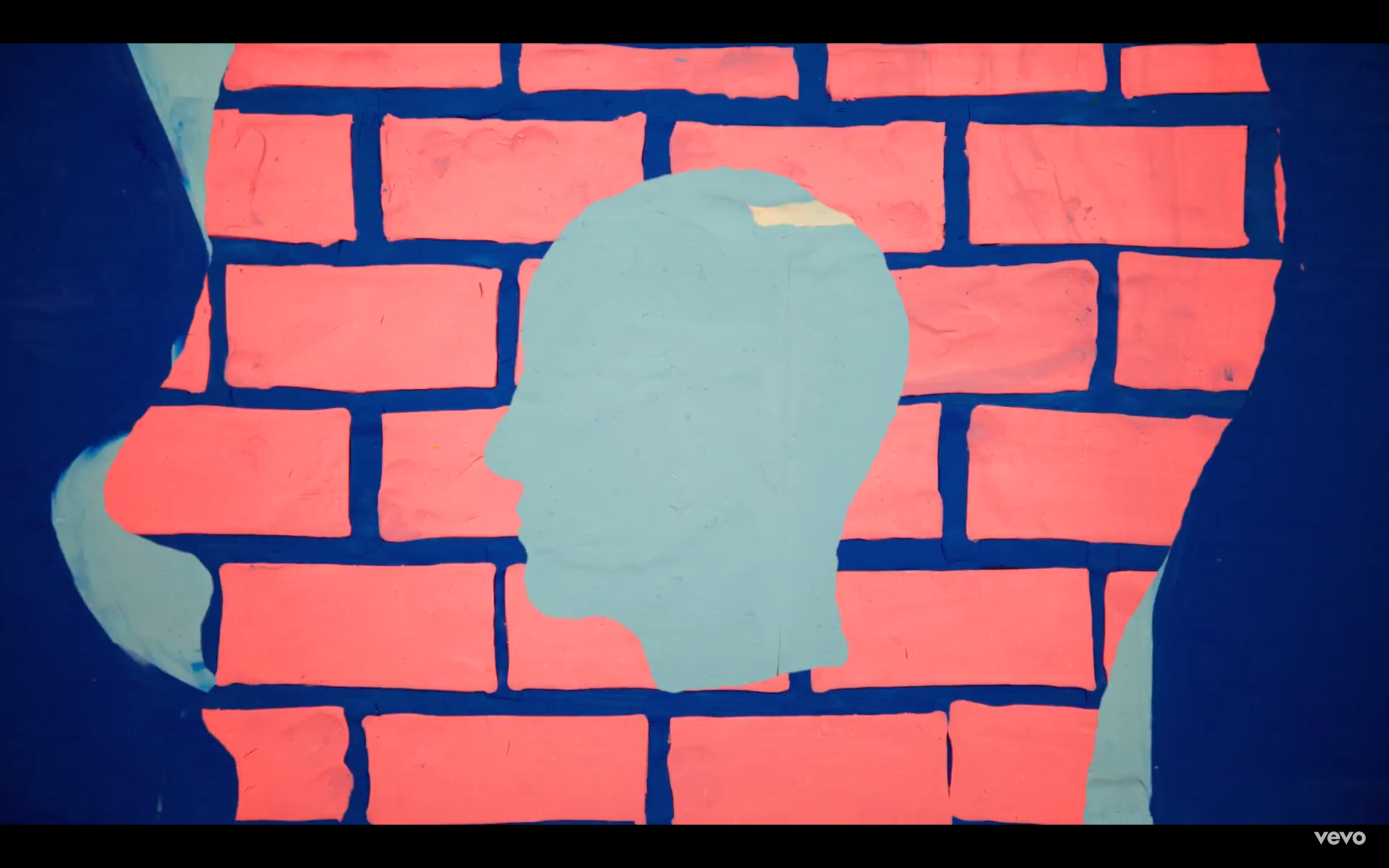
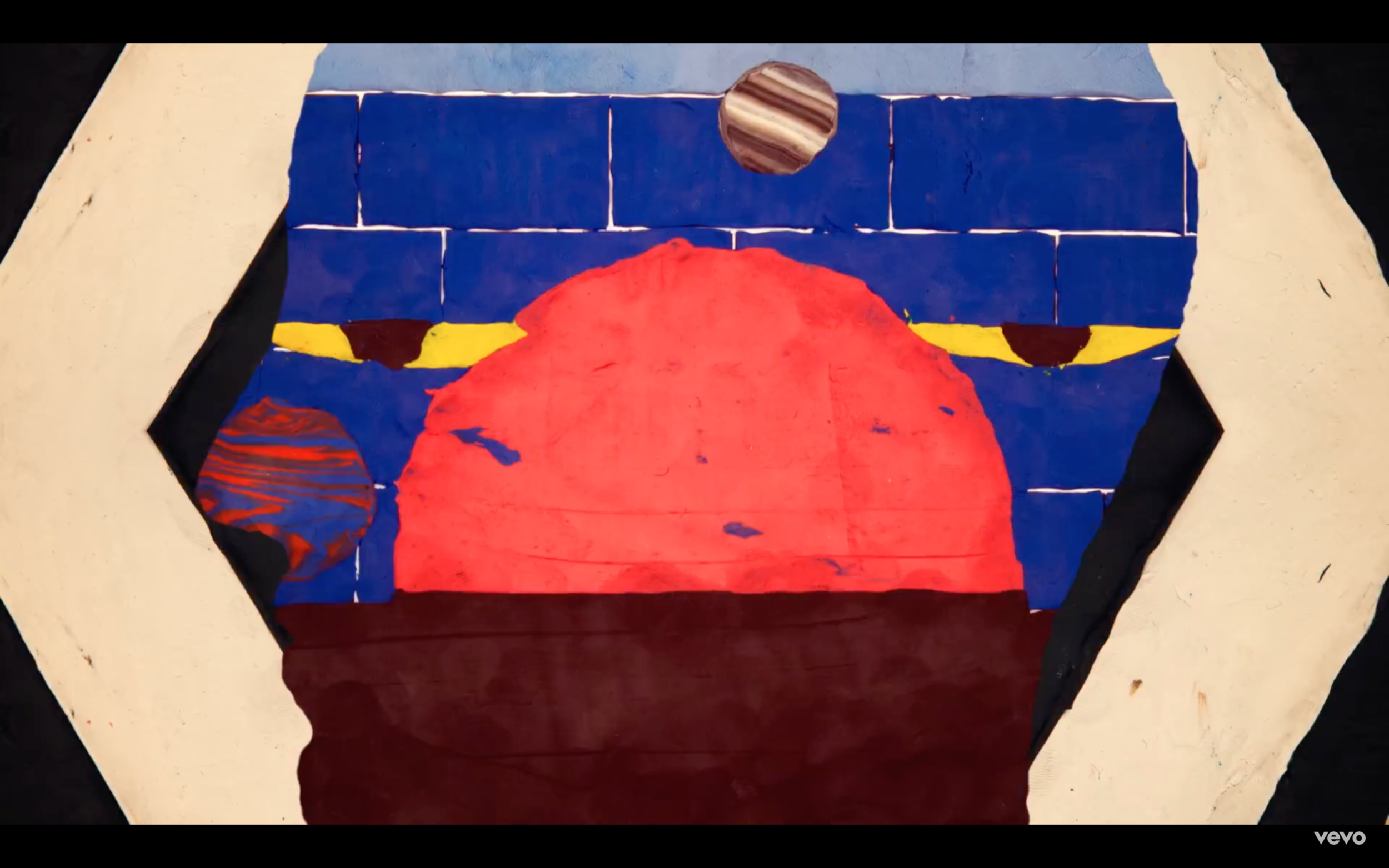
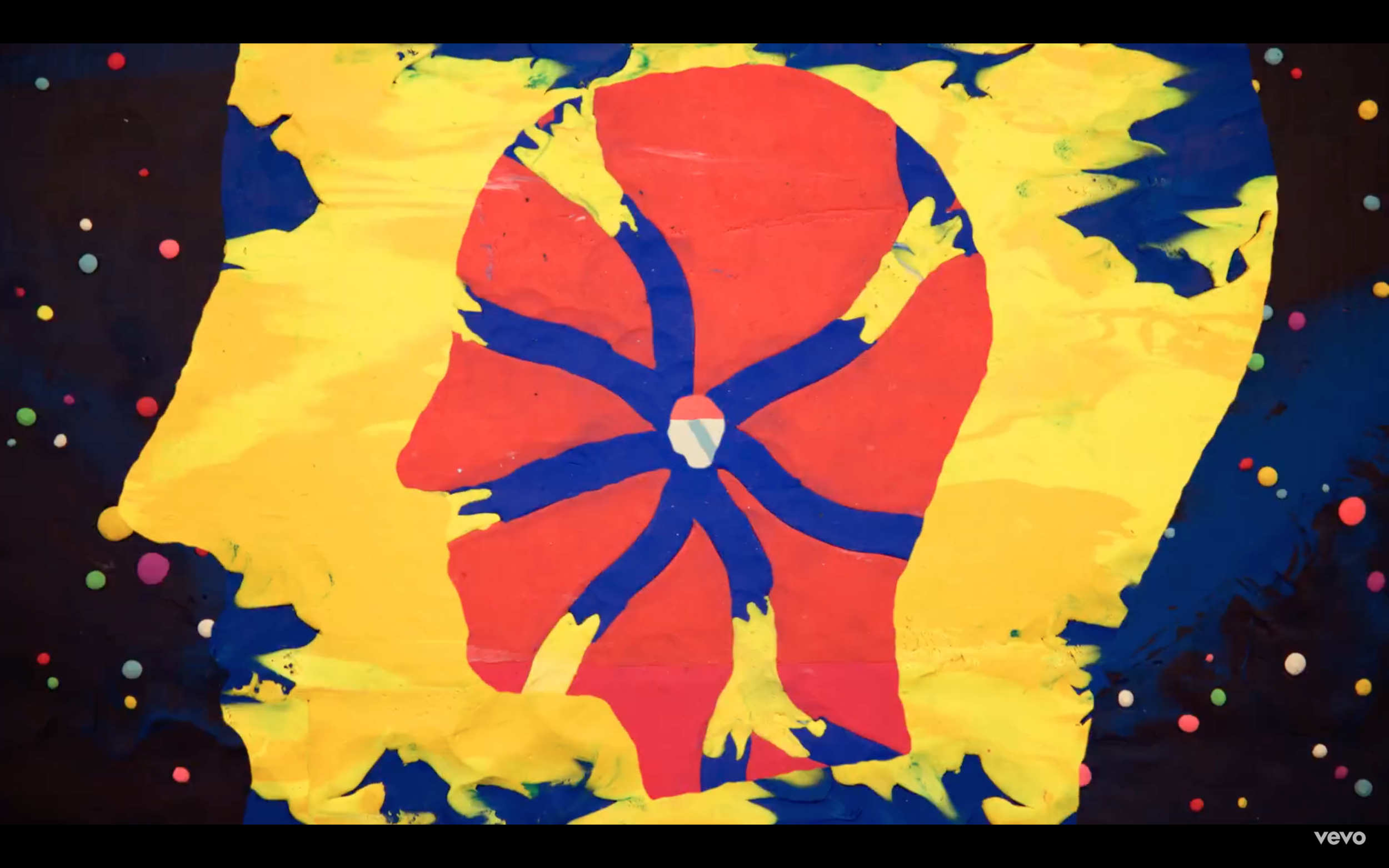
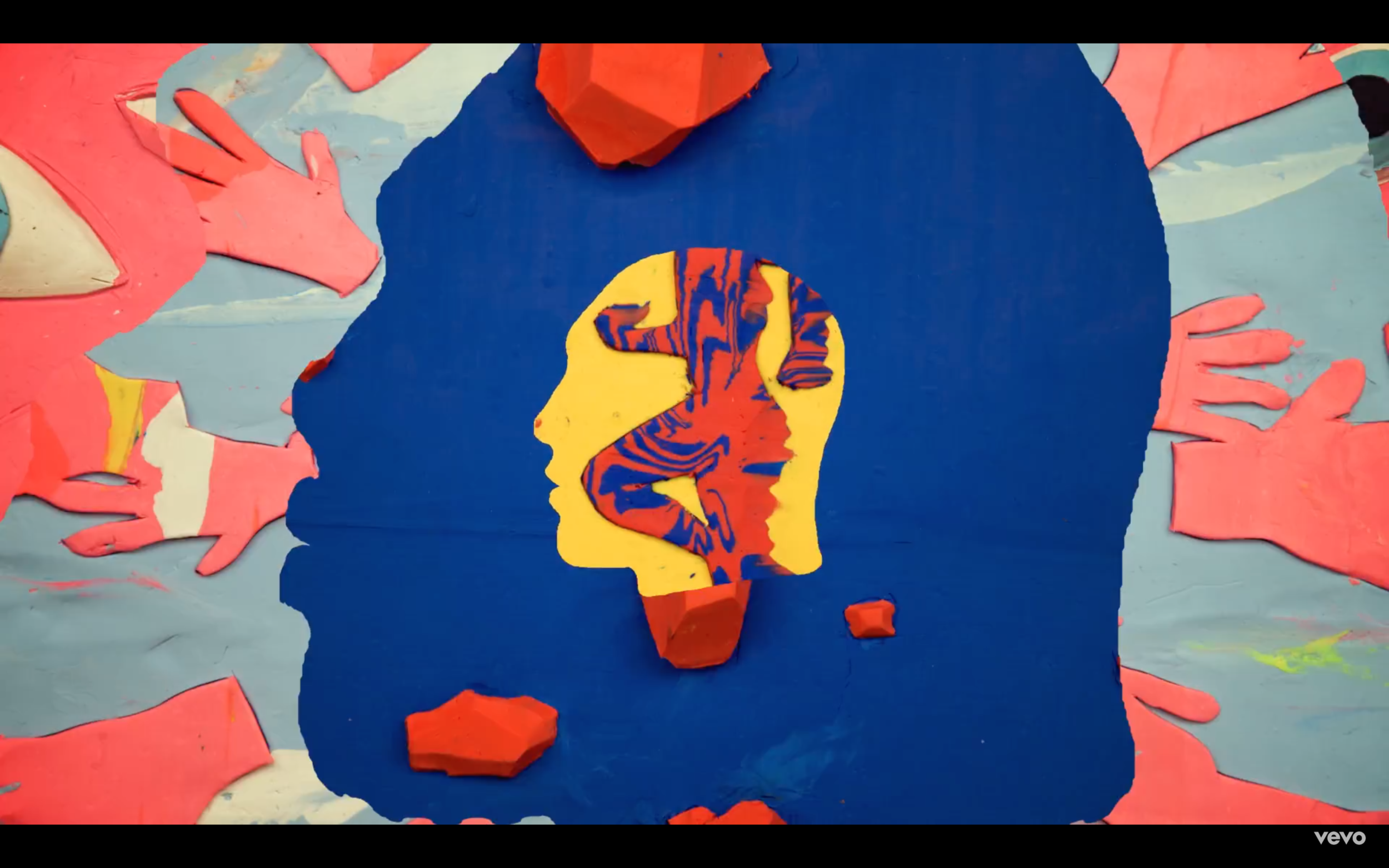
Lowkey I’m very bad at, like, art history and name dropping, but I really like the music video “Feels Like We Only Go Backwards” by Tame Impala. That is a collage animation using plasticine, which is a type of clay and a team of animators with over a thousand segments. It kinda just blows my mind. It would be cool to get to that level and make something as complex and intricate as that animation is. That size of a project definitely necessitates a team. I think if one person took that on, they’d go crazy. 

Stills From “Feels Like We Only Go Backwards”

Also my professor, Scott Wolniak, who I’ve taken two animation classes and a collage class with, has had a huge influence on my craft. He’s an amazing professor and also advocates for my art. He gets you to think about art in a different way. I never would have made most or all of the animations that I’ve made without his prompts or feedback. 

I also really like this film called Mothlight by Stan Brakhage that I watched as a second year when I started taking a lot of film classes and before I started animating. Basically, he put things like moth wings and leaves in between two clear strips of 16mm film, then made a print of that, and projected it. The result was a barrage of densely packed images. It got me thinking about what a moving image even means, which sounds heady and theoretical. With more experimental films, you can do more with each frame because you have more autonomy over it. That film got me out of my head, and [showed me what taking risks in animation can look like]. 

Stills From “Mothlight”

Would you say that shorter, more experimental films need to have some sort of internal arc or narrative?

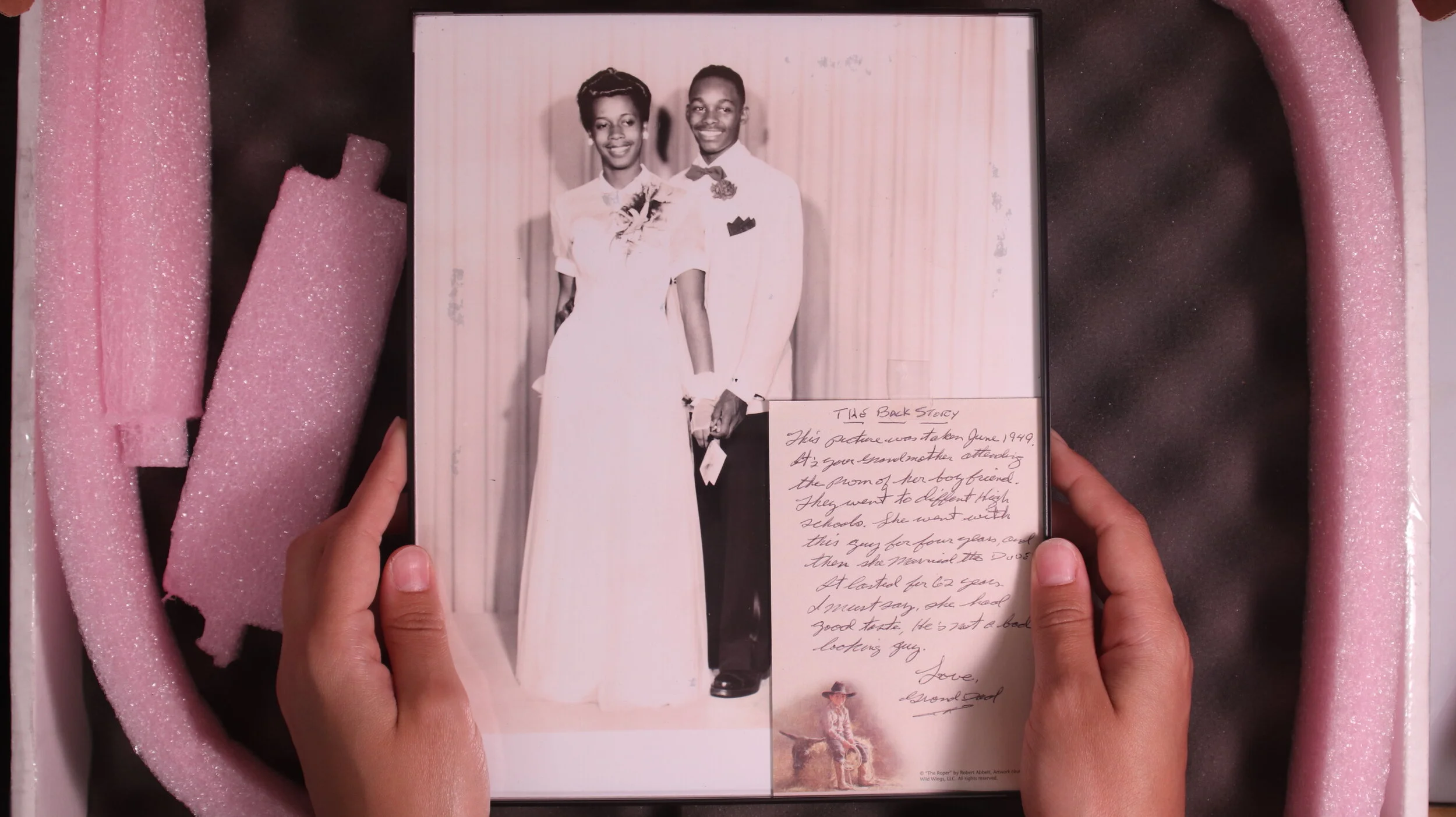
I don’t think it needs to have a narrative, it can [just exist as something that you wanted to create]. I made an animated documentary last year called Love Stories, where I interviewed people and they told me their love stories. It was a really sweet project. For example, I used another line animation to supplement a scene about a dad storytelling to his children. I also included the love story that my granddad recounted about my grandma, who passed away a few years ago. I think that one had the strongest narrative because it was unfolding like history. However, I still don’t think experimental films and animation necessarily need to have a narrative. Sometimes it’s important to just see how far you can push the medium. 

Still From Love Stories, Showing Elizabeth’s Grandparents

Still From Love Stories, Showing Elizabeth’s Grandparents

Animation is a really potent way for an artist to move their thoughts and feelings. How has it affected your way of communicating and engaging with the viewer?

I still stay in contact with the couple I interviewed for Love Stories. [I met them on Facebook, after I sent out a call looking for people to interview for that documentary. They were incredibly open, vulnerable, and tender.] They sent me a beautiful mood board of visuals that were pertinent to their story and I distilled it down to two elements: warmth and the color blue. [I used a gold tinsel and a blue agate slice] to abstract this. But, for the story about my grandparents, I knew I didn’t want to abstract anything. I wanted people to see the black and white photos, see the package that my granddad sent me, and see the realness of their story. Talking to the people who have seen the film, and what they thought about it, and which stories resonated with them personally means a lot to me because animation is such a solitary act. I invested so many hours making the film and it excites me when I see its own life, or afterlife. 

Are the images you used for Love Stories found or things that you specifically looked for?

I think a lot of them were found. There were two collage animations in that film. One of them started as an assignment for class, before I started making the film, and was a silent animation with images I cut out from Vogue and other art magazines. For that class, we had to make five animations in different styles and I was looking for inspiration, so I just focused in on the theme of Love because of what was available in the magazines. The two phrases that are rapidly switched out in the beginning (“what it means to love” and “to know someone deeply”) answer its own question. That’s how Love Stories came to be, and that specific animation became the bookends for the film. 

Still From Love Stories, Showing “You Are My Sunshine”

Still From Love Stories, Showing “You Are My Sunshine”

The other collage animation in that film was for Peter Forberg’s story about his grandma who has Alzheimer’s. For that, I was really struggling with how I wanted to visually supplement that. I had some collages for another animation I made for a film I produced called Habibah, that was directed by the amazing May Malone. She gave me some of the items and materials that she had used. I supplemented these with some cutouts from a book [about the Great Depression, so all of the words and phrases I had to choose from were dark and I had to use the most basic ones I could find,] like: “Mother”, “Grandson”, “Love”, and “He was only 11 years old”. I ended up just making them circle around on screen and the words themselves are not the focus. Sometimes the movement itself is more important than the content. Peter also specifically mentions a song that his grandma used to sing to him, which is “You Are My Sunshine” by Johnny Cash, so I decided to write out the sheet music and animate a few verses. That was the most difficult animation to conceptualize because the story was so powerful and I didn’t know how to pair the visuals with the narrative. It turned out to be my favorite, though. 

Do you think quarantine has changed the way you animate? 

I actually got to borrow some equipment from the Logan Media Center over Spring Quarter, so I currently have a scanner and a copy stand to hold my camera vertically as I animate. In terms of what I choose to animate, my subjects tend to be kinda random. For example, I started this new animation last week for my art class, which was just meant to be a sketchbook assignment, but it progressed into something I’m working on now. I painted each section on this piece of paper, waited for it to dry, and then scanned it. Being in quarantine has given me more time and freedom to animate. If we were on campus for classes I would have to find time to go to Logan and balance my time there with my studies. Since it’s such a time-consuming process and I’m in my apartment, I can watch TV while I animate. I can take the time I need to do it, and not feel trapped in an editing suite for 5 or 10 or however many hours. 

At the medium’s most bare bones, it is approachable to anyone. What things does someone in quarantine need to get started?

You can really just use the materials you have around you. If you have a camera (and it can even be your phone) you just set it up and move objects around. Videos on YouTube really just show you how easy it is to teach animation to yourself. I don’t even technically need a scanner, I could’ve just used my phone to take pictures. This is really a medium where you can play with things and get to know the techniques as you do it, which is fun. There is a lot of freedom in animation.

Gif From Love Stories

Gif From Love Stories

Featured Image via Elizabeth Myles