Video Game Tracks to Score Your Finals Week

I often imagine that music takes the shape of a liquid. It’s the little tunes that get stuck in my head most often–– the cheap, sugar-sweet tune that pours over hot summer air, proceeding the slow crawl of the ice cream truck. The soft jingle of the television as a company attempts to sell insurance, or a foot-long sub. The sudden emptiness of the room when the AC shuts off, the held note evaporating into thin air as the machine gasps for breath. 

It seeps. Every moment of our lives is scored. 

tm-dig.png

It’s in these sounds that I’m reminded most of my childhood. Last weekend, I took the liberty of digging up my old Nintendo DS in all its sparkly pink and sticker adorned glory. The little bell at the end of a heart-shaped keychain looped to the side jingled as I grabbed it, and I half-expected a window to appear before my eyes, signaling the discovery of a new item. Pokémon Mystery Dungeon: Red Rescue Team was still loaded in the cartridge slot. 

What I remember most vividly about these games, beyond the beautiful graphics and otherworldly characters, is the music. Not a single inch of narrative went unexplored by kid-Emily–– I would speak to each NPC multiple times, exhausting all conversation options until I was certain I’d amassed near-encyclopedic knowledge of the in-game world. The map, too, was a treasured tool; I’d pull my avatar around the region until I knew each space like the back of my hand. And with every line of dialogue, every new city, music was there.

The towns have an undeniably ethereal, larger-than-life presence. A different track scores each area. As you, explorer, venture through each individually scored area, the transitions between tracks creates the visage of traveling across worlds. 

Real life is not so naturally romanticized. There is no such celestial track scoring periods of growth, nor epic battle music blaring as you clock in for your shift in retail. 

And yet, my memories of summer are drenched in sound. I think back to swim meets and am met with that sugar-sweet tune, the decrescendo until on your mark… *BEEP* and the immediate ffff cacophony of teammates and family cheering. I remember the songbirds outside my window as I rose for morning practice, and the rush of crisp air across my eardrums, flooding my lungs as I sprinted against the clock.

There is no battle theme scoring the entrance of the away team. No matter. You can hear the music all the same.

pokemon-3.jpeg

I’m taken back to those moments in my family’s living room, the soft carpet beneath my body, where I would let the score play unburdened from my DS as I counted the stars in the sky (lightbulbs on the ceiling, but alas). 

Close your eyes. 

Carpets can be grassy fields. Lightbulbs can be stars. The tune of the ice cream truck can signal an optional side-quest.

The world is exciting. It awaits you.

The following tracks contain some of my favorite atmospheres–– pieces from film, free skate programs, video game towns. See end for extended playlist.

louie-zong-5.png

Later, Gator

song + art by Louie Zong

louie-zong-4.png

The Golden Hour

song + art by Louie Zong

louie-zong-6.png

Azalea Town & Blackthorn City

pkmn / art by Louie Zong

louie-zong-7.png

Pewter City

pkmn / art by Louie Zong

animal crossing.jpeg

2:00 AM

animal crossing

louie-zong-9.png

Solaceon Town

pkmn / art by Louie Zong

Screen Shot 2021-05-28 at 6.12.48 PM.png

National Park

pkmn / art by Loupii

again.jpeg

Again

your lie in april

hasetsu.png

YURI ON ICE

yuri! on ice / art by Louie Zong


Header art by Louie Zong.

More than Ten Years of the Nerd Spectacle -Scott Pilgrim vs. The World

Hello again, friend of a friend.” Welcome to a new post celebrating a nerd culture franchise. This time, I will be exploring a lesser know entry, one that began as a graphic novel and then morphed into a video game, a short animation, and a cult classic movie, “bombing” at the 2010’s box office (making around $47 million worldwide out of a $60 million budget) before going into a rebirth phase once the DVD and Blu-ray hit the shelves. If you have ever heard of the name Scott Pilgrim and know who this character is, props to you. You will rejoice with me while I write about his story. (Extra bonus points if you identified what the opening lines refer to). If you haven’t heard of him nor the title Scott Pilgrim vs. The World, but you enjoy my deep dives into the fashion and costume designs behind tv shows and movies, this post will not stray away from their general formula, so don’t fret as I will present you to Scott Pilgrim’s world like I have done before in all the previous articles. Thus, with the movie being re-released on cinemas for its 10th (or 11th, more on this later) anniversary celebration, it is prime time to talk about Scott Pilgrim.

Scott Pilgrim’s Precious Little Life is the graphic novel that started it all. Written by Bryan Lee O’Malley and published in 2004 by Oni Press, it provided readers with a plot that combined the slice of life genre with absurd and bonkers events that pin the 23-year-old Canadian protagonist Scott Pilgrim (and sometimes his band Sex Bob-Omb) against the seven “evil” superpowered exes of his new romantic interest, Ramona Flowers. The author and illustrator scatter references to rock bands, video games, and other comic books to present both the novel and Scott’s identity as a nerd rocker, an indicator of one of the book’s target audiences. Moreover, Scott Pilgrim’s Precious Little Life featured an art style different from what most graphic novels displayed at the time, with bright colors, highly expressive faces, models with big eyes, and soft, blunt features that looked to fit the fantastical aspects of the graphic novel more than a story about a lazy adult man who starts the story with little to no interest in finding a stable job.  

Image Via

Image Via

With decent sales numbers, Scott Pilgrim’s story expanded into five more volumes that delved more into the outlandish uniqueness that made book one excellent (most notably, Ramona’s powers and the fight scenes between Scott and the evil exes of which no character in any novel seemed to question how certain people showed superpowers and others didn’t), presented new fan-favorite characters (Envy, anyone), developed older ones further, and tied Scott and Ramona’s story neatly in a satisfying ending that came six years later.

Around the same time O’Malley released the series’ volume six titled Scott Pilgrim’s Finest Hour, a movie adaptation helmed by Baby Driver and Shaun of the Dead director Edgar Wright and featuring Mary Elizabeth Winstead as Ramona, Michael Cera as Scott with appearances by Chris Evans, Anna Kendrick, Aubrey Plaza, and Brie Larson (more on her later) was released in theaters to a muted reception by audiences. I was a small kid during that time, so I am not sure why people did not show up to watch it. Still, I would wager that the reasons lie in a combination between the niche nerd market the movie catered toward (video game lovers, rock fans, and comic book readers overlapping together in a time when Xbox and PlayStation consoles were not hot commodities nor the MCU and DCEU were popular), a lack of awareness and interest from “the regular cinema-goers,” and competition from movies released in the same week like The Expendables.

Nonetheless, from the moment Scott Pilgrim vs. The World (named after the graphic novel series’ second volume) found its way to people’s homes through Blu-rays, DVDs, and televised movie channels, it became more than just a niche box office flop. With the advent of nerd and geek culture as a staple for what is cool inside pop culture, social media, and movie streaming, more people began to resonate with the film’s over-the-top video game fights, Scott’s personal life and personality, and the various references and easter eggs to previous nerd properties, something that helped the movie transcend from a simple cult classic.

Image Via

Image Via

What sets Scott Pilgrim vs. The World apart from other movies is how it plays with the nerd and alternative rocker culture by infusing different franchises like Pac-Man, Street Fighter, X-Men, Fantastic 4, Mario, Zelda, Castlevania, and Soulcalibur; bands like Smashing Pumpkins, Plumtree, Sex Pistols, Metric, Broken Social Scene, Beck; and traits like the anime glaring (actors were asked not to blink too much inside takes), emoticon faces, flashing red when losing HP, bursting into coins upon defeat, comic book sound bubbles, and the KO sign into the plot to create a fan-fest that becomes self-referential rather than a movie reliant on one particular franchise. And as a reference for those of you who are Disney fans, Wreck-It Ralph does almost the same as Scott Pilgrim vs. The World by featuring characters from video games in a plot that encompasses the experience of being immersed in a world with video game tropes rather than about specific games.

I could go on and talk about the symbolic reason why the “League of Evil Exes” exists based on how they are portrayed in the movie and how they contrast with Scott, how Ramona is an independent, fully-fledge, three-dimensional character while also being the male protagonist’s object of “desire,” and a lot more about how the film is more than just a nerd spectacle. Yet, I believe these are details that you can only truly appreciate while watching it. I also think that, for those who opened this post to read about fashion, it is time to discuss the movie’s costume design.

Image Via

Image Via

Image Via

Image Via

Image Via

Image Via

Scott Pilgrim vs. The World’s costume designer is Laura Jean Shannon, who had worked before in Elf, Iron Man, and Requiem for a Dream. Her approach to designing the movie’s vestures was to use the clothing seen in the graphic novels as a direct template for what the characters would wear in the film, staying true to O’Malley’s artistic vision. As Shannon mentions in an interview with The Style Notebook, what she did “was take his simplified version of real-life from the books and re-interpret it to be real again.” That included selecting which designs from the novels would be recreated and developing new ones based on them. 

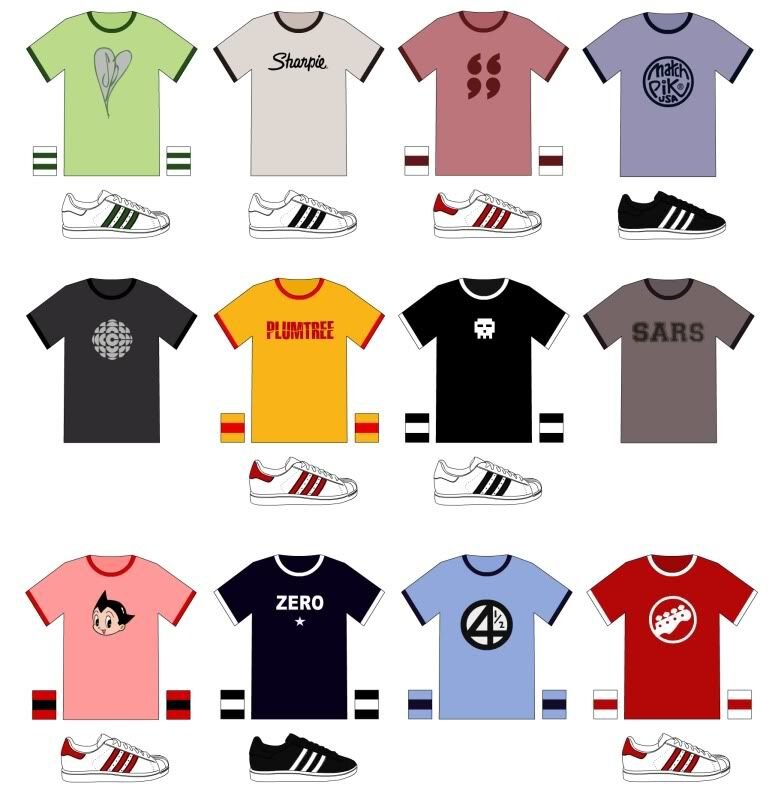
A great example of this approach is Scott’s style throughout the movie. In the source material, his iconic vestures include a variety of ringer graphic tees, jean pants, simple striped tennis shoes, and a selection of parkas, depending on the weather. In Scott Pilgrim vs. The World, Shannon almost precisely reproduced his base wardrobe, only giving him sport wristbands, swapping the graphic images from scene to scene, and modifying the colors of his other garments. His primary style became his superhero uniform in the simplest of terms, made even more interesting because many of the nerd references I mentioned in the previous paragraphs are featured in the movie through his t-shirts. Scott wears tees with Astro Boy’s face, a Fantastic Four (and ½) logo, a Diesel Sweeties pixel skull (this is a deep cut), a Guitar Hero logo, and many more. Scott’s Plumtree t-shirt is even a reference to the origin of his name, a 1998 song from the Canadian band Plumtree, and to the same garment seen in the comic series several times. Therefore, the protagonist’s “superhero garbs” are intrinsic to his identity, which permeates the movie’s overall aesthetic, and in many ways, serves as the most authentic and reproducible style for any fan to incorporate in their own life.

Image Via

Image Via

Image Via

Image Via

Ramona is another character who has a personal style that stands out. When Scott first meets her in “real life,” Ramona’s hair is pink, and she wears steampunk goggles over her head, a faded green parka over a blue hoody over a purple sweater, a short blue skirt over pink fishnet stockings (an interesting combo for the cold weather), a pair of roller skates, and her Subspace purse. Her skates are courtesy of her work as a “Ninja delivery girl” for Amazon Canada, which Ramona is fantastic at due to her mastery of the Subspace Highway, an in-between dimension the character uses to store personal items (that is what her purse is for) and travel between two locations in short amounts of time (the Highway is almost like an astral plane worm-hole). However, unlike Scott, she wears a plurality of garments that elucidate the nuances of her personality, from a pink button-up shirt and jeans that make her stand out from the crowd when she is trying to blend in, to an entirely black outfit consisting of a sundress, a left-hand fingerless glove, leggings, an oversized belt, studded punk boots, and a vinyl hooded motorcycle jacket when she (spoiler alert) “decides” to go back to her seventh ex. Interestingly, Ramona’s black outfit was created by Shannon for the movie before O’Malley was able to draw her in his last volume since the author was working on book six while Scott Pilgrim vs. The World was in development. And yet, her hair colors are one of her stylistic traits that stand out the most in the movie, also as part of her character arch.

Image Via

Image Via

Working with Ramona’s aesthetic, Shannon explains that she collaborated a lot with the hair and makeup department to build a cohesive style for the character that could also hint at her development. The costume designer says that she “always made sure to let [the hair and makeup department] know what to expect with the costumes, and we would often discuss what that meant in terms of their world.” In the comics, Ramona mentions that her hair color changes around three weeks or so, so throughout the six volumes, she goes through about eight distinct hues. In the movies, however, the character styles her hair pink, blue, and then green. Some people speculate this is a reference to the Zelda triforce goddesses. Another explanation comes from Ramona, who quotes her graphic novel version pointing to the color swaps being something she does every week and a half, providing viewers with a contextual timeline for the film. But looking at the moments in the movie Ramona styles her hair differently, she changes into the blue look after the first time Scott sleeps in her house and then into green when she “rekindles” her relationship with the seventh ex. These are clues that link her hairstyles with Ramona’s feelings about her relationships, where pink represents her status as single or in a situation she still is not the most comfortable in, blue represents the character’s developed love and attraction towards Scott, and green represents her breaking up with Pilgrim and more deeply, losing her freedom of choice as a result of her seventh ex actually controlling her emotions.

Image Via

Image Via

Image Via

Image Via

Image Via

Image Via

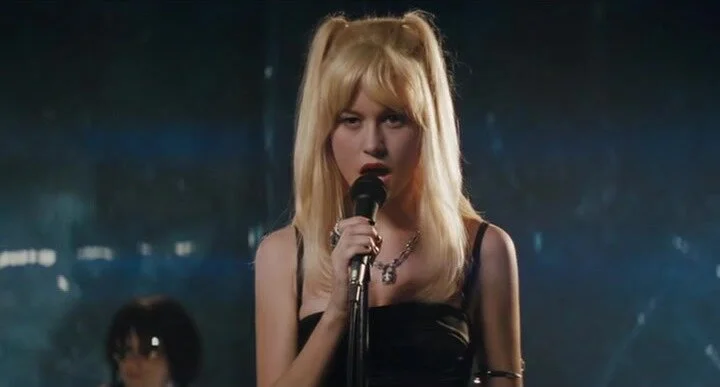
Lastly, I would like to focus on the character of Envy Adams as another iconic representation of Scott Pilgrim vs. The World’s fashion-forward style. Envy, played by Brie Larson, is the protagonist’s ex-girlfriend, but more than that, the lead singer of Scott’s rival band, Clash at Demonhead, also comprised by Ramona’s third ex. She is based initially on Metric’s singer and keyboardist Emily Haine, who composed the song “Blacksheep” for the film, which Brie iconically performed in one of the best scenes of the movie and which remains one of my favorite songs of all time. (It is a shame that Universal did not release an official version of the song by the actress for everybody to listen to on a streaming service like Spotify or Apple Music). 

Envy’s two outfits are fire, and that is why I wanted to highlight them. The movies present her first wearing hoop earrings, a skull and sword necklace, a snake ring, a white trench coat with black buttons over a black slip dress, and red lace heels styled with a high ponytail and bangs. Then, she only wears the ring and her black dress and red heels for the Clash at Demonhead performance with a new hairstyle (here, my limited knowledge about different hairstyle names shows), a locket necklace, and an armlet. And finally, after the performance, she is seen with her earrings, a black and white café racer leather jacket, a black and white striped blouse, white pants, and black glossy high heels. Envy’s limited color scale is a node to her band’s palette, but the shapes created by the trench coat, the jacket, and even the slip dress and the red heels transmit this idea of sexy, dangerous fierceness Scott Pilgrim vs. The Wolrd depicts her having, making her brief appearance one of the most memorable of the film and one of the most iconic Brie Larson performances.

Image Via

Image Via

Thus, if I convinced you to dip your toes a little bit more into the world of the nerd spectacle or if you are already a long time fan of Scott Pilgrim, you can watch a remastered version of Scott Pilgrim vs. The World remixed with Dolby Vision 4K resolution and Dolby Atmos surround sound in theaters in the US at select Dolby XD AMC venues for a whole week, beginning on April 30th. Director Edgar Wright planned this re-release to happen in 2020 to celebrate the 10th anniversary of the movie’s launch (August), but because of the Pandemic, it had to be pushed back until more movie theaters around the country started to reopen. In theory, the re-release will happen near the film’s 11th anniversary but will still celebrate the number 10. 

Update: the exclusive Dolby Cinema re-release of Scott Pilgrim vs. The World already ended. However, starting May 7th, around 451 theaters across the United States will screen it for a limited time and some may still display it in Dolby Vision, so this is your second opportunity to either rewatch this nerd culture phenomenon for the 10th time or do so for the first time in theaters. And hey British people and Canadians, there are plans for re-releases in Canada and the UK, so be prepared!

Nonetheless, if you are unable or unwilling to do so, you can stream Scott Pilgrim vs. The World right now on Netflix and Amazon Prime Video, rent/buy it on YouTube and Google Play, or if you are old school or a collector, you can buy the movie’s upcoming 4K UHD Blu-ray whenever it comes out.


Pokémon: Celebrating 25 Years with Fashion

February 27, 1996. A date that can feel like a lifetime ago, literally for those who were born after 1996 (probably almost everyone reading this article). A date that may not mean much to many of you (for anyone that you know born on that day, happy birthday, and for anybody who achieved a milestone on it, congratulations), but a date that is intrinsically significant for fans of a particular franchise full of powerful creatures, appealing world-building media, and a game that tried to blend imagination with reality. If you read the title, you know what I am talking about. 

You, reader, I wager that you clicked on this post either because you love Pokémon or because you are curious and with some time in your hands (also, you may like my style of writing, and if this is the main reason you are here, I am exceedingly obliged). So, for those who grew up with Pokémon, you may know the importance of a 25-year celebration, a milestone that marks the longevity of something that exists because of the love and appreciation fans have for it. Since I am a fan of Pokémon myself, I couldn’t let the opportunity go to write about something that I love. Moreover, because this is a fashion blog, I will discuss the importance of character outfits and style as a general component of world-building and the effect a brand can have on people’s personal image. And for those who consume Pokémon through media osmosis, know that you won’t feel lost as I will walk everybody through the celebration details and the different forms of fashion expression found in and outside the games and anime.

Image Via

Image Via

Fun fact (and this one I think is relatively popular): Pokémon is the highest-grossing media franchise of all time. So, how does a billion’s worth franchise celebrate its own anniversary? In the first two months of 2021, they... announced a musical program that will culminate in an album with 14 tracks released by Capitol Records featuring Katy Perry, J Balvin, Post Malone, and more; partnered with McDonald’s (again) to release an exclusive collection of trade cards; collaborated with Levi Strauss & Co and Zavvi to launch new clothing lines; distributed special Pikachu that can learn the move Sing (a direct nod to the musical program); announced New Pokémon Snap’s release date for April 30th and the next video game titles Pokemon Brilliant Diamond, Pokémon Shining Pearl, and Pokémon Legends: Arceus (a shocking and pleasant surprise since Legends promises to be open-world, providing a possible new formula to reinvent the main series games); and held a virtual concert featuring animated Post Malone singing censored versions of Psycho, Circles, Congratulations, and a remix of the song Only Wanna Be With You by Hootie & The Blowfish. The Only Wanna Be With You remix adds in some chord progressions and instruments from classic Pokémon city themes like Ecruteak City’s to create a pleasant result that I recommend everybody checking out (the smoothness of the melody reminds me a lot of Sunflower).

 Ok, that was quite a lot. But I assure you, the Pokémon Company and Nintendo will not sleep on the opportunity to make 2021 a year of celebration. They are planning on doing a lot more throughout the year, including releasing the star-studded musical album and even more brand deals, so if you want to know more, follow Pokémon on their social media, check out their website, or just read the news as I assure you, people are going to talk about the franchise year-round. But maybe you are also thinking, “I love a particular Pokémon design, or even if I don’t share a deep connection with the franchise, I want to celebrate the 25th anniversary in some way to have something else to be joyful about during the Pandemic by styling myself with Pokémon-related clothing.” (You don’t need to, but hey, it is an excellent segue to my next point). Well, there are different ways fashion connects with Pokémon to create an aesthetic that can be either very seamless and quotidian or particular to special occasions.

Seaking an Everyday Style?

Image Via

Image Via

I want to first highlight Pokémon’s partnership with Original Stitch. The work put into making button-up shirt patterns for men, women, and kids based on each Pokémon from Generation 1 and 2 (and some from 3 and 8) is phenomenal. Some designs are outlandish for my taste, but others like Machoke’s, Clefairy’s, and Dratini’s are subtle enough to be worn out on a date or even in a professional scenario (if the workplace is not that serious). You can even choose between dress, casual, and Hawaiian shirts and design the collar, buttons, and sleeve styles of your liking, creating this highly customizable experience that makes every article of clothing something unique. They also sell unisex polo shirts with small Pokémon sprites that can be embroidered on the left chest and the front and back waist area. Original Stitch’s shirts are the perfect choice of garments if you want to show your love or, at least interest, in Pokémon in more formal scenarios with stylish designs. 

However, if you want to wear more casual, cheaper, and informal clothing that features Pokémon illustrations more prominently (like you may want to do with Disney characters, superheroes, or you know, a name brand like Supreme), the Pokémon Center shop, Hot Topic, and Difuzed are great places for you to find comfortable, cool, and official t-shirts, jackets, socks, shoes, gloves, and much more. Notably, the Pokémon Center is the best place to find garments specific to the pocket monster you like most since brands that license Pokémon are less likely to profit from choosing random monsters to depict in their products from the 893 possible options.

Image Via

Image Via

Image Via

Image Via

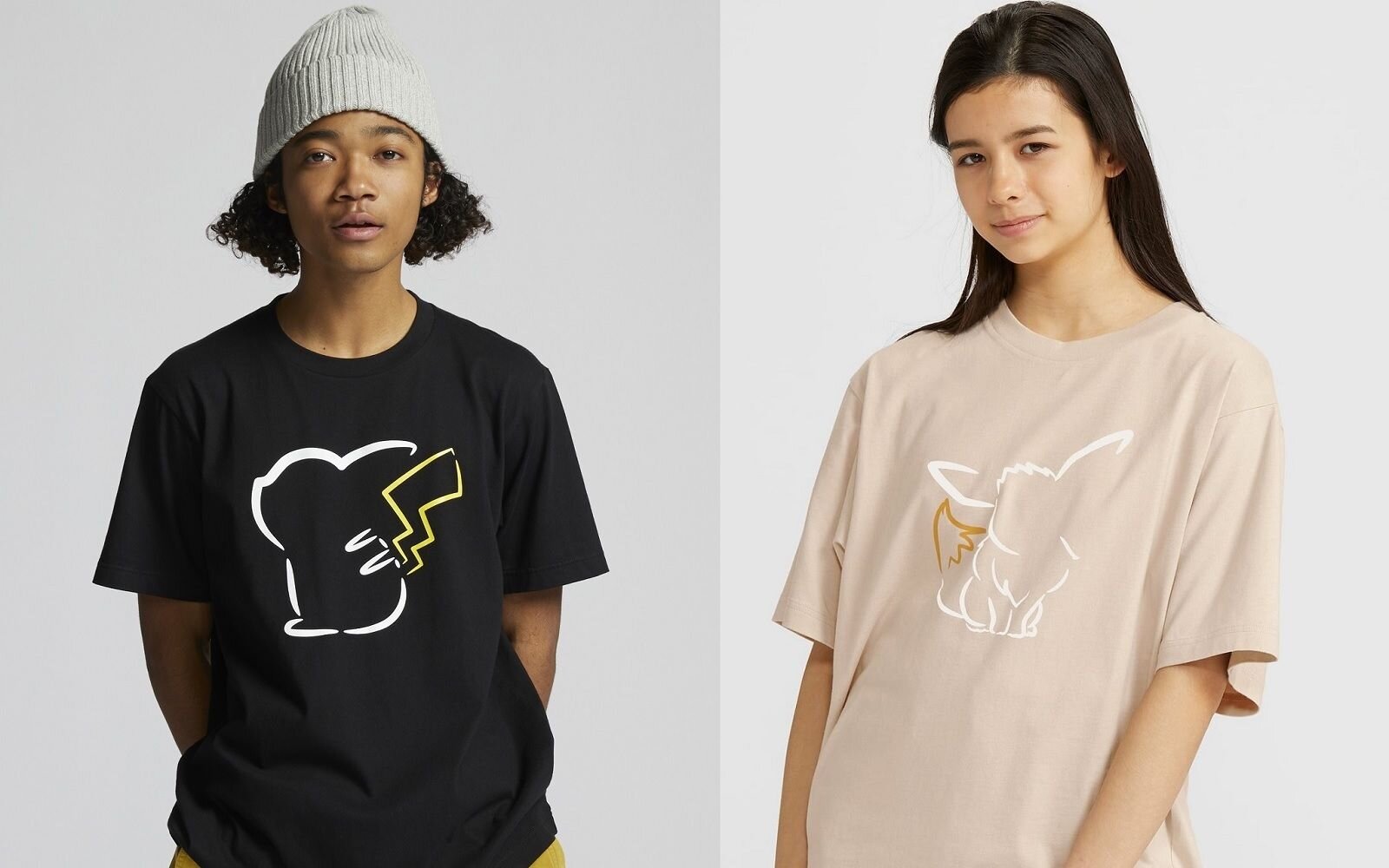
Still, if you are not convinced of Pokémon’s impact in the fashion world, the company has also partnered with artists, clothing designers, and streetwear brands to produce limited-edition capsule collections seeking to explore the connection between fashion and pop culture. Recent examples include the Thunderbolt Project from Fragment Design by Hiroshi Fujiwara, Rivals from heritage street fashion brand 10Deep, Fictional Archaeology illustrated by contemporary artist Daniel Arsham for Japanese global apparel retailer Uniqlo, With Pokémon UT also sold by Uniqlo, an 8-bit Pokémon graphics collection from Adidas, a trading card game inspired line from Japanese contemporary clothing brand BEAMS, a “Gotta Catch’em All” line from South Korean streetwear brand Thisisneverthat, a sepia collection from streetwear and sneaker retail store BAIT, and a Pikachu illustrated pink sweater worn by Offset during the Spring/Summer 2019 NYFW designed by fashionista Jeremy Scott. From the list, BAIT’s and Thisisneverthat’s collections were open for sale and are still available for purchase.

Pokémon Go has also proven to be a landscape where fashion blends with the Pokémon world. Companies like Uniqlo, Gucci, The North Face, and Longchamp have released exclusive digital models of their accessories and clothing items for players to outfit their avatars with. If you open the style section of the game now, your playable character can wear Uniqlo With Pokémon UT Pikachu, Ditto, and Eevee t-shirts, a Gucci x The North Face backpack, hat, and t-shirt, and Longchamp’s Pikachu backpack. Out of the three, the Gucci x The North Face digital clothing models have nothing to do with Pokémon, featuring neither a logo nor a drawing connecting the garments with the franchise, something that points to the future of Pokémon Go as a platform for the promotion of branded items (something that was already part of the game in the form of McDonald’s and Starbucks sponsored PokéStops), creating a unique partnership between fashion and video games.

A-Mew-sing Character Design

Image Via

Image Via

Image Via

Image Via

The other side of the connection between Pokémon and clothing is found through cosplay. For playable trainer characters, gym leaders, antagonists, champions, side characters, their clothing is intrinsic to their personality, the connection between their Pokémon, their profession, and how they are seen by gamers. Because of the iconicity of Pokémon costume designs and because cosplaying is bound to happen in any franchise with multiple well-designed characters, cosplaying as Pokémon characters is a widespread practice today (as always, I recommend you to go on Google, select any Pokémon character, and search for their cosplays). Such appeal of dressing up as game and anime characters comes from the love fans have for them and is a testament to the developers’ accomplishment of creating cohesive and stylish looks that have captivated audiences for 25 years. I can like Lucario’s model as much as I enjoy Cynthia’s style, and that is something that differentiates Pokémon from almost any other media franchise in existence: there is a vast plurality of well-thought-out diverse designs for anybody to like and choose from. In-game/in-anime fashion is an unsung appeal of Pokémon.

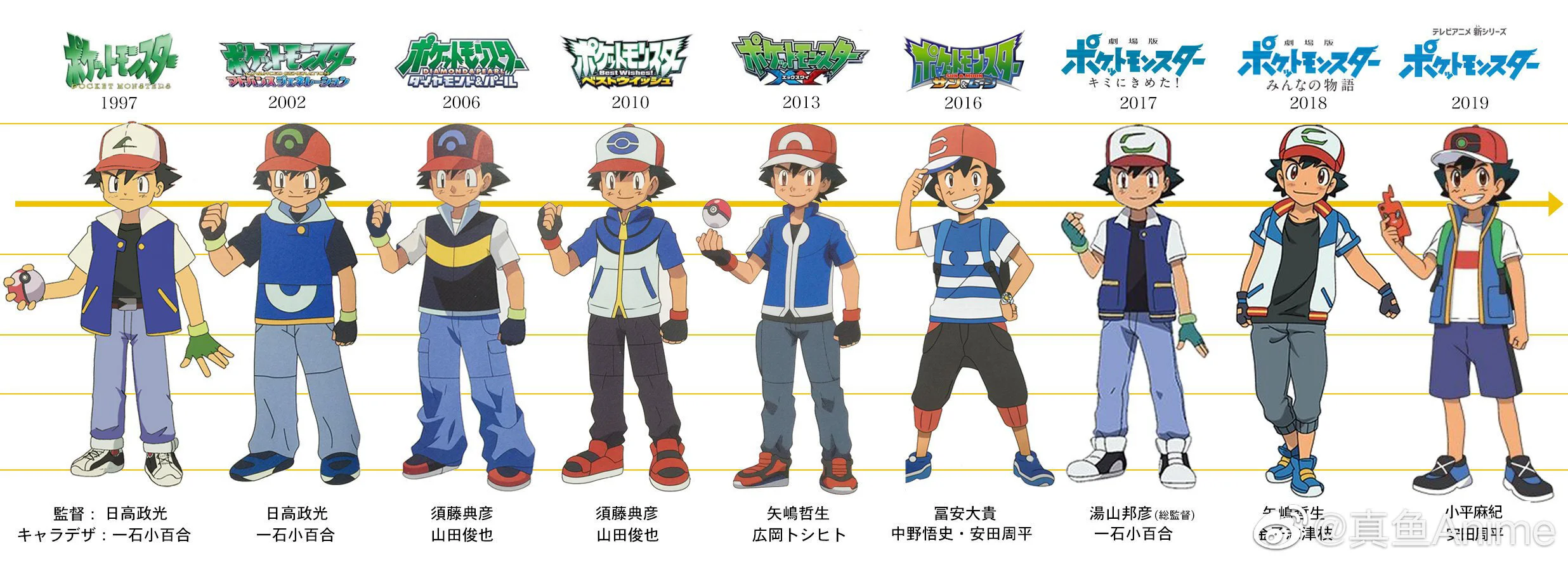
Ash Ketchum is arguably one of the most iconic anime characters ever, as audiences have accompanied him in his journey for 23 seasons. Although his age has not changed that much throughout the series (he started his Pokémon trainer career being 10-years-old and turned 12 once, but then that was seemingly forgotten later on), his clothing has been modified by animators for every single generation besides Gen 2. As a side note, Pokémon is divided by generations, with each new one occurring around every three to four years, presenting a novel region and new Pokémon. The anime divides its episodes into many seasons inside one gen, and when a new one arrives, the visual style of the series changes. And because Ash is the only constant of the anime, he and his garments are the most direct proof of each style’s particularities.

Image Via

Image Via

The most basic Ash Ketchum starter pack consists of his iconic cap, spiky hair, a loose jacket or pants, and a form of high-top sneakers. Those are the four aspects of his look that have been consistent since the beginning. Moreover, his color palette has continued to reside on the blues, reds, blacks, and whites with touches of green and yellow once in a while. Yet, there have been various revisions and adjustments to Ash’s look that keep on making his appearance both iconic and fresh. There are generations where he wears fingerless gloves and others that he doesn’t. In some, he puts on blue, black, or grey cargo/jeans pants, while in others, he wears shorts. Ash typically wears a jacket or vest above his black, blue, or white t-shirt, but in Gen 7, he wore no jacket (most likely because the anime depicted Alola, a region inspired by Hawaii and Polynesia, and those places are hot year-round). And most strikingly, his cap logo is consistently different. Therefore, the relationship between Ash and fashion is a terrific example of how a character that has existed for almost 24 years can look both familiar and yet fresh as a way to keep his appearance constant while also updating it to the cultural identity of the forever-changing audiences as time passes.

However, Ash has never fully appeared in any of the games. He is specially written for the anime to represent the player character gamers select when starting a Pokémon installment. A weird fact about the games is that the gender of the avatar you choose to play as exists as a named preset version that can also be canon in other Pokémon media like the anime. May, Dawn, and Serena are the female presets (and rivals if the player selects the male gender) for Pokémon Ruby and Pokémon Sapphire, Pokémon Diamond and Pokémon Pearl, and Pokémon X and Pokémon Y, respectively, as well as Ash’s female companions in the series.

Image Via

Image Via

So, all of the playable trainers are unique in how they are styled, and they exist in an exciting relationship to Ash in the sense that the model’s clothing is both specialized to their region and drawn to convey diverse identities, but each new designs follows a pattern that makes the visual aesthetic of the playable trainer character class clear and distinguishable to the audience. Serena may wear something resembling black high-top boot sneakers, grey thigh highs, a red buttoned high-waist knife-pleated miniskirt with a butterfly collar black t-shirt, a red hobo bag, and white sunglasses atop a red wide-brimmed hat (very French), but her overall composition doesn’t move too far from Dawn’s original pink boots, black knee-high socks, pink miniskirt, black vest over a white sleeveless top, yellow duffel bag, red scarf, and white beanie. In other words, while Ash is always the same person wearing the same type of garments that are reworked to keep the anime fresh after 23 seasons, the preset playable trainers are distinctive characters of their own that share the same function and are part of the same class, so their costumes are similar to each other in general structure and number of components but different in how they functionally look. 

Ash and the playable trainer class are not the only characters designed with a cohesive and uniform visual identity in mind. Generation 8 gym leaders literally wear sports uniforms as a tribute to football’s history and importance in the U.K., the region Gen 8’s Galar is based on. In Pokémon Sword and Pokémon Shield, battles happen inside massive stadiums, many times with audiences cheering the player on to replicate the idea the Pokémon battles are the de facto sport of the Pokémon world. Of course, then, the gym leaders’ battle uniforms would mirror sports uniforms in real life and follow a similar pattern, but as I mentioned with the trainer class, they are also personalized to each leader.

Gym Leaders in Fashion

Image Via

Image Via

Nessa, the water type gym leader, wears a sports bra and biker shorts with the Galarain water type crest (a drop of water), the colors that represent it in the region (orange, blue, and white), and various sponsor logos. Like football clubs with their crests and colors, gym leaders in Galar acquire the Pokémon type crest and color when they are selected to represent it. So in the U.K.-based region, types like water, fighting, and ice are stand-ins for the clubs, and the gym leaders take the football players’ place. Nevertheless, Nessa is a model with a fondness for water (if you want to know more about her, check out this episode of Pokémon: Twilight Wings), so the fact that she chose to design a uniform that only consists of a sports bra and biker shorts is very telling of her “fashionable athletic beach” style. Moreover, she wears lots of water-themed jewelry (navel chains, wave bracelets, hoop earrings, ear piercings, and a water droplet necklace) and sandals with rescue buoys as decorative side pieces, combining her stylish side with the water motif. The same applies to Kabu, the fire-type gym leader. He wears a cooling towel, a red polo t-shirt with the fire-type crest (the kanji for fire) tucked inside white shorts, a black and red flame tattoo-like sleeve, and red, black, and white cleats with red socks and something that resembles a shin protector. The fire gym motif is there in the colors and the crest, but Kabu’s style makes his visual aesthetic resemble that of an old football player.

elesa1.png

Image Via

Image Via

Image Via

The fashion world inside the Pokémon games is not only represented by Nessa. The gym leader Elesa from Gen 5 is also a model, Valerie from Gen 6 (based in France) is a fashion designer, and Lisia from Gen 3 is a pageant icon. Elesa is worth mentioning first because she is one of the only characters that appear in two games with two different costumes. In Pokémon Black and Pokémon White, Elesa is blond and wears yellow high-heels, black tights, a yellow sleeveless shift dress with black and white arrow patterns, a black choker, and red and blue headphones with cable tails. In turn, in Pokémon Black 2 and Pokémon White 2, she is dark-haired and wears red and blue flats, a blue and yellow top and shorts connected through a Pokeball patterned belt, a yellow fluff coat, and white headphones with red and blue spikes. Those are two drastically different outfits that challenge video games’ depiction of characters never changing their clothing (typically because designing them is already time-consuming). Elesa is the perfect character to do so because she is a model in Unova, the region that imitates the US’s East Coast, where New York, one of the “Big Four” fashion capitals, is located. 

Image Via

Image Via

Lisia Image Via

Lisia Image Via

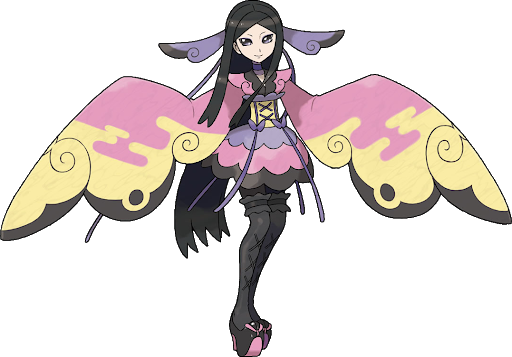
Finally, Valerie and Lisia are characters that, at first, look nothing alike. However, something that underlies both of their visual aesthetics is how much Pokémon inspire how they style themselves. Valerie allegedly wants to identify herself as a pocket monster, so she designs her main outfit to look very animalistic. Her costume makes her seem like a butterfly, and as a fairy-type gym leader, it suits her eccentric, magical personality very well. It consists of black and pink clog heels, grey thigh-high socks with detailed rims and x-shaped seams, a purple, black, yellow, and pink dress with sleeves that resemble butterfly wings, and a purple antennae-like tiara. Contrastingly, Lisia’s ace Pokémon is called Altaria (the Pokémon that won the pageant called Pokémon Contest Spectaculars with her), so her outfit takes full inspiration from this pocket monster. Part of Altaria’s behavior is that she is regal, soft, and kind, and when she bonds with a trainer, she envelops them in her cotton cloud-like wings and hums. Her color scheme is also very appealing, residing in various cool blues and cloud whites. So, Lisia uses Altaria’s personality and physical attributes as central motifs for her contest costume. She wears sparkling boots with cloud collars and diamond ornaments, one white and blue striped sock on her left leg, mini jeans shorts, a tutu skirt with a cloud belt that resembles the sky, a ribbon crop top, a cloud scarf, fluffy cloud-like arm accessories, and blue diamond jewelry.

In conclusion, the Pokémon franchise has impacted the lives of so many people for 25 years, and the 2021’s celebration promises to provide a myriad of new content to keep fans excited year-round. Fashion and clothing merchandise is something the Pokémon Company has invested in before, and this year is no exception. Previous collaborations challenged the outlook of video games as only pure entertainment, and maybe this year will continue to bring exciting opportunities for games to cross over into the fashion world and vice versa.  However, Pokémon also captivates audiences through character designs that have a broad cosplay appeal. Trainers, gym leaders, side characters are all appealing partially because of how their costumes convey their personality, uniqueness, profession, and the connection between them and Pokémon, even if sometimes they may be structured similarly. Though this may be common for most video games and animation series, Pokémon puts an emphasis on creating a world like ours that integrates fashion into its fabric. Therefore, it is safe to say that fashion is a critical stylistic feature of Pokémon, more than people may realize.


Cover Image Via

Source: https://www.pokemon.com/us/pokemon-news/ka...

Cyberpunk 2077 Deserves a Second Chance

Cyberpunk 2077 is a video game that is as controversial nowadays as it is beautifully written and designed. For a game so hyped since its announcement back in 2012 in a dramatic, hyperrealistic, conceptual teaser, Cyberpunk 2077 had a chaotic launch period that turned the emotional power of expectation into rage and disappointment. The promises studio CD Projekt Red made to players of providing an immersive unparalleled technological experience in this cyberpunk space called Night City, with extensive character customization and a lot of places to explore, combined with the company’s positive reputation based on the popularity and praise of their most famous game The Witcher 3: Wild Hunt (which probably pushed for the development of The Witcher TV series on Netflix), amounted into a hard drive of anticipation that was emboldened by names like Grimes and Keanu Reeves joining the roster of characters.

However, with the issues that came from a rushed release due to several internal and external forces (investors want their money’s worth from a game in development for eight years and fans just can't wait anymore after several launch delays), the game’s first version did not technically perform well, something that made many consumers disappointed enough to overlook Cyberpunk 2077’s terrific everything else. 

Image Via

Image Via

Cyberpunk, or The Roleplaying Game of the Dark Future, is originally a 1988 RPG board game developed by Mike Pondsmith with his company R. Talsorian Games Inc, heavily inspired by Blade Runner and Do Androids Dream of Electric Sheep, two very prominent stories that are arguably the origins of the cyberpunk genre of dystopian futures, characterized by moral conundrums based on the technological advancements of the time. (My previous article on Alita: Battle Angel already introduced the cyberpunk genre, so if you want to know more about it, check it out). This first game tells the story of how the world came to the dystopian future of 2013, beginning its history in the 80s. The second game, set in the 2020s, expands the lore of Night City. The third game explores the ramifications of a fourth Corporate War in the 2030s (as it is very known, technology had many of its great leaps because of significant conflicts), and finally, Cyberpunk Red is a revised version of the third game, set in an alternative timeline that serves as a prequel to Cyberpunk 2077. Is this confusing at all?

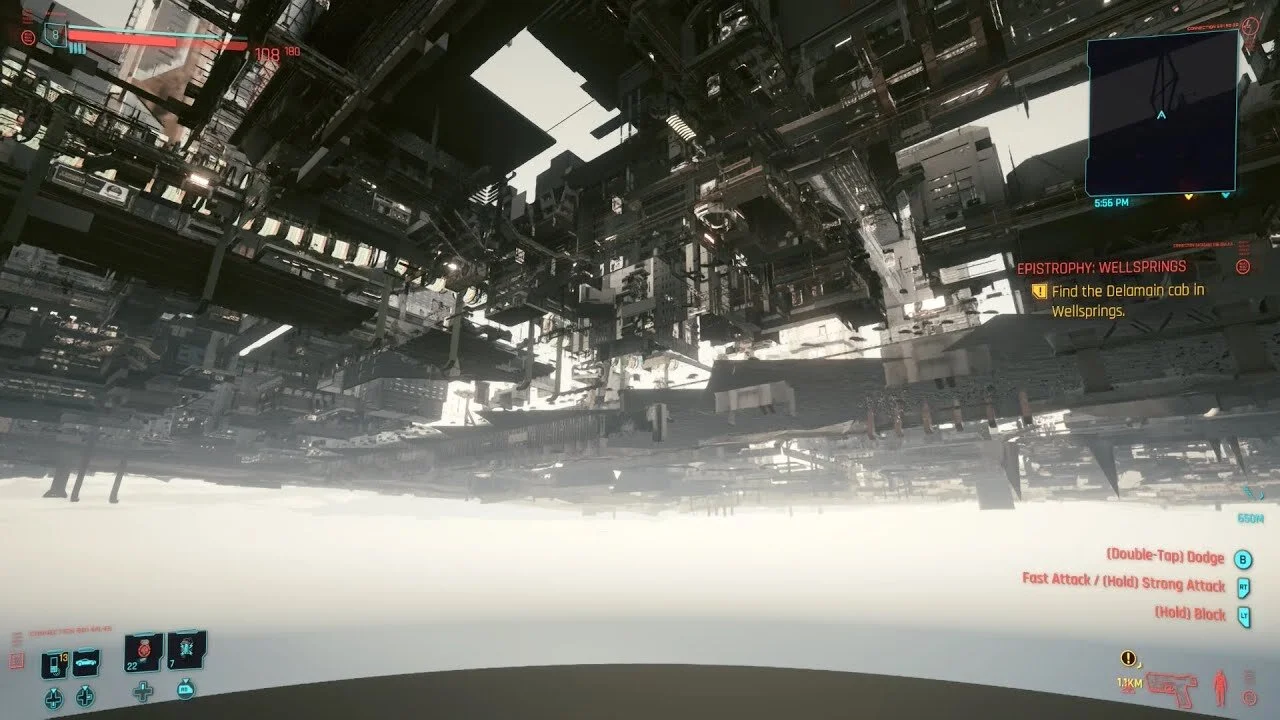
Because the launch of the video game was nothing but confusing and unsatisfying, fans were not happy. The PC version of Cyberpunk 2077 saw some minor bugs that only slightly hindered the gameplay experience, but the console versions for PS4 and Xbox One were jammed with glitches that prevented gameplay and proper engagement with any aspect of Night City, the characters, and the story. It is not difficult to find countless video compilations on YouTube or Reddit depicting the unfortunate examples of how the game did not go through a thorough troubleshooting phase before launch, pointing to a weird and chaotic rushed development process in the part of CD Projekt Red in regards to software implementation and optimization. T-poses, characters getting naked all of a sudden, standing up and phasing through their vehicles, textures with low resolutions, cars that are difficult to drive, and infinitely phasing below the map are some examples of the glitches that are hindering fans’ ability to immerse themselves in the future world of Cyberpunk 2077.

Image Via

Image Via

For such hype (I am not kidding, the preorder numbers reached 8 million copies before the release date of December 11th, 2020, CD Projekt Red’s biggest launch ever, already covering their development expenditures, and they sold 5 million copies more the week after), the results were not the perfection everyone wanted. In crisis mode, the game studio promised to refund the customers that felt Cyberpunk 2077 was nearly impossible to play and enjoy, letting them keep their old copies if they wanted to try it out still but reimbursing their money in a show of goodwill. CD Projekt Red then immediately tasked the development team to create patches to fix the bugs and glitches, and by March 2021, they have only released one major patch that was not able to address all the issues fully. A new one was scheduled for later February, but due to the studio being hacked by cyberattacker trolls, who stole internal legal documents, employee data, and source codes for The Witcher 3, Cyberpunk 2077, and Gwent and may or may not have already sold them in the black market, they postponed the second patch to the end of March. And to rub salt into the wound, CD Projekt Red investors are suing the company for being misled about the state of the “unfinished and unplayable game” before its release.

But why am I talking about all of this? Because I believe Cyberpunk 2077 is much better than many fans and all the news headlines care to admit, and it deserves a second chance. As I mentioned before, the story and moral dilemmas it presents, the characters, and most importantly, the cyberpunk aesthetic (the fashion and music are my favorites) are aspects the game not only succeeds at making satisfactory but emotional and engaging enough to drive audience members (gamers and backseat viewers) to reflect upon what they experienced for days on-end. What is better than to finish a book, TV series, movie, or song and to keep thinking about what the message behind the story/lyrics means and how it affects and applies to one’s life? To discuss with others such effects and how memorable the whole experience felt? 

I do believe CD Projekt Red released the video game in an unfinished state. Technological development has raised the threshold of game quality significantly as gamers today experience fewer and fewer bugs that genuinely affect gameplay and better graphical resolutions that make gaming an awe-inspiring affair (Last of Us Part II is a perfect example). And because RPG video games are distinguishable from any other media of storytelling by giving audience members the ability to mold and lose oneself in the stories through controlling character actions and dialogue, the gameplay is a crucial aspect any video game should nail. I am not somebody who cares as much about how the game feels in one’s hand or how easy and seamless it is to progress through a story than what is being told, but it is essential to think that plot and characterization/acting alone are part of what makes books, movies, and tv shows stand out, not video games per se. Still, the game’s plot and worldbuilding should be praised.

Image Via

Image Via

Cyberpunk 2077’s narrative is a precious piece of code. The game discusses the nature of facing and accepting death, finding family and love in the unlikeliest of places, technological immortality, trying to find oneself in a broken world (something very relatable in today’s current climate), achieving one’s dreams against all odds, and keeping one’s principles and moral codes even in the toughest of times.

It has three different beginnings that end up with protagonist V (Vincent or Valerie) working with their friend Jackie as mercs in Night City, the US’s hub of technological innovation, entertainment, and crime located in-between San Francisco and Los Angeles, and accepting a job to steal something called the Relic, an implantable prototype chip that contains the consciousness of Johnny Silverhand. With time, the Relic physically modifies V’s brain to match Johnny’s memories and higher cognitive functions, killing V in the process, so the story develops into both characters working together to separate Silverhand from V’s mind, culminating in 5 different primary endings. The voice acting is fantastic (Keanu Reeves does his part well, and his persona Johnny Silverhand is enticing as this full of himself punk-rocker Jiminy Cricket-like cybernetic construct in V’s head) and the portrayal of characters like Judy and Panam, who are the primary romanceable options of the story, is captivating; one an emotionally awkward Braindance editor (advanced VR that permits customers to feel the sensations of the person who recorded it) and another a fiery nomad who wears her heart on her sleeves in the best kind of way. Still, almost every single character introduced in the missions and side mission is as alluring as Jackie, Johnny, Judy, and Panam.

Image Via

Image Via

But the narrative and characterization are only part of Cyberpunk 2077’s uniqueness and ingenuity (I felt a gut punch watching every single ending). Night City’s rendering and the game’s musical production and costume design are breathtaking indeed (see what I did there?). Beginning with the Californian town, Night City is beautiful day and night. During the day, the architectural cubic and cylindrical silhouettes appear stacked together in various shapes connected through walkways and above the ground roadways that make the city look both too tight and narrow from the ground up and too big and sprawling from an above perspective. Technological innovative high rises blend with simpler one-story houses located on the ground floor or even under bridges, creating this contrast where the wealthy people and big corporations live closest to the sky (heaven), and the poor inhabit the spaces nearest to the ground (underworld/hell) in this social gap that permeates the thematic of Cyberpunk 2077. Yet, during the night, the colors emanating from high rise buildings, holographic and electronic billboards, decorative lights, and store displays in shades of blue, yellow, purple, red, green, and orange coalesce into a mesmerizing perpetual night show that contrasts with the prominent denigrating and criminal activities that occur at this time of the day. That paints Night City as this enthralling trap that lures you in with promises of grandeur only to suck your soul out of your body at a moment’s notice. 

Night City’s design is only matched by the main character’s costumes. Players can customize how the protagonists look with many different clothing options won and collected throughout the game like in any RPG, but if a player is interested in boosting their stats (it makes it easier to progress through the story), fashion is thrown out of the window. Gamers can look sexy and stylish as V, but that will not help them win the game. NPC avatars wear some of the garments available to the protagonist in preprogrammed looks, though, so taking a stroll out in the streets is the best way to appreciate how much thought and stylistic cohesion went into designing Cyberpunks 2077’s fashion of the future. But for all the main characters in the story, their style matters. Their costumes are very iconic because they depict their personalities in fun, unique ways, and they are not overtly technological or manufactured in an incredibly innovative manner (at least the game does not mention this), but implants and prosthetics enhance a few of the character’s bodies, something that transcends the boundaries of style and fashion.

Image Via

Image Via

Beginning with Panam, because of her background as a nomad (groups of people that perform bounty hunter and mercenary jobs all over the country), her design lacks a touch of technology. Instead, Panam looks like a biker with her red and grey motorcycle crop top vest jacket with a collar that closes into a choker, safety harness above a sand yellow-green wooly shoulderless shirt (wearing a safety harness like a belt is a fashion statement indeed), fingerless gloves, black nails, and jeans pants with tire-like knee pads. Her style is the definition of bold yet delicate, as her jacket and pants feature comfortable protective pads and on the outside look badass, but upon taking them away, her shirt exposes a lot of body, covered and protected yet again, now by the harness. Panam’s jacket by itself was given to her when she entered her nomad clan. So, her costume tells the story of a woman that appears to have this firm and bold disposition, but in reality, her drive and dauntlessness are shields to protect her inner vulnerability and her fear of messing up her relationship with her nomad family and with her friends and love interests.

Image Via

Image Via

Like Panam, Judy is also very emotionally vulnerable, but instead of Panam’s seemingly brazen personality, she is much more reserved and aloof when you meet her. Her style is then a representation of the strength she wants to exude. Judy wears a tied-up t-shirt like a bra, black leather-like overalls with a silver-studded punk belt, and black laceless v-shaped boot shoes. Her look is fierce, very revealing, and straightforward, but she does not wear it out and about in Night City because of her reclusive personality, so it seems Judy chose her outfit as a way to personally empower herself without the judgmental guise of anybody. Moreover, her costume is only black and white to drive attention to her tattoos and hair. Her tattoos represent her personality, as some examples include lots of colored red roses, spider webs, ghosts, laser sharks, fire trucks, the name Moxes (her gang formed to protect women of Night City), the number 13, and the lyrics for Pyramid Song from Radiohead. Judy prefers exposing her skin as a way to convey what she likes and who she is to anybody (including herself) without having to speak to them directly. And her green-pink hair is styled in a buzzcut so the hairless side can clearly display her implants, a signal of her work as a Braindance editor.

Image Via

Image Via

Unlike Judy and Panam, Johnny Silverhand is full of himself. He is the quintessential representation of the self-destructive punk-rocker (he is the lead singer of the fictional band Samurai) that believes the world is twisted, but instead of using only music to convey his distaste toward corporations dominating the world (and causing several world wars), Johnny also blows up a “corpo” building to become a legend of Night City and to kickstart a movement to make the world a more beautiful place. The song Never Fade Away, which in-canon was written by Samurai and performed by Johnny, can be interpreted to represent the endless struggle to live in a world that is ugly, violent, dystopic, and destructive. It may sound cheesy, but Never Fade Away, performed by Olga Jankowska, is hauntingly enthralling, and the lyrics can be interpreted in a myriad of ways, as an existential dilemma or a romanticized point of view, so you should check it out. Therefore, his style combines rockstar clothing and tactical wear. Johnny wears a bulletproof vest over a tank top with the logo of his band, wine glossy tight fitted pants, black heeled dress shoes, military dog tags, and his iconic aviator sunglasses, and he also has an entirely metal prosthetic left hand he uses to play his guitar and punch his enemies.

Image Via

Image Via

Image Via

Image Via

Image Via

Image Via

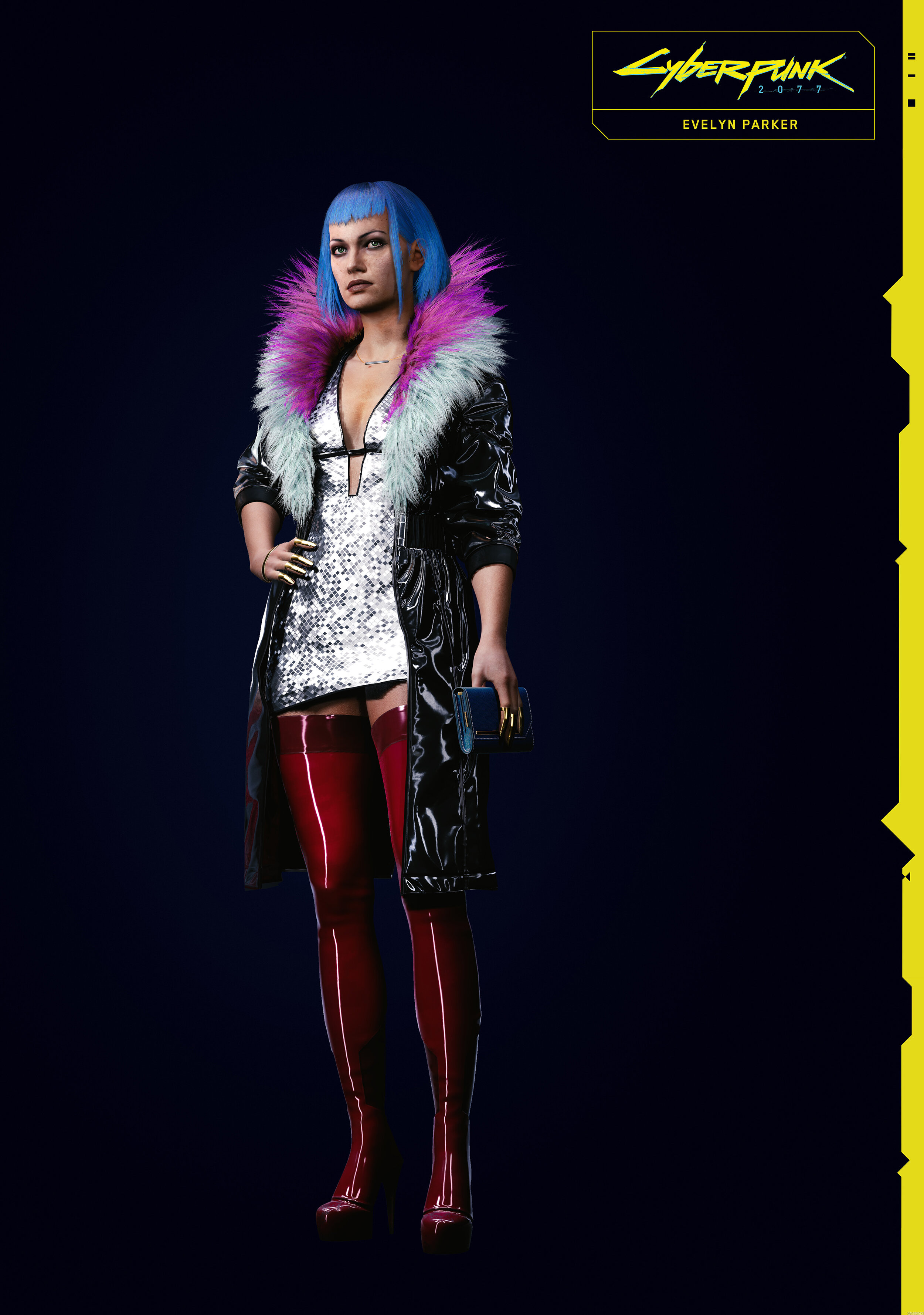
Other character styles that are interesting to point out are Rogue’s, Evelyn’s, and Hanako’s. Rogue (Johnny’s ex-lover) wears a very iconic neon yellow and black crop top sweater with the word “Survive” (a piece that seems to work in the 2070s as well as in the 2020s) that leaves her midriff exposed to a black implant she has between her breasts and waist. This cardigan really speaks to Rogue’s commanding attitude and survival at all costs morality. Evelyn (the character that tasks V with stealing the Relic) is even more stylish, with her cyan and pink plumed black robe-like jacket, blue hair, disco ball v cut dress, and red thigh-high boots. She is an escort so, part of her fashion identity is to show and attract, something very apparent in her style. Finally, Hanako (the daughter of the main villain Saburo Arasaka) represents Cyberpunk 2077’s perspective on the impact of wealth on fashion. The costume players see her wearing is an Haute couture white skintight latex-like high neck dress and white shoes with golden high heels. But what stands out from the outfit is the golden detailings that appear in the collar and back and slither through her arms ending in her hands as metallic finger coverings. These gold detailings are conductive sensory enhancements, typically seen as thin grey lines in other characters. So, because Hanako is part of one of the most influential families in the world, she can wear Haute couture at any time of the day and have better, shinier, and more beautiful sensory implants than the rest of Night City.

Conclusively, Cyberpunk 2077 suffers from an unfortunate case of rushed development due to external pressures that resulted in a captivating narrative and design experience being coupled with faulty gameplay at best. So, if you want to give Cyberpunk 2077 a chance, you can either wait to play it on consoles and PC after the prominent patches are released, or you can go to Twitch or YouTube and watch the whole story as a backseat viewer. I am sure that if you love a thought-provoking plot, very likable characters (you will undoubtedly love Panam), and an easy to get invested in highly bingeable content, and you find yourself wanting to consume more cyberpunk media, you will have a memorable and transformative time. Also, I assure you, Never Fade Away, sung by Olga Jankowska, will not fade away from your memory for quite some time because “A thing of beauty - I know, Will never fade away.


Cover Image Via

Source: https://www.bleepingcomputer.com/news/gami...

An Ode to the Fashion of Animal Crossing

The announcement of the Animal Crossing: New Horizons game as well as the limited-edition Animal Crossing Nintendo Switch has recently had everyone abuzz about Animal Crossing again. People have fallen in love with the game’s charming aesthetics, lovable characters, and calming game-play.

Particularly notable is the important role that fashion plays in the game. Players are able to dress their characters as well as their animal friends in a variety of clothes and accessories that are categorized into different styles: Sporty, Cute, Iconic, Rock ‘n’ Roll, Official, Ornate, Flashy, Modern, Historical, and Basic. Animal Crossing may not be a game specifically about fashion, but it’s hard to deny the important role that fashion plays in the universe of the game. Here are some of the best dressed characters of the game.

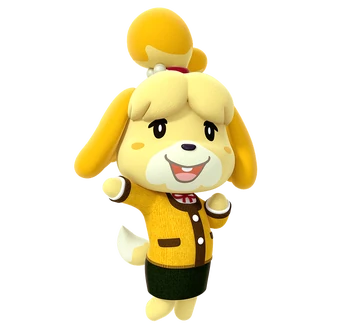
Isabelle

Image via.

Image via.

Isabelle has been making waves on social media after it was discovered that her most commonly worn outfits highly resemble clothing sold at Gucci. Animal Crossing is careful to create a diverse range in the affordability of its clothing, from discounted second-hand clothing to high-end clothing. Representing the higher end of that range, isabelle always looks put-together in the cutest way. Look at that yellow cardigan: you can tell she’s ready for business.

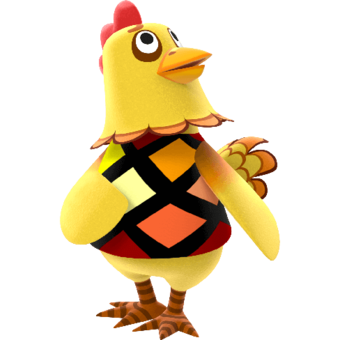
Goldie

Image via.

Image via.

Goldie’s outfit in and of itself isn’t particularly special, but it matches her skin tone and body shape perfectly, so you can tell she knows how to dress. Goldie knows how to serve looks with just a simple outfit.

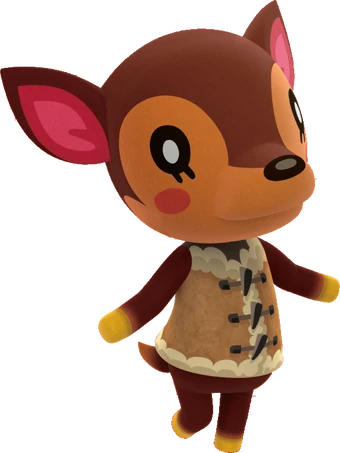
Fauna

Image via.

Image via.

This sleeveless duffel coat looks amazing on Fauna. It manages to be a unique look without being too out there, and it complements her perfectly.

Goose

Image via.

Image via.

Goose isn’t afraid to stand out in this bold number. It’s got a great combination of colors and patterns - we love to see it!

Muffy

Image via.

Image via.

The perfect goth look with the perfect pop of color. Muffy has her aesthetic down to a T, and we’re here for it.

Molly

Image via.

Image via.

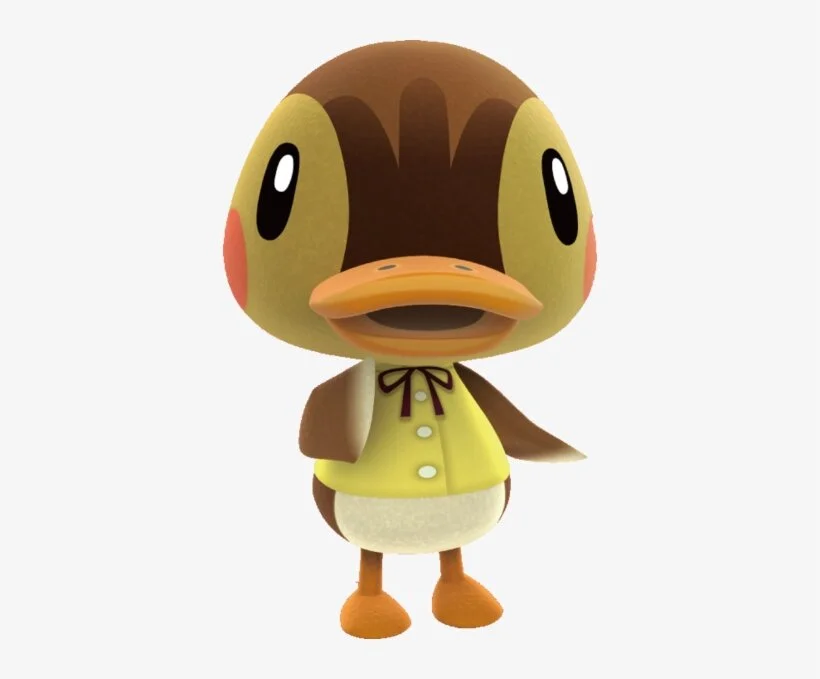
The color, ribbon, and buttons on this blouse create a look that manages to be just the right amount of preppy. Molly looks incredibly put-together yet casual at the same time.

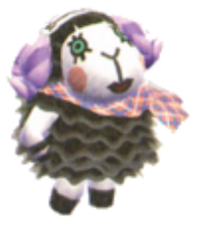
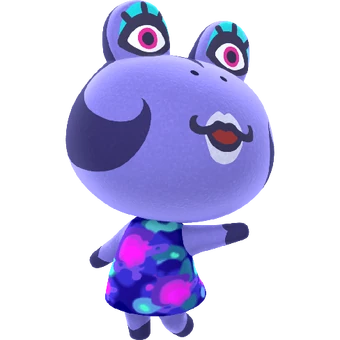
Diva

Image via.

Image via.

Diva lives up to her name with this colorful outfit. The pattern of her dress is a little bit questionable, but she’s able to pull it off and adds the perfect finishing touch by coordinating her eyeshadow with the pops of teal from her dress.

Egbert

Image via.

Image via.

This color-blocked shirt featuring warm hues is incredible. It matches Egbert perfectly, and you can just tell from his look and posture that he knows he’s pulling it off.

Elise

Image via.

Image via.

I have to respect how well Elise’s outfit, glasses, and lipstick coordinate. Her top is a fresh take on polka dots that incorporates different colors together nicely.

Broccolo

Image via.

Image via.

Broccolo further proves that Animal Crossing fashion is at its best with color-blocked outfits. The colors and pattern of his outfit are somewhat reminiscent of Lego blocks, but he manages to make this look work.

Cover image via.