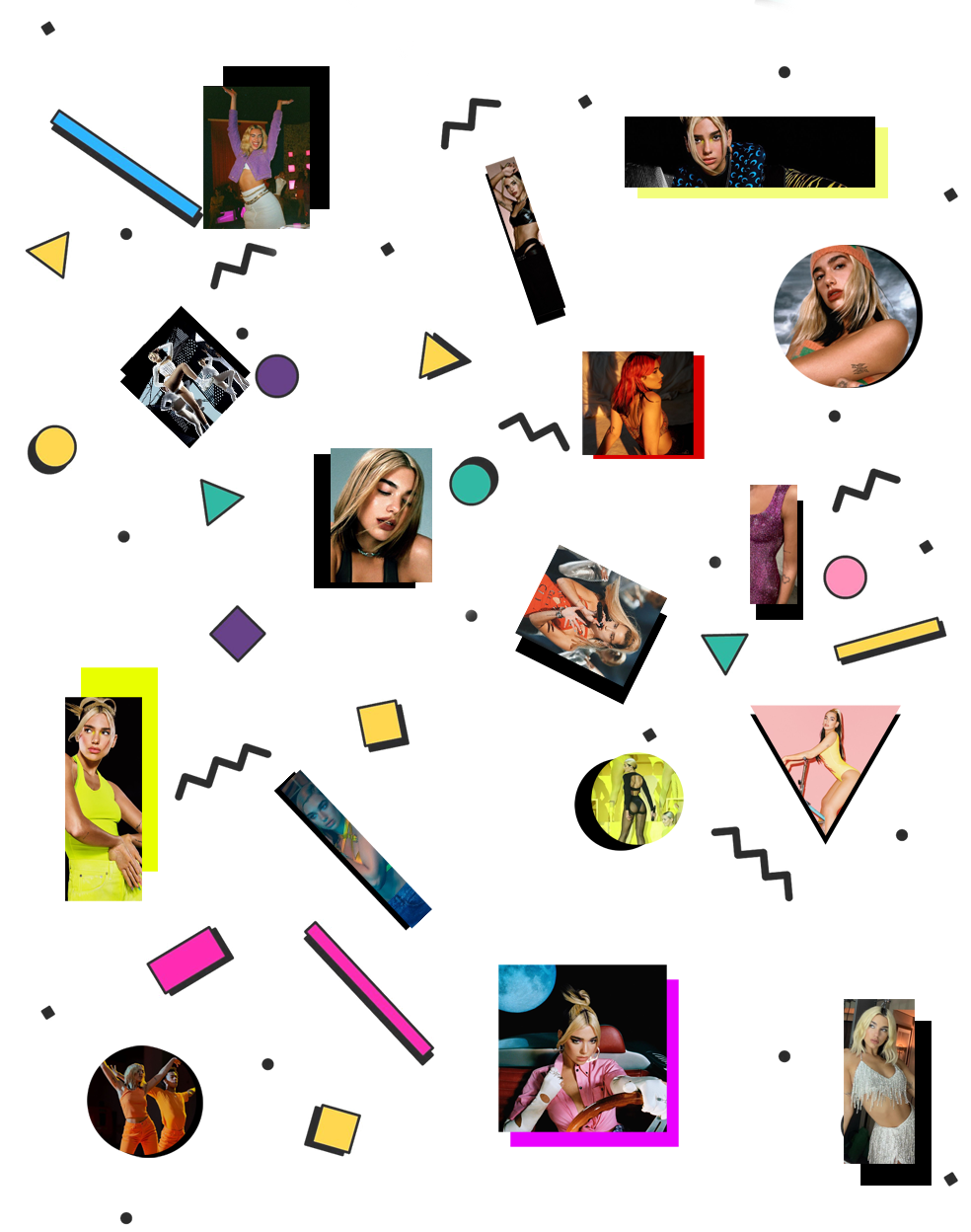
“We love to milk it,” Dua Lipa told Billboard late last year. Certainly, Dua has earned a reputation for dragging out her album eras for as long as possible. Her debut, self-titled album came with plenty of singles, remixes, and a “Complete Edition” with an additional three new songs coming at the end of the album’s cycle. Surprisingly, her sophomore album campaign has somehow put her first effort to shame.
Within the past year, Dua has released a standard (12 track) album, a 17 track long remix album with The Blessed Madonna and various high-profile collaborations, five singles with music videos and distinct single album compilations, three high-profile collaborations (Un Dia, Fever, Prisoner), and a live-streamed concert. And it has all culminated into her latest release—Future Nostalgia: The Moonlight Edition.
In addition to a review of the new songs, it felt appropriate to also take a step back and understand why Dua and deluxe editions have become a polarizing topic.
The lead single for the Moonlight Edition is without a doubt not bad. However, “We’re Good” fails to move Dua in any particularly interesting direction. Much like her debut, the production is crisp and contemporary but doesn’t leave a mark. The trap beat and chill guitar contrast Dua’s husky vocals nicely, but it is neither futuristic nor nostalgic. Juding from interviews, it is clear that Dua was aware of this, comparing her anxiety about releasing it to the fear she felt before releasing the incredible “Don’t Start Now.” Whereas the latter was indeed a leap in sound for Dua, it was interesting and intricate enough to build into the hit that it is now. Will this new single do the same? It is possible that the laid-back, dare I say, basic trap undertones may propel it up the charts. Dua’s fears are unfortunately not entirely misplaced.
Back on track, “If It Ain’t Me” features a now-signature Dua bassline and catchy breakup hook as she sings, “I fill the floor with my sequin tears.” Less love-anxious and more in charge, “That Kind of Woman” is Dua at her retro best. The mid-tempo track features all the right synths and sporadic synths as Dua assures her future lover that she won’t be “one of many.” Things take an interesting turn for the final new track as rapper JID intros “Not My Problem”. Funky and crass, the track is quite the statement proclaiming, “if you’ve got issues, that’s your problem!” I am willing to defend the track on the ground that it has character and still feels like a throwback, although it is arguably not on the same quality standard as even the divisive “Good in Bed”.
The four new tracks are interspersed with the collaborations Dua has released throughout the year. The seductive, European beat of “Fever” and Olivia Newton-John's sample on “Prisoner” do a good enough job to fit the theme of the original record. On the other hand, ending the new edition with the Latin American breakup track “Un Dia (One Day)” is a head-scratcher. This leads us to the bigger question--what was the point of this Moonlight Edition?
While Dua has been promising a “Side B” for months now, it is hard to argue that three new tracks fit the classifications for a “Side B” release. It seems clear that the standard version of the album was short and compact for a reason; Dua had a clear artistic vision for the record. Is this new edition simply a money-grabbing move, or does it still hold the artistic merit the original record holds?
I am going to have to do some assuming in terms of Dua’s motivations in order to defend the new edition, but it stands to reason that although it is not an entirely cohesive addition, The Moonlight Edition is a continuation of the Future Nostalgia Era in its magnitude of content and artistic exploration for Dua.
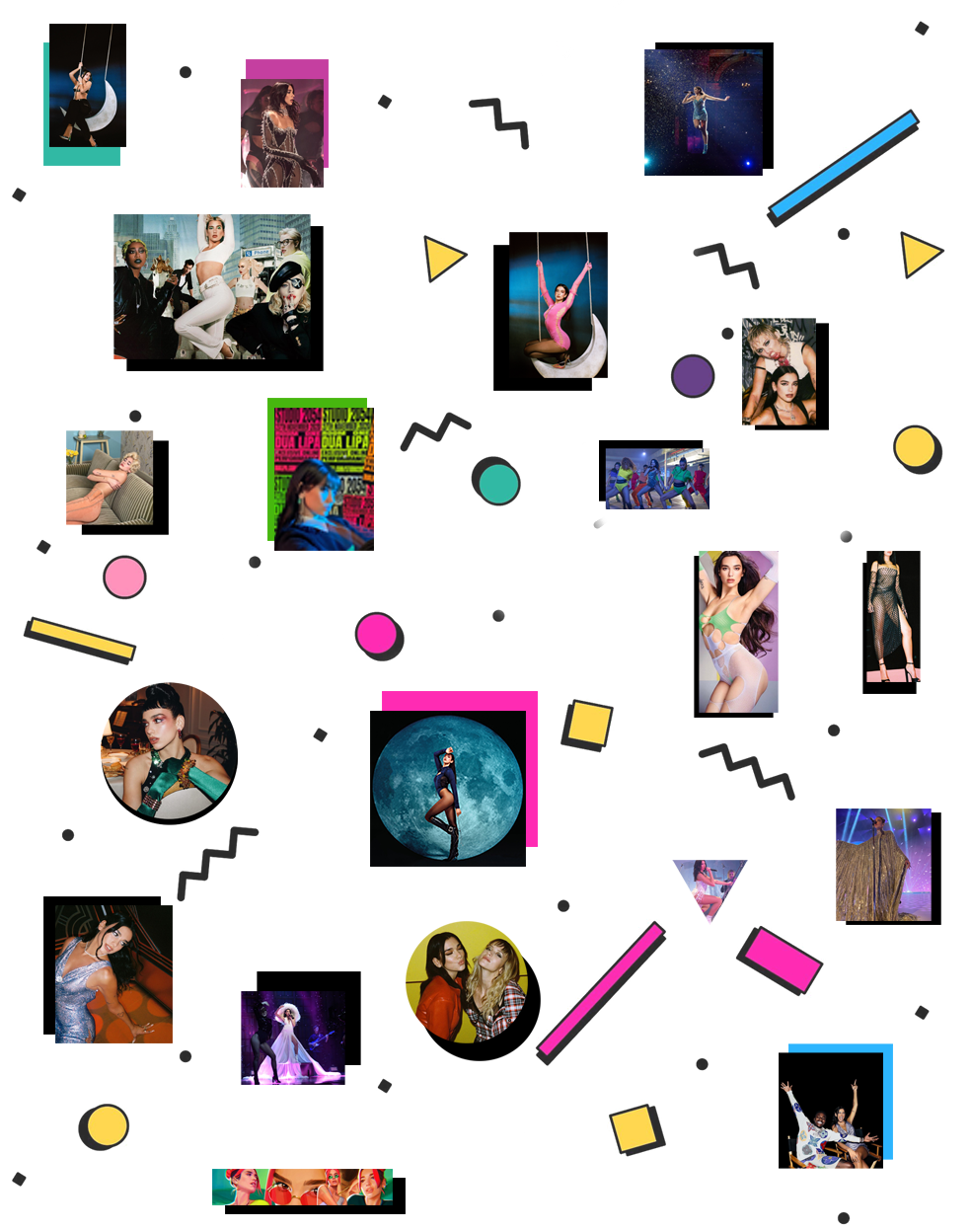
We have certainly not seen such a thorough and detailed rollout from a pop artist since the breakouts of Lady Gaga and Katy Perry. The past year for Dua has demonstrated that she understands the value of having both a striking visual identity but likewise the confidence to switch it up. The sheer amount of releases and performances, particularly in the context of the pandemic, is second to none in the current pop music industry. It is no wonder that past icons like Kylie and Madonna have praised and collaborated with Dua. Thus, the new edition is simply a continuation of the past year, with more space-themed photoshoots and nostalgic music videos. Although “We’re Good” may sonically fit the record, the Titanic-themed music video seals the deal.

Image via
If we are comparing Dua to past artists, it also stands that she is certainly not the first to reissue an album. Nearly two years after its release, Katy Perry repackaged Teenage Dream into The Complete Confection with three new songs and a few new collaborations. While Dua’s rise to prominence has often been compared to Katy, this latest release does parallel the glorious pop era that was Teenage Dream, even if winding down in a similarly confusing note.

Original image via
Although deluxe editions were standard among pop artists, they have slowly faded away, most likely since those editions were always pushed by the labels more than the artist. However, as labels continue to try and maintain profits in a new streaming world, these deluxe editions are cropping up as delayed reissued editions. Aside from Dua, both Selena Gomez and Ariana Grande have released deluxe versions of their latest albums months after their initial release.
In the case of Ariana’s Positions, a similar thread of disappointment from fans has cropped up, wondering why the songs are so short or not all that special compared to the standard tracks (and at least Gomez and Dua provided new covers for the new editions). Had the deluxe edition come at release, it is likely that most people would not have cared, simply understanding that they are extra songs. The same reasoning appears to apply to Dua; feeling letdown comes more from the hype that is created by waiting to release the songs, rather than from the actual quality of them.
Dua’s Future Nostalgia: The Moonlight Edition presents us with a special mixture of both pop excellence and the pitfalls of the music industry. For one, the reissue may seem unnecessary to many people, especially in an era where the experience of an album has decreased in favor of singles. It is, however, a callback to the icons of pop that understand the power of creating a fleshed-out and consistent era. There is great attention to giving fans a lot of content, of which even the meh quality is great. I will not say that adding some collaborations to the album is simply a grab for more streams, but at the same time, Dua is having to wade through a more unstable sea of streaming and charts. If having the most-streamed album by a female artist in Spotify history, and Future Nostalgia out streaming others in 2020 is any indication, we should let Dua milk her eras for as long as she wants.