Album Review: Love Goes

Image via

Image via

In 2012, the English electronic music duo Disclosure dropped their hit single “Latch,” which featured the vocals of the at-the-time-unknown Sam Smith. Its complex harmonic structure and production, coupled with the pearly treble of Smith’s uniquely stunning vocal, had many hoping for Smith to continue their career down similarly eclectic and groundbreaking avenues. Yet, Smith’s first two albums, In the Lonely Hour and The Thrill of It All, were anything but — catering to legions of high school freshmen getting over their crushes, the albums’ banal ballads took our hopes for something as revelatory as “Latch” and drowned it in gallons of self-piteous treacle.

The beginning of Smith’s new album Love Goes — originally scheduled for a June 2020 release under the name To Die For, before COVID-19 drove them to change both — flashes promise, much like “Latch” did. In the opening song “Young,” Smith takes a heavy breath, as if they were long tired of public pressure weighing them down, before proclaiming, “I want to be wild and young.” Smith’s poignantly delicate vocal, swaddled within layers of Messina-tuned electronic harmonies, reminiscent of Bon Iver or Cashmere Cat, fuses beautifully with the exquisite production of Steve Mac (who had earlier collaborated with Smith on the single “Fire on Fire,” which reappears as one of the album’s six bonus tracks). “Young,” like “Latch,” takes full advantage of Smith’s unique musical gifts to deliver an electrifyingly heartrending track that pushes the boundaries of their sound.

Unfortunately, “Young,” along with a few of the tracks in the album’s first half, is as good as the album gets before it, much like Smith’s post-”Latch” career, torpedoes into a mess of melodramatic pop. Although its opening lines ostensibly signal Smith’s desire to cast aside the handcuffs of convention in favor of reckless hedonism, the declaration that immediately follows encapsulates the album’s shortcomings: “But they’re watching me, judging me / Making me feel so used / Can’t you see that all I wanna do / Is get a little wild.” Smith, frightened by those who are “watching” and “judging,” succumbs to the pressure and avoids getting too “wild.” Love Goes is cursed by restraint and caution — it frustratingly teeters on the precipice of artistic revelation, swiping at the next new page of Smith’s career, but its petulant attachment to the safe and shmaltzy stylings Smith is known for ultimately smothers its promising flashes.

Image via

Image via

Smith dazzles in front of more electronically-influenced, modern backdrops; luckily, the first six tracks of the album’s eleven make full use of this complementary pairing. Right after the haunting ambience of “Young” comes the Shellback-produced “Diamonds,” which opens with more synth vocals, subtly panning inwards while swelling into an abrupt cutoff to give way to Smith’s vulnerable confessions. The pulse of the syncopated bass line drives the track’s club-like groove, painting a vivid image of a sweaty, sinister dance floor packed with heartbroken people looking to forget their troubles and make some bad decisions for the night. Smith’s voice, with its cataract force, crackles with nuanced emotional force as it delivers lines such as “You dream of glitter and gold / My hеart’s already been sold.”

The rest of the album’s first half also proves to be solid and engaging, constantly finding refreshing ways to twist and contort Smith’s voice and wring out every last drop of musical marvel it has to offer. The simultaneously confident and bitter “Another One,” with its liberal use of side-chained 808 drums, evokes the nostalgic dance-pop soundscape of Avicii or David Guetta. “My Oasis” viscerally imparts feelings of yearning through clever songwriting — Smith repeats, “My oa-” in the chorus, but the lead vocal never finishes the word — and Burna Boy’s smoky vocals pair nicely with Smith’s lyrical tenor. The disco/house-esque “Dance (’Til You Love Someone Else)” — which, along with “Another One,” was produced with Guy Lawrence of Disclosure — takes us back once again to that dark and dingy club floor, and Smith’s voice is distorted, modulated, and flanged in a maddeningly magnificent spectacle paralleling the track’s titular dance.

Image via

Image via

Much like the hangover one may experience after a night-long bender on the dance floor, the second half of Love Goes jerks us back to reality, reminding us that the album’s transcendent first half is but a temporary fling. The flashing lights and synths suddenly vanish and are replaced by a piano sullied with too much reverb in the opening of “For The Lover That I Lost,” which hearkens back to Smith’s earlier oeuvre in the worst ways possible. Its histrionic and uninspired lyrics, such as “Think about your lips and the way they kiss / There’s so much I really miss about you,” could have been just as easily written by a middle schooler in their bedroom. Just when they had us believing that they had finally given up on the sappy violin-and-piano-ballad schtick, they had to shift gears in reverse.

To Smith’s credit, the final two songs on the album at least attempt to salvage their musical regression, but it is perhaps too little, too late — or, in the case of the album’s title track, too much, too late. “Love Goes” opens with a baroque melody that sounds like a pastiche of the Minuet in G major. Right when the song begins to feel like a nightmarish loop of a childhood piano lesson, the beat drops and triumphant horns break out in a fanfare. Smith and the featured Labrinth go from dull crooning to full-force gospel as a trap beat materializes underneath. It is certainly an exciting and welcome development, but it also makes no sense whatsoever in the context of the album, and it feels compensatory for the monotony of the previous tracks. And immediately following “Love Goes” is the closing track “Kids Again,” which sounds closer to country music than anything else on the album. Neither of these tracks are as flagrantly dreadful as the album’s piano ballads, but they hurt its overall cohesiveness. To fall from electronic heaven to ballad hell, and then amble into a strange purgatory combining classical music and country, is far too disorienting and only contributes to the album’s undoing.

Much like they did after “Latch,” Smith squanders their album’s promising start and surrenders to making saccharine radio pop instead; their voice, a singular and special entity, is once again imprisoned in a cage and forced to entertain the masses. The saddest part is that Smith seems to be becoming more and more aware of this — the brazen first half of Love Goes is proof enough that they are making conscious efforts to branch out and utilize the full potential of their instrument and musicality. At the end of the day, however, their fear of being too outside-the-box ultimately drives them back towards safer melodramatic ballads. And so we must wait yet again for Smith to seize their next opportunity and come out swinging; until then, we can cope by dancing the night away to the album’s first half, without a care in the world for the hangover looming dead ahead.

Image via

Image via

Featured image via

A Review of a Classic Russian Thriller: "The Queen of Spades"

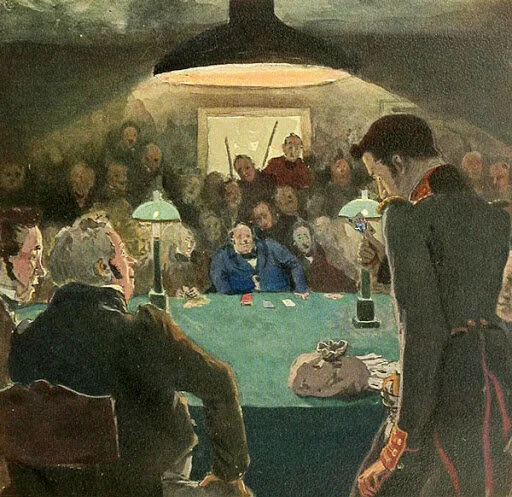
A soldier obsesses over his desire to learn three winning cards. A young woman trusts a nighttime intruder and is tainted and destroyed. A prince loses his fiancée and challenges his enemy to a game of chance. And an aging countess tries to regain her former beauty.

As one of Alexander Pushkin’s most renowned works, “The Queen of Spades” is a complex psychological tale of madness and greed. It is a classic Russian thriller. And Tchaikovsky’s rendition at the Lyric Opera of Chicago only increases the drama. There’s more death, more romance, and more tragedy. Viewers are left shocked, not just by the impressive music and settings, but also by the intense suffering and mania of the main character, Gherman.

As four hours pass by, Gherman’s situation becomes increasingly dire. He crawls on the roof of a young woman’s bedroom - managing, impressively, to sing all the while. He points a gun at an old woman. And he bets everything he has on a card game. As such, while I was sometimes frustrated by Tchaikovsky’s deviations from the original Pushkin tale, the opera was captivating. After writing a paper all afternoon, I managed, not only to stay awake for the entirety of the show, but to become fully immersed in the stories of the characters - which is a high compliment from an opera rookie, who was reading subtitles at 11:00pm, in order to understand the lyrics.

More than that, as an undergraduate who rarely leaves Hyde Park these days, I’ve learned to really celebrate the moments I spend downtown. My Russian professors obtained the tickets for my classmates and I; and they kindly provided the opportunity for us to get dressed up and see the show for free. We spent the night amidst the glamour of opera societies and ball gowns and greed-themed mixed drinks. My former Russian language professor showed me how to check out opera glasses for the first time. And my friend and I marveled at how much they helped us see the performers’ expressions, from the upper balcony. More than that, we felt like we’d entered Vronsky’s race in Anna Karenina, and this made us happy.

During intermission, my friend and I ordered popcorn and wandered the opera. We were surrounded by jewels, heels, and immaculate suits - and the people watching only added to the glamorous atmosphere.

“The Queen of Spades” was my second experience at the Lyric Opera, and I have learned that these performances are much more than passive evenings spent staring at a stage. They are events, and they demand full engagement.

After all, it is a commitment to get all dressed up on a Saturday night, to trek across town in the cold, and to stay focused on a performance in a foreign language for hours. But, by accepting the commitment, I had the opportunity to see a different side of Chicago life, to watch as groups of friends argued in Russian over the twists of their favorite short story and as couples posed upon the opera’s "red carpet.” And, between the glamour of the venue, the sophistication of the audience, and the beauty of Tchaikovsky’s compositions, it was well worth the effort.

More Details:

When: Now-March 1

Where: The Lyric Opera of Chicago

Run-time: 3 hours 45 minutes (+2 intermissions)

Language: Russian, with English subtitles

Click here for more info.

P.S. This wasn’t the only opportunity to attend a free/discounted arts event, this Quarter! UChicago Student ID’s provide access to 70+ arts and culture venues, across the city. And while these opportunities are sometimes kept quiet on campus, they’re listed on the quarterly ArtsPass Calendar and the UChicago Arts newsletter.

конец

Click here, for thumbnail image source.

Netflix Original: Cheer

Full disclosure. The purpose of this piece is to get everyone to watch the new Netflix docuseries Cheer because take it from me: this show is truly the most wholesome, exciting, nerve-racking, and emotional production of television I have seen in a while. The show is a six episode series that follows the journey of a community college cheer team towards winning a national title in Daytona, Florida. The school, Navarro College, is literally in the middle of nowhere-Texas in a town called Corsicana, yet the cheer team is known across the country, attracting students from across the country. The town truly has no other products other than an award winning junior college cheer team, so they’re kind of a big deal as you can imagine. 

gif via

While the show is focused on cheerleading, and you will see girls get thrown in the air, people flipping across the stage, and a ton of injuries, what separates Cheer from another similar reality TV counterpart like Dance Moms is the team coach, Monica Aldama. For many of the kids on the team she is the mother figure they never had; she isn’t mean but she’s strict, you won’t catch her screaming or making kids sob, but you’ll see her push their bodies to endure unimaginable pain. This show has undeniably become an instant hit and that is largely due to revealing what some of the members have gone through in their pasts and how its led them to being on the team at Navarro. You will learn of the members dealing with homelessness, suicide, losing parents, sexual and domestic abuse, and despite it all, they still choose to go to college and pursue their goal of winning a national title. 

Prior to watching this show I knew absolutely nothing about cheer, and truthfully I only started watching it because I had nothing else to do. I did not expect to laugh or cry or feel so nervous at their performance in Daytona, but I really became invested in the members. This docuseries isn’t like classic reality TV where we watch for the drama or to see grown women scream at 12 year old’s to point their toes; it was refreshing to see that people with different values and backgrounds were able to support each other towards one common goal.

The show highlights how cheer is different from other sports in that it basically ends with college–there is no professional competitive cheer, so for many of the members of the team they spend their whole lives working towards winning with Navarro College, and then are forced into retirement. If it isn’t obvious enough already I loved this show, and my only complaint is that I wish there were more episodes. And while a season 2 hasn’t been formally announced yet, I think if Netflix knows what’s good for it, they will continue the show. 

featured image via

Review: Camille Norment, "Untitled (red flame)"

Haunting in its simplistic glory, Camille Norment’s newest work “Untitled (red flame)” is a must-see.


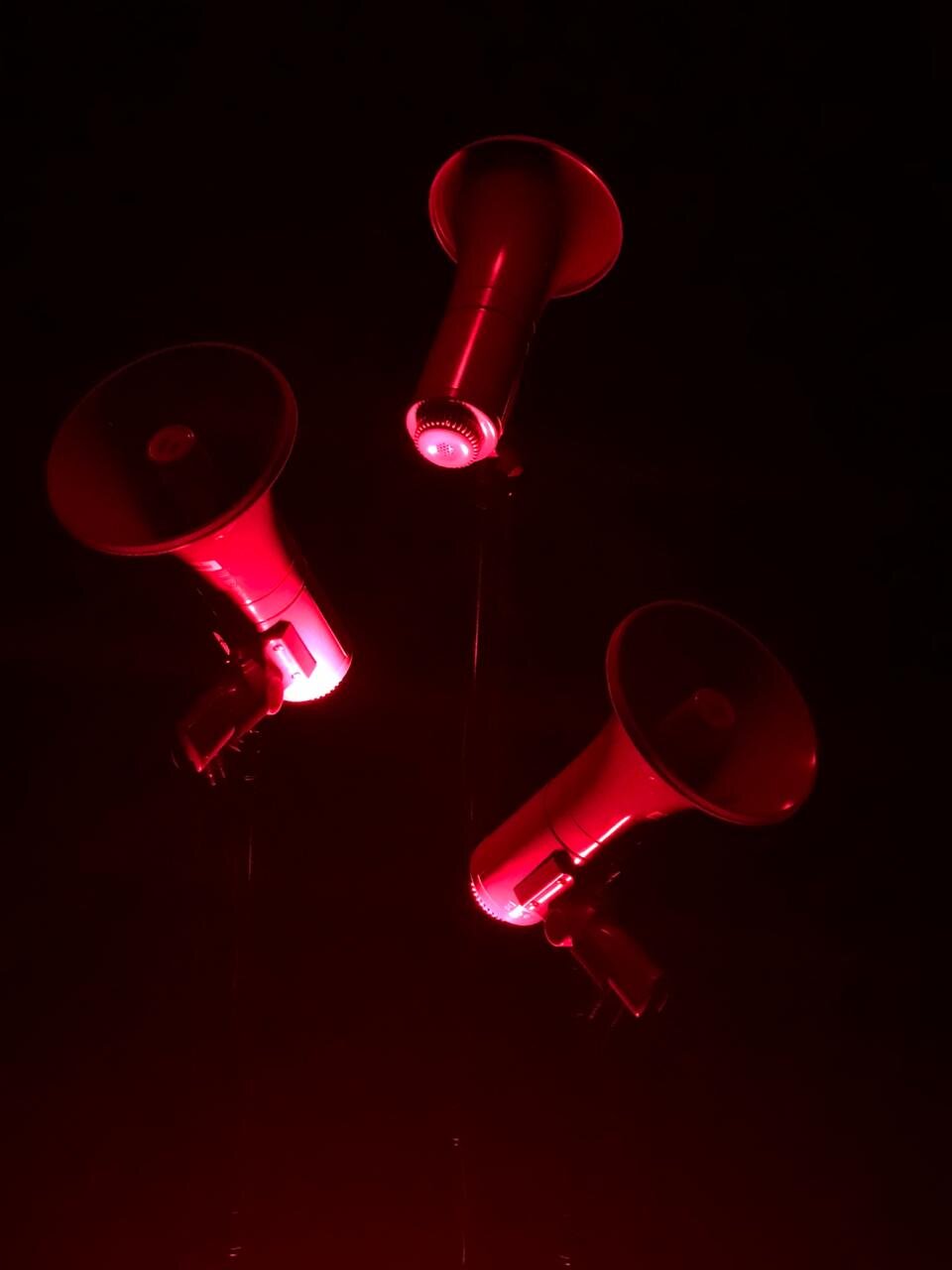
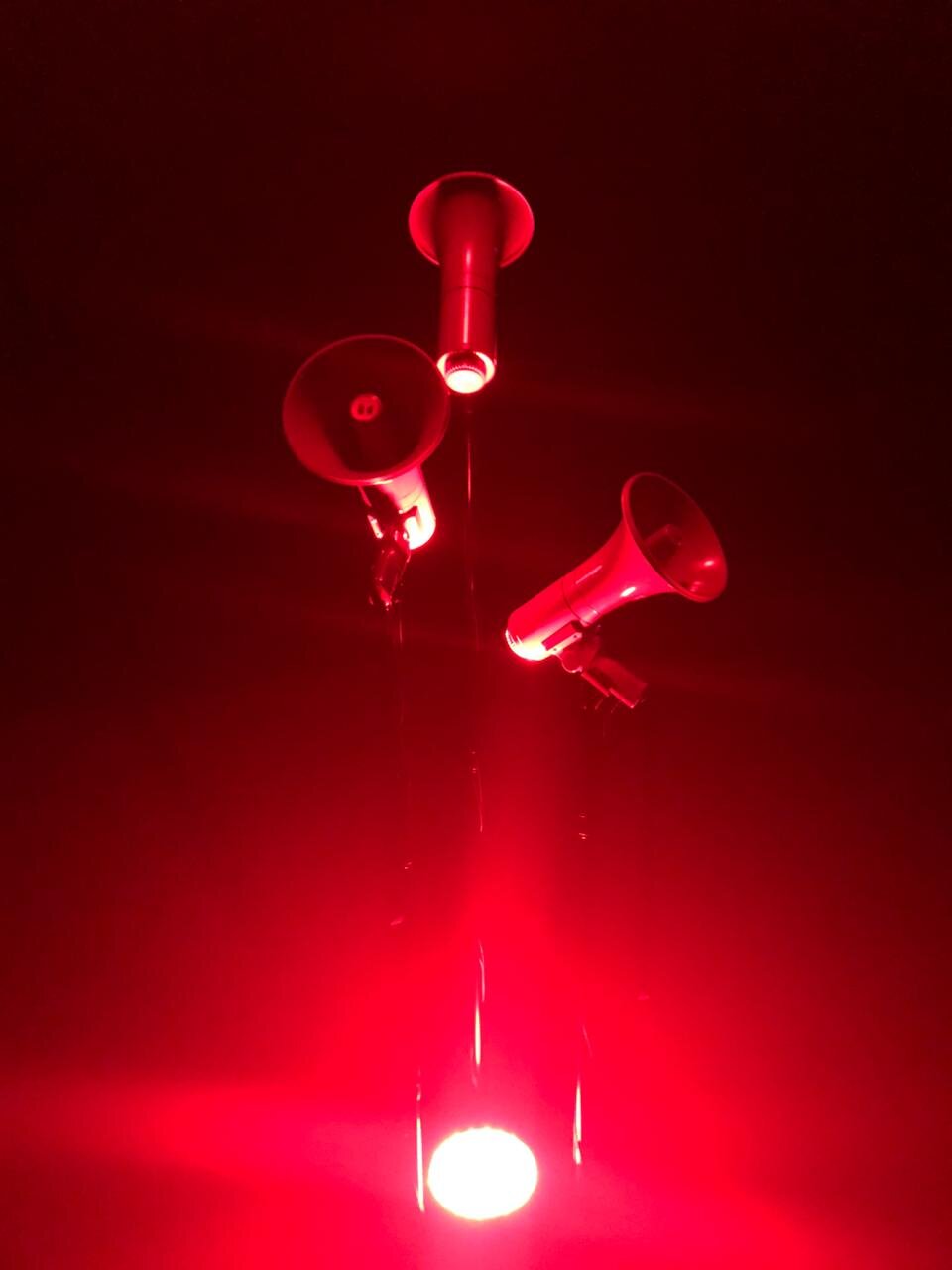
The exhibition room is dark, save for a corner that’s faintly illuminated red. There is a trio of red megaphones in the center of the room whose hums make the floor faintly shake. At its base is a red light that gives the megaphones an eerie glow. All around are sounds of fire - crackling, snapping, the low hum of anticipation and fear, the dull roar of a burn. I can almost feel the heat of the flame on my skin. Standing there, I am suspended in a moment of both nothingness and action. This is “Untitled (red flame)” an immersive sound-based installation by Camille Norment.

A US-born sound artist currently based in Oslo, Norment’s work combines sonic and visual elements into an immersive and compelling installation. Here, Norment uses fire and speech to explore issues such as community, autonomy, remembering the past, and moving forward.

Norment uses fire and speech to explore issues such as community, autonomy, remembering the past, and moving forward.

At the Artist Tour on November 15, 2019, Norment talked about her inspirations in creating the work, which range from church bells in French towns to the feedback sound of a room. For example, Norment took inspiration from the town bell, which appears as a low hum in the installation, as a sign of unity, protest, and warning. Likewise, Norment, citing influential sound artists from the 60s, saw the continuing feedback loop in the exhibit as a reflection of moving backward in order to move forward, a moment of evolution amidst revolution. She also went into detail about the process of creating the installation, which uses sounds taken from locals in the South Side and were manipulated into creating fire-like sounds. A reflection of agency and autonomy, these voices appear as the fire-like sounds that envelope the exhibit.

…a reflection of moving backward in order to move forward, a moment of evolution amidst revolution.

“Untitled (red flame)” is available until January 5, 2020 in the Logan Center.

Images courtesy of Karina Holbrook

Beauty Brand Review: Glossier's Lidstar

The MODA Blog has had a long and storied past of reviewing Glossier products and at this point we're all kind of under the impression that the brand is relatively hit or miss (it's hard to ignore the "meh" quality of most of their products when the packaging is just so damn nice!). Being prone to dumping my hard earned cash on various millennial pink items, however, I of course purchased Glossier's new eyeshadow product, Lidstar, the second it came out. I purchased the shade "Cub," and was puzzled by what came in the mail.

Image via

Image via

Lidstar arrives in a medicinal-like testtube with sleek pink packaging and a doe foot applicator. The instagram barrage of photos and videos about the product convey it as being able to evenly apply with the fingers, but when I did that, it sort of disappeared. I know Glossier is not meant to be used for a full beat. That being said, I was for sure expecting more pigment out of the product.

I finally figured out that the best way to apply Lidstar for SOME detectable color is to layer it on and then blend with a dome brush and wait to dry. It also works as a primer if you are doing a look that incorporates the color of the Lidstar in question. I am still on the fence about it is indeed worth $20, but it is an interesting little tube to play with.

Still a little unsure about trying out a Glossier product? Use this code for 10% off your first order! Happy shopping :)

Featured image via

Love, Simon: A Long Overdue Love Story

Warning: plot spoilers ahead

After watching one of 2018’s biggest movie hits, Love, Simon, I am still awed by how this two hour film has affected me, in addition to millions of other viewers. Love, Simon is a movie that celebrates the types of love stories major studio films usually leave out. It is sparking conversations while changing and moving hearts everywhere.

The film follows teenager Simon Spier as he attempts to find an anonymous classmate he has fallen for online, while deciding whether to come out to his friends and family as gay. The movie depicts the initial tensions Simon experiences after revealing he is gay, but also shows the support and love he receives from many of the film's characters. Simon is not outcasted or othered; he is normalized and reaffirmed in his identity.

One scene that especially moved me was when Simon speaks with his mother, Emily Spier after coming out to his family. She assures him he is still the same Simon she knows and that he is allowed to exhale

This movie felt different. Not only did it show a commitment to racial diversity and LGBTQ representation through its characters, but it told a love story that was honest and tender and the type of love story LGBTQ folks on screen deserve but have not been given in the past.

Love, Simon is a step forward in changing the culture we have found ourselves ingrained in for too long–a culture that encourages silence, punishment and division. This movie portrays an environment of inclusivity and normalcy many individuals everywhere have been looking for. It is a coming of age story that touched me in many personal ways and reminded me, and hopefully others, that stories like Love, Simon matter. These types of stories are important because they represent less-privileged communities, they validate our authentic identities, they encourage us to invest in people who support and accept us, and that love really is love.


Feature image via

Source: https://www.foxmovies.com/movies/love-simo...

Where & Wear: Cindy's Rooftop

Located right on the Magnificent Mile, Cindy's Rooftop offers a sleek bar atmosphere with a lovely rooftop complete with views of Millennium Park and beyond. I decided to go here with a friend after she hyped up the Instagram-ability of the photos she could take there (such is our generation). It's the perfect place to grab drinks without having to strain to hear what your friend is saying, which is a huge plus for me. 

Image via

Image via

I went for the "Grey Garden" and the "Howl at the Jun" cocktails, which were fantastic and gorgeous to look at. I highly recommend experimenting with the fun and kitschy cocktail list that Cindy's offers and dolling yourself up to your heart's content. As far as dress code goes, I'd recommend keeping it classy and simple. I opted for my leather leggings from Aritzia and a shiny button up from H&M with thigh-high boots. 

Images via here, here and here


Cindy's Rooftop. 12 S Michigan Ave. $$

Featured image via Cindy's website.

Stationary Haul: My Go-To Writing Implements

I think in color. Concepts are easier for me if actors come in blue and effects are purple, math is better if the antiderivatives are pink (to contrast with their original expressions, in orange), and I change the ink color in my journal multiple times every day. I've amassed a considerable number of writing implements over the years, to the point where my desk at the end of every class is a jungle of highlighters, felt-tips, ballpoints, and the occasional pencil (perish the thought). Below are a few of my all-time favorite pieces of school supplies, for the benefit of your next boring Core Bio lecture:

Stabilo Fineliners: I will never get over these pens. Never. They are relatively expensive (my set of 20 was $25), but they last an entire year and make every single thing I write a thing of joy. I use them to differentiate cases and conjugations in Latin, theorems in calculus, and themes or running arguments in HUM and SOSC. They come in singles or by the dozen if you want to be even more extra than I am (which is saying something).

Image via CultPens.

Image via CultPens.

MUJI Ballpoint pens: A classic. Also slightly pricey, but similarly long-lasting, MUJI's simple, incredibly smooth-writing pens draw a finer line than Stabilo pens, making them perfect for annotating my puny handwriting or using every inch of a book's margin. They don't have as wide of a color range as Stabilo, but the ink's smoothness more than makes up for it. However, be warned that I have had several explode on me.

Image via Kawaii Pen Shop.

Image via Kawaii Pen Shop.

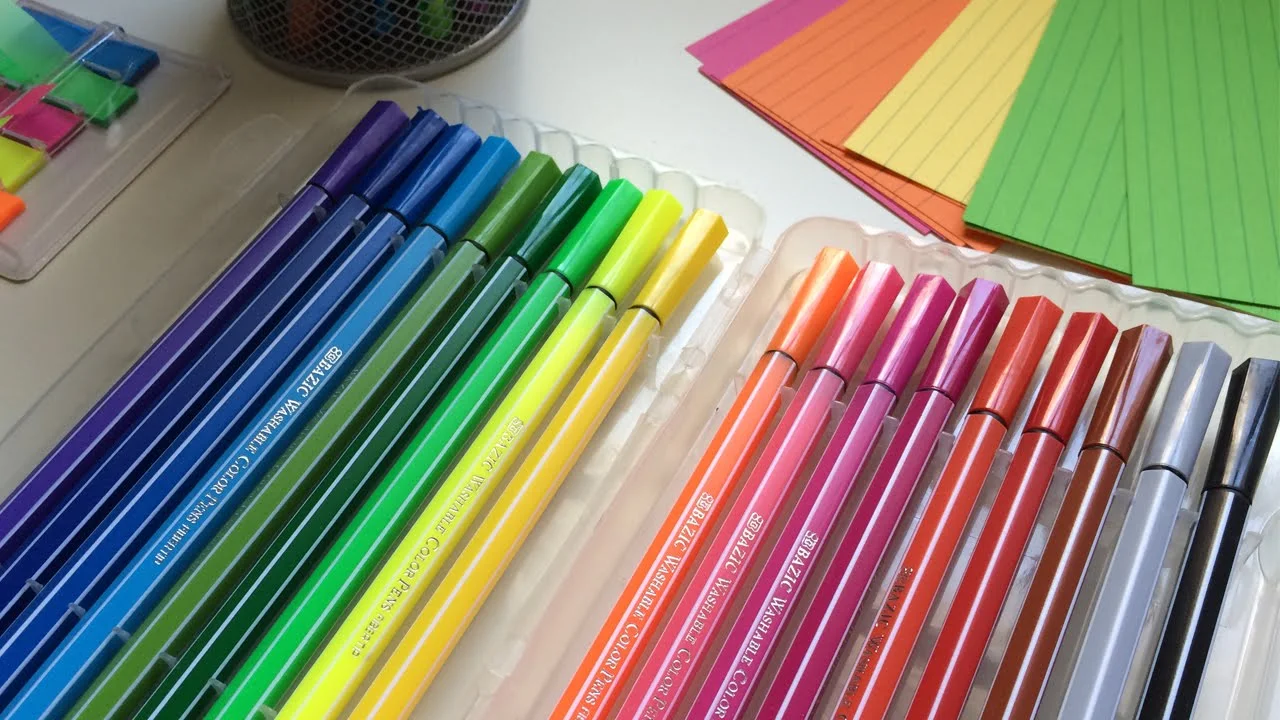
BAZIC Fiber Tip Pens: The most recent addition to my collection, courtesy of my wonderful roommate. A set of 24 has every color you could even think about wanting (three shades of yellow!), and the pens are more like highlighters, with a thick, even line that takes about 100 pages of annotation to fade (student-tested). 

Image via Youtube.

Image via Youtube.

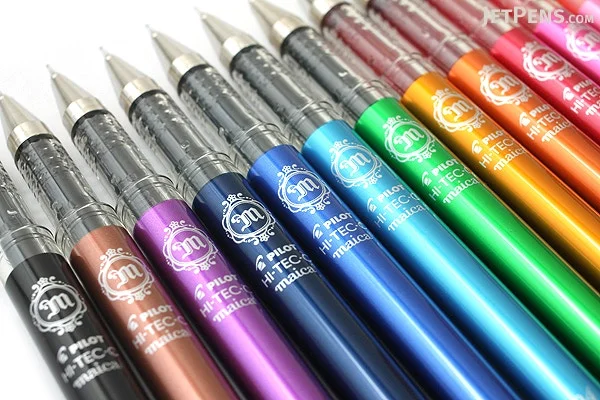
JetPens: As much as it's a cliche, these are the holy grail of pens. They combine vibrant color (including a yellow that's actually viable for use and a navy that I used as my only pen for a year) with incredible precision. Think along the lines of MUJI fineness, but more intense and durable. They're $2.50 a pop, or $30 for a set of 12 — so, birthday gift pens. The real question is, are you nerdy enough to ask for pens as a gift? I was.

Image via Jetpens.

Image via Jetpens.

Feature image via

Brands to Know: For Art's Sake

One piece of my wardrobe that I don't invest enough money in is a good pair of sunglasses. I adore my dark purple pair from Gentle Monster, but it only really matches the fall or winter seasons. I wanted a piece that would last me the spring and summer, so when I was in Korea this summer, I decided to go sunglass shopping. At the first store I went to, I immediately gravitated towards a pair from For Art's Sake and fell in love. I bought their Little Chaos in Rose and have been basically wearing them every day.

Little Chaos in Rose, image via

Little Chaos in Rose, image via
I had never heard of For Art's Sake, so I went home and did my own research on the brand. What I noticed and essentially love about the brand is that it elevates what a basic, trendy pair of sunnies can look like. Trends come and go. It's inevitable. But it's so easy to find the same pair of sunglasses at a high end store and at Forever21. For Art's Sake challenges this monotony. Whether it be the color chosen or metal finish used, For Art's Sake sunglasses takes the basic idea of a trend and then adds its own unique twist. With a wide range of different designs and colors, you're bound to find a pair that suit your exact style. They also have basic frames if you're just looking for just a new pair of regular glasses!


Although For Art's Sake is a London-based brand, you can order their sunglasses online at their website. You can pre-order many of their sunglasses, so keep checking their websites for more updates!


Feature image via, all other images via 

Source: https://fi.pinterest.com/pin/7575899685384...

Turtles and Mental Health in Young Adult Fiction

After the explosive success of his young adult novel The Fault in Our Stars, John Green returns after six years with a painfully personal new novel: Turtles All the Way Down. High school junior Aza Holmes suffers from Obsessive Compulsive Disorder (OCD) resulting in “thought spirals” which prevent her from feeling comfortable in common adolescent experiences.  

She consistently jabs her thumb into a cut on her middle finger, causing it to release pus, only to disinfect the cut with hand sanitizer and re-apply a Band-Aid. This habit, developed as an attempt to have a way of knowing her body was real, gave Aza even deeper anxiety about the possibility of the cut becoming infected by Clostridium difficile, a disease that in the rarest of cases results in death. She cannot kiss someone without going through a thought spiral about the 80 million microbes exchanged through saliva which will permanently inhabit her microbiome for the rest of her body’s life. Inhibitory is an understatement when describing the severity of Aza’s OCD.

In the past, Green’s novels have encapsulated the adolescent experience by focusing on themes of attraction, isolation, and coming of age, however, Turtles All the Way Down presents a departure from these staple young adult topics. Mental health comes with stigma and preconceived perceptions; people often associate OCD with germaphobes and neat freaks or that a pill fixes ADD and ADHD. Stemming from the personal experience of living with OCD, Green’s novel depicts life with mental illness as an ongoing individualized process without a simple cure. Most mental illness will remain in the present tense—“I had OCD” is an impossible statement.

Categorically considered Young Adult, the novel discusses mental health with an intimacy scarcely before seen in the genre. The novel is aimed at an audience still in the process of learning the ins and outs of social communication, experiencing feelings of intense emotion, and understanding how to take care of one’s mental health. Green’s characters not only exist to give hope and verification to those living with mental illness, but also to carefully depict the reality of having friends with mental illnesses. While Aza’s friends fail to identify with her thought spirals and quirky habits, Aza fails to act as a caring friend at times as well. The relationship Green creates between Aza and her best friend Daisy shows people living with mental illness do not deserve pity and also demonstrates the need of those with mental illnesses to consider the needs of the people around them.

Green’s novel presents an unglorified account of life with mental illness, striking an articulated balance between necessary adolescent self-realization and universally applicable truths regarding the hardships of the human mind.

To hear more about John's experience with OCD, listen to him talk about it here:

Turtles All the Way Down is available wherever books are sold. Also, the book's publisher Penguin Teen has created a playlist to enjoy while reading:

Jack's Wife Freda Review

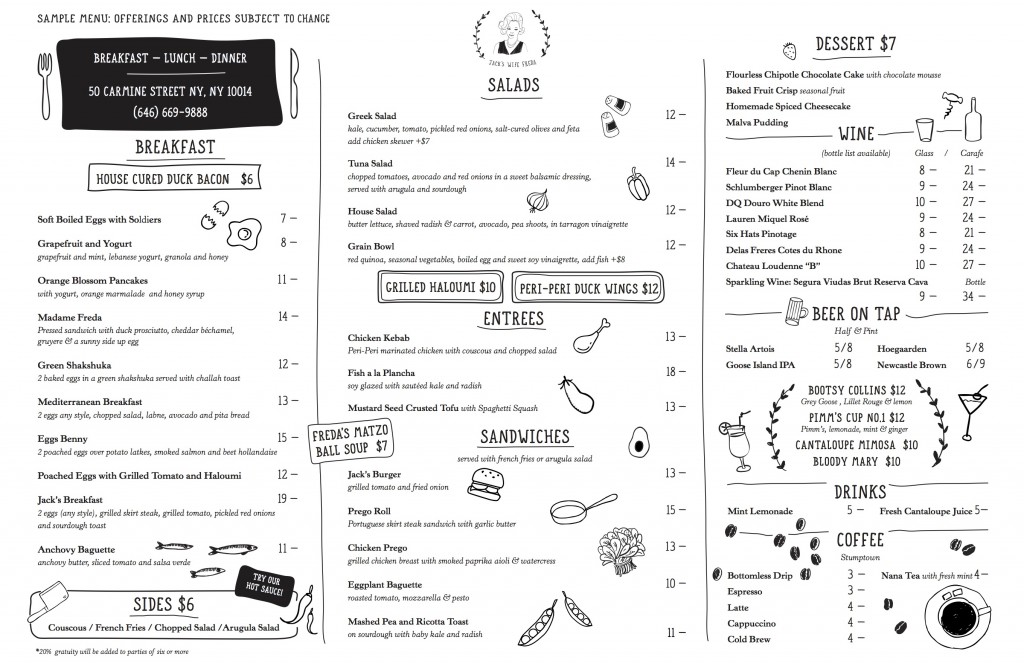
A quick trip to NYC this week warranted a stop at brunch and food blogger favorite, Jack's Wife Freda. The cozy bistro has two locations in Lower Manhattan, and serves a variety of Mediterranean and American inspired cuisine. I visited the Carmine St. location, near the NYU campus in Greenwich Village. 

Note: menu subject to change; image via

Note: menu subject to change; image via

I swung by a little after normal lunch hours for a quick bite to eat and was pleased to find that breakfast is served until 5pm. Service was a little on the slow side despite the venue being fairly empty, but the staff was friendly. The decor, from the round marble tables to the colorful dishes and flower arrangements definitely created a welcome atmosphere. The prints and paintings that covered most of the walls were eclectic and nicely complimented the restaurant's vibrant aesthetic and their playfully illustrated menus also doubled as placemats, which I thought was a nice touch. 

In all honesty my food didn't quite live up to the hype and incredibly appealing Instagram photos I've come across. My grapefruit yogurt was good, but not too photogenic, so I've included some of the more colorful options off the menu below. Definitely worth the visit if you plan on ordering more than one dish and best for brunch or dessert. 

JACK'S WIFE FREDA  $$

224 LAFAYETTE STREET

50 CARMINE STREET

MON-SAT • 8:30AM TO MIDNIGHT
SUN  • 8:30AM TO 10PM

Images above and featured image all via