A Guide to "Virus-Escapism" : 4 Shows to Stream Now

My younger brother claims he hates shows featuring “women in period dress.” Such shows are especially dull, he says, if they’re inspired by the works of a novelist, like Jane Austen. However, weeks into quarantine, my brother has joined my family in streaming many historical dramas (including one about Jane Austen’s unfinished novel, Sanditon). And the thing is, despite his jovial and witty complaints, he stays in the living room each time we hit play - suggesting that he might actually enjoy these shows more than he would like to admit.

And while I may be abnormally fascinated by period dramas, I’ve found that such shows offer much-needed escapism, right now. After all, I can’t travel to the English countryside or the coast of Greece. I haven’t left my neighborhood or ridden in a car in a month. And I have no idea when my life will return to anything resembling normalcy. However, there are many great shows streaming right now. And for just a few hours at a time, I find myself transported somewhere virus-free. Although, there are, admittedly, many women in period dress.

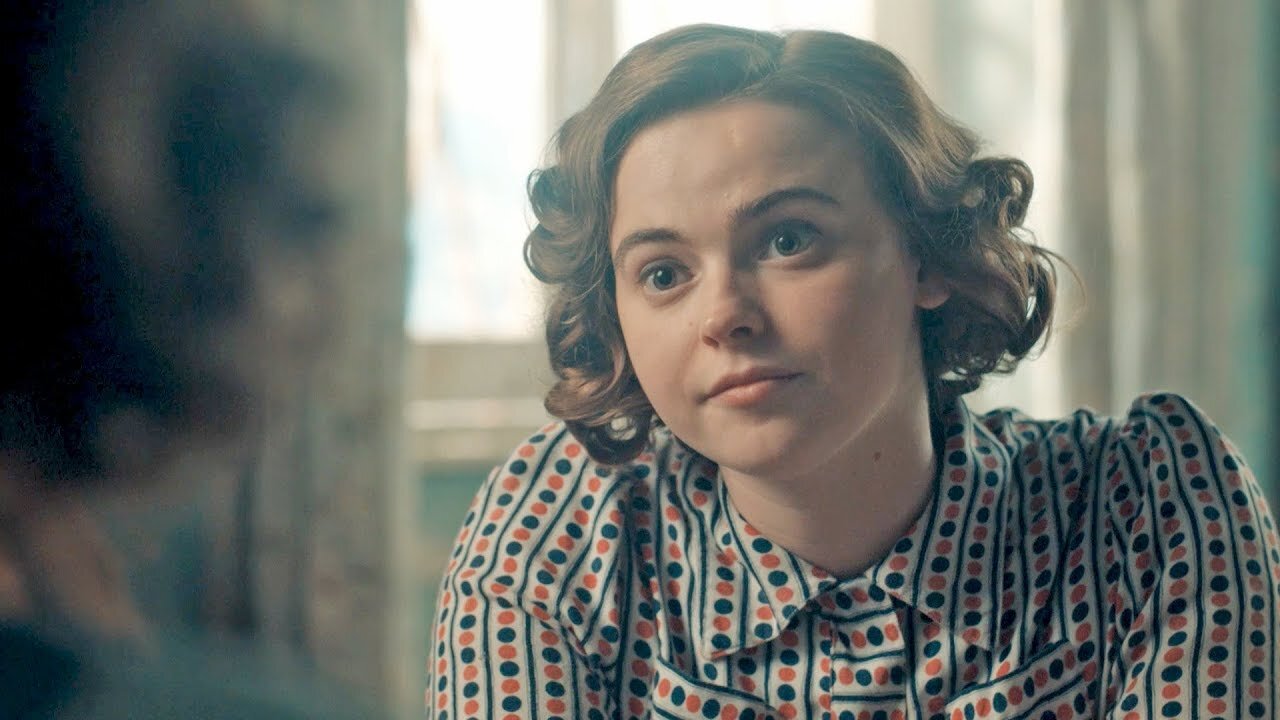
#4 The Durrells in Corfu: Season Four

I absolutely LOVE this series. Based upon naturalist Gerry Durrell’s three autobiographical books, the show follows the lives of a British mother and her four endearingly bizarre children, as they make a new home for themselves on the Greek island of Corfu.

However, while the show is filled with many picturesque scenes of picnics and drives along the Greek coast, Season Four is not as light-hearted as viewers might expect. As the fourth and final season culminates, the residents of Corfu are keenly aware that World War II is brewing. And the Durrell family finds themselves once more torn between two countries: their native Britain, and the surreal Greek island that they have learned to call home. And despite the presence of the show’s characteristic witty humor, season four is also a powerful narrative of a family impacted by events much larger than themselves. The narrative is thus made even more powerful by the fact that it is true.

And yet, to depict the show as “wholly dark” would be misleading. After all, Margo decides to become a beauty specialist and awkwardly shares much more personal information than her family would like to hear. Leslie still loves guns, and Larry is as self-important and dramatic as ever. Meanwhile, Gerry builds a zoo, while viewers wonder whether Mrs. Durrell will ever end up with Spiros. And despite the looming war on the Continent, the island itself remains as beautiful as ever. Otherwise stated, the show provides ideal escapism - made no less so, by the fact that the characters themselves are happily engaging in their own form of escape.

And for those who still want to know more about the family, PBS recently released a Masterpiece Special about What The Durrells Did Next.

#3 Vienna Blood

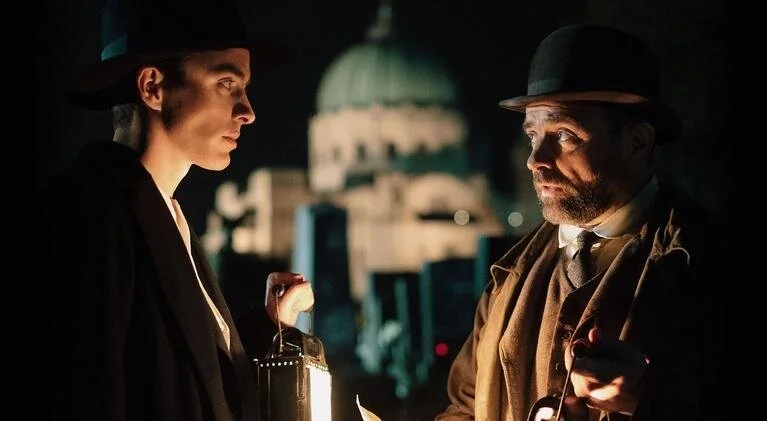
While Vienna Blood does not take place on the coast of Greece, its filming is similarly beautiful. The show follows the lives of a young doctor and a detective, as they work together to solve police cases in early 1900’s Vienna. Inspired by Frank Tallis’ Liebermann novels, Doctor Max Liebermann is an early follower of Sigmund Freud - and he controversially encourages Detective Rheinhardt to solve crimes by analyzing the psychology of his suspects. In this way, Doctor Liebermann attempts to revolutionize the fields of criminology and psychology.

From investigating bizarrely “artistic” serial killings, to exposing the violent traditions of a local military academy, Doctor Liebermann and Detective Rheinhardt travel across Vienna. And in so doing, they encounter everyone from mental health patients to pompous military leaders. Meanwhile, the show powerfully indicts the growing antisemitism of pre-World War Austria.
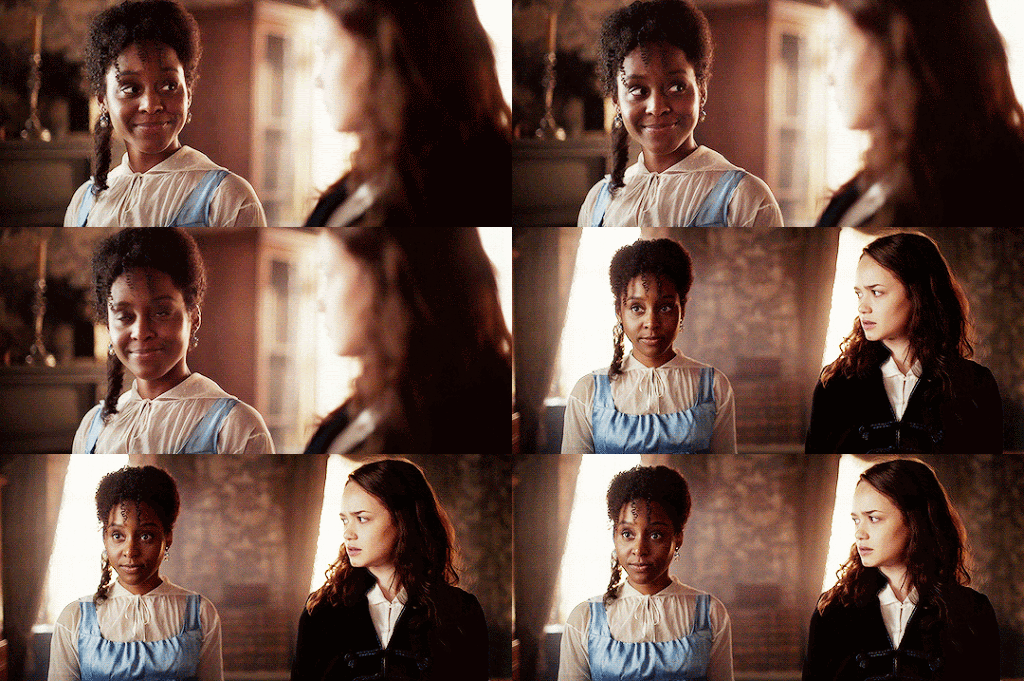
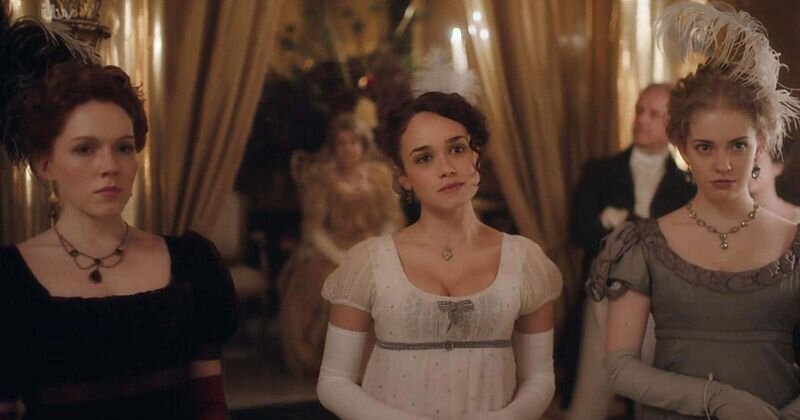
#2 Sanditon

Andrew Davies used Jane Austen’s unfinished manuscript, Sanditon, to bring this drama to viewers. And while Austen provided approximately 24,000 words of the novel, she only supplied the plot of the first episode. After that, the plot becomes Davies’ own. And this is very important, because this series is not typical Jane Austen. To avoid any spoilers, I will merely write that the series does not end in a very “Austen-like” manner - and this provides ample material for a potential (and currently unconfirmed) second season. However, while the series finale is uncharacteristic of Austen, I found the show no less interesting.
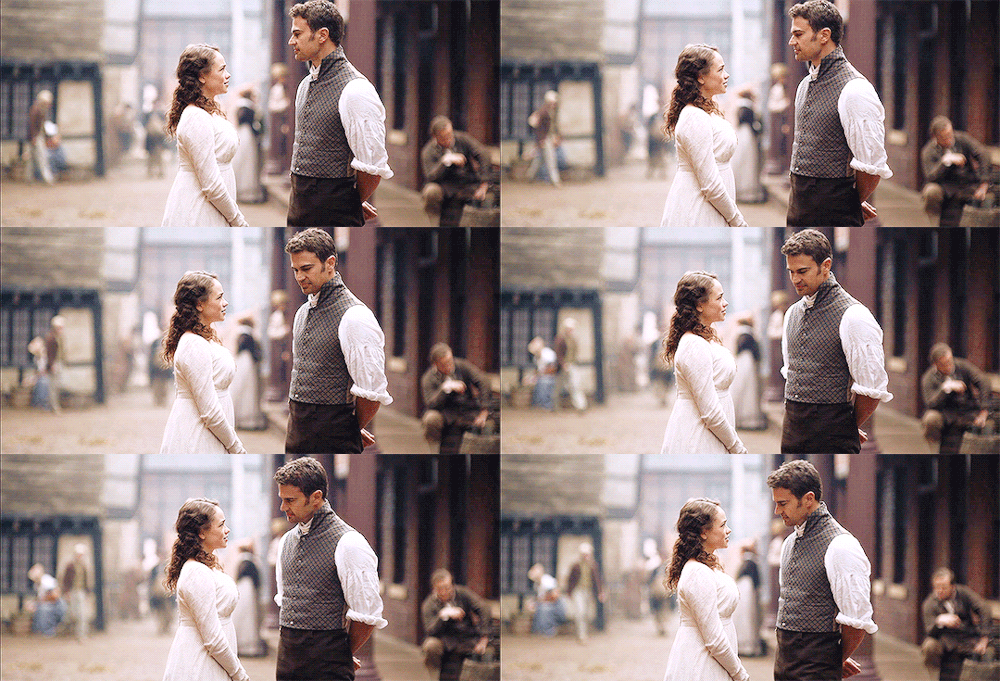
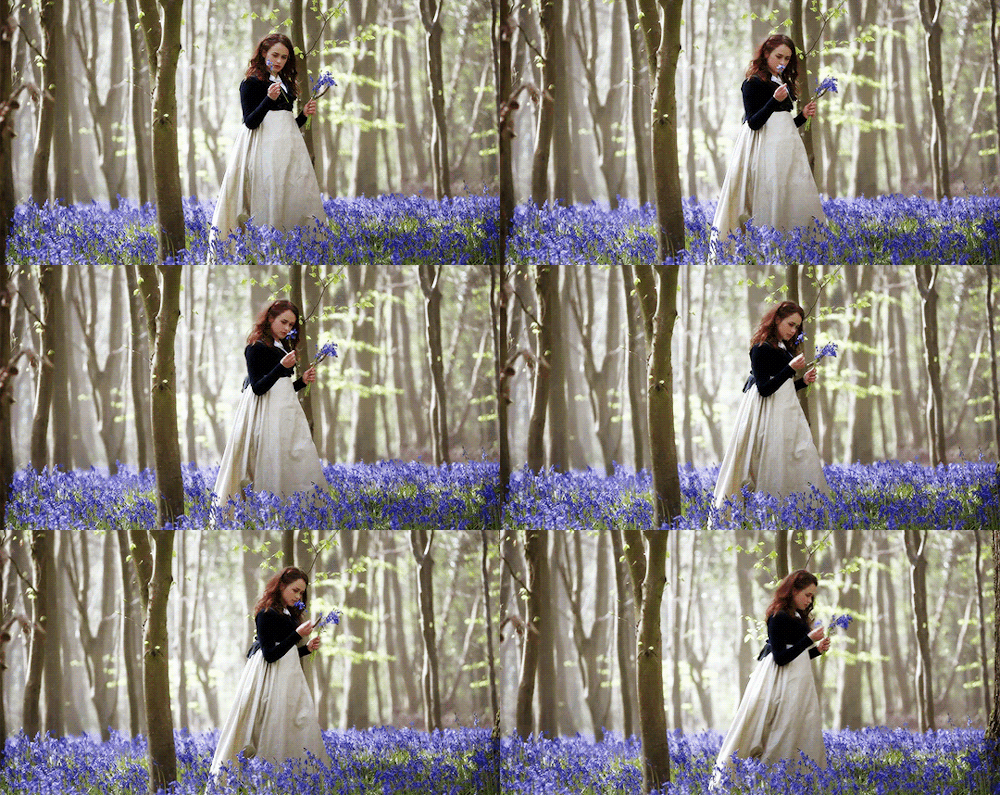
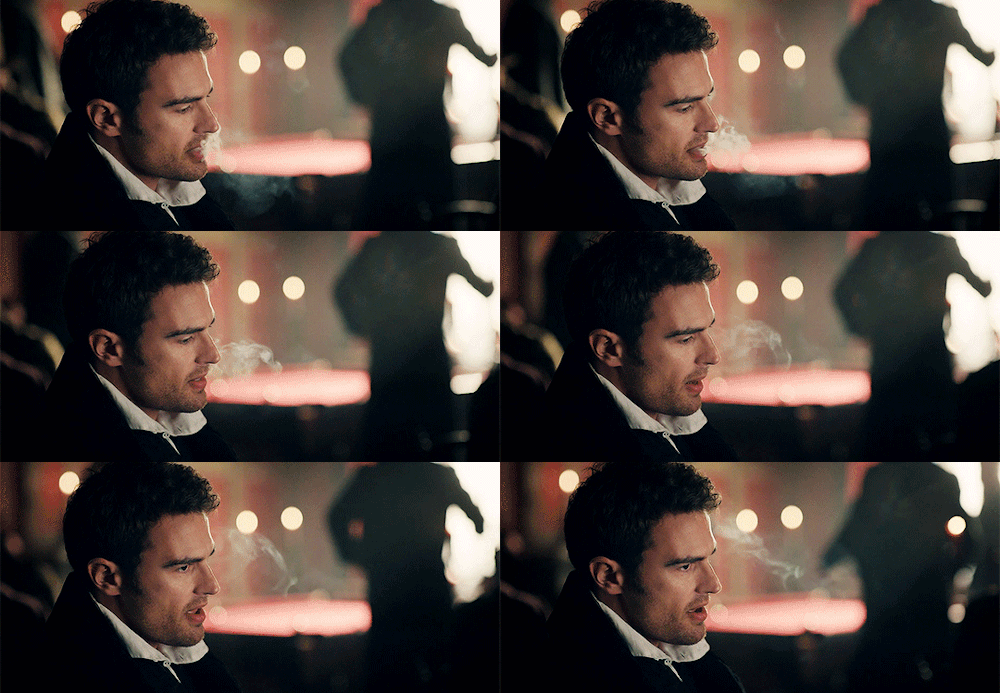
When the story commences, Charlotte Heywood (Rose Williams) finds herself unexpectedly spending the summer in the seaside town of Sanditon. And Charlotte is so likable, intelligent, and tough, that I couldn’t help myself from becoming attached to her story. Despite being a new acquaintance of the Parker family, Charlotte quickly becomes an integral part of their household. She has a rocky relationship, and eventual romance, with the younger Parker brother, Sidney (Theo James). And she quickly befriends a wealthy young woman who arrives - against her will - from Antigua. Meanwhile, the Parker brothers strive to expand the town, corrupt relatives plot to secure the inheritance of the ailing Lady Denham, and the town leaders attempt to taste a pineapple for the first time.

And while the show is composed of eight episodes, it was hard not to finish the series in one sitting. From a kidnapping to a boat race, the plot was continuously surprising. And more than that, the script is written intelligently - and I found myself wishing that we talked as eloquently in present-day society as the characters did.

However, while I loved this series, I purposely chose not to rank it first on this list - for the sole reason that I found the ending infuriating. This, of course, does not mean that the ending was “bad.” It just means that the series did not end as I wanted, and that I’m still holding out for a second season to “correct the record.” As strange as it might sound, viewers should pause the season finale when Sidney gets off of his horse (at the very, very end of the show). I wish Davies would have cut the story here; it would have been better to leave viewers in suspense, than to end the narrative as it did. However, the fact that I feel so strongly about the series finale is a testament to the success of the show. Sanditon is well worth the watch.
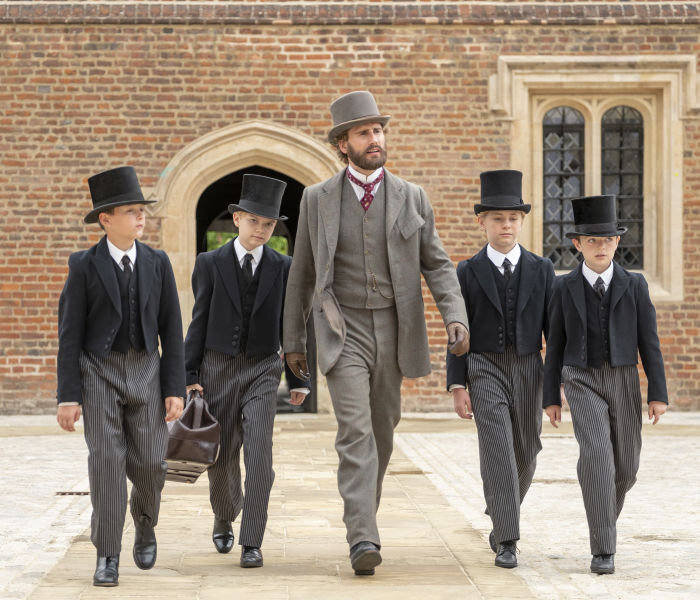
#1 The English Game: A Netflix Original Series

Developed by Julian Fellowes (the creator of Downton Abbey), The English Game depicts the dramatic origins of football in England. However, the show is much more than a sports show; it is a highly-intelligent window into the class conflicts, experienced in 1870s England. From riots to a factory strike, the show closely follows the lives of working-class football players - who are tasked both with feeding their families and with democratizing the game of football.

When the show commences, the pompous Old Etonians football players demand that the sport remain for “gentleman” only. Meanwhile, the working class residents of Darwen fight for an opportunity to play the sport - and they hope to make history by winning the FA cup. However, the story is not quite as one-sided as it might first appear. Arthur Kinnaird (Edward Holcroft) is the captain of the Old Etonians team, but he is much more democratic and kind than his teammates. And with the help of his wife, Arthur slowly begins to change - ultimately becoming a strong voice, in support of allowing professionals to play the game.

The show is therefore a very happy one. The protagonists are extraordinarily likable - and it’s easy to become attached to the plot. And it’s worth noting that I’m not even remotely a “sports person.” The story is just that good.

And Next on My Watchlist… Belgravia

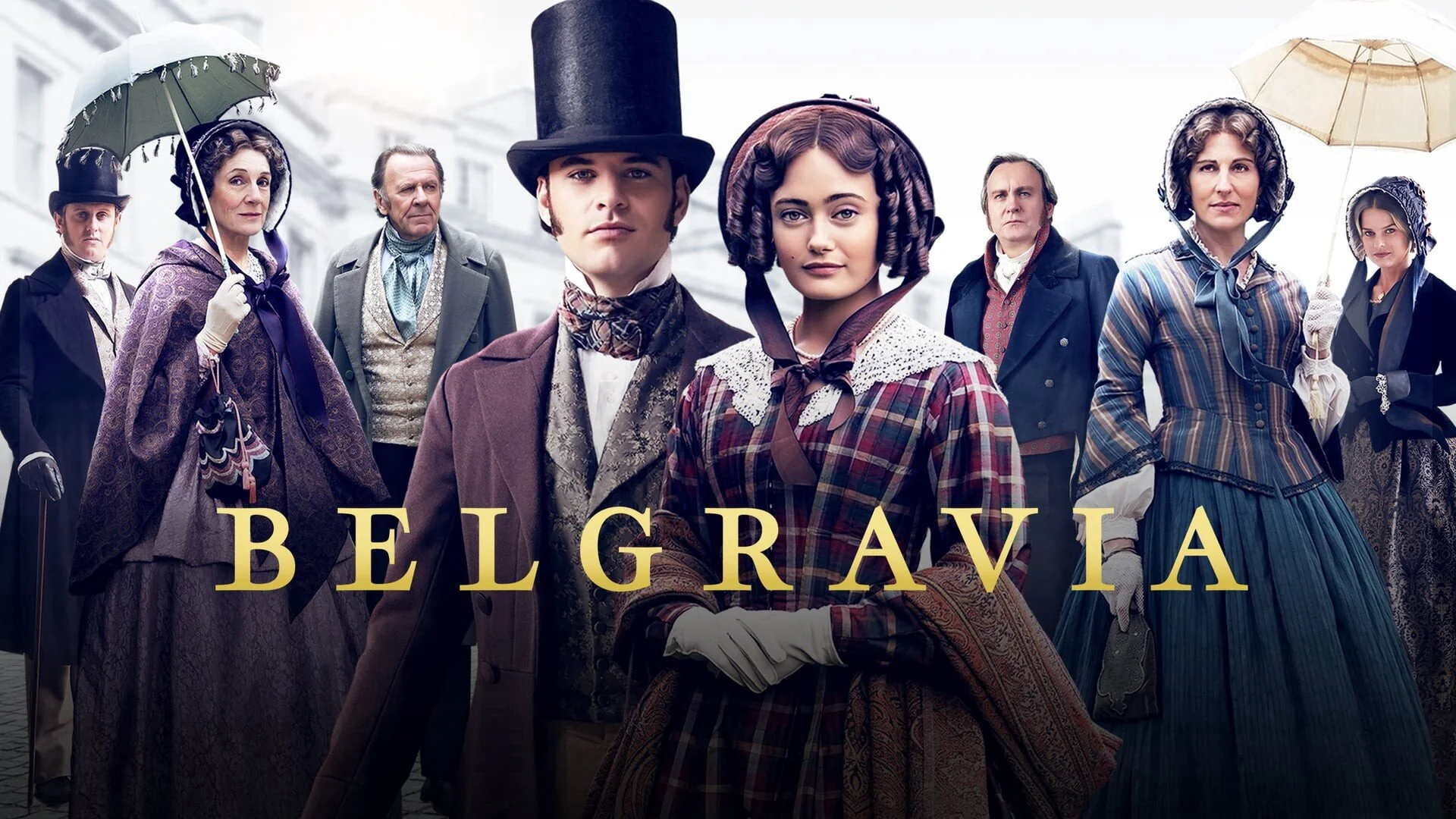
Belgravia was just recently released on Amazon. And the drama (once again written by Julian Fellowes) is at the top of my watchlist.
Click here, for thumbnail image source.
Netflix Original: Cheer

Full disclosure. The purpose of this piece is to get everyone to watch the new Netflix docuseries Cheer because take it from me: this show is truly the most wholesome, exciting, nerve-racking, and emotional production of television I have seen in a while. The show is a six episode series that follows the journey of a community college cheer team towards winning a national title in Daytona, Florida. The school, Navarro College, is literally in the middle of nowhere-Texas in a town called Corsicana, yet the cheer team is known across the country, attracting students from across the country. The town truly has no other products other than an award winning junior college cheer team, so they’re kind of a big deal as you can imagine. 

gif via

While the show is focused on cheerleading, and you will see girls get thrown in the air, people flipping across the stage, and a ton of injuries, what separates Cheer from another similar reality TV counterpart like Dance Moms is the team coach, Monica Aldama. For many of the kids on the team she is the mother figure they never had; she isn’t mean but she’s strict, you won’t catch her screaming or making kids sob, but you’ll see her push their bodies to endure unimaginable pain. This show has undeniably become an instant hit and that is largely due to revealing what some of the members have gone through in their pasts and how its led them to being on the team at Navarro. You will learn of the members dealing with homelessness, suicide, losing parents, sexual and domestic abuse, and despite it all, they still choose to go to college and pursue their goal of winning a national title. 

Prior to watching this show I knew absolutely nothing about cheer, and truthfully I only started watching it because I had nothing else to do. I did not expect to laugh or cry or feel so nervous at their performance in Daytona, but I really became invested in the members. This docuseries isn’t like classic reality TV where we watch for the drama or to see grown women scream at 12 year old’s to point their toes; it was refreshing to see that people with different values and backgrounds were able to support each other towards one common goal.

The show highlights how cheer is different from other sports in that it basically ends with college–there is no professional competitive cheer, so for many of the members of the team they spend their whole lives working towards winning with Navarro College, and then are forced into retirement. If it isn’t obvious enough already I loved this show, and my only complaint is that I wish there were more episodes. And while a season 2 hasn’t been formally announced yet, I think if Netflix knows what’s good for it, they will continue the show. 

featured image via

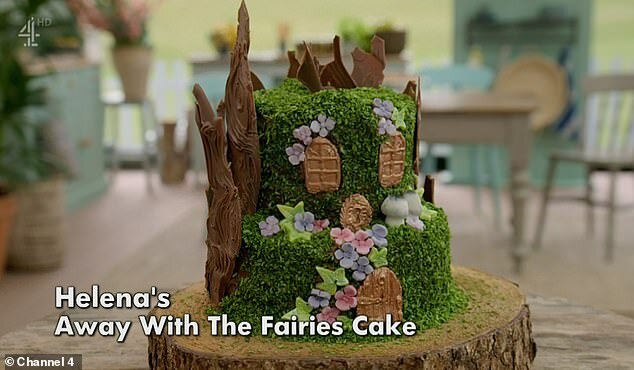
What to Watch: Great British Bake Off

Excited about your new classes? Ready for the snow that is most definitely in our future? Ready to be back on break already? Whether you answered “yes” to any of these or are somewhere in between, I have something you need: a show recommendation!

IMG_2049.gif

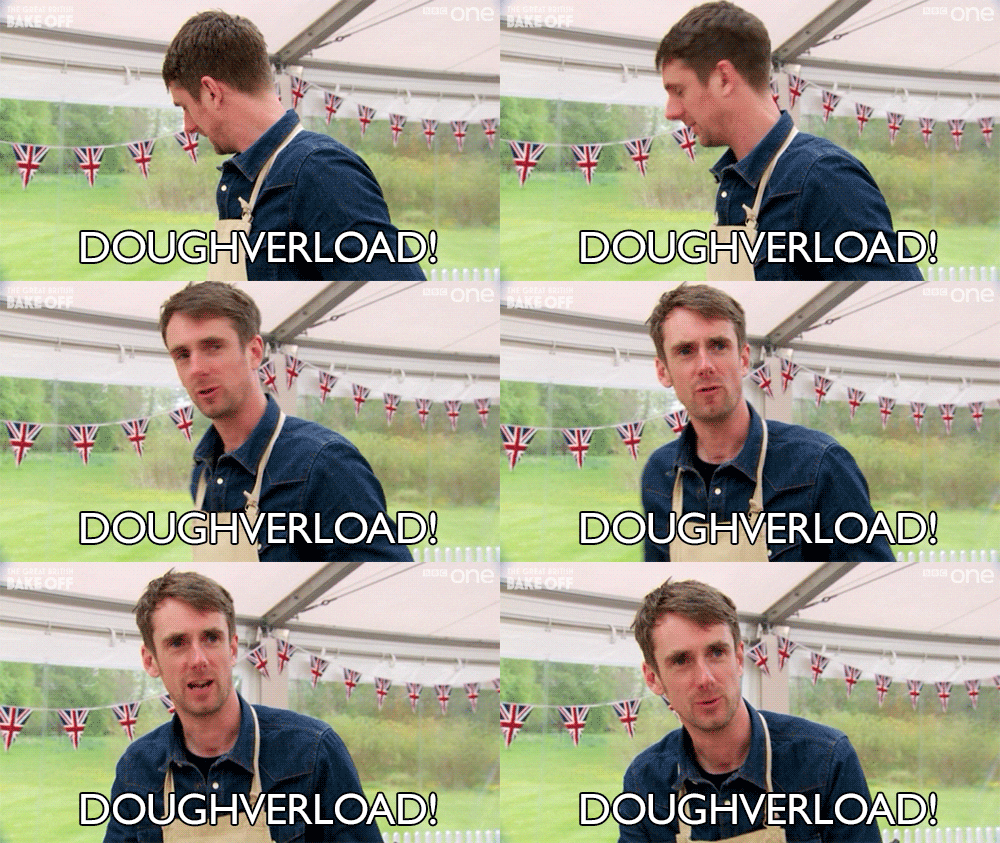
The Great British Bake Off, for those of you who don’t know, is the most blessed version of the cooking show that has ever, or will ever, exist. This is not hyperbole. Watch it. You’ll agree. (It’s fine if you don’t, but also good lord how can you not?)

What I find so special about this show is it’s genuine kindness. The bakers form lifelong friendships, and there is no prize money. They are there because they love to bake and they want to show what they can do—and hopefully win the glass “Great British Bake Off” cake plate that is the material prize. This show is perfect for snowy days, watching with family, when you need to escape for some alone time, getting ideas for new things to cook, and enjoying an hour of beautiful bakes and warm-and-fuzzy heart-feelings.

IMG_2053.jpeg

The basic premise is that a dozen amateur British bakers are selected to compete in a massive white tent, completing 3 challenges each week: a signature (which they can practice beforehand), a technical (a mystery recipe set by one of the judges, very fiddly, and judged anonymously), and a showstopper (which is, as its name implies, meant to be a masterpiece).

IMG_2054.jpeg

The original judges were Mary Berry and Paul Hollywood, and the “MC” type people were Mel and Sue. The more recent seasons are judged by Paul and Prue and hosted by Noel and Sandi, and, while I am definitely biased towards the original judges, the new folks are doing a great job.

IMG_2056.jpeg

Each week one baker is awarded the title “Star Baker”, and one (or sometimes two!) of the bakers must go home. The cycle continues until there are just 3 bakers left. The victor of that weekend’s competition is the winner of the entire show!

Do yourself a favor:

IMG_2057.gif

Images via here, here, here, here, here, and here

Featured Image via

What Will You Choose? How 'Bandersnatch' Is Transforming TV

When you hear the iconic dun-dun opening of Netflix, you’re usually prepared to sit back, relax and watch a television show or movie with no contribution. However, with the advancement of technology and the public’s increasing demand for something new and fresh, who but Netflix would devise an new way to consume entertainment?

Instead of the traditional way of watching films, Netflix took one of their most popular shows, Black Mirror– known for its incredible storytelling and foreshadowing of the dangers of technological advancement in society–in for a brand new direction.

Screen+Shot+2019-01-27+at+11.13.58+PM.jpg

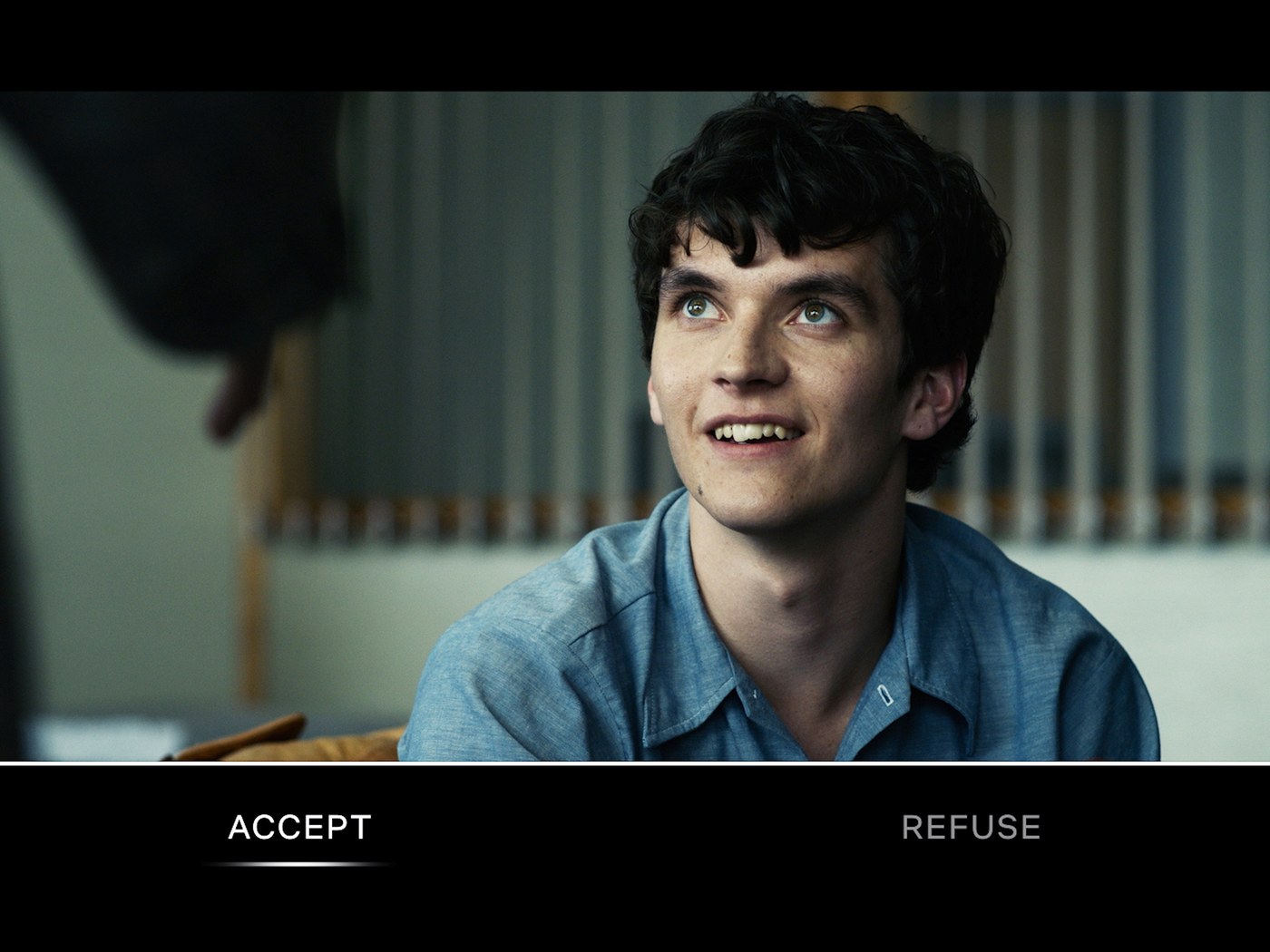
The psychological thriller Black Mirror: Bandersnatch centers around the idea of choice. The viewer is given a role in determining the narrative of Stefan (played by Dunkirk’s Fionn Whitehead) as he designs a meta, choose-your-own-adventure video game called Bandersnatch in 1984 (I allotted myself five hours to explore this project).

Although Bandersnatch fits squarely into a dystopian world seeped with horror, science fiction and ‘80s nostalgia that Black Mirror is known and beloved for (including references to past episodes such as “White Bear” and “Metalhead”), this movie stands alone from the television series.

The film took over 18 months of planning and production, beginning with Netflix working with show-runners from animated children’s’ programs, such as Puss and Boots, to create a form of media with branching narratives. Once the children’s’ programs went through, adult programming was fully fleshed out in this new medium of explorational and interactive entertainment.

BlackMirror-Culture-Inline3.jpg

When Netflix approached Black Mirror creators Charlie Booker and Annabel Jones, there was initial pushback. Concerns over “gimmicky” prior examples of interactive storytelling soon dissipated after ideas for future episodes that only worked with an interactive narrative came to the fore.

The viewer has 10 seconds to make decisions for Stefan, ranging from choosing what type of cereal he eats for breakfast to whether or not he should murder his father (I won’t give too much away). Once a play-through ends, the viewer is given the option of going back and making a different choice. The average viewing is 90 minutes, though the quickest path ends after 40 minutes.

According to IGN, there are five "main" endings, with variants within each ending; such endings may be intercut with credits, similar to other Black Mirror episodes. The interactive material is innovative in exploring the fact that not only does Stefan lack agency over his actions (and at times is aware of this), but the viewer also finds themselves constrained by the writers’ options.

Twitter user @Storni_Ale is one of many fans who have mapped out the endless possibilities with the choose-your-own-adventure film. Some of the diagrams show that when you draw the branch off of an option, you get the same symbol referred to first i…

Twitter user @Storni_Ale is one of many fans who have mapped out the endless possibilities with the choose-your-own-adventure film. Some of the diagrams show that when you draw the branch off of an option, you get the same symbol referred to first in Black Mirror’s “White Bear” episode, which is also referenced in this episode; a slight nod to the viewer who lacks almost as much freedom as Stefan.

The narrative branching storytelling method Bandersnatch utilizes has caused a massive social media frenzy. #Bandersnatch started trending on Twitter, with thousands of tweets, posts and memes created from the new storytelling phenomenon. Many fans loved the film, while come critiquing the gimmicky nature of the choose your own adventure component.

With all this hype around the film, one question emerges: will Netflix expand upon creating interactive media similar to Bandersnatch? Rumors began to circulate that they would begin working on video games after the company’s partnership with the now-defunct gaming studio Telltale. However, Netflix executives claim the intent was to advance storytelling and offer new innovative mediums to think of entertainment. As one Netflix exec claims, “we think we are onto something that could be really exciting.”

Black Mirror: Bandersnatch is now streaming on Netflix.