Love & Other Drugs

I’m not sure why there’s such a thing as being unlucky in love. I think I've sought after it, cried— taken hiatus after hiatus to “cleanse my palette,” if you will (*eye roll*, I know), and then come back ready each time to face the dating pool head-on. A routine that has, ironically enough, always proven unfortunate to my dismay.

As a teenager, I think you often get the brunt of insults accusing you of being too “naive,” too “fast,” too “immature” blah blah blah… when it comes to love. As if your age strips you of all credibility. 

Although, I don't expect to know all the answers at nineteen. I'm not bell hooks— I can't even pretend to know, All About Love.

However, I have seen other people my age get it right. Be on the same page, reading from the same book. Hence why, upon this realization, I ask myself: Why can’t I? It’s not like I haven’t given it my best. The next statement may come across as a bit bitter or maybe even a little desperate; but, GODDAMN have I tried! And the more I do, the more I hate how it makes me feel. It seems that the only source of clarity I've earned while going down this dark, long, miserable tunnel has been that:

Love is in fact NOT like other drugs.

Close-Up (1990) dir. Abbas Kiarostami

For one, I don’t get that dopamine rush every time I'm pursued. On the rare occasion I do, it’s too fleeting to really put me at a high. Whenever a new romantic interest presents itself, I can’t help but think, “here we go again.” Making sure to hold my breath during the dive, and lord knows I can’t swim. I do all the things you are supposed to do. I talk, text, go on these little dates— we kiss, and if we even make it that far… maybe even…

Then what? 

Well, usually they’ll go, “I don't think it's gonna work out…,” followed by a list of reasons. I listen diligently, taking in what they have to say, and for the sake of ending it on a good note, willfully agree, and that's that. It's over. I can breathe again. 

The bad part comes next. I’m aware I have an attachment problem. I cling to people like a baby grips. Just like the palmar’s grasp, my clinging too, is an involuntary neurological reflex. If you believe in that sort of thing, attachment theory has suggested that I have a “disorganized fearful-avoidant” attachment style. A manifestation of both anxious and avoidant attachment habits. So, I guess it makes sense that my post-ending-it ritual consists of an overwhelming wave of self-doubt, self-pity, and self-loathing — essentially a shedding of all the things I may have once liked about myself.

Don’t worry I usually get them all back.

But, during this stage, I’m suddenly whining about God knows what, measuring myself up, questioning whether I’m deserving or even worth someone’s time and commitment. To some extent, I do that too during the pursuit. But, it’s somehow far worse during the after. I adopt this unhealthy practice of placating my feelings, hoping that if I do so long enough I’ll eventually forget them (it's not very full-proof, I never do). Then, I spend a period (the length fluctuates based on how much I liked them) strongly disliking myself for allowing them to have had even just a sliver of me. And the minute I think that it’s over and I’m all recovered, there I am once more, stuck—disliking myself more for wanting to do the entire thing over again with someone new.

 But why? 

Why would someone sane want to torture themselves in this way? And contrary to prior implications, I’m no masochist.

I’m sure with everything I just told you, you probably read that back and thought: well, then maybe it’s because… you’re not all that sane? But stay with me, I promise I have a point to make here. 

Here’s what I think: people like me, though yes, we struggle to keep ourselves afloat, knowing we’ll have to laborously put ourselves back together after we let others in and it doesn’t pan out; still, all share the small faith that one of these days, it will ring true that love is the superior drug. The supreme if you will (yes this was an AHS reference).

Better than any substance I could take in. I do not care how potent.

Better than anything that could provide me with any semblance of real joy.

Maybe, love is NOT like other drugs because love is perpetual; in all its formats. It might just be the hopeless romantic in me talking, but whereas Like is ephemeral, with feelings fading as quickly as they came, Love lasts. And sure, though I think the memory that you once loved someone may vanish. After all, “It’ll pass,” was the Priest’s response to Fleabag shortly after she confessed her Love for him. When it comes to the feeling, Love as an emotion— I’m not sure you ever stop loving someone you truly Loved, in that sense. Romantically or otherwise. No matter the circumstances. And as to why we accept the torture. To that, I'll say: love may take a lot out, but strangely enough I think it also helps us feel less empty. It’s why we crave it. Even though that desire may seem somewhat greedy and selfish, I think it’s only human to want a little bit for myself. Not to mention, as an added bonus, my romances have helped me meet a lot of pretty dope people along the way.

So, no matter how hard it may be to find or how grueling the aftermath-ritual, as of now, I’m committed to the craft. Now, whether that is subject to change in the future is a different story.

‘Cause, when it comes to “love & other drugs.” Love is by far my drug of choice.
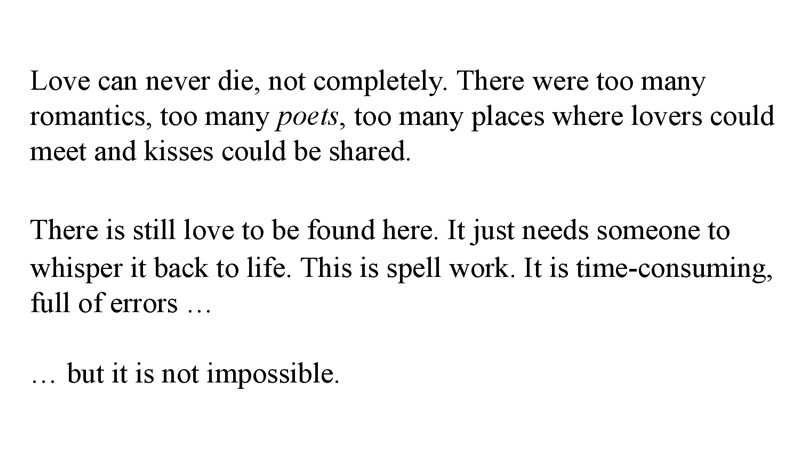
Nikita Gill, from Great Goddesses: Life Lessons from Myths and Monsters.

With that I wish you a very happy and love filled Valentine’s Day — Liz
Painting The Lips Red: Thoughts on Red Lips

Image via

Image via

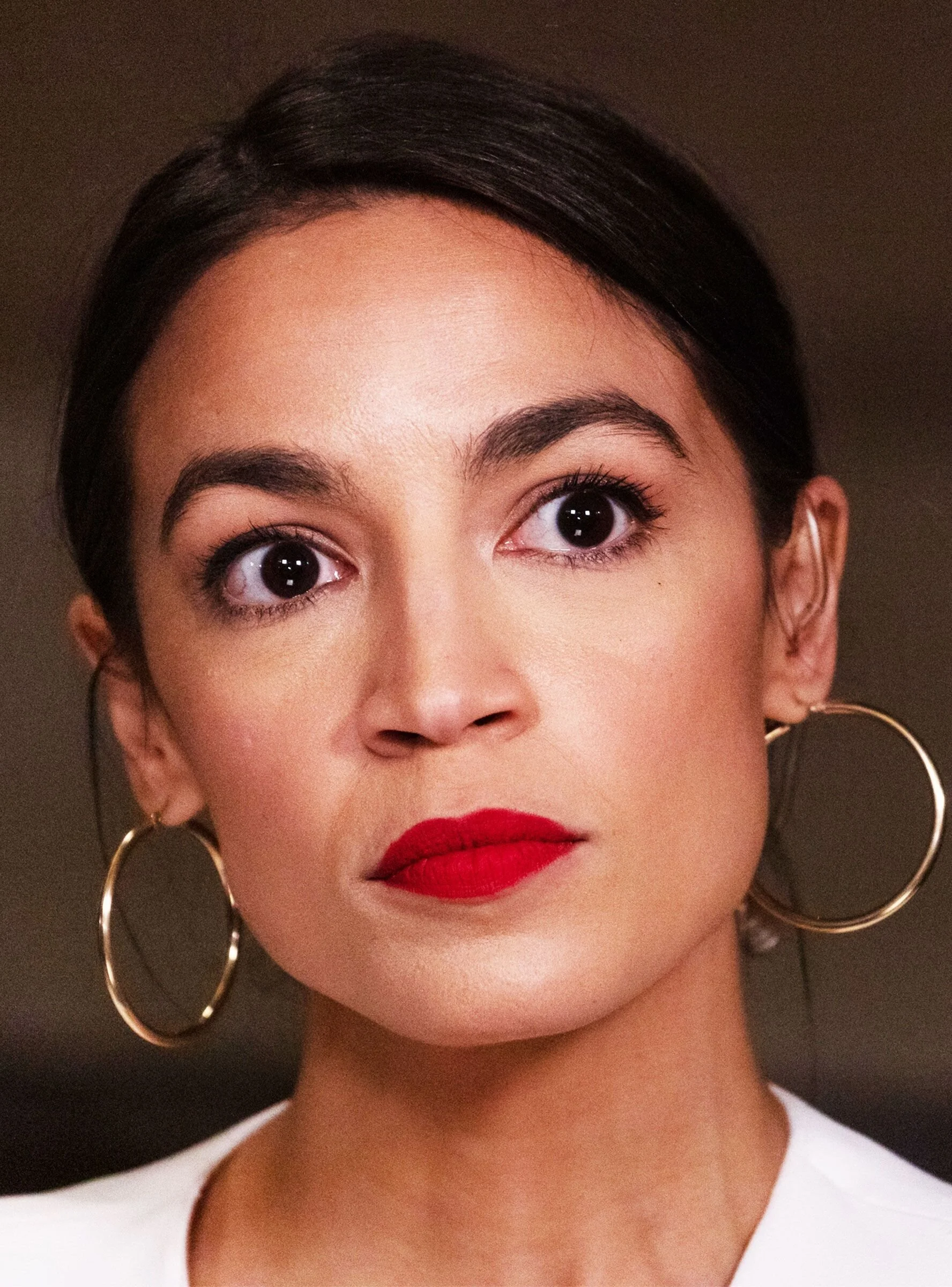
Well, with February coming to a close and Valentine’s Day already feeling like an eternity behind us, with Christmas basically a distant memory, it seems like a weird time for me to be writing about red lips. Like, Ale, we’re about to enter Spring; we have pastels for Easter and green for St. Patrick’s Day to look forward to. Why are you bringing up red lips? To which I reply, I’ve just been thinking about them a lot recently, especially after watching Alexandria Ocasio-Cortez’s makeup tutorial on Youtube, which had been sitting in my “Watch Later” folder for months. Like AOC, I love a good red lip; some of my earliest memories involve me going into my grandmother’s makeup stash and applying her signature shiny red lipstick to look like her. As a four-year-old, I thought that as an adult, I would be wearing red lipstick every day, like my grandmother, and could not wait to be an adult so I could do that.

Reality, however, is quite different. I usually reserve the red lipstick for special occasions, performances, or going out; I’ve never worn red lipstick to class or on a day that I was just “hanging out.” Usually, there was some sort of occasion, even if it was just going downtown or out to dinner. Then I started thinking: why don’t I wear red lipstick all the time? It’s not like I don’t like it; every time I wear red lipstick, I feel powerful and confident and ready to take on the world, but it’s something more. When thinking about my article on uniforms, I realized that it goes back to not wanting to stand out too much. I exist in a weird limbo of wanting to be noticed for looking cute in my makeup but not wanting to draw attention to myself. And red lipstick is quite literally a bright red attention-grabber.

Then I started thinking about why I wear makeup at all; I wear it for myself, that much is evident by the lipstick and foundation stains in my mask at the end of each day, even if no one sees the full look except my roommates and me. So, if I’m just wearing the makeup for myself, why should it matter what people think about my red-painted lips? I guess that makes sense in theory, but in practice, that’s where it gets complicated, and it all goes back to me wanting to be noticed but not wanting to stand out.

Image via

Image via

But then I think: my grandmother wears red lipstick every day, and it’s nothing out of the ordinary since we’re so used to it, so if I were to wear red lipstick often, would people just not even give it a second thought? I suppose so, but what about the first few times? That’s the hardest part, I think. When you start doing what you want or wearing what you want, people around you will notice, but that doesn’t mean it’s a bad thing. Life is too short to not wear what you want, and think of your four-year-old self who was so excited to be an adult and wear red lipstick every day. I’m sure she would smile at you widely with her lipstick-stained teeth.

Thumbnail image via

Intrinsic Care (and Why the Makeup Stain on Your Mask Should Please You)

It was such a relief at first! Barely leaving the house under the requirements of the mandatory quarantine, I was left alone with my most innate self. Even if I did leave, the good-old glasses disguise of Superman had reincarnated into its new form - masks, making me almost unrecognizable outside.

There was no need to set my alarm for 30 minutes earlier to dress up, put makeup on. The solution to a bad hair day was as simple as a “Stop the Video” button on the left hand corner of the Zoom. My cozy, home-like portrait was squashed into a rectangular frame: A well-groomed body on the upper half and a pair of legs snuggled by a pyjamas on the bottom, referencing myself to a centaur was inevitable. 

Soon the mist of comfiness cleared up, unveiling my extrinsic motivations to take care of myself, which disappeared as soon as my ties with the external drifted apart. 24-hours of leggings and t-shirts, messy buns, and especially a me, who stopped looking at the mirror, not caring what to see on it, were not the synonyms of comfort.

Image via

Image via

According to a research conducted by L’Oréal, involvement with makeup products rises as the interaction with other people increases. This research “found that some 34% of Chinese women wore makeup in February, during the peak of the lockdown - this figure has now increased to 68% in late June to early July,” when life turned back to its so-called normal state. The Youtube views of the fitness Youtuber Chloe Ting, who,as the movement of the quarantine, rose sharply in May, identified with the hopes of “glowing-up after quarantine” (Glowing to whom? Yes, the same question...), and slowly decreased to its pre-virus state as people realized that this situation is longer than a “21-day challenge.” A full circle, back to snack-fed bellies that we can hide under the frame of Zoom…

Even though I was relieved by learning I was not the only one who got motivated by her surroundings, this meant that there are even more people who perceive the process of “adornment” as something that is done for others. 

How one looks is a representation of self. Our characters are not solid; They are fluids that change and adapt, depending on the situations and people we interact with. Reminded of something? Yes, just like our fits. My location was the indoors of my home. The person I interacted with the most was myself. Yet, the girl I checked out on the tall dressing mirror did not reflect the “me.” Once a friend told me, if clothes are our armors, the girl I saw was the most defenseless me I had ever experienced, when she had to be the strongest in the midst of a pandemic, alone. 

Image via

Image via

As Margherita Cardelli of Giuliva Heritage said,  “Dressing up is who we are. It is a way to stand up for our values that definitely are not going to be put aside because of the virus. Rather, they’re felt even stronger.” I was not going to be the one who put her zest to the shelf.

That day, I shuffled my most recent playlist and put on my “to wear at a very special event” fit. When I stood in front of the mirror, I realized that I longed to illustrate my appearance on a new day’s blank page. I dressed up. I wore my mask on top of my makeup. There was no one to see it. However, finally, after weeks of neglecting the need to look like myself, there I stood in my boots in the middle of the bedroom with my makeup smudged on my mask. 

And I loved it.

WhatsApp Image 2020-11-01 at 21.26.03.jpeg

(picture by Su Karaca)


Featured image via