Biophilia, Buildings, and Beings

At its core, Biophilic design is a concept that embraces humans’ instinctive desire to connect with nature. It reflects nature and its elements, incorporating natural materials, natural finishes, and nature-inspired shapes from seashells, flowers, wings, and so on. This type of style is commonly employed within architecture and interior design. In these spaces, we often see indoor waterfalls and other water features, green ceilings with hanging plants, and large glass windows that allow for natural light to fill our rooms. 

Biophilic works have become increasingly popular due to COVID-19, which has caused individuals to stay indoors for increased periods of time and experience the outdoors less often.
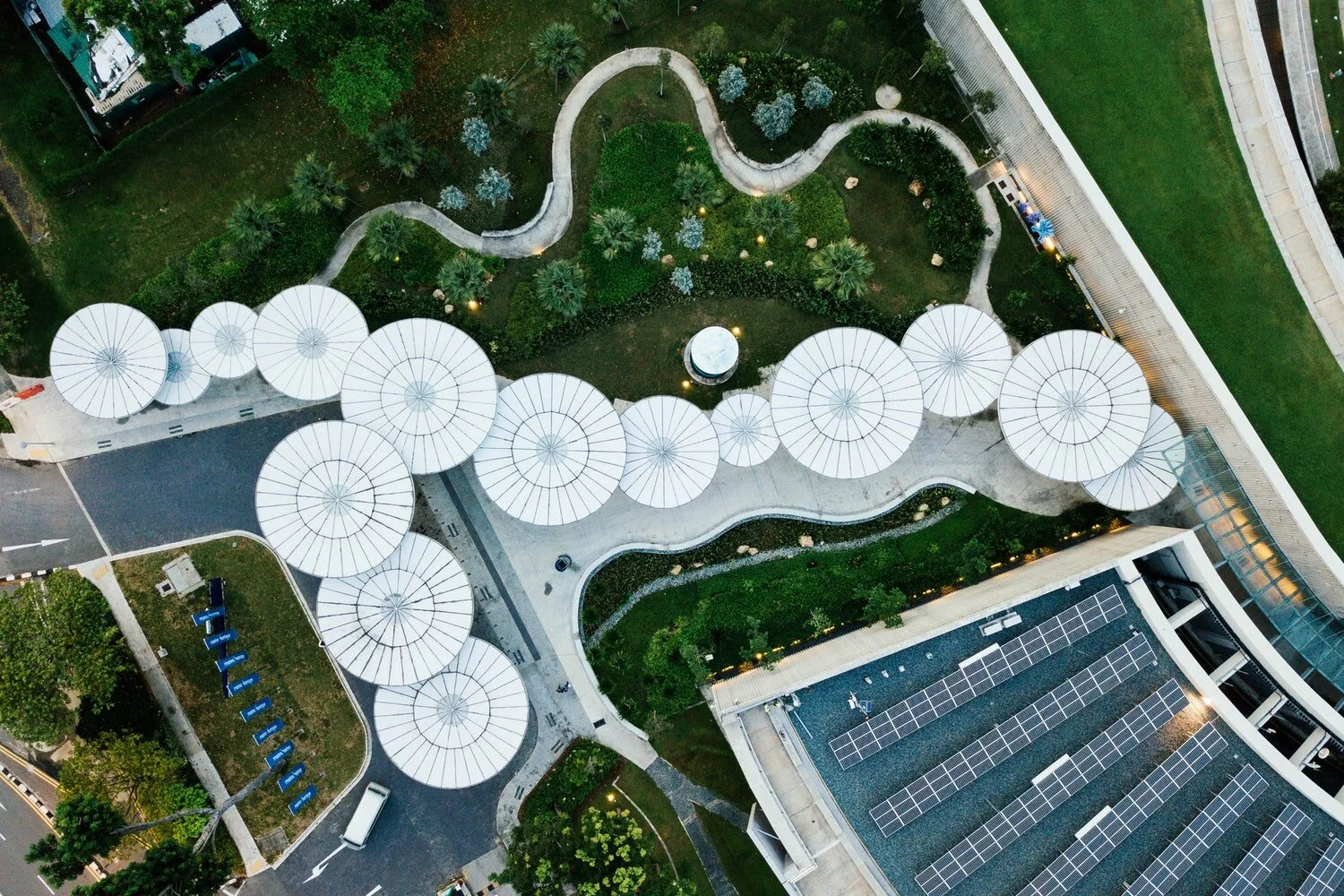
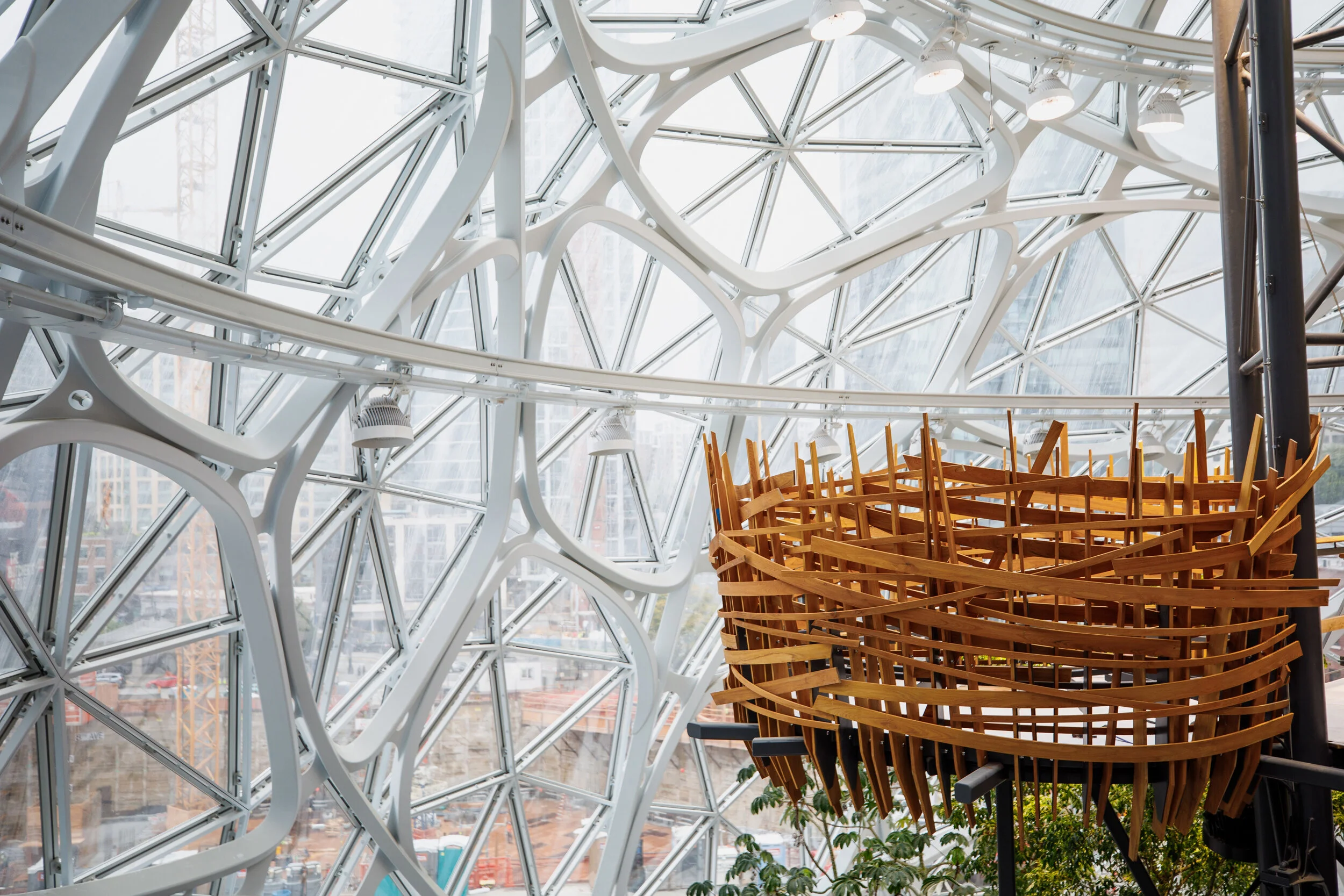
Biophilic design is an aesthetic choice, but also one that is favorable to the environment. The design’s incorporation of plants in urban environments reduces carbon emissions, increases natural biodiversity, and improves air quality. 

This architectural style benefits the well-being of those it surrounds, too. Nature’s biopsychological ability to mitigate stress is likely an evolutionary adaptation. For early humans, vegetation was a critical source of food, so the presence of greenery indicated that they no longer had to worry as much about food scarcity. 

As a result, interaction with vegetative elements is said to improve creativity, relaxation, and sleep quality. A study conducted in 1984 by Professor of Architecture at Texas A&M University, Roger Ulrich, found that patients who viewed green nature were able to recover much faster than those who looked at a brick wall instead. For us, nature has healing effects.

As Biophilic design progresses, more research has been conducted on the types of greenery that people prefer. A significant concept in the field is the “Savanna Hypothesis”, which claims that we have retained our evolutionary preference for savannas. These biomes were the habitats of our early ancestors and are where humans evolved to what we are like today. Savannas offered early humans plenty of biomass for consumption; they also had easy access to low-lying vegetation for food, ameliorating humans’ survival prospects. 

A study conducted by Virginia Lohr and Caroline Pearson-Mims in 2006 discovered that individuals find the shape of trees that flourish in the savanna biome more appealing than the shapes that characterize trees from other biomes. Another study by Balling and Falk in 2010 found that eight-year-old children prefer savannas over other types of biomes. These hypotheses could revolutionize the specific types of greenery that our designs include in the future, as we may turn to savanna-inspired elements in the years to come. 
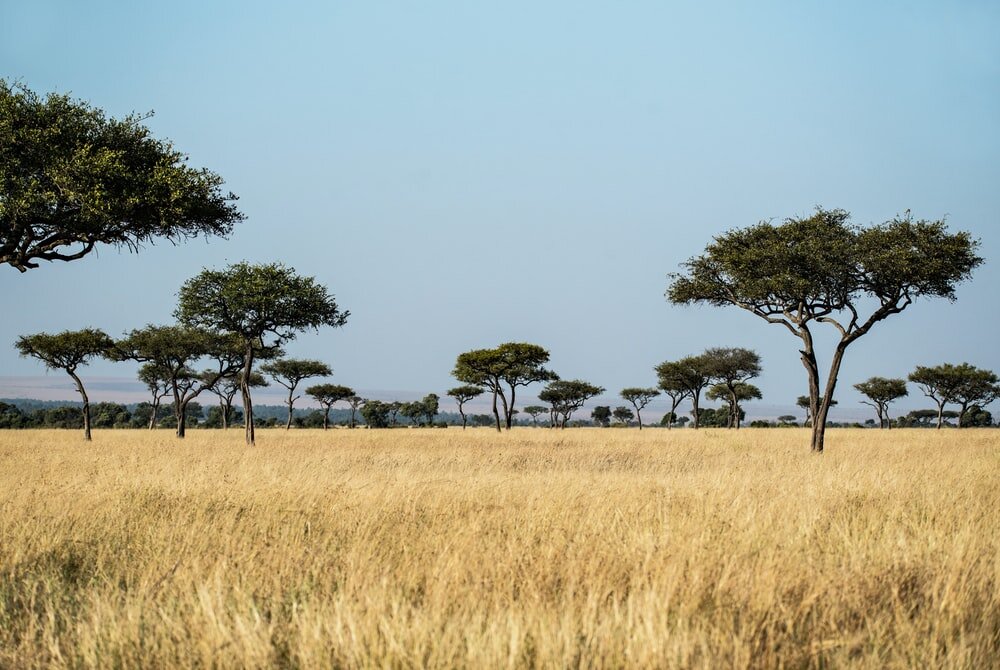
In the meantime, the world of Biophilic design offers insight into the ways we can improve our workspaces during the pandemic. It’s healthy to care for more plants in our offices, to open our windows, and to go for a walk outdoors once in a while. Embracing greenery is ultimately not just an aesthetic choice, but also one essential for self-care.


Featured image via 

The New Flower Trend: LEGO?

LEGOs are more than a pastime; they are a creative endeavor. Anyone can style any set as an imaginary world or an artistic ornament. LEGOs are an aesthetic, and a lifestyle. The Danish company has touched many different media properties throughout its years, from DC and Marvel to Harry Potter and Star Wars, and created some new ones like Ninjago and Legends of Chima, but the company’s roots lie in making “unthemed” replicas of real-life environments and buildings. Their Architecture and Art lines are the quintessential representation of the brand’s potential as an A.D.I.M.W.E.A.K., also known as an artistic decorative imaginary miniature world-building assembling entertainment kit. The company can design toys, but they can do much more than that, and really, the more artsy themes I have mentioned are just touching the surface. A brand new example of LEGOⓇ’s foray into this world of home decor statuettes is their recent LEGOⓇ Flower Bouquet and LEGOⓇ Bonsai Tree sets from the Creators collection. 

(This will be a short article, but please count how many times I write “collection,” “set,” and LEGO. Right out of the bat, I can tell you it’s many).

Image Via

Image Via

Image Via

Image Via

The Botanical Collection is one of the first of its kind for the company. If you own a LEGO, chances are you have already built small flowers and trees before, albeit with a few pieces, adjusted to make them fit the size of the set. But models made to replicate the scale of real flowers as buildable sets are truly something unique. The 756-piece bouquet set includes many botanical genus and families from snapdragons (cool name for a flower), roses (classic), and poppies (opioid-free), to daisies (very delicate), and asters (daisies again?) and can be arranged based on the personal preferences of the owner, especially as the stems are length-adjustable and the petal-pieces are of different colors altogether. But if you want, you can buy red roses and tulips separately from the main set for that romantic date gift (for those LEGO lovers, of course). And the 878-piece bonsai tree set is a twist on the millennial practice of pruning and shaping the small specimen, offering a challenging experience for customers, and features two optional leaf colors: perennial green and cherry blossom pink. It also comes with instructions for both a rectangular pot and a display wood stand so the whole ~bonsai aesthetic~ is achieved to its fullest.


LEGOⓇ designed this collection with adults as their target audience in mind. In their official press release, they mention their 2020’s global LEGO Play Well Study as a source of inspiration, seeing that 73% of the adults that answered the survey mentioned they look for ways to distress weekly, and that 81% of them said that playing with LEGOs helps them achieve a level of relaxation; all as a trend created by the pandemic. In other words, LEGOⓇ understood the importance of their brand, the current consumer environment, and the engagement that their sets have with their customers, including older LEGO lovers. Thus, it makes sense as to why LEGO decided to lean into activities that are naturally relaxing outside their LEGO form like picking flowers to display in one’s house, or cutting and caring for a bonsai. As design lead of the LEGO group, Jamie Berard, expressed in the press release, “as adults look for new ways to switch off and relax, we’re delighted to be able to help them seek solace from their busy everyday lives as they immerse themselves in creating these beautiful botanical builds.”

Image Via

Image Via

Something interesting to note is that within collections with VIDIYO and Hidden Side, LEGOⓇ has been diving into creating lots of different original set themes that make use of AR components, providing an immersive experience for kids to blend concrete built environments with superimposed digital characters. However, their first release of 2021 stirs technological innovation to the opposite direction, one that focuses more on production since the flower bouquet and bonsai tree collection pieces are manufactured using sustainably sourced sugarcane as a basis for their bioplastic, showing the company’s ability to continually innovate and sell something for every kind of taste. 

In the end, the Botanical collection is another aesthetic addition to LEGOⓇ’s assortment of artistically driven, adult-minded sets with decorative potential that serve as a fulfilling de-stressing activity for those LEGO builders who seek something different, and something beautiful and challenging at that.  

If you want to snag the collection for yourself, you can go back to the text and click on “bouquet set” and “bonsai tree set.” At the time of this writing, all sets are sold out in the official website, but they are available to the public in other retail stores. And if you want to read more about them, check out this article.


Cover Image Via

Source: https://www.lego.com/cdn/cs/aboutus/assets...

Your Travel Guide to the Canadian Rockies

It can be difficult to taste the great outdoors while living in Chicago. We have skyscrapers for mountains, aggressive squirrels for wildlife, and vast puddles left from shoddy drainage masquerading as lakes (apart, of course, from Lake Michigan). Over the summer, I escaped to the Canadian Rockies, the amicable equivalent of Yellowstone from our neighbors up north, and visited the legendary quartet of parks known as Banff, Jasper, Yoho, and Kootenay. Should you choose to escape Chicago and take a four hour flight to Calgary, here are some tips, tricks, and views that will make your time worthwhile.


1. For hiking, the best time to visit is June through August. I made the mistake of going in mid-September and was ruthlessly buried by clouds, rain, and 55 degree weather that turned below freezing after a two-hour summit. For summer travelers, make sure to bring warm and versatile clothing, as temperatures fluctuate vastly depending on altitude. For skiing, anytime in the peak of winter should suffice. For living arrangements, be sure to book as early as possible. Popular campgrounds and cabins are snapped up quickly.

2. National Parks aren’t really known for fine dining, so you may want to stack up on your favorite variant of CLIF Bars. However, really good food can be found in the town of Banff. Try the Grizzly House, which specializes in cheese, meat, and chocolate fondues. I played it relatively safe and ordered beef, bison, boar, and venison fondue, but for those with a more exotic taste pallets, grizzly, rattlesnake, and alligator are also available.

Canoe on Lake Moraine (1 of 1).jpg

A blue kayak on Lake Moraine

3. Take advantage of the proximity of all four parks, and spend a couple days in each if you have the time. Be creative in your mobility. Rent a kayak if you can. There are locations and views that are only accessible if you’re willing to kayak a couple hours for them. Sometimes, the most difficult of journeys result in the most rewarding of sights.

The Canadian Variant

All images courtesy of Justin Pan.

Your Ultimate Summer Travel Bucket List

I've had a magazine sitting on my shelf for a while now, called: National Geographic-100 Places That Will Change Your Life. It's been there for two years, and I don't know why I still have it, when I haven't read a page of it. Now, with spring in the air, it feels like the right time to book summer plans. I made a list of places I would love to visit, with selections from the magazine, and a few additions. Under every blurb there's a link to a website recommended by National Geographic with travel logistics.


Africa

1. The Nile River, EGYPT

Any person who has seen a nature documentary about Africa will gush about how you must visit Africa and how it's absolutely gorgeous. It's a land of brilliant colors, from the earth to the sky. Cruise on the Nile and learn about Egyptology. I certainly need to visit the site that made so many cameos on my history pop quizzes. 

More info here.


2. Makgadikgadi Pans, BOTSWANA

This 6000-square-mile landscape was once a salt lake that evaporated millions of years ago. You're guaranteed to see some baobab trees, meerkats, and brown hyenas; during the wet season in winter you might even witness a zebra migration.

More info here.


3. Sossusvlei, NAMIBIA

These rusty-red and orange sand dunes are in the Namib-Naukluft National Park, part of the oldest desert on earth. National Geographic says that it takes two hours to summit the biggest dune. I wonder how long it takes to run down the side of one?

More info here.


Antarctica

1. The South Pole

National Geographic introduces the idea of skiing to the South Pole. You'll bus from Drake Passage to base camp, and ski from the Antarctic coast until you cross the Polar Plateau, journeying 700 miles in 2 months! Brrrr.

More info here.


Asia

1. Qufu, CHINA

The Shaolin Monastery is respected as the sacred ground of Buddhism in China, and esteemed institute for the kung fu discipline. The temples were built in the fifth century, and are situated upon the quiet green mountains of Song Shan in Henan Province. Shaolin monks typically begin training at eight years old, meditate and recite scriptures in the morning, and eat zhai fan (Buddhist vegetarian meals). You can visit the Qufu Shaolin Kung Fu School in Shimen Forest National Park, where they accept students of all skill levels for weekly or even yearly stays! 

More info here.

2. Mount Fuji, JAPAN

Mt. Fuji is beautiful any time of year, but especially in the spring, when the white snowcap sets against a precious blue sky and pink-petaled cherry blossoms. The magazine suggests you climb the volcano overnight, and relish in the fresh mountain air as you watch the sun rise over Tokyo. You'll be in high spirits and would likely work up an appetite, so pack a bento beforehand!

More info here.


3. The Himalayan Foothills, NEPAL

Trek to the sublime Tibetan "roof of the world," where you can join Habitat for Humanity to clear rubble left from the earthquake on Apr. 25, 2015. You will also help skilled construction workers in tasks such as mixing mortar and cement, carrying and soaking bricks, and weaving bamboo. The twelve-day program this year partially conflicts with our final exams, but the experience is essentially a crash course in Nepalese culture.

More info here.

4. Pune, INDIA

If you've been practicing yoga for eight years or more, National Geographic refers you to the Ramamani Iyengar Memorial Yoga Institute. You might consider attending classes at this elite yoga institute to stay fit, while you're cramming all those savory samosas on your trip! 

More info here.

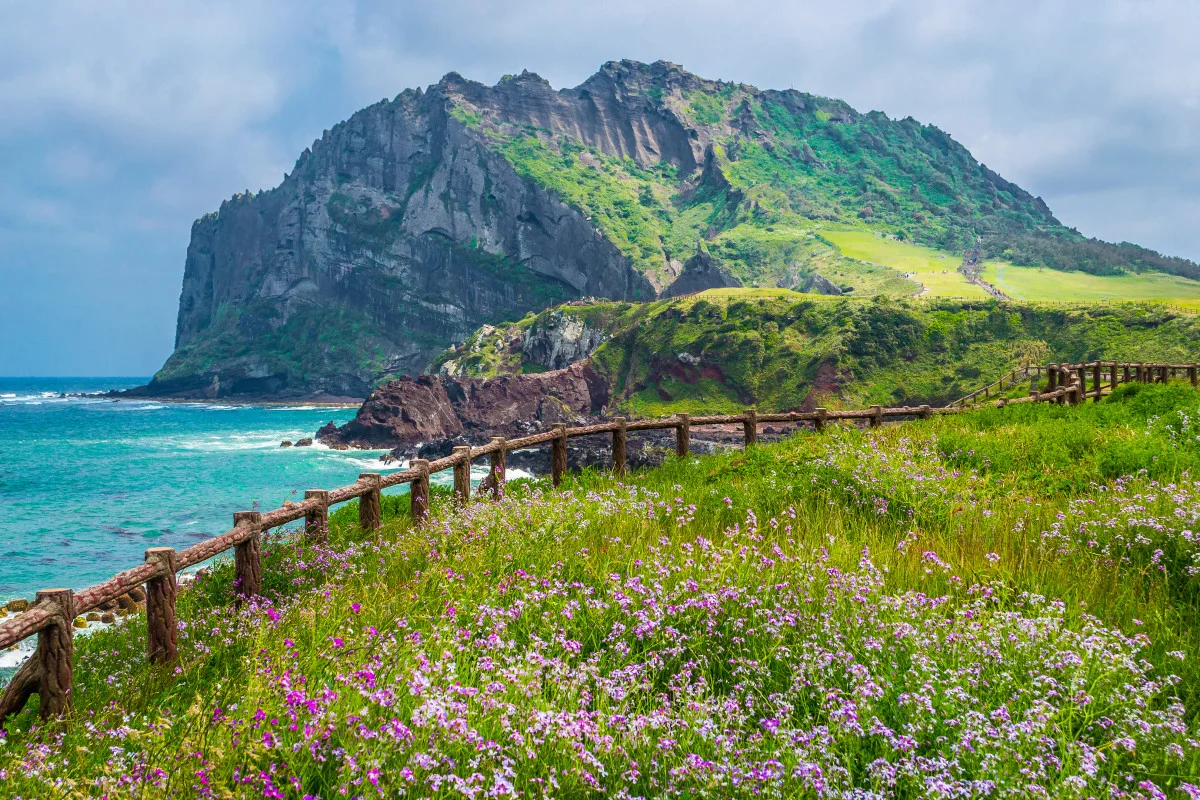
5. Manjanggul Cave, SOUTH KOREA

The Manjanggul Cave is a UNESCO World Heritage site located on Jeju Island, a retreat hotspot known as South Korea's Hawaii. The cave is a lava tunnel glittering with stalagmites, and there are nocturnal creatures such as bats zipping in the darkness, making for an adventurous journey.

More info here.


Australia

Photo by MaytheeVoran/iStock / Getty Images

Photo by MaytheeVoran/iStock / Getty Images

Experience farm life in rural Australia through the World Wide Opportunities on Organic Farm (WWOOF) program. You choose from over 1,500 specialty host farms (strawberries, dairy, etc.), and perform farm chores (weeding, cheesemaking, etc.) for four to six hours per day, in exchange for free board and meals. You join WWOOF as a certified volunteer, getting hands-on experience and learning farmers' insights, such as predicting weather changes!

More info here.


Europe

1. Lofoten Islands, NORWAY

When northern Europe meets the northern lights, you know you're going to have a good time. The Lofoten Islands yield a high altitude and clear skies for the best views of the aurora borealis. You can board the Hurtigruten ships' "Astronomy Voyage" cruise, where you get aurora lectures and visits to the Northern Lights Planetarium. If you don't spot the northern lights on the cruise, the trip is free! This is definitely one for the bucket list. 

More info here.

2. Neuschwanstein Castle, GERMANY

What's it like to be inside a castle? New Swanstone Castle perches atop romantic mountain scenery. It is a majestic 19th century Gothic palace with a white limestone facade and deep blue turrets. The castle bears resemblance to the castle in Disney's 1950 classic Cinderella, and Walt Disney's visit here before his California theme park's construction inspired Sleeping Beauty's castle at Disneyland. Besides inspiration, I'm also ready for heaps of potatoes and sauerkraut! 

More info here.

3. Route 1, ICELAND

This 832-mile ring road at the perimeters of Iceland takes you through the country's landscape. On just one road trip, you get to see ice-bergs, sea cliffs, volcanoes, and lava fields.

More info here.


4. Pembrokeshire Coast Path, WALES

This 186-mile trail runs from Amroth in the south to St. Dogmaels in the north. Bike by beaches, cliffs, coves, and estuaries! Doesn't this look like a scene from Harry Potter?

More info here.


North and Central America

1. Death Valley, U.S.A.

Camels, birds, and mastodon-like prehistoric animals used to inhabit this place, before the rise of the Sierra Nevada mountains turned the land into a harsh environment with a scary name. During certain times of year, this California national park offers ranger-led hikes, where you can examine fossilized tracks like a paleontologist. My high school paleontology expedition to Barstow was one of the best experiences of my life, as I salvaged sandwiches from flies and awoke in the dead of night to a brilliant moon nestled among the world's largest display of stars. Definitely visit here and enter a lottery for tours!

More info here.

2. Oaxaca, MEXICO

Come with your hungry belly to a Mexican cuisine cooking school, where you'll learn how to make a globally beloved cuisine that's been recognized as a UNESCO Intangible Cultural Heritage. National Geographic recommends two schools: Casa de los Sabores (half-day classes ending with lunch) and Seasons of my Heart (daylong classes, market visits, culinary tours). I hope I'll get a pleasant surprise to discover tamales, singular utensils, and more in true Mexican-style.

More info here and here.

3. U.S. Space and Rocket Center, U.S.A.

The Adult Space Academy is a three-day program in the U.S. Space and Rocket Center in Huntsville, Alabama. As someone who's interested in astronomy, I've always, always wanted to see the nitty gritty inner workings of the space industry. The academy offers opportunities for hands-on work, like building and launching model rockets, and running flight stimulators!

More info here.


4. Yellowstone National Park, U.S.A.

Yellowstone is known as America's flagship national park. Enter the natural kingdom, where earth's wonders are blown up to scale, and marvel at hot springs, geysers, and megafauna. 

More info here.


South America

1. Mendoza, ARGENTINA

East of the central Andes, the Mendoza region is known as Argentina's Napa Valley. The region is rich with bursting Malbec grapes hanging from vines. At the Vines of Mendoza cooperative, you can taste wine from barrels and blend your own varietal wine. Aspiring oenologists may even choose to buy some acres of land to grow grapes. 

More info here.

2. Atacama Desert, CHILE

A test site for NASA Mars rovers, the Atacama Desert is often described as closely resembling the surface of an extraterrestrial planet. It is a 600-mile long strip of desert between the Pacific and the Andes Mountains. Visitors stay in the bustling village of San Pedro de Atacama, and make day trips into the desert. You will see weird and alien-looking geysers, salt flats, canyons, sand dunes, and volcanoes. The best part is, due to the lack of pollution, high altitude, and dry air, National Geographic names it one of the best places in the world to stargaze! 

More info here.


Feature gif via