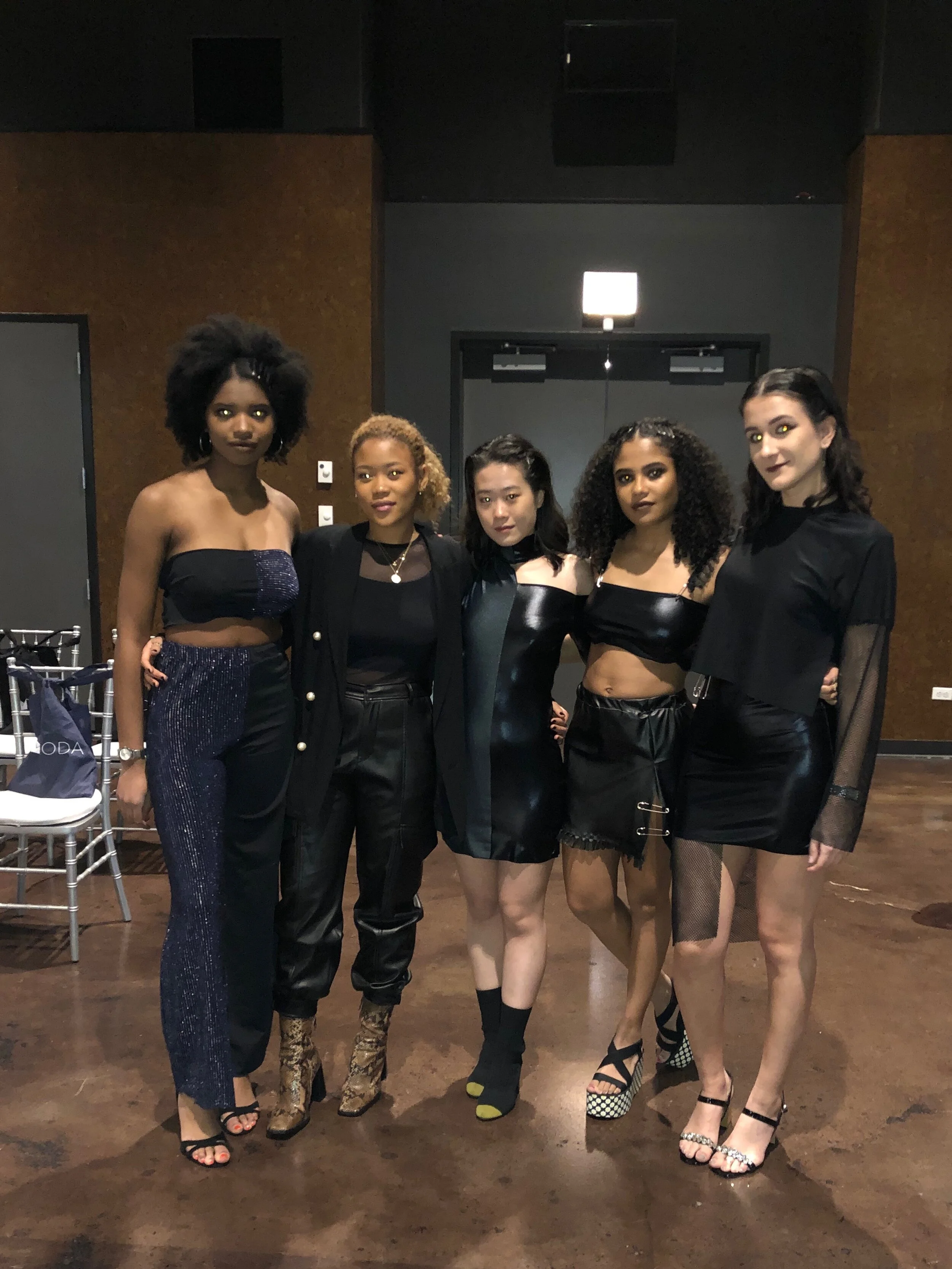
MODA Designer Profile: Kiki Apple

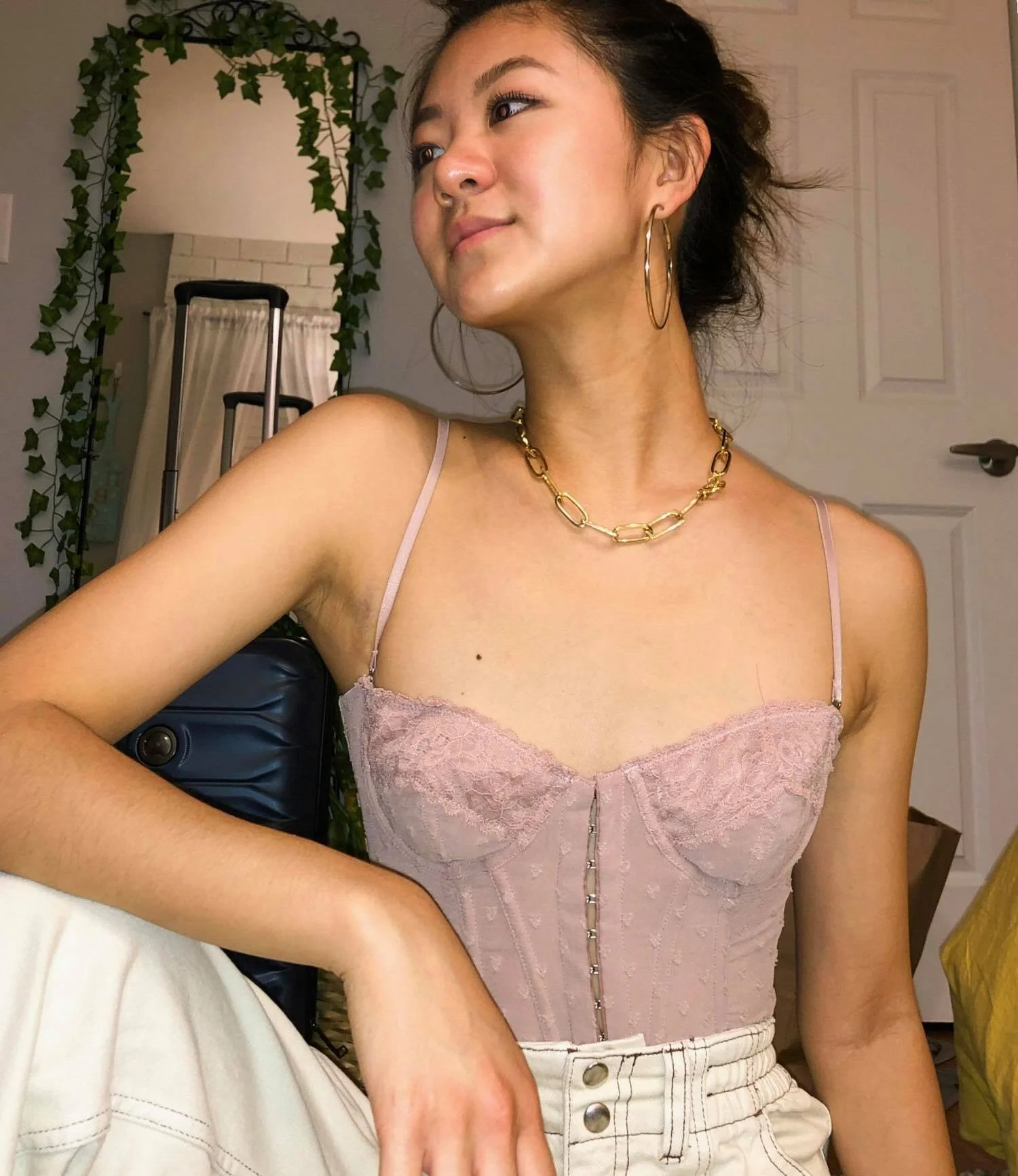
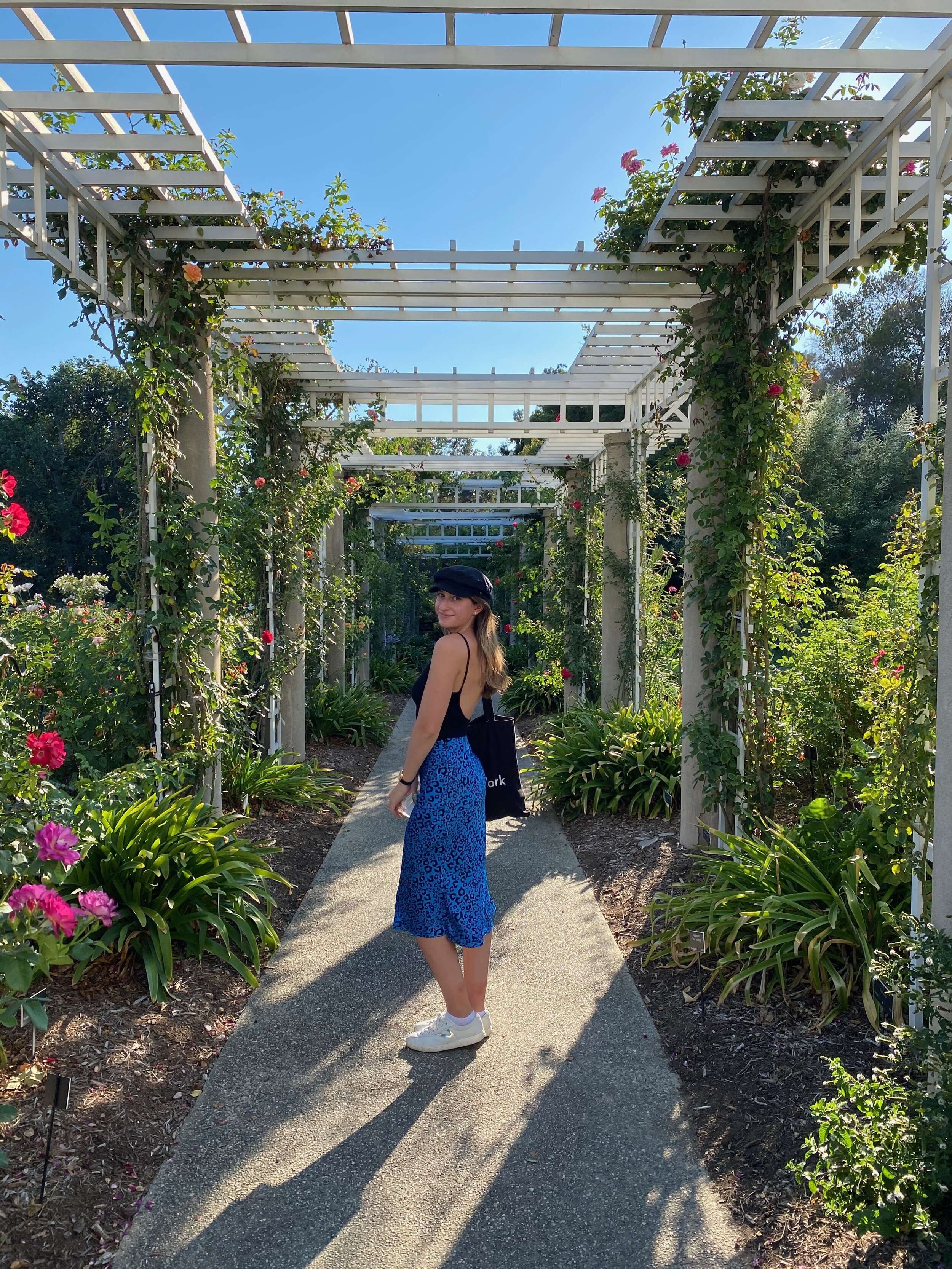
My name is Caroline Apple, but I go by Kiki. I am a second year majoring in Computer Science and Visual Arts. This is my second year designing for the show. I love anything art and fashion related, but I also totally geek out over data structures and AI. I cannot wait to see our show this year; I'm super excited.
IMG_8371.jpeg

What are your sources of inspiration?

My collection takes inspiration from trends in Argentine fashion. Most of my style in general is inspired by Argentine fashion, but my collection particularly this year and last year are very influenced by the trends I see popping up down there. I am also very fascinated by cows and all of my pieces involve some kind of cow print.

Mood Board

Mood Board

What is your design process like?

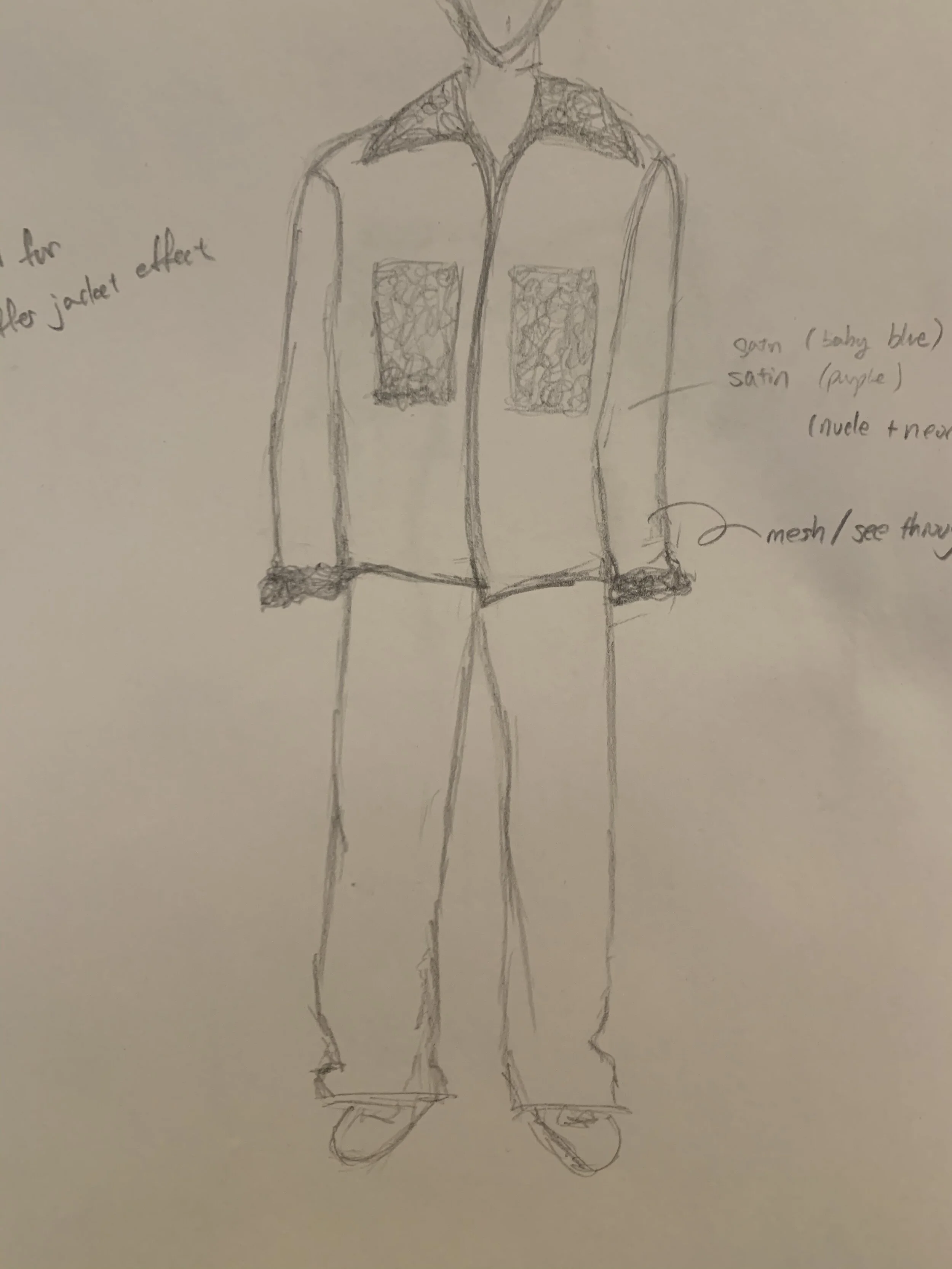
I look at pictures of cows and study their spots. Then, I pick the ones I want, and I make a dress that contains those prints. I also scroll endlessly through pinterest.

Has quarantine changed the way you design/process?

No, not really because I would research Argentine fashion trends online anyway and talk to my friends via Whatsapp, so that has not been affected by the pandemic.

Who do you imagine wearing your clothes?

Me.

If you could give yourself any advice on the design process, what would you say to your younger self?

Start making the clothes earlier because you always are stressed right before the show.

What’s your favorite aspect of designing?

Drawing the cow spots hehehe.

How is your collection this year different from the last?

Last year’s collection took from a few different Argentine fashion trends such as mesh, sparkles, or faux leather. I made one dress in particular that had major sexy cow vibes, and it was by far the most fun and unique piece to make out of the collection. So, I decided to stick with cows for this year's new collection as the primary cohesive quality between the looks.

IMG_8818.jpeg

What are you hoping to portray through your collection?

There are a lot of things I want to portray in my collection. I think the first would be that cows are extremely beautiful animals, and the second would be my critique of the cattle industry (which I do not support). Honestly though, I just like making cool fun clothes that express who I am.


Imagines provided by Kiki Apple. Thumbnail by Vivian Li

MODA Designer Profile: David Chen

175159819_298319431732633_4979825263269051701_n.jpeg

With the MODA fashion show rapidly approaching, MODA blog is here to share all the details regarding the true masterminds behind the artistry of the show. MODA Designer Profiles is our one-one-one interview series with this year’s class of designers, and for this instalment, I sat down with 3rd year Econ and Creative Writing David Chen, who is the current Design co-Director for this year’s show to briefly talk about this year’s collection, his broad design philosophy and his directorial eye for the future of MODA’s design teams.

Let’s start with this collection. I’d love to hear your kind of elevator pitch for what you intend to send down the runway! What are some sources of inspiration for your collection? What are the big ideas? What are the ~*Vibes*~?

Have you ever seen those pictures of people who can fit a year’s worth of trash in a jar? That’s kind of where I took inspiration from…

I feel like a lot of people were working on or focusing their collections on sustainability and I guess I’m on that train as well. I was watching The Politician, and that’s where the idea first came from, and I thought about how I could expand it into two more looks. So one is inspired by a metal straw and the third…I still haven’t come up with a concrete design, but I may want to veer towards a more excessive look.

 
175833988_198873961839860_2131842781886716824_n.jpeg
174267374_373599100853498_6838656561249505518_n.jpeg
 

Broadly, I’m curious if you have a design philosophy or if you think of a certain kind of person when you put together a collection?

There are a lot of people out there who think that wearing expensive name brand things is considered fashion and then there are a lot of people who are afraid of fashion because they see these people - not necessarily gate keeping - but they begin to see fashion as this exclusive, name brand thing. I think one of the biggest things for me this year is that: Every piece I've made, I’ve used clearance fabric, even like a hat I made is made from a pair of old jeans. Fashion isn’t all about how much you can spend on your outfit, I think it’s super cool you can go into a thrift store and take a few pieces that nobody wants to wear and make them into something that everyone wants to wear.

It’s so annoying when people think fashion is just being able to buy full-price luxury item, and that’s just what drives me to make clothes.

Can you describe your collection in 3 words:

Scrappy. Unconventional. Excessive.

I want to show that fashion can be there very out there and very excessive and still very accessible.

 
David’s Moodboard

David’s Moodboard


With this year’s show being conducted under unprecedented circumstances, I’m curious to hear what unique challenges you find come about when designing under a pandemic?

I already have a procrastination and time management problem as is, and I guess with a pandemic, you’re even less motivated to just sit down and do what you love and you’re just trying to get through what you need to do. So that’s been a big challenge.

It seems like what pulls me through this year has really just been been celebrating each step that I make towards the final product. Some of the other designers were questioning if they could even design this year, given the pandemic, but David and I really just want everyone to do their best. It’s all about celebrating every little victory that you have.

175159314_1074249653085299_1417368652178156609_n.jpeg

You’re in a very unique position as design director, with so many young designers looking up to you as their mentor. I’m curious as to what advice would you give a new designer this year, maybe even what advice you would want to give to your younger self about the design process? What challenges to look out for or what moments to soak up, stuff like that.

I’ve noticed that one of the most challenging things is just starting. You have to spend a lot of money to acquire patterns and fabrics and stuff. For me, a lot of the time, it’s the fear of messing up and then having to spend more money or having to scrap a whole idea and start over from scratch. Not only are you spending time, but you’re also spending money. I think this year, I’ve learned that mistakes are beautiful. One of the best things about constructing garments is that you will inevitably run into something like your needle snapping or like something not coming out the way you wanted it to. But in that moment, you can choose to readjust very quickly. When the end piece comes out, it’s usually better than I would have ever expected. I think I would want designers to realize that there’s beauty in adjusting and just letting your intuition and your hands and the garments speak in the very end.

I think I would want designers to realize that there’s beauty in adjusting and just letting your intuition and your hands and the garments speak in the very end.

What are you looking forward to most about the show?

Oh my Gosh, I’m so excited. With the show being virtual, more and more people are going to be able to watch it. I think that’s been a problem that MODA”s tried to address in the past, where the show has been unaccessible to a ton of people, with things like ticket prices or how quickly tickets sell out, but with this year being virtual, it’s great that so many people can watch it.

I’m also excited for so many of the new designers. With the experience I had last year, just standing there having the pieces you worked so hard on being displayed is such an incredible experience and I can’t wait for everyone else to have that.

All images courtesy of David Chen

MODA Designer Profile: Agnes Palmstierna

I had the wonderful opportunity to sit down with Agnes Palmstierna, a second year in the College, currently undecided on her major but leaning towards economics and gender and sexuality studies. Here’s what Agnes had to say about her design experience.

Have you ever done fashion design work before? What made you want to be a part of the process?

This is my first year designing for MODA, which I’m beyond excited about! Seeing the show last year was a really fun experience and made me want to be a part of it. I didn’t have a ton of sewing or designing experience coming in, but I’ve always experimented with designing, and began sewing my own clothing since I was pretty young. It was super exciting for me to have the opportunity to take on a bigger project to further that passion!

MODA_MOOD.jpg

What are some of the most challenging and rewarding aspects of the process?

The thing I didn’t really anticipate was translating visions into actual pieces that look like what you had in mind, especially when you add in all the materials. Some things don’t really translate in the way you would imagine, but that’s also kind of one of the most satisfying things, like trying to make it work and experimenting with fun fabrics and patterns. The path from design to final product was not as straightforward as I thought it would be, and there was a lot of trial and error, but at the end of the day, I’m happy with the work I’ve produced.

Do you have a design philosophy?

My thought process has always been to try to produce things that make me happy and have as much fun with it as possible. When I look at my work, I want to feel happy, even if that means not getting too bogged down with the specifics, and more so thinking about how the process has brought me joy. 

MODA_5LOOKS.jpg

What are some sources of inspiration for your collection?

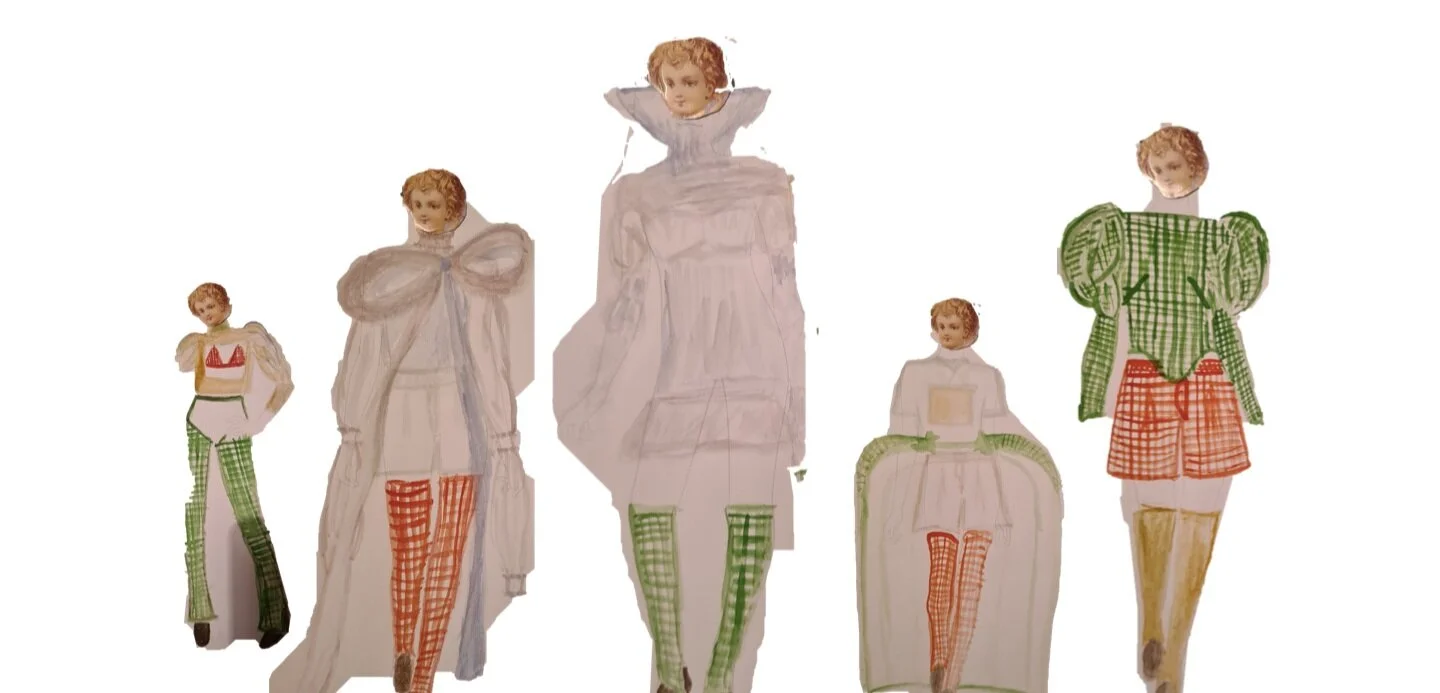
It started with this checkered pattern fabric I found, it was my grandmother’s old fabric, and she was really into sewing, so I owe a lot of it to her. I really liked the fabric, and it kind of gave me housewife vibes, so that’s where it started. From there, I began thinking about how people were dressed in different time periods, especially women. I drew inspiration from 18th-century costume designs, and also thought about what men wore during those times. It was interesting to compare the two and mesh them into something new.

I was watching a lot of costume dramas at that point, and really liked the way that younger boys dressed. I was also super into equestrian style attire and thought a lot about how I could incorporate almost a horseback riding theme into my designs. It was a mix of different eras of very distinct clothing, especially the distinction between men’s and womenswear, that I’m super excited for people to see!

MODA_LOOKS.jpg

Who do you have in mind when you’re designing?

I would like to design for people who aren’t too worried about what they wear, and would rather people laugh at them in the streets than wear something boring. I think I would want people who don’t take themselves too seriously to put on my clothes and feel like they’re being fun, having a good time, and putting themselves out there.

What are you looking forward to most about the show?

I’m really looking forward to seeing what everyone else has done, and especially since it’s been virtual this year, to see what people have come up with from their mood boards and how the process has worked for them is the thing I’m most excited for.


Header graphic by Vivian Li
MODA Designer Profile: Anya Wang

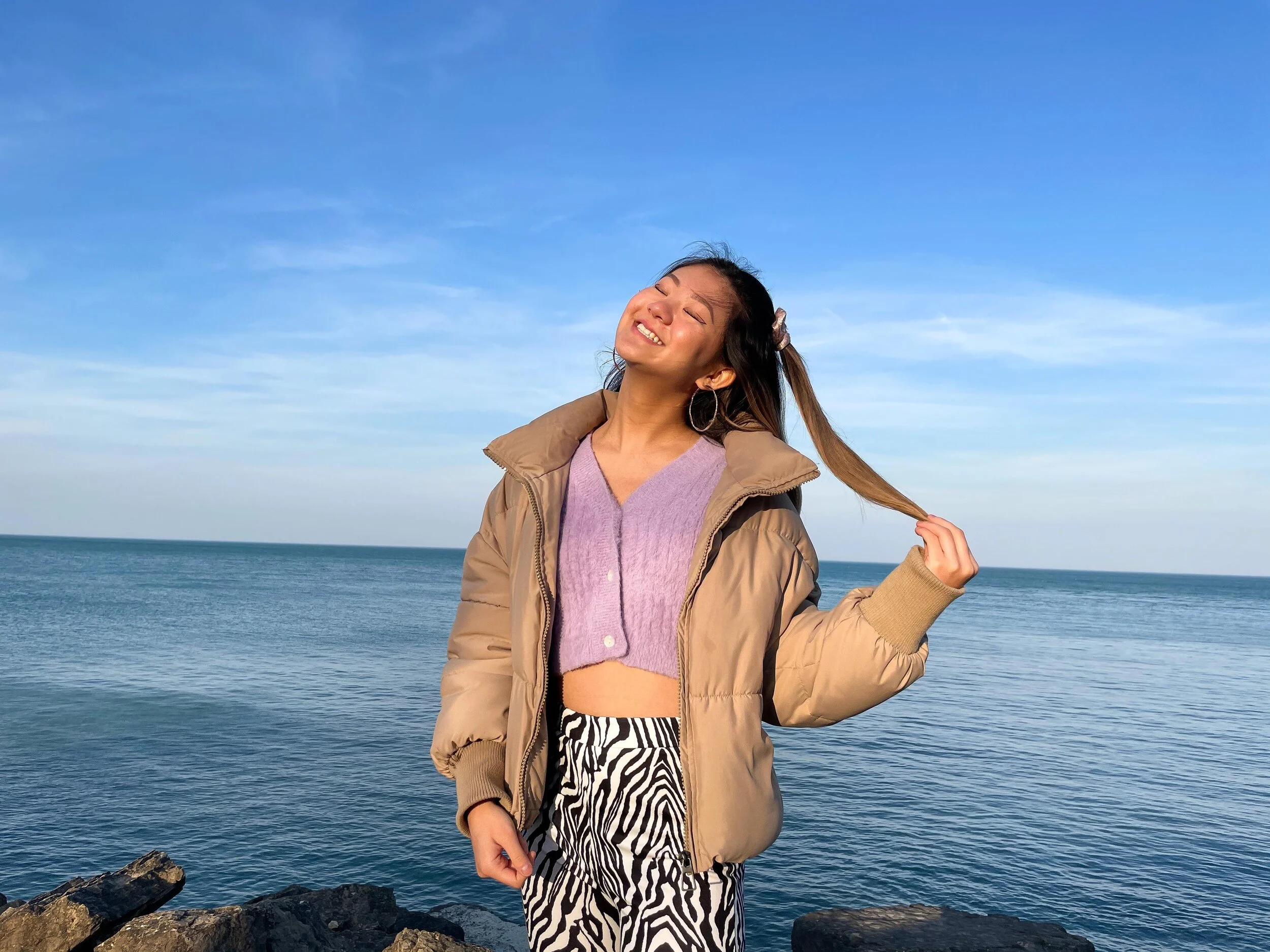
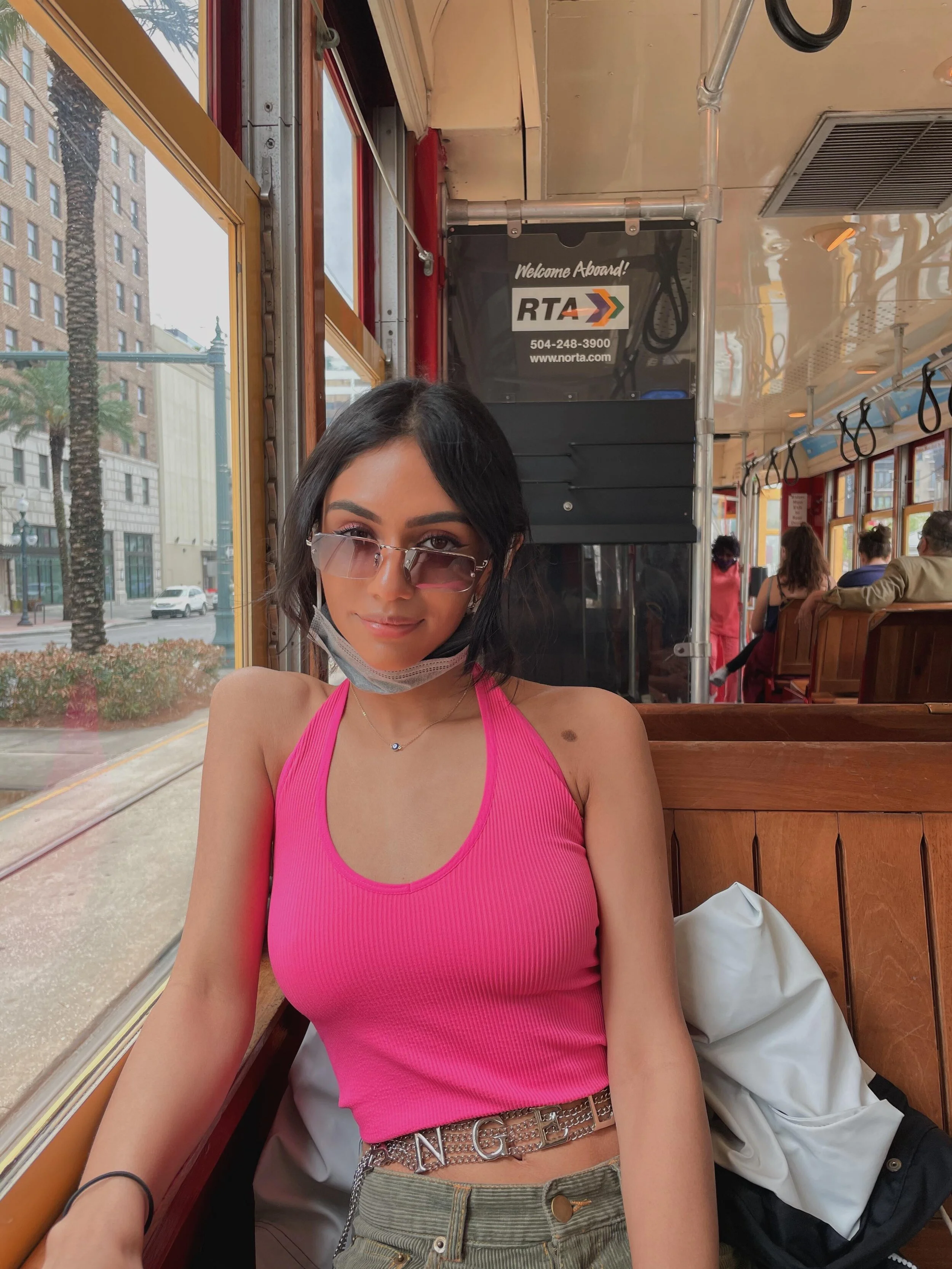
Anya Wang is a third-year pre-med student majoring in Biological Sciences with a specialization in endocrinology. She is a first-time designer for the MODA show, and she shared with me the inspiration for the line of business wear that she designed.

What made you want to be a part of this process?

When quarantine started, I felt incredibly bored at home and started turning to various arts and crafts to keep myself and my hands busy. I tried knitting, various DIYs, painting, and sewing. I invested in a sewing machine and started with basic alternations of clothes that didn’t quite fit me well. I really loved creating clothes that I finally felt comfortable wearing and clothes that I actually liked, rather than clothes that merely did the job. I thought designing for the MODA show would be a great challenge for a newbie like me, and I loved seeing the collections created last year, so I wanted to be surrounded by other designers during this creative process.

anya 4.jpeg

Have you done fashion design work before?

No, I’ve never done any fashion design work before. However, I’m incredibly excited for this challenge, and although it’s taking lots of time and effort to work through the specific details of creating a design, I love all of it and use it as an outlet from the stressful work environment.

What are some sources of inspiration from your collection?

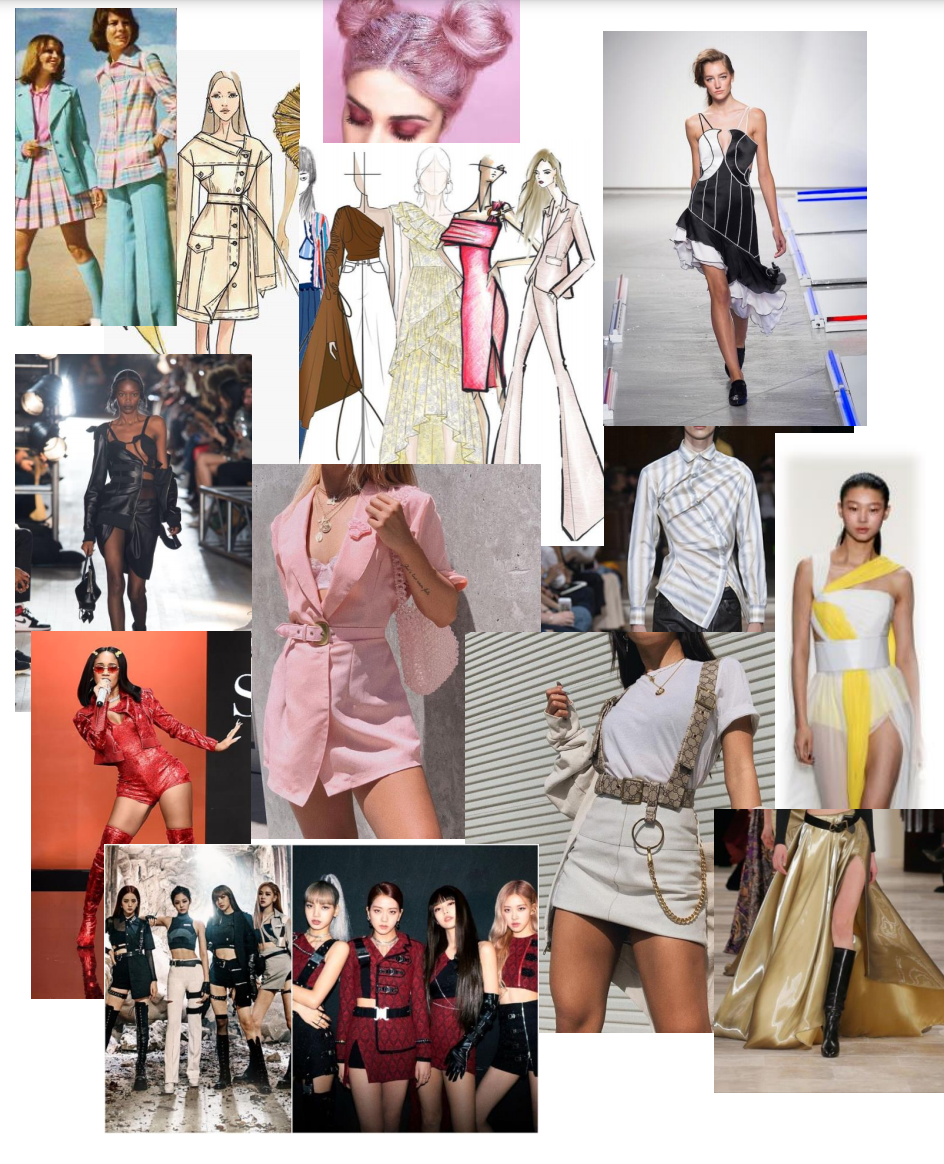
I wanted my collection to focus on the border between “business wear” and “casual fashion,” with a mix of fun. Business wear (i.e. blazers, trousers, professional-looking blouses, ties, etc.) has been a great staple in the workplace, and although I really enjoy certain aspects of this style, such as how clean it looks, it can also be incredibly boring and bland. So, I wanted to incorporate some fun and potentially spicy characteristics into my collection to push back on the strictness of business wear. Additionally, because most business wear clothing has muted and neutral colors, I wanted to create contrast by having my collection be bright and colorful.

Anya’s mood board of photos that she used as inspiration for her designs.

Anya’s mood board of photos that she used as inspiration for her designs.

What are some of the most challenging and rewarding aspects of the process?

I think some of the most challenging parts of this process are knowing my limits and physically transforming my idealistic designs into reality. I’ve drafted multiple versions of potential outfits to create, and while they look great on paper, I tend to quickly realize when I begin to think about how I’m going to actually create these pieces that my designs are way beyond my current clothing design and pattern-making capabilities. Throughout this process, I’m really getting a sense of what I’m capable of doing, and so I think the most rewarding aspect of this process is pushing through a very difficult idea, and finally finding a way to bring it to reality.

What are you looking forward to most about the show?

Although this show is going to be very different from the previous shows MODA has had, I’m most looking forward to seeing the collections of all the other designers and experiencing how creative some of my peers are.

Describe your collection in three words.

Pushback on businesswear.

All images courtesy of Anya Wang. Header graphic by Vivian Li.

MODA Designer Profile: Arjun Kilaru

Over the weekend, I had the pleasure to sit down and chat with Arjun, second-time designer and a long-time friend, in the little seating area outside of Philz Coffee. Social distance style. Excuse the relative colloquialism — we had a fun conversation over hot chocolate!

Introduce yourself! 

I am a second year from the Bay Area, California, currently majoring in Economics, Statistics, and Sociology – trying to make that work. Besides being a MODA designer and stylist for the magazine, I’m into mixed martial arts, jujitsu, and I was on the wrestling team. I’m also the co-founder of MODA Podcast and Midway Radio – 9:00 PM, me and my friends DJ every week, different types of music, different kinds of people, come through if you like.  

arjun.jpg

What are some sources of inspiration for your collection? 

I really wanted to look at why people wear clothes. Why are they doing this? Do people wear clothes to make some sort of artistic statement, or do people wear clothes to just show off their wealth, their drip?  

I want my pieces to challenge what people think about when they decide to wear clothes. In response to this question, my collection is purposefully ambiguous. I'm using a lot of different fabrics: Louis Vuitton logo print, a lot of velvet and lace, which are associated with opulence and wealth, but I’m also going to use “normal” fabrics like nylon. It’s meant to make people think about their relationship with fashion.  

MoodBoard2.0.jpg

 Have you ever done fashion design work before? What are some of the most challenging and rewarding aspects of the process? 

I designed last year, and it was pretty fun. A lot of a lot of mistakes were made along the way, but I learned a lot, especially because a lot of this stuff I had to teach myself, but it was also nice. The rewarding aspect is obviously the show, you know, being able to see the fruition of my work and see my models come through. They did a great job. Moreover, it was cool seeing what everyone had to say about the show.  


What are you looking forward to most about the show? 

Given the virtual format this year, I look forward to the lack of nervousness on the “show day” compared to when we used to have a massive crowd and a lot more to live up to. It’s taped, and it has chiller vibes. 


Who do you have in mind when you’re designing? 

Young Thug standing up and adjusting the models live during the Alessandro Trincone. Basically, during the show, he stood up and he fixed the models outfits. He was just in the audience.  

IMG_7968.JPG


If you could give yourself any advice on the design process, what would you say to your younger self? 

Find time every week to just sit down and do it. It's very calming, and you'll find it more engaging than you think it is, especially at a school with such academic rigor. It is also easier to concentrate compared to last year with the pandemic. I made a couple of outfits just for fun during the quarantine.

MODA Designer Profile: David Schalop II

David Schalop is a 3rd-year undergraduate, double majoring in Business Economics and Art History. He is one of two Design Directors for the MODA fashion show this year--in charge of the logistics for the show which ranges from recruiting new designers and making sure they are show-ready, as well as mentoring returning designers. David has also worked on building the Design Bootcamp’s curriculum and is designing his own collection for the show.

Read More

MODA Designer Profile: Andrew Chang

This year, I have the chance to experience my first ever MODA show—although under new, constantly changing circumstances. In this entry, you will read fourth-year MODA designer Andrew Chang’s interview about his last collection in the MODA. When I was a new member of the MODA community, not knowing what to do or how to reflect my own voice in a blog, my editor Andy was always there with his supporting and caring messages. So it was so special for me to hear his story and his ideas on creation and design. I hope you will also enjoy reading our quick conversation about Andy’s collection, designs, inspirations, and more.

Moodboard.JPG

Andrew’s Moodboard

I know that you have done fashion design before. And I stalked you a little bit looking at your designer profiles. I see that your previous collections were a combination of abstract ideas that occupy your mind and pinpoints of your life, such as people and readings. What are some sources of inspiration for your collection this year? And how do they differ from your previous projects?

All of my collections have always been a kind of collage of the things around me. People, music, literature… so you are absolutely right in that sense. I think I stuck to the same storyline for a lot of my collections: the idea of moving from one stage of my life to another, and this year it’s kind of the same idea.

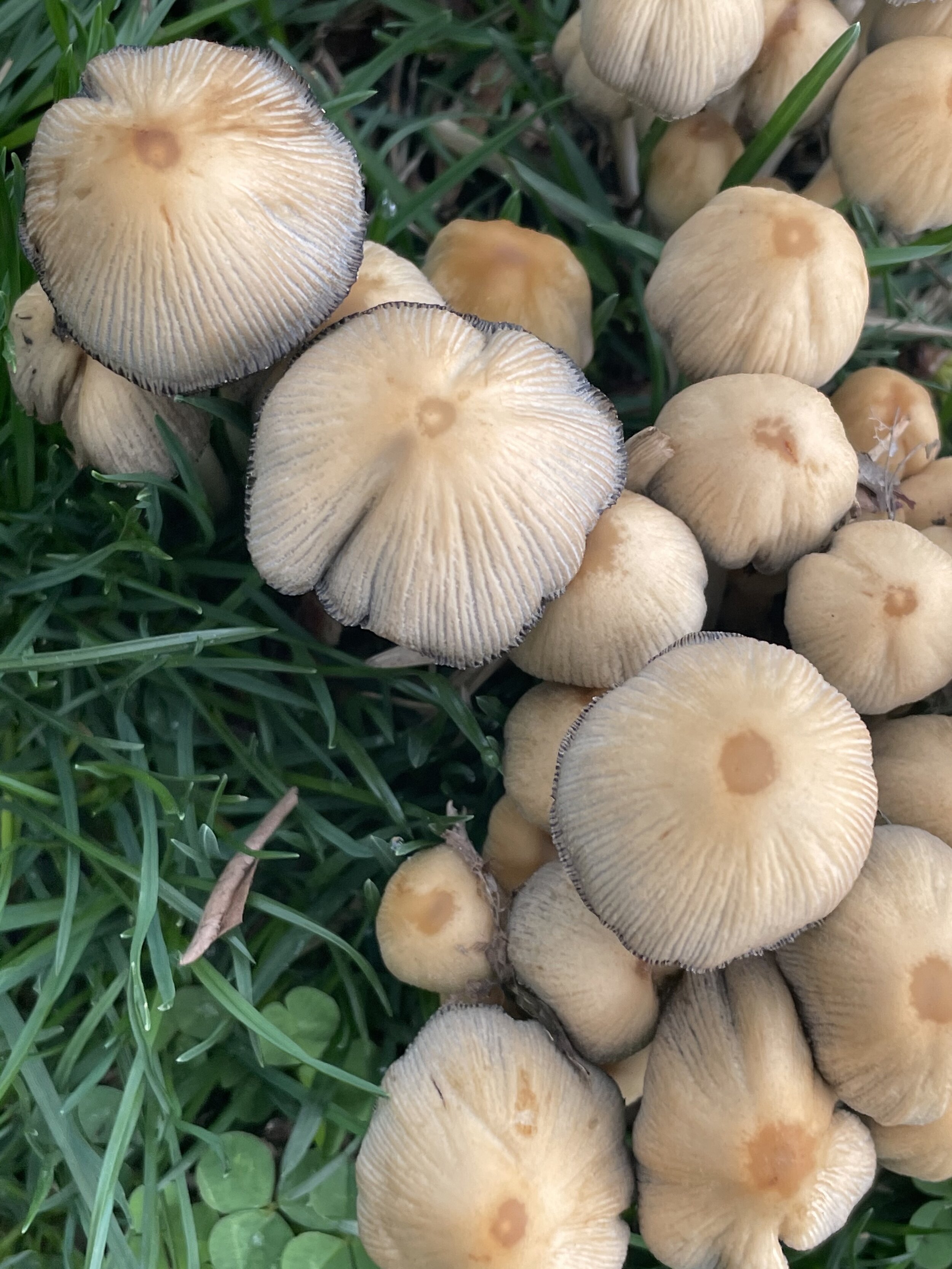
I believe this year’s collection is the most personal one that I’ve ever done; it loosely explores the theme of isolation, and a big inspiration was Kafka’s “The Metamorphosis”—the story about the guy who turns into a bug - mixed in with a little bit of The Last of Us, this video game about killer mushrooms (laughs).

Before the pandemic, I think I had a lot of doubt in myself. I thought maybe I was a little bit too much for the people around me. I think when I started to value my individuality--what I am interested in, what I wanted to d, I got worried that the more I leaned into what I loved, the more I would be isolated from the people around me, in fear that I was just kind of different.

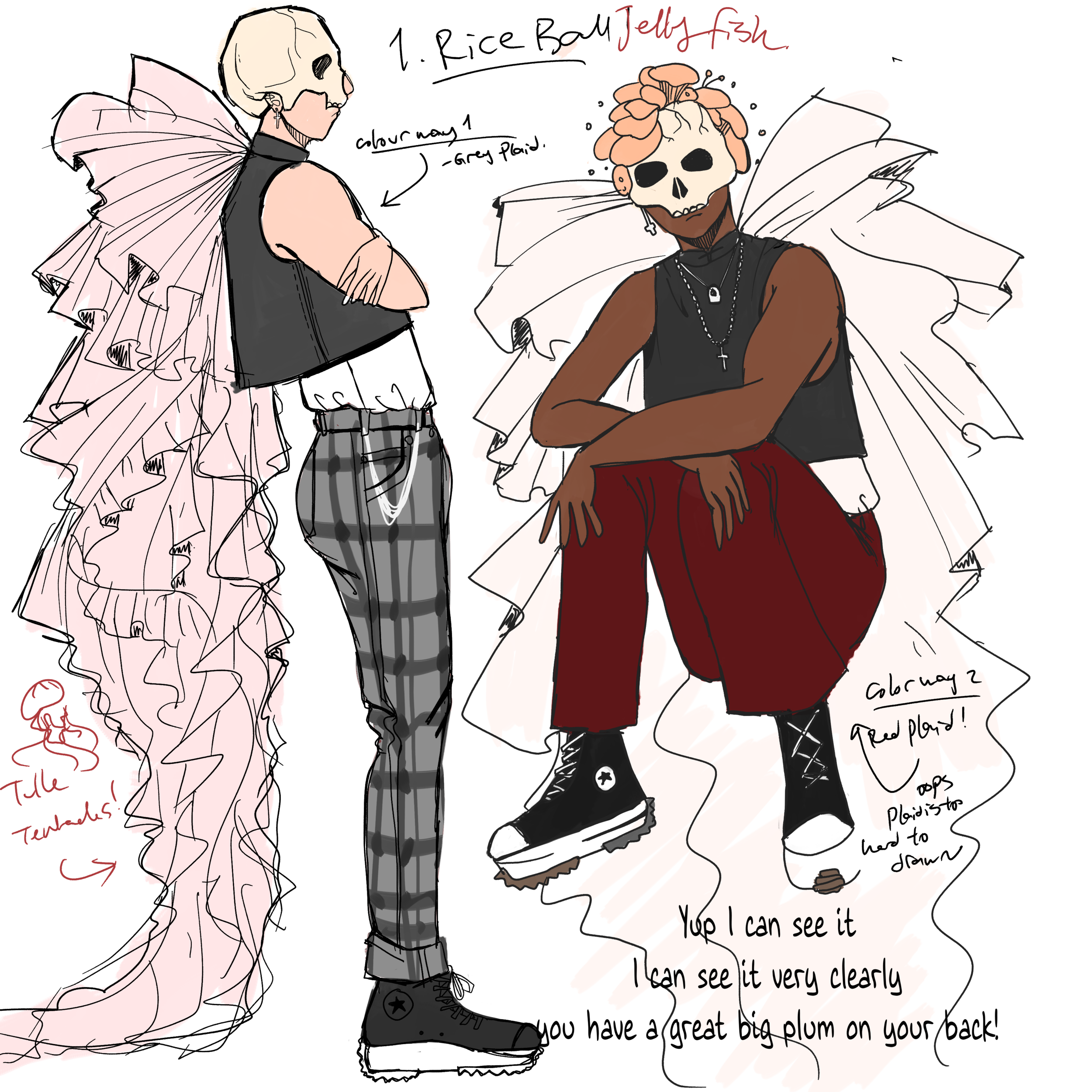
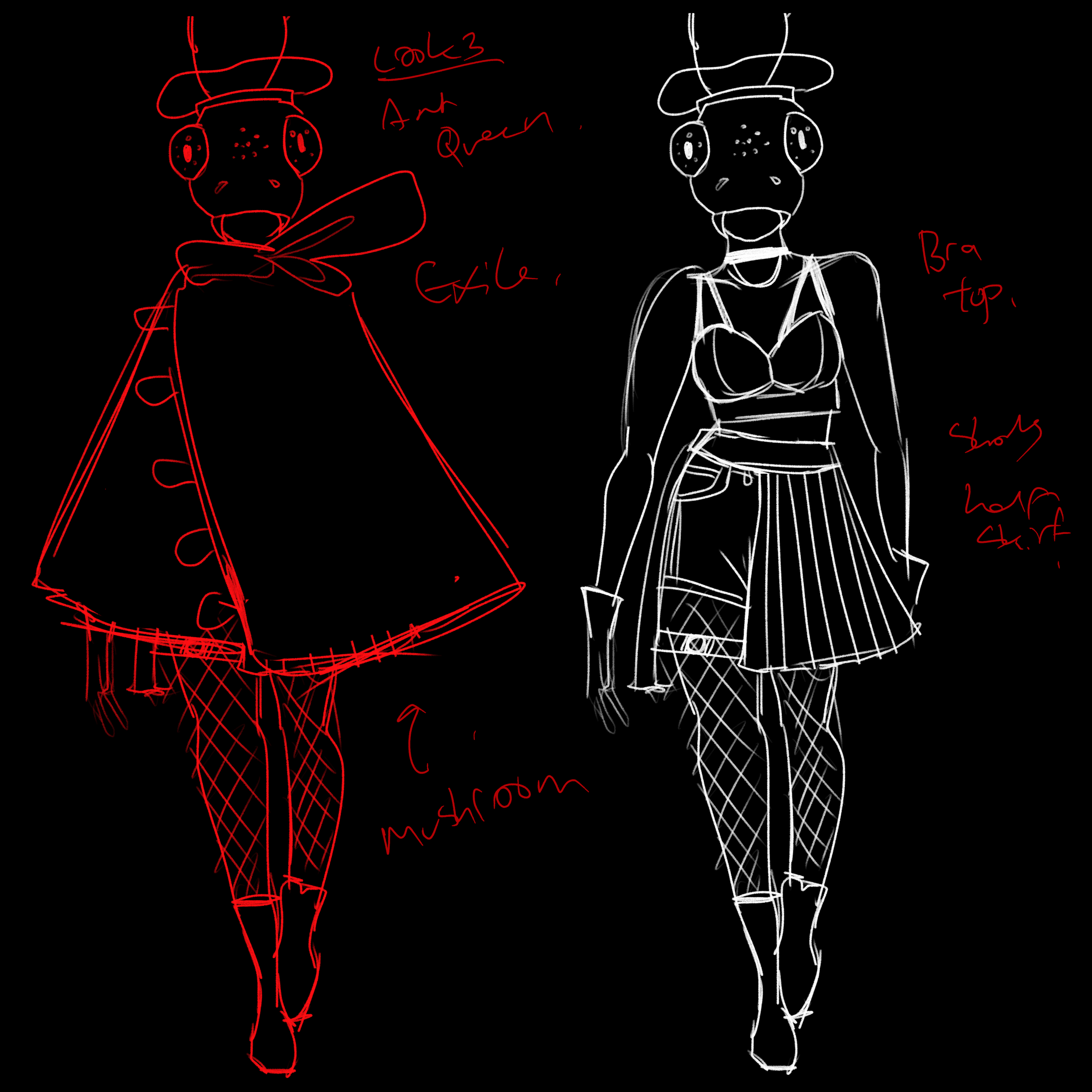
This collection explores this idea but told through the lens of a different story: the story of a colony of ants that gets infected by the spores of a killer mushroom.

These killer mushroom spores infect the queen of this colony and despite her contributions to the colony, all the other ants decide to exile her. As she leaves her former colony, the spores begin to sprout these mushrooms, and rather than killing her—which is what she thinks what will happen—they don’t kill her, they just unlock a part of her mind that allows her to think or see the world differently. She begins to value creativity, individuality, authenticity… She also lets go of what she valued before and her old colony—the productivity that I think we know from ants. She decides that with this new found knowledge, she is going to found a new colony that built on these values.

So, that's the story. All the looks track a different stage in this queen’s life. And, each look somewhat represents four stages of isolation: exile, solitude, individuality, and independence.

How did your current collection shape the way you look at your inspirations, plans, people in the process, or anything you would like to mention?

I actually started designing this collection before the show last year. I started designing really, really early. I just wanted to get my thoughts onto a piece of paper. The collection looked so much different then, because I always turn to creating to cope with some things I was going through: this collection really honestly deals with my fears of loneliness. I think I knew what the collection was about, and I think my close friends knew what it was about. But the way I designed it is in a way that only I have to know what it is about, and what anybody else sees will be the ants and the mushrooms.

I’m hoping people will be able to look at this collection and say “I relate to the feelings of this queen.” even if their experience with isolation was completely different from what I was going through. I find that to be the fun part of designing. You can take something so personal to you, you can abstract it through this collage of ideas, and through abstracting it, more people can resonate with it.

Working on this collection was kind of how I reframed my fears of isolation. It's kind of a metaphor for me, about what loneliness is. You realize that it is not going to be one thing or the other. Isolation can be such a cage sometime, but at the same time, it can be key to that cage. It can be something so isolating, but it can be so liberating at the same time. And I think putting together this collection made me want to be really honest about that.

So the answer to your question is that working through my fears through this collection made me look at those fears in a really honest way rather than trying to simplify them into something easily consumable.. 

sketch 3.PNG

What does “creation” mean to you in terms of fashion design? How does it differ from your other creative processes/purposes (ex. writing for the Blog vs. designing)?

I think of creation as a kind of translation. My creative process is translation of an idea in one form to another. So, for instance, I have this idea, loneliness; it is abstract. And I make it something designed, something touchable and wearable. Then it’s about how I can translate this feeling into this form that someone can feel on their body. You are taking something not real, not physical, and then, making it real.

And the best part of fashion design is that it is so temporary. You can put on an outfit and become a character. Then you can take it off and become you again. I like that it is not permanent. At the end of the day, it is just you having fun with it. When it is over, it is over. 

How did your experiences affect the most challenging and rewarding aspects of your design process throughout the years? What were they back in your first design year, and what are they now? 

I think the best and the worst is pretty much the same. The best part is always watching the models put on my outfit and hearing how it makes them feel. I feel like a princess, a warrior, a soldier. It is so much fun. Even the best part is them taking the outfit in a way that I have never really thought of. Also, moving forward, that also affects the way I design. I think people take fashion so seriously, so it is fun to see them have fun. This year I loved seeing people who usually don’t participate in MODA having fun with my clothes, watching them pick an outfit and dance around. I have always wanted MODA to be a community having fun with clothes. 

The most challenging part is self-doubt. For me, my collections can get so personal that sometimes I feel like I am putting my own personal story out there, for people to judge. And I always fear that people are going to use that in a way to say that I am weird. Which never happened. People are really nice. 

sketch 1.1.PNG

Are there things you wish you did differently? Or, things that you definitely want to try in the future? 

Honestly, no. This collection is definitely the one I liked the best so far. I am trying new things that I have never done before with this collection. If there is a take away from this, after everything is done, I graduate, and MODA is over, I think I will continue to do this as a hobby. I like wearing my own clothes. I learned that I don’t enjoy fitting in all the time. And I like my clothes to be dramatic sometimes. MODA made me come to that realization. 

Considering the times we are living in and the adjustments made accordingly, what are you looking forward to the most about the MODA Fashion Show? What do you think the audience should anticipate about this year’s show?

I ALWAYS look forward to everyone else’s collections. The designers at this school are some of my favourite people. I love how they all tell their own personal stories and values through their collections. It is such a beautiful thing to see in this school, especially where you don’t always get the chance to see such creativity so explicitly. 

This year, (and maybe this is just what I’m excited for) I’m excited to see designers present their collections outside the space of fashion show. Putting together shoots, or collaborating with other designers, creating unconventional fashion presentations… With everything going on, it is difficult to centralize everything in one place, and I’m a big believer in taking advantage of that. I really feel like we should decentralize the MODA matrix, from this one, big fashion show and let the designers become directors. Collections can be so personal and unique that sometimes I find it to be reductive to put all those things into one show, and I’ve always wanted to see designers present or re-interpret their own work through their own unique presentations.

 
misc2.PNG
misc1.PNG
 

Header graphic by Vivian Li

MODA Designer Profile: Esha Deokar

A double major in Art History and Economics and involved in pretty much everything MODA has to offer, you never would’ve guessed Esha Deokar is a fresh face in the UChicago community. After transferring from NYU and entering what Esha refers to as her “first and a half year” of college, she made the brave decision to join the talented group of designers for MODA’s 2021 Fashion Show.

I spoke to Esha, never having done design work before, about what it’s like to take on a project of this magnitude during COVID, the ways in which she plans to merge her Indian and American culture in her designs, and how overcoming her fear of the sewing machine was possibly her accomplishment this year.

Esha profile.jpeg

What sparked your interest in fashion?

I think a lot of it comes from studying art history. I’m good at reading about [art] and analyzing it, but when I physically try to paint or draw I almost over-analyze it. Fashion is a side of the art world that I’ve never formally experimented with before. It was just something I did, it wasn’t something I ever thought about. This is a way for me to “practice art.” 

Is fashion your way of relieving yourself of the pressures that you might put on yourself when painting or drawing?

Completely. I over-intellectualize the process of painting or sculpture drawing in a way that I don’t when it comes to sketching designs. Since I’ve started reading about fashion, I’ve been able to walk the line.

For this collection in particular, what are some sources of inspiration? How does it differ, if at all, from any personal projects you may have worked on before?

[Laughs] I mean honestly, sewing is hard. It’s really difficult. I’ve done a lot of sketches before, but with more time, I think I’d be able to come up with something a little more. And I mean obviously with COVID and everything it’s been really hard to learn how to sew over Zoom and learn the really complex techniques that require someone to be right next to you rather than look at a pixelated camera. I think that right now, I’m still trying to figure out the boundaries of being Indian American. For one of my pieces, I’m using the very typical bandana fabrics, but then I’m also using a fabric that reminds me of the Indian blankets or comforters that my grandma makes. I’m trying to figure out how I can use those two together. The patterns don’t really go together, but I think [fashion] is supposed to symbolize something bigger. The patterns are allowed to clash.

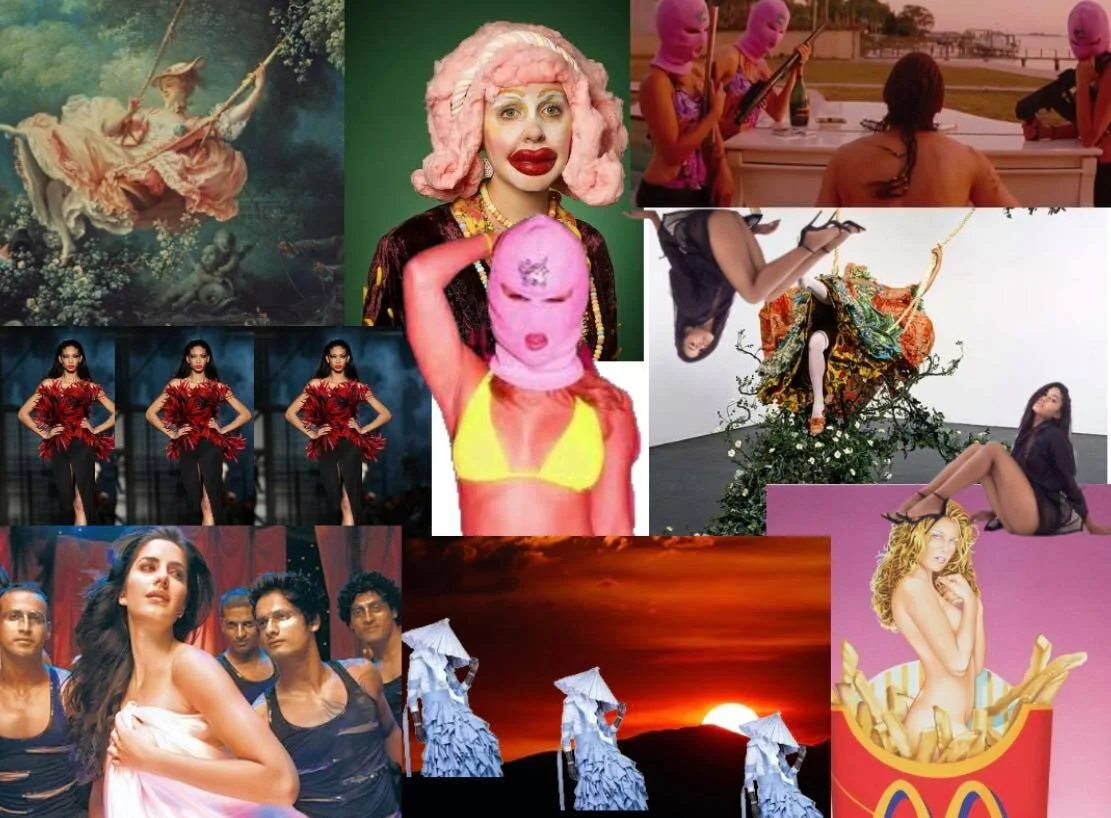
Deokar’s Mood Board 1  - where Jean-Honoré Fragonard’s “The Swing” meets Bollywood dance scene

Deokar’s Mood Board 1 - where Jean-Honoré Fragonard’s “The Swing” meets Bollywood dance scene

A bit unrelated to what we’ve been talking about, do you see designing as a completely independent process or do you consult someone—friends, fellow MODA members, etc.—in your designs?

I would say, due to the virtual nature of things, it’s become more of a collaborative process than I thought it would be. I’m more comfortable reaching out to ask for advice on where to get fabrics, how to pick patterns, things like that. It sounds dumb, but learning how to use the sewing machine has been really rewarding. I’ve been wanting to sew for so long. I like sketching things and coming up with different materials to play with, but those were always just visions in my head, so being able to use the sewing machine to bring them to life is the best feeling. One of my really good friends here, she’s been sewing for...ever and she’s amazing at everything she tries so I always go to her for help. I mean I sent her a video of the top I just made today. I’ve learned that asking people who do know about this stuff and have a grasp of it is one of the most important things in designing. 

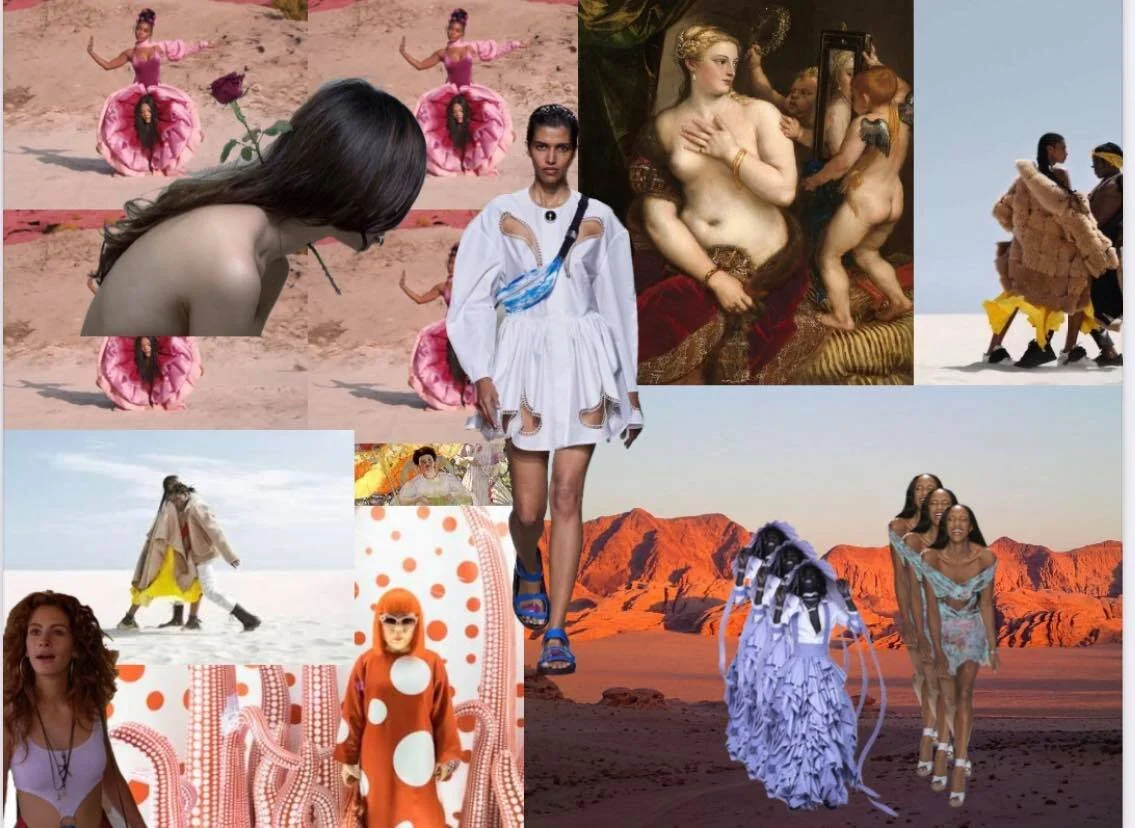
Deokar’s Mood Board 2

Deokar’s Mood Board 2

How do you think this being a virtual show has changed your plans for designing a collection, in terms of how people will see it online versus in person? Do you feel more or less pressured?

I definitely feel the same amount of pressure [as I would if the show were in person]. I want my designs to look good no matter if people are looking at it through the camera lens or their own two eyes. I was a little disappointed, and had to change some of my designs to better fit the setting. Originally, one of my designs was supposed to have umbrellas and words on the back, another was supposed to include a briefcase with a word on the side. Because it’s online I want to save those ideas for next year, or even the year after, so that people can actually see it and read it. That’s something that I want to be able to see people’s organic response to and that I want them to experience in person, not just a recording. And even though that didn’t pan out, I think it can in the future, which is why I’ve been looking at this year as my stepping stone into design. The fact that it’s virtual doesn’t mean that this has to be my debut. It’s like a practice run. 

So you see yourself getting involved as a designer again for future MODA shows?

I really want to. I was actually at last year’s MODA show because I have a couple of friends in MODA. I flew from New York to watch and I absolutely loved it, it was such a great experience. I remember watching the show as a student from somewhere else and wanting nothing more than to be a part of it. Now, I’m so grateful to have the opportunity to design this year, but I’m looking forward to the future when I can go through the process in person. 

177837296_214167456750182_580661582149690931_n.jpg

Esha, like many other creatives, has made the most of the challenges brought on by this past year. Besides making the move from one major city to another, Esha has immersed herself in UChicago culture and taken on a number of leadership roles without hesitation. Optimistic about what the future holds for art, fashion, and MODA, there are few things that she can’t do—including sewing.

All images courtesy of Esha Deokar. Header graphic by Vivian Li.

MODA Designer Profile: Louis Levin and Cecilia Sheppard

Louis and Cecilia are co-editors-in-chief of MODA Magazine. They’re both third years in the college - Louis is majoring in Interdisciplinary Studies in the Humanities and Cecilia is majoring in Art History.

What are some sources of inspiration for your collection?

Our collection originated with our fabrics. Coming into this year, we were inspired by two - sheer and jacquard. We wanted pieces that were ambivalent. Clothes that teetered on the edge - bold and subdued, revealing and conservative, masculine and feminine. A lot of that direction comes from our own sense of style. One of the many reasons we wanted to work together is that we both have quite distinct vibes. We thought we could challenge and encourage one another in a way that would lead to a collection we felt proud of - we’ll see how it looks on Friday!

Have you ever done fashion design work before? What are some of the most challenging and rewarding aspects of the process?

We’ve both worked for fashion houses in different ways before, and Louis was in the designer bootcamp last year, but this process has certainly been a jump in the deep end. Five outfits is a lot, and fitting everything in has been difficult - we’ve probably spent half of our waking hours together since the start of the year! Part of what’s taken so long - and been particularly challenging - is tailoring. Our motto has been that we’re not willing to settle, but that’s meant we’ve had to fit each piece four or even five times (thank goodness for the endless patience of our models). Making sure that the outfits are clearly sculpted to each model feels important to us. But the time commitment that’s taken has certainly been rewarding too. Each of our final fittings has brought with it a sense of pride (and relief) that makes it all worth it.

We thought we could challenge and encourage one another in a way that would lead to a collection we felt proud of.

What are you looking forward to most about the show?  

Seeing everything come together! We’ve worked on each piece one by one, and it means that we haven’t had the chance to see them all in one room. We cared a lot about making the collection feel cohesive, and we haven’t yet been able to see how that’s paid off. So, that’s all to say we’re both very much looking forward to seeing all five pieces  together and in full.

Who do you have in mind when you’re designing?  

Bold. We imagine men and women who wear confidence on their sleeves. Like our collection, they’re full of contradictions - in the best way. They are subtle, overstated, masculine, feminine, proud and self-conscious. They’re fierce, and they use clothing as a tool and a weapon. Their outfits don’t give them power–they’re full of it already–but instead accentuate and express it.

If you could give yourself any advice on the design process, what would you say to your younger self?

Breathe! When we love something, we both dive in headfirst. We would remind ourselves to pause and take it all in, to truly relish in it. At the same time, we’d also trust in our abilities a little more - the pieces that have been the easiest for us have actually been the ones where we’ve thought the least about the pinning and the patterns and the darts, and instead just gone for it.

87201162_608525819694780_2592823820465209344_n.jpg

What’s your favorite aspect of the design process?

That’s easy - working together. As we have noted, we’ve spent an awful lot of time together the past few months. In those many hours, we’ve learned so much from, and about, one another. In each other we have found not just a peer and a partner, but a lifelong friend too. We hoped we’d challenge the way we think about fashion, but instead we’ve changed the way we each see the world. And we’ve had a load of fun along the way.

MODA Designer Profile: Andrew Chang

MODA Blog Editor-in-Chief Andrew Chang gave a sneak peek into his 2020 MODA Fashion Show collection, and some insight into his creative process:

What are some sources of inspiration for your collection?

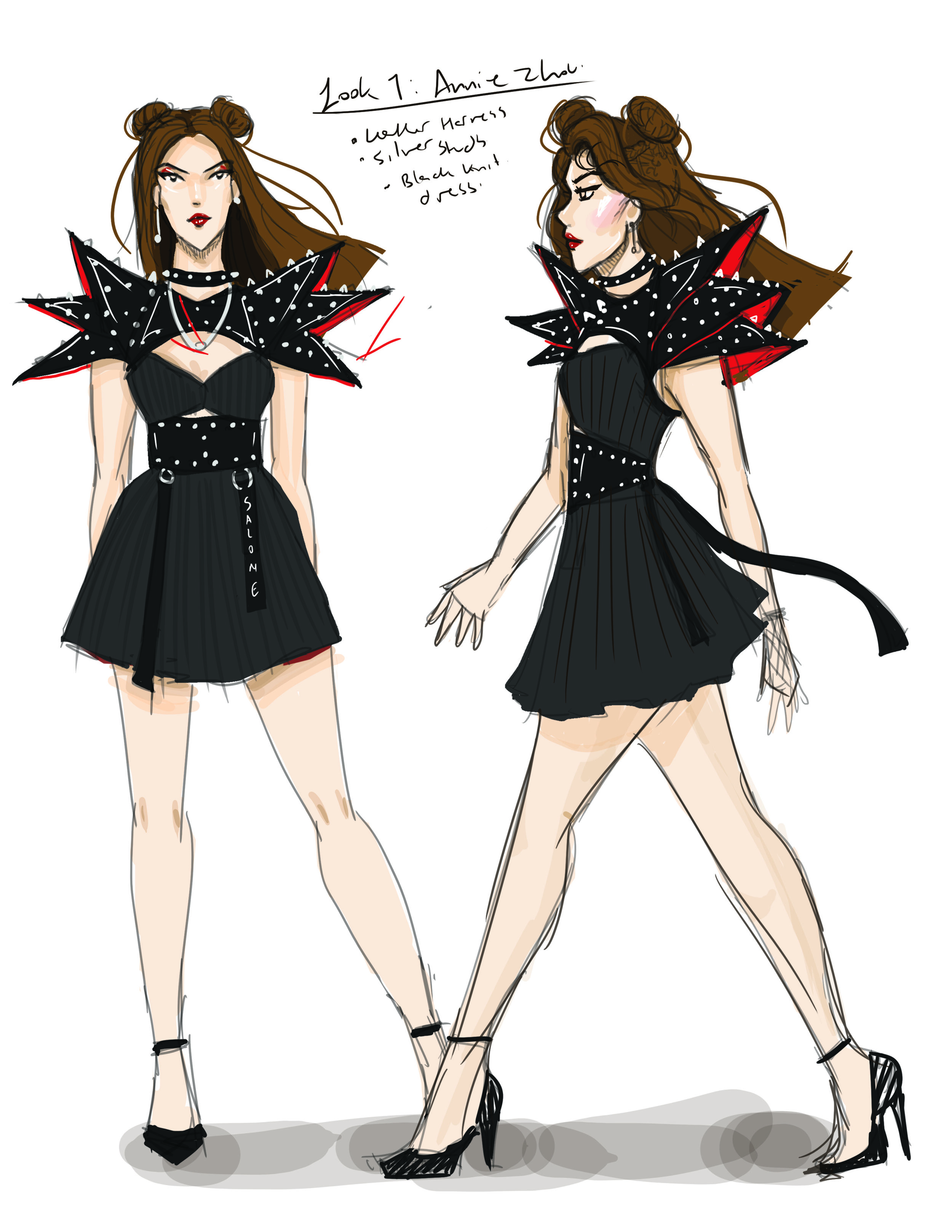
I’ve been calling this collection my “sequel collection” in the sense that I find it explores many of the same themes and topics as my previous collection for MODA. I always want to explore the effect that clothing has on the wearer, how a wearer’s personality shifts with what they wear, and what kind of hybrid identity is formed at the intersection of humanity and fashion. Last season was more or less an engagement with how masculine elements like tailoring, trousers, and harder textiles like denim inhibit, expand, or complicate femininity and form a hybrid masculine-feminine power, whereas this season is all about approaching the same exploration but riding down a path of feminine elements.

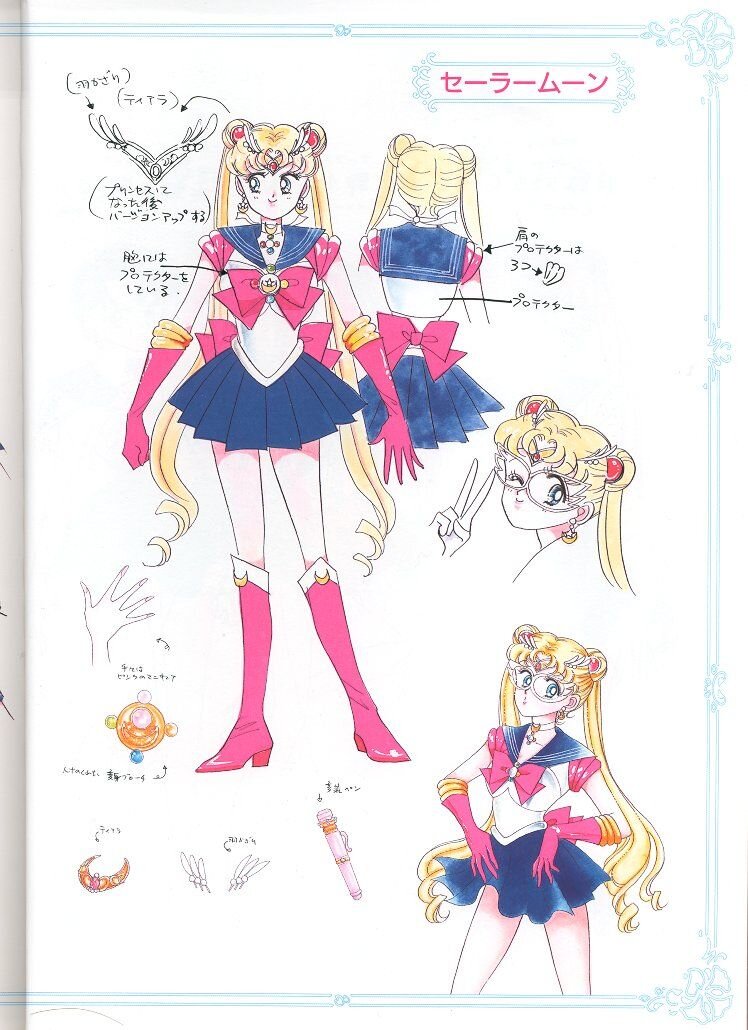
Editor’s note: These concept art images were particularly inspiring to me :) via here and here

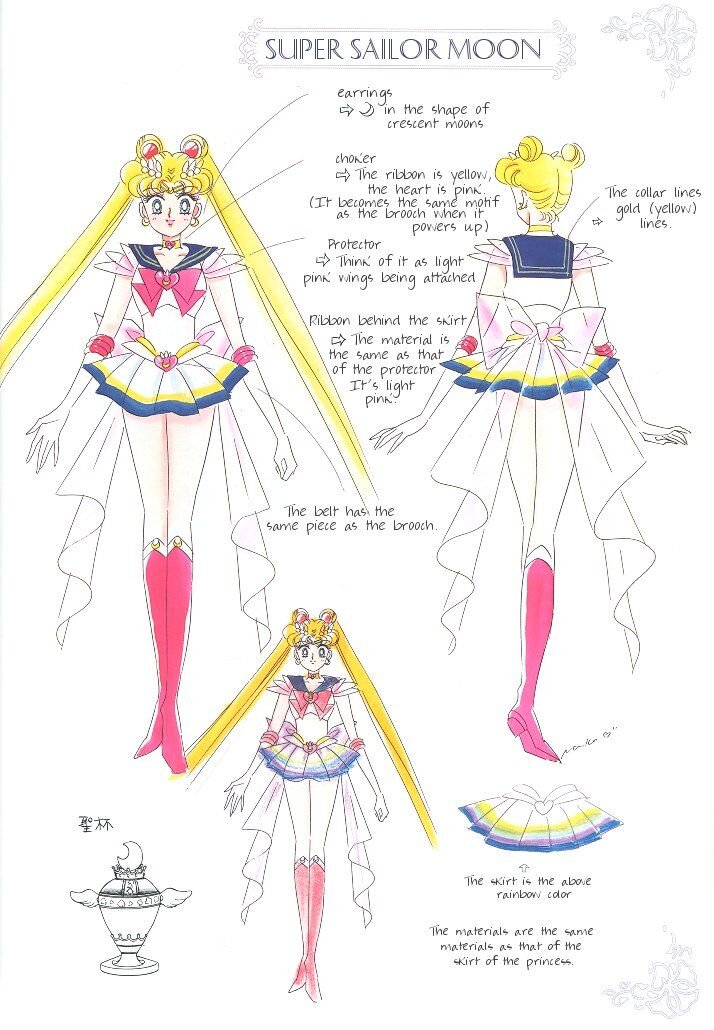
I started the collection by researching portrayals of women whose strength arises from their femininity and found myself at an intersection between three narratives: Oscar Wilde’s play, Salomé, Pyotr Tchaikovsky’s ballet Swan Lake, and Naoko Takeuchi’s manga Sailor Moon. What I enjoyed about these women was their complexity, and, in particular, their range of personas within their own characters. Salomé’s docile royal persona clashes very graphically with her chaotic, and passionate side, complimentary to the dynamic between Tchaikovsky’s black and white swans; furthermore, Usagi Tsukino embodies much of her strength as Sailor Moon in holding true to her femininity as a school girl, which I always found to be rather interesting. This vision of a superhero pulls the strength of her powers from her identity as an educated female.
The tensions between different personalities within individuals always inspires me, and this collection depicts that tension through the contrasts of hard and soft, masculine and feminine, and black and white. I find that my most contemporary inspiration outside of literature is probably the the k-pop girl group BlackPink. I like the way those ladies combine a variety of tensions in their music and visuals—and I’m also a big fan of the way they dance. The collection also traces the path of the moon, commonly portrayed as feminine in many languages and associated with meditation, reflection and logical thinking. Depictions of the moon and it’s cycle are pretty consistent in all the texts that inspired my collection, and I wanted to incorporate the moon into my collection somehow, so the collection starts with an all black new moon and finishes with an all white full moon. 

Andrew’s moodboard.

Andrew’s moodboard.

Have you ever done fashion design work before? What are some of the most challenging and rewarding aspects of the process, and what are you looking forward to most about the show?  

I was lucky enough to participate in MODA’s Designer Bootcamp last year and have only good things to say about the team and experience.  I also have a pretty extensive relationship with fashion, and fashion illustration in particular, now that I work so closely with the blog and MODA’s many teams. The hardest part is always overcoming my self doubts. No matter how many times I try to assure myself that everything will be alright, I can’t shake the feeling that something won’t be up to par.  I always fear that some may interpret my collection or illustrations as depictions of oppression against women and I never want that to be the case. I want to showcase my truest vision in my own unique way without offending anyone, and I find that my need to please others can sometimes get in the way of my creative expression.  I will say that I’m thankful to be able to work with so many talented individuals along this journey. From shopping for fabrics with other designers to chit-chatting and strutting with models at rehearsals to all the support I’m getting from the blog and board, I feel elated that I get to share my experiences with so many inspiring people. I look forward to seeing how other people express their stories and visions through their own creations and I also look forward to seeing first hand the hybrid identities that my models create when they put on their looks. 

Oh, plus I heard that there’s a pizza place near the venue. I’m excited for that too.

What’s your favorite aspect of the design process? 

I like watching my designs and models merge. Strange to hear, but I like how my models really develop into characters when they put on my wardrobe pieces. I watched my model put on one of the coats from my collection while it was still held together with pins and I instantly saw her become a hyper-version of herself.  It really did feel like some kind of Sailor Moon transformation. My heart did skip a beat when she took the coat off during a run-through—all I could think about was how many safety pins would go flying…

moda look 2.jpg

I always want to explore the effect that clothing has on the wearer, how a wearer’s personality shifts with what they wear, and what kind of hybrid identity is formed at the intersection of humanity and fashion.

Who do you have in mind when you’re designing?  

My collections are and will always be love letters to the people who inspire me. I think this season, I wanted to thank the women who use their unique attributes to make me feel like I can conquer anything. The women in my life, including my three models, but also the women I work with on the blog, on the board, in my house and among my family and friends. They’re all icons of feminine strength: an innate and powerful ability to build communities, reshape perspectives and engage with the world in a multitude of impressive ways. That being said, I imagined this season’s woman to be a dancer, as my mother is a dancer, and dance has been quite a prominent part of my childhood, but also because the use of extreme discipline to form extreme beauty of dance carries through the essence of my collection. I find that the women in my life are individuals who possess a discipline and sense of self that fosters an inspiring kind of beauty. Bold, creative, compassionate and free are four words that come to mind right away, but the woman of my collection is surely composed of even more inspiring qualities that I see and feel every day. 

If you could give yourself any advice on the design process, what would you say to your younger self?

Make a plan but don’t be afraid to experiment.  I was once told that a good sketch can take a collection far, but sometimes in order to realize that sketch I really have to think in a different way.  I wanted to experiment with altering patterns this year and making my own patterns by cloning my own wardrobe. Fashion construction can be a very precise and tedious process, but it also leaves room for much experimentation, and I wish that I would have known that I would be so capable of extrapolating a vision from the resources that I already had. Then again, this is coming from the same guy who decided to just make an entire collection out of safety pins and paper so perhaps in some ways, resourcefulness and creative problem solving are inherent parts of my creative process.

Cover photo courtesy of Natalia Rodriguez, see more of her work here.

MODA Designer Profile: Ella Anderson

I’m Ella Anderson, a second-year pre-med student majoring in Art History. I am also the co-visual design editor for MODA Magazine and volunteer with Art Is.

What are some sources of inspiration?

John Singer Sargent’s Carnation Lily, Lily Rose and Bernini’s Apollo and Daphne. I’m an art history major and those two works represent the fields I am most interested in. Though I haven’t formally decided my specialization, it’s most likely going to be on Baroque Roman sculpture. There’s so much energy and emotion in those sculptures that is rare in contemporary art. Carnation Lily, Lily Rose is, of course, completely different but it has always been my favorite painting. It’s so luminous, and instantly relatable, and accessible in a way that Bernini’s work isn’t necessarily, so I love the conversation the two pieces create when juxtaposed. They represent essentially the most distilled form of beauty, so when I signed up to design for the show (which was on completely a whim) it was clear that whatever I designed would, in some ways, be referential to those works. 

Moda show mood board edited.jpg

Have you ever done fashion design work before? Most challenging and rewarding aspects of the process?

IMG_0421 2.jpeg

I haven’t done any fashion design work before, but I know how to sew, and really the entire process is extremely intuitive. I’m very visual, so it’s easy to picture a shape of a piece of clothing, and just have a base intuition for how to make it from the fabric. Going into it, I thought that I would make patterns for the pieces, but it hasn’t really unfolded that way. I take exact measurements, of course, but after making a pattern for the first thing I cut, I didn't use it at all so I abandoned that method.

I think I’ve found this 3D visualization easy because I have experience with sculpture making - on my gap year I spent several months in Italy learning how to carve marble and make portrait busts just by eye - so I’m very comfortable with 3D forms at this point. I think the main challenge is just to be patient and methodological at all times. If you try to rush it it doesn’t work. The most rewarding part of the process is definitely to try it on and have it look as envisioned.

What are you looking forward to most about the show?

It’s such a fun night that gives everyone the opportunity to dress up. All of the designers have completely different styles so it’s really cool to see so many viewpoints come down the runway.

49536388117_646c81a36d_o.jpg

Who do you have in mind when you’re designing?

49536156611_37f2bf7a94_o.jpg

Really only myself. I’m making two looks for the show that are completely my style and things I would wear around. My style is essentially the antithesis of streetwear - I like simple pieces and can’t stand ‘logomania’. I tend to care more about longevity - I hate the concept of only wearing something once so that’s also a big part of what I think about. My designs aren’t flashy, so perhaps to some they’ll be boring, but I’m perfectly ok with that. I don’t think it needs to be an in your face statement - I think my subliminal motto throughout this has been to keep it “quietly lovely"

What’s your favorite aspect of the design process?

Definitely the actual construction. Designing is somewhat fun but, for me, sewing is the best part. It becomes much more of an art in my opinion. There are so many invisible details that go into it - like using a French seam, which is time consuming and difficult to execute yet doesn’t contribute to the overall idea of a piece - which I think make it more of an interesting process. It’s all about making decisions of specific techniques and micro-designs to form the broad picture. This is incredibly cliche, but to me it’s very much a process of pointillism.

Photographs courtesy of Angela Liu

MODA Designer Profile: Kiki Apple

Kiki Apple is a first year and her only RSO is MODA right now.

Q: What are some sources of inspiration for your collection?

My collection is inspired by my Argentine heritage. A lot of the pieces I have are inspired by the fashion and trends I have seen a lot in Buenos Aires when I studied there for a little bit in my sophomore year of high school.

Kiki’s Mood Board

Kiki’s Mood Board

Q: Have you ever done fashion design work before? What are some of the most challenging and rewarding aspects of the process?

I have never done fashion design work before, barely even touched a sewing machine. I would say the hardest part so far has been letting go and just diving right into cutting and sewing. I was super hesitant at first because I was scared of making errors but it always turns out okay and I got used to that fear.

Look Collection #1

Look Collection #1

Q: What are you looking forward to most about the show?

I am most looking forward to seeing what all the other designers have made. So far, I have seen a lot of what the people in the DBC program have made and it is super cool stuff!

Q: Who do you have in mind when you’re designing?

I don't have anyone particular in mind when I am designing. If I had to choose someone though it would be my sister who got me into fashion in the first place. I have already started designing stuff for her to make after the show is over.

Q: If you could give yourself any advice on the design process, what would you say to your younger self?

My advice to my younger self would be to stop worrying so much and just design! It's actually a super stress-relieving process and I enjoy every moment (when I'm not messing up of course).

Look Collection #2

Look Collection #2

Q: What’s your favorite aspect of the design process?

My favorite aspect of the design process would either be sketching the outfits or sewing the seams. Sewing is so calming and really simple when you get down to the basics of it. Recently I have been turning to MODA to help me get through the stress of school and work.

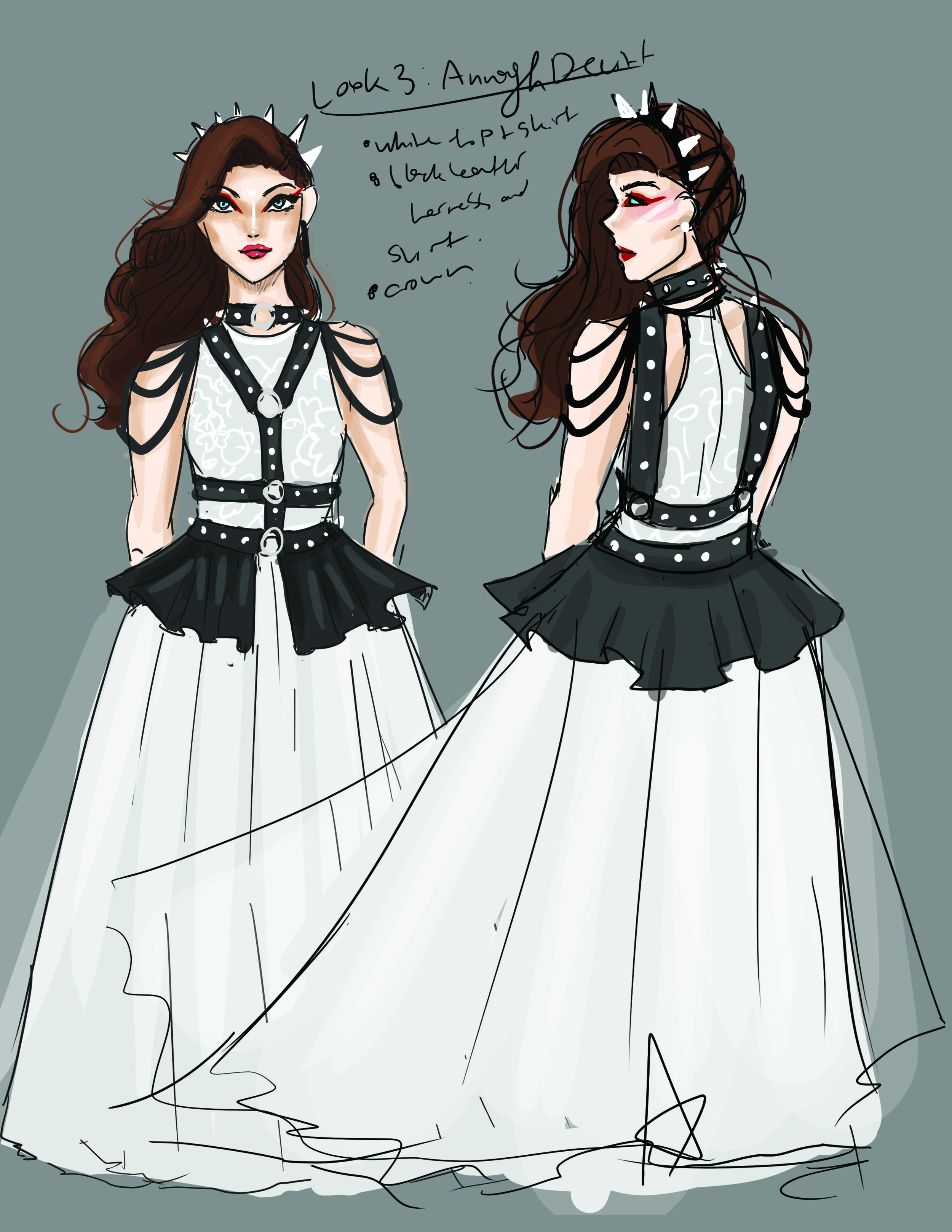
Look Collection #3

Look Collection #3

Images via Kiki Apple

MODA Designer Spotlight: Seoryeon Son

I had the wonderful opportunity to sit down with first-time designer Seoryeon Son and hear what went into her process. Through the hustle and bustle of Ex Lib, here’s what Seoryeon had to say about her experience designing for the winter show.

My name is Seoryeon Son, and I’m a second-year Business Econ & Visual Arts double major! I’m in ILC Finance, WIB Finance, and I’m an ArtShould board member.

What are some sources of inspiration for your collection?

I’m just trying to make flowy stuff. During winter break I went on a trip to Korea and Japan, and I just thought, “This is it.” So a lot of my inspiration comes from traditional asian clothing. Things like traditional gowns, jackets, stuff like that. 

SEORYEON’S TRAVELS

SEORYEON’S TRAVELS

VIA SEORYEON

VIA SEORYEON

Have you ever done fashion design work before? What are some of the most challenging and rewarding aspects of the process?

This is the first time. Physically making the clothes and deciding on fabrics are the difficult parts. You have to work with what the store has, and fabric is expensive, so trying to translate what’s in my mind can be difficult. But, just thinking “I made this!” is so rewarding.

What are you looking forward to most about the show?

Seeing friends and seeing my completed looks being walked. I feel like everything’s going to look cooler on stage once hair and makeup is done. It’s nice to be a part of something that the whole school can see.

Who do you have in mind when you’re designing?

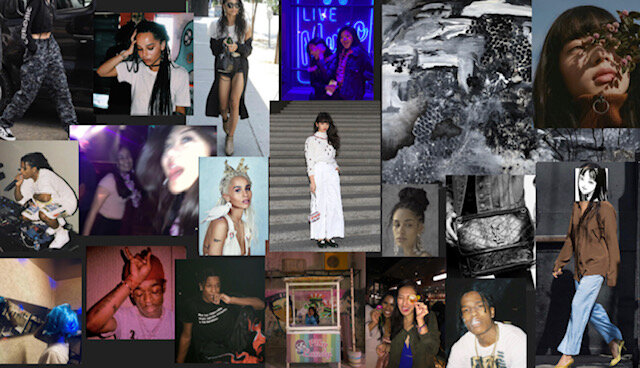
Honestly my inspiration changed a lot. When I first applied to become a designer I was more towards grungy looks, at the time my inspiration was Zoe Kravittz. Her style is so cool. Then, when I went to Korea and Japan I saw so many flowy and long pieces. I really like that, the way everything looked so comfy and different from what we see in America. I just thought, “Wow, I like this.” Nana Komatsu is someone I really like, her style is pretty cool and shows that vibe. 

SEORYEON’S MOOD-BOARD

SEORYEON’S MOOD-BOARD

If you could give yourself any advice on the design process, what would you say to your younger self?

MODA DESIGNER SEORYEON SON

MODA DESIGNER SEORYEON SON

For me, I think I’d definitely tell myself to start early on. Make use of winter break! Time flies and the show’s there before you know it. And, I’d tell myself to do something you’re comfortable making, you know? Don’t go overboard. Stick to something that you like making, and just be yourself. Runways have such unwearable clothes, it’s just not very relatable. I don’t see those things in stores, so I want to make something that’s actually approachable and not super crazy.

What’s your favorite aspect of the design process?

The first time I went to go fabric shopping was with Khadijat (a fellow designer), and I just really liked going in there and being able to choose from all these fabrics. My original design idea changed there too. Seeing all the fabrics changed my design ideas, and let me see other alternatives that might work better. The idea of making something aesthetically pleasing is very nice. I’m not just making the models walk in something plain like a t-shirt, you know?

Is there anything else you’d like to add?

Yeah. I feel like making clothes sounds like such a far-fetched thing, but honestly it’s not. It’s fun!

See her designs at the MODA fashion show on February 28th.


MODA Designer Profile: Alex LaBossiere-Barrera

Alex LaBossiere-Barrera is a second-year majoring in Economics and Computer Science and minoring in Architectural Studies. When he’s not designing for MODA’s show and writing for the magazine, Alex keeps himself busy with Varsity Swimming, Rockefeller Business Management, Edge Entrepreneurship, Midway Ventures, and Fire Escape Films.

I’ve known Alex since the beginning of first year and loved wearing his designs on the runway last year. I’m excited to model for him again this year, and he was kind enough to answer some questions I had about his upcoming collection!

What are some sources of inspiration for your collection?

19-20-MOOD-BOARD.png

My work for the show this year rides off of a lot of little points of dissatisfaction with what I ended up with last year, especially construction and detail-wise. Stylistically speaking, I’m looking to expand on what ended up being a very pragmatic collection and adding more subtle elements of things I like—Japanese Americana, elegant functionalism, and a sort of crossing of dress codes. I’m also drawing from other collections I liked last year, especially whoever made those incredible hanten kimono jackets. I don’t wear anything particularly interesting, so I also tend to draw a lot of inspiration from people I see in passing day-to-day.

Have you ever done fashion design work before? What are some of the most challenging and rewarding aspects of the process?

I did DBC last year, which I’d highly recommend to anyone looking to get involved in clothing design. It was an incredibly rewarding process, but my own inexperience made the collection-making process pretty rushed and left a lot to be desired. I’ve practically been working on this collection since last spring, but in doing so I’ve learned a lot of new techniques, which has left me with some pieces I’m really proud of. 

IMG_4390.jpg

What are you looking forward to most about the show?

Finishing.

Who do you have in mind when you’re designing?

To give the same answer I did last year, people who aren’t afraid to scuff their clothes up a little. They’re meant to be worn, so wear them. I think the whole notion of modern fashion tends to push for cool but pretty impractical pieces—vastly more aesthetic than regularly wearable. I like to try and find a balance between form and function. 

IMG_6367.jpg

If you could give yourself any advice on the design process, what would you say to your younger self?

Sweat the details. Putting in that extra work construction-wise may not seem like a huge deal, but it makes a world of difference when your clothing actually sits on someone.

What’s your favorite aspect of the design process?

The fact that you never really know what you’re going to end up with. I don’t know if this rings true for others, but my initial sketches never look anything like my final product.

Note: Collection-making and other creative projects documented on @leff.tv on instagram and www.leff.tv. Select pieces for sale online after the show.

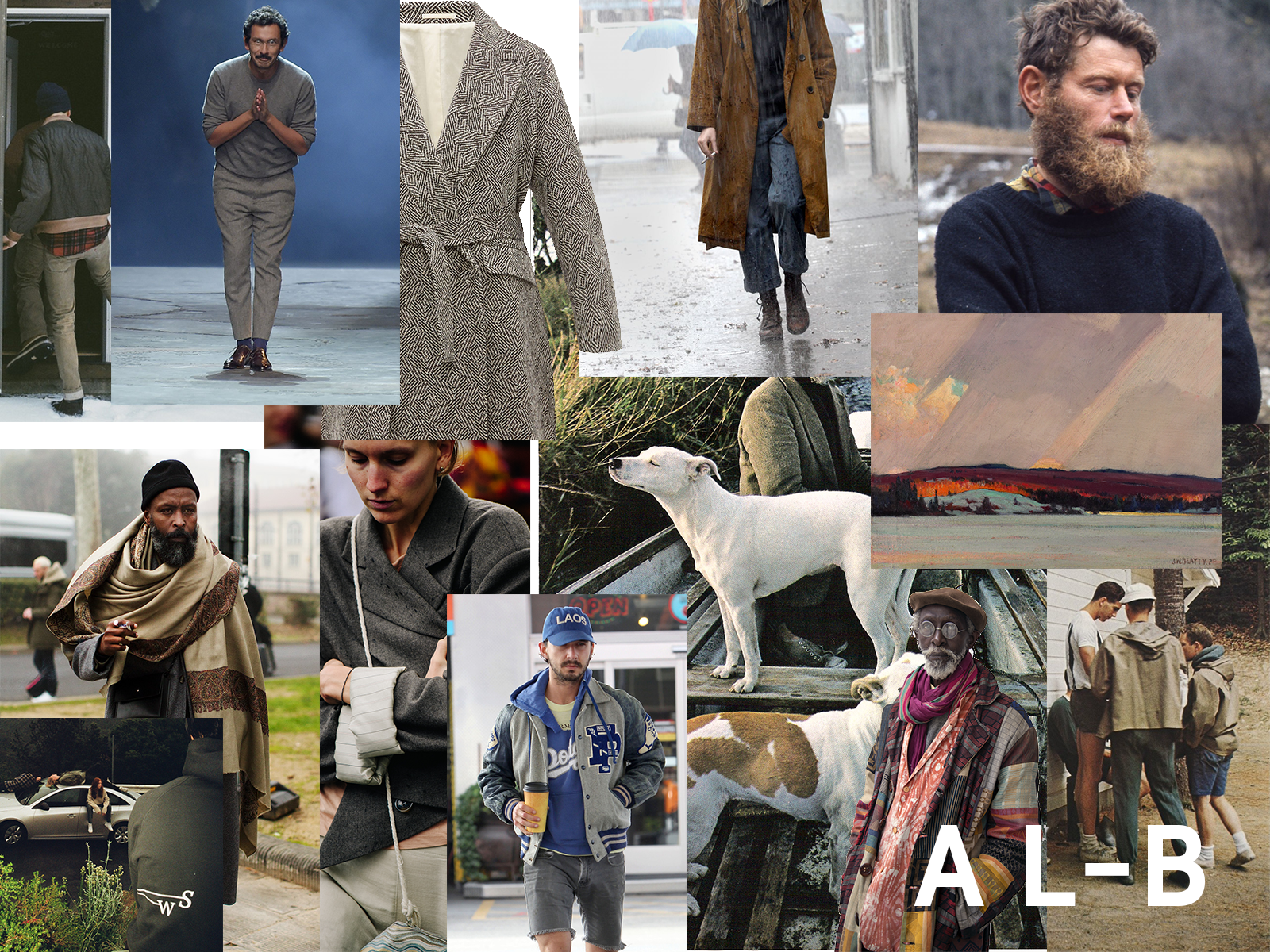
MODA Designer Profile: Arjun Kilaru

Meet Arjun! A first year designer from California designing his first collection for MODA . He’s also stylist for the MODA Magazine and a team lead and producer for the University of Chicago Public Policy Podcasts. His hobbies include fantasy football and fantasy football. He’s Currently thinking of an Econ/Stat double major and interested in applying that to the fashion sphere after graduation.

“But I have time, so who knows.“ -Arjun.


What are some sources of inspiration for your collection?

Lake Como. I visited the place recently and I immediately knew the place would inspire me to create something special. I want to preserve the floral scenery and concepts of freedom and unjudged expression, as well as the modern and subversive undertones I found there. It’s really beautiful. I wanted to combine that with the contemporary movement to destabilize gender norms and include elements of androgyny and the feminine/masculine dichotomy in my work as well.

Arjun’s Mood Board

Arjun’s Mood Board

Have you ever done fashion design work before? What are some of the most challenging and rewarding aspects of the process?

Before this process, I hadn’t really done much design work that truly materialized. However, I come from a family where garment creation and fashion design goes back generations. My mom, grandma, and great-grandma have all passed down knowledge of their work in the tailoring and fashion industry,  so I had a great support system through the whole process. The most challenging part of the process was working with patience through various mistakes and roadblocks. I made more trips to the fabric store than I ever intended to, and I had to be okay with that. With that being said, finishing my first piece and being proud of my work made all the hours I put in worth it

What’s your favorite aspect of the design process?

Definitely the relationships I built with the other designers, models, and everyone in MODA. Being a first year I was nervous about my place in this process / organization and whether I would meet the bar. Needless to say, everyone was amazingly supportive and helpful and I couldn’t have asked for a better family to help bring the best out in me. The fabric store trips, model calls and rehearsals, and hours spent sewing and designing with my friends were definitely my favorite aspects.

You can get away with so many mistakes in the name of artistic expression. 

What are you looking forward to most about the show?  

Definitely experiencing my first collection with my friends. So many people have helped me bring this to life, and I can’t wait for them to all see our hard work materialize. I’m really proud of my models especially for putting in work at the rehearsals and on their own time. I can’t wait to see them kill it on the runway.

Who do you have in mind when you’re designing?  

Arjun’s muse. Image via

Arjun’s muse. Image via

Jaden Smith pulling up to the MET Gala in a Louis Vuitton suit holding his chopped up dreadlocks and blasting his own music via portable speaker. 

If you could give yourself any advice on the design process, what would you say to your younger self?

You can get away with so many mistakes in the name of artistic expression. 

Cover Photo via Elliot Duprey

MODA Designer Profile: Maxime Kpangbai


Maxime Kpangbai is a 4th year student majoring in Economics and minoring in visual arts. Besides designing for MODA (for three years straight!), she was the Vice President of Women in Business and she currently works for the Office of Admissions as an outreach intern. I inquired into her creative process and 2020 collection:

What are some sources of inspiration for your collection?

I tend to draw my inspiration from my daily life and things around me. Instead of purely drawing inspiration from fashion trends and clothing items, I like to explore unconventional inspirations. For example, if I like the color of a wall, I may find fabric that mimics that texture to include in my collection. I sometimes find drawing inspirations from fashion trends and clothing items to be limiting. Additionally, clothing inspiration can interfere with my vision of the collection, especially if the piece is something that I really like. For the 2020 collection, I was inspired by the color purple. I am going through a phase where I want everything to be purple, anything from sweaters to notebooks. I knew that I wanted to play around with different textures, so I visited a fabric store and picked out 20+ shades of purple to see what I’ll be working with, and that’s how I started my design process.

Maxime’s 2020 collection moodboard.

Maxime’s 2020 collection moodboard.

Have you ever done fashion design work before? What are some of the most challenging and rewarding aspects of the process?

Maxime’s 2019 MODA collection.

Maxime’s 2019 MODA collection.

I had no design experience prior to MODA. I joined the Designer Boot Camp program my second year, and have been a MODA designer ever since. This will be my third year designing for MODA, and every year I discover a completely different challenge and learn something new through the design and clothing-making process. For me, coming up with a so-called “perfect design,” or at least a design that I’m 100% happy with, has been a recurring challenge. I’ve learned over the past two years that sometimes ideas just pop up during the process of fabric shopping, or even as late as when I’m actually constructing the pieces. I’ve learned to embrace the fluidity of the process and to be open to change, especially when it comes to refining the design.

What do you have in mind when you’re designing?

I always start out with one specific color. For me, it is the easiest way to unify the different pieces that are in my collection. Once I decide on the color of my collection, I then play around with the different textures to really differentiate the individual pieces.

What are you looking forward to most about the show?

I’m look forward to showcasing my collection one last time as a MODA designer. I can’t wait to see the models wear my designs and walk on stage. I remember last year just coming back to my apartment after the show and cleaning up my living room and packing up my sewing machine, and it felt like an end to a creative adventure. So I’m excited to go through this journey again with my closest friend who is also designing for MODA. My goal this year is to cherish the sewing moments and enjoy the process as much as possible.

If you could give your younger self any advice on the design process, what would you say?

Looking back at the past two years, I realized that I really did not take into account feasibility. As a UChicago student, we are all super busy and tend to bury ourselves with work. I would say to my younger self to TIME MANAGE, and shoot for the moon but still be realistic. I would spend more time during the design process to think through the logistics of the design. I do, however, enjoy feeling inspired during the process of making the clothes because I think the unplanned finishing touches really complete the collection. Nevertheless, it is still important to be practical.

IMG_8424-1.jpeg

What’s your favorite aspect of the design process?

My favorite aspect of the design process is definitely gathering inspiration. I love the feeling of “feeling inspired,” and I love anything aesthetically pleasing. Those two things combined are what really makes design and fashion fun for me.