My Summer Working at Buffalo Exchange

I suspect Buffalo Exchange is like any retail job: draining, underpaid, and mismanaged. Though I did enjoy my time there overall, learning the ins and outs of running a secondhand store, I can acknowledge that as a former employee, my coworkers and I were deserving of more than the company was willing to give. It was us, the workers, who held the place together. We would frequently provide free advertising with our well-curated outfits and a fruitful experience for the customers. The joy of the place did not come from the work itself or from the clothes but from the people. Queer and POC transplants whose first stop in the city was a nearby Buffalo Exchange. Though I hate being wax poetic about my own home and going on about how gentrifiers warp it into something it is not, these were people who had big dreams and personalities so indicative of New York that they made me want to see my city with fresh, innocent eyes, and love it all over again.

On the topic of the store itself while I’m glad I worked there for the summer because of the good company and the items I was able to procure, you would much sooner find used, dirty Shein than anything noteworthy. But perhaps that's what makes the hunt thrilling and a great find that much more rewarding. Buffalo Exchange is not a true thrift shop. When I would find an item that was cute but not the most original, my coworkers would say “that’s thriftable” to indicate that it would be more worth it to find at Goodwill bins for $2 instead of $20. It would be fairer to see it as a resale shop. They price items not for what they are worth but for what people are willing to pay. The location I worked at was situated in a gentrified New York neighborhood so people were willing to pay quite a bit, making the most basic items worth a pretty penny. As we would have to say over the phone: “Buffalo Exchange takes the best of all seasons, current trends, and styles.” Therefore, you are likely to find the store over-saturated with micro trends and new merch they get from independent sellers. Surprisingly though, those sell the most.

I would recommend shopping there if you need something quick and on-trend. For instance, Buffalo Exchange is perfect for anything Zara, Jaded London, Supreme, H&M, and other fast fashion brands that you are willing to pay marginally less than you would by buying retail. With no guarantee, however, that you are paying less than retail for an item. Even though it may be difficult to find a masterpiece or not drop $70 for three items, it's not impossible. My first tip would be to spend as little money as possible. I often say I became an extreme couponer during my time there, and though I did have an employee discount, it was slim and hardly useful. So, to keep the cost of procuring a new wardrobe down, I sold a lot of old clothes, shoes, and accessories to get a trade that I could use for new clothes. Not every Buffalo Exchange is going to like your stuff. Some of their buying practices still perplex me, which is why it’s useful to bring in a lot of items and go to multiple stores (sometimes they see if you sold at a different location that day, so it might be helpful to spread selling over a few days). Shopping-wise, the store is a hit or miss. Some days you’ll find the most breathtaking vintage handmade blazer, and the next you’ll find five shirts that say “Tacocat” in comic sans font with a Pusheen graphic, priced at $32 a piece. But, if you want to find something good, you’re going to have to dig but also look at the mannequins. Employees will put some of the store's best items, those they don’t want to buy at least, up there. You might even find some of the items they do want, I hid a dress up on the mannequins for a month until my employee discount kicked in. Overall, my entire summer there, I spent about $50-100 of my own money on a closet's worth of clothes, rebuilding my wardrobe for little to nothing.

Here are a few of the things I got and how much I paid:

ITEM #1: Frank Ocean T-Shirt

This Frank Ocean t-shirt is so incredibly cool! Every single hype beast who came into the store wanted it. It says “Blond Boys Don’t Cry” on the back and looks like it’s made from a knitted material but it’s polyester. It was priced at $36 but I got it for $0.

ITEM #2: Fake Coogi

            The fake coogi sweater, cowboy boots, and brown sunglasses are all Buffalo Exchange purchases. The sweater was priced at $45 and I got it for $8, the boots were priced at $55 and I got them for $0, and the glasses were priced at $10 and I got them for $4.

ITEM #3: Grandmas Dress

            The woman that sold this in said her grandmother made it by hand. I don’t know why she sold it, but it is absolutely gorgeous and was priced at $26 but I got it for $0.
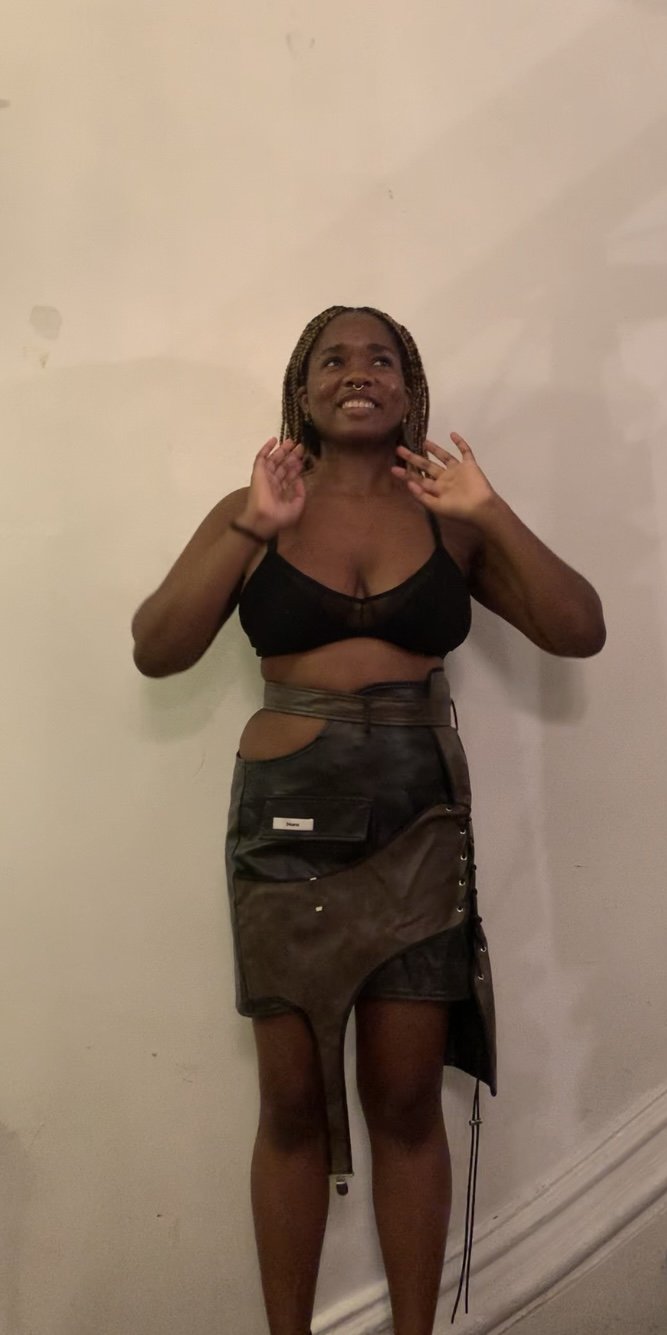
ITEM #4: 24ans Skirt

            This is one of my favorite skirts. The shape, fabric, and color make it visually engaging and fun to style. It was priced at $26 and I got it for $0.

ITEM #5: Face Jacket

            Once I saw this jacket I knew I had to have it. It’s an absolute showstopper and one of the best items I got during my summer. It was priced at $90 and I got it for $0.

ITEM #6: Vintage Versace Blazer

            The gods blessed me the day I found this real vintage Versace blazer. I did have to work two fill in shifts to get enough extra trade to get it but it was worth it. It was priced at $90 but I got it for $20.

ITEM #7: Tie Dye Dress

            Before I bought this Newport New dress, I found it on Depop for $150. But it’s Depop so their prices are just as untrustworthy as Buffalo Exchanges. This dress was priced at $16 and I got it for $0.

Guide to Depop and Sustainable Online Shopping

A contemporary and fun balance between Instagram and Ebay, Depop has become an important aspect to every trendy teenager’s wardrobe. Combining the social-media and aesthetic aspects of Instagram by having a profile and being able to follow other sellers, as well as the method of selling second-hand items online as is done on Ebay, Depop has created a community of eccentric shoppers and sellers devoted to making fashion more creative and sustainable. As somebody who has been exploring Depop for a few years, I have come across such a vast expanse of items from vintage y2k finds to high-fashion designer pieces such as Vivienne Westwood corsets. I have also been able to see the influence that this app has had on the culture that surrounds thrifting and sustainable shopping. 

Image via

Image via

With such a large variety of styles and aesthetics on this app, it can be intimidating to find pieces you like without knowing exactly what you are looking for. I recommend searching up keywords for the kinds of clothing that you like and exploring the app by looking through seller’s profiles as well as their liked items. Just as going to a thrift store, you never know what is going to end up drawing your attention! The explore page also provides an assorted selection of interesting and quirky items that should appeal to all of your different aesthetics.

To get you started, I want to introduce you with some of my favorite Depop sellers who I think are killing the game; 

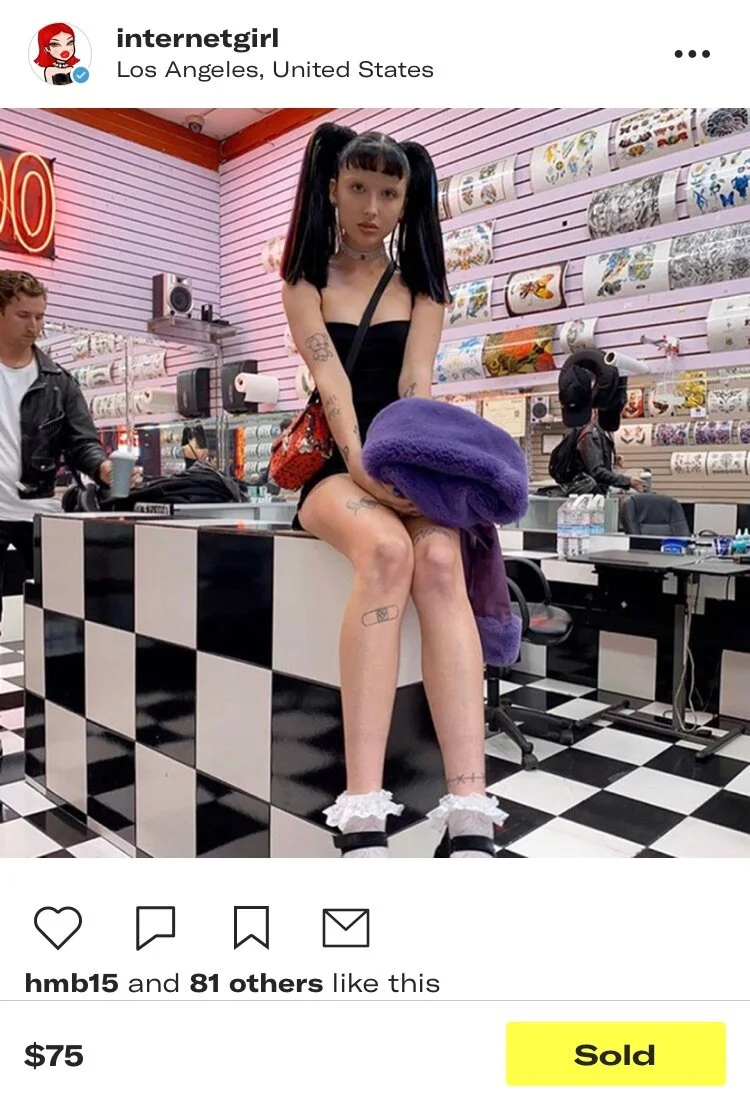
  1. iGirl (@internetgirl)

Image via

Image via

I am obsessed with iGirl’s mix of pieces that give off y2k, grunge and goth girl vibes. They are so eccentric and fun! With over 610k followers and 30,000 items sold, iGirl has established a strong influence not only on Depop but across social media. She even sells “bundles” of styled outfits based on multiple themes; “00s Mall Goth, Ethereal Fairy, 90s Fruit Mag, Off Duty Model, Punk with Kawaii elements…” Scrolling through her page always gets me excited to explore new styles!

2. @alm0ndmilf

Image via

Image via

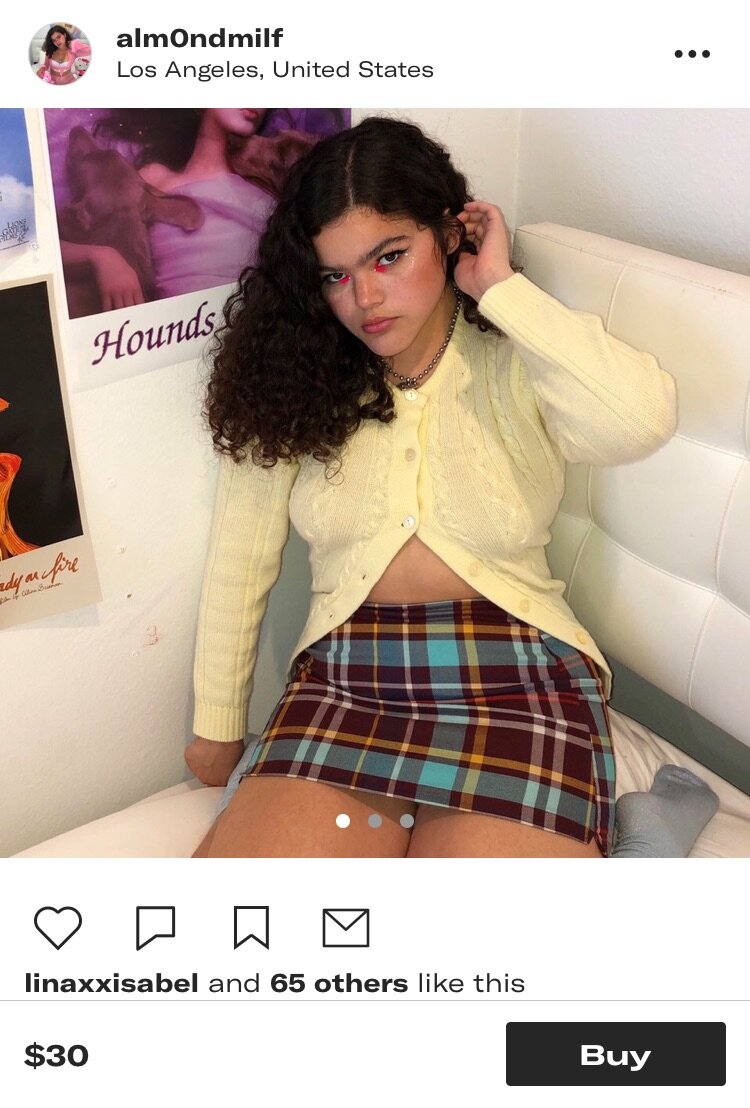
Nicole, known as @alm0ndmilf on Depop as well as Instagram is such a star! Her Depop profile features a wonderful selection of thrifted pieces that give off 2000s dream princess energy. Branding herself as a sustainable seller, not only does she sell wonderful items but she does it in an efficient and ethical way!

3. @abbiechuelaa

Image via

Image via

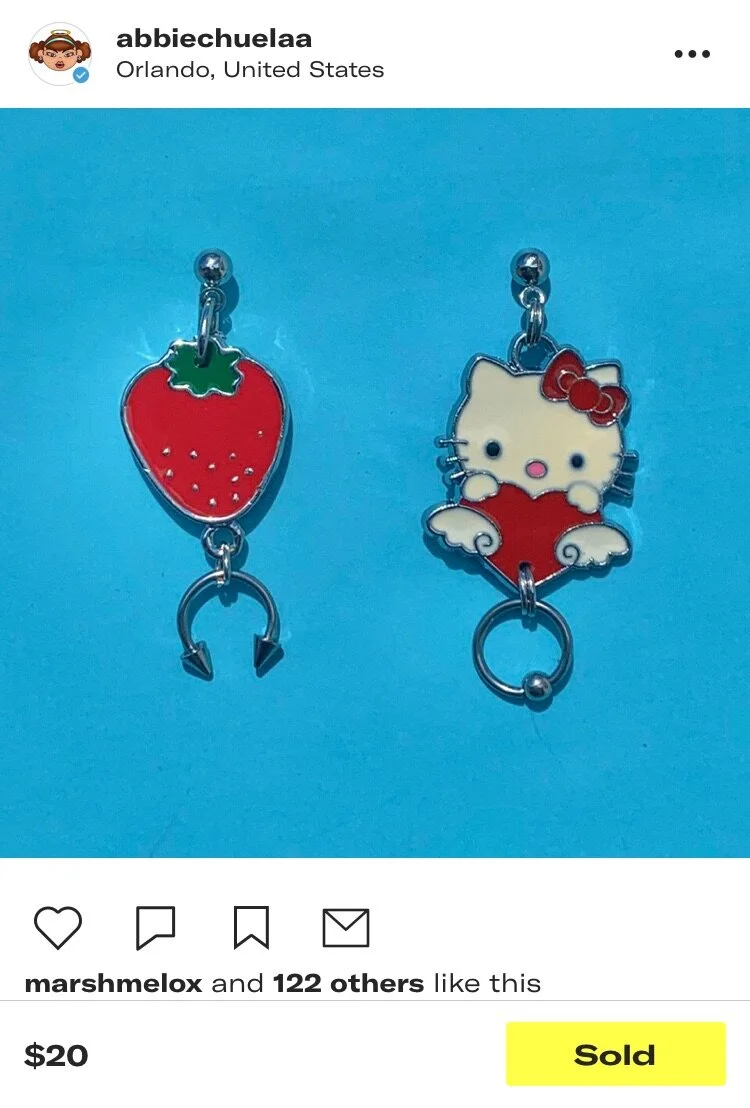
For the cutest hand-made accessories ever, head over to @abbiechuelaa ‘s shop!

4. @Kaileemckenzie

Image via

Image via

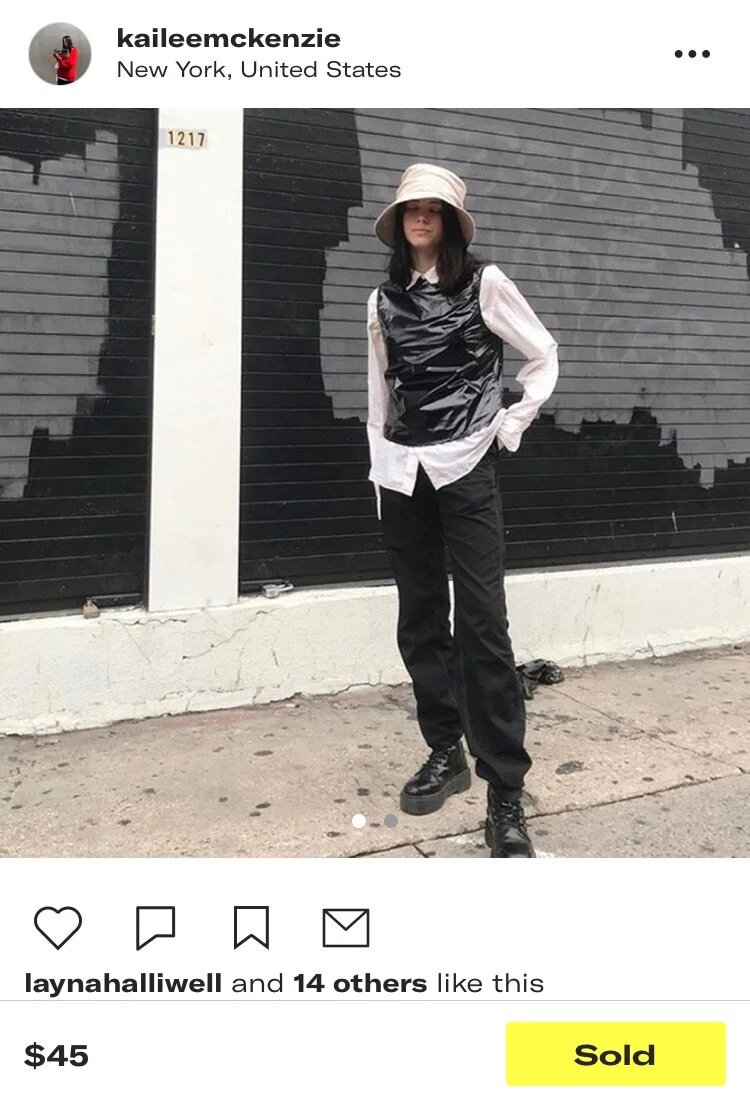
Kailee’s shop is like the genesis of the e-boy drip. Classic… white boys love taking from women and goths.

Depop and Sustainability

As thrifting has progressively begun being seen as “trendy” during recent years, Depop and other second-hand online shops are using this trend of buying and selling used clothes to their advantage. On the positive side, I believe that Depop is truly helping young people consider how the way that they shop can affect the environment and promote a consciousness of sustainability and ethics in fashion. By recycling and upcycling items that they do not use anymore, sellers can make profit without terribly increasing their consumption footprint. Buying from Depop sellers also appeals more to the moral values of those who do not want to support fast-fashion companies that mass produce clothing as these contribute massively to the polluting industry of commercial fashion.

However, there are also problematic aspects that come with these second-hand trends as the glamorizing of thrifting that has made it less accessible for those whose only shopping options may be second-hand stores such as Goodwill. Through this glamorization, people who are able to actually afford retail prices may be limiting the options of those who cannot. This is where a controversial problem with Depop comes to mind, as many sellers on this app that are just looking to make money will mark up the prices on items that have little value but are in style at the moment. The moment that a raggedy top described as “y2k” that is worth $5 is being sold for more than $50, this problem begins attributing to a kind of elitist culture on Depop.

However, I do believe that Depop is one of the many ways people can begin to develop better and more ethical shopping habits.

An Interview with @Alm0ndmilf

Image via

Image via

I reached out to my friend and one of my favorite sellers, Nicole, also known as @alm0ndmilf on Depop, to ask her a few questions on Depop and sustainability.

How / why did you start selling items on Depop?

“I was just trying to free space up in my closet & wanted to get rid of old stuff. I started to change up my style like every couple weeks and reinventing my closet which led to me selling my stuff more consistently. And then I kind of realized I could turn it into a job so I did.”

What are your opinions on fast fashion / how do you think Depop is helping reduce fast fashion and helping the fashion industry become more sustainable and ethical? 

“I think fast fashion is extremely harmful in many ways whether it be for the environment, or the lack of originality/creativity in the clothing. Many fast fashion brands like Dolls Kill and Fashion Nova are known for stealing designs from small businesses - specifically Depop sellers - and pricing their stolen designs for lower so it’s more affordable for the masses. It’s all very infuriating and unjust. Depop is a safe space for originality and a way to directly support self-made businesses that don’t contribute to climate change because most Depop sellers are selling vintage whether it be reworked by the seller or giving new life to a piece of clothing that was rotting away in a thrift store.”

Could you tell us about any experiences and opportunities you’ve had thanks to this platform?

“After selling on Depop for about a year I got the opportunity to be apart of a campaign of theirs spot lighting successful sellers just starting out. I also am one of the many sellers that are advocating and spreading awareness of Earth Day this month by encouraging people to buy ethically and be conscious of their carbon footprint through social media.”

Any tips or recommendations for people getting started on Depop?

“A tip I have is to keep your shop unique to you! Post stuff you love and are passionate about and it’ll make it fun for you and an easy way to connect with your customers :)”


Featured image via