Nike: Looking Past What Could Have Been To Focus On What Is Now

It shouldn’t come as a shock to anyone when I say that Nike needs no introduction. The sportswear empire, which made its first public appearance in 1980, has set the standard for the entire industry one sneaker at a time. To no one’s surprise, it doesn’t seem to be slowing down anytime soon.

Tennis powerhouse Serena Williams, three time NBA Championship winner King James (that is, LeBron James), and the entire United States Women’s National Soccer Team are just a few names in the Nike family. No matter who they decide to take on, Nike always seems to be attached to victory. Even Roger Federer, one of the greatest tennis players of all time (with Anna Wintour as his number one fan, how could he not be?), couldn’t seem to let go of his Nikes after signing onto a partnership with Uniqlo.

Whether you’re a sports fanatic or not, the increasing popularity of athleisure has made it almost impossible to go about your day without laying your eyes on the famed “swoosh.” And although Nike, just like the athletes it represents, moves fast—releasing new collections and campaigns almost every month—it never gets too comfortable at the top.

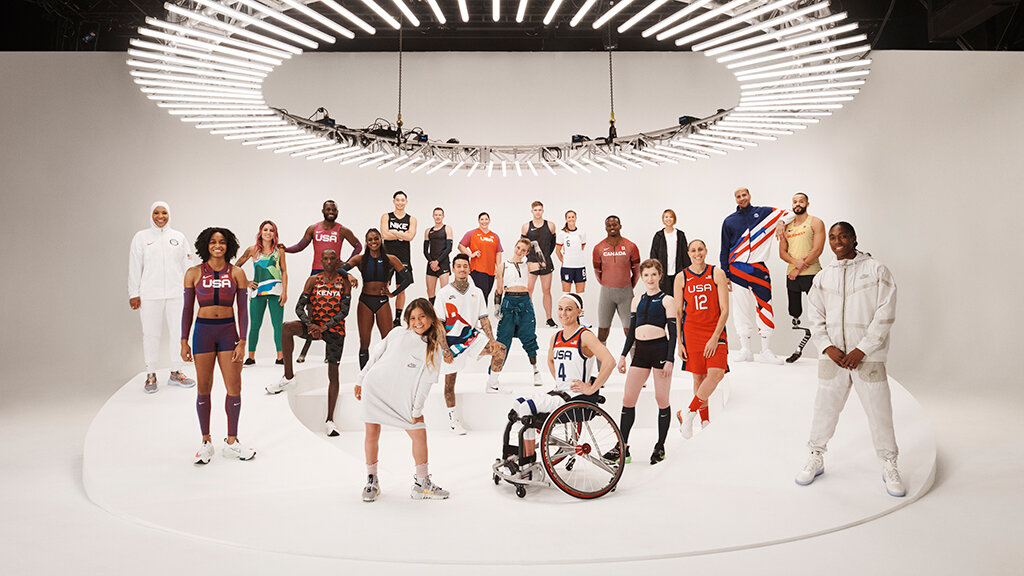
Nike models show off the Team USA medal stand attire designed for the 2020 Tokyo Olympics. Image via

Nike models show off the Team USA medal stand attire designed for the 2020 Tokyo Olympics. Image via

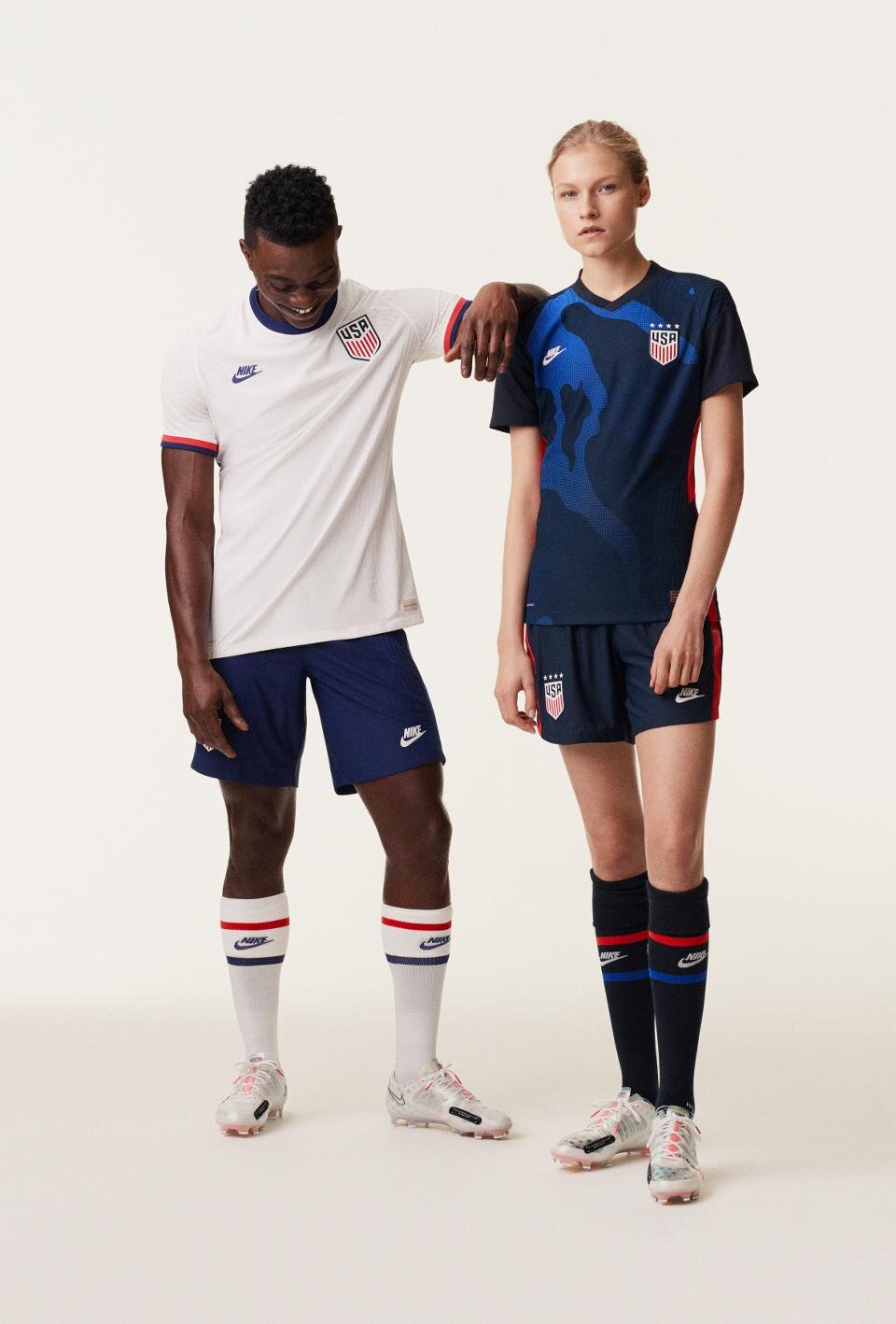
The simple, yet elegant, chevron front design creates a flattering frame for men and women alike. Image via

The simple, yet elegant, chevron front design creates a flattering frame for men and women alike. Image via

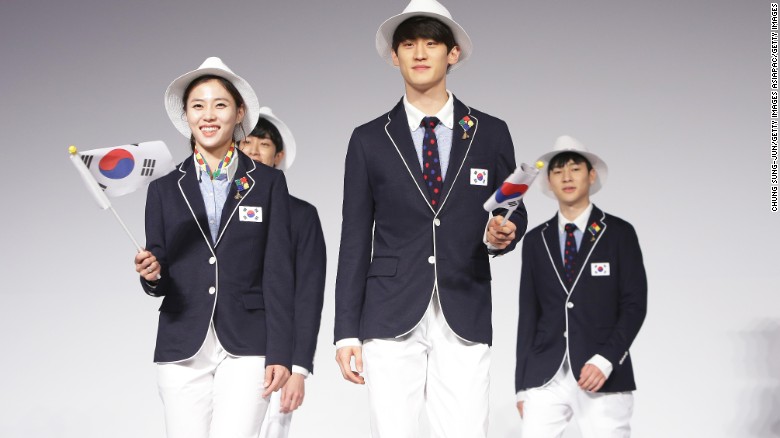
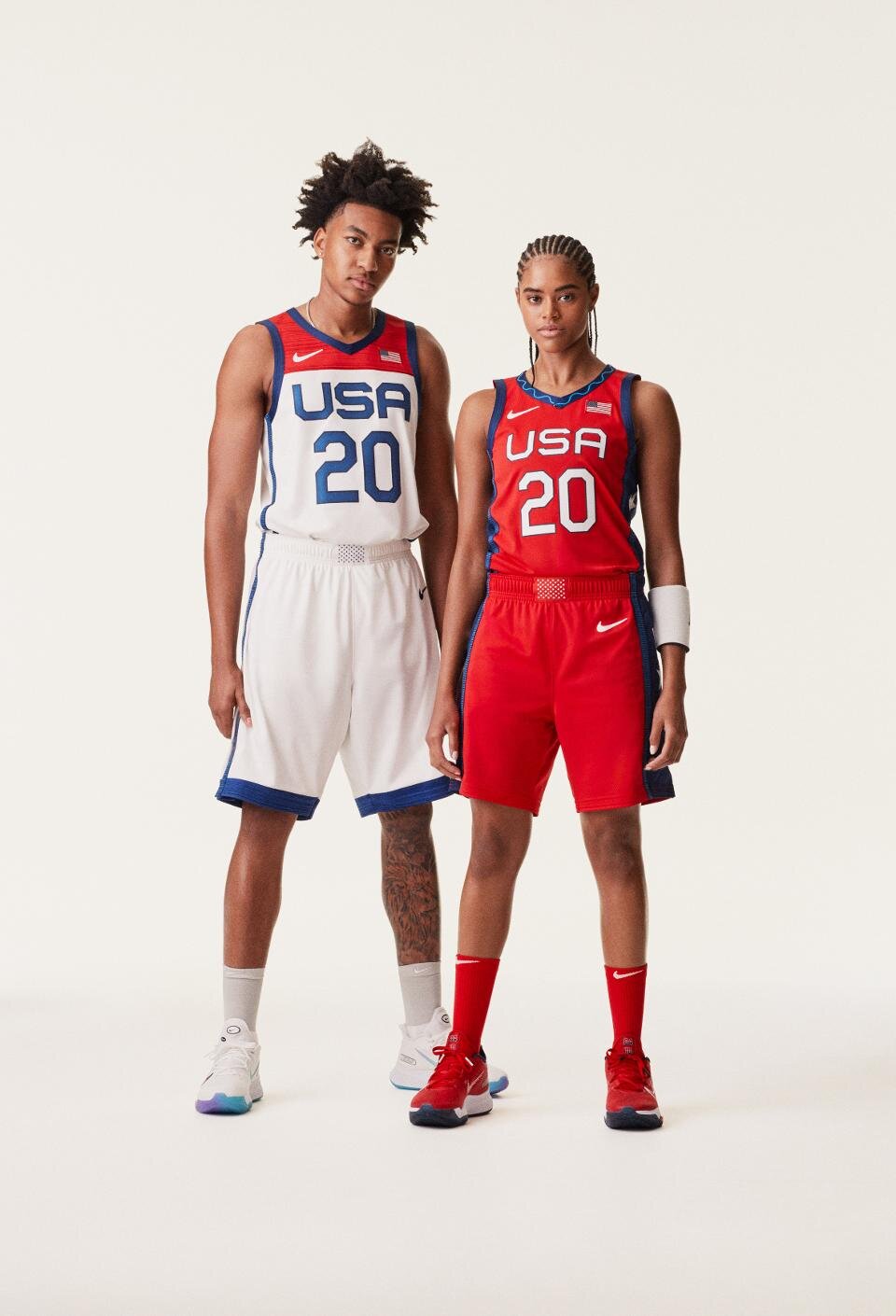
The 2020 Olympic Games were the perfect opportunity for Nike to remind the world just how monumental they can be. With the push for sustainability spreading quickly, every member of the garment industry is working to find ways to do their part to save the environment. Nike decided to take a stab at this challenge with their recent release of uniforms for the US men’s and women’s basketball teams as well as soccer jerseys for the US, Korean, and Nigerian teams. Paired with an all-inclusive medal stand and training apparel, it seems to me like these teams couldn’t have gotten a better deal.

In Nike’s newly invented polyester you can find anything from recycled plastic bottles to rubber and yarn waste from their own factories. Even the design of the new VaporMax sneakers, made with 75 percent manufactured waste, was said to have been influenced by waste piles. That’s right, waste piles. And if that’s not good enough news for you, the company reported that as a result of their active waste reduction they have managed to cut down their carbon emissions by about 30 percent.

Let’s just say Leo would approve.
Nike’s newly released VaporMax designed for gold medals only. Image via

Nike’s newly released VaporMax designed for gold medals only. Image via

The innovation, however, does not stop there. Since Nike is all about finding the balance between fashion and function, they also took the athlete’s “on-the-go” schedule into consideration. The footwear’s Flyease technology not only allows the shoes to become one with the wearer, but also allows wearers to slip on their shoes without the hassle. Additionally, in preparation for the Tokyo summer heat, all of the clothing was designed to be as lightweight and breathable as possible. How thoughtful (she wrote in the most non-sarcastic way possible).

Nike has been so deliberate that they applied their new eco-friendly techniques to even the smallest of details. Recycled waste rubber, dubbed Nike Grind, makes up the clothing’s zipper pulls, Olympic emblem, and logo. The power of Nike Grind was also applied to the drawstring cords, zipper pulls, and iconic swoosh that adorns the uniforms. They really thought of everything. At this rate, it wouldn’t be totally unreasonable to say they’re starting to reach levels of detail comparable to haute couture.

Nike prepares incoming skateboarders for victory as they take on the Olympic Games for the first time. Image via

Nike prepares incoming skateboarders for victory as they take on the Olympic Games for the first time. Image via

Team France Skateboarding uniforms. Image via

Team France Skateboarding uniforms. Image via

Team Brazil Skateboarding uniforms. Image via

Team Brazil Skateboarding uniforms. Image via

Still, my award for Most Exciting Piece in the Release probably has to go to the brand’s, for lack of a better word, cool skateboarding design, which is sure to stun viewers at the sport’s debut in the Olympics. Dutch visual artist Piet Parra worked alongside Nike’s Chief Design Officer John Hoke and team to create colorful and unique abstract designs, which are intended to celebrate some aspect of each country’s sport history. Once again, the attention to detail blows my mind.

Before you read any further, I give full disclosure that the world of skateboarding is almost completely foreign to me. The most I know about the sport is Tony Hawk’s significance to it and hearing people use the phrase “popping an ollie.” It doesn’t take a diehard fan, however, to notice that most skateboarders don’t tend to be in favor of uniforms when they’re getting in the zone to, forgive me if I’m wrong, “pop an ollie.” Therefore, much like how the collection’s medal stand shoes were designed to accommodate the athletes, the Bruin React sneakers are designed to allow skaters to feel one with the board underneath them. This way, even with the unfamiliarity of uniforms, skaters can feel one with the board. And of course, Nike’s sustainable designs also apply to their fancy new get-up. Compared to the other uniforms Nike has put out, those of skateboarding seem to have the most variations.

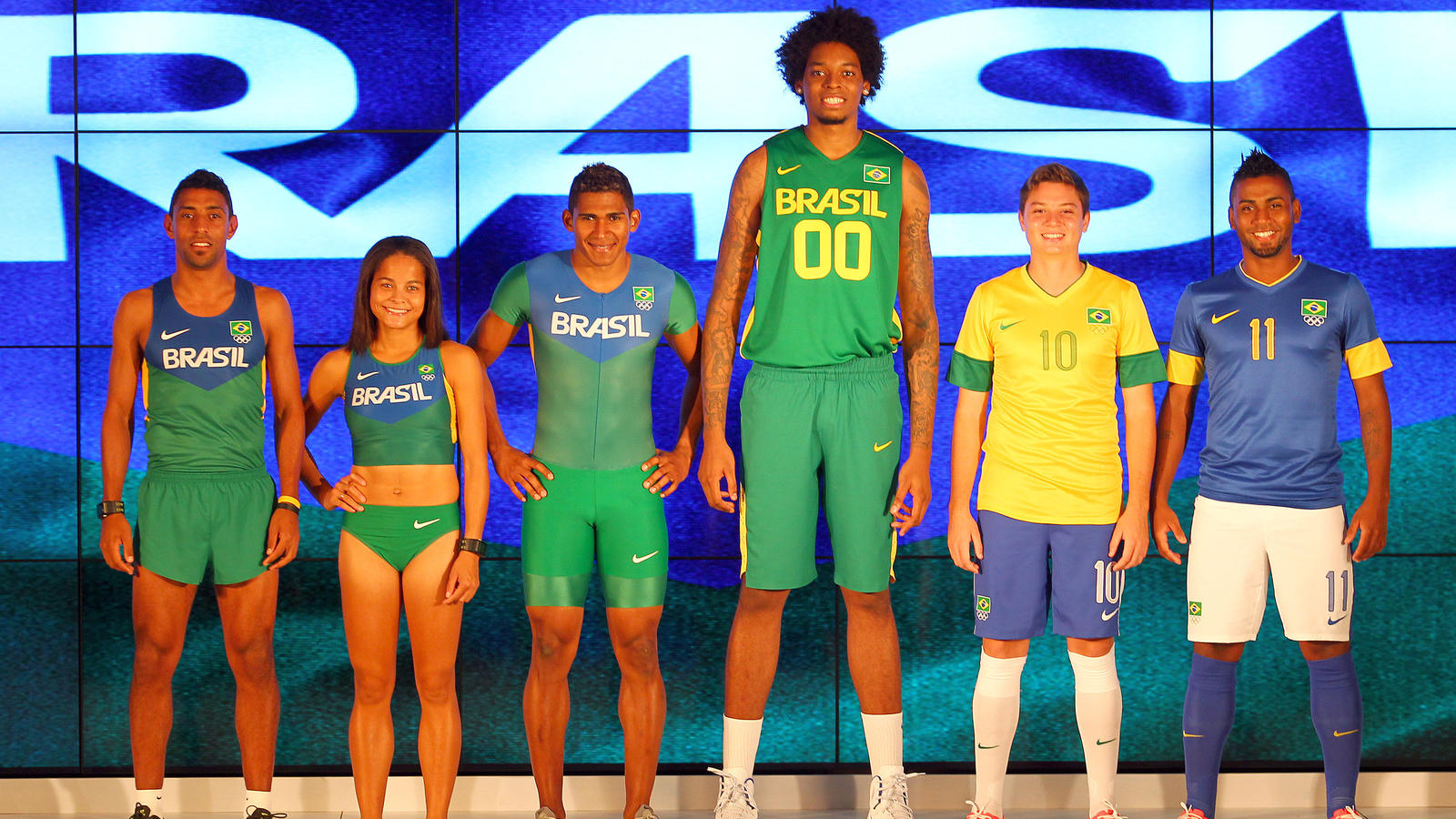
The women of Team France will fashion gorgeously red fitted jumpsuits, popular to American youth in the ‘60s, while Brazilians take on comfortable leggings, shorts, and jerseys, an obvious ode to the significance of football in the country’s culture. You’ll never catch me rooting for anyone other than team USA, but I’ll admit, Parra’s playful designs for both France and Brazil come close to making me question my loyalty.

But what happens if this glorious collection never gets to see the light of day?

Nike-News-PPE-Face-Shield_native_1600.jpg

COVID-19

Turning Nike Air Into Safe Air

Although certainly unfortunate, the postponement of the Olympic Games came as no surprise to anyone when Japan’s Prime Minister Shinzo Abe made the announcement in March. 

Don’t get me wrong, I love talking about fashion as much as the next person, but it would be irresponsible of me not to address the severity of what is happening in the world right now—COVID-19. Since 1896, when the first modern Olympic Games were held, there have only been three cancellations, all due to war, which goes to show that the Games’ cancellation was not taken lightly. Athletes, who have spent a lifetime training for this once-every-four year event, will have to take a step back. Japan, which according to Japan Times has already invested $12.6 billion in preparation for the games, will face a devastating blow to its economy. Even so, what has happened over the course of the past few months has, hopefully, given the whole world a new perspective on what really matters—taking care of others. 

NIKE, Inc., will provide an additional $1.6 million to help local organizations meet immediate needs…Our people and our communities have always been at the core of who we are and what we do. Nike’s leaders, the Nike Foundation and Nike have committed more than $17 million to COVID-19 response efforts around the world. —Nike Community Response, via.

Nike Air technology. Image via

Nike Air technology. Image via

There is no doubt that Nike has dominated in its work from the start, and they’ve shown how much thought and care goes into what they do through their endless collection of clothing and shoe designs. But now they’re stepping into uncharted territory. Their skilled teams have joined forces to build Personal Protective Equipment (PPE). Furthermore, the company has discovered a way to engineer full-face shields and powered air-purifying respirator (PAPR) lenses for protection using Nike-owned materials.

As Nike works hard with health professionals to take care of the doctors, nurses, and other honorable members on the frontlines, please take care of yourselves. Reach out to loved ones. Listen to stay-at-home orders, practice social distancing, and wash your hands.

Just do it.


Featured image/gallery images via. Mask image via.

2018 Olympics Figure Skating Recap

If you’ve followed the 2018 Pyeongchang Winter Olympics, then you can probably relate to scurrying out into the cold to buy a bag of Hot Cheetos and hunching over your desk to type up that paper before NBC’s 8 p.m. primetime streaming. With every crunch of ice under a boot, there was something about being in Chicago that made me feel like I was right there next to those bundled-up athletes. It helped that every time I opened social media, I saw Instagram stories from my favorite skaters, and news updates on medals and world records – a lot of smiles, talent, and glory.

If you would like to catch up on some of the most exciting and iconic moments of these past weeks, here's a figure-skating-centric recap of the Olympics at your service. To see some of these moments for yourself, you can always watch videos of individual skates on YouTube. Ready, set, sending some Olympic spirit your way just in time for finals:


5 quotes to help you get up for an 8:30 A.M. class

(Smiling) I like to win with some drama.” – Yuzuru Hanyu (JAPAN), on comments of his resemblance in appearance to a heroic animated character. 

“I’d get up at 6 to go to first period, then go to the rink to skate for two hours, then back to school for [two more periods], then I’d eat lunch on my way back to the rink to skate for another two hours, and then I’d have workout or physical therapy after that!” – Vincent Zhou (USA), on attending high school as an athlete.

“I’m definitely going for it: no guts no glory. If I fall, I’ll take the fall and get up and keep going.” – Mirai Nagasu (USA), on anticipating the triple axel.

“For me, my mom followed me wherever I went—for me she even left her job. She always covered the costs for everything alone. I really care for her very much. And then, sometimes (tearing up), she probably can’t eat well, [but travels] just to be in the same city with me.” – Boyang Jin (CHINA), on his first thoughts upon viewing his free skate score. (Quotation is translated from Chinese.)

“You know, you always need to be thinking a step ahead. If you put a ceiling above you too quickly, you're blocked, and it's not good!” – Javier Fernández (SPAIN), on whether he will continue to skate after the 2018 Olympics.


Fast Facts

RUSSIA: Well, this year Russian athletes weren’t competing as “Russian athletes.” Because of a doping scandal during the 2014 Winter Olympics in Sochi, Russian athletes were not allowed to represent their country in the 2018 games, and competed under the name “Olympic athletes from Russia.” The International Olympic Committee (IOC) also banned athletes from marching under the Russian flag or wearing their national colors, so you’ll find a band of Olympians wearing neutral gray parkas walking behind an Olympic logo flag.

FIRST US TRIPLE AXEL: This year, Mirai Nagasu became the first US female skater to land a triple axel in the Olympics. The jump is a buzz-generating big deal in the figure skating community, and skaters and coaches had an eye out for Nagasu going into the program. The Axel is the only figure skating jump that takes off facing forward, requiring three-and-a-half rotations in the air. Before Nagasu, Midori Ito and Mao Asada from Japan were the only women to land triple axels in Olympic competition.

FIVE QUADS: This year, Nathan Chen (USA) landed five quads in his free skate program. The quadruple jumps come in six varieties: the quad loop, toeloop, flip, Salchow, Lutz, and Axel. After the 2010 ISU score change and the 2014 Sochi Olympics, a quad is now a seasonal must-have if one wants a chance at the men’s podium. Quads carry whopping base values of 9.8-13.3 points. Skaters rely on fast-twitch Type 2 muscles to snap into the air, and usually skilled contenders may pack one to three quads in their programs. But Chen was running on a self-described burst of anger from his disappointing short program on Friday, and eager for redemption. He decided on Friday night that he would go for six quads the next day. The decision translated to him performing quad after quad in the following long program, and we just watched the score go up and up, in huge blocks of tens.

NORTH KOREA: This year, North Korea sent an athletic delegation amid international tensions regarding its nuclear weapons program. Nuclear tensions have been so high, that early this year the Bulletin of Atomic Scientists organization redialed its notorious Doomsday Clock, which is a public symbol that analyzes the political and scientific climate to illustrate the proximity of a catastrophic nuclear war. It is now "two minutes to midnight," where "midnight" denotes disaster, and the closest the clock has been since 1953, during the crux of the Cold War.

ASIAN-AMERICAN REPRESENTATION: This year, a record amount of seven Asian-Americans represented the Olympic U.S. Figure Skating Team. Twenty years ago, Olympic medalists Kristi Yamaguchi (1992 gold) and Michelle Kwan (1998, 2002 silvers) were forerunners of Asian-American representation in U.S. figure skating. Today, this 2018 team will continue to pave the way for a younger generation of Asian-American athletes who seek role models for inspiration and achievement.  

YUZURU HANYU: This year, after executing two precise and moving routines, the men's singles figure skating champion Yuzuru Hanyu defended his Sochi gold. His victory came off a recent serious ankle injury in November 2017, with the setback leaving him a mere three-week window to practice his triple axels, and only two weeks to practice his quads. Off-ice, Hanyu is enrolled in Waseda University's e-School, studying Human Informatics and Cognitive Sciences. He harbors a multitude of academic interests, including psychology, statistics, and mathematics. Hanyu says that knowledge in the social sciences greatly enables examinations of his skating technique and artistic expression from a scientific standpoint.


An Olympic Story

Mirai Nagasu is the first US ladies figure skater to complete the triple axel in the Olympics. On ice, she is serious and composed, drawing the audience into her world in the rink. Off ice, she is her energetic, smiley self—a girl who at first glance appears too excited for the things she finds special in life. She is 24-years-old and hails from hometown Arcadia—a sunshine suburb near Los Angeles, California—the daughter of Japanese parents who own a restaurant. On a rainy day at the local rink, a five-year-old Nagasu first stepped into a pair of ice skates, because it was too wet to play golf outside. She would be skating for years to come, spilling emotion on the ice, growing up in the public eye, and conditioning her body and mentality to the combination of technical precision and expressive theatrics that make up a good figure skater. 

At 14-years-old, she was waking up at 4:40 a.m., and at the rink by 5:45. She would skate for two hours, go to school for six hours, then return to her family’s restaurant, where her mom or dad would make her dinner. Her favorite food from those days was umeboshi, a dried pickled plum. After dinner, Nagasu would take ballet, return to the restaurant to do homework, and sleep on a yoga mat in the back-storage room. When the restaurant closed, her dad drove her back home while she was asleep, and put her to bed.

It was also at 14-years-old, when she won the 2008 U.S. Figure Skating Championships. She was the second youngest skater to claim that title. But very soon, the 2010 Vancouver Winter Olympics held disappointment in store; she placed fourth. Then, in a publicized controversy, she was not selected for the 2014 Sochi Olympics team despite placing third in the U.S. Nationals that year. The fourth place skater went instead, when precedence had followed that every year the top three finishers in the U.S. Nationals were guaranteed Olympic entry.

It was quite a perfect storm that threatened to wash away everything she had been building towards since that first rainy day at five. Nagasu cried during her gala performance the next day, and almost every day for months after. She bought In-N-Out hamburgers, and sat on the roof of her house with her friend Adam Rippon, who also did not make the team. There, she thought about how far she’d come—a life on ice—and how it was coming to an end almost overnight, with no Olympic medal to show for. She understood that figure skaters are typically young, and most just “fade away” one day. She would be 24-years-old for the next Olympics in 2018, an old skater in a girls’ event. How many four years does one have, to train outside public expectation and wait by the sidelines? An athletic career doesn't afford many four years. 

“But I’m not a fade-away kind of person,” she said during an interview with New York Times.

She stepped into her skates, determined to fill bigger shoes. She would add the triple axel to her repertoire, a jump no other female athlete in the world was attempting in competition. Nagasu left home for Colorado Springs to train, learning to cook and working part-time to pay the bills. The double axels were coming in high and solid; she needed the fitness and timing for a triple. The summer of 2017, she started landing them, half a year before the Olympics. Everything began to happen for her again: the second place at U.S. Nationals, the sponsors and media coverage, the social media followers and interviews, the ticket to the Olympics.

After an eight-year drought, Nagasu was back on Olympic ice. Yes, she delivered the triple axel to the judges, audience, her coach, everyone who knew her back home, and her country. She also created an hour of Olympic history that was genuinely her very own, that she could look back upon whenever she wanted to and see the loved daughter that her family is so proud of. Although Nagasu did not complete the triple axels in the individual event, she has a bronze medal from the team event tucked away safely in her pocket.

“So to become the first American to land a triple axel at the Olympic Games is historical, and no one can take that away from me,” she said in an interview.

While Nagasu’s story is a unique athletic journey to achievement, it is an experience shared by many immigrant families in the U.S., where the individual's dream becomes a collective family undertaking, and the child’s talent is bolstered by parents willing to make every end meet for their child to be happy and fulfill his or her passion. Nagasu has ascribed her work ethic to watching her parents work in the restaurant. Her teammate Vincent Zhou described Nagasu as “the hardest worker I know,” doing triple axel after triple axel until the coach insisted she leave the ice. Through Nagasu's story, we find that despite the somewhat unlucky deck of cards one is dealt with, one can trust that passion and strength may bring good things sometime later on.


“U.S. Stars on Ice 2018”

Pamper yourself to this "double Lutz-xurious" figure skating celebration. The tour comes to Chicago’s Allstate Arena on Apr. 29, 2018. Skaters let loose of their classical competition routines, shake off their ice princess and prince personas, and skate/dance to an energetic evening of upbeat music. It’s fun for the skaters and for the audience! The $25 tickets have just sold out, and currently prices range from $50 to $170. There’s also a post-show Meet & Greet for $100 that's sold out for Chicago, but they are still available in many other cities. All the skaters in the show table individual booths, and you can mingle, take pictures, and get autographs! Here’s more show info and where to get tickets. 

“U.S. Stars on Ice 2018” skaters: Nathan Chen (United States Champion), Meryl Davis & Charlie White (Olympic Gold Medalists), Maia & Alex Shibutani (Olympic Bronze Medalists), Ashley Wagner (World Silver Medalist), Jason Brown (United States Champion), Mirai Nagasu (United States Champion), Adam Rippon (United States Champion), Karen Chen (United States Champion), Madison Hubbell & Zachary Donohue (United States Champions), Bradie Tennell (United States Champion)


Feature image via

Outfitting the Olympics: Who's Wearing What to Rio

With the Rio Opening Ceremony just a few days away, we thought it fitting to spotlight some of the sartorial statements that will be taking a turn on the Olympic track this Friday. 

image via

image via

TEAM USA x RALPH LAUREN

This quintessential American brand has been designing Olympic garb for U.S. athletes for years. From pinstriped blazers and white chinos to buttons downs with "USA" emblazoned across the back, Ralph Lauren's preppy-chic take on American style released an entire sports inspired, red, white and blue collection just for the occasion (looks can be purchased off of the brand's website and at select retail locations).

"The first ever illuminated Olympic flag bearer jacket" will also be making its debut in the Olympic arena, lighting the way for the more than 500 U.S. athletes that will be competing in Rio this summer. 

image via

image via

TEAM GB x STELLA McCARTNEY for ADIDAS

McCartney's highly successful collaborations with Adidas have mostly definitely paved the way towards her role as Team Great Britain's official Olympic dresser. The designer consulted with a handful of past and returning Olympians throughout the design process, and her lightweight uniforms will be worn by both the Olympic and Paralympic teams. 

One of collection's unique features includes McCartney's custom designed coat of arms, emblematic of both British patriotism and Olympic glory; "the new coat of arms is a hotch potch of British symbolism: three lions hold three fiery Olympic batons; our nations' flowers (leek, rose, flax, thistle) appear in the center shield; and a crown composed of medals sits up top ('symbolizing continuity, teamwork and shared responsibility') (Vogue UK). Many of the looks are available for pre-order.

image via

image via

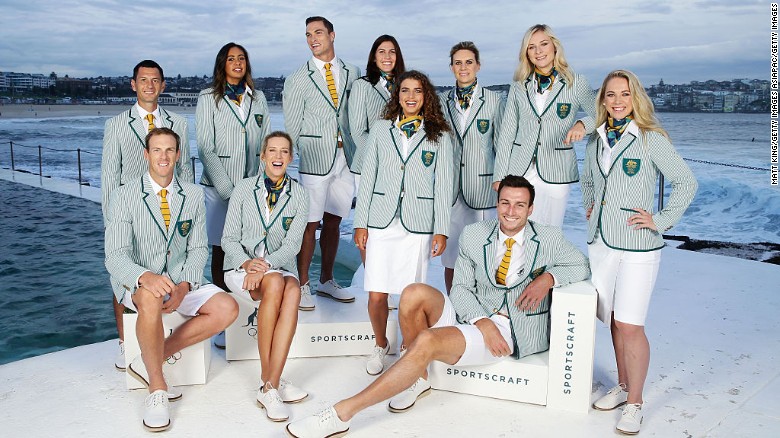
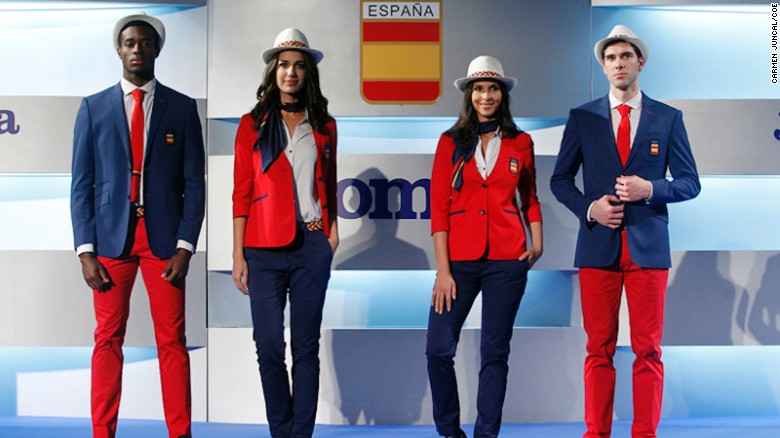
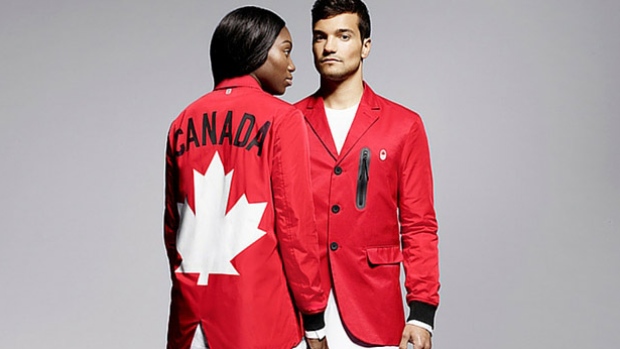
For more Olympic looks, check out our slideshow below:

Featured image via

Which teams will you be rooting for? Let us know in the comments below!