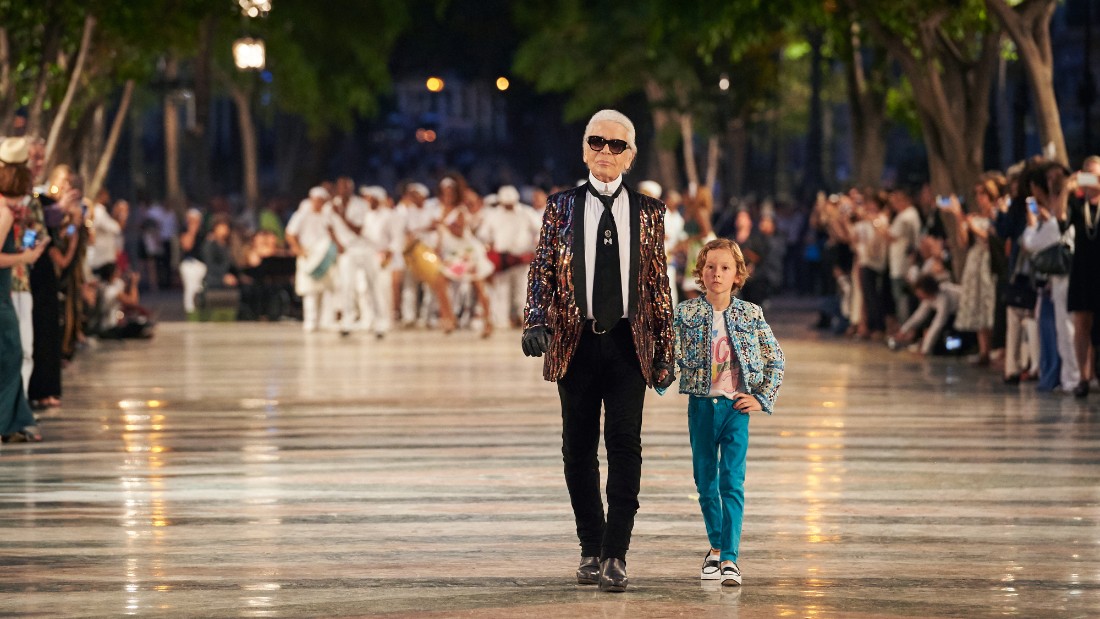
A Tribute to Karl Lagerfeld

Every year has its losses, yet this one seems heavier for me than most. A quick glance at my morning notifications on February 19th struck me with the loss of one of the biggest icons in fashion and in my life: Karl Lagerfeld.

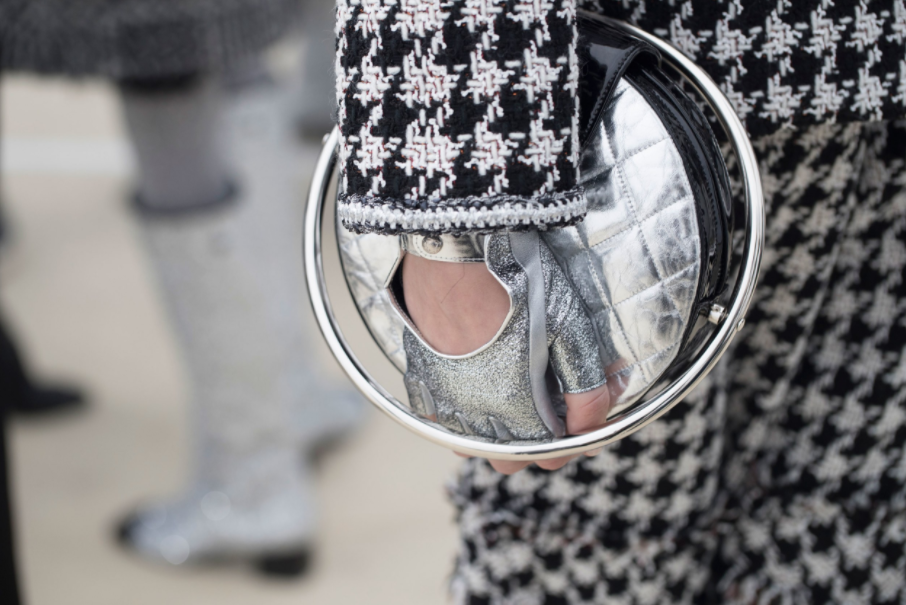
The ever-present ponytail, the sunglasses, the fingerless gloves, a facade far too recognizable. A creator in the purest sense of the word, Lagerfeld created an empire of his own while carrying out the vision of Gabrielle Chanel to the highest echelon known to fashion.
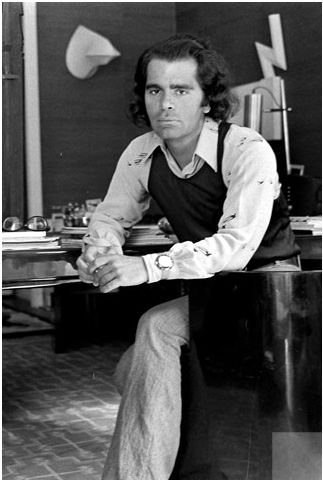

Image Via

Image Via

Born in Hamburg, Germany in 1933, Karl Lagerfeld always embodied that unapologetic demeanor that he came to be idolized for in the fashion industry. An artistic German boy who previously donned the last name Lagerfeldt, before dropping the “t” for a more commercial field, he was known to often publicly critique other’s fashion choices at quite a young age.

To say his genius was unbridled is an understatement. Karl took to Paris early in his youth to study. His studies were not fashion-based, though his desire to major in history was quickly and unsurprisingly dominated by his major in drawing. Lagerfeld would soon enter the fashion scene as an apprentice to Pierre Balmain after his coat designs won a fashion competition.
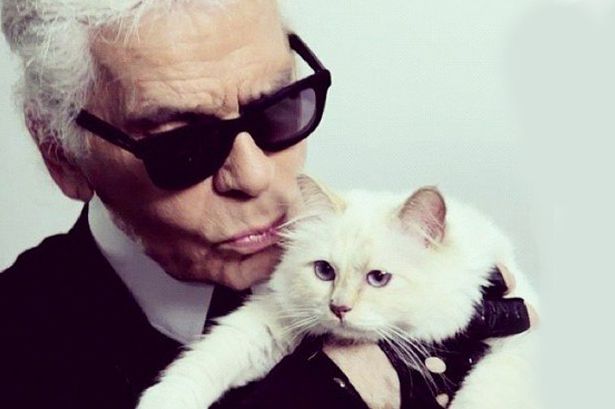
Image Via

Image Via

His fashion career quickly skyrocketed through his work with Chloe and Valentino, and his breakthrough innovation of Fendi’s fur line. He then worked to revitalize Chanel, bringing to life the brand’s now iconic CC monogram. Lagerfeld remained with Fendi and Chanel until his death, in addition to establishing his own namesake brand: Karl Lagerfeld Paris. His prolific collections were brazen takes on what the fashion world needed at any given time. A personal favorite was his homage to his pet cat, Choupette.
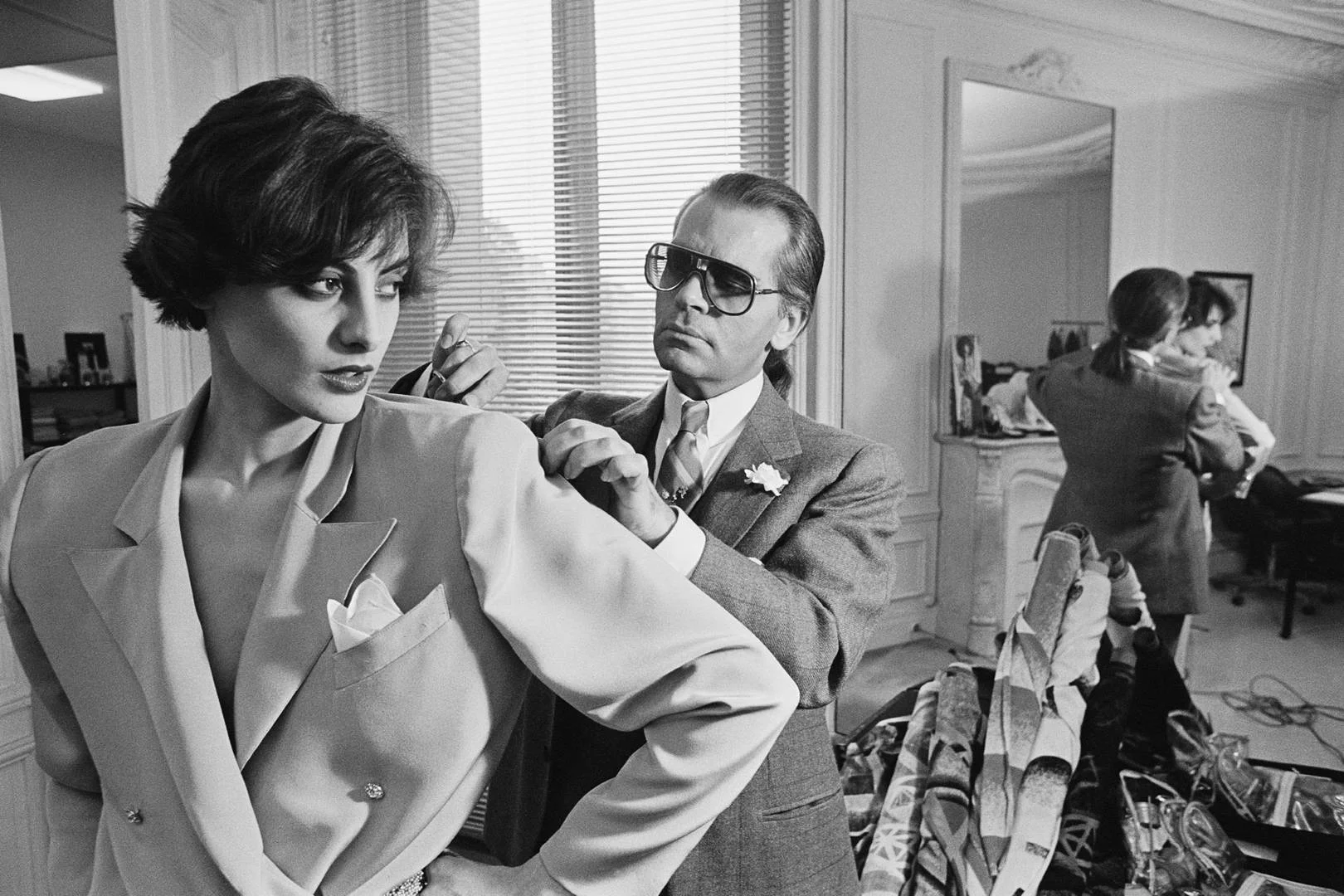
Image Via

Image Via

Lagerfeld was a magnet of attention, constantly reinventing trends and garments while always maintaining an unbelievably forward yet classy persona. Insisting on sketching with shu uemera eyeshadows only, Lagerfeld established a true name for himself in fashion. As his inspiration, Lagerfeld often cited muses like Kate Moss, Willow Smith, Cara Delevigne, Tilda Swinton, and G-Dragon.
The loss of Karl Lagerfeld will be forever felt in the fashion world and beyond. His influence in this dynamic world, however, will always remain and his sense of style always celebrated.

"Today the world lost a giant among men. His creative genius was breathtaking and to be his friend was an exceptional gift. Karl was brilliant, he was wicked, he was funny, he was generous beyond measure, and he was deeply kind. I will miss him so very much."

-Anna Wintour


Feature Image Via
Chanel is Shedding the Use of Exotic Skins

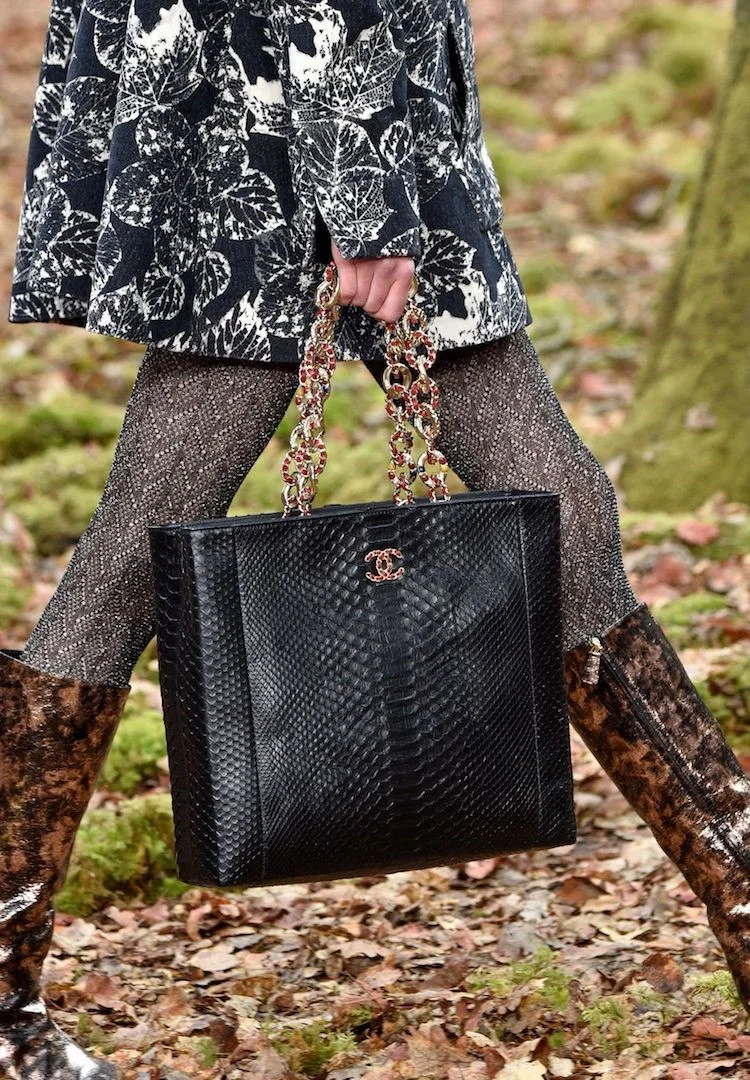
A python Chanel piece featured in Chanel’s Fall 2018 runway show. Source of image can be found via.

A python Chanel piece featured in Chanel’s Fall 2018 runway show. Source of image can be found via.

Haute couture looks have been dominated by the use of exotic skins and furs for years. However, world-renowned Parisian house Chanel recently announced that it will stop producing items made from “snakes, crocodiles, lizards, and other exotic skins.”

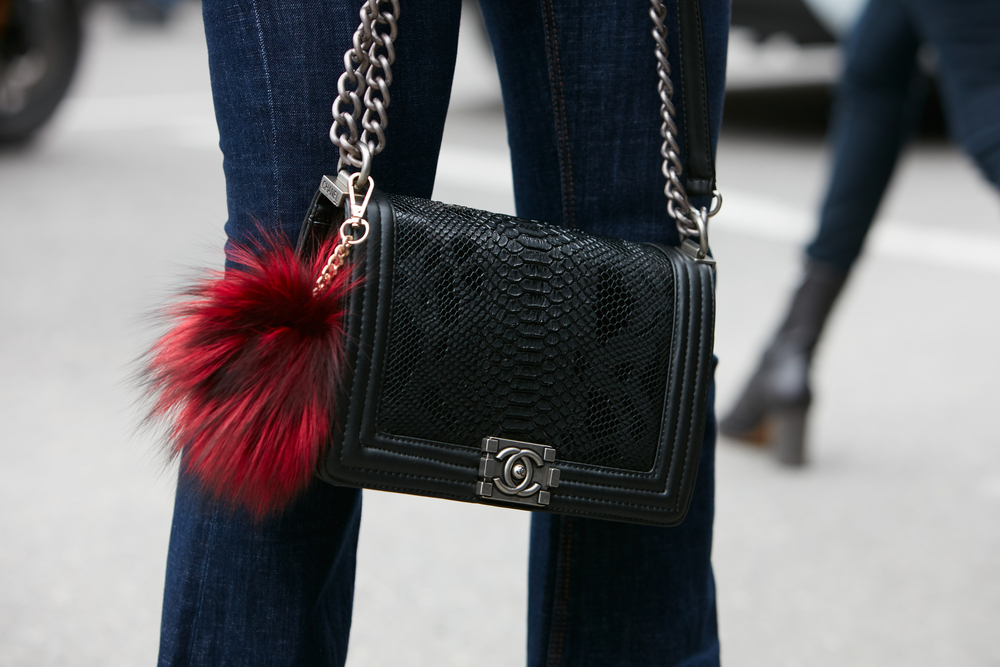
Clothing and accessories produced from these skins are often purchased at higher price-points and have symbolized greater luxury compared to items made of leather or other materials. For example, a Chanel “Classic” flap handbag made from python skin retails for $10,300, which is almost double the price of the same style of handbag made from calfskin.

In recent years, animals-rights activists have been less successful advocating for the ban on exotic skins, as opposed to fur. As a result, Chanel’s recent decision has been quite shocking for animals-rights activist groups such as People for the Ethical Treatment of Animals (PETA). To voice their approval of Chanel’s decision and to further the cause, PETA has purchased Chanel shares.

A black Chanel python “Boy Bag.” Source of image can be found via.

A black Chanel python “Boy Bag.” Source of image can be found via.

However, the decision to discontinue the use of exotic skins and furs was not a direct result of years of animals-rights activism and protests. In a statement released by Chanel, the house stated that the main reason behind their decision to stop using exotic skins and furs was the difficulty in sourcing the materials responsibly. Rather than completely eliminating exotic skins in their items, other luxury brands have made steps to source their materials ethically. Kering, which owns companies like Gucci, Saint Laurent, and Balenciaga, has made it a goal to source all of its alligator skin ethically and even invested in a python farm in Thailand. However, PETA’s manager of fashion companies, Christina Sewell, states that it is actually impossible to ensure that exotic skins are sourced ethically because the supply chain is too complex.

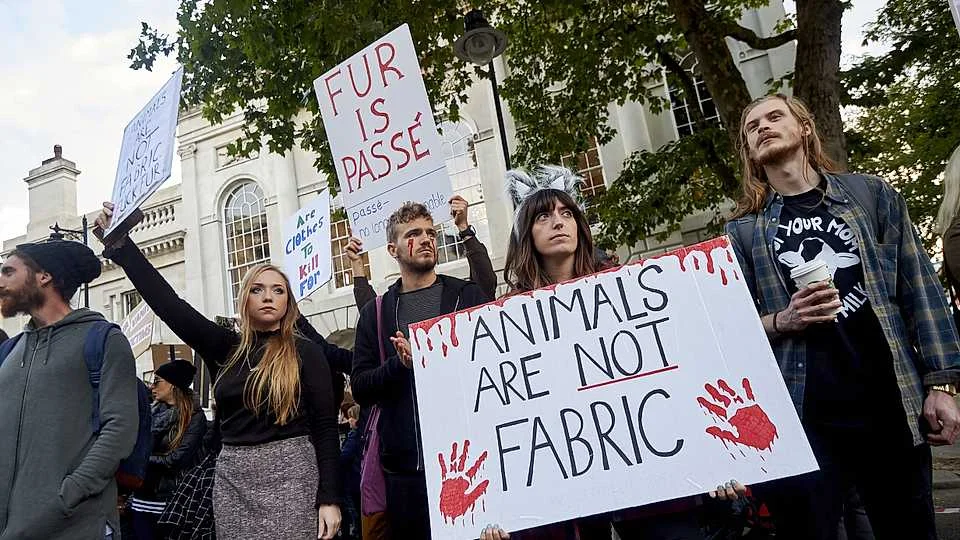
The decision to move towards more ethically sourced materials and away from fur has been a popular move for several brands recently. Brands like Gucci, Burberry, Michael Kors, and Versace have either stopped designing products with fur or have announced plans to cut fur out of their supply chain as of 2016. In 2018, San Francisco and Los Angeles announced plans to prohibit the sale of fur.

Anti-fur protesters outside of London Fashion Week S/S 2018. Source of image can be found via.

Anti-fur protesters outside of London Fashion Week S/S 2018. Source of image can be found via.

More recently, a fashion industry charter for climate action was established and launched at the United Nations climate change conference, COP24. Brands like Stella McCartney, Burberry, adidas, and H&M group make up a few of the forty signatures.

This movement of designers towards ethical and sustainable measures undoubtedly reflects a shift in consumer preferences. According to a Business of Fashion article, “many millennial and Gen-Z luxury consumers say they prefer to buy products that are ethically sourced and have minimal environmental impact.” As consumers are becoming increasingly concerned about the environmental impacts of the fashion industry, we can hopefully expect to see more houses and designers turning towards more ethical measures.


Feature image via.

Sputnik Sweethearts at Chanel FW17

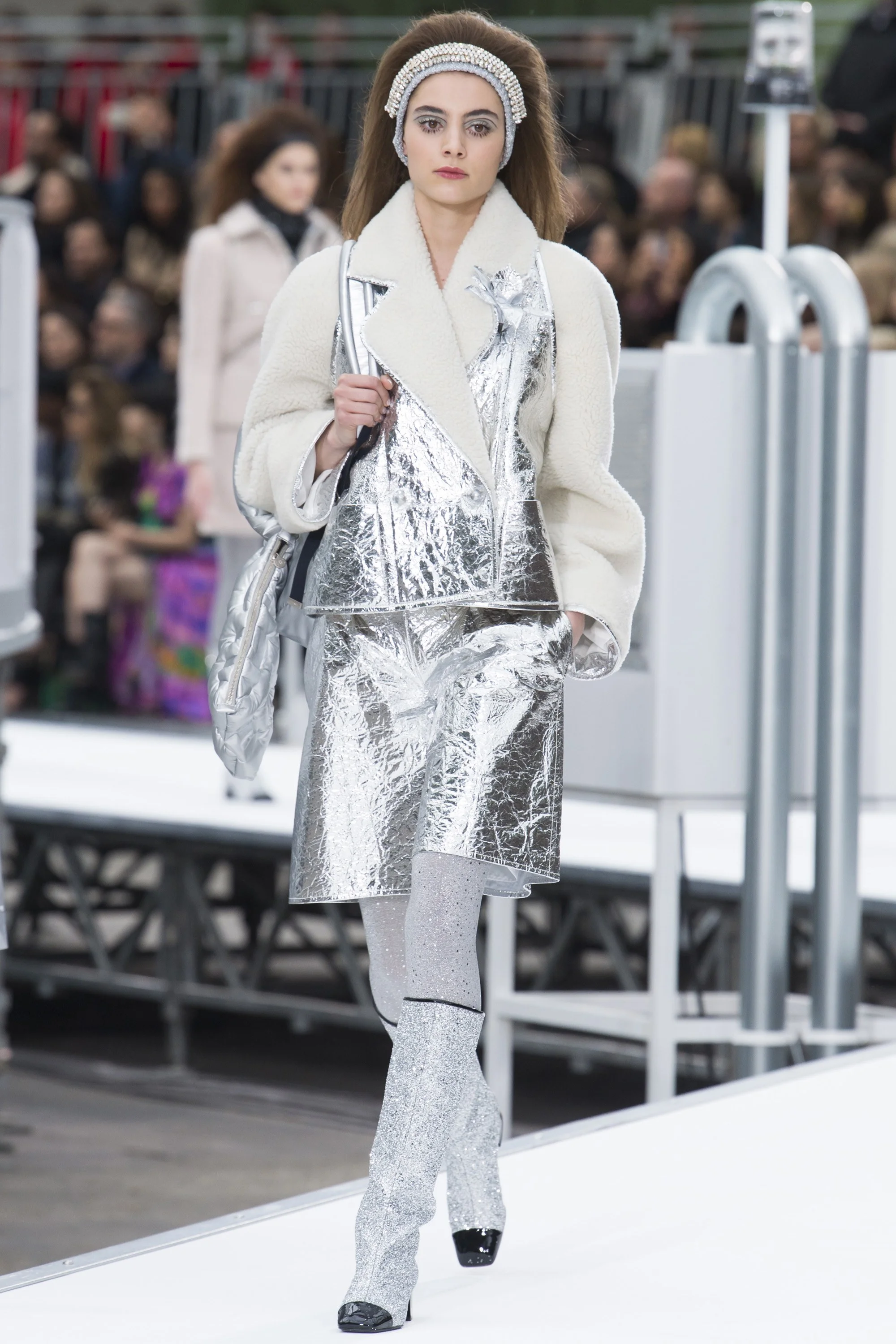
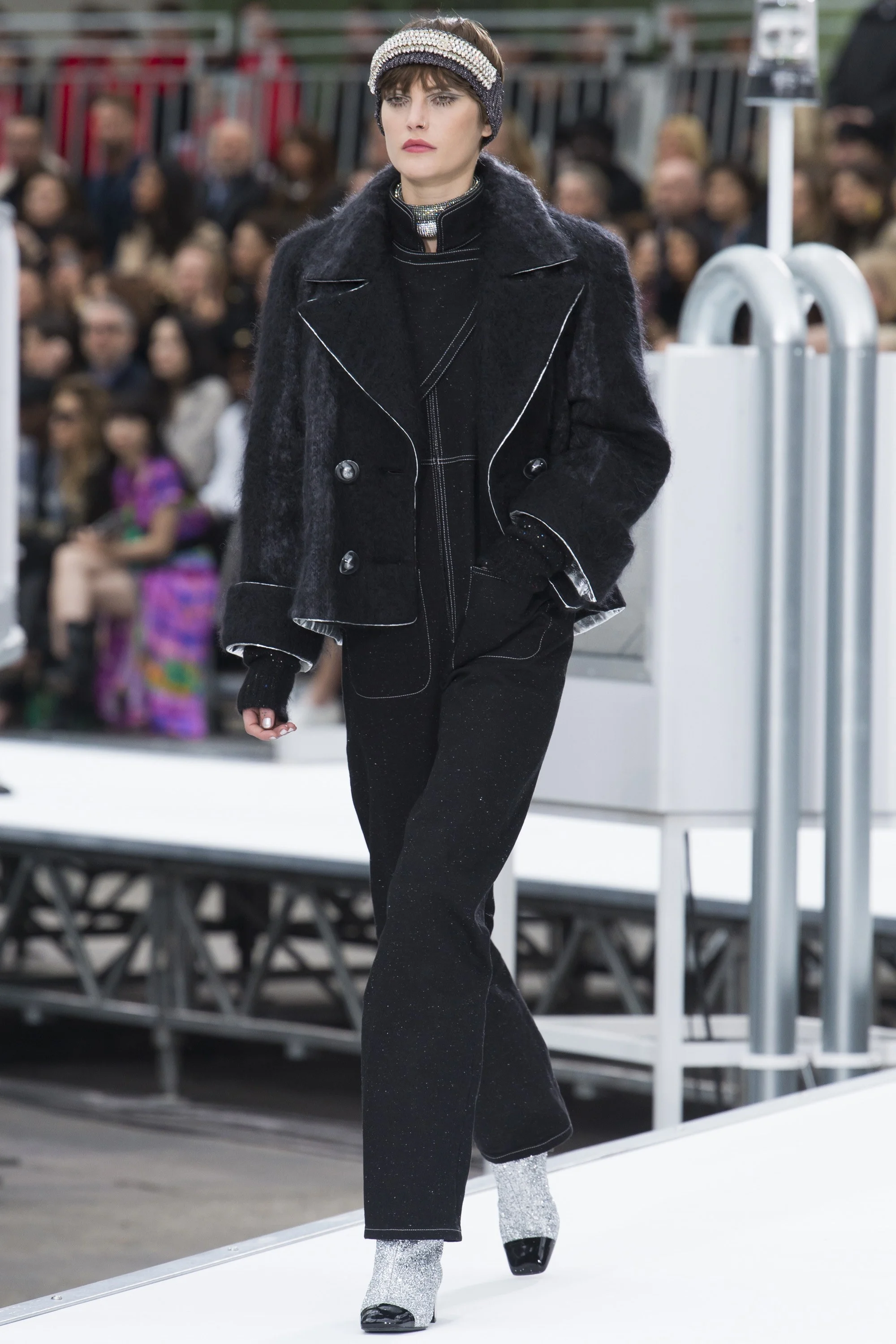
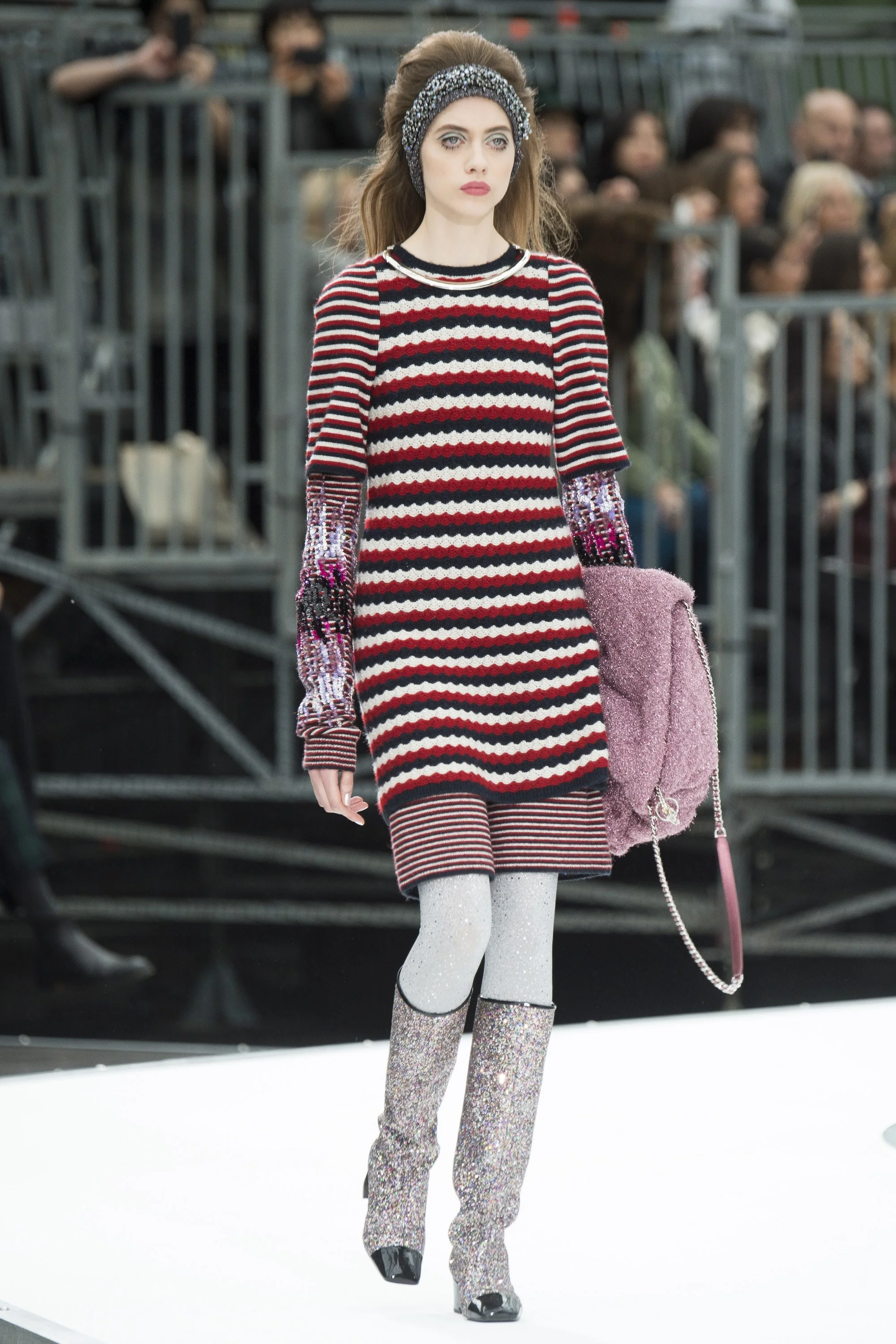
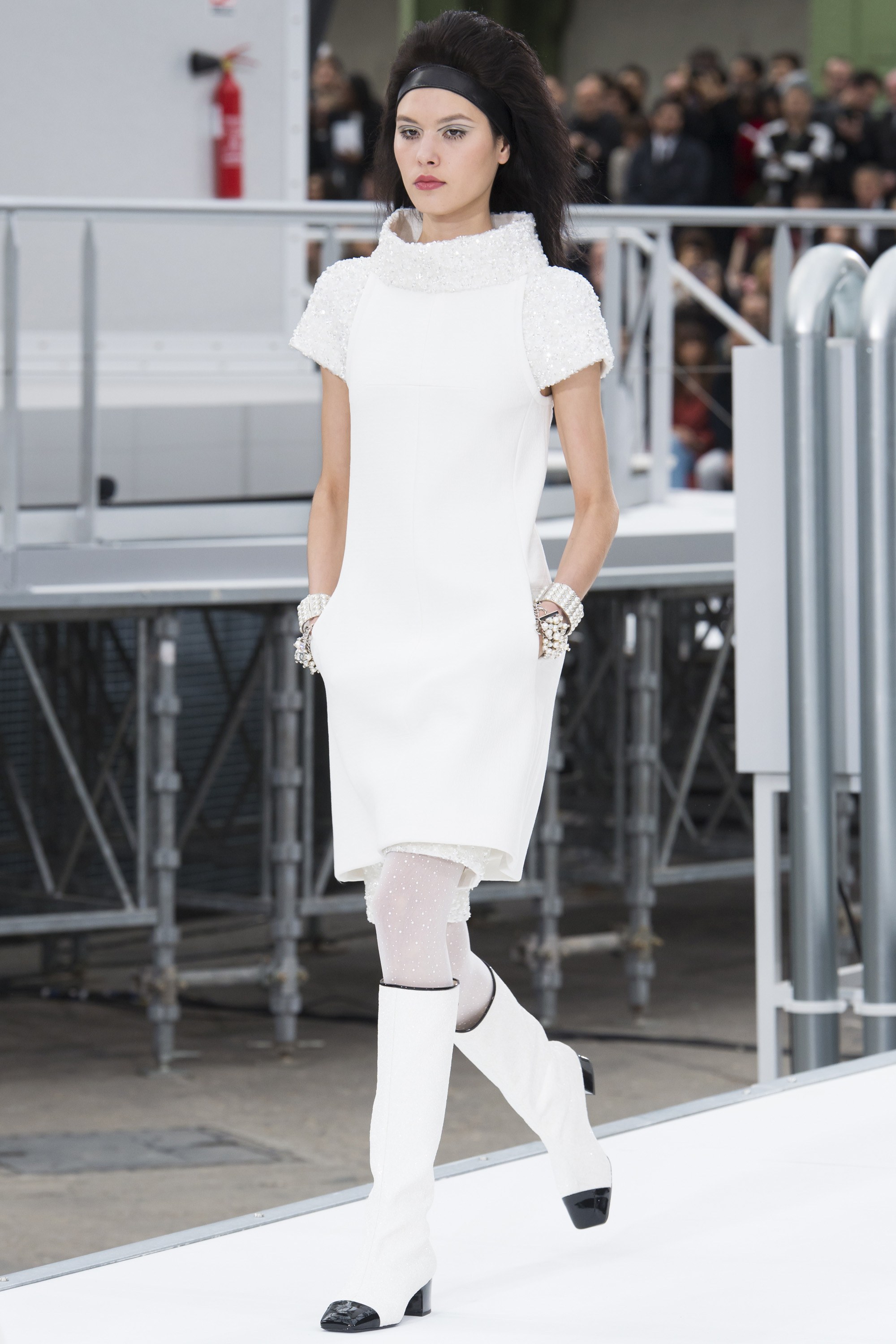
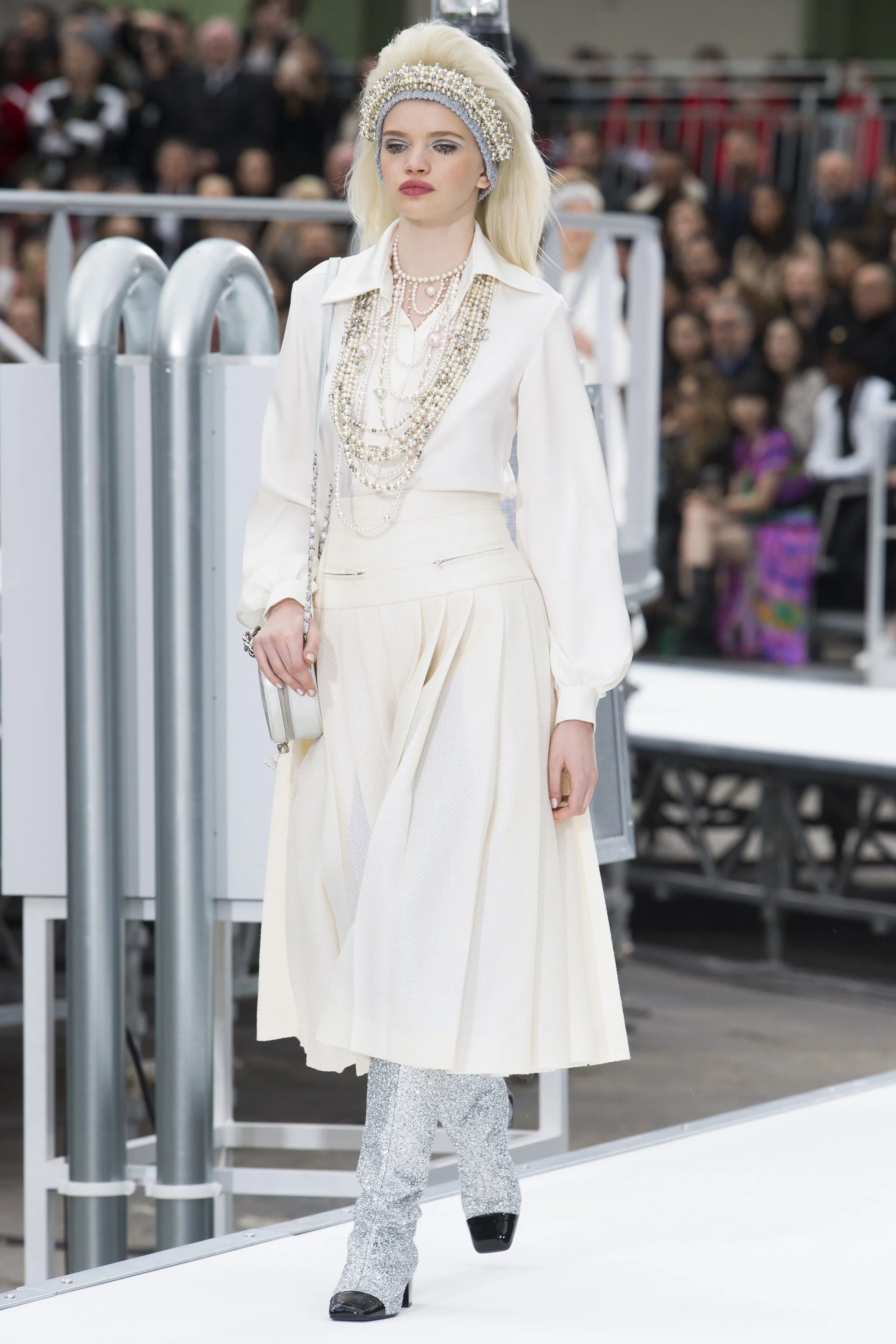
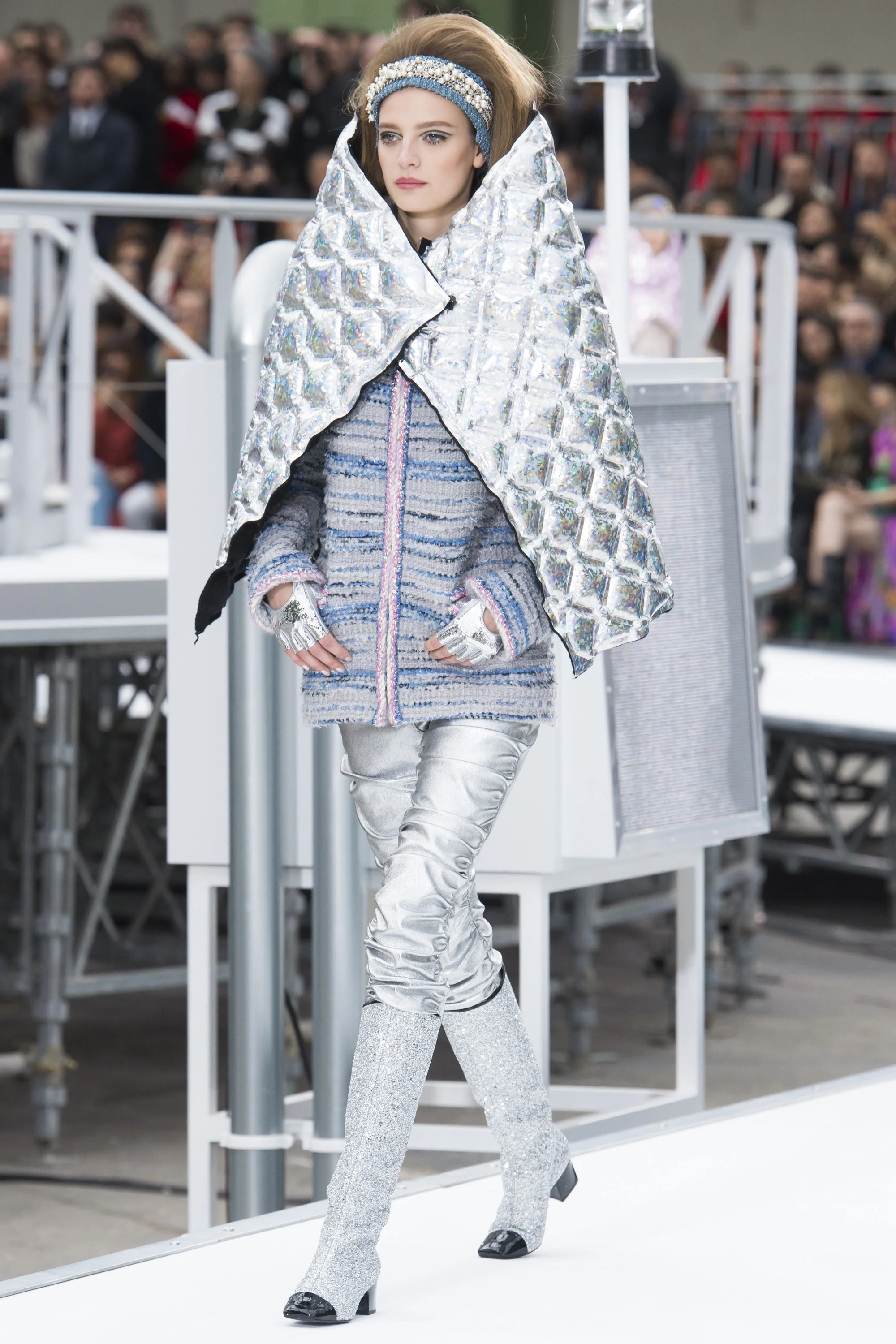
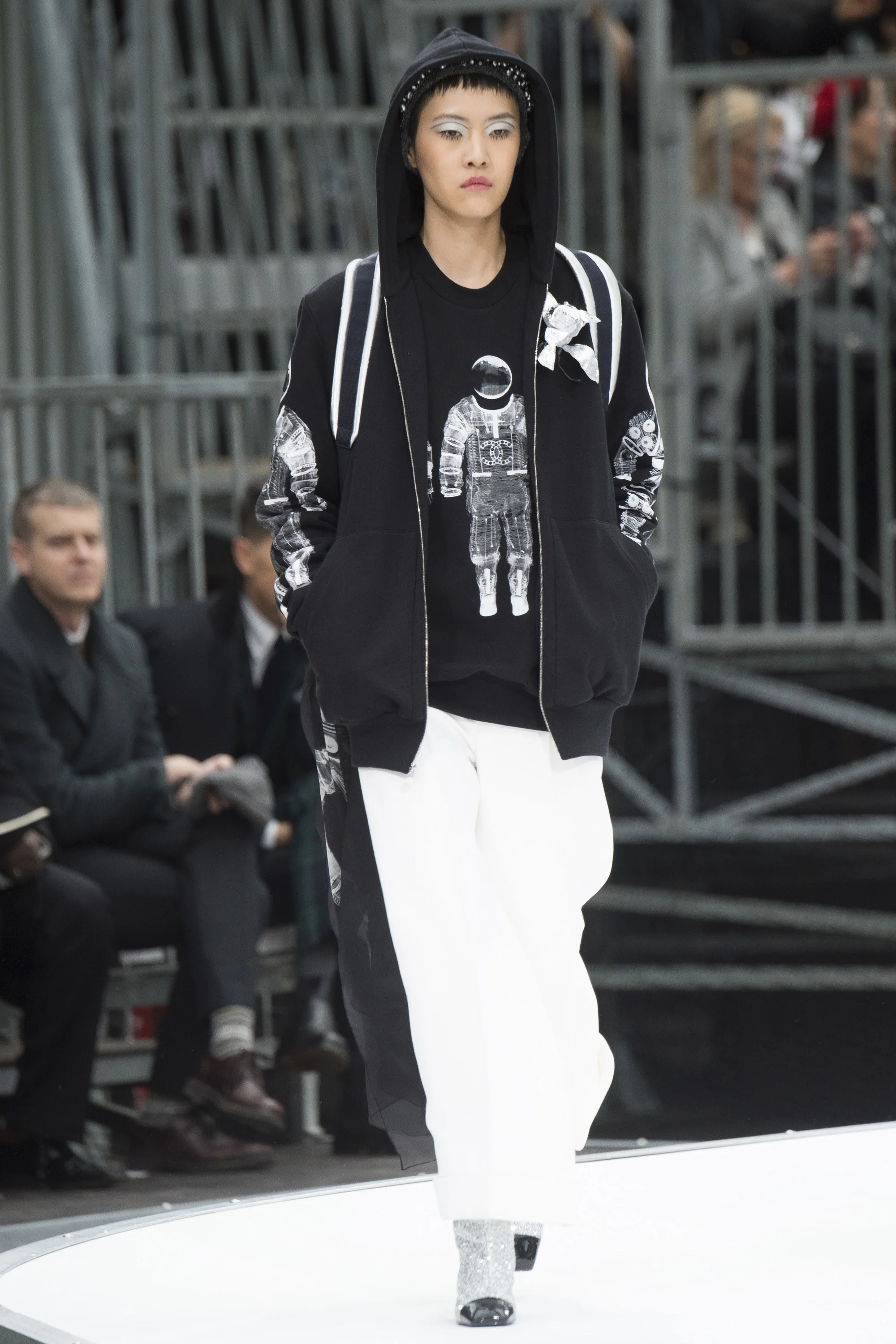
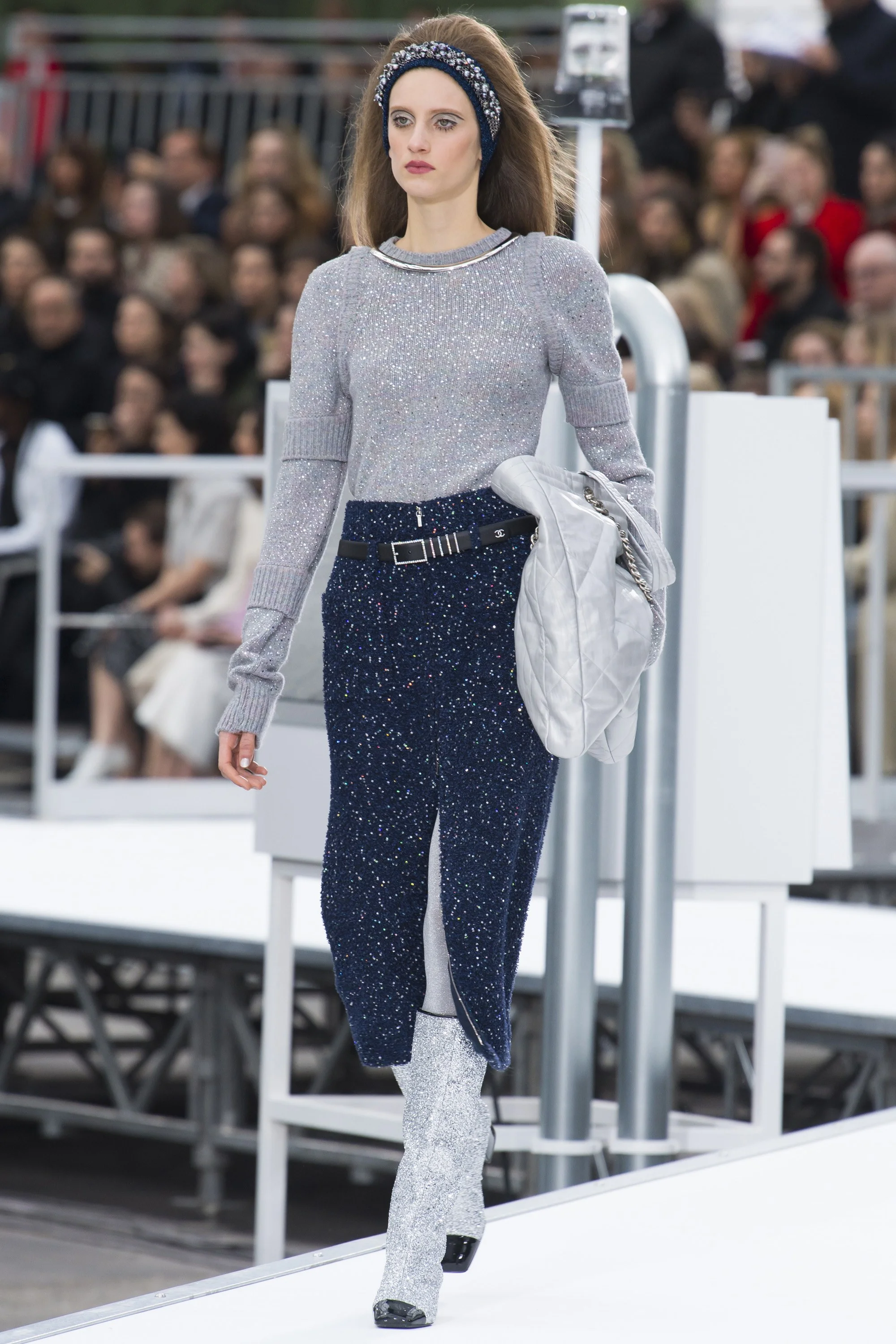
Karl Lagerfeld took his vision for Chanel to intergalactic heights this past week, opening Paris Fashion Week with a mod, 60s-chic inspired collection at the Grand Palais. If you thought Chanel's larger-than-life runway recreations of supermarkets, airports, political demonstrations or art galleries were worth marveling over, they're going to look like child's play compared to this Chanel-themed space station, complete with a staged rocket lift-off at the close of the show.

The Setting

15.3k Likes, 154 Comments - Vogue (@voguemagazine) on Instagram: "Karl Lagerfeld outfitted the Grand Palais with a rocket for his Fall 2017 @chanelofficial show,..."

The Collection

All above images via
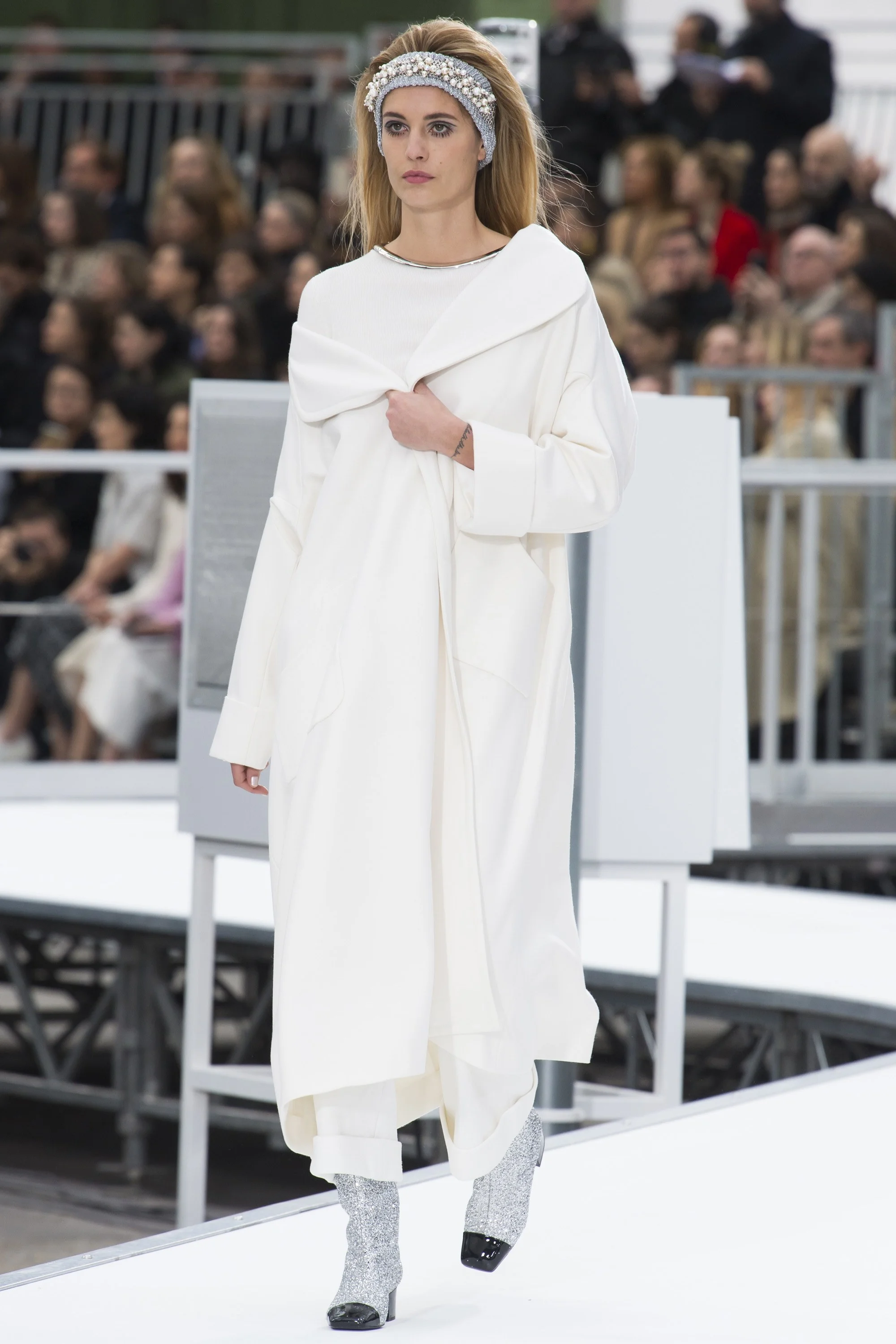
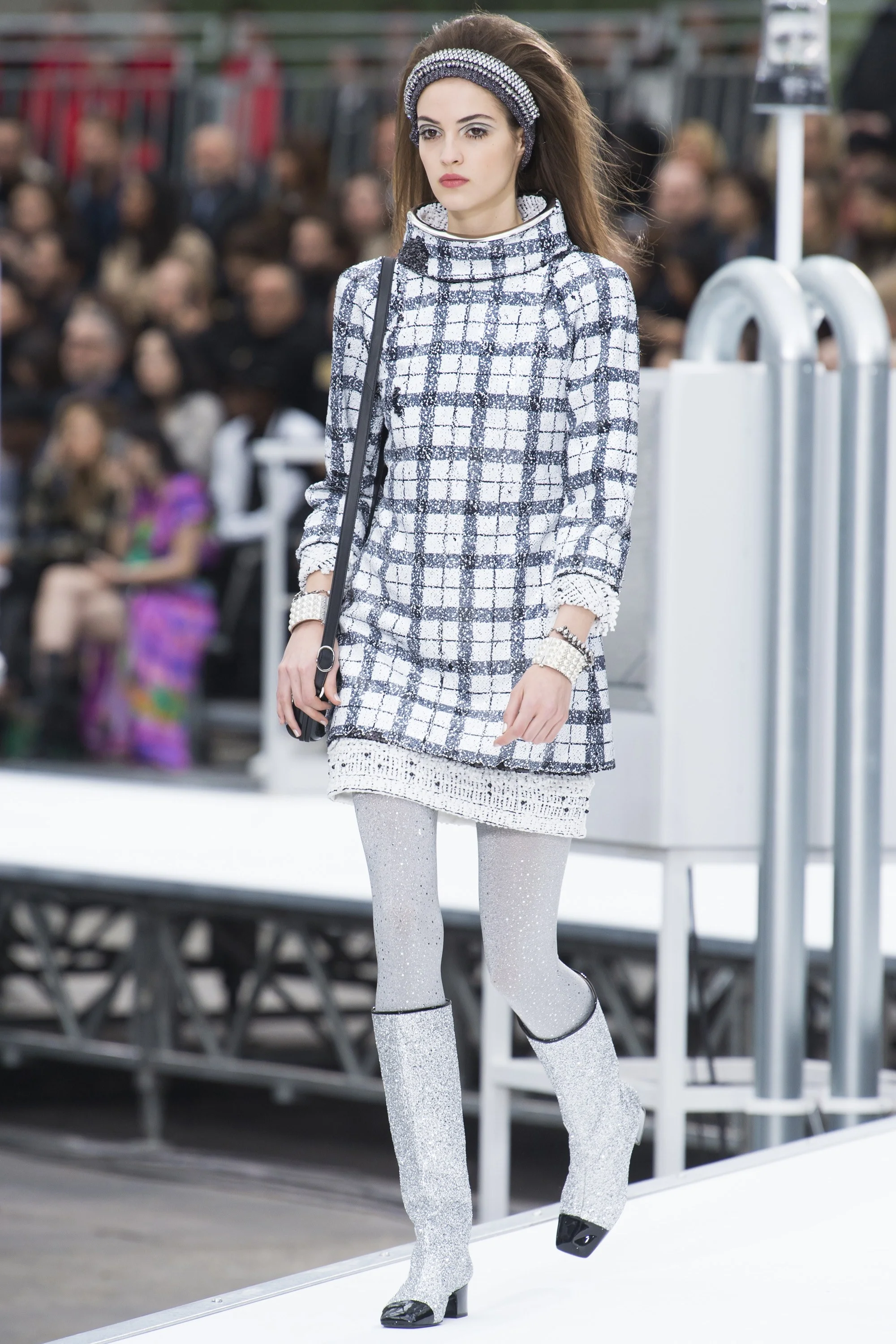
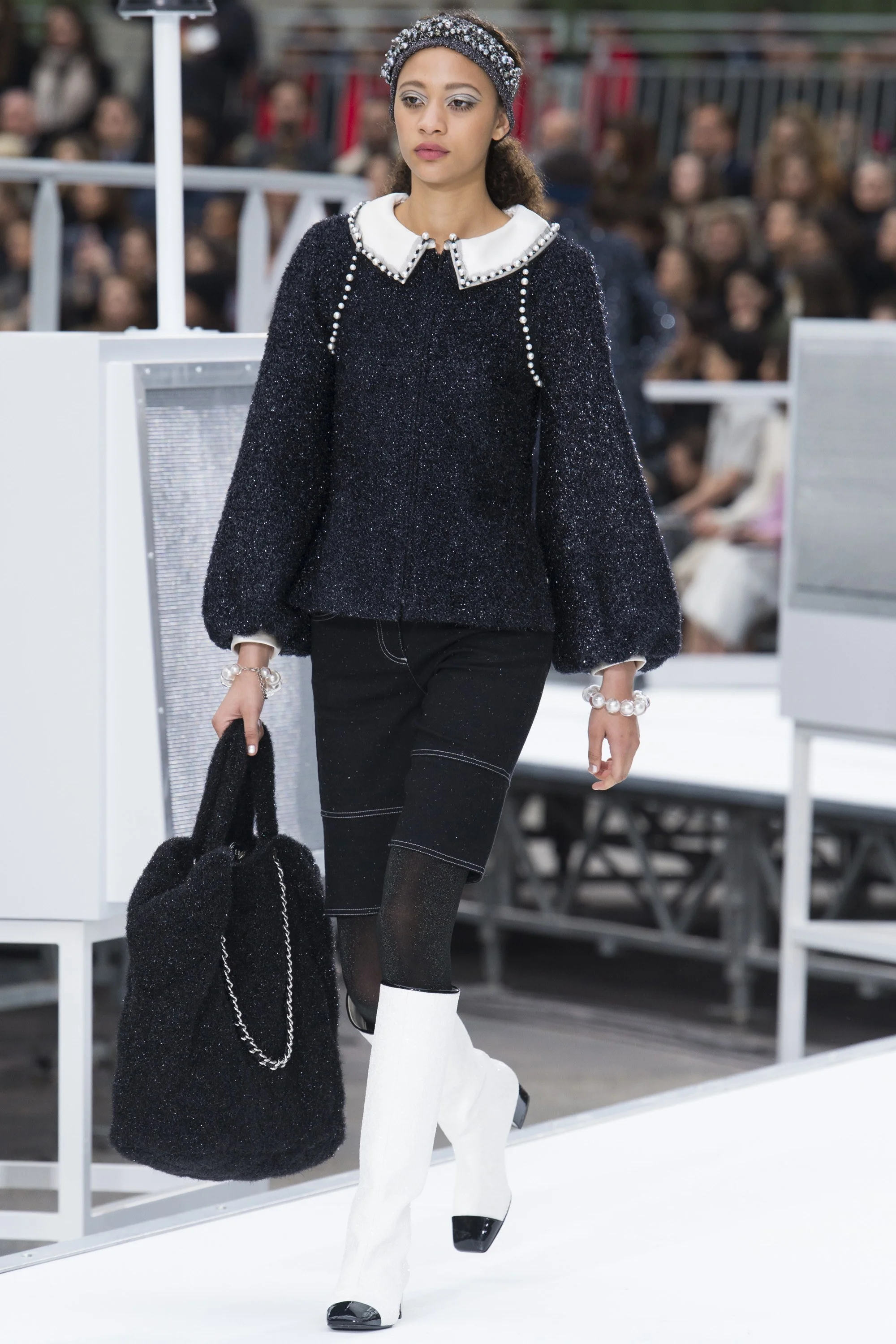
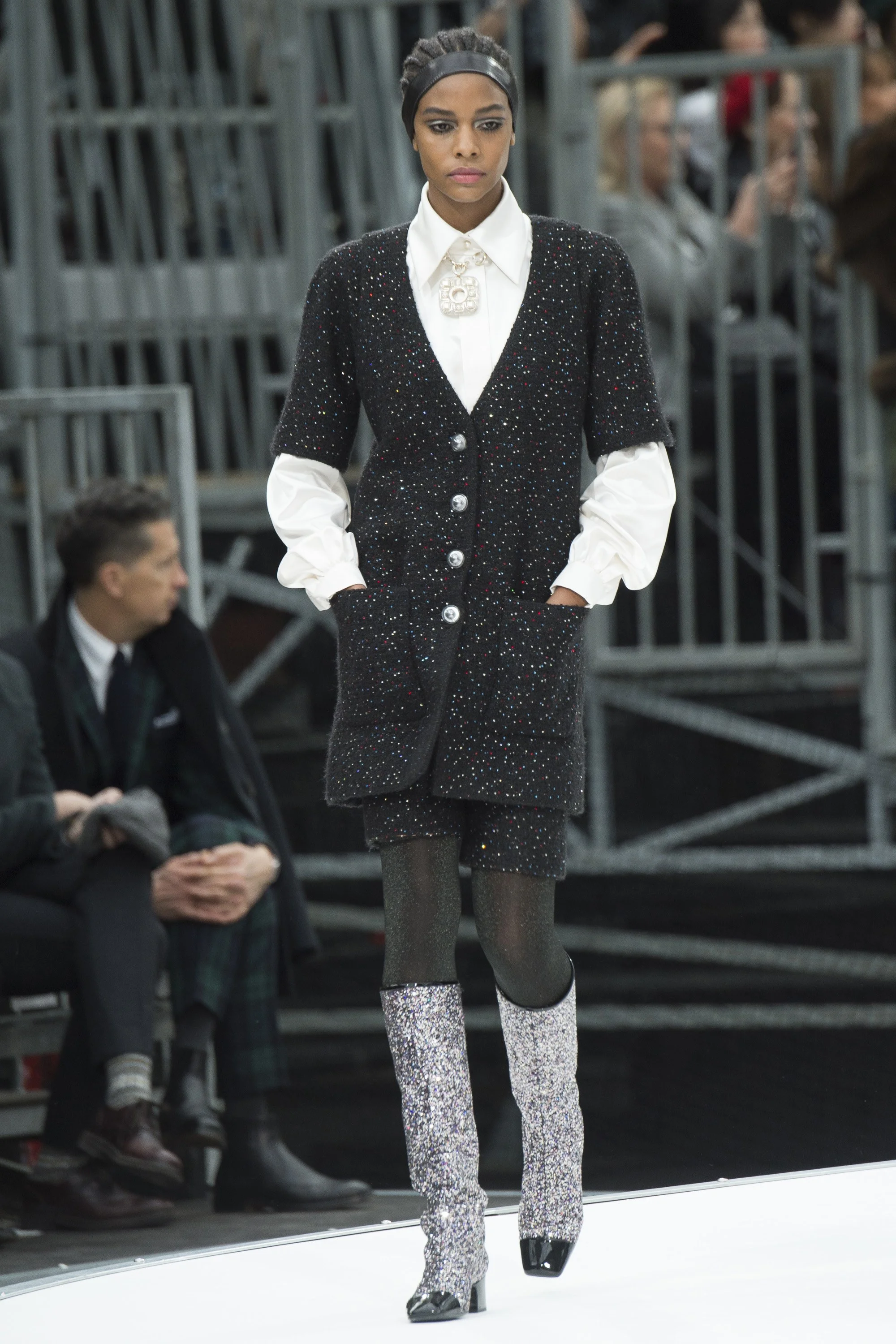
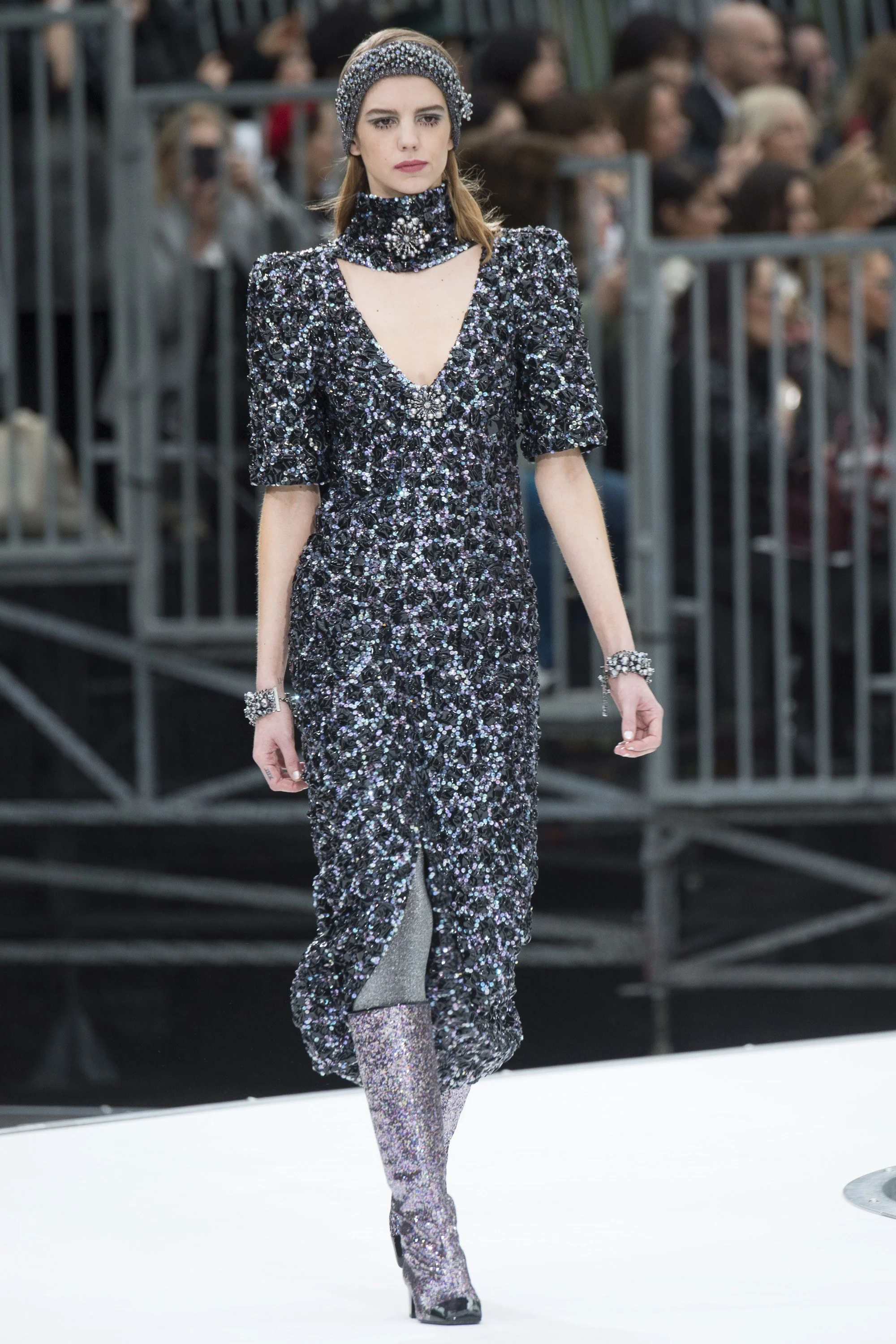
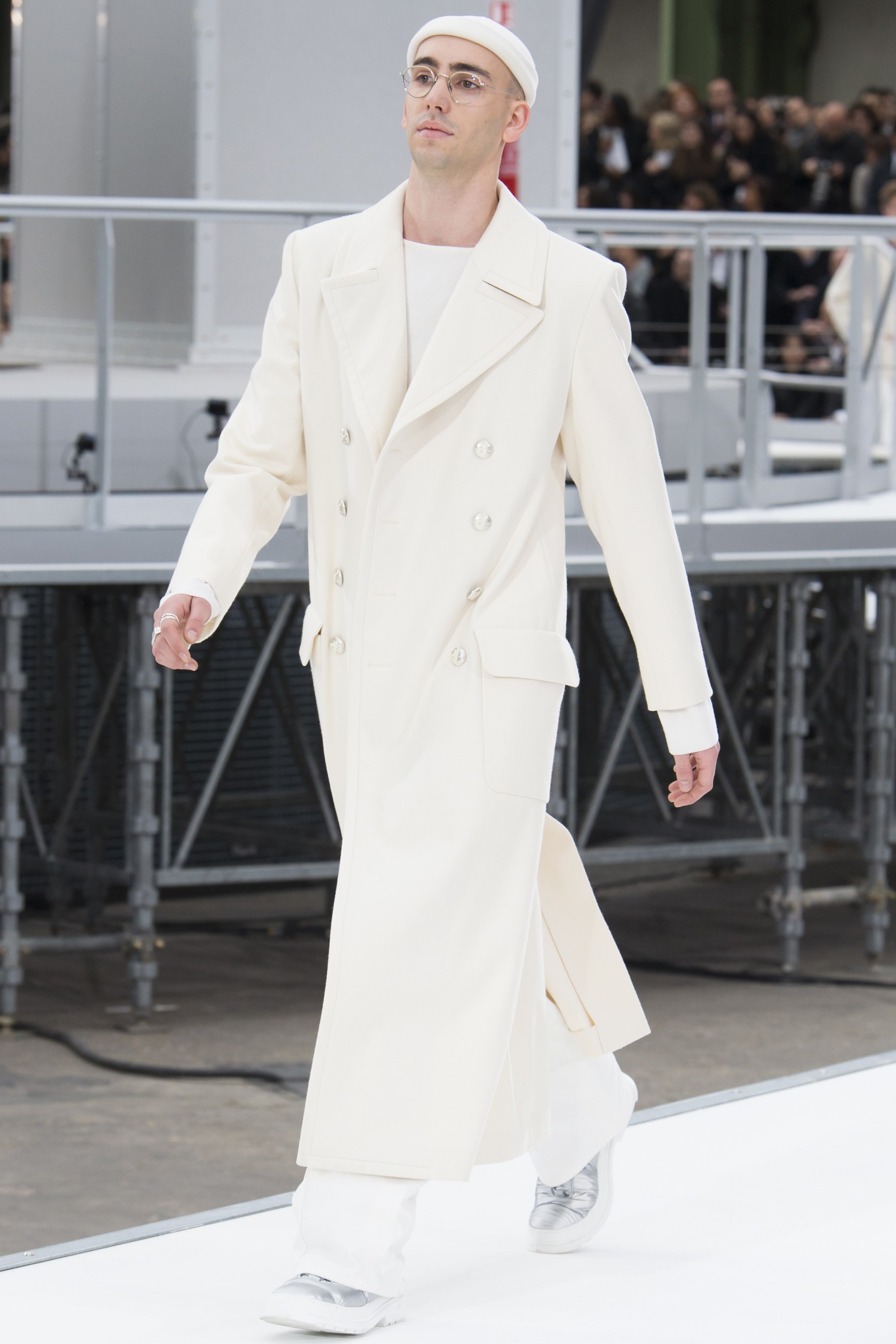
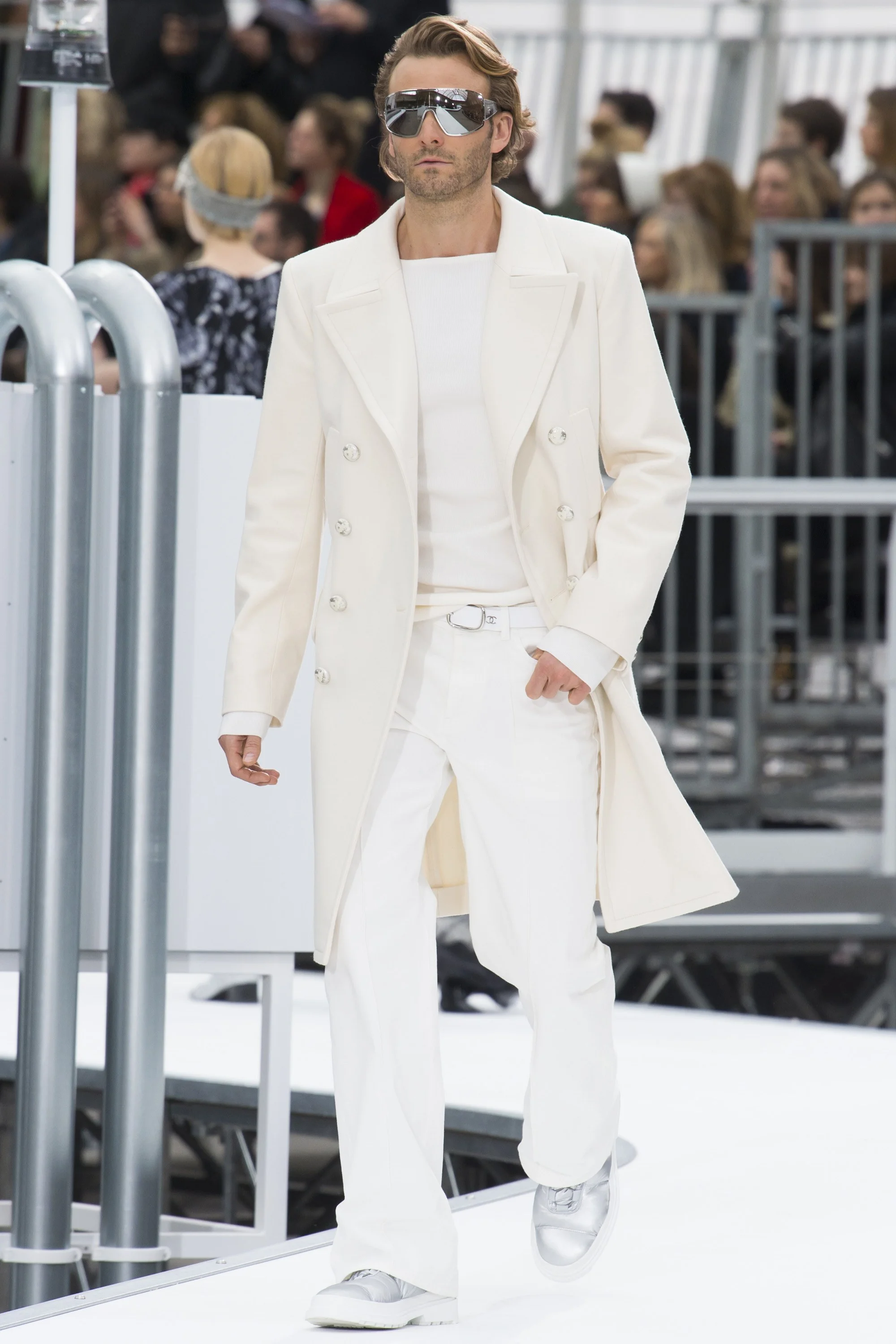
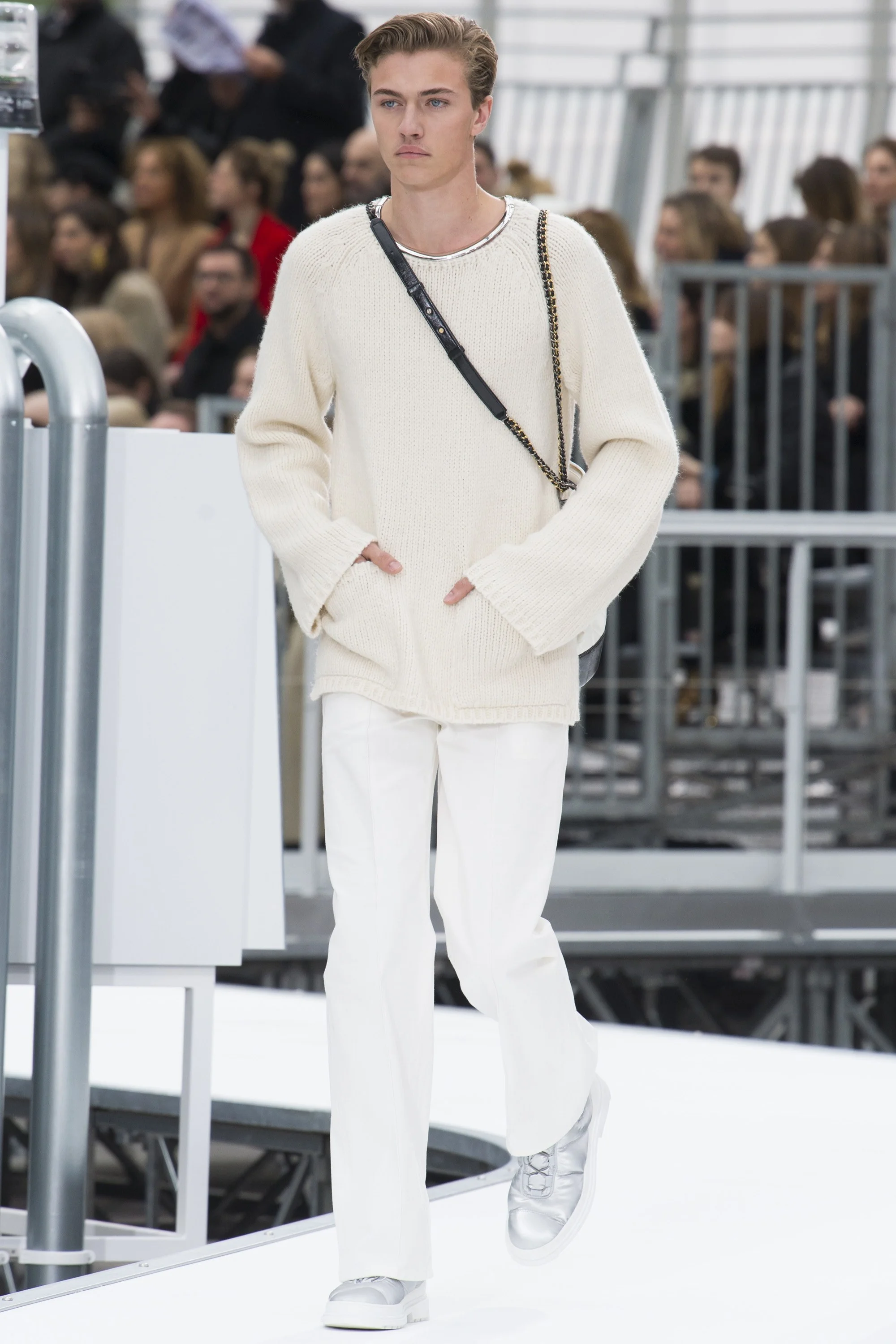
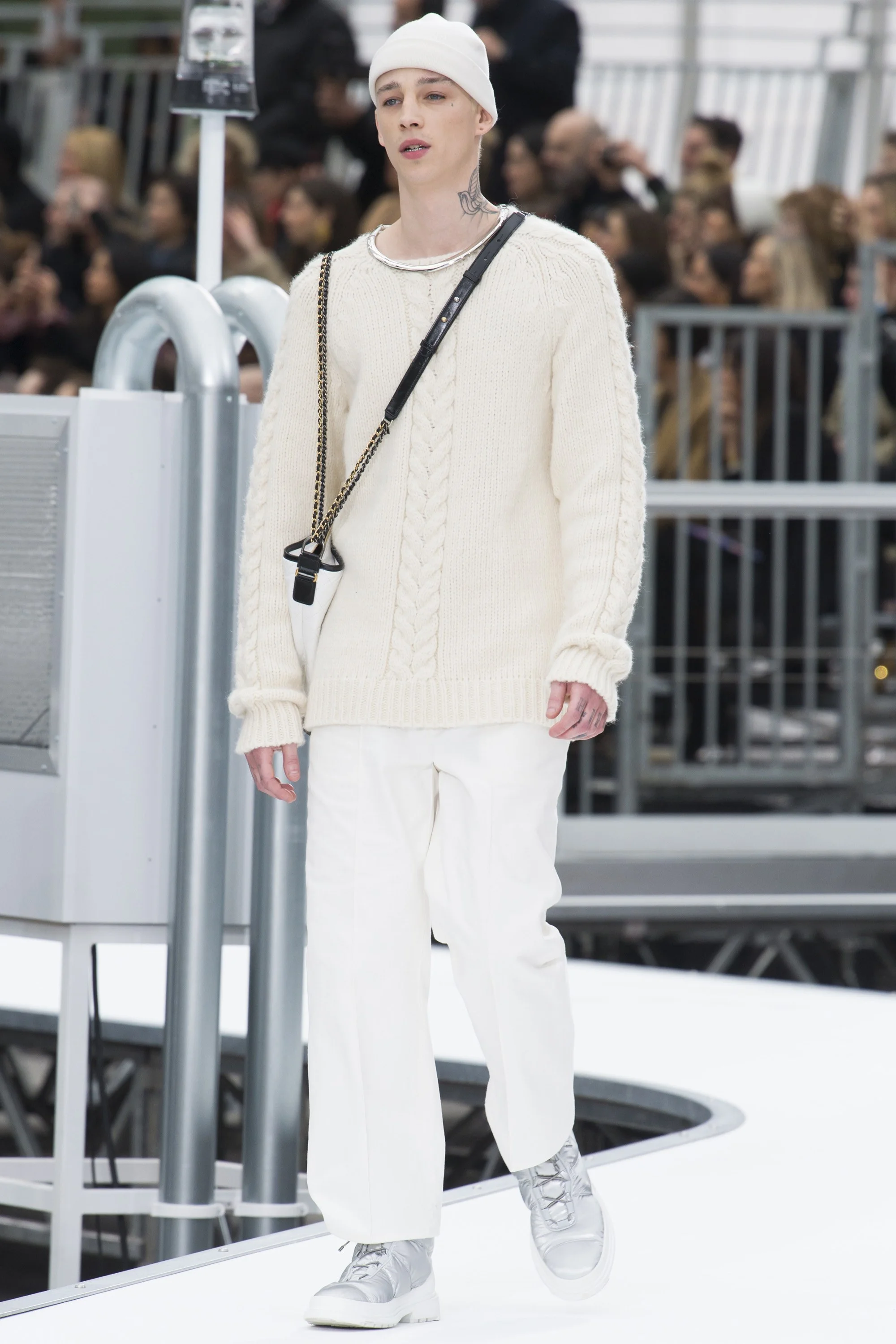
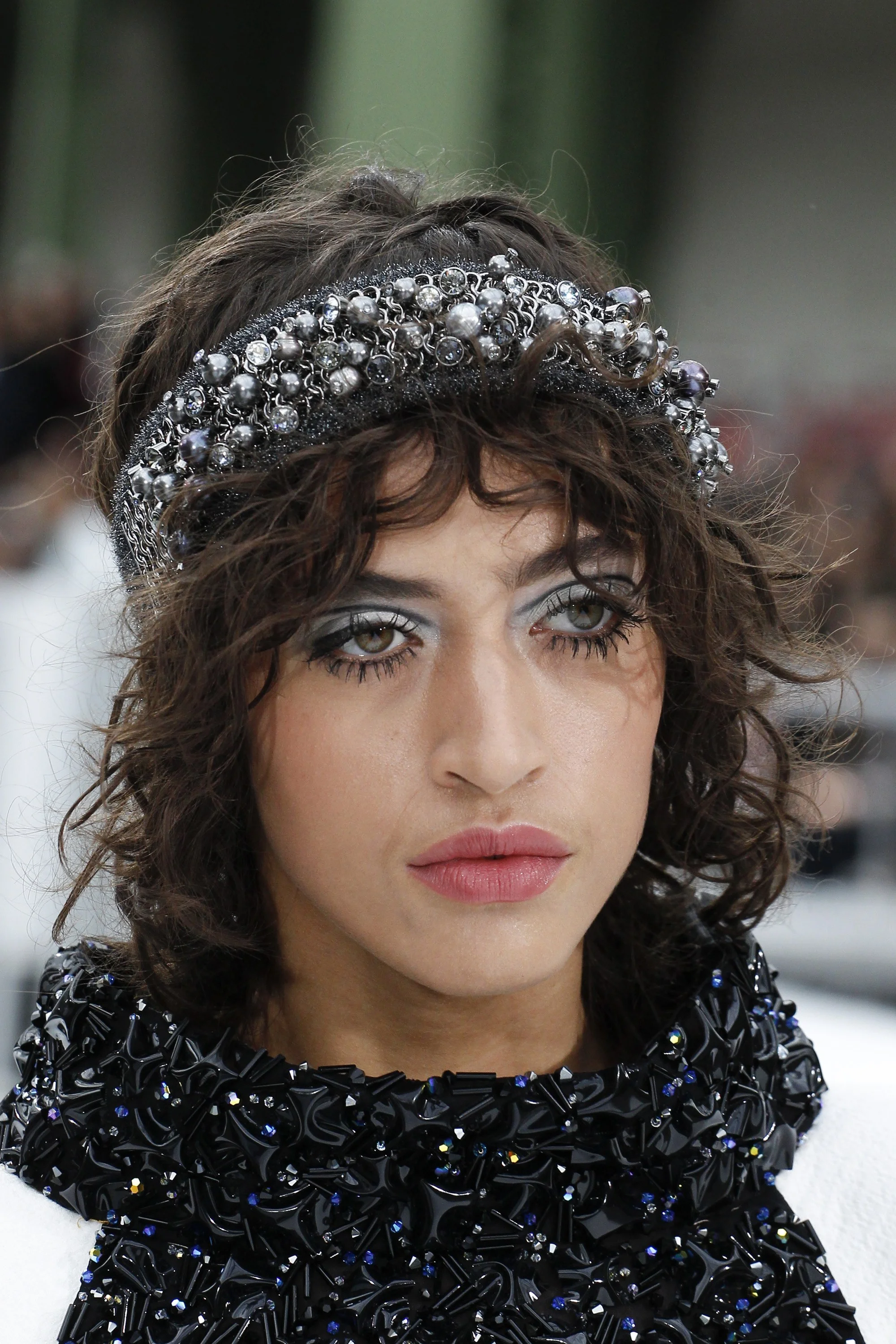
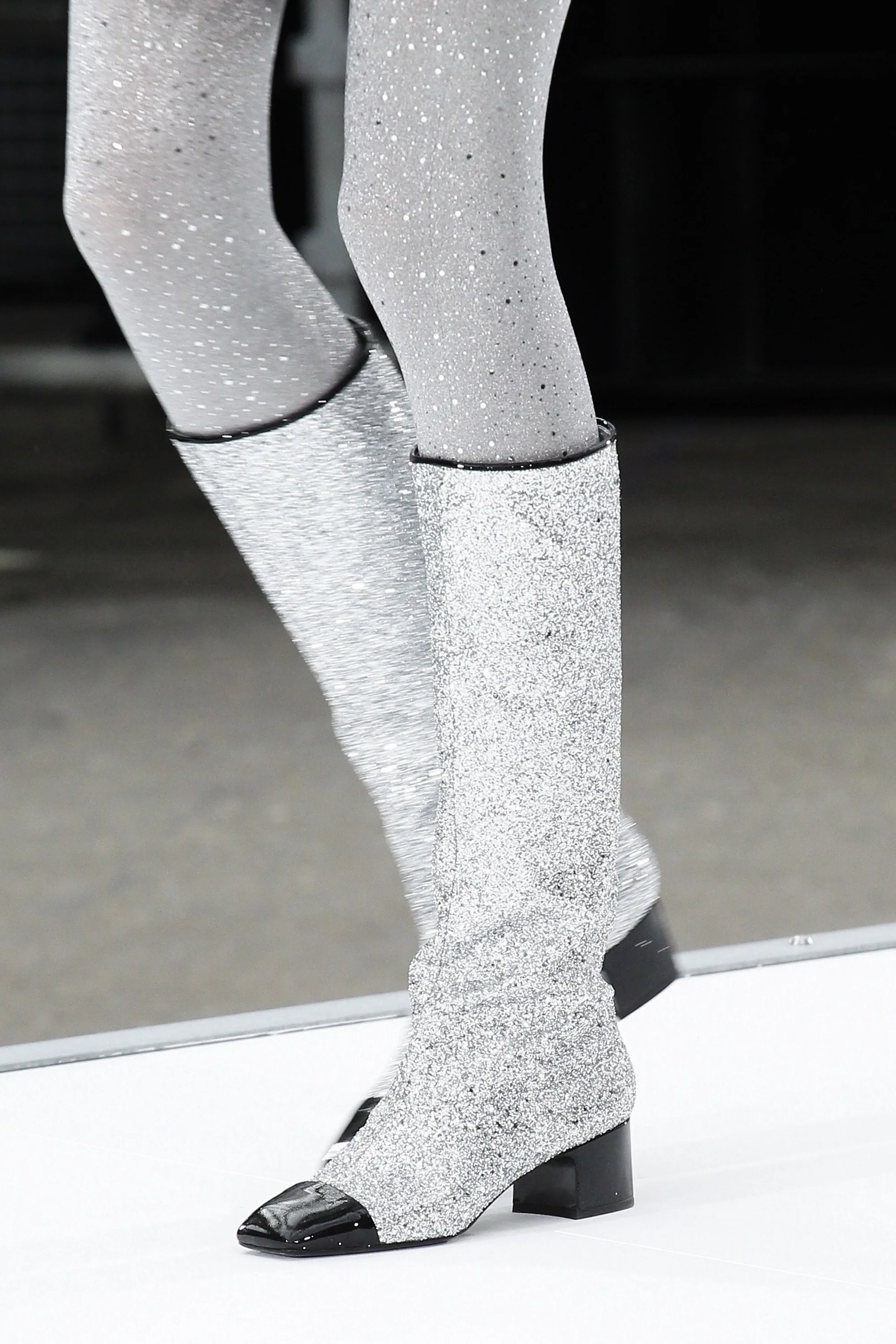
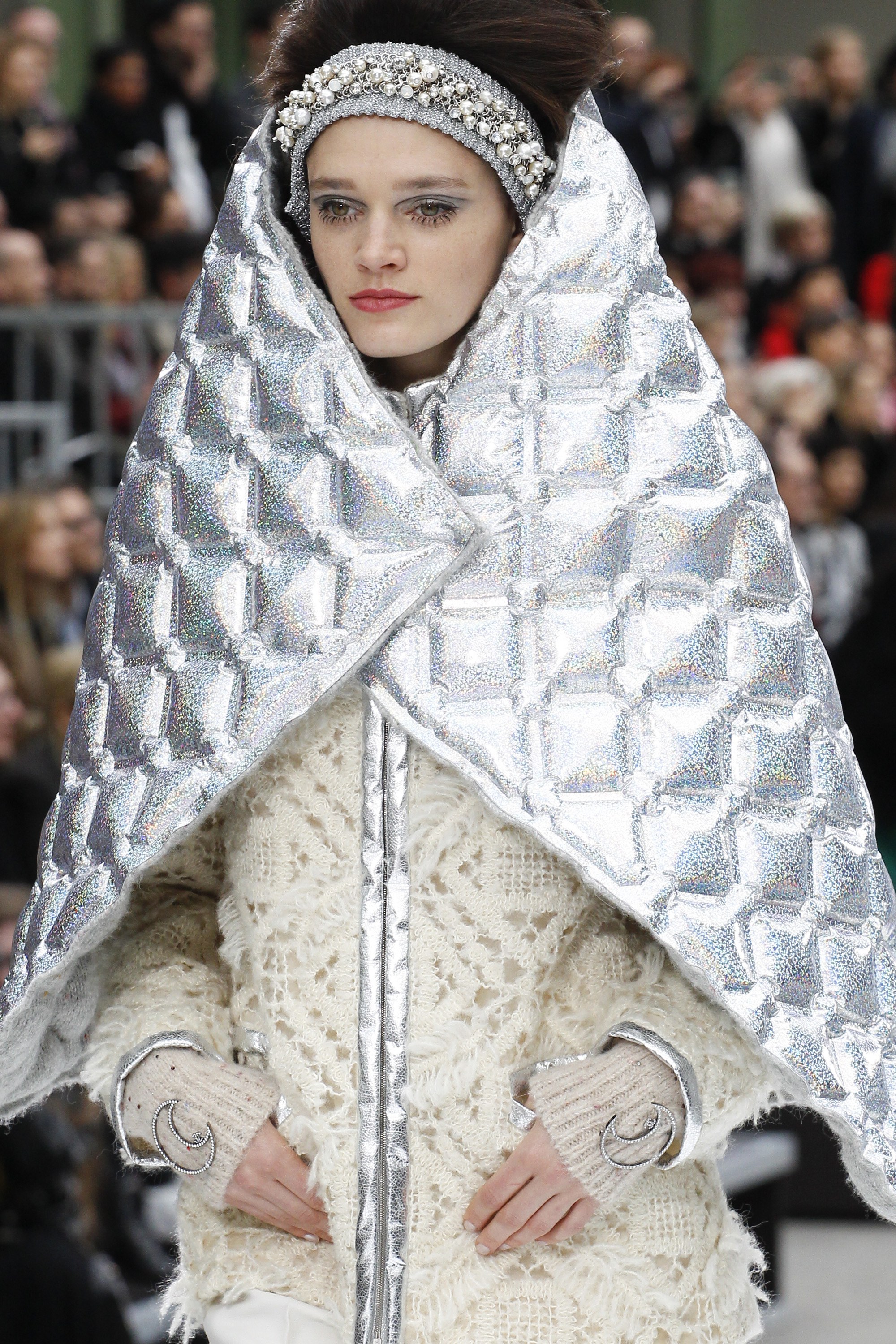
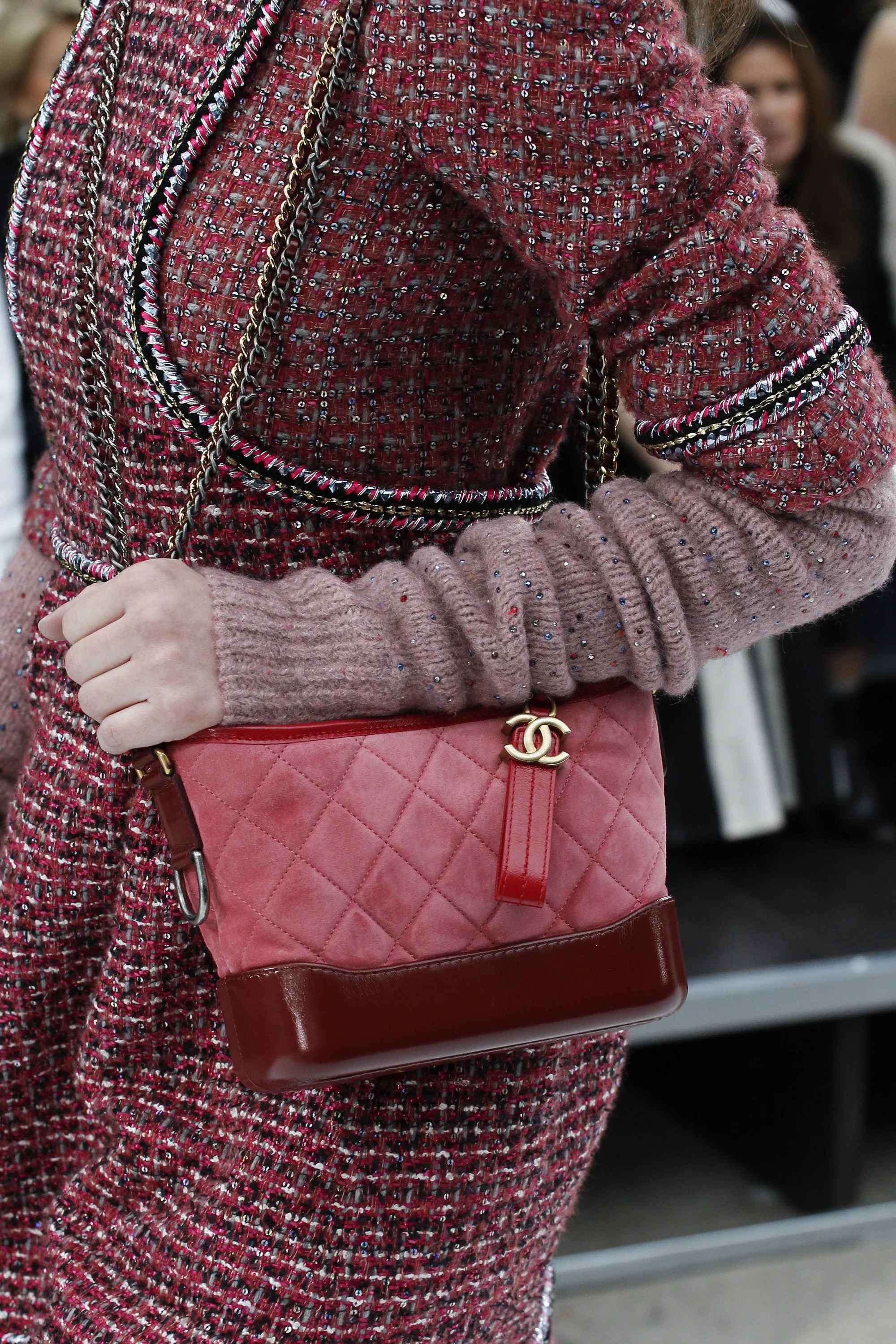
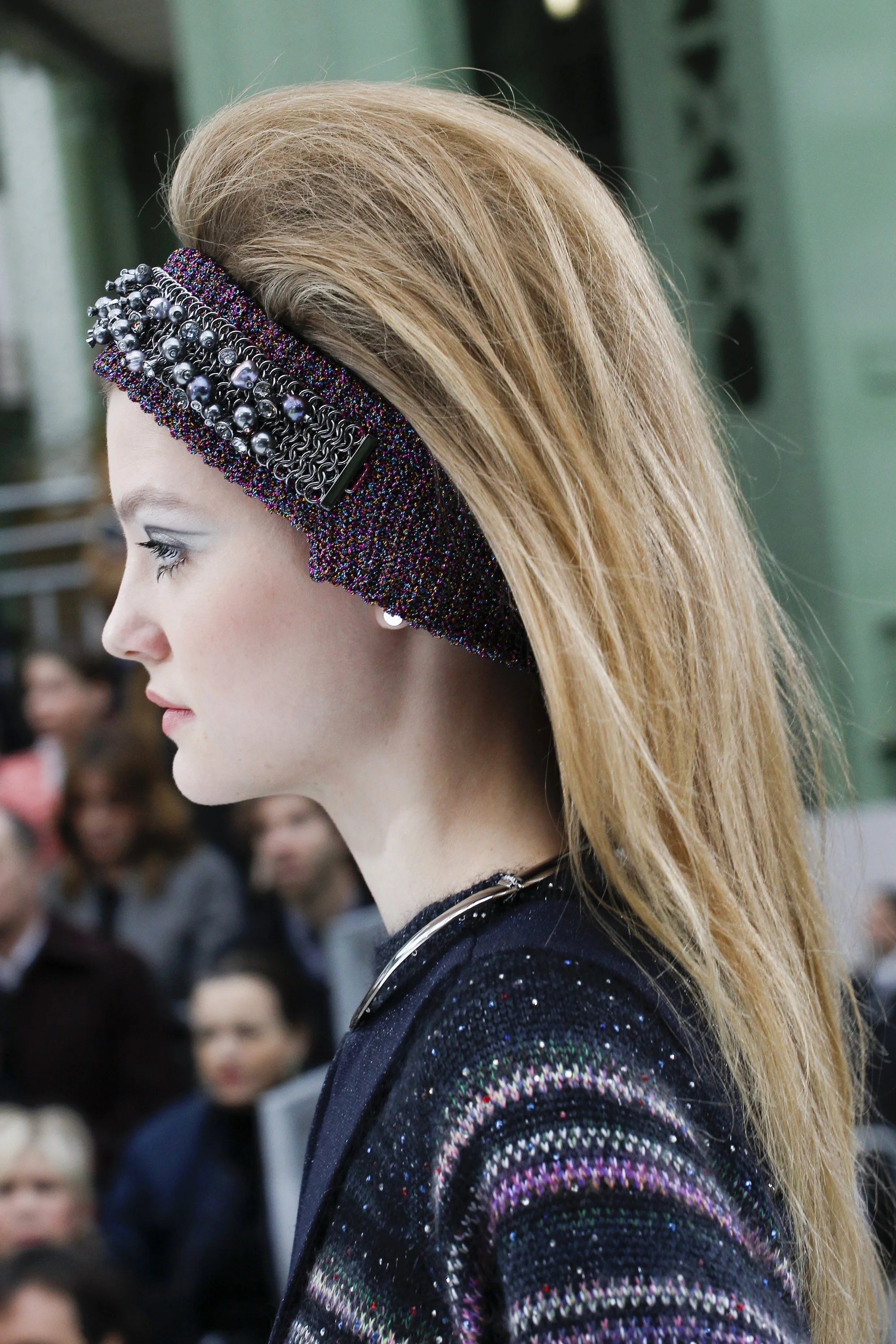
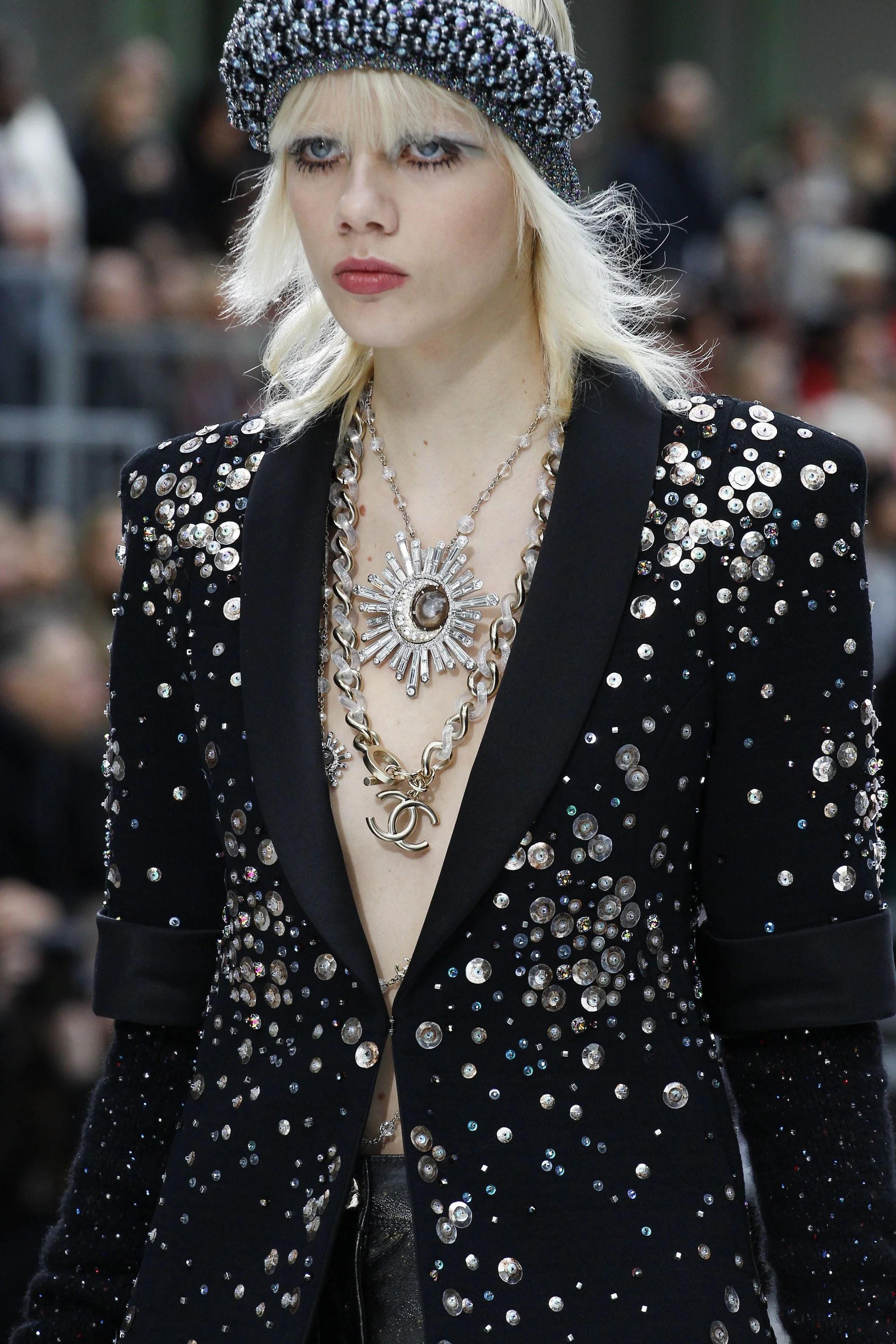
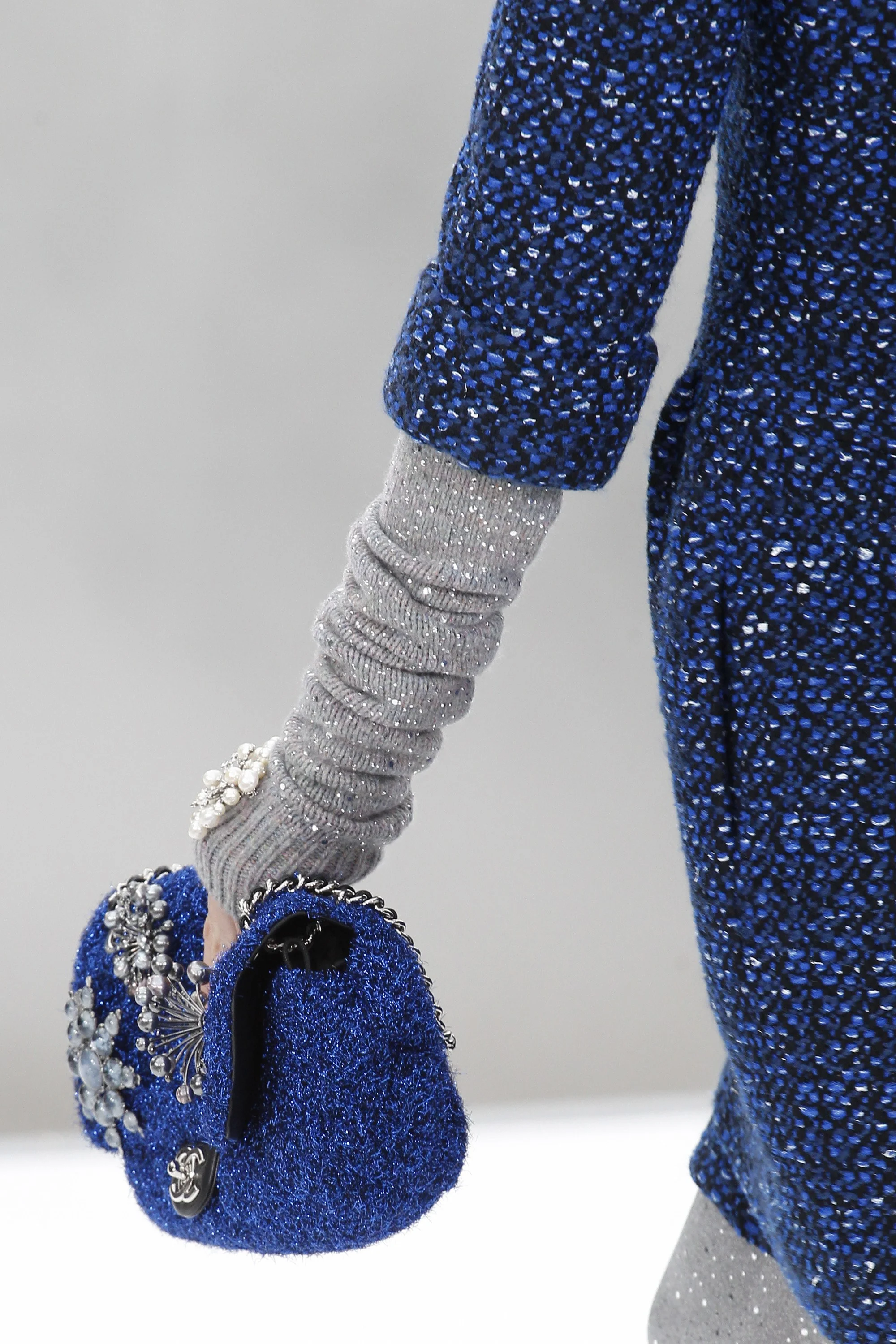
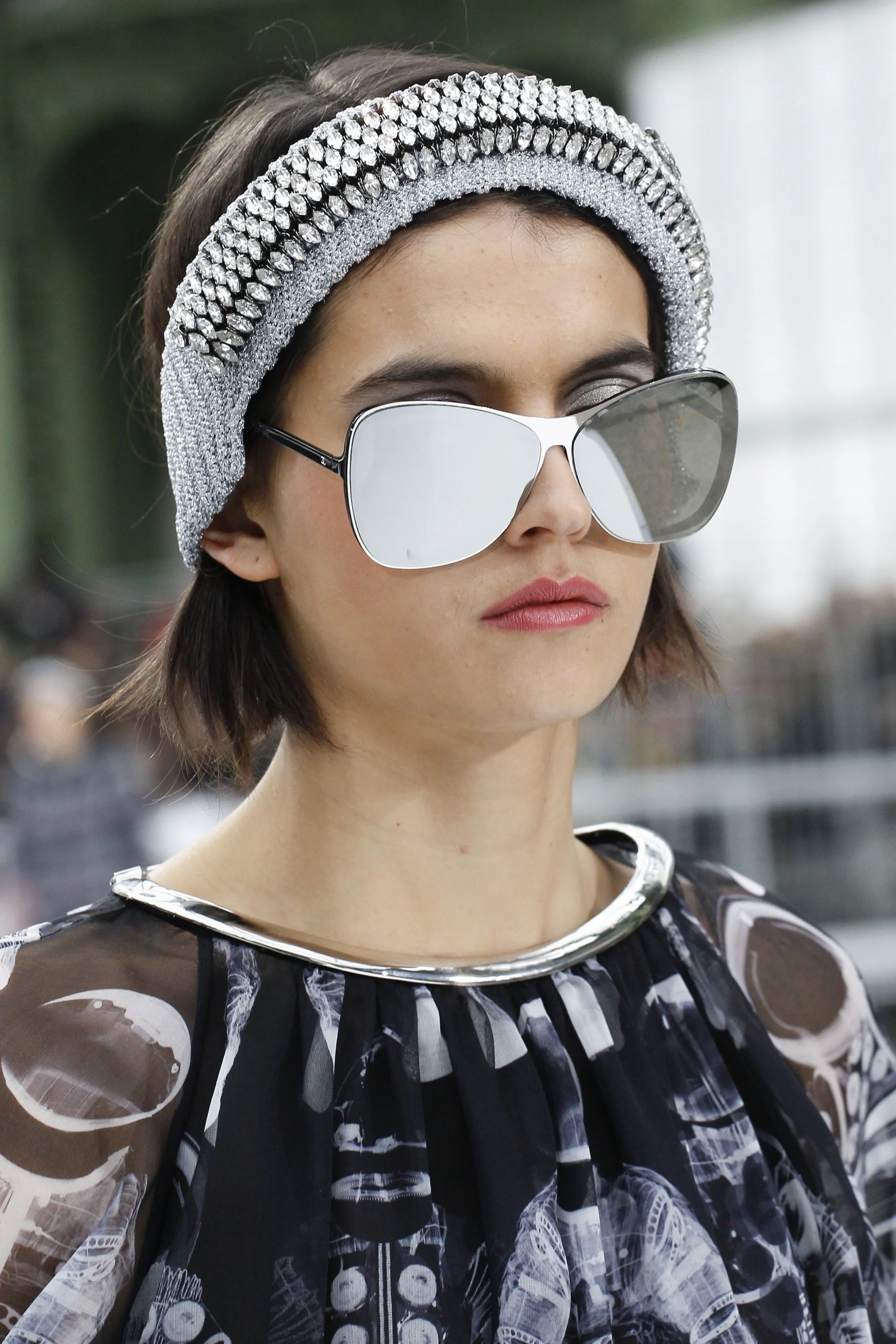
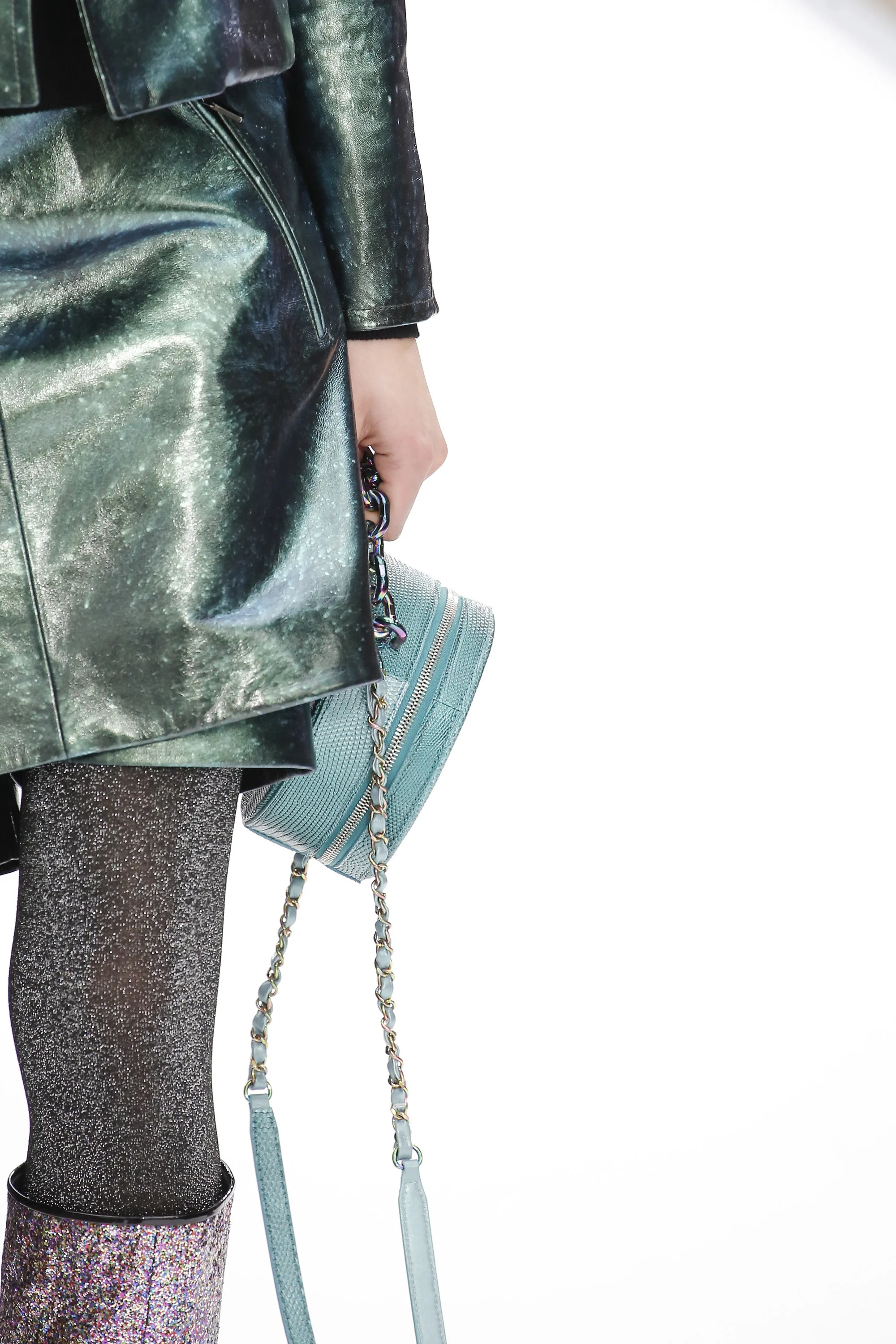
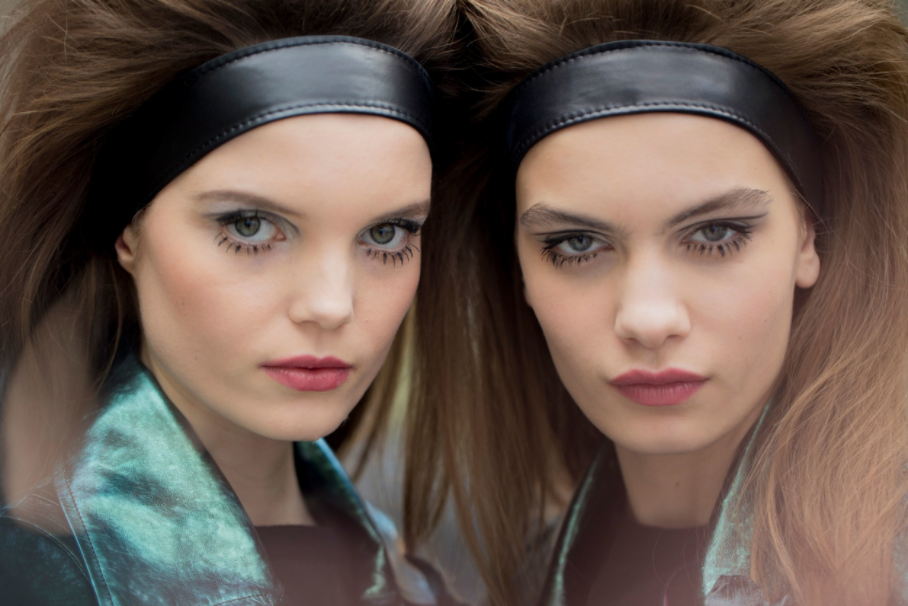
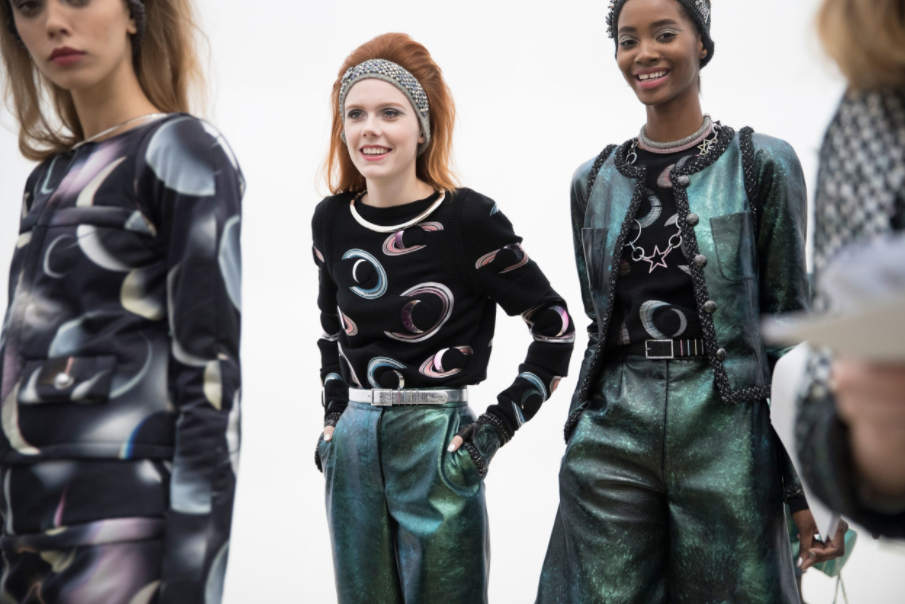
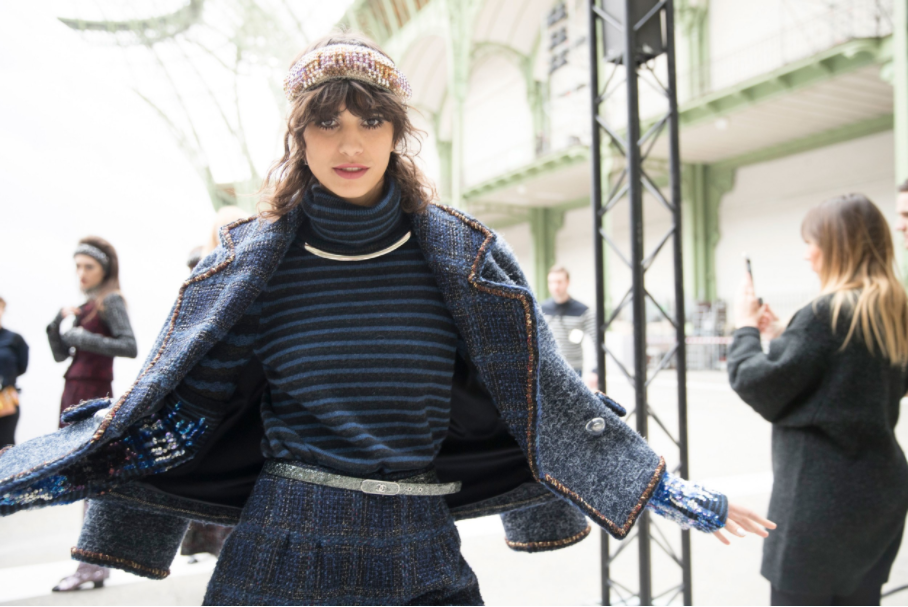
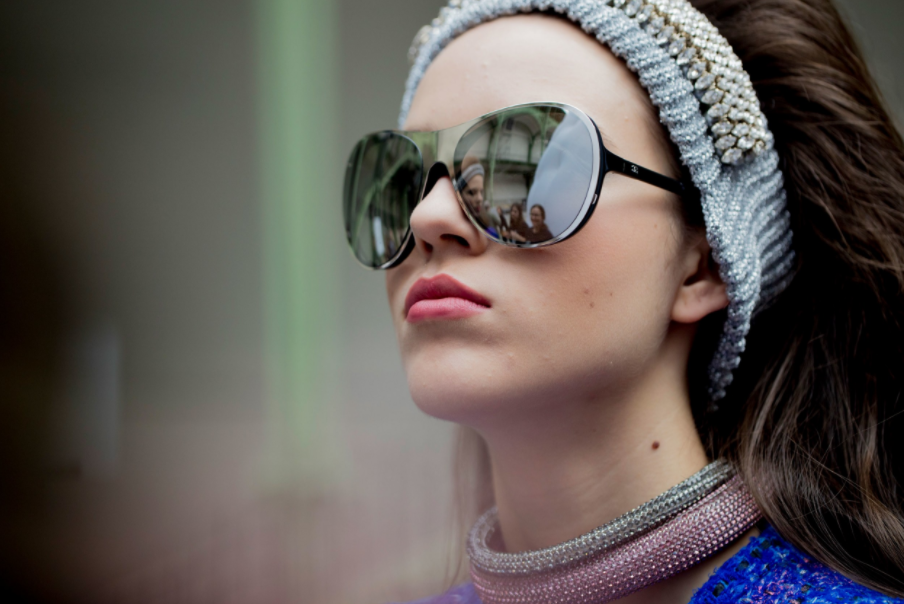
The collection was mostly a study in subdued hues of black, grey and white, with many looks following a strictly monochromatic color scheme. Other ensembles experimented in overlaying the classic tweed Chanel two-piece suit with bulky accessories and a series of sleek pouches and handbags. Wispy bouffants, knit headbands that doubled as ear warmers and glittery knee-high, cap-toe boots completed many of the looks and cemented the 1960s-sourced inspiration for the collection. For the mens component of the show, Lagerfeld explored a decidedly sleeker and more contemporary aesthetic, sending soft knits, beanies and tailored jackets down the runway.  
Details

All above images via

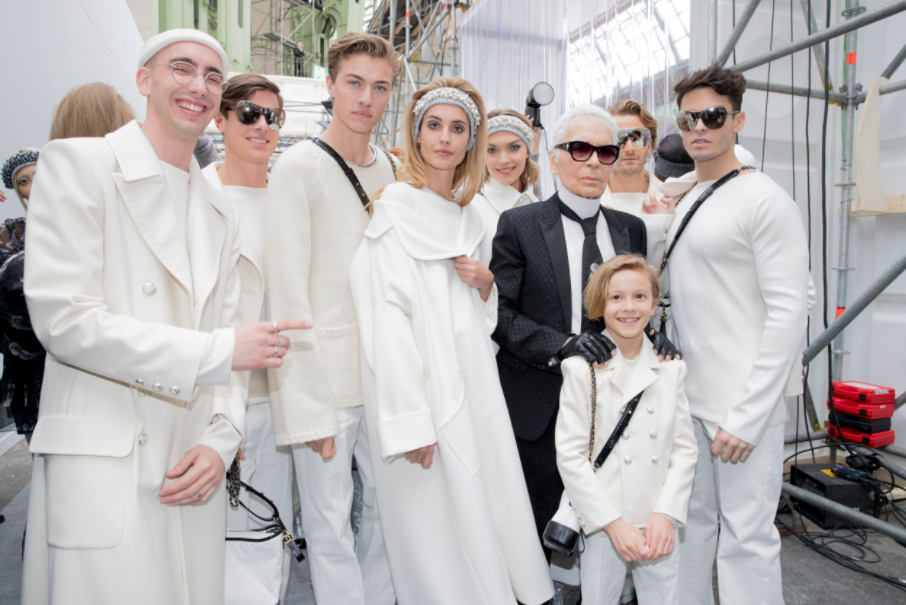
Behind-the-Scenes

All above images via

Feature image via

Chanel in Cuba

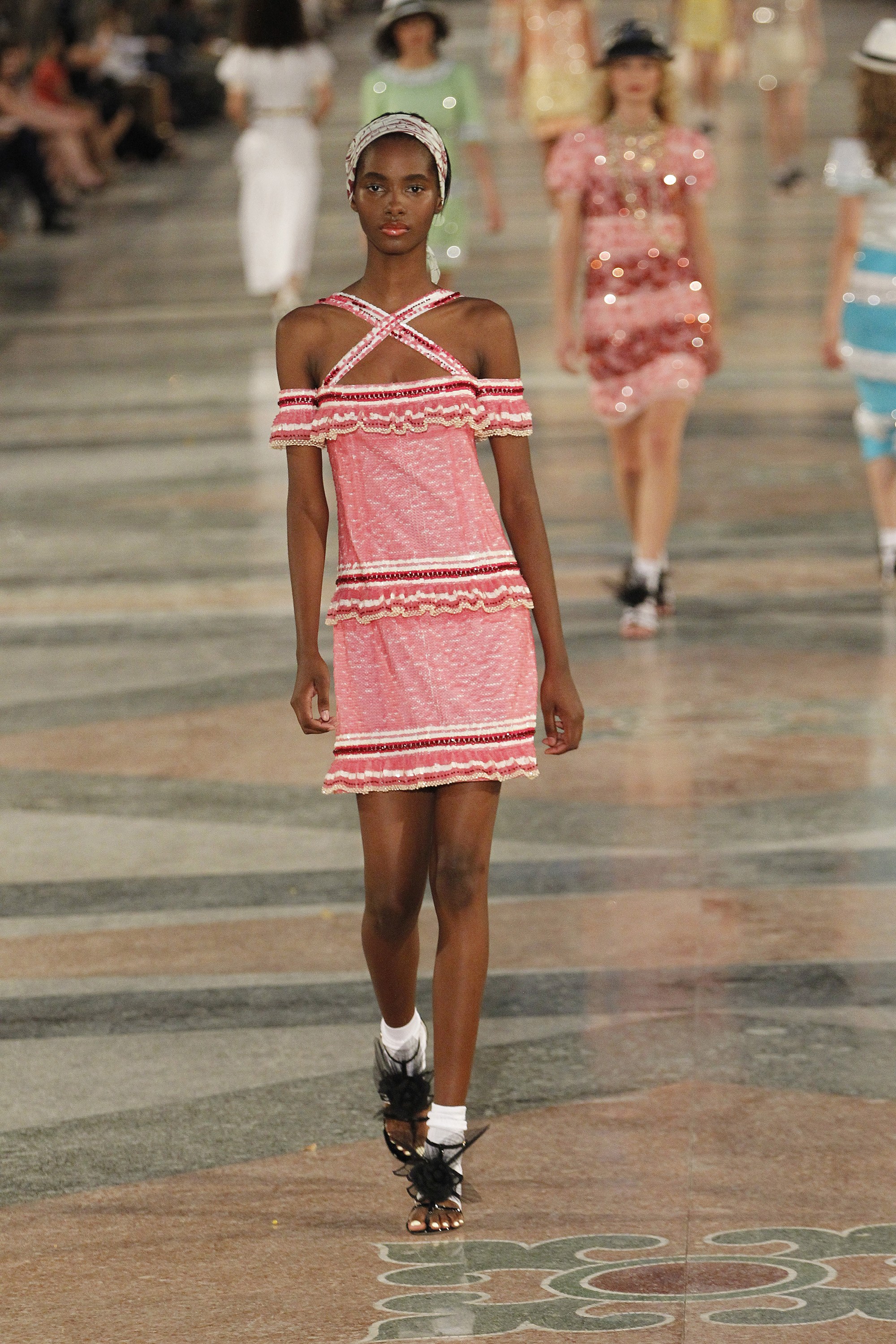
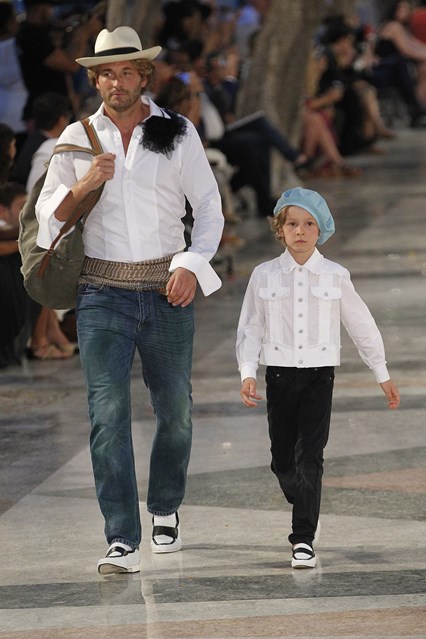
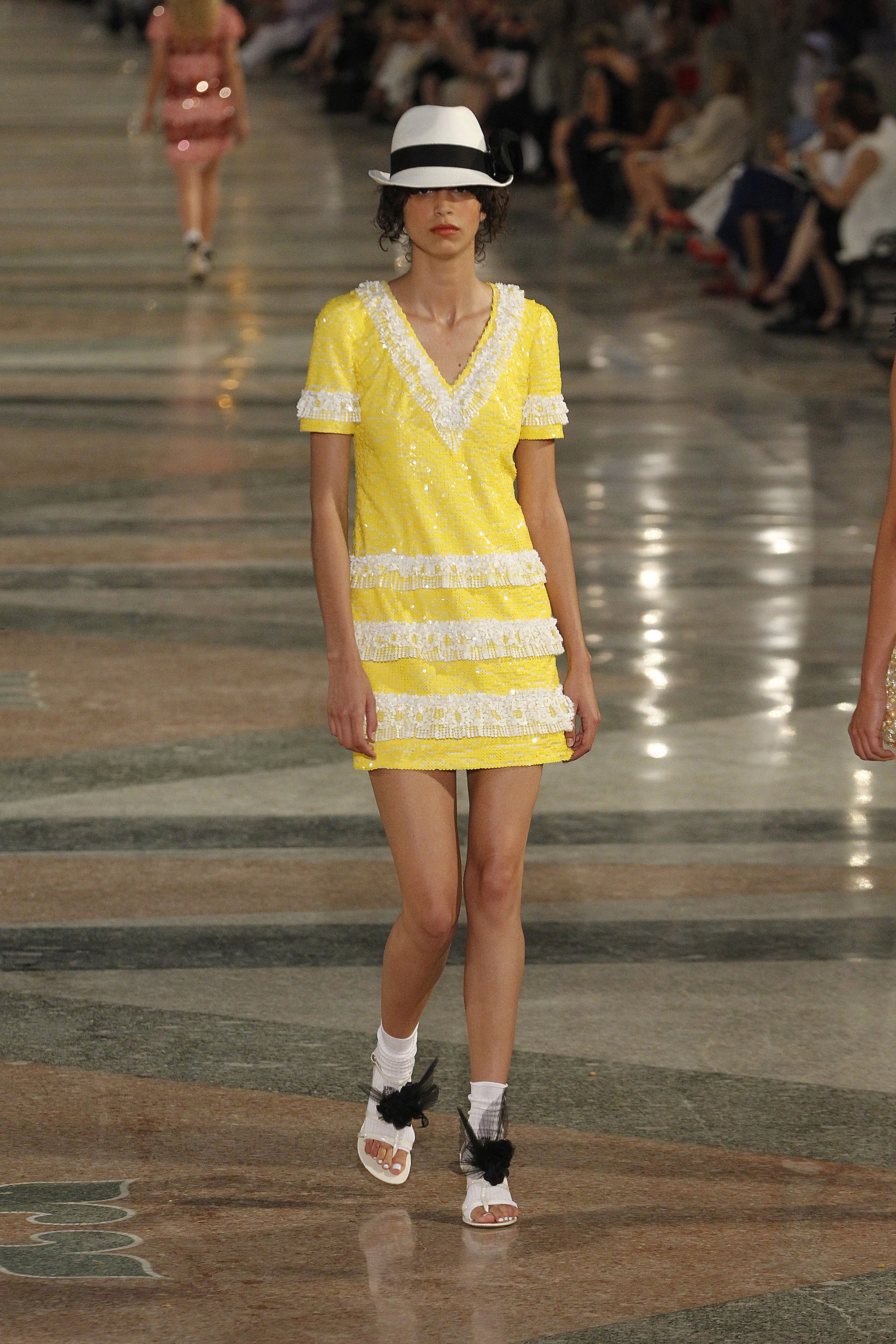
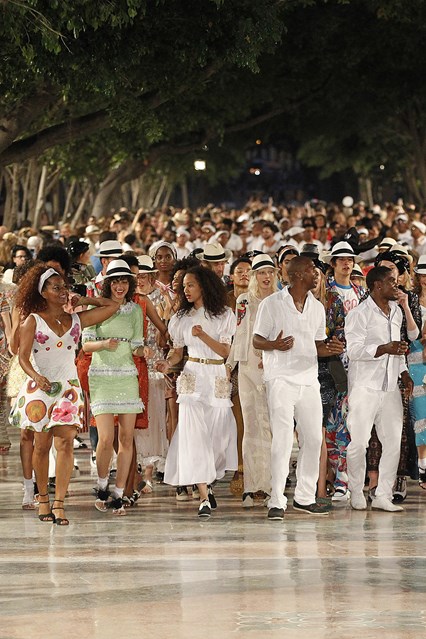
The most recent installment in Karl Lagerfeld’s sweeping vision for Chanel’s Resort 2017 collection shifted the fashion world’s gaze away from traditional fashion hubs in Europe and New York and towards Havana, Cuba. 

slideshow images via Vogue.com and Vogue.co.uk

Guests (front row attendees included supermodel and muse to Lagerfeld, Gisele, pictured below) were shepherded into the heart of Old Havana in the backseats of colorful vintage convertibles, which also served as a reoccurring motif throughout Lagerfeld's color-shocked collection. The venue itself encompassed the expansive El Paseo Del Prado boulevard, softly-lit and lined on either side by street lamps and leafy trees, with the 600-some guests in attendance watching from the surrounding park benches.

image via

image via

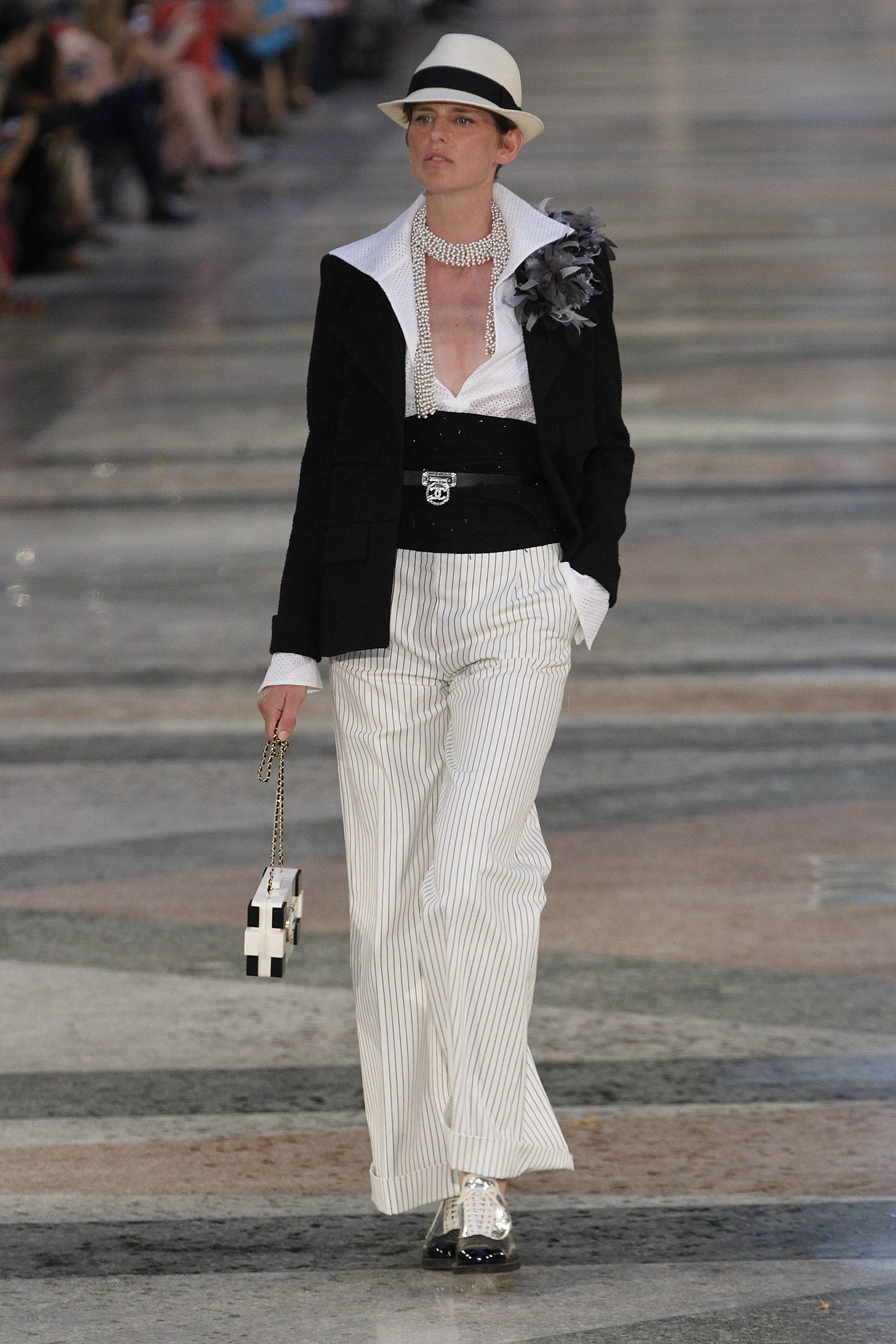
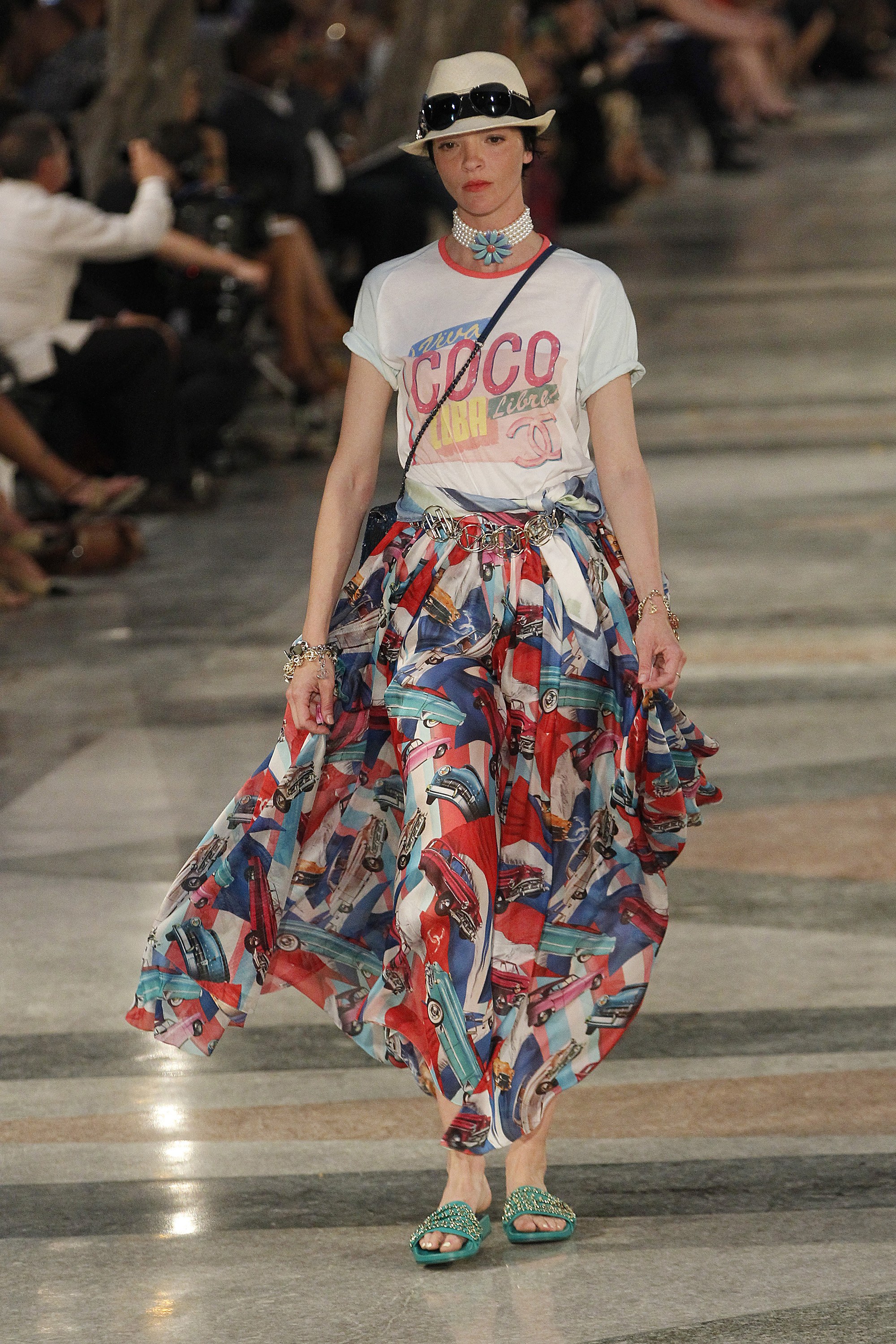
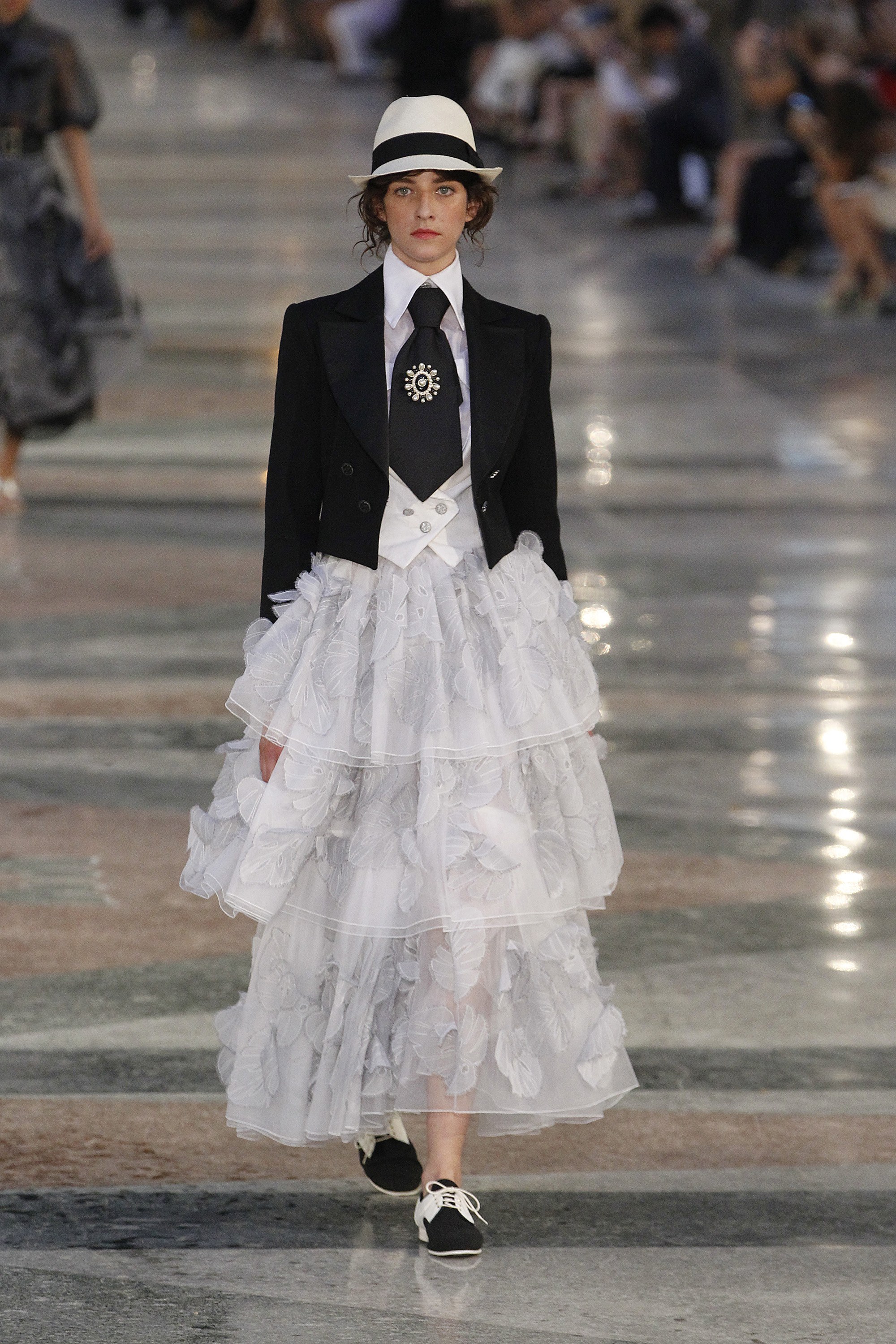
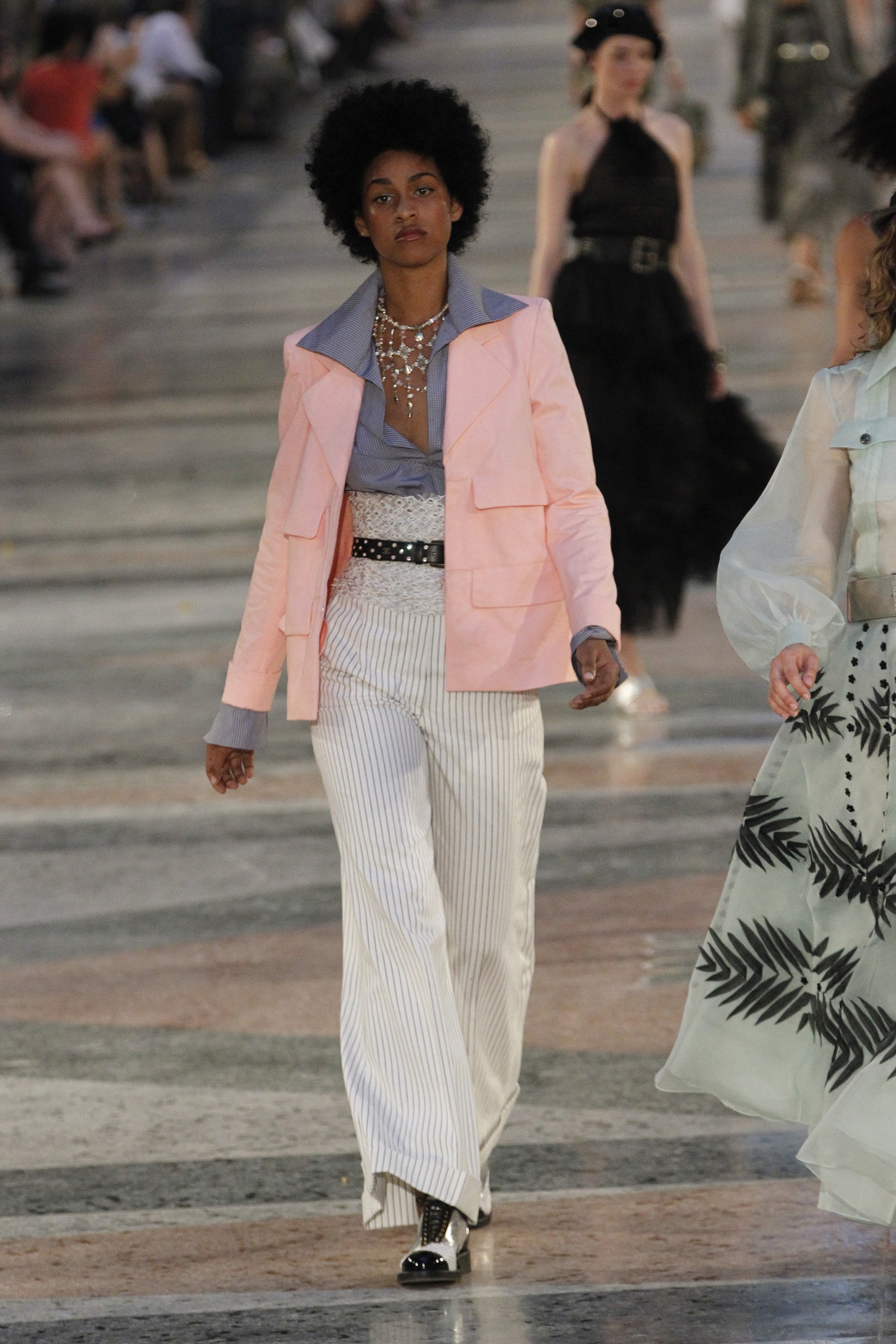
A live band accompanied the seemingly endless selection of looks that cascaded down the runway, with Chanel favorites like Stella Tennant, Lindsey Wixson and Lineisy Montero joined by a cast of local models. The collection ranged from the brand's signature two-piece tweed ensembles to kaleidoscopic prints featuring 1950s style convertible cars, pastel mini dresses and beach-ready slips accessorized with strands of pearls and straw-brimmed fedoras.

Lagerfeld surely found inspiration in Havana's colorful, Spanish architecture, rich Afro-Cuban music scene and the tropical, Caribbean climate. A variety of prints and colors appeared again and again throughout the resort collection, imbuing the atmosphere with a sense of excitement and novelty fitting for this new chapter in Cuban-American political and cultural relations. 

image via

image via

featured image via